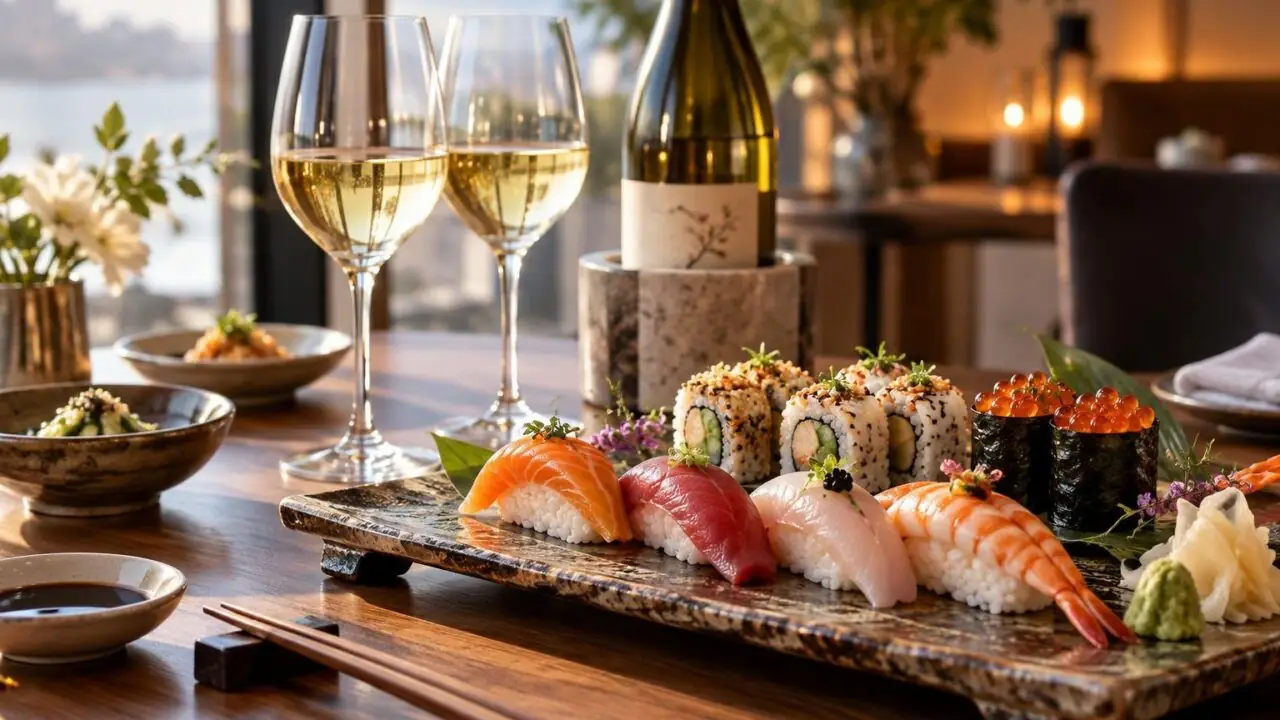
What Wine Goes with Sushi? is best answered with crisp, high-acid white wine: dry Riesling, Albariño, Grüner Veltliner, Champagne, and unoaked Chardonnay handle rice vinegar, soy sauce, wasabi, and delicate fish without overwhelming the roll.
Sushi pairing works when the wine refreshes the palate, not when it competes. Acidity cuts through fatty tuna and salmon, bubbles lift tempura, and light fruit softens salt and heat.
This guide matches common sushi styles with reliable bottles, from sashimi and nigiri to spicy tuna, eel, California rolls, and vegetarian maki, using practical choices you can find in US wine shops and restaurants.
Sushi Wine Pairing Rules That Work
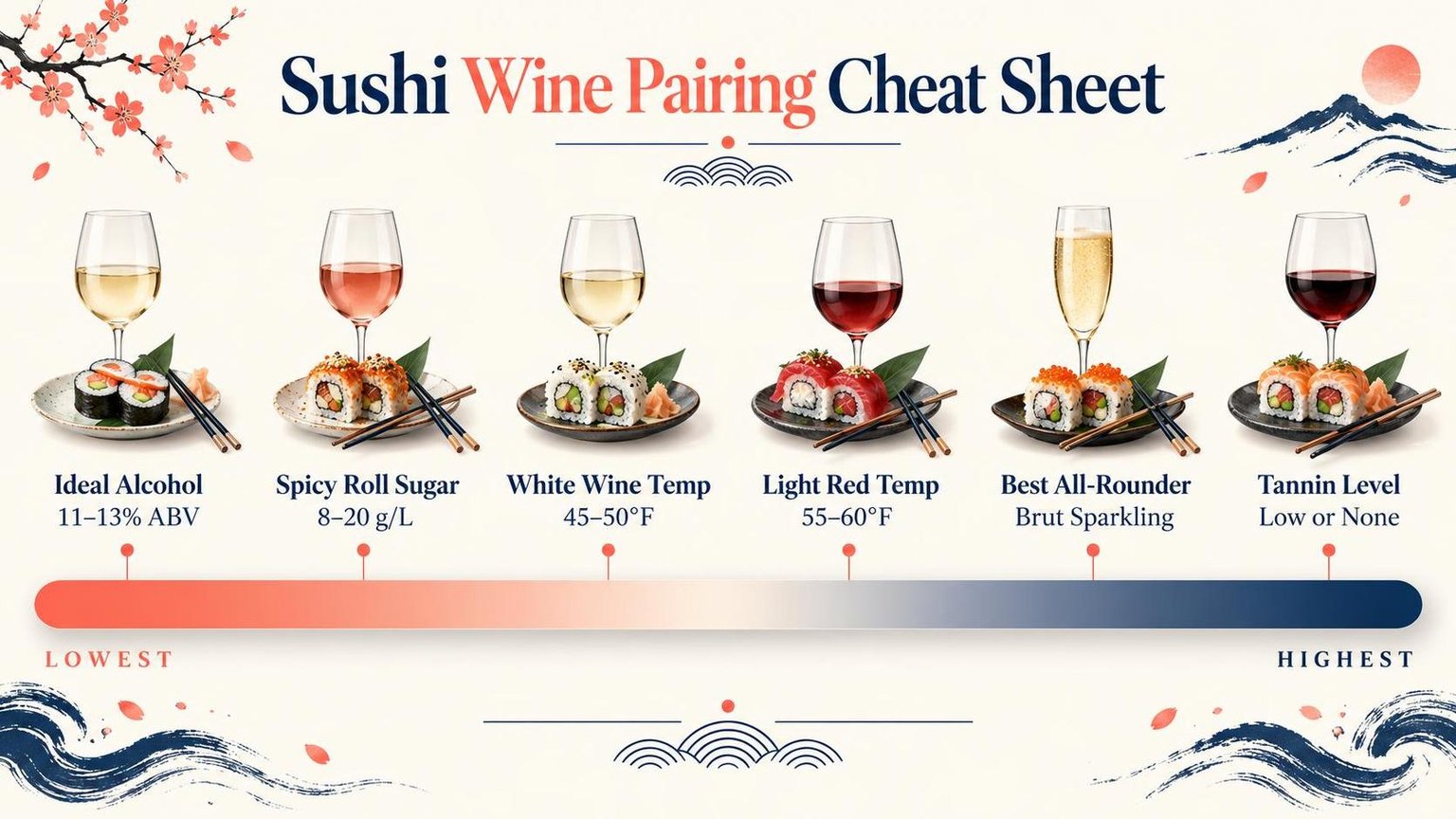
Sushi pairs best with wines that preserve delicate fish flavors, soften salt, and refresh after fatty bites. Prioritize high acidity, restrained alcohol, little oak, and low tannin. Adjust sweetness and body for sauces, spice, and preparation.
Match the Wine to the Dominant Flavor
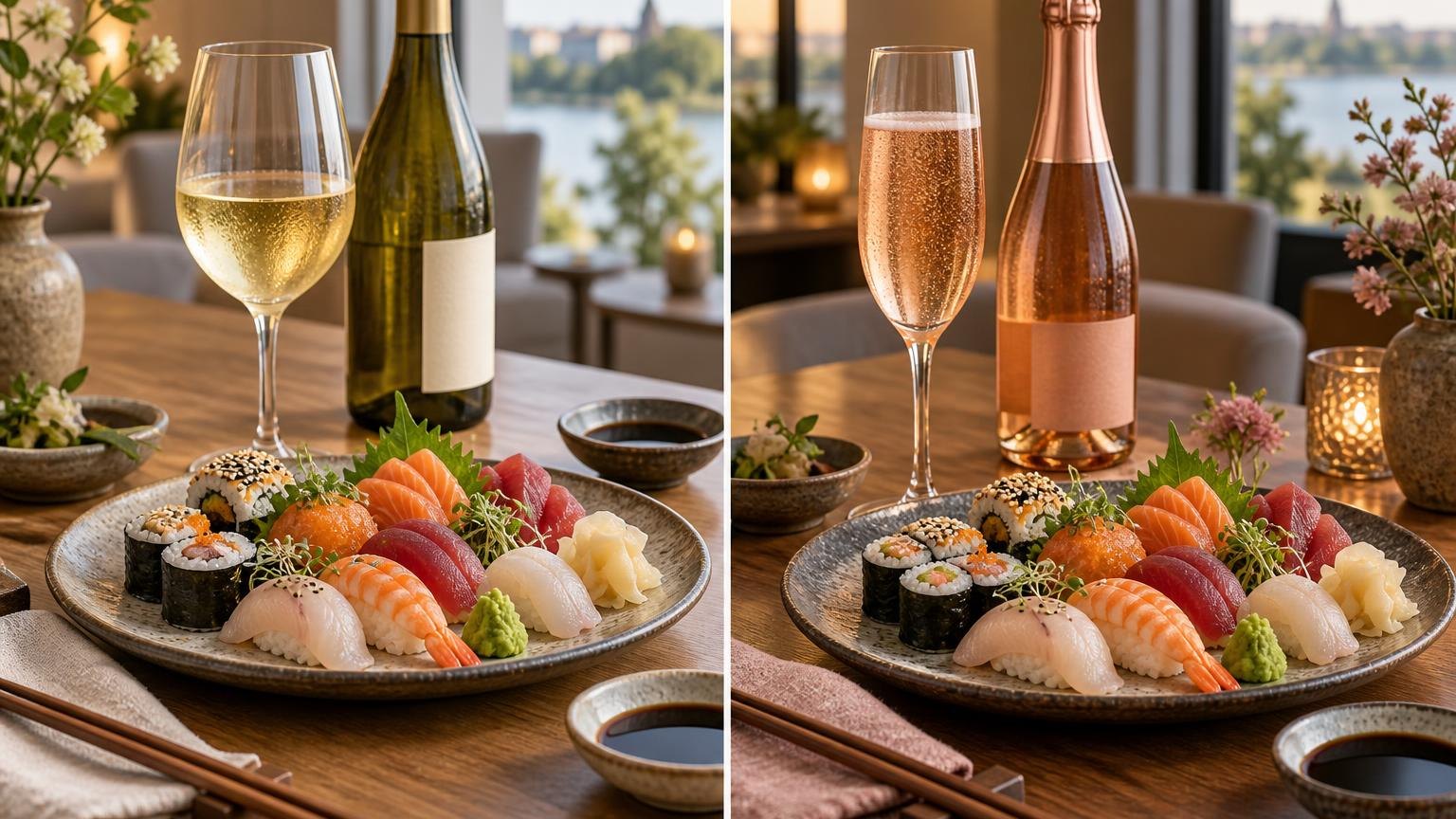
Pair the wine with the strongest component, not simply the fish. Plain nigiri is driven by seafood and seasoned rice; spicy tuna is driven by chile mayonnaise; eel rolls are dominated by sweet, concentrated tare sauce.
- Lean white fish: Choose Muscadet, Chablis, dry Riesling, or Vermentino. Their acidity supports fluke, snapper, and sea bream without masking subtle sweetness.
- Fatty fish: Use Champagne, traditional-method sparkling wine, or mineral-driven Chardonnay with salmon, toro, and yellowtail. Acidity and carbonation clear fish oil from the palate.
- Shellfish: Pair shrimp, crab, scallop, and sweet shrimp with Albariño, Grüner Veltliner, or Brut sparkling wine. Citrus and saline flavors echo the seafood.
- Cooked or smoky fillings: Light Pinot Noir, dry rosé, or fuller Chardonnay can handle seared tuna, smoked salmon, tempura, and grilled eel.
Use Acidity to Handle Rice and Fat
Sushi rice contains rice vinegar, sugar, and salt, so a flat wine can taste dull beside it. Choose a wine with clearly refreshing acidity.
Sauvignon Blanc, Riesling, Chenin Blanc, and sparkling wines usually retain enough freshness to match seasoned rice.
| Wine benchmark | Useful target | Pairing effect |
| Alcohol | Approximately 11%–13% ABV | Limits heat with wasabi and chile |
| Residual sugar | About 8–20 g/L for spicy rolls | Softens perceived chile heat |
| White-wine serving temperature | 45–50°F | Preserves freshness without muting aroma |
| Light-red serving temperature | 55–60°F | Keeps fruit vivid and alcohol restrained |
Control Soy Sauce, Wasabi, and Ginger
Soy sauce increases salt and umami, which can make tannic reds seem harsher and less fruity. Dip the fish lightly rather than soaking the rice. Choose crisp white wine, sparkling wine, or low-tannin red when soy is prominent.
Wasabi amplifies alcohol burn. Avoid high-alcohol Zinfandel, Shiraz, and heavily oaked Chardonnay with wasabi-heavy bites. Off-dry Riesling works because sweetness moderates heat while acidity prevents the combination from becoming cloying.
Pickled ginger is a palate cleanser, not a sushi topping. Eat it between pieces, then sip. Its sweet acidity favors Riesling, Chenin Blanc, and sparkling rosé but can make tannic Cabernet Sauvignon taste severe.
Avoid Tannin and Heavy Oak
Tannin can react poorly with fish oils, producing metallic or bitter impressions. Cabernet Sauvignon, Nebbiolo, and young Bordeaux therefore rarely suit raw fish.
If red wine is preferred, select Gamay, Pinot Noir, or Schiava with modest extraction and no obvious new-oak character.
One bottle for a mixed platter should be Brut sparkling wine or dry Riesling. Both cover lean fish, fatty fish, shellfish, tempura, soy sauce, and moderate spice more reliably than a powerful white or structured red.
Best Wines for Nigiri and Sashimi
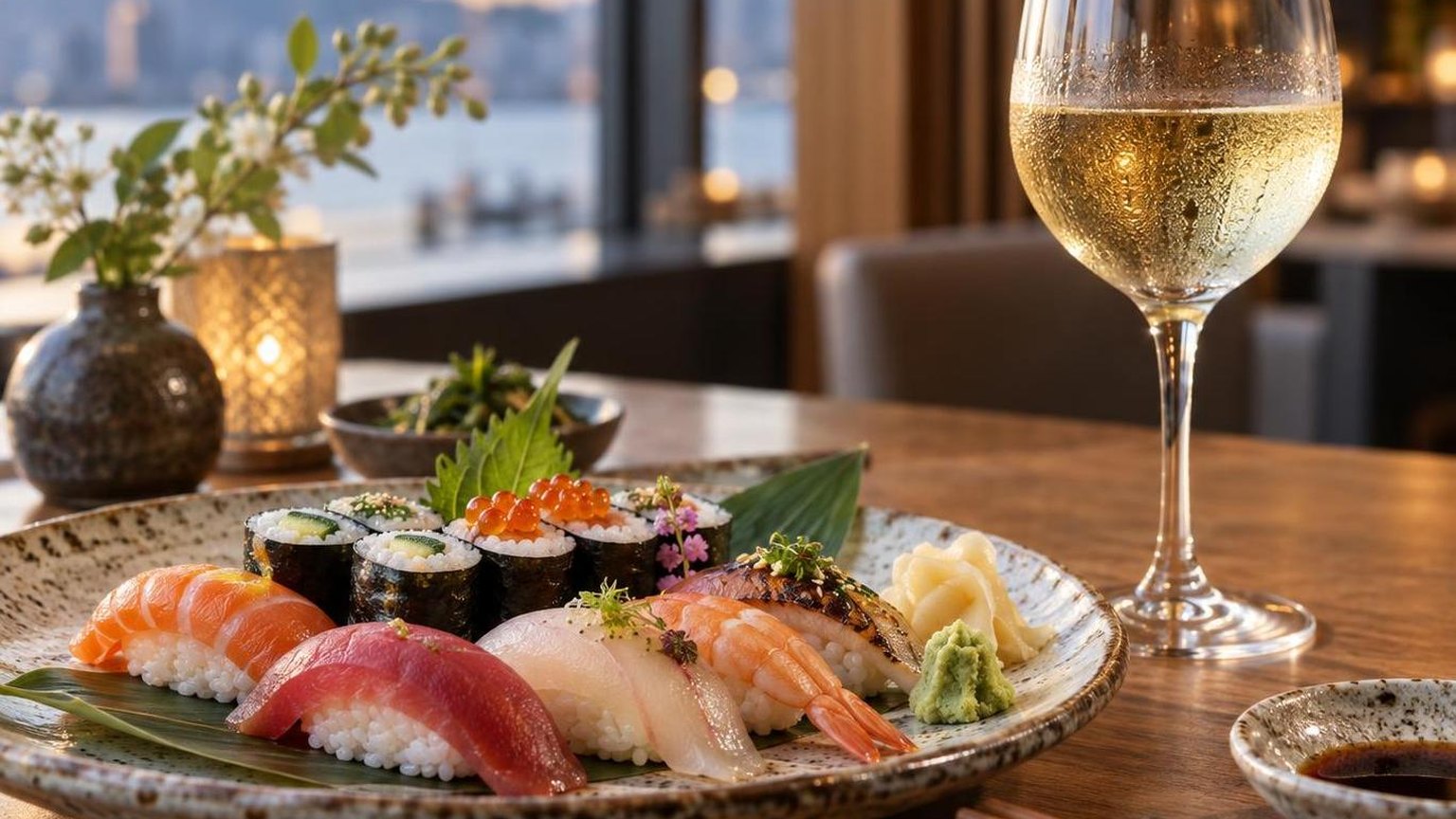
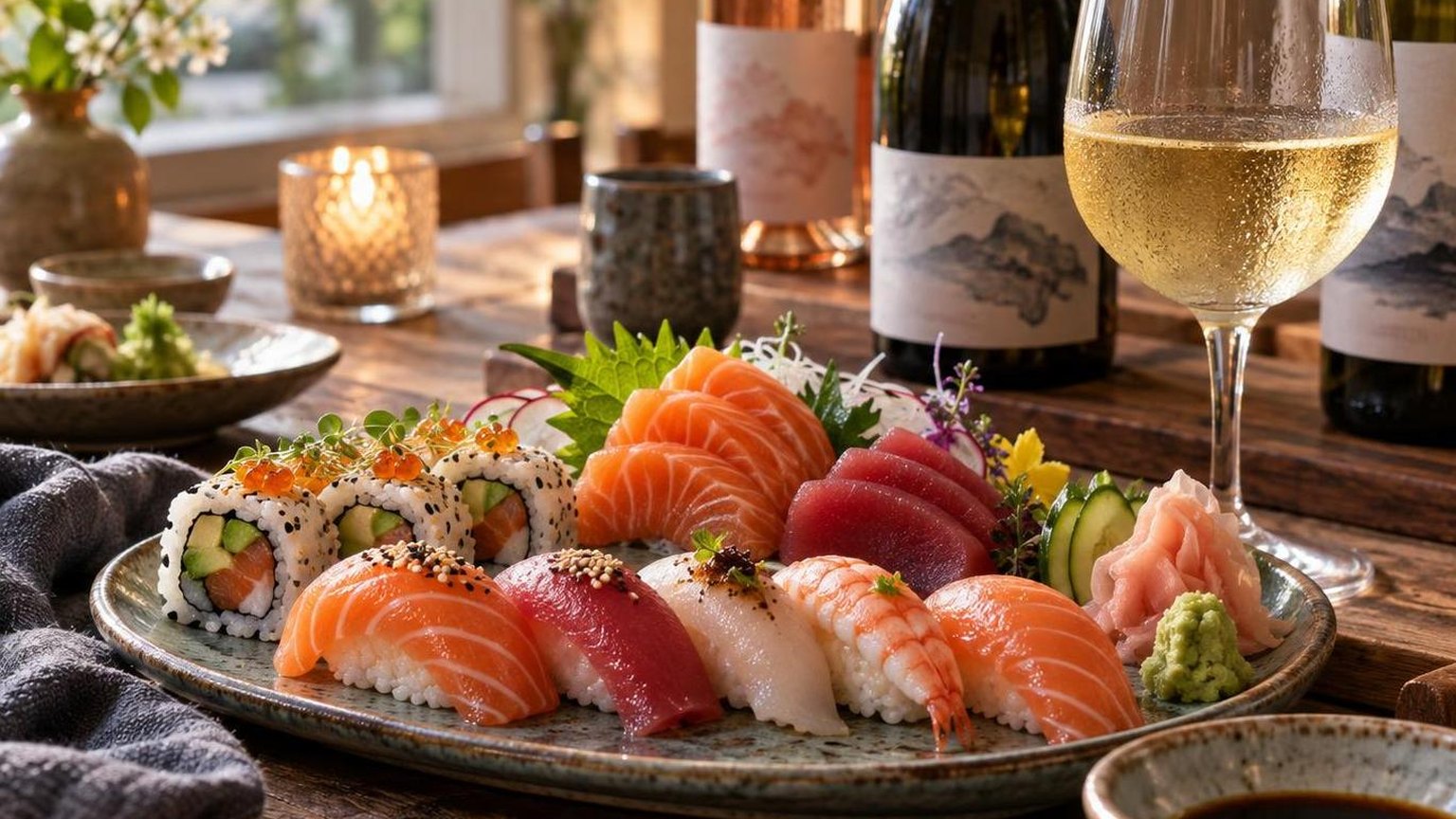
Nigiri and sashimi favor wines with high acidity, restrained alcohol, and little obvious oak.
These traits refresh the palate without masking delicate fish, while moderate sweetness or sparkling-wine dosage can soften wasabi, ginger, and salty soy sauce.
Match the Wine to the Fish
| Sushi | Best wine style | Useful specification | Why it works |
| Sea bream, fluke, squid | Muscadet Sèvre et Maine Sur Lie | Serve at 45–50°F | Lean citrus, saline character, and minimal oak preserve subtle sweetness. |
| Salmon, yellowtail | Chablis | Serve at 48–52°F | Chardonnay acidity cuts fat; restrained fruit respects raw-fish texture. |
| Tuna, chutoro, otoro | Brut or Extra Brut Champagne | Extra Brut contains 0–6 grams of sugar per liter | Bubbles and acidity lift rich tuna oils. |
| Mackerel, sardine | Dry Riesling | Target 11–12.5% alcohol | Citrus acidity counters oiliness without adding tannin. |
| Scallop, sweet shrimp | Off-dry Riesling | Serve at 45–50°F | Gentle sweetness mirrors shellfish and cushions wasabi heat. |
| Akami tuna | Dry rosé or light Pinot Noir | Serve Pinot Noir at 55–60°F | Light red fruit complements meaty flavor while low tannin limits metallic impressions. |
Muscadet, made from Melon in France’s western Loire, is the safest choice for lean white fish.
Sur lie aging keeps the wine on spent yeast through winter, adding subtle texture without the vanilla or toast that heavily oaked Chardonnay can impose.
Chablis works better with salmon and yellowtail because those fish contain more palate-coating fat.
Chablis is Chardonnay from northern Burgundy, but its typical high acidity and limited overt oak make it more precise with raw fish than many warm-climate Chardonnay styles.
Champagne is especially effective with fatty tuna. Carbonation physically scrubs the palate, while acidity resets it between bites.
Comité Champagne defines Extra Brut at 0–6 grams of sugar per liter and Brut below 12 grams per liter; either remains dry enough for sashimi.
Riesling handles strongly flavored silver-skinned fish, including saba and iwashi. Choose a dry bottling when the fish is simply sliced.
Choose a lightly off-dry version when the preparation includes grated ginger, scallion, spicy sauce, or a substantial dab of wasabi.
When a Light Red Works
Akami, the lean red portion of tuna, can support chilled Pinot Noir or dry rosé. Select an unoaked, low-tannin bottle with fresh acidity.
Avoid Cabernet Sauvignon, Syrah, and heavily extracted reds: tannin interacting with fish oils can create bitter, metallic flavors.
Use soy sauce sparingly during pairing. Its salt and umami intensify alcohol and oak, making delicate wine seem harsher. Dip the fish rather than saturating the rice, then reassess the wine before adding wasabi or pickled ginger.
Wine Choices for Rolls and Sauces
Sushi rolls introduce ingredients rarely found in nigiri—cream cheese, avocado, tempura batter, and thick sauces—that fundamentally change wine pairing dynamics.
These additions increase fat content, sweetness, and umami, demanding wines with enough body and acidity to cut through.
California Rolls and Uramaki
The California roll combines imitation crab, avocado, and cucumber. Avocado contributes roughly 15 g of fat per fruit, coating the palate.
A Grüner Veltliner from Wachau with 12.5–13.5% ABV provides the peppery lift and acidity (6–7 g/L total acid) needed to refresh between bites.
Uramaki with cream cheese, such as Philadelphia rolls, push fat content even higher. An Albariño from Rías Baixas at 12–13% ABV delivers saline minerality that contrasts the dairy richness without overwhelming delicate crab flavors.
Tempura Rolls
Deep-fried shrimp tempura rolls carry oil from frying at 170–180°C. Sparkling wines excel here.
A Crémant d’Alsace or Spanish Cava, both produced via traditional method with 12–12.5% ABV, uses CO₂ effervescence to physically scrub fat from the palate.
Brut-style bubbles with under 12 g/L residual sugar perform best. Sweeter sparkling wines amplify the fried coating’s richness rather than countering it.
Sauce Pairings
Sauces on specialty rolls vary wildly in sugar, salt, and heat. Each demands a different wine response.
| Sauce | Key Flavor | Recommended Wine | Why It Works |
| Spicy mayo | Heat + fat (Sriracha, mayonnaise) | Off-dry Riesling (20–45 g/L RS) | Residual sugar tempers capsaicin burn |
| Eel sauce (nitsume) | Sweet + umami (mirin, soy, sugar) | Dry Rosé (Provence, ≤4 g/L RS) | Crisp acidity offsets caramelized sweetness |
| Ponzu | Citrus + salt (yuzu, soy) | Vermentino (Sardinia, 12–13% ABV) | Citrus aromatics echo yuzu without clashing |
| Wasabi-soy blend | Sharp heat + salt | Muscadet Sèvre et Maine sur lie | Lean body and 11.5–12% ABV avoids amplifying heat |
Dragon Rolls and Rich Specialty Rolls
Dragon rolls layer eel, avocado, and sweet eel sauce. This triple combination of fat, protein, and sugar needs a wine with structure. A Chenin Blanc from Vouvray labeled “sec” delivers 10–13 g/L acidity alongside stone-fruit weight.
Rainbow rolls featuring multiple fish species over a California roll base pair well with Pinot Gris from Alsace. Its broader texture at 13–14% ABV accommodates the variety of flavors without favoring one fish over another.
Practical Guidelines
- Serve all pairing wines between 7–10°C to maintain freshness against rich rolls
- Avoid oaked whites—barrel tannins clash with nori’s iodine character
- Match sauce intensity to wine body: light sauces with lean wines, heavy sauces with fuller-bodied whites
- Pour 90–120 mL per glass to allow multiple pairings across a sushi platter
Sparkling Wine with Tempura Sushi
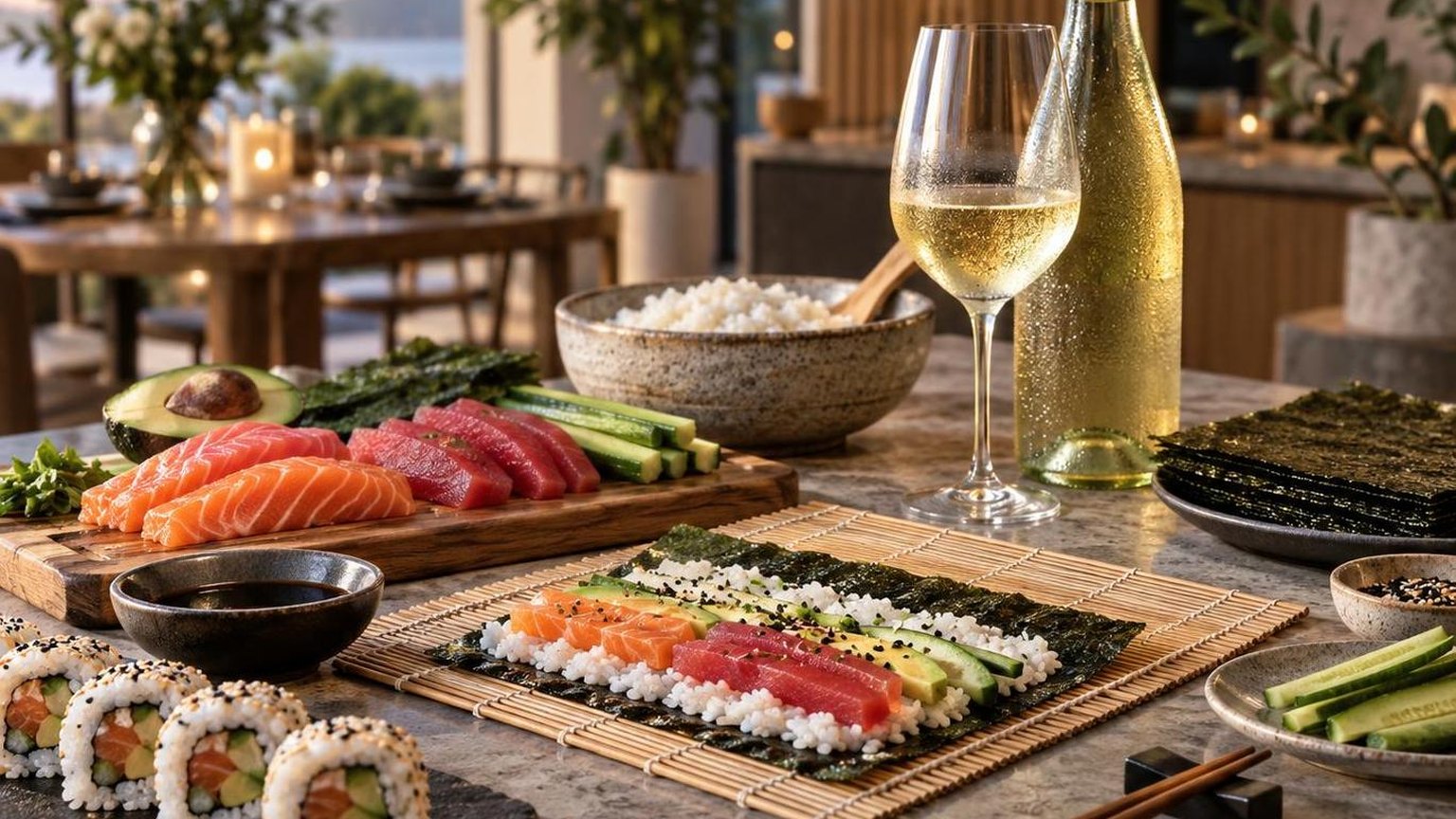
Tempura sushi rolls demand a wine that cuts through the oil from deep-frying at 170–180°C.
Sparkling wine’s dissolved CO₂—typically 5–6 atmospheres of pressure in a bottle—acts as a palate cleanser, scrubbing away residual grease between bites.
The carbonation in sparkling wine triggers trigeminal nerve receptors on the tongue, creating a scrubbing sensation that resets the palate. This makes each subsequent bite of shrimp tempura or crunchy roll taste as fresh as the first.
Best Sparkling Styles for Tempura
Not all sparkling wines perform equally with fried sushi. The key variables are acidity, dosage (residual sugar), and mousse texture.
| Sparkling Wine | Acidity (g/L tartaric) | Dosage (g/L sugar) | Best Tempura Pairing |
| Brut Champagne (NV) | 6–8 | 6–12 | Shrimp tempura roll |
| Crémant d’Alsace | 5.5–7 | 6–10 | Vegetable tempura maki |
| Brut Cava | 5.5–6.5 | 6–12 | Soft-shell crab tempura |
| Franciacorta Brut | 6–7.5 | 6–10 | Sweet potato tempura roll |
| Brut Prosecco (Valdobbiadene) | 5–6 | 6–12 | Crunchy tuna roll |
Why Brut Over Extra Dry
Brut sparkling wines contain under 12 g/L residual sugar. Extra Dry versions carry 12–17 g/L. That additional sweetness competes with the rice’s seasoned vinegar (typically 4–5% acidity) and blurs flavor definition.
Soy sauce adds roughly 900 mg of sodium per tablespoon. High-acid Brut Champagne at 6–8 g/L tartaric acid counterbalances that salinity without adding sweetness that would clash with wasabi’s sharp allyl isothiocyanate compounds.
Serving Recommendations
- Serve sparkling wine at 6–8°C to maximize CO₂ retention and refreshment against hot tempura batter
- Pour 120–150 mL per serving in a tulip glass to concentrate aromas while preserving the mousse
- Choose Blanc de Blancs (100% Chardonnay) for lighter vegetable tempura—its citrus and green-apple notes mirror the delicate filling
- Select Blanc de Noirs (Pinot Noir/Pinot Meunier) for richer shrimp or soft-shell crab tempura, where the wine’s 12–12.5% ABV and fuller body match the protein’s weight
- Avoid vintage or prestige cuvées aged 5+ years on lees—their complex brioche and autolytic characters overpower sushi rice
Budget-Friendly Picks
Cava offers the strongest value. Spanish Denominación de Origen regulations require a minimum of 9 months on lees for standard Cava, producing fine bubbles at $8–$15 retail. Comparable Champagne starts at $35–$45.
Crémant d’Alsace, made from Pinot Blanc or Riesling grapes, typically retails at $12–$20. Its floral aromatics and bright 5.5–7 g/L acidity pair particularly well with tempura asparagus and avocado rolls.
Pairing Wasabi Ginger and Soy Sauce
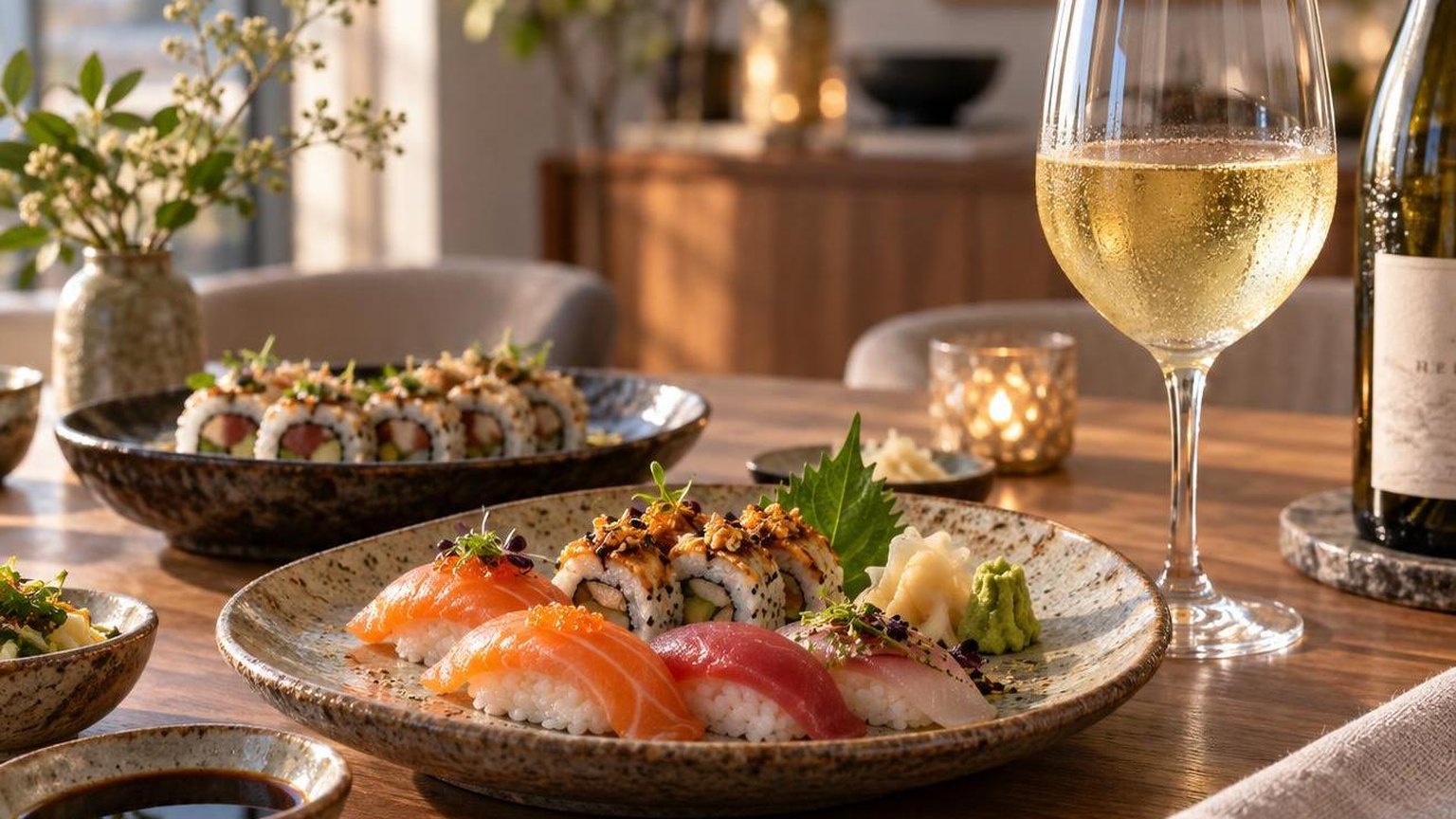
Wasabi, pickled ginger, and soy sauce can influence a sushi pairing more strongly than the fish. Choose a wine with bright acidity, modest alcohol, restrained oak, and enough fruit or residual sugar to absorb salt, sweetness, and pungency.
Taste the sushi before adding condiments, then add soy sparingly. This separates the flavor of the fish and rice from the effects of salt, heat, and pickling vinegar.
Match Soy Sauce with Acidity and Fruit
Soy sauce contributes salt, glutamate-driven umami, roasted aromas, and fermented complexity.
Kikkoman reports that traditionally brewed soy sauce contains hundreds of aroma components; these can make highly tannic reds taste drier, harder, and more metallic.
Dry Riesling, Grüner Veltliner, Muscadet, and traditional-method sparkling wine provide the acidity needed to refresh the palate. Their citrus, apple, mineral, or bread-dough notes complement sushi rice without competing with delicate white fish.
Avoid heavily oaked Chardonnay and tannic Cabernet Sauvignon when soy sauce is prominent. Oak-derived vanilla can clash with fermented savoriness, while tannin feels more astringent beside salty, umami-rich foods.
Light-bodied Pinot Noir can work with tuna or salmon if served cool and used with restraint.
Control Wasabi Heat
True wasabi and prepared horseradish mixtures produce pungency primarily through volatile isothiocyanates.
Unlike capsaicin from chile peppers, this sensation rises through the nose and fades relatively quickly, according to food-chemistry research summarized by the American Chemical Society.
Alcohol intensifies perceived heat, so powerful wines are poor partners. Choose Riesling, Chenin Blanc, Moscato, or sparkling wine with moderate alcohol.
A small amount of residual sugar softens pungency, while high acidity prevents the combination from becoming cloying.
| Condiment level | Useful wine specification | Examples |
| Light soy, little wasabi | Alcohol below 13.5%; dry or nearly dry | Muscadet, Chablis, Brut sparkling wine |
| Moderate soy and wasabi | Alcohol from 10.5% to 12.5%; residual sugar from 5 to 15 grams per liter | Kabinett Riesling, off-dry Chenin Blanc |
| Heavy wasabi or sweet ginger | Alcohol below 12%; residual sugar from 15 to 35 grams per liter | Off-dry Riesling, demi-sec sparkling wine |
Use Pickled Ginger as a Reset
Gari is intended as a palate cleanser between pieces, not as a topping. Its vinegar, sugar, and ginger refresh the mouth, but sweet commercial versions can make bone-dry wine seem thin or sharply acidic.
With noticeably sweet gari, select an off-dry Riesling or Chenin Blanc whose sweetness equals or slightly exceeds the condiment.
Brut sparkling wine remains effective when the ginger is tart rather than sugary because carbonation and acidity clear lingering soy and fish oils.
- Pour soy sauce into a shallow dish rather than saturating the rice.
- Apply wasabi in a thin dab, then retaste before changing wines.
- Eat ginger between different fish styles, especially before moving from oily salmon or mackerel to lean white fish.
- Serve aromatic whites cool, not ice-cold, so their fruit remains perceptible against the condiments.
Common Questions
What wine pairs best with sushi?
Brut sparkling wine is the most versatile choice because its high acidity and carbonation refresh the palate after fatty fish, rice, and tempura. Champagne, Crémant, and dry Cava work particularly well with mixed sushi platters.
What white wine goes with salmon or tuna sushi?
Dry Riesling, Albariño, and Chablis have enough acidity to balance salmon’s fat and complement raw tuna without masking its delicate flavor. Choose bottles near 12% alcohol and avoid heavily oaked Chardonnay, which can overwhelm the fish.
What wine pairs with spicy tuna rolls?
An off-dry Riesling with roughly 10–20 grams per liter of residual sugar softens the heat from spicy mayonnaise and chili sauce. Keep alcohol near 8–11% because higher alcohol intensifies chile burn.
Can red wine pair with sushi?
Light, low-tannin reds such as Pinot Noir, Gamay, or chilled Zweigelt can pair with tuna, salmon, eel, and mushroom rolls. Avoid tannic Cabernet Sauvignon or Syrah because tannin can react with fish oils and create a metallic impression.
What wine goes with tempura sushi rolls?
Brut sparkling wine or a high-acid Sauvignon Blanc cuts through fried batter and creamy sauces. A sparkling wine labeled Brut typically contains no more than 12 grams per liter of residual sugar, keeping the pairing crisp rather than cloying.
Should wine served with sushi be sweet or dry?
Dry wine suits traditional nigiri and sashimi, while off-dry wine works better with wasabi, chile, sweet eel sauce, or spicy mayonnaise.
Serve sparkling and white wines at 45–50°F and light reds slightly chilled at 55–60°F to preserve freshness.
Further Reading
- Does Wine Have to Be Refrigerated After Opening?
- What Wine Goes With Chicken?
- What Wine Goes With Pizza?
- How Many Glasses of Wine in a Box?
- Beer Cave Wine and Spirits Store Near You
- How Many Calories In Bottle Wine? Most Correct Answer
- How Much Wine Is In A Bottle?
- Where Is the Expiration Date on Wine Bottles?
- All Alcohol Guides
- U.S. Food and Drug Administration, Food Code 2022 (2022)
- U.S. Food and Drug Administration, Fish and Fishery Products Hazards and Controls Guidance (2022)
- U.S. Food and Drug Administration, Advice About Eating Fish (2021)
- Wine & Spirit Education Trust, Pairing Wine with Sushi (2021)
- Decanter, What Wine Goes Best with Sushi? (2021)
- Wine Enthusiast, The Best Wines to Pair with Sushi (2023)
- JancisRobinson.com, Wine with Sushi (2018)