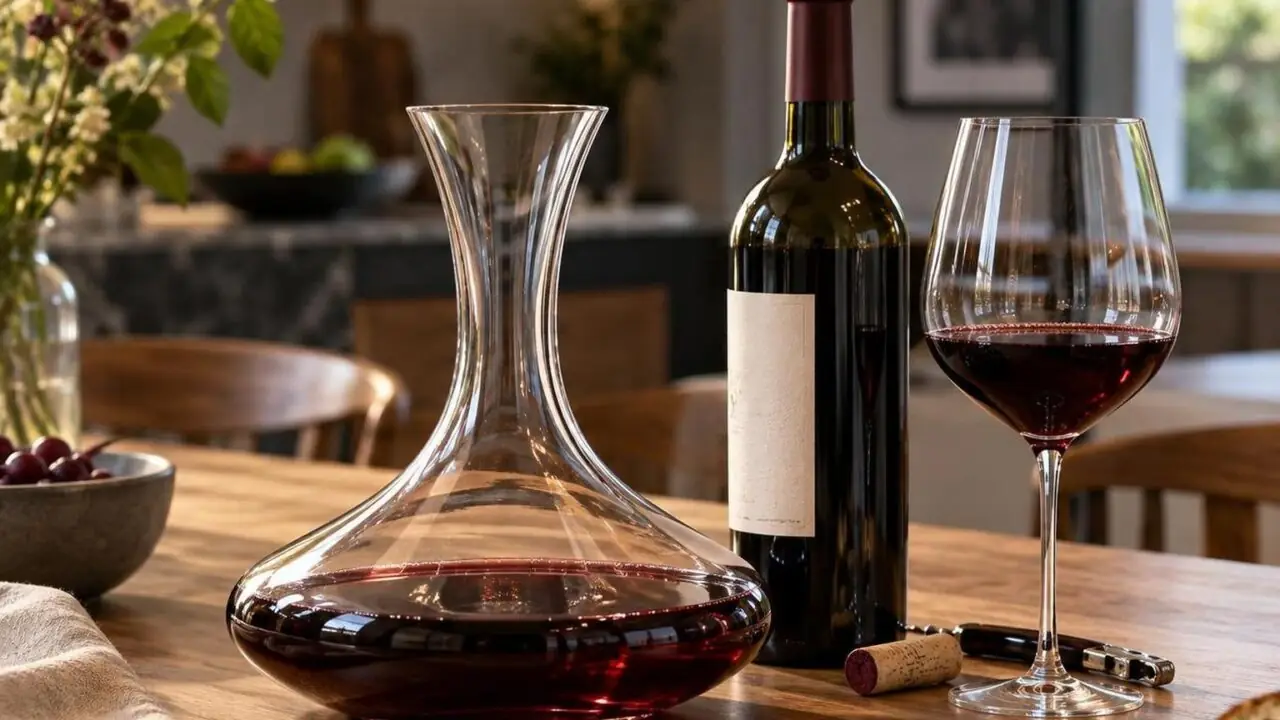
How Long Should You Let Wine Breathe? is usually 15 to 30 minutes for a young red, although the ideal time depends on the wine’s age, grape variety, tannin, and serving condition.
Aeration exposes wine to oxygen, softening some tannins and releasing aromas that may seem muted immediately after opening.
This guide explains when breathing helps, when decanting works better, and why older wines require caution.
You will learn practical timing ranges for Cabernet Sauvignon, Syrah, Pinot Noir, white wine, and fortified styles, plus simple tasting checks that show whether the wine is improving or losing freshness.
Open the bottle, taste it immediately, and compare it again after 15 minutes; that side-by-side check gives a more reliable answer than a fixed rule.
Wine Breathing Times by Style
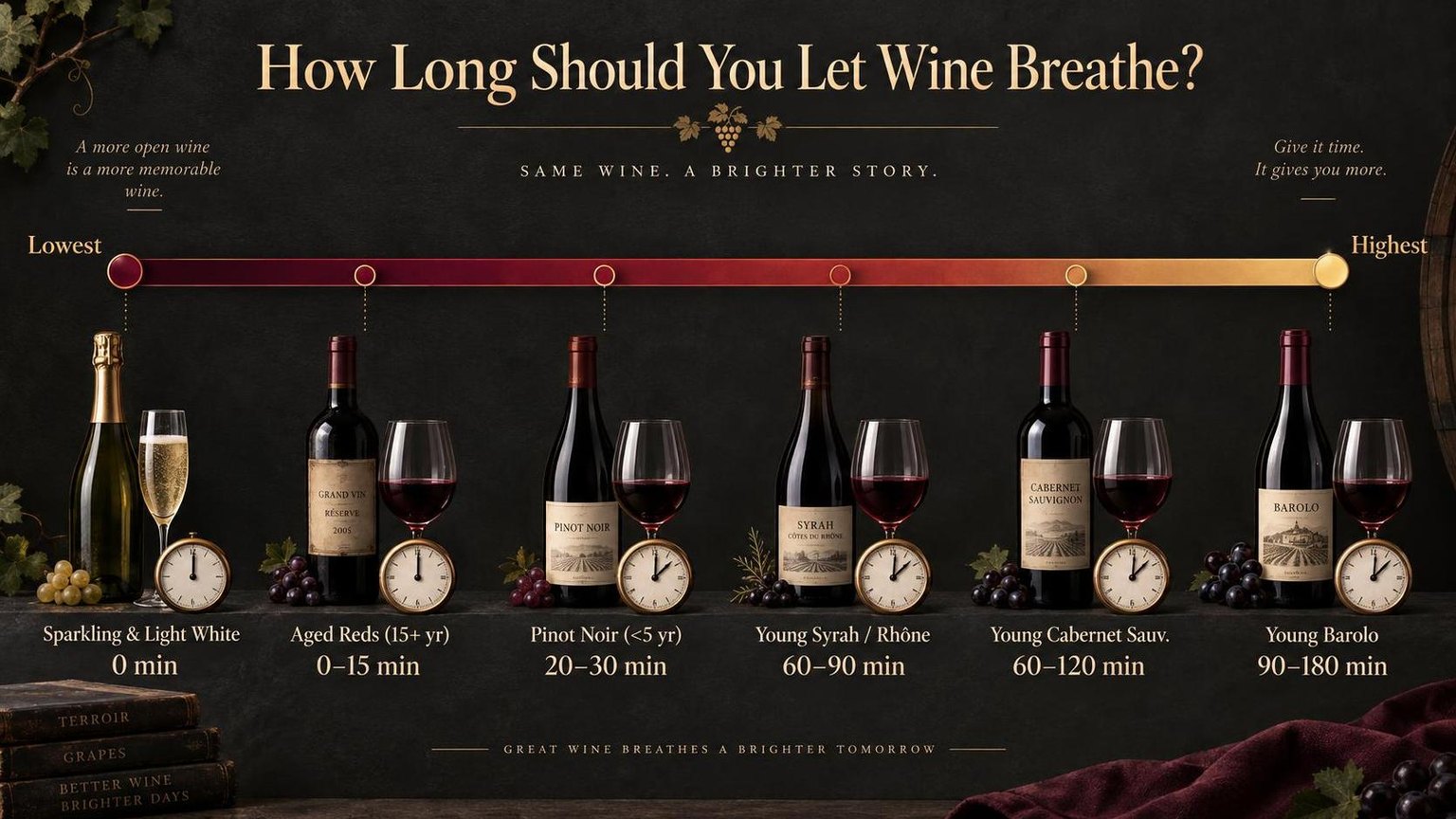
Breathing time varies dramatically by wine style, from zero minutes for delicate aged Burgundy to two hours or more for dense young Barolo.
Getting the timing right determines whether you unlock a wine’s full aromatic potential or flatten it entirely.
| Wine Style | Recommended Breathing Time | Why |
| Young Cabernet Sauvignon (under 5 years) | 60–120 minutes | Softens firm tannins; opens dark fruit and cedar notes |
| Young Barolo / Barbaresco | 90–180 minutes | Nebbiolo’s high tannin and acidity need extended air contact |
| Young Syrah / Rhône blends | 60–90 minutes | Reduces initial meatiness; reveals pepper and violet aromatics |
| Young Bordeaux blends | 60–120 minutes | Integrates oak influence; mellows grippy tannin structure |
| Pinot Noir (under 5 years) | 20–30 minutes | Lighter tannins require less time; over-breathing strips delicate fruit |
| Aged reds (15+ years) | 0–15 minutes | Fragile aromatics dissipate quickly; pour and drink promptly |
| Full-bodied white (oaked Chardonnay) | 15–30 minutes | Opens buttery and toasty notes beyond initial oak dominance |
| Light white (Sauvignon Blanc, Pinot Grigio) | 0 minutes | Freshness and acidity are the appeal; air dulls both |
| Sparkling wines | 0 minutes | Aeration accelerates CO₂ loss, destroying mousse and bead |
| Natural wines with reduction | 15–45 minutes | Volatile sulfur compounds blow off with moderate air contact |
Tannic Reds Need the Most Time
Tannin molecules polymerize when exposed to oxygen, forming longer chains that feel smoother on the palate. A 2019 study in the Australian Journal of Grape and Wine Research confirmed measurable tannin softening after just 30 minutes of aeration.
Wines with tannin levels above 800 mg/L—typical for young Napa Cabernet—benefit most from 1–2 hours of breathing. Below 400 mg/L, as with most Pinot Noir, extended aeration risks diminishing fruit intensity.
Aged Wines: Handle With Care
Wines over 15 years old have already undergone slow oxidation in bottle. Their tertiary aromas—leather, tobacco, dried flowers—are chemically fragile. Prolonged air exposure collapses these compounds within 20–30 minutes.
Decant aged wines only to separate sediment. Pour gently, serve immediately, and expect evolution in the glass over 10–15 minutes as sufficient aeration.
Whites and Rosés: Exceptions Exist
Most whites need no breathing, but full-bodied exceptions exist. White Burgundy aged in oak, Viognier, and barrel-fermented Rioja Blanco all gain complexity with 15–30 minutes of air.
- Oaked Chardonnay: 15–20 minutes reveals stone fruit beneath oak vanillin
- White Rhône blends: 20–30 minutes integrates waxy, lanolin-like textures
- Aged Riesling: 10–15 minutes opens petrol and honey aromatics without losing acidity
- Rosé and unoaked whites: Serve immediately at 45–50°F to preserve crispness
When uncertain, pour a small taste first. Wait 15 minutes, taste again. If the wine shows more fruit and less harshness, continue breathing. If it tastes flatter, serve the rest right away.
When to Decant Instead
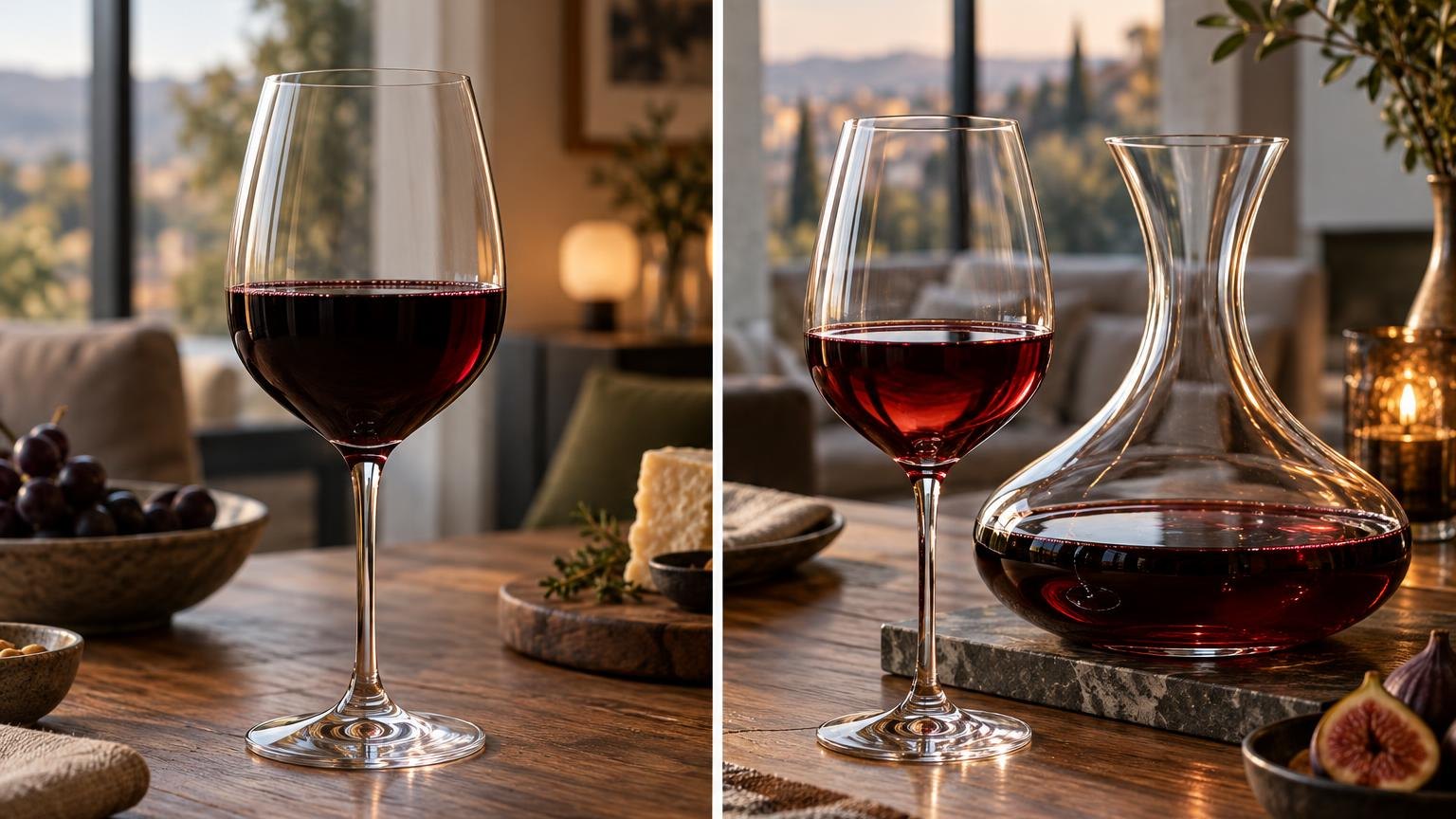
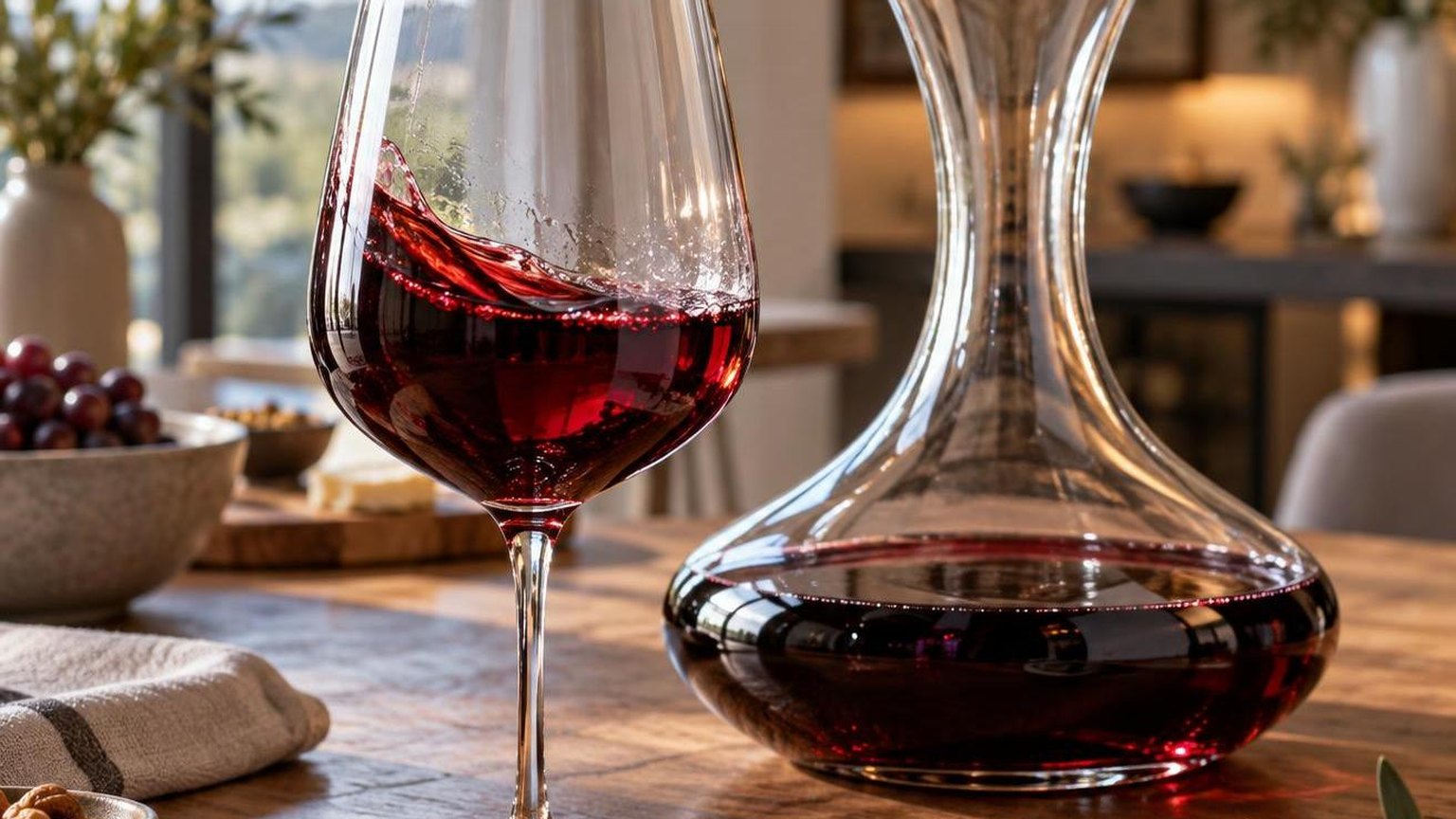
Simply pulling the cork exposes barely 1.5 cm² of surface area to air—virtually useless for aeration. Decanting pours wine across a wide glass surface, multiplying oxygen contact by roughly 20×.
For certain wines, decanting isn’t optional; it’s the only method that works fast enough.
Wines That Demand Decanting
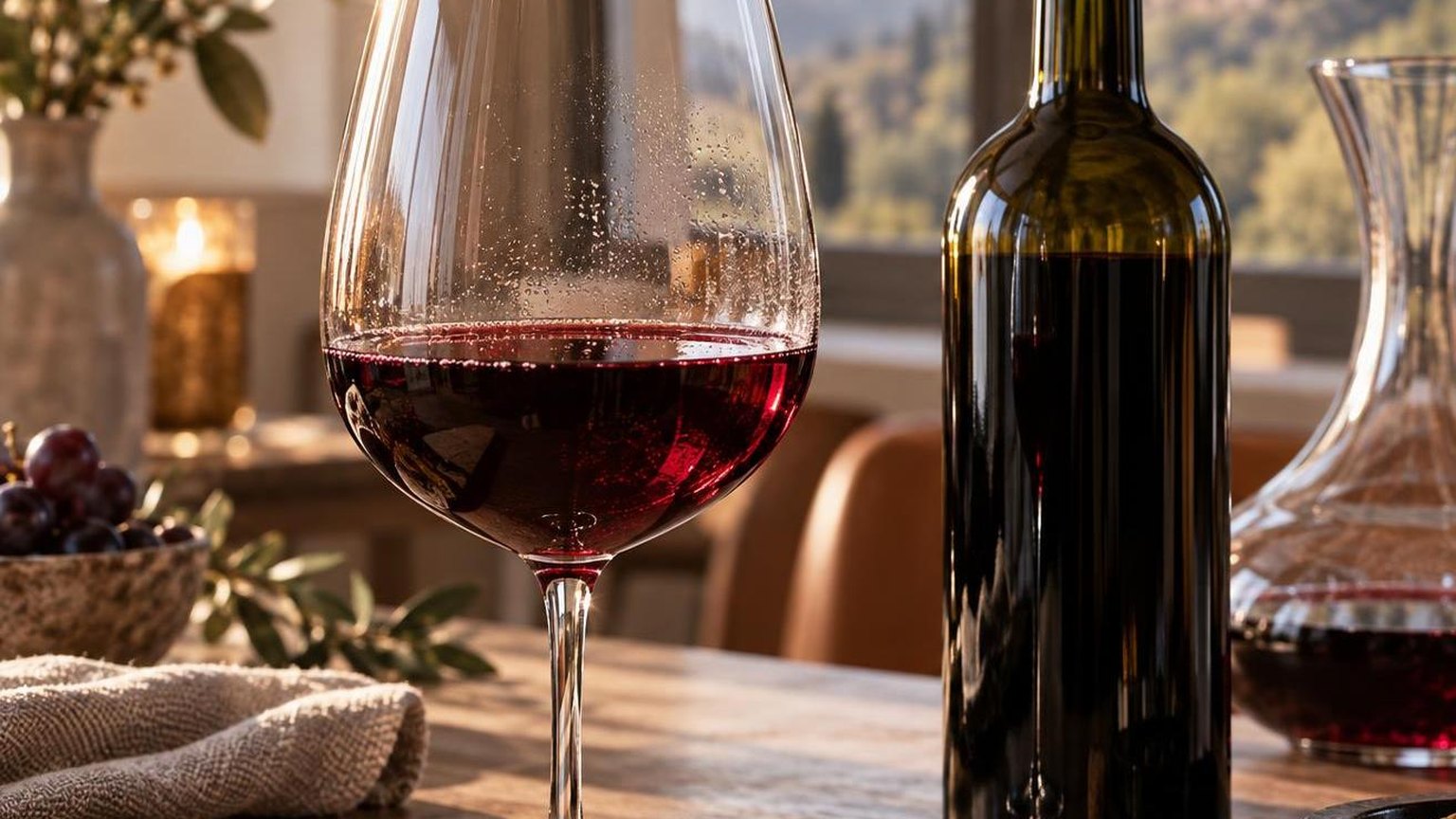
Young, tannic reds under 5 years old benefit most. These wines contain high levels of polymerized tannins that soften measurably with aggressive oxygen exposure.
- Barolo and Barbaresco: Nebbiolo’s notoriously firm tannins require 2–4 hours in a decanter. Many Piedmont producers recommend decanting bottles under 10 years old.
- Young Napa Cabernet Sauvignon: Vintages with 14%+ ABV and 24+ months in new oak typically need 1–2 hours decanted to integrate wood tannins.
- Northern Rhône Syrah: Hermitage and Cornas under 8 years old open dramatically after 1–2 hours in a wide-bottomed decanter.
- Vintage Port (vintage-dated, unfiltered): Requires decanting primarily for sediment removal, plus 1–2 hours of breathing time.
Decanting vs. Breathing in the Bottle
The performance gap between the two methods is substantial and measurable in dissolved oxygen uptake.
| Method | Surface Area Exposed | Time to Noticeable Change | Best For |
| Open bottle (cork pulled) | ~1.5 cm² | 4–12 hours | Mild softening of light reds |
| Standard decanter | ~25–50 cm² | 30–90 minutes | Medium-bodied reds, young whites |
| Wide-base decanter | ~80–120 cm² | 15–45 minutes | Tannic, full-bodied young reds |
| Double decanting (pour out, rinse, pour back) | Maximum agitation | 10–20 minutes | Very young, extracted wines |
When Not to Decant
Decanting damages fragile wines. Aged Burgundy over 15 years old, old Barolo past 20 years, and mature Riesling lose aromatic complexity within minutes of aggressive oxygen exposure.
Sparkling wines should never be decanted. Carbon dioxide dissipates rapidly at atmospheric pressure, leaving flat wine within 10–15 minutes.
Light-bodied reds like Beaujolais Cru or Valpolicella Classico rarely benefit. Their charm lies in fresh fruit aromatics that diminish—not improve—with extended air contact beyond 15–20 minutes.
The Sediment Factor
Any red wine older than 8–10 years likely contains tartrate crystals and pigment sediment. Stand the bottle upright 24–48 hours before opening.
Pour slowly into the decanter, stopping when sediment reaches the bottle’s shoulder. A candle or phone light beneath the neck helps spot the sediment line.
Decanting for sediment removal requires only the pour itself—no extended breathing. Serve immediately after a clean transfer to preserve the wine’s evolved, delicate aromatics.
How Air Changes Wine Flavor
Oxygen triggers two chemical processes in wine: evaporation of volatile compounds and oxidation of phenolic molecules. These reactions fundamentally reshape aroma, taste, and mouthfeel within minutes to hours of exposure.
Evaporation of Volatile Compounds
When wine contacts air, volatile sulfur compounds like hydrogen sulfide (H₂S) and dimethyl sulfide dissipate first.
These molecules produce unpleasant aromas—rotten eggs, struck matches, cooked cabbage—that mask the wine’s true character.
Ethanol also evaporates at a measurable rate. At typical serving temperatures of 16–18 °C for reds, surface ethanol dissipates quickly enough to reduce the “hot” alcohol burn on the nose within 10–15 minutes of pouring.
Acetaldehyde, present in wine at concentrations of 10–75 mg/L, becomes less prominent as it reacts with oxygen and polymerizes. This softens bruised-apple or sherry-like off-notes common in recently bottled wines.
Oxidation of Phenolic Compounds
Tannins—polymeric phenols extracted from grape skins, seeds, and oak—undergo oxidative polymerization when exposed to air. Smaller tannin molecules bind together into larger chains that feel smoother on the palate.
Research published in the American Journal of Enology and Viticulture demonstrates that anthocyanin-tannin complexes form more readily in the presence of dissolved oxygen, stabilizing color and reducing astringency simultaneously.
Young red wines with tannin concentrations above 1,500 mg/L catechin equivalents benefit most. The oxidative softening can simulate months of bottle aging in as little as 30–60 minutes of decanting.
Flavor Shifts by Compound Type
| Compound | Concentration in Wine | Effect of Air Exposure | Time to Notice Change |
| Hydrogen sulfide (H₂S) | 1–80 µg/L | Evaporates; removes rotten-egg odor | 5–10 minutes |
| Ethanol | 12–15% by volume | Surface evaporation reduces alcohol burn | 10–15 minutes |
| Acetaldehyde | 10–75 mg/L | Reacts and polymerizes; softens off-notes | 15–20 minutes |
| Monomeric tannins | 500–3,000 mg/L CE | Polymerize; reduce astringency | 20–60 minutes |
| Anthocyanins | 200–500 mg/L (young reds) | Form stable pigmented polymers | 30–60 minutes |
When Air Exposure Becomes Harmful
Prolonged exposure beyond 12–18 hours pushes oxidation past the beneficial threshold. Acetic acid bacteria convert ethanol into acetic acid at concentrations above 1.2 g/L, producing vinegar-like sourness.
- Delicate aged wines (15+ years) lose tertiary aromas—leather, tobacco, dried fruit—within 30–45 minutes of decanting
- Light-bodied whites and Pinot Noir oxidize noticeably faster due to lower phenolic content (under 500 mg/L CE)
- Wines with low free SO₂ levels (below 15 mg/L) have less antioxidant protection and degrade more rapidly once opened
Understanding these chemical mechanisms helps you control exposure time precisely, matching breathing duration to each wine’s structure rather than relying on guesswork.
Signs Your Wine Is Ready
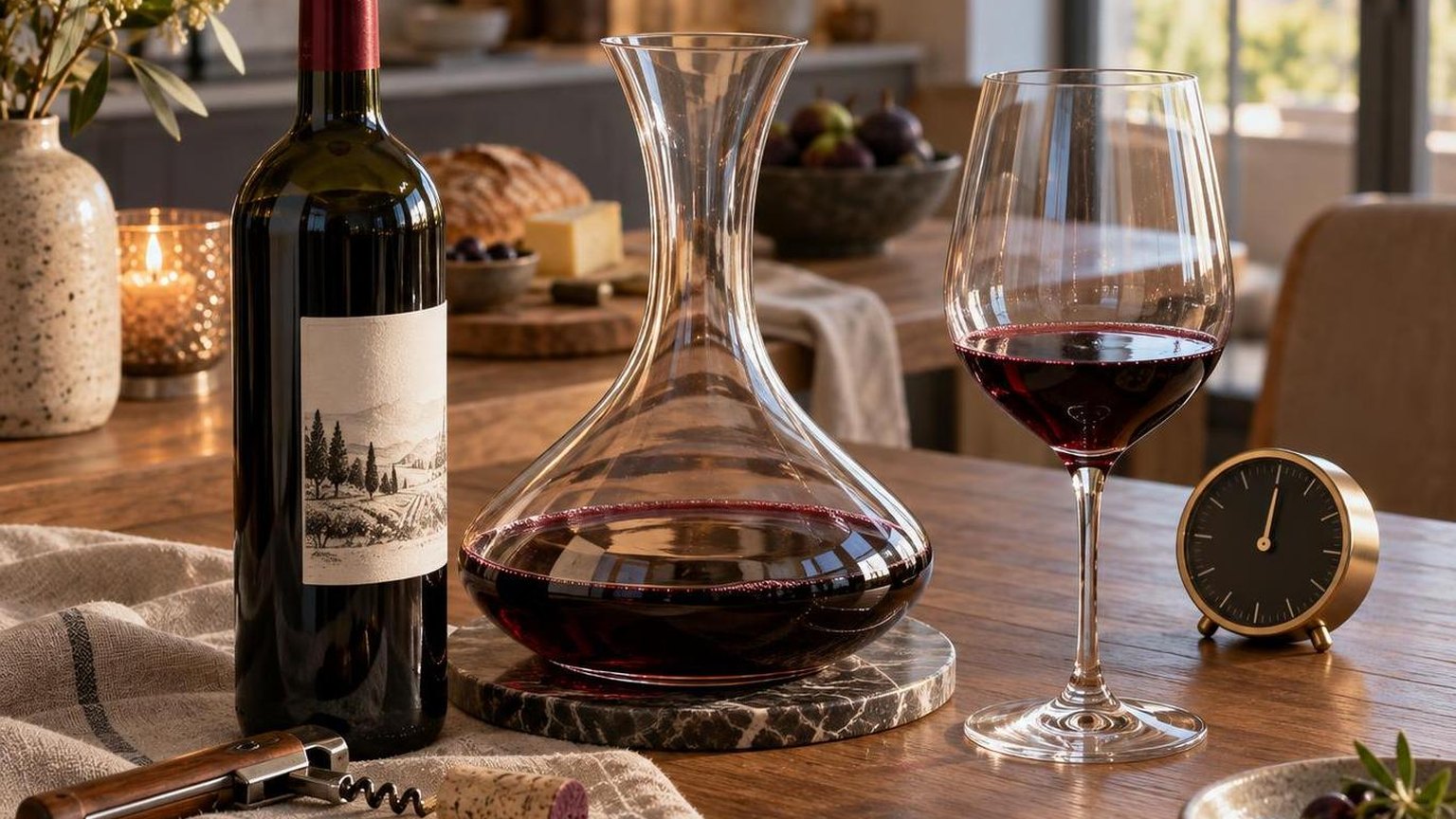
Knowing when wine has breathed enough requires using your senses, not a timer. Aroma evolution, flavor shifts, and textural changes all signal readiness. These markers vary by grape variety, vintage, and wine structure.
The Aroma Test
Primary fruit aromas should emerge clearly from the glass. If you detect sharp, pungent notes—nail polish remover (ethyl acetate) or struck match (sulfur dioxide)—the wine needs more time.
These volatile compounds dissipate at different rates.
| Off-Aroma | Compound | Typical Dissipation Time |
| Struck match / rubber | Sulfur dioxide (SO₂) | 15–30 minutes |
| Nail polish remover | Ethyl acetate | 10–20 minutes |
| Barnyard / closed fruit | Brettanomyces metabolites | 20–45 minutes |
| Reduction / rotten egg | Hydrogen sulfide (H₂S) | 5–15 minutes with swirling |
Once these fade, secondary aromas—spice, earth, oak-derived vanilla—should layer beneath the fruit. That layered complexity signals the wine is opening up.
The Flavor Shift
Take a small sip every 10–15 minutes. Tannins in young red wines soften measurably as polyphenols undergo micro-oxidation.
A Barolo that tastes aggressively astringent at first pour often rounds noticeably after 45–60 minutes of breathing.
Watch for these specific flavor indicators:
- Fruit expression expands: flavors move from muted or monolithic to distinct berry, stone fruit, or citrus identification
- Bitterness recedes: the mid-palate grip loosens, and the finish lengthens without harshness
- Acidity integrates: tartness stops dominating and begins balancing the fruit and body
- Oak influence mellows: heavy toast, coconut, or dill notes blend into the wine’s core rather than sitting on top
The Texture Check
Ready wine feels cohesive on the palate. Separate elements—acid, tannin, alcohol, fruit—merge into a unified sensation.
Sommeliers call this “knitting together.” The wine’s body should feel proportional, not hot or angular.
When You’ve Gone Too Far
Over-breathing is real. Delicate wines—Pinot Noir, aged Burgundy, wines over 15–20 years old—can peak and decline within 30 minutes of decanting. Signs the window has passed:
- Fruit aromas flatten to a generic “winey” smell
- The finish shortens dramatically, dropping below 3–5 seconds
- Color shifts toward brownish hues, indicating excessive oxidation
- Flavors taste hollow or washed out despite initial promise
A 2019 study in the Australian Journal of Grape and Wine Research found that aromatic intensity in Shiraz peaked between 30 and 60 minutes of aeration, then declined measurably by 120 minutes. Timing matters.
The simplest rule: when the wine smells inviting and tastes balanced without a single element screaming for attention, it’s ready. Trust your palate over any prescribed duration.
Breathing Times for Older Bottles
Older wines require fundamentally different handling than young bottles. Aged wines have already undergone years of slow oxidation in the bottle, making their remaining aromatic compounds fragile and quick to dissipate once exposed to air.
Why Age Changes Everything
During bottle aging, tannins polymerize into longer chains and eventually precipitate as sediment. A 20-year-old Bordeaux has already lost 30–50% of its original tannin content through this natural process.
The result: the wine no longer needs extended aeration to soften harsh tannins. Excessive breathing can destroy the delicate tertiary aromas—leather, truffle, dried flowers—that decades of aging produced.
Recommended Breathing Times by Age and Style
| Wine Age | Style | Recommended Breathing | Method |
| 10–15 years | Bordeaux, Barolo, Brunello | 15–30 minutes | Gentle decant off sediment |
| 15–25 years | Bordeaux, Napa Cabernet | 10–20 minutes | Decant and serve promptly |
| 25+ years | Any red | 0–10 minutes | Decant for sediment only; serve immediately |
| 10–20 years | Burgundy, aged Pinot Noir | 0–15 minutes | Pour directly or brief decant |
| 20+ years | Vintage Champagne | 0–5 minutes in glass | No decanting |
| 30+ years | Vintage Port (Vintage/LBV) | 15–30 minutes | Decant off heavy sediment |
Critical Handling Rules for Aged Wine
- Stand the bottle upright 24–48 hours before opening to let sediment settle to the bottom.
- Never splash-decant an aged wine. Pour slowly against the decanter wall to minimize oxygen exposure.
- Use a candle or flashlight under the bottle neck while decanting to spot sediment before it enters the decanter.
- Monitor the glass. Wines over 20 years old can peak within 10–15 minutes of pouring, then fade rapidly.
The Window of Peak Expression
Master Sommelier Madeline Triffon has noted that truly old wines sometimes offer only a 5–10 minute window of peak aromatics before collapsing in the glass.
A well-stored 1982 Bordeaux, for example, may need nothing more than a careful decant for sediment removal. Letting it sit open for an hour could strip away the very complexity that 40+ years of cellaring created.
When an Older Wine Needs More Air
Not every aged bottle is fragile.
Wines with exceptionally high tannin and extract at bottling—vintage Port, Barolo from top producers, Hermitage—can retain structural density after 20+ years and still benefit from 20–30 minutes of breathing.
Taste a small pour first. If the wine shows muted fruit and firm tannin, give it another 10 minutes. If aromas bloom immediately, serve without delay.
Questions People Ask Most
How long should you let a young Cabernet Sauvignon breathe?
Young, tannic Cabernet Sauvignons benefit from 1–2 hours of breathing time, ideally in a wide-bottomed decanter that maximizes surface area.
Wines under 5 years old with firm tannins—such as Napa Valley Cabernet or Bordeaux Left Bank blends—soften noticeably after 60 minutes of decanting, as oxygen breaks down harsh phenolic compounds.
Pouring into the glass alone exposes only about 1.5 square inches of wine to air, which is insufficient for meaningful aeration.
Does simply uncorking the bottle count as letting wine breathe?
No. The neck opening of a standard 750 ml bottle is roughly 18 mm in diameter, exposing less than 1 square centimeter of wine to air.
A 2019 study published in the Journal of Agricultural and Food Chemistry confirmed that volatile compound changes in undecanted open bottles were negligible even after several hours.
Decanting or pouring into a glass is necessary to achieve real aeration.
Can you let a wine breathe too long?
Yes—over-aeration strips a wine of its aromatic complexity and causes oxidation that flattens fruit flavors.
Delicate aged Burgundy (15+ years) can fade within 30 minutes of decanting, while fragile Pinot Noir and Nebbiolo over 20 years old may lose their bouquet in as little as 15–20 minutes.
If an older wine smells muted after initial decanting, pour it back into the bottle to slow oxygen exposure.
Do white wines and rosés need breathing time?
Most whites and rosés are ready to drink upon pouring, but full-bodied whites like oaked Chardonnay, white Burgundy, and aged Riesling Grand Cru benefit from 15–30 minutes of aeration.
Complex white Rhône blends (Châteauneuf-du-Pape Blanc, Hermitage Blanc) often open up dramatically after 20 minutes, revealing layered stone fruit and beeswax notes that are initially muted at serving temperature.
Are rapid wine aerators as effective as traditional decanting?
Handheld pour-through aerators force wine through a narrow chamber in seconds, introducing turbulence that mimics roughly 25–30 minutes of passive decanting.
They work adequately for everyday wines in the $10–$30 range that need mild softening, but they cannot replicate the gradual, nuanced development that a structured $50+ Barolo or young Bordeaux achieves over 1–2 hours in a decanter.
Sediment removal—another key function of decanting—is also impossible with a pour-through device.
How do you know when a wine has breathed enough?
Smell the wine every 15 minutes after decanting: when primary fruit aromas (black cherry, plum, cassis) emerge clearly and any sharp alcohol or sulfur notes recede, the wine is ready.
Tannins should feel integrated rather than grippy on the mid-palate. If you detect vinegar-like acetic acid or cardboard-like flatness, the wine has been exposed too long and is beginning to oxidize irreversibly.
- How Many Glasses of Wine in a Box?
- Madeira Vs Marsala
- How Many Bottles of Wine in a Box?
- Good Times Wine Spirits & Brew Store Details
- What A Good Sweet Wine? – The Definitive Answer
- All Alcohol Guides
- University of California, Davis – Department of Viticulture & Enology (2023)
- Journal of Agricultural and Food Chemistry – "Effect of Oxygen Exposure on Polyphenol Composition of Red Wines" (2006)
- American Journal of Enology and Viticulture (2024)
- Cornell University – College of Agriculture and Life Sciences, Enology Extension Lab (2023)
- Oregon State University – Department of Food Science & Technology, Wine Research (2023)
- PubMed – "Influence of Micro-Oxygenation on the Phenolic and Volatile Composition of Red Wine" (2012)
- Australian Journal of Grape and Wine Research – "Oxidative Evolution of Wine During Aging" (2019)
- National Institutes of Health – National Institute on Alcohol Abuse and Alcoholism, "What Is a Standard Drink?" (2024)
- Virginia Tech – Department of Food Science & Technology, Enology & Wine Grape Research (2023)