What Percent Is Tequila? is 40% ABV for most bottles sold in the United States. That equals 80 proof, the standard strength for blanco, reposado, añejo, and extra añejo tequilas on retail shelves and back bars.
By U.S. regulation, tequila must be bottled at no less than 40% ABV, while Mexico allows a broader 35% to 55% ABV range.
Cask-strength and high-proof releases can exceed 40%, but standard tequila pours, cocktail specs, and nutrition estimates usually assume 40% ABV.
What Percent Alcohol Is Tequila
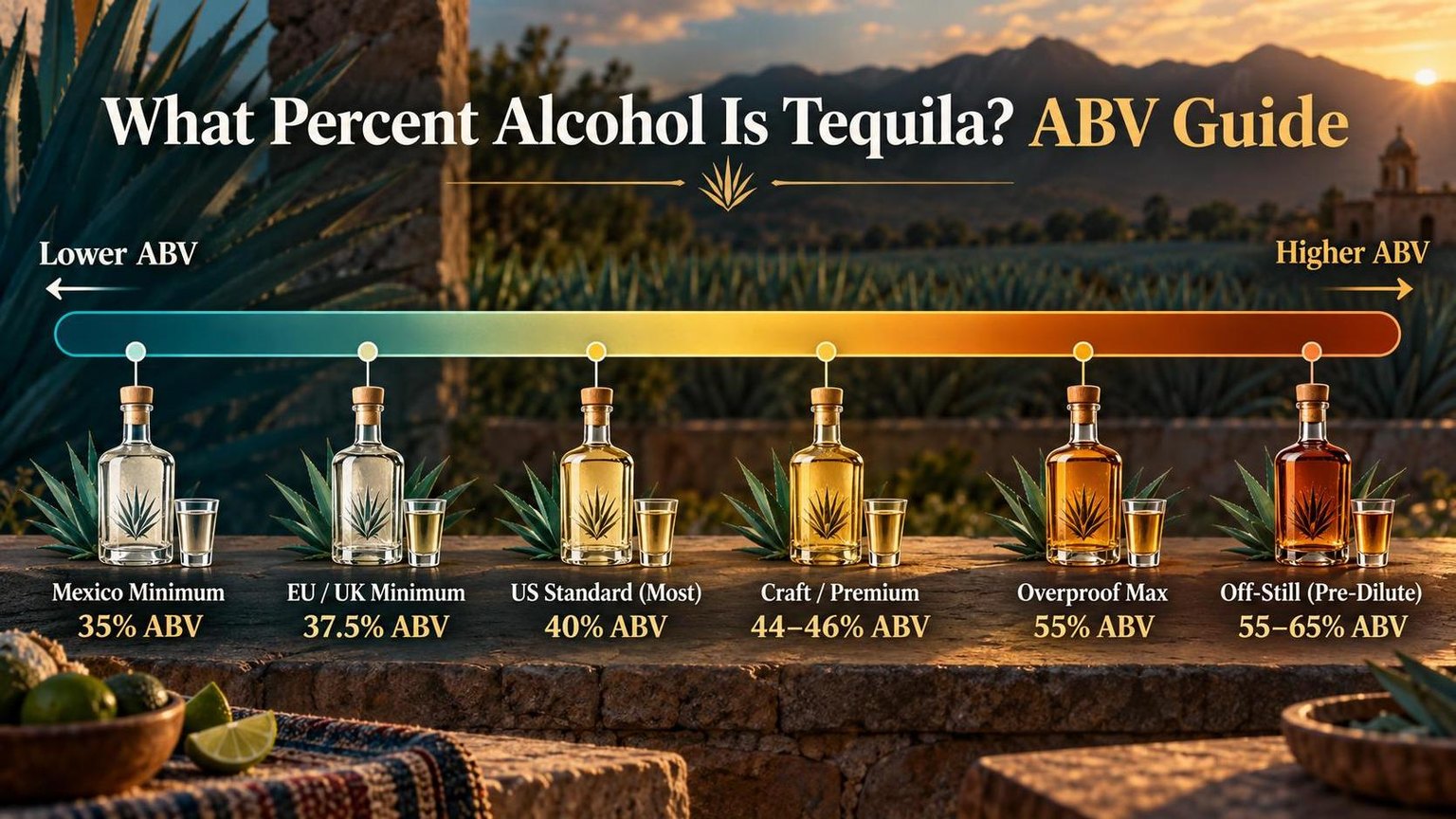
Tequila ranges from 35% to 55% alcohol by volume (ABV), with most commercial bottles sitting at 40% ABV (80 proof). Mexican regulation (NOM-006-SCFI-2012) mandates a minimum of 35% ABV and a maximum of 55% ABV for any spirit labeled tequila.
The 40% ABV standard dominates export markets because U.S. federal law (27 CFR 5.22) requires distilled spirits to contain at least 40% ABV to be sold as tequila. This effectively sets a floor higher than Mexico’s own 35% minimum.
ABV Ranges by Tequila Category
| Category | Typical ABV | Proof (US) |
| Blanco (Silver) | 38%–55% | 76–110 |
| Reposado | 38%–40% | 76–80 |
| Añejo | 38%–40% | 76–80 |
| Extra Añejo | 38%–40% | 76–80 |
| Overproof / Still Strength | 46%–55% | 92–110 |
Blanco tequilas show the widest ABV spread because some producers bottle at still strength without dilution. Aged expressions are almost always diluted to 38%–40% ABV before bottling.
How Tequila Compares to Other Spirits
| Spirit | Standard ABV |
| Tequila | 40% |
| Vodka | 40% |
| Bourbon | 40%–50% |
| Rum | 37.5%–40% |
| Mezcal | 40%–55% |
| Cask-Strength Whiskey | 50%–65% |
Tequila sits squarely in the mainstream range alongside vodka and standard bourbon. Mezcal, its agave cousin, often reaches higher ABV because artisanal producers favor minimal dilution.
Factors That Influence Final ABV
- Distillation cuts: Tequila is typically double-distilled; the hearts cut from the second distillation exits the still around 55%–65% ABV before dilution.
- Water addition: Producers add demineralized water post-distillation to reach their target ABV.
- Barrel aging: Extended oak contact causes minor evaporation (the “angel’s share”), slightly reducing volume but concentrating flavor.
- Export regulations: Destination-country minimums—40% for the U.S., 37.5% for the EU—dictate bottling strength.
Always check the label for exact ABV. “Proof” in the U.S. is simply double the ABV percentage, so an 80-proof tequila contains precisely 40% alcohol.
Typical Tequila ABV by Market
Tequila’s alcohol content varies significantly depending on where it’s sold. Regulatory minimums, consumer preferences, and tax structures all shape the ABV that producers target for different export markets.
ABV Requirements by Region
| Market | Standard ABV Range | Regulatory Minimum |
| Mexico (domestic) | 35%–55% | 35% (NOM-006-SCFI-2012) |
| United States | 40%–50% | 40% (TTB 27 CFR §5.36) |
| European Union | 37.5%–50% | 37.5% (EU Regulation 2019/787) |
| United Kingdom | 37.5%–50% | 37.5% |
| Australia | 37%–50% | 37% (Food Standards Code) |
Mexico’s NOM standard permits tequila as low as 35% ABV—five full points below the U.S. federal minimum of 40%.
What Most Bottles Actually Contain
The vast majority of tequila sold in the United States sits at exactly 40% ABV (80 proof). This is the legal floor and the most cost-efficient bottling strength for producers.
Premium and artisanal brands increasingly bottle at higher proofs. Labels like Fortaleza Still Strength (46% ABV), Pasote Blanco (40%), and Tapatio 110 (55% ABV) illustrate the range available.
Why Markets Differ
- Taxation: Many countries levy excise duties per liter of pure alcohol, incentivizing producers to bottle at the legal minimum.
- Consumer palate: Mexican drinkers are accustomed to 38% ABV tequila for casual sipping, while U.S. cocktail culture demands 40% or above for proper dilution ratios.
- Production cost: Lower ABV means more water and less distillate per bottle, reducing raw material costs by roughly 10%–12% compared to 40% bottlings.
- Craft movement: High-proof expressions (44%–55%) command premium pricing and appeal to enthusiasts seeking fuller agave flavor concentration.
A tequila purchased in Guadalajara at 38% ABV would not legally qualify for sale in the United States without reformulation to meet the 40% threshold.
Always check the label. The same brand may ship different ABV levels to different countries, adjusting strength to satisfy local regulations and market expectations.
Why Tequila Is Usually 40 Percent
The 40% ABV standard for tequila is not arbitrary. It represents the legal minimum set by both Mexican and U.S. regulations, and most producers bottle at exactly that floor to maximize yield and soften the spirit’s intensity.
Mexico’s Norma Oficial Mexicana NOM-006-SCFI-2012 mandates that tequila must contain between 35% and 55% alcohol by volume.
The U.S. federal standard of identity (27 CFR 5.22) requires a minimum of 40% ABV for distilled spirits labeled as tequila.
Bottling at exactly 40% satisfies both regulatory frameworks simultaneously. Producers targeting international markets choose this number because it clears every major import threshold in one production run.
Economic and Sensory Reasons
Higher proof means fewer bottles per batch. Diluting to 40% ABV stretches each liter of high-proof distillate further, directly increasing the number of bottles a distillery can sell from a single distillation.
A distillate leaving the still typically ranges from 55% to 65% ABV. Cutting it with demineralized water to 40% increases total volume by roughly 37–62%, depending on the starting strength.
| Still Output (ABV) | Bottling ABV | Approximate Volume Increase |
| 55% | 40% | ~37% |
| 60% | 40% | ~50% |
| 65% | 40% | ~62% |
Flavor balance also plays a role. At 40% ABV, ethanol heat recedes enough to let cooked agave, citrus, and pepper notes come forward without tasting diluted or thin.
When Producers Go Higher
- Fortaleza Still Strength — bottled at 46% ABV to preserve distillate character straight from the copper pot still.
- Tapatio 110 — released at 55% ABV (110 proof), near the legal ceiling in Mexico.
- G4 High Proof — offered at 45% ABV for bartenders seeking bolder cocktail presence.
These higher-proof expressions cost more per bottle because fewer bottles result from each batch. The price premium reflects lost volume, not added ingredients.
For the vast majority of brands, 40% ABV remains the sweet spot where legal compliance, production economics, and consumer palate expectations converge.
Blanco Reposado Añejo ABV Differences
Tequila’s aging category directly influences its final bottling proof.
While Mexican law sets the same 35–55% ABV range for all categories, producers make deliberate choices about bottling strength based on how aging affects flavor concentration and balance.
Standard Bottling Strengths by Category
Most major brands bottle each expression at a consistent ABV, but the strength often shifts between their blanco, reposado, and añejo lines.
| Category | Aging Requirement | Typical ABV Range | Most Common ABV |
| Blanco (Silver) | 0–59 days | 38–55% | 40% |
| Reposado | 2–12 months in oak | 38–40% | 40% |
| Añejo | 1–3 years in oak | 38–40% | 40% |
| Extra Añejo | 3+ years in oak | 38–40% | 40% |
Why Blancos Show the Widest ABV Spread
Blanco tequila is where high-proof bottlings dominate. Brands like Tapatío 110 (55% ABV), Fortaleza Still Strength (46% ABV), and G4 108 High Proof (54% ABV) all release unaged expressions at elevated proof.
The logic is straightforward: without oak aging to soften and round the spirit, higher alcohol carries more raw agave flavor to the palate.
Aged Categories Trend Lower
Reposado and añejo expressions rarely exceed 40% ABV at bottling. Oak interaction over months or years adds tannins, vanillin, and caramel compounds that deliver complexity without needing higher alcohol as a flavor vehicle.
- Patrón Reposado: 40% ABV
- Don Julio Añejo: 40% ABV
- El Tesoro Reposado: 40% ABV
- Clase Azul Añejo: 40% ABV
During barrel aging, evaporation—called the angel’s share—reduces volume by roughly 2–5% per year in Jalisco’s climate. Producers account for this loss when setting their distillation proof before barreling.
Distillers typically barrel reposado and añejo at slightly above their target ABV, allowing natural evaporation and water addition post-aging to reach the desired 40% bottling strength.
Tequila Proof Versus Alcohol Percent
Proof and ABV measure the same thing—alcohol concentration—but use different scales. In the United States, proof is exactly double the ABV percentage. A standard 40% ABV tequila is therefore 80 proof.
This doubling convention dates to 18th-century spirits testing. The U.S. system was formalized in 1848 under federal excise law and remains unchanged today.
How to Convert Between Proof and ABV
The formula is straightforward: divide the proof number by two to get ABV, or multiply ABV by two to get proof.
| Tequila Type / Brand Example | ABV (%) | Proof |
| Standard blanco (e.g., Jose Cuervo Especial) | 40% | 80 |
| Patrón Silver | 40% | 80 |
| Espolòn Blanco | 40% | 80 |
| Fortaleza Still Strength Blanco | 46% | 92 |
| Tapatío 110 | 55% | 110 |
| Sierra Silver (EU market) | 38% | 76 |
Why the Distinction Matters
Labeling laws differ by country. The U.S. TTB (Alcohol and Tobacco Tax and Trade Bureau) requires both proof and ABV on spirits labels. The EU requires only ABV.
Mexico’s NOM-006-SCFI-2012 mandates tequila contain between 35% and 55% ABV (70–110 proof). Most exported bottles sit at 40% ABV to meet both U.S. and EU minimums for spirits classification.
The UK Proof System Is Different
The historical British proof scale used a factor of 1.75 rather than 2. Under that system, 40% ABV equaled 70° proof. The UK officially abandoned this scale in 1980, adopting ABV as its standard.
Collectors occasionally encounter older tequila bottles marked in British proof. Divide that number by 1.75 to find the actual ABV percentage.
- U.S. proof: ABV × 2 (40% ABV = 80 proof)
- Old British proof: ABV × 1.75 (40% ABV = 70° proof)
- EU/modern standard: ABV only, no proof designation required
When comparing tequilas across markets, always convert to ABV first. Proof numbers from different systems are not interchangeable and can cause significant miscalculation of alcohol intake.
High Proof Tequila Percent Ranges
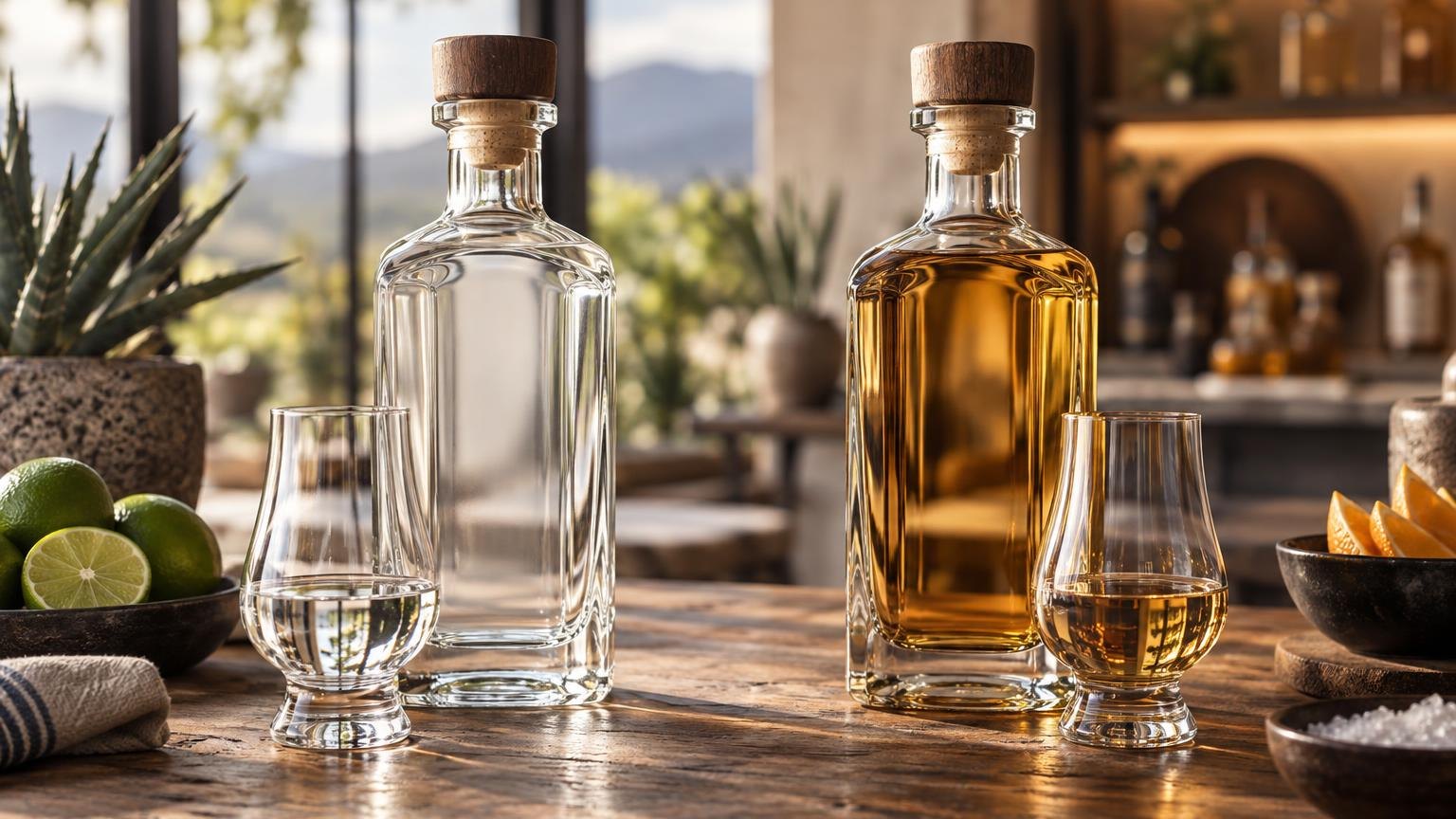
Standard tequila sits at 40% ABV, but high-proof expressions push well beyond that threshold. These overproof tequilas range from 45% to 55% ABV, delivering intensified agave flavor and greater complexity for sipping or cocktail applications.
Mexican regulations (NOM-006-SCFI-2012) permit tequila bottling between 35% and 55% ABV. High-proof expressions occupy the upper band of that legal window.
| Brand & Expression | ABV | Proof (US) | Type |
| Tapatío Blanco 110 | 55% | 110 | Blanco |
| Fortaleza Still Strength Blanco | 46% | 92 | Blanco |
| G4 High Proof Blanco | 54% | 108 | Blanco |
| Pasote Blanco | 40% | 80 | Blanco (standard reference) |
| Ocho Puntas High Proof | 48% | 96 | Blanco |
| Terralta Blanco 110 | 55% | 110 | Blanco |
| Cascahuín Tahona Blanco | 48% | 96 | Blanco |
Most high-proof tequilas are blancos. Minimal barrel aging preserves the raw agave intensity that higher alcohol amplifies.
Why Distillers Bottle at Higher Proof
Dilution to 40% ABV strips volatile aromatic compounds. Bottling at 46–55% retains esters and higher alcohols that carry cooked agave, citrus, and mineral notes.
Bartenders favor overproof tequilas for cocktails because the spirit maintains its agave character against citrus, sweeteners, and dilution from ice.
Key Distinctions Within High-Proof Ranges
- 45–48% ABV: Often labeled “still strength” or “lot strength,” reflecting minimal dilution after distillation.
- 50–55% ABV: True overproof territory. Tapatío 110 and Terralta 110 both hit the legal ceiling of 55% ABV.
- Above 55% ABV: Not legally permitted for products carrying the tequila denomination under Mexican law.
The 55% ABV cap distinguishes tequila from unregulated agave spirits, which can exceed 60% ABV. Mezcal shares an identical 55% ceiling under its own NOM.
High-proof tequilas typically cost 15–30% more per bottle than their 40% ABV counterparts from the same distillery, reflecting reduced yield per liter of distillate.
How Tequila Percent Affects Serving Size
Alcohol percentage directly determines how much tequila constitutes a standard drink. The U.S.
Dietary Guidelines define one standard drink as containing 14 grams (0.6 fl oz) of pure alcohol, making ABV the critical variable in calculating responsible pour sizes.
Standard Drink Calculations by ABV
A 1.5 oz shot of 40% ABV tequila delivers exactly 0.6 oz of pure alcohol — one standard drink. Raise the ABV, and the volume needed for one standard drink shrinks proportionally.
| Tequila ABV | Volume for 1 Standard Drink | Pure Alcohol |
| 35% (70 proof) | 1.71 oz | 0.6 oz |
| 38% (76 proof) | 1.58 oz | 0.6 oz |
| 40% (80 proof) | 1.50 oz | 0.6 oz |
| 46% (92 proof) | 1.30 oz | 0.6 oz |
| 55% (110 proof) | 1.09 oz | 0.6 oz |
Practical Implications for Cocktails
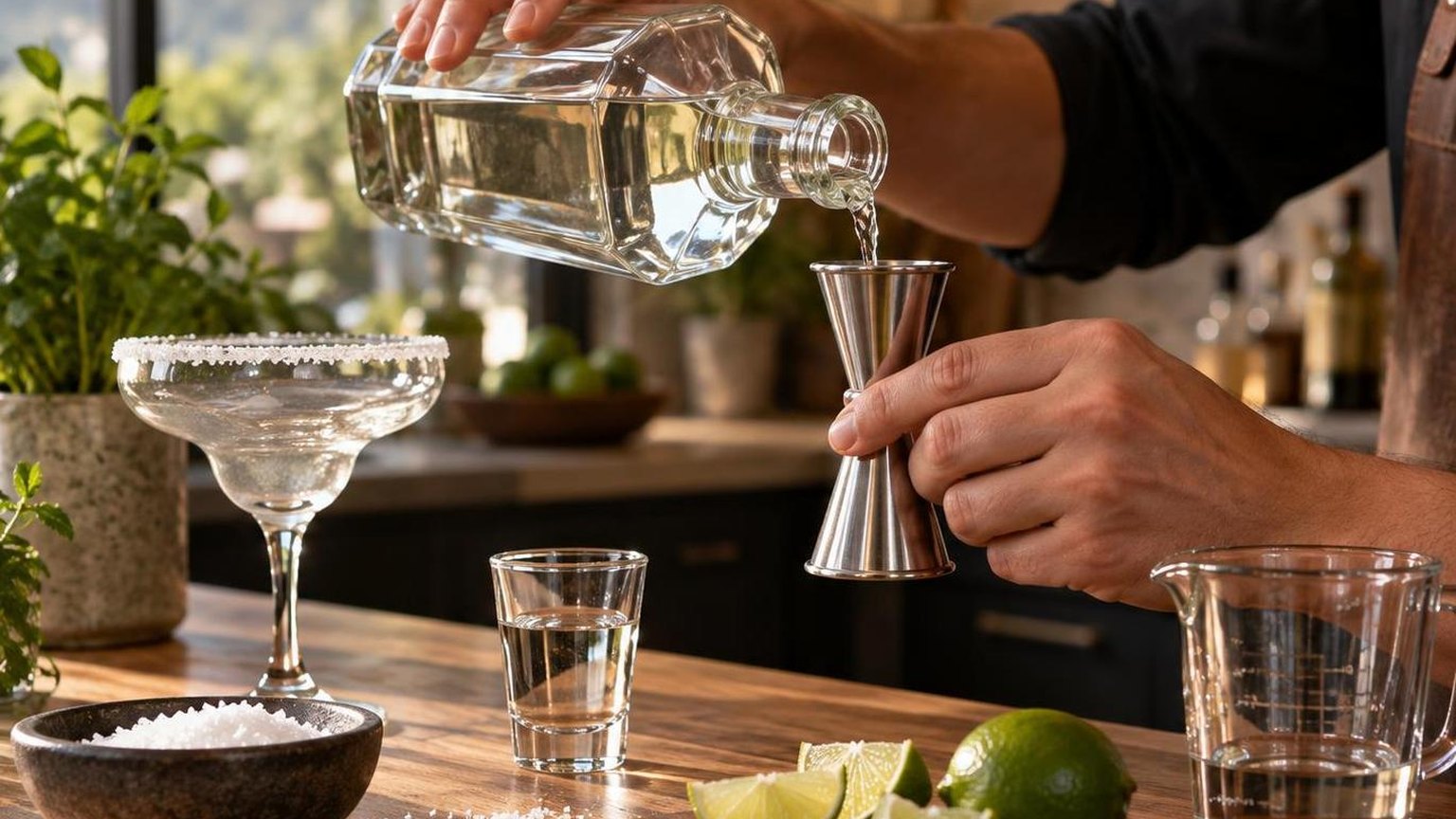
A classic Margarita calls for 2 oz of tequila. At 40% ABV that equals 1.33 standard drinks. Substituting a 46% ABV blanco pushes the same pour to 1.53 standard drinks — a 15% increase in alcohol intake with no change in volume.
Bartenders using overproof tequilas in cocktails often reduce the pour by 0.25–0.5 oz to maintain balanced flavor and consistent alcohol delivery per glass.
Neat Pours and Tasting Portions
Professional tequila tastings typically use 0.5–0.75 oz pours per expression. At 40% ABV, a 0.5 oz tasting pour contains just 0.2 oz of pure alcohol, roughly one-third of a standard drink.
- Restaurant neat pour: 2 oz (1.33 standard drinks at 40% ABV)
- Tasting room pour: 0.5–0.75 oz (0.33–0.50 standard drinks)
- Standard shot: 1.5 oz (1.0 standard drink at 40% ABV)
Caloric Impact by Proof
Alcohol contains 7 calories per gram. A 1.5 oz pour of 40% ABV tequila delivers approximately 97 calories from alcohol alone. The same pour at 55% ABV jumps to roughly 133 calories — a 37% increase with identical volume.
Checking the label for exact ABV before pouring prevents unintentional overconsumption, particularly with premium añejos and extra añejos that frequently bottle at 38–43% ABV.
Common Questions
What Percent Is Tequila? Alcohol Content Explained by Spirit Category
Tequila sold in the United States must contain between 35% and 55% alcohol by volume (ABV), per the Alcohol and Tobacco Tax and Trade Bureau (TTB) regulations.
Most standard bottles land at 40% ABV (80 proof), the commercial sweet spot balancing flavor intensity with drinkability.
Understanding where your specific bottle falls within that 20-point range directly affects how you experience it neat, on the rocks, or in cocktails.
Tequila Alcohol Percentage by Category
| Tequila Type | Typical ABV | Proof | Notes |
|---|---|---|---|
| Blanco / Silver | 38–55% | 76–110 | Widest ABV range; many craft blancos bottled at 42–46% |
| Reposado | 38–40% | 76–80 | Aged 2–12 months; usually diluted to 40% |
| Añejo | 38–40% | 76–80 | Aged 1–3 years in oak barrels ≤600 liters |
| Extra Añejo | 38–40% | 76–80 | Aged 3+ years; nearly always 40% ABV |
| Cristalino | 35–40% | 70–80 | Filtered añejo; some brands go as low as 35% |
| Overproof / Still Strength | 46–55% | 92–110 | Bottled closer to distillation strength |
Mexican regulation (NOM-006-SCFI-2012) sets the floor at 35% ABV for tequila sold domestically, while the TTB requires a minimum of 40% for products labeled “tequila” in the US market.
This discrepancy means some bottles legal in Mexico cannot be sold as tequila in the United States without reformulation.
What Determines Tequila’s Alcohol Percentage
Tequila comes off the still at roughly 55–75% ABV after double distillation in copper pot or stainless steel stills. Producers then dilute with demineralized water to reach their target bottling strength.
The choice of bottling proof is a deliberate decision: higher-proof blancos like Fortaleza Still Strength (46% ABV) or Tapatio 110 (55% ABV) preserve more volatile aromatic compounds from the cooked agave, delivering a more intense nose and palate.
Aged expressions rarely exceed 40% because extended oak contact already concentrates flavor, and higher alcohol can amplify tannic bitterness from the barrel.
How Tequila Compares to Other Spirits
| Spirit | Standard ABV | Legal Minimum (US) |
|---|---|---|
| Tequila | 40% | 40% |
| Vodka | 40% | 40% |
| Bourbon | 40–50% | 40% |
| Rum | 40% | 40% |
| Mezcal | 40–55% | 40% |
| Gin | 40–47% | 40% |
Tequila sits squarely in the same ABV band as most distilled spirits.
The meaningful difference lies not in percentage but in source material: tequila must be made from at least 51% blue Weber agave (Agave tequilana) grown in designated Mexican states, with “100% agave” tequilas using no other fermentable sugars.
Frequently Asked Questions
Is tequila stronger than beer and wine?
Standard tequila at 40% ABV contains roughly 8–10 times the alcohol concentration of a typical beer (4–5% ABV) and about 3 times that of wine (12–14% ABV).
A 1.5 oz pour of 40% tequila delivers approximately the same total alcohol as a 12 oz beer or 5 oz glass of wine—each containing about 14 grams of ethanol.
Why do some tequilas taste stronger even at the same ABV?
Flavor perception of alcohol intensity depends on residual congeners, ester profiles, and sugar content rather than ABV alone.
A blanco with high methanol-to-ethanol ratios and minimal residual sugar will taste “hotter” than a reposado at identical proof, because barrel aging smooths volatile compounds through oxidation and extraction of vanillins from oak.
What is the strongest tequila you can buy?
Sierra Silver Tequila markets a 75% ABV (150 proof) expression in select markets, though most high-proof tequilas available in the US cap at 55% ABV (110 proof).
Tapatio Blanco 110 and El Tesoro Blanco at 50% ABV are among the most widely distributed overproof options on American shelves.
Does the aging process change tequila’s alcohol percentage?
Barrel aging causes a small amount of ethanol to evaporate—the “angel’s share”—typically 2–5% of volume per year in Jalisco’s warm climate.
However, producers compensate by adjusting water dilution after aging, so the final bottled ABV of reposado and añejo tequilas usually matches the 40% target regardless of time in oak.
Is 100% agave tequila higher in alcohol than mixto?
Not necessarily. Both 100% agave and mixto tequilas (which may include up to 49% non-agave sugars) are typically bottled at 40% ABV.
The distinction affects flavor complexity and congener composition, not final alcohol percentage, since both undergo distillation and dilution to the same target proof.
How many shots of tequila does it take to reach the legal BAC limit?
For a 160-pound person, approximately 2–3 standard 1.5 oz shots of 40% ABV tequila consumed within one hour will produce a blood alcohol concentration near the US legal driving limit of 0.08%.
Individual metabolism, food intake, hydration, and biological sex significantly alter this estimate—the only safe assumption is to measure and moderate.
Does the proof of tequila affect how it performs in a Margarita?
Higher-proof tequila (44–46% ABV) maintains more agave flavor presence after dilution from ice shaking and the addition of citrus and sweetener, which is why many bartenders prefer overproof blancos for cocktails.
A 40% ABV tequila in a standard Margarita dilutes to roughly 15–18% ABV in the finished drink, while a 46% ABV bottle keeps the final concentration closer to 20%, yielding a more spirit-forward profile.
Keep Exploring
- Does Tequila Give You A Hangover?
- What Is Tequila And Pineapple Juice Called?
- What Tequila Has A Worm In It? The Most Accurate Answer
- Can You Mix Vodka & Tequila? The Answer You Must Know
- Lowest Calorie Tequila – With Easy-to-Find Ingredients
- How Many Ml in a Shot of Tequila?
- Is Mezcal Stronger Than Tequila?
- All Alcohol Guides
- Alcohol and Tobacco Tax and Trade Bureau – Distilled Spirits Standards of Identity (2023)
- National Institute on Alcohol Abuse and Alcoholism – What Is a Standard Drink? (2023)
- Centers for Disease Control and Prevention – Alcohol and Public Health FAQs (2024)
- Norma Oficial Mexicana NOM-006-SCFI-2012 – Tequila Specifications (2012)
- PubMed Central – Chemical Composition and Quality of Tequila (2011)
- USDA FoodData Central – Distilled Spirits, Tequila (2024)
- University of California Davis – Spirits and Distillation Science (2022)