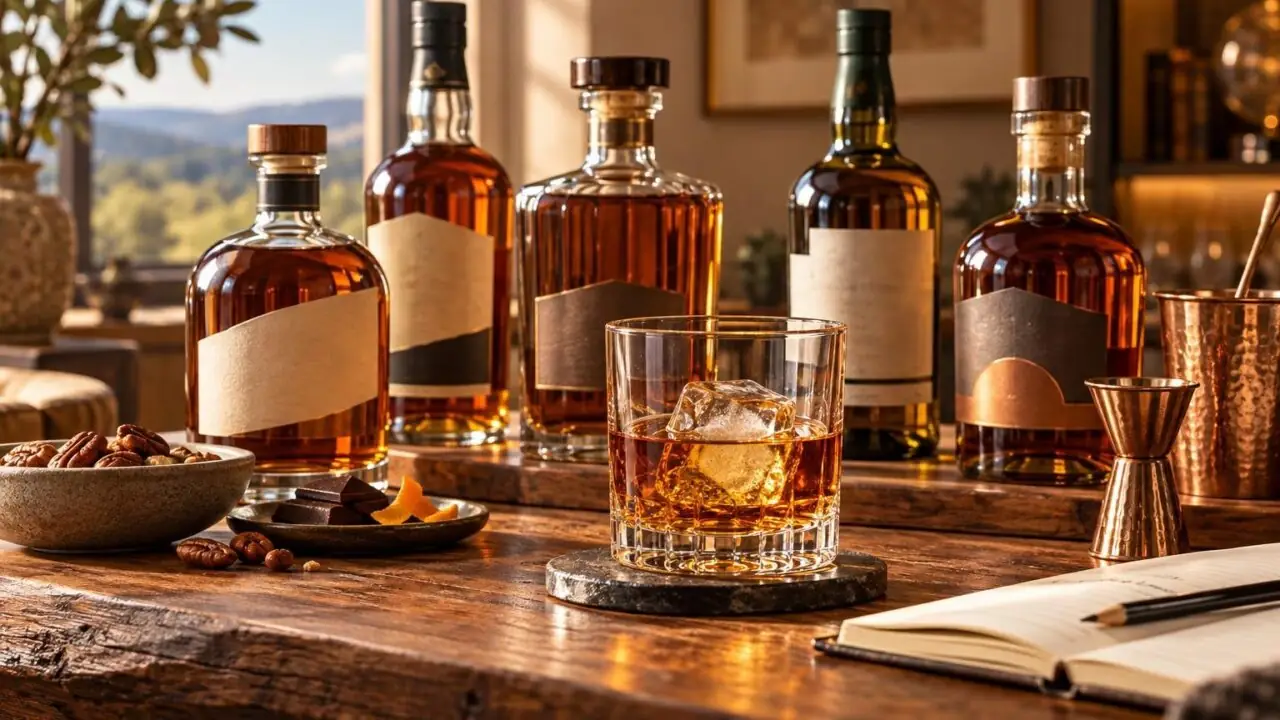
Good whiskey for beginners is a smooth, balanced bottle with moderate alcohol, gentle oak, and flavors that remain clear without overwhelming heat.
Bourbon, Irish whiskey, and blended Scotch often provide approachable starting points because their sweetness, fruit, or light smoke is easy to identify. Look for 40% to 46% ABV, a reputable producer, and a price near $25 to $50.
Choose one bottle from a style you already understand, then taste it neat in a small pour before adding a few drops of water or one ice cube. Note the aroma, sweetness, spice, texture, and finish.
This method shows whether you prefer vanilla-rich bourbon, honeyed Irish whiskey, or lightly smoky Scotch. The best beginner bottle is the one you enjoy enough to taste again and compare with a second style.
Best Whiskey Styles for Beginners
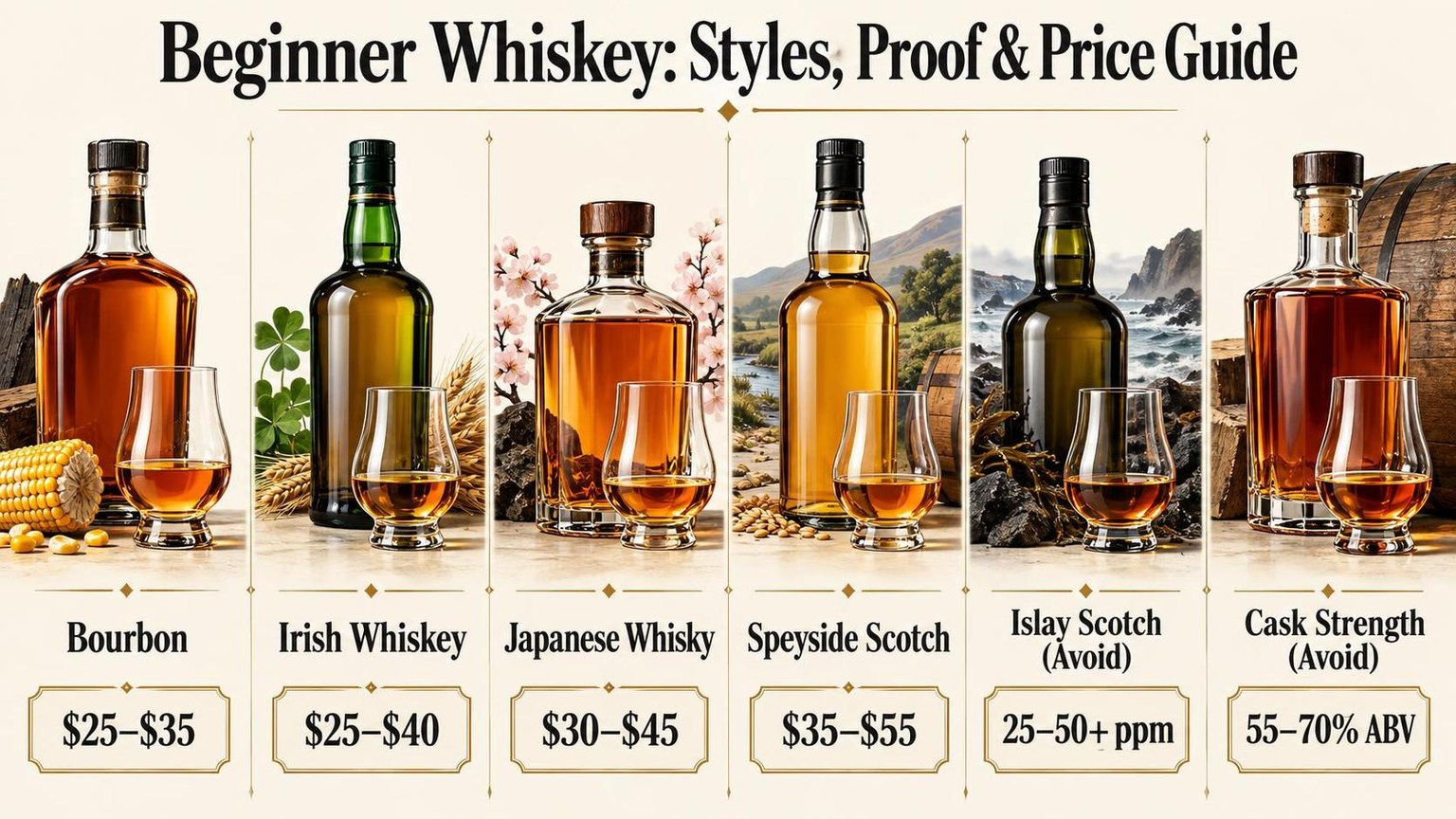
Not all whiskey categories hit the palate the same way. Beginners benefit from starting with styles that emphasize sweetness and smoothness over smoke, peat, or high proof. Three categories consistently rank as the most approachable entry points.
Bourbon
U.S. federal law (27 CFR §5.143) requires bourbon to contain at least 51% corn in its mash bill. That corn-heavy recipe produces natural caramel and vanilla sweetness that most new drinkers find immediately appealing.
Bourbon must be aged in new charred oak barrels, which imparts butterscotch, toffee, and baking spice notes. Entry-level bottles like Buffalo Trace (90 proof) and Maker’s Mark (90 proof) typically retail between $25–$35.
Irish Whiskey
Most Irish whiskey undergoes triple distillation, compared to the standard double distillation used in Scotch. That extra pass through the still strips out heavier congeners, yielding a lighter, smoother spirit.
Jameson, the world’s best-selling Irish whiskey at over 11 million cases sold annually, exemplifies this approachability.
Other beginner-friendly options include Tullamore D.E.W. and Redbreast 12, the latter a single pot still expression with honeyed fruit character.
Japanese Whisky
Japanese distillers historically modeled their production on Scottish methods but prioritized balance and harmony. Suntory’s Toki blend and Nikka’s Coffey Grain both emphasize floral, delicate profiles with minimal harshness.
Expect price points of $30–$45 for entry-level Japanese bottles.
Note that Japan implemented new labeling standards in April 2021, requiring products labeled “Japanese Whisky” to be fermented, distilled, and aged in Japan for at least three years.
Style Comparison at a Glance
| Style | Typical ABV | Primary Flavors | Entry Price (750 ml) |
| Bourbon | 40–50% | Caramel, vanilla, oak | $25–$35 |
| Irish Whiskey | 40% | Honey, green apple, grain | $25–$40 |
| Japanese Whisky | 40–43% | Floral, citrus, light malt | $30–$45 |
| Speyside Scotch | 40–46% | Pear, malt, sherry | $35–$55 |
Styles to Save for Later
- Islay Scotch — Heavy peat smoke and iodine notes (phenol levels of 25–50+ ppm) overwhelm untrained palates.
- Cask-strength bourbon — Bottled at 55–70% ABV without dilution; the alcohol burn masks flavor nuances for beginners.
- Rye whiskey (95% rye mash bills) — Aggressive black pepper and spice, as found in MGP-sourced expressions, can feel harsh without context.
Speyside Scotch also works as a stepping stone. Glenfiddich 12, the world’s best-selling single malt, offers a gentle orchard-fruit profile without peat influence and retails around $35–$45.
Start with any bourbon, Irish, or Japanese expression listed above. After 5–10 bottles across these categories, your palate will have enough reference points to tackle bolder styles with confidence.
Bourbon Versus Scotch for New Drinkers
Bourbon and Scotch represent the two most common entry points into whiskey. They differ in grain, geography, and flavor profile. Understanding those differences helps beginners spend wisely on a first bottle.
Bourbon must contain at least 51% corn in its mash bill, by U.S. federal law (27 CFR §5.143). That high corn content produces natural sweetness—caramel, vanilla, and baked fruit notes.
Scotch whisky must be distilled and matured in Scotland for a minimum of three years, per the Scotch Whisky Regulations 2009. Most single malts use 100% malted barley, yielding drier, more cereal-forward flavors.
New drinkers generally find bourbon more approachable. The sweetness from corn and new charred oak barrels masks the alcohol burn that often surprises first-time sippers.
Scotch single malts from Speyside—Glenfiddich 12, Glenlivet 12—tend to be the friendliest Scotch options for beginners. They emphasize orchard fruit and honey rather than peat smoke.
Islay Scotches like Laphroaig 10 or Ardbeg Ten carry intense peat and iodine. These polarize newcomers. Save them until your palate has adjusted to standard whisky profiles.
Price also matters for a first purchase. Bourbon generally offers better value at the entry level in the U.S. market, where import tariffs do not apply.
| Category | Bourbon | Scotch (Single Malt) |
|---|---|---|
| Primary grain | Corn (≥51%) | Malted barley (100%) |
| Minimum aging | No federal minimum (2 years for “straight”) | 3 years by law |
| Barrel type | New charred American oak | Used oak (often ex-bourbon) |
| Typical ABV | 40–50% | 40–46% |
| Beginner bottle price (US) | $25–$35 (Buffalo Trace, Maker’s Mark) | $40–$55 (Glenfiddich 12, Glenlivet 12) |
| Dominant flavors | Vanilla, caramel, oak spice | Honey, dried fruit, malt |
| Approachability (1–5) | 4 | 3 (Speyside) / 1 (Islay) |
Barrel choice drives much of the flavor gap. Bourbon’s mandatory new charred oak delivers bold vanilla and toffee. Scotch reuses those same barrels, extracting subtler, more mellow wood influence.
A practical strategy: start with a bourbon like Buffalo Trace (roughly $28, 40% ABV) or Evan Williams Single Barrel ($30, 43.3% ABV). Both score above 85 points on major review aggregators.
After two or three bourbon bottles, try a Speyside Scotch. Glenfiddich 12 (40% ABV, ~$45) bridges the gap with pear and butterscotch notes that echo bourbon’s sweetness.
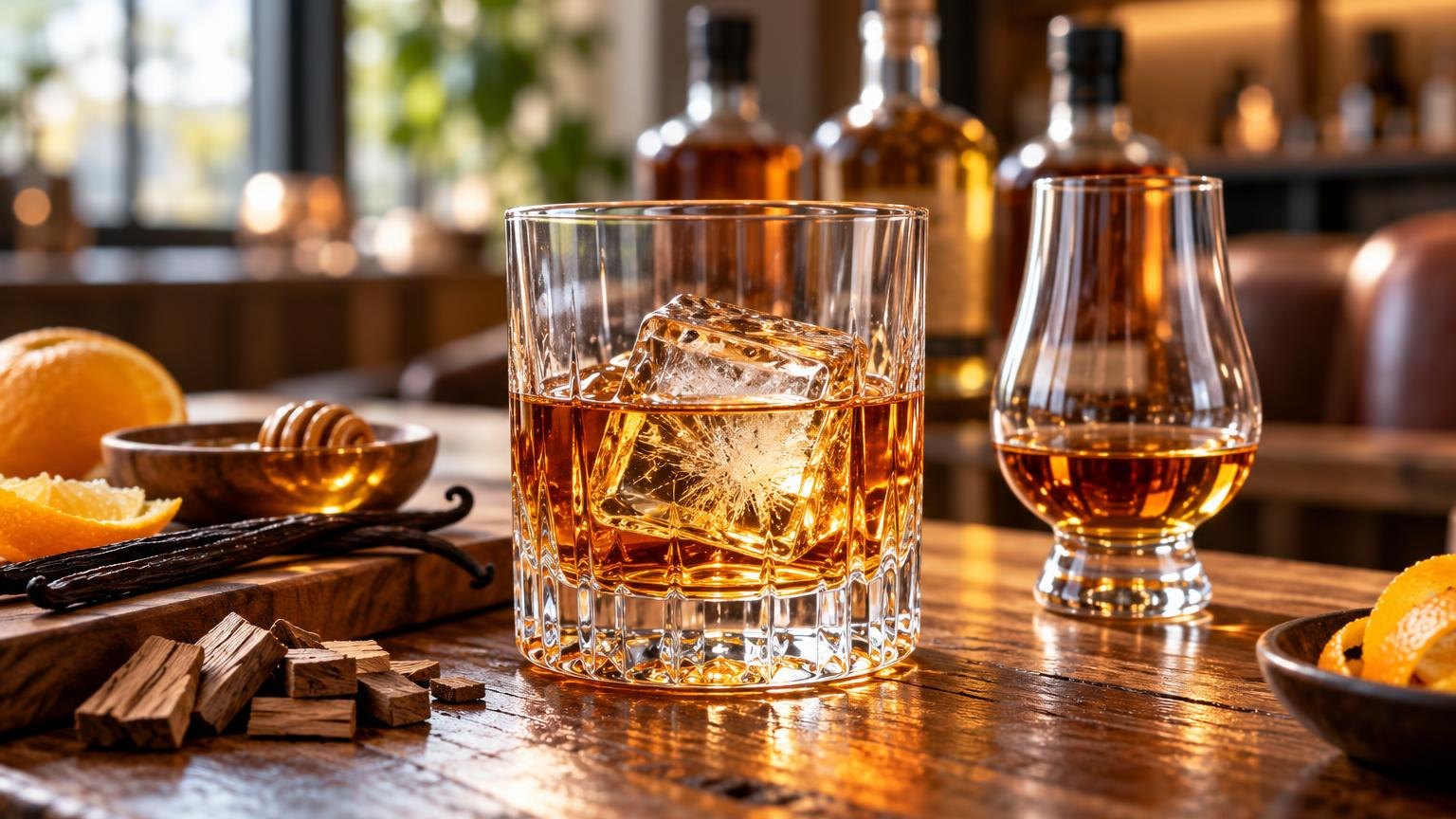
Drinking neat at room temperature exposes the full flavor spectrum of each spirit. Add 3–5 drops of water to open aromas without diluting body, especially for cask-strength releases above 50% ABV.
Neither category is objectively superior. Bourbon rewards those who favor bold sweetness. Scotch rewards patience and curiosity. Beginners benefit from trying both within their first five bottles to map personal preference early.
Smooth Whiskeys to Try First
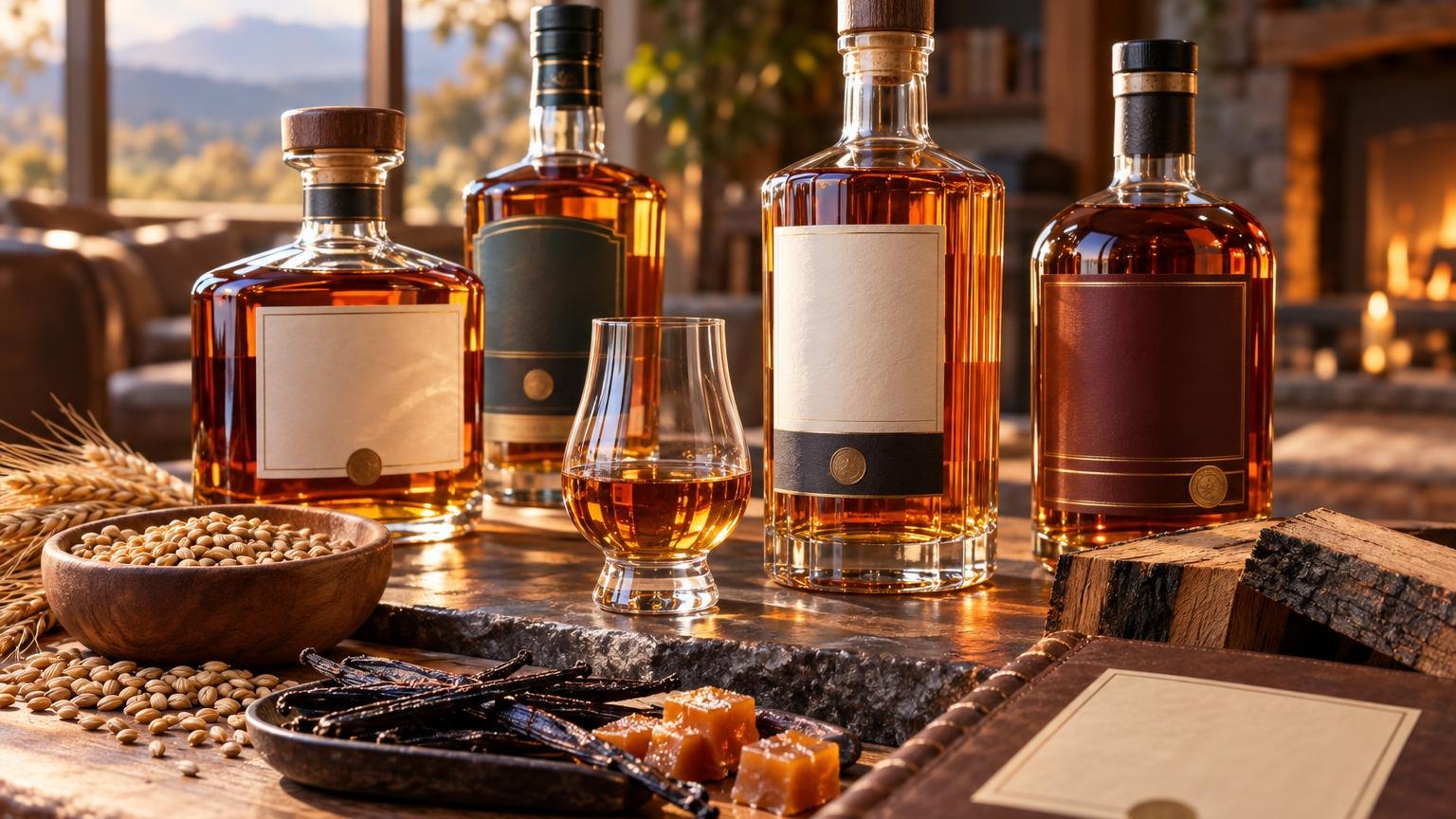
Beginners benefit from whiskeys with lower proof, minimal burn, and approachable flavor profiles. Bottles between 80–86 proof with sweet or fruity notes provide the gentlest introduction to the category.
Top Beginner-Friendly Bottles Compared
These widely available whiskeys rank among the smoothest options for newcomers. Each sits at or near 80 proof, keeping alcohol burn manageable.
| Whiskey | Type | Proof | Avg. Price (750 ml) | Dominant Notes |
| Jameson Irish Whiskey | Blended Irish | 80 | $28–$32 | Vanilla, toasted wood, light floral |
| Buffalo Trace Bourbon | Kentucky Straight Bourbon | 90 | $25–$30 | Caramel, brown sugar, oak |
| Monkey Shoulder | Blended Malt Scotch | 86 | $30–$35 | Honey, malt, citrus zest |
| Tullamore D.E.W. | Blended Irish | 80 | $24–$28 | Green apple, grain sweetness |
| Maker’s Mark | Kentucky Straight Bourbon | 90 | $28–$33 | Wheat softness, red fruit, caramel |
| Suntory Toki | Japanese Blended | 86 | $30–$38 | White pepper, green apple, honey |
Why These Work for Beginners
Irish whiskeys like Jameson undergo triple distillation, which strips out heavier congeners and produces a notably lighter spirit. That extra distillation step is the single biggest reason Irish whiskey consistently ranks as the smoothest category.
Maker’s Mark replaces rye in its mash bill with 16% red winter wheat. Wheat creates a softer, rounder mouthfeel compared to the spicy bite rye delivers in most bourbons.
Japanese blends such as Suntory Toki use a high proportion of grain whisky from column stills. Column-distilled spirit is lighter-bodied than pot-still spirit, yielding a clean, easy-drinking character.
How to Taste Your First Whiskey
- Add water. A few drops (roughly 5–10 ml) reduce ethanol concentration below the 40% threshold where burn dominates, unlocking aroma compounds trapped by alcohol molecules.
- Use a tulip-shaped glass. The Glencairn glass, designed in 2001 specifically for whisky nosing, concentrates aromas at the rim far better than a tumbler.
- Sip small. Take roughly 5 ml per sip and let it coat the tongue for 3–4 seconds before swallowing. This acclimates your palate to the alcohol.
- Try it in a highball. Mixing 45 ml of whiskey with 120 ml of chilled soda water is the standard Japanese highball ratio—an excellent gateway format.
Budget Considerations
Every bottle listed above falls under $40. Beginners gain nothing from spending $70+ on single malts or single barrel bourbons before developing a palate reference point. Start with blends or entry-level straight whiskeys, then move up.
Buffalo Trace and Tullamore D.E.W. offer the strongest value under $30, delivering complexity that punches well above their price brackets in blind tastings and competition results.
How to Taste Whiskey Properly
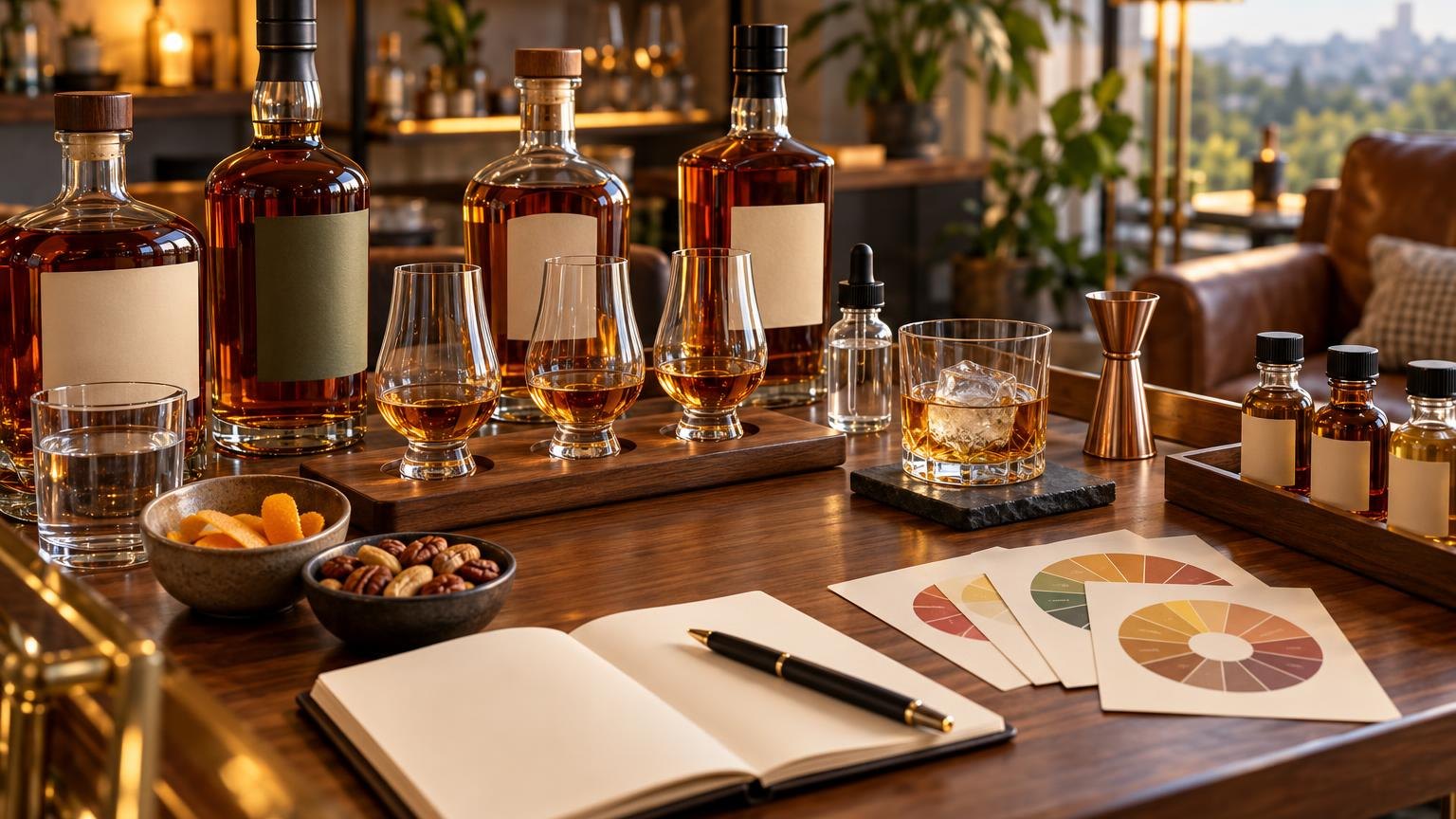
Tasting whiskey engages all five senses in a structured sequence professionals call the “nosing and evaluation” process.
The Scotch Whisky Research Institute identifies over 400 flavor compounds in a single malt, but beginners can detect the most prominent ones by following four deliberate steps.
Step 1: Choose the Right Glass
A tulip-shaped Glencairn glass, designed in 2001 by Glencairn Crystal Ltd, concentrates aromas at its narrow 17 mm rim. Wide-mouthed rocks glasses disperse volatiles, reducing perceived aroma intensity by roughly 30%.
Step 2: Observe the Color
Hold the glass against a white background. Color reveals cask history — ex-bourbon barrels produce pale gold to amber hues, while ex-sherry casks yield deep copper to mahogany tones.
| Cask Type | Typical Color | Flavor Influence |
| Ex-Bourbon (American Oak) | Pale gold to light amber | Vanilla, caramel, coconut |
| Ex-Sherry (European Oak) | Deep amber to mahogany | Dried fruit, chocolate, spice |
| Virgin Oak | Rich amber | Strong tannins, baking spice |
| Ex-Wine (Port/Burgundy) | Reddish copper | Berry, plum, subtle tannin |
Step 3: Nose Before You Sip
Hold the glass about 2 cm below your nose. Breathe gently through slightly parted lips.
Ethanol numbs olfactory receptors at close range — keeping distance prevents “alcohol burn” that overwhelms beginners at cask-strength ABVs above 50%.
Rotate between nostrils. Each nostril cycles dominance roughly every 2.5 hours (the nasal cycle), so one side may detect different compounds than the other. Spend at least 30 seconds nosing before tasting.
Step 4: The Three-Sip Method
- First sip: A small amount (about 5 ml) coats the palate and acclimates your taste buds to the alcohol. This sip often tastes hot and indistinct — that reaction is normal.
- Second sip: Let the whiskey rest on your tongue for 3–5 seconds. The 8,000–10,000 taste buds across your tongue now register sweetness at the tip, bitterness at the back, and umami centrally.
- Third sip: Chew the whiskey gently, drawing air across it. This retronasal aeration releases volatile esters and aldehydes, unlocking flavors masked during the initial sips.
Adding Water
Adding 3–5 drops of room-temperature water to a standard 30 ml pour reduces ABV by approximately 2–4 percentage points.
A 2017 study in Scientific Reports confirmed that water pushes guaiacol — the compound responsible for smoky flavor — to the liquid’s surface, enhancing aroma perception.
Beginners tasting whiskey at 40% ABV may not need water. For anything bottled at 46% ABV or above, a few drops open the spirit significantly.
Avoid ice initially — chilling to below 15°C suppresses aromatic volatility and mutes delicate flavor notes.
Beginner Whiskey Bottles by Budget
Entry-level whiskey doesn’t mean low quality. Some of the most awarded bottles sit below $30, making the category one of the most accessible in spirits.
Here’s a budget-tiered breakdown of bottles that consistently earn high marks from both critics and newcomers.
Under $25: Best Value Picks
These bottles punch well above their price and appear on virtually every beginner recommendation list.
| Bottle | Type | ABV | Approx. Price | Tasting Profile |
| Buffalo Trace Kentucky Straight Bourbon | Bourbon | 45% | $22–$28 | Caramel, vanilla, light oak |
| Evan Williams Black Label | Bourbon | 43% | $14–$18 | Cherry, brown sugar, mild spice |
| Jameson Irish Whiskey | Blended Irish | 40% | $22–$26 | Smooth, honeyed, light floral |
| Famous Grouse | Blended Scotch | 40% | $18–$22 | Malt, dried fruit, gentle smoke |
Evan Williams Black Label, aged a minimum of 4 years, won a Gold Medal at the 2023 San Francisco World Spirits Competition. It remains one of the lowest-cost quality bourbons on the market.
$25–$50: The Sweet Spot
This range unlocks single malts, higher-proof bourbons, and Japanese options that reward sipping neat or with a single ice cube.
| Bottle | Type | ABV | Approx. Price | Tasting Profile |
| Woodford Reserve Distiller’s Select | Bourbon | 45.2% | $33–$38 | Dark chocolate, dried fruit, toasted oak |
| Glenfiddich 12 Year | Single Malt Scotch | 40% | $35–$45 | Pear, butterscotch, subtle oak |
| Tullamore D.E.W. | Blended Irish | 40% | $25–$30 | Citrus, grain sweetness, gentle spice |
| Wild Turkey 101 | Bourbon | 50.5% | $23–$28 | Bold vanilla, cinnamon, caramel |
Glenfiddich 12 is the world’s best-selling single malt Scotch, matured exclusively in American oak and European sherry casks. Its approachable profile has introduced millions to single malt whisky.
$50–$75: First Upgrade Bottles
Once palate confidence builds, these bottles introduce greater complexity without overwhelming a developing palate.
- Nikka Coffey Grain ($55–$65): Distilled in a Coffey still at the Miyagikyo distillery. Sweet corn, toffee, tropical fruit at 45% ABV.
- Redbreast 12 Year ($60–$70): Single pot still Irish whiskey, triple-distilled. Sherry-influenced with toasted almond and dried apricot at 40% ABV.
- Maker’s Mark 46 ($35–$45): Finished with seared French oak staves for added baking spice and deeper caramel notes at 47% ABV.
Spending Strategy for Beginners
Start with two to three bottles under $30 from different categories—one bourbon, one Irish, one Scotch. This trio costs roughly $60–$75 total and covers the major flavor families.
Avoid bottles over $75 until you can identify whether you prefer sweet, smoky, or spice-forward profiles. Budget whiskey builds palate literacy faster than a single expensive purchase.
Questions People Ask Most
What makes a whiskey “beginner-friendly”?
Lower proof (80–86 proof / 40–43% ABV), mild flavor profiles with sweetness or fruit notes, and minimal burn on the finish.
Bourbon and Irish whiskey tend to hit these marks more consistently than cask-strength Scotch or high-rye whiskeys because their production methods emphasize smoothness—bourbon’s charred new oak imparts caramel and vanilla.
While Irish whiskey’s typical triple distillation strips out harsher congeners.
Which specific bottles should a beginner buy first?
Buffalo Trace Kentucky Straight Bourbon ($25–30) delivers caramel and brown sugar at 90 proof without overwhelming heat.
Jameson Irish Whiskey ($28–32) is triple-distilled and aged a minimum of 4 years, producing an approachable, light body.
Monkey Shoulder Blended Malt Scotch ($30–35) offers a gentle introduction to Scotch with notes of vanilla, baked fruit, and zero peat smoke.
Should beginners start with bourbon, Scotch, or Irish whiskey?
Bourbon is the most accessible entry point for palates accustomed to sweetness—its mash bill must contain at least 51% corn, which produces natural sugar-forward flavors.
Irish whiskey is the best starting category for drinkers sensitive to alcohol burn, since most expressions are triple-distilled. Save peated Scotch and high-rye bourbon for later, after your palate has calibrated to base whiskey flavors.
Is it okay for beginners to mix whiskey with ice or soda?
Adding a single large ice cube or 5–10 mL of room-temperature water to a dram is standard practice even among experienced tasters—it lowers the ethanol concentration below the ~40% threshold where alcohol vapors dominate aroma perception.
Mixing with ginger ale, cola, or soda water is perfectly valid and how most bourbon distillers, including Maker’s Mark and Wild Turkey, suggest newcomers begin exploring their products.
How much should a beginner spend on a bottle of whiskey?
The $25–$45 range offers the best quality-to-education ratio. Below $20, distillers cut corners on aging (often under 3 years) and grain quality.
Above $50, you’re paying for extended barrel aging and limited releases whose subtleties are largely wasted on an untrained palate.
Bottles like Evan Williams Single Barrel ($28), Tullamore D.E.W. ($25), and Glenfiddich 12 ($40) consistently land in this sweet spot.
What whiskey flavors should beginners learn to identify first?
Focus on four foundational flavor groups: vanilla and caramel (from charred oak lactones), fruit (apple, pear, citrus from ester compounds), spice (cinnamon and pepper from rye grain or wood tannins).
And sweetness (honey and butterscotch from corn and malted barley).
Nosing the whiskey for 10–15 seconds before sipping trains your olfactory system to separate these compounds—roughly 80% of flavor perception is retronasal smell, not taste.
What’s the fastest way for a beginner to develop their whiskey palate?
Do side-by-side tastings of 3 whiskeys from different categories—pour 15 mL of each into identical glasses, nose and taste them in sequence, and write one-sentence notes per sample.
Studies in sensory science show comparative tasting accelerates flavor discrimination far faster than isolated sampling.
Start with a bourbon (e.g., Buffalo Trace), an Irish (e.g., Jameson), and an unpeated Scotch (e.g., Glenfiddich 12) to map the broadest flavor contrasts in a single session.
Related Guides
- What Is The Best Irish Whiskey To Drink Straight?
- What Is Whiskey & Sprite Called?
- Is Jim Beam Whiskey Or Bourbon?
- Cheap Irish Whiskey Brands Worth Trying Now
- Who Makes Kirkland Canadian Whiskey?
- Who Owns Howler Head Whiskey?
- Is Moonshine Illegal In Texas?
- What Is Proof In Whiskey?
- All Alcohol Guides
- National Institute on Alcohol Abuse and Alcoholism (2023)
- Dietary Guidelines for Americans – USDA & HHS (2020)
- TTB – U.S. Alcohol and Tobacco Tax and Trade Bureau: Standards of Identity for Distilled Spirits (2023)
- PubMed Central – Volatile Compounds in Whisky Maturation (2017)
- MasterClass – How to Drink Whiskey: A Beginner's Guide (2023)
- Whisky Advocate – Best Whiskeys for Beginners (2024)
- Distilled Spirits Council of the United States – DISCUS Economic Briefing (2023)
- University of Edinburgh – Scotch Whisky Research Institute Collaboration (2022)