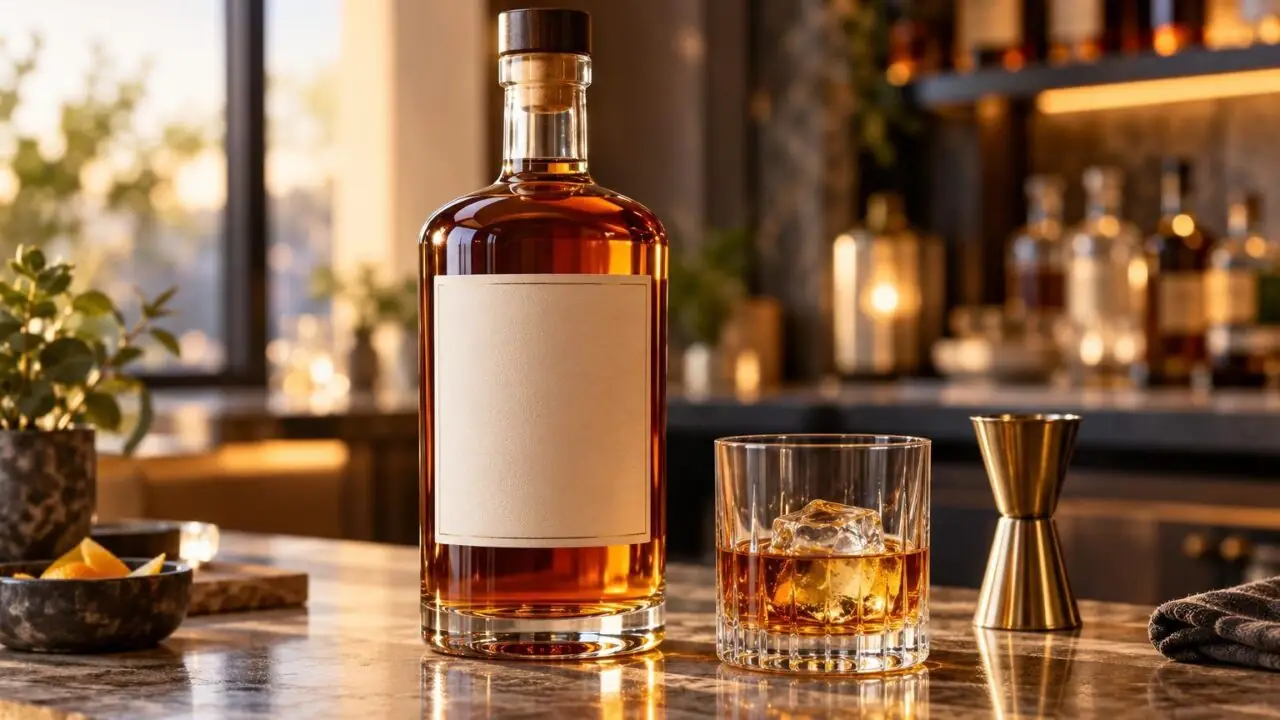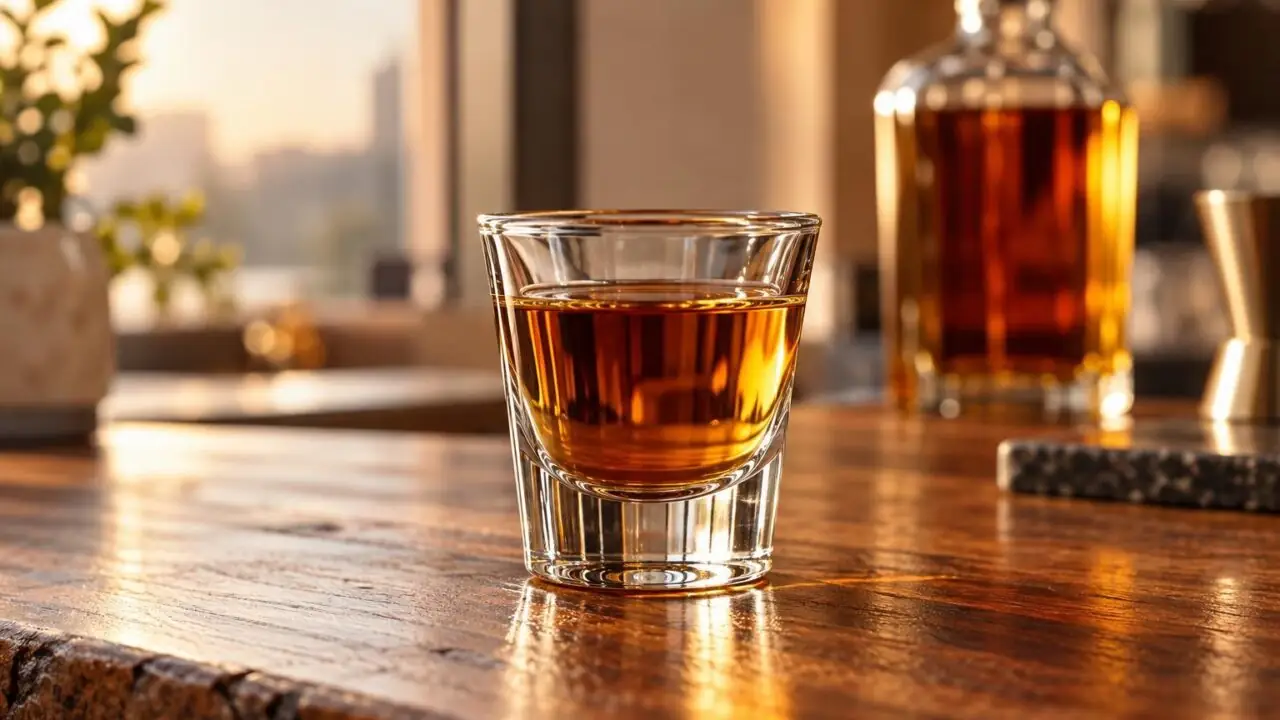
How Many Carbs in a Shot of Whiskey? The answer is 0 grams for straight, unflavored whiskey. Distillation removes fermentable sugars, while standard 80-proof whiskey contains no meaningful carbohydrate per 1.5-fluid-ounce shot.
Its calories come almost entirely from alcohol, not carbs.
That zero-carb result applies to bourbon, rye, Scotch, Irish whiskey, and other unsweetened varieties served neat or with water. Proof changes calorie content but does not add carbohydrates.
A 1.5-ounce shot of 80-proof whiskey supplies about 97 calories, while higher-proof pours provide more.
Flavored whiskey, whiskey liqueurs, and mixed drinks require separate checking because manufacturers may add sugar or other sweeteners.
Read the label, measure the pour, and count mixers such as cola, sweetened juice, or prepared sour mix when tracking carbohydrate intake.
Carbs in a Standard Whiskey Shot
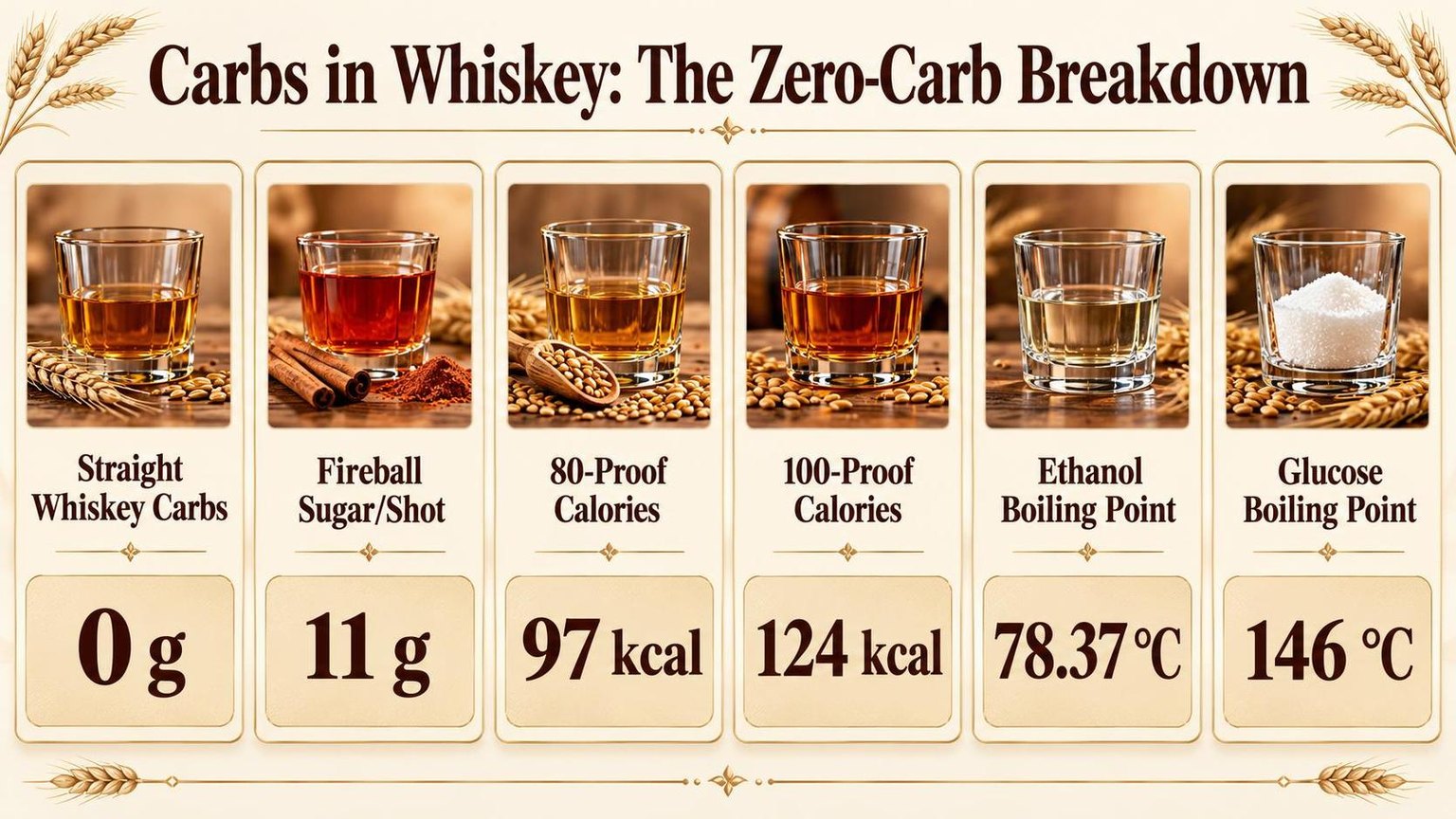
A standard 1.5-oz (44 ml) shot of 80-proof whiskey contains exactly 0 grams of carbohydrates. This applies to bourbon, scotch, rye, and Irish whiskey alike. The distillation process strips all sugars from the final spirit.
During distillation, the mash—made from carb-heavy grains like corn, barley, rye, or wheat—is heated until alcohol vaporizes. Sugars and starches cannot evaporate, so they stay behind in the still.
The USDA FoodData Central database (FDC ID: 174834) confirms that distilled spirits at 80 proof contain 0 g carbohydrates, 0 g sugar, 0 g fat, and 0 g protein per serving.
Nutritional Breakdown Per Standard Shot
| Nutrient | 1.5 oz (44 ml) — 80 Proof | 1.5 oz (44 ml) — 100 Proof |
| Carbohydrates | 0 g | 0 g |
| Sugar | 0 g | 0 g |
| Fat | 0 g | 0 g |
| Protein | 0 g | 0 g |
| Calories | 97 kcal | 124 kcal |
All calories in whiskey come exclusively from ethanol, which provides approximately 7 calories per gram. A higher proof means more alcohol and more calories—but still zero carbs.
Why Proof Doesn’t Change the Carb Count
Whether 80 proof (40% ABV) or cask-strength 130 proof (65% ABV), the carbohydrate content remains 0 g. Proof measures only alcohol concentration. No distilled spirit retains carbohydrates regardless of strength.
When Whiskey Does Contain Carbs
Flavored whiskeys are the exception. Products like Fireball Cinnamon Whisky contain added sugars. A 1.5-oz shot of Fireball has approximately 11 g of sugar and 108 calories.
Other sources of hidden carbs include:
- Honey-flavored whiskeys — typically 5–6 g of carbs per shot
- Whiskey-based liqueurs — can contain 10–17 g of carbs per 1.5-oz serving
- Pre-mixed whiskey cocktails — often 15–30 g of carbs depending on mixers used
Straight, unflavored whiskey labeled “distilled spirits” on the bottle is the reliable zero-carb choice.
Check labels for terms like “flavored,” “liqueur,” or “with natural flavors” to identify products with added sugars.
Why Straight Whiskey Has Zero Carbs
Distillation eliminates all carbohydrates from whiskey. The process physically separates ethanol from the fermented grain mash, leaving sugars, starches, and other macronutrients behind in the stillage.
Whiskey begins as a carbohydrate-rich grain mash. Corn, barley, rye, and wheat all contain 60–75 g of carbs per 100 g of dry grain. Yeast converts those sugars into ethanol and carbon dioxide during fermentation.
The critical step is distillation. Ethanol boils at 78.37 °C (173.1 °F), while sugars like glucose and fructose have boiling points above 146 °C. This temperature gap means carbohydrates cannot vaporize into the distillate.
What Remains After Distillation
| Component | Boiling Point | Passes Into Distillate? |
| Ethanol | 78.37 °C | Yes |
| Water | 100 °C | Yes (partially) |
| Congeners (esters, aldehydes) | Varies (70–120 °C) | Yes (trace amounts) |
| Glucose | 146 °C (decomposes) | No |
| Sucrose | 186 °C (decomposes) | No |
| Starch | Does not boil (decomposes ~300 °C) | No |
The USDA confirms that 1.5 oz (44 ml) of 80-proof distilled whiskey contains 0 g carbohydrates, 0 g sugar, 0 g fat, and 0 g protein. The only caloric contribution comes from ethanol itself at 7 calories per gram.
Barrel Aging Does Not Add Carbs
Oak barrel maturation introduces flavor compounds—vanillin, tannins, lactones—but not measurable carbohydrates. Trace wood sugars extracted during aging remain below 0.5 g per serving, the FDA threshold for labeling as 0 g.
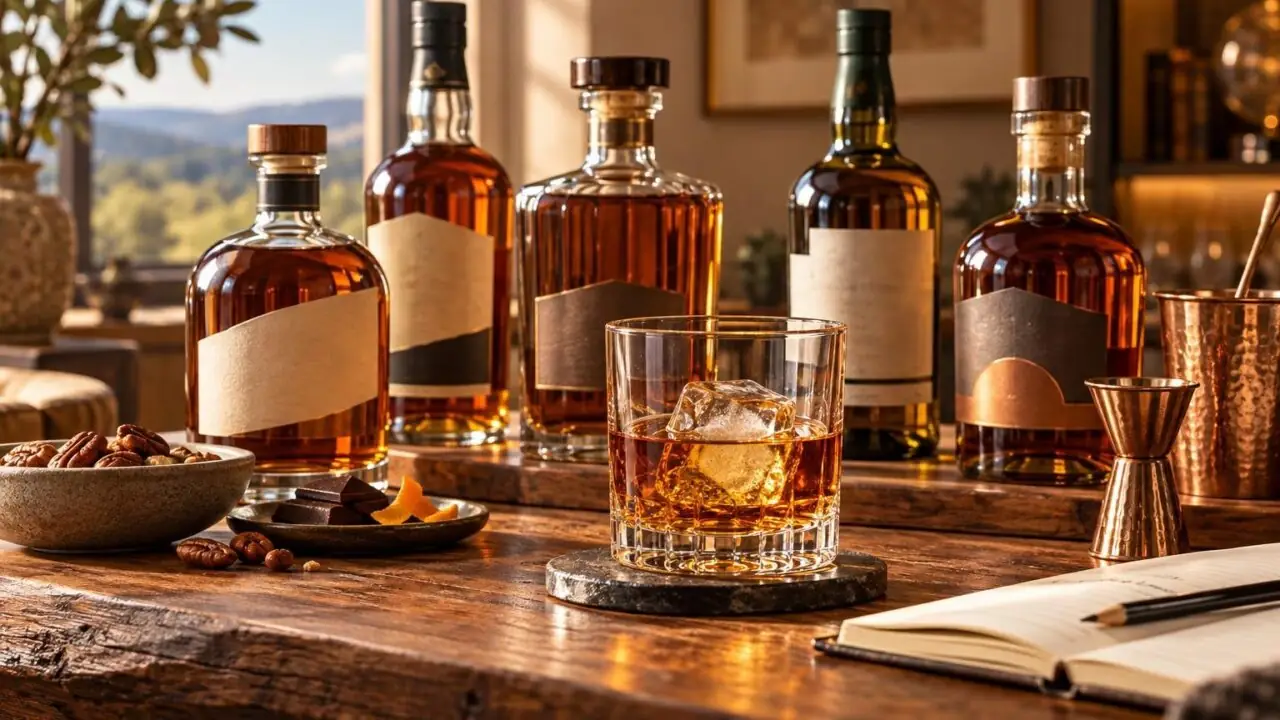
- Bourbon aged 4+ years in charred new oak: 0 g carbs per shot
- Scotch single malt aged 12 years: 0 g carbs per shot
- Rye whiskey (95% rye mash bill): 0 g carbs per shot
- Irish whiskey triple-distilled: 0 g carbs per shot
Flavored whiskeys are the exception. Products like Fireball (33 proof) contain added sugar, delivering roughly 11 g of carbs per 1.5 oz pour. Always check for “flavored” or “liqueur” on the label.
For anyone tracking macros or following a ketogenic diet, straight whiskey remains one of the few alcoholic options with a true zero-carb profile. The calories—approximately 97 per standard 1.5 oz shot—come exclusively from alcohol.
Calories in Whiskey Without Mixers
Straight whiskey delivers calories almost entirely from alcohol itself, not from carbs, fat, or protein. Understanding the calorie count per pour helps wine bar guests make informed choices when switching from wine to spirits.
Calorie Breakdown by Proof
Alcohol contains 7 calories per gram—nearly twice the 4 calories per gram in carbohydrates. Higher-proof whiskeys pack more calories per shot because they contain more pure ethanol.
| Whiskey Type | Proof | Calories per 1.5 oz Shot |
| Standard Bourbon (e.g., Jim Beam) | 80 | 97 |
| Standard Scotch (e.g., Johnnie Walker Red) | 80 | 97 |
| Irish Whiskey (e.g., Jameson) | 80 | 97 |
| Rye Whiskey (e.g., Rittenhouse) | 100 | 124 |
| Cask-Strength Bourbon (e.g., Booker’s) | 125–130 | 153–160 |
| Navy-Strength Single Malt | 114 | 140 |
These figures come from the USDA FoodData Central database, which lists 80-proof distilled spirits at approximately 97 calories per 1.5-fluid-ounce serving.
How Whiskey Compares to Wine
A standard 5 oz glass of red wine contains roughly 125 calories. A 1.5 oz pour of 80-proof whiskey sits about 22% lower at 97 calories, making neat whiskey a lighter option by volume-adjusted comparison.
| Drink | Serving Size | Approximate Calories |
| 80-Proof Whiskey (neat) | 1.5 oz | 97 |
| Red Wine (Cabernet Sauvignon) | 5 oz | 123–130 |
| White Wine (Chardonnay) | 5 oz | 118–123 |
| Champagne (Brut) | 5 oz | 90–98 |
Why Neat Matters
Adding cola to a shot of whiskey adds roughly 90–100 calories and 24–26 grams of sugar per 8 oz mixer. Ginger ale adds approximately 83 calories per 8 oz.
- Neat or on the rocks: 0 g added sugar, 97 calories (80-proof)
- With a splash of water: 0 additional calories
- With club soda: 0 additional calories
- With simple syrup (0.5 oz): adds roughly 48 calories and 12 g sugar
Ordering whiskey neat, with water, or with club soda keeps the calorie count locked at the spirit’s baseline—no hidden sugars, no carb surprises.
Carbs in Flavored Whiskey Shots
Flavored whiskeys break the zero-carb rule that applies to straight whiskey. Added sugars, honey, and natural flavorings introduce significant carbohydrates—often 3 to 11 grams per 1.5-oz shot, depending on the brand and flavor profile.
Carb Counts by Popular Flavored Whiskey Brand
| Brand & Flavor | Carbs per 1.5-oz Shot | Calories per Shot |
| Fireball Cinnamon Whisky | 11 g | 108 |
| Jack Daniel’s Tennessee Honey | 6 g | 108 |
| Jack Daniel’s Tennessee Fire | 5 g | 108 |
| Jack Daniel’s Tennessee Apple | 6 g | 106 |
| Crown Royal Peach | 5 g | 96 |
| Jim Beam Red Stag (Black Cherry) | 6 g | 103 |
| Skrewball Peanut Butter Whiskey | 6.5 g | 104 |
| Ole Smoky Salted Caramel Whiskey | 8 g | 105 |
| Bird Dog Peach Whiskey | 6 g | 104 |
Why Flavored Whiskeys Contain Carbs
Distillation removes all carbohydrates from grain spirits. Flavored whiskeys gain carbs because manufacturers add sugars, syrups, or honey after distillation to achieve the desired taste.
Fireball leads the category at 11 grams per shot. That single shot contains more sugar than a standard sugar packet, which holds roughly 4 grams.
What This Means for Low-Carb Diets
- Keto dieters typically limit intake to 20–50 g of carbs daily. One Fireball shot uses up 22–55% of that allowance.
- Diabetics should note that liquid sugars absorb rapidly and can spike blood glucose faster than solid foods.
- Lower-carb alternatives: Crown Royal Peach and Jack Daniel’s Tennessee Fire sit at 5 g per shot—roughly half of Fireball’s carb load.
Many flavored whiskeys also carry a lower ABV (typically 30–35%) compared to standard whiskey at 40% ABV. The reduced alcohol makes room for added sugar content by volume.
Always check the brand’s nutritional disclosure. Labels on flavored whiskeys are not required by the TTB to list carbohydrate content, so manufacturer websites remain the most reliable source.
Whiskey Shot Sizes Compared
A “shot” of whiskey varies significantly by country, ranging from 20 ml to 60 ml. This difference directly affects carb and calorie intake, making standardization essential when tracking macros.
Standard Shot Sizes by Country
| Country | Standard Shot | Calories (approx.) | Carbs |
| United States | 44 ml (1.5 oz) | 97 | 0 g |
| United Kingdom | 25 ml (single) / 35 ml (large) | 55 / 78 | 0 g |
| Australia | 30 ml (1 oz) | 65 | 0 g |
| Germany | 20 ml (0.67 oz) | 43 | 0 g |
| Japan | 30 ml (1 oz) | 65 | 0 g |
| Italy | 40 ml (1.35 oz) | 87 | 0 g |
Pure whiskey contains zero carbohydrates regardless of pour size. The variable that changes is calorie count, driven entirely by alcohol content at roughly 7 calories per gram of ethanol.
Common U.S. Pour Sizes
Bars and restaurants in the United States don’t always stick to the standard 1.5 oz pour. Knowing actual volumes helps you estimate calorie intake accurately.
| Pour Type | Volume | Calories (80-proof) | Carbs |
| Single shot | 1.5 oz (44 ml) | 97 | 0 g |
| Double shot | 3 oz (89 ml) | 194 | 0 g |
| Neat pour | 2 oz (59 ml) | 128 | 0 g |
| Tasting pour | 0.5 oz (15 ml) | 32 | 0 g |
Why Shot Size Matters for Tracking
Carbs stay at zero across every pour size for straight whiskey. Calories, however, scale linearly — a double shot delivers 194 calories versus 97 for a single at 80 proof.
- Higher proof = more calories per ml. A 1.5 oz shot of 100-proof whiskey contains approximately 124 calories, 28% more than the same volume at 80 proof.
- Free pours vary widely. Studies show bartender free pours range from 1.0 oz to 2.0 oz, creating up to a 100% calorie difference from what you expect.
- Flavored whiskeys change the equation. Fireball, for example, contains 11 g of carbs per 1.5 oz shot due to added sugars — a critical distinction from straight whiskey.
Measuring your pour with a jigger eliminates guesswork. For anyone counting macros, this one step keeps your tracking honest across any whiskey session.
Carbs in Whiskey Cocktail Additions
Straight whiskey contains zero carbs, but cocktail mixers transform it into a carb-heavy drink fast. A single Old Fashioned can carry 10–15 g of carbohydrates, almost entirely from added sugar and garnishes.
Common Mixer Carb Counts
These values represent standard serving sizes typically used in one whiskey cocktail.
| Mixer / Addition | Serving Size | Carbs (g) |
| Cola (regular) | 6 oz | 19.5 |
| Ginger ale | 6 oz | 16 |
| Sweet vermouth | 1 oz | 4.5 |
| Simple syrup | 0.5 oz | 6 |
| Honey syrup (1:1) | 0.75 oz | 8.5 |
| Orange juice | 2 oz | 6.2 |
| Cranberry juice cocktail | 2 oz | 8 |
| Sour mix (bottled) | 2 oz | 12 |
| Sugar cube (Old Fashioned) | 1 cube | 4 |
| Maraschino cherry | 1 cherry | 2 |
| Angostura bitters | 2 dashes | 0.5 |
| Diet cola | 6 oz | 0 |
| Club soda | 6 oz | 0 |
Cocktail-Level Carb Totals
Finished cocktails vary widely depending on recipe. Here are approximate totals per standard serving.
| Cocktail | Approx. Carbs (g) |
| Whiskey & Cola | 19–26 |
| Old Fashioned | 6–10 |
| Manhattan | 5–7 |
| Whiskey Sour (fresh) | 8–12 |
| Whiskey Sour (bottled mix) | 14–18 |
| Whiskey & Diet Cola | 0–1 |
| Whiskey Highball (club soda) | 0 |
Low-Carb Substitution Strategies
- Replace cola with diet cola or club soda to eliminate 16–26 g of carbs per drink.
- Use a single dash of bitters and a lemon twist instead of a sugar cube and cherry to cut 6 g from an Old Fashioned.
- Swap bottled sour mix for fresh lemon juice (1 g per oz) and a small amount of liquid stevia.
- Choose dry vermouth (1 g per oz) over sweet vermouth (4.5 g per oz) in stirred cocktails.
The whiskey itself remains carb-free regardless of proof or aging. Every gram of carbohydrate in a whiskey cocktail comes from what you add to the glass.
Low Carb Whiskey Drinking Tips
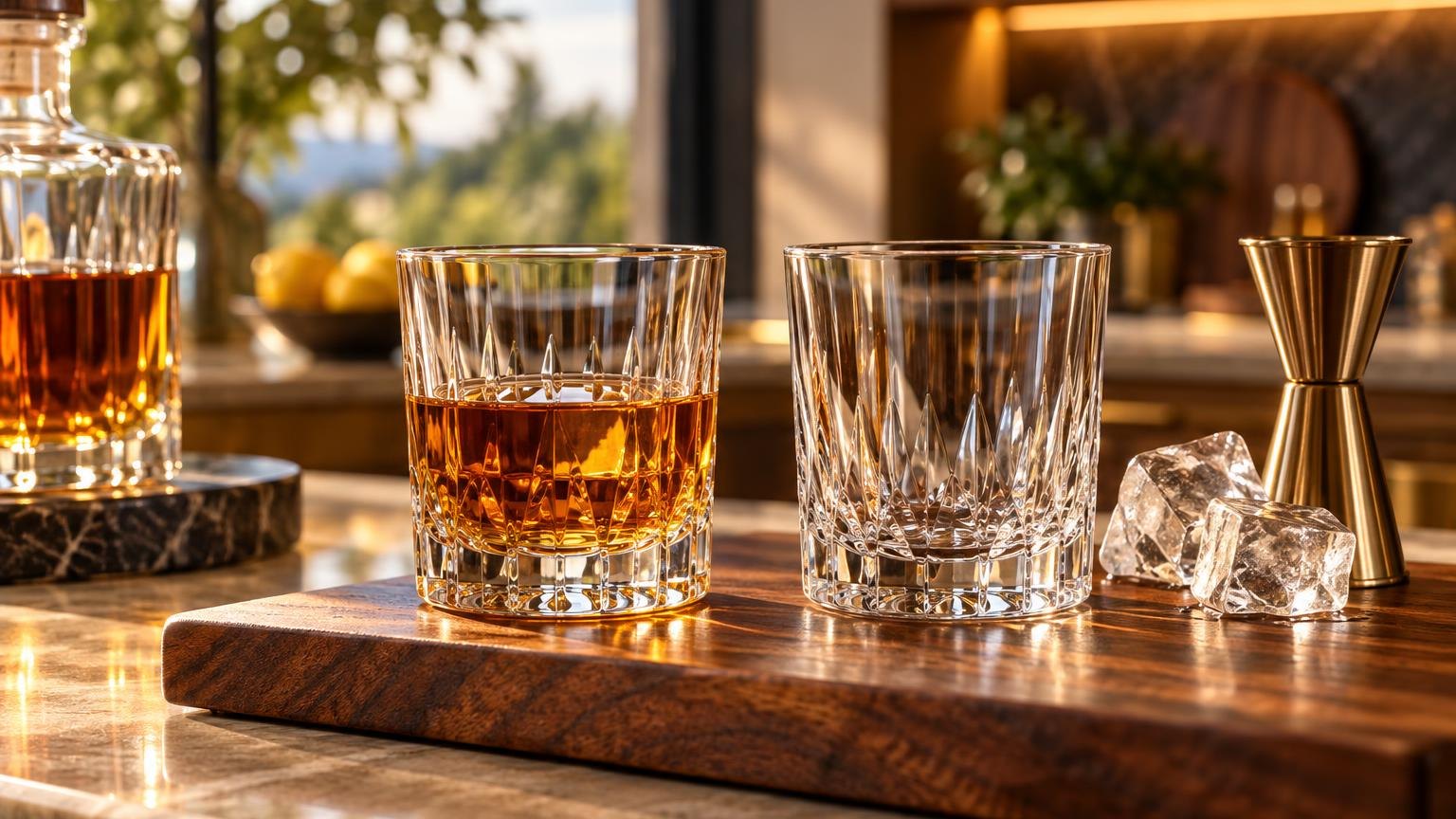
Straight whiskey contains zero carbohydrates per 1.5-ounce shot, making it one of the most keto-friendly spirits available.
The challenge lies in what you add to it—mixers, sweeteners, and flavored variants can turn a zero-carb drink into a sugar bomb.
Choose the Right Mixers
Mixer choice determines whether your whiskey drink stays low-carb or derails your macros entirely. Compare common options:
| Mixer (8 oz) | Carbs (g) | Calories |
| Club soda | 0 | 0 |
| Diet cola | 0 | 0–5 |
| Water | 0 | 0 |
| Regular cola | 26 | 97 |
| Ginger ale | 22 | 83 |
| Sweet & sour mix | 24 | 100 |
| Cranberry juice cocktail | 30 | 116 |
Avoid Flavored Whiskeys
Flavored whiskeys like Fireball Cinnamon (11 g carbs per 1.5 oz) and Jack Daniel’s Tennessee Honey (6 g per shot) contain added sugars. Standard bourbon, rye, and Scotch remain at 0 g carbs.
Practical Low-Carb Strategies
- Drink neat, on the rocks, or with a splash of water. These methods add zero carbs and allow full appreciation of the whiskey’s flavor profile.
- Use zero-sugar bitters sparingly. A dash of Angostura bitters adds under 1 g of carbs per serving—acceptable for most low-carb plans.
- Order an Old Fashioned with modifications. Skip the sugar cube; use a single drop of liquid stevia or monk fruit sweetener instead.
- Limit intake to 1–2 shots per sitting. Alcohol pauses fat oxidation while your liver processes it, slowing ketosis regardless of carb count.
- Alternate each whiskey with a full glass of water. This slows consumption and supports hydration, which alcohol depletes at a rate of roughly 10 mL of water per gram of ethanol metabolized.
Watch the Calorie Count
Zero carbs does not mean zero calories. A standard 1.5-ounce pour of 80-proof whiskey delivers approximately 97 calories, all from alcohol at 7 calories per gram. Three shots equal 291 calories—comparable to a full meal’s worth of energy.
Questions People Ask Most
How many carbs are in a standard 1.5 oz shot of whiskey?
A standard 1.5 oz (44 ml) shot of plain whiskey — bourbon, scotch, rye, or Irish — contains 0 grams of carbohydrates. The distillation process eliminates all sugars, starches, and grains from the final spirit.
The USDA FoodData Central database confirms this zero-carb value for 80-proof distilled spirits.
Does bourbon have more carbs than scotch or rye whiskey?
No. Bourbon, scotch, rye, and single malt whiskeys all contain 0 g of carbs per shot when bottled without added flavors or sweeteners.
The base grain — corn for bourbon, malted barley for scotch — affects flavor but not carbohydrate content, because distillation separates alcohol vapor from all grain-derived sugars.
How many calories are in a shot of whiskey if there are no carbs?
A 1.5 oz shot of 80-proof (40% ABV) whiskey contains approximately 97 calories, all derived from ethanol at 7 calories per gram. At 86 proof the count rises to roughly 105 calories, and a 100-proof shot delivers about 124 calories.
Zero carbs means zero calories from carbohydrates — every calorie comes from alcohol itself.
Do flavored whiskeys contain carbs?
Yes. Flavored whiskeys such as Fireball Cinnamon Whisky or Crown Royal Apple contain added sugars that introduce carbohydrates. Fireball, for example, has roughly 11 g of sugar per 1.5 oz serving, translating to about 11 g of carbs.
Always check the label or manufacturer’s nutrition data on flavored products.
Is whiskey keto-friendly given its zero carb count?
Plain whiskey is technically zero-carb and does not directly knock you out of ketosis through carbohydrate intake. However, the liver prioritizes metabolizing ethanol over burning fat, which temporarily halts fat oxidation.
A single 1.5 oz shot is generally considered compatible with a ketogenic diet, but consumption slows overall fat-burning progress.
Does mixing whiskey with soda or juice add carbs?
Significantly. Mixing a shot of whiskey with 8 oz of regular Coca-Cola adds approximately 26 g of carbs, and 8 oz of ginger ale adds about 22 g.
Club soda and plain water add 0 g of carbs, making them the best mixers for anyone tracking carbohydrate intake.
Does aging whiskey in barrels add any carbohydrates?
Barrel aging introduces trace compounds like vanillin, tannins, and wood sugars, but the amounts are negligible — typically less than 0.1 g of carbs per serving, which rounds to 0 g under FDA labeling rules.
Even a 25-year single malt aged in sherry casks registers at 0 g of carbohydrates per 1.5 oz pour.
How does whiskey’s carb content compare to beer and wine?
Whiskey has 0 g of carbs per 1.5 oz serving, while a 12 oz regular beer averages 13 g and a 5 oz glass of dry red wine contains about 3–4 g. Even a 12 oz light beer carries roughly 5–6 g of carbs.
For strict low-carb diets, plain whiskey is the most carbohydrate-efficient alcoholic option by a wide margin.
Related Guides
- What Do You Mix Jameson With?
- What Are The Different Types Of Whiskey?
- Does Opened Whiskey Go Bad?
- What To Mix With Baileys?
- Which Country Consumes The Most Whiskey Overall?
- Who Makes Kirkland Canadian Whiskey?
- Who Taught Jack Daniel’S To Make Whiskey?
- All Alcohol Guides
- USDA FoodData Central – Whiskey Entry (2024)
- National Institute on Alcohol Abuse and Alcoholism – What Is a Standard Drink? (2023)
- Dietary Guidelines for Americans 2020–2025, USDA & HHS (2020)
- TTB/Treasury – Beverage Alcohol Manual, Vol. 2 (2024)
- Harvard T.H. Chan School of Public Health – Alcohol: Balancing Risks and Benefits (2023)
- PubMed Central – Caloric and Macronutrient Content of Alcoholic Beverages (2019)
- American Diabetes Association – Alcohol & Diabetes (2023)
- MedlinePlus / U.S. National Library of Medicine – Carbohydrates (2023)