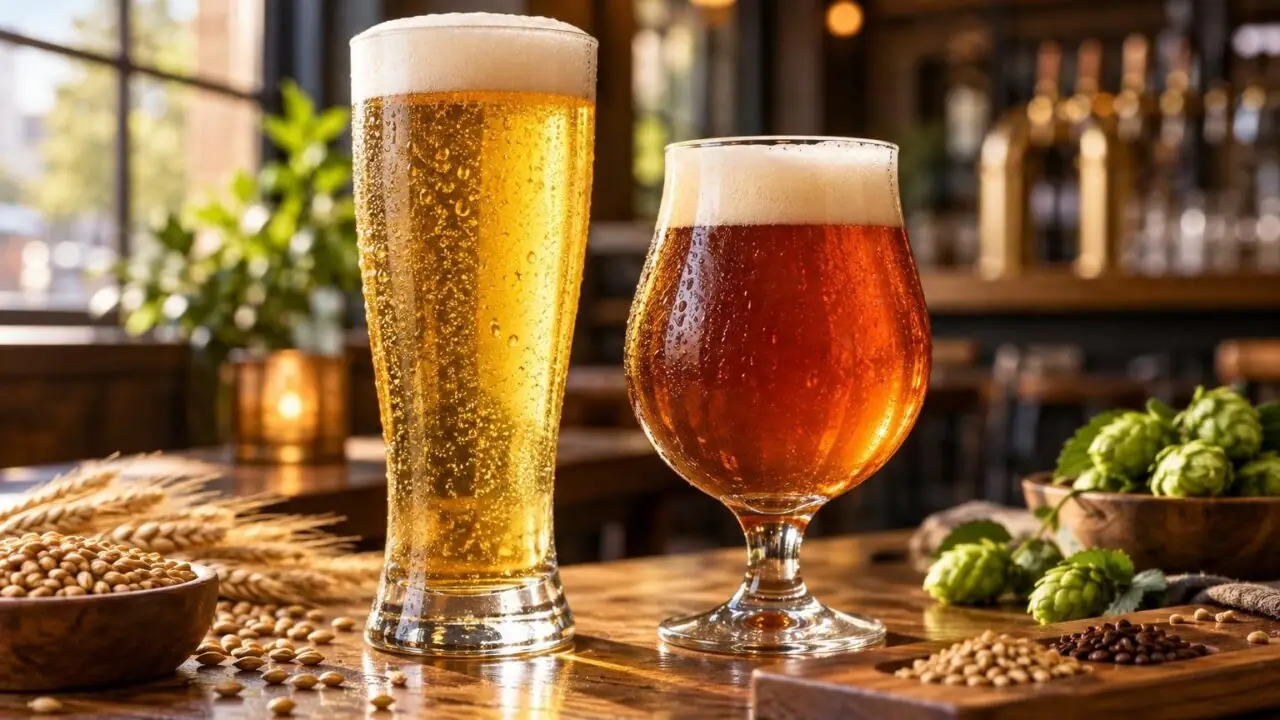
Beer is a broad category of fermented grain beverages, while ale is one beer family made with top-fermenting yeast; that distinction answers “What’s the Difference Between Beer and Ale?” A beer can be an ale or a lager.
So these terms do not describe equal categories.
Yeast selection and fermentation behavior create the primary divide.
Brewing method, yeast performance, and serving style explain the differences drinkers notice.
Ales typically ferment warmer and faster, producing fuller aromas that may suggest fruit, spice, bread, or caramel. Lagers, the other major beer family, ferment cooler and mature longer, often creating cleaner, crisper profiles.
Color, bitterness, alcohol content, and carbonation vary across both groups, so appearance alone cannot identify an ale. The article compares fermentation, flavor, ingredients, and familiar examples.
Beer Is the Broader Category
Beer is the umbrella category for fermented grain beverages; ale is one major style inside it. Think of beer like “wine,” and ale like “Pinot Noir”: narrower, not separate.
In practical brewing terms, beer starts with water, malted barley or other grains, hops, and yeast.
Fermentation converts sugar into alcohol and carbon dioxide, usually yielding bottled strengths around 3% to 12% ABV, with extreme styles outside that range.
What Makes Ale Different
Ales use top-fermenting Saccharomyces cerevisiae and ferment relatively warm, often about 60°F to 72°F. Many ales finish in roughly 5 to 14 days, faster than most lagers, and often show fruity esters and spicy phenols.
Lagers use bottom-fermenting yeast, Saccharomyces pastorianus, and ferment colder, commonly about 45°F to 55°F. They need weeks of maturing, which gives cleaner malt and hop flavors in brands people associate with crisp lager beer.
| Feature | Beer generally | Ale specifically |
| Scope | All fermented grain beers | One major beer family |
| Yeast | Many yeast families | Mainly S. cerevisiae |
| Typical fermentation | 45°F to 75°F varies | About 60°F to 72°F |
| Common timeline | Days to months | Often 5 to 14 days |
| Examples | Stout, pilsner, porter, IPA | IPA, stout, porter, wheat ale |
Why the Distinction Matters
Saying “beer” covers amber ales, brown ales, IPAs, porters, stouts, pilsners, lagers, wheat beers, and sour or mixed-culture brews. Saying “ale” excludes lagers and most hybrid styles.
Menu ordering often blurs this. A bartender may say “beer or ale,” but technically that is like asking “furniture or chair.” Ale is contained within beer, not beside it.
For buying and brewing, the useful split is fermentation biology and temperature. Ale yeast tolerates warmer conditions and drives ester-heavy aroma; lager yeast favors colder, longer conditioning and cleaner profiles.
Final takeaway: all ales are beers; not all beers are ales. The broader word protects the label, the narrower word describes process, flavor tendency, and yeast family.
Ale Uses Warm Fermentation
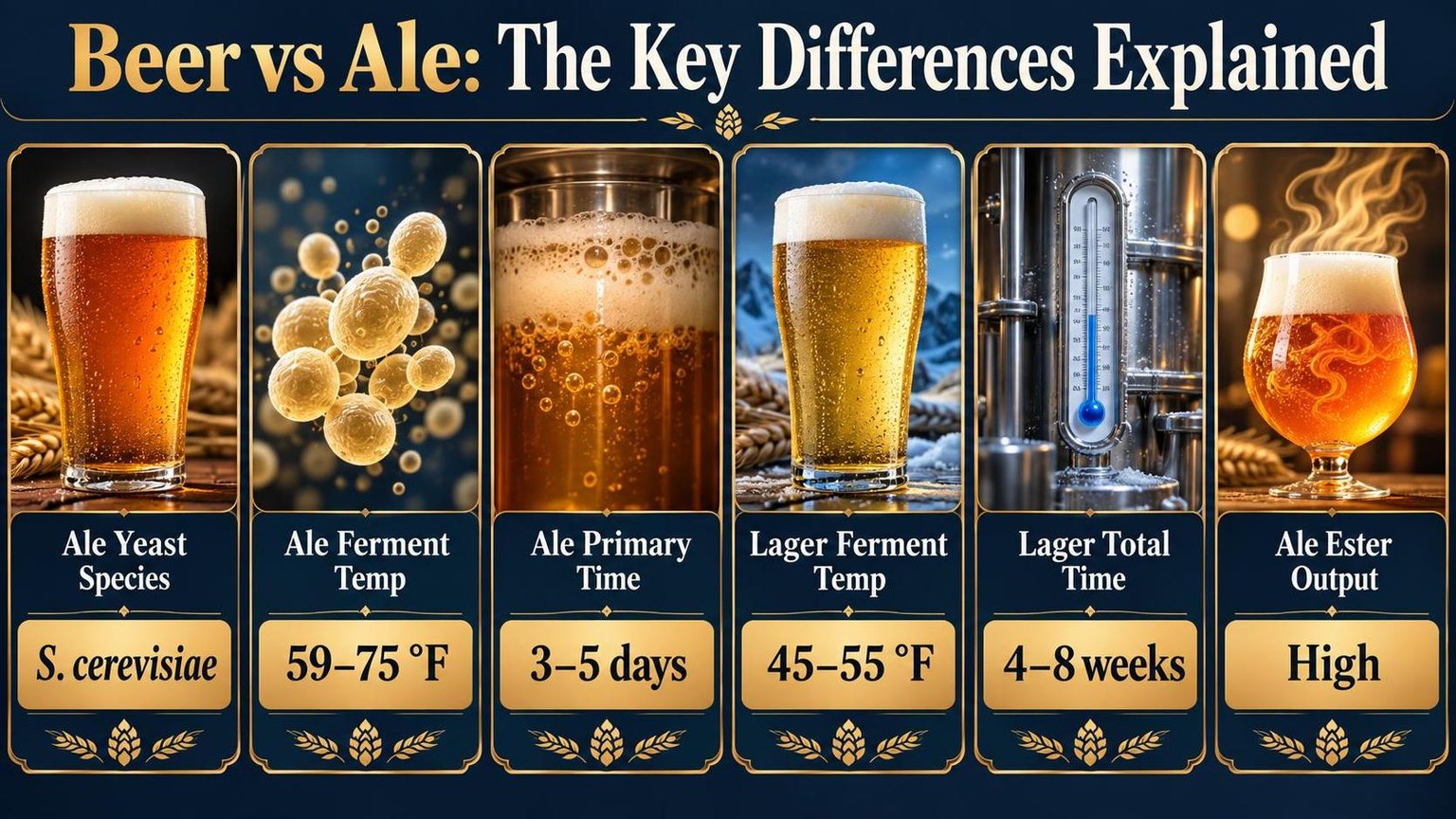
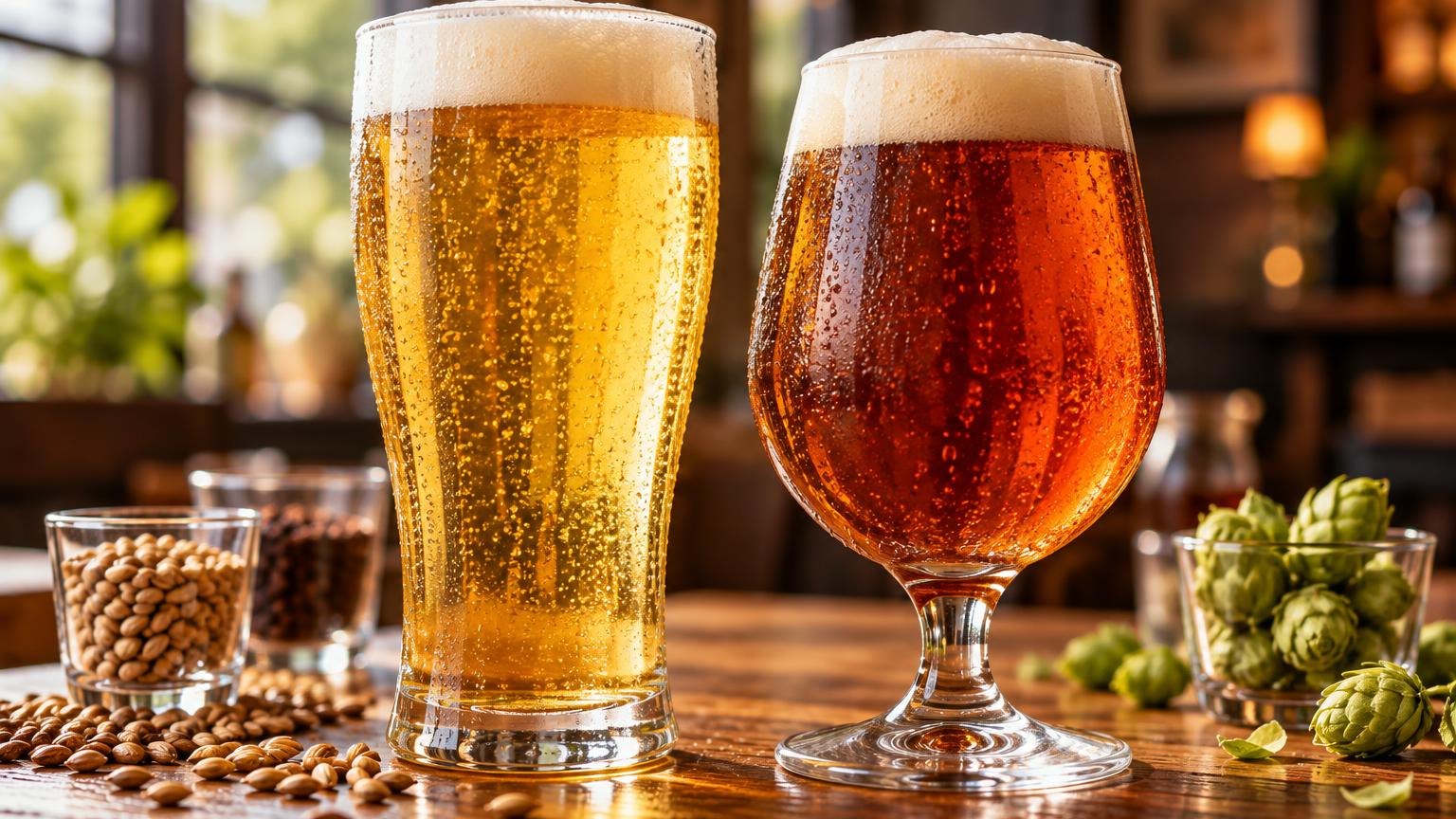
Ale yeast (Saccharomyces cerevisiae) ferments at 15–24 °C (59–75 °F), rising to the top of the vessel. This top-fermenting behavior produces esters and phenols that give ales their characteristic fruity, spicy complexity.
Warm fermentation accelerates the process significantly. Most ales reach primary fermentation completion in 3–5 days, compared to 4–6 weeks for bottom-fermenting lagers.
| Parameter | Ale (Top-Fermenting) | Lager (Bottom-Fermenting) |
| Yeast species | S. cerevisiae | S. pastorianus |
| Fermentation temp | 15–24 °C (59–75 °F) | 7–13 °C (45–55 °F) |
| Primary fermentation | 3–5 days | 7–14 days |
| Total production time | 2–4 weeks | 4–8 weeks |
| Yeast position | Top of vessel | Bottom of vessel |
| Ester production | High | Low |
The warmth triggers ale yeast to generate higher concentrations of isoamyl acetate (banana-like aroma) and ethyl acetate (solvent/fruity note). These byproducts define ale’s flavor profile.
Why Temperature Matters
Fermentation temperature directly controls flavor compound production. A 5 °C increase can double ester output, making temperature management critical for brewers targeting a specific taste.
- Below 15 °C: Ale yeast becomes sluggish, producing incomplete fermentation and off-flavors.
- 15–18 °C: Cleaner ale profile with restrained esters, common in Kölsch and cream ales.
- 18–22 °C: Standard range for IPAs, pale ales, and stouts, balancing ester complexity with drinkability.
- Above 24 °C: Excessive fusel alcohols develop, creating harsh, hot flavors most brewers avoid.
Belgian ales push boundaries deliberately. Styles like saison ferment at 27–35 °C (80–95 °F) using specialized strains bred to handle heat without producing harsh fusel alcohols.
Before refrigeration existed, warm fermentation was the default. Lager brewing only became practical after Carl von Linde patented his ammonia refrigeration compressor in 1876, giving brewers reliable cold storage year-round.
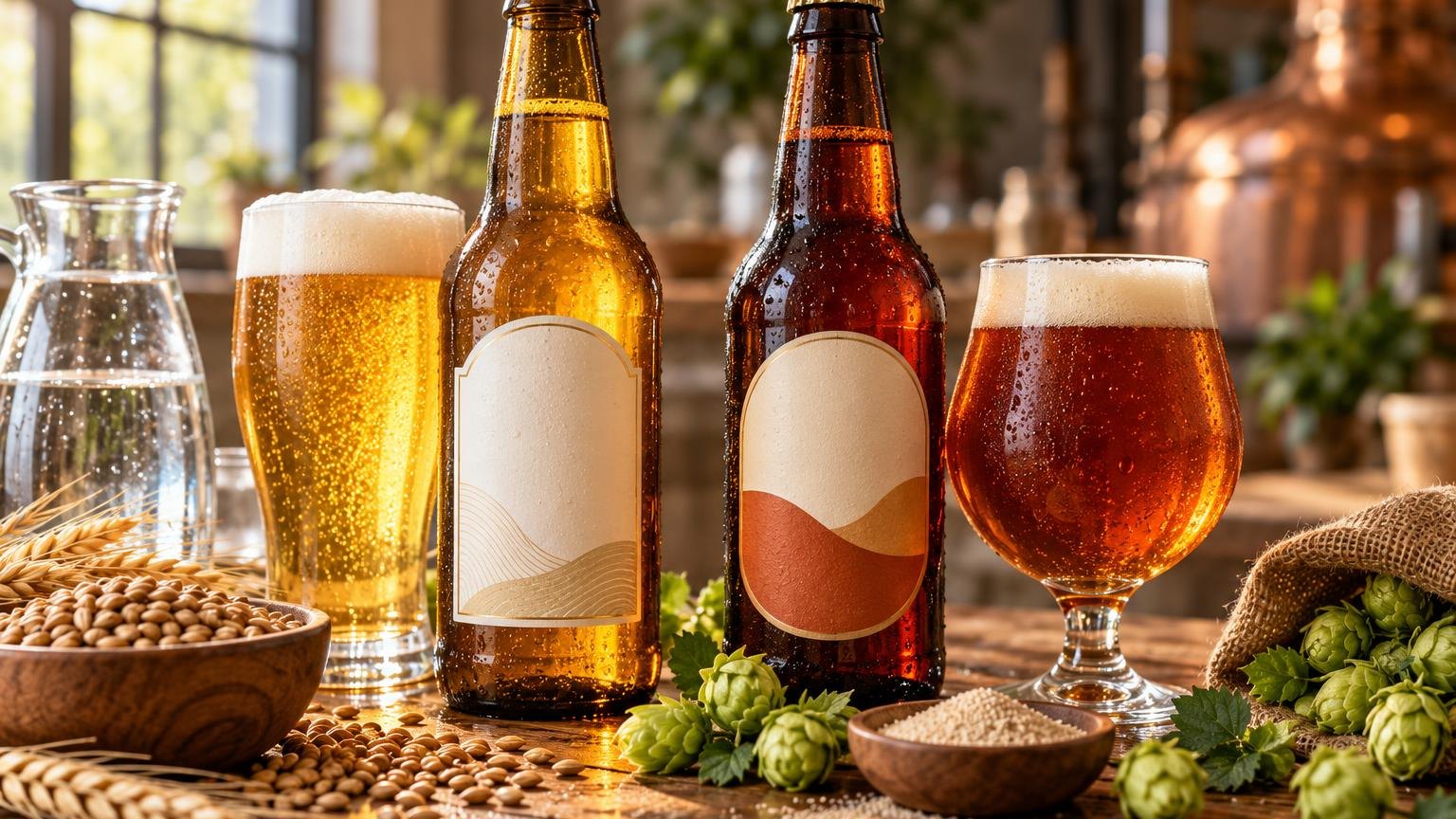
Lager Yeast Defines Most Lagers
Lager yeast, Saccharomyces pastorianus, is a hybrid organism that emerged roughly 500–600 years ago in Bavarian brewing cellars.
It thrives at cold temperatures where ale yeast stalls, producing the clean, crisp profiles that dominate global beer consumption.
S. pastorianus resulted from a natural hybridization between S. cerevisiae (ale yeast) and S. eubayanus, a wild species identified in Patagonian forests by University of Wisconsin researchers in 2011.
Fermentation Conditions Compared
| Parameter | Lager Yeast (S. pastorianus) | Ale Yeast (S. cerevisiae) |
| Fermentation temperature | 7–13 °C (45–55 °F) | 15–24 °C (59–75 °F) |
| Primary fermentation duration | 2–3 weeks | 3–7 days |
| Lagering/conditioning period | 4–8 weeks at 0–4 °C | 1–2 weeks, often warmer |
| Fermentation position | Bottom-fermenting | Top-fermenting |
| Ester and phenol production | Low | Moderate to high |
| Melibiose metabolism | Yes | No |
Lager yeast sinks to the bottom of the fermentation vessel, earning the label “bottom-fermenting.” This behavior occurs because S. pastorianus cells flocculate differently at cold temperatures.
Why Cold Fermentation Matters
Lower temperatures suppress fusel alcohol and ester formation. The result is a neutral flavor baseline that lets malt and hop character dominate without fruity or spicy yeast-driven notes.
The extended cold-conditioning phase—called “lagering,” from the German lagern (to store)—further clarifies the beer and rounds out harsh flavors.
Traditional Munich breweries lagered in alpine caves at near-freezing temperatures for months.
Key Characteristics of Lager Yeast
- Metabolizes melibiose, a sugar ale yeast cannot ferment, enabling more complete attenuation
- Functions at temperatures as low as 2–3 °C during conditioning
- Produces minimal isoamyl acetate (banana ester) and 4-vinylguaiacol (clove phenol)
- Contains the combined genome of two parent species—roughly 24 chromosomes total
- Accounts for the yeast behind approximately 90% of global beer production by volume
Without S. pastorianus, styles like Pilsner, Helles, Märzen, Dunkel, and Bock would not exist in their recognized forms. The yeast itself is the defining ingredient that separates lager from ale at the biological level.
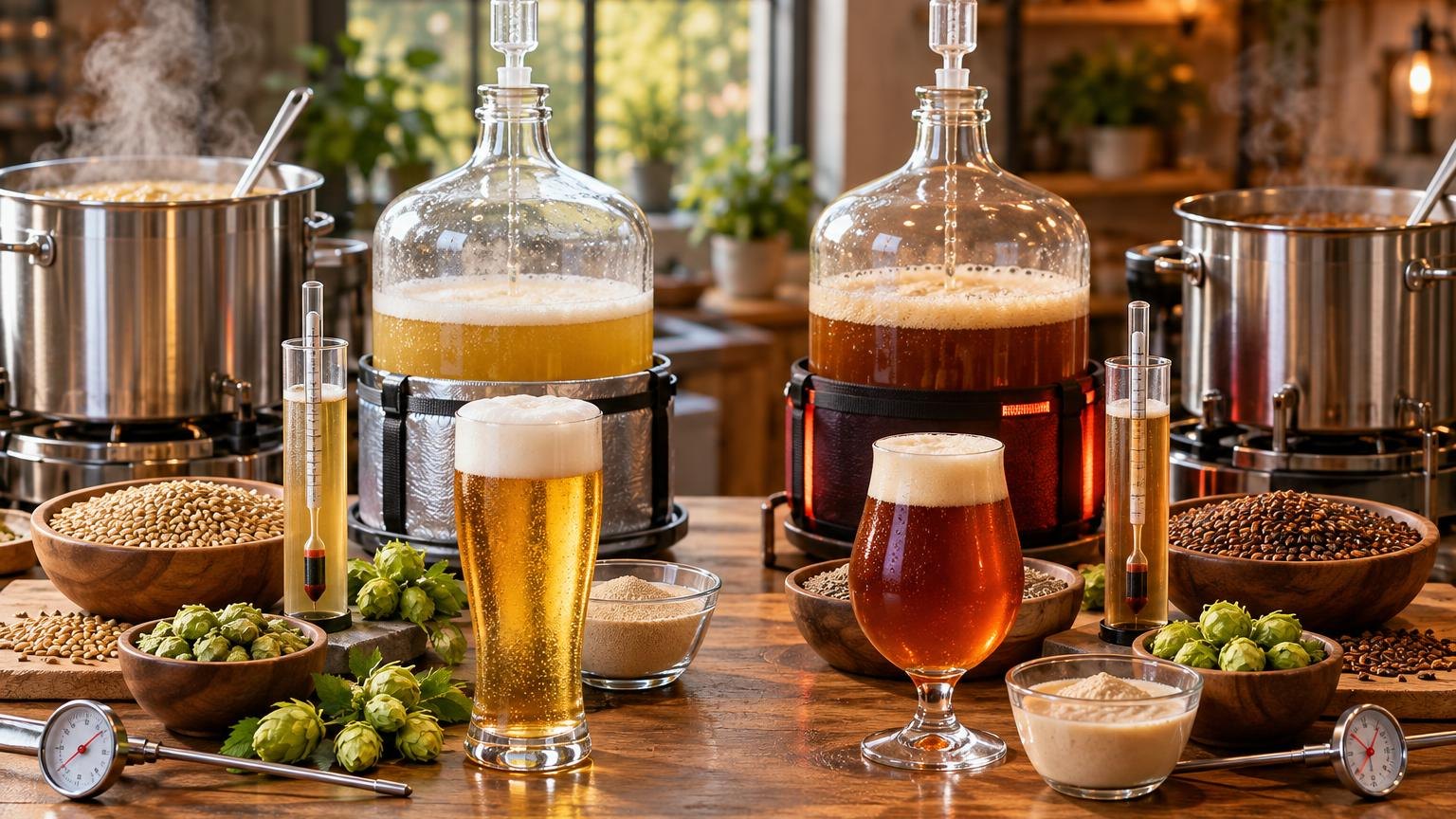
How Fermentation Temperature Changes Flavor
Fermentation temperature is the single biggest driver of flavor divergence between lagers and ales.
Yeast metabolism shifts dramatically across a 20°F range, producing entirely different ester and phenol profiles that define each style’s character.
Temperature Ranges and Their Effects
| Fermentation Type | Temperature Range | Primary Yeast | Dominant Flavor Compounds |
| Lager | 35–50°F (2–10°C) | Saccharomyces pastorianus | Clean, sulfur compounds (dimethyl sulfide), minimal esters |
| Ale | 60–75°F (15–24°C) | Saccharomyces cerevisiae | Fruity esters (isoamyl acetate, ethyl hexanoate), higher alcohols |
| Belgian/Saison Ale | 75–95°F (24–35°C) | Specialty ale strains | Phenols (4-vinylguaiacol), intense esters, spicy notes |
Why Temperature Matters at the Molecular Level
At higher temperatures, yeast cells reproduce faster and produce more esters through acetyl-CoA metabolism. Isoamyl acetate—the banana-like compound—increases measurably above 64°F (18°C).
Below 50°F, ester production drops by up to 50–80%. This suppression is why lagers taste “cleaner” than ales brewed with identical grain bills.
Key Flavor Compounds Affected
- Isoamyl acetate (banana): Peaks at 68–77°F; nearly absent below 50°F
- Ethyl acetate (solvent/fruity): Increases sharply above 72°F; off-flavor threshold is 33 mg/L
- Fusel alcohols: Production doubles for every 9°F (5°C) increase above 59°F
- Diacetyl (butterscotch): Formed at all temperatures but reabsorbed during lager’s extended cold conditioning (lagering) at 32–38°F
- Hydrogen sulfide: Common in lager fermentation; dissipates during 4–6 weeks of cold storage
Practical Consequence for Flavor
A brewer can ferment the same wort at 45°F and 68°F and produce two unrecognizable beers. The cold-fermented version will taste crisp and malt-forward. The warm version will carry fruit and spice.
This is why temperature control, not grain selection, remains the most powerful tool in a brewer’s arsenal for shaping finished flavor.
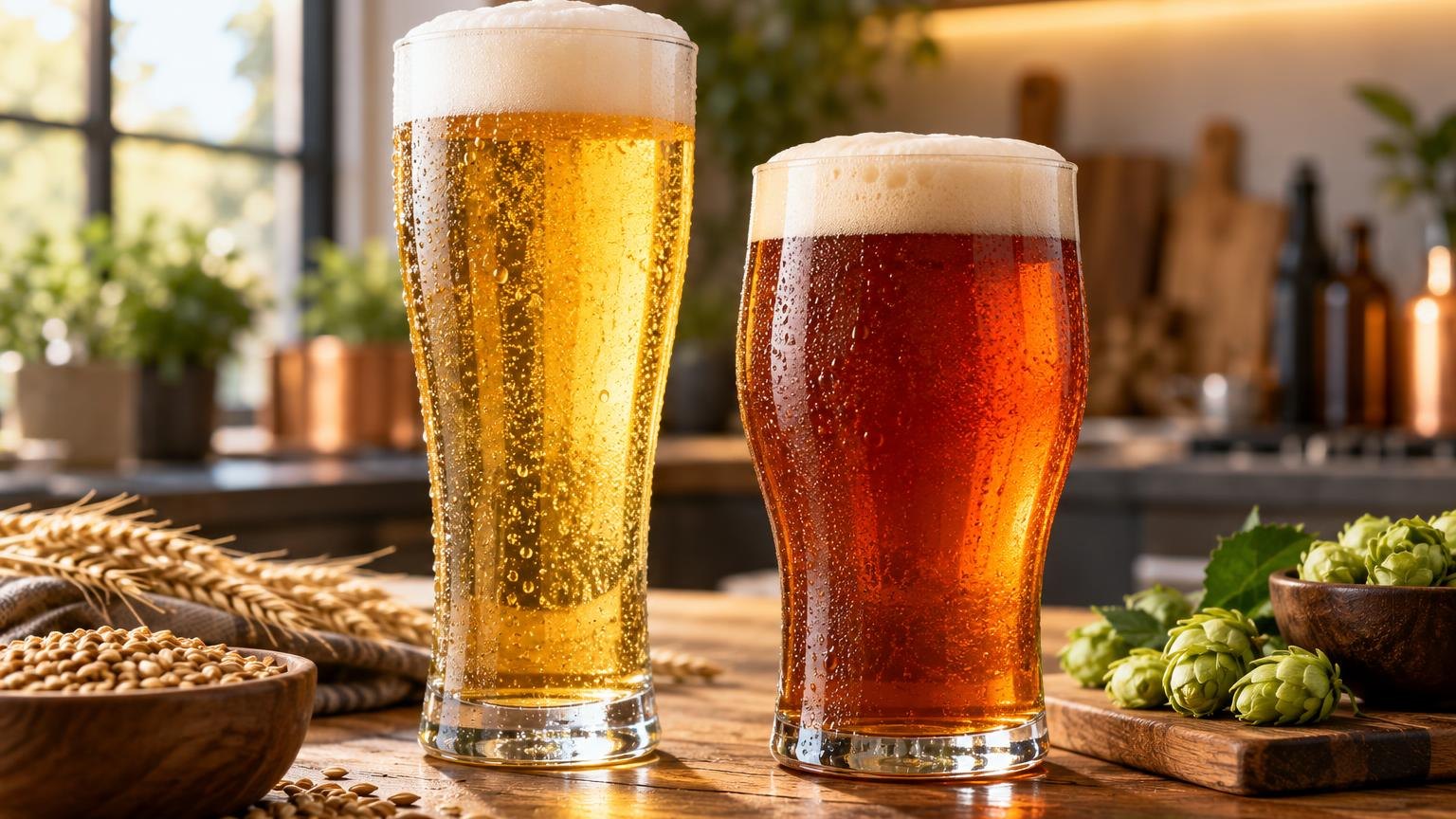
Top-Fermented Versus Bottom-Fermented Yeast
The single most important distinction between ale and lager lies in yeast behavior. Saccharomyces cerevisiae (ale yeast) ferments at the top of the vessel, while Saccharomyces pastorianus (lager yeast) works at the bottom.
This difference dictates temperature, timeline, and flavor.
Key Differences at a Glance
| Factor | Ale (Top-Fermented) | Lager (Bottom-Fermented) |
| Yeast species | S. cerevisiae | S. pastorianus |
| Fermentation temperature | 15–24 °C (59–75 °F) | 7–13 °C (45–55 °F) |
| Primary fermentation time | 3–7 days | 7–14 days |
| Conditioning period | 1–3 weeks | 4–8 weeks (lagering) |
| Yeast position in vessel | Rises to the top | Sinks to the bottom |
| Flavor byproducts | Higher esters and phenols | Cleaner, crisper profile |
Why Temperature Matters
Ale yeast thrives in warmer conditions, producing esters like isoamyl acetate — the compound behind banana-like notes in hefeweizens. These fruity and spicy byproducts define ale character.
Lager yeast operates in cold environments. The lower temperature suppresses ester and fusel alcohol production, yielding the clean, smooth finish associated with pilsners and helles styles.
Historical Context
S. pastorianus is a hybrid organism. A 2011 study published in Proceedings of the National Academy of Sciences confirmed it originated from a cross between S. cerevisiae and S. eubayanus, a wild yeast discovered in Patagonian beech forests.
Before refrigeration, bottom-fermented lagers were brewed only in winter or stored in alpine caves. Bavarian brewers in the 15th century pioneered this cold-storage method — “lagern” means “to store” in German.
Practical Implications for Flavor
- Ales deliver complex, fruit-forward, and sometimes spicy profiles due to elevated ester production at higher temperatures.
- Lagers emphasize malt and hop character without yeast-driven flavor interference, producing a neutral, drinkable result.
- Hybrid styles like Kölsch use ale yeast but ferment at cooler temperatures (13–16 °C), blurring the boundary between the two categories.
Every beer classified as an ale uses top-fermenting yeast. Every lager uses bottom-fermenting yeast. The yeast strain — not color, strength, or bitterness — is the defining factor.
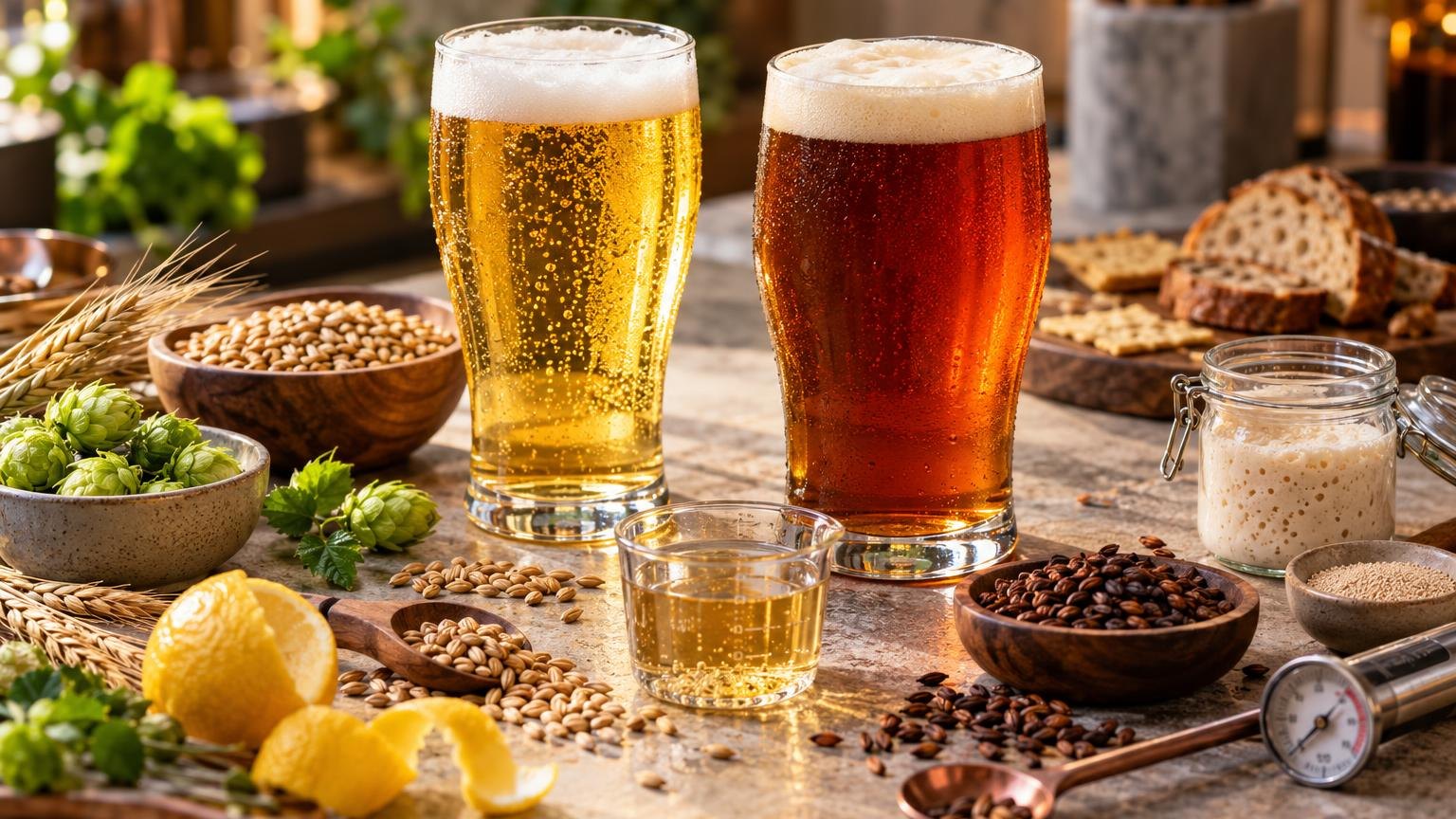
Examples of Ales and Lagers
Ales and lagers each encompass dozens of distinct styles, ranging from light session beers to full-bodied imperial versions.
Recognizing specific styles within each category clarifies what top-fermentation and bottom-fermentation actually produce in the glass.
Common Ale Styles
- India Pale Ale (IPA): Typically 6–7.5% ABV and 40–70 IBU. American IPAs emphasize Cascade, Centennial, and Citra hops for citrus and pine character.
- Stout: Roasted barley delivers coffee and chocolate notes. Dry stouts like Guinness Draught sit at 4.2% ABV; imperial stouts reach 8–12%.
- Belgian Dubbel: Dark fruit, caramel, and spice from distinctive yeast strains. ABV ranges from 6.5–8%. Westmalle Dubbel, brewed since 1926, set the benchmark.
- Hefeweizen: German wheat ale fermented at 17–22°C. Contains at least 50% wheat malt. Banana and clove esters come from Weihenstephan 68 yeast or similar strains.
- Pale Ale: The foundation style for modern craft brewing. Sierra Nevada Pale Ale, launched in 1980, runs 5.6% ABV and 38 IBU.
Common Lager Styles
- Pilsner: Originated in Plzeň, Czech Republic, in 1842. Czech pilsners use Saaz hops and finish at 4–5.4% ABV with 25–45 IBU.
- Helles: Munich’s answer to pilsner, developed by Spaten in 1894. Malt-forward, 4.7–5.4% ABV, and only 16–25 IBU.
- Dunkel: Dark Munich malts produce toffee and bread-crust flavors. ABV sits between 4.5–5.6%.
- Bock: Strong German lager at 6.3–7.2% ABV. Doppelbocks push to 7–10%, traditionally brewed by Paulaner monks as “liquid bread” during Lenten fasting.
- American Light Lager: The world’s highest-volume style. Bud Light contains 4.2% ABV and 110 calories per 355 ml serving.
Side-by-Side Comparison
| Attribute | Ales | Lagers |
| Fermentation temp | 15–24°C | 7–13°C |
| Typical ABV range | 4–12% | 4–7% |
| Conditioning time | 2–4 weeks | 4–8 weeks |
| Yeast species | S. cerevisiae | S. pastorianus |
These examples show that neither category is inherently stronger or more flavorful. Style diversity within ales and lagers depends on malt bills, hop varieties, and yeast selection—not fermentation type alone.
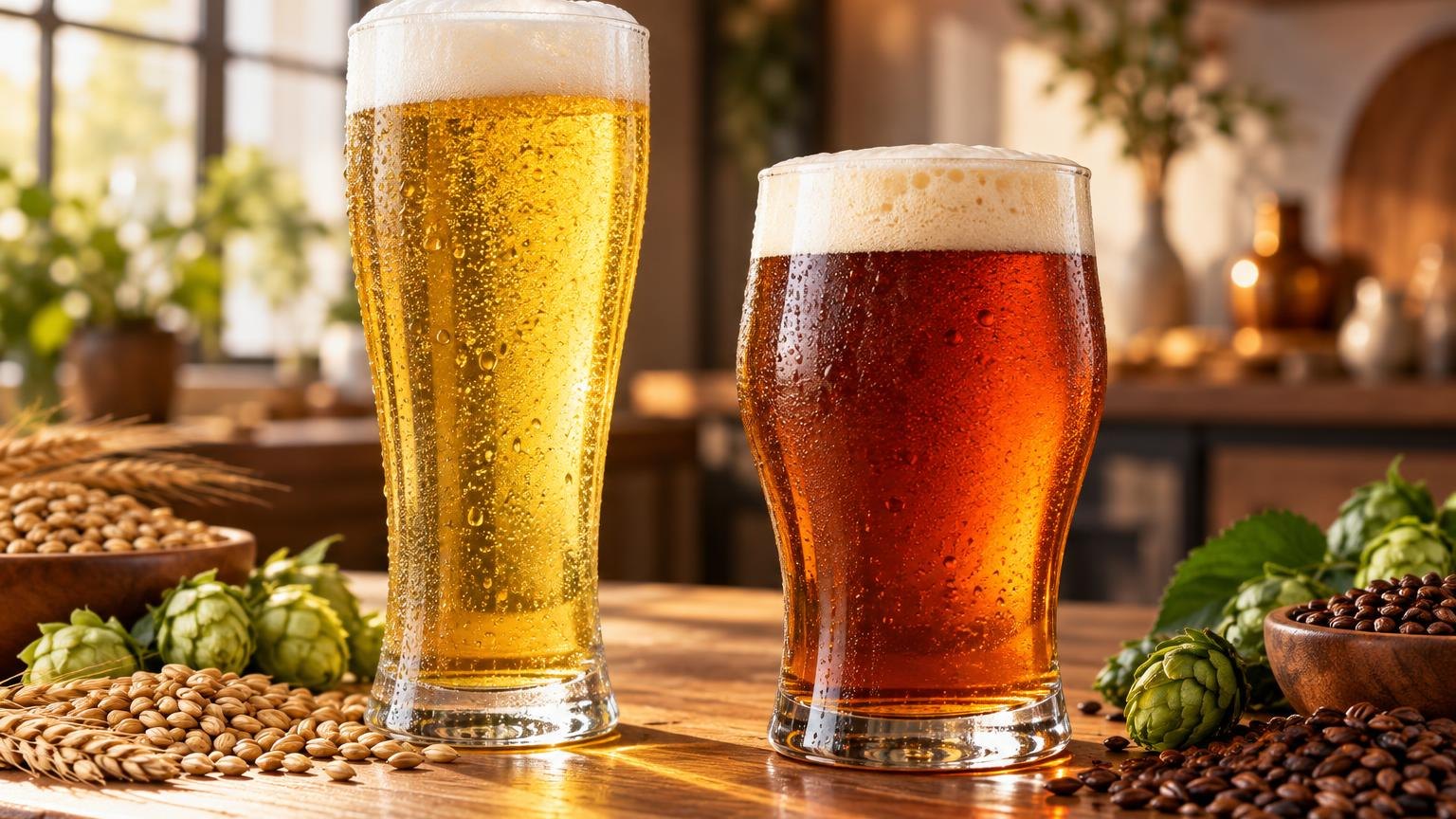
Why Ale and Beer Get Confused
The confusion stems from a linguistic shift that began in 15th-century England.
Before hops arrived from the Low Countries around 1400–1440, “ale” meant any fermented grain drink, and “beer” specifically meant a hopped version.
That distinction collapsed over roughly 200 years. By the 1600s, virtually all English brewers used hops, making the original dividing line meaningless.
Modern brewing redefined the terms around yeast and fermentation temperature rather than ingredients. Today’s technical classification looks like this:
| Factor | Ale | Lager (Non-Ale Beer) |
| Yeast species | Saccharomyces cerevisiae | Saccharomyces pastorianus |
| Fermentation temperature | 15–24 °C (59–75 °F) | 7–13 °C (45–55 °F) |
| Fermentation position | Top-fermenting | Bottom-fermenting |
| Typical fermentation time | 7–14 days | 4–8 weeks |
| Global market share (2023) | ~25% | ~75% |
Because lagers dominate roughly three-quarters of worldwide production, many consumers equate “beer” with the crisp, clean lager profile and see ales as something separate.
Taxonomy worsens the confusion. Every ale is technically a beer, but not every beer is an ale. The word “beer” is the umbrella category covering both ale and lager families.
Common Sources of Mix-Up
- Regional language: In parts of the UK, “beer” still colloquially means cask-conditioned bitter — which is actually an ale.
- Brand labeling: Products like Kölsch ferment warm like ales but undergo cold conditioning like lagers, blurring the boundary.
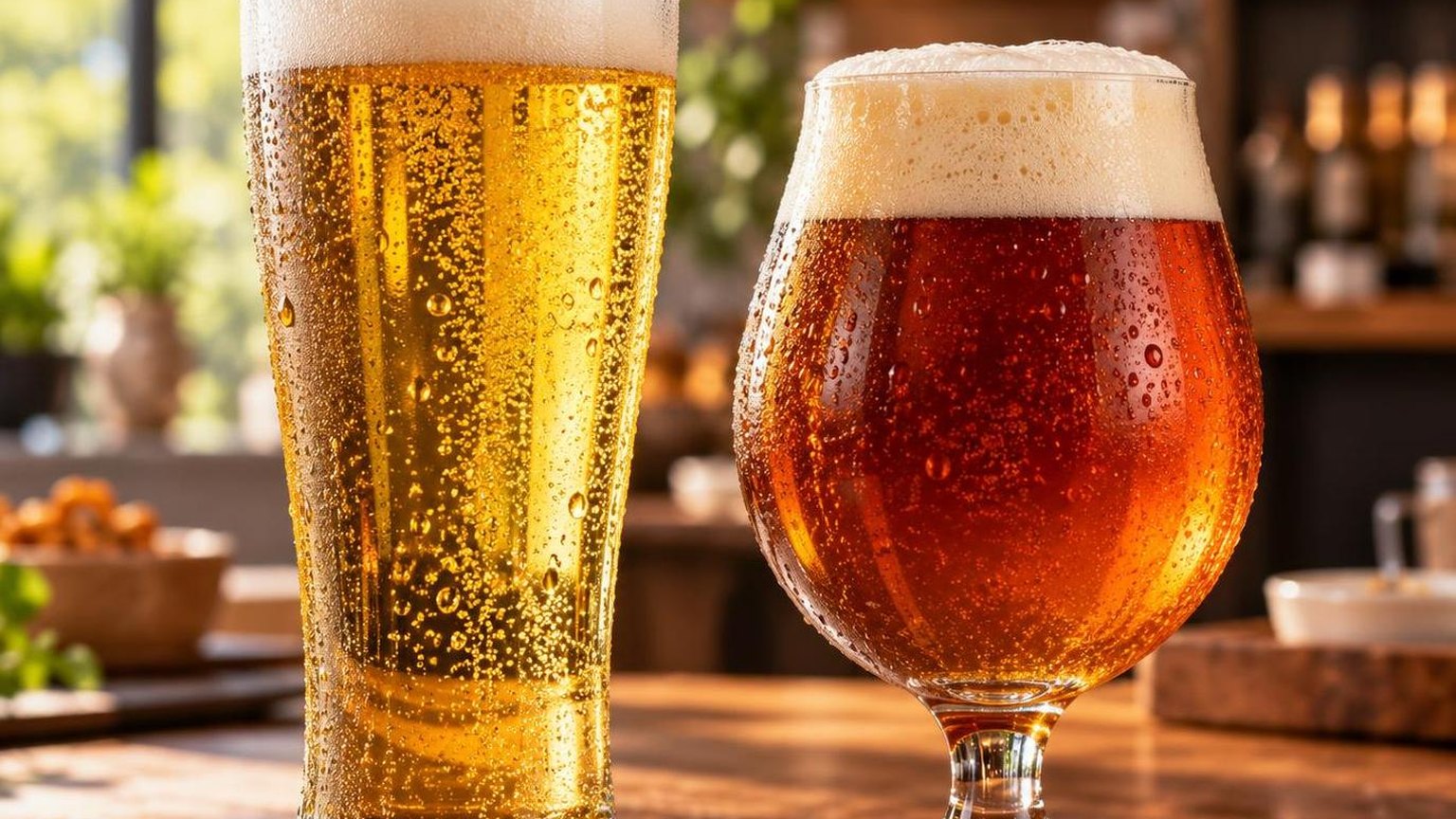
- Color assumptions: Drinkers often assume ales are dark and beers are pale. In reality, both families span the full SRM color scale from 2 (straw) to 40+ (opaque black).
- Historical carry-over: Pre-hop English “ale” recipes survived into the 18th century in some rural areas, perpetuating dual definitions for generations.
The takeaway is structural, not stylistic. Yeast strain and fermentation temperature — not color, strength, or hops — define whether a given beer is an ale.
Questions Readers Ask
Is ale a type of beer or a completely separate drink?
Ale is a subcategory of beer, not a separate beverage. All ales are beers, but not all beers are ales.
The beer family splits into two main branches—ales and lagers—distinguished primarily by the yeast strain and fermentation temperature used during brewing.
What yeast difference separates ale from lager-style beer?
Ales use top-fermenting yeast (Saccharomyces cerevisiae) that rises to the surface during fermentation and works at warm temperatures between 15–24 °C (60–75 °F).
Lagers use bottom-fermenting yeast (Saccharomyces pastorianus) that settles to the bottom and ferments at cooler temperatures of 7–13 °C (45–55 °F).
This single biological distinction drives nearly every flavor and production difference between the two.
Why do ales typically taste fruitier and more complex than mainstream lagers?
Warm fermentation causes ale yeast to produce higher concentrations of esters and phenols—aromatic compounds responsible for fruity, spicy, and floral notes.
A standard American lager fermented cold suppresses these byproducts, yielding a cleaner, crisper profile. This is why a Belgian Tripel or English bitter carries far more flavor complexity than a Pilsner at comparable alcohol levels.
How long does it take to brew an ale versus a lager?
Ales typically complete primary fermentation in 5–7 days and can be ready to drink in as few as two weeks. Lagers require a cold-conditioning (“lagering”) phase
Related Reading
- How Many Beers In A Mini Keg?
- Pilsner Vs Ale: The Easiest Way to Distinguish Between Them
- Coors Light Vs Bud Light: The Difference You Need To Know
- Where Is San Miguel Beer Made?
- How Much Is A Keg Of Miller Lite? Answer By Expert
- How Many Beers In A Heineken Mini Keg?
- Beer Companies That Support LGBTQ Communities
- Is A&W Root Beer Caffeine Free? The Most Accurate Answer
- How Many Beers In A Quarter Keg? The Complete, Experience-Based Guide
- All Alcohol Guides
- TTB — Beverage Alcohol Manual, Volume 2: Beer (2024)
- USDA FoodData Central — Beer, regular, all (2024)
- NIH National Library of Medicine — "Saccharomyces cerevisiae versus Saccharomyces pastorianus: Genotype and Phenotype Differences" (2014)
- UC Davis Department of Food Science & Technology — Brewing Science (2024)
- Oregon State University — Fermentation Science Program (2024)
- Brewers Association — Beer Style Guidelines (2024)
- NIH PubMed — "A Review of the Biochemistry of Heavy Flavour Formation in Beer" (2020)
- Master Brewers Association of the Americas — "Ale vs. Lager Yeast Classification" (2023)
- FDA — CFR Title 21, Sec. 184.1983: Bakers Yeast Extract (Saccharomyces cerevisiae) (2024)
- Cornell University, Department of Food Science — "Yeast Strain Differences in Fermentation" (2023)