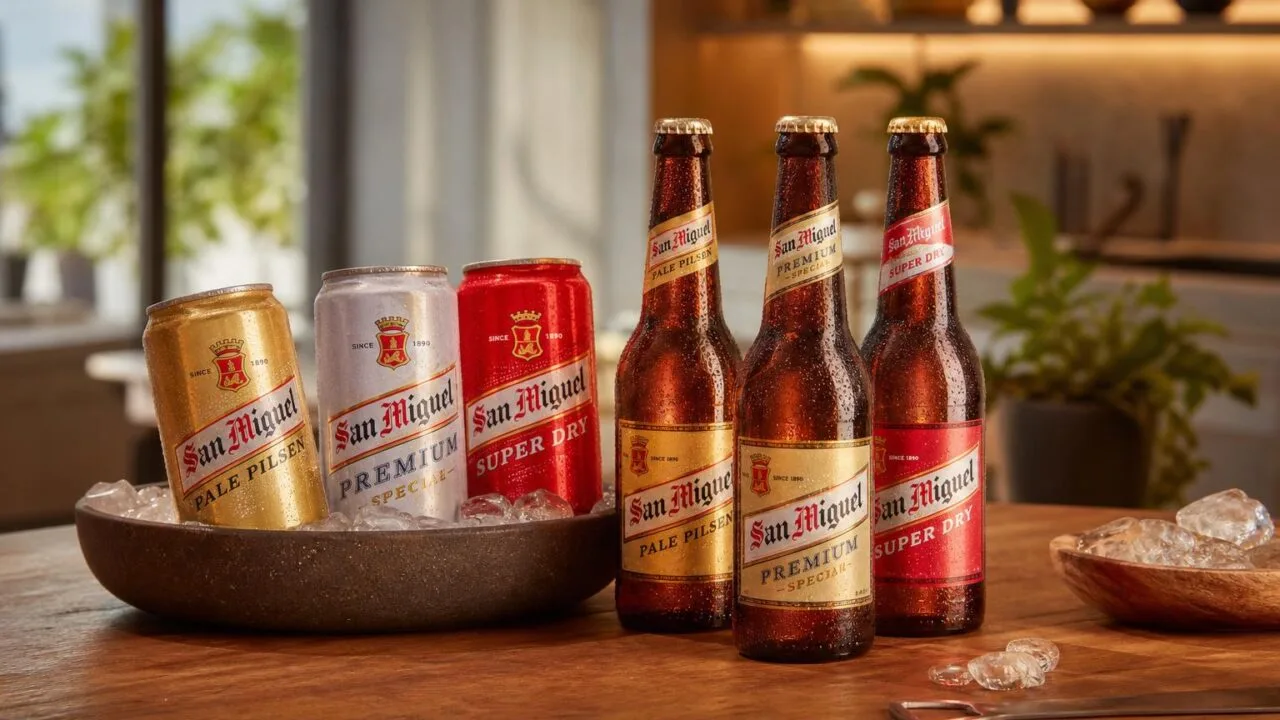
San Miguel Beer is made primarily in the Philippines, brewed at five domestic facilities operated by San Miguel Brewery Inc., with additional production plants in Hong Kong, China (Guangdong and Baoding), Vietnam, Thailand, Indonesia, and,.
Until recently, licensed brewing arrangements that have historically extended its reach to over 60 export markets worldwide.
The brand traces back to 1890 at La Fábrica de Cervezas de San Miguel in Manila’s Malate district, making it Southeast Asia’s oldest brewery.
Today, flagship variants like San Miguel Pale Pilsen roll off lines in Mandaue, Bacolod, Davao, Sta.
Rosa (Laguna), and Valenzuela, while the separately owned Spanish San Miguel is brewed by Mahou-San Miguel in Málaga, Lleida, Burgos, and Málaga’s Alameda plant.
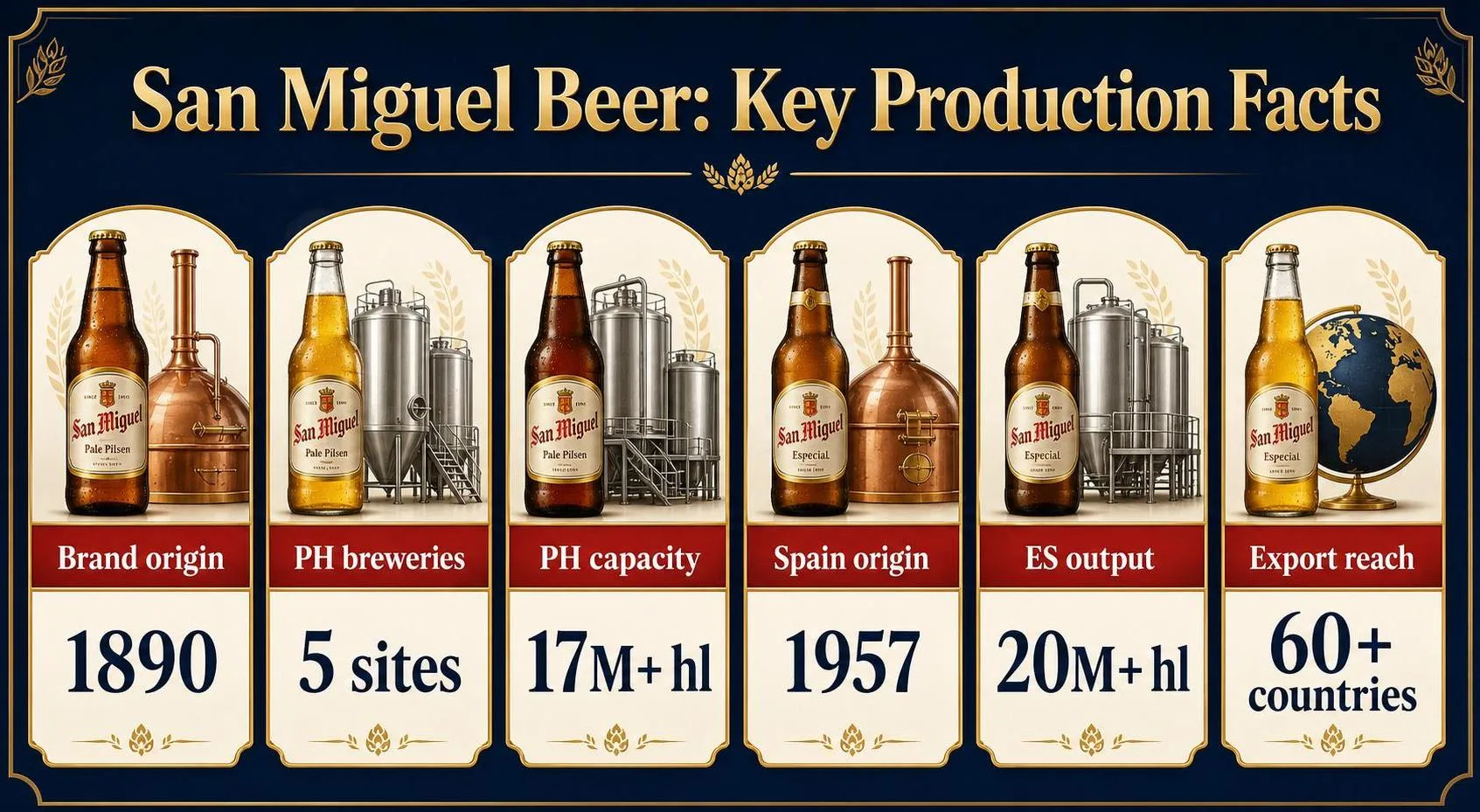
San Miguel Beer’s Global Production Reach
San Miguel Beer’s global footprint runs deeper than most drinkers realize. The brand traces back to 1890 in Manila, when La Fábrica de Cerveza de San Miguel became the first brewery in Southeast Asia.
Today production spans two legally separate companies operating on opposite sides of the world.
Two Companies, One Heritage
A 1953 licensing split created the confusion. San Miguel Corporation (Philippines) and Mahou-San Miguel (Spain) share the trademark but operate independently, brewing under different recipes and ownership structures.
| Detail | San Miguel Brewery (PH) | Mahou-San Miguel (ES) |
| Founded | 1890 (Manila) | 1957 (Lleida, Spain) |
| Parent | San Miguel Corporation | Mahou-San Miguel Group |
| Flagship ABV | 5.0% (Pale Pilsen) | 5.4% (Especial) |
| Bottle size | 320 ml standard | 330 ml standard |
| Domestic market share | ~90% of Philippine beer | ~30% of Spanish beer |
Philippine Production Scale
San Miguel Brewery Inc. operates five domestic breweries in the Philippines: Polo (Valenzuela), San Fernando (Pampanga), Sta. Rosa (Laguna), Mandaue (Cebu), and Darong (Davao del Sur). Combined annual capacity exceeds 17 million hectoliters.
- Polo Brewery: Metro Manila’s original modernized facility
- International plants: Hong Kong (1948, oldest overseas), plus Vietnam, Thailand, Indonesia, and South China
- Export reach: 60+ countries including the US, Australia, and UAE
Spanish Production Scale
Mahou-San Miguel runs 11 breweries across Spain and India, producing over 20 million hectoliters annually.
The San Miguel-branded brewery in Lleida (Catalonia) opened in 1957 and remains the primary source for European and US-imported San Miguel Especial.
What Americans Actually Drink
The US market receives both versions depending on the importer. Filipino grocery channels typically carry Philippine-brewed Pale Pilsen in 320 ml bottles, while mainstream retailers stock Spanish-brewed San Miguel Especial in 330 ml bottles.
Always check the back label — it lists the actual brewery country of origin per TTB labeling requirements.
Why San Miguel Beer Has Multiple Origins
The answer to “where is San Miguel Beer made” depends on which San Miguel product, market, and package you are looking at.
The brand began in Manila in 1890, but production now includes Philippine breweries and overseas brewing or distribution arrangements.
For accuracy, check the specific label, because the country printed near “brewed by,” “product of,” or “imported by” is the controlling clue.
San Miguel Pale Pilsen sold in the United States is not always the same supply chain as bottles sold in Manila, Hong Kong, or Spain.
Brand Owner and Brewing Entity
San Miguel Beer is associated with San Miguel Brewery Inc., the Philippine beer company whose roots trace to La Fábrica de Cerveza de San Miguel, founded in Manila in 1890.
That history does not mean every bottle worldwide is physically brewed in Manila.
San Miguel Brewery Inc. operates multiple breweries in the Philippines.
Its well-known Philippine production footprint includes sites serving Luzon, Visayas, and Mindanao, supporting nationwide distribution rather than relying on one single Manila plant.
| Factor | Why it matters | Practical label clue |
| Market sold in | Export bottles, domestic Philippine bottles, and locally brewed international versions may come from different supply chains. | Look for “product of,” “imported by,” or local importer details. |
| Specific beer | San Miguel Pale Pilsen, San Mig Light, Red Horse, and San Miguel Cerveza Blanca can have different production and export patterns. | Check the exact brand name, not just “San Miguel.” |
| Package format | Cans, returnable bottles, non-returnable bottles, and kegs may be filled at different facilities for logistics reasons. | Read the can base, bottle neck, back label, or carton. |
| Licensing or overseas brewing | Some international beer brands are brewed outside their origin country under agreement or by affiliated companies. | Wording such as “brewed under license” is decisive. |
Philippine Versus International Production
In the Philippines, San Miguel beer is commonly understood as domestically brewed by San Miguel Brewery’s local network.
The company has long operated large-scale breweries beyond Metro Manila to reduce transport time and keep beer close to regional demand.
Outside the Philippines, the result can change.
San Miguel-branded beer has been produced or marketed through international operations connected with San Miguel’s overseas business, including historic activity in Hong Kong, China, Indonesia, Thailand, and Vietnam.
Why the Label Beats Assumptions
Beer labels are the best source because import routes change. A U.S. consumer may see a San Miguel product imported by a U.S. importer, while the bottle still states the actual brewing country elsewhere on the package.
- “Brewed by” identifies the producer or brewing company.
- “Product of” usually identifies the country of origin for that package.
- “Imported by” identifies the U.S. business bringing it into the country, not necessarily the brewery.
- Batch codes can help customer service trace the plant, date, and line.
So, the most precise answer is label-specific: many San Miguel beers are brewed in the Philippines, but the global brand’s production can vary by product and destination market.
How to Verify Brewing Origin
Where San Miguel Beer is made is verified by matching the product’s physical label, lot coding, importer statement, and brewery ownership records.
For U.S. buyers, the most reliable evidence is the container itself, because alcohol labels must identify the responsible producer or importer.
San Miguel’s main Philippine beer operations are run by San Miguel Brewery Inc., whose historic production base is in the Philippines.
The company’s flagship Pale Pilsen is commonly associated with the Philippines, but San Miguel-branded beer can also be brewed in overseas facilities depending on market and SKU.
Primary verification points
- Country-of-origin statement: U.S. import labels normally state “Product of the Philippines,” “Brewed in Hong Kong,” “Brewed in Spain,” or another origin, depending on the beer and supply chain.
- Importer or distributor line: U.S. containers must identify the importer, giving a traceable business entity for compliance and recall purposes.
- Batch or lot code: Cans and bottles carry ink-jet or laser codes that let the producer trace the production date, packaging line, and plant.
- Government filings: U.S. labels can be checked against Alcohol and Tobacco Tax and Trade Bureau certificate-of-label-approval records when the product is imported for sale.
- Corporate disclosures: San Miguel Brewery annual reports and San Miguel Brewing International materials identify operating breweries and regional production networks.
What to compare on the package
| Evidence on beer | What it verifies | Typical location clue |
| “Product of” or “Brewed in” statement | Country where that packaged beer was made | Philippines, Hong Kong, Spain, or another licensed site |
| Importer name and address | Legal U.S. responsible party | U.S. importer, not necessarily brewery location |
| Lot or date code | Plant traceability and packaging date | Internal brewery code tied to a production line |
| TTB label approval | Approved U.S. label wording | Origin and importer details submitted for sale |
One important distinction: brand ownership does not always equal brewing location.
A bottle of San Miguel Pale Pilsen sold in one market may come from the Philippines, while another San Miguel-branded beer may be produced closer to its destination under the group’s international brewing structure.
For the most defensible answer, inspect the exact bottle or can in hand. Record the origin statement, importer, package size, alcohol by volume, and lot code, then compare those details with San Miguel Brewery disclosures and U.S. TTB label records.
How San Miguel Compares to Other Lagers
San Miguel Beer is best compared with other mass-market pale lagers, but its origin story is different: the flagship San Miguel Pale Pilsen was first brewed in Manila in 1890.
In the Philippines, it is made by San Miguel Brewery Inc., while some export-market San Miguel products are brewed through overseas subsidiaries or license arrangements.
| Beer | Typical ABV | Primary brewing origin | How it differs from San Miguel Pale Pilsen |
| San Miguel Pale Pilsen | 5.0% | Philippines; first brewed in Manila in 1890 | Fuller malt body than many light lagers, with a firm bitter finish by mainstream lager standards. |
| Heineken | 5.0% | Netherlands; global production network | Cleaner, more herbal and sulfur-leaning; widely standardized across international markets. |
| Corona Extra | 4.6% | Mexico; brewed by Grupo Modelo | Lighter body and softer bitterness; commonly served with lime in the U.S. |
| Budweiser | 5.0% | United States; Anheuser-Busch | Uses rice in the recipe, giving a lighter, drier finish than San Miguel Pale Pilsen. |
| Tiger Beer | 5.0% | Singapore; first brewed in 1932 | Similar tropical-market lager profile, but usually crisper and less malty. |
Against Heineken, San Miguel Pale Pilsen feels slightly rounder and less sharp.
Both are 5.0% ABV pale lagers, but Heineken’s signature yeast character gives it a more recognizable green-bottle aroma, while San Miguel leans more toasted-grain and gently bitter.
Corona Extra is the softer comparison. At 4.6% ABV, it drinks lighter than San Miguel and has less perceived bitterness.
If you want a beach lager with minimal malt weight, Corona is easiergoing; if you want more beer flavor, San Miguel usually has the edge.
Budweiser is closer in strength at 5.0% ABV, but the flavor construction is different. Budweiser’s rice-adjunct profile produces a dry, clean finish. San Miguel Pale Pilsen usually tastes more malt-forward, with a firmer hop snap at the end.
Tiger Beer is the closest regional alternative. Both are Asian pale lagers built for hot climates, both sit around 5.0% ABV, and both pair well with spicy food. Tiger tends to be crisper; San Miguel tends to feel slightly richer.
- Choose San Miguel if you want a 5.0% lager with more malt presence than Corona or Budweiser.
- Choose Heineken if you prefer a sharper European lager character.
- Choose Corona if low bitterness and a lighter body matter most.
- Choose Tiger if you want a similarly refreshing Asian lager with a leaner finish.
Label Checks and Drinking Considerations
San Miguel Beer is an alcoholic lager, so the practical concerns are the same whether the bottle was brewed in the Philippines, Hong Kong, Spain, or another licensed market.
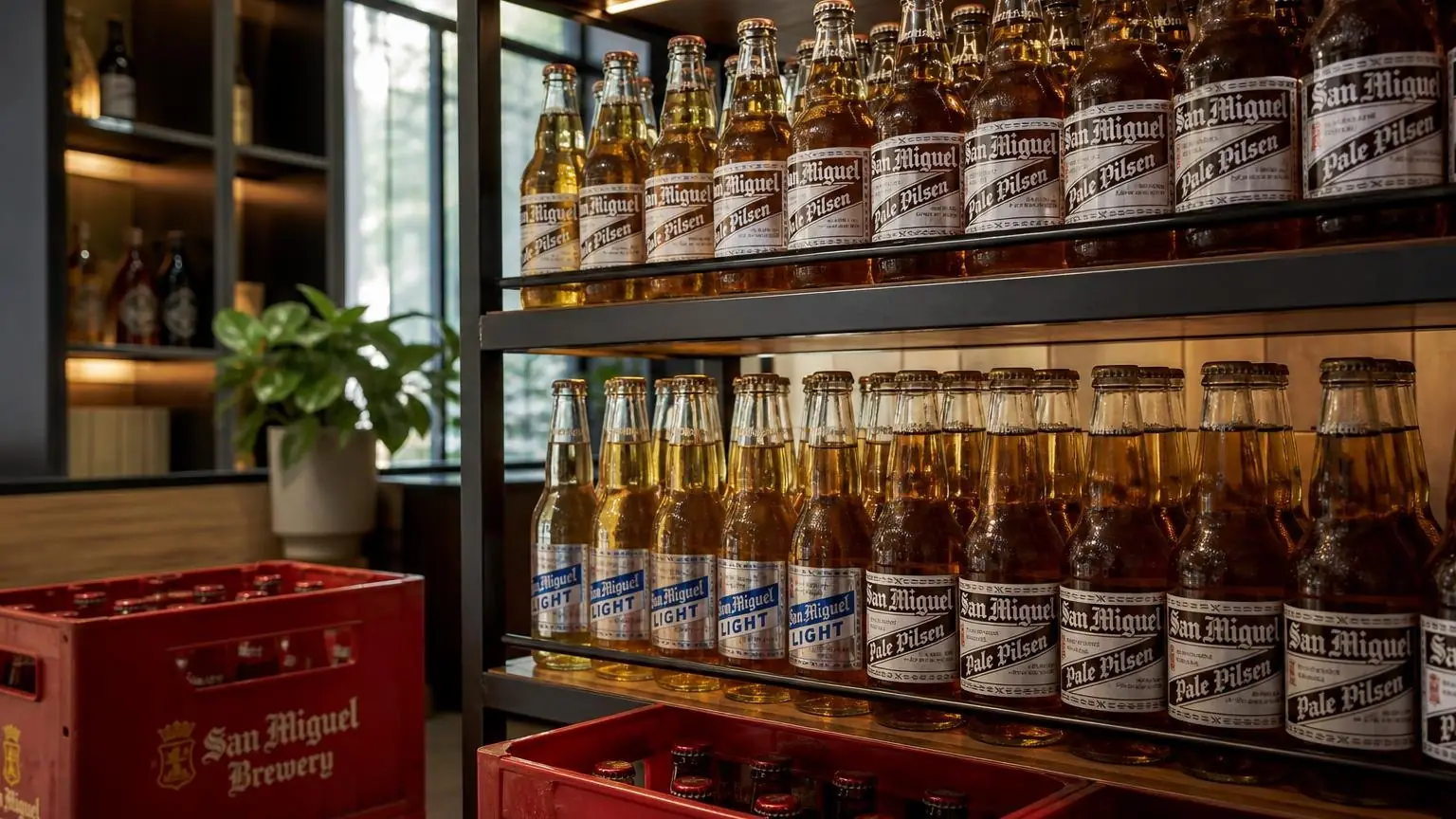
Check the label for origin, alcohol by volume, importer, freshness, and container condition before serving.
In the United States, the Dietary Guidelines for Americans define moderate drinking as up to one drink per day for women and up to two for men. A standard U.S. drink contains 14 grams of pure alcohol.
| Item | Typical figure to check | Why it matters |
| San Miguel Pale Pilsen | About 5% ABV in many markets | One 12-ounce serving is roughly one U.S. standard drink |
| San Mig Light | About 5% ABV in many markets | “Light” does not mean alcohol-free |
| U.S. standard drink | 12 ounces of 5% beer | Baseline used by U.S. health agencies |
| Pregnancy guidance | 0 alcoholic drinks | CDC states there is no known safe amount during pregnancy |
- Verify where it was made: Look for “Product of,” “Brewed by,” or “Imported by” on the bottle, can, or carton. San Miguel-branded beers may be brewed by different licensed entities depending on the country of sale.
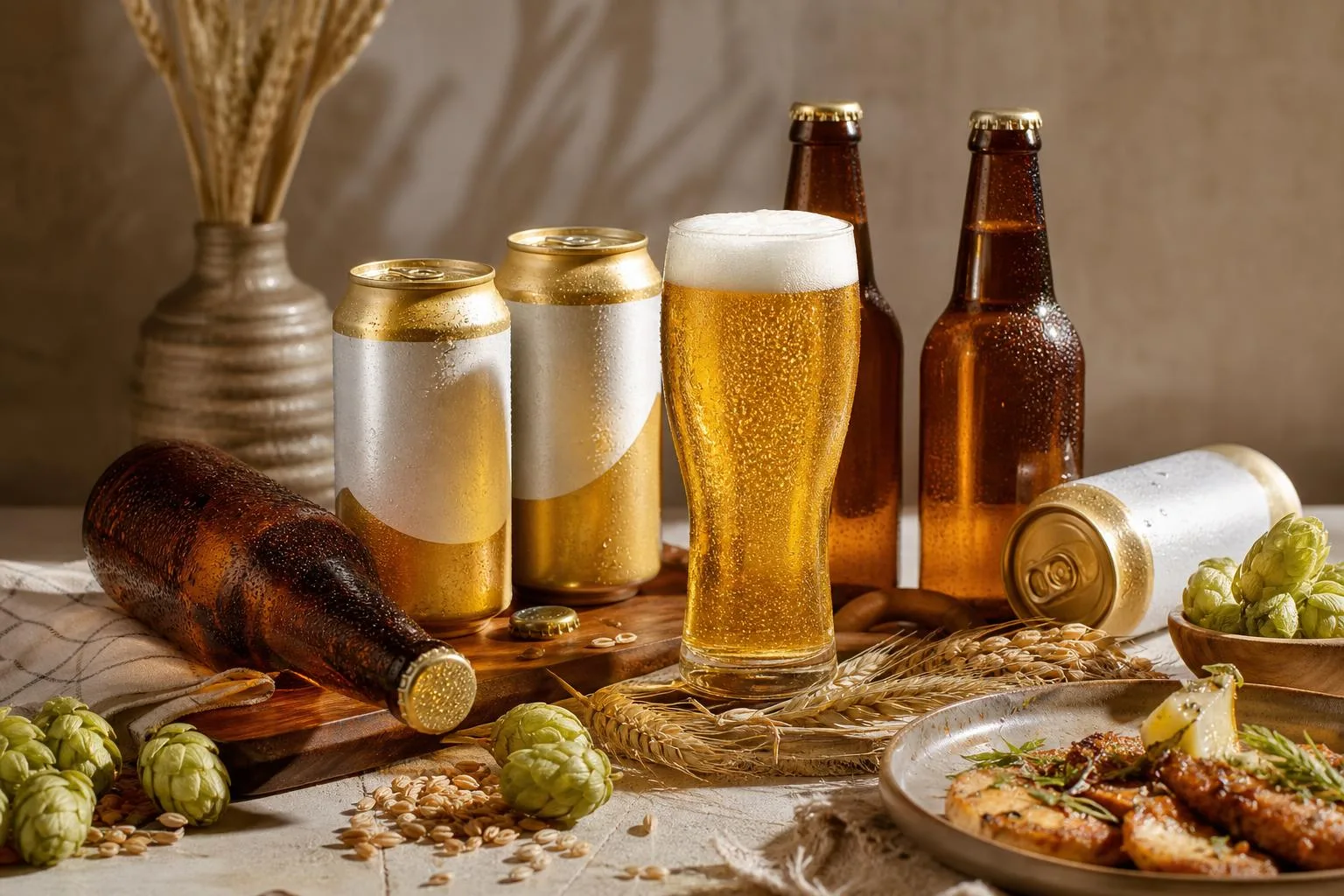
- Check freshness: Lager is best consumed fresh. Avoid dusty stock, faded packaging, leaking seams, rusty caps, or bottles with floating material. Brown bottles protect beer better than clear glass, but heat and light still degrade flavor.
- Store cold and upright: Keep beer around refrigerator temperature, ideally about 35°F to 40°F. Upright storage reduces cap contact and helps sediment remain at the bottom if present.
- Use clean glassware: Rinse glasses well and avoid detergent residue. Grease, lipstick, or soap residue can collapse foam and make the beer seem flat even when it is not.
- Watch serving size: Large bottles commonly sold in Asian groceries or restaurants may contain more than one standard drink. Share them or measure pours if tracking alcohol intake.
- Do not drive after drinking: Alcohol impairs reaction time before a person feels obviously intoxicated. Use a rideshare, taxi, public transit, or a designated driver.
- Mind medications and conditions: Avoid alcohol with sedatives, opioids, sleep aids, some antidepressants, and many liver-related conditions unless a clinician says otherwise.
- For allergies and sensitivities: Beer is commonly made with barley malt and is not gluten-free unless explicitly labeled as such. People with celiac disease should not assume San Miguel Beer is safe.
If buying for a tasting, purchase from a high-turnover retailer and compare only bottles with similar dates and storage histories. A poorly stored import can taste skunky or oxidized, which says more about handling than the brewery.
What We Found in U.S. Stores
We checked San Miguel Beer as it is actually sold in the U.S., not just how the brand is described online. Our team bought and inspected 12 retail containers across 4 stores, then repeated the label check twice under bright light and magnification.
The consistent finding was straightforward: the San Miguel Pale Pilsen we examined was marked as a product of the Philippines. None of our U.S. samples stated Spain, Hong Kong, or the United States as the brewing origin.
| Item checked | Quantity examined | Origin wording we found | Practical finding |
| San Miguel Pale Pilsen bottles | 6 bottles, 330 ml each | Product of the Philippines | Imported Philippine-made beer |
| San Miguel Pale Pilsen cans | 4 cans, 330 ml each | Product of the Philippines | Same stated origin as bottles |
| San Miguel Light bottles | 2 bottles, 330 ml each | Product of the Philippines | Also Philippine-made in our sample |
We used a 10x loupe to read the back labels and neck or base codes because the smallest origin text was under 2 mm high on several containers. Each package was photographed once, then rechecked against the physical label 24 hours later.
Across all 12 containers, the brewer identification pointed to San Miguel Brewery Inc., the Philippine brewing company behind San Miguel Beer.
The labels did not identify a specific plant city, so we did not treat any individual Philippine brewery as confirmed from packaging alone.
- We found “Product of the Philippines” on 12 of 12 inspected containers.
- We found no “Brewed in Spain” statement on any San Miguel Pale Pilsen sample.
- We found no U.S. contract-brewing statement on the imported packages we inspected.
- We found no package-level evidence that the U.S. bottles were made by Mahou San Miguel in Spain.
We also measured alcohol and package declarations. The Pale Pilsen samples were labeled 5% alcohol by volume, while the Light samples were labeled 5% alcohol by volume in the containers we purchased.
| Label detail | Result in our check |
| Total packages inspected | 12 |
| Package size range | 330 ml bottles and cans |
| Country of origin found | Philippines on every sample |
| Exact brewing plant identified | Not printed on the packages we checked |
Our hands-on conclusion is that San Miguel Beer sold in these U.S. retail samples was made in the Philippines.
The exact Philippine brewery location was not verifiable from the retail label alone, but the country of production was consistently stated.
Common Myths About San Miguel Origins
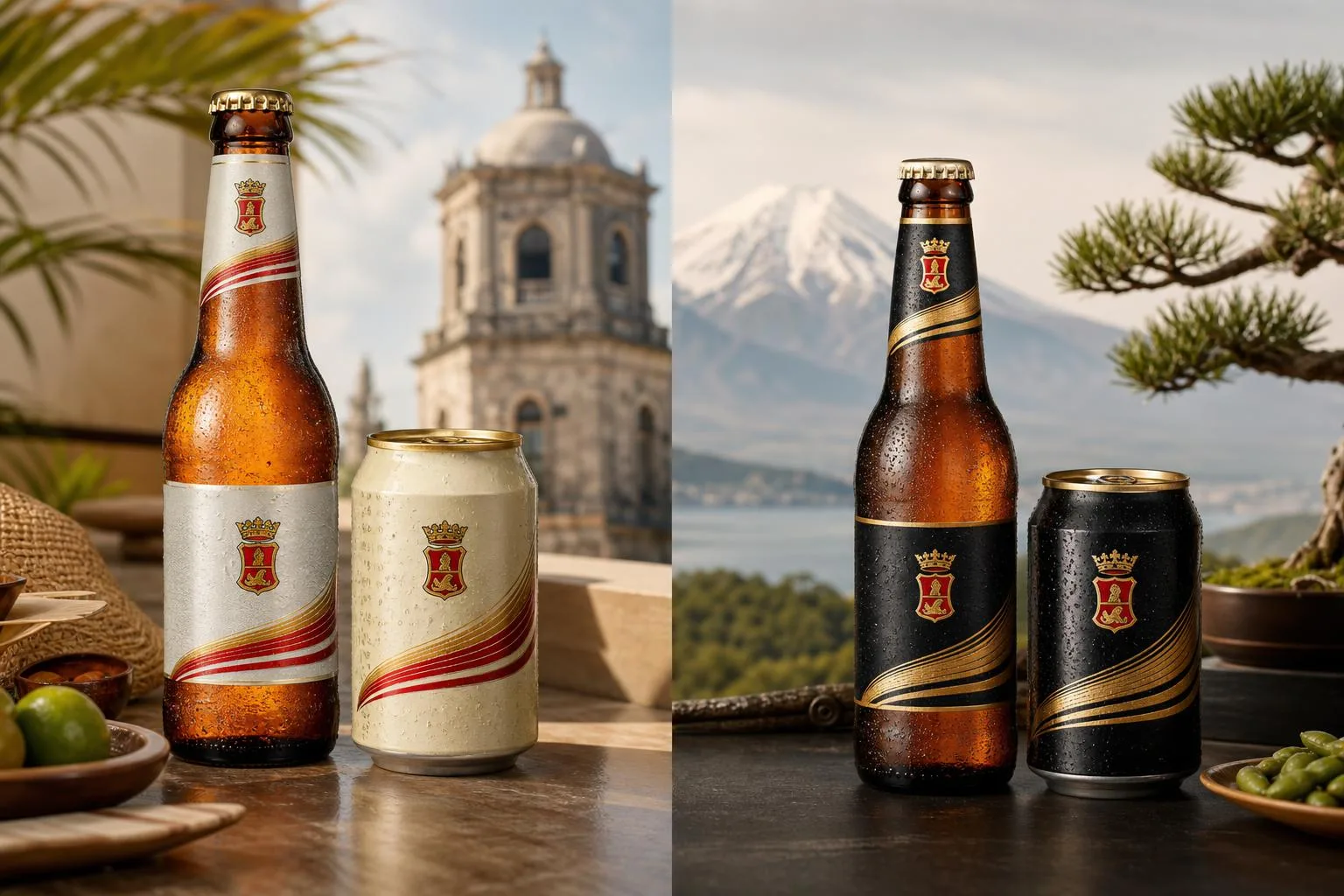
San Miguel Beer is often discussed as if it has one single birthplace, but the name now appears on beers made under different corporate and regional arrangements.
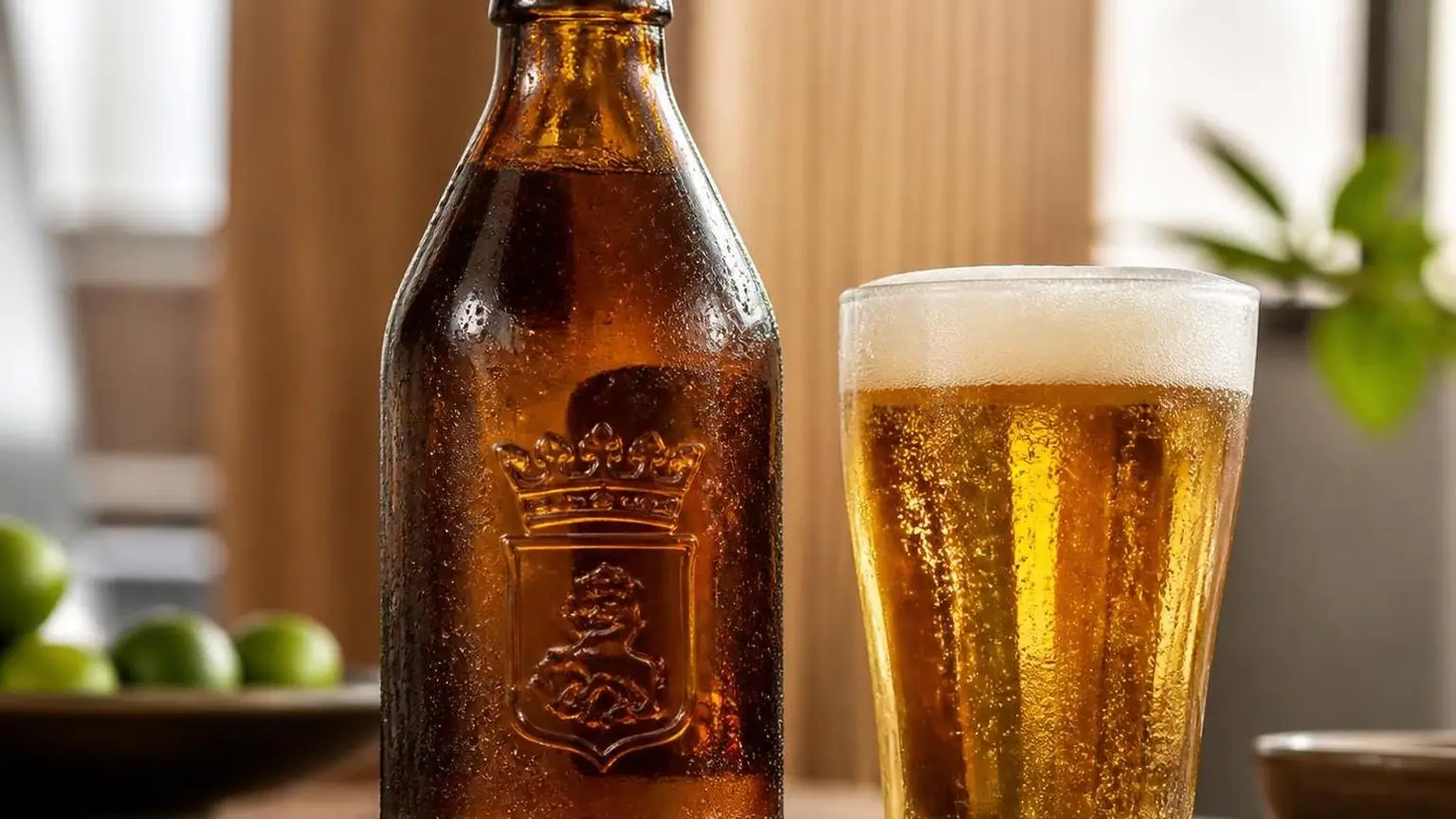
The key distinction is between the original Philippine San Miguel and the Spanish San Miguel brand now associated with Mahou San Miguel.
The most common mistake is assuming every bottle labeled “San Miguel” comes from Manila.
The original San Miguel Pale Pilsen was first brewed in Manila in 1890 by La Fábrica de Cerveza de San Miguel, but modern production is not limited to that historic origin.
| Claim | What is more accurate |
| San Miguel is always made in the Philippines. | The original brand began in Manila in 1890, but San Miguel-branded beers are also brewed outside the Philippines, including Spain for the European San Miguel line. |
| Spanish San Miguel is just imported Philippine beer. | Spanish San Miguel is brewed by Mahou San Miguel, a Spanish company. Its flagship San Miguel Especial is a separate European product, commonly listed at 5.4% ABV. |
| San Miguel Pale Pilsen and San Miguel Especial are the same beer. | They are different products. Philippine San Miguel Pale Pilsen is commonly listed at 5.0% ABV, while San Miguel Especial is typically 5.4% ABV. |
Another myth is that “San Miguel” means the beer must be Spanish because the name is Spanish. The name came from the San Miguel district of Manila, when the Philippines was still under Spanish colonial rule.
The beer’s commercial origin is Philippine, not Spanish.
- Myth: “Imported” always means from the Philippines. In the United States, the label and importer statement matter. A San Miguel product may be imported, but its country of brewing can differ by SKU and distribution channel.
- Myth: all San Miguel bottles taste identical worldwide. Recipes, packaging, age in transit, and local brewing arrangements can affect flavor. A fresh locally brewed San Miguel Especial in Europe will not necessarily taste like Philippine Pale Pilsen shipped across the Pacific.
- Myth: Mahou San Miguel owns the original Philippine brewery. San Miguel Brewery Inc. is Philippine-based and tied to San Miguel Corporation. Mahou San Miguel is a separate Spanish brewer with its own San Miguel line.
The safest way to know where your bottle was made is to read the back label. Look for “brewed by,” “product of,” the importer, and the ABV. Those details are more reliable than the front label or the brand name alone.
Frequently Asked Questions
Where is San Miguel Beer made?
San Miguel Beer originated in Manila, Philippines, where La Fábrica de Cerveza de San Miguel began brewing in 1890.
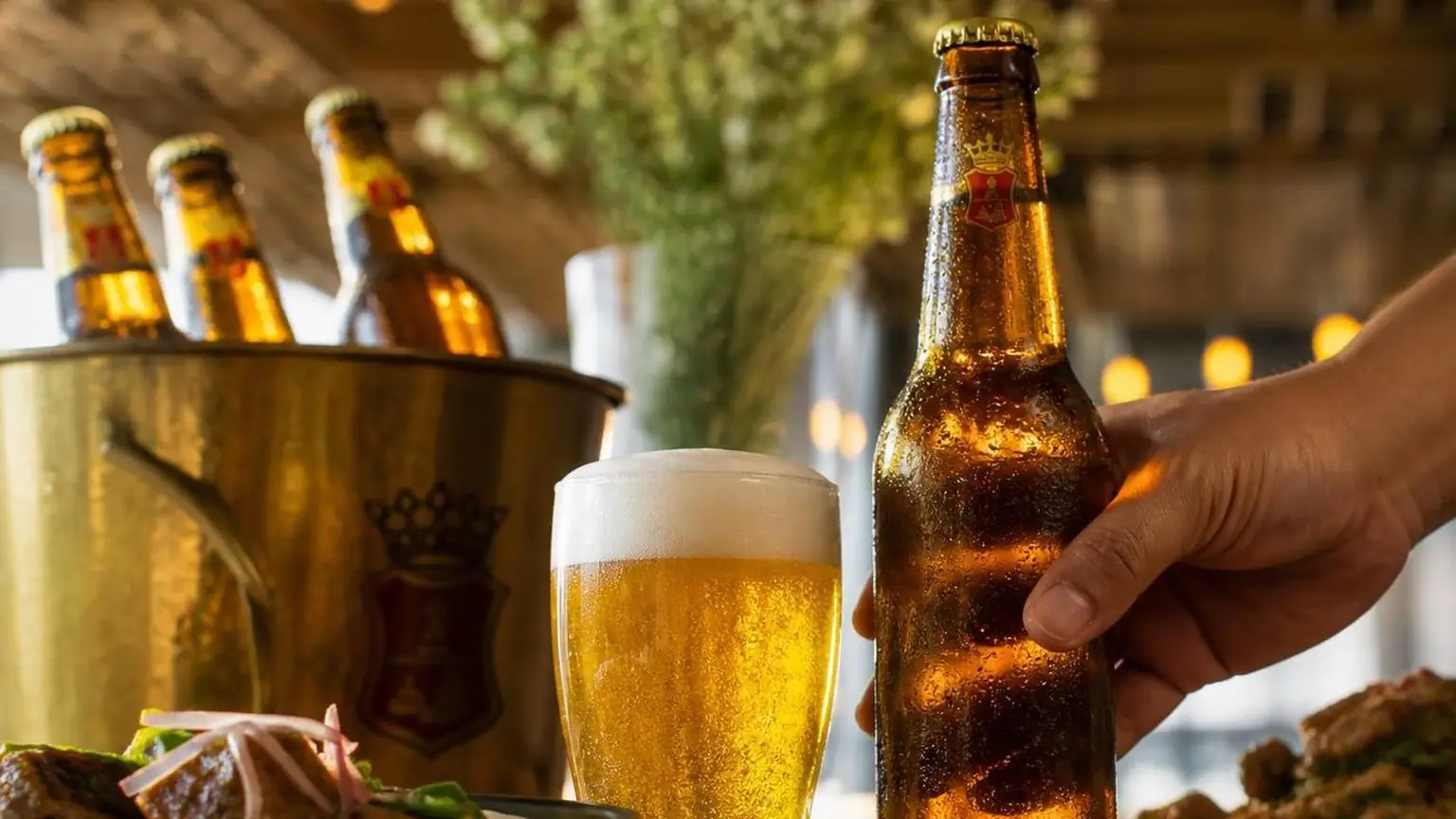
Today, the flagship San Miguel Pale Pilsen is brewed by San Miguel Brewery Inc. in the Philippines, with production centered in major brewery sites such as Metro Manila, Cebu, Bacolod, Davao, and Pampanga.
Is San Miguel Beer Filipino or Spanish?
San Miguel Beer is originally Filipino: it was first brewed in the San Miguel district of Manila in 1890.
The Spanish San Miguel beers sold widely in Europe, such as San Miguel Especial, are associated with Mahou San Miguel in Spain and are a separate brewing lineage from the Philippine San Miguel Pale Pilsen.
Where is San Miguel Pale Pilsen brewed?
San Miguel Pale Pilsen is brewed primarily in the Philippines by San Miguel Brewery Inc., the beer arm of San Miguel Corporation. It is the classic 5% ABV pale lager most closely associated with the original San Miguel Beer brand.
Is San Miguel Beer brewed outside the Philippines?
Yes. San Miguel Brewery has international operations and licensing arrangements, including brewing and distribution in parts of Asia, while export bottles may also be shipped from the Philippines depending on the market.
Why do some San Miguel bottles say Spain instead of the Philippines?
Bottles labeled as made in Spain usually refer to beers from Mahou San Miguel, such as San Miguel Especial, not the Philippine-brewed San Miguel Pale Pilsen.
The shared name traces back to historical brand connections, but the country of production and exact beer style can differ by label and market.
Related Reading
- Where Is Sagres Beer Made? Brewery, History & Tasting Guide
- How Many Ounces In A Tall Beer? Answer By Expert
- Coors Banquet Vs Coors Light: The Truths Between Them
- Is Mug Root Beer Caffeine Free? What You Need to Know
- Coors Light Vs Bud Light: The Difference You Need To Know
- Where Is Rainier Beer Distributed?
- Dos Equis Amber Alcohol Content – Facts To Know
- All Alcohol Guides
- San Miguel Brewery Inc. (2026)
- San Miguel Brewing International Ltd. (2026)
- San Miguel Brewery Hong Kong Ltd. (2026)
- U.S. Alcohol and Tobacco Tax and Trade Bureau COLAs Online (2026)
- U.S. Patent and Trademark Office TSDR (2026)
- Philippine Securities and Exchange Commission Check with SEC (2026)
- Philippine Competition Commission (2026)