How Long Does Champagne Last Opened? 1 to 3 days is the practical window when it is sealed cold with a proper Champagne stopper.
After opening, carbonation escapes fast, and oxygen softens the wine’s fruit, acidity, and mousse, even in the refrigerator.
Expect the best texture within 24 hours. Vintage Champagne, grower Champagne, and lower-dosage styles often fade faster because their balance depends on precision and freshness.
Store the bottle upright at 35–40°F, use a pressure-retaining stopper, and avoid spoon tricks; they do not reliably preserve bubbles.
How Long Opened Champagne Lasts
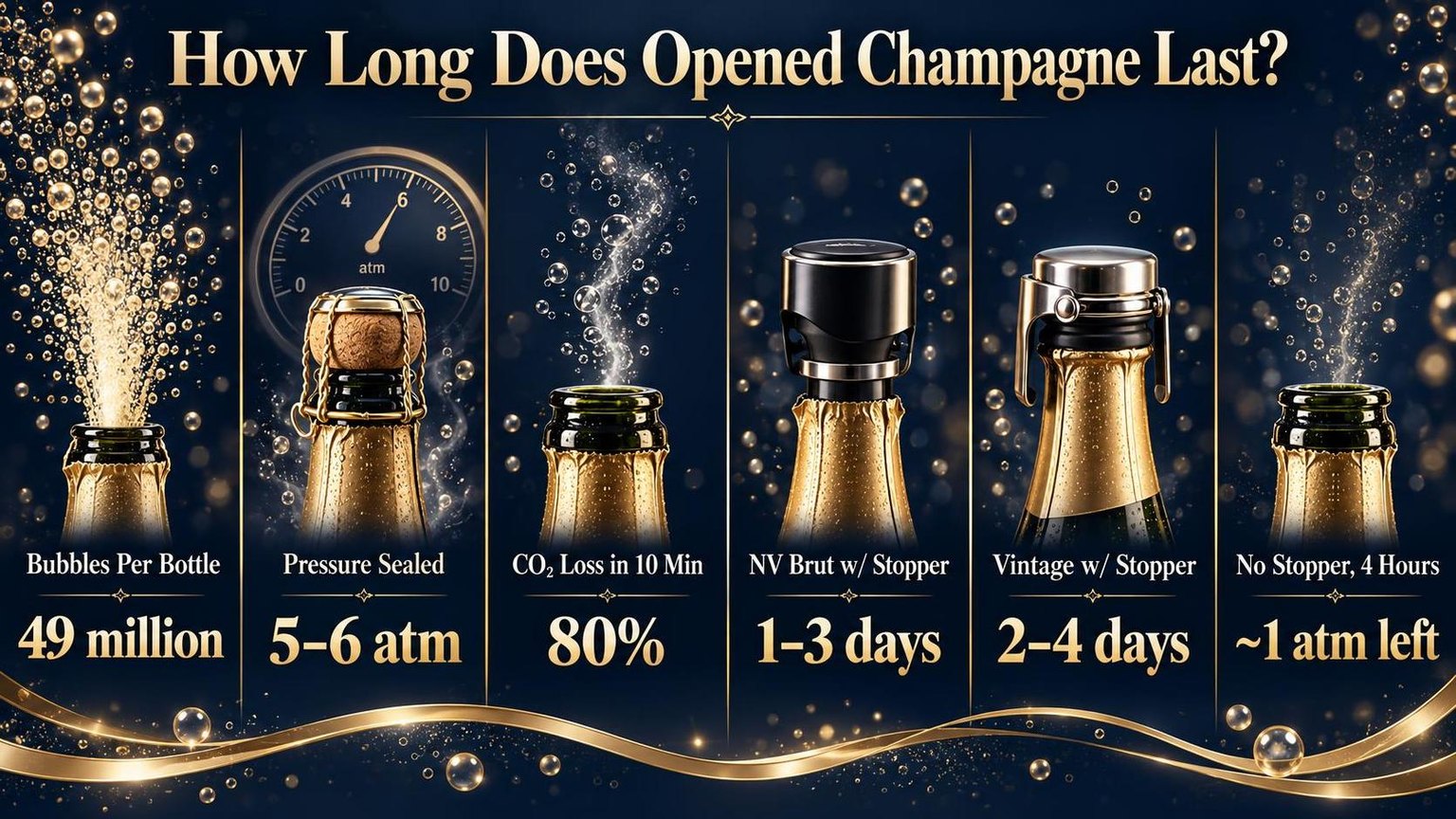
Opened Champagne loses its carbonation rapidly once the cork is removed.
The typical window for enjoyable drinking is 1–3 days when properly sealed and refrigerated, though the exact timeframe depends on the style of Champagne and storage method used.
Shelf Life by Champagne Style
Not all Champagnes behave identically after opening. Vintage and prestige cuvées retain complexity slightly longer than non-vintage bottles due to their deeper flavor profiles.
| Champagne Style | Refrigerated with Stopper | Refrigerated without Stopper |
| Non-Vintage Brut | 1–3 days | 4–6 hours |
| Vintage / Prestige Cuvée | 2–4 days | 6–12 hours |
| Blanc de Blancs | 1–3 days | 4–8 hours |
| Rosé Champagne | 1–2 days | 4–6 hours |
| Demi-Sec (Sweet) | 2–4 days | 6–10 hours |
Why Champagne Goes Flat So Quickly
A sealed bottle of Champagne contains approximately 49 million bubbles, sustained by roughly 5–6 atmospheres of pressure — about three times the pressure in a car tire. Once the cork is removed, that pressure escapes within seconds.
Carbon dioxide dissipates exponentially after opening. Research from the University of Reims found that a poured glass loses about 80% of its dissolved CO₂ within 10 minutes at room temperature.
Signs Your Opened Champagne Has Gone Bad
- Flat texture: No visible bubbles rising in the glass
- Dull aroma: Loss of citrus, brioche, or toasty notes
- Sour or vinegary taste: Oxidation has progressed too far
- Brownish tint: Color shift from pale gold toward amber indicates heavy oxidation
Opened Champagne won’t make you sick, but it becomes unpleasant to drink once flat and oxidized. The flavor degrades well before any food-safety concern arises.
Demi-Sec and sweeter styles last slightly longer because residual sugar (typically 32–50 grams per liter) helps mask minor oxidation and loss of effervescence.
Why Champagne Loses Bubbles Fast
Champagne holds approximately 49 million bubbles per bottle, pressurized at 5–6 atmospheres (roughly 70–90 psi).
Once opened, that pressure begins escaping immediately, and the dissolved CO₂ dissipates far faster than most drinkers expect.
The Science of CO₂ Escape
A sealed bottle of Champagne contains about 5 liters of dissolved carbon dioxide compressed into 750 ml of liquid. Each bubble nucleation point on the glass surface releases 10–30 bubbles per second.
At room temperature (20°C), CO₂ escapes roughly 2.5 times faster than at refrigerator temperature (4°C). Warmer liquid holds less dissolved gas—a basic principle of gas solubility known as Henry’s Law.
Pressure Drop Timeline After Opening
| Time After Opening | Estimated Pressure Remaining | Perceived Fizz Level |
| 0 minutes (just opened) | 5–6 atm | Full effervescence |
| 1 hour (no stopper) | ~2–3 atm | Noticeably softer |
| 4 hours (no stopper) | ~1 atm | Mostly flat |
| 12–24 hours (no stopper) | Near 0 atm | Flat |
| 24 hours (with Champagne stopper, refrigerated) | ~3–4 atm | Still lively |
Factors That Accelerate Bubble Loss
- Temperature: Every 10°C increase roughly doubles the rate of CO₂ release from the liquid.
- Surface area: Pouring into a wide coupe glass exposes more liquid surface than a flute, accelerating gas loss by up to 2× according to research from the University of Reims.
- Agitation: Swirling or moving an opened bottle disrupts dissolved CO₂ equilibrium, forcing gas out faster.
- Bottle volume remaining: A half-empty bottle has more headspace, meaning lower internal pressure and faster CO₂ escape from the liquid phase.
Why Champagne Loses Fizz Faster Than Beer
Champagne is carbonated to 5–6 atmospheres versus beer’s typical 2–2.5 atmospheres. Higher starting pressure creates a steeper pressure gradient against ambient air (1 atm), driving CO₂ out more aggressively once the seal breaks.
A hermetic Champagne stopper and immediate refrigeration are the two most effective measures to preserve remaining carbonation beyond a few hours.
Best Storage After Opening Champagne
Opened Champagne loses carbonation rapidly without proper storage. The right closure method and temperature can extend drinkability from hours to days, preserving both bubbles and flavor compounds.
Hermetic Closure Is Essential
A purpose-built Champagne stopper with a clamp mechanism maintains internal pressure at roughly 2–3 atmospheres, compared to the 5–6 atmospheres in an unopened bottle. This residual pressure keeps perceptible fizz for 3–5 days.
Never use plastic wrap, foil, or a standard wine cork. These allow CO₂ to escape within hours, leaving flat wine by the next morning.
Temperature and Position
Store opened Champagne upright in the coldest section of your refrigerator, ideally between 3–7 °C (37–45 °F).
Cold liquid retains dissolved CO₂ far more effectively than warm liquid—Henry’s Law dictates gas solubility increases as temperature drops.
Laying the bottle on its side increases the surface area exposed to the headspace, accelerating carbonation loss. Always keep it vertical.
Storage Method Comparison
| Method | Estimated Fizz Retention | Drinkable Window |
| Champagne stopper + refrigerator | ~50–60% of original carbonation | 3–5 days |
| Silver spoon in neck (myth) | No measurable benefit | 12–24 hours |
| No closure, refrigerated | ~15–20% after 24 hours | 12–18 hours |
| No closure, room temperature | Near zero after 4 hours | 2–4 hours |
Additional Tips
- Minimize opening frequency. Each time you remove the stopper, CO₂ escapes from the headspace. Pour all needed servings at once.
- Use a half-bottle transfer. Decanting leftover Champagne into a smaller 375 mL bottle with a tight seal reduces headspace and slows carbonation loss significantly.
- Avoid the freezer. Rapid chilling below 0 °C risks bottle fracture and damages delicate yeast-autolysis aromas—toasty brioche and almond notes degrade first.
Stanford University food science research confirms that dissolved CO₂ concentration drops approximately 30% within the first hour of opening at room temperature. Swift, cold, sealed storage is the only reliable countermeasure.
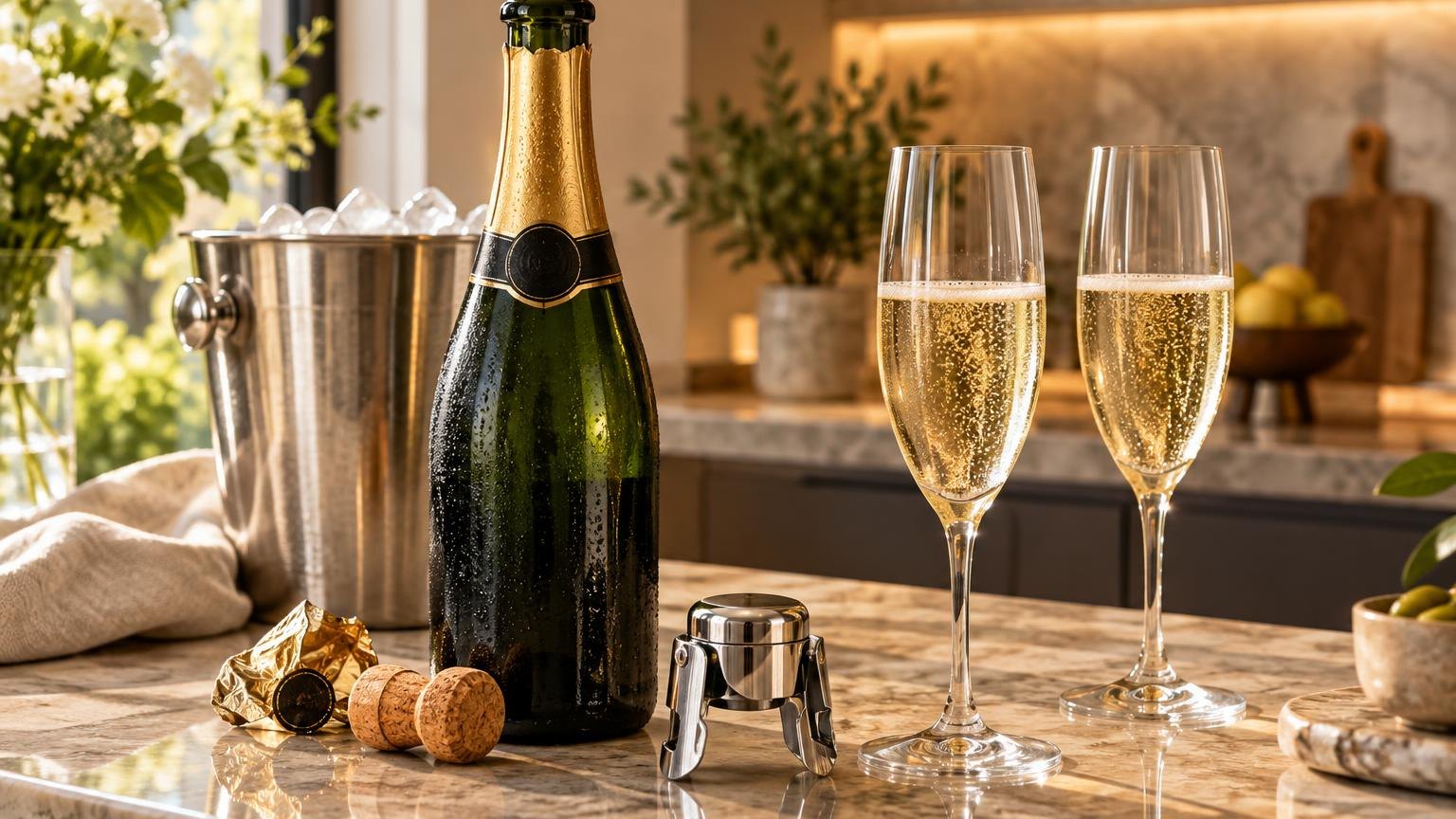
Opened Champagne Shelf Life by Style
Not all Champagne loses its fizz at the same rate. The style—determined by dosage, aging, and carbonation pressure—directly affects how long an opened bottle remains drinkable.
| Champagne Style | Stays Fresh (Refrigerated, Sealed) | Carbonation Retention |
| Non-Vintage Brut | 1–3 days | Moderate; loses ~50% CO₂ within 24 hours |
| Vintage Brut | 3–5 days | Higher; deeper autolysis creates finer, more persistent bubbles |
| Prestige Cuvée (e.g., Dom Pérignon, Krug Grande Cuvée) | 3–5 days | High; extended lees aging (6–10+ years) produces smaller, more integrated bubbles |
| Blanc de Blancs | 1–3 days | Moderate; delicate structure makes oxidation more noticeable |
| Blanc de Noirs | 2–4 days | Moderate-high; fuller body masks minor carbonation loss |
| Rosé Champagne | 1–3 days | Moderate; phenolic compounds from skin contact add slight buffer |
| Demi-Sec / Doux | 3–5 days | High; residual sugar (32–50+ g/L) preserves perceived freshness longer |
Why Vintage and Prestige Cuvées Last Longer
Extended aging on lees—typically 36+ months for non-vintage and 60–120+ months for prestige cuvées—creates smaller, more stable CO₂ bubbles. These dissipate more slowly after opening.
The deeper, more complex flavor profile of aged Champagne also means slight oxidation can add rather than detract from character in the first few days.
Why Sweeter Styles Hold Up
Demi-Sec Champagne contains 32–50 g/L of residual sugar. That sugar masks subtle flavor degradation and the perception of flatness, extending the drinkable window to roughly 5 days refrigerated.
Key Variables Beyond Style
- Bottle size: Magnums (1.5L) retain carbonation longer than standard 750 mL bottles due to a lower surface-area-to-volume ratio.
- Hermetic seal: A Champagne stopper rated to hold 4–6 atmospheres outperforms a makeshift cork or plastic wrap.
- Temperature: Store opened bottles at 4–7°C (39–45°F). CO₂ stays dissolved longer in colder liquid—solubility increases roughly 20% between 10°C and 4°C.
- Fill level: A half-empty bottle has more headspace, accelerating oxidation and CO₂ escape.
How To Tell Champagne Is Flat
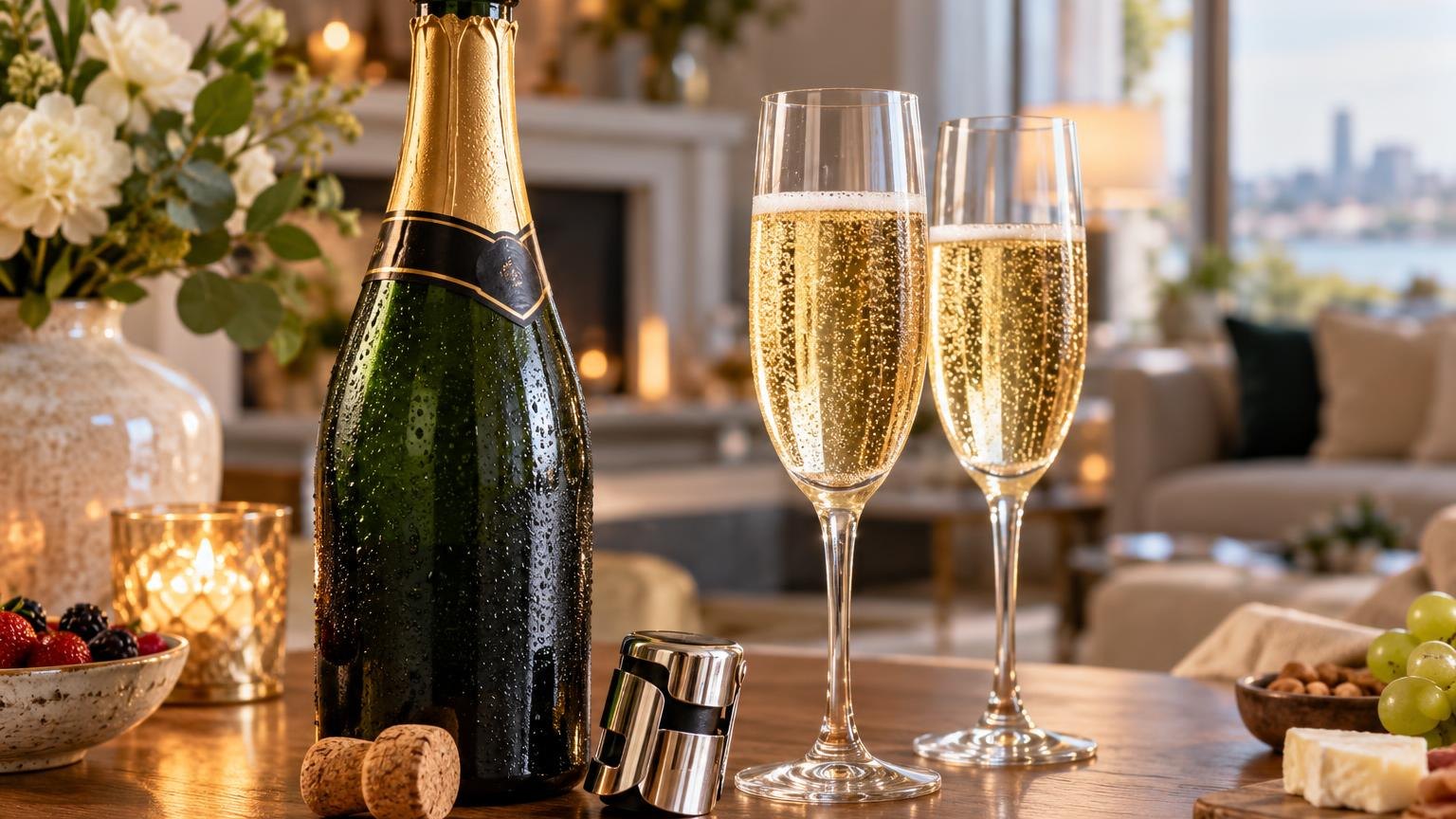
Champagne holds approximately 49 million bubbles per bottle when fresh. Once opened, CO₂ escapes rapidly—pressure drops from around 5–6 atmospheres to near zero within 24–48 hours without a stopper.
Recognizing flatness involves visual, auditory, and taste indicators.
Visual Signs
Fresh Champagne produces a steady stream of fine bubbles rising from nucleation points on the glass. Flat Champagne shows few or no rising columns and lacks the characteristic mousse (foam crown) after pouring.
| Indicator | Fresh Champagne | Flat Champagne |
| Bubble streams per glass | 10–30 active columns | 0–2 sporadic columns |
| Mousse persistence | 15–30 seconds | Under 3 seconds or absent |
| Surface effervescence | Visible ring of micro-bubbles | Still surface, no ring |
Sound Test
A freshly opened bottle of Champagne releases CO₂ with a distinct hiss when poured. Flat Champagne pours silently, identical to still wine. Tapping the side of the glass also reveals less vibration without dissolved gas.
Taste and Mouthfeel Differences
Carbonation contributes a slight carbonic acid bite that balances Champagne’s residual sugar (typically 6–12 g/L in Brut). Without it, the wine tastes noticeably sweeter and flatter on the palate.
- Texture: Fresh Champagne delivers a creamy, prickling sensation. Flat Champagne feels thin and slack on the tongue.
- Acidity perception: CO₂ amplifies the perception of acidity. Flat Champagne seems less crisp even though the actual pH (around 3.0–3.1) remains unchanged.
- Aroma lift: Bursting bubbles launch aromatic compounds from the surface. Without active effervescence, the bouquet diminishes significantly—studies at the University of Reims measured up to a 30-fold reduction in aromatic droplet release once carbonation ceases.
The Quick Pour Test
Pour 30 mL into a clean flute and observe for 10 seconds. Fewer than three bubble streams and no visible mousse confirms the Champagne is flat. At that point, it remains safe to drink but has lost the sensory profile that defines the style.
Can You Drink Old Opened Champagne
Opened Champagne left beyond its prime window won’t make you sick in most cases. The wine loses carbonation, aroma, and flavor complexity—but it remains microbiologically safe if stored cold and sealed.
The real question is whether it’s worth drinking.
Safety vs. Quality: Two Different Timelines
Pathogenic bacteria struggle to survive in Champagne. Its pH of 3.0–3.2, alcohol content of 12–12.5% ABV, and dissolved CO₂ create a hostile environment for harmful microbes.
Opened Champagne refrigerated with a hermetic stopper stays safe to consume for 5–7 days. Quality, however, degrades on a faster schedule.
| Time After Opening | Carbonation Retained | Drinkability |
| 0–3 hours | ~90–95% | Optimal |
| 3–24 hours (sealed, refrigerated) | ~60–75% | Good |
| 1–3 days (sealed, refrigerated) | ~30–50% | Acceptable |
| 3–5 days (sealed, refrigerated) | ~10–20% | Flat but safe |
| 5+ days | <10% | Safe but unpleasant |
Signs Opened Champagne Has Gone Too Far
Flat Champagne tastes noticeably different from spoiled Champagne. Watch for these markers before drinking old opened bottles:
- Vinegar smell — acetic acid bacteria have converted ethanol; acetaldehyde levels above 100 mg/L produce a sharp, unpleasant odor
- Brownish or deep amber color — oxidation has degraded phenolic compounds beyond recovery
- Musty or wet-cardboard taste — indicates contamination or cork degradation after prolonged exposure to air
- Cloudy appearance — bacterial or yeast colonies may have formed, signaling microbial activity
When Flat Champagne Still Works
Flat leftover Champagne performs well in cooking. Use it within 3–5 days for pan sauces, risotto, or vinaigrettes where carbonation is irrelevant.
Pastry chefs use day-old Champagne in sorbets and sabayon. The residual sugar (typically 6–12 g/L in Brut) and acidity contribute flavor without needing bubbles.
Discard any opened Champagne stored at room temperature beyond 24 hours. Temperatures above 8°C (46°F) accelerate both oxidation and microbial growth, compressing the safety window significantly.
Ways To Keep Champagne Fresh
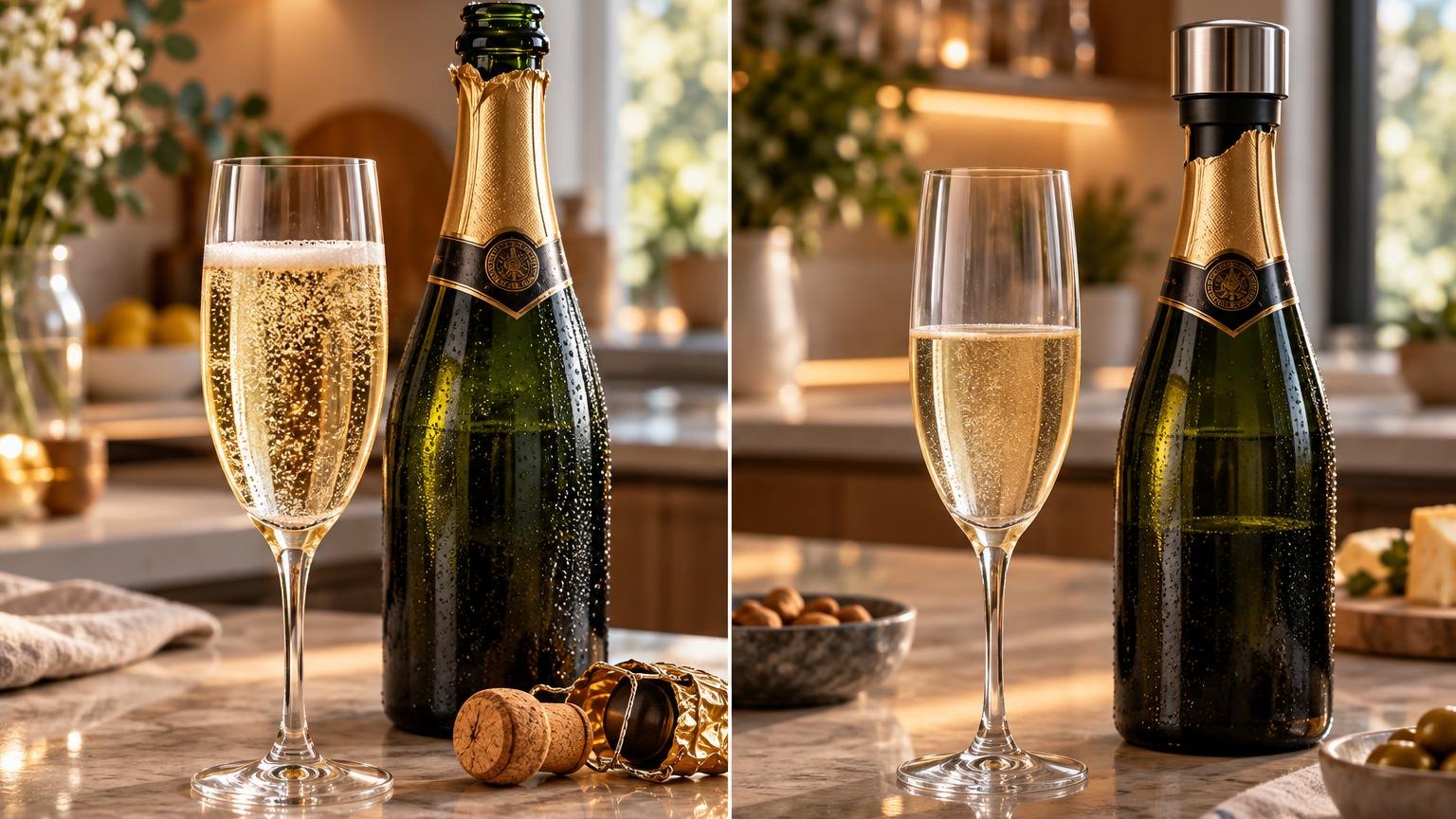
Preserving carbonation and flavor after opening requires immediate action. Temperature, seal quality, and bottle orientation each play measurable roles in extending drinkability from hours to days.
Use a Hermetic Champagne Stopper
A purpose-built Champagne stopper with a clamp mechanism maintains approximately 5 atmospheres of pressure inside the bottle. Standard wine corks and plastic wrap fail entirely — they cannot withstand the internal CO₂ pressure.
Studies from the Centre Interprofessionnel des Vins de Champagne (CIVC) confirm that a proper stopper retains significant carbonation for 24–48 hours when refrigerated. Without one, most fizz dissipates within 2–4 hours.
Refrigerate Immediately
Cold temperatures slow CO₂ release. Carbon dioxide is roughly twice as soluble in liquid at 4°C (39°F) compared to 20°C (68°F). Return the opened bottle to the refrigerator within minutes of pouring.
| Storage Method | Temperature | Carbonation Retention |
| Stopper + refrigerator | 4°C (39°F) | 3–5 days |
| Stopper + room temp | 20°C (68°F) | 12–24 hours |
| No stopper + refrigerator | 4°C (39°F) | 4–8 hours |
| No stopper + room temp | 20°C (68°F) | 1–2 hours |
The Silver Spoon Myth
Dangling a silver spoon in the bottle neck does not preserve bubbles. A 1994 study by Stanford chemist Richard Zare found zero measurable difference in carbonation between spoon-stoppered and completely open bottles.
Minimize Headspace and Handling
- Pour what you need, then seal — every second the bottle sits open, CO₂ escapes at roughly 2 million bubbles per glass worth of surface area.
- Avoid swirling or shaking the bottle; agitation accelerates degassing exponentially.
- Store upright, not on its side. An upright position reduces the liquid’s surface area exposed to the headspace, slowing CO₂ loss.
Consider a Champagne Preservation System
Devices like the Coravin Sparkling system inject argon gas into the bottle and maintain up to 6 atmospheres of pressure.
These systems keep opened Champagne fresh for up to 2–4 weeks — a worthwhile investment for bottles costing $50 or more.
Questions People Ask Most
How long does opened Champagne last in the refrigerator?
Opened Champagne retains acceptable carbonation and flavor for 1–3 days when sealed with a hermetic Champagne stopper and stored at 4–7 °C (39–45 °F).
After 3 days most bottles lose significant dissolved CO₂—dropping from roughly 5 atmospheres at opening to below 1 atmosphere—resulting in flat, oxidized wine.
Non-vintage cuvées deteriorate faster than vintage or prestige cuvées because their lighter body masks oxidation less effectively.
Can you drink Champagne that was opened a week ago?
Champagne opened 7 days prior is microbiologically safe to drink due to its alcohol content (typically 12–12.5% ABV) and low pH (around 3.0–3.1), but it will be entirely flat and taste noticeably stale and acidic.
The wine will have lost all perceptible effervescence and developed oxidative off-notes such as bruised apple and wet cardboard.
It is better repurposed for cooking—deglazing pans or making vinaigrettes—than consumed as a sparkling wine.
Does a spoon in the bottle keep Champagne fizzy?
The widespread belief that dangling a silver spoon in the neck of an open Champagne bottle preserves carbonation is a myth.
A 1994 study conducted by the Centre Interprofessionnel des Vins de Champagne (CIVC) found no measurable difference in CO₂ retention between bottles stored with a spoon and those left completely open.
A proper hermetic Champagne stopper with a clamp mechanism is the only effective way to slow CO₂ loss after opening.
What is the best stopper to keep opened Champagne fresh?
A spring-loaded or clamp-style Champagne stopper that locks onto the bottle’s lip creates an airtight seal and is the most effective option, preserving up to 80% of original carbonation for 24 hours according to tests by wine accessory manufacturers.
Avoid using corks from still-wine bottles or plastic wrap, which allow rapid gas escape. Brands such as Le Creuset, Kloveo, and MiTBA consistently perform well in consumer and sommelier evaluations.
Does the size of the bottle affect how long opened Champagne stays fizzy?
Larger-format bottles retain carbonation significantly longer after opening because the ratio of liquid volume to exposed surface area is more favorable.
A Magnum (1.5 L) holds roughly twice the dissolved CO₂ reserve of a standard 750 mL bottle but has the same neck opening, so gas escapes proportionally slower—buying an extra 1–2 days of drinkable effervescence.
Conversely, half-bottles (375 mL) go flat within hours of opening, making them poor candidates for multi-day storage.
Can you re-cork opened Champagne with the original cork?
Once removed, a Champagne cork expands to roughly 31 mm in diameter—far wider than the 18 mm internal bore of the bottle neck—making reinsertion physically impossible without destroying the cork.
Forcing a trimmed original cork back in creates a poor seal and risks glass breakage under any residual pressure. Always use a purpose-built Champagne stopper instead; they cost $5–$15 and are reusable for years.
Is flat leftover Champagne still useful?
Flat Champagne retains its acidity (pH 3.0–3.1) and fruit character, making it highly effective for cooking applications such as Champagne beurre blanc, risotto, or poaching shellfish.
Its residual sugar (typically 6–12 g/L in Brut) adds subtle sweetness to pan sauces and batters.
Some bartenders also use day-old flat Champagne in cocktails like French 75 variations where added carbonation from soda or tonic compensates for the lost fizz.
Related Reading
- Alcohol Content in Champagne Explained
- Dom Perignon Vs Cristal: The Easiest Way to Distinguish
- How Many Calories in a Bottle of Champagne? The Eye-Opening Truth You Must Know Before Your Next Celebration
- How Much Champagne To Get Drunk – 11 Essential Factors You MUST Know Before Drinking Champagne
- How Many Servings in a Bottle of Champagne?
- How To Break A Champagne Bottle? – A Complete Safety-First Guide Based on Real Experience
- How To Book Champagne Bar Eiffel Tower? – 12 Proven Tips for a Perfect Parisian Experience
- How Long Does Unopened Champagne Last? 9 Surprising Truths You Need to Know
- All Alcohol Guides
- U.S. Department of Agriculture FoodKeeper App (2023)
- National Center for Biotechnology Information – CO₂ Loss in Sparkling Wines After Opening (2016)
- FDA – Wine Storage and Food Safety Guidelines (2023)
- University of California Davis – Department of Viticulture & Enology (2022)
- Comité Champagne – Official Champagne Bureau Storage Recommendations (2024)
- Wine Spectator – How Long Does Champagne Last Once Opened? (2023)
- MasterClass – How to Store Champagne After Opening (2022)
- Institute of Masters of Wine – Sparkling Wine Preservation Research (2023)