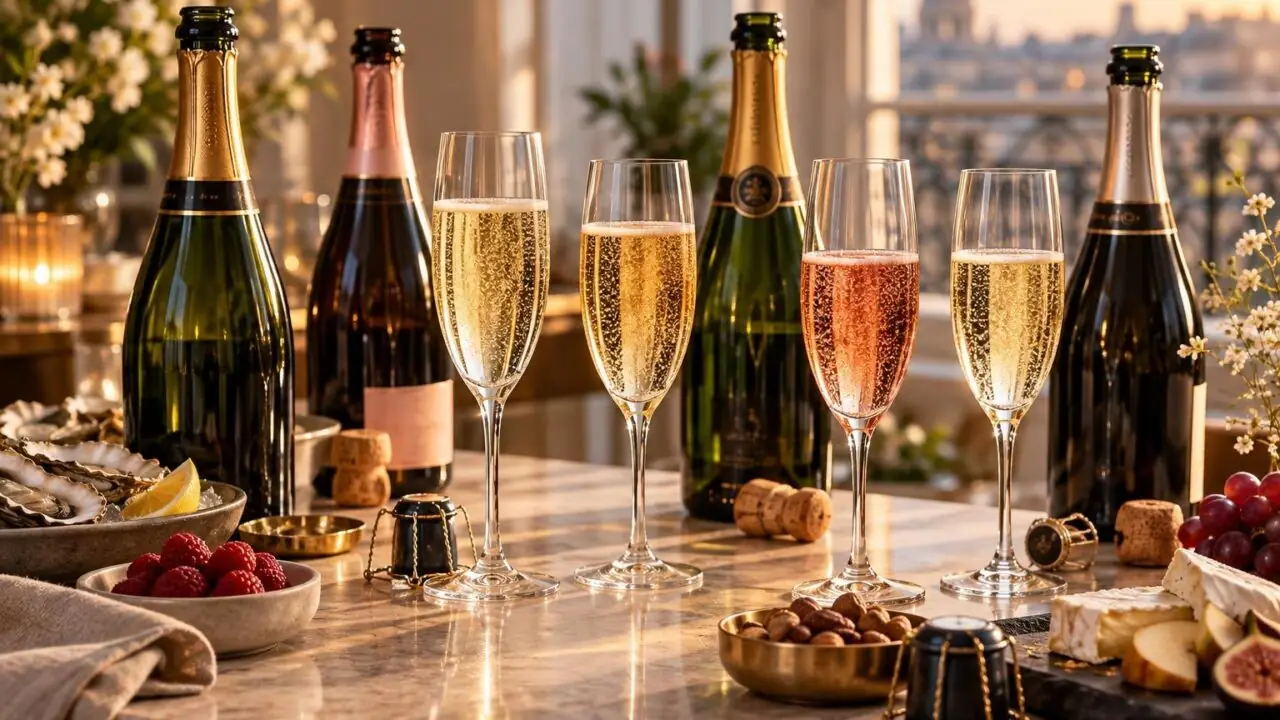
alcohol content in champagne is 12% ABV. Most non-vintage and vintage Champagnes sit between 11.5% and 12.5%, a narrow range shaped by cool-climate grapes, secondary fermentation, and house style.
That level matters because bubbles speed aroma release and make dry acidity feel sharper, so Champagne can taste lighter than its alcohol suggests. A standard 5-ounce pour at 12% ABV contains 0.6 fluid ounces of pure alcohol.
This guide explains typical Champagne strength, how it compares with other sparkling wines, why labels vary, and what serving size means for responsible pouring at home, restaurants, and tastings.
Typical Champagne ABV Range
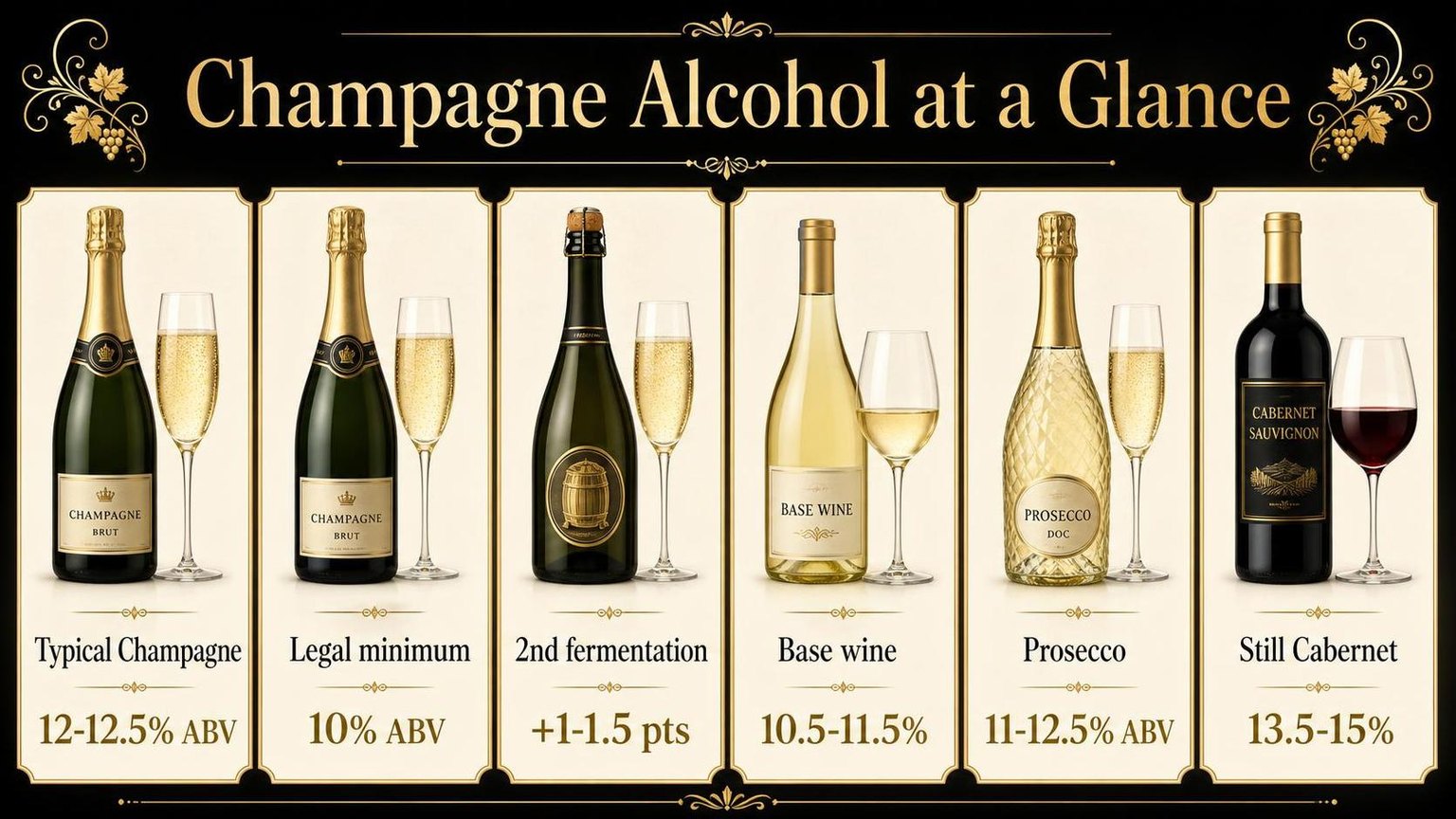
Most Champagne falls between 12% and 12.5% alcohol by volume (ABV). The legal minimum for Champagne is 10% ABV, but bottles at that floor are uncommon in the U.S. market.
In practice, non-vintage brut Champagne usually lands in a narrow, consistent range.
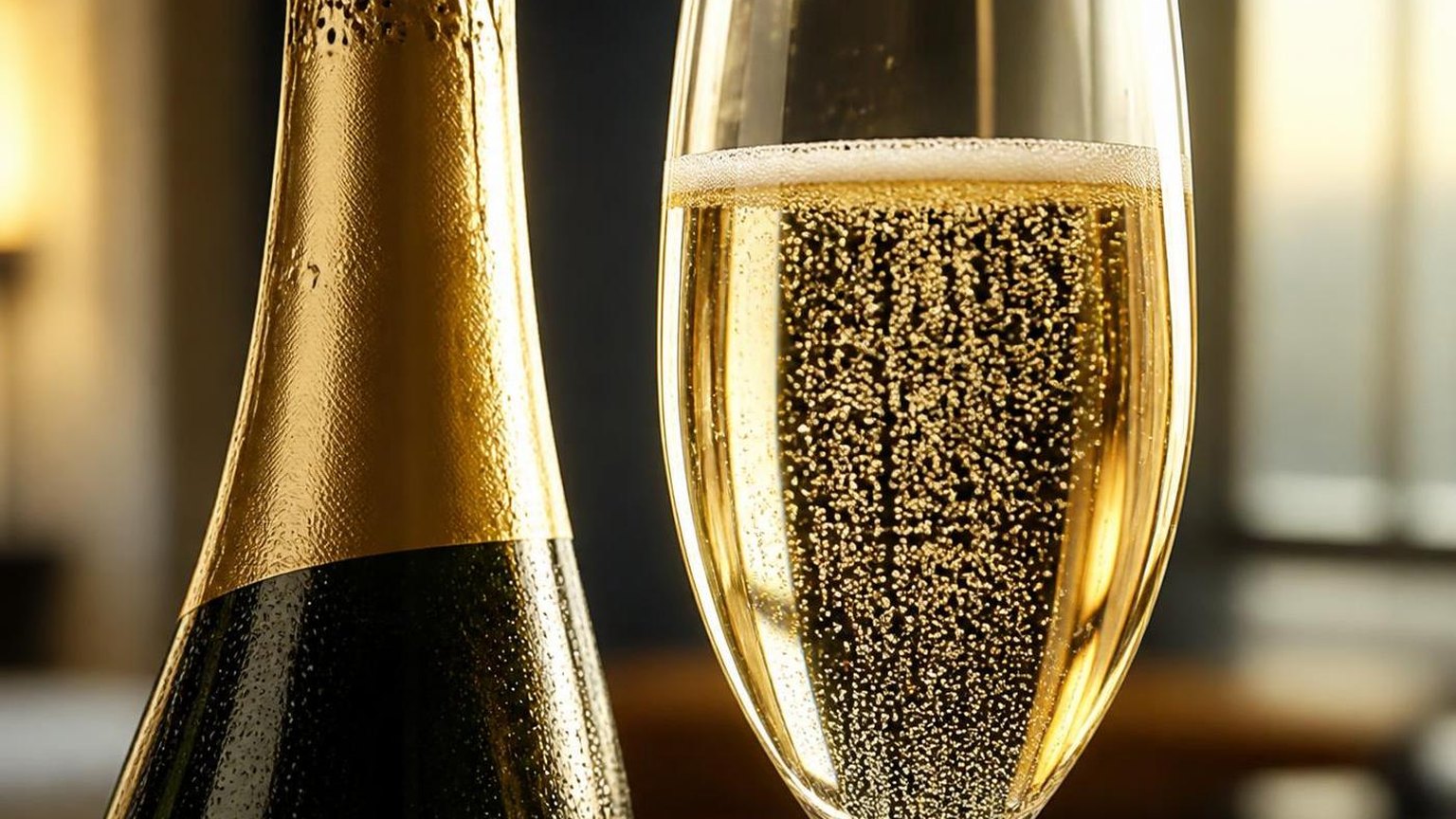
That consistency comes from how Champagne is made. Base wines are fermented dry, then a second fermentation in bottle creates bubbles and adds a small amount of extra alcohol.
The second fermentation typically increases alcohol by about 1 to 1.5 percentage points.
Many growers and large houses bottle standard cuvées at 12% ABV. Some prestige cuvées and riper vintage bottlings reach 12.5%. Lower-alcohol examples, around 11% to 11.5%, appear in cooler years, lighter styles, or bottles aimed at a fresher profile.
| Champagne category | Typical ABV |
| Non-vintage brut | 12% to 12.5% |
| Vintage Champagne | 12% to 12.5% |
| Blanc de blancs | 12% to 12.5% |
| Rosé Champagne | 12% to 12.5% |
| Lower-alcohol outliers | 10% to 11.5% |
ABV does not track sweetness. Brut, extra brut, and demi-sec Champagne can show similar alcohol levels because dosage is added after aging and disgorgement.
Dosage changes sugar, not the wine’s finished alcohol in any meaningful way for consumers.
U.S. labels usually show ABV clearly, often as 12% or 12.5%. European bottlings may vary slightly by producer and vintage, but Champagne remains one of the more predictable sparkling wine categories for alcohol level.
That makes bottle shopping easier than with many still wines.
For context, Champagne is often slightly lower in alcohol than many modern still wines. California Chardonnay and Napa Cabernet frequently sit around 13.5% to 15% ABV.
Prosecco and Cava often overlap with Champagne, but many bottlings start a bit lower.
| Wine style | Common ABV range |
| Champagne | 12% to 12.5% |
| Prosecco | 11% to 12.5% |
| Cava | 11.5% to 12.5% |
| Still Chardonnay | 13% to 14.5% |
| Still Cabernet Sauvignon | 13.5% to 15% |
If you want the shortest answer, use 12% ABV as the standard benchmark for Champagne. Check the label for the exact number, especially on vintage, grower, or prestige bottles.
Small differences matter if you are comparing pairings, pacing, or total alcohol intake per glass.
Why Champagne Usually Hits 12 Percent
Most non-vintage Champagne lands near 12% alcohol by volume because the wine is built in two measured fermentations.
The first creates a dry base wine around 10.5% to 11.5% ABV, and the second fermentation in bottle adds about 1 to 1.5 percentage points.
That target is practical, not arbitrary. Around 12% gives enough body to carry acidity, enough freshness to stay precise, and enough stability to age on lees without tasting hot.
Champagne starts in a cool northern climate. Grapes such as Chardonnay, Pinot Noir, and Meunier are often picked earlier than still-wine fruit to preserve high acidity and moderate sugar.
Moderate sugar means moderate alcohol after the first fermentation. In many harvests, the still base wine, called the vin clair, finishes near 10.5% to 11.5% ABV before any secondary fermentation begins.
The bottle fermentation then does controlled work. Producers add the liqueur de tirage, usually wine, yeast, and sugar, to create pressure and the region’s signature bubbles.
| Stage | Typical alcohol effect | Why it matters |
| Base wine fermentation | About 10.5% to 11.5% ABV | Preserves acidity and keeps the wine lean |
| Second fermentation in bottle | Adds roughly 1% to 1.5% ABV | Creates carbonation and lifts final strength |
| Finished Champagne | Usually about 12% ABV | Balances freshness, texture, and drinkability |
The sugar used for tirage is limited because its main job is pressure, not richness. A standard second fermentation usually generates around 5 to 6 atmospheres of pressure, which is why the alcohol increase stays modest.
That narrow final range also fits house style. Large Champagne producers blend multiple villages, vineyard parcels, and reserve wines to keep a consistent profile year after year, and alcohol is part of that calibration.
Higher finished alcohol would push Champagne away from its defining shape. At 13% or more, the wine can feel broader and warmer, which can mute chalky minerality and make the mousse seem less sharp.
Lower alcohol has trade-offs too. Around 11% can taste very brisk and light, but it may come across as thin if the fruit concentration is not strong enough.
Dosage does not change ABV much. The post-disgorgement sweetening wine usually shifts texture and sweetness more than strength, especially in Brut styles, which often stay under 12 grams per liter of residual sugar.
| Finished style | Common ABV range | Typical impression |
| Champagne | 11.5% to 12.5% | High acid, firm mousse, restrained fruit |
| Many Prosecco DOC wines | 11% to 11.5% | Lighter body, softer structure |
| Many still table wines | 12.5% to 14.5% | Riper fruit, more weight, less tension |
In practice, 12% is the sweet spot because Champagne is engineered for tension. The region’s cool-climate fruit, dry base wines, and bottle-fermented lift all converge there, and the result tastes complete rather than heavy.
Alcohol Differences by Champagne Style
Most Champagne falls in a narrow alcohol range, but style still changes the final number. The usual bottle sits around 12% alcohol by volume, with many labels landing between 12% and 12.5% ABV under Champagne production rules and house practice.
The differences come from sugar ripeness at harvest, how completely the base wine ferments, and whether a producer adds dosage after disgorgement.
Sweetness level affects taste far more than alcohol, but some styles do show small, repeatable ABV shifts.
| Champagne style | Typical ABV | Why it differs |
| Non-vintage Brut | 12% to 12.5% | Standard house blend, fully dry base wine, moderate dosage |
| Brut Nature / Zero Dosage | 12% to 12.5% | No post-disgorgement sugar addition; alcohol usually unchanged from base wine |
| Extra Brut | 12% to 12.5% | Very low dosage, usually close to Brut Nature in alcohol |
| Blanc de Blancs | 12% to 12.5% | Chardonnay can preserve acidity at full ripeness, keeping alcohol moderate |
| Blanc de Noirs | 12% to 12.5%, sometimes near 12.7% | Pinot Noir and Meunier can reach slightly higher ripeness in warm years |
| Rosé Champagne | 12% to 12.5% | Still red wine addition for blending is small, so ABV usually stays near Brut levels |
| Demi-Sec | 12% to 12.5% | Noticeably sweeter, but sweetness comes from dosage, not much more alcohol |
| Vintage Champagne | 12% to 12.5%, occasionally 13% | Single-year fruit in ripe vintages can produce slightly higher natural alcohol |
Brut Nature and Extra Brut often get mistaken for “stronger” Champagne because they taste sharper and drier.
In practice, they usually carry nearly the same alcohol as Brut, since dosage is measured in grams of sugar per liter and added in small quantities after the wine is already finished.
Sweet styles such as Demi-Sec do not automatically mean higher alcohol. Demi-Sec commonly contains 32 to 50 grams per liter of residual sugar, while Brut is typically under 12 grams per liter, yet both often remain in the same 12% to 12.5% ABV band.
Vintage matters more than many drinkers expect. In warmer Champagne harvests, grapes accumulate more sugar, and fermentation can push finished alcohol slightly upward, sometimes close to 13% ABV.
Cooler years more often produce bottles around 12% with higher perceived acidity.
| Sweetness designation | Residual sugar | Alcohol effect |
| Brut Nature | 0 to 3 g/L | Usually none or negligible |
| Extra Brut | 0 to 6 g/L | Usually none or negligible |
| Brut | Less than 12 g/L | Usually none or negligible |
| Extra Dry | 12 to 17 g/L | Minimal change |
| Sec | 17 to 32 g/L | Minimal change |
| Demi-Sec | 32 to 50 g/L | Minimal change |
For buying and pairing, assume style changes flavor before it changes strength.
Check the label for the exact ABV, but expect most Champagne styles to stay tightly grouped unless the producer highlights an unusually ripe vintage or a bottle labeled near 13%.
How Serving Size Changes Alcohol Intake
Champagne’s alcohol intake changes fast because the glass size changes more than the ABV. Most Champagne and other traditional-method sparkling wines land near 12% ABV, so the ounces poured matter more than many drinkers expect.
In the US, a standard drink contains about 14 grams of pure alcohol. At 12% ABV, a 5-ounce pour of Champagne is almost exactly one standard drink.
The math is straightforward: more volume means more pure alcohol, even when the wine stays at the same strength. A restaurant flute, a coupe, and a generous home pour can differ by several ounces.
| Serving size | ABV | Pure alcohol | Approx. US standard drinks |
| 4 oz | 12% | 0.48 oz ethanol | 0.8 |
| 5 oz | 12% | 0.60 oz ethanol | 1.0 |
| 6 oz | 12% | 0.72 oz ethanol | 1.2 |
| 8 oz | 12% | 0.96 oz ethanol | 1.6 |
That difference adds up over a meal. Two 4-ounce pours equal about 1.6 standard drinks, while two 6-ounce pours equal about 2.4 standard drinks.
Bottle size changes intake even more. A standard 750 mL bottle holds about 25.4 ounces, which is roughly five 5-ounce servings with a small remainder.
| Container | Total volume | At 12% ABV | Approx. US standard drinks |
| Half bottle | 375 mL | 1.52 oz ethanol | 2.5 |
| Standard bottle | 750 mL | 3.04 oz ethanol | 5.1 |
| Magnum | 1.5 L | 6.09 oz ethanol | 10.1 |
Glass shape can obscure portion size. A narrow flute looks fuller with less wine, while a wide coupe can hide a larger pour. That visual effect changes perceived intake, not actual alcohol consumed.
ABV variation also matters, but less than many people think. Moving from 12% to 12.5% ABV raises the alcohol in a 5-ounce pour from 0.60 to 0.625 ounces, a small increase compared with jumping from 5 to 8 ounces.
| 5-ounce pour | Pure alcohol | Approx. US standard drinks |
| 12% ABV | 0.60 oz ethanol | 1.0 |
| 12.5% ABV | 0.625 oz ethanol | 1.04 |
| 13% ABV | 0.65 oz ethanol | 1.08 |
For practical tracking, count a 5-ounce glass of 12% Champagne as one drink. If the pour looks closer to 6 to 8 ounces, count it as 1.2 to 1.6 drinks, because serving size changes alcohol intake more than the bubbles suggest.
Champagne Versus Wine and Sparkling Wine
Champagne usually falls in the same alcohol range as many table wines, but it reaches that level differently. Its second fermentation creates bubbles, raises alcohol slightly, and shapes how the wine feels in the glass.
By law, Champagne is sparkling wine from France’s Champagne region made under strict production rules. Most non-vintage Champagne lands around 12% ABV, with many bottles labeled between 12% and 12.5%.
Still wine often ranges from about 11% to 14% ABV, depending on grape ripeness, climate, and winemaking choices. Sparkling wines outside Champagne usually sit near 10.5% to 12.5% ABV, though some styles run higher or lower.
| Wine Type | Common ABV Range | Typical Production Note |
| Champagne | 12% to 12.5% | Second fermentation in bottle under Champagne AOC rules |
| Still table wine | 11% to 14% | Single primary fermentation, no retained carbonation |
| Prosecco | 10.5% to 11.5% | Usually tank method, often slightly lower alcohol |
| Cava | 11.5% to 12.5% | Traditional method, often close to Champagne in strength |
The key difference is not that Champagne is dramatically stronger. The bigger distinction is texture, acidity, and serving context.
Bubbles speed aroma release and can make Champagne seem lighter, even when the alcohol is similar to still Chardonnay or Pinot Noir-based blends.
Champagne starts as a still base wine that is usually fairly lean and high in acid. During the second fermentation, yeast consumes added sugar and produces carbon dioxide plus roughly 1% to 1.5% more alcohol, depending on the wine and dosage plan.
That means a base wine near 10.5% to 11% ABV can finish around 12% to 12.5% ABV after tirage and bottle fermentation. Pressure typically reaches about 5 to 6 atmospheres, far above pét-nat and similar to a truck tire’s pressure range.
Compared with many New World still wines at 13.5% or 14.5% ABV, Champagne can be modest. Compared with lighter sparkling wines like Moscato d’Asti, usually around 5.5% ABV, Champagne is much stronger.
| Style | Typical ABV | How It Often Drinks |
| Champagne Brut NV | 12% | Crisp, dry, firm bubbles |
| California Chardonnay | 13.5% to 14.5% | Riper fruit, fuller body |
| Prosecco DOC | 11% | Fruit-forward, softer mousse |
| Moscato d’Asti | 5.5% | Sweet, lightly sparkling, low alcohol |
For practical drinking, treat Champagne more like a standard wine than a low-alcohol refresher. A 5-ounce pour of 12% Champagne contains about the same alcohol as a 5-ounce pour of 12% still wine. The bubbles change perception, not the math.
Label Rules for Champagne Alcohol Content
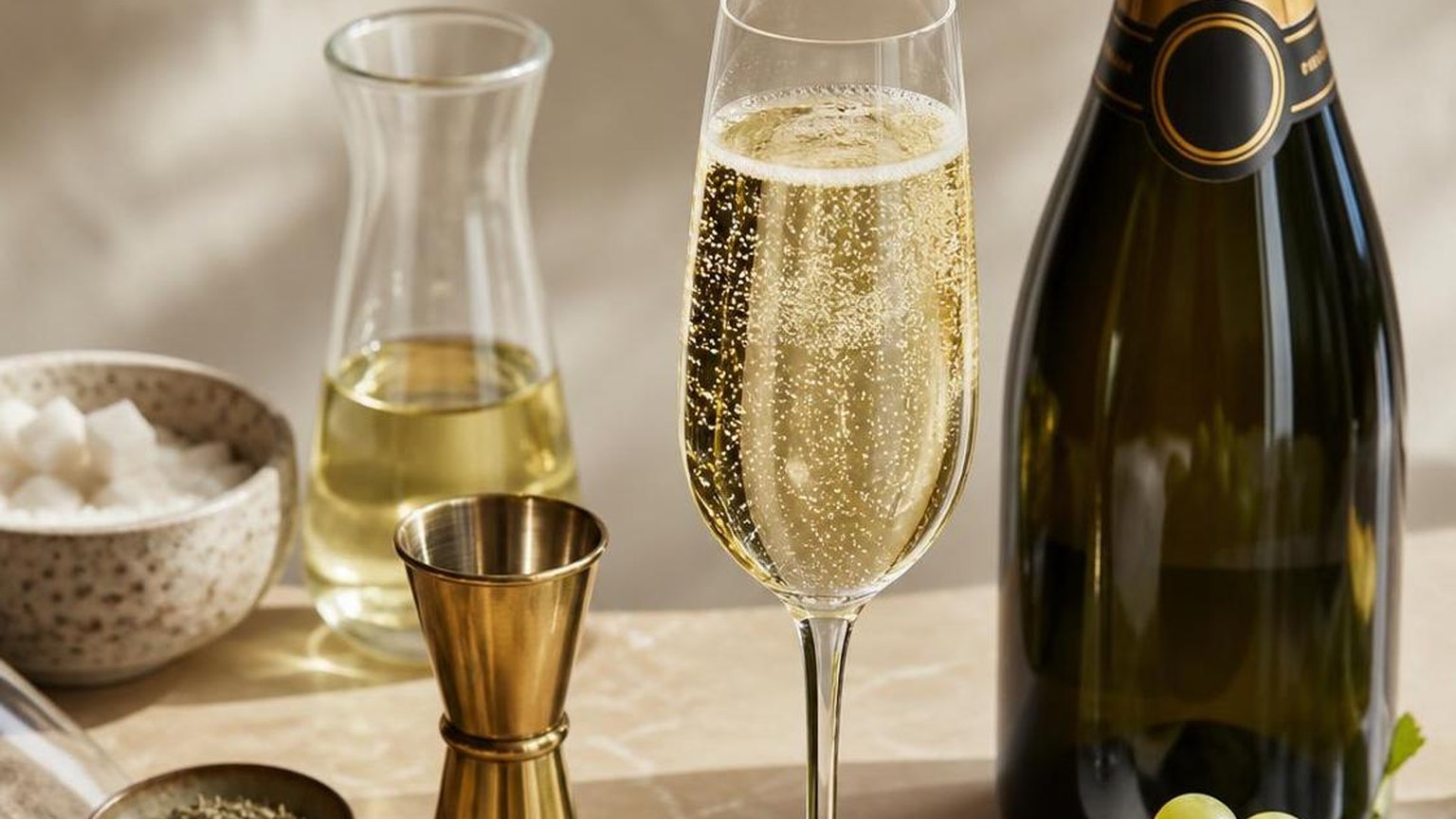
Champagne labels do not guess alcohol. They state the actual alcoholic strength by volume, and that figure is controlled by appellation law, EU wine-label rules, and import-country rules.
The result is a narrow, regulated range, not a marketing claim.
For bottles sold in the European Union, the alcohol statement must appear as actual alcoholic strength by volume, expressed with the symbol “% vol.” Under Commission Delegated Regulation (EU) 2019/33.
The number is shown in whole or half units, such as 12% vol or 12.5% vol.
Champagne also sits inside a protected appellation. The production rules for the Champagne PDO set minimum natural ripeness and winemaking parameters, so finished wines usually land near 12% alcohol.
Most non-vintage Brut Champagne on shelves is labeled 12% or 12.5% vol.
| Rule area | What the label must do | Key number |
| EU display format | State actual alcoholic strength and use “% vol” | Whole or 0.5-unit steps |
| EU tolerance for sparkling wine | Keep labeled ABV close to analytical ABV | ±0.8% vol |
| Typical Champagne shelf label | Show a standard finished strength | Usually 12% or 12.5% vol |
| US import label practice | Show alcohol content on the bottle | Commonly 12% alc/vol |
The tolerance matters because Champagne undergoes a second fermentation in bottle. EU rules allow a wider difference between labeled and measured alcohol for sparkling wine than for standard still wine.
For sparkling categories, the permitted variance is generally ±0.8% vol.
That does not mean producers can print any number they want. The declared figure must still reflect the wine’s actual analysis. A bottle labeled 12% vol should analytically fall within the legal tolerance, not drift far outside it.
US buyers often see “12% alc/vol” instead of “12% vol.” That wording reflects Alcohol and Tobacco Tax and Trade Bureau labeling practice for imported wine in the American market.
The substance is the same: the label states alcohol by volume, not proof.
Sweetness terms such as Brut, Extra Brut, or Demi-Sec do not replace the alcohol statement. They describe residual sugar, measured in grams per liter, while alcohol content is a separate mandatory disclosure.
A Brut Champagne and a Demi-Sec Champagne can both legally read 12% vol.
| Label term | What it describes | Numeric basis |
| 12% vol | Alcohol strength | 12 mL ethanol per 100 mL wine |
| Brut Nature | Sweetness style | 0–3 g/L dosage sugar |
| Brut | Sweetness style | Less than 12 g/L sugar |
| Demi-Sec | Sweetness style | 32–50 g/L sugar |
Read the alcohol line with the appellation and sweetness term together. “Champagne,” “12% vol,” and “Brut” each tell a different part of the story: origin, strength, and sweetness.
That combination gives the most accurate picture of what is in the bottle.
Frequently Asked Questions
What is the typical alcohol content in Champagne?
Most Champagne is about 12% alcohol by volume (ABV). Standard non-vintage brut bottlings usually fall in the 12% to 12.5% range, though some houses bottle slightly lower or higher depending on ripeness and style.
Is Champagne lower in alcohol than still wine?
Usually, yes. Many still table wines in the U.S. range from about 12.5% to 14.5% ABV, while Champagne commonly sits near 12%, so a glass often delivers slightly less alcohol than a similarly sized pour of fuller-bodied still wine.
How much alcohol is in a standard glass of Champagne?
A 5-ounce serving of 12% ABV Champagne contains about 0.6 ounces of pure alcohol. That is close to half of a U.S. standard drink, which contains 0.6 fluid ounces of pure alcohol, so one 5-ounce glass is essentially one standard drink.
Does vintage Champagne have more alcohol than non-vintage Champagne?
Not automatically, but it can. In warmer growing years, grapes accumulate more sugar, which can ferment into slightly more alcohol, so some vintage Champagnes may reach 12.5% or a bit more compared with many non-vintage bottles around 12%.
Does sweetness change the alcohol content in Champagne?
Not in a simple way.
Brut Nature, Extra Brut, Brut, Sec, and Demi-Sec mainly differ by dosage, measured in grams of sugar per liter after disgorgement, while final alcohol still usually remains near 12% unless the producer intentionally targets a different balance.
Why is Champagne usually around 12% ABV?
Champagne producers aim for balance between freshness, texture, and drinkability.
Grapes from the Champagne region are traditionally harvested with enough sugar to support secondary fermentation and still keep the base wine high in acidity, which tends to place the finished wine near 12% ABV.
Can Champagne be as strong as Prosecco or Cava?
Yes, and often the difference is small. Prosecco commonly ranges from about 11% to 12% ABV, and Cava often lands around 11.5% to 12.5%, so Champagne is not dramatically stronger or weaker than other major sparkling wines.
Where can you find the alcohol content on a Champagne bottle?
Look on the front or back label for “Alcohol,” “Alc.,” or “ABV,” usually printed as a percentage such as 12% vol.
In the U.S., that statement is required on the label, making the bottle itself the most reliable source for the exact alcohol content.
Related Reading
- How Long Does Unopened Champagne Last? 9 Surprising Truths You Need to Know
- Cava Vs Champagne: The Easiest Way to Distinguish
- How To Book Champagne Bar Eiffel Tower? – 12 Proven Tips for a Perfect Parisian Experience
- How Long Can You Keep Champagne In The Freezer?
- 11 Essential Facts About How Much Alcohol Is In Champagne (2026 ABV Guide, Serving Strength, Effects & Real Tasting Experience)
- All Alcohol Guides