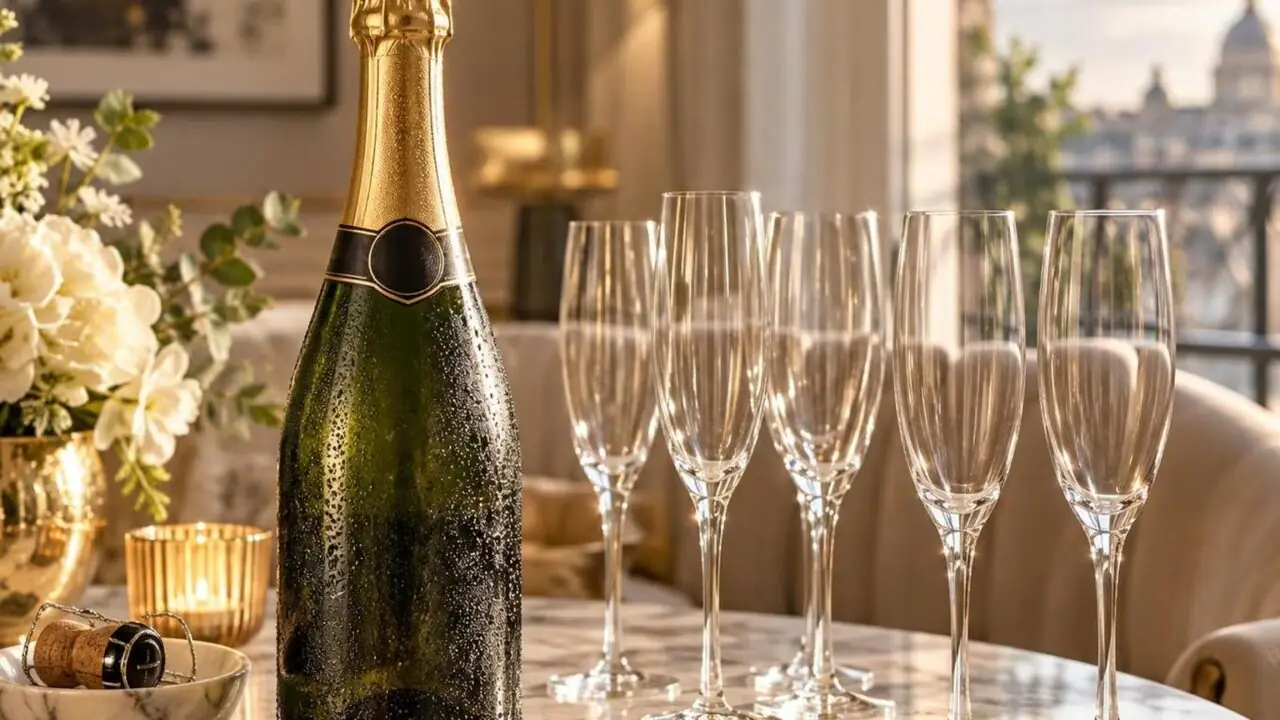
How Many Servings in a Bottle of Champagne? is 6 servings in a standard 750 mL bottle when poured as 125 mL glasses. That count matches the pour size commonly used for sparkling wine at weddings, brunches, tastings, and restaurant service.
Smaller pours change the math. A 100 mL pour gives about 7 servings, while larger 150 mL pours give 5 servings. Bottle size matters too: a magnum holds 1.5 L, so it serves about 12 standard glasses, making it easier to plan accurately for guests.
Standard Champagne Bottle Servings
A standard 750 ml bottle of Champagne yields approximately 5 to 6 glasses when poured at the traditional 4- to 5-ounce (120–150 ml) serving size.
The exact count depends on pour volume, glass shape, and whether you’re toasting or sipping through a meal.
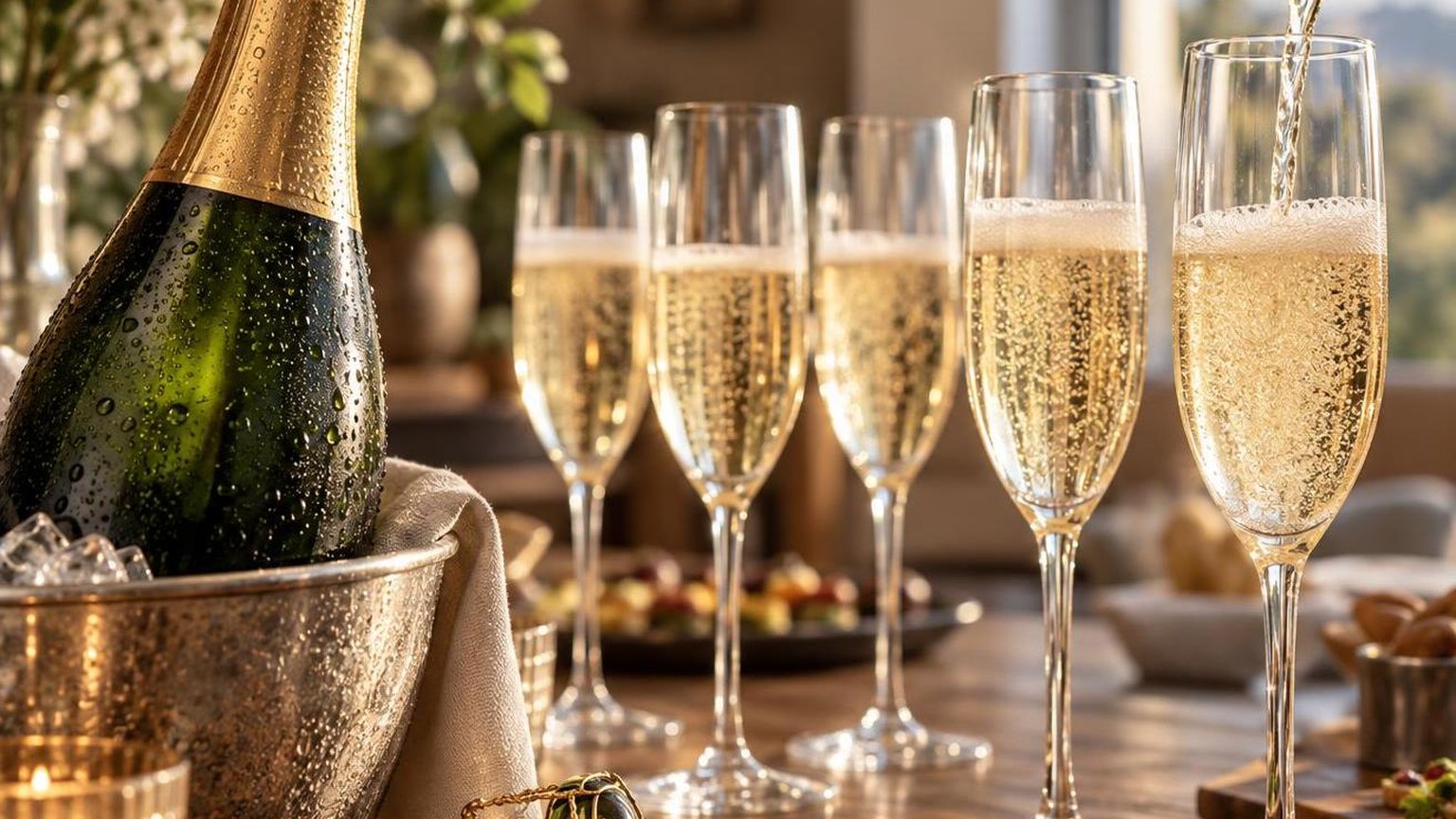
Serving Breakdown by Pour Size
The Comité Champagne, the official trade body governing Champagne production, references a standard flute pour of roughly 125 ml (4.2 oz). Most US restaurants and catering companies default to a 5 oz (150 ml) pour for sparkling wines.
| Pour Size | Volume (ml) | Glasses per 750 ml Bottle |
| Toast pour | 90 ml (3 oz) | 8 |
| Standard European flute | 125 ml (4.2 oz) | 6 |
| US restaurant pour | 150 ml (5 oz) | 5 |
| Generous coupe pour | 180 ml (6 oz) | 4 |
Why Pour Size Matters for Champagne
Champagne contains approximately 12–12.5% ABV, comparable to most still wines. A 5 oz pour delivers roughly 1 standard drink by USDA guidelines.
Overfilling a flute diminishes the wine’s aromatic concentration and accelerates carbonation loss.
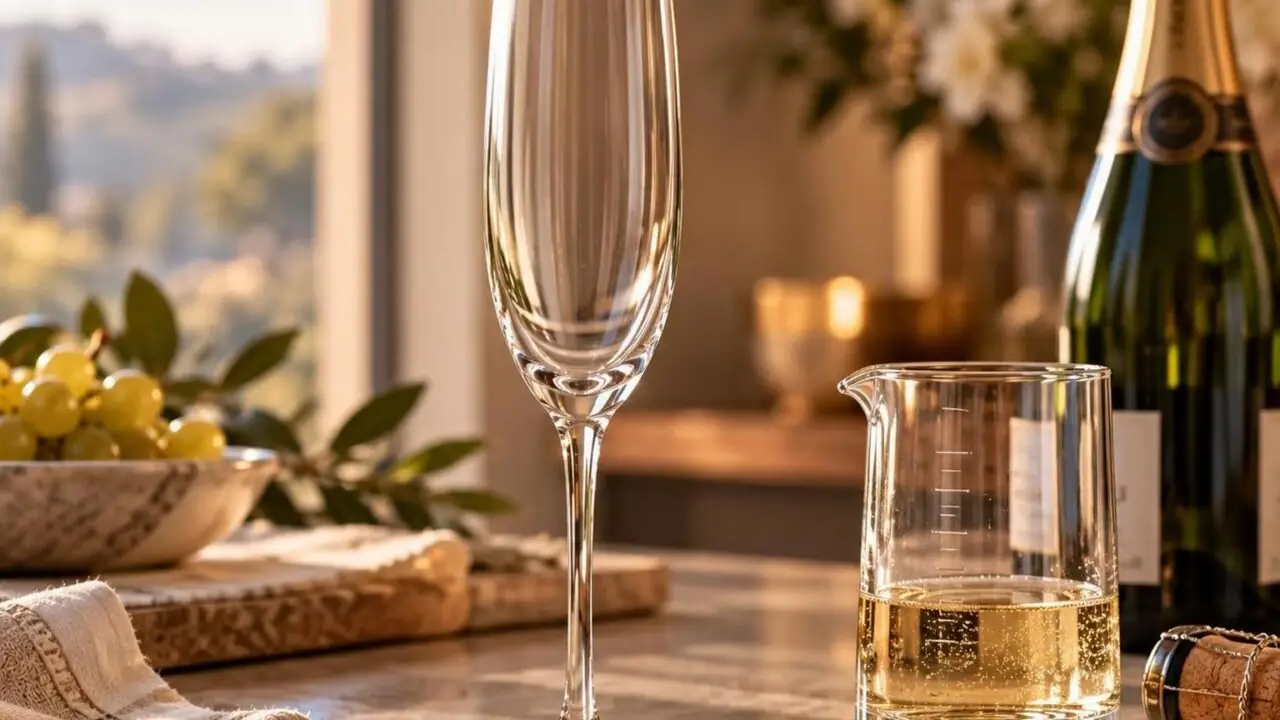
Champagne flutes hold between 170 ml and 230 ml at full capacity. Filling to the correct two-thirds mark preserves the mousse—the stream of fine bubbles—and concentrates aromas in the headspace above the liquid.
Planning Champagne for Events
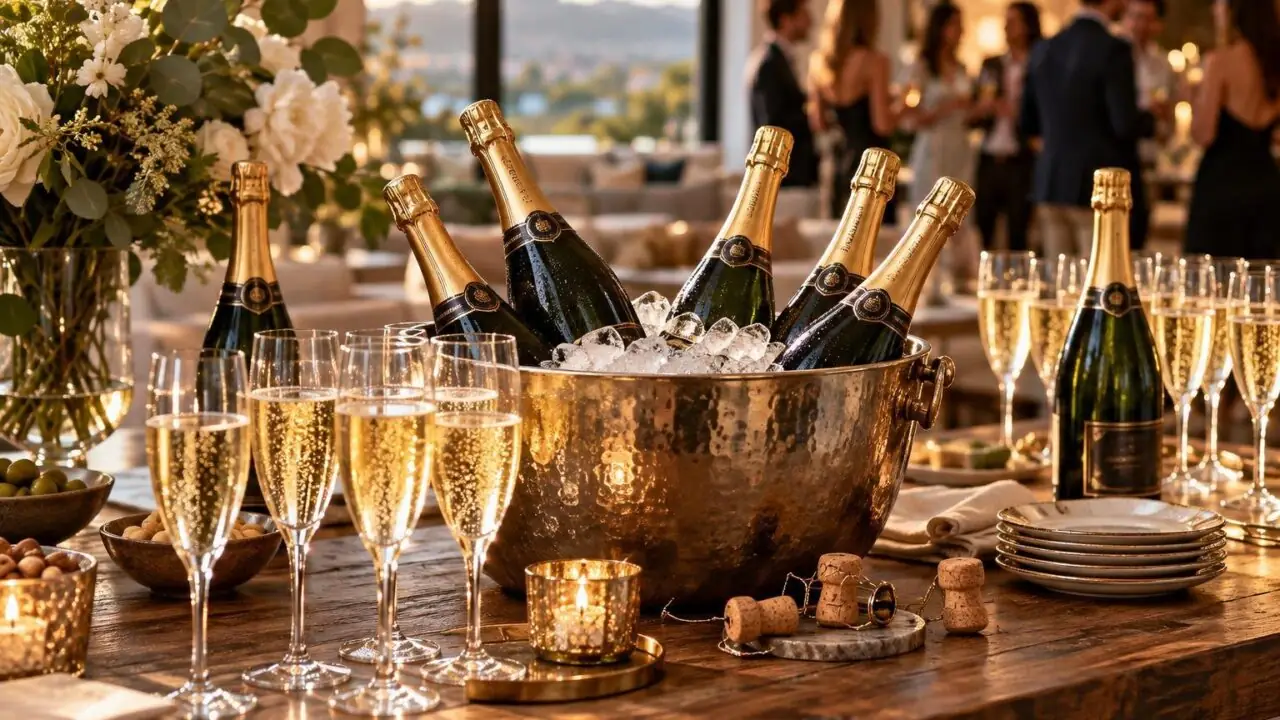
Event planners typically calculate 1.5 glasses of Champagne per guest for a single toast. A sit-down reception with Champagne service throughout requires 3 to 4 glasses per person over 2 hours.
- Toast only (1.5 glasses/guest): 1 bottle serves 3–4 guests
- Cocktail hour (3 glasses/guest): 1 bottle serves 2 guests
- Full evening reception (4+ glasses/guest): 1 bottle per guest
For a 50-person wedding toast at a 5 oz pour, you need a minimum of 15 bottles. Buying 17–18 bottles provides a practical 15–20% buffer for spillage, overpours, and second servings.
Temperature also affects perceived serving volume. Champagne served at the recommended 8–10 °C (46–50 °F) foams less during pouring, reducing waste compared to warm bottles that overflow on contact with the glass.
Pour Size Changes the Count
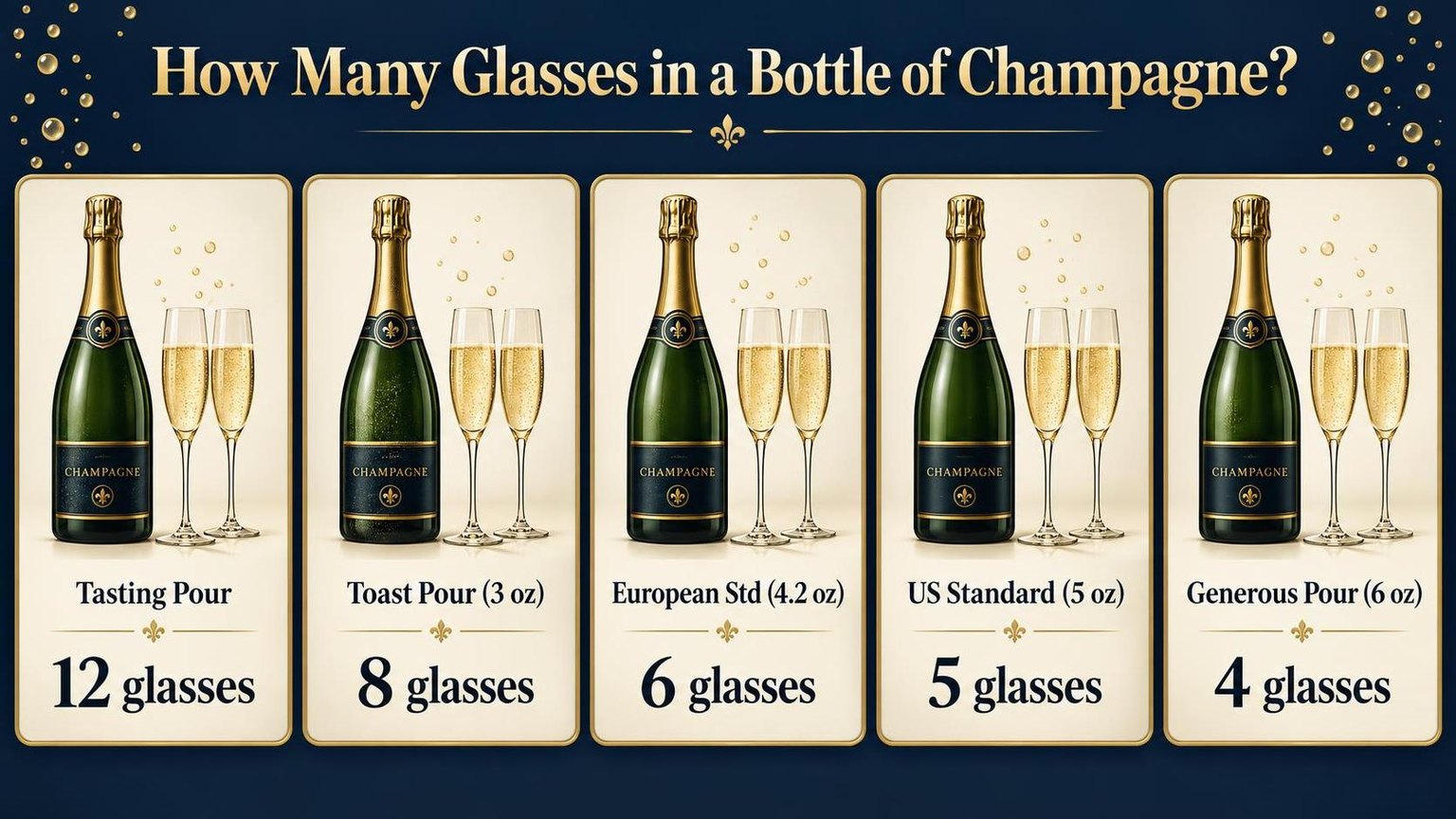
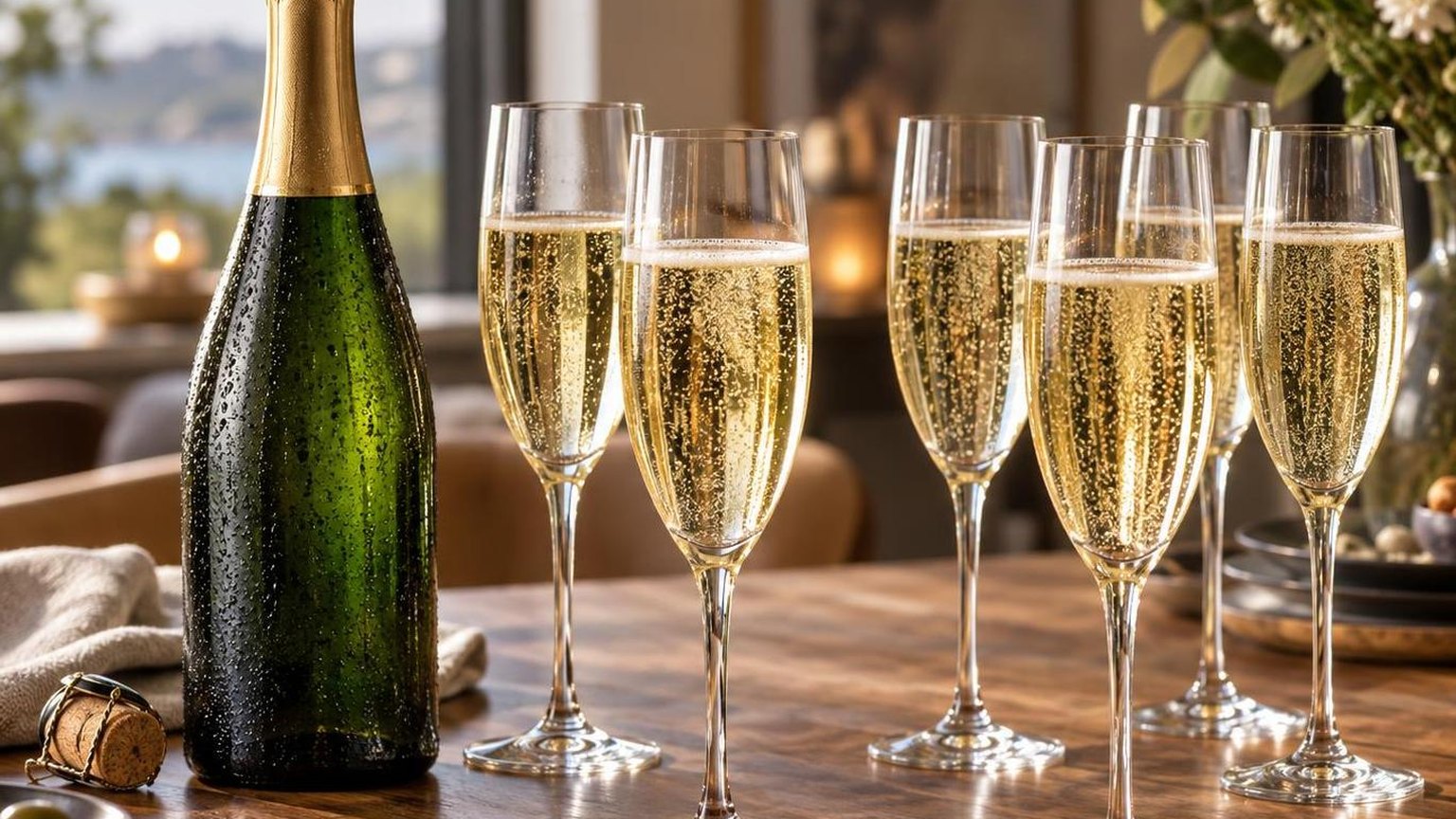
A standard 750 ml bottle of Champagne holds a fixed volume, but the number of servings shifts dramatically based on how much you pour.
A conservative tasting pour and a generous party glass can mean the difference between 5 and 12 servings per bottle.
The internationally recognized standard Champagne serving is 125 ml (roughly 4.2 oz), yielding exactly 6 glasses per 750 ml bottle.
In the United States, the Dietary Guidelines define a standard drink of wine as 5 oz (148 ml), which drops the count to about 5 servings.
| Pour Size | Volume (ml) | Volume (oz) | Glasses per 750 ml Bottle |
| Tasting pour | 60 ml | 2 oz | 12 |
| Sparkling wine flight | 90 ml | 3 oz | 8 |
| European standard | 125 ml | 4.2 oz | 6 |
| U.S. standard drink | 148 ml | 5 oz | 5 |
| Generous restaurant pour | 180 ml | 6 oz | 4 |
Why Pour Size Matters for Planning
For a toast-only occasion—weddings, New Year’s midnight—a 90–100 ml pour is typical. One bottle then covers 7–8 guests comfortably, a critical detail when buying in bulk.
At a seated dinner where Champagne accompanies an entire course, guests tend to receive the full 125–150 ml pour. Budget accordingly: one bottle for every 5–6 diners at that rate.
The Flute Factor
Glassware influences perceived pour size. A classic Champagne flute holds 180–200 ml to the rim but should be filled only two-thirds full, naturally guiding pours toward 120–130 ml.
Coupe glasses, with their wide bowl, often encourage overfilling to 150–180 ml.
- Flute filled ⅔ full: approximately 125 ml, preserving effervescence and giving 6 servings per bottle.
- Coupe filled ⅔ full: approximately 150 ml, reducing yield to 5 servings per bottle.
- Tulip glass filled halfway: approximately 100 ml, extending yield to 7 servings per bottle.
Choosing narrower glassware is the simplest way to stretch each bottle further without guests noticing smaller pours. The taller liquid column in a flute creates the visual impression of a full glass even at 125 ml.
Servings by Bottle Format
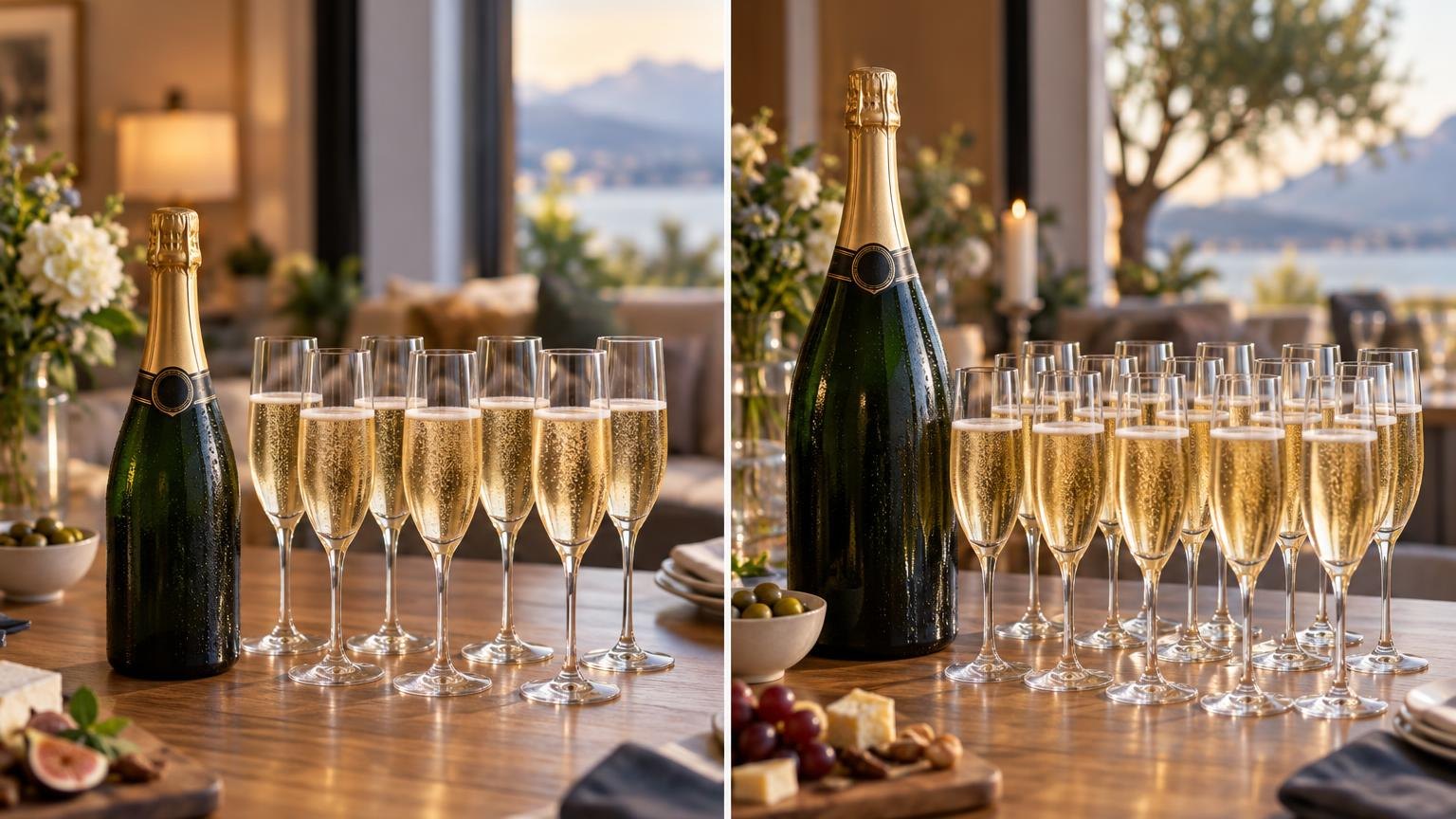
Champagne bottles range from the 187.5 ml Piccolo to the 15-liter Nebuchadnezzar, and each format yields a different number of standard 150 ml pours. Knowing these counts matters for event planning, purchasing decisions, and proper cellar management.
| Bottle Format | Volume (ml) | Standard Pours (150 ml) | Flute Pours (~125 ml) |
| Piccolo (Quarter) | 187.5 | 1.25 | 1.5 |
| Half (Demi) | 375 | 2.5 | 3 |
| Standard | 750 | 5 | 6 |
| Magnum | 1,500 | 10 | 12 |
| Jeroboam | 3,000 | 20 | 24 |
| Methuselah | 6,000 | 40 | 48 |
| Salmanazar | 9,000 | 60 | 72 |
| Balthazar | 12,000 | 80 | 96 |
| Nebuchadnezzar | 15,000 | 100 | 120 |
Standard 750 ml Bottle: The Baseline
A standard 750 ml bottle delivers exactly 5 servings at the widely accepted 150 ml restaurant pour. Using a narrower 125 ml flute pour—common at receptions—stretches that to 6 glasses.
Magnum: The Sweet Spot for Gatherings
At 1,500 ml, a Magnum holds the equivalent of two standard bottles: 10 full pours or 12 flute pours. Magnums also age Champagne more gracefully due to a lower oxygen-to-wine ratio, making them a favorite among collectors and sommeliers.
Large Formats for Events
A Jeroboam (3,000 ml) serves 20 guests at 150 ml each. For weddings exceeding 100 attendees, a single Salmanazar replaces approximately 12 standard bottles, reducing per-serving cost and creating a dramatic presentation moment.
Practical Pouring Considerations
- Effervescence loss: Larger formats retain carbonation longer after opening because of their smaller surface-area-to-volume ratio, giving you more time to pour without quality loss.
- Toast pours: Many event planners use a 100 ml toast pour, yielding roughly 7–8 servings per standard bottle—a critical distinction when budgeting for a reception.
- Weight factor: A full Nebuchadnezzar weighs approximately 18 kg (40 lbs), requiring two people or a cradle to pour safely.
- Temperature control: Bottles above Magnum size need 45–60 minutes longer to chill to the ideal 8–10 °C serving temperature compared to a standard 750 ml bottle.
Choosing the right format depends on guest count, service style, and whether flute or coupe glassware dictates your pour size. Always calculate servings based on your actual pour volume, not the glass capacity.
Planning Champagne for Guests
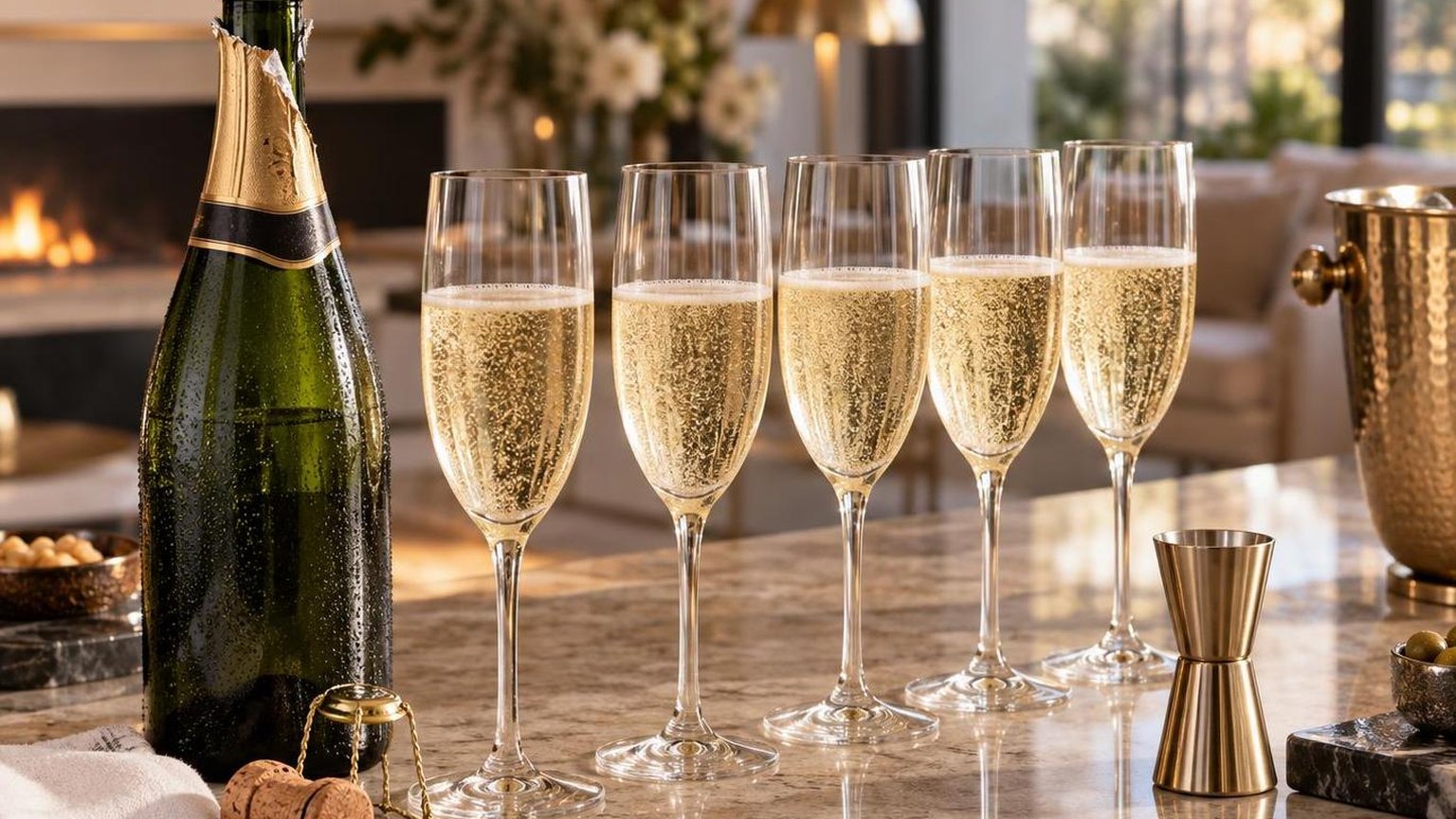
Accurate champagne planning prevents the twin disasters of running dry mid-toast or wasting expensive bottles. The standard calculation starts with one bottle yielding six flutes, then adjusts for event type, duration, and drinking pace.
Standard Per-Person Estimates by Event Type
Different occasions demand different quantities. A toast-only event needs far less than a champagne-heavy reception or brunch.
| Event Type | Glasses per Guest | Bottles per 10 Guests |
| Single toast (wedding, New Year’s) | 1 | 2 |
| Cocktail hour (1 hour) | 2–3 | 4–5 |
| Dinner with champagne course | 2 | 3–4 |
| Champagne-only reception (2 hours) | 4–5 | 7–9 |
| Brunch (2–3 hours, mimosas included) | 3–4 | 5–7 |
Quick Bottle Calculator by Guest Count
For a toast-only scenario, divide the guest count by six. For a two-hour reception, multiply guests by four glasses, then divide by six.
| Guests | Toast Only (1 glass) | Cocktail Hour (2–3 glasses) | Full Reception (4–5 glasses) |
| 25 | 5 bottles | 10–13 bottles | 17–21 bottles |
| 50 | 9 bottles | 17–25 bottles | 34–42 bottles |
| 100 | 17 bottles | 34–50 bottles | 67–84 bottles |
| 150 | 25 bottles | 50–75 bottles | 100–125 bottles |
Factors That Shift Your Numbers
- Temperature: Hot outdoor events increase consumption by roughly 15–20% compared to climate-controlled venues.
- Time of day: Afternoon events typically see 10–15% less consumption than evening gatherings.
- Other beverages available: Offering beer, wine, and cocktails alongside champagne can reduce champagne consumption by 40–50%.
- Guest demographics: Groups of frequent wine drinkers consume more per capita than mixed crowds.
The 10% Buffer Rule
Industry caterers consistently recommend purchasing 10% more bottles than your calculation suggests. Unopened champagne stores well for years, making overbuying low-risk.
Magnums (1.5 L, equal to two standard bottles) are cost-effective for larger events. They also create visual impact and reportedly maintain better carbonation due to their lower surface-area-to-volume ratio.
Toast Pours Versus Full Glasses
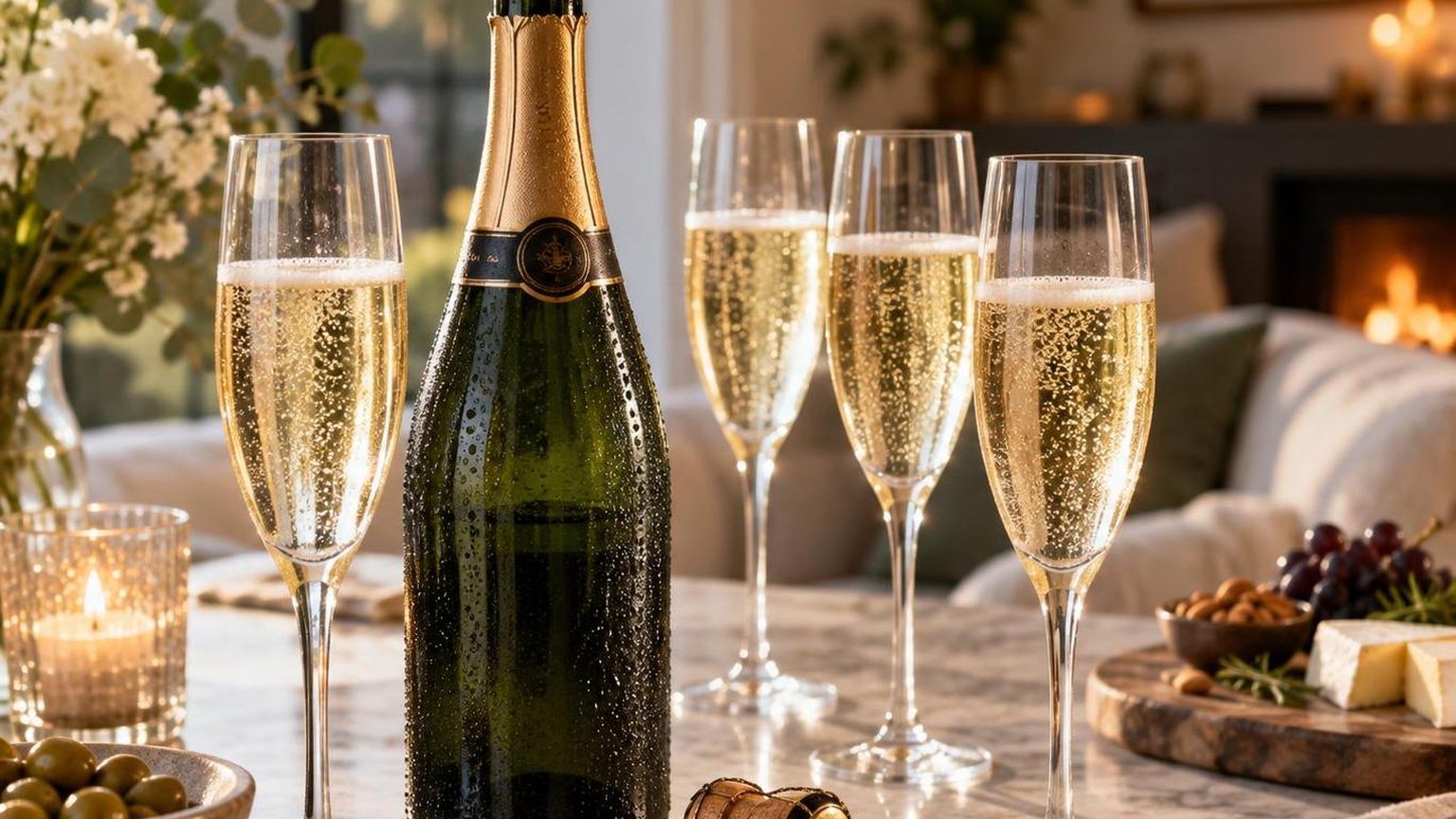
The number of servings in a Champagne bottle shifts dramatically based on pour size. A 750 ml bottle yields 8 toast pours or 5 full glasses—a 60% difference that directly impacts how many bottles you need for an event.
Standard Pour Sizes Compared
The wine industry and most sommeliers recognize two distinct Champagne pour levels, each suited to different occasions.
| Pour Type | Volume per Glass | Servings per 750 ml Bottle | Typical Use |
| Toast pour | 90–100 ml (3–3.4 oz) | 7–8 | Wedding toasts, midnight celebrations, reception lines |
| Standard pour | 150 ml (5 oz) | 5 | Dinner service, wine bars, tasting menus |
| Generous pour | 180 ml (6 oz) | 4 | Casual entertaining, cocktail hour |
Why Toast Pours Work at Events
Toast pours fill a standard Champagne flute roughly one-third full. Guests typically consume the glass in 1–2 sips during a brief ceremonial moment, making a larger pour unnecessary and wasteful.
A toast pour also preserves carbonation better. Less surface area is exposed to air, keeping the mousse—the fine bead of bubbles—intact through the speech.
Calculating Bottles for Events
Bottle count depends entirely on which pour you choose. For 100 guests receiving a single toast, the math differs significantly from a seated dinner.
| Guests | Bottles Needed (Toast Pour, 1 round) | Bottles Needed (Full Glass, 1 round) |
| 25 | 4 | 5 |
| 50 | 7 | 10 |
| 100 | 13 | 20 |
| 150 | 19 | 30 |
Always round up and add 10% for spillage, overpours, and last-minute guests. Professional caterers typically budget one extra bottle per 25 guests beyond the calculated total.
When to Choose Each Pour
- Toast pour (90–100 ml): Single-use ceremonial moments where Champagne accompanies a speech, not a meal.
- Standard pour (150 ml): Dinner pairings, especially with oysters, aged Comté, or caviar courses where guests sip over 15–20 minutes.
- Generous pour (180 ml): Informal gatherings where Champagne serves as the primary beverage for the evening.
Temperature affects perceived pour size. Champagne served at the ideal 8–10°C (46–50°F) produces a tighter bead and appears more voluminous in the glass than warm Champagne poured at the same quantity.
How Flute Size Affects Servings
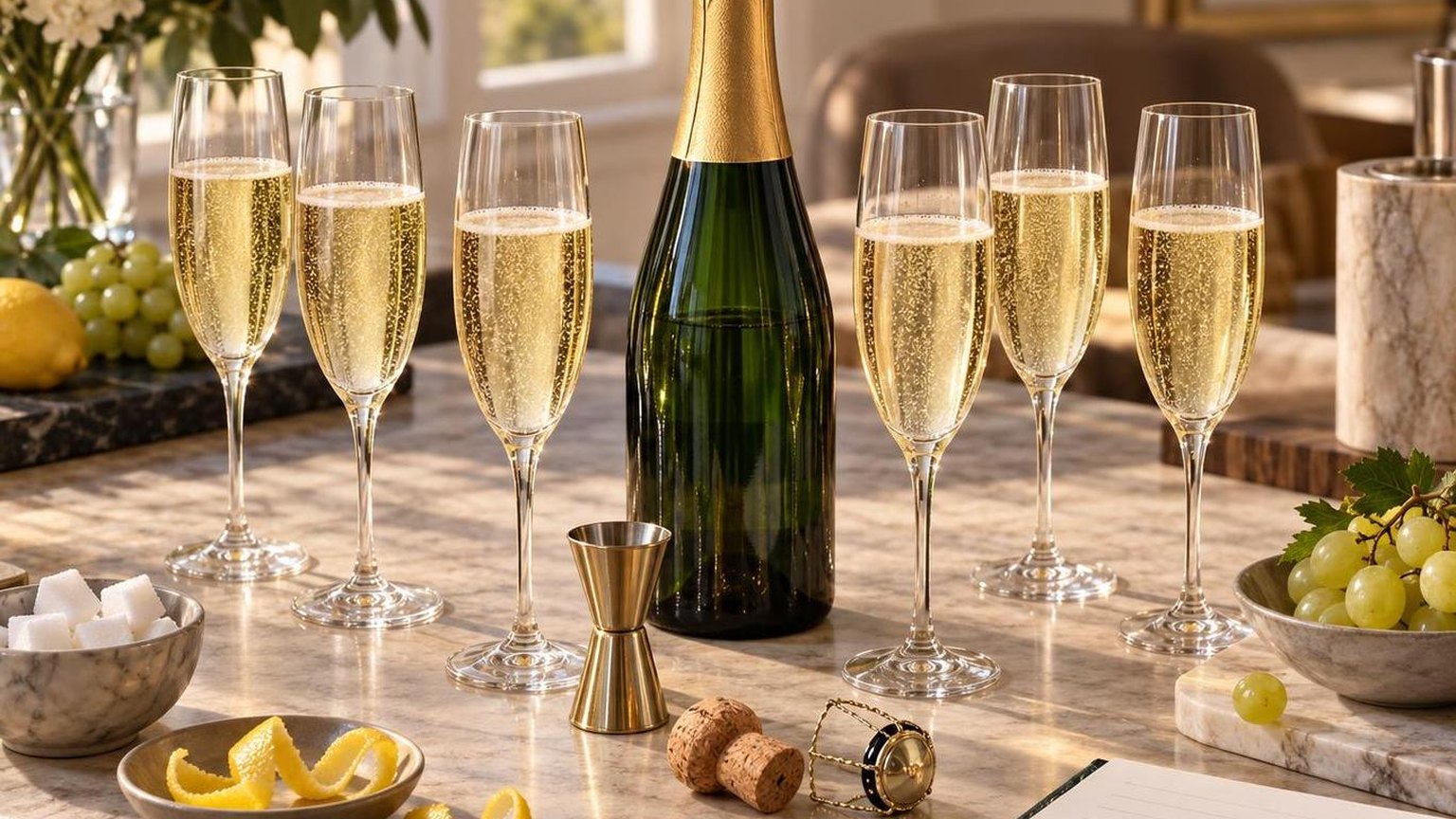
The flute you choose directly determines how many pours a 750 ml bottle yields. Standard champagne flutes hold 6 oz (177 ml), but actual serving sizes range from 4 oz to 8 oz depending on glassware and occasion.
Servings Per Bottle by Flute Capacity
A standard 750 ml bottle contains 25.4 fluid ounces. Dividing by each flute size gives precise serving counts.
| Flute Size | Capacity (ml) | Servings Per 750 ml Bottle | Common Use |
| 4 oz (small pour) | 118 ml | 6.3 servings | Tasting events, toasts |
| 5 oz (standard pour) | 148 ml | 5 servings | Dinner service, restaurants |
| 6 oz (full flute) | 177 ml | 4.2 servings | Casual entertaining |
| 8 oz (coupe or tulip) | 237 ml | 3.2 servings | Cocktail-style pours |
| 10 oz (oversized glass) | 296 ml | 2.5 servings | Wine-glass-style service |
Why the Standard Pour Is 5 oz, Not a Full Flute
Most restaurants pour 5 oz regardless of glass size. This leaves roughly one-third of the flute empty, preserving space for bubbles and aroma concentration.
The Alcohol and Tobacco Tax and Trade Bureau (TTB) defines a standard serving of wine as 5 oz at 12% ABV. Champagne typically ranges from 12% to 12.5% ABV, fitting squarely within that guideline.
Flute Shape Matters Beyond Volume
Tall, narrow flutes reduce surface area, slowing CO₂ release. Research published in the Journal of Agricultural and Food Chemistry found that flute shape preserves up to 30% more dissolved carbon dioxide than wide coupes over a 10-minute period.
- Traditional flute (6 oz): Narrow opening of approximately 46–50 mm diameter retains effervescence longest
- Coupe (8–10 oz): Wide 100 mm rim accelerates bubble loss, encouraging larger pours to compensate
- Tulip glass (6–8 oz): Slightly wider bowl than a flute with a tapered rim, balancing aroma release with carbonation retention
Practical Planning Tip
For event planning, calculate using the 5 oz standard pour: one bottle serves exactly 5 guests. For champagne toasts with smaller 4 oz pours, a single bottle covers 6 glasses comfortably.
Choosing narrower flutes and controlled pours maximizes both servings per bottle and the sensory experience of each glass.
Common Questions
How many standard servings are in a 750 ml bottle of Champagne?
A standard 750 ml bottle of Champagne yields approximately 5 servings when poured at the standard 150 ml (5 oz) per glass.
This serving size aligns with the USDA and CDC definition of one standard drink of wine at 12% ABV, though most Champagnes range from 11.5–12.5% ABV.
How many glasses can you pour from a magnum of Champagne?
A magnum holds 1.5 liters—exactly twice the volume of a standard bottle—yielding roughly 10 servings at 150 ml each.
Larger formats like the Jeroboam (3 L) produce about 20 glasses, while a Methuselah (6 L) delivers around 40 glasses, making them popular choices for large celebrations.
Does flute shape versus coupe shape change the number of servings per bottle?
The glass shape does not change the number of servings if you maintain a consistent 150 ml pour. A traditional flute holds 170–230 ml at full capacity, while a coupe typically holds 180–240 ml.
The visual fill level differs—flutes appear fuller with a standard pour—but the bottle still yields 5 glasses regardless of glassware.
How many Champagne bottles do I need for a toast at an event of 50 guests?
For a single toast pour of approximately 100–120 ml per person, one 750 ml bottle covers 6–7 toast-sized glasses, meaning you need 8 bottles for 50 guests.
If you plan a full reception with 2–3 glasses per guest at 150 ml pours, budget 20–30 bottles. Adding a 10% buffer for spillage and overpours is standard event-planning practice.
How many calories are in one serving of Champagne?
A single 150 ml serving of brut Champagne contains approximately 120–130 calories, with roughly 1–2 grams of residual sugar per glass.
Demi-sec Champagne, which contains 32–50 grams of sugar per liter, can push a single serving to 150–160 calories. Choosing extra brut (under 6 g/L sugar) reduces calories to around 90–100 per glass.
How long does an opened bottle of Champagne stay fresh across multiple servings?
An opened bottle of Champagne retains acceptable carbonation and flavor for 1–3 days when sealed with a hermetic Champagne stopper and stored upright at 4–7 °C (39–45 °F).
Without a stopper, CO₂ pressure drops from roughly 5–6 atmospheres to under 2 atmospheres within 12–24 hours, leaving the wine noticeably flat.
Pouring all 5 servings within the first few hours of opening delivers the best effervescence.
Related Guides
- How Many Oz In A Bottle Of Champagne? The Complete, Real-World Guide (With Sizes, Uses & Serving Math)
- How To Bring Champagne On A Cruise?
- Moet Vs Veuve: The Easiest Way to Distinguish Between Them
- Does Sparkling Wine Have Alcohol?
- Cava Vs Champagne: The Easiest Way to Distinguish
- How To Break A Champagne Bottle? – A Complete Safety-First Guide Based on Real Experience
- All Alcohol Guides
- National Institute on Alcohol Abuse and Alcoholism (2024)
- U.S. Dietary Guidelines for Americans – USDA & HHS (2020)
- Alcohol and Tobacco Tax and Trade Bureau – TTB (2024)
- Cornell University – Department of Food Science (2023)
- Wine Folly (2023)
- Comité Champagne – Bureau du Champagne (2024)
- MasterClass (2023)