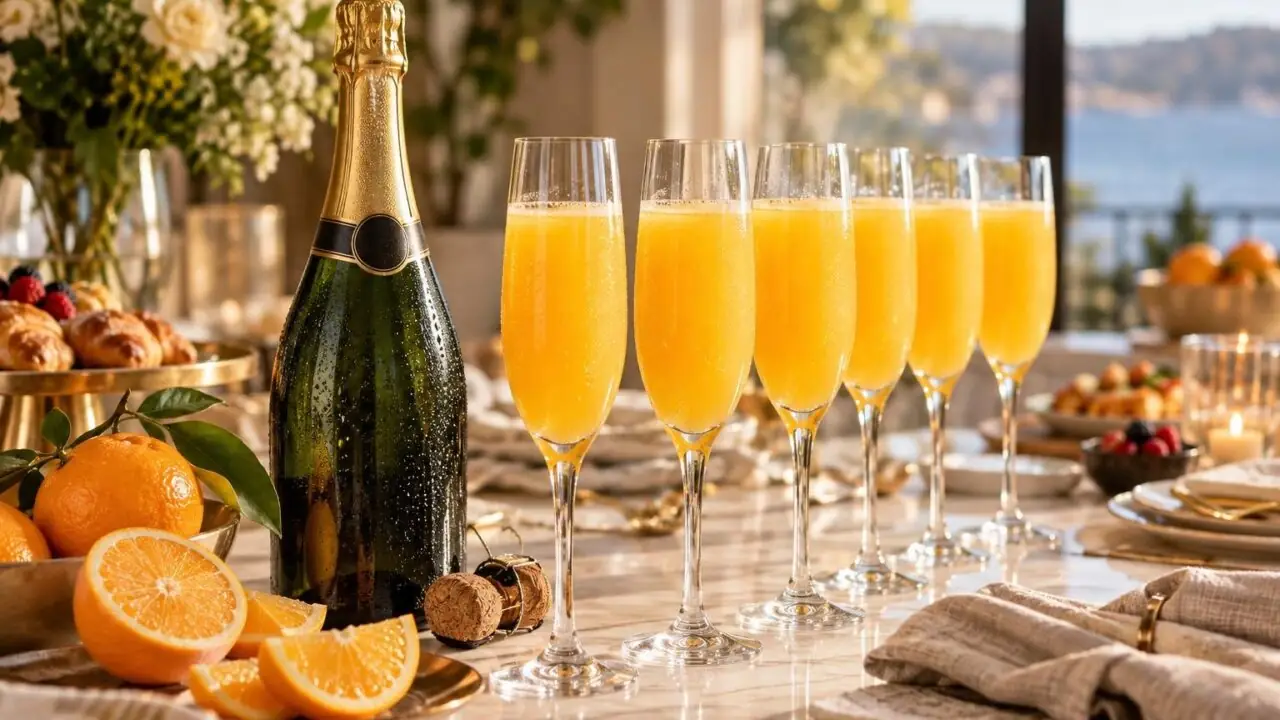
How Many Mimosas in a Bottle of Champagne? A standard 750 ml bottle makes 6 mimosas when each drink uses 4 ounces of Champagne and 2 ounces of orange juice. That pour size fits most flute glasses, keeps the drink balanced, and leaves minimal waste.
For lighter brunch service, use 3 ounces of Champagne per glass and get about 8 mimosas per bottle. For stronger pours, expect 5 servings.
Plan one bottle for every 3 guests if each person will drink two mimosas, or more if the meal runs longer than 90 minutes.
Bottle Math for Standard Mimosas
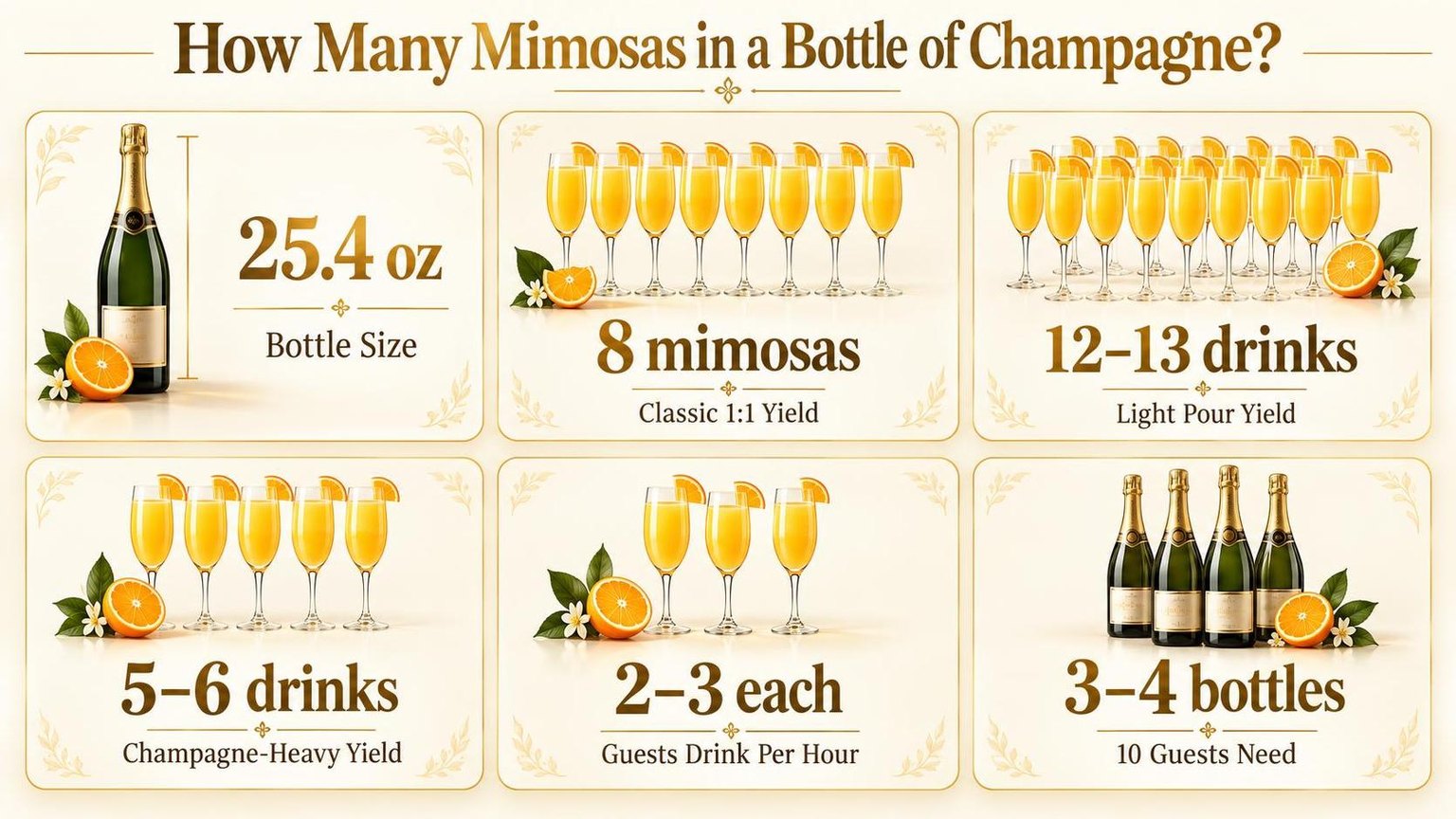
A standard 750 ml bottle of Champagne yields six to eight mimosas, depending on your pour ratio. The exact count hinges on glass size, ice usage, and how generously you split Champagne against orange juice.
The Classic 1:1 Ratio
The traditional mimosa uses equal parts Champagne and orange juice. In a standard 6-ounce (177 ml) flute filled to the proper level, that means roughly 3 ounces (89 ml) of Champagne per drink.
At 3 ounces per serving, a 750 ml bottle contains approximately 25.4 ounces of Champagne — enough for 8 mimosas. This is the most common calculation used by caterers and brunch planners.
Mimosa Yield by Pour Ratio
Not everyone sticks to a 1:1 split. A Champagne-forward pour reduces your total yield. A juice-heavy pour stretches the bottle further.
| Ratio (Champagne : OJ) | Champagne Per Drink | Mimosas Per 750 ml Bottle |
| 3:1 (Champagne-forward) | 4.5 oz (133 ml) | 5–6 |
| 2:1 | 4 oz (118 ml) | 6 |
| 1:1 (classic) | 3 oz (89 ml) | 8 |
| 1:2 (juice-heavy) | 2 oz (59 ml) | 12 |
| 1:3 (light splash) | 1.5 oz (44 ml) | 16 |
Glass Size Matters
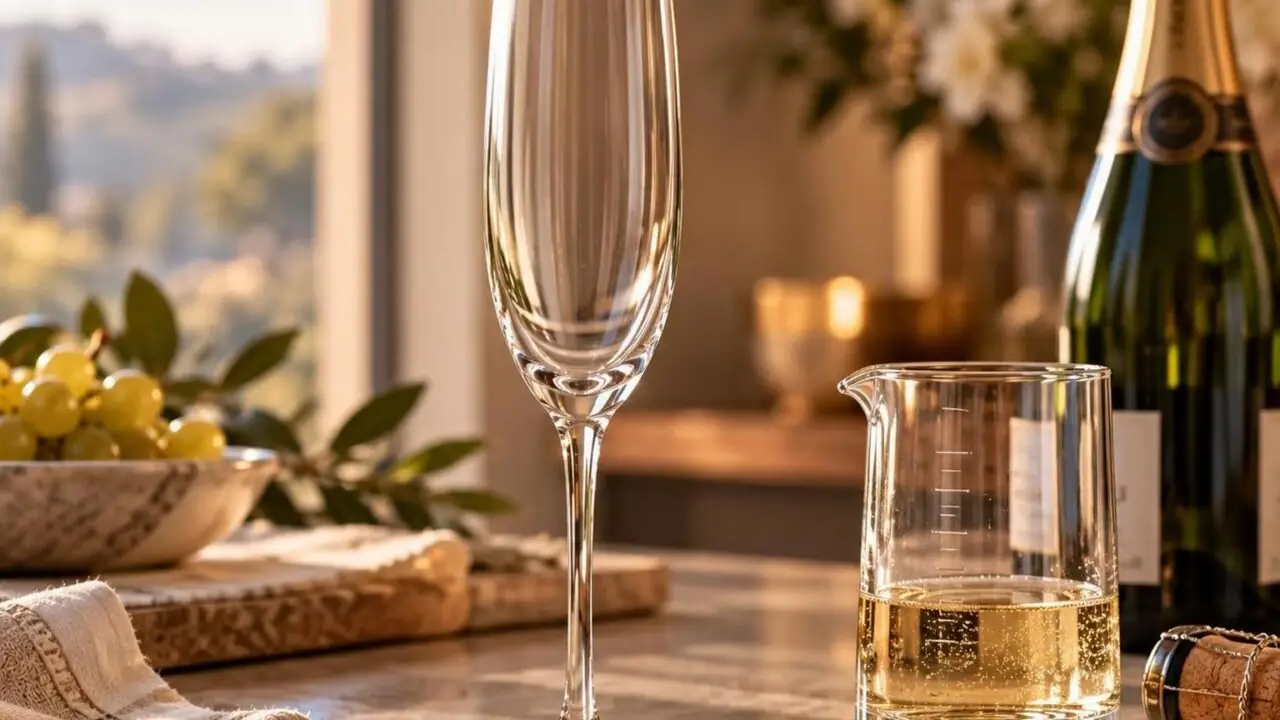
Standard Champagne flutes hold 6 ounces when properly filled. Larger 8-ounce flutes or 10-ounce wine glasses change the math significantly.
| Glass Type | Capacity | Champagne at 1:1 | Drinks Per Bottle |
| Standard flute | 6 oz (177 ml) | 3 oz | 8 |
| Large flute | 8 oz (237 ml) | 4 oz | 6 |
| Wine glass | 10 oz (296 ml) | 5 oz | 5 |
Planning for a Group
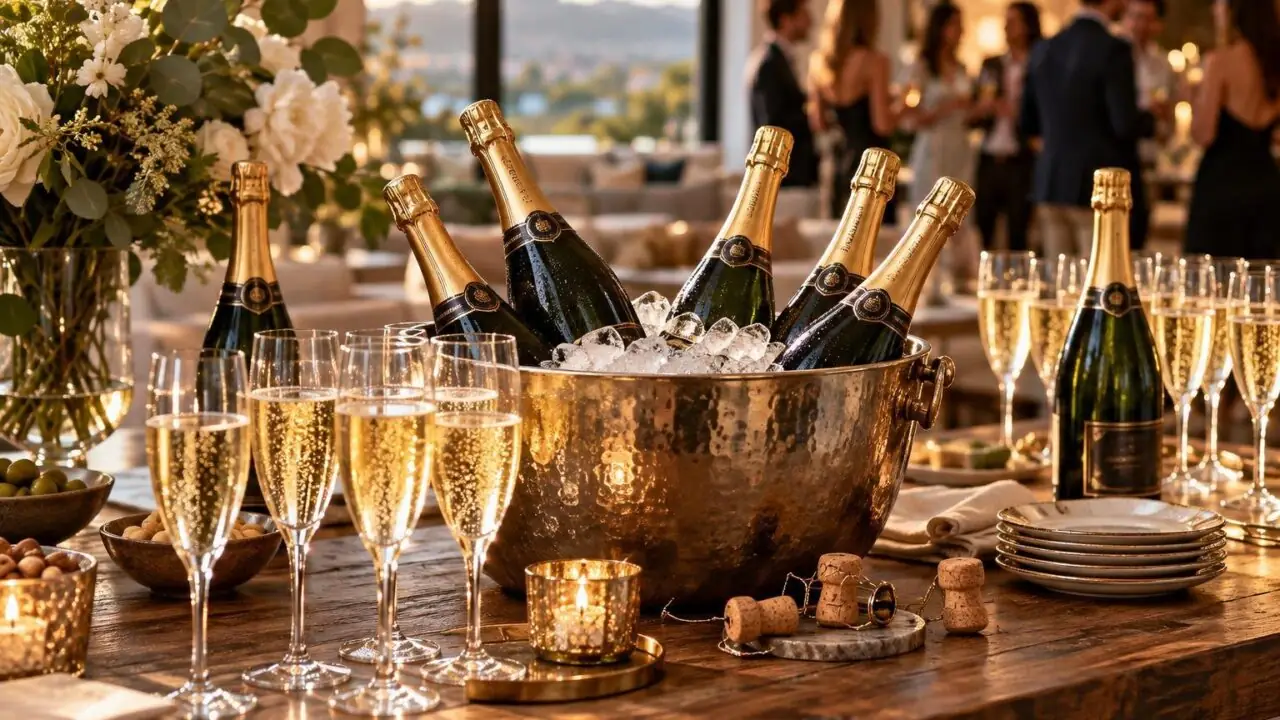
Most brunch guests drink two to three mimosas over a 90-minute sitting. For a group of 10, plan on 20–30 mimosas total using the classic 1:1 ratio.
- 10 guests: 3–4 bottles of Champagne, 48–64 oz of orange juice
- 20 guests: 6–8 bottles, 96–128 oz of orange juice
- 50 guests: 15–19 bottles, 1.5–2 gallons of orange juice
Buy one extra bottle beyond your estimate. Unopened Champagne keeps for years, but running out mid-brunch does not recover gracefully.
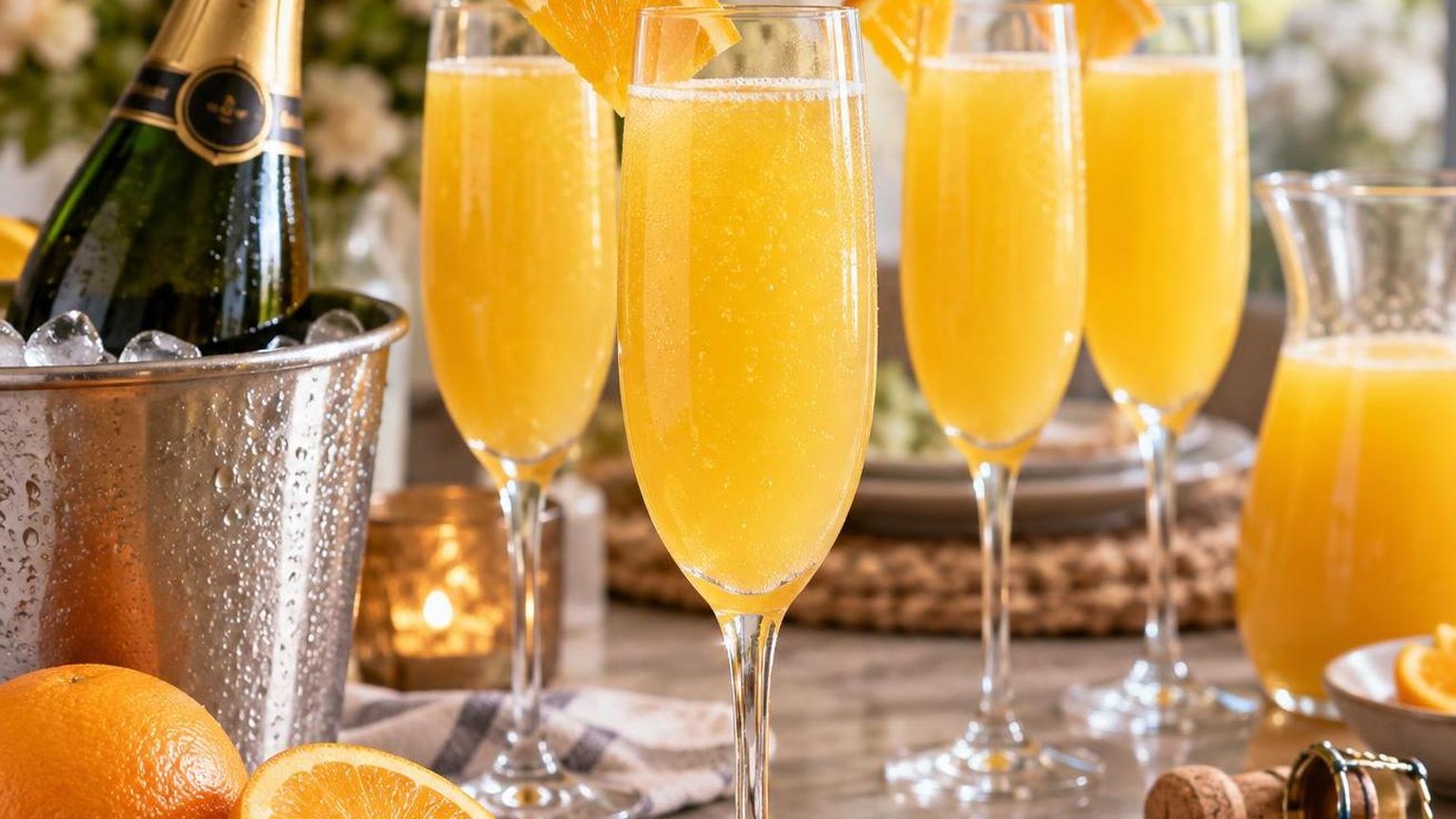
How Pour Size Changes Servings
A standard 750 ml bottle of Champagne holds roughly 25.4 ounces. The number of mimosas you get depends entirely on how much Champagne goes into each glass, which varies widely by setting and personal preference.
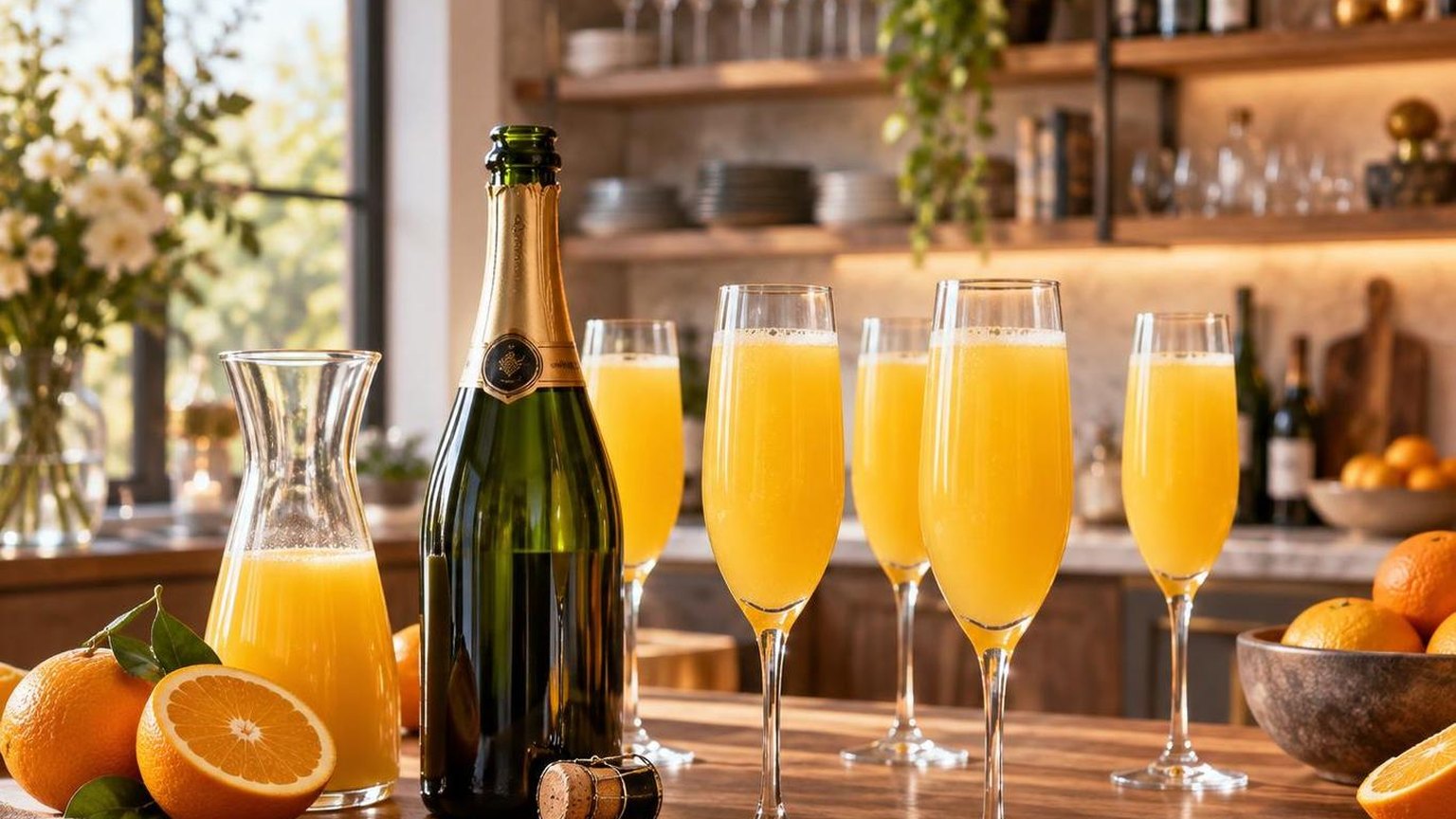
Most mimosa recipes call for a 1:1 ratio of Champagne to orange juice. That means a typical 6-ounce mimosa uses about 3 ounces of Champagne per drink. But pour sizes shift dramatically depending on who’s making them.
| Pour Size (Champagne per glass) | Mimosas per 750 ml Bottle | Typical Setting |
| 2 oz | 12–13 | Brunch buffet, light pours |
| 3 oz | 8 | Standard home brunch |
| 4 oz | 6 | Generous host or restaurant |
| 5 oz | 5 | Champagne-forward mimosa |
| 6 oz (mostly Champagne) | 4 | Barely a splash of OJ |
The 3-ounce pour is the most commonly cited standard. At that size, one bottle yields 8 mimosas—a reliable planning number for home entertaining.
Factors That Push Pours Higher or Lower
- Bottomless brunch restaurants typically use 2-ounce pours with 4 ounces of juice, stretching one bottle to 12+ drinks and keeping costs manageable.
- Mimosa bars where guests self-serve tend toward heavier Champagne pours of 4–5 ounces, cutting your yield to 5–6 glasses per bottle.
- Flute vs. tumbler matters: a standard Champagne flute holds 6 ounces, naturally limiting the pour. Wide-mouth wine glasses hold 12+ ounces and encourage overfilling.
Glass shape directly controls consumption. A 2013 study from Cornell University found that people pour 12% more liquid into short, wide glasses compared to tall, narrow ones.
Planning for a Group
For party planning, estimate 2–3 mimosas per guest in the first hour and 1–2 per hour after that. Using the standard 3-ounce Champagne pour, one bottle covers 8 drinks.
| Guest Count | Bottles Needed (2-hour brunch) |
| 4 | 2 |
| 8 | 4 |
| 12 | 6 |
| 20 | 10 |
These estimates assume a 1:1 Champagne-to-juice ratio with 3-ounce pours. Adjust upward by 20–25% if you’re using flutes at a self-serve mimosa bar where guests control the bottle.
Orange Juice Ratios That Matter
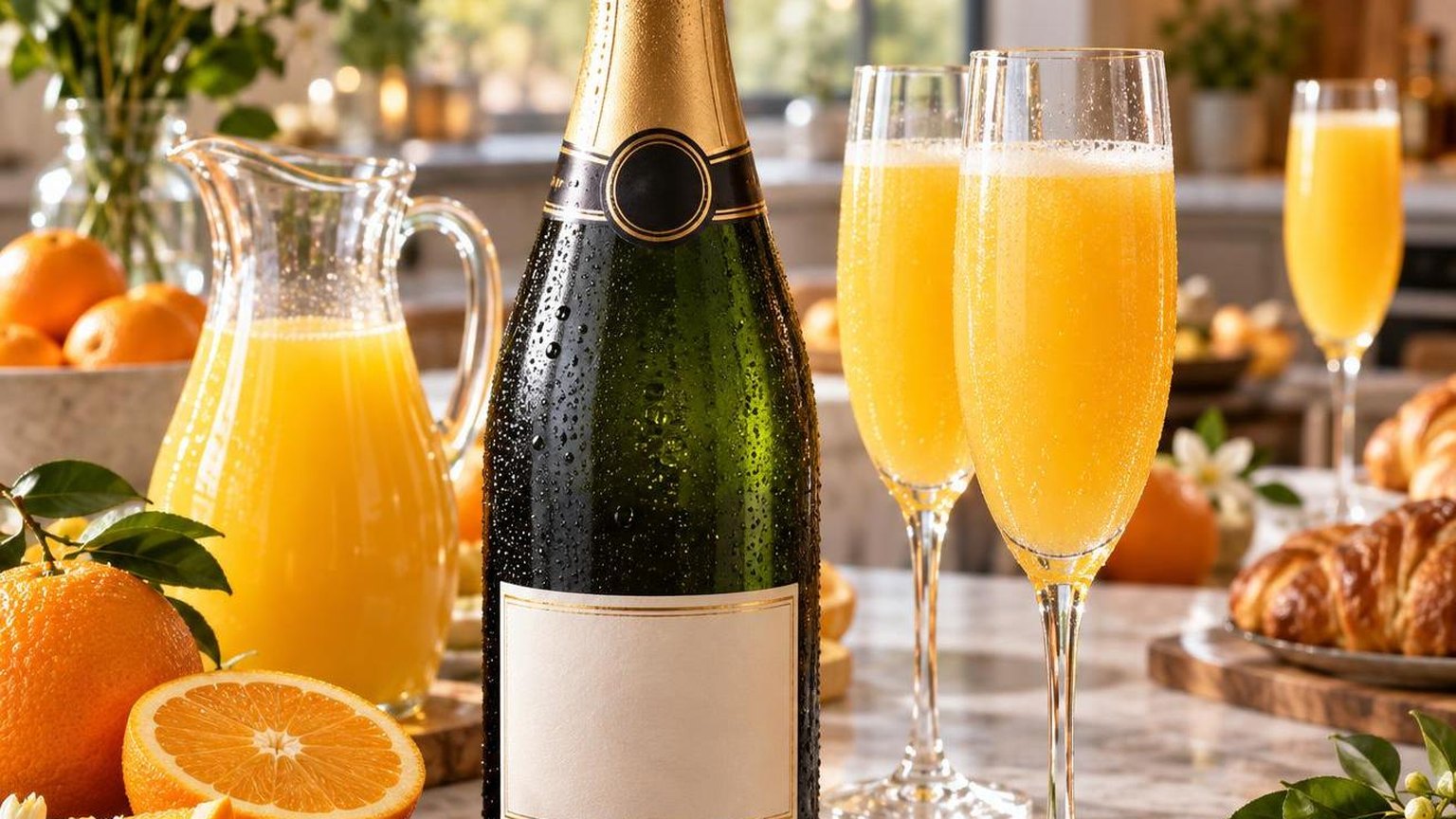
The ratio of orange juice to Champagne determines both flavor balance and how many mimosas you pour per bottle. A standard 750 mL bottle yields different glass counts depending on which ratio you follow.
The most widely used ratio is 1:1—equal parts orange juice and Champagne. This produces a balanced, approachable drink that most brunch guests prefer.
Common Mimosa Ratios Compared
| Ratio (OJ to Champagne) | OJ per Glass | Champagne per Glass | Glasses per 750 mL Bottle | Style |
| 1:3 | 1 oz | 3 oz | 8 | Champagne-forward, dry |
| 1:2 | 1.5 oz | 3 oz | 8 | Classic French proportion |
| 1:1 | 3 oz | 3 oz | 8 | American brunch standard |
| 2:1 | 4 oz | 2 oz | 12 | Juice-heavy, sweeter |
| 3:1 | 4.5 oz | 1.5 oz | 16 | Buck’s Fizz style |
At the 1:1 ratio, a single 750 mL bottle provides roughly 25.4 oz of Champagne—enough for eight 3-oz pours. You’ll need about 24 oz of orange juice to match.
The 2:1 juice-heavy ratio stretches one bottle to 12 servings. This approach works well for large groups where budget matters more than wine-forward flavor.
Why Juice Quality Changes Everything
Fresh-squeezed orange juice has a Brix value (sugar content) of 10–14°, while most store-bought varieties sit around 11–12° Brix. Higher sugar content means you can use less juice without losing sweetness.
- Fresh-squeezed: One medium navel orange yields approximately 2.5–3 oz of juice. You need 8–10 oranges for eight mimosas at a 1:1 ratio.
- Not-from-concentrate (refrigerated): Tropicana or Florida’s Natural offer consistent Brix levels and reliable acidity around 0.8–1.0% citric acid.
- From-concentrate: Higher acidity can clash with Brut Champagne’s existing tartness, making drinks taste sharp.
Pulp matters too. Heavy-pulp juice traps CO₂ bubbles and accelerates carbonation loss. Use pulp-free or lightly strained juice to preserve effervescence through the glass.
Temperature affects perception of sweetness. Serve orange juice at 38–40 °F (3–4 °C)—the same range as properly chilled Champagne. Warm juice dilutes the drinking experience and flattens bubbles on contact.
For the best balance of flavor, carbonation, and yield, the 1:1 ratio with pulp-free, not-from-concentrate juice at 38 °F remains the gold standard for home brunch service.
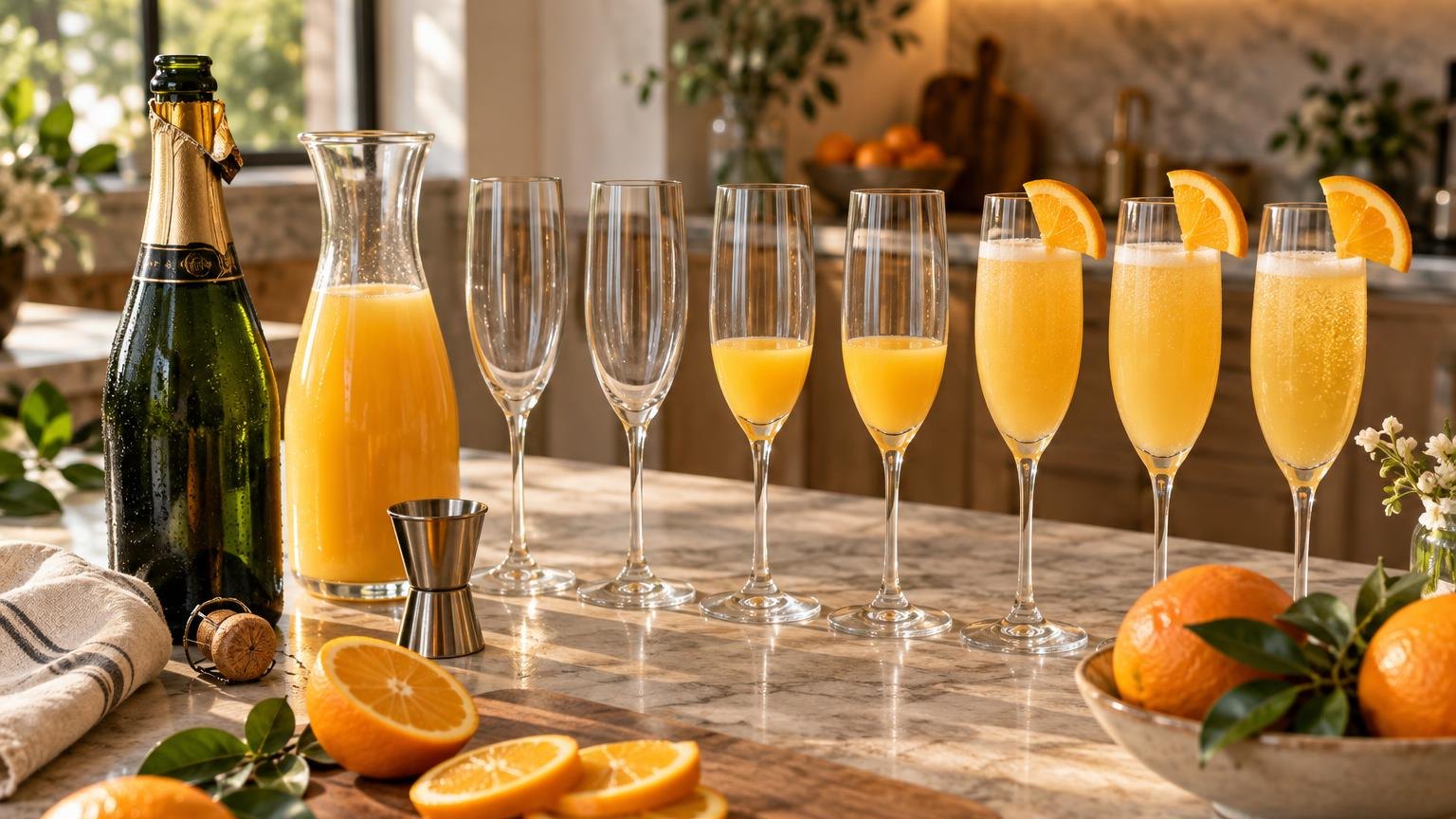
Brut Champagne Versus Sparkling Wine
Brut Champagne and sparkling wine both produce excellent mimosas, but they differ in origin, price, sugar content, and pressure—all factors that affect how many glasses you pour per bottle.
Understanding these differences helps you choose wisely for brunch service.
What Separates Champagne from Sparkling Wine
Champagne must come from the Champagne region of France and undergo méthode champenoise—secondary fermentation inside the bottle. All Champagne is sparkling wine, but not all sparkling wine qualifies as Champagne.
Sparkling wines like Cava (Spain), Prosecco (Italy), and American sparkling wine use different production methods. Prosecco typically uses the Charmat method, fermenting in large steel tanks rather than individual bottles.
Key Differences at a Glance
| Factor | Brut Champagne | Sparkling Wine (Prosecco/Cava) |
| Sugar (g/L) | 0–12 | 0–17 (Prosecco Extra Dry: 12–17) |
| Pressure (atm) | 5–6 | 2.5–3.5 (Prosecco); 3.5–5 (Cava) |
| Bottle Size | 750 mL | 750 mL |
| Price Range (US) | $35–$60+ | $8–$20 |
| Mimosas per Bottle | 6–8 | 6–8 |
| Carbonation Retention | Longer-lasting, finer bubbles | Larger bubbles, dissipates faster |
Which Works Better for Mimosas
Both yield 6 to 8 mimosas per standard 750 mL bottle using a 1:1 ratio with orange juice. The mimosa count stays identical because bottle volume is the same regardless of wine type.
Brut Champagne’s lower residual sugar (under 12 g/L) pairs better with sweet orange juice. The drier profile prevents an overly sugary cocktail, which matters when guests drink multiple rounds.
Prosecco’s slightly higher sugar content and softer carbonation make it taste rounder but less crisp.
For large-format brunch service, Prosecco or Cava at $8–$15 per bottle delivers significant savings—up to 75% less per bottle than entry-level Champagne.
Practical Recommendations
- Budget brunch (10+ guests): Choose Brut Cava or Prosecco at $9–$14 per bottle.
- Elevated occasion (under 6 guests): Use non-vintage Brut Champagne for finer bubbles and sharper acidity.
- Avoid sweet styles: Demi-sec (32–50 g/L sugar) overwhelms mimosas with excessive sweetness.
- Serve cold: Chill to 38–45°F (3–7°C) to preserve carbonation and maximize pour count.
Planning Mimosas for a Crowd
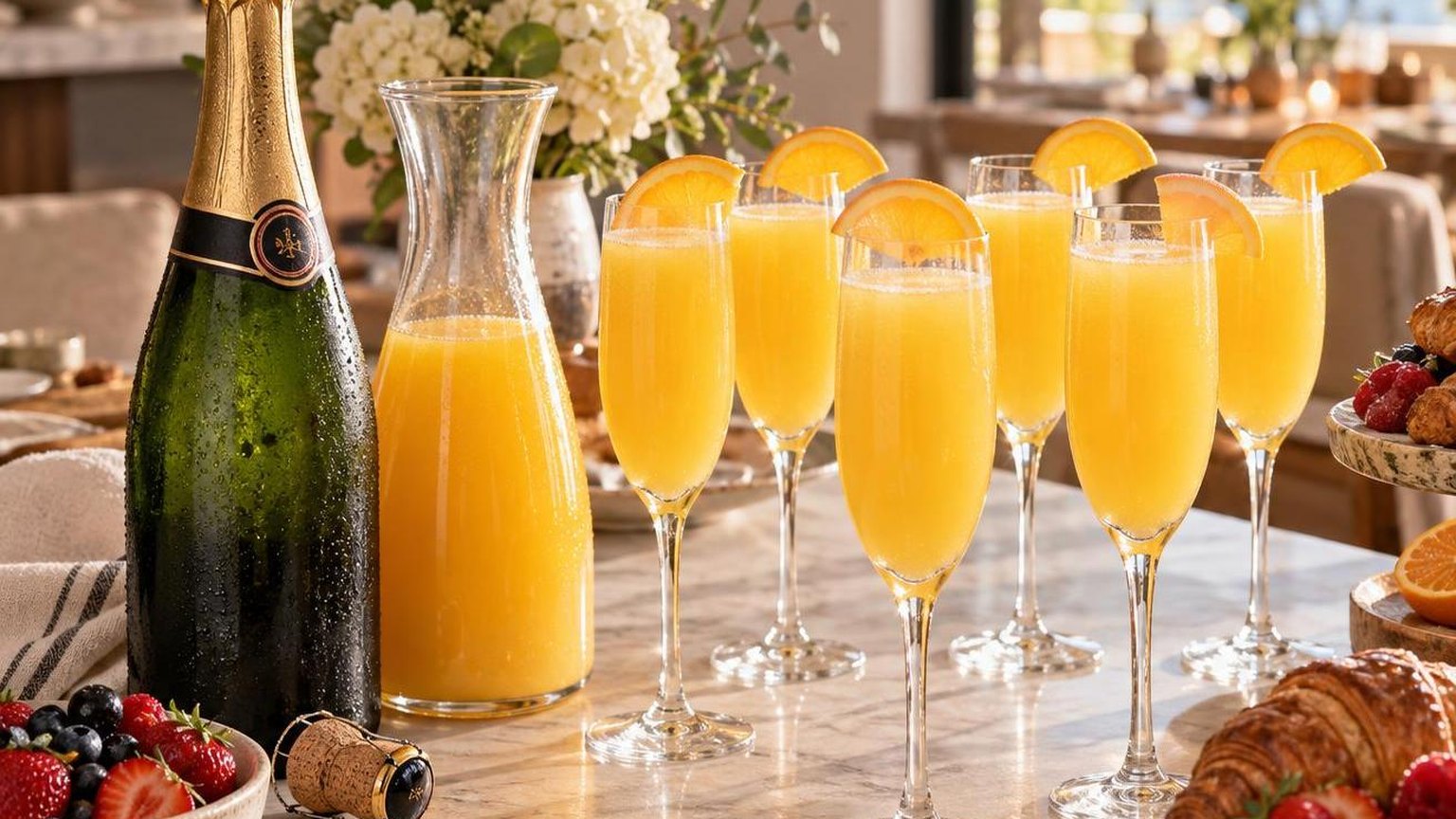
Scaling mimosas from a casual breakfast duo to a full brunch party requires precise math on bottles, juice, and glassware. Getting the ratios right prevents mid-event runs to the store and keeps costs predictable.
Bottle-to-Guest Calculator
A standard 750 ml bottle of Champagne yields approximately 6 mimosas using a classic 1:1 ratio with orange juice. Each serving uses roughly 4 oz (120 ml) of sparkling wine in a 6–8 oz flute.
| Number of Guests | Mimosas per Guest | Total Mimosas | Bottles Needed | OJ Needed (oz) |
| 10 | 2 | 20 | 4 | 80 |
| 15 | 2 | 30 | 5 | 120 |
| 25 | 2 | 50 | 9 | 200 |
| 40 | 2 | 80 | 14 | 320 |
| 50 | 3 | 150 | 25 | 600 |
These estimates assume 4 oz of Champagne and 4 oz of orange juice per drink. Adjust upward by 10–15% for enthusiastic crowds or events lasting longer than 2 hours.
Choosing the Right Format
Magnums (1.5 L) hold the equivalent of two standard bottles and yield roughly 12 mimosas each. They reduce per-serving cost by approximately 15–20% compared to buying individual 750 ml bottles at most retailers.
For groups of 30 or more, buying by the case (12 bottles) is the most economical approach. A single case produces around 72 mimosas — enough for 36 guests at two drinks each.
Practical Tips for Large Groups
- Budget 1 bottle per 3 guests for a 90-minute brunch with two rounds per person.
- Buy 64 oz cartons of not-from-concentrate orange juice — each carton covers about 16 mimosas.
- Chill bottles to 40–45 °F (4–7 °C) at least 3 hours before serving to maintain carbonation and slow overflow.
- Pre-pour juice into pitchers measured at 4 oz per serving so guests can self-serve without over-pouring.
- Keep 2 backup bottles for every 20 guests to cover unexpected extra pours.
Cost Breakdown per Guest
Using a $10 bottle of brut and a $5 carton of juice, each mimosa costs roughly $1.67 in ingredients.
At two drinks per guest, expect to spend $3.30–$3.50 per person — far below the $12–$16 per mimosa charged at most brunch restaurants.
Accurate planning eliminates waste. Track your actual pour sizes during one event, then refine your per-bottle yield for future gatherings based on real consumption data.
Leftover Champagne After Mimosa Service
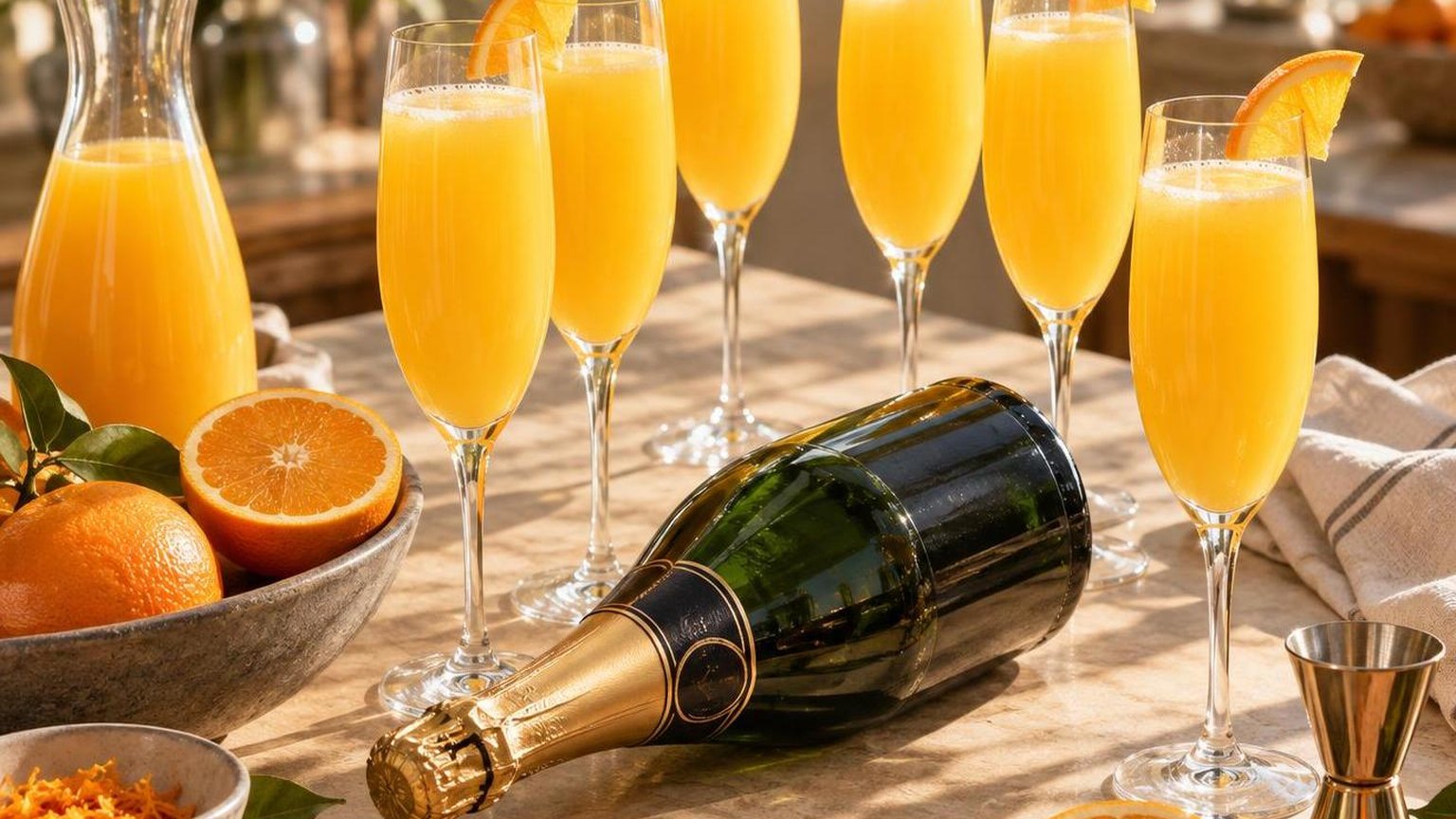
A standard 750 ml bottle yields roughly six 4-oz mimosa pours. If you serve fewer guests or switch ratios mid-brunch, leftover Champagne is inevitable. Proper handling preserves both bubbles and flavor for 24–48 hours.
How Much Typically Remains
Leftover volume depends on your pour ratio and guest count. The table below shows what remains from a single 750 ml bottle at common serving scenarios.
| Mimosas Served | Champagne Used (oz) | Champagne Remaining (oz) | Champagne Remaining (ml) |
| 2 | 8 | 17.4 | ~515 |
| 3 | 12 | 13.4 | ~396 |
| 4 | 16 | 9.4 | ~278 |
| 5 | 20 | 5.4 | ~160 |
| 6 | 24 | 1.4 | ~41 |
These figures assume a standard 4-oz Champagne pour per mimosa using a classic 1:1 ratio with orange juice.
Storing Leftover Champagne
Opened sparkling wine loses approximately 1 atmosphere of pressure per hour at room temperature. A sealed bottle holds around 5–6 atmospheres (roughly 70–90 psi). Refrigeration slows CO₂ escape significantly.
- Hermetic sparkling wine stopper: Maintains carbonation for 24–48 hours when refrigerated at 40–45 °F. Standard cork or plastic wrap does not create a sufficient seal.
- Stainless steel spoon trick: A dangling spoon in the bottle neck is a persistent myth. Controlled tests by Stanford chemist Richard Zare found no measurable difference in CO₂ retention versus an open bottle.
- Transfer to a smaller container: Pouring leftover Champagne into a 375 ml half-bottle with a screw cap reduces headspace and preserves effervescence for up to 36 hours refrigerated.
Using Leftover Flat Champagne
Champagne that has lost its fizz still retains its acidity (pH 3.0–3.2) and fruit character. It works well in cooking applications.
- Pan sauces: Deglaze with 3–4 oz of flat Champagne for chicken or seafood dishes.
- Vinaigrette: Substitute flat Champagne 1:1 for white wine vinegar in salad dressings.
- Poaching liquid: Combine equal parts flat Champagne and water for poaching pears or shrimp.
- Champagne vinegar: Add a vinegar mother to flat Champagne in a wide-mouth jar. Fermentation takes 2–4 weeks at room temperature.
Discard any leftover Champagne that has sat unrefrigerated for more than 4 hours. Residual sugar (6–12 g/L in Brut) can support microbial growth at warm temperatures.
Frequently Asked Questions
How many mimosas can you make from one standard bottle of Champagne?
A standard 750 ml bottle of Champagne yields 6 to 8 mimosas when using the classic 1:1 ratio of Champagne to orange juice.
Each mimosa gets roughly 90–125 ml (3–4 oz) of Champagne, poured into a standard 6 oz flute and topped with an equal measure of juice.
Does the Champagne-to-orange-juice ratio change the number of servings?
Yes. A “Champagne-heavy” 2:1 ratio cuts your yield to about 4–5 drinks per bottle, while a “juice-heavy” 1:2 ratio stretches it to 10–12 servings.
Most brunch menus pour 1:1, which balances flavor and effervescence while keeping the alcohol content around 6–8% ABV per glass.
How much orange juice do you need per bottle of Champagne for mimosas?
At a 1:1 ratio you need 750 ml (roughly 25.4 oz) of orange juice per bottle—about three cups. A 52 oz carton of fresh-squeezed OJ covers two full bottles of Champagne with juice to spare.
How many bottles of Champagne should I buy for a brunch of 20 guests?
Plan on each guest drinking 2–3 mimosas over a 2-hour brunch. At 7 servings per bottle, 20 guests × 2.5 drinks = 50 mimosas, so you need roughly 7–8 bottles. Buying 8 bottles gives a small buffer for refills and spillage.
Can I use a magnum bottle to make more mimosas at once?
A magnum holds 1.5 liters—exactly double a standard bottle—yielding 12 to 16 mimosas at a 1:1 ratio.
Magnums also retain carbonation longer once opened because the larger volume-to-surface-area ratio slows CO₂ loss, keeping your last pour as bubbly as your first.
Does using Prosecco or Cava instead of Champagne change the serving count?
No. Prosecco and Cava come in the same 750 ml bottles, so the math stays identical at 6–8 drinks per bottle.
The practical difference is cost: Prosecco averages $10–$15 and Cava $8–$12, compared with $35–$50 for entry-level Champagne, making them popular choices for large-batch mimosas.
What glass size gives the most accurate mimosa pour?
A standard 6 oz (180 ml) Champagne flute filled to about three-quarters full delivers the ideal 4.5 oz mimosa—2.25 oz Champagne plus 2.25 oz juice.
Using larger 8–10 oz wine glasses tempts over-pouring and can cut your bottle yield down to just 4–5 servings.
Related Guides
- 11 Essential Facts About How Much Alcohol Is In Champagne (2026 ABV Guide, Serving Strength, Effects & Real Tasting Experience)
- Dom Perignon Vs Cristal: The Easiest Way to Distinguish
- How Many Calories in a Bottle of Champagne? The Eye-Opening Truth You Must Know Before Your Next Celebration
- How Long Does Unopened Champagne Last? 9 Surprising Truths You Need to Know
- How Many Oz In A Bottle Of Champagne? The Complete, Real-World Guide (With Sizes, Uses & Serving Math)
- How To Box Chocolate Covered Strawberries And Champagne? The Ultimate Elegant Gift Guide (Step-by-Step Tutorial)
- How To Bottle Champagne Cork? – A Practical, Step-by-Step Guide From Real Experience
- How To Bottle Elderflower Champagne? — A Complete Professional Guide to Safe Bottling, Fermentation Control, and Long-Term Storage
- Cava Vs Champagne: The Easiest Way to Distinguish
- All Alcohol Guides
- National Institute on Alcohol Abuse and Alcoholism (2023)
- U.S. Dietary Guidelines for Americans – USDA & HHS (2020)
- USDA FoodData Central – Orange Juice, Raw (2024)
- Centers for Disease Control and Prevention – Alcohol and Public Health (2024)
- Cornell University – Wine Chemistry and Biochemistry (2023)
- TTB – Alcohol and Tobacco Tax and Trade Bureau, Standard of Identity for Champagne (2024)
- Comité Champagne – Economics of the Champagne Region (2024)
- University of California Davis – Viticulture and Enology (2023)
- National Institutes of Health – PubMed, Polyphenol Content of Sparkling Wines (2019)