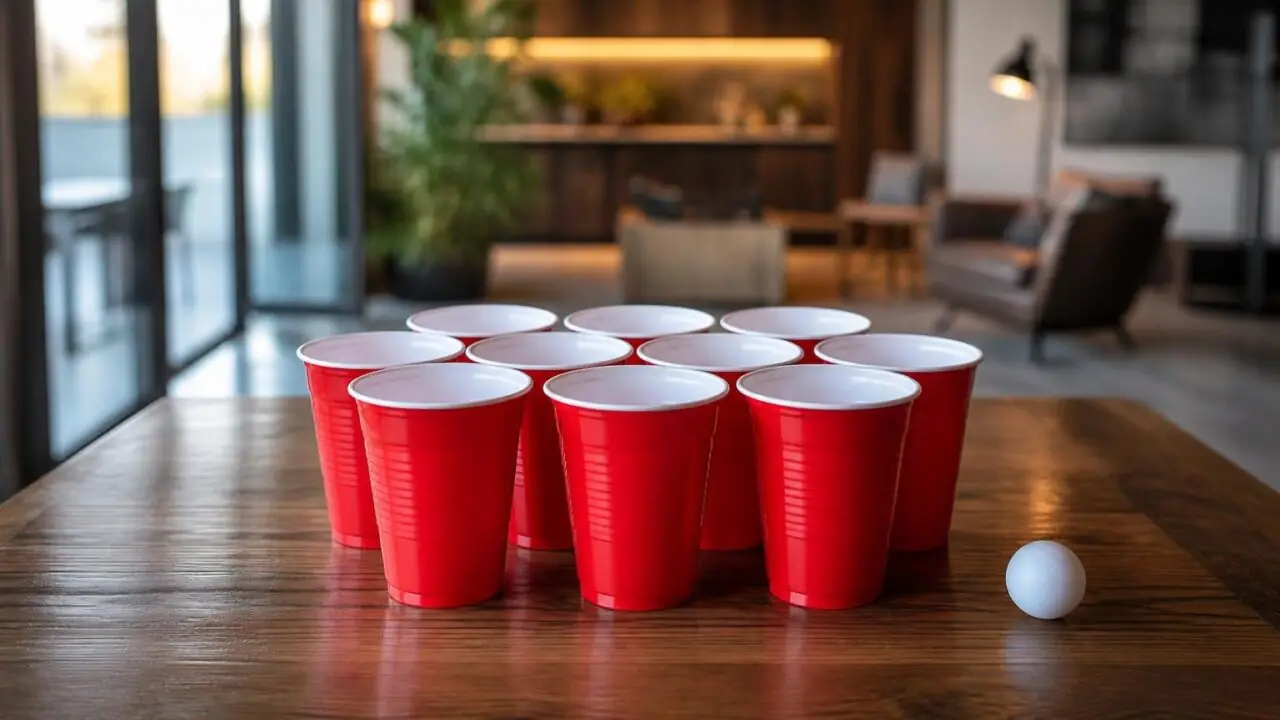
beer game often played with red solo cups is beer pong, a party game where players toss ping-pong balls into triangle-arranged cups on a table.
The standard setup uses two teams, ten cups per side, and house rules for drinking, reracks, rebounds, and redemption shots.
This article explains how the game works, what equipment you need, common rule variations, and why red Solo-style cups became the default. It also covers etiquette, safety, and hosting tips for keeping the game social rather than messy.
Expect practical details: table length, cup layout, ball-cleaning habits, scoring flow, and the difference between casual backyard rules and organized tournament formats.
Beer Pong Cup Setup Basics
Beer pong usually starts with two matching racks of cups at opposite ends of a table. A consistent setup matters because cup count, spacing, and table length directly affect shot difficulty, bounce angles, and how long each game lasts.
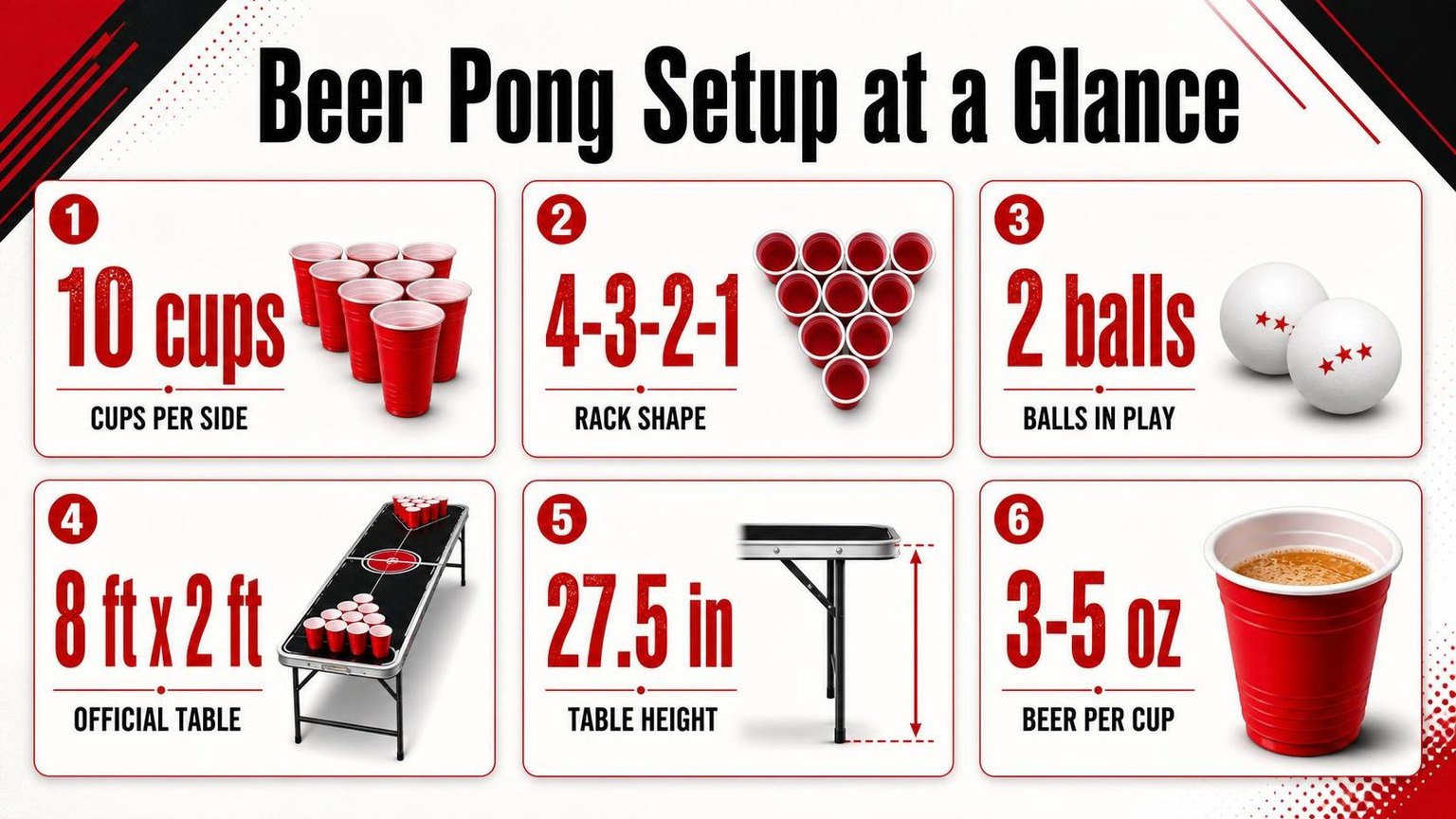
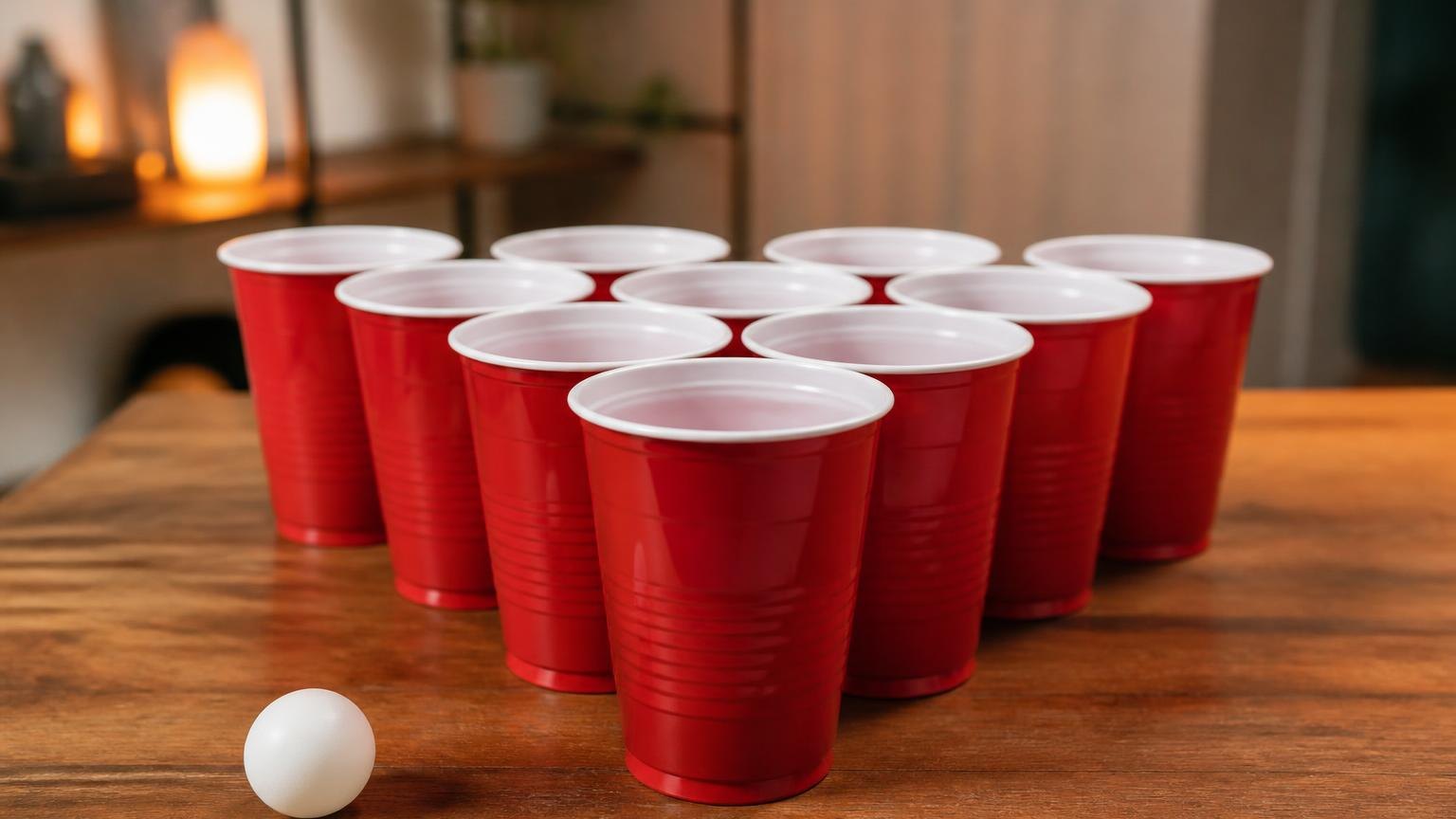
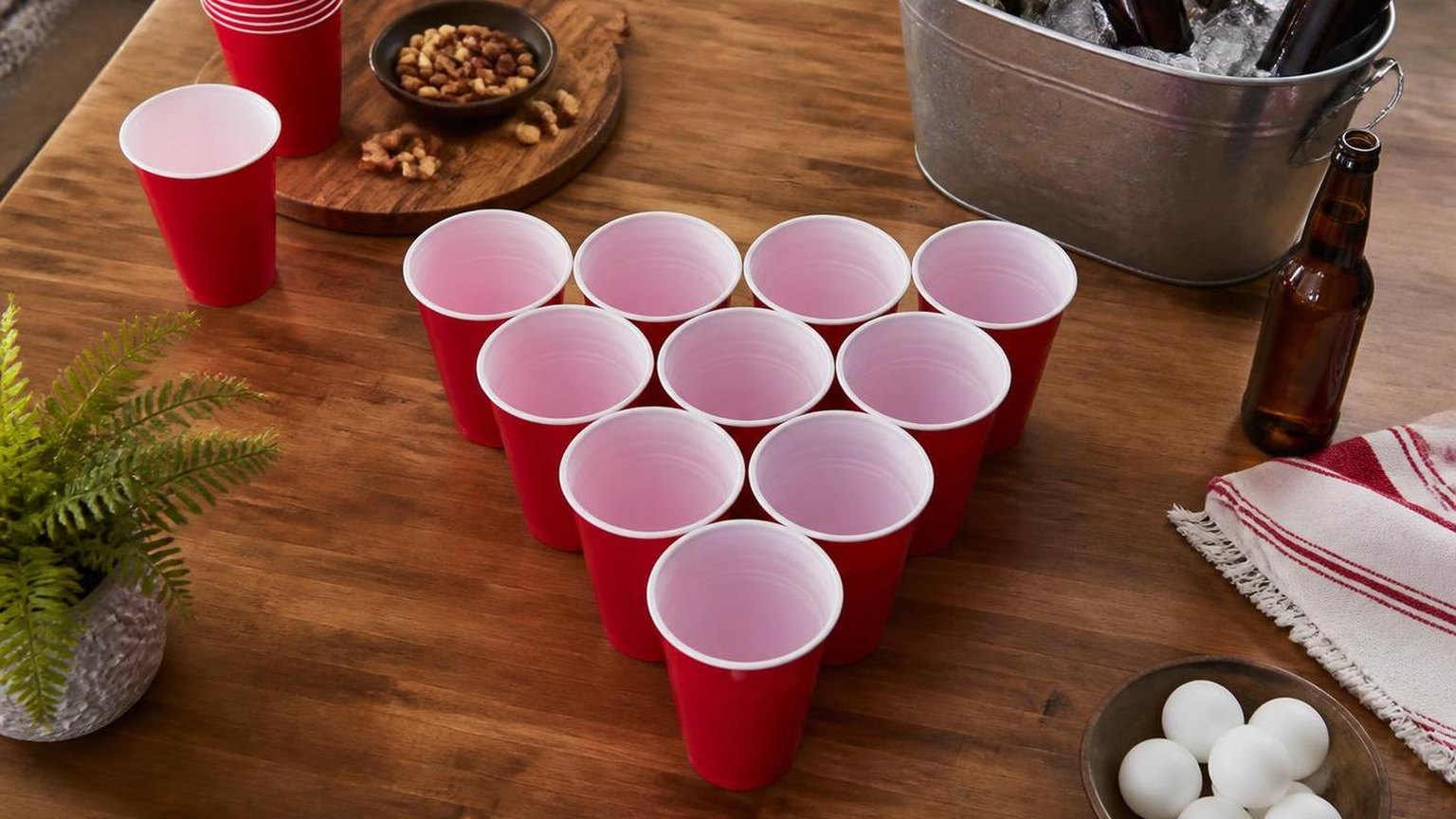
The standard rack uses 10 cups per team arranged in a tight triangle. The back row has four cups, then three, then two, then one front cup aimed toward the center of the table.
Standard cup arrangement
Most casual and tournament-style games use the same basic geometry. Keeping the cups touching creates a clean target shape and prevents players from widening or narrowing the rack for an advantage.
| Setup element | Common standard |
| Cups per side | 10 |
| Triangle rows | 4-3-2-1 |
| Total cups on table | 20 |
| Balls in play | 2 ping pong balls |
Table size and rack placement
Official beer pong tables are commonly 8 feet long, 24 inches wide, and about 27.5 inches high. In homes, many players use a 6-foot folding table, which shortens shot distance and makes scoring easier.
| Table type | Length | Width | Typical effect |
| Official-style table | 96 in | 24 in | Longer shots, harder game |
| Common home table | 72 in | 30 in | Shorter shots, easier game |
The front cup usually sits a few inches from the table edge, with the triangle centered widthwise. Both sides should mirror each other exactly. Symmetry removes arguments and keeps rebounding shots predictable.
How much liquid goes in each cup
Red Solo cups are often 16-ounce or 18-ounce sizes, but they are not filled anywhere near the top for play. Most games use about 3 to 5 ounces of beer per cup to reduce waste and prevent spills.
| Cup size | Typical fill for play | Reason |
| 16 oz | 3-4 oz | Lower spill risk |
| 18 oz | 4-5 oz | Easy visibility and balance |
Water cups and reset basics
Each team should keep one separate water cup for rinsing balls. That cup is not part of the rack. Clean balls matter because ping pong balls often hit floors, shoes, and table edges during normal play.
- Use identical cups on both sides.
- Keep all cups touching unless house rules allow gaps.
- Center each rack at the same distance from the edge.
- Replace dented cups because warped rims change bounce and entry.
Official Beer Pong Table Dimensions
The standard beer pong table used in most tournaments and house rules is an 8-foot by 2-foot table. That size gives enough length for normal arc, bounce shots, and a stable cup rack without forcing players too close together.
Most players also expect a table height close to a standard banquet table. Height matters because release angle, bounce speed, and cup spacing change when the surface sits too high or too low.
| Measurement | Regulation Size | Metric Equivalent |
| Length | 96 inches | 243.8 cm |
| Width | 24 inches | 61.0 cm |
| Height | 27.5 inches | 69.9 cm |
| Playing ends | 2 equal sides | 48 inches per half |
An 8′ x 2′ x 27.5″ layout is the size most often sold as a “beer pong table.” It also matches the format used by many organized events because it creates predictable shooting distance from end to end.
The table should be rectangular and flat. A warped top changes roll, spill risk, and bounce behavior. Folding tables work, but purpose-built tops usually hold up better because they resist sagging at the center seam.
| Feature | Common Regulation Expectation |
| Table shape | Rectangle |
| Surface | Smooth, rigid, and level |
| Edge clearance | Enough room for a full rack at each end |
| Symmetry | Both ends set the same distance from the edge |
Cup setup is not part of the table itself, but the dimensions are designed around the standard triangle rack. Most games use 10 cups per side, arranged in a tight triangle centered on each end.
| Cup Rack Standard | Typical Setup |
| Cups per side | 10 |
| Front row | 1 cup |
| Second row | 2 cups |
| Third row | 3 cups |
| Back row | 4 cups |
If space is tight, people often use shorter tables. Those are playable, but they are not official. A shorter surface makes shots easier and changes defense, especially when players can reach rebounds faster.
| Table Type | Length | Width | Official for Beer Pong |
| Regulation beer pong table | 96 inches | 24 inches | Yes |
| Common folding banquet table | 72 inches | 30 inches | No |
| Compact house table | 72 inches | 24 inches | No |
For an “official” setup, use the regulation size, keep the top level, and center each rack evenly. That gives the most consistent play and matches what experienced beer pong players expect.
Rules Players Commonly Use
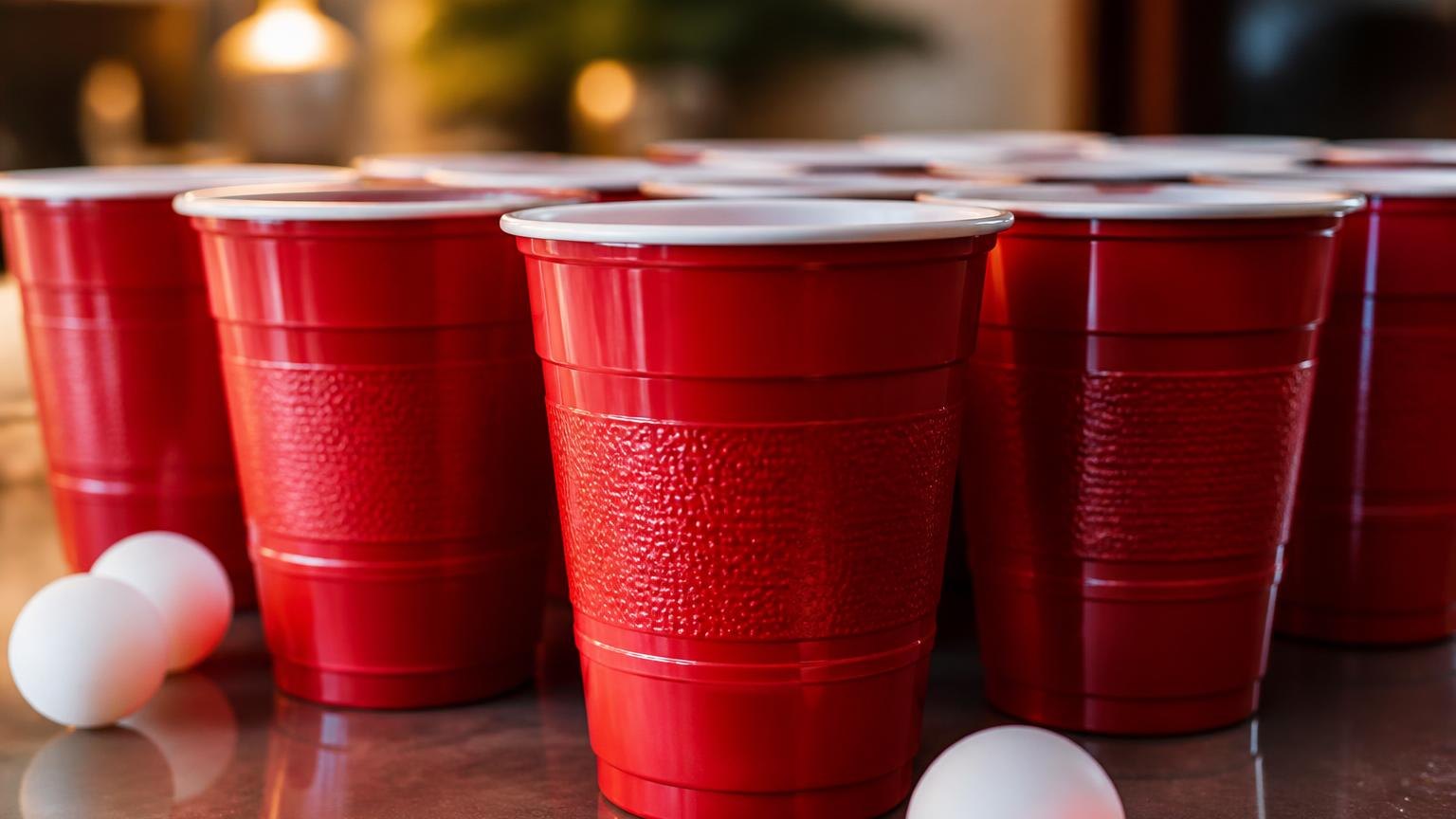
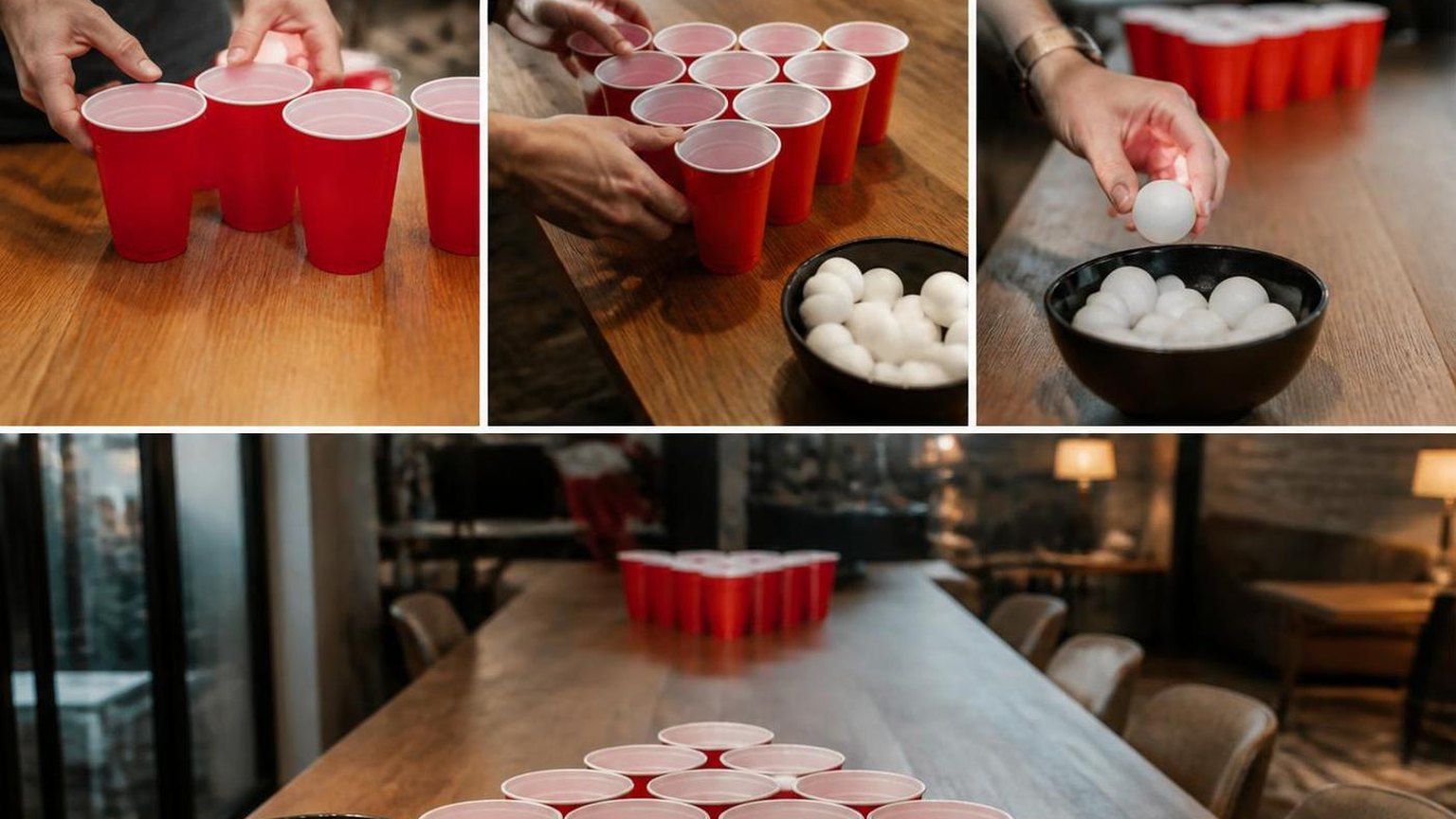
Most players mean beer pong when they describe a beer game with red Solo cups. House rules vary, but the core format stays consistent: two teams, a rack of cups at each end, and alternating shots with a ping-pong ball.
A standard setup uses a long table, usually 8 feet, 6 feet, or 96 inches by 24 inches in folding-table terms. Each side arranges cups in a triangle, then tries to land the ball in the other team’s cups to force drinks and remove targets.
The most common cup counts and table sizes appear below.
| Common format | Cups per side | Typical table length |
| Standard house game | 10 | 8 feet |
| Compact setup | 6 | 6 feet |
| Tournament-style variation | 10 | 8 feet |
Teams usually have 1 or 2 players per side. In doubles, each player shoots 1 ball per turn, so a team gets 2 shots before play passes. In singles, one player often shoots 2 balls.
When a ball lands in a cup, the defending team drinks that cup’s contents and removes it from play. Many groups fill each cup with about 2 to 4 ounces of beer, which keeps a 10-cup rack closer to 20 to 40 ounces total instead of 120 ounces.
- Elbows must stay behind the table edge during the shot.
- Balls thrown directly in count as 1 cup in most games.
- Balls bounced into cups often count as 2 cups, but defenders may swat bounce shots away.
- If both teammates make both balls in the same turn, many house rules allow a “re-rack” or an extra shooting chance.
Re-racks are common because late-game clusters get awkward. Many groups allow 1 or 2 re-racks per game, usually at 6, 3, or 2 cups remaining, with shapes like a triangle, line, or diamond.
| Common re-rack point | Typical shape |
| 6 cups | Triangle |
| 3 cups | Triangle or straight line |
| 2 cups | Line |
Most games end when one side clears all cups. A common finishing rule gives the losing team a rebuttal, meaning one final chance to hit remaining shots and force overtime instead of an immediate loss.
Safer Drinking Game Alternatives
Traditional cup-based drinking games can push fast alcohol intake because rounds move quickly and peer pressure is built into the rules.
Safer alternatives slow the pace, reduce total volume, and make it easier for players to track how much they drink.
In the U.S., one standard drink equals 12 ounces of 5% beer, 5 ounces of 12% wine, or 1.5 ounces of 40% spirits. Games that cap rounds, use low- or no-alcohol drinks, and require water breaks cut risk without killing the social part.
Best lower-risk swaps
Choose formats where the challenge is trivia, aim, or teamwork rather than punishment drinking. The key rule is simple: no one drinks because they lost a turn; they drink only if they already planned to.
- Water Pong: Keep the familiar cup setup, but fill cups with water only. Players drink from their own separate beverage, so shared cups never become a sanitation issue.
- Sip-Cap Trivia: Limit alcohol to one sip for a correct or incorrect answer, with a hard cap of one standard drink per 30 minutes.
- Team Mario Kart or Smash Bros.: Losers switch seats or do a non-drinking penalty such as 10 jumping jacks, song choice, or snack duty.
- Mocktail Challenge: Score creativity, presentation, and taste. This keeps the ritual of mixing and competing without relying on intoxication.
How the alternatives compare
| Game format | Typical alcohol exposure | Why it is safer |
| Standard beer pong | Often multiple 12-ounce beers in under 60 minutes | Fast pace and unclear counting make overdrinking easier |
| Water Pong | 0 drinks required by the game | Keeps skill play, removes punishment drinking |
| Sip-Cap Trivia | 1 standard drink every 30 minutes maximum | Creates a measurable pace and easier self-monitoring |
| Mocktail Challenge | 0 to 1 drink total | Competition is based on flavor and presentation, not volume |
Rules that make any game safer
Set limits before the first round. The 2020-2025 Dietary Guidelines for Americans define moderate drinking as up to 2 drinks per day for men and 1 for women, though less is safer for many adults.
- Serve 8 ounces of water between rounds.
- Use a 30-minute timer before any second standard drink.
- Offer food early; protein and fat slow alcohol absorption.
- Ban chugging, shots, and mixed penalties.
- Stop play for anyone who is dizzy, vomiting, or slurring speech.
- Plan a sober ride or rideshare before opening anything.
If the goal is competition, keep the cups and ditch the forced drinking. That preserves the party energy while lowering the chance of intoxication, dehydration, and preventable injuries.
Red Solo Cup Cleanup Tips
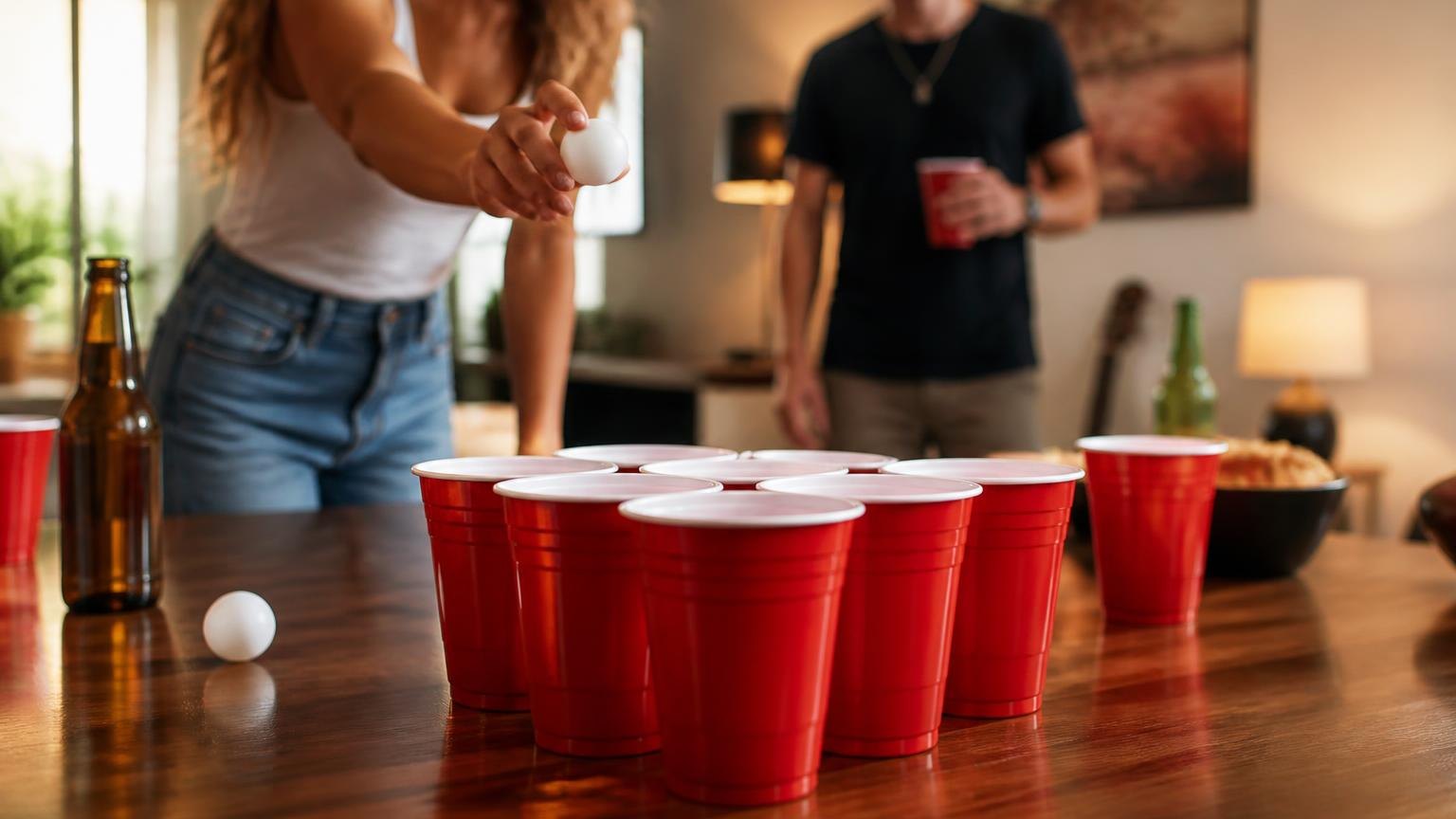
Clean beer-game cups fast. Beer, soda, and rinse water leave sugar, yeast residue, and odors that get harder to remove after they dry. A 10-minute reset right after the last round prevents sticky floors, fruit flies, and leaking trash bags.
Start by stopping the spread. Pick up full and half-full cups first, then wipe the table edge, chairs, and floor around the play area. Liquid on smooth floors raises slip risk, especially on tile, sealed concrete, and hardwood.
| Cleanup supply | Good target for one table | Why it helps |
| Trash bags | 2 bags | One for cups and paper, one backup if the first gets wet or tears |
| Paper towels | 20-30 sheets | Enough for cup drips, table wipe-down, and floor spots |
| Microfiber cloths | 2 cloths | One damp for residue, one dry for a final pass |
| Ping pong ball container | 1 small bin | Keeps balls off dirty floors and away from trash |
Do not crush cups while they still contain liquid. Empty them into a sink or toilet first, then bag them. Crushed cups trap beer, leak through seams, and make a trash bag much heavier than loose empty cups.
Sort materials before the final wipe. Disposable “red Solo” style cups are commonly plastic, but resin type varies by manufacturer and product line. Some are polystyrene and some are polypropylene.
Local recycling programs often reject cups contaminated with food or liquid.
- Check the recycling symbol on the cup base before sorting.
- If cups are sticky, wet, or mixed with lime wedges and napkins, treat them as trash.
- Keep ping pong balls separate if you plan to wash and reuse them.
For tables, use warm water with dish soap first. Follow with a disinfecting product only if the label allows the surface type. Painted wood and some laminates can haze or swell if they stay wet too long, so dry them immediately.
| Surface | Best first step | Avoid |
| Plastic folding table | Soap and warm water | Abrasive pads that dull the finish |
| Wood table | Lightly damp cloth, then dry cloth | Pooled water left more than a few minutes |
| Floor under table | Blot spills, then mop spot | Walking through wet beer and spreading it farther |
Finish by taking trash out the same night. Beer residue ferments and smells stronger by the next day, especially indoors or in warm weather. Open a window for 15 to 30 minutes, and the room will clear faster.
Questions People Ask Most
What is the beer game often played with red solo cups?
The game is usually beer pong, also called cup pong. Two players or two teams throw ping pong balls across a table and try to land them in the other side’s cups, which are commonly arranged in a triangle of 6 or 10 cups.
Why are red solo cups associated with beer pong?
Red plastic party cups became the visual standard because they are cheap, uniform, stack easily, and are widely sold in the US. Their common 16-ounce size also makes spacing and cup formations consistent from one game to the next.
How is beer pong typically set up?
A standard setup uses a table about 8 feet long, with cups placed at each end in a tight rack and partially filled with beer or water. Each side usually gets 2 ping pong balls per turn, and a made shot means the opposing team removes that cup.
Are players supposed to drink from the same cups the ball lands in?
Many casual games do that, but it is not the most sanitary option because the ball often touches floors, hands, and other surfaces before entering a cup.
A common safer practice is to use water in the playing cups and keep separate drinks for actual consumption.
Is beer pong an official sport or only a party game?
Beer pong is primarily a social drinking game, not a regulated sport in the way tennis or table tennis is. Some organized tournaments exist with standardized house rules, but rules still vary widely on rebounds, reracks, elbow limits, and overtime.
What size red Solo cup is standard for beer pong?
The 16-ounce red Solo cup is the standard size used in beer pong.
Manufactured by Dart Container Corporation since the 1970s, these cups feature molded fill lines at 1 ounce, 5 ounces, and 12 ounces, with players typically filling to the lowest line to reduce waste during gameplay.
Can beer pong be played with non-alcoholic beverages?
Many players substitute water, soda, or juice in the cups, particularly at college-sanctioned events where alcohol is prohibited.
The World Series of Beer Pong, held annually in Las Vegas since 2006, uses water in the game cups and allows participants to drink separately at their own discretion.
Related Reading
- Does Beer Have Caffeine? Basic Information You Must Know
- How Many Carbs In Coors Light? Answer From Expert
- Alcohol Percentage in Beer by State Laws
- How Many Beers In A Mini Keg?
- Where Is Sagres Beer Made? Brewery, History & Tasting Guide
- How Much Alcohol is in Dos Equis? Alcohol in Dos Equis
- How To Chug Beer? A Real-World, No-Nonsense Guide for Beginners and Party Veterans
- All Alcohol Guides
- National Institute on Alcohol Abuse and Alcoholism (2024)
- Centers for Disease Control and Prevention (2024)
- National Institute on Alcohol Abuse and Alcoholism (2024)
- U.S. Department of Health and Human Services (2025)
- Drinking games in the college environment: a review (2003)
- Association of drinking game participation with high-risk drinking and alcohol-related problems: a meta-analysis (2014)
- Merriam-Webster Dictionary (2024)