How Long Does Red Bull Energy Last? — 3–5 hours for most adults, with peak alertness often felt within 30–60 minutes after drinking it.
The exact duration depends on body size, tolerance, food intake, sleep debt, and how quickly your body processes stimulants.
A standard 8.4 fl oz can contains 110 calories and 27 g of sugars, so the “lift” can feel like sharper focus, faster reaction time, or reduced tiredness.
Some people notice a drop-off after 2–3 hours, especially if they drank it on an empty stomach.
This guide breaks down the usual timeline, why effects vary, when a crash may happen, and practical limits to reduce jitters, sleep disruption, and overuse.
Red Bull Onset and Peak Window
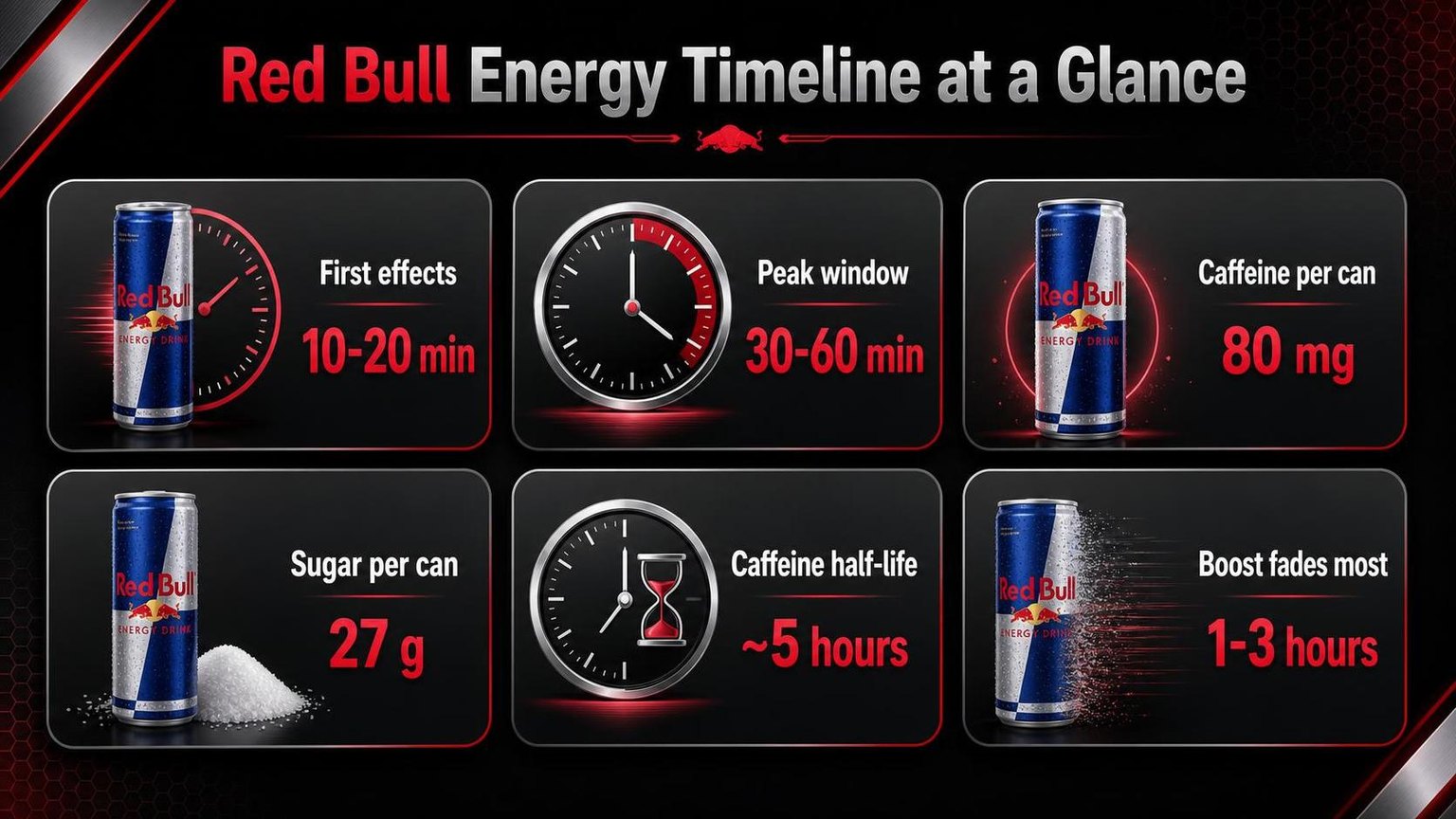
Red Bull does not hit instantly. Most people feel the first noticeable lift within 10 to 20 minutes, then the stimulant effect strengthens as caffeine moves from the stomach and small intestine into the bloodstream.
The strongest phase usually arrives within the first hour.
A standard 8.4-ounce can of Red Bull contains 80 milligrams of caffeine. That is close to the caffeine in a small cup of coffee, and it is the main driver of the “energy” effect people notice.
Caffeine is absorbed quickly. Blood levels begin rising soon after drinking, and many studies place peak caffeine concentration around 30 to 60 minutes after intake, especially when consumed on an empty stomach.
Food changes the timeline. Drinking Red Bull with a meal can slow stomach emptying and delay how fast caffeine reaches the bloodstream. The effect may feel smoother, but the peak often comes later.
| Stage | Typical timing after one 8.4-oz Red Bull | What people often notice |
| Initial onset | 10-20 minutes | Mild alertness, less fatigue, slight mental lift |
| Rising phase | 20-40 minutes | Clearer focus, faster reaction, more wakefulness |
| Peak window | 30-60 minutes | Strongest perceived boost in energy and concentration |
| Early decline | 60-180 minutes | Effect remains, but intensity starts tapering |
Red Bull also contains sugar in the original formula, about 27 grams per 8.4-ounce can. Sugar can contribute to a faster perceived lift, but it does not replace caffeine’s pharmacologic effect on alertness.
Sugar-free Red Bull can still produce a similar caffeine peak. The difference is that it removes the calorie and blood-glucose component, so the subjective “rush” may feel less dramatic for some people.
Body size, caffeine tolerance, medications, smoking status, and liver metabolism all affect onset. Frequent caffeine users often report a weaker peak because tolerance reduces the noticeable stimulant response at the same dose.
- Expect first effects in roughly 10 to 20 minutes.
- Expect the strongest window around 30 to 60 minutes.
- Expect a later or softer peak if you drink it with food.
- Expect a less obvious boost if you use caffeine daily.
For most healthy adults, the practical takeaway is simple. Red Bull usually starts working fast, reaches its clearest peak within an hour, then begins a gradual decline rather than shutting off all at once.
How Long Caffeine Stays Active
Caffeine from Red Bull starts working fast, but it does not leave the body fast. In most healthy adults, blood levels peak within 30 to 60 minutes, and the average half-life is about 5 hours.
That means the stimulant effect often lasts several hours after the drink feels “used up.”.
A standard 8.4-ounce can of Red Bull contains 80 milligrams of caffeine, according to the product label. Larger cans contain more, so the active window can feel longer because the starting dose is higher.
The key number is half-life. A 5-hour half-life means your body has cleared about half the caffeine after 5 hours, not all of it. Even 10 to 12 hours later, a meaningful amount can still be circulating.
| Time after drinking | Approximate caffeine remaining from 80 mg |
| 1 hour | Near peak blood level; most of the 80 mg is still active |
| 5 hours | About 40 mg |
| 10 hours | About 20 mg |
| 15 hours | About 10 mg |
That does not mean you will feel fully stimulated for 15 hours. The noticeable boost usually feels strongest during the first 1 to 3 hours, then fades as blood levels decline.
Sleep disruption, though, can last much longer than the obvious “energy” feeling.
Several factors change how long caffeine stays active. Smoking speeds caffeine clearance. Pregnancy slows it substantially. Some medications, including certain antidepressants and oral contraceptives, can also extend caffeine’s half-life.
- Healthy adults: average half-life about 5 hours
- Pregnancy: half-life can rise to 8 to 16 hours, especially later in pregnancy
- Newborns: caffeine clearance is much slower than in adults
- Liver function, body size, and genetics also affect clearance speed
The FDA cites up to 400 milligrams of caffeine per day as an amount not generally associated with dangerous negative effects in most healthy adults. That limit is not a timing rule.
An afternoon Red Bull can still leave enough caffeine in your system at bedtime to reduce sleep quality.
For most people, Red Bull’s caffeine feels strongest for a few hours, but it stays biologically active much longer. If you are sensitive to caffeine, use the half-life, not the buzz, to judge when it may stop affecting your body.
Sugar Crash Timing After Red Bull
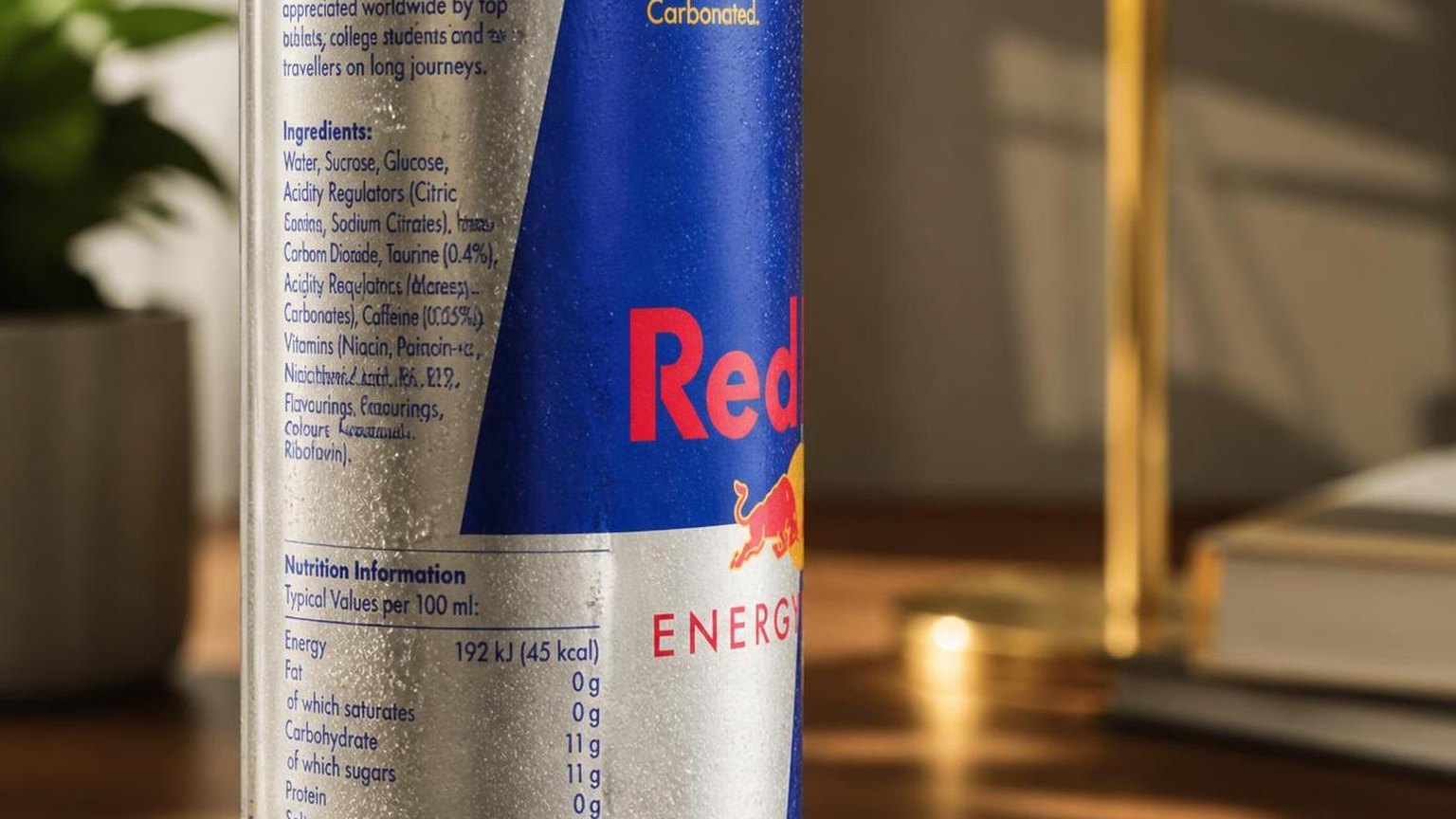
A sugar crash after Red Bull usually starts 60 to 120 minutes after finishing a sugared can. That window matches how quickly the drink’s sugars enter the bloodstream, trigger insulin release, and then drop blood glucose back toward baseline.
In the US, an 8.4 fl oz Red Bull Energy Drink contains 27 g of sugar and 110 calories. A 12 fl oz can has 38 g of sugar and 160 calories. More sugar usually means a larger rise, then a more noticeable drop.
The crash does not hit everyone at the same minute. It depends on body size, whether you drank it on an empty stomach, your insulin sensitivity, and whether you paired it with food, especially protein, fat, or fiber.
| Red Bull size | Sugar | Typical crash window |
| 8.4 fl oz | 27 g | About 1 to 2 hours after drinking |
| 12 fl oz | 38 g | Often 1 to 3 hours after drinking |
| Sugarfree Red Bull | 0 g | No true sugar crash from the drink itself |
Red Bull’s caffeine can blur the timing. One 8.4 fl oz can contains 80 mg of caffeine, and caffeine peaks in blood roughly 30 to 60 minutes after intake. You may feel alert while blood sugar is already falling.
That is why some people describe a “delayed crash.” They feel focused first, then tired, shaky, hungry, or irritable once the stimulant effect fades enough for the glucose drop to become obvious.
| Time after drinking | What commonly happens |
| 0 to 30 minutes | Sugar starts absorbing; caffeine effect is building |
| 30 to 60 minutes | Energy and alertness often peak |
| 60 to 120 minutes | Most likely window for a sugar crash |
| 2 to 4 hours | Fatigue can linger, especially after larger cans or no food |
Drinking Red Bull with a meal usually slows the rise and softens the drop. On an empty stomach, absorption is faster, so the crash can feel sharper and arrive sooner.
If symptoms repeat, the practical fix is simple. Choose a smaller can, pair it with food, or switch to Sugarfree if you want the caffeine without the 27 to 38 g sugar load.
- Watch for hunger, shakiness, headache, and irritability around the 1 to 2 hour mark.
- A snack with protein and fiber can reduce the rebound drop.
- Back-to-back cans can worsen the later slump by adding more sugar and more stimulant wear-off.
Duration by Can Size
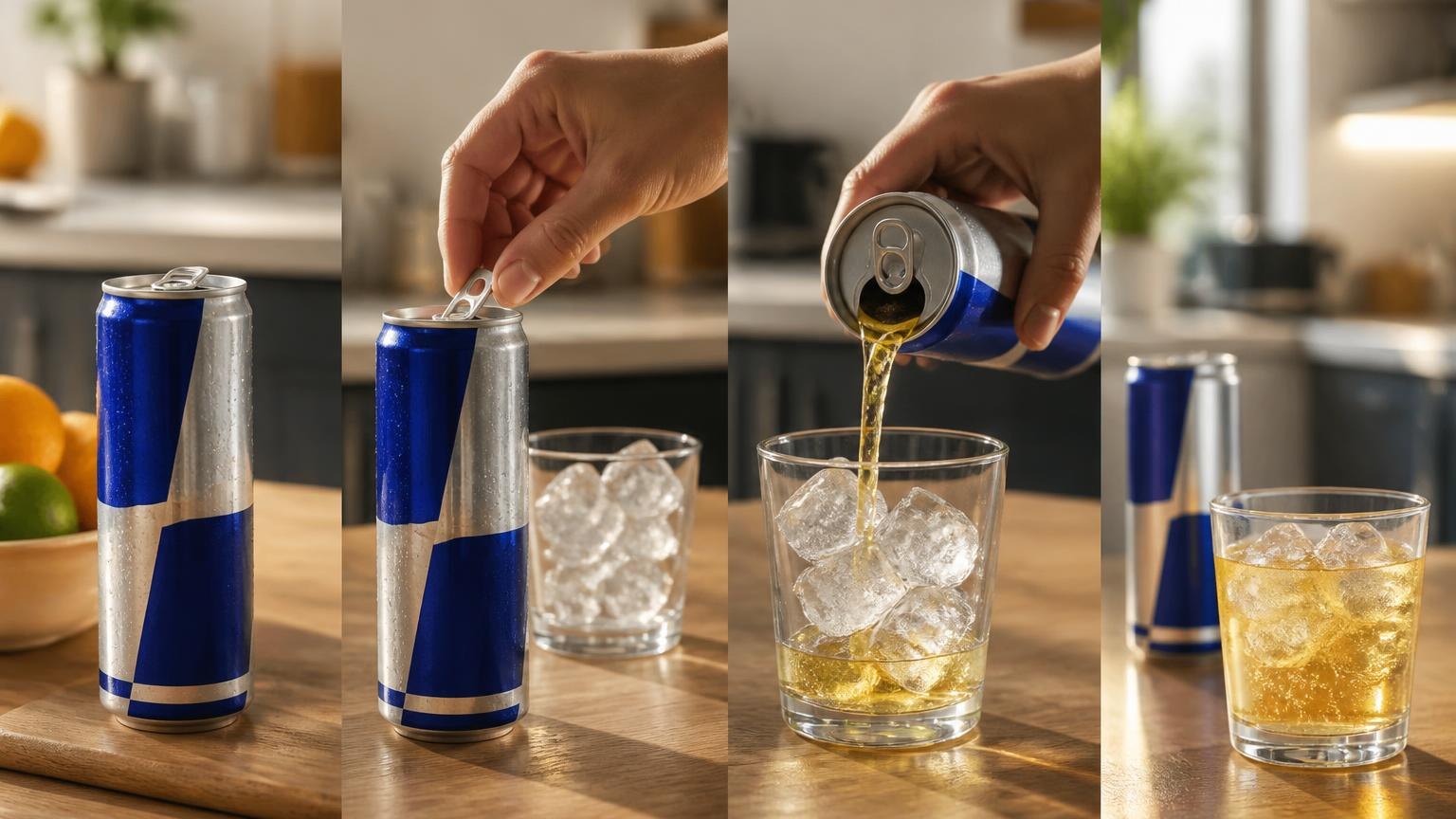
Red Bull’s effects last longer as can size increases because caffeine dose increases.
In healthy adults, caffeine reaches peak blood levels in about 30 to 60 minutes, and its average half-life is about 5 hours, so the stimulant effect fades gradually rather than stopping at once.
For most people, noticeable energy and alertness from one can last about 3 to 6 hours. The exact window depends on body size, caffeine tolerance, whether you drank it with food, and whether the can was a standard Red Bull or a sugar-free version.
| Can size | Fluid ounces | Caffeine | Typical noticeable effect | Caffeine remaining after 5 hours |
| Red Bull Energy Drink | 8.4 fl oz | 80 mg | About 3 to 5 hours | About 40 mg |
| Red Bull Energy Drink | 12 fl oz | 114 mg | About 4 to 6 hours | About 57 mg |
| Red Bull Energy Drink | 16 fl oz | 151 mg | About 5 to 6+ hours | About 76 mg |
| Red Bull Energy Drink | 20 fl oz | 189 mg | About 5 to 7+ hours | About 95 mg |
The 8.4-ounce can contains 80 mg of caffeine, about the amount in a small cup of coffee. Many adults feel the strongest lift during the first 1 to 3 hours, then a steady decline in alertness over the next few hours.
The 12-ounce and 16-ounce cans push the effect longer because the caffeine dose is higher. At 114 mg and 151 mg, enough caffeine often remains in the bloodstream at hour 5 to interfere with sleep, especially if consumed after mid-afternoon.
The 20-ounce can contains 189 mg of caffeine.
That is still below the FDA’s general daily limit of 400 mg for most healthy adults, but it can produce longer-lasting jitters, elevated heart rate, or a delayed bedtime in caffeine-sensitive people.
- Food slows absorption, so the “kick” may feel smoother and slightly delayed.
- Sugar can create a faster boost, then a sharper drop in perceived energy.
- Nicotine, some medications, pregnancy, and liver function can lengthen caffeine’s effects.
- If you rarely use caffeine, even the 8.4-ounce can may feel strong for 5 hours or more.
Can size predicts the dose. Dose predicts how long Red Bull lingers. The practical rule is simple: larger cans do not only hit harder; they usually stay with you later into the day.
Red Bull Effects Overnight
Red Bull can still affect sleep long after the can is empty. The main reason is caffeine: a standard 8.4-ounce Red Bull contains 80 milligrams, and caffeine often stays in the body for much of the night.
In healthy adults, caffeine’s average half-life is about 5 hours. That means if you drink one regular Red Bull at 7 p.m., a meaningful amount of caffeine may still be circulating at midnight, 2 a.m., and even later.
| Time after one 8.4 oz Red Bull | Approximate caffeine remaining from 80 mg |
| At 7 p.m. (right after drinking) | 80 mg |
| At midnight (5 hours later) | 40 mg |
| At 5 a.m. (10 hours later) | 20 mg |
| At 10 a.m. next day (15 hours later) | 10 mg |
That estimate uses the 5-hour half-life. Real clearance varies. Pregnancy, oral contraceptives, liver disease, some medications, and genetic differences can slow caffeine breakdown, while smoking can speed it up.
Sleep effects often outlast the “energy” feeling. Research has found caffeine taken even 6 hours before bedtime can reduce total sleep time and worsen sleep quality, especially in people who are caffeine-sensitive.
| Potential overnight effect | What may happen |
| Falling asleep | Longer sleep latency, meaning more time awake in bed |
| Sleep depth | Less deep sleep and lighter overall sleep |
| Night wakings | More frequent awakenings or restless sleep |
| Next morning | Less refreshed, more tired despite sleeping for enough hours |
Red Bull also contains sugar in the original version: about 27 grams per 8.4-ounce can. Sugar does not have caffeine’s long half-life, but the combination can make the initial stimulation feel stronger and encourage drinking more than planned.
For teens, smaller adults, people with anxiety, and anyone who rarely uses caffeine, nighttime effects can feel stronger. Two cans doubles the caffeine to 160 milligrams, which is roughly the amount in a strong 16-ounce coffee.
- Drinking Red Bull within 6 hours of bed raises the chance of sleep disruption.
- Within 3 hours of bed, the risk is higher because blood caffeine levels are still relatively elevated.
- If sleep is the priority, morning or early afternoon is the safer window.
Overnight, Red Bull usually stops feeling energizing before it stops affecting the brain. The alertness fades first; the sleep interference can last until morning.
When Red Bull Fully Wears Off
Red Bull does not switch off at one exact time. Most people feel the noticeable boost fade within a few hours, but the main stimulant, caffeine, stays in the body much longer.
Full “wearing off” usually means both the alert feeling has declined and blood caffeine has dropped to a low level.
In healthy adults, caffeine has an average half-life of about 5 hours. That means if one 8.4-ounce can of Red Bull contains 80 milligrams of caffeine, about half is still in the body around 5 hours later.
| Time after one 8.4 oz Red Bull | Approximate caffeine remaining | What many people notice |
| 0 hours | 80 mg | Drink consumed |
| 1 hour | Near peak absorption | Strongest alertness for many people |
| 5 hours | 40 mg | Boost often clearly fading |
| 10 hours | 20 mg | Caffeine still present, possible sleep impact |
| 15 hours | 10 mg | Usually mild effect, but not zero |
| 20 hours | 5 mg | Close to fully worn off for many adults |
For most healthy adults, the obvious energy effect is often gone after about 4 to 6 hours. The body, however, may need roughly 15 to 20 hours to clear caffeine down to a very small amount after one standard can.
That timeline changes fast with bigger servings. A 12-ounce Red Bull has 114 milligrams of caffeine, and a 16-ounce can has 151 milligrams. More caffeine means more time before levels fall low enough to feel “fully off.”.
Sugar can change the experience but not the caffeine half-life. Original Red Bull has 27 grams of sugar per 8.4-ounce can, so some people feel a quick lift followed by a dip once blood sugar normalizes. Sugar-free versions remove that variable.
- Nicotine, some medications, and pregnancy can slow caffeine clearance.
- Smoking can speed caffeine metabolism in some people.
- Low body weight, caffeine sensitivity, and anxiety can make effects feel stronger and longer.
- Taking Red Bull on an empty stomach may make the onset feel quicker.
If Red Bull is consumed late in the day, it can still affect sleep at bedtime. Even 6 hours before sleep, caffeine has been shown to reduce sleep time and quality in many adults.
Common Questions
How long do the effects of Red Bull usually last?
Most people feel Red Bull’s noticeable energy effects for about 3 to 5 hours. The exact duration depends on the can size, your body weight, whether you had food first, and how quickly you metabolize caffeine.
When does Red Bull peak after you drink it?
Caffeine from Red Bull usually reaches peak blood levels about 30 to 60 minutes after drinking it. That is why the strongest alertness often shows up within the first hour rather than immediately.
How long does caffeine from Red Bull stay in your system?
Caffeine has an average half-life of about 5 hours in healthy adults, so half of it can still be in your body 5 hours later. Because of that, a single 8.4-ounce Red Bull with 80 mg of caffeine can still affect sleep if you drink it late in the day.
Does sugar-free Red Bull wear off faster than regular Red Bull?
The caffeine duration is usually similar because both regular and sugar-free versions commonly contain the same caffeine amount in the same can size.
Regular Red Bull may feel like it gives a quicker boost to some people because it also contains sugar, but the caffeine timeline does not change much.
What changes how long Red Bull lasts for different people?
Age, liver metabolism, medications, nicotine use, pregnancy, and tolerance all affect how long Red Bull feels active.
Drinking it on an empty stomach can make the effects feel faster, while taking it with food may slow the onset and make the stimulation feel more gradual.
Related Reading
- How Much Caffeine In Red Bull? The Truth You Didn't Know
- Is Mountain Dew An Energy Drink? Professional Answer
- How Much Caffeine In Monster? The Truth Behind the Buzz, Sizes, and Real-Life Effects
- What Is in a Trash Can Drink with Red Bull?
- How Much Caffeine Is In A 20 Oz Red Bull? Find Out Now
- How Much Caffeine In Nos? Answer By Expert
- How Much Caffeine Is In A 16 Oz Red Bull? Facts To Know
- All Non-Alcoholic Beverages Guides
- U.S. Food and Drug Administration: Spilling the Beans: How Much Caffeine is Too Much? (2024)
- National Institutes of Health Office of Dietary Supplements: Caffeine Fact Sheet for Health Professionals (2024)
- StatPearls Publishing via NCBI Bookshelf: Caffeine (2023)
- Red Bull: Red Bull Energy Drink Ingredients (2024)
- Mayo Clinic: Caffeine content for coffee, tea, soda and more (2024)
- Cleveland Clinic: How Long Does Caffeine Last? (2024)
- MedlinePlus: Caffeine in the diet (2023)