How Many Calories Does a Shot of Tequila Have? 97 calories is the standard count for a 1.5-ounce shot of 80-proof tequila, according to USDA data for distilled spirits.
Those calories come from alcohol itself, not sugar, because straight tequila contains 0 grams of carbohydrates, fat, and protein.
The number changes when the pour size or proof changes. A 1-ounce pour has about 64 calories, while higher-proof tequila delivers more calories per ounce.
This guide explains tequila calories by shot size, proof, blanco versus reposado, and common mixers so you can estimate a drink accurately.
Calories in a Standard Tequila Shot
A standard 1.5-ounce shot of tequila contains about 96 to 98 calories. That number comes almost entirely from alcohol, not sugar, because plain tequila has essentially no carbohydrates, fat, or protein.
For most drinkers, the exact calorie count depends on proof. In the U.S., standard tequila is usually bottled at 80 proof, or 40% alcohol by volume, and that is the version tied to the commonly cited 97-calorie shot.
The math is straightforward. A 1.5-ounce serving of 80-proof tequila contains about 0.6 fluid ounces of pure alcohol.
Alcohol provides 7 calories per gram, which is why distilled spirits deliver substantial calories even when they contain no added sugar.
Tequila made from 100% agave and mixto tequila are close in calories when the proof is the same.
The source of fermentable sugar affects flavor and production, but the calorie total in an unflavored shot is driven far more by alcohol content than by brand style.
| Tequila serving | ABV | Approximate calories |
| 1.5 oz shot | 35% | 84 calories |
| 1.5 oz shot | 38% | 91 calories |
| 1.5 oz shot | 40% | 97 calories |
| 1.5 oz shot | 45% | 109 calories |
| 1.5 oz shot | 50% | 121 calories |
That range matters because not every pour is identical. A bar may serve 1.25 ounces, 1.5 ounces, or 2 ounces depending on house policy and state law, and each increase raises the calorie count proportionally.
| Pour size | 80-proof tequila | Approximate calories |
| 1.0 oz | 40% ABV | 64 calories |
| 1.25 oz | 40% ABV | 81 calories |
| 1.5 oz | 40% ABV | 97 calories |
| 2.0 oz | 40% ABV | 129 calories |
Plain tequila stays relatively predictable because there is little else in the glass.
Flavored tequila, tequila liqueurs, and ready-to-drink tequila products can run much higher because added sweeteners increase calories beyond what alcohol alone contributes.
If you are counting calories, focus on three variables: proof, pour size, and mixers. The tequila itself may be under 100 calories per shot, but tonic, juice, simple syrup, triple sec, or agave syrup can quickly double the total drink calories.
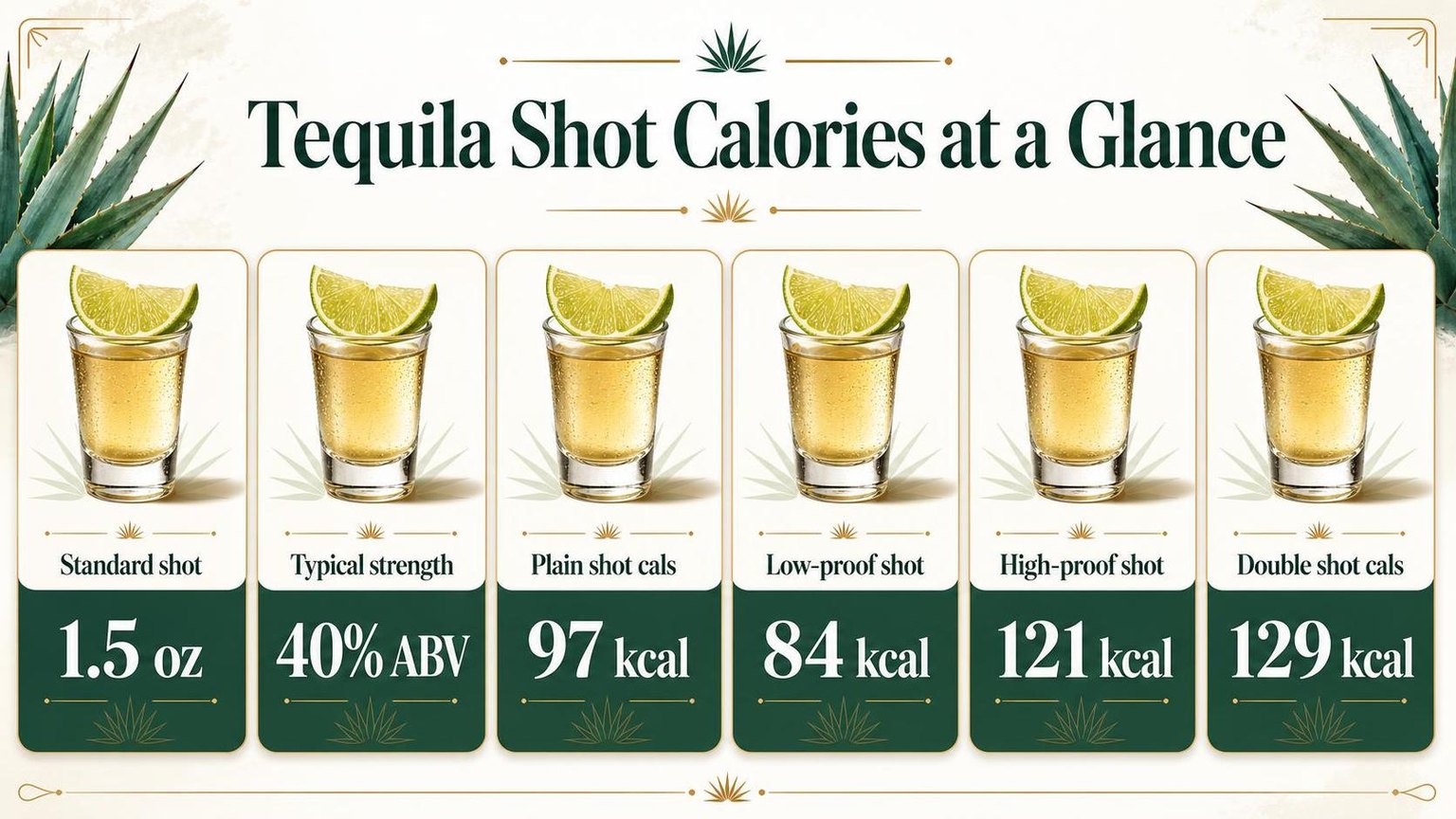
- Standard shot in the U.S.: 1.5 ounces.
- Typical tequila strength: 80 proof, or 40% ABV.
- Calories in a plain 80-proof shot: about 97.
- Main calorie source: ethanol at 7 calories per gram.
- Zero or near-zero fat, protein, and sugar in plain tequila.
The bottom line is simple. A standard shot of unflavored tequila usually lands at about 97 calories, with lower-proof bottles slightly below that figure and higher-proof bottles moving above 100 calories per 1.5-ounce pour.
Shot Size Changes the Calorie Count
A tequila shot’s calories come mostly from alcohol, so size matters immediately. Pour more liquid, and you add more ethanol. That raises calories even when the tequila is unflavored and has no mixer.
In the U.S., a standard shot is usually 1.5 ounces. In bars elsewhere, a “shot” may be smaller or larger, which is why one tequila shot is not a universal calorie number.
For plain tequila at 40% ABV, the calorie count scales closely with volume. The table below shows why the same spirit can land in different ranges depending on the pour size.
| Shot size | Volume | Pure alcohol at 40% ABV | Approximate calories |
| Pony shot | 1 oz / 29.6 mL | 0.4 oz ethanol / about 9.3 g | About 65 kcal |
| Standard U.S. shot | 1.5 oz / 44.4 mL | 0.6 oz ethanol / about 14.0 g | About 98 kcal |
| Double shot | 2 oz / 59.1 mL | 0.8 oz ethanol / about 18.6 g | About 130 kcal |
| UK single measure | 25 mL / 0.85 oz | 10 mL ethanol / about 7.9 g | About 55 kcal |
| EU bar pour | 50 mL / 1.69 oz | 20 mL ethanol / about 15.8 g | About 111 kcal |
These estimates come from alcohol’s energy density. Ethanol provides about 7 calories per gram, while pure distilled tequila has little to no carbohydrate, protein, or fat unless something is added after distillation.
That is why a larger pour increases calories almost linearly. Move from a 1-ounce tequila shot to a 2-ounce double, and you are effectively doubling the alcohol and nearly doubling the calories.
Proof can change the total too. Two shots that look identical in the glass will not have the same calorie count if one is bottled at a higher ABV.
| 1.5 oz tequila shot | ABV | Pure alcohol | Approximate calories |
| 80 proof | 40% | About 14.0 g | About 98 kcal |
| 90 proof | 45% | About 15.8 g | About 111 kcal |
| 100 proof | 50% | About 17.5 g | About 123 kcal |
For practical tracking, ask two questions: how much was poured, and what proof was in the bottle. “One shot” can mean a modest 25 mL bar measure or a heavy 2-ounce home pour.
- A jigger-measured 1.5-ounce pour keeps the estimate close to 98 calories at 40% ABV.
- A free-poured glass often runs larger than expected, which pushes the count higher fast.
- Flavored or sweetened tequila products can exceed these numbers because added sugar contributes extra calories.
If you want the most accurate number, measure the pour instead of relying on the word “shot.” With tequila, shot size is the first calorie variable to check.
Blanco Reposado and Añejo Calories
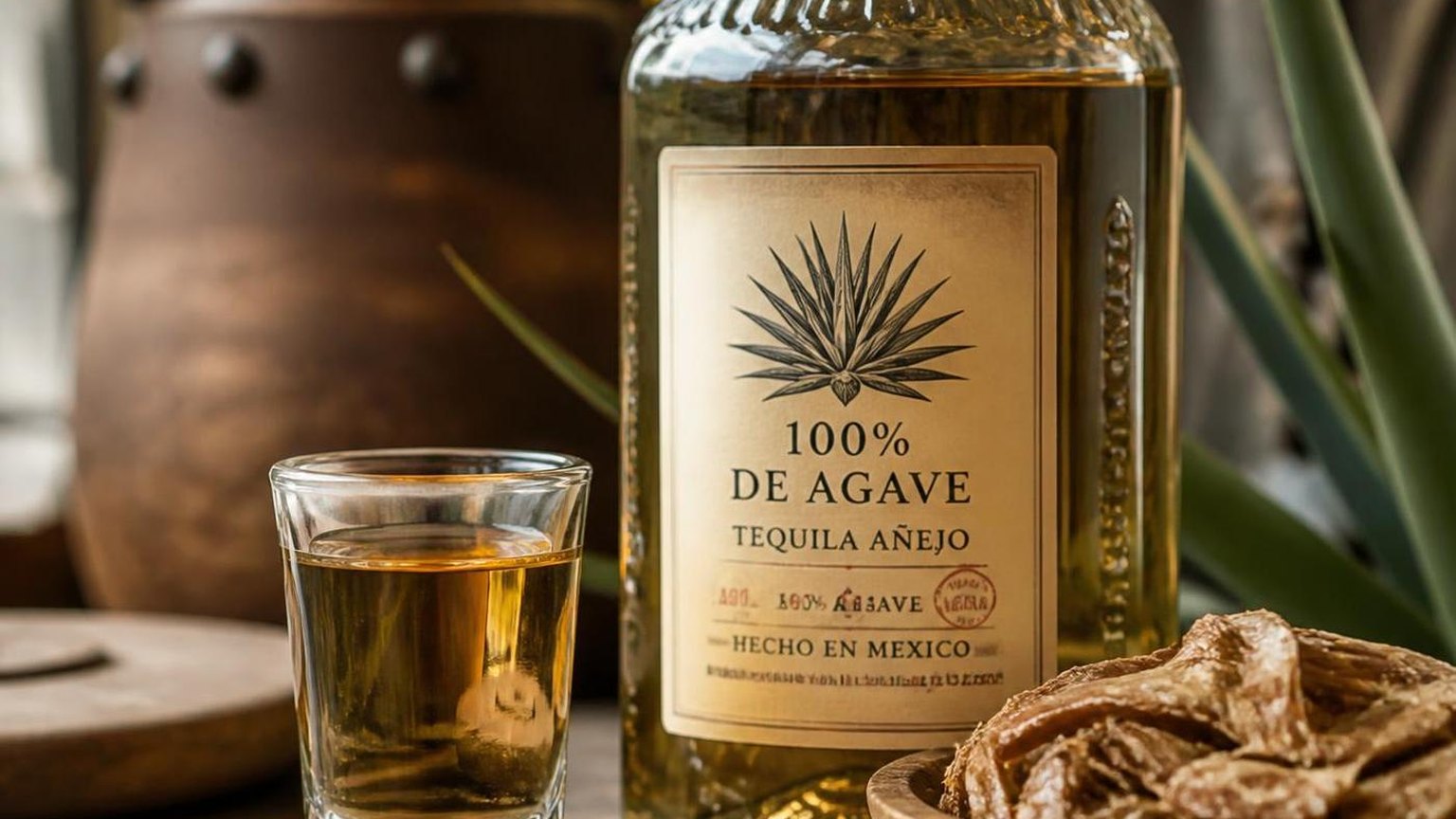
Blanco, reposado, and añejo tequila are usually almost identical in calories when the pour size and proof match. The main driver is alcohol content, not barrel age, because ethanol supplies about 7 calories per gram.
A standard 1.5-ounce shot of 80-proof tequila has about 97 calories. That number applies to blanco, reposado, and añejo unless a bottle uses a different ABV or adds flavoring or sweeteners.
In the U.S., a “shot” is commonly 1.5 fluid ounces, or 44 milliliters. Most tequila sold for straight pours is 40% ABV, also called 80 proof.
At 40% ABV, pure alcohol makes up 0.6 fluid ounces of a 1.5-ounce shot. Using the standard alcohol-calorie conversion, that lands at roughly 96 to 98 calories, which is why nutrition databases usually list 97.
Tequila style names describe aging, not a major calorie shift. Blanco is typically unaged or briefly rested, reposado is aged at least two months, and añejo is aged at least one year in oak.
Those barrels change color, aroma, and texture. They do not meaningfully raise calories in a straight pour unless the producer bottles at a higher proof or sells a flavored or specialty product.
| Tequila style | Typical legal/industry definition | Common ABV | Calories per 1.5 oz at 40% ABV |
| Blanco | Unaged or rested briefly, usually up to 2 months | 40% | 97 |
| Reposado | Aged at least 2 months in oak | 40% | 97 |
| Añejo | Aged at least 1 year in oak | 40% | 97 |
Proof matters more than whether the tequila is blanco or añejo. A stronger bottle packs more ethanol into the same glass, so the calorie count rises even when the flavor profile stays dry.
| Pour size and strength | Approximate calories |
| 1 oz tequila, 40% ABV | 64 |
| 1.25 oz tequila, 40% ABV | 80 |
| 1.5 oz tequila, 40% ABV | 97 |
| 2 oz tequila, 40% ABV | 128 |
| 1.5 oz tequila, 45% ABV | 109 |
| 1.5 oz tequila, 50% ABV | 121 |
What can change the number is the label category. “Tequila” may contain up to 49% non-agave sugars in production, while “100% agave” uses only agave sugars.
But both are distilled spirits with similar calories when bottled at the same proof.
Mixers are the real calorie jump. A neat pour of reposado stays near 97 calories, but a tequila sunrise, margarita, or sweetened ready-to-drink añejo cocktail can add 100 calories or far more.
- Neat or on the rocks: count the spirit only.
- Check the bottle ABV, especially for premium or overproof releases.
- Measure the pour, because restaurant shots often exceed 1.5 ounces.
- Treat flavored or cream-based tequila products separately from straight tequila.
For practical tracking, count blanco, reposado, and añejo the same at 97 calories per 1.5-ounce shot unless the proof says otherwise. Age changes taste. ABV changes calories.
Tequila Versus Vodka and Whiskey
A standard 1.5-ounce shot of 80-proof tequila has about 97 calories.
That puts tequila in nearly the same calorie range as 80-proof vodka and whiskey, because all three are distilled spirits with similar alcohol content and almost no carbohydrates, protein, or fat.
The main driver is alcohol itself. Ethanol provides 7 calories per gram, so when proof stays the same, calories stay close regardless of whether the spirit comes from agave, grain, potatoes, or barrel-aged mash.
| Spirit | Standard serving | Typical proof | Approximate calories | Carbohydrates |
| Tequila | 1.5 oz shot | 80 proof (40% ABV) | 97 | 0 g |
| Vodka | 1.5 oz shot | 80 proof (40% ABV) | 96-97 | 0 g |
| Whiskey | 1.5 oz shot | 80 proof (40% ABV) | 97-105 | 0 g |
At standard strength, the difference is trivial. One shot of tequila and one shot of vodka are usually separated by 1 calorie or less, which has no practical effect on total intake over a single drink.
Whiskey can edge slightly higher in some databases, often landing around 105 calories for 1.5 ounces. That small increase usually reflects bottling strength, minor congeners, or rounding, not meaningful sugar content.
Proof matters more than brand category. A 1.5-ounce pour of 100-proof tequila, vodka, or whiskey contains more alcohol than an 80-proof shot, so calories rise even if the serving size looks identical.
| Proof | ABV | 1.5 oz calories |
| 80 proof | 40% | About 97 |
| 90 proof | 45% | About 110 |
| 100 proof | 50% | About 124 |
This is why a neat pour of overproof whiskey can overtake a basic tequila shot fast. The alcohol concentration changes the calorie load more than the spirit type does.
Tequila also has a reputation as a “lighter” choice. In plain-shot form, that reputation is only partly true. It is not dramatically lower than vodka or whiskey; it is simply competitive when all are served at the same proof and volume.
What changes the comparison is what people mix with each spirit. Tequila often goes into margaritas with orange liqueur and syrup. Whiskey commonly appears in Old Fashioneds with sugar, while vodka may be mixed with juice, tonic, or cream liqueurs.
- A straight shot keeps calories close across tequila, vodka, and whiskey.
- Higher proof raises calories faster than spirit style.
- Mixers and liqueurs create the biggest real-world calorie gap.
- Barrel aging does not make whiskey meaningfully sugary in a standard shot.
If the goal is lower calories, compare the full drink, not only the base spirit. A 97-calorie tequila shot can become a 250- to 500-calorie cocktail once sweeteners, syrups, and larger pours are added.
Lower Calorie Ways to Drink Tequila
A 1.5-ounce shot of 80-proof tequila has about 96 to 98 calories and essentially no carbohydrate, fat, or protein. Calories climb when sugar-heavy mixers, liqueurs, and oversized pours enter the glass.
The lowest-calorie strategy is simple: keep the tequila pour standard, skip syrupy additions, and use mixers with little or no sugar. That cuts calories fast without changing the spirit itself.
| Drink or mixer choice | Typical serving | Approximate calories |
| Tequila, straight | 1.5 oz | 96–98 |
| Tequila + soda water + lime | 1.5 oz tequila + soda | 100–105 |
| Tequila + diet soda | 1.5 oz tequila + diet mixer | 96–100 |
| Tequila + unsweetened sparkling water | 1.5 oz tequila + flavored seltzer | 96–102 |
| Tequila + orange juice | 1.5 oz tequila + 4 oz juice | 150–160 |
| Margarita, restaurant style | 4–8 oz drink | 250–500+ |
Straight tequila or tequila on the rocks stays lowest because the spirit supplies nearly all the calories. Ice adds volume without calories, which can slow drinking and reduce the chance of ordering a second round too quickly.
Tequila with soda water and lime is the classic low-calorie build. Soda water has zero calories, and a lime wedge usually adds fewer than 5 calories, so the drink lands close to the shot itself.
Diet soda also keeps calories low. The tradeoff is sweetness; some people drink sweet mixers faster, which can lead to larger overall alcohol intake even when the calorie count per glass stays modest.
Unsweetened sparkling water works well because it adds carbonation and flavor without sugar.
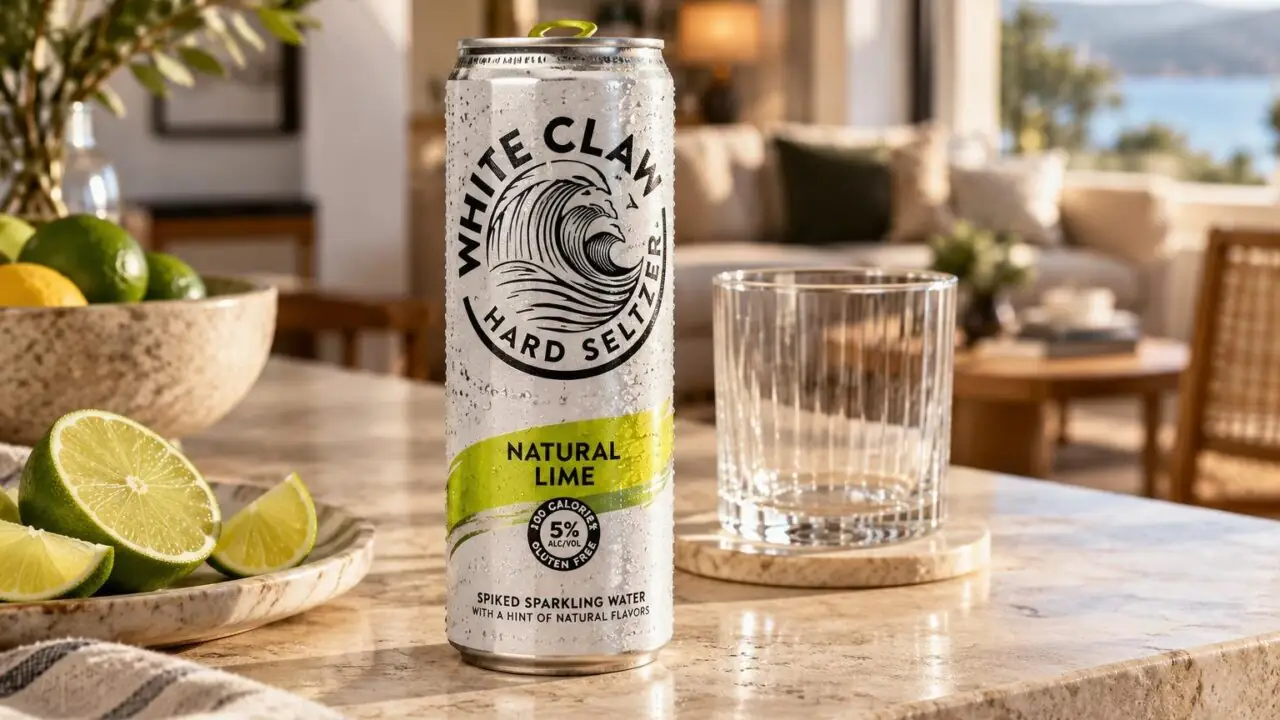
Grapefruit- or lime-flavored seltzers usually contribute zero calories, but labels matter because “sparkling juice” products can add 20 to 60 calories per can.
Juice is where tequila drinks start climbing. Orange juice has about 56 calories per 4 ounces, and grapefruit juice is similar, so a “light” tequila juice drink can still add more than half a shot’s calories again.
Margaritas vary the most. Triple sec or orange liqueur adds roughly 95 calories per 1 ounce, and sour mix often contributes another 100 or more calories in a generous pour, which is why restaurant versions can reach 300 calories or higher.
| Lower-calorie move | What to do | Why it helps |
| Measure the pour | Keep tequila at 1.5 oz | A 2 oz pour raises calories to about 128–130 |
| Use zero-calorie mixers | Choose soda water or diet soda | Prevents 50–150 extra calories from juice or syrup |
| Limit liqueurs | Skip or halve triple sec | Cuts roughly 45–95 calories |
| Avoid premade mixes | Use fresh lime instead | Removes added sugar and concentrated calories |
- Order a tequila soda with lime instead of a frozen or blended tequila drink.
- Ask for no sour mix and no agave syrup unless you want the added sweetness.
- Choose blanco, reposado, or añejo based on taste, not calories; standard tequila styles are similar in calorie content when proof and pour size match.
- Watch proof. Higher-proof tequila has more alcohol by volume, which means more calories per ounce.
Questions People Ask Most
How many calories are in a standard shot of tequila?
A standard 1.5-ounce shot of 80-proof tequila has about 96 to 98 calories, according to USDA food data for distilled spirits. Tequila contains almost no carbohydrates, protein, or fat, so nearly all of those calories come from alcohol itself.
Do blanco, reposado, and añejo tequilas have different calorie counts?
Most blanco, reposado, and añejo tequilas have very similar calorie counts per 1.5-ounce serving if the alcohol by volume is the same. Aging changes flavor and color, but it does not meaningfully change calories unless sugar or flavoring is added.
Does higher-proof tequila have more calories?
Yes. A higher-proof tequila contains more alcohol per ounce, which raises the calorie count because alcohol provides 7 calories per gram; for example, a 1.5-ounce shot of 100-proof tequila typically has more calories than an 80-proof shot.
Does tequila have sugar or carbs?
Pure tequila generally has 0 grams of sugar and 0 grams of carbohydrates per shot. The concern starts with mixtos, flavored tequilas, and cocktails, which can add significant sugar and push the calorie total far above the spirit alone.
What adds the most calories to a tequila drink?
Mixers add the most calories, not the tequila itself.
A shot with soda water and lime stays close to the tequila’s roughly 100 calories, while margarita ingredients such as triple sec, agave syrup, and sweet-and-sour mix can add 100 to 300 or more calories to one drink.
Is tequila lower in calories than other popular spirits?
Tequila, vodka, rum, gin, and whiskey all contain roughly 96–97 calories per 1.5-oz shot at 80 proof, since calories in unflavored spirits come almost entirely from ethanol at 7 calories per gram.
No single clear spirit holds a meaningful caloric advantage over another.
How many calories are in a classic margarita?
A standard 4-oz margarita made with 1.5 oz tequila, 1 oz triple sec, and fresh lime juice contains approximately 200–275 calories.
Frozen restaurant versions frequently exceed 400 calories per serving due to added sugar syrups and larger pour sizes averaging 8–12 oz.
Related Reading
- What To Mix With Tequila Rose?
- Can Tequila Freeze?
- What To Mix Grand Marnier With?
- What Tequila Has A Worm In It? The Most Accurate Answer
- What Mixes Well With Don Julio 1942?
- Why Does Tequila Make Me Sick?
- Anejo Vs Reposado Vs Blanco: Which Is Better?
- All Alcohol Guides
- USDA FoodData Central: Alcoholic beverage, distilled, all (gin, rum, vodka, whiskey) 80 proof (2019)
- National Institute on Alcohol Abuse and Alcoholism (NIAAA) – What Is A Standard Drink? (2024)
- Centers for Disease Control and Prevention (CDC) – Alcohol Use and Your Health (2024)
- MedlinePlus – Cutting calories: Easy ways to reduce your intake (2023)
- Harvard T.H. Chan School of Public Health – Alcohol: Balancing Risks and Benefits (2024)
- National Institute on Alcohol Abuse and Alcoholism (NIAAA) – Rethinking Drinking: Alcohol Calorie Calculator (2024)
- PubMed – Alcoholic beverage consumption, nutrient intake, and diet quality in the US adult population, 1999-2006 (2010)