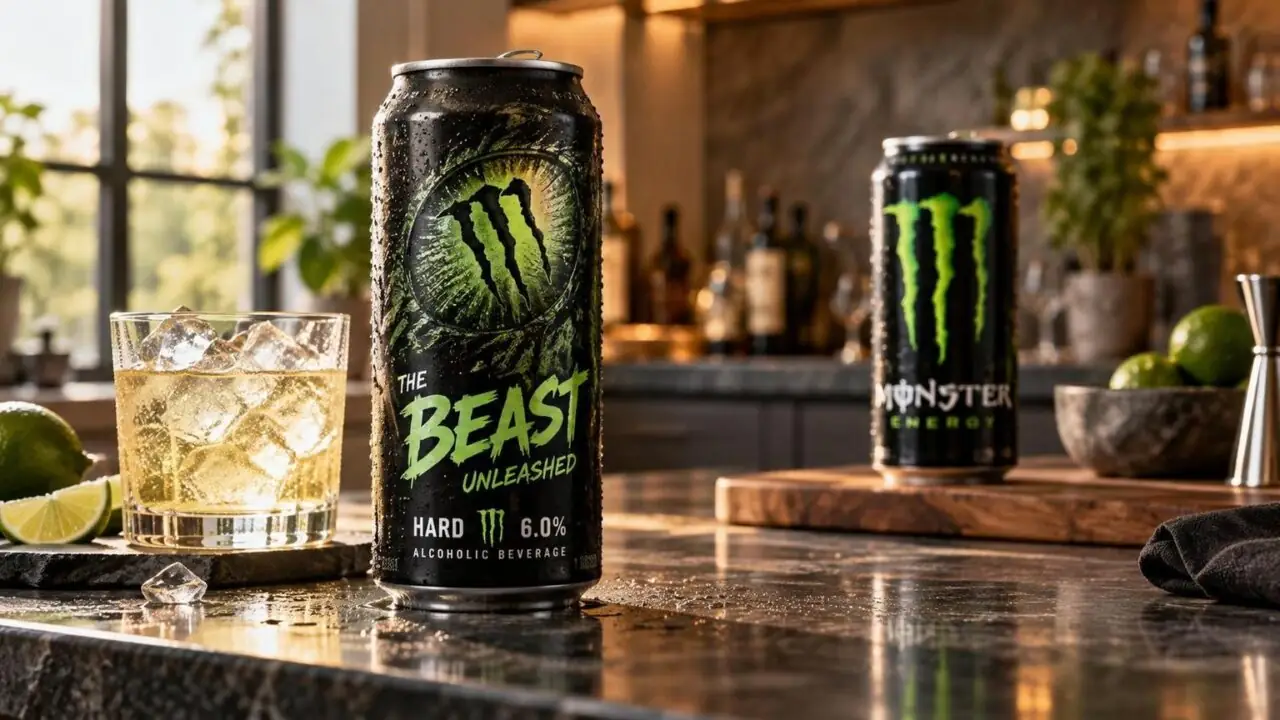
Monster’s The Beast Unleashed is made without the stimulant, so the answer to “Does the Monster Alcohol Have Caffeine?” is no.
Despite its familiar branding and flavors, this alcoholic product differs from Monster’s energy drinks. That distinction matters when checking ingredients and deciding what you’re drinking.
The shared Monster name does not mean the products share the same formula. This guide explains which alcoholic product the question refers to, how its ingredients differ from the energy-drink lineup, and what to check on the packaging.
Alcohol still causes impairment, regardless of the ingredients left out.
Does Monster Alcohol Contain Any Caffeine
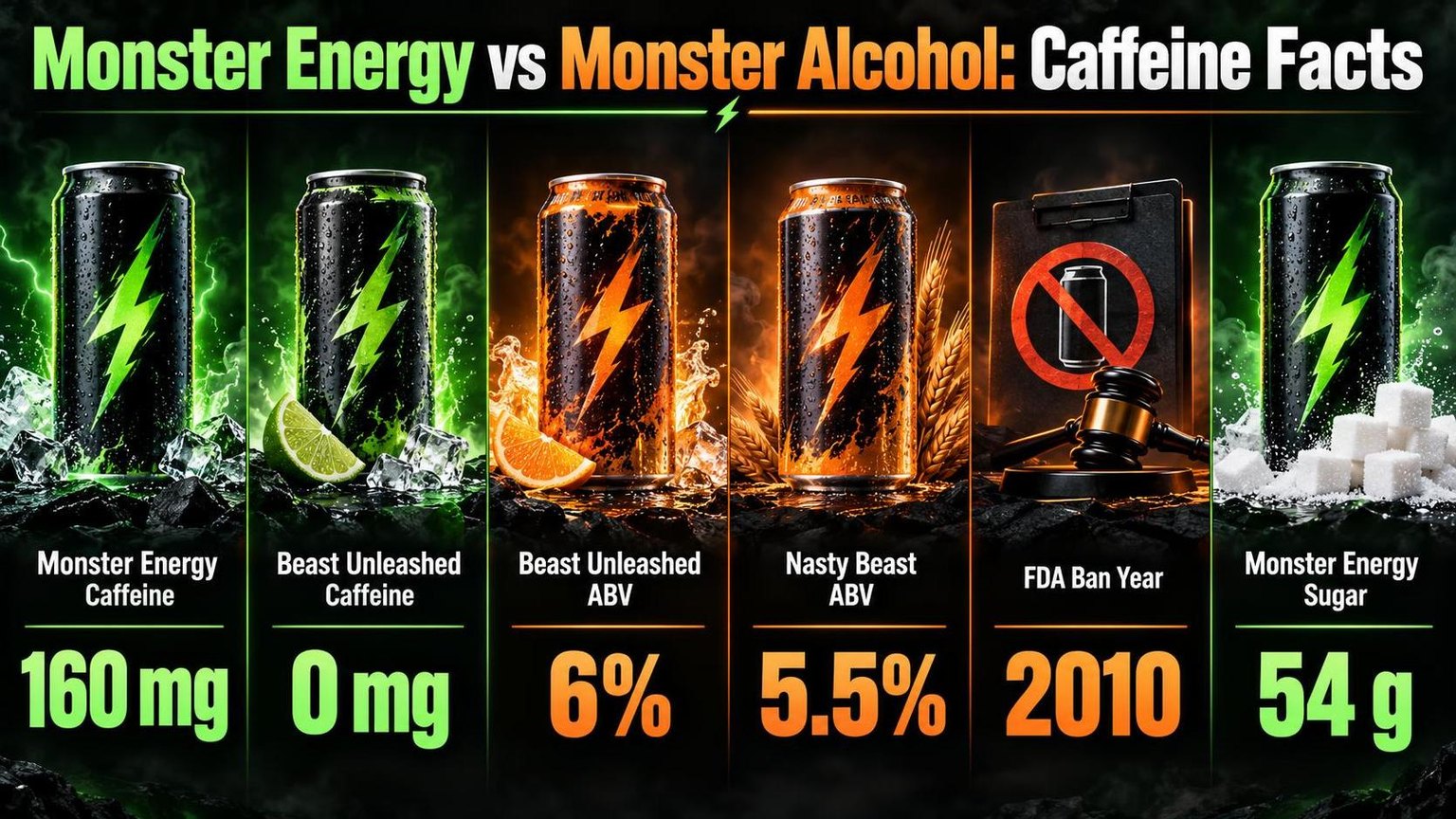
Monster’s alcoholic beverages are caffeine-free.
The Beast Unleashed and Nasty Beast Hard Tea lines contain zero milligrams of caffeine per can, a deliberate formulation choice driven by FDA regulations and safety concerns surrounding mixing stimulants with alcohol.
This surprises many consumers because Monster Energy’s non-alcoholic drinks are defined by their high caffeine content. The original Monster Energy packs 160 mg of caffeine per 16 fl oz can.
The alcoholic versions share branding, flavor profiles, and even can aesthetics—but caffeine is entirely absent.
Caffeine Comparison: Monster Energy vs. Monster Alcohol
| Product | Caffeine (mg) | Alcohol (ABV) | Serving Size |
| Monster Energy Original | 160 | 0% | 16 fl oz |
| Monster Ultra | 150 | 0% | 16 fl oz |
| Monster Java | 200 | 0% | 15 fl oz |
| The Beast Unleashed | 0 | 6% | 16 fl oz |
| Nasty Beast Hard Tea | 0 | 6% | 12 fl oz |
Why Monster Removes Caffeine From Its Alcohol
The FDA has taken a firm stance against pre-mixed caffeinated alcoholic beverages. In November 2010, the agency issued warning letters to four companies selling such products, effectively banning them from the U.S. market.
Caffeine masks alcohol’s sedative effects, leading drinkers to underestimate their level of intoxication.
A 2014 study published in Alcoholism: Clinical and Experimental Research confirmed that combining caffeine with alcohol increases binge-drinking behavior.
Monster Beverage Corporation navigates this regulatory landscape by completely excluding caffeine from its alcoholic products. Key reasons include:
- FDA compliance — Caffeine is not “generally recognized as safe” (GRAS) as an additive in alcoholic beverages
- Liability reduction — Removing caffeine eliminates legal exposure related to overconsumption injuries
- State alcohol board approval — Many state regulators specifically screen for stimulant ingredients before granting distribution permits
- Consumer safety — The CDC warns that mixing energy drinks with alcohol increases the likelihood of alcohol-related harm
The Beast Unleashed still contains ingredients like natural flavors and sucralose for sweetness. It retains the bold Monster taste profile without any stimulant compounds, taurine included.
Consumers seeking a caffeinated buzz alongside alcohol would need to purchase Monster Energy and a separate alcoholic beverage independently. Monster does not endorse this practice on any of its labeling or marketing materials.
Monster Alcohol Versus Monster Energy Drinks
Monster Brewing Company’s alcoholic beverages and Monster Energy’s caffeinated drinks share branding but differ fundamentally in formulation, regulation, and caffeine content.
Understanding these differences prevents confusion at the checkout counter and in your body.
Key Differences at a Glance
| Attribute | Monster Energy Drink | The Beast Unleashed (Alcohol) | Nasty Beast Hard Tea (Alcohol) |
| Caffeine per can | 160 mg per 16 fl oz | 0 mg | 0 mg |
| Alcohol by volume (ABV) | 0% | 6% | 5.5% |
| Calories per can | 210 (16 fl oz) | 220 (12 fl oz) | 195 (12 fl oz) |
| Sugar per can | 54 g (16 fl oz) | 31 g (12 fl oz) | 32 g (12 fl oz) |
| FDA or TTB regulated | FDA (dietary supplement/beverage) | TTB (alcohol) | TTB (alcohol) |
Why Monster’s Alcoholic Drinks Contain Zero Caffeine
The Alcohol and Tobacco Tax and Trade Bureau (TTB) scrutinizes caffeinated alcoholic beverages heavily. After the Four Loko controversy in 2010, the FDA issued warning letters declaring caffeine an unsafe additive in malt beverages.
Monster learned from that regulatory history. The Beast Unleashed and Nasty Beast Hard Tea launched with zero caffeine to avoid federal enforcement action and retail bans.
Ingredient Overlap and Differences
- Taurine and B-vitamins: Present in Monster Energy drinks but absent from Monster’s alcoholic lines.
- Malt base: The Beast Unleashed uses a flavored malt beverage base; Monster Energy uses carbonated water with an energy blend.
- Guarana and ginseng: Found in Monster Energy’s proprietary blend but excluded from the alcoholic versions entirely.
- Artificial sweeteners: Monster Ultra (energy) uses erythritol and sucralose; the alcoholic lines rely on cane sugar.
Where Each Product Is Sold
Monster Energy drinks sit in grocery aisles, gas stations, and convenience stores alongside soft drinks. The Beast Unleashed and Nasty Beast occupy the beer and malt beverage cooler, requiring age verification at purchase.
Distribution channels differ by state alcohol laws. Some states restrict flavored malt beverages to liquor stores only, limiting availability of Monster’s alcoholic products compared to the ubiquitous energy drinks.
The bottom line: grabbing a can with the Monster claw logo does not guarantee a caffeine boost. Check the label for “contains alcohol” or “flavored malt beverage” before assuming you are buying an energy drink.
Caffeine in Beast Unleashed and Nasty Beast
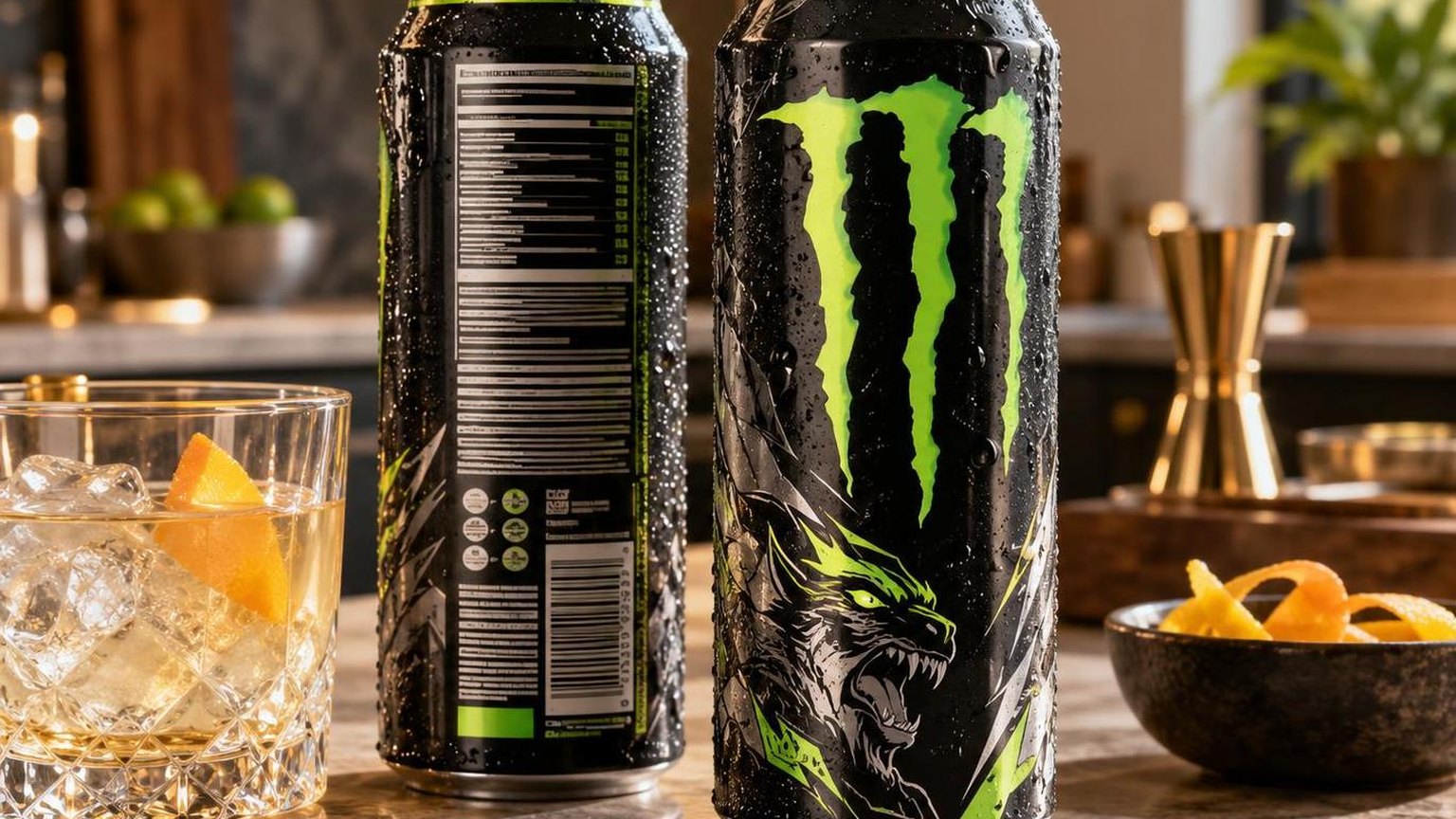
Monster’s alcohol lines — The Beast Unleashed and Nasty Beast Hard Tea — contain zero caffeine.
This separates them from the core Monster Energy lineup and reflects FDA regulations that discourage combining caffeine with alcohol in pre-mixed beverages.
The Beast Unleashed: Key Facts
The Beast Unleashed launched in 2023 as Monster’s first flavored malt beverage. Each 12 oz can contains 6% ABV and no caffeine, no taurine, and no added energy blend ingredients.
Flavors include Mean Green, Peach Perfect, Scary Berry, and White Haze. They mimic popular Monster Energy flavor profiles but deliver alcohol instead of stimulants.
| Product | ABV | Caffeine | Serving Size | Calories (approx.) |
| Mean Green | 6% | 0 mg | 12 oz | 220 |
| Peach Perfect | 6% | 0 mg | 12 oz | 220 |
| Scary Berry | 6% | 0 mg | 12 oz | 220 |
| White Haze | 6% | 0 mg | 12 oz | 220 |
Nasty Beast Hard Tea
Nasty Beast Hard Tea entered the market in 2024, targeting the hard tea category dominated by Twisted Tea. Each 12 oz can sits at 6% ABV with zero caffeine.
Varieties include Half & Half, Sweet Tea, Peach Tea, and Strawberry Tea. Despite being tea-based, the brewing process removes naturally occurring caffeine.
| Product | ABV | Caffeine | Serving Size |
| Nasty Beast Half & Half | 6% | 0 mg | 12 oz |
| Nasty Beast Sweet Tea | 6% | 0 mg | 12 oz |
| Nasty Beast Peach Tea | 6% | 0 mg | 12 oz |
| Nasty Beast Strawberry Tea | 6% | 0 mg | 12 oz |
Why No Caffeine in Monster’s Alcohol Products?
The FDA issued warning letters in 2010 to companies selling caffeinated alcoholic beverages, effectively banning the combination in pre-mixed drinks sold in the United States.
- Caffeine masks the depressant effects of alcohol, increasing the risk of overconsumption and alcohol poisoning.
- Four Loko and similar products were reformulated or pulled from shelves after the FDA’s intervention.
- Monster Beverage Corporation complies fully by formulating both The Beast Unleashed and Nasty Beast with 0 mg caffeine.
Consumers who mix Monster Energy drinks with alcohol on their own assume personal risk. Pre-mixed Monster alcohol products eliminate that variable entirely by design.
Alcohol Content in Monster Alcoholic Drinks
Monster Brewing Company produces The Beast Unleashed, a flavored malt beverage line launched in 2023. These drinks contain 6% ABV and are distinctly separate from Monster Energy’s non-alcoholic lineup.
The Beast Unleashed comes in 16 oz cans matching Monster’s iconic tall-can format. Each can delivers approximately 0.96 oz of pure alcohol per serving.
The Beast Unleashed ABV by Variety
| Flavor | ABV | Can Size |
| Mean Green | 6% | 16 oz |
| Peach Perfect | 6% | 16 oz |
| Scary Berries | 6% | 16 oz |
| White Haze | 6% | 16 oz |
| Nasty Beast Hard Tea (various) | 6% | 12 oz |
All Beast Unleashed varieties maintain a uniform 6% ABV. This places them above most domestic light beers (4–4.2% ABV) but below many craft IPAs (6.5–7.5% ABV).
How It Compares to Other Alcoholic Drinks
| Beverage | ABV | Serving Size |
| The Beast Unleashed | 6% | 16 oz |
| White Claw Hard Seltzer | 5% | 12 oz |
| Truly Hard Seltzer | 5% | 12 oz |
| Four Loko | 12% | 23.5 oz |
| Bud Light | 4.2% | 12 oz |
A single 16 oz Beast Unleashed at 6% ABV contains more total alcohol than a standard 12 oz White Claw at 5% ABV. The larger can size amplifies the difference significantly.
Key Details About Monster’s Alcoholic Line
- Produced by Monster Brewing Company, a subsidiary of Monster Beverage Corporation
- Classified as a flavored malt beverage, not a spirit-based cocktail
- Sold only in states where flavored malt beverages are permitted in retail channels
- Not sold in the same coolers as Monster Energy drinks in many retail locations to prevent consumer confusion
- Must be purchased by consumers aged 21 and older
Monster Beverage Corporation entered the alcoholic market to compete with hard seltzers and flavored malt beverages from brands like Boston Beer Company and Mark Anthony Brands.
The 6% ABV was chosen to sit competitively within the ready-to-drink alcohol category. It delivers a noticeable alcohol presence without reaching the higher ABV levels associated with craft beers or malt liquors.
Checking Monster Alcohol Labels for Caffeine
Monster’s alcoholic beverages fall under TTB (Alcohol and Tobacco Tax and Trade Bureau) regulations, not FDA rules.
TTB does not require caffeine disclosure on alcoholic beverage labels, making it harder for consumers to identify caffeine content at a glance.
The Beast Unleashed, Monster’s 6% ABV flavored malt beverage line, does not list caffeine on its cans. Monster has stated these drinks contain no caffeine, no taurine, and no added stimulants.
What You Will Find on the Label
TTB-regulated labels must include specific information but omit details FDA would require. Here is what appears versus what does not:
| Label Element | Required on Beast Unleashed? |
| Alcohol by volume (ABV) | Yes — listed as 6% |
| Government health warning | Yes — mandatory on all alcoholic beverages |
| Net contents (fl oz) | Yes — 16 fl oz cans |
| Caffeine amount (mg) | No — not required by TTB |
| Full ingredient list | No — TTB does not mandate it |
| Nutrition Facts panel | No — only required if nutrient claims are made |
| Calorie count | No — voluntary unless a claim is present |
How to Verify Caffeine Status
Since the label itself won’t confirm caffeine presence or absence, use these steps to verify independently:
- Check Monster’s official product page — The Beast Unleashed page specifies “no caffeine” in its product descriptions.
- Look for the “stimulant free” callout — Some Beast Unleashed cans include small text noting the absence of energy blend ingredients.
- Compare the can design — Beast Unleashed cans display “Flavored Malt Beverage” prominently, distinguishing them from Monster Energy drinks.
- Contact Monster directly — Their consumer hotline (1-800-426-7367) can confirm ingredient details not printed on labels.
Why This Matters
In 2010, the FDA effectively banned caffeinated alcoholic beverages like Four Loko’s original formula, issuing warning letters to four manufacturers.
This regulatory action pushed companies including Monster to keep caffeine out of their alcohol products entirely.
Confusing Monster Energy cans (160 mg caffeine per 16 fl oz) with Beast Unleashed cans is a real risk due to similar branding. Always check for the “Flavored Malt Beverage” designation before assuming caffeine content.
Risks of Mixing Monster Energy With Alcohol
Combining Monster Energy with alcohol creates a dangerous paradox: caffeine masks the sedative effects of alcohol, making drinkers feel less intoxicated than they actually are.
The CDC has identified this combination as a significant public health concern linked to increased risky behavior.
How Caffeine Masks Alcohol Impairment
A standard 16 oz Monster contains 160 mg of caffeine. This dose counteracts alcohol’s drowsiness signals without reducing actual blood alcohol concentration (BAC). Drinkers consume more alcohol as a result.
Research published in Alcoholism: Clinical and Experimental Research found that individuals mixing energy drinks with alcohol were 3 times more likely to binge drink compared to those drinking alcohol alone.
Documented Health Risks
| Risk Factor | Effect of Mixing vs. Alcohol Alone |
| Binge drinking likelihood | 3× higher |
| Likelihood of riding with an impaired driver | 4× higher |
| Risk of alcohol-related injury | 2× higher |
| Average additional drinks consumed per session | 2–3 more drinks |
| Heart rate elevation | Compounded increase of 15–20 bpm above either substance alone |
Cardiovascular Strain
Alcohol dilates blood vessels while caffeine constricts them. This opposing action forces the heart to work harder. Studies show the combination can raise systolic blood pressure by 10–15 mmHg beyond baseline.
The European Food Safety Authority (EFSA) flagged cardiac arrhythmia as a specific risk when caffeine intake exceeds 200 mg alongside moderate alcohol consumption.
Dehydration and Toxicity
Both caffeine and alcohol are diuretics. Together, they accelerate fluid loss, increasing the risk of severe dehydration, electrolyte imbalance, and alcohol poisoning due to higher consumption volumes.
Who Is Most at Risk?
- Young adults aged 18–25: The CDC reports this demographic accounts for 31% of energy drink–alcohol mixing incidents requiring emergency care.
- Individuals with undiagnosed heart conditions: Caffeine-alcohol combinations can trigger previously undetected arrhythmias.
- People on medications: SSRIs, MAOIs, and stimulant prescriptions interact unpredictably with both caffeine and alcohol simultaneously.
The FDA has banned pre-mixed caffeinated alcoholic beverages like Four Loko’s original formula in 2010 specifically because of these compounding dangers. Mixing Monster with alcohol manually carries identical risks.
Questions Readers Ask
Does Monster alcohol have caffeine?
No. Monster’s alcoholic line, The Beast Unleashed, contains zero caffeine, zero taurine, and zero guarana.
This is clearly stated on every can and reflects TTB (Alcohol and Tobacco Tax and Trade Bureau) guidelines that discourage combining caffeine with malt beverages.
How much alcohol is in The Beast Unleashed by Monster?
The Beast Unleashed contains 6% ABV (alcohol by volume). Each 16 oz can delivers roughly the same alcohol as a standard 12 oz beer at 5% ABV, making it a flavored malt beverage rather than a spirit-based cocktail.
Why did Monster remove caffeine from its alcoholic drinks?
The FDA effectively banned pre-mixed caffeinated alcoholic beverages in 2010 after issuing warning letters to four manufacturers, including the makers of Four Loko.
Monster developed The Beast Unleashed without caffeine to comply with federal regulations and avoid the safety concerns linked to mixing stimulants with depressants.
What flavors does The Beast Unleashed come in?
The Beast Unleashed launched with six flavors: Mean Green, White Haze, Peach Perfect, Scary Berries, Wicked Apple, and True Gold.
Each flavor mirrors the taste profile of a corresponding non-alcoholic Monster Energy drink but swaps caffeine and energy ingredients for alcohol.
Can you mix regular Monster Energy with The Beast Unleashed for a caffeinated alcoholic drink?
Physically possible, but strongly discouraged by health professionals.
The CDC warns that combining caffeine and alcohol masks the depressant effects of alcohol, leading drinkers to consume more and increasing the risk of alcohol poisoning, risky behavior, and dehydration.
Monster’s own branding keeps the two product lines separate for this reason.
How does The Beast Unleashed compare in calories and sugar to a regular Monster Energy?
A 16 oz can of The Beast Unleashed contains approximately 220–300 calories depending on flavor, with around 34–50 g of sugar.
A standard 16 oz Monster Energy has 210 calories and 54 g of sugar but adds 160 mg of caffeine—a stimulant entirely absent from the alcoholic version.
Where is The Beast Unleashed available for purchase?
The Beast Unleashed is sold in select U.S. states at grocery stores, convenience stores, and liquor retailers wherever flavored malt beverages are permitted.
Availability varies by state due to differing alcohol distribution laws; it is not currently sold internationally.
Buyers must be 21 or older, and the product is manufactured and distributed by Monster Brewing Company, not through Coca-Cola’s standard distribution network.
Keep Exploring
- How Much Caffeine In Nos? Answer By Expert
- How Much Caffeine Is In A 20 Oz Red Bull? Find Out Now
- How Much Caffeine In Red Bull? The Truth You Didn't Know
- Is Mountain Dew An Energy Drink? Professional Answer
- How Many Red Bulls Is Too Many? Answer From Expert
- How Much Caffeine In Red Bull Sugar Free? Find Out Now
- How Much Caffeine Is In A 16 Oz Red Bull? Facts To Know
- How Long Does Red Bull Energy Last?
- All Non-Alcoholic Beverages Guides
- U.S. Food and Drug Administration – Spilling the Beans: How Much Caffeine is Too Much? (2023)
- National Center for Biotechnology Information / PubMed – Health Effects of Energy Drinks on Children, Adolescents, and Young Adults (2011)
- Centers for Disease Control and Prevention – The Buzz on Energy Drinks (2022)
- USDA FoodData Central – Monster Energy Drink Nutrition Data (2024)
- National Institutes of Health, Office of Dietary Supplements – Dietary Supplement Fact Sheet: Caffeine (2023)
- Johns Hopkins University School of Medicine – Caffeine Content of Popular Energy Drinks (2020)
- Monster Beverage Corporation – Official Product Information (2024)
- American Academy of Pediatrics – Sports Drinks and Energy Drinks for Children and Adolescents: Are They Appropriate? (2011)