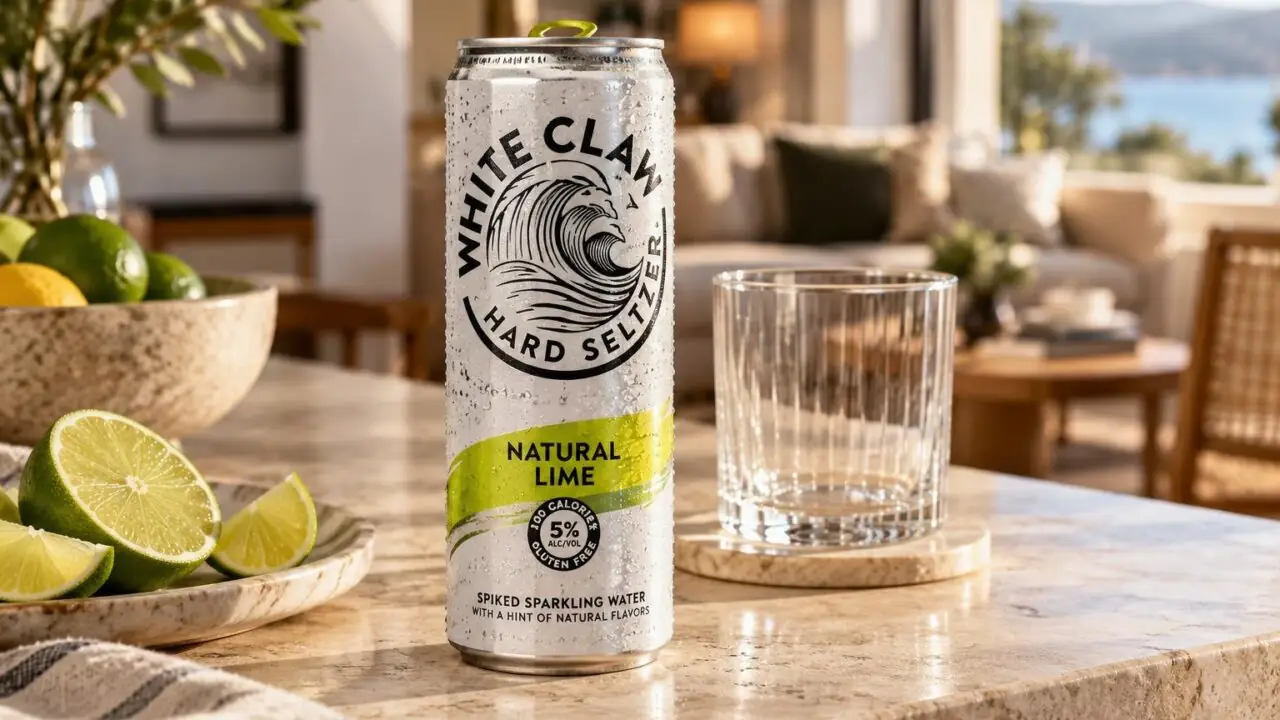
White Claw is an alcoholic hard seltzer that can cause intoxication, so the answer to “Does White Claw Get You Drunk?” is yes.
Its alcohol—not its light flavor—can impair judgment, coordination, and reaction time, even before you recognize how much it has affected you.
A 12-ounce White Claw at 5% ABV contains one US standard drink, using the National Institute on Alcohol Abuse and Alcoholism’s definition. Your response depends on drinking speed, food intake, body composition, and medications.
This guide explains serving sizes, alcohol strength, and why feeling sober does not establish driving safety.
Can White Claw Get You Drunk
White Claw contains ethanol—the same intoxicating compound in beer, wine, and spirits. At 5% ABV per 12 oz can, it carries roughly the same alcohol content as a standard American lager. Drinking enough will absolutely get you drunk.
Each 12 oz White Claw delivers approximately 14 grams of pure alcohol, matching the NIAAA’s definition of one standard drink.
White Claw vs. Common Alcoholic Beverages
| Beverage | Serving Size | ABV | Standard Drinks |
| White Claw (Original) | 12 oz | 5% | 1.0 |
| Bud Light | 12 oz | 4.2% | 0.84 |
| Budweiser | 12 oz | 5% | 1.0 |
| White Claw Surge | 16 oz | 8% | 1.7 |
| Glass of Wine | 5 oz | 12% | 1.0 |
| Shot of Vodka | 1.5 oz | 40% | 1.0 |
White Claw Surge hits harder. Its 8% ABV in a 16 oz tallboy delivers nearly two standard drinks per can—almost double a regular White Claw.
Why People Underestimate White Claw’s Effects
Several factors cause drinkers to misjudge their intake with hard seltzers:
- Light, fruity taste masks the alcohol, encouraging faster consumption than beer or mixed drinks
- Carbonation may accelerate alcohol absorption through the stomach lining, according to research published in the British Medical Journal
- Low calorie perception (100 calories per can) creates a psychological “health halo” that leads to drinking more cans per session
- No heavy, bloated feeling compared to beer, so physical cues to stop drinking arrive later
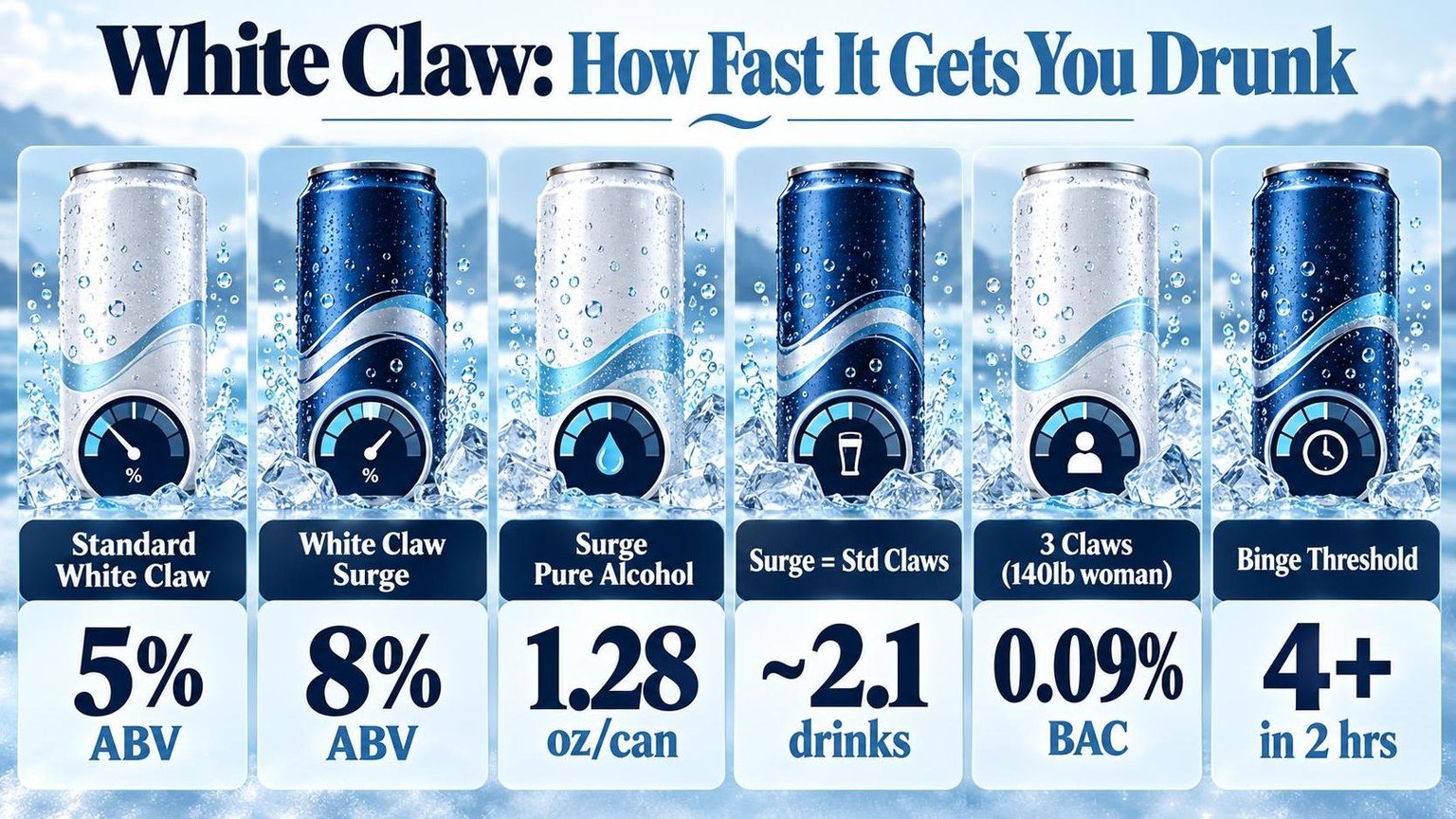
A 140 lb woman drinking three White Claws in one hour would reach an estimated BAC of approximately 0.09%—above the US legal driving limit of 0.08%.
A 180 lb man consuming four cans in one hour would reach roughly 0.07% BAC, approaching the legal threshold.
The Bottom Line on Intoxication
White Claw is not “lighter” alcohol. One can equals one beer, one glass of wine, or one shot. The CDC defines binge drinking as four or more drinks for women and five or more for men within two hours.
Four White Claws in that window qualifies.
White Claw Alcohol Content by Product
White Claw offers products across three distinct ABV tiers: 5%, 7%, and 8%. Understanding which product you’re drinking directly determines how quickly alcohol accumulates in your system and whether intoxication occurs.
ABV Breakdown Across the White Claw Lineup
| Product Line | ABV | Calories (per 12 oz) | Can Size |
| White Claw Hard Seltzer (Original) | 5% | 100 | 12 oz |
| White Claw Surge | 8% | 220 | 16 oz |
| White Claw Refrshr | 5% | 100 | 12 oz |
| White Claw Vodka + Soda | 5% | 100 | 12 oz |
The standard 12 oz White Claw at 5% ABV contains 0.6 oz of pure alcohol — identical to a 12 oz domestic beer like Bud Light (also 5% ABV).
White Claw Surge: A Significant Step Up
White Claw Surge delivers 1.28 oz of pure alcohol per 16 oz can. That’s more than double the pure alcohol in a standard White Claw, equivalent to roughly two light beers.
Many drinkers overlook this difference. Consuming three Surge cans means ingesting 3.84 oz of pure ethanol — comparable to drinking six standard White Claws.
How White Claw Compares to Other Drinks
| Drink | Serving Size | ABV | Pure Alcohol (oz) |
| White Claw (standard) | 12 oz | 5% | 0.6 |
| Budweiser | 12 oz | 5% | 0.6 |
| Glass of wine | 5 oz | 12% | 0.6 |
| Shot of vodka | 1.5 oz | 40% | 0.6 |
| White Claw Surge | 16 oz | 8% | 1.28 |
A standard White Claw equals one standard drink as defined by the NIAAA. The Surge in its 16 oz can equals approximately 2.1 standard drinks per single can.
This parity with beer and wine means White Claw produces the same blood alcohol concentration rise per serving. The carbonation may accelerate absorption slightly, but the ethanol quantity is chemically equivalent.
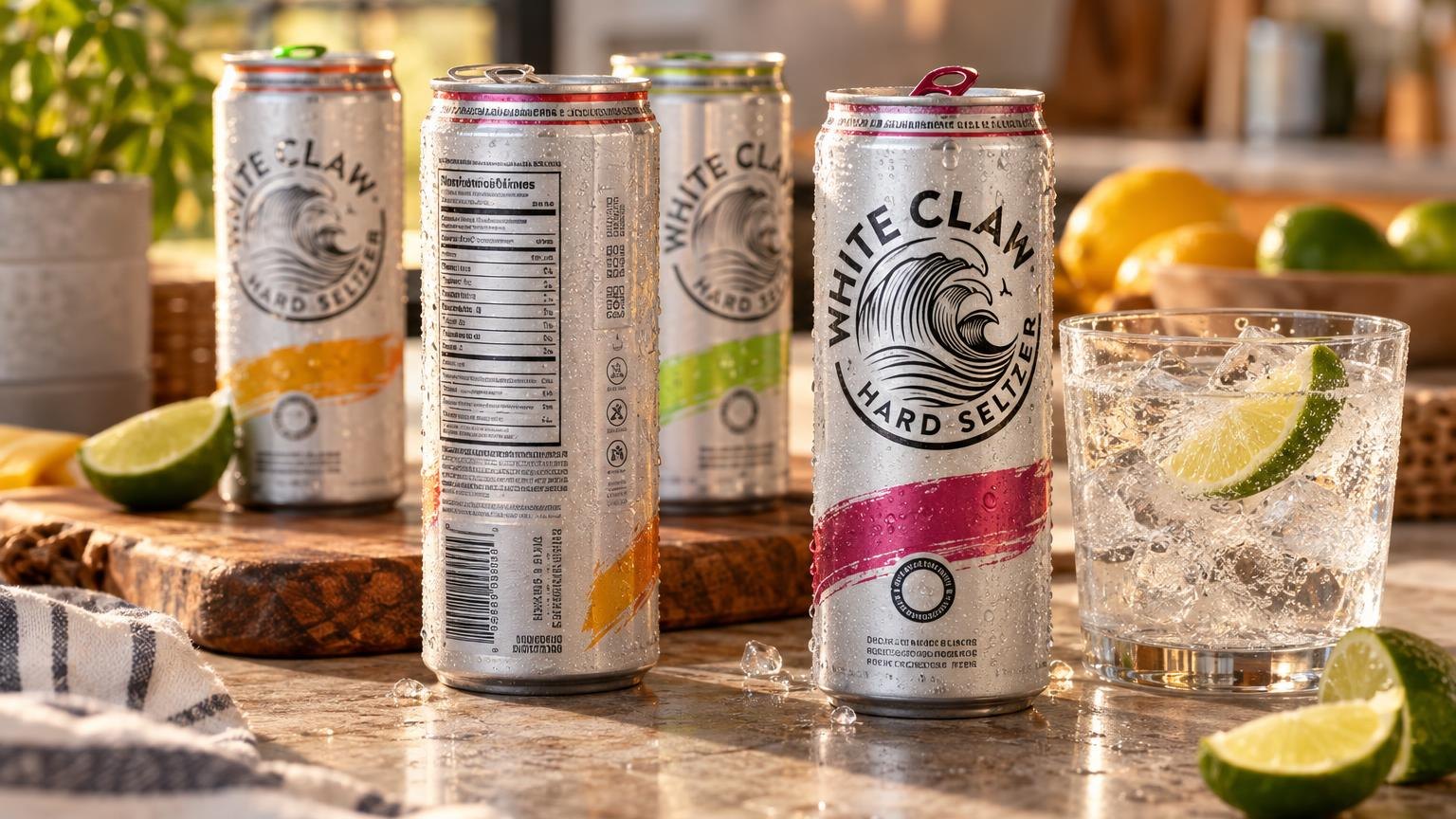
How Many Standard Drinks Per Can
A standard drink in the United States contains exactly 14 grams (0.6 fluid ounces) of pure alcohol. Most White Claw cans exceed one standard drink, which matters when tracking intake and estimating impairment.
The formula for calculating standard drinks is: (volume in ounces × ABV × 0.06) ÷ 0.6.
Standard Drinks by White Claw Format
| White Claw Format | Volume (oz) | ABV | Pure Alcohol (oz) | Standard Drinks |
| Original Slim Can | 12 | 5% | 0.60 | 1.0 |
| White Claw Surge | 16 | 8% | 1.28 | 2.1 |
| White Claw 70 | 12 | 3.7% | 0.44 | 0.74 |
| White Claw Refrshr | 12 | 4.5% | 0.54 | 0.9 |
The standard 12 oz can at 5% ABV lands at exactly one standard drink — identical to a 12 oz regular beer.
White Claw Surge is the outlier. One 16 oz Surge can delivers 2.1 standard drinks. Consuming three Surge cans equals roughly 6.3 standard drinks — enough to push most adults well past the legal BAC limit of 0.08%.
Why This Matters for Intoxication
The NIAAA defines binge drinking as reaching a BAC of 0.08% or higher. That threshold is typically hit with 4 standard drinks for women and 5 for men within about two hours.
- 4 original White Claws in two hours delivers 4.0 standard drinks — binge-level for most women
- 3 White Claw Surge cans in two hours delivers 6.3 standard drinks — binge-level for both sexes
- 5 White Claw 70 cans in two hours delivers only 3.7 standard drinks — still below the male binge threshold
Drinkers frequently undercount because the light, fruity taste masks the alcohol. A 2023 survey by the American Addiction Centers found 29.1% of hard seltzer consumers reported unintentionally drinking more than planned.
Always check the specific can format. The difference between White Claw 70 and Surge is nearly three-fold in alcohol per ounce — a distinction that directly determines whether two cans leave you buzzed or impaired.
How Quickly White Claw Affects You
Alcohol from a White Claw enters your bloodstream within minutes of your first sip. A standard 12 oz can at 5% ABV delivers roughly 0.6 oz of pure ethanol—identical to a standard beer or a 5 oz glass of wine.
Most people begin feeling effects within 15–45 minutes of finishing one can. The exact timeline depends on several measurable variables.
Key Factors That Speed Up or Slow Down Absorption
- Body weight: A 120 lb person reaches a higher BAC than a 180 lb person from the same single can.
- Empty stomach: Drinking without food increases absorption rate by up to 3× compared to drinking after a full meal.
- Carbonation: Hard seltzers are carbonated, and carbonation accelerates gastric emptying—pushing alcohol into the small intestine faster, where ~80% of absorption occurs.
- Hydration status: Dehydration concentrates alcohol in less total body water, raising effective BAC.
- Biological sex: Women generally have lower levels of alcohol dehydrogenase and a higher body-fat-to-water ratio, producing a higher BAC per drink.
Estimated BAC After White Claw by Body Weight
| Body Weight | 1 Can (12 oz, 5% ABV) | 3 Cans | 5 Cans |
| 120 lb / 54 kg | ~0.03% BAC | ~0.09% BAC | ~0.15% BAC |
| 150 lb / 68 kg | ~0.025% BAC | ~0.07% BAC | ~0.12% BAC |
| 180 lb / 82 kg | ~0.02% BAC | ~0.06% BAC | ~0.10% BAC |
| 220 lb / 100 kg | ~0.017% BAC | ~0.05% BAC | ~0.08% BAC |
These estimates assume consumption within one hour and a metabolic clearance rate of approximately 0.015% BAC per hour—the average for most adults.
The legal driving limit across all 50 U.S. states is 0.08% BAC. A 150 lb person can reach that threshold after roughly 3–4 White Claws consumed within 60 minutes.
Carbonation creates a deceptive factor. A 2007 study in the Journal of Forensic and Legal Medicine found carbonated alcoholic drinks produced measurably faster peak BAC levels than flat equivalents with identical alcohol content.
White Claw’s light, fruity taste also masks the alcohol sensation, making it easy to drink quickly. Faster consumption compresses the absorption window and raises peak BAC significantly compared to slow sipping over several hours.
Why White Claw Intoxication Varies
Identical White Claw consumption produces dramatically different intoxication levels across individuals. Body weight, biological sex, food intake, and tolerance each shift blood alcohol concentration (BAC) by measurable margins.
Body Weight and BAC
A 140-pound person reaches a higher BAC than a 200-pound person drinking the same amount. The following table shows estimated BAC after consuming three 12 oz White Claws (5% ABV each) over two hours:
| Body Weight | Biological Sex | Estimated BAC |
| 120 lbs | Female | 0.094% |
| 120 lbs | Male | 0.077% |
| 160 lbs | Female | 0.070% |
| 160 lbs | Male | 0.058% |
| 200 lbs | Female | 0.056% |
| 200 lbs | Male | 0.046% |
The legal driving limit in all 50 U.S. states is 0.08% BAC. A 120-pound woman exceeds that threshold with just three cans.
Biological Sex Differences
Women generally carry a higher body fat percentage and lower levels of alcohol dehydrogenase, the enzyme that breaks down ethanol. This means women metabolize alcohol roughly 20–30% slower than men of equivalent weight.
Food and Hydration
Drinking White Claw on an empty stomach can raise peak BAC by up to 45% compared to drinking after a full meal. Food slows gastric emptying, reducing the rate alcohol enters the bloodstream.
Carbonation Factor
White Claw is carbonated, and carbonation accelerates alcohol absorption.
A study published in The Journal of Forensic and Legal Medicine found carbonated alcoholic beverages increased absorption rates, leading to faster BAC peaks than flat drinks of identical ABV.
Additional Variables
- Tolerance: Regular drinkers may feel fewer subjective effects, but their BAC remains the same as non-tolerant individuals consuming equal amounts.
- Medications: Antihistamines, antidepressants, and pain relievers can amplify alcohol’s sedative effects.
- Sleep deprivation: Even moderate fatigue compounds impairment at any BAC level.
These factors collectively explain why one person feels noticeably drunk after two White Claws while another feels relatively unaffected after four.
White Claw Versus Beer and Wine
White Claw occupies a middle ground between light beer and wine in alcohol content. Understanding exactly where it falls helps you gauge how quickly intoxication sets in relative to drinks you already know.
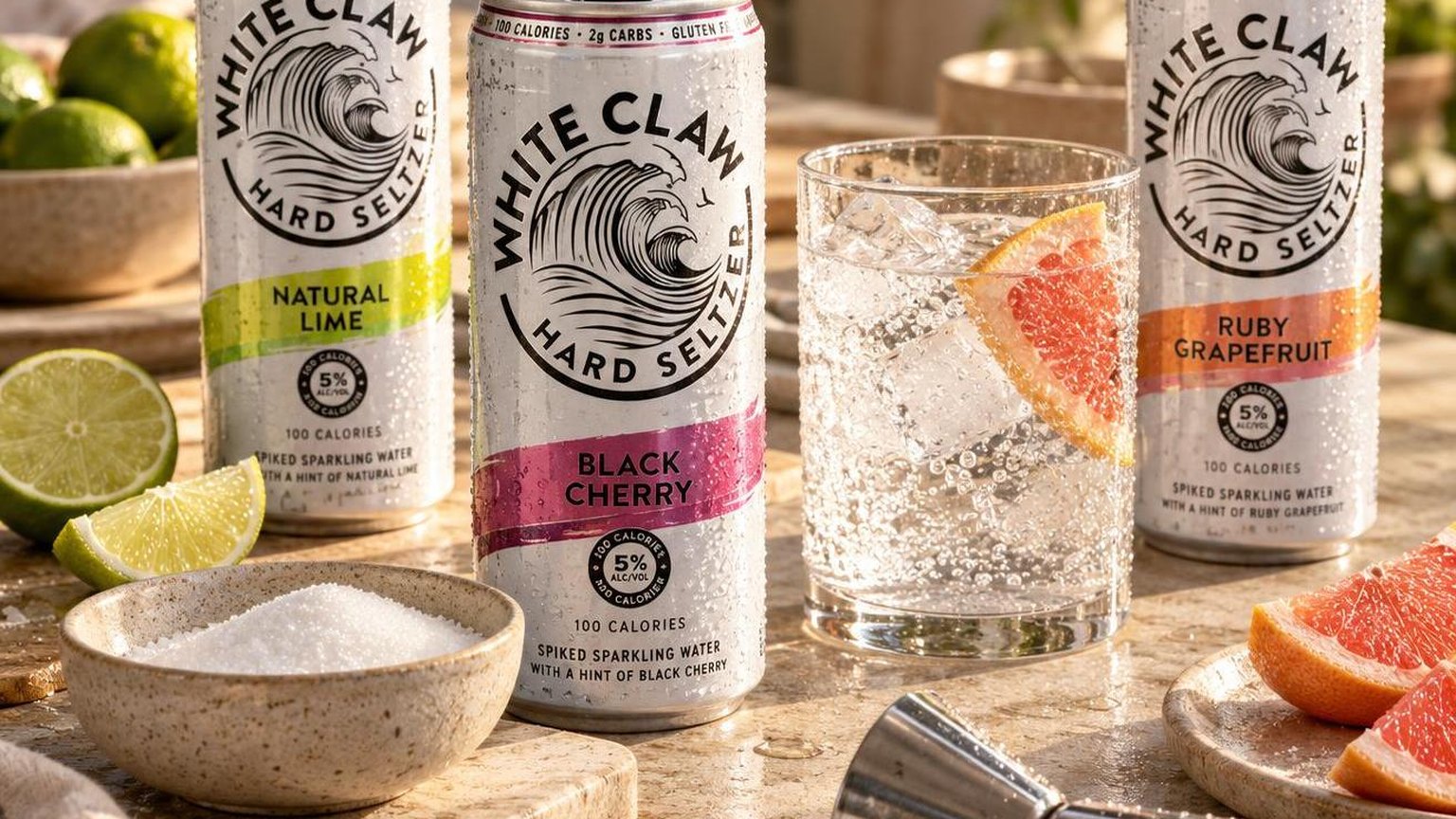
A standard 12 oz White Claw contains 5% ABV and 100 calories. Here is how it compares to common alternatives:
| Drink | Typical Serving | ABV | Calories | Carbs (g) |
| White Claw Original | 12 oz | 5% | 100 | 2 |
| White Claw Surge | 12 oz | 8% | 220 | 6 |
| Bud Light | 12 oz | 4.2% | 110 | 6.6 |
| Budweiser | 12 oz | 5% | 145 | 10.6 |
| IPA (average) | 12 oz | 6–7% | 180–220 | 15–20 |
| White Wine (Sauvignon Blanc) | 5 oz | 12–13% | 120 | 3 |
| Red Wine (Cabernet Sauvignon) | 5 oz | 13–15% | 125 | 4 |
In pure alcohol per serving, one 12 oz White Claw delivers 0.6 oz of ethanol. A 12 oz Bud Light delivers roughly 0.5 oz, and a 5 oz glass of 13% wine delivers about 0.65 oz.
All three sit close to the NIAAA definition of one “standard drink,” which equals 0.6 oz of pure alcohol. White Claw matches that benchmark almost exactly.
Why White Claw Can Feel Stronger
Carbonation accelerates alcohol absorption through the stomach lining. A 2007 study in the Journal of Forensic and Legal Medicine found carbonated alcoholic drinks produced higher peak blood-alcohol concentrations than flat equivalents.
White Claw’s low calorie and carbohydrate count also matters. Beer’s higher carb load slows gastric emptying, which can moderate absorption. With only 2 g of carbs per can, White Claw offers less of that buffering effect.
Key Takeaways for Pacing
- Drinking four White Claws equals roughly four standard drinks — the same as four regular-strength beers or about three 5 oz glasses of wine.
- White Claw Surge at 8% ABV packs 1.6 times the alcohol of the original, making two Surges equivalent to roughly three regular cans.
- The light, fruity flavor and high carbonation can mask alcohol perception, leading to faster consumption and higher BAC.
Treat each can as a full standard drink. The lower calorie count does not reduce intoxication — it only reduces caloric intake.
Recognizing When White Claw Becomes Dangerous
White Claw’s light, carbonated profile masks real alcohol content.
A 12-oz can at 5% ABV delivers the same ethanol as a standard beer, and overconsumption carries identical risks — including alcohol poisoning, impaired driving, and organ damage.
Blood Alcohol Concentration (BAC) Estimates by White Claw Intake
BAC depends on body weight, sex, food intake, and drinking pace. The following estimates assume a 160-lb male drinking on a mostly empty stomach over one hour.
| White Claws Consumed (12 oz, 5% ABV) | Estimated BAC | Impairment Level |
| 2 cans | 0.03–0.04% | Mild relaxation, slight judgment reduction |
| 4 cans | 0.07–0.09% | Reduced coordination, at or above legal driving limit (0.08%) |
| 6 cans | 0.11–0.14% | Significant motor impairment, slurred speech |
| 8+ cans | 0.16%+ | High risk of blackout, vomiting, loss of consciousness |
A 130-lb woman drinking the same amounts would reach each BAC threshold roughly 1–3 drinks sooner due to differences in body water percentage and enzyme activity.
Warning Signs of Acute Alcohol Poisoning
BAC levels at or above 0.30% can be fatal. Seek emergency help immediately if someone shows any of these symptoms after drinking White Claw or any alcohol:
- Unconsciousness or inability to be woken
- Slow or irregular breathing — fewer than 8 breaths per minute
- Vomiting while unconscious or semi-conscious
- Pale, bluish, or cold skin
- Seizures
Why White Claw Specifically Increases Overconsumption Risk
The CDC defines binge drinking as 5+ drinks for men or 4+ drinks for women within two hours. Each White Claw counts as one standard drink.
Carbonation accelerates alcohol absorption through the stomach lining.
A 2007 study in the Journal of Forensic and Legal Medicine found carbonated alcoholic drinks raised BAC faster than flat equivalents by approximately 20% in early absorption phases.
White Claw’s fruit flavoring and low bitterness remove taste cues that typically slow beer consumption.
Drinkers often finish a can in under 10 minutes compared to 15–20 minutes for a typical beer, compressing intake and spiking BAC more rapidly.
Common Questions
Does White Claw Get You Drunk?
Yes. White Claw contains 5% ABV per 12 oz can—identical to most domestic beers like Bud Light (5% ABV) and Coors Light (4.2% ABV).
Consuming enough cans will raise your blood alcohol concentration and produce intoxication just like any other alcoholic beverage at that strength.
How Many White Claws Does It Take to Get Drunk?
For an average 160 lb person, three to four White Claws consumed within one hour will typically push BAC to around 0.08%, the legal driving limit in all 50 US states.
Body weight, sex, food intake, and individual alcohol tolerance shift that number significantly—a 120 lb woman may reach 0.08% after just two cans in the same timeframe.
Why Do People Say White Claw Hits Differently Than Beer?
White Claw’s light, carbonated, fruit-flavored profile makes it easier to drink quickly, which can accelerate alcohol absorption. Carbonation itself may speed gastric emptying, pushing alcohol into the small intestine faster.
There is no pharmacological difference between the ethanol in hard seltzer and the ethanol in beer—the “different drunk” perception is largely a function of drinking pace and expectations.
Does the Sugar Content in White Claw Affect How Drunk You Get?
White Claw contains only 2 g of sugar per 12 oz can, which is minimal.
Research published in the journal Alcoholism: Clinical and Experimental Research shows that mixers with sugar can slightly slow gastric emptying compared to artificially sweetened or sugar-free mixers,.
Meaning low-sugar drinks like White Claw may actually allow marginally faster alcohol absorption than a sugary cocktail.
Can You Get Drunk From White Claw Surge or Higher-ABV Variants?
White Claw Surge contains 8% ABV—60% more alcohol per can than the standard 5% version—packed into the same 12 oz serving. Two Surge cans deliver roughly the same alcohol as a standard 5 oz pour of 12.5% wine multiplied by two.
Drinkers who switch from regular White Claw to Surge without adjusting their pace risk reaching intoxication considerably faster.
Does Drinking White Claw Cause Worse Hangovers Than Wine or Liquor?
White Claw is low in congeners—the fermentation byproducts (acetaldehyde, tannins, methanol) abundant in dark spirits and red wine that peer-reviewed studies link to hangover severity.
In theory, a clear, simply fermented hard seltzer should produce milder hangover symptoms at equivalent alcohol doses. However, overconsumption of any ethanol source will still cause dehydration, headache, and nausea.
Is It Safer to Drink White Claw Because It Has Fewer Calories?
White Claw’s 100-calorie, 2 g-carb profile is a nutritional distinction, not a safety one. A 100-calorie can still delivers 14 g of pure ethanol—the same amount found in a standard US drink.
Lower calories do not reduce impairment, BAC, or the risk of alcohol-related harm; they only mean fewer empty calories consumed alongside the same pharmacologically active dose of alcohol.
Related Reading
- Truly Black Cherry – Basic Information You Must Know
- Truly Margarita Pack Review – The Truth You Didn't Know
- Truly Pineapple – Information From Experts
- Truly Wild Berry – What You Need to Know?
- Truly Margarita Style – What You Need to Know?
- What Alcohol Is in a Truly? Everything You Need to Know in 2026 (Full Guide)
- How Many Hard Seltzer To Get Drunk?
- What Is Hard Seltzer? Brands, Ingredients & ABV Guide (2026)
- Does Hard Seltzer Expire? The Most Accurate Answer
- All Non-Alcoholic Beverages Guides
- National Institute on Alcohol Abuse and Alcoholism – "What Is A Standard Drink?" (2023)
- Centers for Disease Control and Prevention – "Dietary Guidelines for Alcohol" (2022)
- Alcohol and Tobacco Tax and Trade Bureau – "Beverage Alcohol Manual" (2007)
- National Institute on Alcohol Abuse and Alcoholism – "Alcohol's Effects on the Body" (2023)
- PubMed Central – "Blood Alcohol Concentration and Rate of Alcohol Absorption" (2015)
- Stanford University Office of Alcohol Policy and Education – "Factors That Affect How Alcohol Is Absorbed" (2023)
- U.S. Food and Drug Administration – "Alcoholic Beverages: Labeling and Advertising" (2022)
- Harvard T.H. Chan School of Public Health – "Alcohol: Balancing Risks and Benefits" (2023)