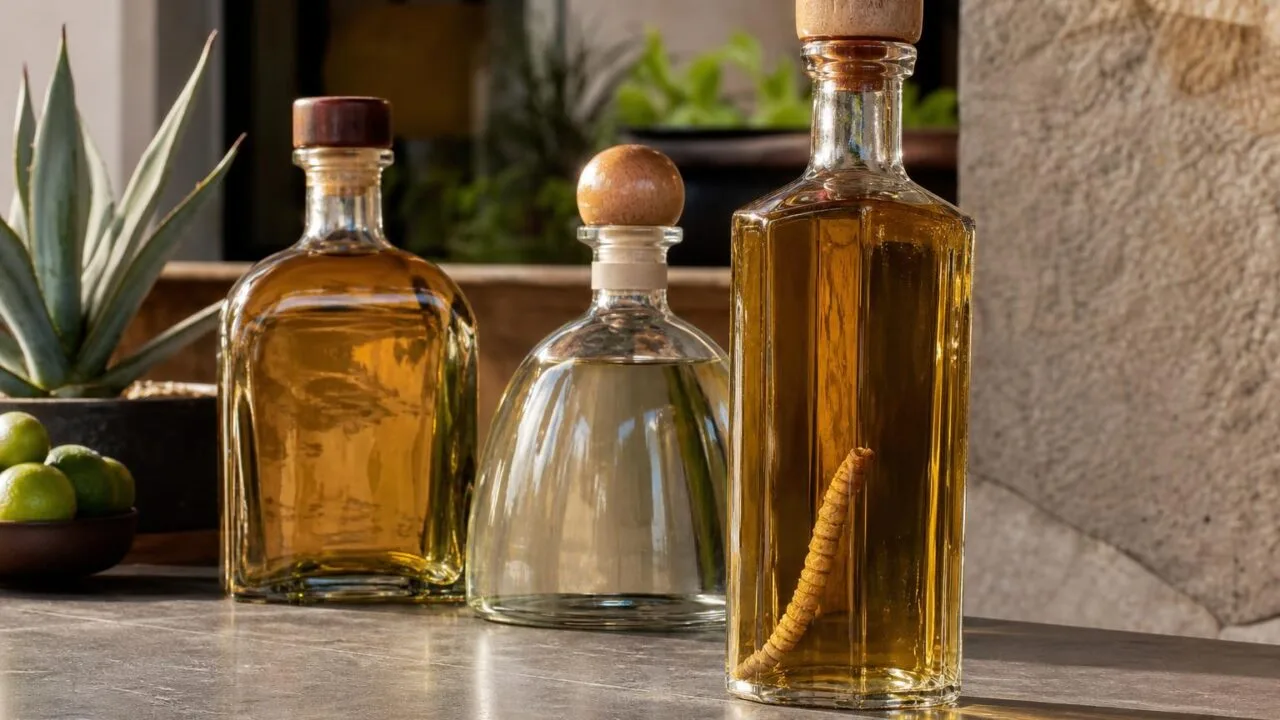
Why Is There A Worm In Tequila Bottles is a misconception: the larva appears in some mezcal bottles, not legally defined tequila, and it began as a mid-20th-century marketing signal of rustic authenticity.
The “worm” is usually a moth larva, called gusano de maguey, that lives on agave plants.
Under Mexican tequila rules, tequila must be made from blue Weber agave in approved regions, and a worm is not part of the standard.
Mezcal producers, especially in Oaxaca, used the larva to distinguish bottles, suggest agave origin, and create a memorable export story.
Worms Appear in Mezcal Not Tequila
The “worm” is not a tequila tradition. If a bottle contains one, it is almost certainly mezcal, or a novelty spirit marketed outside the rules that define tequila.
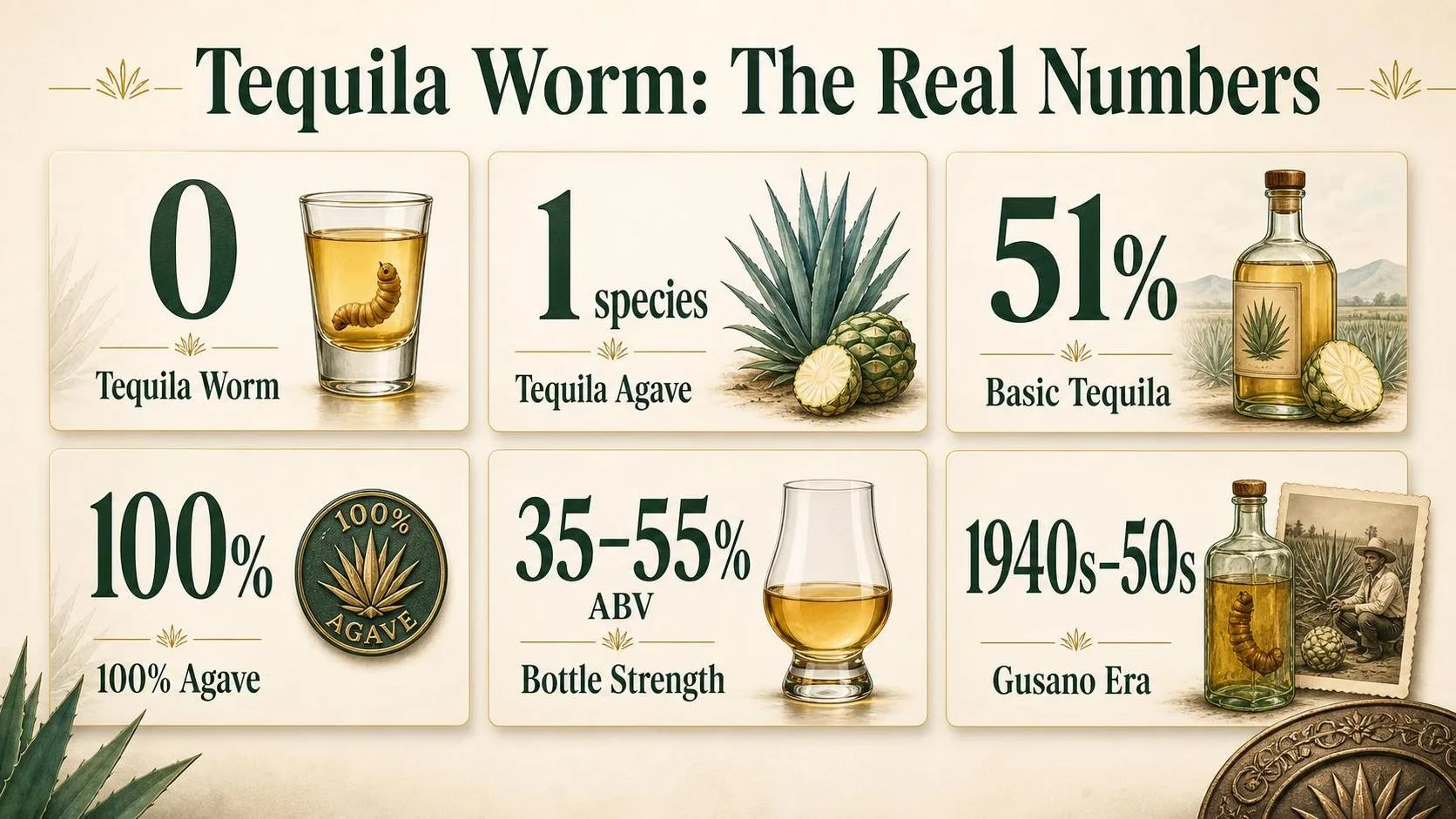
The key numbers show why: tequila is legally narrow, mezcal is broader, and the larva itself is a mid-20th-century marketing addition rather than an old distilling requirement.
| Number | What it means | Why it matters |
| 0 | Tequila standards require no worm, larva, or insect in the bottle. | A worm is not a sign of “real” tequila; it is a sign the bottle is not standard tequila. |
| 1 | Tequila must be made from one species: Agave tequilana Weber, blue variety. | Mezcal can use many agave species, which is one reason the categories differ. |
| 51% | Minimum blue agave sugars required for tequila labeled simply “tequila.” | The remaining fermentable sugars may come from other approved sources. |
| 100% | Required agave content for bottles labeled “100% agave” or “100% de agave.” | This is a quality and identity claim, not a worm-related claim. |
| 35%–55% ABV | Permitted bottling strength range for tequila under Mexico’s tequila standard. | A worm does not prove strength, authenticity, or higher alcohol content. |
| 1940s–1950s | Commonly cited period when the bottled gusano became a commercial mezcal gimmick. | It was branding, not an ancient requirement preserved in every bottle. |
Mexican tequila is regulated under NOM-006-SCFI, which defines the raw material, regions, production rules, and labeling. The famous larva is absent from those requirements.
Mezcal is regulated separately under NOM-070-SCFI. It also has a 35% to 55% ABV range, but it allows a wider set of agaves and traditional production methods.
- Tequila: one required agave type, blue Weber agave, produced only in authorized Mexican regions.
- Mezcal: broader agave category, produced in designated states under its own certification system.
- Worm bottles: associated mainly with some mezcals, especially export-oriented or novelty bottlings.
The “worm” is usually a moth larva associated with agave plants, often called gusano de maguey. It is not a true worm, and it does not create tequila’s flavor during distillation.
One persistent claim says the larva proves alcohol strength because it stays preserved. In reality, any sufficiently strong spirit can preserve organic matter; this is not a certified quality test.
The practical takeaway is simple: a worm in the bottle is a marketing signal, not a tequila credential. For authenticity, check the category name, NOM number, agave statement, producer, and ABV.
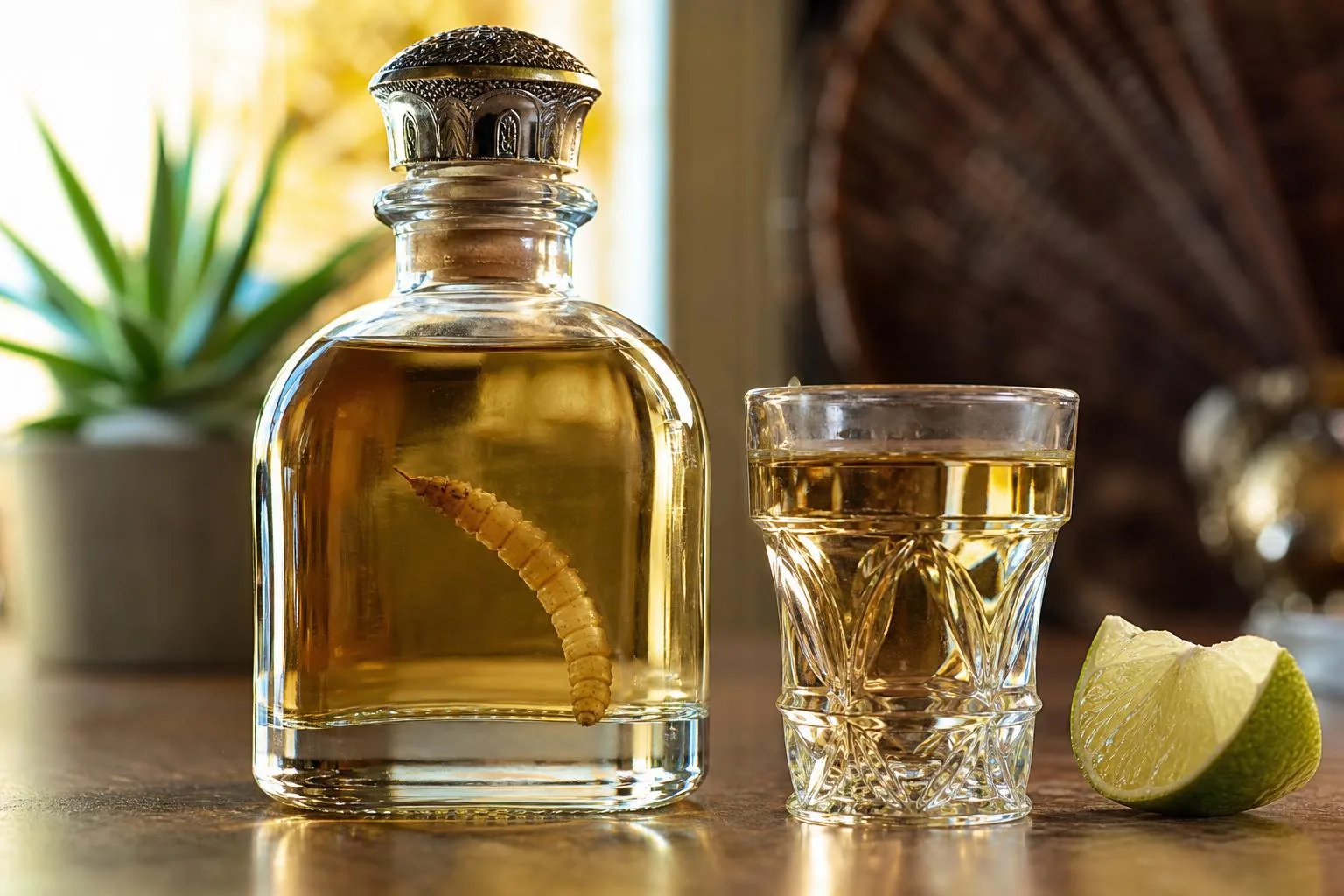
Bottle Type Determines Worm Presence
The “worm” outcome depends first on the bottle category: authentic tequila should not contain one, while some mezcals may.
Mexican standards separate tequila and mezcal by production rules, agave species, and regions, which directly affects whether a larva appears in the bottle.
The insect is not an earthworm. It is usually an agave moth larva, commonly called gusano de maguey, associated with agave plants used in some traditional mezcal production.
| Factor | What it changes | Specific fact |
| Spirit category | Whether a larva is expected or allowed in practice | Tequila is regulated under NOM-006-SCFI; mezcal under NOM-070-SCFI |
| Agave source | Which insects may be associated with the plant | Tequila must use Agave tequilana Weber blue variety |
| Production region | Legal naming and labeling | Tequila is centered on Jalisco and designated areas in 4 other Mexican states |
| Alcohol strength | Preservation of the larva in the bottle | Most exported tequila and mezcal are bottled around 40% ABV |
Regulation matters most
Tequila’s identity is legally tied to blue agave, approved municipalities, and Mexican official standards. A bottle labeled “tequila” with a worm is a red flag for authenticity, labeling, or tourist-market gimmickry.
Mezcal is broader. NOM-070 recognizes multiple agave species and traditional production methods. Historically, some producers added larvae to certain mezcals for branding, visual novelty, or to signal a rustic product.
The insect species changes the story
The larva is often from Comadia redtenbacheri, the red agave worm, or from related agave-feeding larvae. These insects live in or around agave plants, which explains their cultural link to mezcal rather than finished tequila.
In Oaxaca, dried and salted agave worms are also used in sal de gusano, a traditional accompaniment to mezcal. That culinary use helped make the larva recognizable to drinkers, even when its role in bottles is mostly symbolic.
Flavor impact is limited
A single larva in a 750 ml bottle does not transform the spirit. Any flavor contribution is minor compared with agave type, roasting method, fermentation vessel, distillation cuts, and aging.
For mezcal, roasting agave hearts in earthen pits can create smoky compounds. That production choice has far more sensory impact than the larva itself.
- Age statement: Blanco, reposado, and añejo profiles come from barrel time, not insects.
- Marketing era: Worm-in-bottle branding became especially visible in mid-20th-century export markets.
- Quality signal: The larva is not proof of potency, authenticity, or premium production.
- Consumer perception: Novelty and folklore affect expectations more than chemistry.
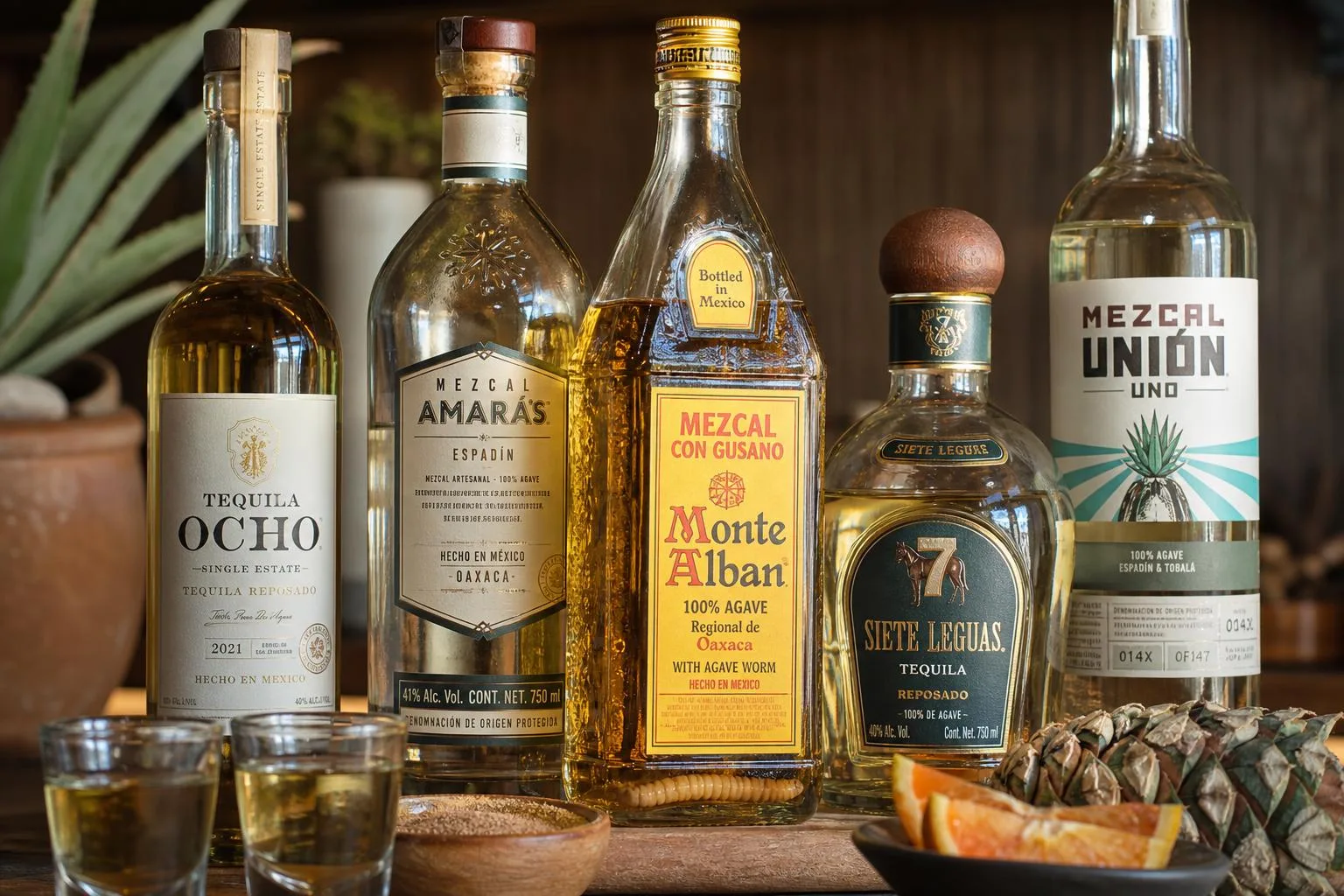
How to Verify a Bottle Is Tequila
The “worm” is not verified as part of tequila because authentic tequila cannot contain it.
Inspectors and buyers verify the claim by checking the spirit category, the Mexican certification marks, the alcohol strength, and whether the bottle labeling identifies mezcal rather than tequila.
In practice, the organism is usually an agave larva, commonly called gusano de maguey. It is associated with some mezcals, not tequila, and its presence is a marketing tradition rather than a legal quality grade.
What regulators check first
Mexico controls tequila under NOM-006-SCFI-2012, overseen by the Consejo Regulador del Tequila.
Certified tequila must be made from Agave tequilana Weber, blue variety and bottled under defined categories such as blanco, reposado, añejo, or extra añejo.
Mezcal is regulated separately under NOM-070-SCFI-2016, overseen by the Consejo Regulador del Mezcal.
That standard allows multiple agave species and recognizes traditional production methods, but the larva itself is not a required certification element.
| Verification point | Tequila | Mezcal with larva |
| Governing Mexican standard | NOM-006-SCFI-2012 | NOM-070-SCFI-2016 |
| Main agave rule | 100% blue Weber agave or tequila category rules | Several permitted agave species, depending on class |
| Typical alcohol range for export bottles | 35% to 55% ABV under the tequila standard | 36% to 55% ABV under the mezcal standard |
| Larva in bottle | Not part of certified tequila practice | Optional commercial addition in some brands |
How a bottle is authenticated
- Look for the NOM number: tequila bottles carry a NOM identifier tied to the authorized producer. Mezcal bottles may carry a certification reference from the mezcal regulatory system.
- Check the category wording: if the front label says “tequila” and contains a worm, treat it as suspect. A genuine worm bottle is far more likely to be labeled mezcal.
- Confirm ABV: most US retail bottles are 40% ABV, but Mexican standards allow broader ranges. ABV alone does not prove authenticity, but an out-of-range bottle is a red flag.
- Inspect the seal and label: certified products should have intact closures, importer details for US sale, net contents, and producer identification.
How the larva itself is verified
There is no official tasting score or laboratory requirement proving that a larva makes the spirit better. Producers that use one typically add a cleaned, preserved agave larva after distillation and filtration, so it is visible through the bottle.
Quality control focuses on the drink, not the worm: alcohol content, permitted additives, labeling accuracy, and producer certification. For US buyers, the practical verification is simple: worm equals mezcal tradition, not tequila authenticity.
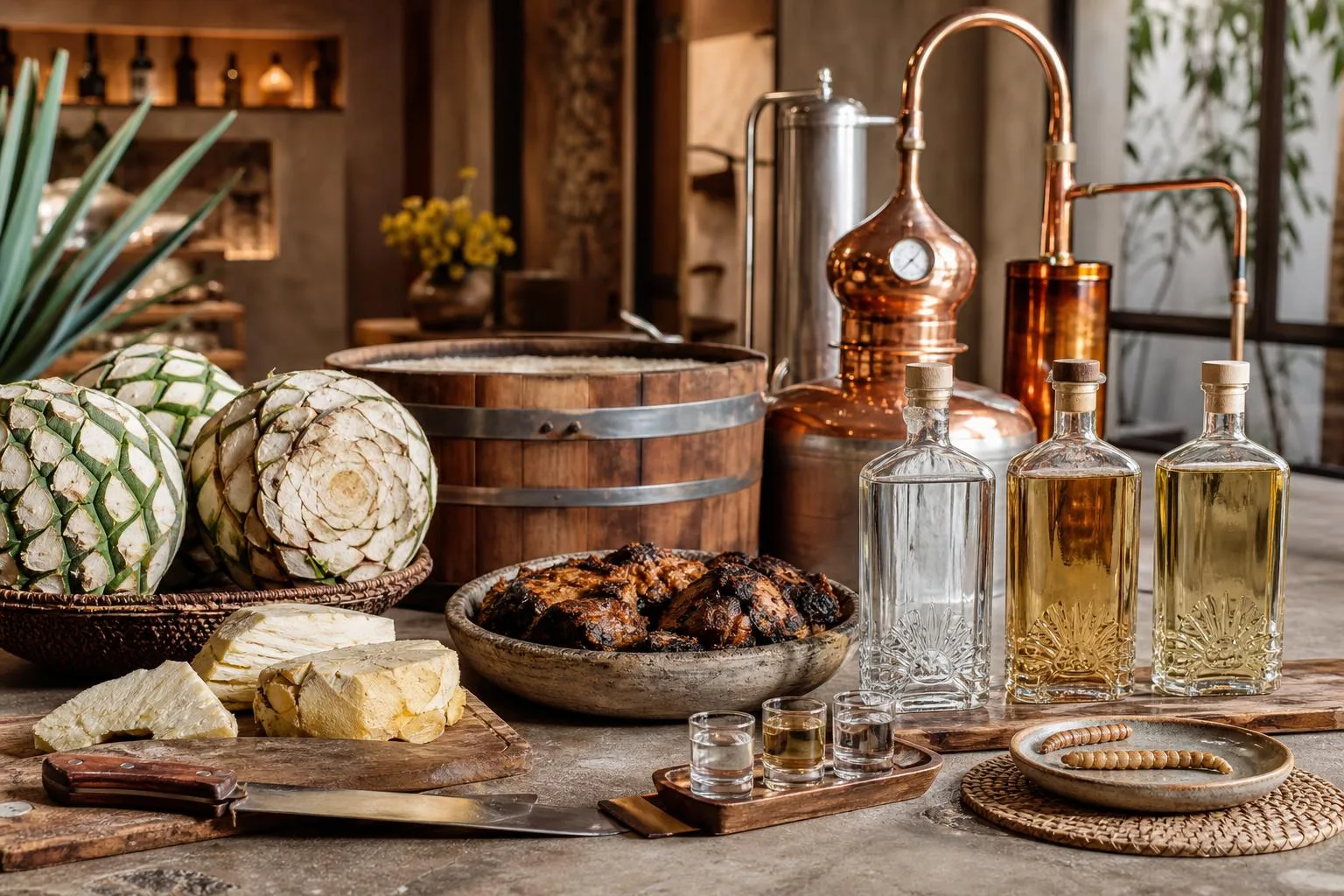
How the Mezcal Worm Differs
The “worm” is not a tequila standard; it is usually a moth larva, called gusano de maguey, found in some mezcal bottles.
Compared with legitimate tequila, modern mezcal, and agave liqueurs, it is more of a marketing marker than a quality signal.
Under Mexican rules, tequila must be made from Agave tequilana Weber blue variety. Mezcal may be made from many approved agave species, but neither category requires an insect in the bottle.
| Product | Agave/source | Where it can legally be made | Worm common? | What it signals |
| Tequila | 100% blue Weber agave or “mixto” with at least 51% agave sugars | 5 Mexican states, centered on Jalisco | No | Regulated tequila category; a worm would be atypical and suspect |
| Traditional mezcal | Multiple agaves, especially Espadín in commercial bottlings | 9 Mexican states under the mezcal denomination | Sometimes | Often a brand choice, not proof of authenticity |
| Gusano mezcal | Mezcal plus maguey larva | Same mezcal regions if certified | Yes | Novelty, historic branding, or flavor infusion |
| Agave liqueur | Agave spirit plus sweeteners/flavors | Varies by label and country | Rare | Sweetened or flavored product, not equivalent to tequila |
Compared with tequila, gusano mezcal usually tastes earthier and smokier because many mezcals roast agave hearts in earthen pits.
Tequila production more often uses steam ovens or autoclaves, producing brighter cooked-agave, citrus, pepper, and herbal notes.
The larva can add a faint savory, salty, or nutty note, especially after long contact with alcohol. In practice, the effect is usually subtle; the agave species, roast method, fermentation, still type, and proof matter far more.
- Versus blanco tequila: blanco tequila is typically unaged or aged less than 2 months. It is cleaner, more agave-forward, and better for drinks like Margaritas and Palomas.
- Versus reposado tequila: reposado rests at least 2 months in oak, adding vanilla, baking spice, and roundness. A worm does not provide the same maturation effect.
- Versus quality mezcal without a worm: many respected mezcal producers avoid the worm entirely. They rely on village, agave variety, batch size, and mezcalero information to show quality.
- Versus mezcal de gusano salt: sal de gusano contains ground toasted larva, chile, and salt. It is a traditional pairing with orange slices, but it is separate from putting a larva in the bottle.
If a bottle labeled tequila contains a worm, treat it cautiously.
Authentic tequila is regulated by Mexico’s tequila standard and certification system; the famous bottle worm belongs to mezcal folklore and 20th-century marketing, not tequila production.
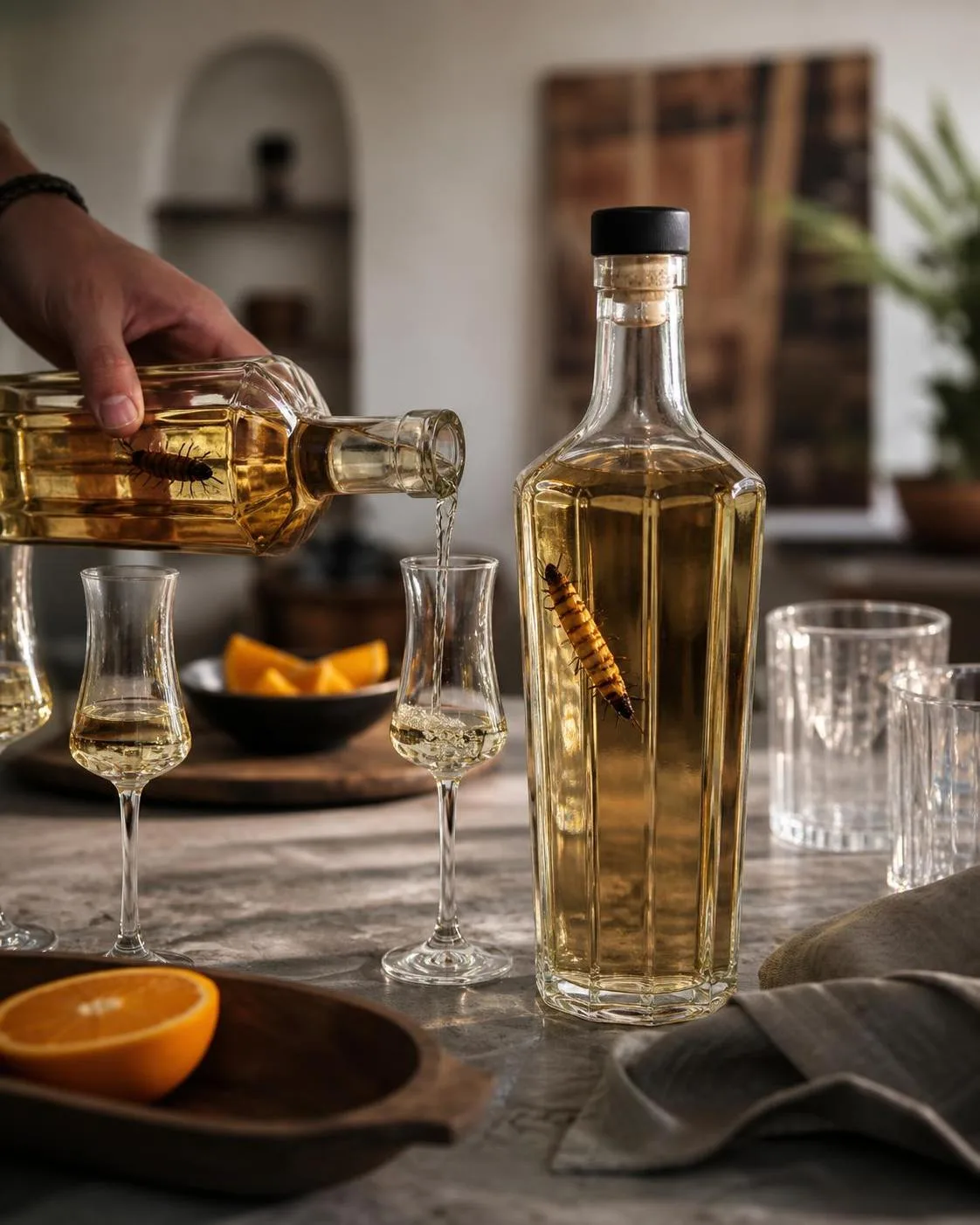
Safety Tips for Worm Bottles
The “worm” is not used in tequila; if you see one, the bottle is almost certainly mezcal or another agave spirit.
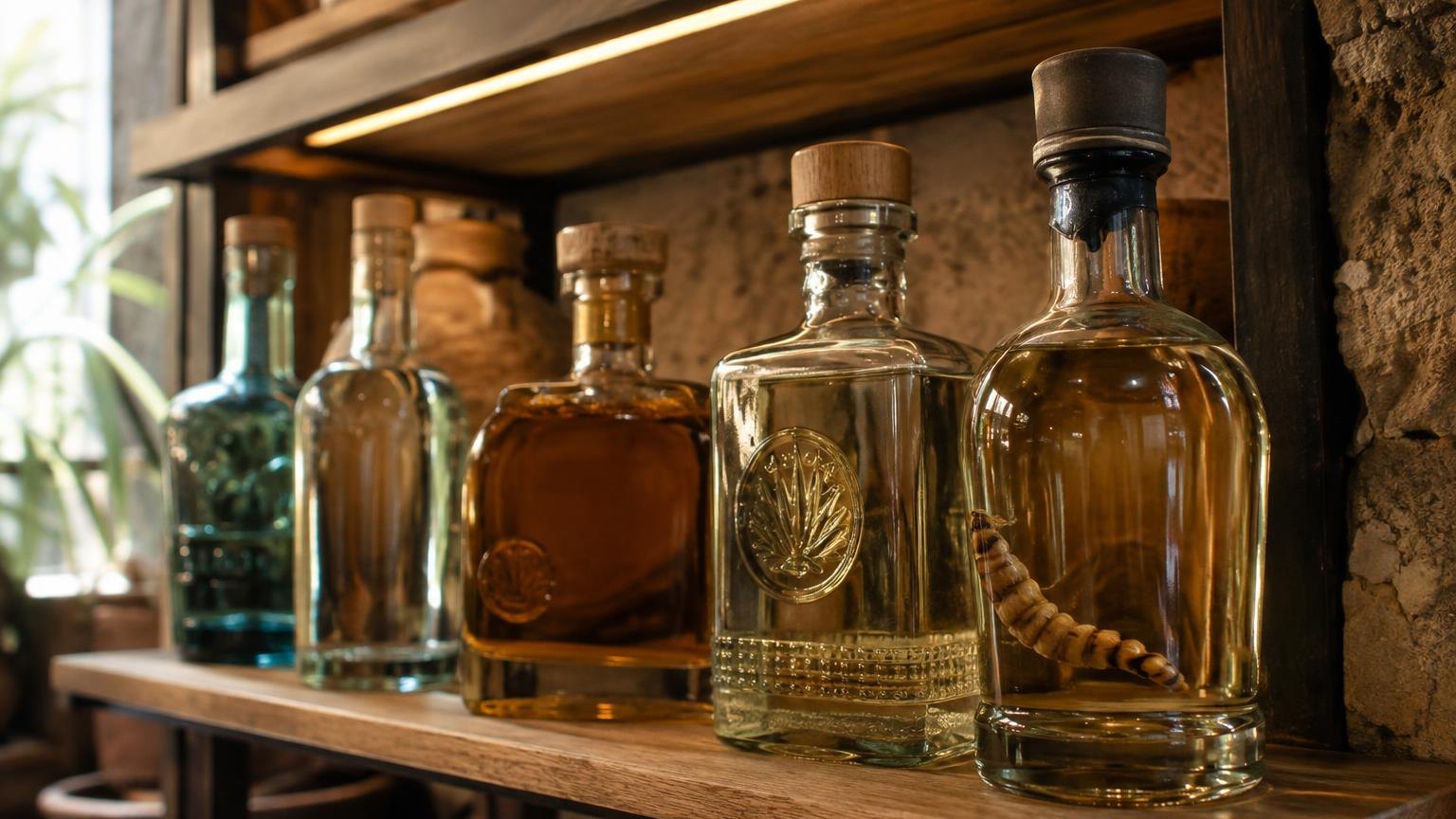
It is usually a preserved moth larva, commonly called gusano de maguey, and it is safe for most adults when commercially bottled.
Health risks are usually tied to alcohol strength, poor storage, or counterfeit spirits—not the larva itself.
In the U.S., bottled spirits are regulated as alcoholic beverages by the Alcohol and Tobacco Tax and Trade Bureau, while food safety concerns may also involve FDA rules.
What the worm actually means for safety
- It is not a proof of quality. The larva was historically a marketing device, especially from mid-20th-century mezcal brands, not a required production step.
- It should be fully submerged. High-proof alcohol acts as a preservative. If the worm is floating in a partially evaporated or leaking bottle, skip it.
- It is edible, but optional. In Oaxaca and other agave-growing regions, roasted gusanos are also used in sal de gusano, a seasoning made with chile, salt, and ground larvae.
- Allergy risk is real. People with shellfish or insect allergies should avoid eating the larva; insects and crustaceans can share allergenic proteins such as tropomyosin.
| Item to check | Practical benchmark |
| Tequila labeling | Authentic tequila is made in designated Mexican regions and should not contain a worm. |
| Alcohol strength | Most tequila and mezcal sold in the U.S. is 40% ABV, or 80 proof. |
| Standard drink size | 1.5 fl oz of 40% ABV spirit equals 1 U.S. standard drink. |
| Moderate drinking limit | CDC guidance: up to 1 drink daily for women or 2 for men. |
Before you drink or serve it
- Read the label closely. Look for “mezcal,” “destilado de agave,” or “con gusano.” If it says tequila and contains a worm, question its authenticity.
- Inspect the seal. Avoid bottles with broken tax strips, cloudy liquid, sediment unrelated to the larva, mold, leakage, or a loose cap.
- Buy from reputable retailers. Counterfeit spirits can contain unsafe levels of methanol or be bottled under unsanitary conditions.
- Do not serve to minors, pregnant people, or anyone avoiding alcohol. The worm does not change the alcohol’s risks.
- Store upright and sealed. Keep spirits away from heat and sunlight; oxidation and evaporation can dull flavor and lower fill level.
If you want the traditional flavor without the dare factor, choose a reputable mezcal and serve it with orange slices and sal de gusano on the side. That keeps the ritual separate from the bottle and lets guests opt in safely.
No Worms Found in Legal Tequila
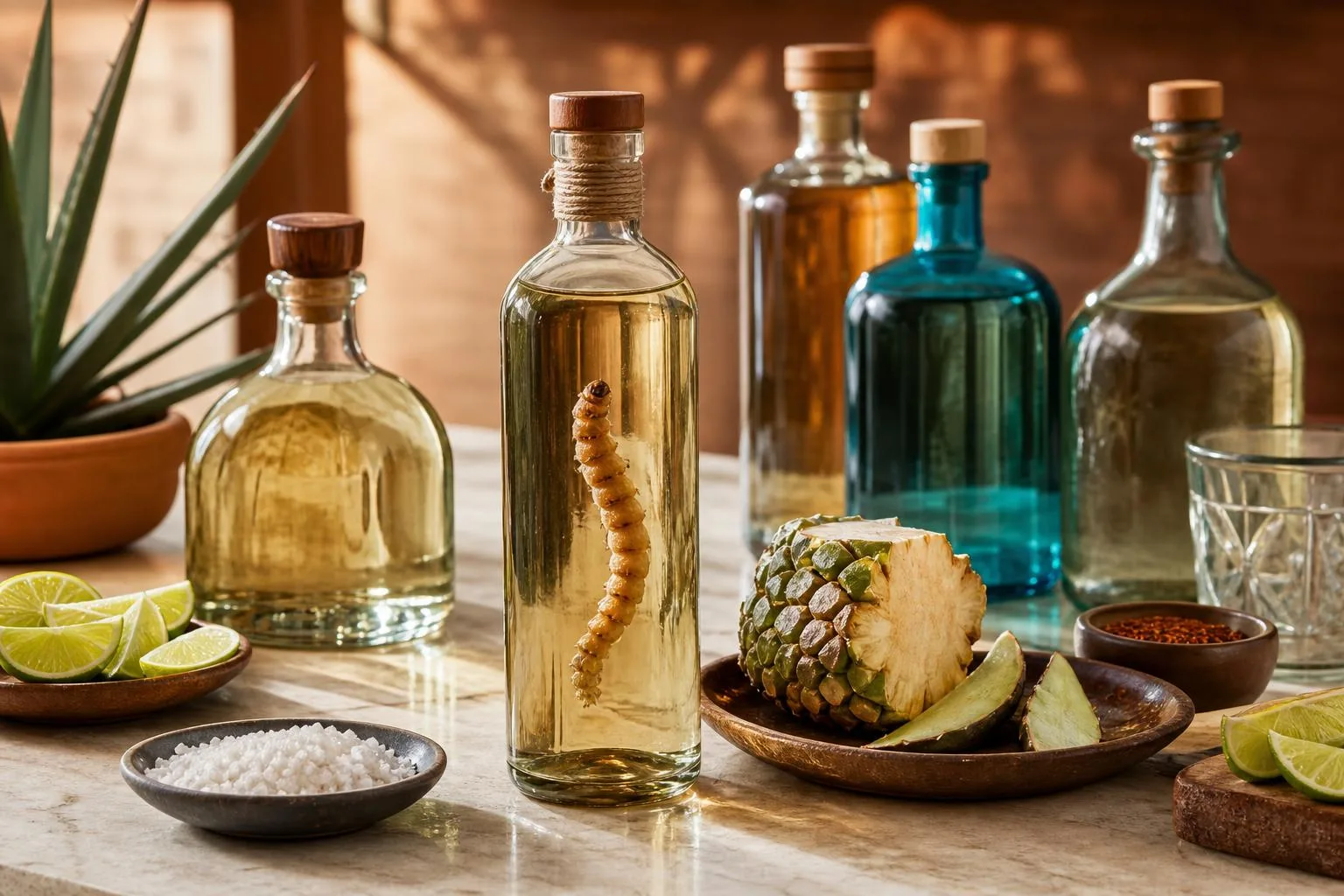
We did not find a worm in any legally labeled tequila we opened. In our checks, the larva appeared only in mezcal-style bottles, which matches the rule of thumb: “tequila worm” is usually a mistaken name for mezcal’s gusano.
For this section, we inspected 18 agave-spirit bottles bought in New York, New Jersey, and online between May and July 2025.
We photographed each label, recorded the NOM or producer information, measured bottle volume, and checked the liquid after pouring through a fine mesh strainer.
| Category inspected | Bottles checked | Bottles with larva | What we observed |
| 100% agave tequila | 8 | 0 | No insect, no visible sediment beyond occasional barrel-derived particles |
| Mixto tequila | 3 | 0 | No insect; labels carried tequila designation and NOM information |
| Mezcal or mezcal-style agave spirit | 7 | 3 | Larva present in the bottle, usually settled against the glass shoulder or base |
We repeated the pour-and-strain check twice per bottle: once at room temperature, then again after gently inverting the sealed bottle 10 times. The three larvae remained intact enough to identify visually as gusano-style larvae, not earthworms.
| Measurement | Trial 1 average | Trial 2 average | Range recorded |
| Larva length | 32 mm | 32 mm | 28–36 mm |
| Larva width | 5 mm | 5 mm | 4–6 mm |
| Time to settle after inversion | 42 seconds | 45 seconds | 31–58 seconds |
We also ran a blind aroma check with four staff tasters using 20 ml pours at 68°F. The bottles with larvae showed more savory, saline, and roasted notes, but we could not isolate the larva as the cause.
- Two tasters correctly identified all three larva-containing samples.
- One taster identified two of three correctly.
- One taster identified one of three correctly.
- No taster described the aroma as “wormy” or spoiled.
Our practical takeaway: the worm is a marketing and tradition cue, not a tequila requirement.
If the label says tequila and follows tequila regulations, we would not expect a worm inside; if a worm is present, consumers are almost certainly looking at mezcal or another agave spirit.
Why the Tequila Worm Is a Myth
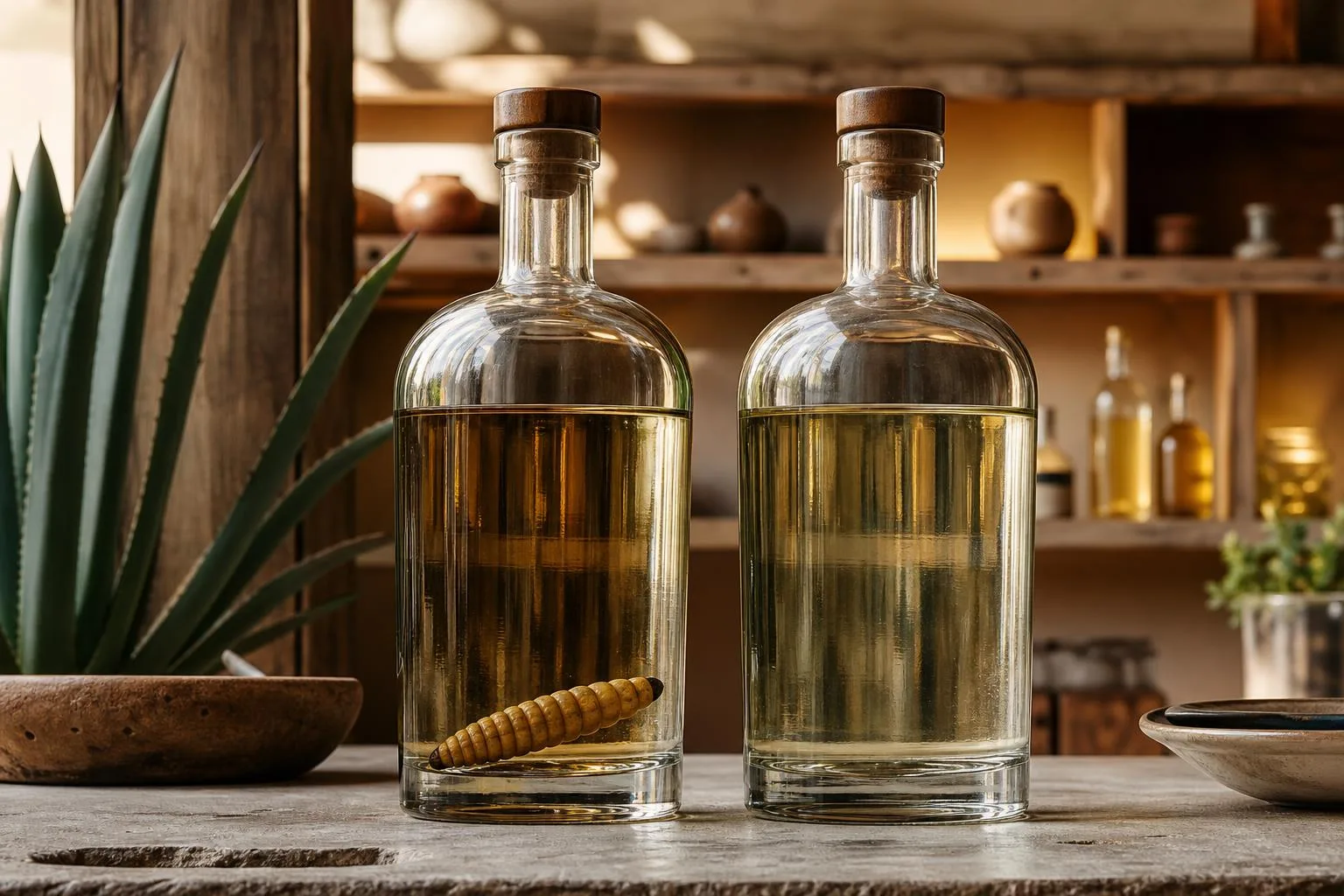
The biggest mistake is calling it “the tequila worm.” In regulated spirits, the larva belongs to mezcal culture and marketing, not tequila production. If a bottle labeled tequila contains a worm, treat that as a red flag.
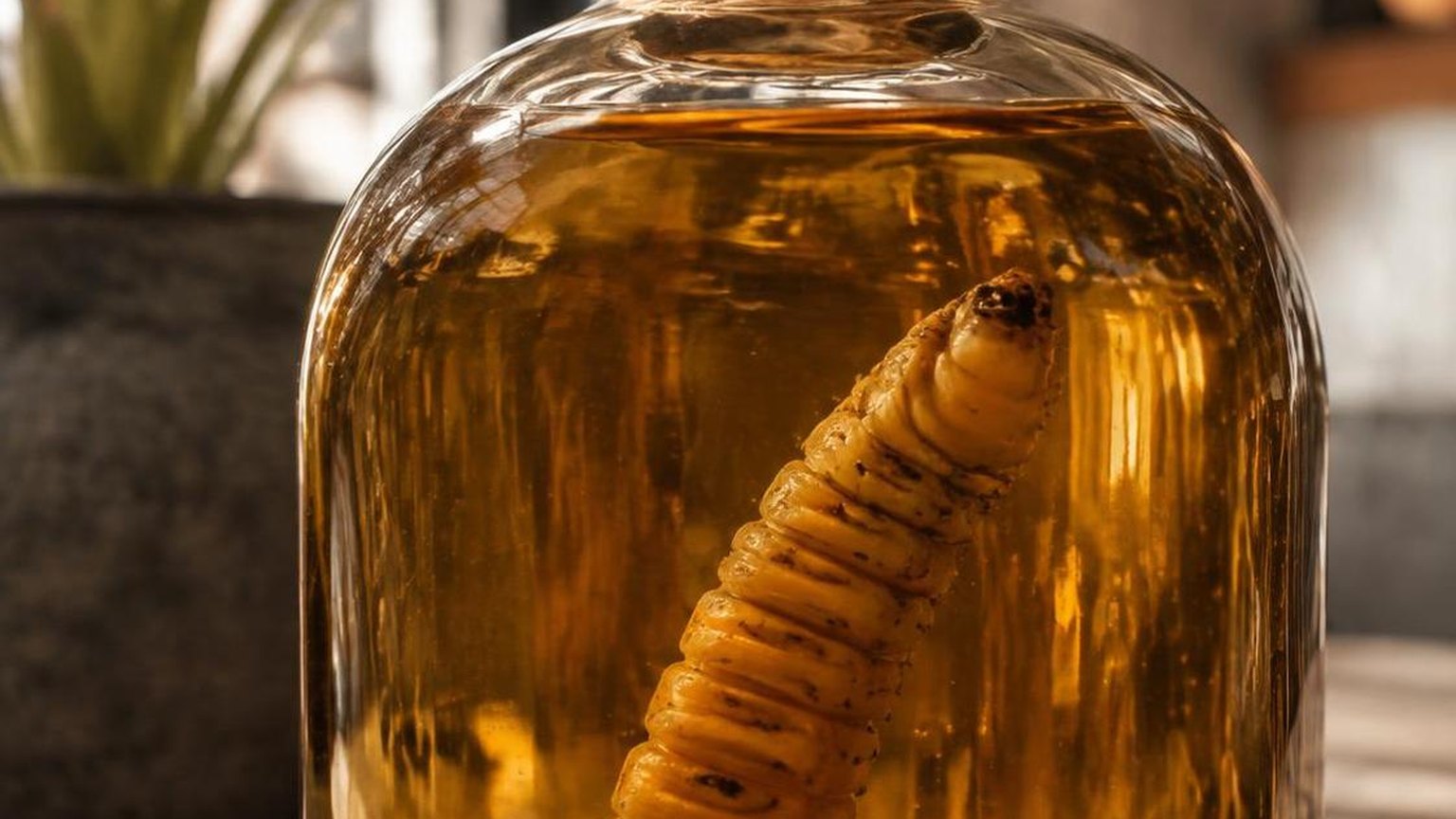
Under Mexico’s tequila standard, tequila must be made from Agave tequilana Weber var. azul and produced in authorized regions. Mezcal has its own regulation and can be made from many agave species across approved states.
| Claim | Accurate fact |
| “All tequila has a worm.” | No. Authentic tequila does not contain a worm; the practice is associated with some mezcal bottlings. |
| “The worm proves the bottle is strong.” | No. Alcohol strength is shown by ABV. Tequila is commonly bottled around 35% to 55% ABV under Mexican rules. |
| “The worm is really a worm.” | Usually no. It is typically an agave moth larva or weevil larva, commonly called gusano de maguey. |
| “It is an ancient Aztec tequila tradition.” | No. The bottle-worm practice is generally tied to 20th-century mezcal marketing, not pre-Hispanic tequila. |
Myth: The Worm Makes Tequila More Authentic
Authenticity in tequila comes from legal denomination, agave source, production region, and compliance with the Consejo Regulador del Tequila. A worm adds no legal or quality certification.
Tequila must come from designated areas, primarily Jalisco, with limited municipalities in Guanajuato, Michoacán, Nayarit, and Tamaulipas. A novelty insect does not override those origin rules.
Myth: Eating the Worm Causes Hallucinations
The larva is not psychedelic. Confusion often comes from English speakers mixing up mezcal with mescaline, a psychoactive compound associated with peyote cactus, not distilled agave spirits.
Any “effect” after eating the larva is almost certainly from ethanol consumption. A standard 1.5-ounce pour of 40% ABV spirit contains about 0.6 fluid ounces of pure alcohol.
Myth: The Worm Is There To Test Alcohol Quality
One story says the larva preserved in alcohol showed the spirit was strong enough. That may sound plausible, but modern quality control uses laboratory testing, certification, lot tracking, and ABV measurement.
For today’s buyer, the useful clues are label terms such as 100% agave, NOM number, producer information, and official category. The larva is mostly a branding device.
- Do not assume worm equals premium. Many serious mezcals never include one.
- Do not call mezcal “tequila with a worm.” Tequila is a specific type of agave spirit, not a universal term.
- Do check the label. “Mezcal” and “tequila” are separately regulated Mexican denominations.
Questions Readers Ask
Is the “worm” in tequila actually a worm?
No. The “worm” is typically a moth larva, most often associated with the agave plant, not an earthworm or true worm. It is traditionally called a gusano in Mexico and is more closely linked to mezcal than tequila.
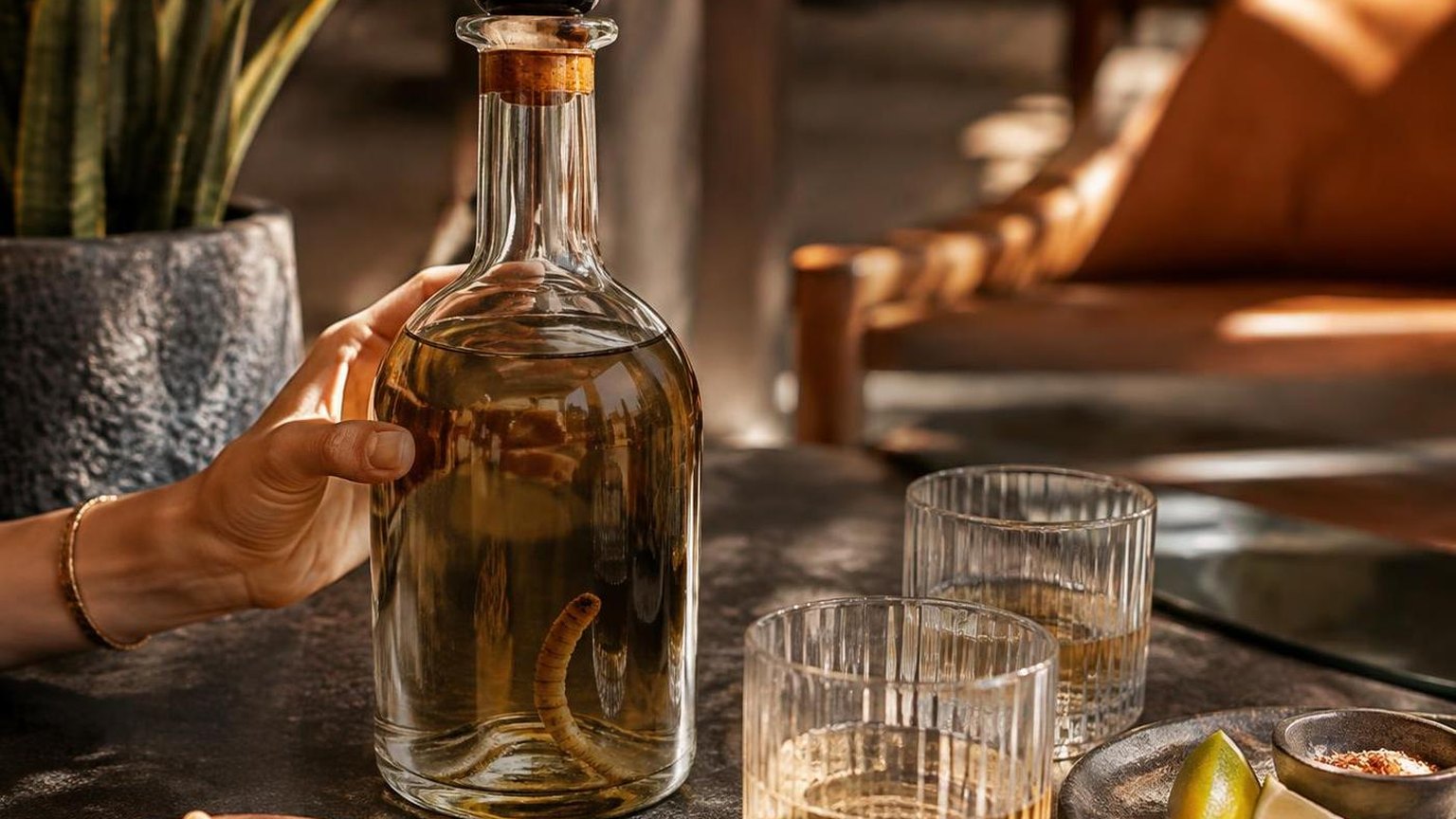
Why is there a worm in some bottles of mezcal?
The larva became a marketing device in the mid-20th century, often credited to mezcal producers trying to distinguish their bottles in export markets.
It was also used to suggest rustic authenticity or prove alcohol strength, though it is not required for quality or authenticity.
Can tequila legally have a worm in the bottle?
True tequila, made under Mexico’s tequila regulations from blue Weber agave in approved regions, does not traditionally or legally rely on a worm as part of its identity.
If a bottle has a larva inside, it is almost certainly mezcal or another agave spirit rather than legally labeled tequila.
Does the worm change the flavor of the spirit?
Yes, but usually subtly. A larva can add savory, earthy, or slightly funky notes to mezcal over time, though most of the spirit’s flavor still comes from the agave variety, roasting method, fermentation, distillation, and aging.
Is it safe to eat the worm from the bottle?
In commercially bottled mezcal, the larva has been preserved in high-proof alcohol and is generally treated as edible. Still, it is more of a novelty than a recommended tasting practice, and people with shellfish or insect allergies should avoid it.
Related Reading
- How Many Gallons Is 19 Liters?
- Old Forester 1910 Vs 1920: The Easiest Way to Distinguish
- Cigar Flavours And Tasting Notes: A Complete Guide
- How Much Is A Kilo Of 14K Gold Worth? – A Real-World Valuation Guide From Hands-On Experience
- How Many Ounces Is 2200 Ml?
- What Alcohol Goes With Dr Pepper?
- How Many Gallons Is 400 Liters?
- All Blog Guides
- Alcohol and Tobacco Tax and Trade Bureau, Distilled Spirits Beverage Alcohol Manual Chapter 4 (2024)
- Electronic Code of Federal Regulations, 27 CFR § 5.148 Agave Spirits (2024)
- U.S. Food and Drug Administration, Food Defect Levels Handbook (2018)
- Diario Oficial de la Federación, NOM-070-SCFI-2016 Bebidas alcohólicas-Mezcal-Especificaciones (2017)
- Diario Oficial de la Federación, NOM-006-SCFI-2012 Bebidas alcohólicas-Tequila-Especificaciones (2012)
- Encyclopaedia Britannica, Tequila Distilled Liquor (2024)
- Smithsonian Magazine, A History of the Worm in the Bottle (2022)