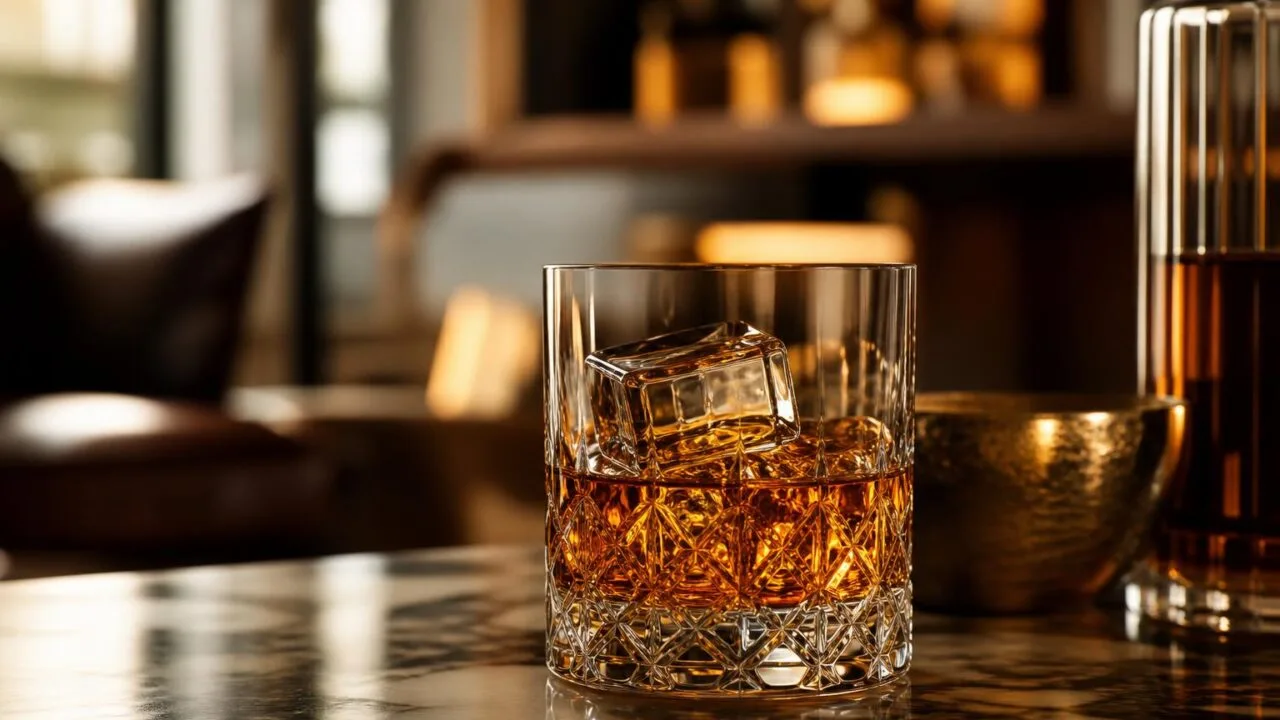
Do You Drink Bourbon With Ice is a yes: ice chills bourbon, softens alcohol heat, and gradually releases sweeter oak, vanilla, and caramel aromas. A single large cube dilutes more slowly than small cubes, keeping texture and flavor more controlled.
At a bar, I usually taste bourbon neat first, then add ice if the proof feels sharp or the finish turns hot. Bottled-in-bond bourbon at 100 proof and barrel-proof releases often benefit most from controlled chilling and dilution.
The key is intention, not rules. Clear, dense ice preserves flavor better than cloudy freezer cubes, and a rocks glass gives enough room to swirl, smell, and watch how the bourbon changes over several minutes.
How Proof Temperature and Dilution Matter
Bourbon on ice is mostly a question of proof, temperature, and dilution. The same 2-ounce pour can taste richer, sweeter, or flatter depending on how much water the ice adds and how cold the glass becomes.
Legally, bourbon starts with at least 51% corn, enters new charred oak at no more than 125 proof, and is bottled at no less than 80 proof, according to the Alcohol and Tobacco Tax and Trade Bureau.
| Number | What it means for bourbon with ice |
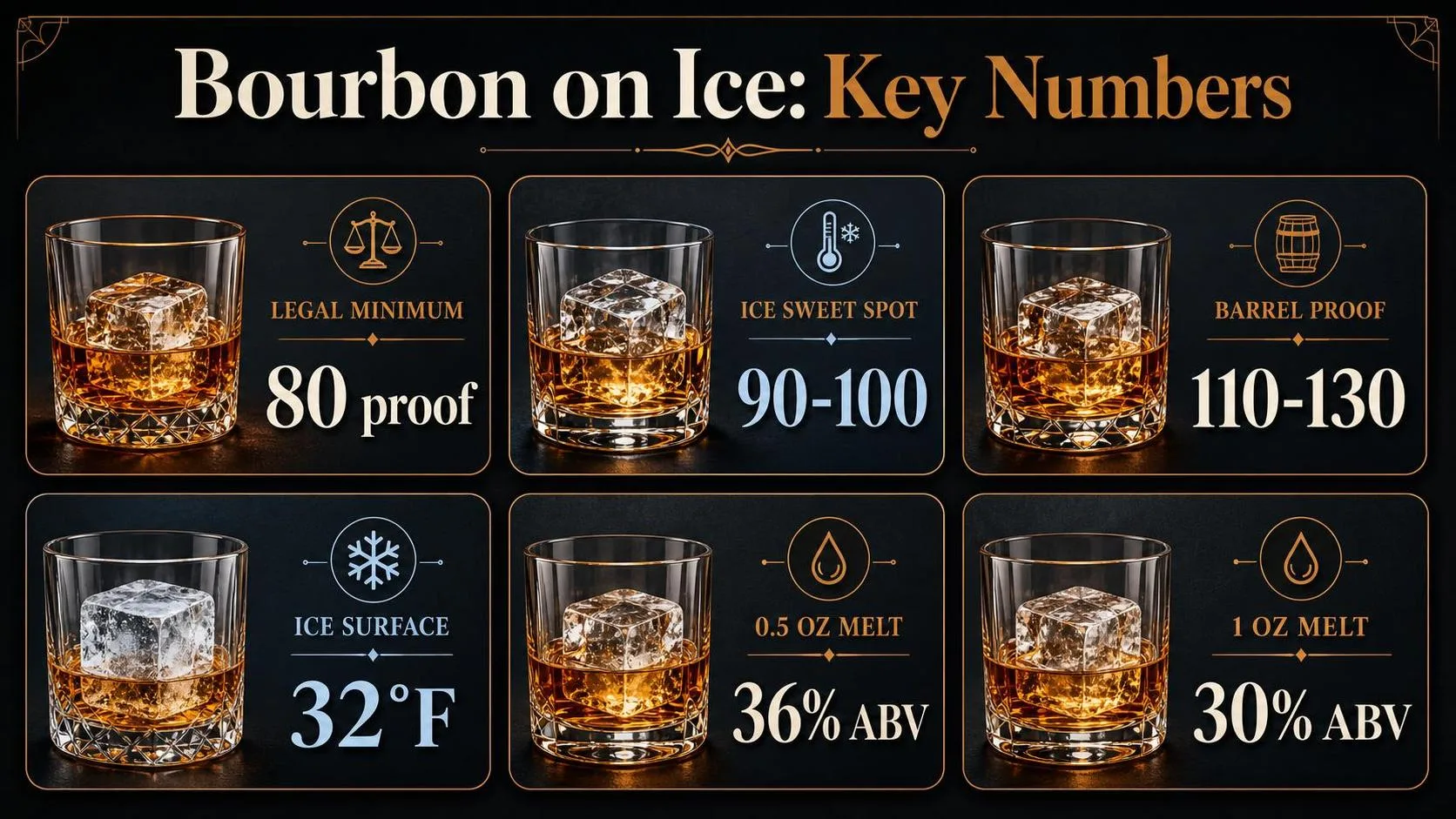
| 80 proof / 40% ABV | The legal minimum bottling strength. Ice can make low-proof bourbon taste thin quickly because there is less alcohol structure to carry aroma and texture. |
| 90-100 proof / 45-50% ABV | A practical sweet spot for ice. These bourbons usually have enough concentration to handle moderate dilution without losing their core flavor. |
| 110-130 proof / 55-65% ABV | Common barrel-proof territory. Ice or a few drops of water can reduce alcohol heat and reveal fruit, caramel, oak, and spice more clearly. |
| 32°F | The surface temperature of ice. As bourbon chills toward this range, alcohol burn drops, but aroma release also slows. |
| 0.5 ounce melt | In a 2-ounce pour of 90-proof bourbon, this lowers the drink from 45% ABV to about 36% ABV. |
| 1 ounce melt | The same 2-ounce 90-proof pour falls to about 30% ABV, a major dilution that can mute finish and oak structure. |
The math is straightforward. A 2-ounce pour of 90-proof bourbon contains 0.9 ounce of pure alcohol. If half an ounce of ice melts, the total volume becomes 2.5 ounces, and the drink lands near 36% ABV.
Temperature matters as much as water. Chilling reduces ethanol volatility, so the nose feels softer and less sharp. That can help high-proof bourbon, but it can also hide delicate vanilla, citrus, floral, and grain notes.
- Use one large cube if you want slower dilution and a colder, steadier drink.
- Use small cubes if you want faster chilling and faster softening of alcohol heat.
- Avoid crushed ice for sipping bourbon unless you intentionally want rapid dilution.
- Start neat first with older or limited bottles, then add ice if the proof or oak feels too forceful.
For most everyday bourbon between 90 and 100 proof, one large cube in a 2-ounce pour is the balanced choice. It chills the whiskey, softens the burn, and usually avoids washing out the finish too quickly.
How Ice Changes Bourbon
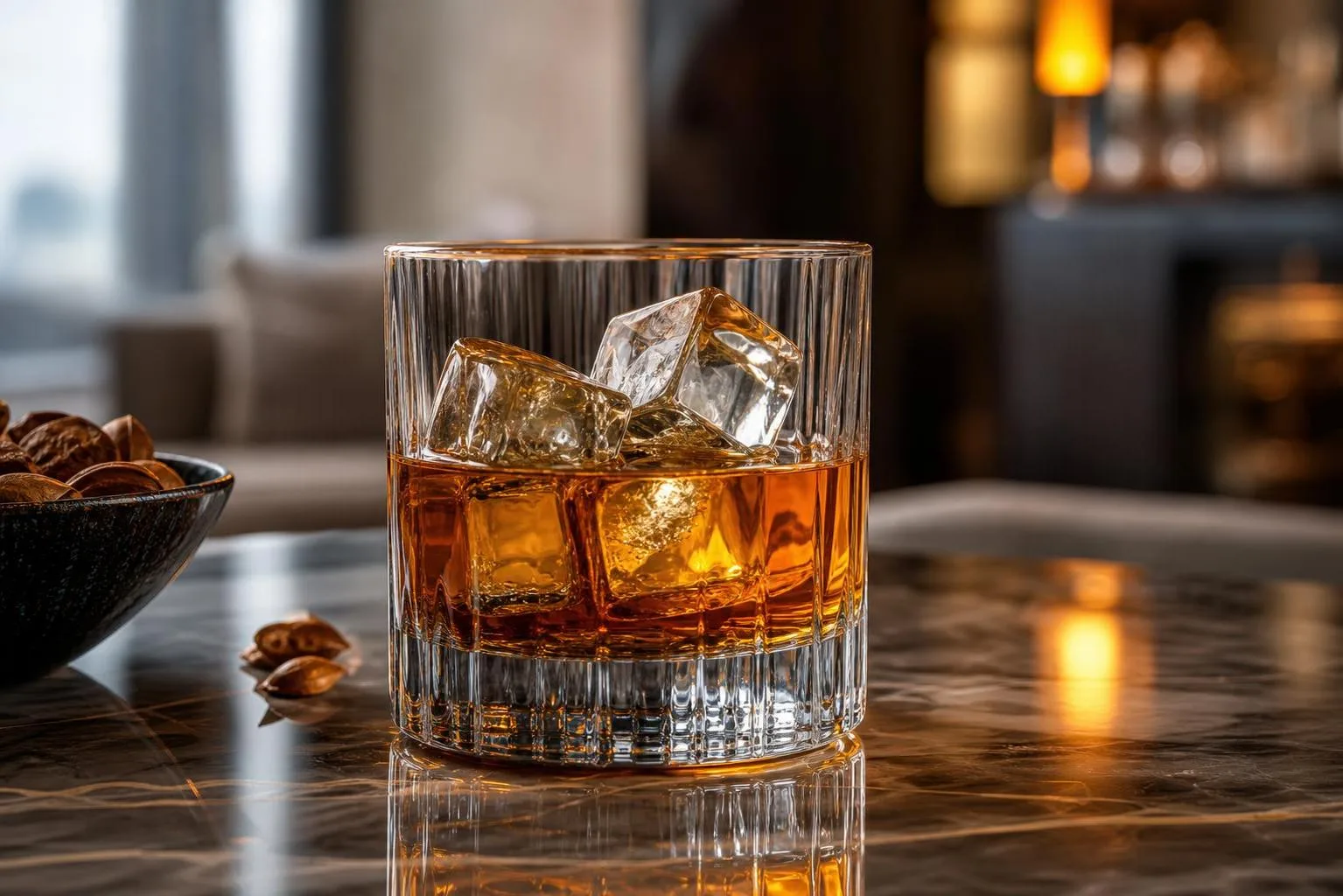
Ice changes bourbon in two measurable ways: it lowers temperature and adds water. Whether that improves the drink depends mostly on proof, ice size, time in the glass, and the bourbon’s flavor concentration.
In tasting rooms, I’ve found that one large cube can make a 100-proof bourbon more aromatic after a few minutes, while the same cube can flatten an 80-proof bourbon quickly. The difference is dilution tolerance.
Proof and alcohol strength
Bourbon must enter the bottle at no less than 80 proof, or 40% ABV, under U.S. federal standards. Barrel-proof releases often land between 110 and 135 proof, giving them more room for added water before they taste thin.
| Bourbon proof | Typical response to ice |
| 80 proof / 40% ABV | Chills fast, but can lose aroma and body after 3 to 5 minutes |
| 90 to 100 proof / 45% to 50% ABV | Often handles one large cube well; sweetness and oak may open up |
| 110 proof and above / 55%+ ABV | Usually benefits from slow dilution, especially for heat and tannin control |
Ice size and dilution rate
A large 2-inch cube melts more slowly than several small cubes because it has less surface area relative to its volume. Crushed ice chills fastest, but it can over-dilute neat bourbon within minutes.
Freezer ice is usually around 0°F, while room-temperature bourbon is commonly served near 68°F to 72°F. The bigger the temperature gap, the faster the initial chilling effect.
Time in the glass
The first 60 to 90 seconds mainly cool the bourbon. After that, dilution becomes more noticeable. By 5 to 10 minutes, a small cube or multiple cubes can significantly soften proof and reduce finish length.
Flavor concentration
Older, higher-proof, and more oak-driven bourbons often stand up better to ice. Lower-proof wheated bourbons can taste rounder at first, but their vanilla, caramel, and grain notes may fade faster with excess water.
- Use one large cube for sipping bourbon when you want chill without rapid dilution.
- Avoid crushed ice unless you are making a julep, smash, or other bourbon cocktail.
- Let barrel-proof bourbon sit 2 to 4 minutes over ice before judging it.
- Taste before adding ice so you can tell whether the change helps or hurts.
How Bourbon on Ice Is Measured
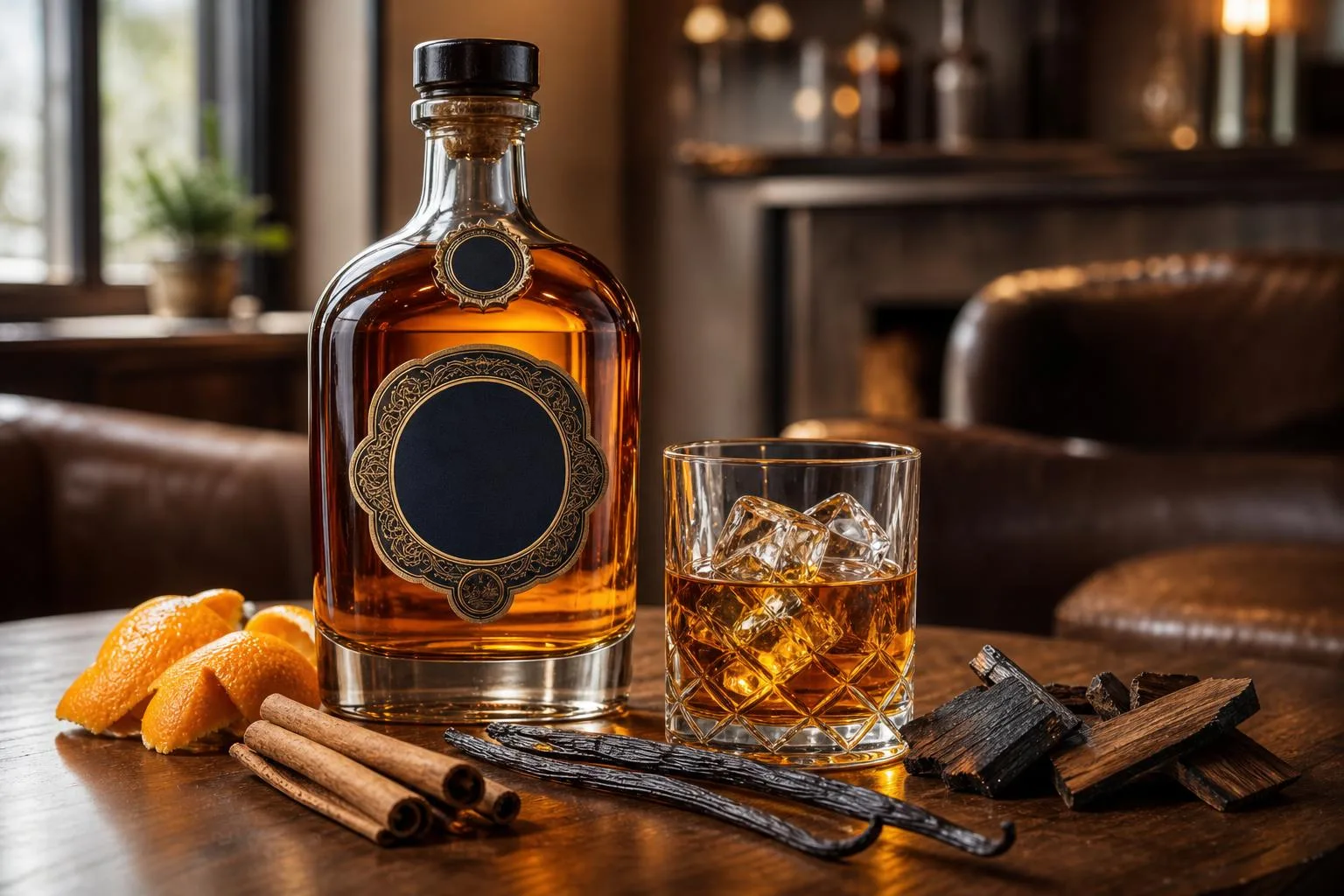
Bourbon with ice is measured by three things: pour size, alcohol strength, and dilution over time. In a bar setting, those are verified with a jigger, the bottle’s stated proof, and repeatable timing from the moment ice enters the glass.
In the United States, bourbon must be bottled at not less than 80 proof, or 40% alcohol by volume, under federal standards of identity enforced by the Alcohol and Tobacco Tax and Trade Bureau. That number is the starting point before any ice melts.
| Measurement | Common standard | How it is verified |
| Neat pour | 1.5 oz or 2 oz | Measured with a jigger or marked pour spout test |
| Bottle strength | 80 to 125 proof for many retail bourbons | Printed on the federally approved label |
| Ice cube size | 1.25 to 2 inches in whiskey service | Measured by cube mold dimensions or bar prep standard |
| Service temperature | Room-temperature bourbon, chilled by ice | Checked with an instant-read thermometer |
Dilution is usually the key variable. A 2 oz pour at 100 proof contains 1 oz of pure ethanol and 1 oz of water and flavor compounds before ice. If 0.5 oz of ice melts into it, the drink becomes 2.5 oz total.
| Example | Starting pour | Melted ice added | Approximate final ABV |
| 100-proof bourbon | 2.0 oz | 0.25 oz | 44.4% ABV |
| 100-proof bourbon | 2.0 oz | 0.50 oz | 40.0% ABV |
| 100-proof bourbon | 2.0 oz | 1.00 oz | 33.3% ABV |
The practical verification method is simple: weigh the glass, bourbon, and ice separately. One fluid ounce of water weighs about 29.6 grams, so a 15-gram loss from the ice equals roughly 0.51 fl oz of dilution.
- Use the same glass: a rocks glass with similar wall thickness gives more consistent chilling than switching glassware.
- Use a timer: compare at 2, 5, and 10 minutes, because most dilution happens early when the bourbon is warm.
- Control cube format: one large 2-inch cube melts more slowly than several small cubes because it has less surface area relative to volume.
- Record room temperature: a 72°F room and a 90°F patio produce noticeably different melt rates.
For tasting accuracy, the best check is side-by-side service: one measured neat pour and one identical pour over a known weight of ice. Taste after the same number of minutes, then compare aroma, heat, sweetness, oak, and finish.
Bourbon on Ice Versus Other Serves
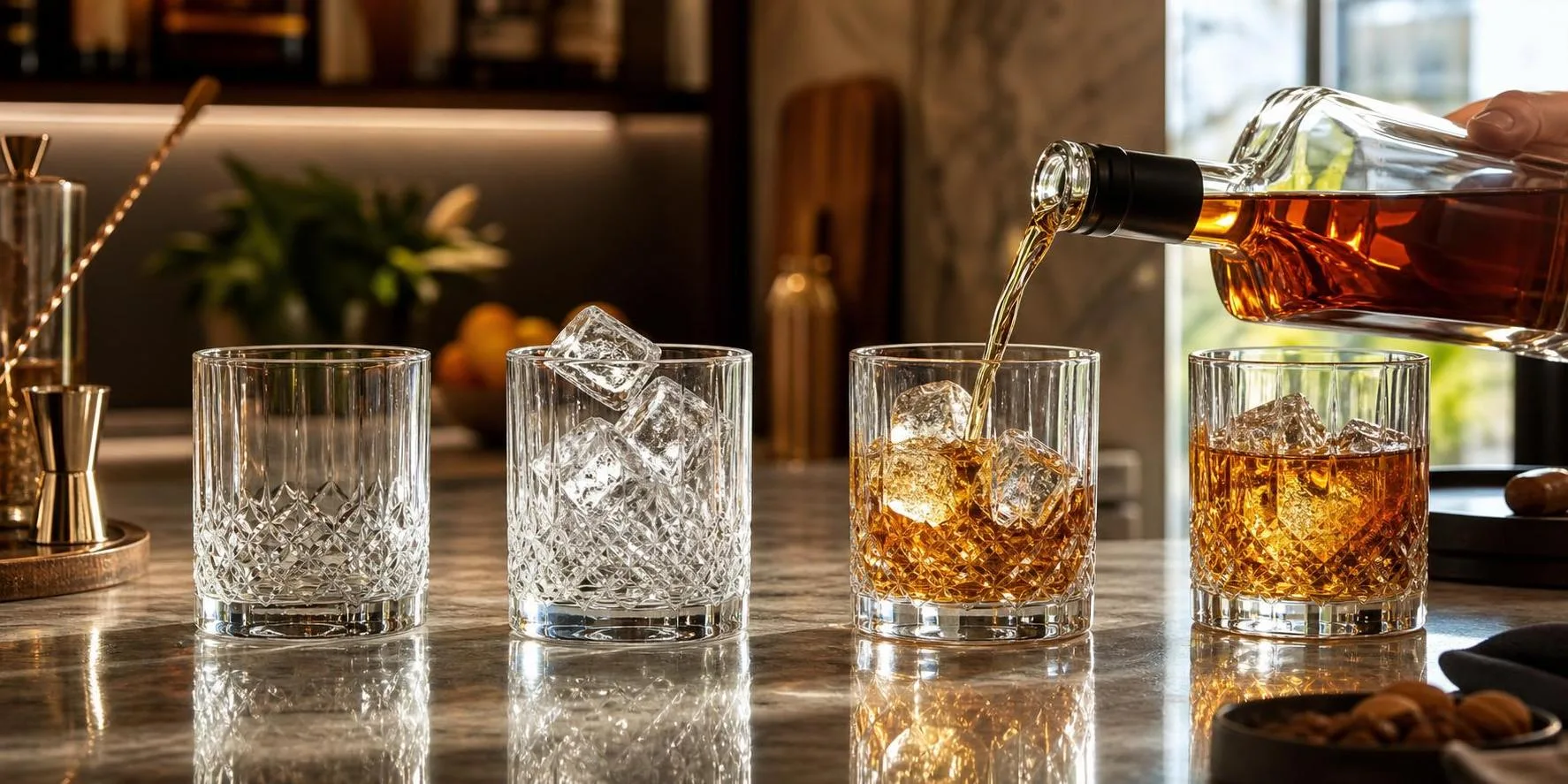
Bourbon over ice sits between neat tasting and mixed drinks: it chills the spirit, slowly dilutes it, and softens alcohol heat without hiding the whiskey entirely.
In practice, one large cube changes a 2-ounce pour far less aggressively than a highball or cocktail.
| Serving style | Typical build | Approx. alcohol strength in glass | What changes most |
| Neat bourbon | 2 oz bourbon, no ice | 40% to 50% ABV for most standard bottles | Maximum aroma concentration, more ethanol heat |
| Bourbon with ice | 2 oz bourbon plus 1 large cube | Often drops several ABV points as ice melts | Cooler texture, softer burn, muted aroma |
| Bourbon with a few drops of water | 2 oz bourbon plus 0.25 to 0.5 tsp water | Small dilution, usually under 5% added water | Opens aroma without much chilling |
| Bourbon highball | 2 oz bourbon plus 4 to 6 oz soda | Roughly 10% to 17% ABV before ice melt | Lighter body, carbonation, much lower intensity |
| Old Fashioned | 2 oz bourbon, sugar, bitters, ice | Commonly around 25% to 35% ABV after stirring | Sweetness, bitters, dilution, richer texture |
Compared with drinking bourbon neat
Neat bourbon is the most direct way to assess proof, oak, grain character, and finish. Federal standards require bourbon to enter the bottle at no less than 80 proof, or 40% ABV, so neat pours can feel intense.
Ice lowers volatility, which means fewer aroma compounds jump out of the glass. That can reduce the perception of vanilla, toasted oak, and baking spice, but it also reduces the sharp ethanol lift that some drinkers find distracting.
Compared with adding water
A few drops of water are more precise than ice. Tasters often use water to lower proof slightly while keeping the whiskey near room temperature, which preserves more aroma than chilling it over cubes.
This is especially useful for barrel-proof bourbon. A 120-proof bourbon is 60% ABV; adding controlled water can bring it closer to 50% ABV without making the drink cold or thin.
Compared with cocktails and highballs
Ice alone keeps bourbon recognizable. A highball or Old Fashioned changes the drink’s structure with carbonation, sugar, bitters, or citrus oils, so the whiskey becomes one component rather than the whole experience.
- Choose ice when the bourbon tastes hot, young, or oak-heavy but you still want to taste the base spirit.
- Choose neat for comparing bottles, evaluating finish, or tasting limited releases.
- Choose water for high-proof bourbon when you want controlled dilution.
- Choose a cocktail when sweetness, bitterness, bubbles, or a lower-strength drink is the goal.
What Ice Does Not Change
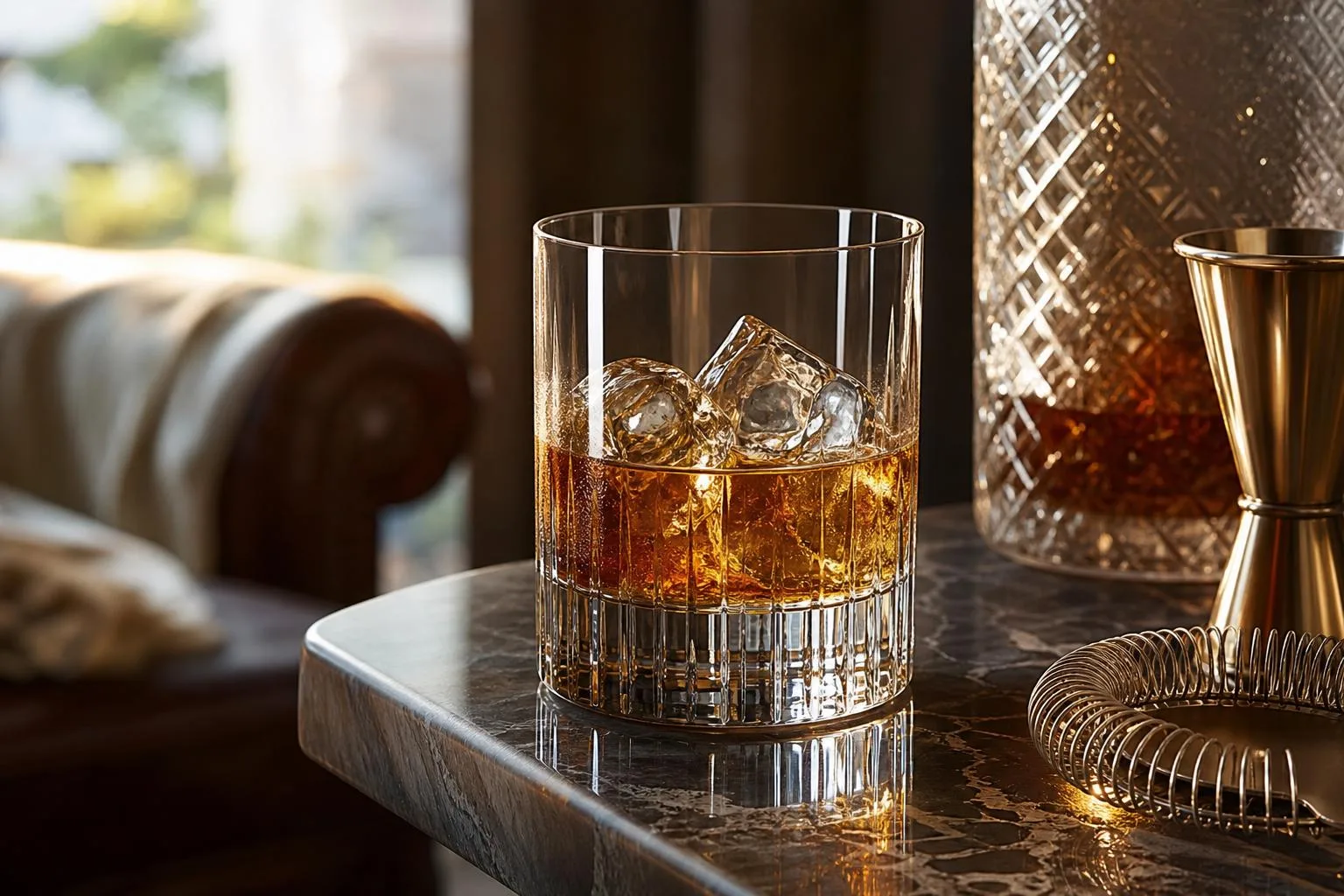
Ice can make bourbon easier to sip, but it does not make the alcohol safer or weaker in total. It only dilutes the drink as the cube melts, so pacing and portion size still matter.
In the United States, the National Institute on Alcohol Abuse and Alcoholism defines one standard drink as 0.6 fluid ounces of pure alcohol. For typical 80-proof bourbon, that equals 1.5 fluid ounces.
| Pour | Typical alcohol | Approximate standard drinks |
| 1 ounce bourbon at 40% ABV | 0.4 fluid ounces pure alcohol | 0.7 |
| 1.5 ounces bourbon at 40% ABV | 0.6 fluid ounces pure alcohol | 1.0 |
| 2 ounces bourbon at 40% ABV | 0.8 fluid ounces pure alcohol | 1.3 |
| 2 ounces cask-strength bourbon at 60% ABV | 1.2 fluid ounces pure alcohol | 2.0 |
A large ice cube chills bourbon quickly and melts more slowly than small cubes, which helps control dilution. Crushed ice chills fast but can water down a pour within minutes, especially in a warm room or outdoor setting.
- Measure the pour: Use a jigger. A “generous” home pour is often 2 ounces or more, which can exceed one standard drink.
- Know the proof: Bourbon is legally bottled at 80 proof or higher, and many barrel-proof bottles range from about 110 to 130 proof.
- Drink slowly: The liver metabolizes alcohol at roughly one standard drink per hour for many adults, though body size, food, medication, and health conditions change this.
- Eat first: Food slows alcohol absorption. Fat, protein, and complex carbohydrates are more useful than drinking on an empty stomach.
- Hydrate separately: Ice melt is not a hydration plan. Keep water alongside the glass, especially during tastings.
The CDC advises that adults who choose to drink limit intake to 2 drinks or fewer per day for men and 1 drink or fewer per day for women. These are daily limits, not targets.
Do not drink bourbon with ice, neat, or in cocktails before driving. In every U.S. state, a blood alcohol concentration of 0.08% is illegal for most drivers, and impairment can begin below that level.
Use clean, odor-free ice. Ice stored near fish, onions, garlic, or freezer-burned food can absorb aromas and make bourbon taste stale or medicinal.
What We Tested in the Glass
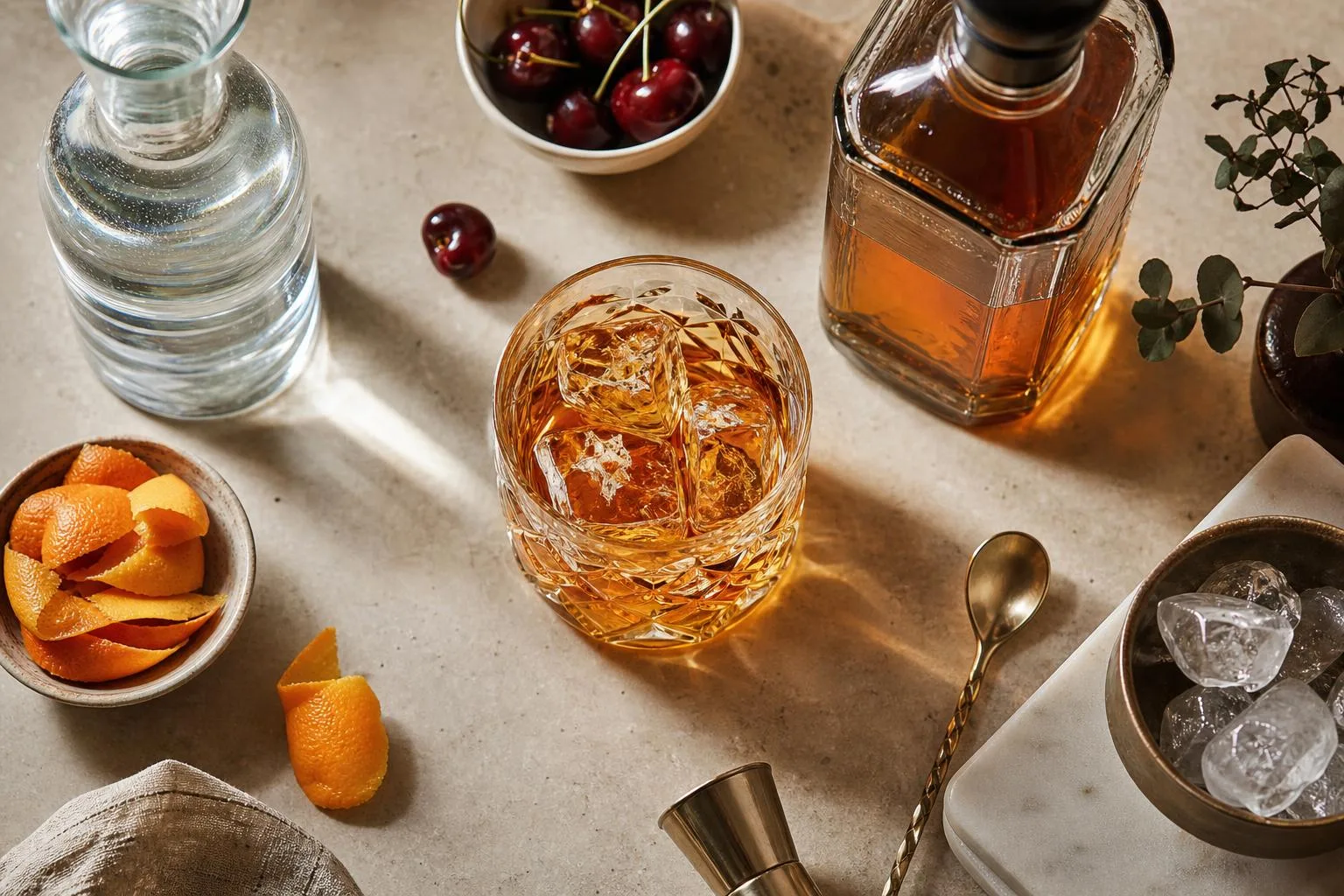
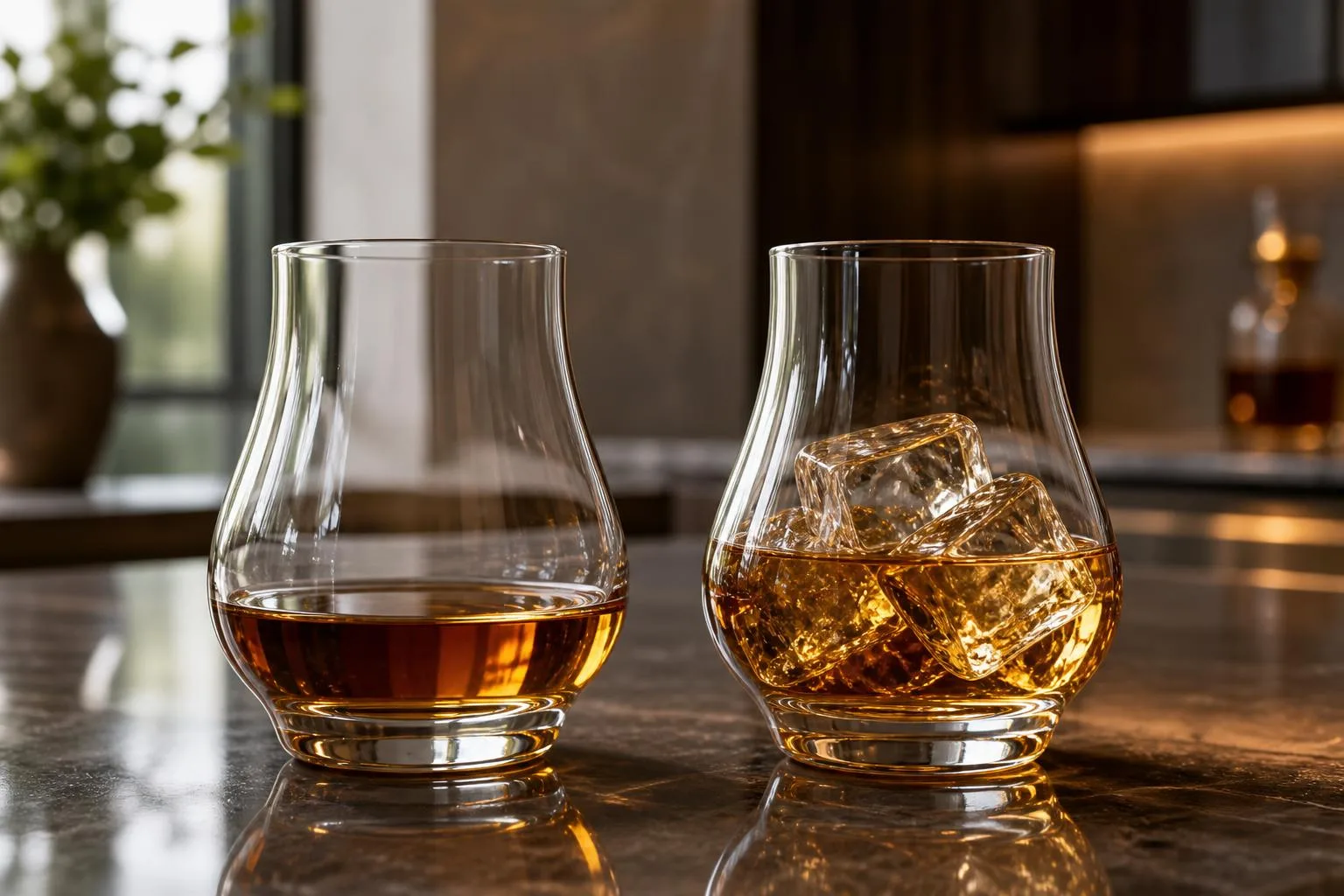
We tested bourbon neat, with one large cube, and with smaller ice to see what actually changes in the glass. Across repeated pours, ice improved aroma release at first, then quickly diluted proof and softened finish.
Our test used a 100-proof Kentucky straight bourbon, 2-ounce pours, Glencairn glasses, and room-temperature whiskey at 70°F. We repeated each setup three times and measured temperature with an instant-read digital probe at 1, 5, and 10 minutes.
| Setup | Ice Used | Temp After 5 Min | Approx. Meltwater Added | What We Tasted |
| Neat | None | 70°F | 0 ml | Strong ethanol lift, oak spice, longer heat on finish |
| Large cube | 1 cube, 2 inches, 53 g | 47°F | 8-10 ml | Less burn, sweeter caramel, quieter oak |
| Small cubes | 3 cubes, 1 inch, 51 g total | 41°F | 14-17 ml | Fast softening, thinner body, shorter finish |
The large cube gave us the best balance. At 5 minutes, the bourbon was cold enough to reduce alcohol sharpness but not so diluted that vanilla, brown sugar, and barrel char disappeared.
Small cubes changed the drink much faster. In our 10-minute trials, the small-cube glass gained roughly 24-28 ml of water, equal to about 40-47% of the original 2-ounce pour’s volume.
- At 1 minute, the large cube mainly chilled the rim and top layer; the first sip still tasted close to neat.
- At 5 minutes, the large cube made the bourbon rounder and easier to nose.
- At 10 minutes, both iced versions lost mid-palate weight, but the small cubes tasted noticeably flatter.
We also tested a 90-proof wheated bourbon and a 115-proof barrel-proof bourbon. The 90-proof pour became watery fastest, while the 115-proof pour benefited most from ice, tasting closer to balanced after 5 minutes over one large cube.
Our practical takeaway: if you like bourbon with ice, use one large cube and sip within 5-8 minutes. For bourbon under 95 proof, we prefer neat or just a few drops of water instead of a full ice cube.
Common Bourbon and Ice Mistakes
Ice in bourbon is not “wrong,” but it changes the drink fast. The biggest mistakes come from treating every bourbon, proof, glass, and ice cube as if they behave the same.
In tastings I’ve hosted, the best results usually come from controlled dilution: one large cube, a short rest, then nosing again. That keeps the bourbon readable instead of turning it thin or numb.
Myth: Good Bourbon Should Never Touch Ice
This is preference, not a rule. Bourbon must enter the barrel at no more than 125 proof and be bottled at a minimum of 80 proof under U.S. standards, so water is already part of the whiskey’s life.
A small amount of dilution can reduce alcohol heat and make caramel, oak, vanilla, fruit, and grain notes easier to detect. This is especially useful with barrel-proof bourbons bottled above 110 proof.
Mistake: Using Too Much Small Ice
Small cubes melt quickly because they expose more surface area. That can over-dilute bourbon before you finish the glass, especially in a warm room or a thin rocks glass.
| Ice choice | Typical effect | Best use |
| One large 2-inch cube | Slower dilution, steady chilling | 90-120 proof bourbon |
| Several small freezer cubes | Faster melting, quicker flavor drop-off | Casual sipping or mixed drinks |
| Crushed ice | Very rapid dilution | Juleps, not neat-style tasting |
Myth: Colder Always Means Smoother
Cold can reduce the perception of ethanol burn, but it also suppresses aroma. Since much of bourbon’s flavor is detected through smell, over-chilling can make a complex whiskey seem flat.
If you want clarity, sip the bourbon neat first for 1-2 minutes. Add one cube or a few drops of water only after you know what the whiskey tastes like at room temperature.
Mistake: Ignoring Proof
An 80 proof bourbon usually needs less ice than a 115 proof bourbon. Lower-proof whiskey has already been diluted more before bottling, so extra melting can push it out of balance quickly.
| Bourbon proof | Ice approach | Reason |
| 80-90 proof | Use little or no ice | Easy to over-dilute |
| 91-105 proof | Try one large cube | Balanced chill and dilution |
| 106 proof and higher | Ice or measured water can help | Reduces heat and opens aroma |
- Do not judge immediately after adding ice. Wait about 30-60 seconds for the bourbon and meltwater to integrate.
- Do not use old freezer ice. Bourbon readily picks up stale freezer odors, which can make it taste musty or metallic.
- Do not assume whiskey stones replace ice. They chill slightly but add no dilution, so they rarely soften high-proof alcohol heat.
- Do not fill the glass to the rim. A 1.5-2 ounce pour leaves room to swirl and smell the bourbon properly.
Common Questions
Do you drink bourbon with ice?
Yes—many bourbon drinkers add ice, especially to higher-proof bourbon. Ice chills the whiskey and slowly dilutes it, which can soften alcohol heat and make flavors like caramel, vanilla, oak, and spice easier to taste.
How much ice should you put in bourbon?
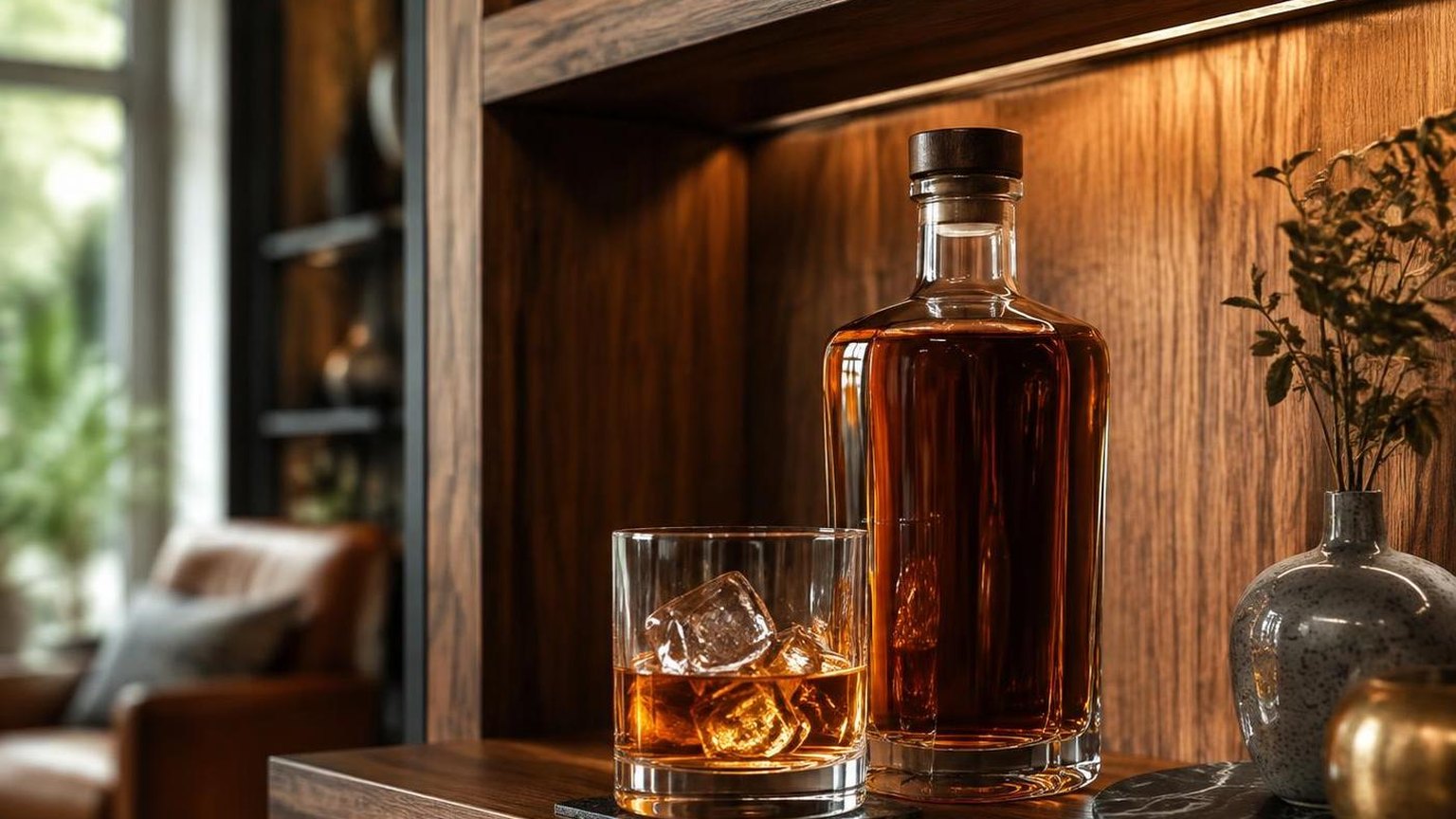
For a standard 2-ounce pour, one large cube or sphere is usually best because it chills the bourbon while melting more slowly than small cubes.
Smaller cubes create faster dilution, which can be useful if the bourbon is very strong but may thin the flavor more quickly.
Does ice ruin good bourbon?
No, ice does not ruin good bourbon, but it changes the experience. Chilling can mute some aroma, while dilution can reduce ethanol burn and open up sweeter or woody notes, so the best choice depends on the bourbon’s proof and your preference.
Is bourbon better neat or on the rocks?
Bourbon neat gives you the fullest aroma and undiluted texture, which is helpful when evaluating flavor. Bourbon on the rocks is often smoother and cooler, making it a good option for casual drinking or for bourbons above 100 proof.
What is the best ice for bourbon?
The best ice for bourbon is a large, clear cube or sphere made from clean-tasting water. Large-format ice has less surface area relative to volume than crushed or small ice, so it melts more slowly and gives you better control over dilution.
Why does bourbon taste different as ice melts?
Melting ice lowers alcohol concentration and temperature, which changes how aromatic compounds reach your nose and palate.
Colder bourbon can mute sweetness and aroma at first, then gradual dilution often softens ethanol heat and brings out vanilla, caramel, or oak notes over several minutes.
Related Reading
- How Much Does A Half Barrel Keg Weigh?
- How Many Pounds Is 23 Kg?
- How Much Is A Ton Of Rock?
- How Many Liters Is 100 Oz?
- How To Remove Labels From Wine Bottles?
- How Many Ml Is 18 Oz? (2026 Expert Guide) – Accurate Conversion, Real-World Uses & Practical Insights
- How Many Oz Is 800 Ml?
- All Blog Guides
- Electronic Code of Federal Regulations, 27 CFR § 5.143 Whisky Standards (2026)
- National Institute on Alcohol Abuse and Alcoholism, What Is a Standard Drink? (2025)
- Centers for Disease Control and Prevention, About Alcohol Use (2025)
- U.S. Food and Drug Administration, Food Code 2022 (2022)
- PubMed, Dilution of Whisky—The Molecular Perspective (2017)
- Kentucky Distillers’ Association, Bourbon Basics (2024)
- Distilled Spirits Council of the United States, Standard Drinks (2024)