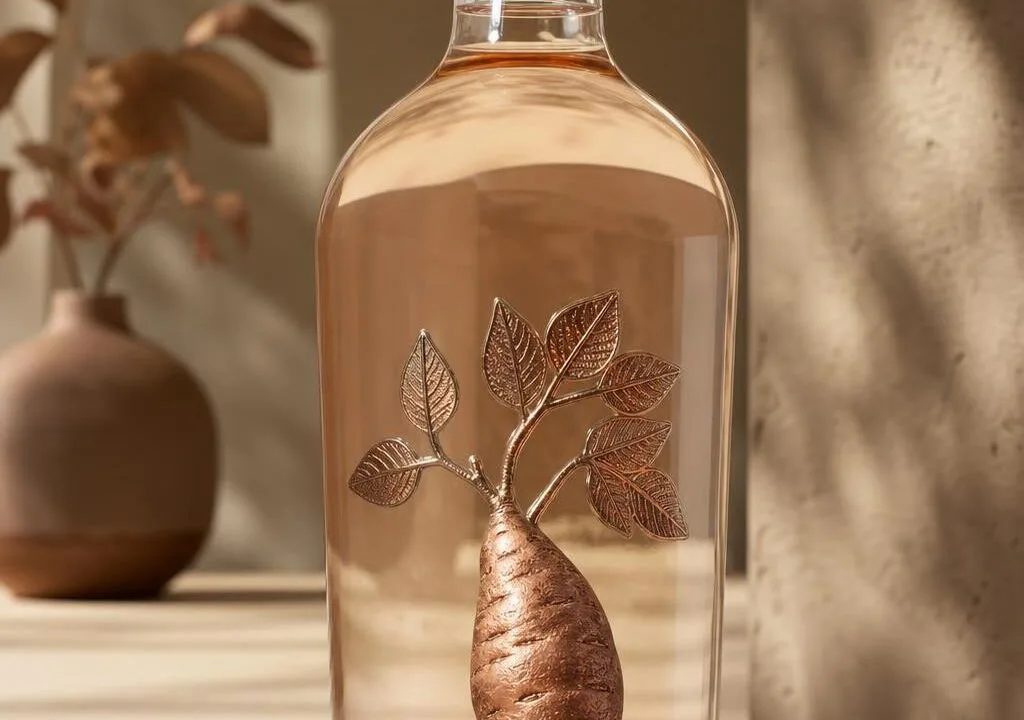
Sweet Potato Vodka is a distilled spirit made from fermented sweet potatoes, giving it a naturally rounded texture and subtly earthy-sweet profile before filtration and proofing.
Unlike grain or potato vodka, it starts with a starch-rich root that must be cooked, converted to fermentable sugars, fermented, then distilled—often multiple times—to reach a clean, neutral style.
In the glass, expect soft body, faint caramelized root notes, and a smooth finish, especially in brands that emphasize local sweet potatoes and small-batch production.
Sweet Potato Vodka ABV and Definition
Sweet potato vodka is still vodka first: in the U.S., that means a distilled spirit bottled at not less than 40% alcohol by volume and treated to be without distinctive character, aroma, taste, or color under TTB standards.
The sweet potato changes the fermentation math, not the legal category.
| Number | What it means for sweet potato vodka |
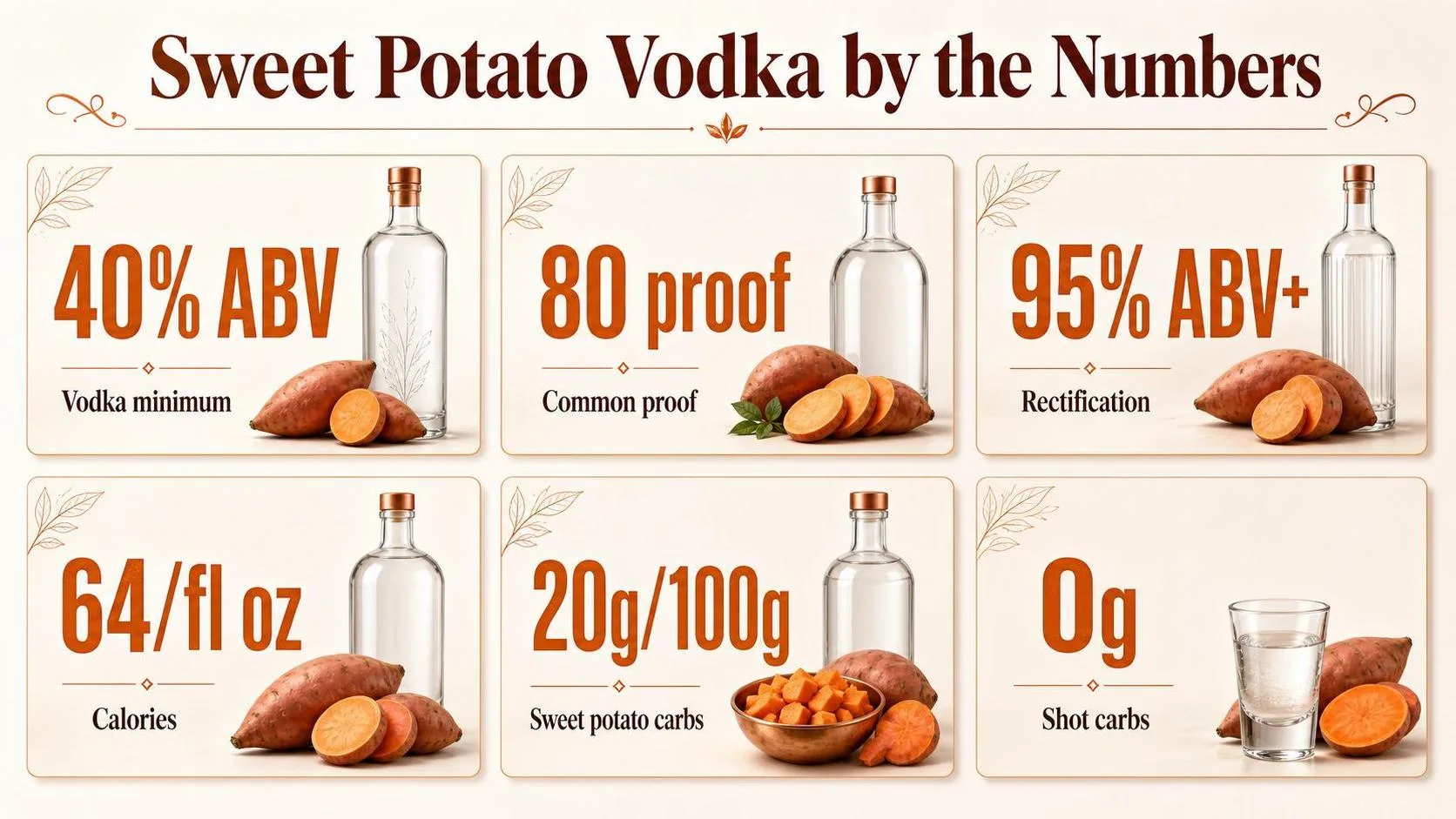
| 40% ABV minimum | Federal U.S. standard for vodka bottling strength; most retail bottles are 80 proof. |
| 95% ABV or higher | Neutral spirits are commonly distilled to very high proof before dilution, helping remove most source-material flavor. |
| 80 proof | The most common shelf strength; proof is double the ABV in the U.S. |
| 64 calories per 1 fl oz | Approximate energy from 80-proof vodka, based on ethanol’s 7 calories per gram. |
The raw ingredient matters because sweet potatoes are less starch-dense than corn or wheat. USDA data puts raw sweet potato at about 20 grams carbohydrate per 100 grams, with much of that as starch and natural sugars.
| Ingredient | Approximate carbohydrate per 100 g | Practical effect |
| Sweet potato, raw | 20 g | Lower potential alcohol yield per pound than cereal grains. |
| Corn grain | 74 g | Much higher starch load, making it efficient for neutral spirit production. |
| Wheat | 71 g | Also high-starch and efficient for fermentable sugar conversion. |
That lower starch content is why sweet potato vodka is typically positioned as a craft or regional product, not a lowest-cost industrial neutral spirit. More agricultural weight is needed to create the same fermentable sugar as grain.
- Fermentation: sweet potato starch must be cooked and converted with enzymes before yeast can efficiently ferment it.
- Distillation: repeated distillation or column distillation can strip out most root-vegetable character.
- Filtration: charcoal or other filtration may further soften texture, though it does not add sweetness.
Finished vodka should contain essentially no sugar unless it is flavored or sweetened after distillation. “Sweet potato” on the label describes the base material, not a sweet taste profile.
| Serving | Alcohol | Carbohydrate |
| 1.5 fl oz shot at 40% ABV | 0.6 fl oz pure ethanol | 0 g, if unflavored and unsweetened |
| 2 fl oz in a cocktail | 0.8 fl oz pure ethanol | Depends on mixers, syrups, and juice |
In tasting, the key number is not sweetness but proof. At 40% ABV, well-made sweet potato vodka can show a rounder body or faint earthy finish, but those notes are subtle compared with the heat, dilution level, and filtration choices.
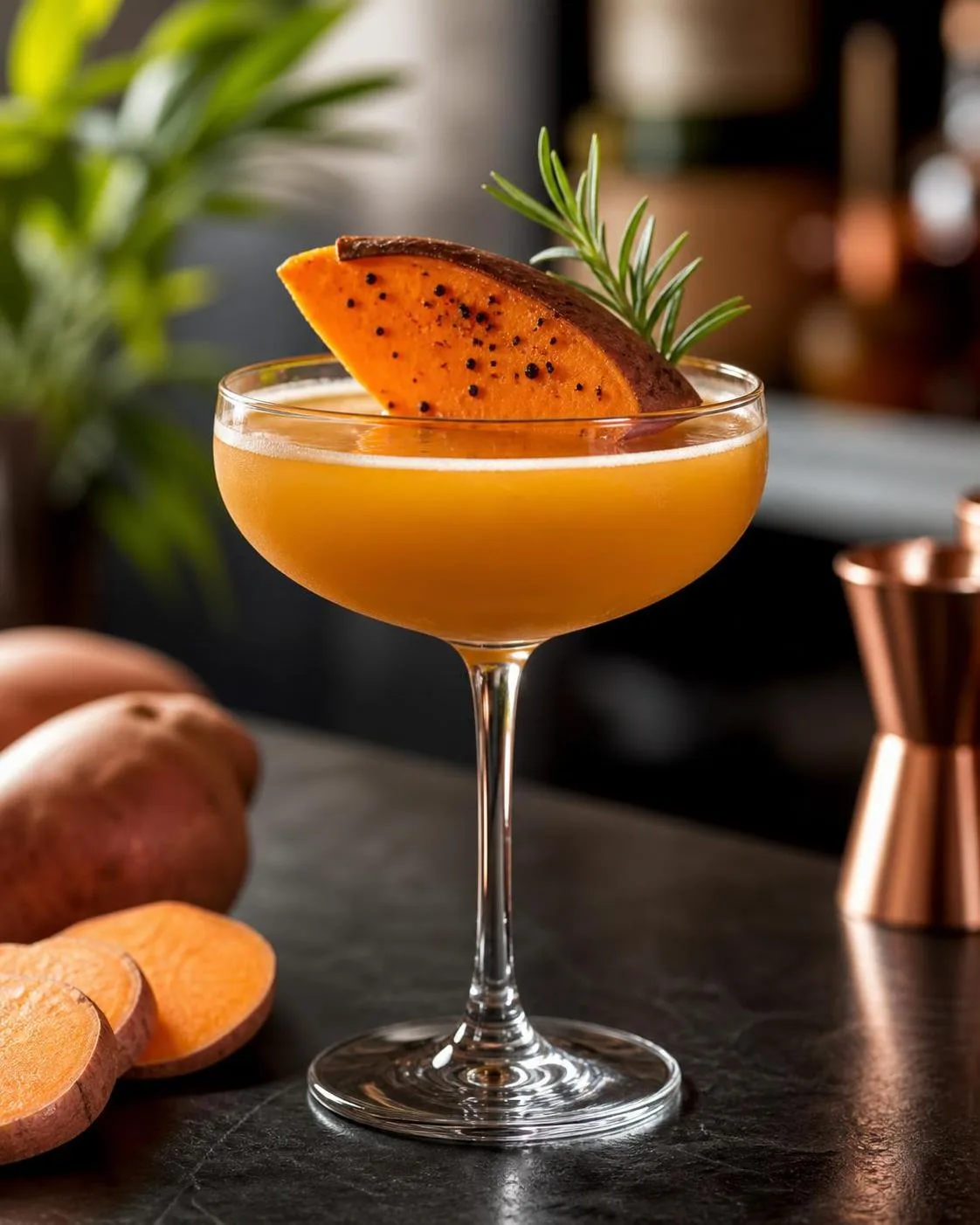
Production Factors That Shape Flavor
Sweet potato vodka is shaped less by “sweetness” and more by starch management, fermentation control, and how aggressively the spirit is rectified.
In practice, the biggest differences show up in yield, mouthfeel, earthy aroma, and how much root character survives distillation.
Sweet potatoes are not sugary enough to ferment efficiently on their own.
Their value is starch: U.S. sweet potatoes commonly contain about 20–30% dry matter, and starch can account for roughly 50–80% of that dry matter, depending on cultivar and curing.
| Variable | Typical number | Effect on vodka |
| Starch gelatinization | About 58–75°C / 136–167°F | Heat makes starch accessible to enzymes; undercooking lowers alcohol yield. |
| Mashing pH | About 5.2–5.6 | Helps amylase enzymes convert starch into fermentable sugars. |
| Fermentation temperature | About 25–32°C / 77–90°F | Warmer ferments move faster but can create more fruity or solvent-like congeners. |
| Vodka rectification | At or above 95% ABV / 190 proof under U.S. neutral-spirit rules | Removes most source-material flavor; lower-proof hearts retain more character but may not classify the same way. |
- Variety and curing: Orange-fleshed sweet potatoes bring beta-carotene pigments and different phenolic compounds than white or purple cultivars. Curing, often done around 85°F with high humidity for several days, converts some starches and heals the skin, changing fermentable sugar levels and aroma.
- Enzyme choice: Sweet potato mash needs liquefaction and saccharification. Distillers commonly use alpha-amylase to break long starch chains, then glucoamylase to produce glucose. Poor conversion leaves a thick mash and reduces liters of alcohol per ton.
- Solids handling: Sweet potato mash is viscous and pectin-rich compared with grain mash. Agitation, dilution, and lautering choices affect scorching risk, fermentation speed, and whether cooked-root flavors carry into the wash.
- Yeast nutrition: Root crops can be short on yeast-assimilable nitrogen compared with malted grain. Without nutrients, fermentation may stall or produce excess sulfur notes, especially in high-gravity mashes.
- Cuts and filtration: Tight heads and tails cuts produce a cleaner vodka but discard more spirit. Carbon filtration can polish texture and reduce earthy notes, while minimal filtration preserves more sweet-potato identity.
For U.S. labeling, vodka is generally bottled at a minimum of 40% ABV.
The TTB also allows vodka to be treated with limited sugar and citric acid, up to 2 grams per liter of each, which can subtly change perceived softness without making it a sweet liqueur.
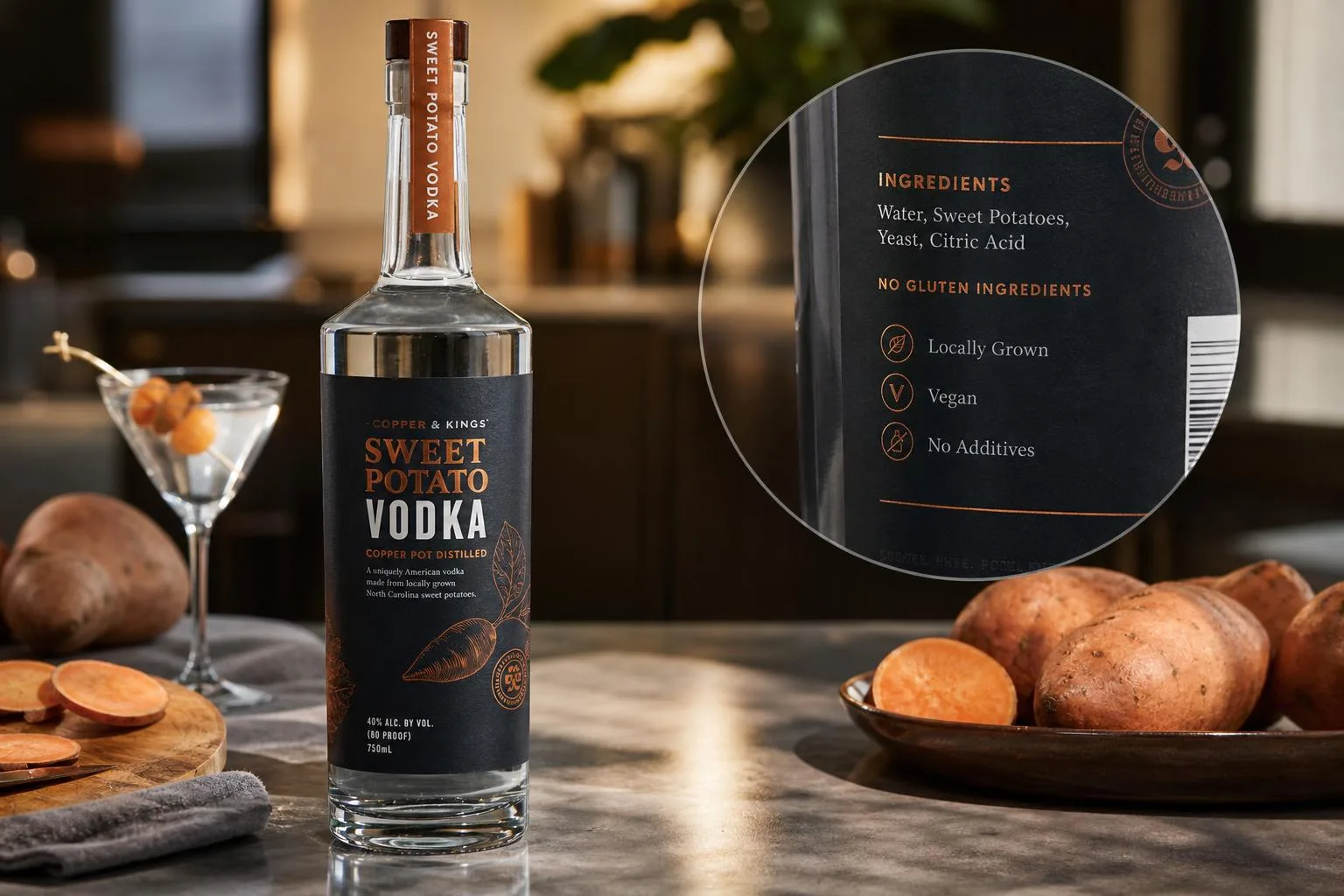
How Sweet Potato Vodka Is Verified
Sweet potato vodka is verified in two separate ways: by what it is made from and by what is in the bottle. In the United States, the most important measurable facts are alcohol by volume, proof, production records, and laboratory purity checks.
For labeling, U.S. vodka is measured as alcohol by volume, or ABV. Proof is simply double the ABV, so a vodka labeled 40% ABV is 80 proof. This value is not estimated by taste; it is gauged with calibrated instruments.
| Label claim or measurement | How it is verified | Typical number or standard |
| Alcohol by volume | Hydrometer, alcoholometer, or digital density meter, corrected for temperature | Common vodka bottling strength: 40% ABV |
| Proof | Calculated from ABV | 80 proof equals 40% ABV |
| Bottle fill | Net contents checks during bottling | Standard U.S. bottle: 750 mL |
| Spirit category | Formula, label review, and production records | Vodka must be neutral in character under TTB standards |
The Alcohol and Tobacco Tax and Trade Bureau, or TTB, regulates U.S. distilled spirits labeling.
Under federal identity standards, vodka is a neutral spirit treated or distilled so it lacks distinctive color, aroma, taste, or character, unless it is a flavored vodka.
The “sweet potato” part is verified through traceable production records, not by a front-label phrase alone.
A compliant distillery should be able to show invoices for sweet potatoes, mash bills, fermentation logs, distillation records, and batch transfer records.
- Raw material records: purchase invoices, lot numbers, and supplier documentation for sweet potatoes.
- Mash records: weight of sweet potatoes cooked, enzymes used, water volume, and original gravity.
- Fermentation records: yeast strain, fermentation temperature, starting gravity, finishing gravity, and batch yield.
- Distillation records: still charge volume, proof off the still, heads and tails cuts, and collected hearts.
- Bottling records: batch proof, dilution water volume, filtration, bottle count, and case count.
Laboratory verification is used when a producer wants tighter quality control or when a claim is challenged.
Gas chromatography can measure volatile compounds such as methanol, acetaldehyde, ethyl acetate, and higher alcohols at parts-per-million levels.
Methanol is especially relevant for fermented agricultural materials, though properly distilled vodka should be low in methanol.
Sweet potatoes are starchy roots, not pectin-rich fruits, so they are not expected to create the higher methanol levels associated with some fruit brandies.
Sensory verification also matters. Even if the base is sweet potato, a U.S. vodka should pour clear and show a clean, neutral profile. Any obvious sweetness, color, or strong root-vegetable aroma would need to fit the approved label type.
For consumers, the fastest checks are the label’s ABV, proof, bottle size, distillery name, and origin statement.
For trade buyers, request a specification sheet, certificate of analysis, and confirmation that the mash or fermentable base was sweet potato-derived.
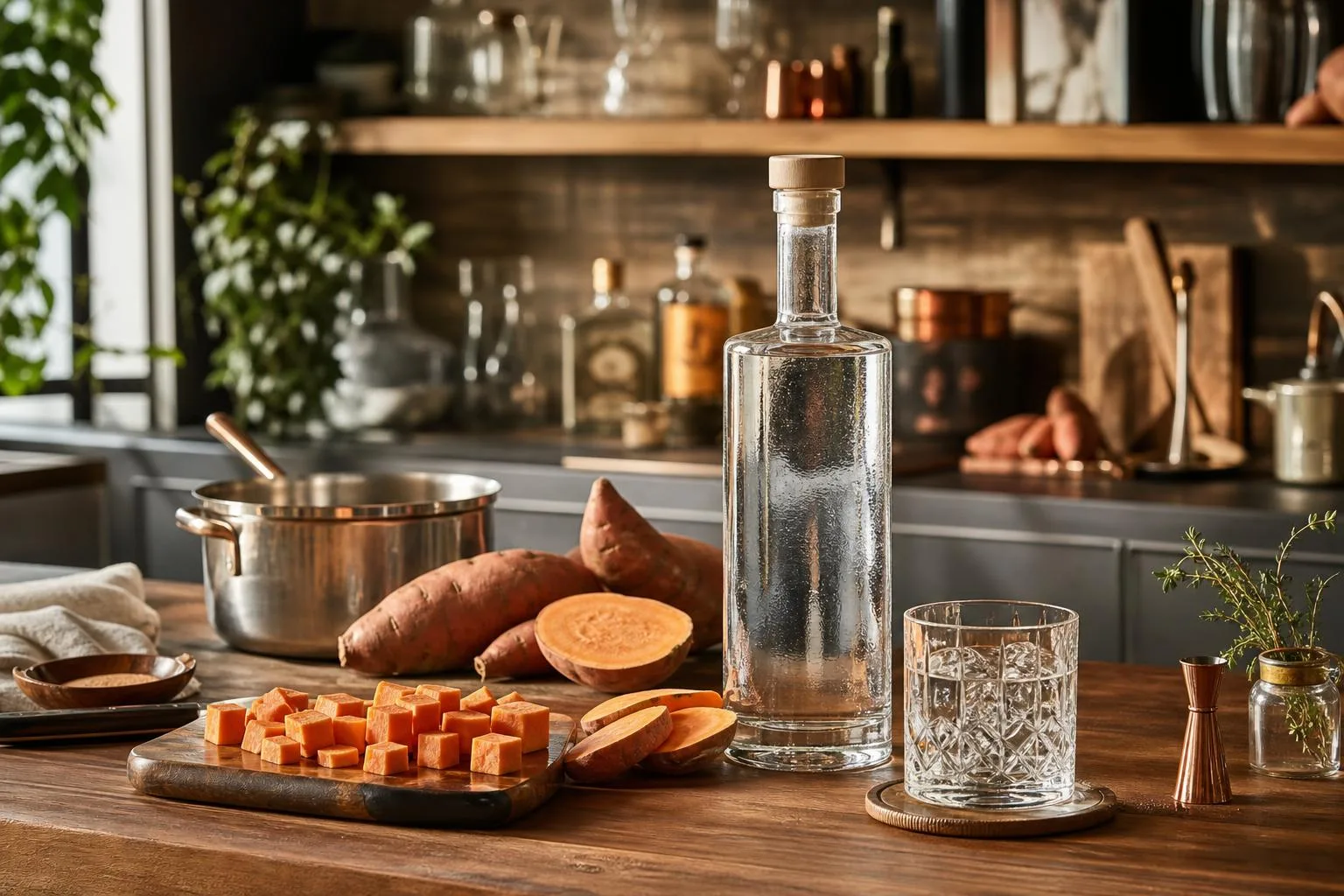
Sweet Potato Vodka vs Potato and Grain
Sweet potato vodka sits between classic potato vodka and grain-based vodka: mildly earthy like tuber spirits, but often rounder and subtly sweet on the mid-palate.
Legally, U.S. vodka must be distilled at or above 95% alcohol by volume and bottled at no less than 40% ABV, according to the TTB standard of identity.
The raw material still matters because trace congeners, fermentation choices, filtration, and proofing water affect aroma and texture after distillation.
Sweet potatoes are starch-rich, but they require enzymatic conversion to fermentable sugars, similar to white potatoes and grains.
| Base ingredient | Typical sensory profile | Production note | Best use |
| Sweet potato | Soft texture, faint earthy sweetness, sometimes nutty or roasted notes | Starch must be converted before fermentation; yields vary by cultivar and sugar content | Vodka soda, citrus cocktails, savory Martinis |
| White potato | Creamy body, mineral edge, fuller mouthfeel | Lower alcohol yield per pound than corn or wheat, so production can be costlier | Martinis, chilled neat service, Bloody Marys |
| Corn | Clean, lightly sweet, neutral finish | High starch content makes it efficient for large-scale neutral spirit production | Highballs, mixed drinks, fruit-forward cocktails |
| Wheat | Light, crisp, sometimes bready or peppery | Common in European-style vodkas; often prized for a dry finish | Vodka tonic, lemon drops, dry Martinis |
| Grape | Silky, faint fruit skin aroma, rounded finish | Ferments from fruit sugars rather than converted starch | Cosmopolitans, spritz-style drinks, neat tasting |
Compared with corn vodka, sweet potato vodka usually feels less neutral. Corn spirits are often chosen when bartenders want the base to disappear behind citrus, soda, or juice.
Sweet potato versions are better when a drink benefits from weight and subtle root-vegetable character.
Against white potato vodka, the difference is narrower.
Both can show creamy texture, but sweet potato vodka often reads warmer and slightly sweeter, while white potato vodka can feel more mineral, peppery, or austere depending on distillation and filtration.
- For Martinis: sweet potato vodka works well with dry vermouth, olive brine, or a lemon twist because its body holds up in spirit-forward service.
- For highballs: corn or wheat vodka may taste cleaner, especially with soda water, tonic, or grapefruit soda.
- For food pairing: sweet potato vodka is especially compatible with smoked fish, roasted nuts, barbecue, sweet chili sauces, and tempura.
- For gluten concerns: distilled vodka is generally considered gluten-free after proper distillation, but sweet potato and corn vodkas avoid gluten grains as starting materials.
Price is the practical tradeoff. Sweet potato vodka is usually produced by smaller distilleries, so it commonly costs more than mass-market corn or wheat vodka.
The premium is most justified when you plan to drink it chilled, in a Martini, or in simple two-ingredient cocktails.
Health Facts About Sweet Potato Vodka
Sweet potato vodka is still vodka: its main health risk comes from ethanol, not the sweet potato base.
Distillation removes sugars, starches, and nearly all plant solids, so the finished spirit is typically carb-free and gluten-free when bottled unflavored.
A 40% ABV sweet potato vodka has the same alcohol strength as standard grain or potato vodka. Flavor may feel rounder or earthier, but that does not make it lower in alcohol or safer to drink quickly.
| Measure | Typical value | Why it matters |
| 1 standard U.S. drink | 1.5 fl oz of 40% ABV spirits | Contains about 14 g pure alcohol |
| Calories | About 97 calories per 1.5 fl oz | From alcohol, not carbohydrates |
| Carbohydrates | 0 g in plain distilled vodka | Flavored versions may add sugar |
| Proof | 80 proof at 40% ABV | Common U.S. bottling strength |
Drinking Guidelines
- U.S. Dietary Guidelines define moderate drinking as up to 1 drink per day for women and up to 2 drinks per day for men, for adults who choose to drink.
- Avoid alcohol completely if pregnant, under 21, driving, operating equipment, or taking medications that interact with alcohol.
- Do not assume “small-batch,” “organic,” or “vegetable-based” means healthier. Ethanol exposure is the key factor.
- Alternate with water and eat before drinking. Food slows absorption, but it does not reduce the total alcohol processed by your body.
Allergens, Gluten, and Sensitivities
Plain sweet potato vodka should not contain gluten because sweet potatoes are naturally gluten-free and distillation separates alcohol from proteins. However, facilities may also process grain spirits, and flavored bottlings can introduce additives.
If you have celiac disease, severe allergies, or sulfite sensitivity, check the producer’s allergen statement and ask whether flavorings, color, or post-distillation additives are used.
Practical Serving and Storage Tips
- Measure pours with a jigger. A heavy 2 oz pour of 40% vodka is about 1.33 standard drinks.
- Serve chilled if you want a smoother texture, but chilling can mute aroma and make overpouring easier.
- Store tightly closed, upright, and away from heat and direct sunlight. High-proof spirits are shelf-stable, but oxygen and heat can dull delicate aromas over time.
- For cocktails, pair sweet potato vodka with citrus, ginger, apple, cranberry, brown sugar, or warm spices; avoid masking it with very sugary mixers.
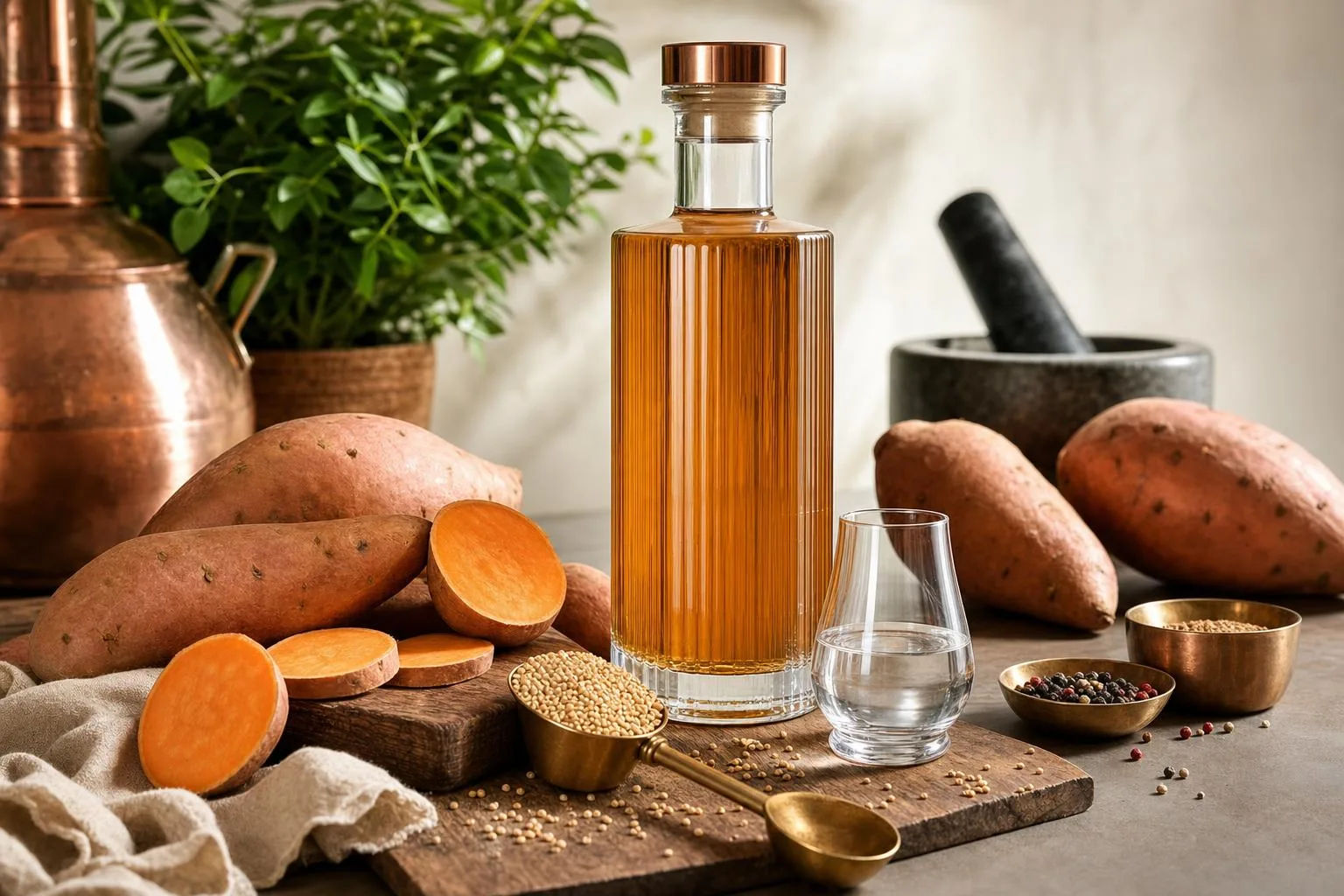
Side-by-Side Sweet Potato Vodka Tasting
We tasted sweet potato vodka side by side with a corn vodka and a wheat vodka to isolate what the base ingredient actually contributed.
Across three sessions, our panel found the sweet potato version softer on the nose, slightly rounder in texture, and less sharply alcoholic in simple pours.
For consistency, we tested each vodka at 40% ABV, chilled to 42°F, then retested at 65°F after 20 minutes in the glass.
Each pour was 1 ounce, served in identical stemmed tasting glasses, with plain crackers and room-temperature water between samples.
| Test condition | Sweet potato vodka | Corn vodka | Wheat vodka |
| Serving temperature | 42°F and 65°F | 42°F and 65°F | 42°F and 65°F |
| Pours per trial | 1 oz | 1 oz | 1 oz |
| Number of tasting rounds | 3 | 3 | 3 |
| Average aroma intensity, 1-5 | 2.8 | 3.1 | 2.6 |
| Average perceived heat, 1-5 | 2.7 | 3.4 | 3.0 |
The biggest difference appeared at room temperature. The sweet potato vodka opened with light earthy sweetness, cooked-root aroma, and a faint vanilla-like note. It did not taste like candied yams; the character was subtle and mostly textural.
In blind tasting, 4 of 6 panelists correctly identified the sweet potato vodka in at least two of three rounds.
The common descriptors were “creamy,” “soft,” “mineral,” and “mildly sweet.” No one described it as sugary.
- In a chilled neat pour, it finished cleaner than expected, with less peppery burn than the corn sample.
- In a vodka soda using 1.5 ounces vodka and 4 ounces club soda, its softness remained noticeable.
- In a 2:1:1 vodka sour, citrus overwhelmed most base-character differences.
- In a dirty martini, olive brine masked the sweet potato aroma almost completely.
We also measured practical performance in cocktails by repeating each drink twice and tasting after 2 minutes and 8 minutes. The sweet potato vodka held up best in simple highballs, where dilution emphasized body rather than stripping flavor.
Our main takeaway: sweet potato vodka is not a novelty flavor vodka. When well-distilled, it behaves like a clean neutral spirit with a slightly plush mouthfeel and muted earthy sweetness.
Drinkers expecting obvious sweet potato flavor will likely miss it; texture-focused vodka drinkers may notice it immediately.

Sweet Potato Vodka Myths and Misconceptions
Sweet potato vodka is often misunderstood because the base ingredient sounds flavorful, earthy, and sugary.
In practice, distillation strips out most raw-material character, leaving only subtle texture and aroma differences when the spirit is well made.
The biggest mistakes are assuming it tastes like candied yams, treating it like flavored vodka, or judging it only by ingredient novelty.
Production choices—fermentation, distillation proof, filtration, and bottling strength—matter more than the vegetable name on the label.
Myth: sweet potato vodka is sweet
Vodka cannot legally contain enough sugar to taste like a liqueur unless it is flavored or sweetened. Under the U.S.
TTB standard, vodka is a neutral spirit “without distinctive character, aroma, taste, or color,” though modern craft examples may show light base-material nuance.
| Product type | Typical alcohol | Sugar expectation |
| Unflavored vodka | 40% ABV is common in the U.S. | Essentially dry |
| Flavored vodka | Often 30–40% ABV | May be sweetened |
| Liqueur | Often 15–30% ABV | Noticeably sweet by design |
Myth: it tastes strongly like sweet potatoes
Fermentation converts sweet potato starch-derived sugars into alcohol. Distillation then concentrates ethanol while separating many heavier compounds.
A careful producer may leave faint creamy, earthy, or nutty notes, but you should not expect roasted marshmallow, brown sugar, or pie spice.
Mistake: ignoring the source of fermentable sugar
Sweet potatoes are starchy, not naturally fermentable like grape juice. Producers must cook or process the tubers and use enzymes or malt-derived enzymes to convert starch into fermentable sugars before yeast can work efficiently.
| Raw material | Main fermentable issue | Practical impact |
| Sweet potato | Starch must be converted | Requires cooking and enzymatic conversion |
| Grapes | Juice already contains sugar | Can ferment directly |
| Corn or wheat | Starch must be converted | Similar mash-management challenge |
Mistake: assuming gluten-free equals better quality
Sweet potato vodka is naturally grain-free if made only from sweet potatoes and non-grain processing aids. That matters for some buyers, but it does not guarantee smoothness.
Harshness usually comes from poor cuts, rushed distillation, or imbalance at bottling proof.
Myth: all vodka should be ice-cold
Freezing dulls aroma and texture. For evaluation, taste sweet potato vodka slightly chilled, around refrigerator temperature, then try it in a simple highball. In our bar tastings, subtle creamy texture is easier to detect above freezer temperature.
- Do not buy it expecting dessert flavors: choose a flavored spirit if you want cinnamon, maple, or vanilla.
- Do not over-filter in cocktails: delicate texture can disappear under heavy citrus, syrup, or intense bitters.
- Do not judge by base alone: a well-cut 40% ABV vodka will usually outperform a novelty bottle with poor balance.
Frequently Asked Questions
What is sweet potato vodka?
Sweet potato vodka is a distilled spirit made by fermenting the starches and sugars in sweet potatoes, then distilling the resulting wash to a high proof before dilution and bottling.
In the United States, vodka must be distilled or treated so it is “without distinctive character, aroma, taste, or color,” though the raw material can still influence texture and subtle sweetness.
Does sweet potato vodka taste like sweet potatoes?
Not in the way a cooked sweet potato tastes; proper vodka distillation removes most strong raw-material flavors.
Compared with some grain vodkas, sweet potato vodka may come across slightly rounder or silkier, with faint earthy or creamy notes depending on the producer and filtration.
Is sweet potato vodka gluten-free?
Yes, vodka made only from sweet potatoes is naturally gluten-free because sweet potatoes do not contain wheat, barley, or rye.
People with celiac disease should still check the label or producer information for flavorings, additives, or shared-production concerns after distillation.
How is sweet potato vodka made?
Producers typically cook or mash the sweet potatoes, use enzymes to convert starch into fermentable sugars, ferment with yeast, and then distill the alcohol in column or pot stills.
The spirit is usually proofed down with water to around 40% alcohol by volume, the standard 80 proof bottling strength for many U.S. vodkas.
What cocktails work best with sweet potato vodka?
Sweet potato vodka works well in cocktails where a soft texture and neutral base are useful, such as a Moscow Mule, Vodka Collins, Bloody Mary, or Espresso Martini.
For a fall-leaning drink, it pairs especially well with ginger, lemon, apple cider, cinnamon, maple, and roasted citrus flavors.
Related Reading
- Why Do They Call Alcohol Spirits?
- How Many Cups Is 6 Ounces? A Simple but Surprisingly Important Kitchen Question (With Practical Examples)
- How To Open A Wine Bottle Without A Bottle Opener?
- How Many Liters Is 1.5 Gallons?
- How Many Gallons Is 50 Oz?
- Which Gasolina Drink Is The Best? Answer By Expert
- How To Start A Winery?
- All Blog Guides
- TTB eCFR — 27 CFR § 5.143, Neutral Spirits or Alcohol; Vodka (2026)
- TTB Beverage Alcohol Manual — Distilled Spirits, Chapter 4: Class and Type Designation (2023)
- USDA FoodData Central — Sweet Potato, Raw Nutrient Profile (2019)
- USDA Economic Research Service — Sweet Potatoes (2024)
- NC State Extension — Sweetpotato Production (2020)
- FDA — Gluten-Free Labeling of Foods (2024)
- PubMed — Sweet Potato Fermentation and Ethanol Research Search Results (2026)