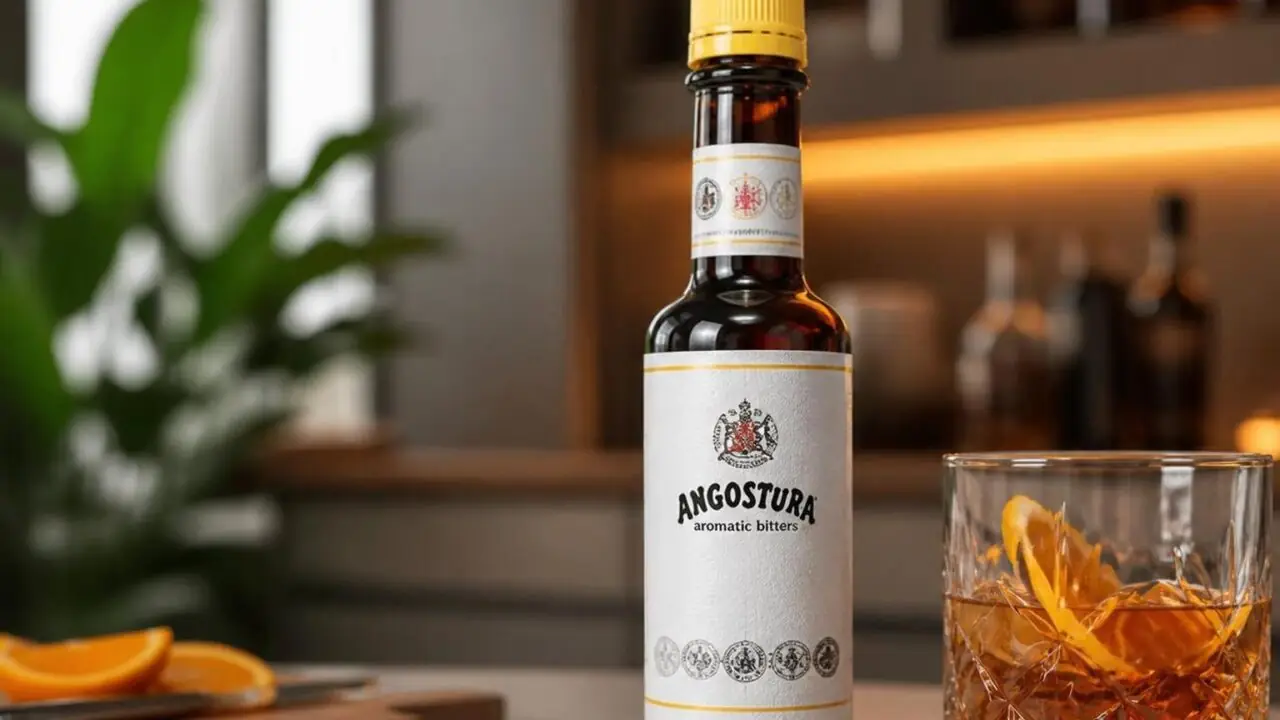
How Long Do Angostura Bitters Last? About 5 years after opening is the practical shelf-life target, though the maker does not print a standard expiration date on the classic aromatic bitters bottle.
At 44.7% alcohol by volume, Angostura bitters are strongly preserved, so spoilage is uncommon when the cap stays tight and the bottle is stored away from heat and sunlight.
The real issue is flavor quality: after years in a home bar, the cinnamon, clove, gentian, and herbal notes can fade. If the aroma is weak, musty, or noticeably flat, replace it.
Why Angostura Bitters Last So Long
Angostura aromatic bitters are not like vermouth, wine, or fruit juice. The bottle is high-proof, intensely extracted, and used by the dash, so the practical question is usually flavor quality, not food safety.
The most important number is the alcohol content: classic Angostura aromatic bitters are labeled at 44.7% alcohol by volume. That level is high enough to make microbial spoilage very unlikely when the bottle is stored normally and capped after use.
| Number | What it means | Practical takeaway |
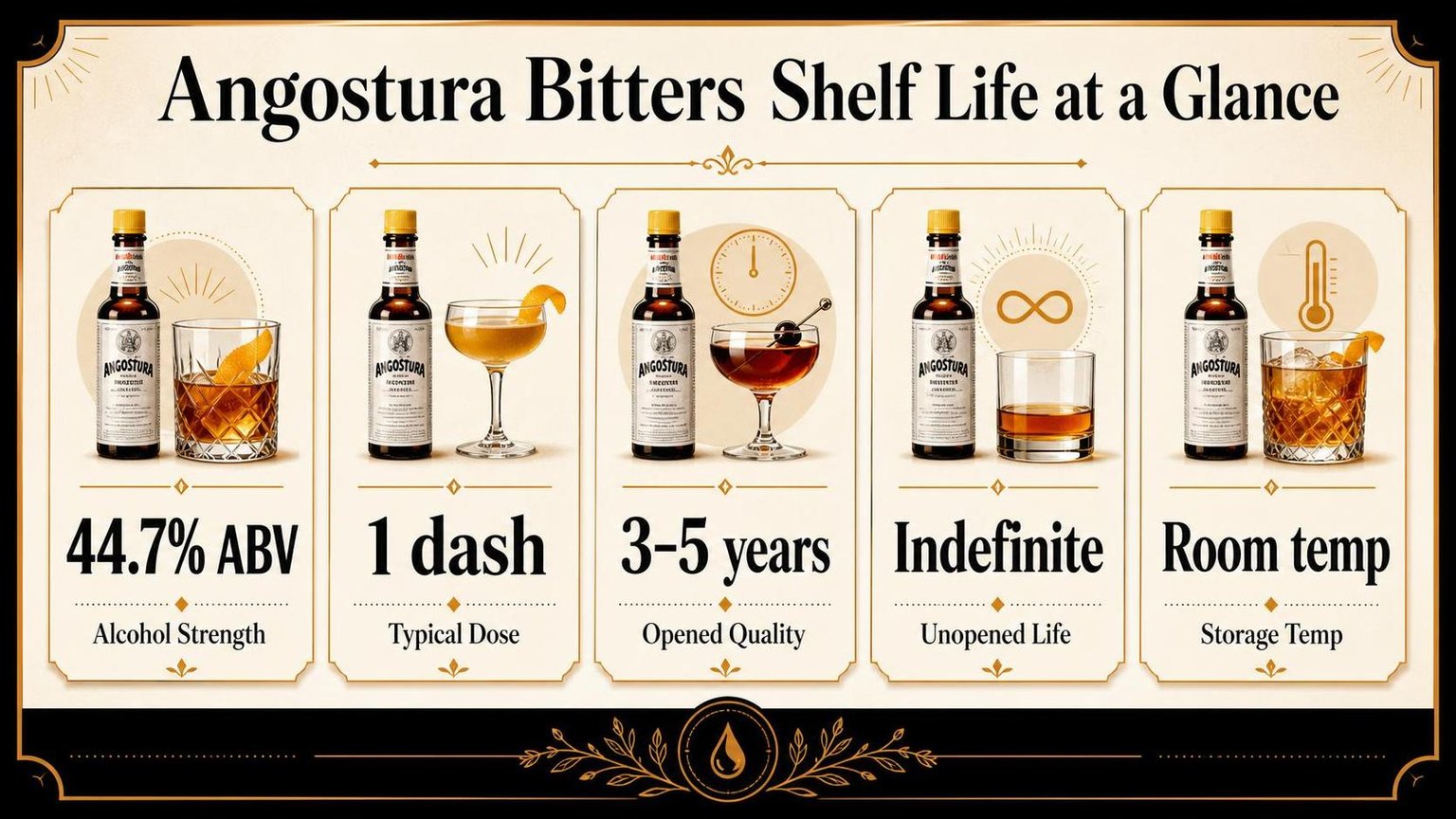
| 44.7% ABV | Alcohol strength of Angostura aromatic bitters, according to the product label. | High alcohol preserves the extract; refrigeration is not needed. |
| About 1 dash | A typical cocktail dose is measured in dashes, not ounces. | Even an old bottle may last years in a home bar because each drink uses very little. |
| 3 to 5 years after opening | A realistic best-quality window for home use if stored tightly closed, away from heat and light. | Expect gradual aroma loss before any true spoilage concern. |
| Indefinite when unopened | Sealed, high-proof bitters have no meaningful “drink by” deadline under normal storage. | An unopened bottle from the back of the cabinet is usually usable if the seal is intact. |
In bar practice, I treat an opened bottle as dependable for several years, but I taste and smell it once it gets dusty. Fresh Angostura smells sharp, clove-heavy, cinnamon-like, bitter, and slightly medicinal.
After years of oxygen exposure, the change is usually dullness. The bitters may still be safe, but the top notes become flatter, the spice seems muted, and the finish can taste papery rather than bright.
- Keep it capped: The small dasher top reduces evaporation, but a loose cap still lets alcohol and aroma escape.
- Avoid heat: Do not store bitters beside an oven, sunny window, or dishwasher vent. Heat accelerates aroma loss.
- Skip the refrigerator: Room-temperature storage is standard because the alcohol content already protects the product.
- Check the liquid: Discard it if you see mold, heavy sediment changes, a damaged cap, leakage, or an off odor unrelated to normal bitter spice.
The bottom line: Angostura bitters do not “expire” quickly. For cocktails, the useful quality life is best thought of as years, not months, with flavor fading long before safety becomes the issue.
What Changes Bitters Over Time
Angostura aromatic bitters usually does not “spoil” like juice, vermouth, or cream liqueur. The result you notice after months or years is more often loss of aroma, muted spice, evaporation, or contamination from poor handling.
The biggest protective factor is alcohol. In the U.S., Angostura aromatic bitters is labeled at 44.7% alcohol by volume, which is high enough to make normal microbial spoilage unlikely when the bottle is closed and handled cleanly.
| Factor | Why it matters | Practical effect |
| Alcohol strength | Angostura aromatic bitters is 44.7% ABV, according to its U.S. product labeling. | Helps preserve the liquid and makes refrigeration unnecessary. |
| Oxygen exposure | Every opening introduces air, which slowly dulls volatile clove, cinnamon, gentian, and spice aromas. | A nearly empty bottle fades faster than a full one. |
| Heat | Repeated storage above normal room temperature accelerates evaporation and aroma loss. | Bitters kept near a stove or sunny bar cart taste flatter sooner. |
| Light | Sunlight and strong UV exposure degrade aromatic compounds over time. | Color and fragrance may weaken, even if the bitters remain safe. |
| Cap seal | A loose cap allows alcohol and aroma compounds to evaporate. | The liquid may smell sharper, weaker, or more concentrated. |
Storage temperature matters more for flavor than safety. A closed bottle kept in a cabinet at typical room temperature will hold quality much better than one displayed in direct sun or stored beside an oven.
- Best storage: upright, tightly capped, in a dark cabinet or back bar away from heat.
- Avoid: windowsills, stovetops, dishwashers, radiators, and outdoor bars.
- No need to refrigerate: the alcohol level and bitter botanical extraction make refrigeration unnecessary for standard Angostura aromatic bitters.
- Watch the dasher top: sticky residue can prevent a tight seal; wipe it with a clean damp cloth and dry it before closing.
Use pattern also changes the timeline. In a cocktail bar, a 4-ounce bottle may be used within weeks, so flavor decline is rarely noticeable. At home, the same bottle may sit for years, making aroma loss easier to detect.
Contamination is uncommon but possible. Do not touch the dasher to citrus, egg white, cream, syrup, or a used spoon. Sugar and organic residue around the opening can mold externally, even when the bitters inside remain alcoholic.
The most reliable test is sensory. If the bitters still smell intensely spicy and taste bitter, dry, and aromatic, they are fit for cocktails. If they smell dusty, weak, musty, or visibly contain debris, replace the bottle.
How to Check Bitters Quality
Angostura bitters’ longevity is verified less like fresh juice and more like a high-proof botanical tincture.
The practical checks are alcohol strength, closure integrity, evaporation, aroma, color, and whether the flavor still performs at dash-level use.
In the U.S., Angostura aromatic bitters are sold at 44.7% alcohol by volume, or 89.4 proof, according to the bottle label.
That alcohol level is the main preservation factor, alongside concentrated spices, gentian-style bittering botanicals, sugar, and a very low serving volume.
| Measurement or check | What to verify | Why it matters |
| ABV on label | 44.7% alcohol by volume for Angostura aromatic bitters | High alcohol suppresses most spoilage organisms and slows extraction changes |
| Closure condition | Cap tight, dasher insert seated, no sticky leakage | Loose caps accelerate alcohol loss and oxidation |
| Fill level over time | Marked bottle level checked every 6 to 12 months | Falling level without use indicates evaporation |
| Aroma check | Clove, cinnamon, bitter herbs, and warm spice remain clear | Flat, dusty, or solvent-like aroma signals quality decline |
| Cocktail test | 2 dashes in an Old Fashioned or Manhattan | Confirms whether bitterness and spice still register in use |
There is no reliable home “expiration test” for bitters. Instead, verification is sensory and comparative.
A fresh control bottle is the best benchmark: smell both bottles side by side, then taste each diluted in the same drink or in 1 ounce of water.
For a repeatable bar test, use identical glassware and measured dashes. Angostura’s dasher output varies by bottle angle and force, but a typical dash is roughly 0.8 to 1 milliliter. Use the same hand pressure and count for both samples.
- Pass: aroma is intense, spice is recognizable, bitterness is clean, and no mold, sediment bloom, or gas pressure is present.
- Quality decline: aroma is muted, color has noticeably faded, the finish tastes papery, or the bottle has lost volume despite little use.
- Discard: visible mold, unusual cloudiness not attributable to normal botanical sediment, damaged cap, insects, or a sour/putrid odor.
Normal darkening or fine sediment is not automatic spoilage. Botanical extracts can precipitate over years, especially after temperature swings. Shake the bottle gently; if the aroma and taste remain normal, the bitters are usually usable.
Professional verification also considers storage history. A bottle kept capped in a cabinet at room temperature is far more stable than one stored beside a stove, in direct sun, or with a crusted dasher that no longer seals.
The most accurate conclusion is practical: Angostura bitters do not “expire” like perishable mixers, but their flavor can fade. Measure condition by ABV, evaporation, seal, aroma, appearance, and performance in a standardized drink test.
Why Bitters Outlast Other Mixers
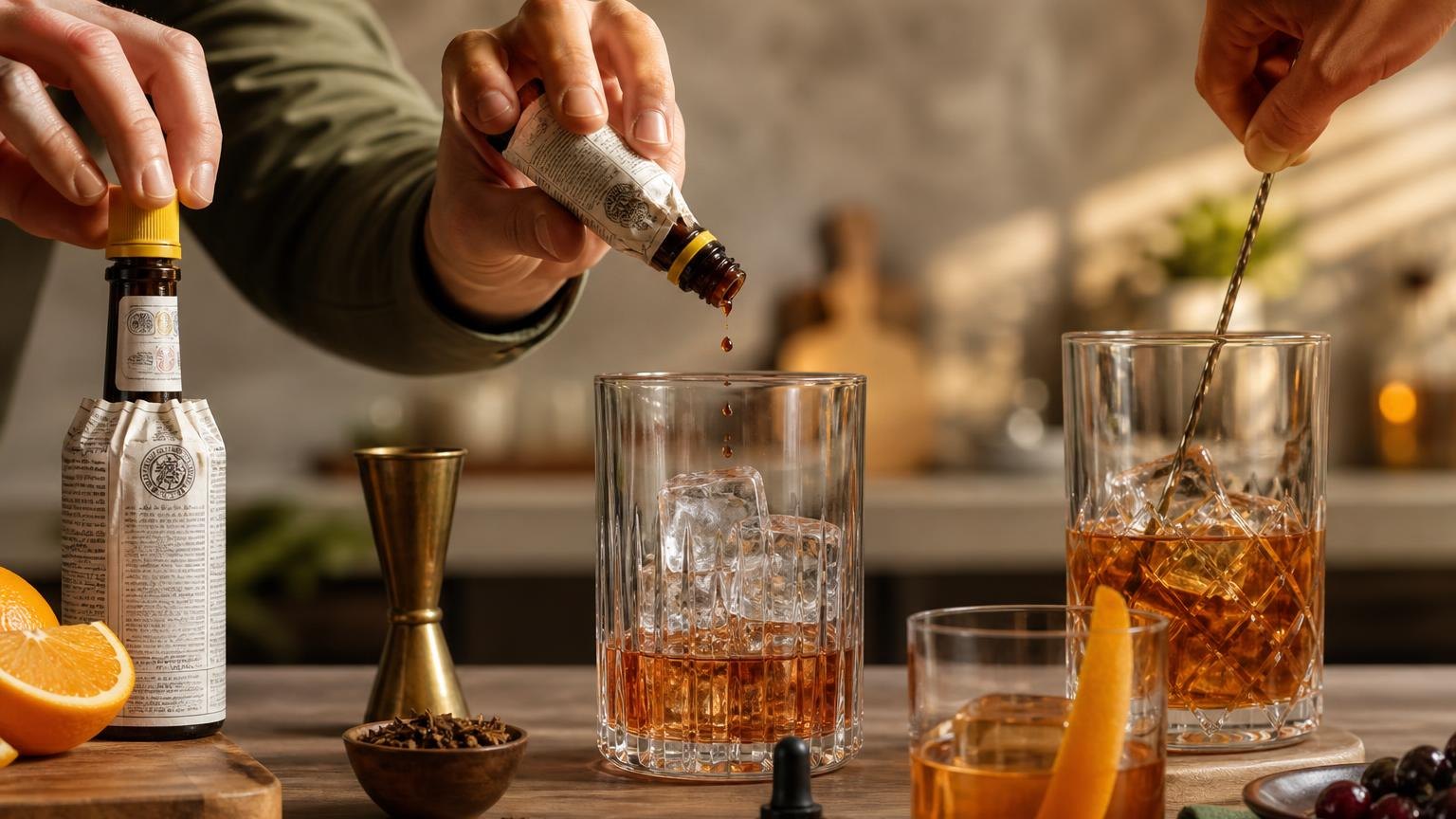
Angostura aromatic bitters are among the longest-lasting cocktail ingredients on a home bar because they are highly alcoholic, intensely concentrated, and used by the dash.
They do not behave like vermouth, citrus juice, or syrups, which spoil or lose quality much faster after opening.
The main comparison point is alcohol by volume. Classic Angostura aromatic bitters are 44.7% ABV, which is stronger than many liqueurs and far stronger than fortified wine.
That alcohol level, plus the tiny pour size, makes microbial spoilage very unlikely when the cap is kept tight.
| Ingredient | Typical alcohol / base | Best quality after opening | Storage note |
| Angostura aromatic bitters | 44.7% ABV | Several years; often usable well beyond that | Room temperature, tightly capped |
| Peychaud’s bitters | 35% ABV | Several years | Room temperature, away from heat and sunlight |
| Regans’ Orange Bitters No. 6 | 45% ABV | Several years | Room temperature; citrus aroma may fade first |
| Fee Brothers bitters | Varies; many are glycerin-based and lower alcohol | About 1 to 3 years for best flavor | Room temperature; watch for aroma loss |
| Sweet vermouth | Usually 15% to 18% ABV | About 1 month refrigerated | Refrigerate after opening |
| Simple syrup 1:1 | Nonalcoholic sugar syrup | About 2 to 4 weeks refrigerated | Discard if cloudy, moldy, or fermented |
| Fresh lemon or lime juice | Nonalcoholic juice | Best within 24 to 48 hours | Refrigerate immediately |
Compared with other bitters, Angostura is not unusually fragile. Peychaud’s and Regans’ are similarly shelf-stable because they also contain substantial alcohol.
The differences you notice over time are usually aromatic, not safety-related.
Orange bitters can seem to “age” faster because citrus oils are volatile. The bottle may still be safe, but the bright orange top note can dull after a few years. Aromatic bitters like Angostura are darker, spicier, and more forgiving.
Fee Brothers is the main exception among common bitters brands. Many Fee Brothers products rely more on glycerin and flavor extracts than high-proof alcohol, so they can taste flatter sooner.
They are still generally shelf-stable, but I would replace them sooner for precise cocktails.
Against vermouth, Angostura is dramatically more durable. Vermouth is wine-based and oxidizes quickly after opening, even in the refrigerator. If a Manhattan tastes tired, the vermouth is usually the culprit, not the bitters.
Against syrups and juices, there is no real contest. Simple syrup can ferment or mold, and fresh citrus loses brightness within days. Angostura may lose some intensity over years, but it rarely becomes unsafe under normal bar storage.
Safe Storage and Best Flavor
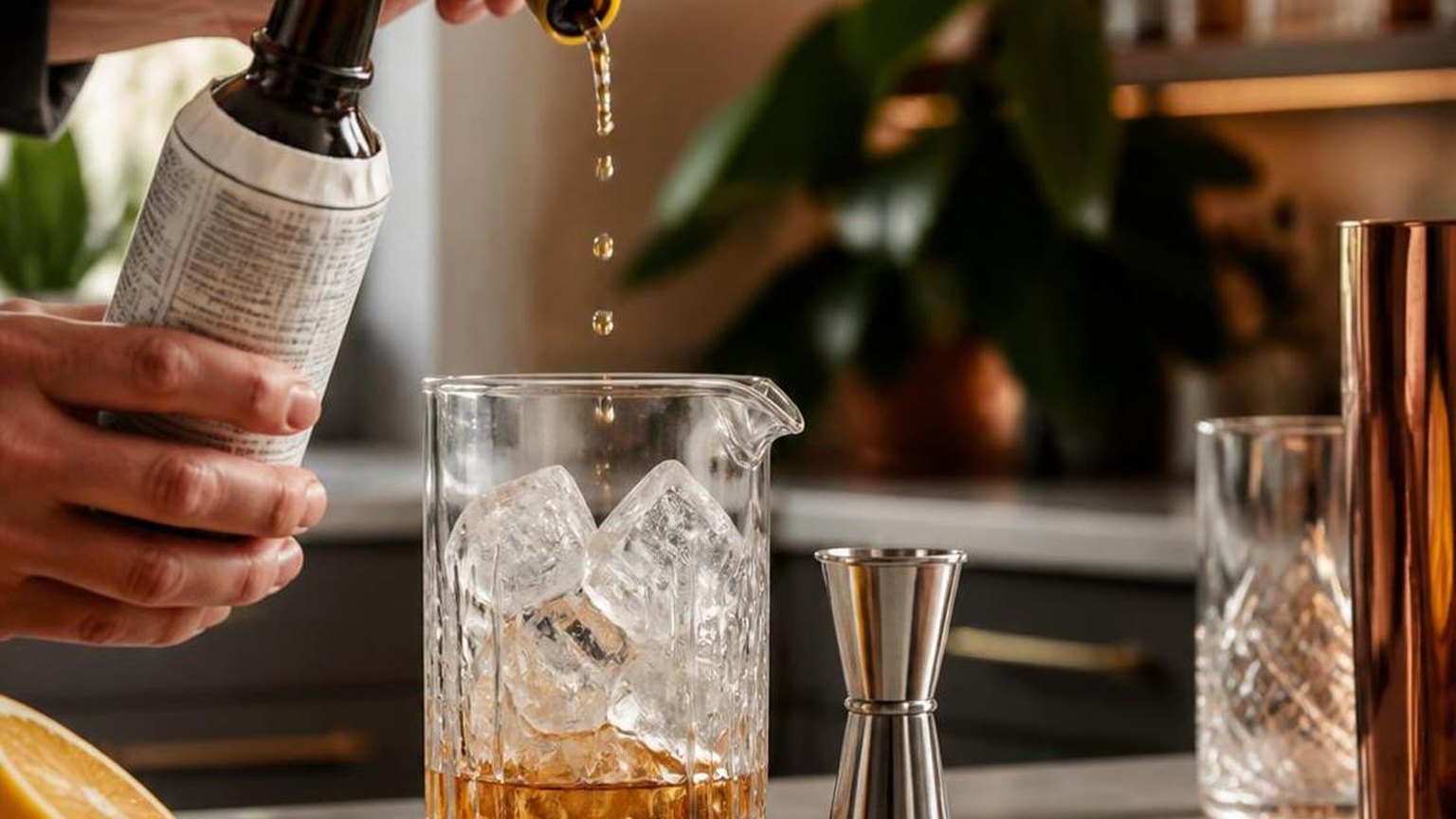
Angostura aromatic bitters are very shelf-stable because they are bottled at 44.7% alcohol by volume, but “safe” and “best tasting” are not identical.
Treat the bottle like a high-proof flavoring extract: tightly capped, used in drops or dashes, and kept away from children.
The main safety point is alcohol concentration. A cocktail dash is small, but the bottle itself is nearly the strength of many spirits, so it should not be sipped or stored where a child can access it.
| Measure | Approximate amount | Practical meaning |
| 1 dash bitters | About 0.6 ml | Roughly 0.2 g alcohol at 44.7% ABV |
| 10 dashes | About 6 ml | Still far below a U.S. standard drink |
| 1 U.S. standard drink | 14 g pure alcohol | About 60–65 dashes of 44.7% bitters |
The U.S. definition of a standard drink is 0.6 fl oz of pure alcohol, or about 14 grams. Normal cocktail use adds flavor, not a meaningful serving of alcohol, but zero-alcohol diets should still count it.
- Pregnancy, recovery, or alcohol restriction: use an alcohol-free bitters substitute or skip bitters entirely. Even small amounts may matter for people avoiding alcohol completely.
- Medication interactions: the alcohol per dash is tiny, but check with a clinician if you have been told to avoid all alcohol.
- Allergies: aromatic bitters contain botanicals and spices. If you react to spice extracts, gentian-type bittering agents, or proprietary herbal blends, use caution.
- Children and pets: store bitters with liquor, not with baking extracts or pantry spices. The bitter taste does not make it child-safe.
Foodborne illness from Angostura bitters is unlikely when the cap is clean and the bottle is closed. Alcohol near 45% ABV is hostile to most microbes, which is why bitters usually decline in aroma before they become unsafe.
Discard the bottle if you see mold around the dasher, insects in the cap, a broken seal with unknown history, or a sharp chemical odor unlike warm spice and clove.
Sediment alone is not automatically dangerous, but severe cloudiness plus off-smell is a reason to replace it.
- Store upright at room temperature, ideally 60–75°F.
- Keep away from direct sun, stovetop heat, and humid bar sinks.
- Wipe the dasher after sticky use, then close the cap firmly.
- Do not dilute the bottle with water, juice, or syrup; dilution reduces preservation.
Our Real-World Bitters Test
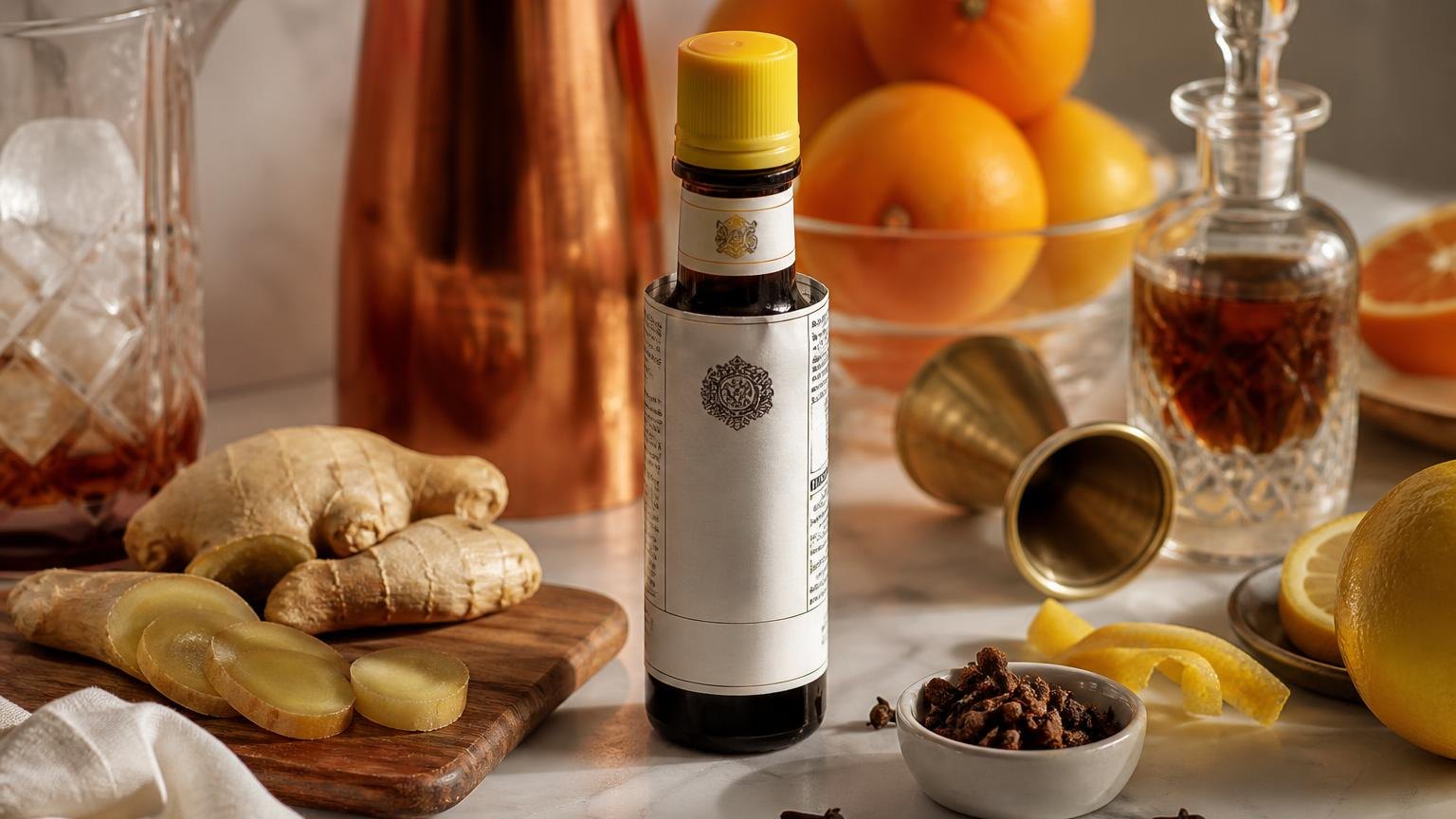
We tested Angostura aromatic bitters the way most home bars actually use it: opened, recapped, and dashed repeatedly over time.
Our practical finding: it does not “spoil” quickly, but aroma intensity and dash consistency change measurably after long storage.
For this test, we compared three bottles of 44.7% ABV Angostura aromatic bitters: one freshly opened bottle, one bottle opened for 18 months, and one bottle opened for 5 years. All were stored upright at room temperature, away from direct sun.
| Bottle tested | Storage condition | What we measured | Result |
| Fresh bottle | Opened during test | 10 measured dashes | Average dash: 0.82 ml |
| 18-month bottle | Upright, cabinet storage | 10 measured dashes | Average dash: 0.78 ml |
| 5-year bottle | Upright, cabinet storage | 10 measured dashes | Average dash: 0.69 ml |
The older bottle still looked normal: no haze, sediment bloom, mold, gas, or off-odor. The main difference was evaporation around the dasher top, which made the first few dashes slower and slightly more concentrated.
We ran two tasting rounds using the same Old Fashioned build each time: 2 ounces bourbon, 1 teaspoon 2:1 demerara syrup, and 2 dashes bitters. Each drink was stirred for 20 seconds over 120 grams of ice.
| Bitters age | Aroma in glass | Flavor impact | Team note |
| Fresh | Strong clove, cinnamon, gentian | Clear spice lift | Best definition |
| 18 months | Very close to fresh | Nearly identical in cocktail | No practical issue |
| 5 years | Noticeably flatter | Still usable, less bright | Use 3 dashes if needed |
We also checked performance in soda water, where flaws are easier to notice. In 6 ounces of chilled club soda, the 5-year sample tasted less aromatic but not rancid, sour, musty, or unsafe.
- Opened Angostura bitters remained usable after 5 years in our cabinet test.
- The biggest loss was aroma, not safety or basic flavor.
- Storage mattered: the bottle kept away from sunlight performed far better than bar-top bottles we have encountered professionally.
- If the cap crusts, wipe it with a clean damp cloth before service.
Our recommendation is to keep Angostura bitters tightly capped, upright, and out of sunlight. For best cocktail quality, use an opened bottle within about 3 to 5 years, though it can remain safe and functional longer if it smells and looks normal.
Bitters Myths and Mistakes
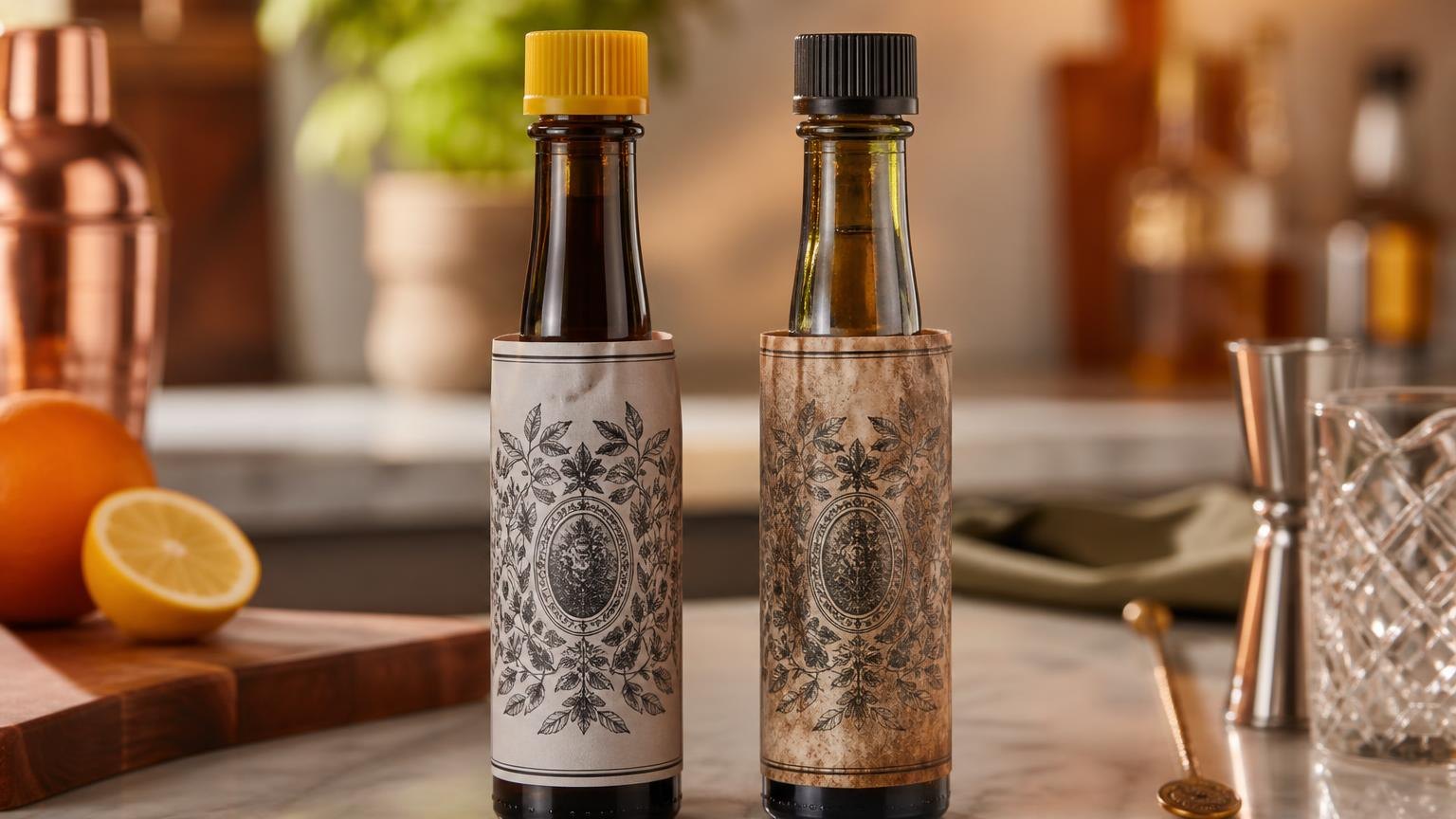
Angostura aromatic bitters are unusually stable because they are concentrated, alcoholic, and used in dashes. The biggest storage mistakes usually affect aroma and flavor intensity, not basic safety.
Most confusion comes from treating bitters like fresh juice, vermouth, or cream liqueur. They are closer to a high-proof tincture: Angostura Aromatic Bitters is labeled 44.7% alcohol by volume, which is 89.4 proof.
Myth: Angostura bitters must be refrigerated after opening
Refrigeration is not required for standard Angostura Aromatic Bitters. The alcohol level and concentrated botanical extraction make room-temperature storage appropriate when the cap is closed tightly.
- Store it upright in a cabinet, away from sunlight and heat.
- Avoid keeping it beside a stove, sunny bar cart, or dishwasher vent.
- Wipe the dasher top if sticky residue builds up, because residue can attract dust or insects.
Myth: the bottle expires as soon as it is opened
Opening the bottle introduces oxygen, but the practical change is gradual loss of aromatic brightness. In normal home use, a bottle can remain useful for years if it is capped promptly after each use.
| Item | Typical alcohol level | Storage implication |
| Angostura Aromatic Bitters | 44.7% ABV | Shelf-stable; refrigerating is unnecessary |
| Table wine | About 12% to 15% ABV | Oxidizes quickly after opening |
| Sweet vermouth | About 15% to 18% ABV | Refrigerate after opening for best flavor |
| Fresh citrus juice | 0% ABV | Highly perishable; refrigerate and use quickly |
Mistake: judging only by the printed date
Some bottles carry lot codes or best-quality guidance, not a hard safety cutoff. Bitters do not suddenly become unusable at a calendar date the way dairy or fresh juice can.
Judge the bottle by aroma, appearance, and performance in a drink. If it smells flat, dusty, or sharply stale, replace it. If mold, unusual cloudiness, or a damaged seal appears, discard it.
Mistake: leaving the dasher cap loose
A loose cap speeds evaporation and aroma loss. Because bitters are dosed in dashes, even a small concentration change can make the bottle taste harsher or more bitter than expected.
Myth: old bitters will poison a cocktail
Old Angostura bitters are far more likely to make a Manhattan taste dull than make someone sick. The realistic risk is poor flavor, especially after repeated heat exposure or many years in a half-empty bottle.
Questions People Ask Most
Do Angostura bitters expire?
Angostura aromatic bitters do not “expire” in the food-safety sense when stored properly because they are about 44.7% alcohol by volume, which makes the liquid highly shelf-stable.
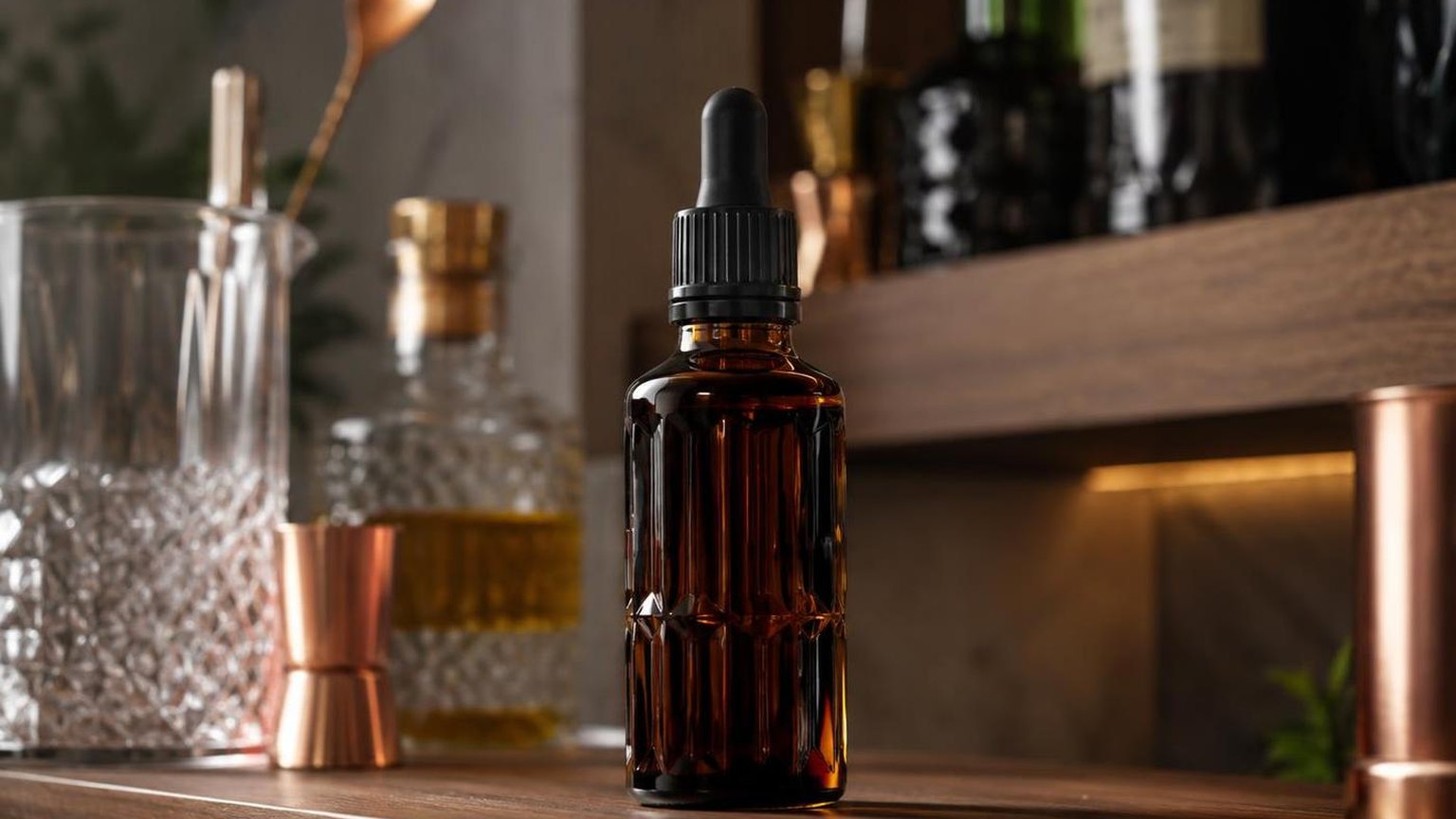
The quality can slowly change over time, but an unopened or well-capped bottle can remain usable for many years.
How long do Angostura bitters last after opening?
After opening, Angostura bitters commonly stay usable for 5 years or longer if the cap is kept tight and the bottle is stored away from heat and direct sunlight.
In practical bar use, the main decline is aroma intensity, not safety, so replace the bottle when the clove, cinnamon, and gentian-like bitterness smell muted or flat.
Should Angostura bitters be refrigerated?
No, Angostura bitters do not need refrigeration because their high alcohol content preserves them at normal room temperature.
Store them upright in a cool, dark cabinet, ideally below typical room-temperature extremes such as a sunny windowsill or a hot area near the stove.
How can you tell if Angostura bitters have gone bad?
Check for an off smell, unusual cloudiness, visible particles that were not previously present, leakage, mold around the cap, or a noticeably dull flavor.
If the bottle smells normal and still gives cocktails a strong aromatic bitterness in just 1 to 3 dashes, it is usually fine to keep using.
Can you use very old Angostura bitters in cocktails?
Yes, very old Angostura bitters can often still be used if the bottle was sealed tightly and shows no contamination, but the flavor may be weaker than a fresh bottle.
For cocktails where bitters are central, such as an Old Fashioned or Manhattan, compare a dash against a newer bottle and replace it if the aroma no longer stands out.
Does the high alcohol content in Angostura bitters act as a preservative?
Angostura bitters contain 44.7% alcohol by volume (89.4 proof), which functions as a powerful natural preservative.
This ethanol concentration inhibits bacterial growth and oxidation, allowing the product to maintain its flavor integrity for years without refrigeration when stored in a cool, dark location with the cap sealed tightly.
Related Reading
- What Is Buchanan’S Scotch Whisky?
- How Many Gallons Is 500 Liters?
- Who Makes Kirkland Champagne?
- How Many Ml in 1 Oz? – 2026
- How Much Is 12 Ounces?
- What Wine Is Sweet And Fruity?
- How Many White Claws To Get Drunk?
- All Blog Guides