How Long After Taking Aleve Can You Drink Alcohol?
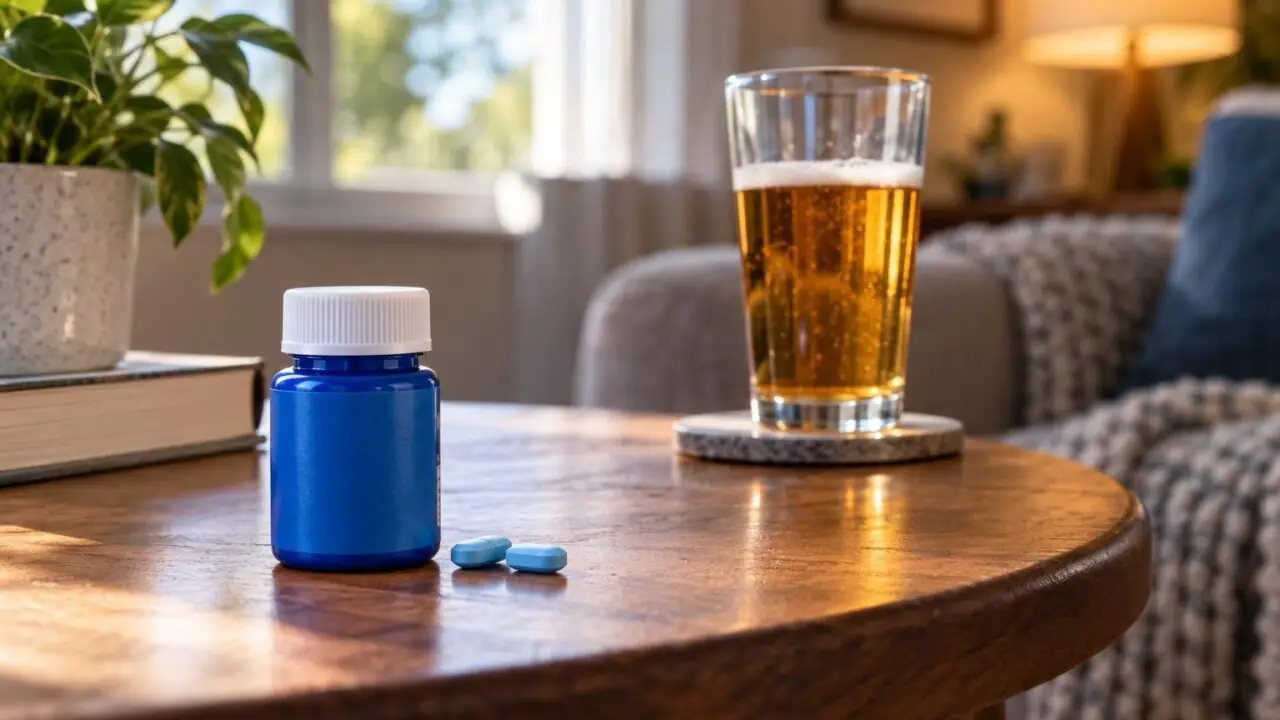
Wait at least 12 hours after a standard Aleve dose before drinking alcohol, because naproxen can irritate the stomach lining and alcohol raises the risk of stomach bleeding, ulcers, and kidney stress.
Aleve lasts longer than ibuprofen: one OTC dose is typically taken every 8 to 12 hours, and the FDA label warns against alcohol use unless a clinician says it is safe.
Higher doses, daily use, age over 60, blood thinners, prior ulcers, or liver or kidney disease require medical advice before drinking.
Aleve Alcohol Waiting Time
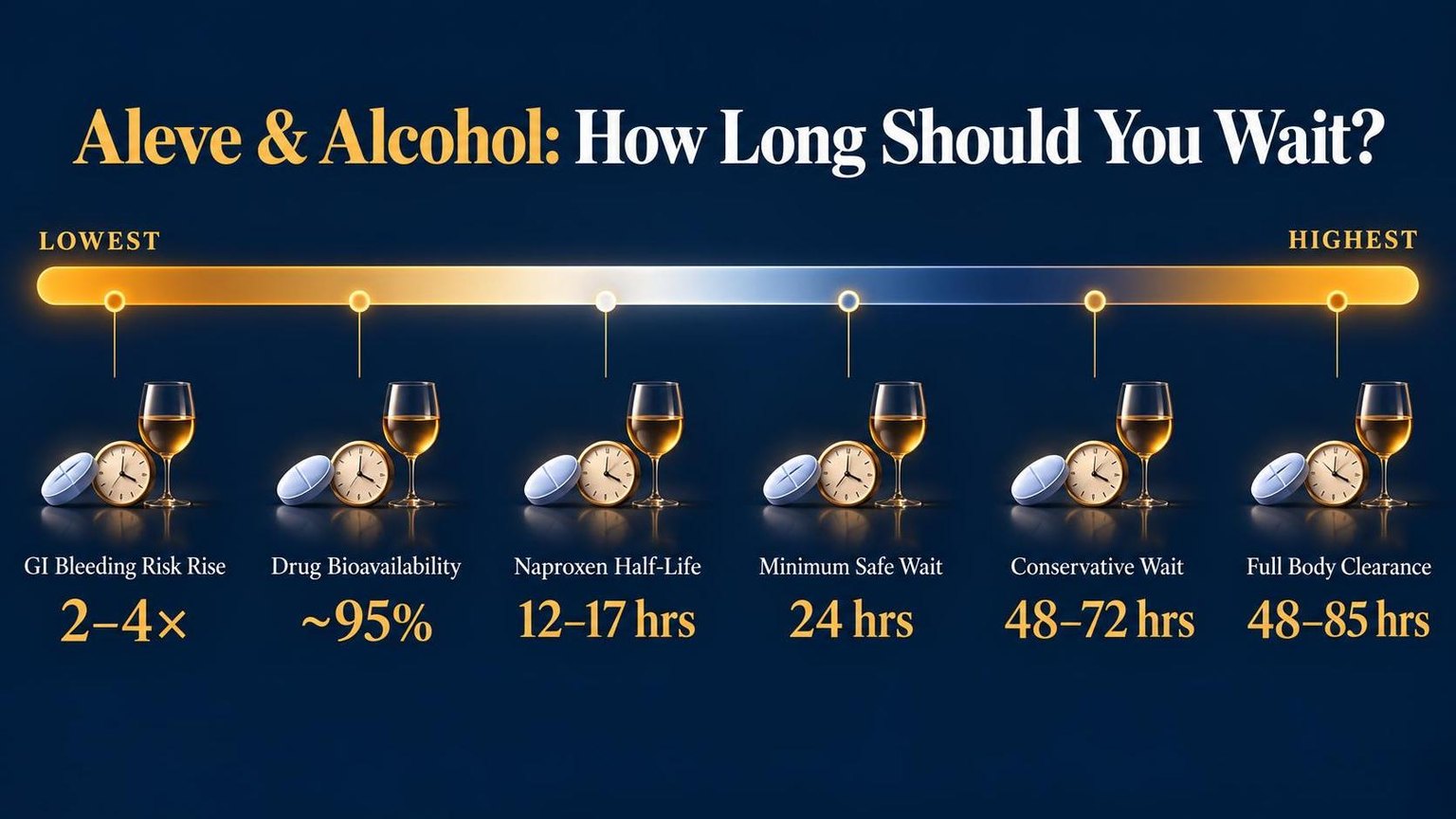
Naproxen sodium (Aleve) has a half-life of 12–17 hours, meaning it takes significantly longer to clear your system than ibuprofen or aspirin. This extended duration directly determines how long you should wait before consuming alcohol.
A drug needs approximately 4–5 half-lives to be effectively eliminated from the body. For naproxen, that translates to 48–85 hours of total clearance time.
| Factor | Detail |
| Naproxen half-life | 12–17 hours |
| Full elimination time | 48–85 hours (roughly 2–3.5 days) |
| Minimum recommended wait | 24 hours after last dose |
| Conservative recommended wait | 48–72 hours after last dose |
| Ibuprofen half-life (comparison) | 2–4 hours |
Most physicians and pharmacists advise waiting at least 24 hours after your final Aleve dose before drinking alcohol. This allows naproxen blood levels to drop below peak therapeutic concentration.
For individuals over 65, those with liver disease, or people taking more than one 220 mg tablet per dose, the conservative 48–72 hour window is strongly preferred.
Why the Wait Matters
Both naproxen and alcohol independently irritate the gastric mucosa.
Combined, they increase the risk of gastrointestinal bleeding by an estimated 2–4 times compared to either substance alone, according to data published in Alimentary Pharmacology & Therapeutics.
Alcohol also inhibits COX-1–mediated prostaglandin production, the same pathway naproxen blocks. This compounding effect reduces the stomach’s protective mucus layer more aggressively than either agent individually.
- GI bleeding risk: The FDA warns that all NSAID labels must carry a gastrointestinal bleeding warning, amplified by concurrent alcohol use (3+ drinks/day).
- Kidney stress: Naproxen reduces renal blood flow; alcohol acts as a diuretic. Together they increase the risk of acute kidney injury, particularly in dehydrated individuals.
- Liver burden: While naproxen is primarily renally excreted (~95%), alcohol metabolism in the liver can alter drug clearance rates and extend naproxen’s effective half-life.
If you took a standard 220 mg OTC Aleve dose, waiting a full 24 hours provides a reasonable safety margin. For prescription-strength naproxen (500 mg twice daily), extend that wait to at least 48 hours.
How Naproxen Stays in Your Body
Naproxen has one of the longest half-lives among over-the-counter NSAIDs, meaning it lingers in your system well after pain relief fades. Understanding its pharmacokinetics helps you gauge a safer window before consuming alcohol.
Half-Life and Elimination Timeline
Naproxen’s elimination half-life ranges from 12 to 17 hours in healthy adults, averaging approximately 14 hours. A drug typically requires 4 to 5 half-lives for near-complete clearance.
| Half-Lives Elapsed | Approximate Time (hours) | Drug Remaining |
| 1 | 12–17 | 50% |
| 2 | 24–34 | 25% |
| 3 | 36–51 | 12.5% |
| 4 | 48–68 | 6.25% |
| 5 | 60–85 | ~3% |
Based on these figures, naproxen can take up to 3.5 days to fully clear from your body after a single dose.
Absorption and Peak Levels
Naproxen sodium (Aleve) absorbs rapidly, reaching peak plasma concentration within 1 to 2 hours. Standard naproxen tablets peak slightly later, around 2 to 4 hours after ingestion.
Bioavailability sits at approximately 95%, meaning nearly all of the ingested dose enters systemic circulation. Food slows absorption rate but does not reduce total absorption.
Metabolism and Excretion
The liver metabolizes naproxen primarily via CYP2C9 and CYP1A2 enzymes into 6-O-desmethylnaproxen, an inactive metabolite. Around 95% of each dose is excreted through the kidneys.
Approximately 66–92% appears in urine as naproxen conjugates and metabolites. Less than 5% is excreted unchanged. Impaired kidney or liver function extends clearance time significantly.
Factors That Slow Clearance
- Age: Adults over 65 show up to 50% higher plasma concentrations due to reduced renal function.
- Liver disease: Hepatic impairment can double the half-life beyond 30 hours.
- Repeated dosing: Steady-state buildup occurs within 4 to 5 days of regular twice-daily use, raising baseline drug levels.
- Kidney impairment: Reduced creatinine clearance prolongs excretion, increasing GI and cardiovascular risk.
These variables mean some individuals carry measurable naproxen levels far longer than the average 14-hour half-life suggests.
Why Alcohol Raises Aleve Risks
Alcohol and naproxen sodium independently irritate the gastric mucosa.
Combining them multiplies mucosal damage, impairs platelet aggregation, and stresses hepatic and renal pathways simultaneously—creating a risk profile neither substance carries alone.
Gastric Mucosal Damage
Naproxen inhibits COX-1, reducing protective prostaglandins that maintain the stomach lining. Alcohol directly erodes that same lining through topical cytotoxic effects on epithelial cells.
A 2019 study in Alimentary Pharmacology & Therapeutics found NSAID users who consumed ≥3 alcoholic drinks per day had a 5- to 6-fold increased risk of gastrointestinal bleeding compared to those using neither substance.
| Substance | GI Bleed Risk (Relative) |
| Naproxen alone | ~2.5× baseline |
| Alcohol alone (≥3 drinks/day) | ~2× baseline |
| Naproxen + alcohol combined | ~5–6× baseline |
Impaired Platelet Function
Naproxen reversibly inhibits thromboxane A2, reducing platelet clumping for 8–12 hours per dose. Alcohol independently suppresses platelet aggregation and prolongs bleeding time.
Together, these antiplatelet effects compound. Minor gastric erosions that would normally self-seal can progress to clinically significant hemorrhage.
Kidney Stress
Naproxen reduces renal blood flow by blocking vasodilatory prostaglandins in the kidneys. Alcohol acts as a diuretic, increasing fluid loss and concentrating the drug in renal tissue.
The FDA notes that NSAID-related acute kidney injury risk rises when dehydration is present. Alcohol-induced dehydration creates exactly that condition.
Liver Metabolism Competition
Both naproxen and ethanol are metabolized primarily through hepatic pathways. Naproxen undergoes CYP2C9-mediated demethylation, while alcohol engages alcohol dehydrogenase and CYP2E1.
Chronic alcohol use upregulates CYP2E1, generating more reactive oxygen species. This oxidative burden can amplify hepatotoxic potential when combined with NSAID metabolism.
- Acute alcohol intake may slow naproxen clearance, extending its half-life beyond the typical 12–17 hours
- Chronic alcohol use increases toxic metabolite production from both substances
- Even moderate drinking (1–2 standard drinks) measurably increases gastric permeability when an NSAID is present
The FDA mandates that all OTC naproxen labels carry an explicit alcohol warning: consumers taking 3 or more drinks daily must consult a physician before use.
Safer Drinking After One Aleve Dose
Naproxen sodium (Aleve) has a half-life of 12–17 hours, meaning a single 220 mg dose takes roughly 24–34 hours to clear most of the drug from your system.
Waiting at least 24 hours after your last Aleve dose before drinking alcohol significantly reduces the risk of gastrointestinal bleeding.
The table below outlines approximate naproxen levels remaining after a single 220 mg dose and the corresponding risk context when combined with alcohol.
| Hours After Dose | Estimated Drug Remaining | Alcohol Risk Level |
| 0–6 hours | ~75–100% | Highest — avoid alcohol entirely |
| 12–17 hours (1 half-life) | ~50% | High — GI bleeding risk still elevated |
| 24 hours | ~25–30% | Moderate — lower but not negligible |
| 34+ hours (2 half-lives) | ~12% or less | Lower — most of the drug has cleared |
Why the Combination Is Dangerous
Both naproxen and alcohol independently irritate the gastric mucosa.
Together, they increase the risk of upper GI bleeding by an estimated 3–6 times compared to either substance alone, according to data published in the Archives of Internal Medicine.
Alcohol also inhibits platelet aggregation. Naproxen does the same by blocking COX-1. The combined antiplatelet effect prolongs bleeding time beyond what either agent causes individually.
Practical Guidelines for One Dose
- Wait a minimum of 24 hours after a single 220 mg Aleve before consuming any alcohol.
- Limit intake to no more than 1 standard drink (14 g of pure alcohol) if you drink within 24–34 hours.
- Never take a second Aleve dose to “cover” a hangover — this restarts the risk window.
- Drink a full 8 oz glass of water with the Aleve tablet to reduce direct mucosal contact.
- Avoid alcohol entirely if you are over 60, have a history of ulcers, or take blood thinners such as warfarin or aspirin.
The FDA warns that anyone who consumes three or more alcoholic drinks daily should consult a physician before using any NSAID, including naproxen sodium.
One Aleve dose carries less cumulative risk than repeated dosing. Waiting the full 34 hours — two complete half-lives — offers the most conservative margin of safety before drinking.
When to Avoid Alcohol Completely
Certain medical conditions and medication combinations make any alcohol use alongside naproxen sodium (Aleve) genuinely dangerous.
In these scenarios, the risk isn’t theoretical—it’s well-documented in clinical literature and FDA safety communications.
Medical Conditions Requiring Zero Alcohol with Aleve
- History of GI bleeding or peptic ulcers: NSAIDs alone increase GI bleeding risk 3–5× in patients with prior ulcer history. Adding alcohol compounds this exponentially.
- Chronic liver disease or cirrhosis: The liver metabolizes both naproxen and ethanol. Impaired hepatic function raises plasma drug levels and bleeding risk simultaneously.
- Chronic kidney disease (eGFR below 30 mL/min): Naproxen reduces renal prostaglandin synthesis. Alcohol’s dehydrating effect further compromises kidney perfusion, risking acute kidney injury.
- Uncontrolled hypertension: NSAIDs can raise blood pressure by 3–5 mmHg on average. Alcohol withdrawal or binge patterns cause additional spikes, straining cardiovascular function.
Medication Combinations That Demand Abstinence
Several common drugs interact dangerously with the Aleve-alcohol combination. The FDA has issued specific warnings for these pairings.
| Medication | Risk When Combined with Aleve + Alcohol |
| Warfarin / Coumadin | GI bleeding risk increases up to 12.7× compared to either agent alone |
| SSRIs (fluoxetine, sertraline) | Serotonergic drugs impair platelet aggregation; combined bleeding risk rises 4–6× |
| Corticosteroids (prednisone) | Ulcer risk increases approximately 4× with concurrent NSAID use |
| ACE inhibitors / ARBs | Triple threat to kidney function; alcohol-induced dehydration worsens nephrotoxicity |
| Methotrexate | NSAIDs reduce methotrexate clearance; alcohol adds hepatotoxic burden |
Age-Related Absolute Avoidance
Adults over 65 face a 4× higher risk of NSAID-related GI complications compared to younger populations. The American Geriatrics Society’s Beers Criteria lists NSAIDs as potentially inappropriate for older adults.
For patients over 65 who take Aleve regularly, combining it with any amount of alcohol is strongly discouraged by both the FDA and the American College of Gastroenterology.
Anyone falling into these categories should consult a physician before using naproxen at all—and should treat alcohol as entirely off-limits during any course of treatment.
Warning Signs After Mixing Both
Combining naproxen (Aleve) with alcohol increases risks of gastrointestinal bleeding, kidney damage, and cardiovascular events. Recognizing warning signs early can prevent a medical emergency that requires hospitalization or worse.
Gastrointestinal Warning Signs
GI bleeding is the most common serious complication. The FDA estimates NSAIDs increase GI bleeding risk 2–4 times; alcohol amplifies this further.
- Black, tarry stools (melena) — indicates upper GI bleeding
- Vomiting blood or material resembling coffee grounds — signals stomach or esophageal hemorrhage
- Persistent stomach pain or burning — may indicate ulceration of the gastric lining
- Unexpected drop in energy or dizziness — suggests blood loss anemia
Kidney and Cardiovascular Red Flags
Naproxen inhibits prostaglandins that maintain renal blood flow. Alcohol acts as a diuretic. Together, they stress kidneys significantly.
- Decreased urine output — less than 500 mL in 24 hours signals acute kidney injury
- Swelling in ankles, feet, or hands — indicates fluid retention from impaired kidney function
- Chest pain or shortness of breath — potential cardiovascular event requiring immediate attention
- Rapid or irregular heartbeat — may reflect electrolyte imbalance from kidney stress
Severity Timeline
Symptoms can appear at different intervals after co-ingestion. This table outlines typical onset windows.
| Timeframe | Possible Symptom | Severity Level |
| 1–3 hours | Nausea, stomach burning | Mild to moderate |
| 3–12 hours | Vomiting, abdominal pain, blood in stool | Moderate to severe |
| 12–48 hours | Decreased urine output, swelling, fatigue | Severe — seek ER |
| 48+ hours | Signs of acute kidney injury or internal hemorrhage | Life-threatening |
When to Call 911
Seek emergency help immediately if you experience vomiting blood, black stools, chest pain, or urine output below 100 mL over 6 hours.
A 2015 BMJ study found NSAID-related GI complications cause approximately 100,000 hospitalizations annually in the United States.
Do not attempt to “wait it out.” Internal GI bleeding can escalate from mild discomfort to hemodynamic instability within hours, especially in adults over 60.
What Doctors Recommend Before Drinking
Most physicians advise waiting at least 12 hours after your last Aleve (naproxen) dose before consuming alcohol. Naproxen’s half-life is 12–17 hours, meaning the drug remains active in your system longer than ibuprofen or aspirin.
Recommended Waiting Periods by Dose
| Naproxen Dose | Minimum Wait Before Alcohol | Preferred Wait |
| 220 mg (single OTC dose) | 12 hours | 17+ hours |
| 440 mg (max single OTC dose) | 17 hours | 24 hours |
| 500 mg (prescription dose) | 24 hours | 24–36 hours |
| Chronic daily use (prescription) | Avoid alcohol entirely | Discuss with physician |
These timeframes reflect naproxen’s elimination pharmacokinetics published in FDA prescribing information and clinical pharmacology references.
Key Physician Guidelines
- Limit alcohol intake: The FDA and ACG (American College of Gastroenterology) define moderate drinking as no more than 1 drink per day for women and 2 for men.
- Never exceed 660 mg of OTC naproxen in 24 hours — combining even standard doses with alcohol raises GI bleeding risk by 2–4× according to epidemiological data.
- Disclose all NSAID use to your doctor, including OTC Aleve, before any procedure or if you drink more than 3 alcoholic beverages daily.
- Watch for warning signs: Black or tarry stools, stomach pain, vomiting blood, or unusual bruising require immediate medical attention.
Who Should Avoid This Combination Entirely
Gastroenterologists strongly warn specific populations against mixing naproxen with any amount of alcohol.
- Adults over 60 — GI complication risk increases roughly 5-fold
- Patients with history of peptic ulcer disease
- Anyone taking anticoagulants (warfarin, apixaban) or corticosteroids
- Individuals with liver disease or elevated liver enzymes (ALT/AST)
- People with chronic kidney disease (eGFR below 60 mL/min)
The safest approach: take Aleve after your last drink of the evening rather than before drinking. This minimizes overlapping peak blood concentrations of both substances.
Always consult your prescribing physician or pharmacist for personalized guidance based on your health history and current medications.
Frequently Asked Questions
How long after taking Aleve should you wait before drinking alcohol?
Naproxen sodium (Aleve) has an elimination half-life of 12–17 hours, meaning it takes roughly 68–85 hours (about 3 full days) for the drug to clear your system entirely.
Most pharmacists and physicians recommend waiting at least 24 hours after your last Aleve dose before consuming alcohol to meaningfully reduce the risk of gastrointestinal bleeding and liver stress.
Why is mixing Aleve and alcohol dangerous for your stomach?
Both naproxen and alcohol independently inhibit the protective prostaglandin lining of the gastric mucosa.
A 2014 study published in BMC Pharmacology and Toxicology confirmed that concurrent NSAID and alcohol use increases the relative risk of GI bleeding by approximately 6-fold compared to using neither substance.
Symptoms can range from mild heartburn to hemorrhagic gastritis requiring hospitalization.
Can one beer or glass of wine interact with Aleve?
Even moderate alcohol intake—defined by the NIAAA as up to one standard drink per day for women and two for men—can amplify naproxen’s GI side effects.
The FDA specifically warns on Aleve’s label that users who consume three or more alcoholic drinks daily face a heightened risk of stomach bleeding.
A single drink within hours of a dose may not cause acute harm in most healthy adults, but it still adds unnecessary mucosal irritation.
What are the warning signs that Aleve and alcohol have damaged your stomach?
Key red-flag symptoms include black or tarry stools (melena), vomiting material that resembles coffee grounds, sudden sharp upper-abdominal pain, and unexplained dizziness or weakness from occult blood loss.
These signs indicate possible upper GI bleeding and warrant immediate emergency medical evaluation—do not wait to “see if it passes.”.
Does Aleve combined with alcohol increase the risk of kidney damage?
Naproxen reduces renal blood flow by blocking prostaglandin-mediated vasodilation in the afferent arteriole, and alcohol acts as a diuretic that further stresses kidney perfusion.
The National Kidney Foundation warns that habitual combined use can accelerate the decline of glomerular filtration rate (GFR), particularly in adults over 60 or those with pre-existing chronic kidney disease.
Is Aleve safer to mix with alcohol than ibuprofen or aspirin?
All three are NSAIDs and carry the same FDA boxed warning for GI bleeding risk when used with alcohol.
Aleve’s longer half-life (12–17 hours vs. ibuprofen’s 2–4 hours) actually means naproxen stays active in the body far longer, extending the window of overlap with alcohol.
No NSAID is considered “safe” to combine with alcohol; the risk profile is comparable across the class.
How long after drinking alcohol is it safe to take Aleve?
Alcohol is metabolized at roughly 0.015 g/dL per hour, so a standard drink clears in about 1–2 hours, but heavy drinking sessions may take 10+ hours to fully metabolize.
Waiting at least 24 hours after your last alcoholic drink before taking Aleve is a prudent guideline, especially if you consumed more than two drinks, to allow full hepatic recovery and reduce compounding GI irritation.
Should you consult a doctor before using Aleve if you drink alcohol regularly?
The FDA recommends that anyone who consumes alcohol regularly—defined as three or more drinks on any given day—speak with a physician before using any over-the-counter NSAID, including Aleve.
Your doctor may suggest alternative pain relief such as acetaminophen at liver-safe doses (≤2 g/day for regular drinkers) or may prescribe a gastroprotective agent like a proton pump inhibitor if naproxen is medically necessary.
Related Reading
- How Much Is 8 Stone In Pounds?
- How Much Is 1 Stone In Pounds?
- Who Makes Kirkland Hard Seltzer?
- How To Make Peanut Butter Whiskey?
- How Much Is A Gallon Of Water In Oz? – 2026
- All Blog Guides
- U.S. Food and Drug Administration – NSAIDs Drug Facts Label (2023)
- National Institute on Alcohol Abuse and Alcoholism – Harmful Interactions: Mixing Alcohol with Medicines (2014)
- MedlinePlus / U.S. National Library of Medicine – Naproxen (2024)
- National Institute of Diabetes and Digestive and Kidney Diseases – LiverTox: Naproxen (2020)
- PubMed – Alcohol and NSAID-Induced Gastrointestinal Bleeding, Kaufman et al. (1999)
- Mayo Clinic – Naproxen (Oral Route): Precautions (2024)
- Cleveland Clinic – NSAIDs: What They Are, Side Effects & Dangers (2023)
- Drugs.com – Naproxen and Alcohol / Food Interactions (2024)
- American College of Gastroenterology – Peptic Ulcer Disease (2023)
- Harvard Health Publishing – The hazards of mixing NSAIDs and alcohol (2021)