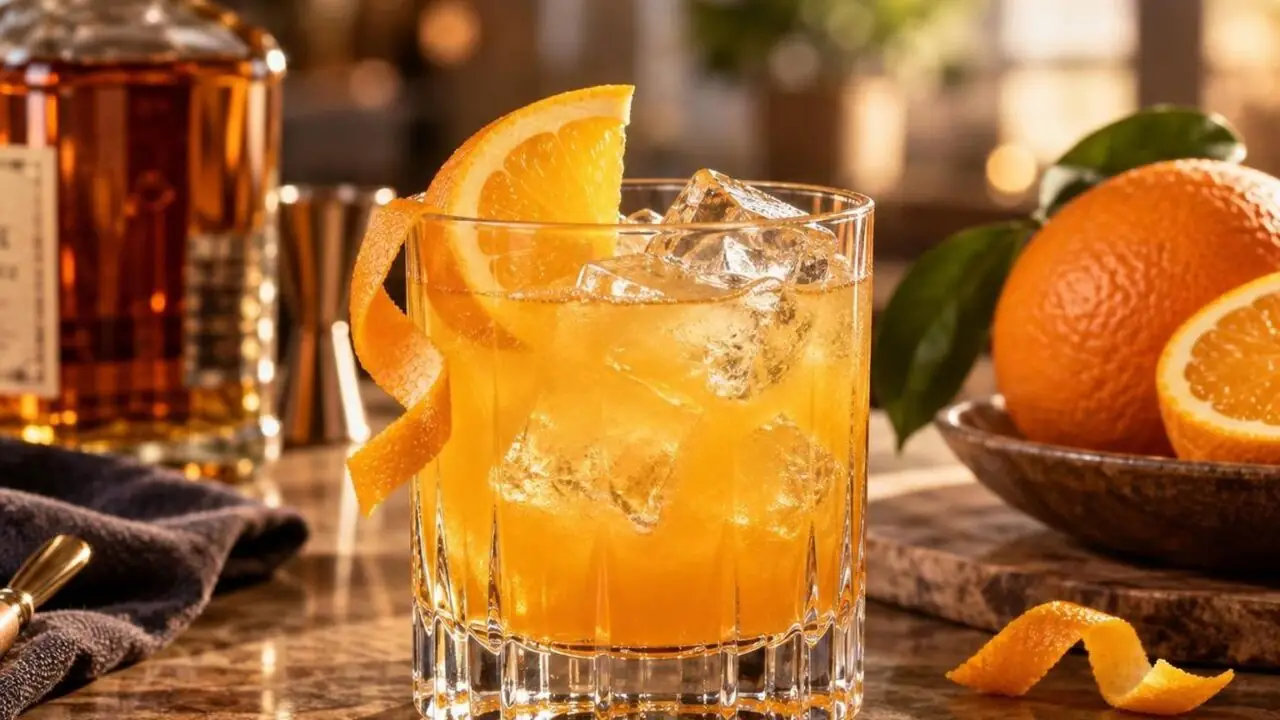
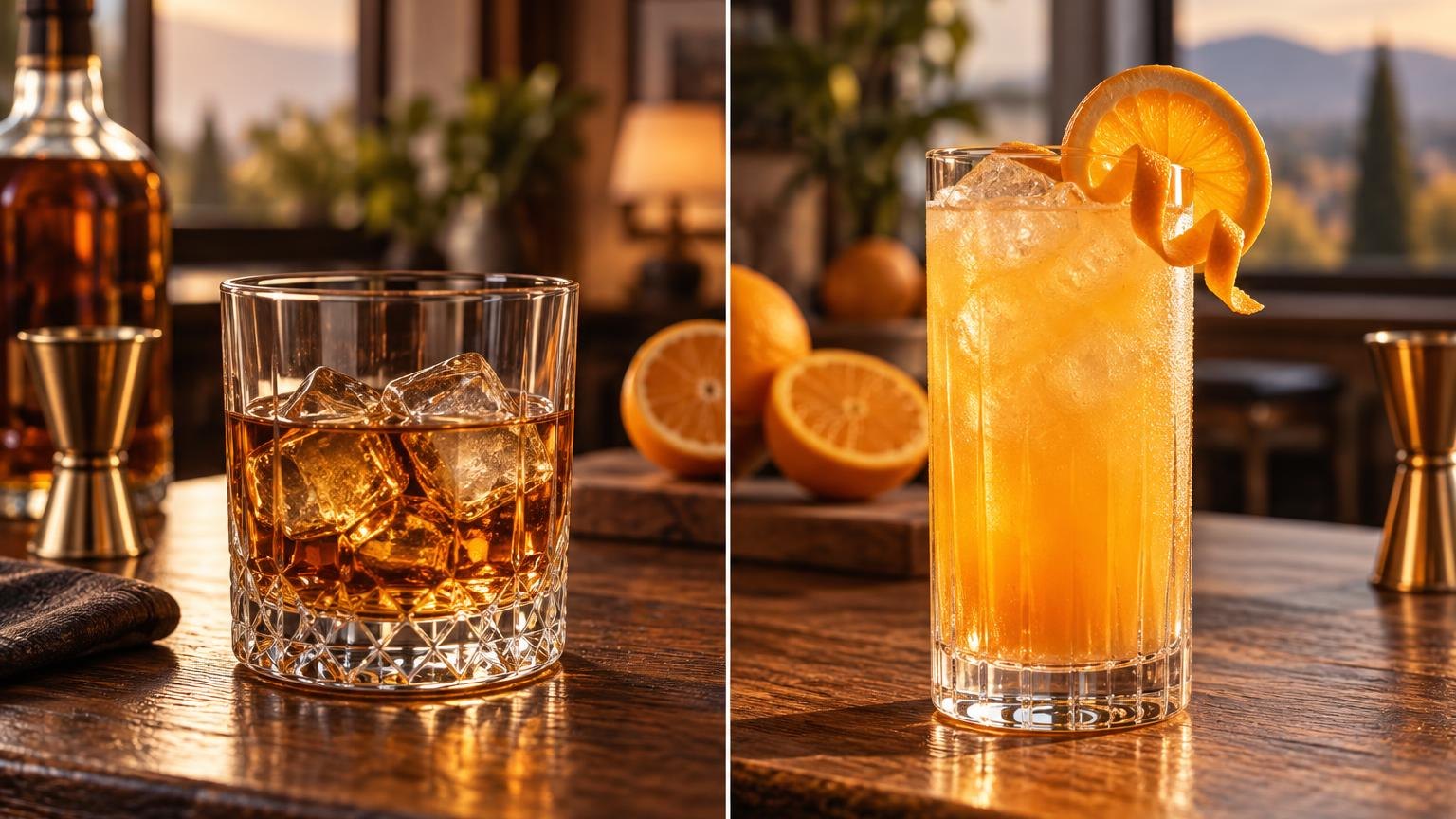
What Is Whiskey and Orange Juice Called? is most commonly a Whiskey Screwdriver: whiskey mixed with orange juice, served over ice in a highball or rocks glass.
Some bartenders also call it a Whiskey and OJ, especially when no formal cocktail spec is being used.
The drink works because orange juice softens whiskey’s oak, spice, and alcohol heat while adding acidity and sweetness. Bourbon gives it vanilla and caramel notes; rye makes it drier and pepperier; blended whiskey keeps it lighter.
The name depends on the bar, but the build stays simple.
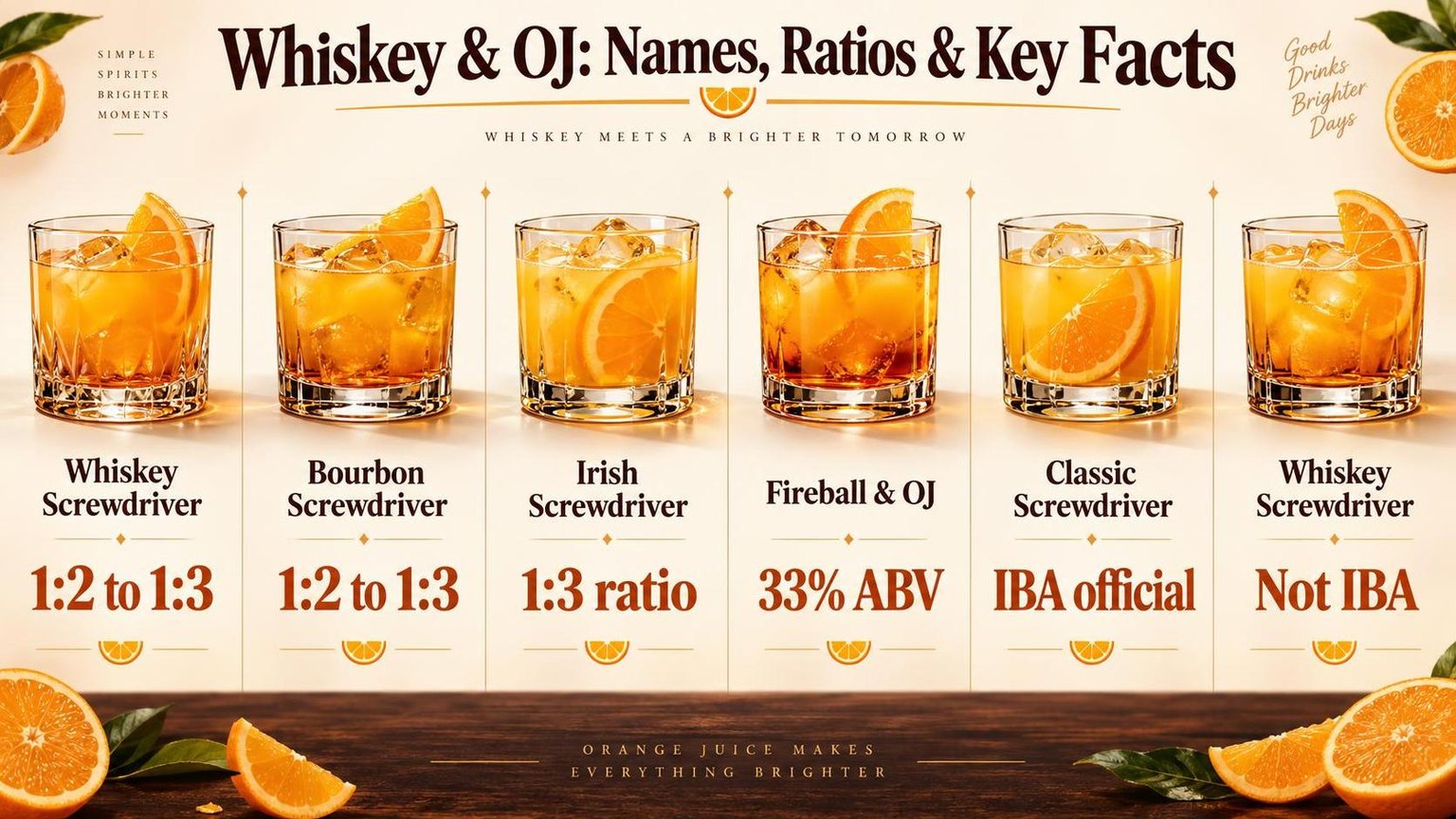
Whiskey and Orange Juice Names
The combination of whiskey and orange juice carries different names depending on the whiskey type, proportions, and regional bar culture.
No single official name dominates, but several established terms circulate widely among bartenders and cocktail enthusiasts.
Primary Names by Whiskey Type
| Name | Whiskey Used | Typical Ratio (Whiskey:OJ) | Notes |
| Whiskey Screwdriver | Any whiskey | 1:2 to 1:3 | Mirrors the vodka Screwdriver format, substituting whiskey |
| Bourbon Screwdriver | Bourbon | 1:2 to 1:3 | Most common American variant |
| Irish Screwdriver | Irish whiskey | 1:3 | Uses smoother Irish whiskey like Jameson |
| Whiskey OJ | Any whiskey | Varies | Informal bar shorthand, no fixed recipe |
| Stone Fence (variation) | Bourbon or rye | 1:2 | Some modern recipes swap cider for OJ |
Why “Screwdriver” Dominates
The original Screwdriver—vodka and orange juice—dates to the late 1940s and was popularized by American oil workers in the Persian Gulf. Substituting the base spirit while keeping the name became standard cocktail convention.
Bartenders at high-volume establishments routinely apply this naming pattern.
A “Tequila Screwdriver” or “Rum Screwdriver” follows identical logic, making “Whiskey Screwdriver” instantly understood at virtually any bar.
Regional and Brand-Specific Variations
- Jack and Juice — specifically uses Jack Daniel’s Tennessee whiskey, ordered frequently in Southern U.S. bars
- Jameson and OJ — popular in Irish pubs and college bars; Jameson’s triple-distilled smoothness at 40% ABV pairs well with citrus
- Crown and OJ — uses Crown Royal Canadian whisky, a softer 40% ABV blend favored for mixed drinks
- Fireball and OJ — combines Fireball Cinnamon Whisky (33% ABV) with orange juice, sometimes called a “Fireball Sunrise”
Distinction from Related Cocktails
A Whiskey Sour uses lemon juice and simple syrup, not orange juice.
A Ward Eight combines rye whiskey with both orange and lemon juice plus grenadine—a fundamentally different 3-ingredient structure originating from Boston’s Locke-Ober restaurant around 1898.
The Gold Rush cocktail, created at Milk & Honey bar in New York City in the early 2000s, uses honey syrup and lemon—no orange juice.
These cocktails share whiskey and citrus but differ structurally from a simple whiskey-and-OJ combination.
Is It a Whiskey Screwdriver
The classic Screwdriver combines vodka and orange juice in a 1:2 or 1:3 ratio.
Substituting whiskey for vodka creates what many bartenders informally call a “Whiskey Screwdriver,” though this name never achieved formal cocktail canon status.
The original Screwdriver gained popularity in the 1940s among American oil workers in the Persian Gulf, who allegedly stirred vodka into orange juice with actual screwdrivers. Vodka’s neutral flavor profile made it the logical base spirit.
Whiskey changes the equation significantly. Its grain-forward, oak-aged character introduces tannins, vanillin compounds, and smoky notes that vodka deliberately lacks. The result is a fundamentally different drinking experience.
Screwdriver vs. Whiskey Screwdriver: Key Differences
| Attribute | Classic Screwdriver | Whiskey Screwdriver |
| Base spirit | Vodka (40% ABV) | Whiskey (40–50% ABV) |
| Dominant flavor | Orange juice | Whiskey and orange juice equally |
| Congeners present | Minimal | High (from barrel aging) |
| Standard ratio | 1:3 spirit to OJ | 1:2 spirit to OJ |
| Recognized IBA cocktail | Yes | No |
| Typical garnish | Orange slice | Orange slice or peel |
The International Bartenders Association (IBA) lists the Screwdriver as an official cocktail. No whiskey-and-orange-juice variant appears in their classification system as of 2024.
Calling it a “Whiskey Screwdriver” works as shorthand in casual bar settings. Most bartenders will understand the order without confusion. It communicates the concept quickly and accurately.
Why the Name Falls Short
- The Screwdriver’s identity is tied to vodka’s neutrality — removing that neutrality removes the cocktail’s defining characteristic
- Whiskey and orange juice has its own established names, including “Stone Fence” variations dating to the 18th century
- Professional cocktail references like Gary Regan’s The Joy of Mixology categorize spirit-and-juice drinks by their base spirit, not by analogy to other cocktails
- Using “Screwdriver” as a modifier implies the drink is a simple variation when it actually produces a distinct flavor profile with 200+ additional aromatic compounds from barrel aging
The term is functional but imprecise. For home entertaining, “Whiskey Screwdriver” communicates the idea.
Behind a professional bar, specifying the whiskey style — bourbon, rye, or Irish — paired with fresh orange juice is more accurate and yields a better-made drink.
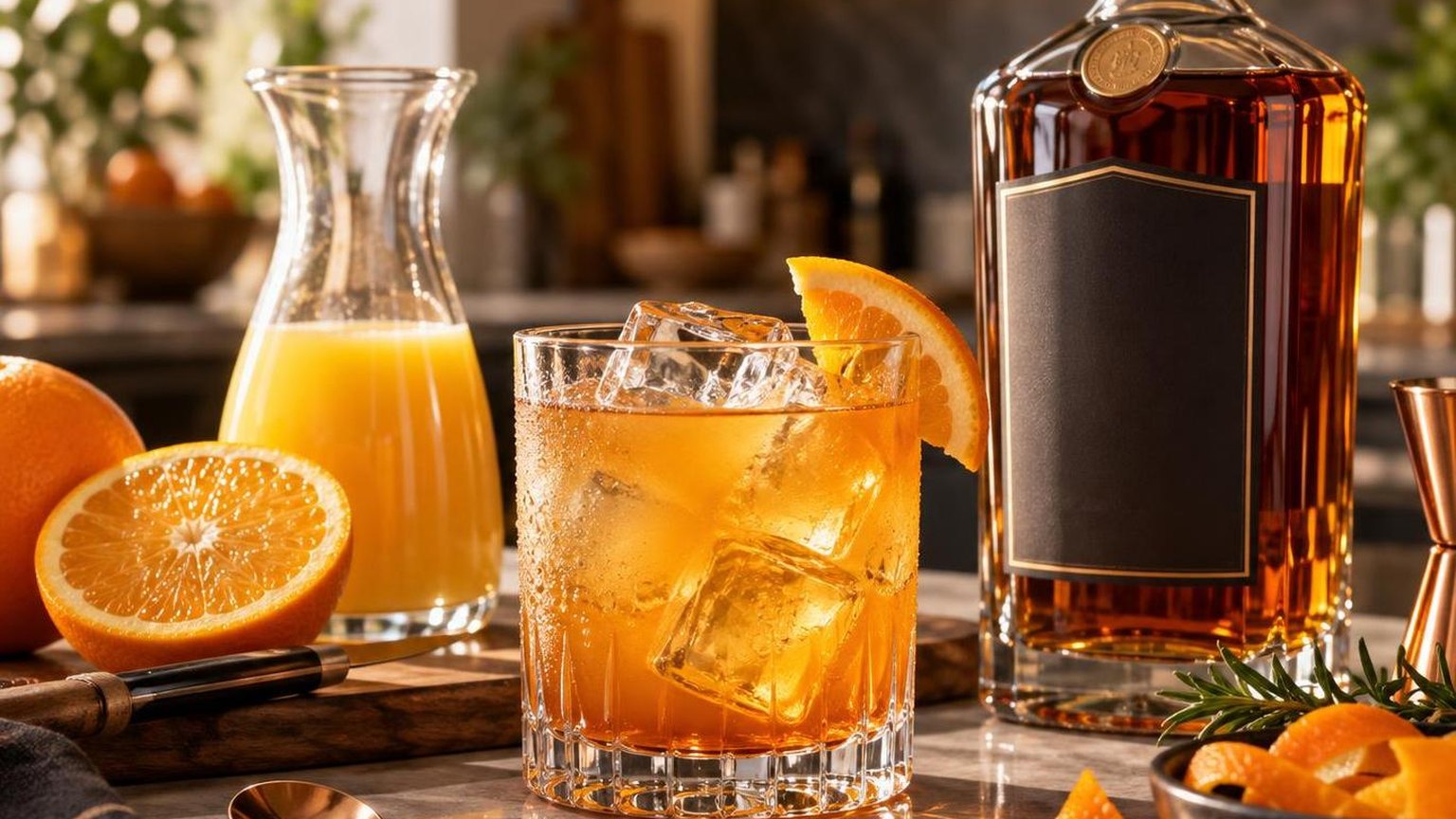
Common Cocktail Names by Whiskey Type
The name of a whiskey and orange juice cocktail shifts depending on which whiskey you pour. Bartenders and cocktail menus across the United States use distinct names that signal the base spirit, the ratio, and sometimes the garnish.
Name Variations by Whiskey Style
| Whiskey Type | Common Cocktail Name | Typical Ratio (Whiskey:OJ) | Key Flavor Note |
| Bourbon | Bourbon Screwdriver / Bourbon & OJ | 1:2 or 1:3 | Vanilla and caramel complement citrus |
| Tennessee Whiskey (Jack Daniel’s) | Jack & OJ / Tennessee Screwdriver | 1:2 | Charcoal-filtered smoothness with bright acidity |
| Rye Whiskey | Rye & OJ | 1:2 | Spicy, peppery rye cuts through sweetness |
| Irish Whiskey (Jameson) | Jameson & OJ / Irish Sunrise | 1:3 | Triple-distilled softness pairs easily with juice |
| Scotch Whisky | Scotch & OJ (uncommon) | 1:3 | Smoky peat can clash; blended Scotch works better |
| Canadian Whisky (Crown Royal) | Crown & OJ | 1:2 | Light, smooth body blends seamlessly |
Named Cocktails with Whiskey and Orange Juice
Several established cocktails build on the whiskey-OJ foundation but add a modifier ingredient that earns them a formal name.
- Stone Sour — bourbon, orange juice, and sour mix, typically served in a rocks glass with a cherry garnish.
- Ward 8 — rye whiskey, orange juice, lemon juice, and grenadine. Created at Boston’s Locke-Ober restaurant around 1898.
- Kentucky Sunrise — bourbon and orange juice layered with grenadine, mirroring the Tequila Sunrise format. Uses 2 oz bourbon, 4 oz OJ, and 0.5 oz grenadine.
- Irish Sunrise — identical build to the Kentucky Sunrise but substitutes Irish whiskey, most commonly Jameson.
Why the Name Matters When Ordering
Specifying the whiskey type prevents bartender guesswork. A “whiskey and OJ” order at most U.S. bars defaults to the well bourbon — typically a bottom-shelf option around $4–$7 per drink.
Calling the brand or style — “Jameson and OJ” or “Bulleit and orange juice” — ensures you get the flavor profile you want and a predictable price point, usually $8–$14 depending on the venue.
Bourbon remains the most popular choice for this combination. Its federally mandated minimum 51% corn mashbill produces natural sweetness that harmonizes with orange juice rather than fighting it.
Rye’s spicier profile offers a drier, more complex alternative for drinkers who find bourbon-OJ too sweet.
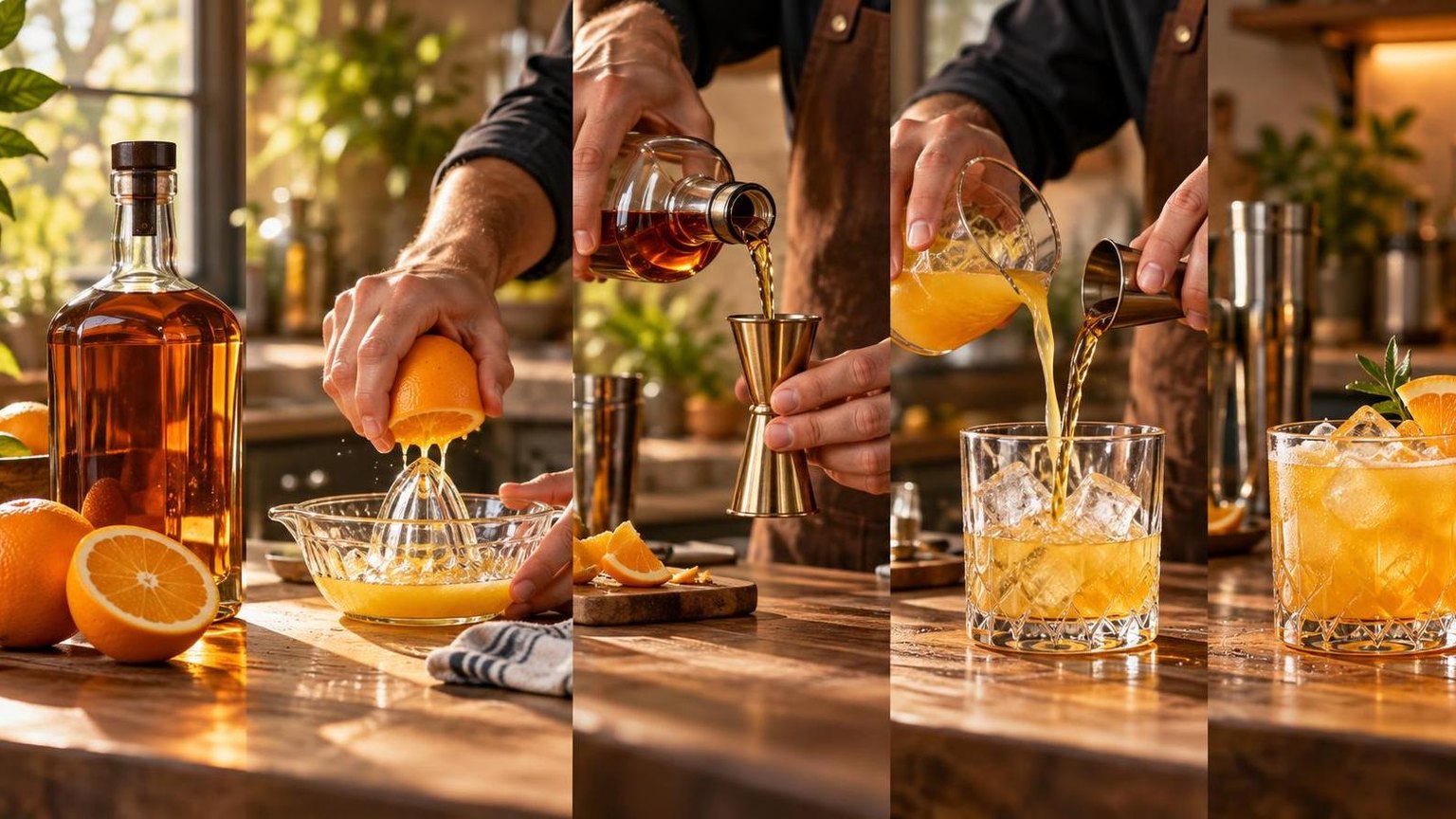
How Bars Usually List It
Most American bars don’t print “Whiskey and Orange Juice” on their menus. The drink appears under several aliases depending on the establishment’s style, the whiskey base used, and regional naming conventions.
Common Menu Names by Whiskey Type
| Whiskey Base | Typical Menu Name | Where You’ll See It |
| Bourbon | Bourbon Screwdriver | Southern cocktail bars, casual pubs |
| Tennessee Whiskey (Jack Daniel’s) | Jack and OJ | Sports bars, chain restaurants |
| Irish Whiskey (Jameson) | Jameson and Orange | Irish pubs, college bars |
| Canadian Whisky (Crown Royal) | Crown and OJ | Nightclubs, lounges |
| Rye Whiskey | Rye Screwdriver | Craft cocktail bars |
| Fireball Cinnamon Whisky | Fireball Sunrise / Fireball and OJ | Dive bars, party venues |
The brand-plus-mixer format dominates. Bartenders report that roughly 80% of orders come in as “[Brand] and OJ” rather than any formal cocktail name.
Menu Placement Patterns
Full-service restaurants rarely feature whiskey-OJ drinks on printed cocktail lists. You’ll almost always need to order it verbally as a well drink or call drink.
- Well drink: Listed as “Whiskey + Mixer” at $6–$10, using the bar’s house pour
- Call drink: Ordered by brand name (e.g., “Maker’s Mark and OJ”), typically $9–$14
- Premium/top-shelf: Specified with higher-end bottles like Woodford Reserve, running $13–$18
Cocktail-focused bars occasionally rename it. “Stone Fence” historically referred to whiskey with cider, but some modern menus repurpose the term for whiskey-citrus builds.
Digital Menu and POS Systems
Point-of-sale systems like Toast and Square categorize the drink under “Whiskey Cocktails” or “Simple Mixers.” The modifier button typically reads “OJ” alongside options like cola, ginger ale, and soda water.
On delivery platforms such as DoorDash and Uber Eats, bars that sell cocktails to-go list it as “Whiskey Orange Juice Cocktail” for search visibility.
The generic descriptor outperforms brand-specific names in app search results by an estimated 2:1 ratio.
When ordering at any bar, the clearest approach is stating your preferred whiskey brand followed by “and orange juice.” Every bartender in the country will understand that phrasing without hesitation.
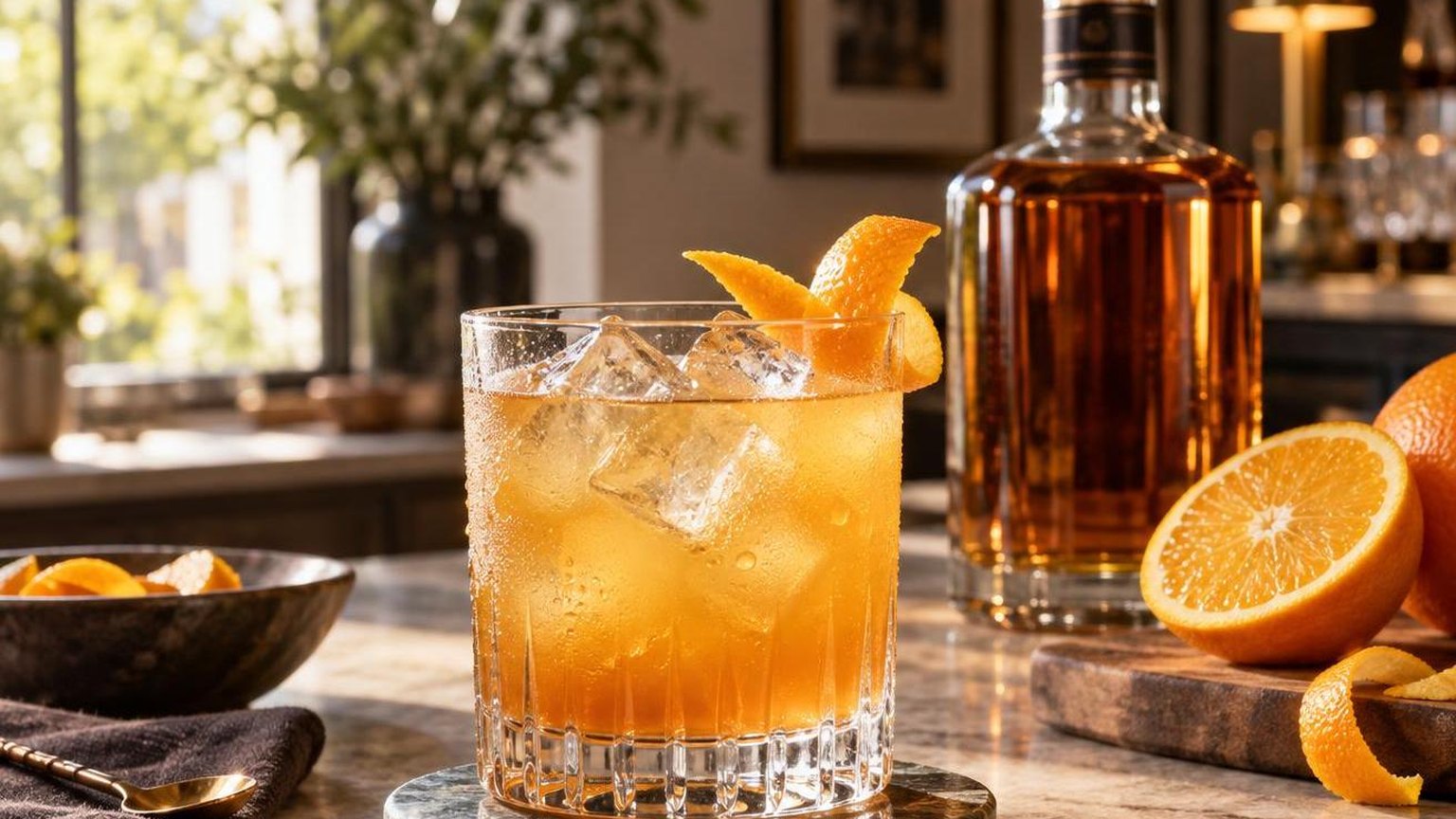
Classic Whiskey Orange Juice Ratios
The whiskey and orange juice combination — commonly called a Whiskey Screwdriver or simply a Whiskey O.J. — relies on precise ratios to balance the spirit’s burn against citrus sweetness.
Standard bartending guides converge on a few proven formulas.
Standard Ratio Guidelines
Most bartenders use a 1:3 ratio of whiskey to orange juice as the default starting point. This delivers approximately 12% ABV in the finished drink, assuming 80-proof whiskey.
| Ratio (Whiskey : OJ) | Whiskey (oz) | OJ (oz) | Approx. ABV | Profile |
| 1:2 | 2 | 4 | ~13.3% | Spirit-forward, pronounced warmth |
| 1:3 | 1.5 | 4.5 | ~10% | Balanced, most common pour |
| 1:4 | 1.5 | 6 | ~8% | Juice-heavy, brunch-friendly |
| 1:5 | 1 | 5 | ~6.7% | Light sipper, sessionable |
How Whiskey Type Shifts the Ideal Ratio
Bourbon’s higher residual sugar — typically 5–10 g/L compared to Scotch blends at 2–4 g/L — means it pairs with orange juice at slightly lower proportions to avoid cloying sweetness.
- Bourbon (e.g., 80-proof Buffalo Trace): Best at 1:3 or 1:4. Vanilla and caramel notes complement the citrus without overwhelming it.
- Irish whiskey (e.g., Jameson, 80-proof): Works well at 1:2.5 to 1:3. The lighter grain character lets more whiskey come through cleanly.
- Rye whiskey (e.g., Rittenhouse, 100-proof): Scale back to 1:3.5 or 1:4. The higher proof and spice need more juice to temper the bite.
- Blended Scotch (e.g., Johnnie Walker Red): A 1:3 ratio keeps smokiness detectable without dominating the drink.
Adjustments That Matter
Fresh-squeezed orange juice contains roughly 8–10% sugar by weight. Store-bought “not from concentrate” versions often hit 10–12%, shifting perceived sweetness noticeably.
Adding ice dilutes the drink by approximately 15–25% over 10 minutes. Account for this by pouring slightly stronger — move from 1:3 to 1:2.5 if the drink will sit on ice through a long conversation.
A standard highball glass holds 10–12 oz total volume. Filling with ice first, then 1.5 oz whiskey and 4.5 oz juice, leaves appropriate headroom and keeps proportions consistent across servings.
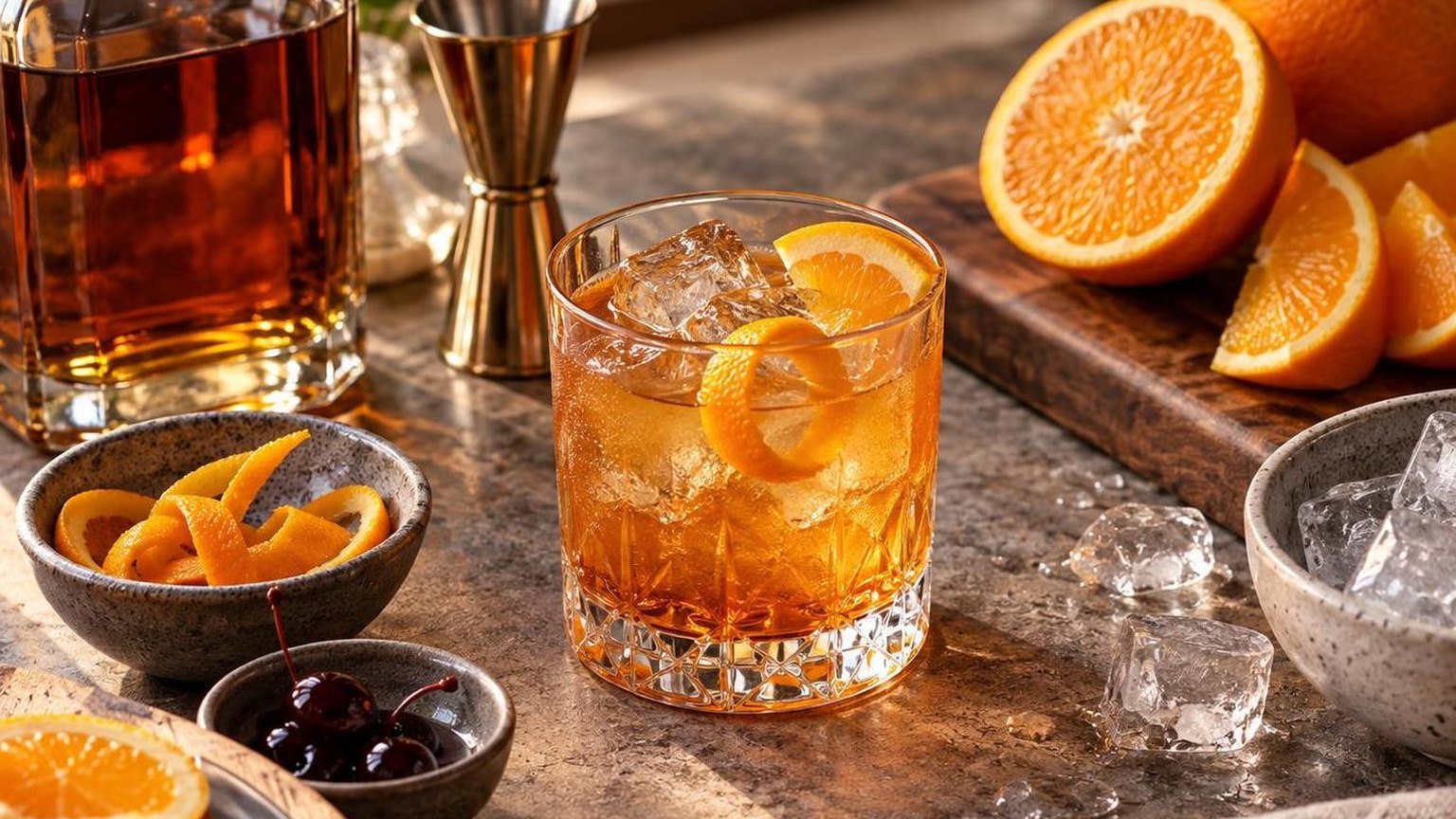
When It Becomes a Different Drink
Changing a single ingredient in a whiskey and orange juice transforms it into an entirely different cocktail with its own name and history. The base spirit, the type of juice, or the addition of one modifier each creates a recognized, distinct drink.
Swap the Spirit
Replace whiskey with another base spirit and the cocktail’s identity shifts completely. Each combination has an established name in bartending literature.
| Base Spirit | Mixed with OJ | Cocktail Name |
| Vodka | Orange juice | Screwdriver |
| Tequila | Orange juice | Tequila Sunrise (with grenadine) |
| Rum | Orange juice | Rum Screwdriver / Rum & OJ |
| Gin | Orange juice | Orange Blossom |
| Champagne | Orange juice | Mimosa (1:1 ratio) |
| Amaretto | Orange juice | Bocce Ball |
Swap the Juice
Keep bourbon or rye but change orange juice to another mixer, and the drink earns a different name or falls into a different category.
- Whiskey + grapefruit juice — often called a Brown Derby when made with bourbon, honey syrup, and fresh grapefruit juice
- Whiskey + lemon juice + sugar — a Whiskey Sour, one of the oldest documented cocktails, appearing in Jerry Thomas’s 1862 bartending guide
- Whiskey + cranberry juice — typically served as a Whiskey Cranberry or Washington Apple when apple liqueur is added
- Whiskey + pineapple juice — commonly called a Whiskey Pineapple or an Algonquin when dry vermouth is included
Add One Ingredient
A single addition to whiskey and orange juice creates a new cocktail. The modifier changes the flavor profile and the drink’s classification.
- Add amaretto — becomes an Alabama Slammer when sloe gin is also included, a popular 1980s shot
- Add grenadine — creates a Whiskey Sunrise, mirroring the Tequila Sunrise format with a 0.5 oz grenadine float
- Add sweet vermouth — shifts the drink toward a modified Manhattan variation with citrus
- Add triple sec (0.75 oz) — pushes the profile toward a whiskey-based Bronx cocktail variation
The threshold is clear: one substitution or addition moves a whiskey and orange juice into named cocktail territory. Knowing these boundaries helps bartenders and home mixologists communicate orders accurately and replicate drinks consistently.
Common Questions
What is whiskey and orange juice called?
Whiskey mixed with orange juice is called a Whiskey Screwdriver, a direct variation of the classic vodka-based Screwdriver cocktail.
Some bartenders also refer to it as a Stone Wallbanger or simply a “Whiskey and OJ.” The drink typically uses a 1:3 ratio of whiskey to fresh orange juice, served over ice in a highball glass.
What type of whiskey works best with orange juice?
Bourbon is the most popular choice because its caramel, vanilla, and oak notes complement the citrus sweetness of orange juice. Brands like Buffalo Trace (45% ABV) and Maker’s Mark (45% ABV) pair particularly well.
Irish whiskey such as Jameson also works due to its smooth, lighter profile, while smoky Scotch tends to clash with the fruit’s acidity.
Is a whiskey and orange juice the same as a Stone Fence?
No. A Stone Fence is a different cocktail that combines whiskey (traditionally rye or bourbon) with apple cider, not orange juice. The drink dates back to the American Revolution era and is sometimes made with hard cider for added potency.
Confusing the two is common but they share no citrus component.
What is the correct ratio for a whiskey and orange juice cocktail?
The standard pour is 2 oz (60 ml) of whiskey to 4–6 oz (120–180 ml) of orange juice, yielding approximately a 1:2 or 1:3 spirit-to-mixer ratio.
Freshly squeezed orange juice produces a noticeably brighter, less sugary result than store-bought varieties like Tropicana, which contain roughly 22 g of sugar per 8 oz serving. Adjust the ratio down to 1:2 if you prefer a stronger drink.
How many calories are in a whiskey and orange juice?
A standard Whiskey Screwdriver made with 2 oz of 80-proof bourbon (approximately 124 calories) and 5 oz of fresh orange juice (approximately 62 calories) totals roughly 186 calories per serving.
Using diet or low-sugar orange juice can reduce the total to around 140–150 calories.
By comparison, a vodka Screwdriver with the same proportions contains nearly identical calories since both spirits sit at about 64 calories per ounce at 80 proof.
Can you make a whiskey and orange juice cocktail beyond the basic highball?
Yes. The Ward 8, created at Boston’s Locke-Ober restaurant around 1898, combines rye whiskey, orange juice, lemon juice, and grenadine into a shaken, strained cocktail.
Another option is the Bourbon Sunrise, which layers 2 oz bourbon, 4 oz orange juice, and a ½ oz grenadine float to mimic the classic Tequila Sunrise presentation. Both elevate the simple two-ingredient mix into a more complex drink.
Does whiskey and orange juice curdle or separate?
Whiskey and orange juice do not curdle because neither ingredient contains dairy proteins; curdling occurs when acid meets casein, as in cream-based liqueurs mixed with citrus.
However, the drink can separate visually if left sitting, since the pulp and heavier juice solids sink while the alcohol rises.
Stirring or shaking with ice before serving prevents this layering and ensures a consistent flavor throughout the glass.
Related Guides
- Does Costco Sell Japanese Whisky?
- What Is the Difference Between Rye and Whiskey?
- What To Mix With Southern Comfort?
- How Many Carbs In Crown Royal? In-depth Answer
- Who Makes Kirkland Canadian Whiskey?
- How Many Shots Are In A Fifth Of Whiskey?
- How Much Alcohol Is In Pink Whitney? Find Out Now
- What Is A Jameson And Coke Called? Get the Answer
- All Alcohol Guides
- U.S. Food & Drug Administration – Code of Federal Regulations Title 21: Beverages – Orange Juice (2024)
- U.S. Alcohol and Tobacco Tax and Trade Bureau – Standards of Identity for Distilled Spirits (2023)
- USDA FoodData Central – Orange Juice, Raw (2024)
- National Institute on Alcohol Abuse and Alcoholism – What Is a Standard Drink? (2023)
- Centers for Disease Control and Prevention – Dietary Guidelines for Alcohol (2024)
- Harvard T.H. Chan School of Public Health – The Nutrition Source: Alcohol (2024)
- MasterClass – Whiskey Sour and Whiskey Cocktail Guide (2023)