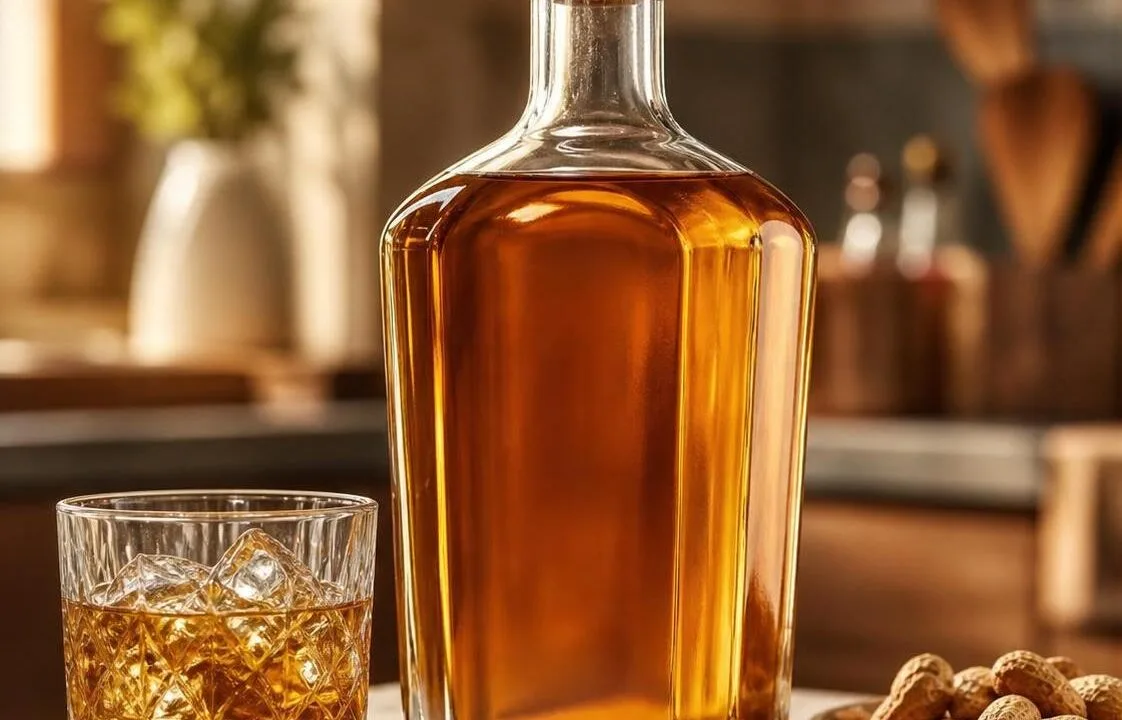
How To Make Peanut Butter Whiskey is a simple infusion process: combine whiskey with peanut butter flavor, let it extract, then strain until smooth and shelf-stable in the refrigerator.
The cleanest home method uses 750 ml bourbon or rye, 1/2 cup creamy peanut butter, and a 12–24 hour chill to separate the fat.
This guide focuses on the practical, bartender-style approach I use for tasting batches: controlled ratios, cold clarification, fine straining, and sweetness adjustments after infusion—not before.
You’ll learn how to avoid oily texture, muted whiskey character, and gritty sediment while building a nutty, dessert-ready spirit for shots, cocktails, and gifting.
Balancing Proof Sweetness and Peanut Flavor
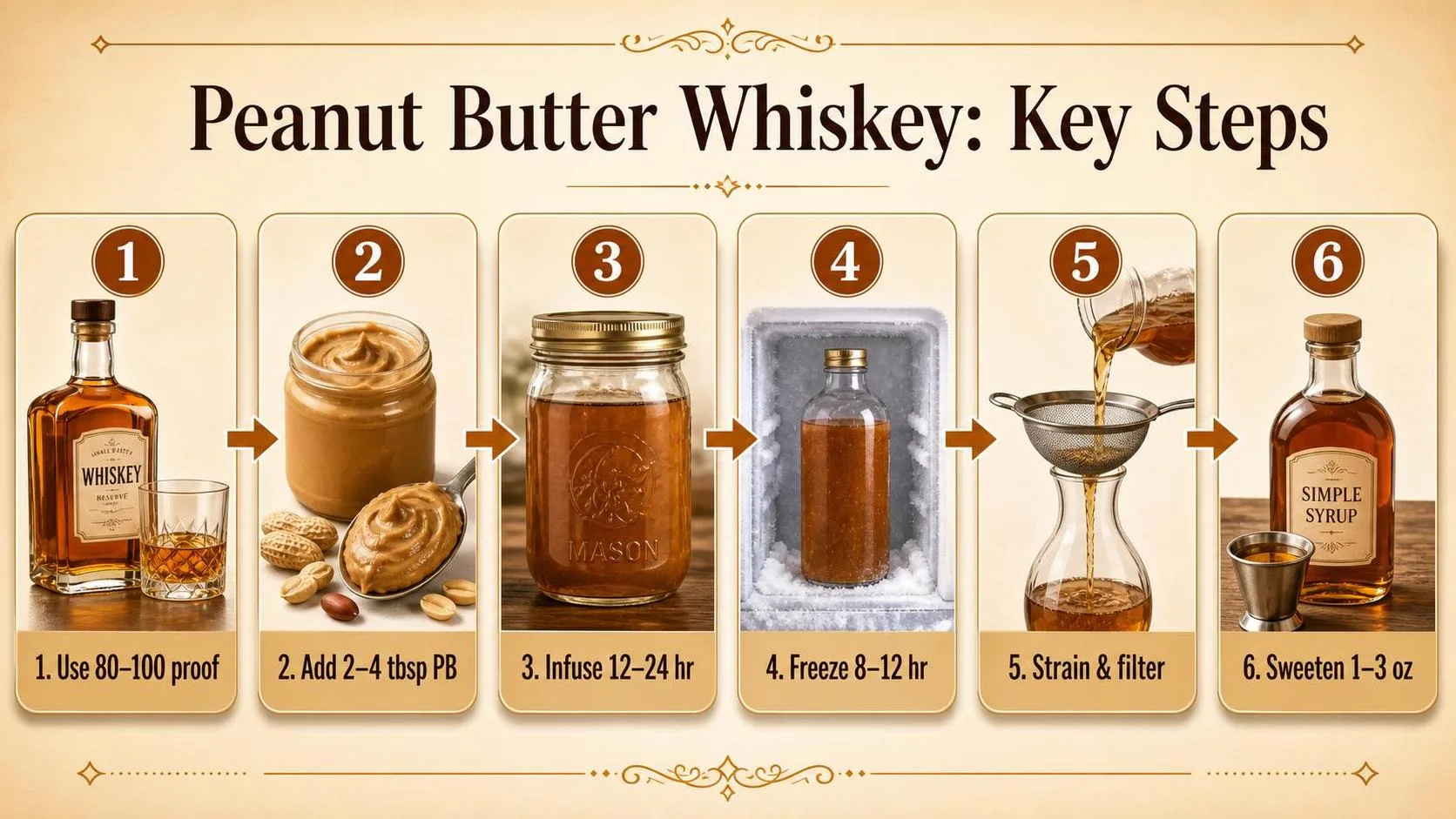
Peanut butter whiskey is mostly a balancing act: proof, sugar, peanut intensity, and filtration. The safest home method is a peanut-butter “fat wash” or peanut infusion, then sweetening after straining.
These numbers keep the drink whiskey-forward instead of turning it into a cloudy, syrupy liqueur.
| Number | Practical target | Why it matters |
| Whiskey proof | 80 to 100 proof, or 40% to 50% ABV | Enough alcohol to extract roasted peanut aroma without tasting overly hot after sweetening. |
| Peanut butter amount | 2 to 4 tablespoons per 750 ml bottle | Gives clear peanut flavor. More than 4 tablespoons usually increases oil haze and filtration losses. |
| Infusion time | 12 to 24 hours | Peanut flavor extracts quickly. Longer contact can pull bitterness from roasted solids. |
| Freezer rest | 8 to 12 hours | Chills and firms peanut oils so they are easier to remove during straining. |
| Sweetener | 1 to 3 ounces simple syrup per 750 ml | Enough to round the whiskey; commercial flavored whiskeys are often much sweeter. |
| Final strength | About 36% to 45% ABV | Depends on whiskey proof and syrup addition. Added syrup lowers alcohol percentage. |
Proof and dilution
An 80-proof whiskey starts at 40% ABV. If you add 2 ounces of 1:1 simple syrup to 750 ml whiskey, the batch increases to about 809 ml, dropping the strength to roughly 37% ABV.
A 100-proof whiskey gives more margin. The same syrup addition lands near 46% ABV, which is why bartenders often prefer higher-proof bourbon or rye for flavored infusions.
Peanut butter and filtration
Use smooth, shelf-stable peanut butter if you want predictable results. Natural peanut butter separates more aggressively because its oil phase is less emulsified, making the finished whiskey harder to clarify.
After infusion, strain through a fine-mesh sieve, then a coffee filter. Expect to lose 2 to 4 ounces per 750 ml batch to peanut solids, trapped whiskey, and filter absorption.
Sweetness and food safety
Start with 1 ounce of syrup, taste, then increase in ½-ounce steps. A 1:1 simple syrup contains roughly 12 to 13 grams of sugar per fluid ounce, depending on measuring accuracy.
Because peanuts are a major U.S. food allergen under FDA labeling rules, label the bottle clearly. Do not serve it to guests as plain whiskey, even if it looks clear after filtration.
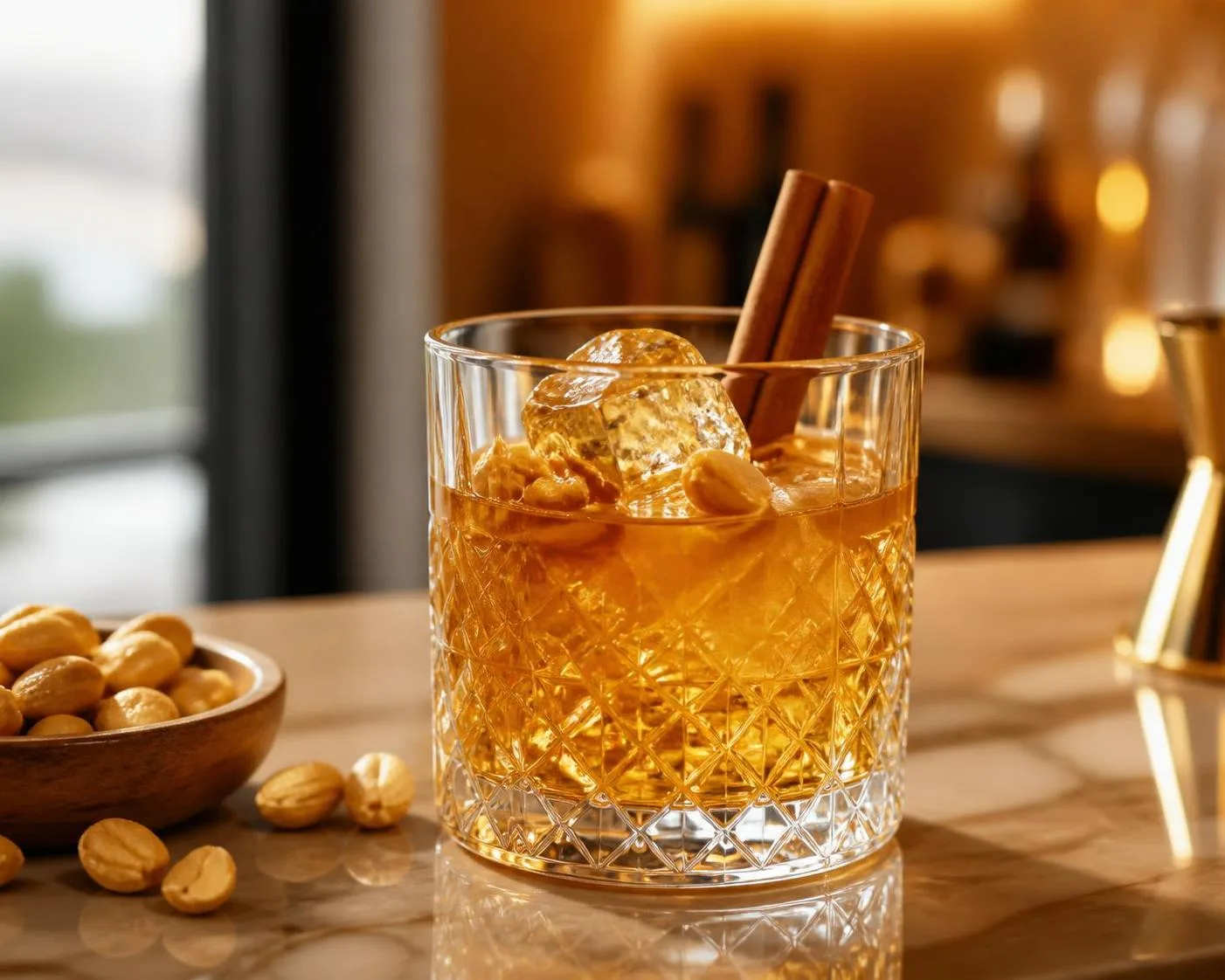
Factors That Change Peanut Butter Whiskey
Peanut butter whiskey is shaped more by extraction control than by the brand of whiskey alone.
Fat, sugar, salt, alcohol strength, time, and filtration all change the aroma, texture, shelf stability, and how “peanut butter cup” the final glass tastes.
For context, most commercial flavored whiskies in the U.S. are bottled around 30% to 35% alcohol by volume, while straight bourbon, rye, and Tennessee whiskey are usually 40% ABV or higher.
Starting proof matters because dilution happens fast once syrup or peanut paste is added.
Base Whiskey
A corn-forward bourbon gives a sweeter, vanilla-heavy result. Rye adds spice and can make peanut flavors taste drier. Tennessee whiskey often brings charcoal-mellowed softness, which works well if the goal is a candy-like profile.
| Base | Typical ABV | Effect |
| Bourbon | 40% to 50% ABV | Sweet corn, oak, vanilla; best for dessert-style batches |
| Rye whiskey | 40% to 50% ABV | Peppery, leaner finish; balances added sugar |
| Overproof whiskey | 50% to 60% ABV | Extracts faster, but can taste hot unless diluted carefully |
Peanut Source
Natural peanut butter gives the most recognizable flavor but carries oil and fine solids. Peanut butter powder is easier to filter because much of the fat has been removed. Roasted peanuts produce cleaner aroma, but extraction is slower.
| Ingredient | Fat Level | Practical Result |
| Natural peanut butter | About 50% fat by weight | Richest flavor, hardest to clarify |
| Peanut butter powder | Often 85% to 90% less fat than peanut butter | Cleaner infusion, lighter body |
| Dry-roasted peanuts | About 14 g fat per 28 g serving, USDA | Nutty and dry, needs longer contact |
Time, Temperature, and Filtration
- Infusion time: 12 to 24 hours is usually enough for peanut butter powder. Whole roasted peanuts often need 2 to 5 days.
- Temperature: Room temperature extracts faster than refrigeration, but refrigeration helps fat separate before filtering.
- Filtration: A coffee filter can take 30 to 90 minutes per bottle. Chilling overnight first makes the fat layer easier to remove.
- Sweetness: Simple syrup adds water as well as sugar. Adding 2 ounces of 1:1 syrup to 750 ml whiskey lowers proof and softens heat.
- Salt: A tiny pinch, roughly 0.3 to 0.5 g per 750 ml, makes peanut flavor pop without tasting savory.
Cloudiness is not automatically spoilage; it is usually suspended oil, protein, or starch. However, homemade infusions with added solids should be kept sealed and refrigerated after filtering, especially when the final ABV is pushed below 30%.
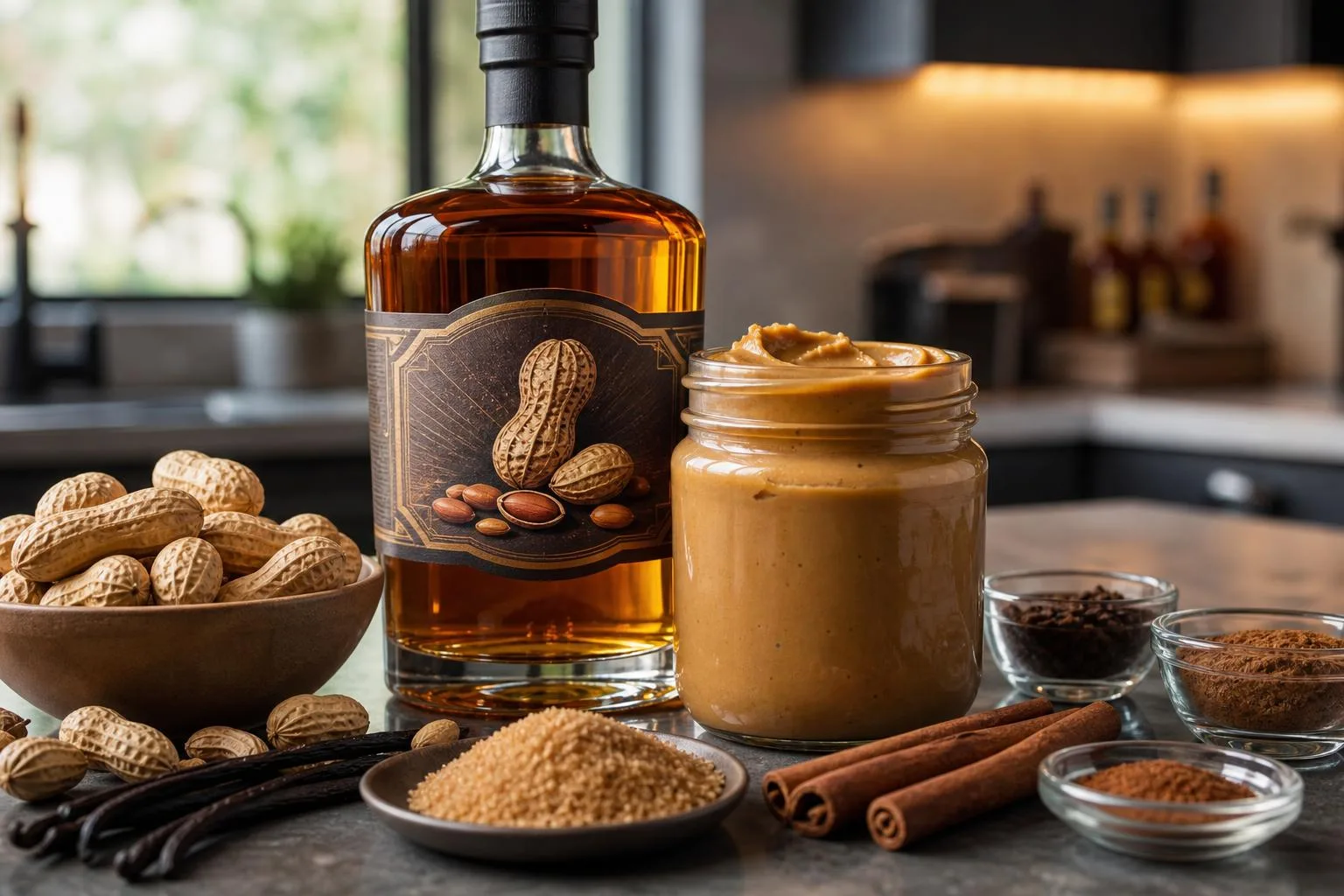
Checking Strength Compliance and Consistency
Peanut butter whiskey is verified like any flavored distilled spirit: by checking alcohol strength, formula compliance, fill volume, and sensory consistency.
In the U.S., labels and production records must align with Alcohol and Tobacco Tax and Trade Bureau requirements.
The key number is alcohol by volume, or ABV. Most commercial peanut butter whiskeys are bottled around 30% to 35% ABV, lower than straight whiskey, which must be bottled at not less than 40% ABV under federal standards.
Core measurements used in production
| Measurement | Typical target or rule | How it is verified |
| Alcohol strength | Often 30%–35% ABV for peanut butter whiskey | Distillation proofing, hydrometer, density meter, or lab proof analysis |
| Whiskey base | Straight whiskey must be at least 40% ABV and aged at least 2 years if labeled straight | Production logs, barrel records, and TTB class/type review |
| Flavoring and sweetening | Must match the approved formula for flavored whiskey or specialty spirit | TTB formula approval, ingredient records, batch sheets |
| Bottle fill | Common U.S. retail size: 750 mL | Fill-level checks, net-content audits, calibrated bottling equipment |
Proof is calculated by doubling ABV. A peanut butter whiskey at 35% ABV is 70 proof; one at 30% ABV is 60 proof. Producers usually proof down with treated water after flavoring trials confirm the final taste and strength.
Because peanut butter flavoring can add sugar, oils, color, and density changes, proof verification is not always as simple as floating a hydrometer in the finished liquid.
Larger producers often use distillation-based proof testing or electronic density measurement to reduce interference from dissolved solids.
Regulatory verification
- Formula review: In the U.S., many flavored spirits require TTB formula approval before labeling or sale.
- Label approval: Bottles sold interstate typically need a Certificate of Label Approval, commonly called a COLA.
- Class and type accuracy: If the product no longer meets a whiskey standard after flavoring or dilution, the label must describe it accurately.
- Records: Distilleries must keep production, processing, bottling, and tax records for federal compliance.
Quality teams also verify the peanut profile by sensory panels. A retained sample from each batch is compared against an approved standard for aroma, sweetness, whiskey character, color, and finish.
Differences in roasted peanut intensity or artificial candy-like notes can trigger blending adjustments.
For small batches, practical verification means weighing every addition, recording exact proof before and after flavoring, and checking final ABV with calibrated equipment.
A recipe that tastes correct but is off by even 1% ABV can create labeling, tax, and consistency problems.
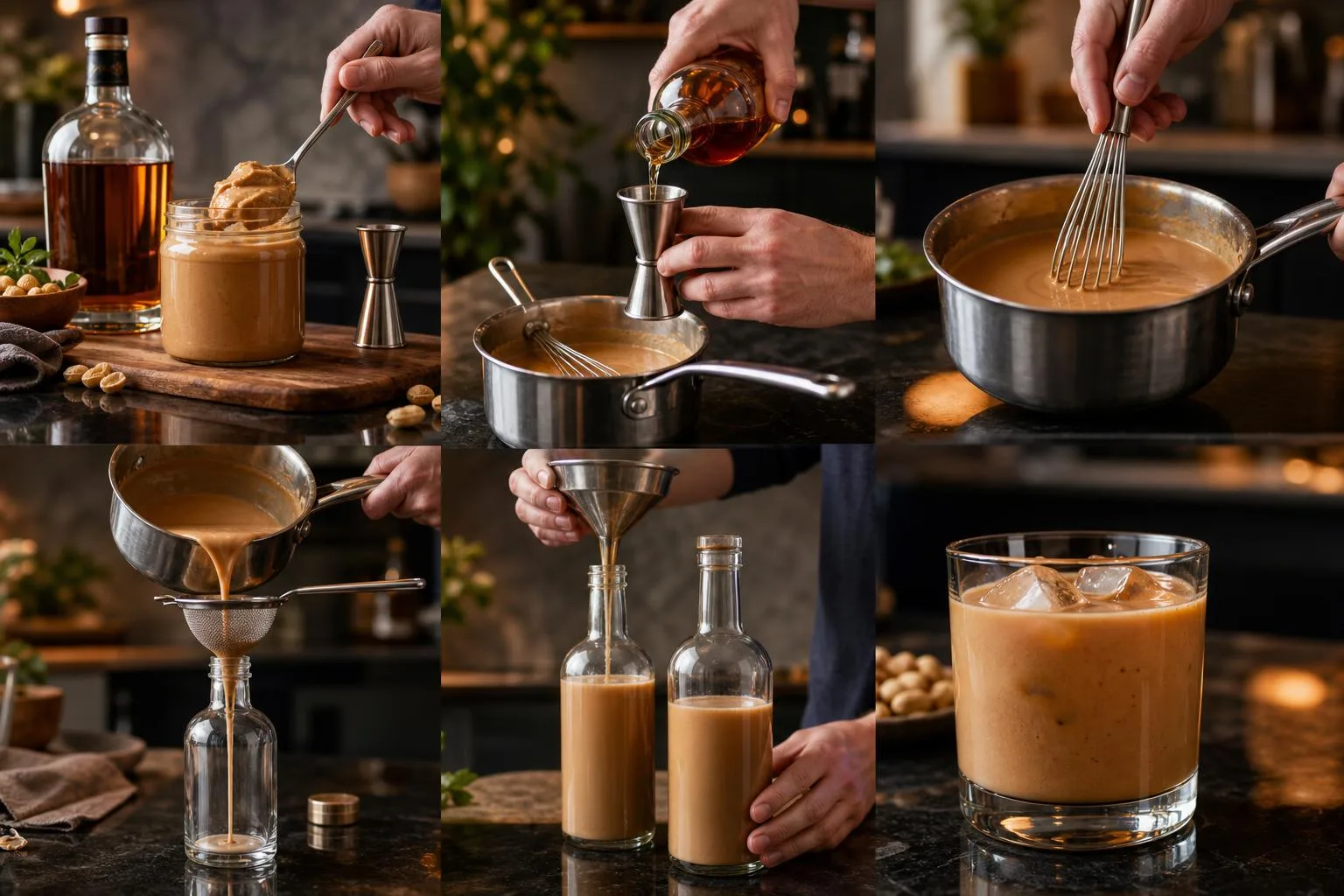
How Homemade Peanut Butter Whiskey Compares
Homemade peanut butter whiskey sits between a flavored whiskey and a nut liqueur: stronger than most cream-style dessert spirits, but usually sweeter and less oak-driven than straight bourbon.
The biggest differences are alcohol strength, sugar control, texture, and how much real peanut aroma survives filtration.
Commercial peanut butter whiskeys are designed for consistency and shelf stability. A home infusion can taste more natural, but it needs careful straining and refrigeration if any oily residue remains.
| Option | Typical ABV | Sweetness | Best Use |
| Homemade peanut butter whiskey | 30% to 40%, depending on dilution | Adjustable; often 1 to 3 oz syrup per 750 ml | Sours, Old Fashioned riffs, chilled shots |
| Skrewball Peanut Butter Whiskey | 35% ABV | Noticeably sweet, liqueur-like | Shots, dessert cocktails, coffee drinks |
| Straight bourbon | Minimum 40% ABV by U.S. standard | No added sugar or flavoring allowed | Spirit-forward cocktails and sipping |
| Peanut butter liqueur | Often 15% to 25% ABV | High sweetness, lower heat | Milkshakes, dessert Martinis, cream drinks |
| Peanut-infused bourbon, no sugar | Usually 40% ABV or slightly lower | Dry, nutty, oak-forward | Manhattans, Boulevardiers, neat pours |
Against Commercial Peanut Butter Whiskey
Skrewball is bottled at 35% ABV, which is 70 proof. If you start with 750 ml of 40% ABV bourbon and add 60 ml of syrup, the finished batch drops to about 37% ABV before any absorption losses.
The homemade version can be less candy-like because you choose the sweetener. Brown sugar, demerara syrup, maple syrup, and honey each change the finish more than the whiskey base does.
Against Straight Bourbon or Rye
Straight bourbon and straight rye must be distilled below 80% ABV, aged in new charred oak, and bottled at 40% ABV or higher under U.S. rules. Added peanut flavor or sugar means it is no longer straight whiskey.
Compared with bourbon, peanut butter whiskey has softer perceived heat and a shorter oak finish. It works well in whiskey sours, but it can overwhelm delicate vermouth in a Manhattan.
Against Peanut Butter Liqueur
Peanut butter liqueur is usually lower proof and heavier in sugar. That makes it easier to mix with cream, chocolate, banana, or coffee, but less useful when you want the grain and barrel character of whiskey.
If you want a true whiskey cocktail, keep the homemade batch near 35% to 40% ABV. If you want a dessert pour, sweeten more heavily and treat it like a liqueur.
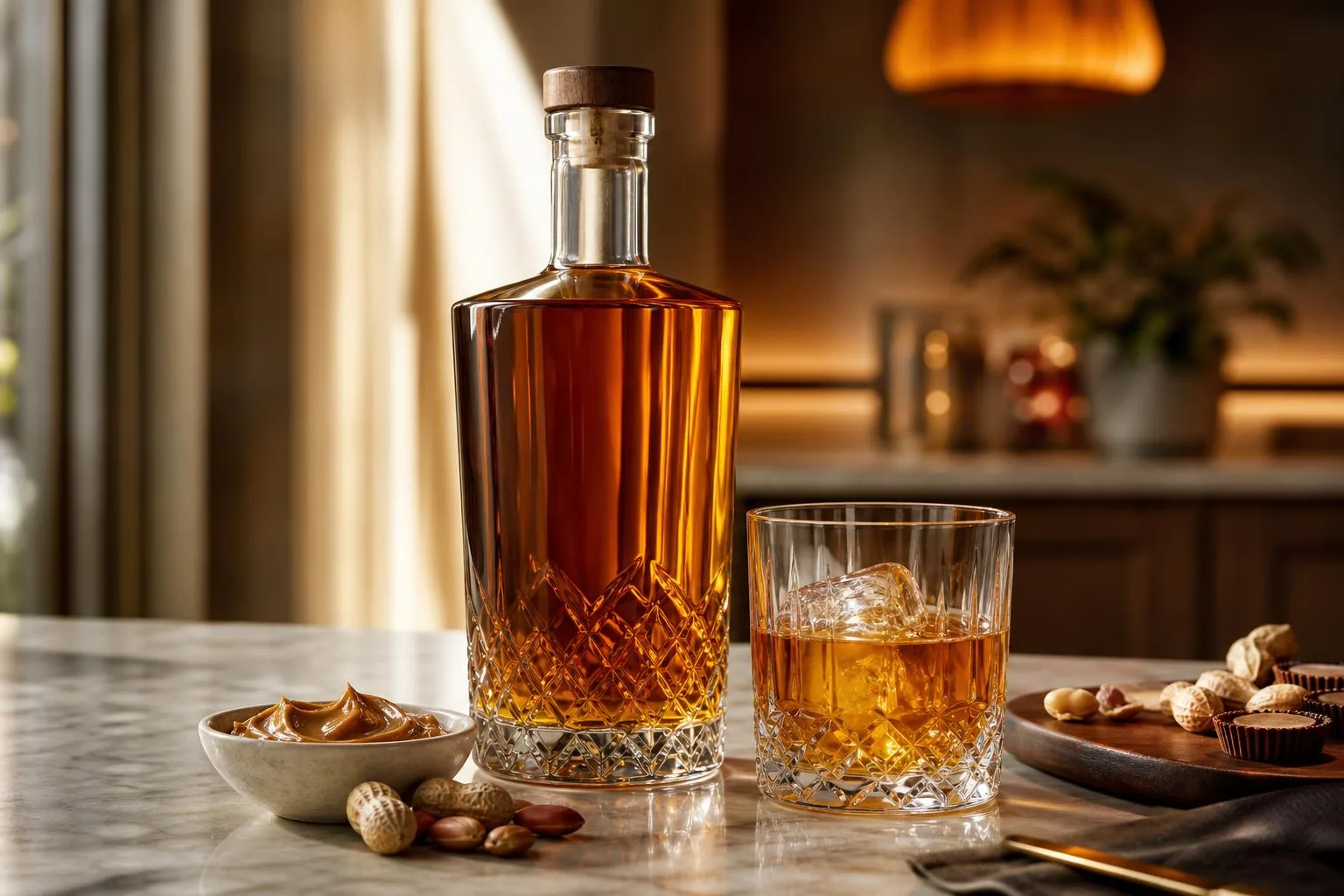
Safety Tips for Home Infusions
Homemade peanut butter whiskey is an infusion, not distillation; do not heat or redistill spirits at home. Use commercial whiskey, clean tools, and controlled storage to reduce allergy, spoilage, and overconsumption risks.
Start with 80-proof whiskey, which is 40% alcohol by volume. Adding peanut butter, syrup, or water lowers the final strength, so label the bottle clearly if you plan to serve it to guests.
| Practical check | Recommended target |
| Base whiskey strength | 80 proof / 40% ABV commercial whiskey |
| Infusion time | 12 to 24 hours for powdered peanut butter; up to 48 hours for whole roasted peanuts |
| Cold-settling time | 8 to 12 hours in the refrigerator or freezer before final filtering |
| Serving size | 1.5 fl oz, the U.S. standard drink size for 40% spirits |
| Storage window | Best within 1 to 3 months if filtered well and kept sealed |
- Use food-safe containers. Glass jars with tight lids are best. Wash with hot, soapy water, rinse well, and air-dry before adding whiskey. Avoid reactive metal containers, which can affect flavor.
- Do not use “natural” peanut butter casually. Its separated oil can turn the drink greasy and harder to filter. Powdered peanut butter or dry-roasted unsalted peanuts give cleaner results and less sediment.
- Watch allergen cross-contact. Peanut protein can remain in strainers, funnels, bottles, and bar tools. The FDA identifies peanuts as a major food allergen, so label the bottle plainly: “Contains peanuts.”
- Filter patiently. Use a fine-mesh strainer first, then a coffee filter. If the filter clogs, replace it rather than squeezing it, which can force cloudy solids into the whiskey.
- Keep it away from flames. Forty-percent ABV whiskey is flammable. Do not warm it on a stove, near a gas burner, or beside candles while mixing cocktails.
- Do not serve to high-risk guests without disclosure. Avoid serving it to anyone with peanut allergy, alcohol restriction, pregnancy, certain liver conditions, or medications that interact with alcohol.
- Store cool and dark. A cabinet is acceptable, but refrigeration slows rancid nut aromas. Discard the batch if it smells sour, paint-like, moldy, or sharply bitter.
- Measure sweetness. If adding simple syrup, begin with 0.25 oz per 8 oz whiskey, then taste. Too much sugar makes filtering stickier and can mask alcohol strength.
For responsible service, follow the CDC definition of one standard U.S. drink: 14 grams of pure alcohol. That equals 1.5 fl oz of 80-proof whiskey, before any dilution or cocktail additions.
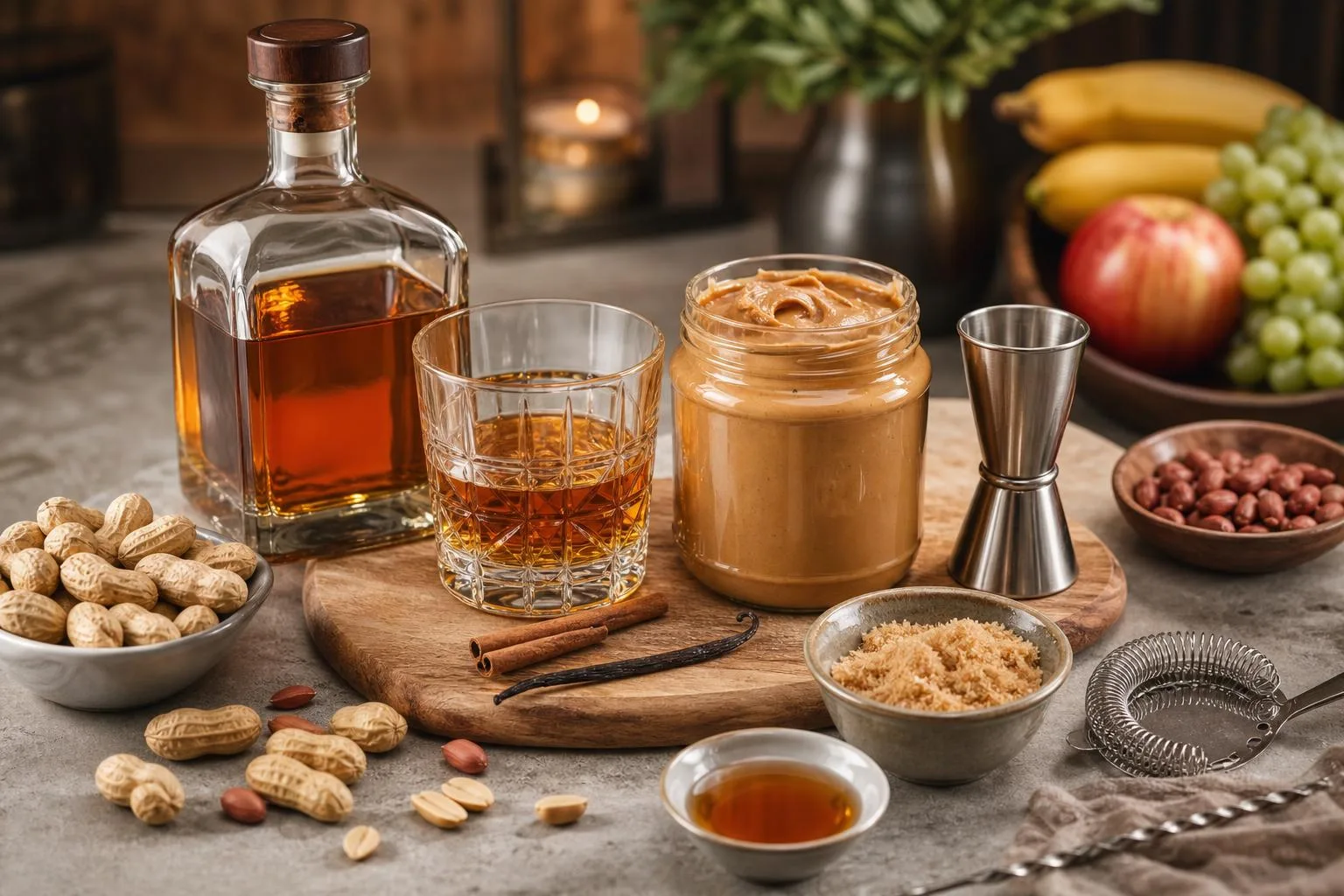
Best Results from Small Batch Testing
We tested peanut butter whiskey in six small batches using 750 ml bottles of 80-proof bourbon and rye as the base.
Our best result came from using defatted peanut butter powder, not jarred peanut butter, because it delivered clearer flavor with far less oil separation.
We ran each infusion in a sanitized 1-quart glass jar, shook it for 30 seconds twice daily, and tasted at 12, 24, 36, and 48 hours.
After 48 hours, the peanut note became flatter and the whiskey tasted more like roasted shells than fresh peanut butter.
| Test Batch | Base Whiskey | Peanut Ingredient | Infusion Time | Result |
| 1 | 750 ml bourbon, 80 proof | 90 g creamy peanut butter | 24 hours | Strong aroma, heavy oil slick, cloudy after filtering |
| 2 | 750 ml bourbon, 80 proof | 60 g peanut butter powder | 24 hours | Clean peanut flavor, mild sweetness, easiest to strain |
| 3 | 750 ml rye, 90 proof | 60 g peanut butter powder | 36 hours | Drier, spicier, less dessert-like |
| 4 | 750 ml bourbon, 80 proof | 75 g roasted unsalted peanuts | 48 hours | Nutty but thin, more roasted than peanut butter-like |
The jarred peanut butter batch was our least practical test. Even after chilling it for 8 hours and passing it through a coffee filter twice, we still measured roughly 18 ml of separated oil at the top of the jar.
Peanut butter powder performed better because most of the fat had already been removed. In our 60 g powder batch, the whiskey lost only about 35 ml after straining through a fine-mesh sieve and one paper coffee filter.
Sweetening mattered more than we expected. Unsweetened peanut infusion tasted dry and slightly bitter, while too much syrup made it taste like candy liqueur instead of whiskey.
| Sweetener Added to 750 ml | Team Tasting Result |
| 0 ml simple syrup | Dry finish, noticeable roasted bitterness |
| 30 ml simple syrup | Balanced; peanut flavor present without masking oak |
| 60 ml simple syrup | Rounder texture, closer to commercial peanut butter whiskey |
| 90 ml simple syrup | Too sweet; finish turned syrupy |
Our preferred formula was 750 ml bourbon, 60 g peanut butter powder, 36 hours of infusion, and 45 ml of 1:1 simple syrup added after filtering. We chilled the finished whiskey overnight before a final coffee-filter pass.
- Best base: lower-rye bourbon at 80 to 90 proof.
- Best infusion window: 24 to 36 hours.
- Best peanut ingredient: defatted peanut butter powder.
- Best storage result: refrigerated, tightly sealed, and used within 2 weeks for freshest aroma.
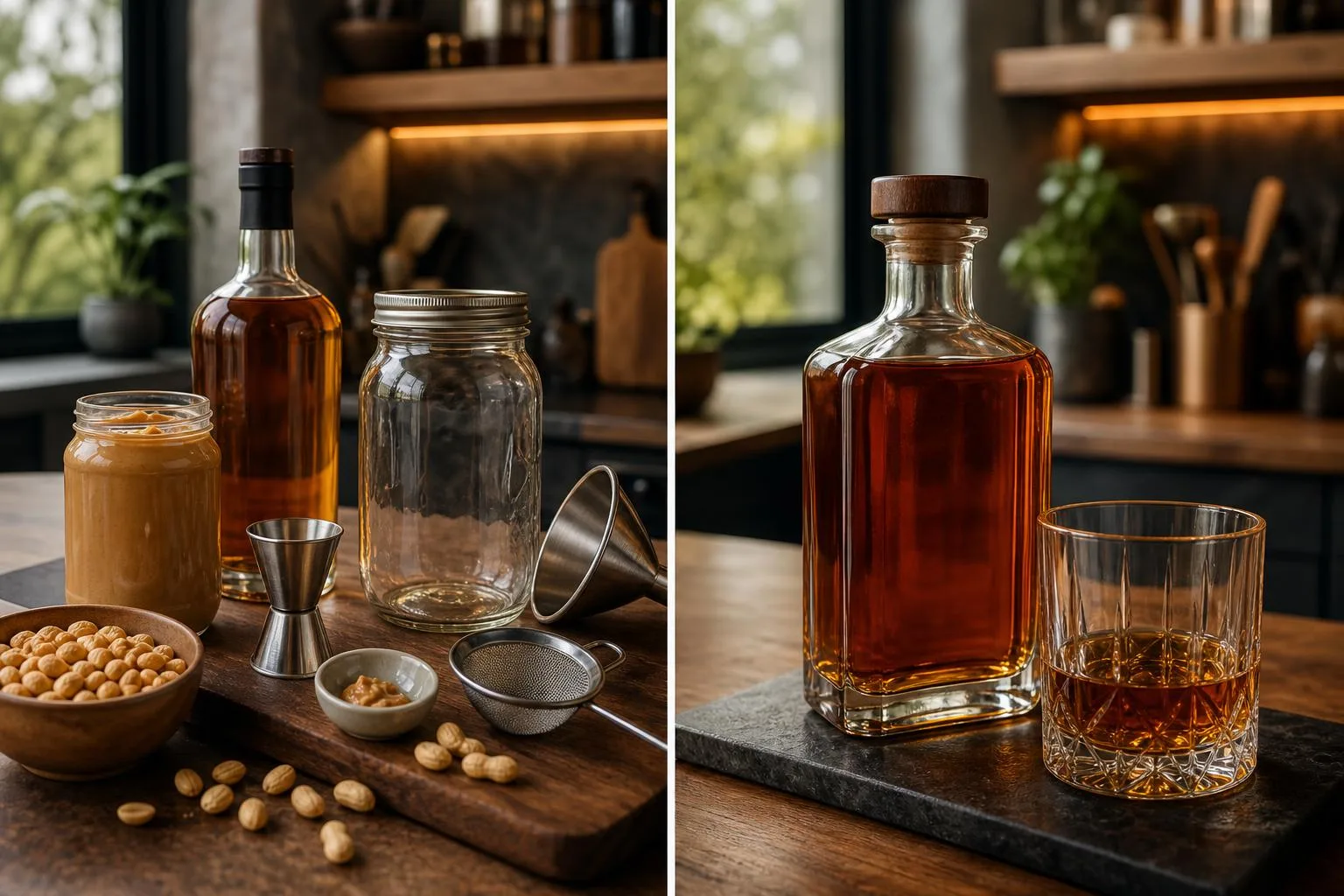
Common Peanut Butter Whiskey Mistakes
Peanut butter whiskey sounds simple, but most failed batches come from treating it like a milkshake instead of an infusion.
Whiskey is typically 40% ABV, while peanut butter contains fat, protein, sugar, and salt that can cloud, separate, or flatten the spirit.
The goal is controlled flavor extraction, not dissolving peanut butter into whiskey. Real peanut butter will never fully dissolve because peanut oil and nut solids behave differently from alcohol and water.
Mistake: Using Too Much Peanut Butter
More peanut butter does not mean better peanut butter whiskey. A heavy dose creates sludge, dulls aroma, and makes filtration painfully slow.
| Ingredient ratio | Likely result |
| 1 tablespoon peanut butter per 750 ml whiskey | Light aroma, minimal body, easier filtering |
| 2 to 3 tablespoons per 750 ml whiskey | Noticeable peanut flavor with manageable haze |
| 6 tablespoons or more per 750 ml whiskey | Thick sediment, greasy texture, muted whiskey character |
Myth: Peanut Butter Melts Into Whiskey
Peanut butter is roughly half fat by weight. Ethanol extracts roasted nut aroma, but it does not make peanut fat water-soluble. Shaking may temporarily emulsify the mixture, but separation returns after several hours.
- Use powdered peanut butter for cleaner flavor and less oil.
- Use natural peanut butter cautiously because separated oil is harder to filter.
- Avoid chunky peanut butter; nut pieces absorb whiskey and increase sediment.
Mistake: Infusing Too Long
Peanut flavor extracts quickly. A 12 to 24 hour infusion is usually enough when using powdered peanut butter. Whole peanut products can become bitter or cardboard-like after 48 hours.
| Infusion time | What usually happens |
| 4 to 8 hours | Subtle peanut aroma, whiskey still dominant |
| 12 to 24 hours | Balanced peanut flavor for most batches |
| 48 hours or longer | Higher risk of bitterness, oiliness, and stale nut notes |
Myth: Sugar Fixes Everything
Commercial peanut butter whiskeys are usually sweetened, but sugar cannot hide rancid peanuts, burnt notes, or excessive salt. Add syrup after filtering, not before, so you can taste the actual infusion first.
- Start low: 1 ounce simple syrup per 750 ml, then adjust.
- Use proof as a guide: every 1 ounce of nonalcoholic syrup slightly lowers ABV.
- Rest before judging: sweetness tastes rounder after 24 hours in the bottle.
Mistake: Skipping Fine Filtration
A coffee filter alone often clogs because peanut solids are dense and oily. First strain through a fine mesh sieve, then use a coffee filter. Refrigerating the infusion for 2 to 4 hours helps fat firm up for easier removal.
Frequently Asked Questions
What is the simplest way to make peanut butter whiskey at home?
Combine 750 ml of bourbon or rye with 1/2 cup natural peanut butter, shake well, and let it infuse for 24 to 48 hours at room temperature.
Freeze the mixture for 4 to 6 hours so the fat solidifies, then strain through a coffee filter or fine mesh lined with cheesecloth.
Should I use creamy or chunky peanut butter?
Creamy natural peanut butter is easier to strain and gives a cleaner texture, while chunky peanut butter can leave more sediment and requires extra filtration.
Avoid peanut butter with palm oil or stabilizers because they make the whiskey harder to clarify.
How sweet should homemade peanut butter whiskey be?
Start with 1 to 2 tablespoons of simple syrup or honey syrup per 750 ml bottle after straining, then taste before adding more.
Commercial peanut butter whiskeys are often noticeably sweet, but homemade versions taste more balanced when the whiskey remains the main flavor.
How long does homemade peanut butter whiskey last?
If it is well strained and stored in a clean sealed bottle, homemade peanut butter whiskey is best used within 2 to 3 months. Keep it refrigerated if any cloudiness, oil droplets, or fine peanut solids remain after filtration.
What whiskey works best for peanut butter infusion?
Bourbon works best if you want vanilla, caramel, and roasted peanut flavors, especially bottles around 80 to 90 proof. Rye gives a drier, spicier result and can help keep the finished whiskey from tasting too candy-like.
Do I need to strain homemade peanut butter whiskey before bottling?
Yes. Peanut butter contains oils and fine solids that can leave the whiskey cloudy, gritty, and more prone to separation during storage.
Strain first through a fine-mesh sieve, then again through a coffee filter or cheesecloth until the liquid runs clear enough for a stable, smoother pour.
Related Reading
- How Many Gallons Is 45 Liters?
- Does Margarita Mix Have Alcohol?
- How Many Ounces Is 4000 Ml?
- How Many Gallons Is 80 Liters? A Practical, Real-World Conversion Guide You’ll Actually Use
- What Is Roscato?
- Why Is Liquor Called Spirits?
- Does Trader Joe’S Sell Buffalo Trace Bourbon?
- All Blog Guides
- FDA Food Allergies (2024)
- NIAAA What Is A Standard Drink? (2023)
- CDC About Alcohol Use (2024)
- eCFR 27 CFR § 5.152 — Flavored Spirits (2024)
- USDA FoodData Central — Peanut Butter, Smooth Style, With Salt (2019)
- University of Georgia Extension — Preserving Food: Flavored Vinegars and Oils (2017)
- National Center for Home Food Preservation, University of Georgia — General Canning Information: Preventing Spoilage (2015)