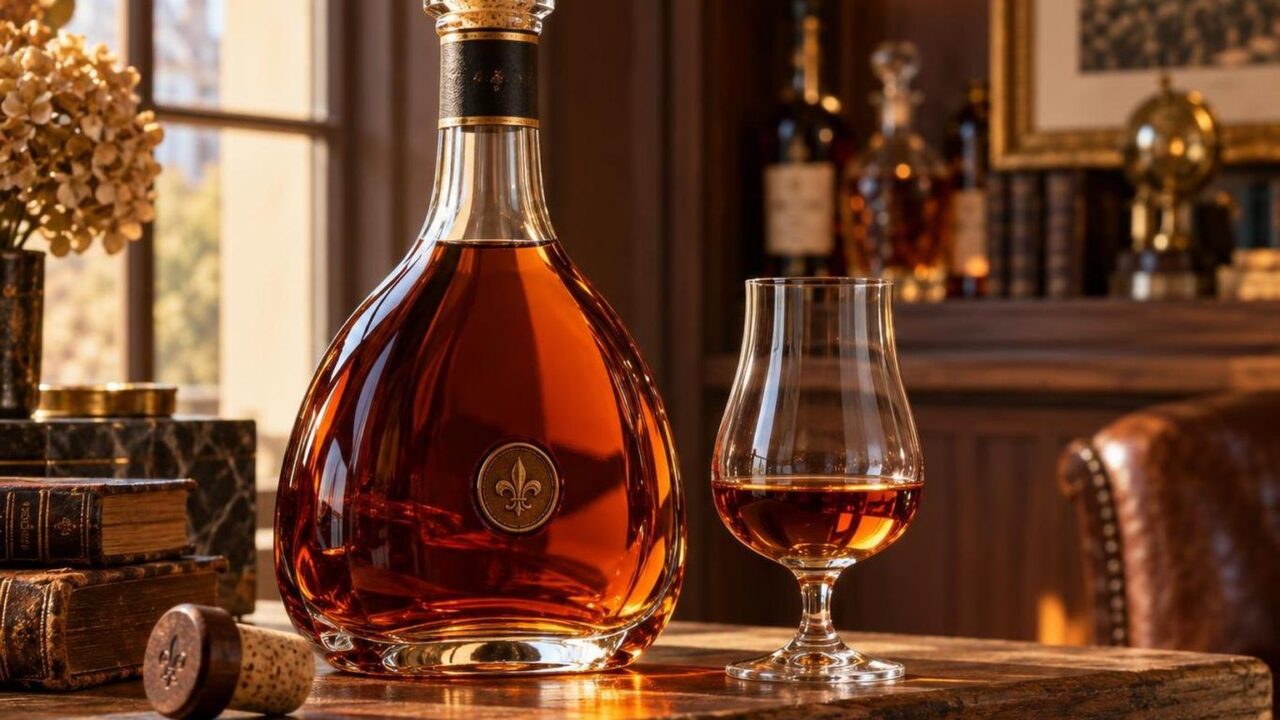
How Long Does Cognac Last? has a practical answer: unopened Cognac lasts indefinitely, while an opened bottle tastes best within 6-12 months after opening.
Because Cognac is distilled and bottled at about 40% ABV, it does not spoil like wine, but oxygen slowly dulls aroma, fruit, and texture.
Storage decides the timeline. Keep the bottle upright, tightly sealed, away from sunlight, heat, and temperature swings; use a smaller bottle when less than half remains.
Does Cognac Expire After Opening
Cognac does not expire in the sense that it becomes unsafe to drink, but it does deteriorate once the seal is broken.
Oxidation gradually strips away the delicate aromatic compounds that define a quality cognac, particularly the floral and fruity esters developed during decades of barrel aging.
How Oxidation Affects Opened Cognac
Each time you open the bottle, fresh oxygen enters the headspace. This oxygen reacts with volatile compounds—especially ethyl esters and terpenes—causing them to break down irreversibly over months.
The fuller the bottle, the less headspace available for oxygen. A bottle that is three-quarters full retains its character far longer than one with only a few pours remaining.
Expected Timeline After Opening
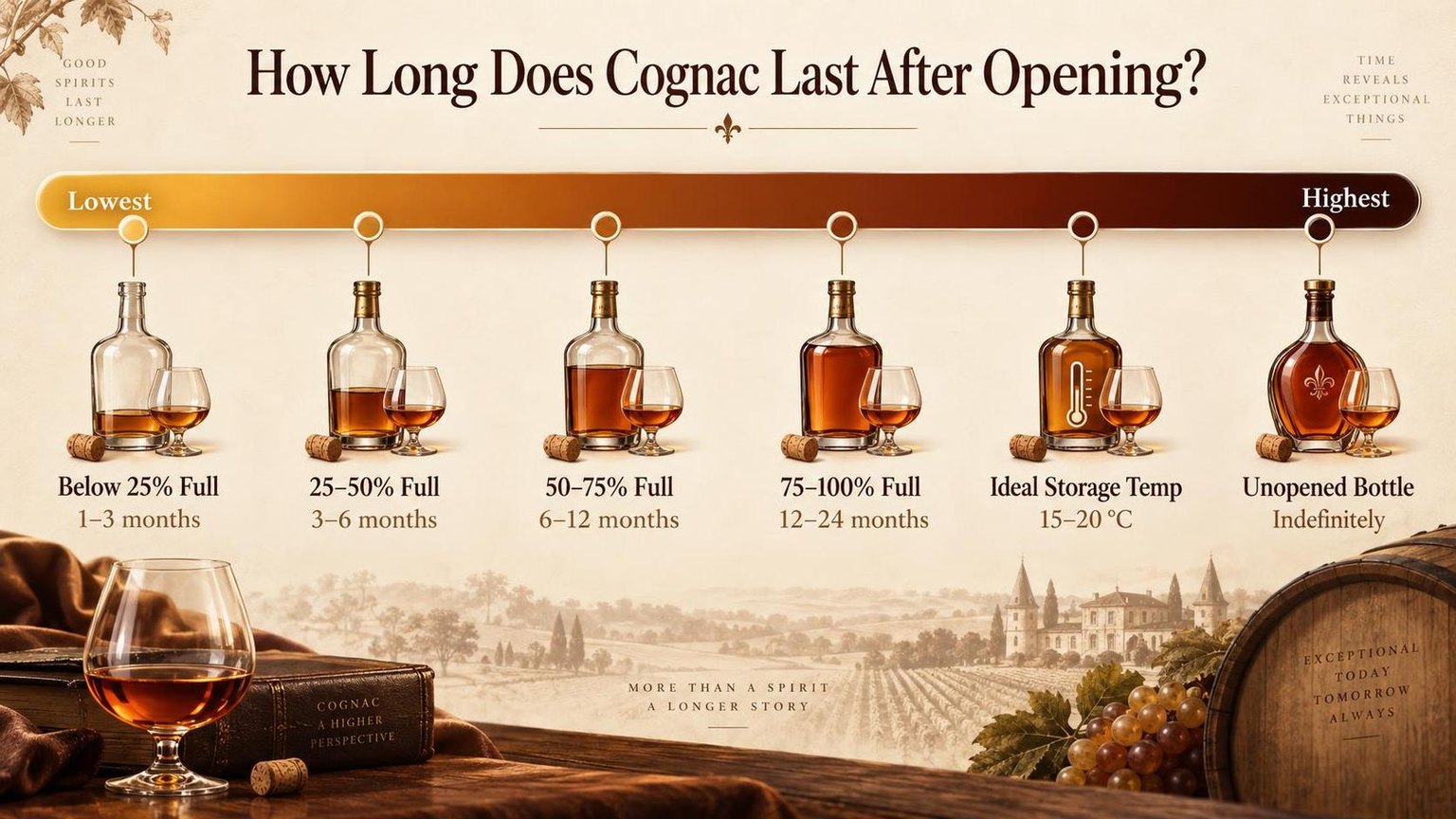
| Bottle Fill Level | Estimated Quality Window | Primary Risk |
| 75–100% full | 12–24 months | Minimal oxidation; slow aromatic loss |
| 50–75% full | 6–12 months | Noticeable flattening of nose and finish |
| 25–50% full | 3–6 months | Marked loss of complexity and fruit notes |
| Below 25% full | 1–3 months | Rapid oxidation; dull, spirity character |
These estimates assume storage at 15–20 °C with the bottle upright and away from direct light. Higher temperatures accelerate degradation significantly.
Signs Your Opened Cognac Has Declined
- Flattened aroma: The bouquet loses its layered complexity and smells one-dimensional or overly alcoholic.
- Shortened finish: Flavors that once lingered for 15–20 seconds on the palate disappear almost immediately.
- Color shift: Slight dulling or loss of vibrancy, though this is subtle and difficult to detect without a fresh reference.
- Dominant ethanol burn: As fruity esters dissipate, the 40% ABV spirit base becomes disproportionately harsh on the palate.
Practical Storage Tips for Opened Bottles
Always store opened cognac upright. The high alcohol content—typically 40% ABV—degrades natural cork over prolonged contact, potentially introducing off-flavors and causing seal failure.
If a bottle drops below one-third full and you don’t plan to finish it soon, decant the remaining cognac into a smaller glass bottle. Reducing headspace is the single most effective way to slow oxidation.
Parafilm wrapped around the closure provides an additional oxygen barrier. It costs under $10 per roll and is widely used by spirits collectors to preserve opened bottles for months beyond their normal window.
Unopened Cognac Shelf Life
Unopened cognac stored properly lasts indefinitely. Unlike wine, cognac stops aging once bottled because the spirit no longer interacts with oak. A sealed bottle from 1950 tastes virtually identical to when it left the barrel.
Cognac’s high alcohol content—40% ABV minimum by law (often 40–45%)—acts as a natural preservative. Bacteria and mold cannot survive in this environment, eliminating spoilage risk entirely.
Why Cognac Doesn’t Age in Glass
In oak barrels, cognac gains color, tannins, and complexity through micro-oxygenation and wood extraction. Glass is chemically inert. No oxygen exchange occurs through a properly sealed cork or cap, so flavor development halts at bottling.
A VS cognac bottled after 2 years of barrel aging remains a 2-year-aged spirit regardless of how long it sits on a shelf. The age statement reflects barrel time only, never bottle time.
Storage Conditions That Preserve Quality
While cognac won’t spoil, improper storage can degrade its character over decades. Follow these guidelines for long-term preservation:
- Temperature: Store between 15–20°C (59–68°F). Avoid attics, garages, and areas with fluctuations exceeding 5°C.
- Light: Keep bottles away from direct sunlight and fluorescent lighting. UV radiation breaks down organic compounds that contribute to aroma.
- Position: Store upright. High-proof alcohol degrades natural cork on prolonged contact, unlike wine. Laying bottles flat risks cork deterioration and seal failure.
- Humidity: Maintain 60–70% relative humidity to prevent cork from drying and shrinking.
Unopened Cognac: Expected Lifespan by Storage Quality
| Storage Quality | Expected Lifespan | Primary Risk |
| Ideal (cellar conditions) | Indefinite (50+ years confirmed) | None measurable |
| Good (indoor shelf, stable temp) | 20–30+ years | Gradual cork drying |
| Poor (heat, light, fluctuations) | 5–10 years before subtle changes | Evaporation through cork, UV damage |
Auction houses routinely sell cognac bottles from the 1800s. Bottles of Gautier 1762 and Hine 1914 have been opened and confirmed drinkable, demonstrating the spirit’s extraordinary longevity when seals remain intact.
The practical takeaway: an unopened cognac bottle in a cool, dark cabinet will outlast its owner. No expiration date applies. The only real enemy is a compromised seal.
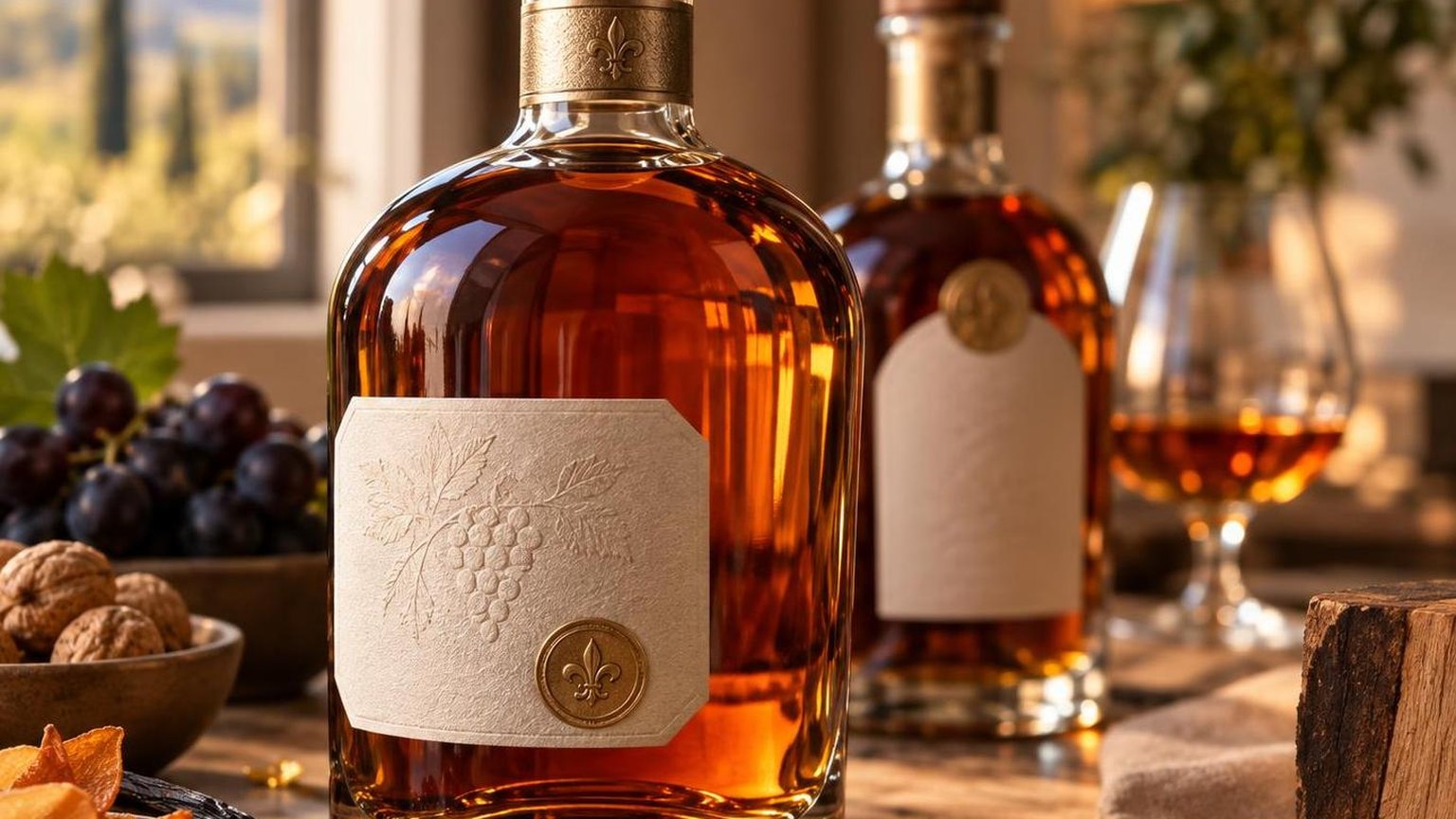
How Oxygen Changes Open Bottles
Once you break the seal on a bottle of Cognac, oxidation begins degrading volatile aromatic compounds. The spirit doesn’t spoil like wine, but its sensory profile diminishes measurably over months.
How you store that open bottle determines whether decline is gradual or rapid.
Ethanol and congeners — the esters, aldehydes, and tannins responsible for flavor complexity — react with dissolved oxygen. Esters hydrolyze, fruity top notes flatten, and oxidized aldehydes introduce stale, cardboard-like off-flavors.
The Headspace Problem
The air gap between the liquid surface and the cork is called headspace. More headspace means more trapped oxygen in direct contact with the spirit, accelerating degradation.
| Bottle Fill Level | Estimated Shelf Life (Open) | Noticeable Quality Change |
| ¾ full or more | 8–12 months | Minimal within first 6 months |
| ½ full | 4–6 months | Subtle flattening of bouquet by month 3 |
| ¼ full or less | 1–3 months | Perceptible loss of fruit and floral notes within weeks |
Key Oxidation Mechanisms
- Ester hydrolysis: Ethyl acetate and other fruit-forward esters break down when exposed to oxygen and trace moisture, reducing aromatic intensity.
- Aldehyde oxidation: Compounds like vanillin and furfural, which contribute vanilla and caramel notes from oak aging, convert to carboxylic acids with muted flavor impact.
- Polyphenol polymerization: Tannins extracted during barrel aging cross-link and precipitate, diminishing the spirit’s structural mouthfeel over time.
Practical Measures to Slow Oxidation
Transfer remaining Cognac into a smaller glass bottle to minimize headspace. A 375 ml half-bottle works well when your 750 ml bottle drops below half.
Use the original cork or a tight-fitting glass stopper — not a pour spout, which leaves the bottle perpetually open to airflow.
Store upright, never on its side. Unlike wine corks, spirit-bottle corks degrade when in constant contact with 40% ABV alcohol, potentially contaminating the Cognac with cork taint compounds like TCA (2,4,6-trichloroanisole).
Keep the bottle at stable room temperature between 15–20 °C (59–68 °F) and away from direct sunlight. UV radiation accelerates free-radical oxidation reactions independently of headspace oxygen levels.
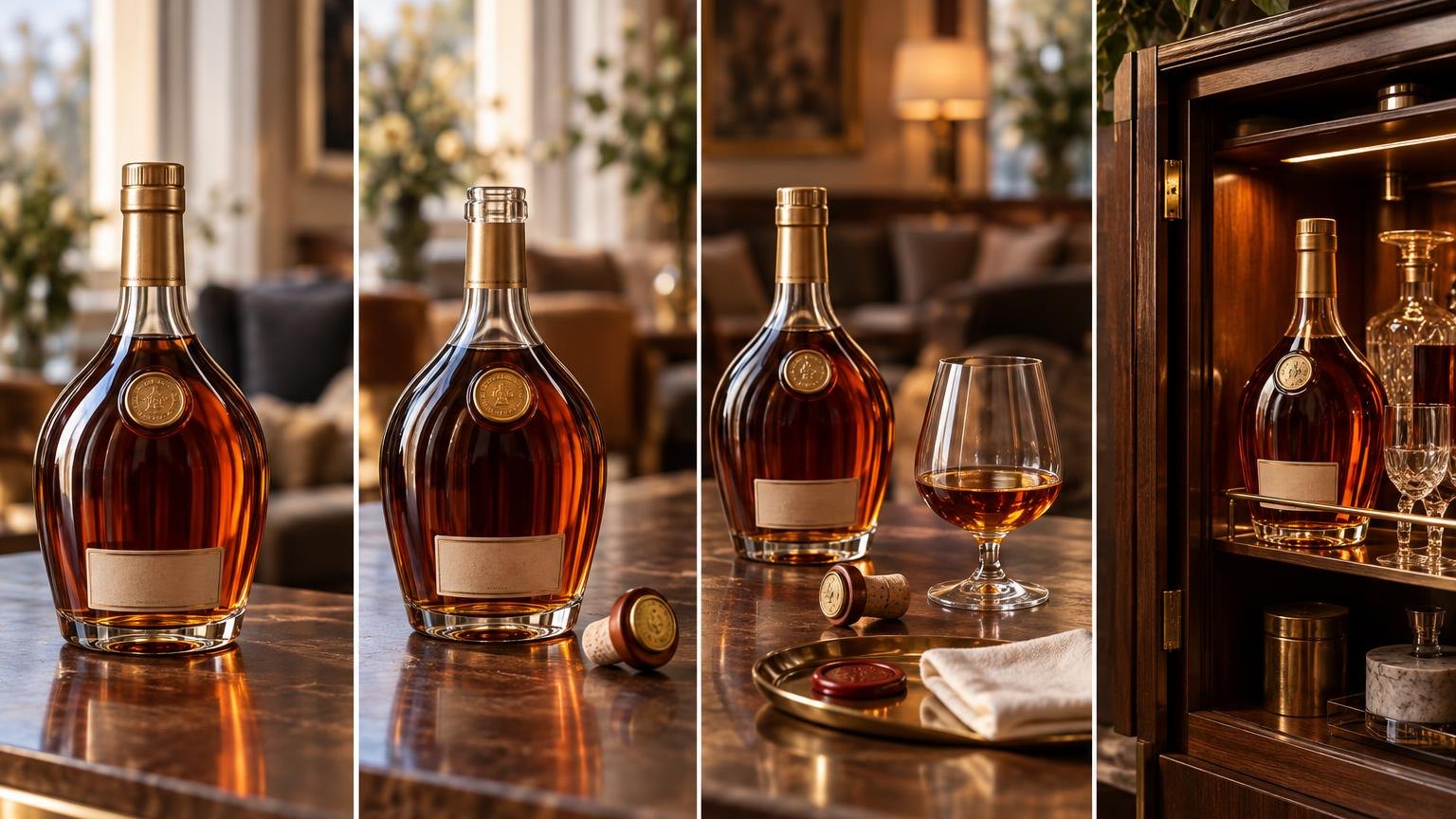
Best Storage Conditions for Cognac
Cognac is a distilled spirit at 40% ABV, making it far more resilient than wine—but improper storage still degrades quality.
Temperature, light exposure, and bottle orientation are the three controllable factors that determine how long your cognac retains its intended character.
Temperature
Store cognac between 15°C and 20°C (59°F–68°F). Fluctuations matter more than absolute temperature. Repeated swings exceeding 10°C accelerate oxidation by expanding and contracting the air in the bottle’s headspace.
| Condition | Ideal Range | Risk if Exceeded |
| Temperature | 15–20°C (59–68°F) | Accelerated oxidation, flavor flattening |
| Humidity | 50–70% | Cork drying below 50%; mold risk above 80% |
| Light exposure | 0 lux (total darkness) | UV breaks down terpenes and esters |
| Bottle orientation | Upright (vertical) | Horizontal contact degrades natural cork |
Light
Ultraviolet radiation breaks down congeners—the aromatic compounds responsible for cognac’s dried fruit, vanilla, and floral notes. Even indirect sunlight through a window delivers 10,000–25,000 lux.
A closed cabinet or original gift box eliminates this risk entirely.
Bottle Position
Always store cognac upright. At 40% ABV, prolonged contact with a natural cork dissolves it, introducing off-flavors and potentially allowing air ingress.
This is the opposite of wine storage advice, because wine’s lower alcohol (12–15%) does not erode cork.
Seal Integrity
Once opened, the headspace fills with oxygen. Transferring remaining cognac to a smaller glass bottle reduces the air-to-liquid ratio. A bottle less than one-third full oxidizes noticeably within 6–8 months.
- Unopened bottles: Last indefinitely if stored upright, dark, and at stable temperature.
- Opened, more than half full: Maintain quality for roughly 2–3 years.
- Opened, less than one-third full: Noticeable decline within 6–8 months.
- Decanter storage: Avoid—ground-glass stoppers rarely seal as tightly as original closures, accelerating evaporation and oxidation.
What to Avoid
Never store cognac near heat sources like radiators, ovens, or south-facing windows. Kitchen shelves routinely reach 25–30°C in summer. A basement, interior closet, or dedicated spirits cabinet provides the most stable environment year-round.
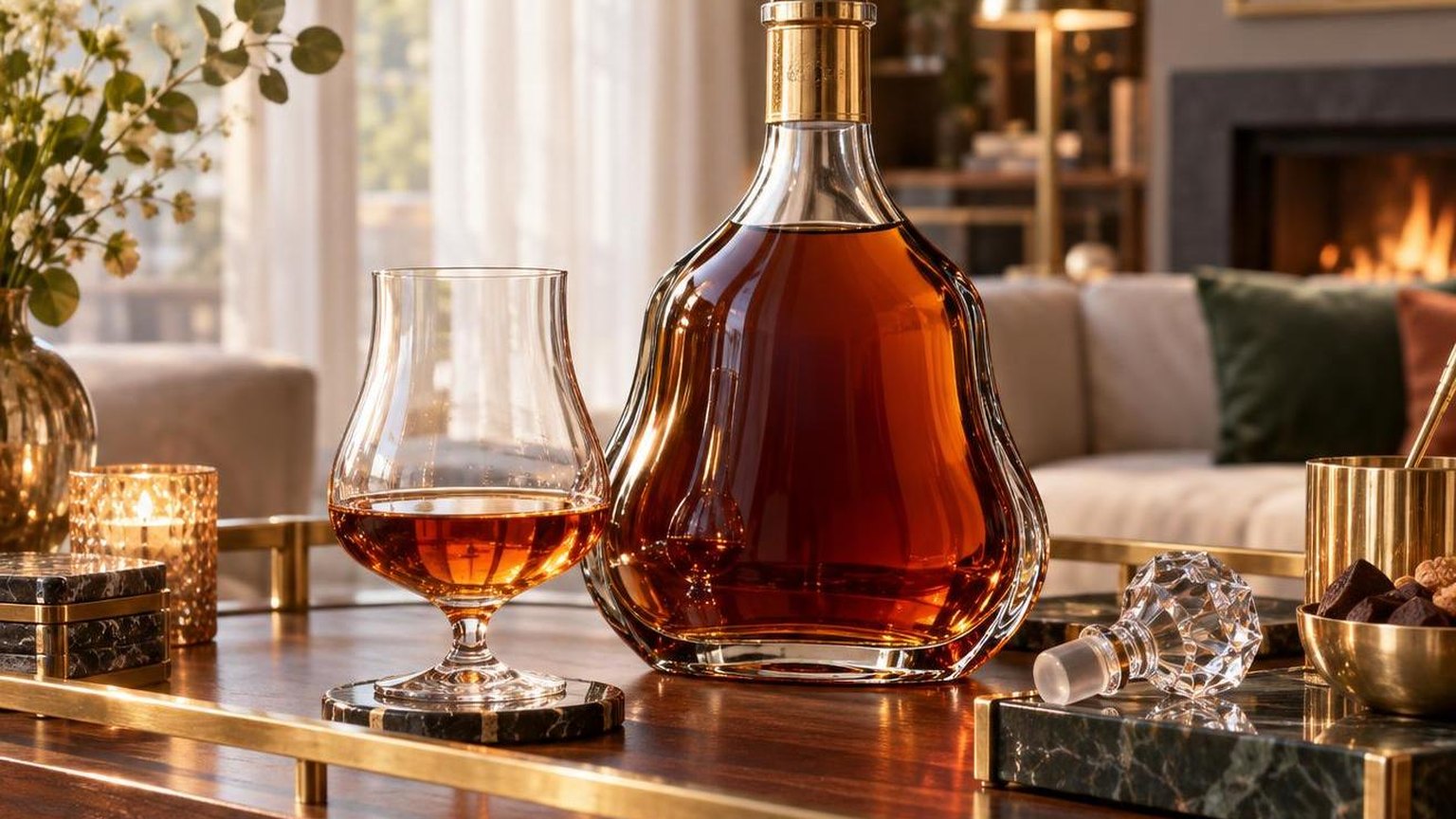
Signs Cognac Has Gone Bad
Cognac rarely becomes unsafe to drink, but it absolutely can degrade to the point where consuming it offers no pleasure. Oxidation, heat exposure, and poor sealing destroy the aromatic compounds that define a quality eau-de-vie.
Recognizing spoilage early prevents wasting a pour of what may be an expensive spirit.
Visual Changes
Hold the bottle against a white background in good light. Healthy cognac ranges from pale gold (VS) to deep amber (XO and beyond) with perfect clarity.
- Cloudiness or haze: Indicates contamination or chemical breakdown, especially if the bottle was stored above 25 °C (77 °F) for extended periods.
- Floating particles or sediment: Unlike wine, cognac should never throw sediment. Particles signal cork disintegration or microbial contamination from a compromised seal.
- Significant color fading: Prolonged UV exposure breaks down tannins and caramel compounds, visibly lightening the liquid by several shades over months.
Aroma Red Flags
Nose the cognac in a tulip glass at room temperature. A degraded cognac reveals itself immediately on the nose before it ever touches your palate.
| Normal Aroma | Degraded Aroma | Likely Cause |
| Dried fruit, vanilla, oak | Flat, cardboard-like, musty | Oxidation from low fill level (below 60% of bottle) |
| Floral, honeyed warmth | Sharp nail-polish or acetone notes | Volatile acidity from prolonged heat above 30 °C |
| Subtle spice, leather | Wet cork, damp cellar smell | Cork taint (TCA contamination at levels above 2–4 ng/L) |
Taste Indicators
If the appearance and aroma pass inspection, take a small sip. Degraded cognac typically presents two unmistakable flaws.
- Harsh, solvent-like burn without complexity: The 40% ABV alcohol remains, but the balancing esters and aldehydes have evaporated or broken down, leaving raw ethanol heat.
- Flat, watery finish under 3 seconds: A properly stored VSOP or XO delivers a finish lasting 15–45 seconds. A dramatically shortened finish confirms significant aromatic loss.
None of these signs make cognac dangerous. They simply mean the spirit no longer represents what the cellar master intended. When multiple indicators appear together, the bottle has passed its useful life.
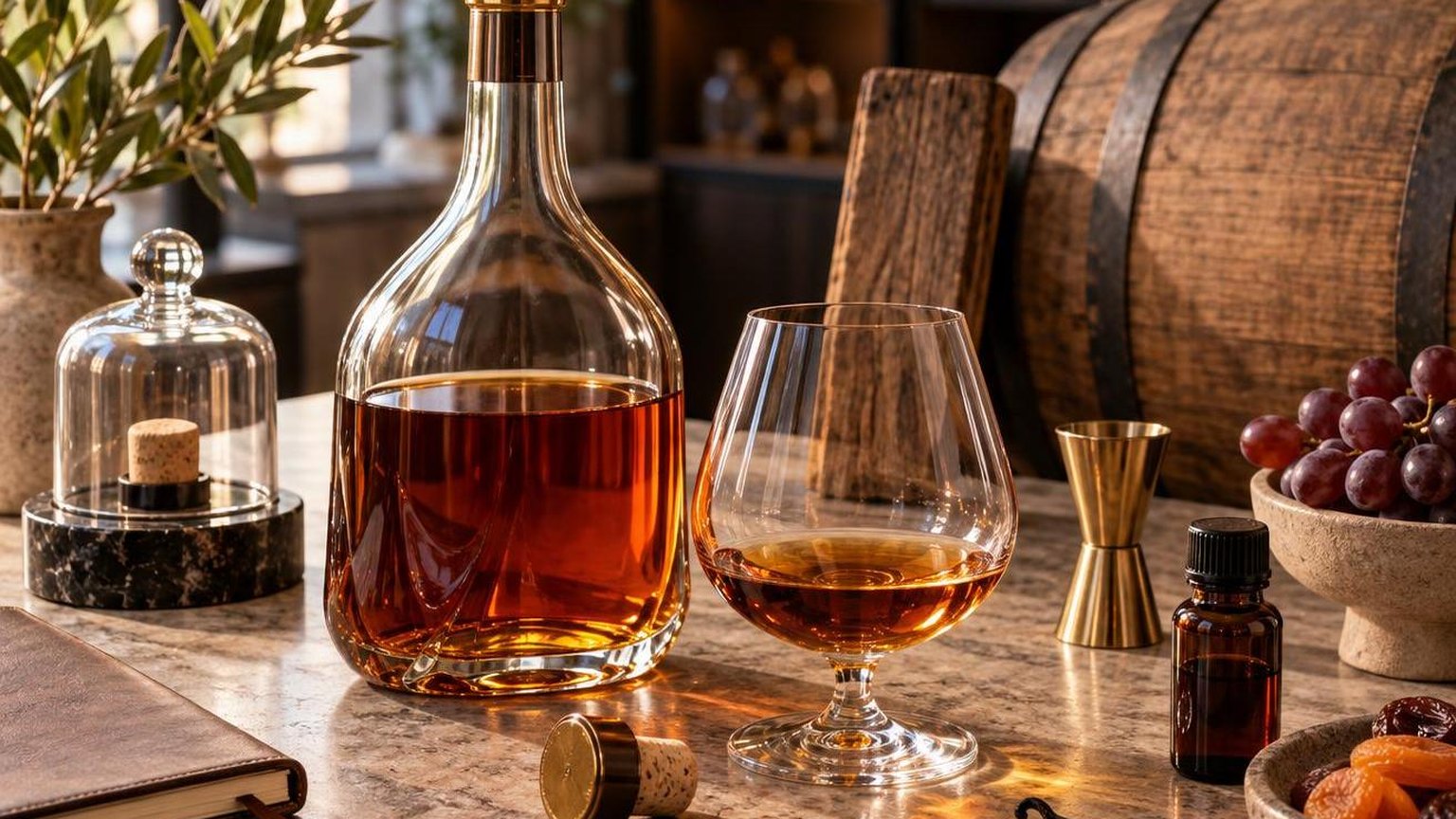
When to Replace Open Cognac
Open Cognac doesn’t spoil like wine or beer, but it degrades. Oxidation, evaporation, and light exposure gradually strip away the aromatic complexity you paid for. Knowing when to replace an open bottle saves you from serving diminished spirit.
Timeline for Open Cognac Quality
| Time After Opening | Condition | Action |
| 0–6 months | Minimal change; full aroma and flavor profile intact | Enjoy freely |
| 6–12 months | Subtle flattening of top notes; slight reduction in bouquet complexity | Prioritize finishing |
| 1–2 years | Noticeable oxidation; fruit and floral notes muted, alcohol more prominent | Use for cocktails or cooking |
| 2+ years | Significant flavor degradation; flat, dull character | Replace |
These timelines assume storage at 15–20°C (59–68°F), upright, away from direct sunlight, with the original cork or cap sealed tightly after each pour.
The Fill-Level Rule
Headspace—the air volume above the liquid—accelerates oxidation exponentially. A bottle one-quarter full oxidizes roughly four times faster than a three-quarters full bottle due to the increased surface-area-to-air ratio.
Once your bottle drops below the halfway mark, plan to consume it within three to four months. Below one-quarter full, finish it within four to six weeks for best results.
Sensory Signs It’s Time to Replace
- Flat nose: The Cognac lacks the layered aromatics (dried fruit, vanilla, oak spice) it originally displayed.
- Sharp alcohol bite: Ethanol dominates where balanced warmth once existed, indicating volatile aromatic compounds have evaporated.
- Cardboard or musty notes: A telltale sign of advanced oxidation, similar to corked wine but caused by prolonged air exposure.
- Color lightening: Noticeable fading from deep amber toward pale gold suggests extended evaporation and degradation.
Higher Classifications Degrade Faster
XO and Hors d’Âge Cognacs, aged a minimum of 10 years in oak, carry more delicate tertiary aromas—rancio, leather, dried flowers. These nuanced notes are the first casualties of oxidation.
A VS Cognac (minimum 2 years aged) with its bolder, simpler fruit-forward profile tolerates open-bottle storage noticeably better. Replace premium bottles sooner to protect the investment in complexity.
Cognac never becomes unsafe to drink. The decision to replace is purely qualitative—when the spirit no longer delivers the experience its classification promises, it has served its useful life in the glass.
Questions People Ask Most
Does unopened Cognac expire?
Unopened Cognac stored upright in a cool, dark place lasts indefinitely without spoiling. The high alcohol content (40% ABV minimum) prevents bacterial growth.
However, the flavor profile remains fixed at the moment of bottling — unlike wine, Cognac does not improve or age further in glass.
How long does Cognac last after opening?
An opened bottle of Cognac retains its intended flavor for roughly 6 to 12 months. After that, oxidation gradually dulls the aromatic complexity, especially the delicate floral and fruit notes in older expressions like XO or Hors d’Âge.
A bottle that is less than one-third full deteriorates noticeably faster due to the increased air-to-liquid ratio.
Can old Cognac make you sick?
No. Cognac’s 40%+ ABV makes it inhospitable to pathogens, so drinking a long-opened bottle poses no health risk. The worst outcome is a flat, oxidized taste with diminished nose and a slightly harsh finish — unpleasant but not dangerous.
Does the age statement (VS, VSOP, XO) affect how long an opened bottle lasts?
Indirectly, yes. Younger Cognacs like VS (minimum 2 years in oak) tend to have simpler, more robust flavor profiles that mask oxidation longer.
Older designations such as XO (minimum 10 years in oak as of 2018 regulations) carry layered, delicate aromas — rancio, dried fruit, leather — that are more vulnerable to degradation once exposed to air.
Should Cognac be refrigerated after opening?
Refrigeration is unnecessary and can actually mute the aromatic compounds that define Cognac’s character. Store opened bottles upright at 15–20 °C (59–68 °F), away from direct sunlight and heat sources.
Keeping the bottle upright prevents the spirit from degrading the cork, which can introduce off-flavors.
Does transferring Cognac to a smaller bottle extend its shelf life?
Yes, this is one of the most effective preservation methods. Decanting remaining Cognac into a smaller glass bottle minimizes the headspace — the air volume above the liquid — which is the primary driver of oxidation.
A half-empty 750 ml bottle transferred to a full 375 ml bottle can add several months of peak quality.
How can you tell if opened Cognac has gone bad?
Pour a small amount and assess the nose first: a noticeably flat, cardboard-like, or overly sharp acetone aroma signals significant oxidation. On the palate, degraded Cognac loses its mid-palate richness and finishes short and hollow.
The liquid itself may appear slightly lighter in color as certain compounds break down, though this visual change is subtle and unreliable on its own.
Related Guides
- What Is White Remy? The Most Accurate Answer
- Why Is Pure White Hennessy Illegal?
- Is Hennessy Brandy?
- What Does Hennessy Taste Like? (2026 Cognac Flavor Guide)
- How To Drink Hennessy? 12 Powerful Tips for the Ultimate Cognac Experience
- How Much Is A 5Th Of Hennessy?
- How to Spot Fake Hennessy? Information From Experts
- What Is Cognac Made From?
- Blue Raspberry Hennessy Review – Find Out Now
- All Alcohol Guides
- TTB — Alcohol and Tobacco Tax and Trade Bureau (2023)
- FDA — CPG Sec 510.400 Dealcoholized Wine and Malt Beverages (2005)
- USDA FoodData Central — Distilled Spirits (2019)
- National Center for Biotechnology Information — Oxidative Changes in Lipids, Proteins, and Antioxidants in Yogurt During the Shelf Life (PubMed) (2019)
- MasterClass — How to Store Cognac (2021)
- Bureau National Interprofessionnel du Cognac — BNIC Official (2024)
- Rémy Martin — Cognac Conservation & Storage (2023)
- University of California Davis — Viticulture & Enology: Distilled Spirits (2022)
- CDC — Alcohol and Public Health FAQs (2024)