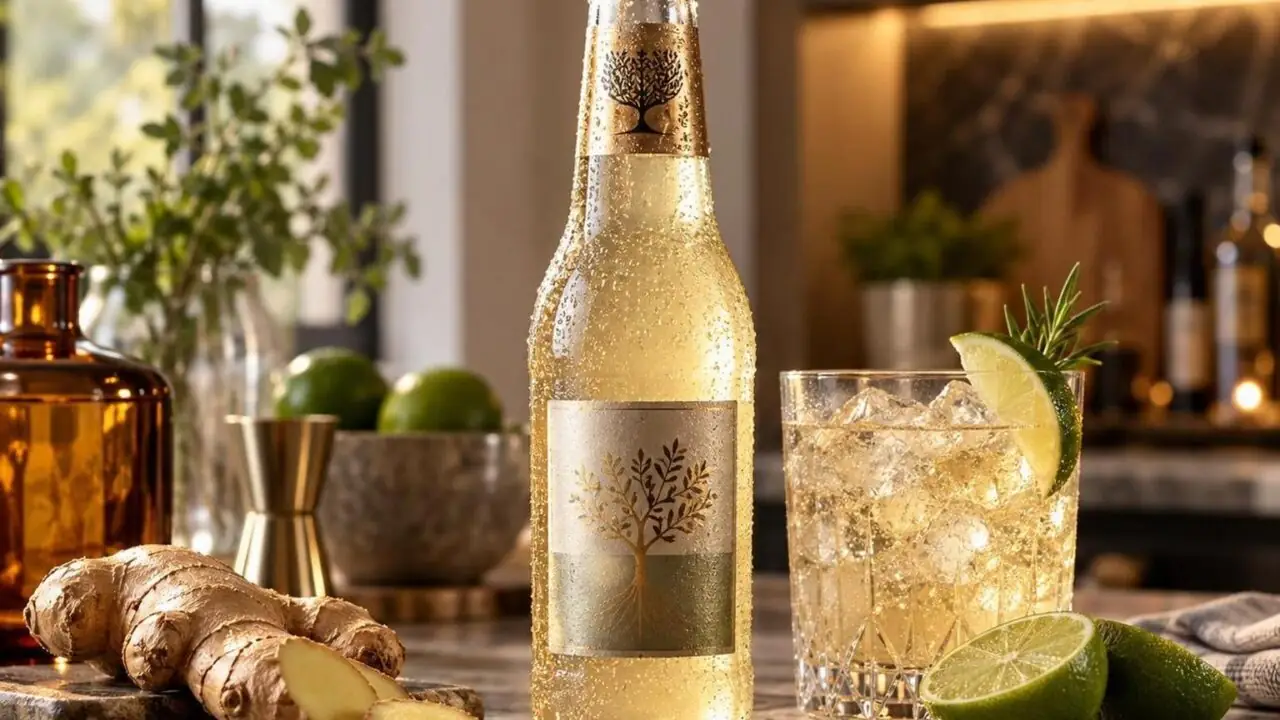
Does Fever Tree Ginger Beer Have Alcohol? is answered by its label: Fever-Tree Premium Ginger Beer is a non-alcoholic carbonated mixer, not a fermented beer.
It is made for cocktails and highballs, with ginger extracts, carbonation, sugar, citric acid, and natural flavors rather than brewed malt or yeast-driven alcohol production.
The brand positions it as a mixer for drinks like a Moscow Mule or Dark ’n Stormy, but the ginger beer itself is sold as alcohol-free in the U.S. Alcohol only enters the glass when spirits are added.
Always check the bottle or can label, since formulations and market labeling can change.
Does Fever Tree Ginger Beer Contain Alcohol
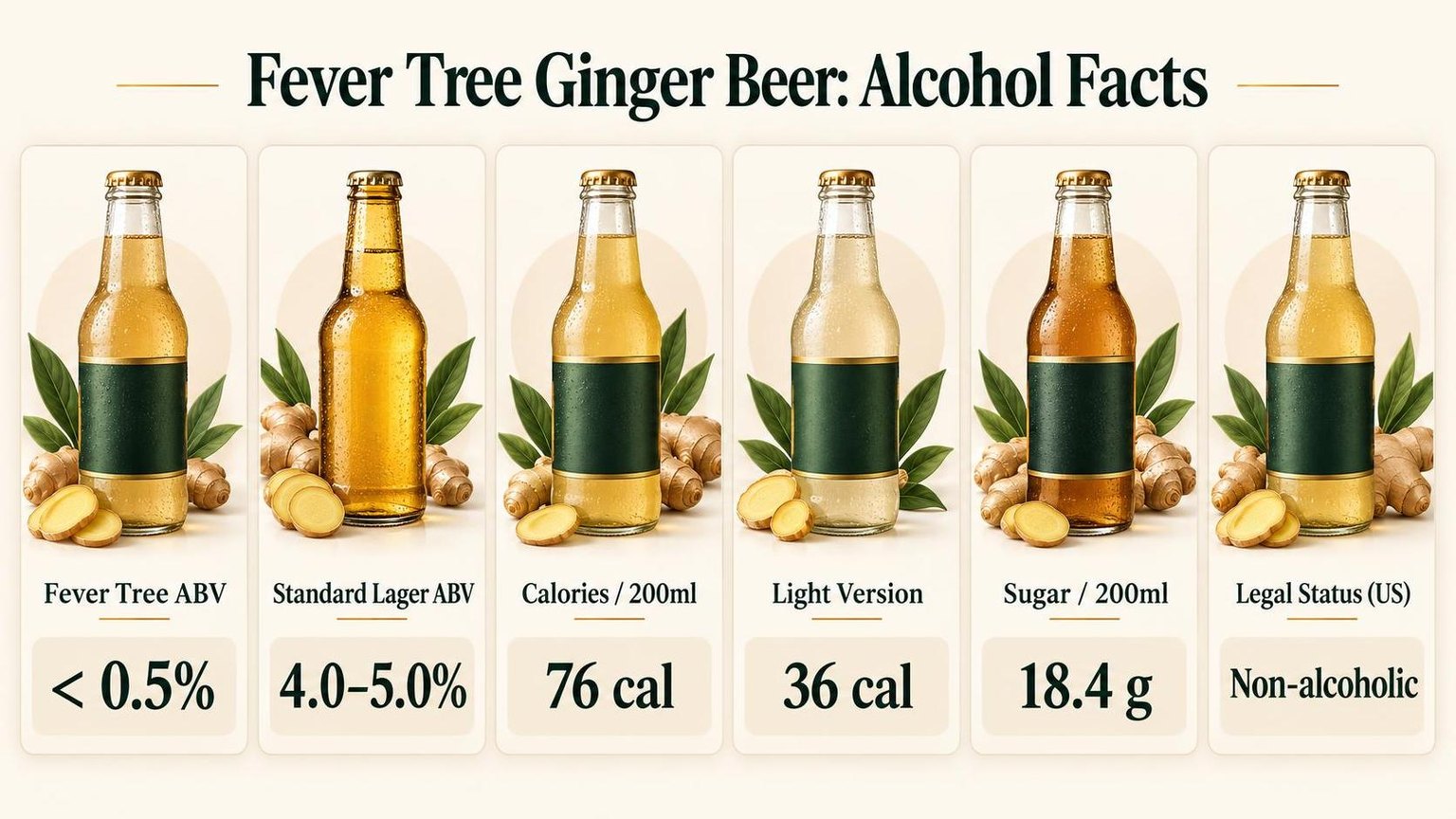
Fever-Tree Ginger Beer is classified as a non-alcoholic soft drink.
It contains less than 0.5% ABV, which is the legal threshold in the United States for a beverage to be labeled non-alcoholic under TTB (Alcohol and Tobacco Tax and Trade Bureau) regulations.
The trace alcohol present results from natural fermentation of ginger root during production. This amount is negligible — comparable to what occurs naturally in ripe bananas, bread, and fruit juices.
Fever-Tree Ginger Beer ABV vs. Common Beverages
| Beverage | Typical ABV |
| Fever-Tree Ginger Beer | < 0.5% |
| Kombucha | 0.5 – 3.0% |
| Orange juice (natural) | Up to 0.5% |
| Standard lager beer | 4.0 – 5.0% |
| Ripe banana | Up to 0.4% |
Fever-Tree uses a blend of three gingers — from Nigeria, Cochin (India), and the Ivory Coast — combined with cane sugar and spring water. The fermentation is minimal and controlled.
Key Facts About Fever-Tree Ginger Beer
- Contains less than 0.5% ABV, legally non-alcoholic in the US, EU, and UK
- Each 200 ml bottle has approximately 76 calories and 18.4 g of sugar
- No artificial sweeteners, flavors, or preservatives are used
- Sold in the soft drink aisle, not the alcohol section
- Available in original and a lighter variant with 46 calories per 200 ml bottle
Fever-Tree distinguishes its ginger beer from ginger ale. Ginger beer uses a brewing process with real ginger root, producing a spicier, more robust flavor. Ginger ale is typically carbonated water with ginger flavoring.
For individuals avoiding alcohol entirely — whether for medical, religious, or personal reasons — the sub-0.5% ABV content warrants consideration. Consult a physician if alcohol avoidance is medically necessary.
Pregnant women and those in recovery programs should discuss trace-alcohol beverages with their healthcare provider. The FDA does not require beverages below 0.5% ABV to carry alcohol warnings.
Fever-Tree Ginger Beer is widely used as a mixer for Moscow Mules and Dark ‘n’ Stormys. On its own, it functions as a standalone non-alcoholic drink with genuine ginger heat and balanced sweetness.
Fever Tree Alcohol Content By Label
Fever Tree produces multiple ginger beer variants, each with a distinct alcohol classification. Understanding the label differences matters for consumers avoiding alcohol entirely, whether for health, religious, or personal reasons.
Standard Ginger Beer
Fever Tree Ginger Beer is classified as a non-alcoholic soft drink. It contains less than 0.5% ABV, the threshold set by the U.S. TTB (Alcohol and Tobacco Tax and Trade Bureau) for non-alcoholic labeling.
The trace alcohol results from natural fermentation of ginger root during production. This amount is comparable to what occurs naturally in ripe bananas, kombucha, and fruit juices.
Full Product Line Comparison
| Product | ABV | Classification | Calories (per 200ml) |
| Fever Tree Ginger Beer | <0.5% | Non-alcoholic | 76 |
| Fever Tree Light Ginger Beer | <0.5% | Non-alcoholic | 36 |
| Fever Tree Smoky Ginger Beer | <0.5% | Non-alcoholic | 76 |
| Fever Tree Ginger Ale | <0.5% | Non-alcoholic | 68 |
| Fever Tree Refreshingly Light Ginger Ale | <0.5% | Non-alcoholic | 32 |
Label Details Worth Noting
- No ABV printed on label: Because the alcohol content falls below 0.5%, Fever Tree is not required by U.S. federal law to display an ABV percentage on the bottle.
- Ingredient transparency: The label lists natural ginger root extract, cane sugar (or sweetener in Light versions), citric acid, and natural flavors — no added ethanol.
- UK vs. US labeling: In the UK, beverages under 0.5% ABV are labeled “alcohol-free.” In the U.S., the same product is labeled “non-alcoholic,” which can cause confusion despite identical formulations.
The Light variant uses a blend of cane sugar and fruit sugars to cut calories by roughly 53% while maintaining the same sub-0.5% ABV threshold as the standard version.
For strict alcohol avoidance — such as during pregnancy or in recovery programs — consult a physician. The trace amount in Fever Tree is pharmacologically negligible but technically present.
Why Ginger Beer Sounds Alcoholic
The word “beer” triggers an automatic assumption of alcohol. This confusion has legitimate historical roots—original ginger beer was indeed an alcoholic drink, fermented to around 11% ABV in 18th-century England.
The Historical Origin
Ginger beer originated in Yorkshire, England, around the 1740s. Brewers fermented ginger, sugar, water, and a bacterial-yeast symbiotic culture called a “ginger beer plant” (Brevibacillus amyloliquefaciens and Saccharomyces florentinus).
This fermentation produced a genuinely alcoholic beverage. Early recipes yielded ABV levels comparable to strong ales, making the “beer” label entirely accurate at the time.
How Alcohol Content Changed Over Time
| Era | Typical ABV | Production Method |
| 1740s–1850s | Up to 11% | Full fermentation with ginger beer plant |
| 1855–1919 | 2–5% | Regulated brewing, shorter fermentation |
| Post-1920 (Prohibition era) | Under 0.5% | Carbonation replaced fermentation |
| Modern commercial (e.g., Fever-Tree) | 0.0% | No fermentation; forced carbonation and flavoring |
U.S. Prohibition (1920–1933) accelerated the shift. Manufacturers replaced fermentation with artificial carbonation, stripping alcohol entirely while keeping the “beer” name for brand recognition.
Why the Name Stuck
- Consumer familiarity: By the early 1900s, “ginger beer” was an established category with nearly 200 years of market presence.
- Flavor distinction: “Ginger beer” signals a spicier, more robust product than “ginger ale,” which emerged later in the 1850s as a milder, sweeter alternative.
- Regulatory loopholes: The U.S. TTB (Alcohol and Tobacco Tax and Trade Bureau) does not regulate beverages under 0.5% ABV as alcoholic, so the word “beer” carries no legal restriction.
The distinction matters commercially. Ginger beer outsells ginger ale in the U.S. premium mixer market, partly because the name implies a bolder drinking experience.
Fever-Tree capitalizes on this perception. The brand uses “beer” to signal intensity and craft credentials while producing a product with zero alcohol content.
Fermentation Versus Fever Tree Production
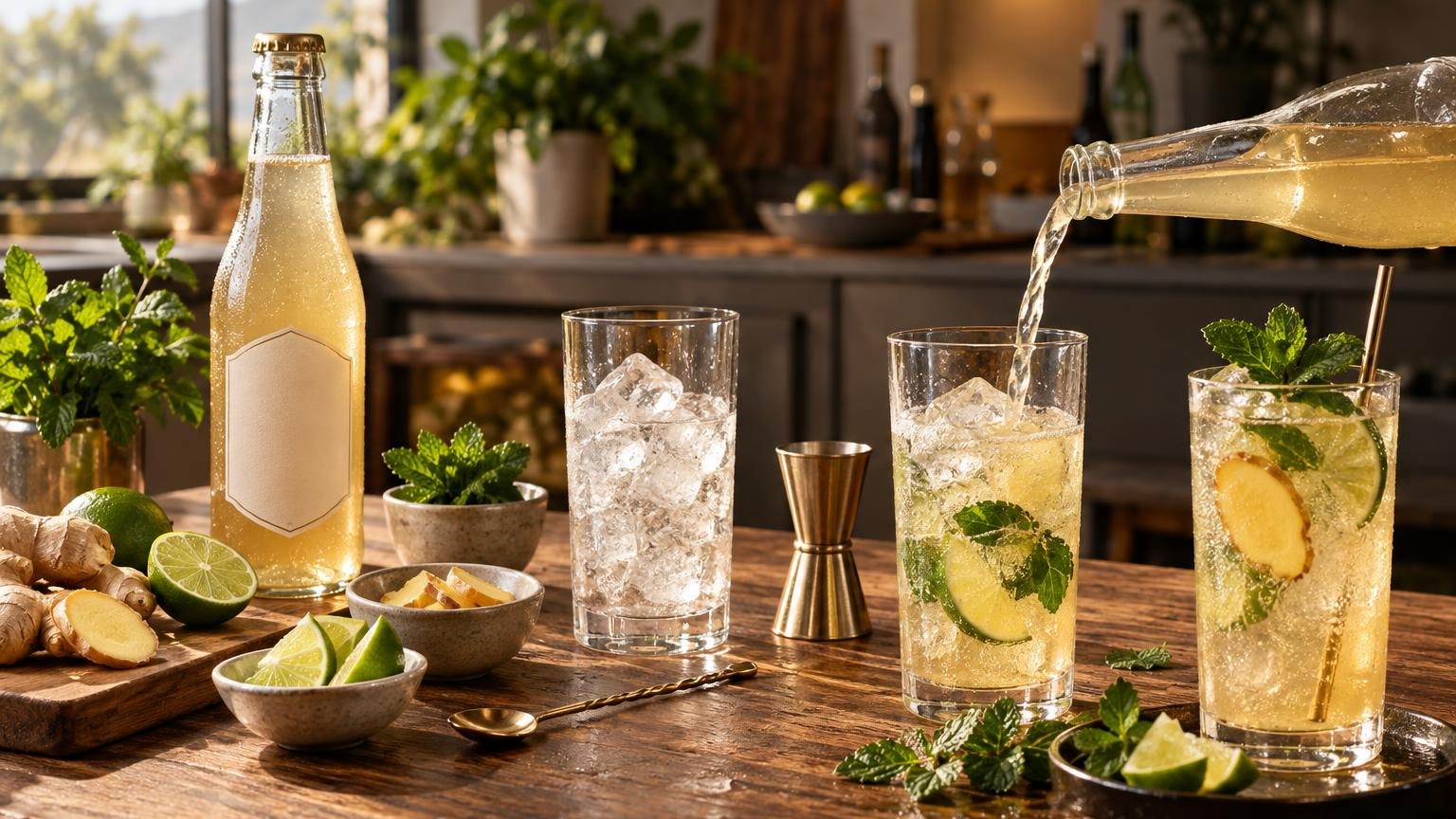
Traditional ginger beer originates from a fermentation process that naturally produces alcohol. Fever Tree takes a fundamentally different manufacturing approach, bypassing fermentation to deliver bold ginger flavor without ethanol production.
How Traditional Ginger Beer Fermentation Works
Historic ginger beer relied on a symbiotic culture called a “ginger beer plant” — a combination of Lactobacillus bacteria and Saccharomyces florentinus yeast.
This culture fermented sugar and ginger root over 2–3 days, yielding alcohol levels between 0.5% and 11% ABV depending on fermentation duration.
Modern craft producers still use yeast-driven fermentation but typically cap alcohol content at around 4–8% ABV for alcoholic versions sold as beer or hard ginger beer.
Fever Tree’s Non-Fermented Process
Fever Tree produces its ginger beer by blending carbonated water with a proprietary mix of three gingers — from Nigeria, Cochin (India), and the Ivory Coast. No yeast is introduced, so no fermentation occurs.
The ginger undergoes extraction rather than fermentation. Natural cane sugar provides sweetness without serving as a fermentation substrate. Citric acid and natural flavors round out the ingredient list.
Key Differences at a Glance
| Factor | Traditional Fermented Ginger Beer | Fever Tree Ginger Beer |
| Yeast used | Yes (Saccharomyces strains) | No |
| Fermentation time | 2–14 days | None |
| Alcohol content | 0.5%–11% ABV | 0.0% ABV |
| Carbonation source | Natural CO₂ from fermentation | Force-carbonated water |
| Sugar role | Fuel for yeast metabolism | Sweetener only |
| Ginger sourcing | Varies by producer | Three specific origins blended |
Why This Distinction Matters
Because Fever Tree skips fermentation entirely, its ginger beer contains zero residual alcohol. This makes it safe for pregnant women, individuals avoiding alcohol for religious or medical reasons, and designated drivers.
Fermented ginger beers — even those labeled “non-alcoholic” — can contain trace ethanol up to 0.5% ABV under U.S. TTB regulations. Fever Tree’s production method eliminates that variable completely.
Can Kids Drink Fever Tree Ginger Beer
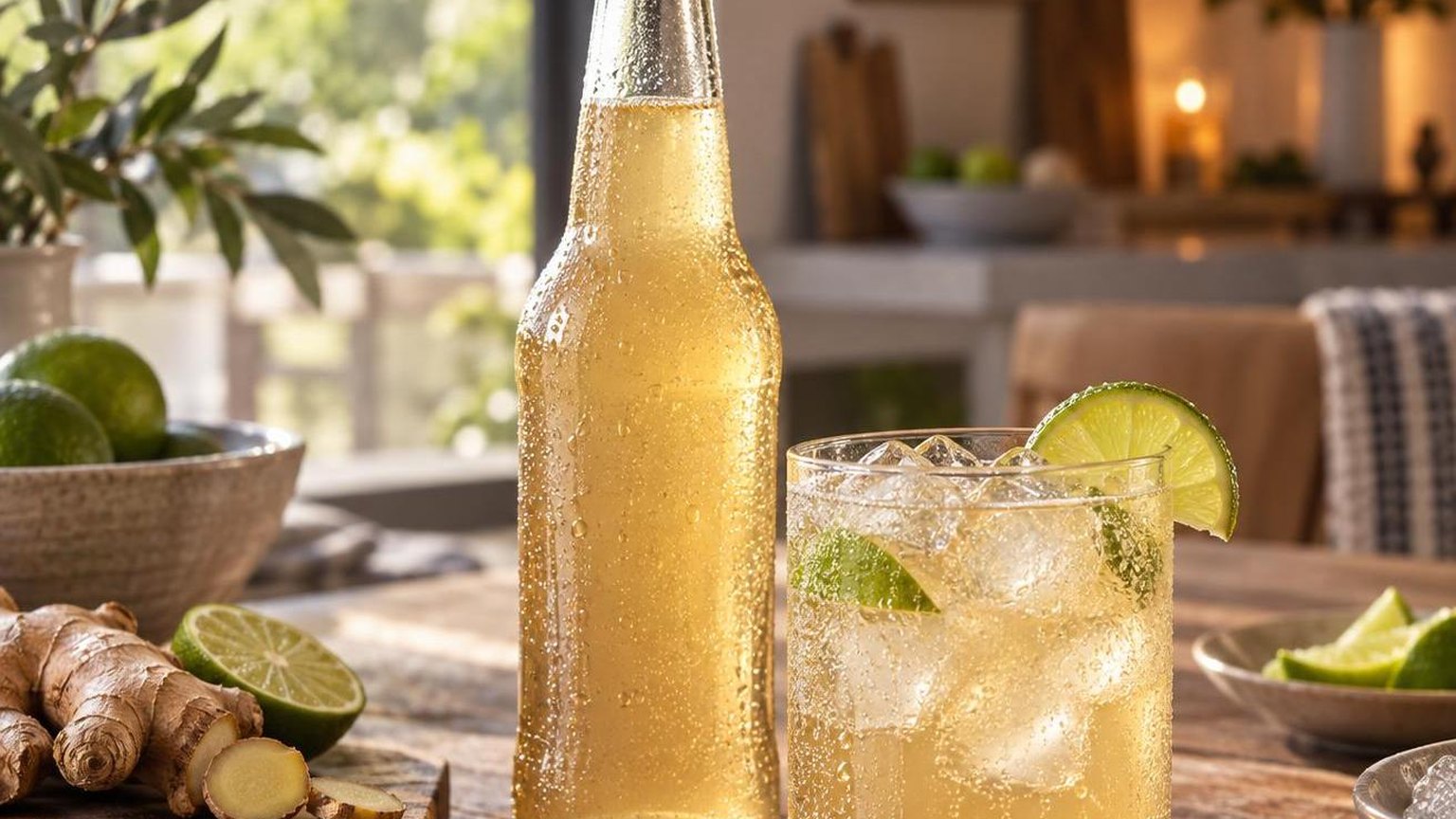
Fever Tree Ginger Beer contains 0.0% ABV, making it technically safe for children from an alcohol standpoint. However, its sugar content and strong ginger flavor warrant closer consideration before handing a bottle to a young child.
Each 200 ml bottle of Fever Tree Ginger Beer contains approximately 9.2 g of sugar. Scaled to a full 12 oz (355 ml) serving, that reaches roughly 16.3 g of sugar.
Sugar Comparison: Fever Tree vs. Common Kids’ Drinks
| Beverage (12 oz / 355 ml) | Sugar (g) |
| Fever Tree Ginger Beer | ~16.3 |
| Apple Juice (Mott’s) | ~36 |
| Coca-Cola | ~39 |
| Capri Sun Original | ~13 |
| Water | 0 |
Fever Tree’s sugar load falls well below standard sodas and fruit juices. It still exceeds the American Heart Association’s recommended daily limit of 25 g of added sugar for children ages 2–18.
Factors Parents Should Consider
- Ginger intensity: Fever Tree uses a blend of three gingers, including Nigerian and Cochin ginger. The spicy, peppery profile can cause mild stomach discomfort in younger children unaccustomed to strong flavors.
- Carbonation: Highly carbonated drinks may cause bloating and gas in small children, particularly those under age 5.
- Caffeine: Fever Tree Ginger Beer is caffeine-free, eliminating one common concern parents have with soft drinks.
- Natural ingredients: The product uses cane sugar and natural ginger flavoring with no artificial sweeteners, colors, or preservatives.
The American Academy of Pediatrics recommends limiting sugary beverages for children and prioritizing water and plain milk as primary drinks.
For children over age 6, an occasional small serving of Fever Tree Ginger Beer poses no health risk. Diluting it with sparkling water reduces both sugar intake and ginger intensity.
Children under 2 should avoid all added-sugar beverages entirely, per 2025 USDA Dietary Guidelines. For toddlers ages 2–5, water and milk remain the only recommended drinks.
Pregnancy And Fever Tree Ginger Beer
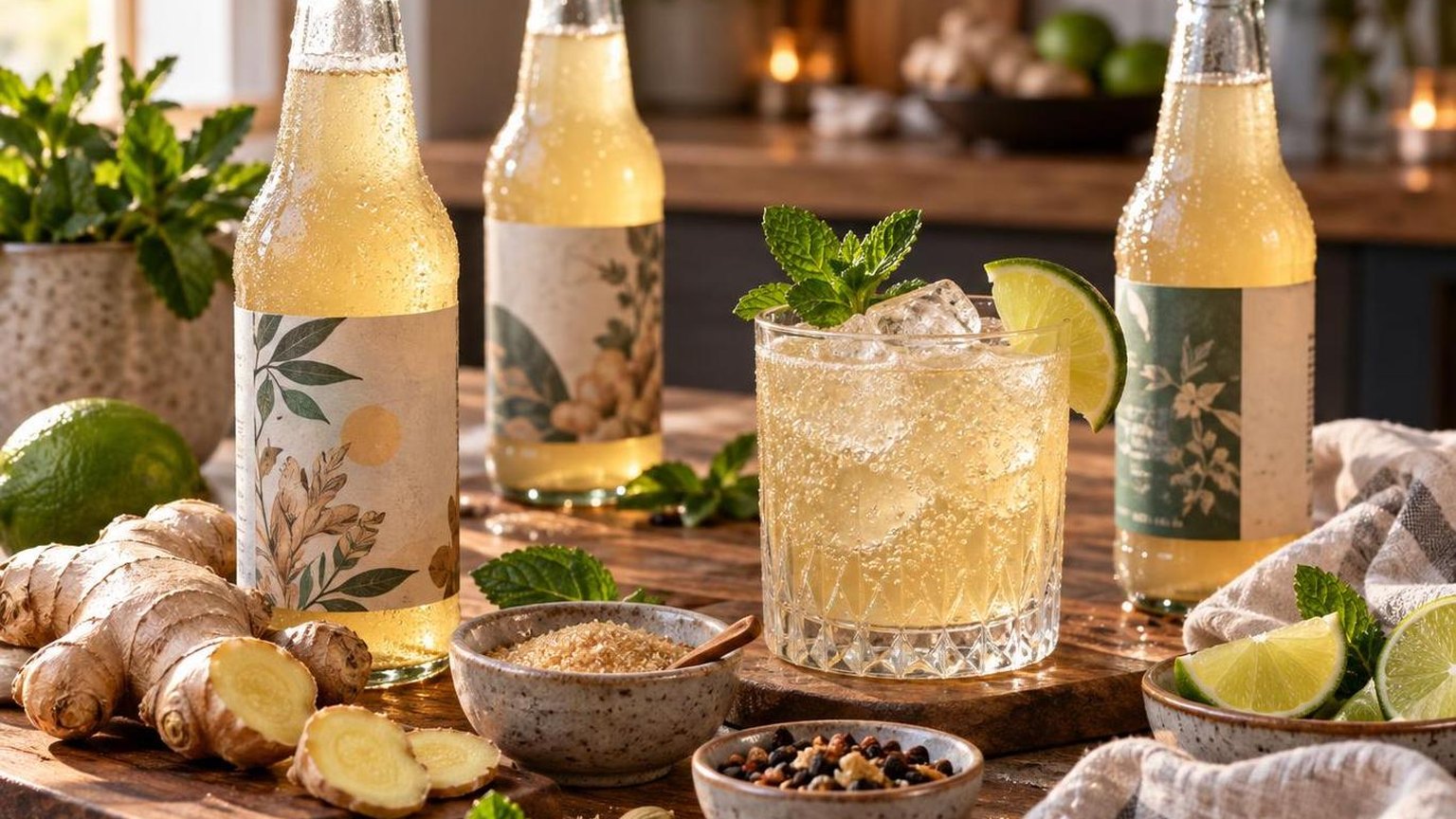
Fever Tree Ginger Beer contains less than 0.5% ABV, classifying it as a non-alcoholic beverage under FDA and TTB regulations. Pregnant women frequently seek clarification on whether this trace amount poses any risk to fetal development.
The American College of Obstetricians and Gynecologists (ACOG) maintains that no amount of alcohol is considered safe during pregnancy.
However, this guidance targets intentional alcohol consumption, not trace amounts found naturally in everyday foods.
Trace Alcohol In Common Foods And Beverages
Many foods consumed routinely during pregnancy contain comparable or higher trace alcohol levels than Fever Tree Ginger Beer.
| Item | Approximate ABV / Alcohol Content |
| Fever Tree Ginger Beer | <0.5% ABV |
| Ripe banana | Up to 0.4% ABV |
| White bread | Up to 1.28% ABV |
| Apple juice (shelf-stored) | Up to 0.66% ABV |
| Kombucha | 0.5–3.0% ABV |
| Vanilla extract (per teaspoon) | ~35% ABV (minimal volume used) |
The trace ethanol in Fever Tree Ginger Beer falls within the same range as ripe fruit and baked goods that no medical authority advises avoiding during pregnancy.
Ginger’s Role During Pregnancy
Ginger itself has documented antiemetic properties. A 2014 meta-analysis in Nutrition Journal reviewing 1,278 pregnant women found that 1–1.5 grams of ginger daily significantly reduced nausea and vomiting compared to placebo.
Fever Tree Ginger Beer uses natural ginger root extract. A single 200 ml bottle contains a modest amount of ginger — far below the 1,500 mg therapeutic threshold studied in clinical trials.
Practical Considerations
- Fever Tree Ginger Beer has 9.2 grams of sugar per 100 ml, contributing approximately 74 calories per bottle — worth monitoring if managing gestational diabetes.
- The carbonation may worsen acid reflux, which affects roughly 40–85% of pregnant women.
- Consult your OB-GYN or midwife before using ginger beer as a nausea remedy, especially if taking anticoagulant medications.
For most pregnancies, the trace alcohol in Fever Tree Ginger Beer is toxicologically insignificant. The sugar content and carbonation deserve more practical attention than the sub-0.5% ABV classification.
Mixing Fever Tree Ginger Beer With Alcohol
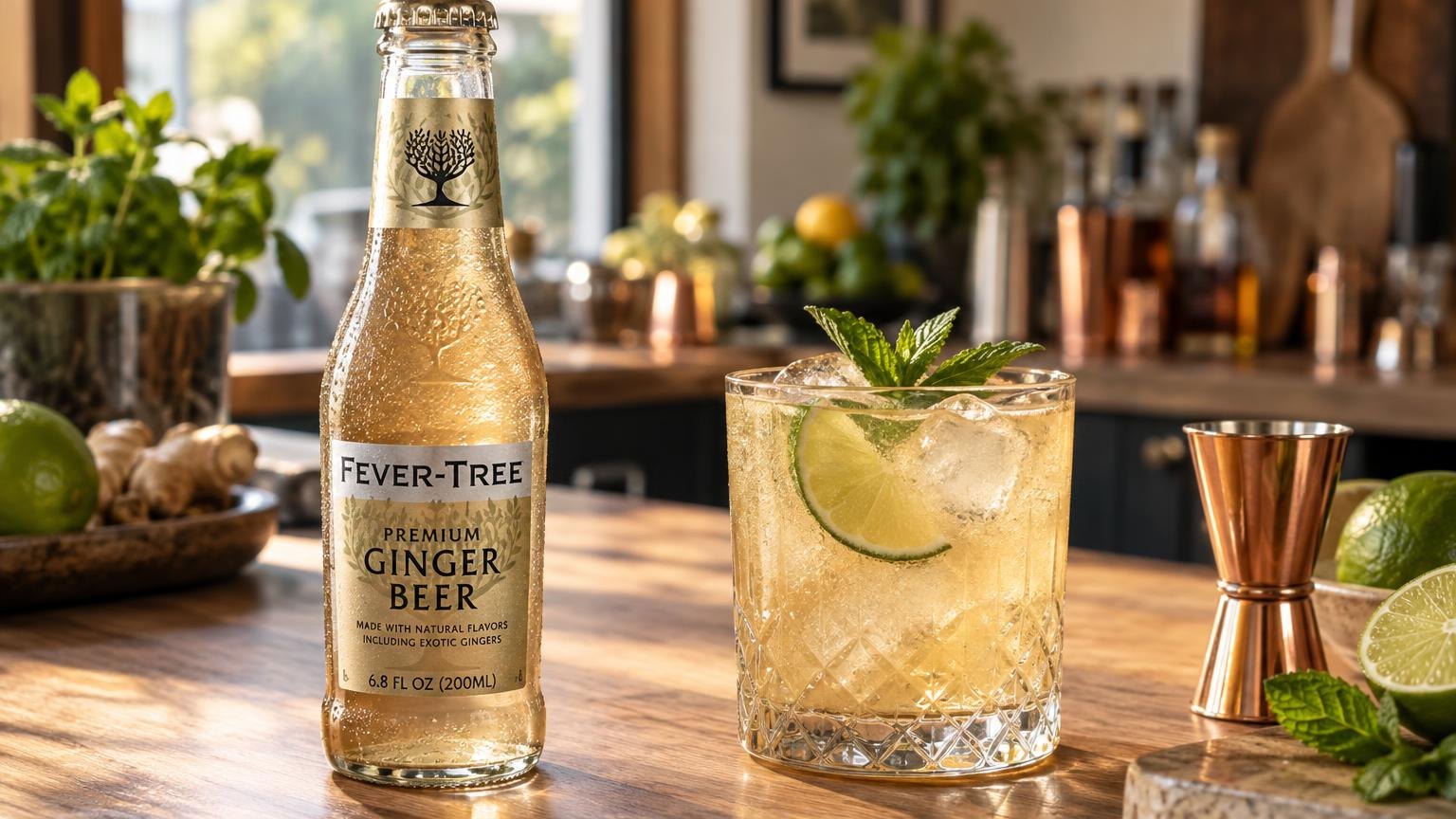
Fever Tree Ginger Beer contains no alcohol, making it a versatile mixer that lets you control the ABV of any cocktail precisely. Its 9.2g of sugar per 200ml bottle adds body and balances high-proof spirits without additional sweetening agents.
Classic Cocktails Using Fever Tree Ginger Beer
The Moscow Mule remains the most popular ginger beer cocktail worldwide. Fever Tree’s higher carbonation and natural ginger root extract elevate these standard recipes beyond what conventional mixers achieve.
| Cocktail | Spirit | Spirit Amount | Ginger Beer Amount | Approx. ABV |
| Moscow Mule | Vodka (40% ABV) | 60ml | 200ml | ~8–9% |
| Dark ‘n’ Stormy | Goslings Black Seal Rum (40% ABV) | 60ml | 200ml | ~8–9% |
| Kentucky Mule | Bourbon (40% ABV) | 60ml | 200ml | ~8–9% |
| Mexican Mule | Tequila (40% ABV) | 45ml | 200ml | ~7% |
| Gin-Gin Mule | Gin (40% ABV) | 45ml | 150ml | ~8% |
Ratio Guidelines for Balanced Drinks
Fever Tree recommends a 1:3 spirit-to-mixer ratio for most long drinks. This produces a cocktail between 7–9% ABV — roughly equivalent to a strong beer or light wine.
- Light serve: 30ml spirit to 200ml Fever Tree Ginger Beer (~5% ABV)
- Standard serve: 45–60ml spirit to 200ml Fever Tree Ginger Beer (~7–9% ABV)
- Strong serve: 60ml spirit to 150ml Fever Tree Ginger Beer (~10–11% ABV)
Why Fever Tree Works Better Than Competitors
Fever Tree uses a blend of three gingers — Nigerian, Cochin, and Ivory Coast — creating a layered spice profile. This botanical complexity stands up to barrel-aged spirits without being overpowered.
The 6.8g/L carbonation level holds fizz longer than mass-market brands. A Moscow Mule made with Fever Tree retains effervescence for 10–15 minutes in a copper mug, versus 5–7 minutes with lower-carbonation alternatives.
Each 200ml bottle contains 38 calories, significantly less than Bundaberg’s 98 calories per similar serving. This lower sugar load prevents cocktails from becoming cloyingly sweet when paired with flavored vodkas or spiced rums.
Frequently Asked Questions
Does Fever-Tree Ginger Beer contain any alcohol?
Fever-Tree Ginger Beer is a non-alcoholic soft drink with an ABV of 0.0%.
It is brewed using a blend of three gingers—fresh green ginger from the Ivory Coast, Nigerian ginger, and Cochin ginger from India—but undergoes no fermentation that would produce alcohol.
This makes it safe for those avoiding alcohol entirely.
Is Fever-Tree Ginger Beer the same as alcoholic ginger beer?
No. Traditional alcoholic ginger beers are fermented and typically contain 4–8% ABV, whereas Fever-Tree Ginger Beer is a carbonated soft mixer with 0% ABV.
Fever-Tree positions its product specifically as a premium mixer for cocktails like the Moscow Mule and Dark ‘n’ Stormy, not as a standalone alcoholic beverage.
How much sugar and how many calories are in Fever-Tree Ginger Beer?
A 200 ml bottle of Fever-Tree Ginger Beer contains approximately 9.2 g of sugar and 38 calories.
Fever-Tree also offers a “Refreshingly Light” version that cuts sugar content by roughly 46%, bringing it down to about 4.9 g of sugar per 200 ml. Both versions use cane sugar rather than high-fructose corn syrup.
Can children and pregnant women safely drink Fever-Tree Ginger Beer?
Because Fever-Tree Ginger Beer has 0.0% ABV and contains no alcohol, it is generally considered safe for children and pregnant women from an alcohol standpoint.
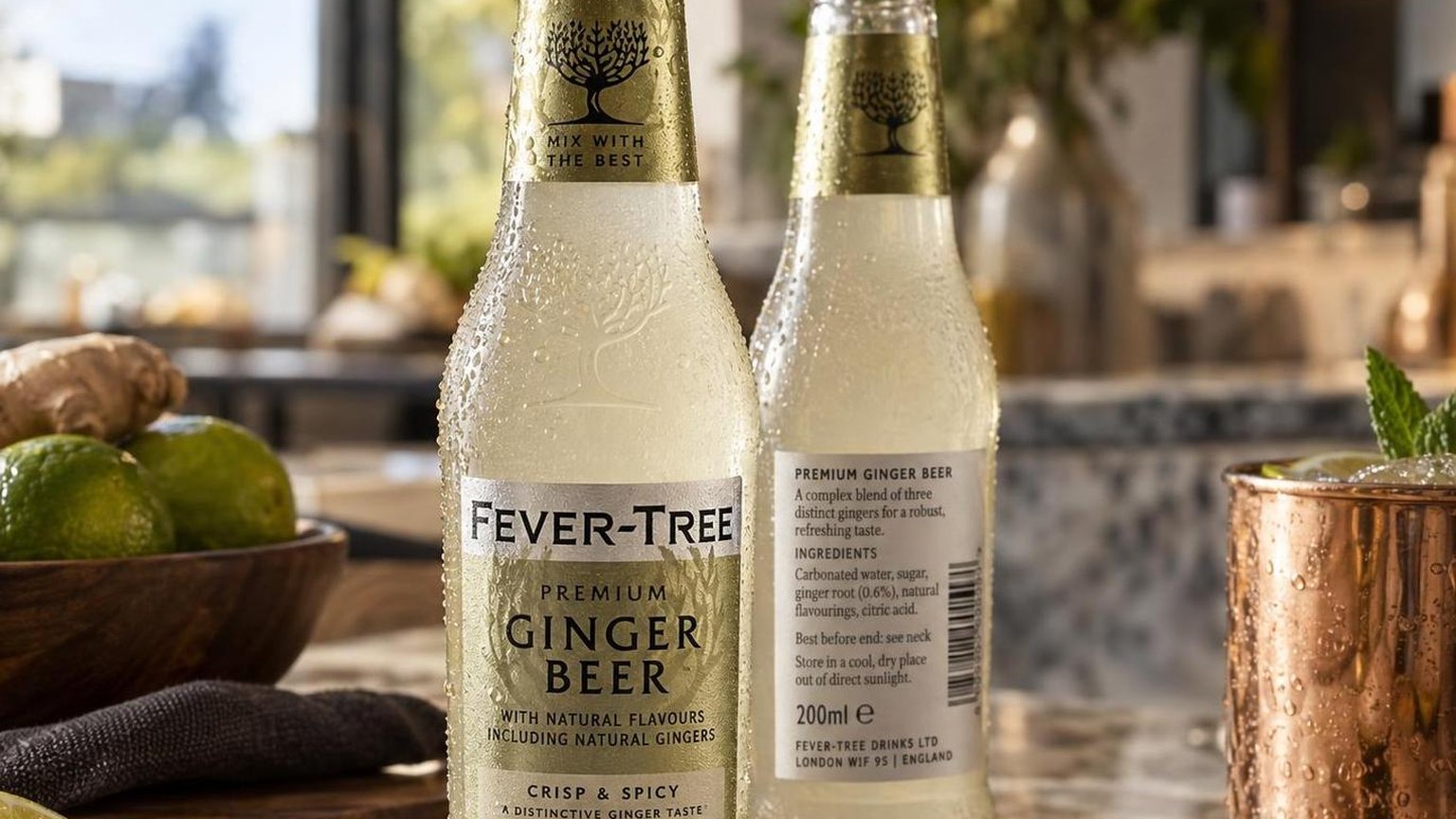
Its ingredient list—carbonated water, cane sugar, ginger root extract, natural flavoring, and citric acid—contains no restricted substances.
Individuals with specific dietary concerns should consult a healthcare provider regarding sugar intake.
What is the difference between Fever-Tree Ginger Beer and Fever-Tree Ginger Ale?
Fever-Tree Ginger Beer has a noticeably stronger, spicier ginger flavor and a cloudy appearance due to higher concentrations of natural ginger root extract, while Fever-Tree Ginger Ale is milder, lighter, and clear.
Both are non-alcoholic at 0.0% ABV, but ginger beer pairs better with dark spirits like rum and bourbon, whereas ginger ale is typically matched with whisky or vodka for a subtler profile.
Keep Exploring
- How Much Beer Is In A Half Barrel?
- Guinness Stout Vs Extra Stout — The Ultimate Comparison Guide (2026 Edition)
- How Much Alcohol Is In Coors Light? – Get Answer Now
- Is Mug Root Beer Caffeine Free? What You Need to Know
- Is Ginger Beer Alcoholic? The Most Accurate Answer
- How Many Beers Is A Bottle Of Wine? The Honest, Real-World Answer You’ve Been Looking For
- How To Chug Beer? A Real-World, No-Nonsense Guide for Beginners and Party Veterans
- All Alcohol Guides
- Fever-Tree Official Product Page (2024)
- U.S. FDA – CFR Title 27: Labeling of Non-Alcoholic Beverages (2024)
- TTB (Alcohol and Tobacco Tax and Trade Bureau) – Non-Alcoholic Beverage Labeling (2024)
- USDA FoodData Central – Ginger Beer Nutrient Profile (2024)
- NIH National Library of Medicine / PubMed – Fermentation and Trace Alcohol in Non-Alcoholic Beverages (2020)
- CDC – Alcohol and Public Health: Frequently Asked Questions (2024)
- Cornell University – Fermentation Science: Ginger Beer Brewing Chemistry (2023)
- Healthline – Ginger Beer vs. Ginger Ale: Differences and Health Facts (2023)