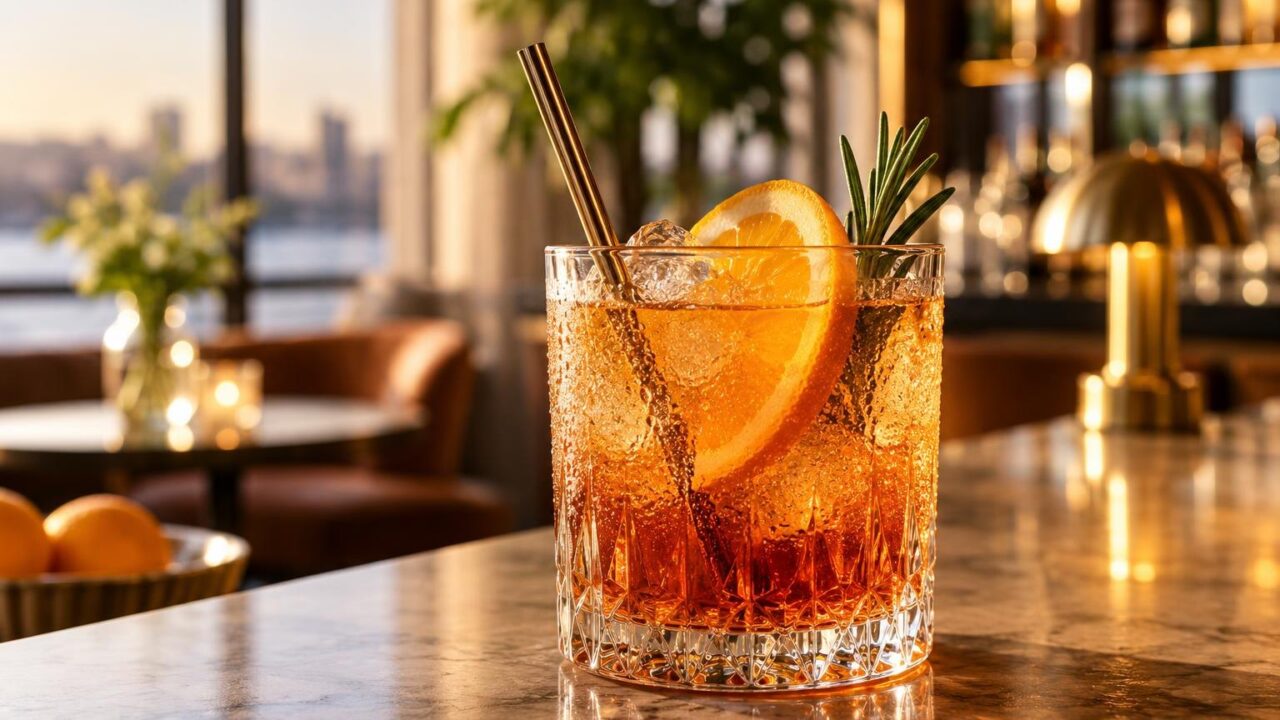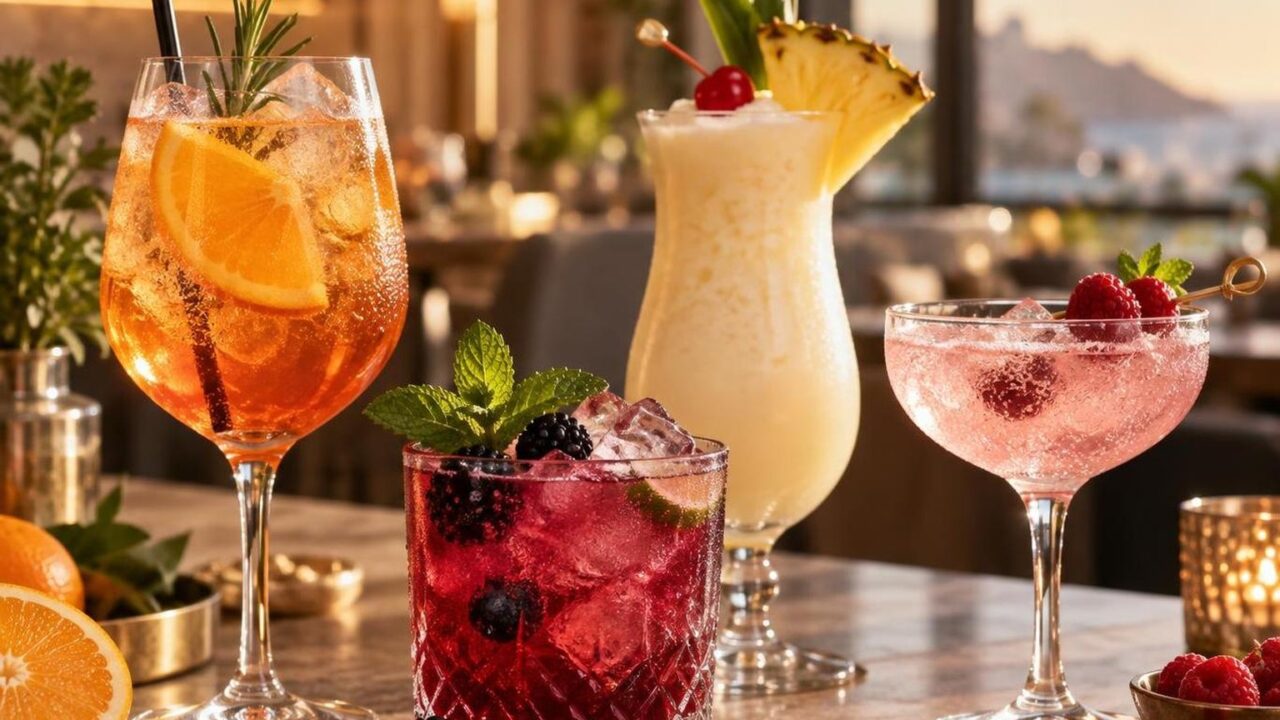
cocktails that don t taste like alcohol are mixed drinks that hide ethanol heat with citrus, sugar, dilution, bubbles, herbs, fruit, or dairy, making them taste smooth, bright, creamy, or refreshing instead of boozy.
The best examples balance strong spirits with sour, sweet, bitter, and aromatic ingredients, so the alcohol supports texture and finish rather than dominating the sip.
This guide covers approachable options for drinkers who dislike harsh burn: juicy highballs, creamy dessert drinks, frozen cocktails, spritz-style pours, and classic recipes known for soft edges and low perceived alcohol.
Best Liquors for Smooth Cocktails
Spirit selection determines whether a cocktail tastes boozy or smooth. Lower-proof bases, naturally sweet liqueurs, and well-filtered vodkas all minimize alcohol burn. Choosing the right bottle matters more than any mixing trick.
ABV Comparison by Spirit Category
Alcohol by volume directly affects how much burn you taste. Lower-ABV spirits blend more seamlessly into fruit-forward and creamy cocktails.
| Spirit | Typical ABV | Perceived Burn | Best Cocktail Use |
| Vodka (standard) | 40% | Low–moderate | Moscow Mule, Cosmopolitan |
| White rum | 37.5–40% | Low | Daiquiri, Piña Colada |
| Coconut rum (Malibu) | 21% | Very low | Malibu Sunset, Bay Breeze |
| Amaretto (Disaronno) | 28% | Very low | Amaretto Sour, Godfather |
| Peach schnapps | 15–20% | Minimal | Sex on the Beach, Fuzzy Navel |
| Baileys Irish Cream | 17% | Minimal | Mudslide, Espresso Martini variant |
| Kahlúa | 20% | Very low | White Russian, Espresso Martini |
| Chambord | 16.5% | Minimal | French Martini, Kir Royale |
Why Vodka Dominates “No Alcohol Taste” Cocktails
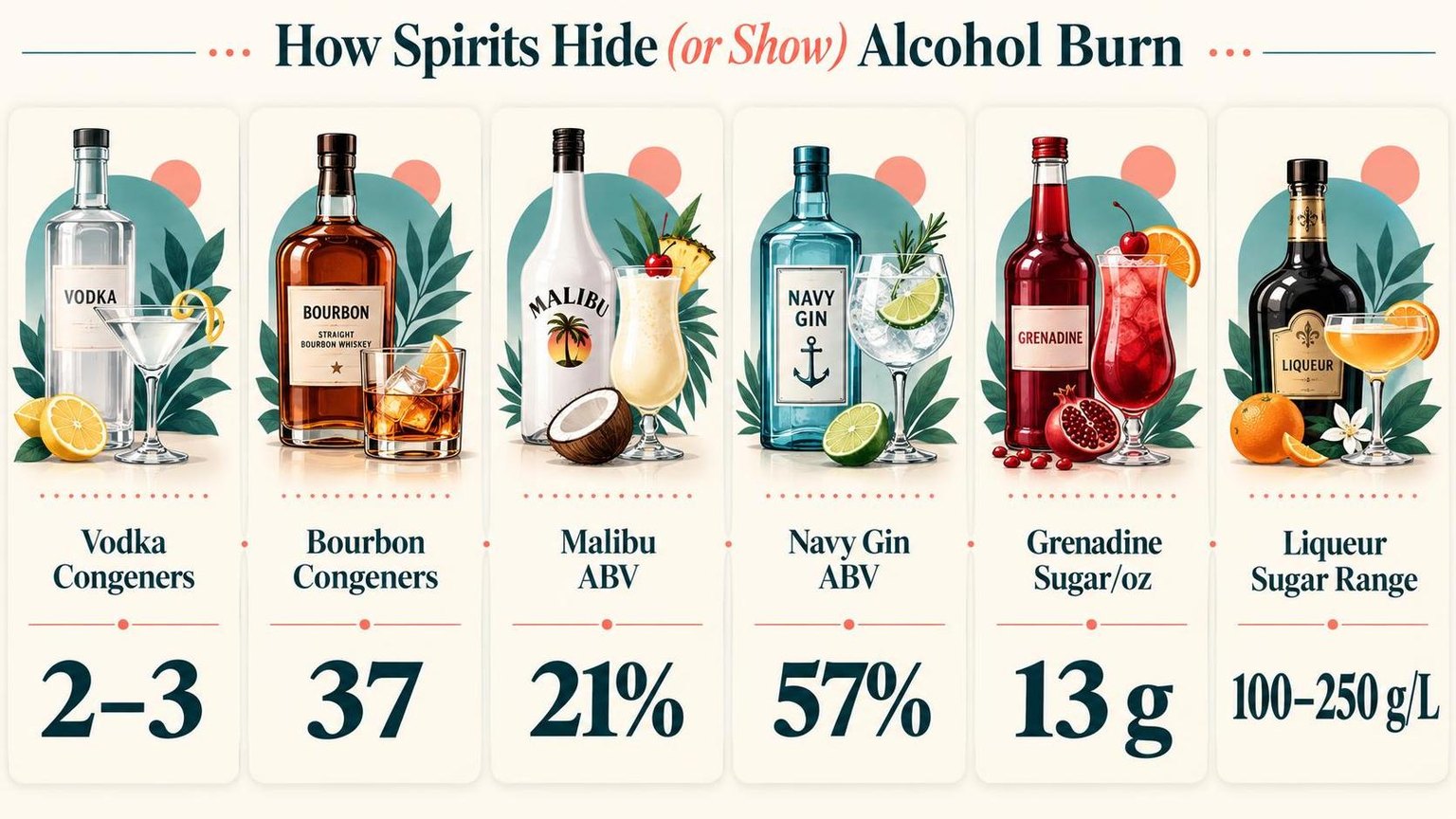
Vodka is distilled and filtered specifically to remove congeners—flavor compounds that create harshness. Brands like Belvedere (distilled 4 times) and Grey Goose (distilled once from French wheat) prioritize neutral smoothness.
A 2019 Journal of Food Science study confirmed that charcoal-filtered vodkas contain fewer aldehydes, directly reducing perceived burn on the palate.
Liqueurs: The Secret Weapon
Liqueurs sit between 15% and 30% ABV and carry significant residual sugar—often 100–250 g/L. That sweetness masks ethanol’s bite more effectively than any mixer alone.
- Disaronno Amaretto (28% ABV): Almond and apricot kernel flavor with 260 g/L sugar content
- Malibu Coconut Rum (21% ABV): Nearly half the strength of standard spirits, with coconut sweetness
- Midori (20% ABV): Melon liqueur containing roughly 200 g/L sugar, ideal for Japanese Slipper cocktails
- St-Germain Elderflower (20% ABV): Floral complexity that distracts the palate from any alcohol presence
Spirits to Avoid
Barrel-aged spirits contain higher congener levels. Bourbon averages 37 congener compounds versus vodka’s 2–3. Cask-strength whiskeys (50–65% ABV) and navy-strength gin (57% ABV) will overpower most mixers.
Overproof rums like Wray & Nephew (63% ABV) deliver intense ethanol heat that even heavy citrus and sugar cannot fully disguise.
Sweet Ingredients That Mask Alcohol
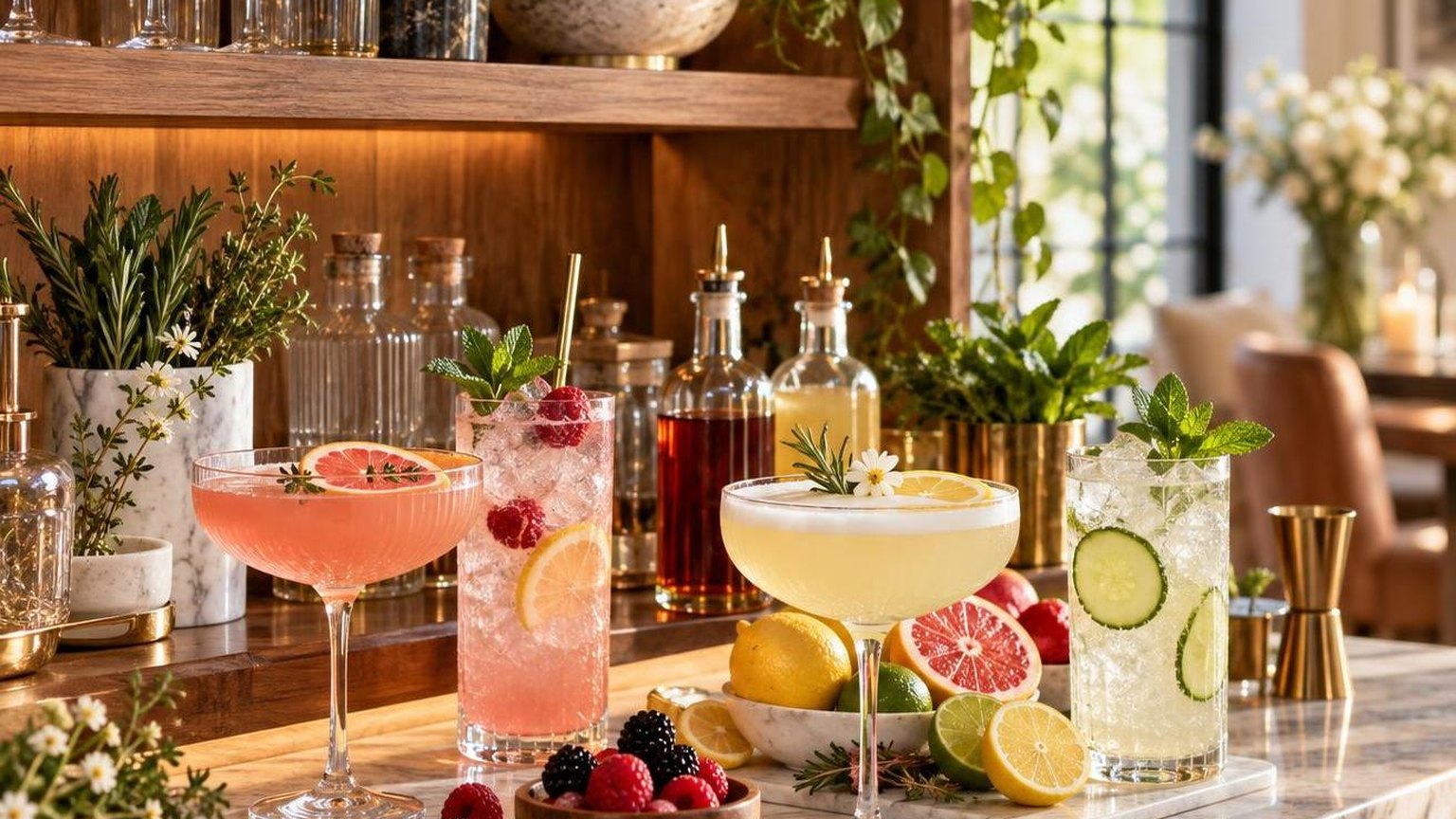
Sweetness suppresses the perception of bitterness and burn on the palate, which is why sugar-rich mixers are the most effective tool for disguising ethanol.
Research published in Chemical Senses confirms that sucrose concentrations above 5% significantly reduce perceived alcohol intensity.
Key Sweet Masking Agents
Not all sweeteners perform equally. Their sugar content, acidity, and flavor complexity determine how well they conceal a 1.5 oz (44 ml) pour of 40% ABV spirit.
| Ingredient | Sugar per oz (g) | Masking Effectiveness | Common Pairing |
| Grenadine | 13 g | Very High | Vodka, rum |
| Coconut cream | 5 g | High | Rum, tequila |
| Simple syrup (1:1) | 12 g | High | Any spirit |
| Orange juice | 3 g | Moderate | Vodka, champagne |
| Cranberry juice cocktail | 4 g | Moderate | Vodka, gin |
| Pineapple juice | 4 g | High | Rum, vodka |
Pineapple juice ranks above orange juice despite similar sugar levels because its bromelain enzyme and high citric acid content create a more complex flavor that distracts the palate from ethanol’s burn.
Fat and Cream: The Underrated Masks
Fat coats the tongue and physically blocks ethanol from reaching taste receptors. Heavy cream contains roughly 36% milkfat, making it one of the most effective alcohol-masking ingredients available behind the bar.
- Heavy cream — used in White Russians and Mudslides at 1–2 oz per drink
- Coconut cream — standard in Piña Coladas, contributing both fat (24%) and sugar
- Half-and-half — 12% milkfat, lighter option for Brandy Alexanders
- Ice cream — frozen cocktails using 1 scoop (roughly 68 g) virtually eliminate alcohol taste
Chocolate and Vanilla Liqueurs
Chocolate liqueurs like Godiva (15% ABV) or crème de cacao (20–25% ABV) layer cocoa’s bitterness over ethanol, essentially replacing one strong flavor with another. Vanilla-based liqueurs such as Licor 43 add 25 g of sugar per 100 ml.
Combining two or more masking strategies — sweetness plus fat, or acidity plus sugar — produces the strongest camouflage.
A Piña Colada uses coconut cream, pineapple juice, and simple syrup simultaneously, which is why it consistently tops surveys of cocktails perceived as “not tasting like alcohol.”.
Tropical Flavors With Low Burn
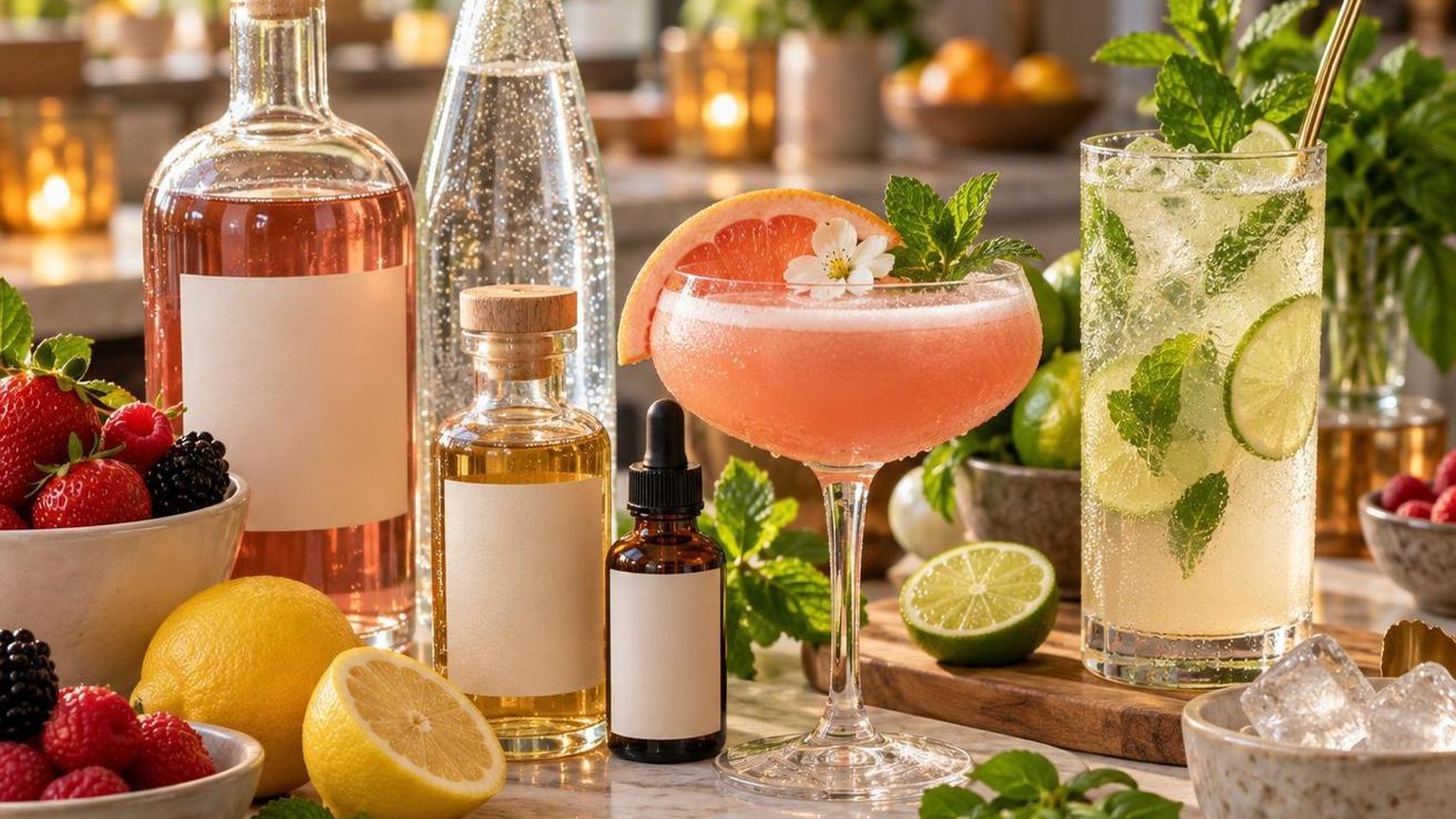
Tropical cocktails mask alcohol behind layers of fruit sugar, citrus acid, and coconut fat—three compounds that physiologically reduce the perception of ethanol on the palate.
The best versions keep ABV between 8% and 14% per serving while delivering complex, vacation-worthy flavor.
Why Tropical Ingredients Hide Alcohol
Sucrose and fructose in pineapple juice (approximately 10 g sugar per 100 ml) coat the tongue and compete with ethanol for receptor activation. Coconut cream adds fat at roughly 24 g per 100 ml, which further suppresses burn.
Citric acid in lime and passion fruit triggers salivation, diluting alcohol concentration at the taste bud level. These mechanisms work together to create drinks that register as dessert rather than spirits.
Top Tropical Cocktails Ranked by Perceived Alcohol
| Cocktail | Typical ABV | Base Spirit | Key Masking Ingredient |
| Piña Colada | 12–13% | White rum | Coconut cream, pineapple juice |
| Blue Hawaiian | 10–12% | White rum, blue curaçao | Pineapple juice, coconut cream |
| Malibu Sunset | 8–10% | Coconut rum (21% ABV) | Orange juice, grenadine |
| Passion Fruit Martini (Pornstar Martini) | 14–16% | Vanilla vodka | Passion fruit purée, vanilla syrup |
| Bahama Mama | 9–11% | Dark rum, coconut rum | Pineapple juice, orange juice |
Building a Low-Burn Tropical Drink at Home
- Choose a mild base spirit. Coconut rum (21% ABV) or light rum delivers less bite than overproof varieties bottled at 57–75.5% ABV.
- Use real fruit juice, not concentrate. Fresh pineapple juice contains bromelain, an enzyme that further softens harsh alcohol notes on the palate.
- Add a fat component. Coconut cream or a splash of whole milk creates a lipid barrier between ethanol molecules and taste receptors.
- Blend with ice. Dilution from 1 cup of crushed ice reduces a drink’s ABV by roughly 25%, dropping a 15% cocktail closer to 11%.
- Garnish with citrus. A fresh lime wheel prompts anticipatory salivation before the first sip, priming the mouth to perceive less burn.
A Note on Sugar Content
Tropical cocktails that taste least like alcohol often carry 25–40 g of sugar per serving. That rivals a can of soda at 39 g. Moderation matters—both for calorie intake and for noticing actual intoxication levels beneath the sweetness.
Swapping half the pineapple juice for fresh coconut water cuts sugar by roughly 30% while preserving the tropical profile. Coconut water contains just 2.6 g of sugar per 100 ml compared to pineapple juice’s 10 g.
Creamy Cocktails That Taste Dessert Like
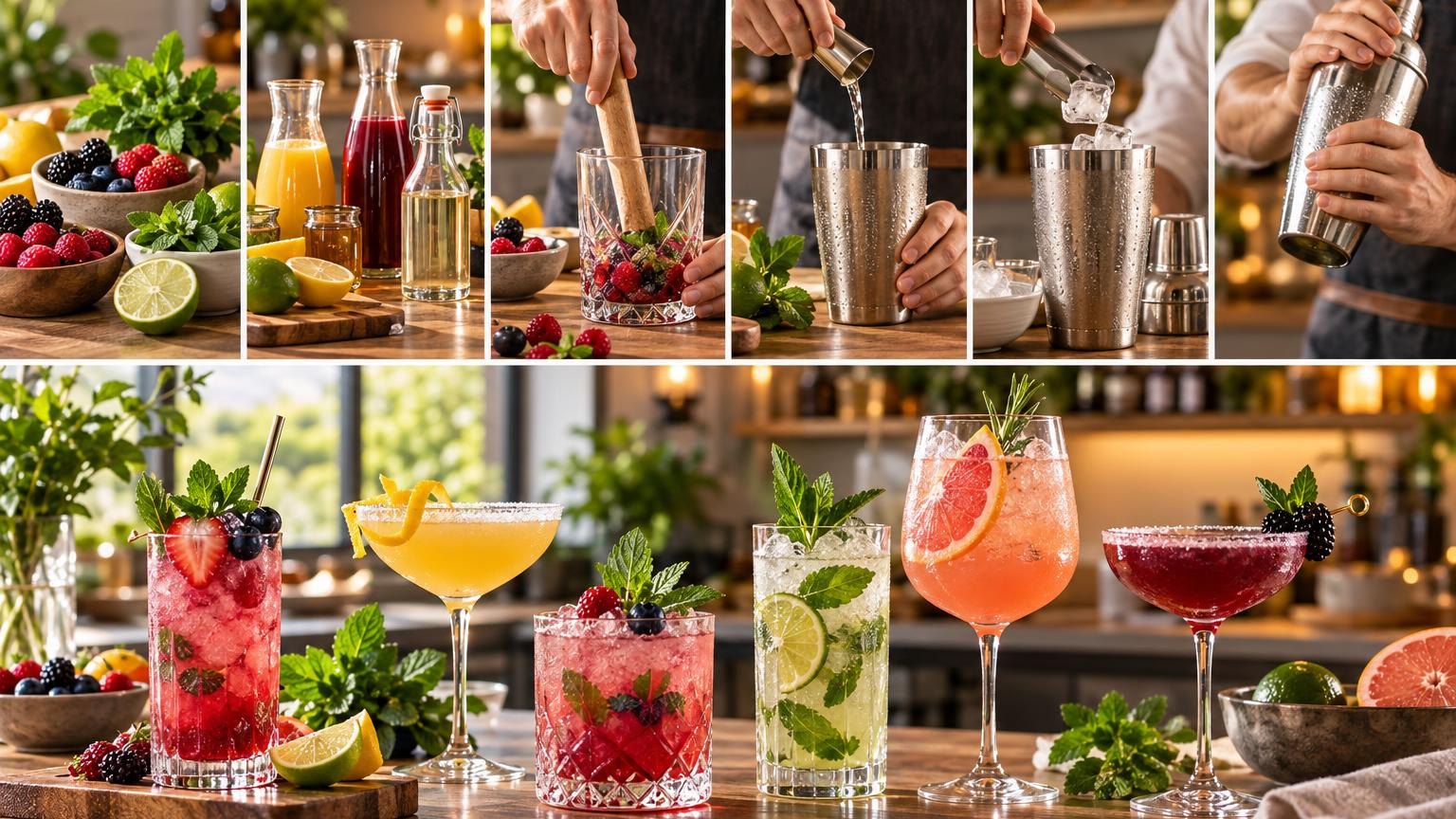
Cream-based cocktails mask alcohol behind fat molecules that coat the palate and suppress bitter, burning sensations.
Dairy fat and sugar together reduce ethanol perception by up to 50% compared to spirit-forward drinks, making these cocktails taste like liquid desserts.
The Mudslide
Equal parts Kahlúa (20% ABV), Baileys Irish Cream (17% ABV), and vodka shaken with ice cream create a milkshake-like drink. The finished cocktail lands around 12–15% ABV but tastes like chocolate soft serve.
White Russian
The White Russian combines 2 oz vodka, 1 oz Kahlúa, and 1 oz heavy cream over ice. Heavy cream contains roughly 36% milk fat, which physically encapsulates ethanol molecules and dulls their sharpness on the tongue.
Brandy Alexander
This classic mixes 1 oz cognac, 1 oz dark crème de cacao (25% ABV), and 1 oz heavy cream, shaken hard with ice and strained. Freshly grated nutmeg on top adds aroma that further distracts from alcohol detection.
Creamy Cocktail ABV Comparison
| Cocktail | Approximate ABV | Primary Flavor | Calories (per serving) |
| Mudslide | 12–15% | Chocolate, coffee | 450–550 |
| White Russian | 15–18% | Coffee, vanilla | 300–360 |
| Brandy Alexander | 16–18% | Chocolate, nutmeg | 250–300 |
| Grasshopper | 10–12% | Mint, chocolate | 280–320 |
| Toasted Almond | 11–14% | Amaretto, coffee | 270–310 |
Techniques That Maximize Dessert Flavor
- Shake with ice cream — replaces simple syrup and adds body that buries alcohol heat
- Use cream liqueurs below 20% ABV — Baileys, RumChata (13.75% ABV), or Amarula (17% ABV) contribute sweetness without high proof
- Blend rather than stir — aeration introduces tiny air bubbles that lighten mouthfeel and reduce ethanol bite
- Garnish with chocolate shavings or cinnamon — aromatic compounds prime the brain to expect dessert, not a cocktail
Calorie counts run high in this category. A single Mudslide with ice cream can exceed 500 calories, roughly equivalent to a slice of chocolate cake.
Substituting coconut cream for heavy cream cuts saturated fat by about 30% while preserving the masking effect.
Serve creamy cocktails in chilled coupe glasses at 35–40°F. Cold temperatures suppress alcohol volatility, meaning fewer ethanol vapors reach the nose and the drink reads as pure dessert.
How Citrus Changes Alcohol Perception
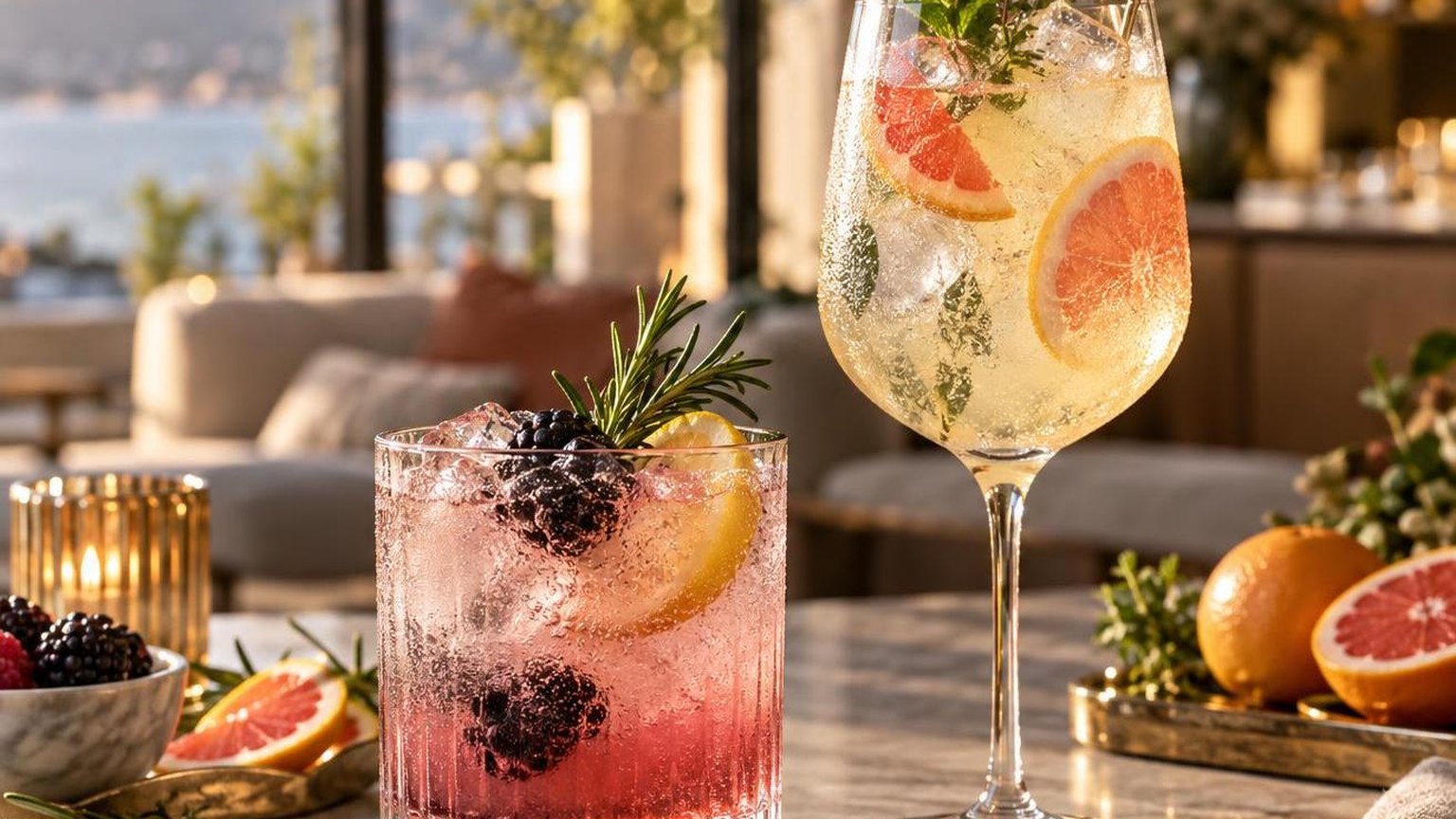
Citric acid triggers salivation and activates sour-taste receptors that compete with ethanol’s bitter and burning signals on the tongue.
This neurological competition measurably reduces perceived alcohol intensity, which is why a squeeze of lime transforms a strong spirit into something approachable.
The mechanism centers on gustatory masking. Ethanol stimulates TRPV1 receptors—the same receptors activated by capsaicin—creating a burning sensation.
Citric acid simultaneously activates PKD2L1 sour-taste channels, dividing the brain’s sensory attention.
A 2020 study published in Food Quality and Preference found that adding citric acid at concentrations of 0.5–1.0 g/L reduced perceived alcohol burn by 20–30% in panel tastings of wine-model solutions.
Citrus juices also contribute volatile aromatic compounds—primarily limonene, linalool, and citral—that override ethanol’s sharp aroma.
Fresh lime juice contains roughly 6–8% citric acid by weight, making it one of the most potent masking agents behind any bar.
Citric Acid Content by Fruit
| Citrus Fruit | Citric Acid (g per 100 mL juice) | pH |
| Lime | 5.0–6.0 | 2.0–2.4 |
| Lemon | 4.5–5.5 | 2.0–2.6 |
| Grapefruit | 1.2–2.1 | 3.0–3.5 |
| Orange | 0.6–1.0 | 3.3–4.2 |
Lower pH and higher citric acid concentration correlate directly with greater alcohol-masking effect. This explains why lime-forward cocktails like the Daiquiri and Margarita consistently rank among drinks that taste least like alcohol.
Why Fresh Juice Outperforms Bottled
Freshly squeezed citrus contains volatile terpenes that dissipate within 4–6 hours of extraction. These aromatics contribute up to 40% of the perceived masking effect according to flavor chemists at the University of California, Davis.
- Limonene composes 65–70% of lime peel oil and provides the bright “citrus burst” that distracts from ethanol vapor
- Citral adds a sharp lemon-forward note that overrides alcohol’s medicinal edge
- Linalool contributes floral sweetness that softens the mid-palate burn
Temperature matters too. Citrus juice served at 4°C (39°F) suppresses ethanol volatility by roughly 25% compared to room-temperature juice, compounding the masking effect.
For maximum impact, combine 22–30 mL of fresh lime or lemon juice per 45 mL of spirit. This ratio—roughly 1:1.5 to 1:2 juice-to-spirit—is the sweet spot used in classic sour-style cocktails worldwide.
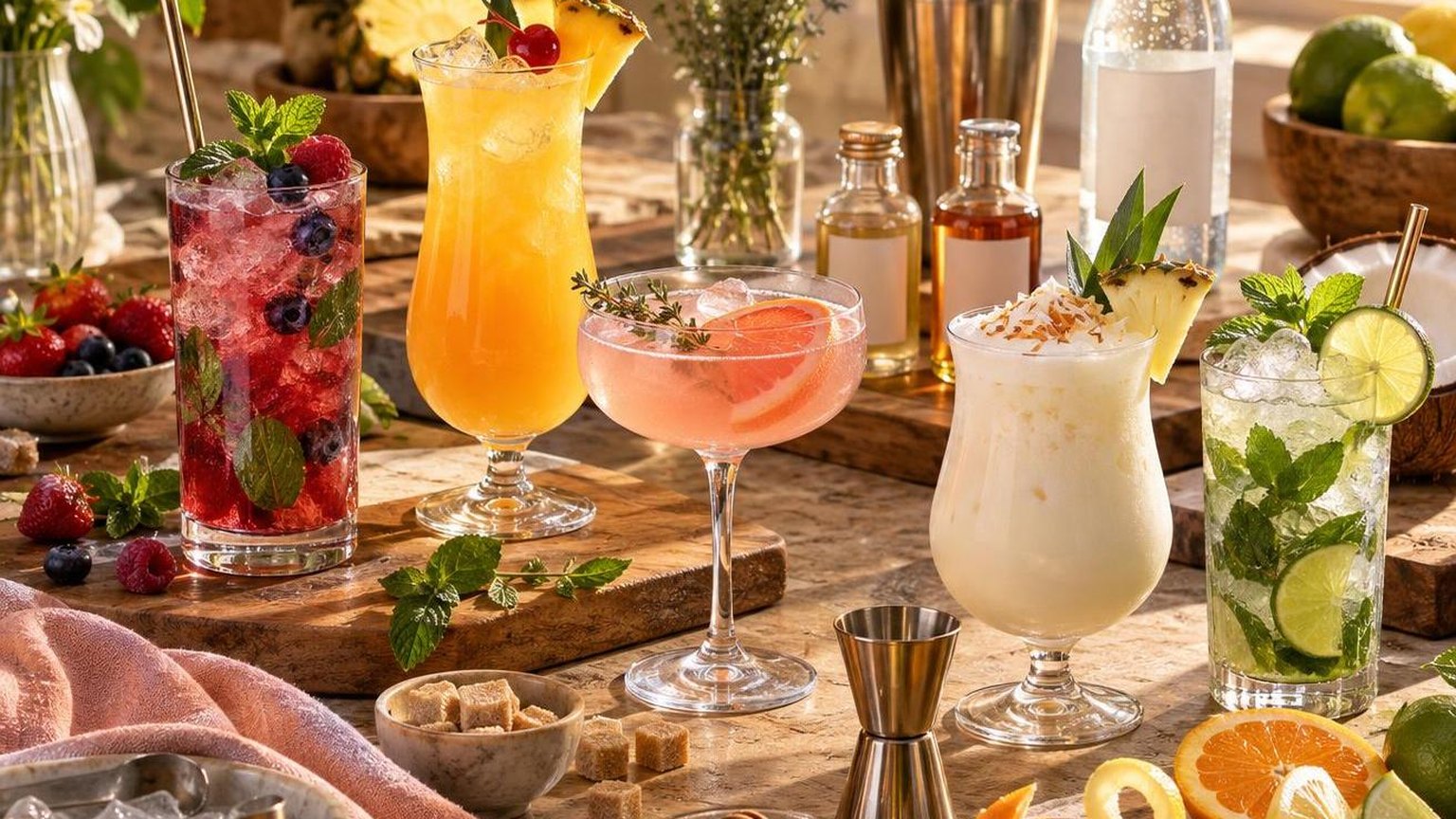
Low ABV Cocktails With Minimal Bite
Low ABV cocktails typically contain between 5% and 15% alcohol by volume, compared to 20–30% ABV in standard cocktails like a Manhattan or Negroni.
This reduced alcohol concentration directly lowers the ethanol burn that triggers heat-sensing TRPV1 receptors on your tongue.
ABV Comparison: Low ABV vs. Standard Cocktails
| Cocktail | Approximate ABV | Base Spirit/Ingredient |
| Aperol Spritz | 8–11% | Aperol (11% ABV) + Prosecco |
| Hugo Spritz | 6–8% | Elderflower liqueur + Prosecco |
| Sherry Cobbler | 10–12% | Fino or Amontillado sherry |
| Americano | 10–13% | Campari + sweet vermouth + soda |
| Bamboo | 12–15% | Dry sherry + dry vermouth |
| Classic Margarita | 22–27% | Tequila (40% ABV) |
| Old Fashioned | 28–32% | Bourbon (40–50% ABV) |
The Aperol Spritz dominates this category for good reason. Aperol itself is only 11% ABV — less than most wines — and dilution with Prosecco and soda water pushes the finished drink below 10%.
Why Lower ABV Means Less Burn
Ethanol activates TRPV1 pain receptors at concentrations above roughly 10% in solution. Drinks below this threshold register as noticeably smoother on the palate, with flavor compounds from botanicals, fruit, and bittering agents taking center stage.
Key Ingredients That Define Low ABV Builds
- Vermouths (15–18% ABV): Fortified wines with botanical complexity that serve as the backbone of drinks like the Adonis and Bamboo
- Amari and aperitif liqueurs (11–30% ABV): Aperol, Cocchi Americano, and Lillet deliver bitterness and sweetness without high-proof spirits
- Sherries (15–22% ABV): Fino, Manzanilla, and Amontillado bring nutty, saline notes at moderate strength
- Sparkling wine and soda: Both dilute total ABV while adding effervescence that lifts aromatics
Carbonation plays a measurable role beyond dilution.
CO₂ bubbles increase volatile aroma release by up to 30%, according to research published in the Proceedings of the National Academy of Sciences, making drinks taste more expressive even at lower proof.
The Americano — Campari, sweet vermouth, and soda — predates the Negroni by roughly 50 years. It appeared in the 1860s at Caffè Camparino in Milan and delivers Negroni-adjacent flavor at nearly half the alcohol content.
For home preparation, a reliable formula is 2 oz fortified wine or low-proof liqueur, 1 oz citrus or modifier, and 2–3 oz sparkling water. This template keeps most builds under 12% ABV while maintaining balanced flavor.
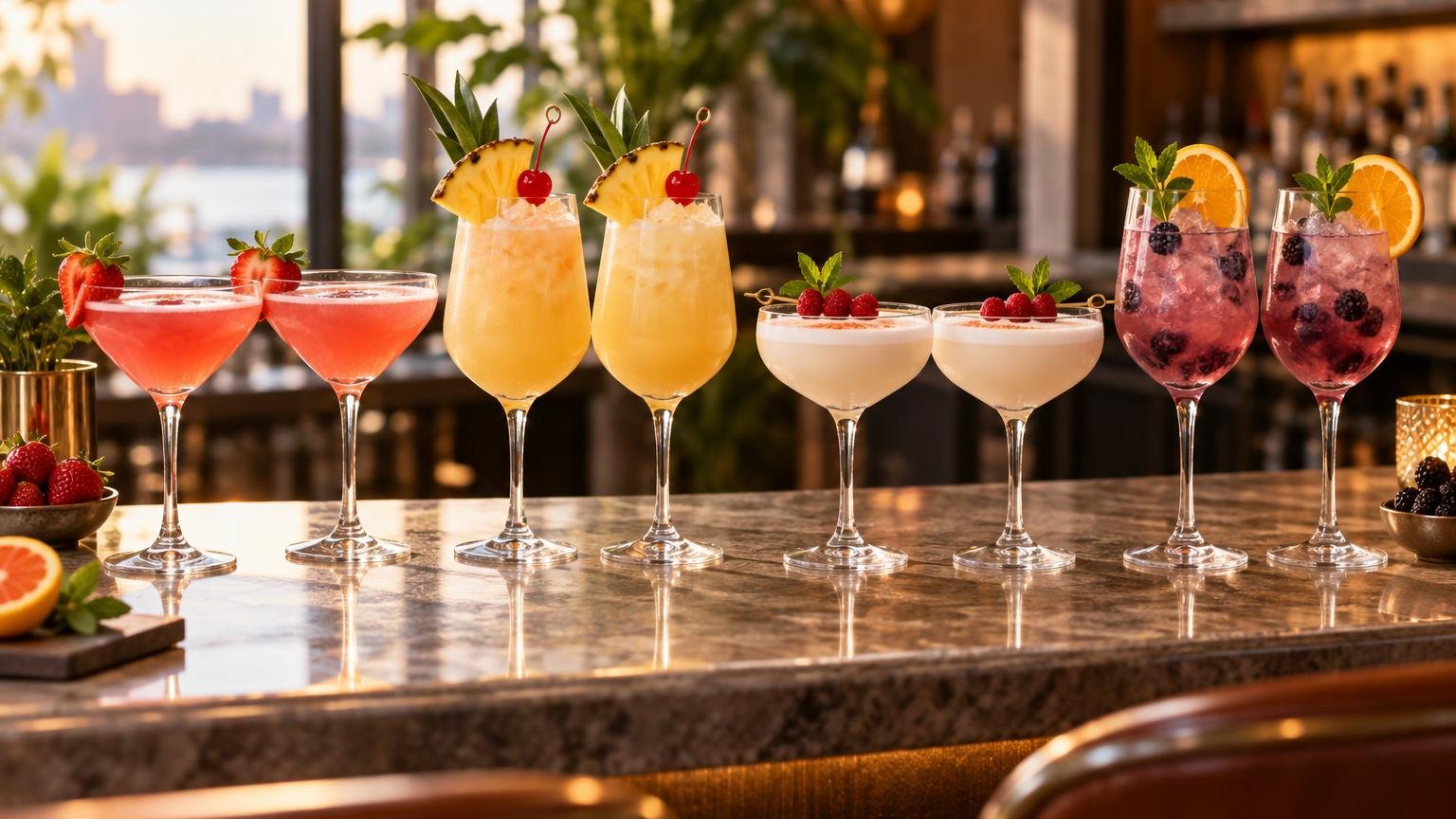
Frequently Asked Questions
What cocktails don’t taste like alcohol for beginners?
The Piña Colada, Frozen Strawberry Daiquiri, and Malibu Sunset rank consistently among the most approachable options because coconut cream, fruit purée, and juice dominate the palate.
A standard Piña Colada contains roughly 12–14% ABV but the blend of coconut cream and pineapple juice masks nearly all spirit burn.
Mudslides, built on coffee liqueur, Irish cream, and vodka, read more like a milkshake than a drink at around 10% ABV.
Why do some cocktails hide the taste of alcohol so effectively?
Sugar, fat, and acidity are the three main flavor-masking agents.
Sugar suppresses bitterness perception on the tongue, fat from cream or coconut milk coats the palate and blocks ethanol volatiles from reaching olfactory receptors, and citric acid redirects taste focus.
Cocktails that combine all three—like a Bushwacker (rum, coffee liqueur, cream of coconut, whole milk)—are the most effective at concealing a 2-oz spirit base.
Which fruity cocktails have the least noticeable alcohol flavor?
Sex on the Beach (vodka, peach schnapps, orange juice, cranberry juice) and the Bay Breeze (vodka, cranberry.
Pineapple juice) use a high juice-to-spirit ratio—typically 4–5 oz of juice per 1.5 oz of vodka—making the alcohol virtually undetectable.
The Midori Sour, built on melon liqueur at 20% ABV rather than a full-strength spirit, tastes predominantly of honeydew and citrus.
Are there creamy cocktails that mask alcohol well?
The White Russian (vodka, Kahlúa, heavy cream) and the Brandy Alexander (cognac, crème de cacao, heavy cream) are textbook examples.
Heavy cream’s milk fat—at roughly 36%—physically encapsulates ethanol molecules and reduces their volatility.
An Amaretto Sour made with egg white achieves a similar effect; the albumin creates a silky foam that buffers both the almond liqueur and any bourbon addition.
What low-ABV cocktails taste the least like alcohol?
An Aperol Spritz clocks in at roughly 8% ABV because Aperol itself is only 11% and it’s lengthened with Prosecco and soda water.
The Hugo Spritz, made with elderflower syrup, Prosecco, soda, and mint, sits at approximately 6–7% ABV and tastes like sparkling lemonade.
A Kalimotxo—equal parts red wine and cola—lands around 6% ABV and reads almost entirely as a sweet soft drink.
Do frozen blended cocktails hide alcohol better than shaken ones?
Yes. Blending with ice dilutes the drink by 40–60% compared to 15–25% dilution from shaking, which reduces the ethanol concentration per sip.
The near-freezing temperature (around −2°C to 0°C) also numbs taste receptors and suppresses volatile aroma compounds.
A Frozen Margarita made with 2 oz tequila blended with 8 oz of ice and sweet-and-sour mix will taste significantly milder than its shaken counterpart at the same pour.
Nearly every bar can make a Vodka Cranberry (Cape Codder), a Rum and Coke, or a Tequila Sunrise—all three require only a single spirit and one or two mixers.
Ask the bartender for a “tall pour,” meaning a standard 1.5-oz spirit serving in a larger glass with extra mixer; this increases dilution without changing the price at most establishments.
Adding grenadine or a splash of orange juice to almost any highball further suppresses the ethanol taste.
Can you make cocktails at home that don’t taste like alcohol without special ingredients?
A simple Vodka Lemonade (1.5 oz vodka, 5 oz lemonade, ice) requires two store-bought items and effectively buries the spirit under sugar and citric acid.
Mixing 1 oz of coconut rum with 3 oz each of pineapple and orange juice replicates a tropical cocktail with no barware beyond a glass and a spoon.
Freezing fruit juice into ice cubes before adding spirits further dilutes and flavors the drink as it melts, keeping the alcohol taste suppressed from first sip to last.
Related Guides
- How Often Drink Kombucha? What You Need to Know
- How Much Is 4 Oz In Tablespoons?
- What Are Coasters Used For? 17 Practical Uses Explained (2026 Guide)
- How Many Shots Are In A Litre?
- Why Do They Call Liquor Spirits? Answer From Expert
- How Much Is 5 Stone In Pounds?
- What Is Vinsanto?
- How Many Ounces Is 12 Ml? A Clear, Practical Guide Based on Real-Life Use
- All Blog Guides
- National Institute on Alcohol Abuse and Alcoholism – Understanding Alcohol's Effects (2023)
- Centers for Disease Control and Prevention – Dietary Guidelines for Alcohol (2022)
- USDA FoodData Central – Nutrient Profiles of Common Cocktail Ingredients (2024)
- National Center for Biotechnology Information/PubMed – Sugar and Sweetness Mask Ethanol Taste in Alcoholic Beverages (2014)
- Cornell University Department of Food Science – Sensory Perception of Ethanol in Sweet Solutions (2017)
- Dietary Guidelines for Americans 2020-2025, USDA/HHS (2020)
- Pennsylvania State University Extension – Understanding Alcohol by Volume and Drink Strength (2023)
- International Bartenders Association – Official IBA Cocktail Recipes (2024)
- Alcohol Research: Current Reviews (NIAAA peer-reviewed journal) – Flavored Alcoholic Beverages and Consumption Patterns (2023)