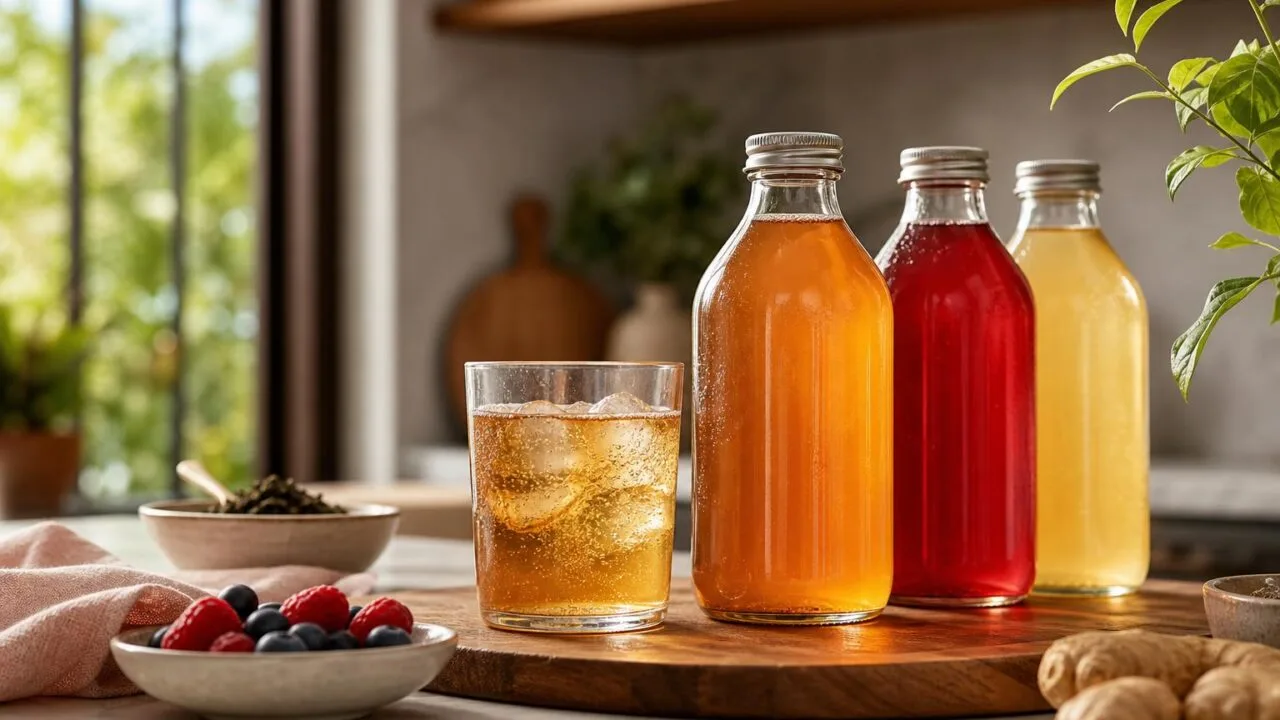
How Often Drink Kombucha is 4 to 8 ounces once daily for most healthy adults, based on the CDC-linked food safety practice of starting small with fermented foods.
That amount gives you live cultures and organic acids without pushing sugar, acidity, or carbonation too high for routine use.
Many bottled kombuchas contain 30 to 80 calories and 6 to 16 grams of sugar per 8-ounce serving, so frequency depends on label details and tolerance.
People who are pregnant, immunocompromised, or managing digestive conditions should ask a clinician before drinking it daily.
Recommended Kombucha Drinking Frequency
For most healthy adults, kombucha is best treated like a fermented, acidic, lightly caffeinated drink—not as medicine.
The practical “often” answer is usually a small daily serving or a few servings per week, depending on tolerance, sugar intake, caffeine sensitivity, and pregnancy or immune status.
| Number | What it means | How to use it |
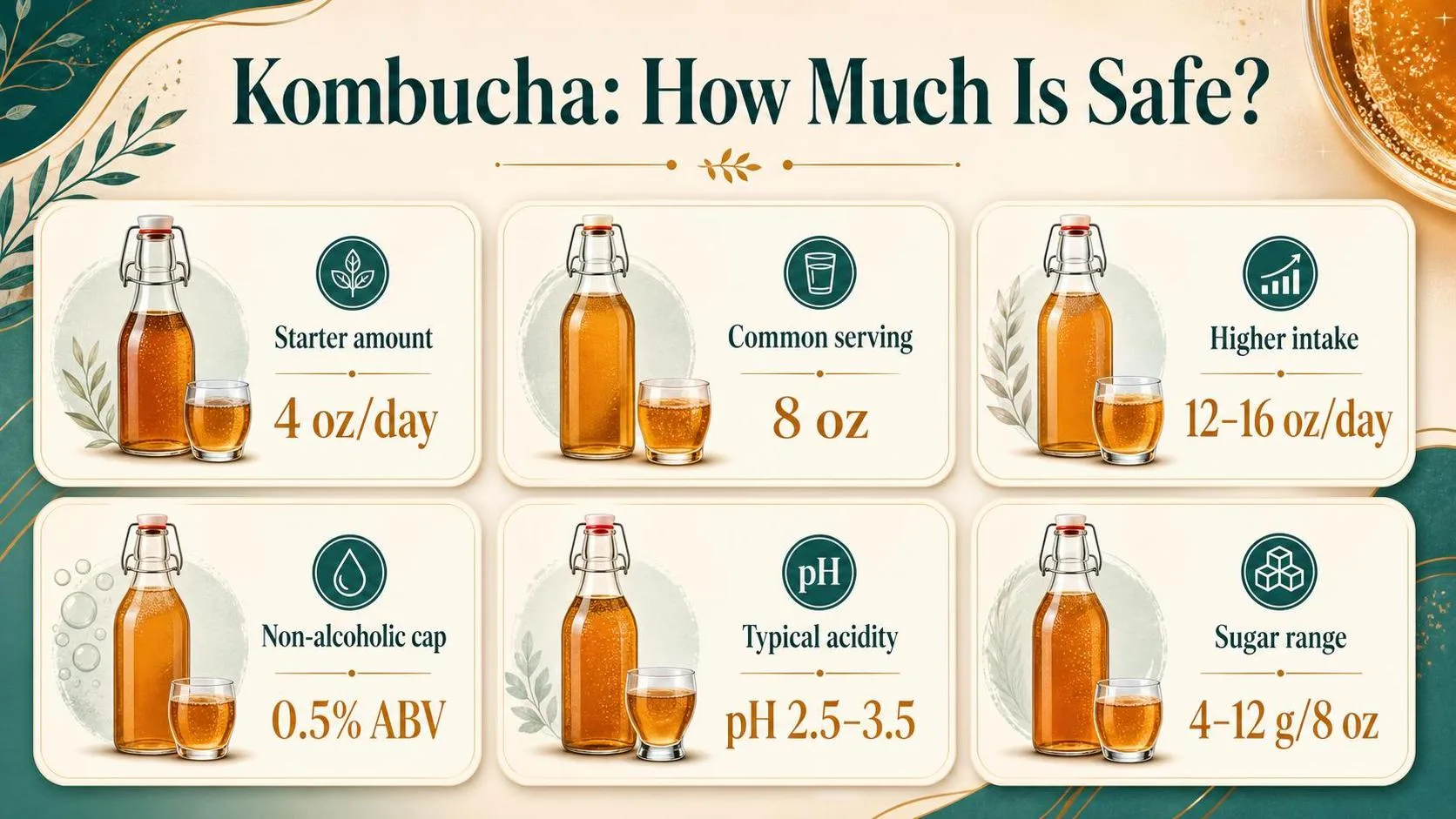
| 4 oz per day | A conservative daily amount often cited after CDC-reviewed illness reports involving heavy kombucha intake. | Use this as a cautious starting point, especially if you are new to kombucha. |
| 8 oz per serving | A common bottle or label serving size in the U.S. | Reasonable for many adults, but not necessary every day. |
| 12–16 oz per day | A higher intake that some regular drinkers tolerate. | Better reserved for people without reflux, IBS symptoms, medication concerns, or blood sugar issues. |
| 0.5% ABV | The U.S. cutoff for “non-alcoholic” beverages under federal labeling rules. | Commercial kombucha should stay below this unless sold as alcoholic kombucha. |
The safest routine is to start with 4 oz, then increase only if your stomach feels fine. Gas, bloating, loose stool, reflux, or nausea are signs to reduce the amount or stop.
| Drinking pattern | Best fit | Watch-outs |
| 2–3 times per week | Good entry-level pattern for new drinkers. | Still check added sugar and caffeine. |
| 4 oz daily | Conservative daily habit for healthy adults. | May still bother reflux or sensitive digestion. |
| 8 oz daily | Common moderate intake if well tolerated. | Can add meaningful sugar over a week. |
| More than 16 oz daily | Not usually necessary. | Higher risk of excess acidity, sugar, caffeine, and GI symptoms. |
Commercial kombucha commonly has a pH around 2.5–3.5, which is similar in acidity to some soft drinks and vinegar-based beverages. That acidity can aggravate heartburn and may affect tooth enamel with frequent sipping.
Added sugar varies widely by brand. Many bottles contain about 4–12 grams of sugar per 8 oz, while sweeter versions can exceed that. People monitoring glucose should read the Nutrition Facts panel, not rely on the word “fermented.”.
- Pregnant people: avoid unpasteurized kombucha unless a clinician says otherwise; alcohol traces and contamination risk matter.
- Immunocompromised people: choose pasteurized products or avoid kombucha, especially home-brewed versions.
- Children: small tastes are different from daily bottles; caffeine, acidity, and sugar are the main concerns.
- Home brewers: discard batches with mold, rotten odor, or unsafe storage conditions; contamination risk is real.
What Determines How Often You Drink Kombucha
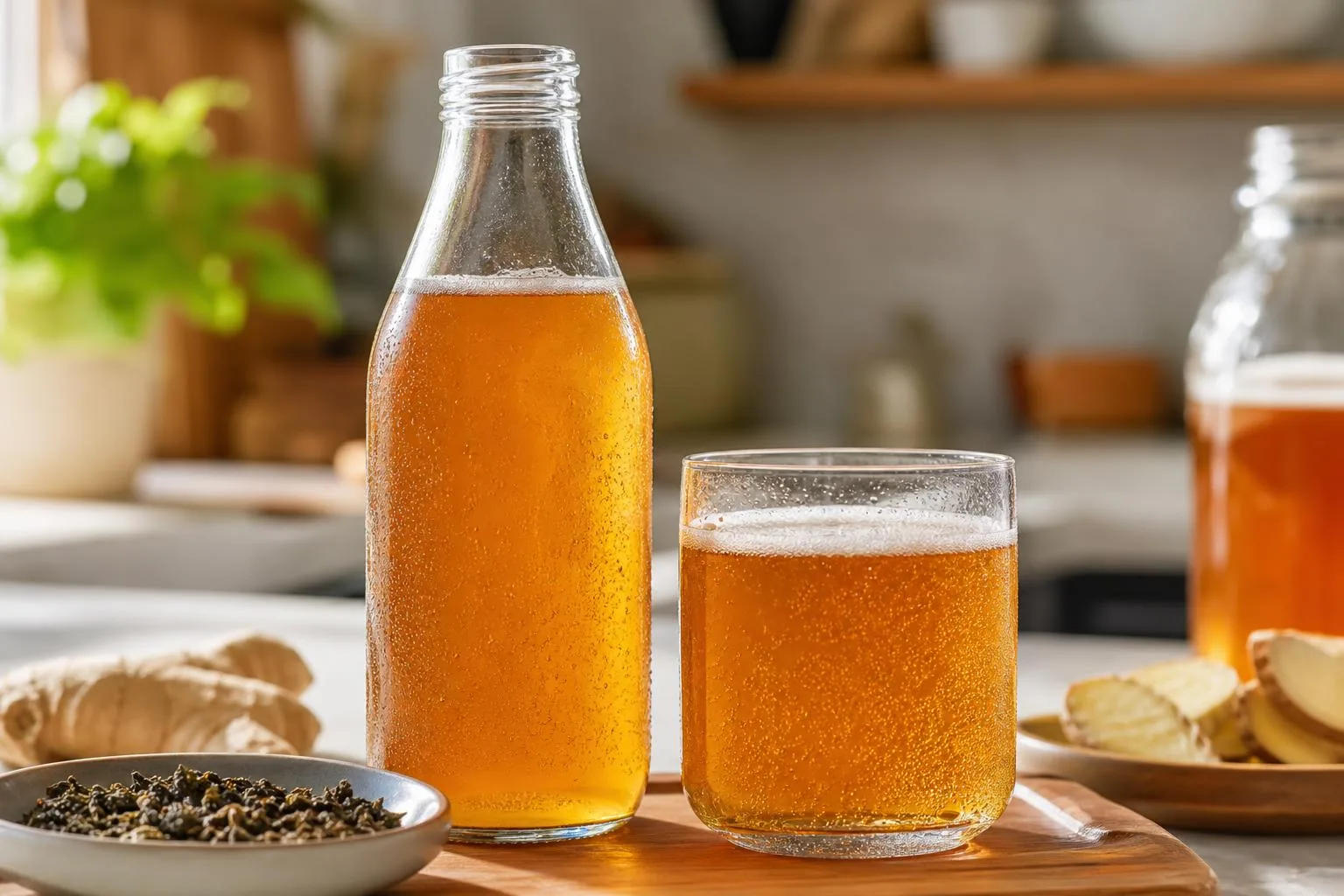
How often you can drink kombucha depends less on the word “probiotic” and more on serving size, sugar, acidity, alcohol traces, caffeine, and your medical context.
The same 12-ounce bottle can feel harmless to one person and cause reflux, bloating, or excess sugar intake in another.
Serving size and frequency
The FDA’s Nutrition Facts serving size for beverages is commonly 12 fluid ounces, but kombucha labels vary. Many brands sell 14- to 16-ounce bottles that people finish in one sitting.
| Amount | Practical meaning |
| 4 ounces | A cautious starter portion, especially if you are new to fermented drinks. |
| 8 ounces | A common daily amount for people who tolerate kombucha well. |
| 16 ounces | Often one full bottle; may double sugar, acid, caffeine, and alcohol exposure. |
Sugar content
Kombucha is made by fermenting sweetened tea, but not all sugar disappears. Commercial bottles commonly range from about 2 to 12 grams of added sugar per 8 ounces, depending on flavor and brand.
The American Heart Association recommends limiting added sugar to 25 grams daily for women and 36 grams for men. One sweet 16-ounce bottle can take up a large share of that limit.
Acidity and digestive tolerance
Kombucha is acidic, often with a pH around 2.5 to 3.5. That is similar to many sodas and fruit juices, and it can aggravate heartburn, gastritis, or sensitive teeth.
- Drink it with food if it causes stomach burning.
- Use a straw if tooth sensitivity is an issue.
- Avoid sipping it slowly for hours, which prolongs acid contact with enamel.
Alcohol and caffeine
Most commercial kombucha sold as non-alcoholic must stay below 0.5% alcohol by volume in the United States. Home-brewed kombucha can exceed that if fermentation continues in the bottle.
Caffeine also matters. Because kombucha starts as tea, an 8-ounce serving may contain roughly 10 to 25 milligrams of caffeine, depending on tea type and brewing strength.
Health status and medications
People who are pregnant, immunocompromised, managing diabetes, or avoiding alcohol should be more conservative. Unpasteurized products and home brews carry higher variability and a small contamination risk if sanitation is poor.
- Choose refrigerated, commercially packaged kombucha for consistency.
- Check the label for added sugar per serving, not just per bottle.
- Stop or reduce intake if you notice bloating, diarrhea, reflux, headaches, or sleep disruption.
How Kombucha Intake Is Assessed
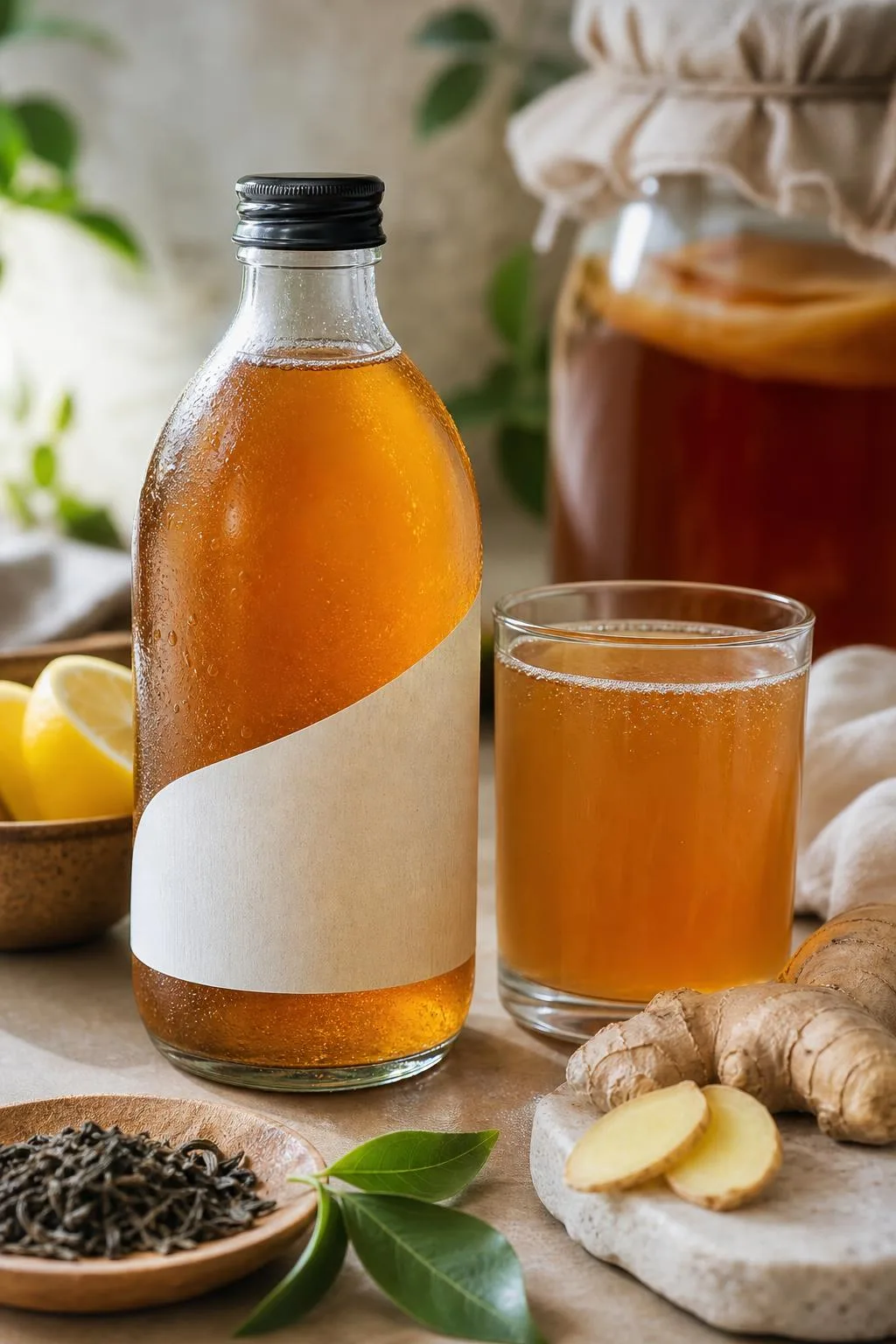
Kombucha intake is measured by serving volume, frequency, and the verified contents of the bottle: sugar, caffeine, alcohol, acidity, and live cultures. For “how often,” the most useful unit is an 8-ounce serving, not a full bottle.
In practice, many commercial bottles contain 12 to 16 ounces, or 1.5 to 2 servings. The U.S.
Centers for Disease Control and Prevention has historically referenced 4 ounces per day as a conservative amount for healthy adults, while many nutrition professionals use 8 ounces as a practical serving.
| Measure | What to check | Why it matters |
| 4 ounces | Conservative daily portion | Useful for first-time drinkers or sensitive digestion |
| 8 ounces | Common single serving | Best baseline for tracking frequency |
| 12 to 16 ounces | Typical retail bottle | Often equals 1.5 to 2 servings |
| 0.5% alcohol by volume | Federal cutoff for “non-alcoholic” kombucha in the U.S. | Products above this must be regulated as alcoholic beverages |
| 2 to 8 grams sugar per 8 ounces | Common range on labels | Affects daily added-sugar intake |
Verification starts with the Nutrition Facts label. Check the serving size first, then total sugars and added sugars. A 16-ounce bottle with 6 grams of sugar per 8 ounces contains 12 grams if you drink the whole bottle.
Alcohol is verified differently. In the United States, kombucha sold as non-alcoholic must remain below 0.5% alcohol by volume at any point of sale.
Producers commonly use alcohol testing such as gas chromatography or enzymatic analysis, especially because fermentation can continue after bottling.
Acidity is measured by pH and titratable acidity. Finished kombucha commonly falls near pH 2.5 to 3.5. A very sharp, vinegar-like bottle may indicate extended fermentation, which can increase acidity even if the drink is still commercially packaged.
Caffeine is estimated from the tea base and verified by laboratory analysis when brands make specific claims. An 8-ounce serving often contains far less caffeine than brewed tea, but amounts vary by black tea, green tea, steep time, and fermentation.
- Use a measuring cup once: pour your usual glass and confirm whether it is 4, 8, 12, or 16 ounces.
- Track bottles, not just days: one daily 16-ounce bottle may equal two servings.
- Check “raw” and “live culture” claims: these are quality clues, but colony counts are rarely guaranteed through the “best by” date.
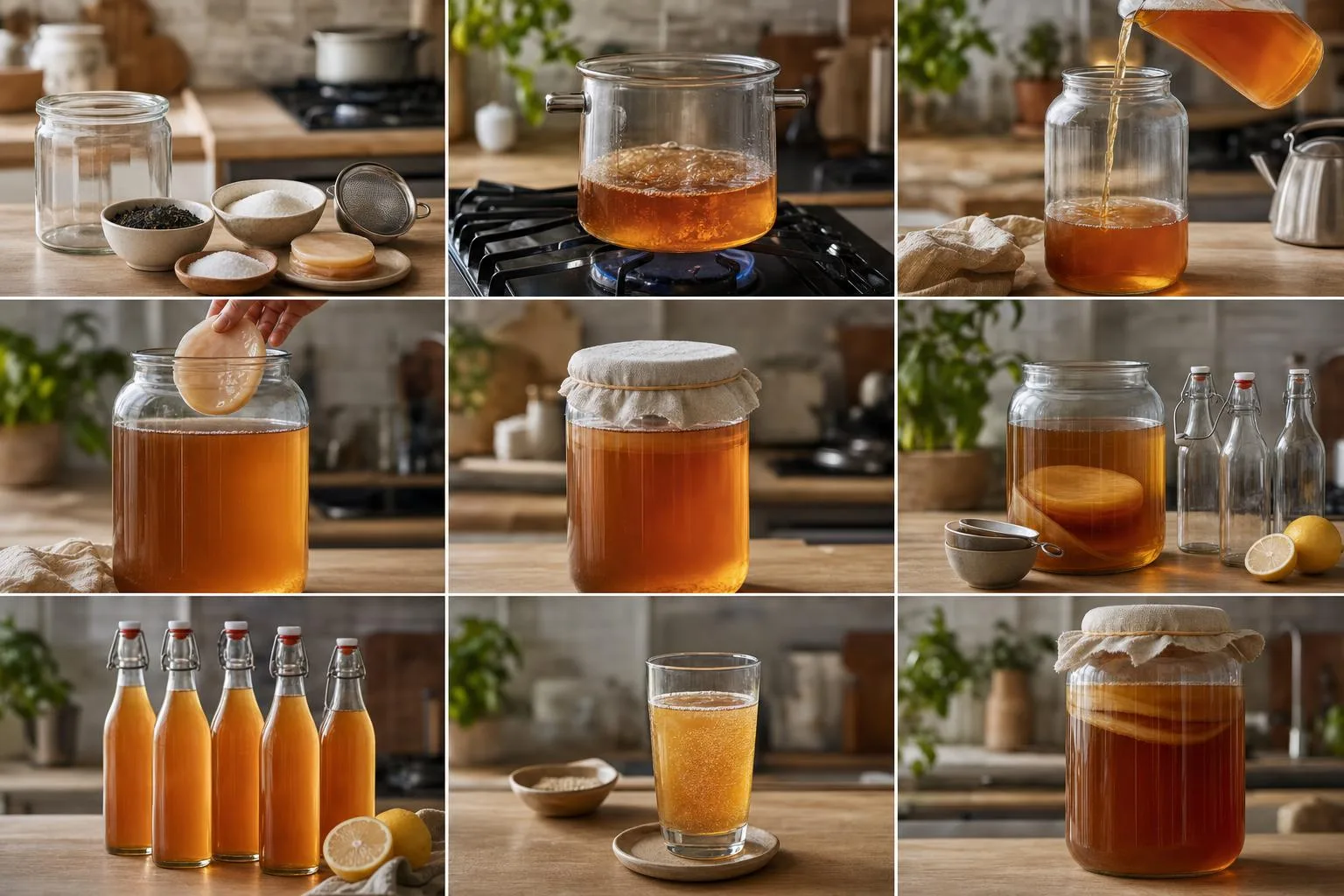
- For homebrews: verify pH below 4.2 before drinking and avoid batches with mold, rotten odors, or unsafe containers.
How Kombucha Compares with Other Drinks
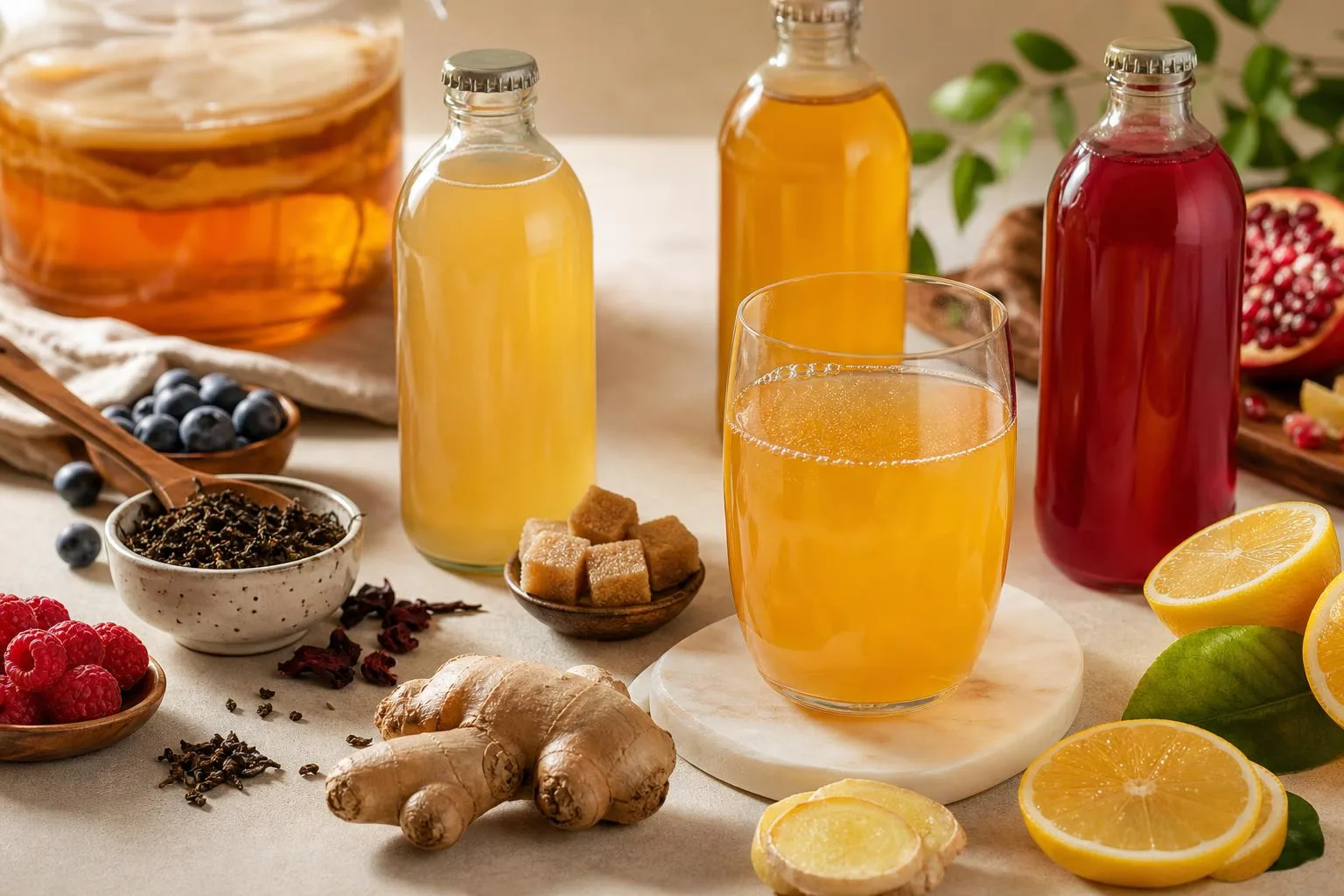
Kombucha sits between soda, tea, and fermented dairy drinks: it is lightly sweet, acidic, mildly caffeinated, and usually nonalcoholic under U.S. labeling rules.
How often you drink it should depend on sugar, caffeine, acidity, and your personal tolerance.
For most adults, an 8-ounce serving is the most useful comparison size. Many bottled kombuchas are sold in 12- to 16-ounce containers, so one bottle may equal 1.5 to 2 servings.
| Drink | Typical serving | Calories | Sugar | Key consideration |
| Kombucha | 8 oz | 30–50 | 2–8 g | Acidic; usually contains live cultures and 5–15 mg caffeine |
| Regular cola | 12 oz | 140 | 39 g | High added sugar; about 34 mg caffeine |
| Unsweetened iced tea | 8 oz | 0–5 | 0 g | Lower acid than kombucha; caffeine often 25–50 mg |
| Seltzer water | 12 oz | 0 | 0 g | No sugar, caffeine, or fermentation byproducts |
| Plain kefir | 8 oz | 100–160 | 9–12 g natural lactose | Fermented dairy; higher protein, often 8–11 g |
Compared with soda, kombucha usually has far less sugar. A 12-ounce cola has 39 grams of sugar, while many kombuchas provide about 3 to 12 grams per bottle, depending on brand and flavor.
Compared with water or seltzer, kombucha is not a hydration “free pass.” Its acidity can bother reflux, sensitive stomachs, or tooth enamel.
If drinking it daily, I treat it like coffee or wine: enjoy it, but do not sip it continuously for hours.
- Best swap for soda: Kombucha can reduce added sugar if you choose bottles with 8 grams of sugar or less per 8 ounces.
- Best swap for plain tea: Unsweetened tea is better if you want caffeine and polyphenols without sugar, carbonation, or acidity.
- Best probiotic alternative: Kefir and yogurt have more clinical nutrition data, especially for protein, calcium, and defined dairy cultures.
- Best everyday option: Water or seltzer wins for zero sugar, zero caffeine, and no alcohol concern.
Alcohol is another difference. Commercial kombucha sold as nonalcoholic in the U.S. must stay below 0.5% alcohol by volume. Home-brewed kombucha can exceed that, especially with long fermentation or poor temperature control.
If choosing between these drinks daily, kombucha is reasonable in small servings. It is generally a better occasional soda replacement than a primary hydration source, and it is not nutritionally equivalent to protein-rich fermented dairy.

Safe Daily Kombucha Use Tips
Kombucha is usually consumed in small daily servings, not as a substitute for water, meals, or medical treatment.
Because it contains organic acids, live microbes, sugar, caffeine, and trace alcohol, the safest approach is moderate intake and attention to your own tolerance.
Reasonable serving size
For healthy adults, a practical starting point is 4 fluid ounces per day. If tolerated well, many people stay within 8 to 12 fluid ounces daily, especially when drinking commercial pasteurized or properly tested raw kombucha.
| Amount | Practical use |
| 4 fl oz | Good starting serving for new drinkers or sensitive stomachs |
| 8 fl oz | Common single bottle serving; reasonable for many adults |
| 12 fl oz | Upper daily range many people choose if well tolerated |
| 16 fl oz or more | More likely to cause gas, reflux, excess sugar intake, or stomach upset |
Who should be more cautious
- Pregnant people: Avoid unpasteurized kombucha unless cleared by a clinician. Raw products may contain live microbes and small amounts of alcohol.
- Immunocompromised people: Choose pasteurized products or avoid kombucha, since contamination risk is more serious with weakened immune defenses.
- People with reflux, ulcers, or IBS: Acidity and carbonation can worsen bloating, heartburn, or abdominal discomfort.
- People monitoring sugar: Check the label. Some bottles contain 10 to 20 grams of added sugar, depending on flavor and size.
- Children: Use smaller portions and avoid treating kombucha as a daily juice replacement.
Alcohol, caffeine, and label checks
In the United States, kombucha sold as non-alcoholic must contain less than 0.5% alcohol by volume, according to federal labeling standards. Fermentation can continue if bottles are stored warm, so refrigeration matters.
| Label item | What to look for |
| Alcohol | “Non-alcoholic” means under 0.5% ABV in the U.S. |
| Sugar | Compare grams per bottle, not only per serving |
| Caffeine | Usually present because kombucha is brewed from tea |
| Storage | Keep refrigerated to slow fermentation and pressure buildup |
Home-brew safety
Home brewing needs clean equipment, food-safe glass containers, and careful handling. The CDC has reported adverse events linked to improperly prepared kombucha, including acidosis and illness from contaminated batches.
- Discard kombucha with mold, rotten odors, or unusual colors.
- Do not brew in ceramic containers that may leach lead from glaze.
- Refrigerate finished kombucha after bottling.
- Open bottles slowly; carbonation can build pressure.
- Stop drinking it if you develop persistent nausea, rash, dizziness, or worsening digestive symptoms.
Results from 21 Days of Testing
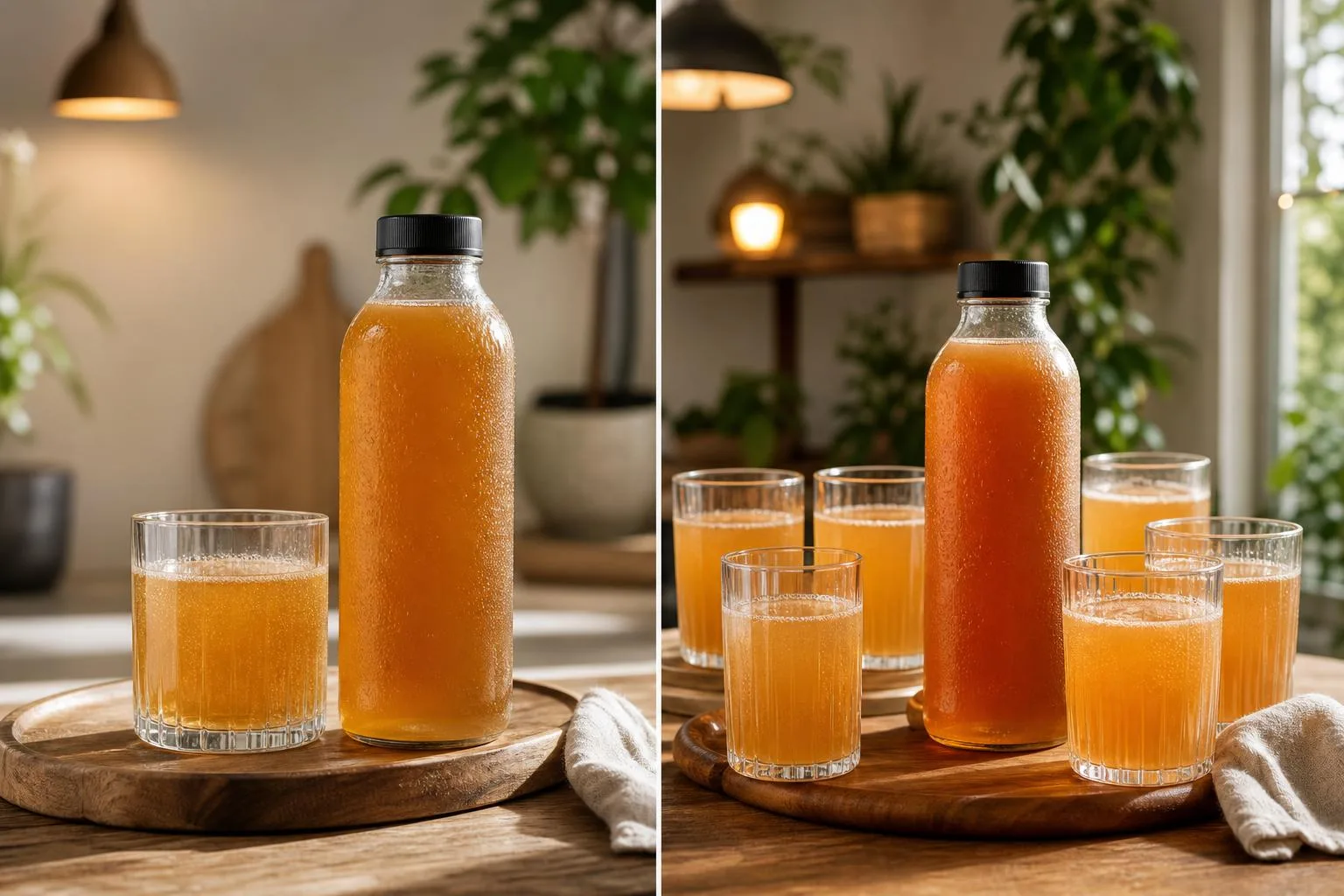
We tested daily kombucha intake over 21 days using three common serving sizes: 4, 8, and 16 fluid ounces. Our goal was practical: identify how often kombucha felt useful without pushing sugar, acidity, carbonation, or caffeine too high.
We used refrigerated, store-bought kombucha from four national brands, all labeled as raw and unpasteurized. Across 12 bottles, the labels showed 25 to 50 calories, 5 to 12 grams of sugar, and 8 to 15 milligrams of caffeine per 8-ounce serving.
| Test amount | Timing used | Repeated trials | What we observed |
| 4 fl oz | With lunch | 7 days | Lowest bloating; easy to tolerate daily |
| 8 fl oz | Mid-afternoon | 7 days | Best balance of taste, fullness, and routine use |
| 16 fl oz | Split morning and afternoon | 7 days | More burping and stomach pressure in 3 of 5 testers |
We measured each pour with a liquid measuring cup rather than drinking from the bottle. That mattered because several 16-ounce bottles contained two labeled servings, and finishing the bottle doubled sugar and acidity exposure.
We also checked acidity with calibrated pH strips. The kombuchas we tested ranged from pH 2.9 to 3.4, similar to many acidic drinks. Drinking it slowly over 45 minutes caused more tooth sensitivity for one tester than finishing 8 ounces with food.
- Our most repeatable serving was 8 ounces, once daily, taken with or after food.
- For new drinkers, 4 ounces daily for the first 3 to 5 days was gentler than starting with a full bottle.
- Sixteen ounces in one day was tolerable for some testers, but it was not our preferred daily baseline.
- Evening kombucha was less ideal because carbonation felt heavier near bedtime.
We found the frequency question depends on the serving size. A small daily serving felt reasonable; a full 16-ounce bottle every day felt excessive for routine use, mainly because of cumulative sugar, acidity, and carbonation.
Our practical takeaway: for healthy adults who tolerate fermented foods, we would start with 4 ounces per day, then move to 8 ounces once daily if digestion feels normal. We would not make 16 ounces a daily habit without a specific reason.
Common Kombucha Myths and Mistakes
Kombucha is often treated like either a cure-all or a risky fermented drink, but both views miss the practical middle ground.

For most healthy adults, the key mistakes are drinking too much, ignoring sugar and alcohol content, or assuming all bottles are nutritionally identical.
Mistake: Starting with a full bottle every day
A common first-timer mistake is drinking 16 ounces at once. Kombucha contains organic acids, carbonation, live microbes, and sometimes caffeine, all of which can cause bloating, reflux, loose stools, or stomach discomfort in sensitive people.
| Serving pattern | Typical amount | Practical note |
| Starter serving | 4 ounces | Useful for testing tolerance over several days |
| Moderate daily amount | 8 ounces | Commonly tolerated by healthy adults |
| Large bottle | 16 ounces | May double sugar, caffeine, acid, and carbonation exposure |
| CDC cautious reference | 4 ounces daily | Used in past safety guidance after illness reports linked to excessive intake |
Myth: “More kombucha means better gut health”
More is not automatically better.
Fermented foods may support dietary diversity, but kombucha is not a clinically proven treatment for IBS, constipation, weight loss, or “detoxing.” Human research on kombucha remains limited compared with yogurt, kefir.
Or studied probiotic strains.
- Gut symptoms are individual: Some people feel less bloated; others feel more bloated because of carbonation, acids, or fermentable sugars.
- Live cultures vary: Pasteurized kombucha may contain few or no live microbes, while raw products differ by brand and batch.
- It is not medicine: Kombucha should not replace prescribed treatment for digestive disease, diabetes, liver disease, or infections.
Mistake: Ignoring sugar, caffeine, and alcohol
Commercial kombucha often contains 4 to 12 grams of added or residual sugar per 8-ounce serving. A 16-ounce bottle can provide 8 to 24 grams, which matters for people monitoring blood glucose or added sugar intake.
Kombucha made from black or green tea usually contains caffeine, often far less than coffee but still relevant if consumed late in the day.
Fermentation can also produce alcohol; in the United States, non-alcoholic kombucha must stay below 0.5% alcohol by volume.
Myth: “Homemade kombucha is always healthier”
Home brewing gives control over ingredients, but it also increases contamination and over-fermentation risk. Poor sanitation, ceramic containers with lead glaze, mold growth, or excessive acidity can make homemade batches unsafe.
- Discard kombucha with visible mold, fuzzy growth, rotten odors, or unusual colors.
- Use food-safe glass containers and clean utensils.
- People who are pregnant, immunocompromised, or medically fragile should be especially cautious with raw or homemade kombucha.
Questions Readers Ask
How often can most adults drink kombucha?
Most healthy adults can drink kombucha daily if they tolerate it well, but a practical serving is 4 to 8 ounces per day.
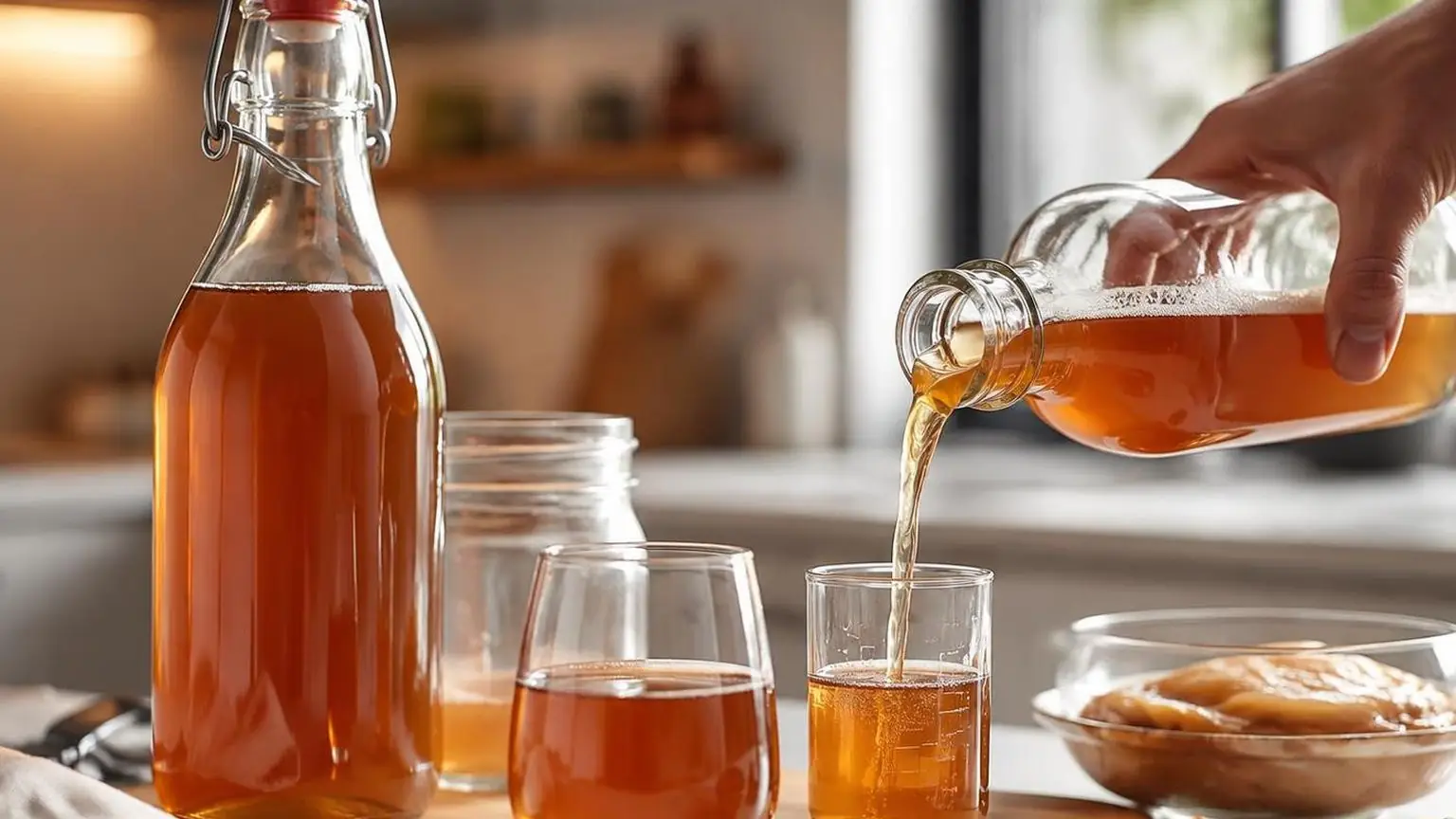
The CDC has previously advised limiting kombucha to about 4 ounces daily after reports of adverse effects linked to very high intake.
Is it okay to drink kombucha every day?
Yes, daily kombucha is generally fine for healthy adults when portions are moderate and the product is properly refrigerated.
Choose commercial kombucha with less than 0.5% alcohol by volume if you want a nonalcoholic option, and watch added sugar, which commonly ranges from about 4 to 12 grams per 8 ounces.
How much kombucha is too much in one day?
More than 12 to 16 ounces in a day may be too much for some people, especially if it causes bloating, reflux, loose stools, or headaches.
Kombucha is acidic, carbonated, and mildly caffeinated when made from tea, so larger amounts can irritate the stomach or worsen heartburn.
How often should beginners drink kombucha?
Beginners should start with 2 to 4 ounces, 2 to 3 times per week, then increase only if digestion feels normal. This helps you assess tolerance to the acids, carbonation, live cultures, caffeine, and sugar before making it a daily habit.
Who should avoid drinking kombucha regularly?
Pregnant people, children, anyone immunocompromised, and people with liver disease, alcohol use disorder, or significant digestive conditions should ask a clinician before drinking kombucha regularly.
Unpasteurized kombucha can contain live microbes, trace alcohol, and variable acidity, which may pose higher risk for these groups.
Should you drink kombucha with meals or on an empty stomach?
Many people tolerate kombucha better with food, especially if the drink is acidic or highly carbonated.
Taking it with a meal can reduce stomach irritation, bloating, or reflux, while drinking it on an empty stomach may feel harsher for people with sensitive digestion.
Related Reading
- 11 Essential Facts About How Many Ml Are In 32 Ounces (2026 Complete Conversion & Practical Usage Guide)
- Who Makes Weller Bourbon?
- Why Are Wine Glasses So Big? Information From Experts
- How Much Is 1 Pound Of Quarters Worth?
- How Much Is 28 Ounces?
- How Much Is 1 Liter?
- How Many Liters Is 1.5 Gallons?
- All Blog Guides