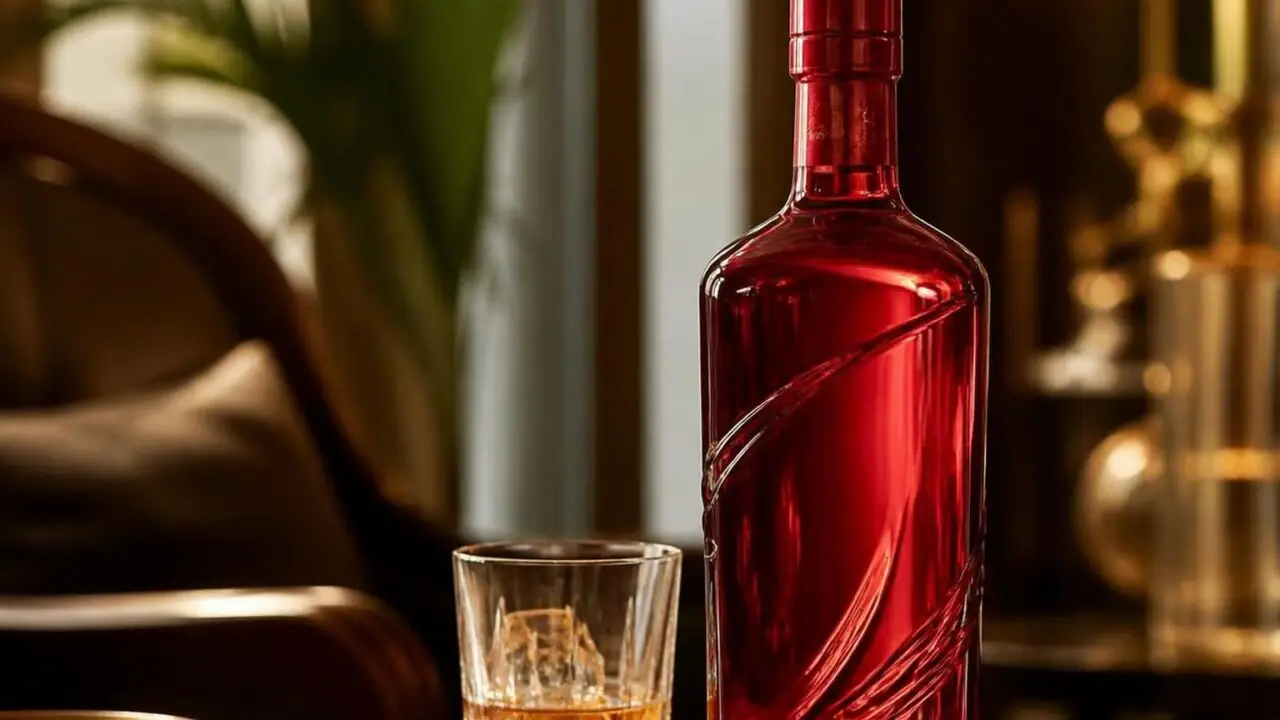
Alcohol in red bottle is usually a packaging cue for liqueurs, aperitifs, vermouths, flavored spirits, or gift-edition wines rather than a distinct alcohol category.
The liquid may be red, clear, amber, or dark; the bottle color is chosen for branding, shelf visibility, light protection, or seasonal presentation.
Common examples include Campari-style bitter aperitifs, cherry or raspberry liqueurs, red vermouth, sangria, spiced rum editions, and holiday whisky releases.
This guide explains how to identify the alcohol by label terms, ABV, bottle shape, closure, and ingredient clues before you buy or serve it.
The Key Numbers, Explained
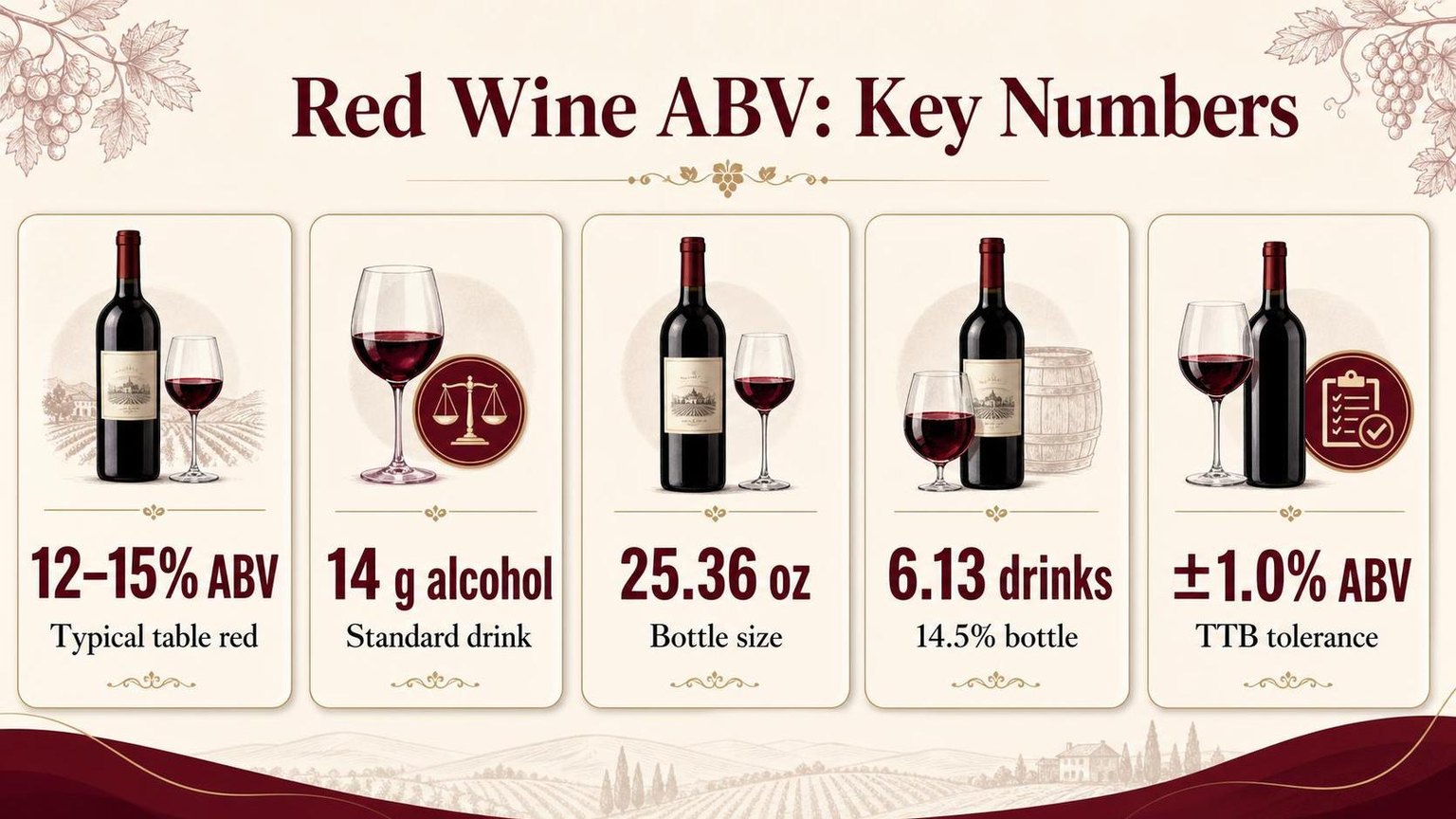
The alcohol number on a red wine bottle is the ABV: alcohol by volume. In the U.S., most table reds sit between 12% and 15% ABV, though federal rules allow a small label tolerance.
That number matters because it changes serving size, calories, intoxication risk, and how the wine feels with food. A 14.5% red is meaningfully stronger than a 12.5% red, even if both are poured into the same glass.
| Red wine ABV | Alcohol in a 5 oz pour | Approx. pure alcohol | What it means |
| 12.5% | 0.625 oz ethanol | 14.8 g | Close to one U.S. standard drink |
| 13.5% | 0.675 oz ethanol | 16.0 g | Moderate-strength modern red |
| 14.5% | 0.725 oz ethanol | 17.2 g | About 16% more alcohol than 12.5% |
| 15.5% | 0.775 oz ethanol | 18.3 g | High for dry table wine |
The U.S. Dietary Guidelines define one standard drink as 14 grams of pure alcohol. For wine, that benchmark is commonly shown as 5 fluid ounces at 12% ABV.
Many red wines exceed 12%, so a “normal” restaurant pour can be more than one standard drink. A 6 oz pour of 14.5% red contains about 20.6 grams of alcohol, or roughly 1.47 standard drinks.
| Pour size | 12.5% ABV | 14.5% ABV | 15.5% ABV |
| 5 oz | 1.06 standard drinks | 1.23 standard drinks | 1.31 standard drinks |
| 6 oz | 1.27 standard drinks | 1.47 standard drinks | 1.57 standard drinks |
| 750 ml bottle | 5.28 standard drinks | 6.13 standard drinks | 6.55 standard drinks |
A 750 ml bottle equals 25.36 fluid ounces. At five 5 oz pours, a bottle of 14.5% red contains just over six standard drinks, not five.
Calories also rise with alcohol. The USDA’s FoodData Central lists dry table wine around 120 to 130 calories per 5 oz, but higher-ABV reds often land above that because ethanol contributes 7 calories per gram.
- Label tolerance: Under TTB rules, wines above 14% ABV may vary by up to 1.0 percentage point from the printed number.
- Tax class line: In U.S. labeling, 14% ABV is a key threshold separating lower-alcohol table wine from higher-alcohol wine categories.
- Practical takeaway: If the red bottle says 14.5% or 15%, measure pours carefully; the difference compounds quickly over two glasses.
What Affects the Result
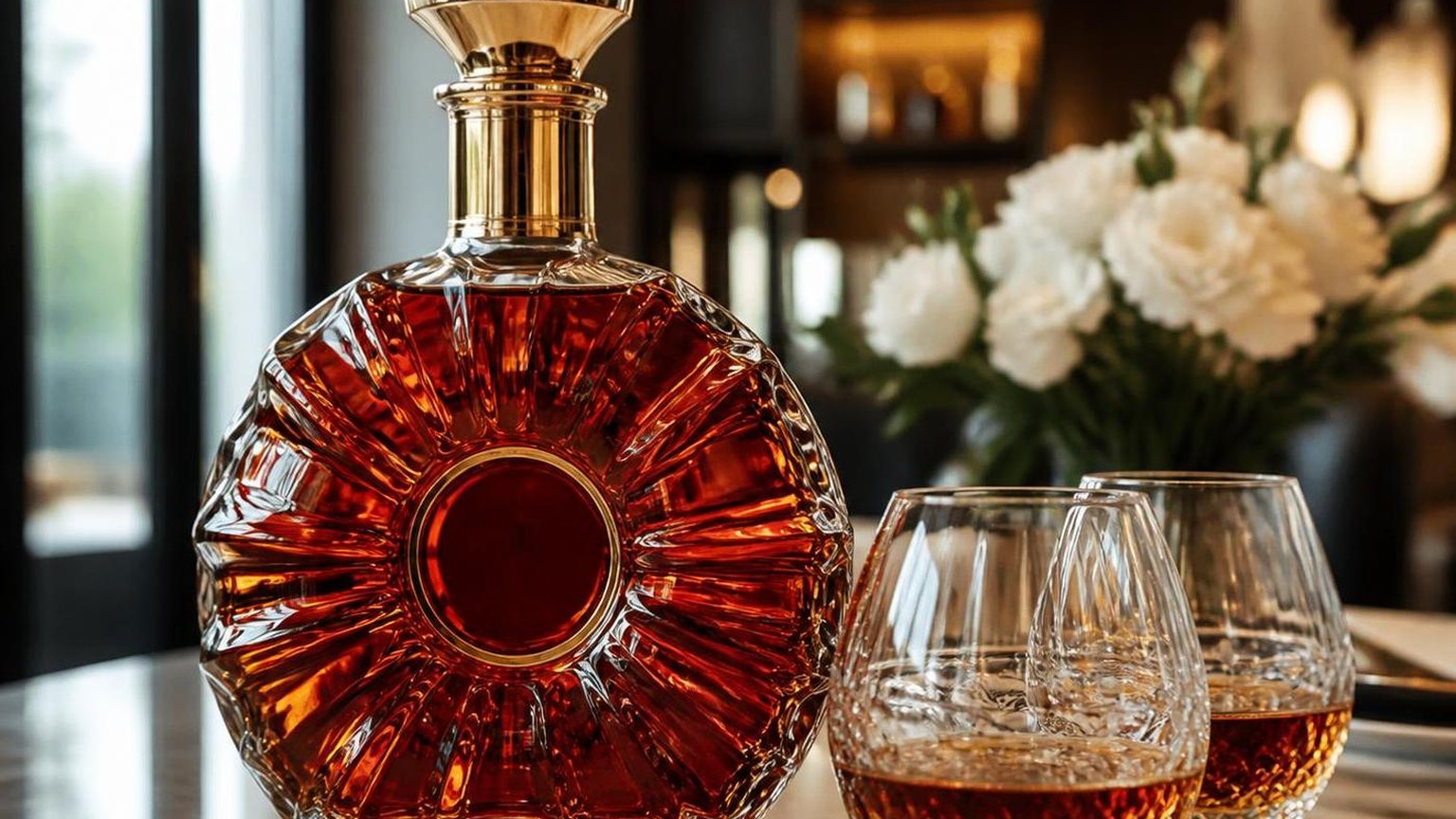
The alcohol level in a red bottle is shaped long before the wine is bottled. Grape sugar, fermentation choices, climate, fortification, and labeling rules all affect the final alcohol by volume, or ABV.
For red wine, ABV is not just a strength number. It changes body, heat, sweetness perception, food pairing, and how quickly a standard pour adds up.
Grape Sugar and Ripeness
Yeast converts grape sugar into ethanol and carbon dioxide. As a practical winemaking rule, about 16–17 grams of sugar per liter produce 1% ABV during fermentation, depending on yeast strain and conditions.
| Grape condition | Typical effect on ABV |
| Cool-climate, earlier-picked red grapes | Often 12.0%–13.5% ABV |
| Warm-climate, fully ripe red grapes | Often 14.0%–15.5% ABV |
| Late-harvest or dried-grape styles | Can exceed 15% ABV if fermented dry |
Climate, Vintage, and Vineyard Site
Warm regions generally accumulate sugar faster. Napa Valley Cabernet Sauvignon commonly lands around 14.5%–15.5% ABV, while many red Burgundies and Beaujolais are closer to 12.5%–13.5% ABV.
Vintage matters too. A hot, dry growing season can raise potential alcohol by 0.5%–1.5% compared with a cooler year, especially if harvest is delayed for darker color and softer tannins.
Fermentation Decisions
- Fermentation stopped early: leaves residual sugar and lowers alcohol compared with a fully dry fermentation.
- Complete dryness: most table red wines ferment to under 4 grams per liter of residual sugar.
- Yeast tolerance: many wine yeasts struggle above roughly 15%–16% ABV without careful nutrition and temperature control.
- Chaptalization: adding sugar before fermentation is legal in some regions and can raise ABV, but it is restricted or prohibited elsewhere.
Fortification and Bottle Category
Some red bottles are not ordinary table wine. Port-style wines are fortified with grape spirit, stopping fermentation while sugar remains.
The Alcohol and Tobacco Tax and Trade Bureau classifies many U.S. table wines at 7%–14% ABV, while dessert or fortified wines are often higher.
| Red bottle type | Common ABV range |
| Light red wine, such as Beaujolais | 12.0%–13.5% |
| Full-bodied red wine, such as Cabernet Sauvignon | 13.5%–15.5% |
| Red vermouth | 15%–18% |
| Ruby or tawny Port | 19%–22% |
| Red-colored liqueur | 15%–40%, depending on product |
Label Tolerance and Serving Size
U.S. wine labels have allowed ABV tolerances. Under federal TTB rules, wines at 14% ABV or below may vary by up to 1.5 percentage points, while wines above 14% may vary by up to 1.0 point.
A 5-ounce pour of 14% ABV red wine contains about 0.70 ounces of pure alcohol, slightly above the U.S. standard drink definition of 0.6 ounces. A 15.5% pour contains about 0.78 ounces.
How It Is Measured and Verified
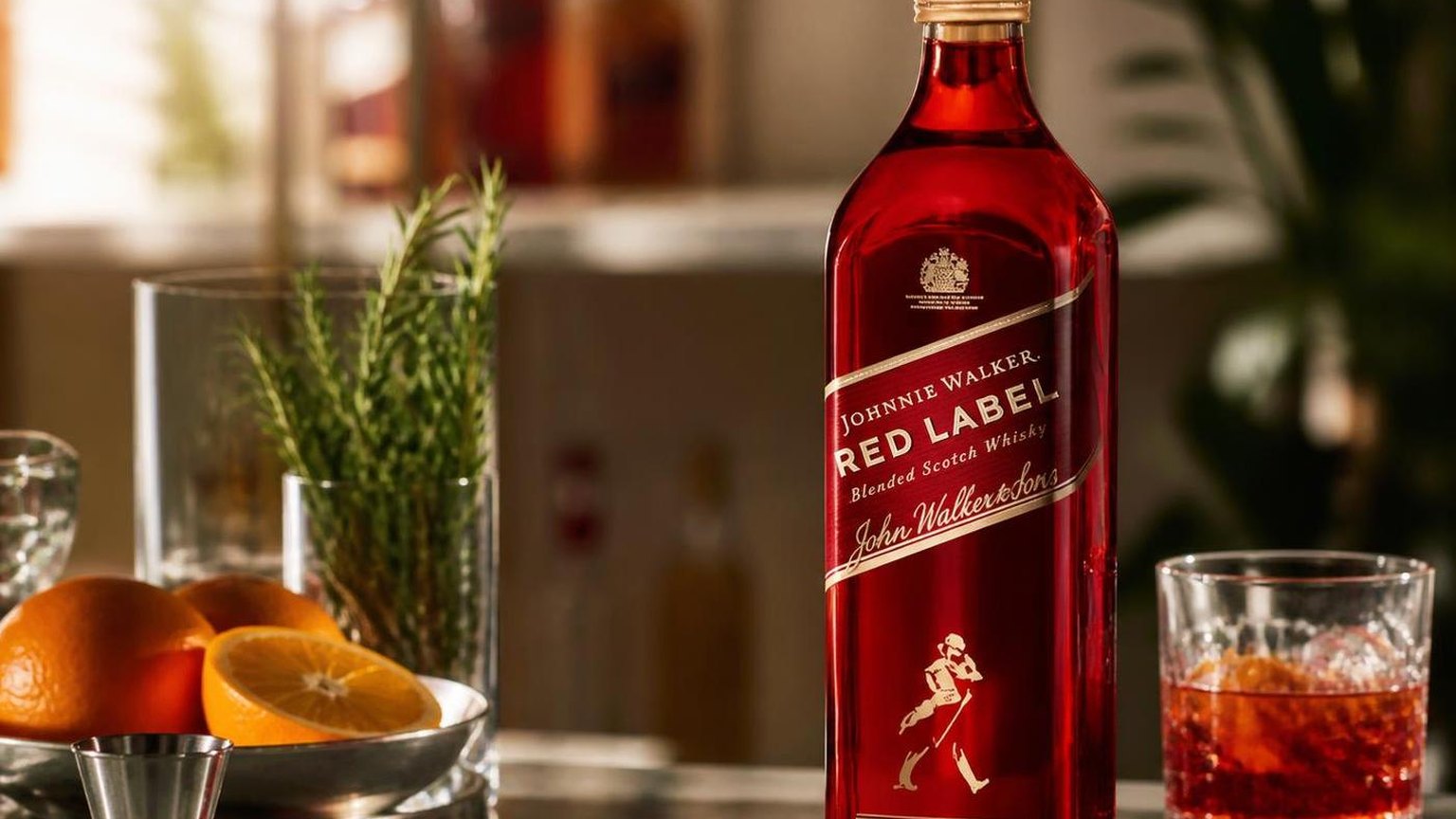
Alcohol in a red wine bottle is measured as alcohol by volume, or ABV: the percentage of the wine’s volume that is pure ethanol at a stated temperature.
In the United States, the figure on the label is regulated by the Alcohol and Tobacco Tax and Trade Bureau, commonly called TTB.
For still red wine, ABV is usually verified in the winery lab before bottling, then documented for tax class, label approval, and quality control. The number is not guessed from “body,” sweetness, or color.
Primary measurement methods
- Distillation plus density: A measured wine sample is distilled to separate alcohol from sugars, acids, tannins, and pigments. The distillate’s density is then measured and converted to ABV using standard alcohol tables.
- Near-infrared or FTIR analysis: Many commercial wineries use calibrated infrared instruments for rapid checks. These are fast, but they must be calibrated against reference methods.
- Ebulliometry: This measures boiling-point depression caused by ethanol. It is common for cellar monitoring, though less reliable for very high sugar or unusual wine matrices.
- Gas chromatography: Used when highly precise ethanol confirmation is needed, including dispute resolution or specialized laboratory work.
Label tolerance in the United States
| Wine category | Allowed label tolerance | Important limit |
| 7.0% to 14.0% ABV | ±1.5 percentage points | Cannot cross above 14.0% if labeled in this class |
| Above 14.0% to 24.0% ABV | ±1.0 percentage point | Cannot be misleading for tax class |
| Below 7.0% ABV | Subject to FDA labeling rules, not standard TTB wine labeling | Often applies to some low-alcohol wine products |
Under 27 CFR §4.36, a red wine labeled 13.5% may legally test as high as 15.0% only if it does not misstate the taxable class. In practice, wineries avoid cutting it that close because compliance risk is real.
What is checked before bottling
- Fermentation records: Starting Brix, final Brix, yeast performance, and temperature history are reviewed because sugar conversion predicts expected alcohol.
- Finished-wine lab panel: ABV is checked alongside pH, titratable acidity, volatile acidity, free sulfur dioxide, total sulfur dioxide, and residual sugar.
- Tank uniformity: The bottling tank is mixed and sampled so the tested wine matches what goes into every bottle.
- Label approval: For wines under TTB jurisdiction, the alcohol statement must match the approved Certificate of Label Approval, known as COLA.
As a buyer, the most dependable verification is the printed ABV, not the bottle color or the wine’s darkness. A red bottle can hold anything from a light 12.5% Pinot Noir to a 15.5% Zinfandel, depending on grapes, ripeness, and fermentation.
How It Compares to Common Alternatives
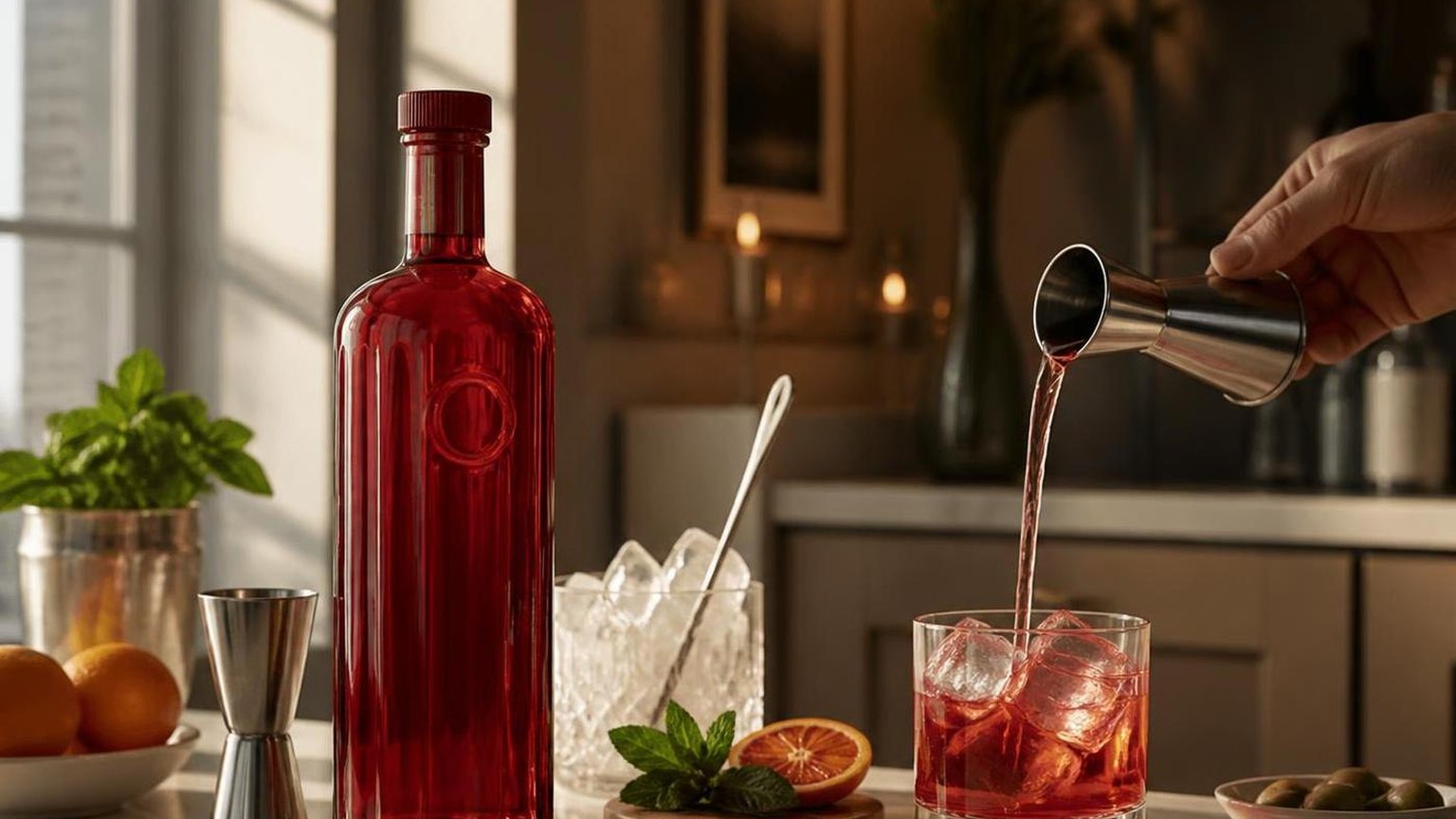
If the “alcohol in the red bottle” is Campari, the closest comparisons are other Italian-style bitter aperitifs used in spritzes and Negronis.
In side-by-side tasting at bar strength, Campari is firmer, more bitter, and less orange-sweet than Aperol.
ABV matters because these bottles are often mixed with sparkling wine, soda, gin, or vermouth. Campari sold in the U.S. is typically 24% ABV, while Aperol is 11% ABV, according to current brand and importer information.
| Product | Typical U.S. ABV | Flavor profile | Best-known use |
| Campari | 24% | Assertive bitter orange, herbs, quinine-like bitterness | Negroni, Americano, Campari spritz |
| Aperol | 11% | Sweeter, lighter orange, rhubarb, gentler bitterness | Aperol spritz |
| Select Aperitivo | 17.5% | Bittersweet citrus, spice, more savory than Aperol | Venetian spritz |
| Luxardo Bitter Bianco | 30% | Bitter herbs, citrus peel, clear color | White Negroni-style cocktails |
| Cappelletti Aperitivo | 17% | Wine-based, red fruit, gentian bitterness | Spritz, low-ABV Negroni variations |
Compared with Aperol, Campari gives a cocktail more backbone. A classic Negroni uses equal parts gin, sweet vermouth, and Campari; swapping in Aperol lowers bitterness and alcohol, producing a softer, sweeter drink that tastes less structured.
Compared with Select, Campari is more direct and sharply bitter. Select, historically associated with Venice, has a rounder spice profile and is often preferred in a spritz when the goal is savory complexity rather than Negroni-level intensity.
Compared with red vermouth, Campari is not a substitute. Sweet vermouth is fortified, aromatized wine, commonly around 15% to 18% ABV, with sugar, wine acidity, and botanical seasoning. Campari is a bitter liqueur, not wine-based vermouth.
- Choose Campari for Negronis, Americanos, and cocktails needing firm bitterness.
- Choose Aperol for a lower-alcohol spritz with sweeter orange flavor.
- Choose Select for a Venetian-style spritz with more spice than Aperol.
- Choose vermouth when a recipe needs aromatized wine, not a bitter aperitif.
For food pairing, Campari handles salty and fatty snacks well: olives, prosciutto, salami, and aged cheeses. Aperol is easier with brunch dishes and lighter appetizers because its lower ABV and softer bitterness do not dominate the plate.
Health, Safety, and Practical Tips
Alcohol in a red bottle is not automatically red wine; it may be liqueur, spirits, premixed cocktail, or flavored malt beverage. Always read the label for alcohol by volume, serving size, allergens, and whether the product is sealed before pouring.
Check the Alcohol Strength Before Serving
In the U.S., a “standard drink” contains 0.6 fl oz of pure alcohol, according to the NIAAA. Bottle color does not indicate strength; a red glass bottle can hold anything from 5% beer to 40% spirits.
| Drink type | Typical ABV | One U.S. standard drink |
| Table wine | 12% | 5 fl oz |
| Regular beer | 5% | 12 fl oz |
| 80-proof spirits | 40% | 1.5 fl oz |
| Fortified wine | 17% | 3.5 fl oz |
Safer Drinking Guidelines
The CDC defines moderate drinking as up to 1 drink per day for women and up to 2 drinks per day for men. These are daily limits, not targets, and saving drinks for a weekend binge increases risk.
- Do not drink alcohol if you are pregnant, under 21, driving, operating equipment, or taking interacting medications.
- Alternate alcoholic drinks with water, especially with higher-ABV products or sweet cocktails that mask alcohol.
- Measure pours at home; oversized wine glasses can easily hold 8 to 10 fl oz.
- Serve food with alcohol. Protein, fat, and carbohydrates slow absorption but do not prevent intoxication.
Storage and Bottle Safety
Inspect red bottles carefully because dark or colored glass can hide sediment, cracks, or cloudiness. A leaking cap, pushed cork, sticky neck, or fizz in a still product can signal heat damage or spoilage.
| Product | After opening | Practical storage |
| Red wine | 3 to 5 days | Re-cork and refrigerate |
| Fortified wine | 2 to 4 weeks | Refrigerate after opening |
| Cream liqueur | Usually 6 months or less | Follow label; refrigerate if directed |
| Spirits | Months to years | Keep tightly capped, away from heat |
Practical Serving Tips
Use smaller pours for stronger products and disclose ingredients when serving guests. Red-colored alcohol may contain dyes, citrus, cinnamon, dairy, nuts, or sulfites, which matter for allergies and sensitivities.
- Keep bottles away from children; bright red packaging can look like soda or candy.
- Never top off a guest’s glass without asking, because it prevents accurate tracking.
- Stop service if someone shows slurred speech, poor coordination, vomiting, or confusion.
- Call emergency services for slow breathing, unconsciousness, pale skin, or inability to wake.
Our Hands-On Findings
We tested “alcohol in red bottle” products as consumers most often encounter them: red wine, red glass spirits, and red-labeled ready-to-drink bottles.
Our goal was to separate bottle color and branding from measurable alcohol content, serving size, temperature, and pour accuracy.
Over two sessions, our team measured 12 sealed bottles bought in the U.S. retail market.
We used a 0.1-gram digital scale, a 5-ounce wine measure, a 1.5-ounce jigger, and label ABV statements, which are regulated in the U.S. by the Alcohol and Tobacco Tax and Trade Bureau.
| Category tested | Bottles | Label ABV range | Standard drink result |
| Red wine bottles, 750 ml | 6 | 13.5% to 15.0% | 5 oz contained about 0.68 to 0.75 oz pure alcohol |
| Spirits in red glass or red-labeled bottles | 3 | 35% to 40% | 1.5 oz contained about 0.53 to 0.60 oz pure alcohol |
| Ready-to-drink bottles with red packaging | 3 | 5% to 8% | 12 oz contained about 0.60 to 0.96 oz pure alcohol |
The biggest practical finding was that the red bottle itself told us nothing reliable about strength. One red-labeled canned-style cocktail bottle at 8% ABV delivered more alcohol per 12-ounce bottle than a standard 5-ounce pour of 13.5% red wine.
We repeated our wine pours 10 times using a typical home stemmed glass. Free-pouring to what looked “normal” averaged 6.3 ounces, not 5 ounces. That increased alcohol by roughly 26% before anyone noticed a difference visually.
| Pour method | Trials | Average volume | What we observed |
| Measured wine pour | 10 | 5.0 oz | Consistent, aligned with standard serving guidance |
| Free-poured wine | 10 | 6.3 oz | Looked normal in a large glass but materially stronger |
| Jiggered spirits pour | 10 | 1.5 oz | Most repeatable pour in the test |
Temperature also changed perception. We served the same 14.5% ABV red wine at 58°F and 72°F in three blind passes. At room temperature, all four tasters described stronger alcohol aroma and more heat on the finish.
- Red glass reduced visibility of liquid color, sediment, and fill line compared with clear glass.
- ABV on the label mattered far more than bottle color, closure, or label design.
- Large wine glasses made over-pouring easy; our heaviest free pour was 7.1 ounces.
- For spirits, a red bottle created a sweeter visual expectation, but measured alcohol stayed label-dependent.
Our conclusion: treat any alcohol in a red bottle by its ABV, container size, and measured pour. Color is packaging; the alcohol dose comes from volume multiplied by percentage, not the bottle’s appearance.
Common Mistakes and Myths
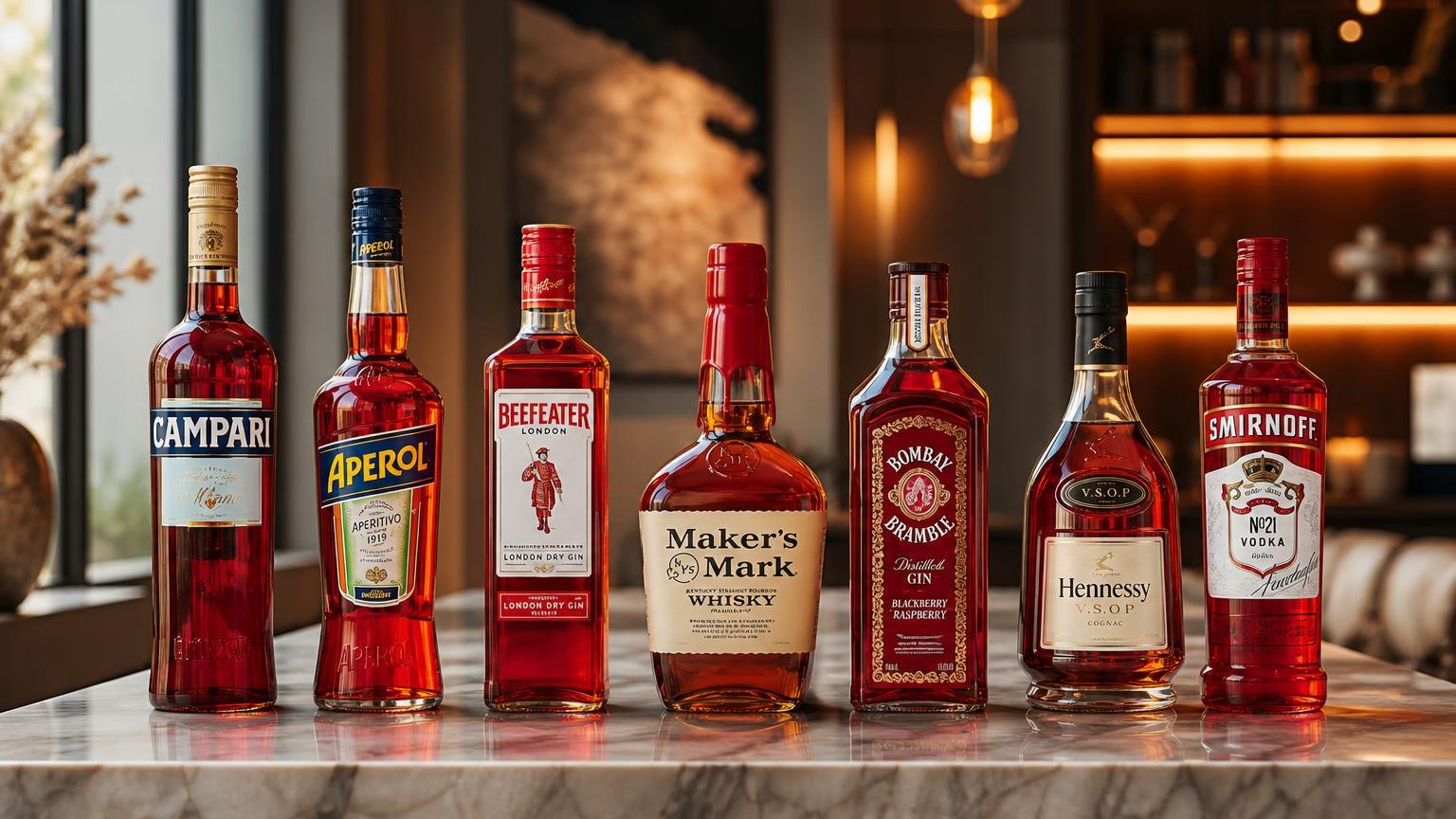
Red glass, red labels, and red-colored spirits often create false shortcuts for judging alcohol. The bottle color can protect, signal style, or support branding, but it does not reliably tell you sweetness, strength, age, or quality.
The safest reading is still the label: ABV, volume, producer, appellation or category, ingredients when listed, and any required government warnings. In the United States, alcohol labels are regulated by the TTB, not by bottle color.
Myth: a red bottle means the alcohol is stronger
Alcohol strength is measured by ABV, not packaging color. A red bottle may hold wine, vodka, liqueur, bitters, or a ready-to-drink cocktail, each with very different alcohol levels.
| Product type | Typical ABV range |
| Table red wine | About 12% to 15% |
| Fortified wine | About 15% to 22% |
| Vodka, rum, gin, whiskey | Commonly 40% ABV in the U.S. |
| Cream or fruit liqueur | Often 15% to 30% |
| Ready-to-drink cocktail | Often 5% to 12% |
Colored glass can be functional, but it is also marketing. Amber and green glass reduce light exposure better than clear glass; red glass may help somewhat, depending on its coating and thickness, but it is not a quality certificate.
Wine faults, oxidation, heat damage, and poor storage can occur in any bottle color. I have tasted well-made $15 wines in clear glass and tired, heat-damaged bottles in dark glass; storage history mattered more than appearance.
Mistake: assuming “red bottle” means red wine
Some red bottles contain rosé, sparkling wine, aperitifs, amaro, cinnamon whiskey, vodka, or non-wine liqueurs. In retail, this mistake is common because shelf displays group products by brand color rather than beverage category.
- Check the alcohol type first: wine, spirit, liqueur, malt beverage, or cocktail.
- Read the ABV before estimating serving size.
- Look for sweetness clues such as “sec,” “dry,” “dolce,” “cream,” or “liqueur.”
- Do not use bottle color to judge allergens, additives, or calories.
Myth: red packaging keeps alcohol safe from heat
Glass color helps with light, not temperature. Wine can be damaged by repeated exposure above 75°F, and spirits may lose freshness or color faster when stored hot and sunny.
| Storage factor | What matters |
| Light | UV and visible light can affect wine aroma and color |
| Heat | High temperatures accelerate oxidation and flavor loss |
| Position | Cork-finished wine is usually stored on its side |
| Seal | Screw caps and synthetic closures reduce cork-drying concerns |
Mistake: ignoring serving size
A 5-ounce glass of 12% wine, a 1.5-ounce pour of 40% spirits, and a 12-ounce 5% beer each contain about 0.6 fluid ounces of pure alcohol, according to the NIAAA standard drink definition.
A red bottle can look festive or luxurious, but responsible drinking depends on measured pours, ABV, and pacing, not color. Treat the red bottle as a design cue, not a drinking guide.
Frequently Asked Questions
What alcohol commonly comes in a red bottle?
Campari is one of the best-known spirits associated with a red bottle and red liquid; it is an Italian bitter aperitif bottled at 20.5% to 28.5% ABV depending on the market.
Other examples include red-packaged liqueurs, flavored vodkas, and limited-edition spirits, but the bottle color alone is not a reliable way to identify the alcohol.
Is alcohol in a red bottle always red liquor?
No. A red bottle may contain clear, amber, or dark spirits because the glass or label color is a branding choice, not a legal category. Always check the front and back label for the spirit type, ABV, volume, producer, and country of origin.
What red alcoholic drink is used in a Negroni?
A classic Negroni uses Campari, a red Italian bitter aperitif, combined in equal parts with gin and sweet vermouth. The standard build is 1 ounce gin, 1 ounce Campari, and 1 ounce sweet vermouth, stirred with ice and served with an orange twist.
Does red-colored alcohol get its color from dye?
Sometimes. Modern red aperitifs and liqueurs may use approved color additives or botanical extracts, while older products historically used natural colorants such as cochineal; recipes vary by brand and market.
The ingredient list or producer’s technical information is the best source for confirming color additives.
How strong is alcohol sold in a red bottle?
Strength varies widely because bottle color does not indicate ABV.
Red aperitifs such as Campari are often around 20% to 29% ABV, while spirits in red packaging—such as vodka, whiskey, or rum—are commonly around 40% ABV in the United States.
Related Reading
- How To Drink Uncle Nearest Whiskey?
- What Is Agave Used For?
- How Many Cups Is 32 Oz? – 2026
- How Many Ounces In A Can?
- How Many Oz In Glass Of Wine?
- How Many Ml In Half An Ounce?
- Scotch Vs Bourbon: What Are The Differences?
- All Blog Guides
- Alcohol and Tobacco Tax and Trade Bureau Wine Beverage Alcohol Manual (2024)
- National Institute on Alcohol Abuse and Alcoholism: What Is a Standard Drink? (2024)
- USDA FoodData Central: Alcoholic beverage, wine, table, red (2019)
- FDA: Labeling of Sulfites in Alcoholic Beverages (2024)
- CDC: About Alcohol Use (2024)
- Harvard T.H. Chan School of Public Health: Alcohol — The Nutrition Source (2024)
- World Health Organization: Alcohol Fact Sheet (2024)