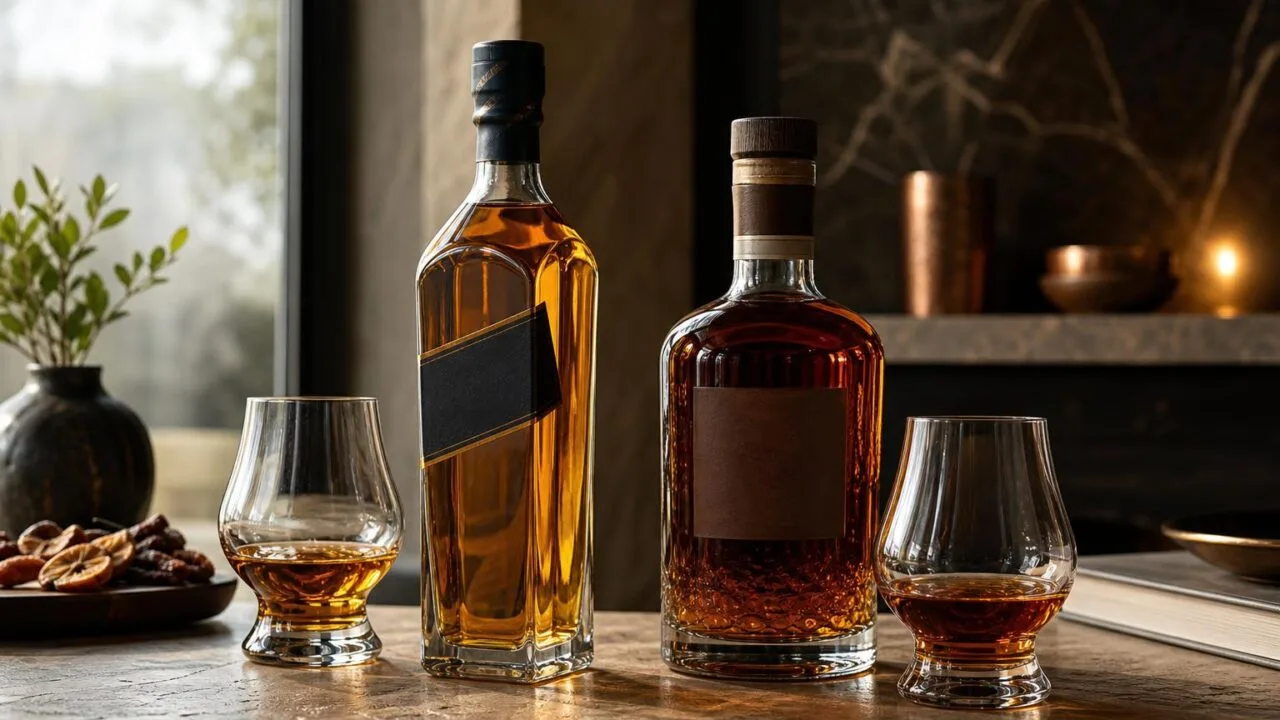
Scotch Vs Bourbon is a comparison between Scotland’s malt- or grain-based whisky and America’s corn-led whiskey, defined by different grains, locations, still traditions, and maturation rules.
Scotch must be made in Scotland and aged at least 3 years in oak; bourbon must be made in the U.S. from at least 51% corn.
In the glass, Scotch often ranges from honeyed and floral to smoky and maritime, especially with peat. Bourbon typically shows vanilla, caramel, oak, and baking spice because it must mature in new charred oak containers.
Understanding these legal and sensory differences makes choosing a bottle—or pairing one with food—far more precise.
Legal Rules That Separate Scotch and Bourbon
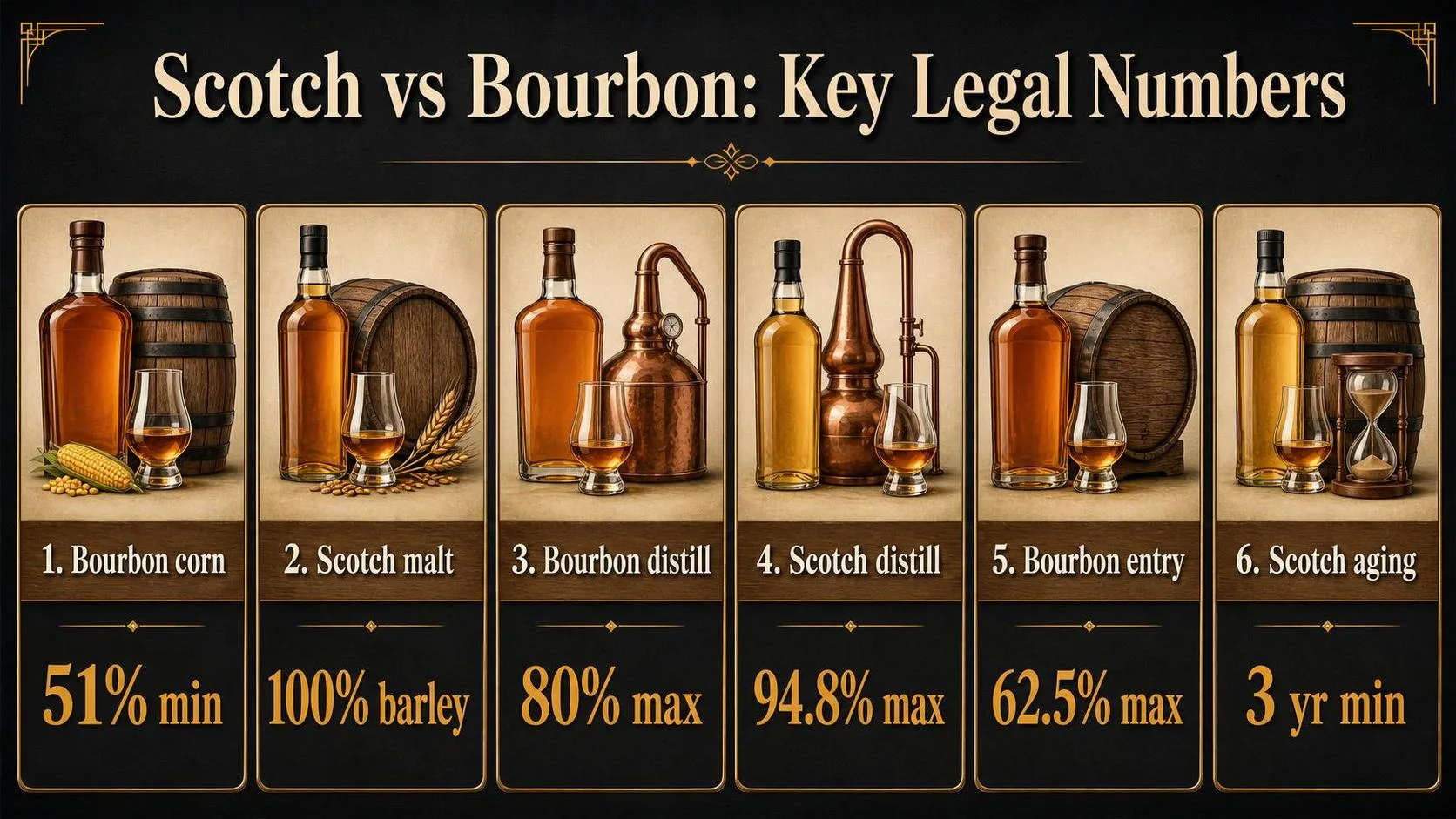
Scotch and bourbon are separated less by “smoothness” than by legal thresholds: grain percentages, distillation strength, barrel rules, and minimum aging.
These numbers explain why bourbon often tastes sweeter and oakier, while Scotch can range from malty and honeyed to smoky, coastal, or sherried.
| Rule | Bourbon | Scotch whisky |
| Where it must be made | United States | Scotland |
| Core grain requirement | At least 51% corn in the mash bill | Malt whisky: 100% malted barley; grain whisky may use other cereals |
| Maximum distillation strength | 160 proof, or 80% ABV | 94.8% ABV maximum |
| Barrel entry maximum | 125 proof, or 62.5% ABV | No equivalent U.S.-style entry-proof rule; must mature in oak casks |
| Barrel type | New, charred oak containers | Oak casks, often previously used for bourbon, sherry, wine, or other spirits |
| Minimum aging | No general minimum for bourbon; “straight bourbon” requires at least 2 years | At least 3 years in oak casks in Scotland |
| Minimum bottling strength | 80 proof, or 40% ABV | 40% ABV |
The 51% corn rule is the bourbon flavor anchor. Many Kentucky bourbons use 65% to 75% corn, with rye or wheat plus malted barley filling out the mash bill. Corn contributes sweetness; rye adds spice; wheat tends to soften the finish.
Scotch’s 3-year minimum is stricter than bourbon’s baseline, but age statements work differently in both categories. If a bottle says 12 years, every drop in that whisky must be at least 12 years old.
The number always refers to the youngest whisky in the bottle.
| Age statement issue | Bourbon | Scotch |
| Under 4 years | Straight bourbon must state its age if younger than 4 years | Cannot be Scotch unless aged at least 3 years |
| Common mature range | 4 to 12 years is common; older bourbon can become very oak-driven | 10, 12, 15, and 18 years are common age-stated releases |
Barrel size and climate matter. Scotch casks may not exceed 700 liters under Scotch Whisky Regulations.
Bourbon usually matures in 53-gallon, or about 200-liter, American standard barrels, giving more wood contact per gallon than many larger Scotch casks.
Evaporation also changes the math.
In Kentucky, a rickhouse may lose roughly 3% to 5% per year to the “angel’s share.” In Scotland’s cooler, damper climate, losses are often closer to 1% to 2% annually, supporting longer maturation without the same rapid concentration.
What Shapes Scotch and Bourbon Flavor
The flavor difference between Scotch and bourbon is not one variable; it is the result of grain, distillation rules, barrel law, climate, and age. U.S.
TTB standards and the Scotch Whisky Regulations 2009 set hard boundaries that shape what ends up in the glass.
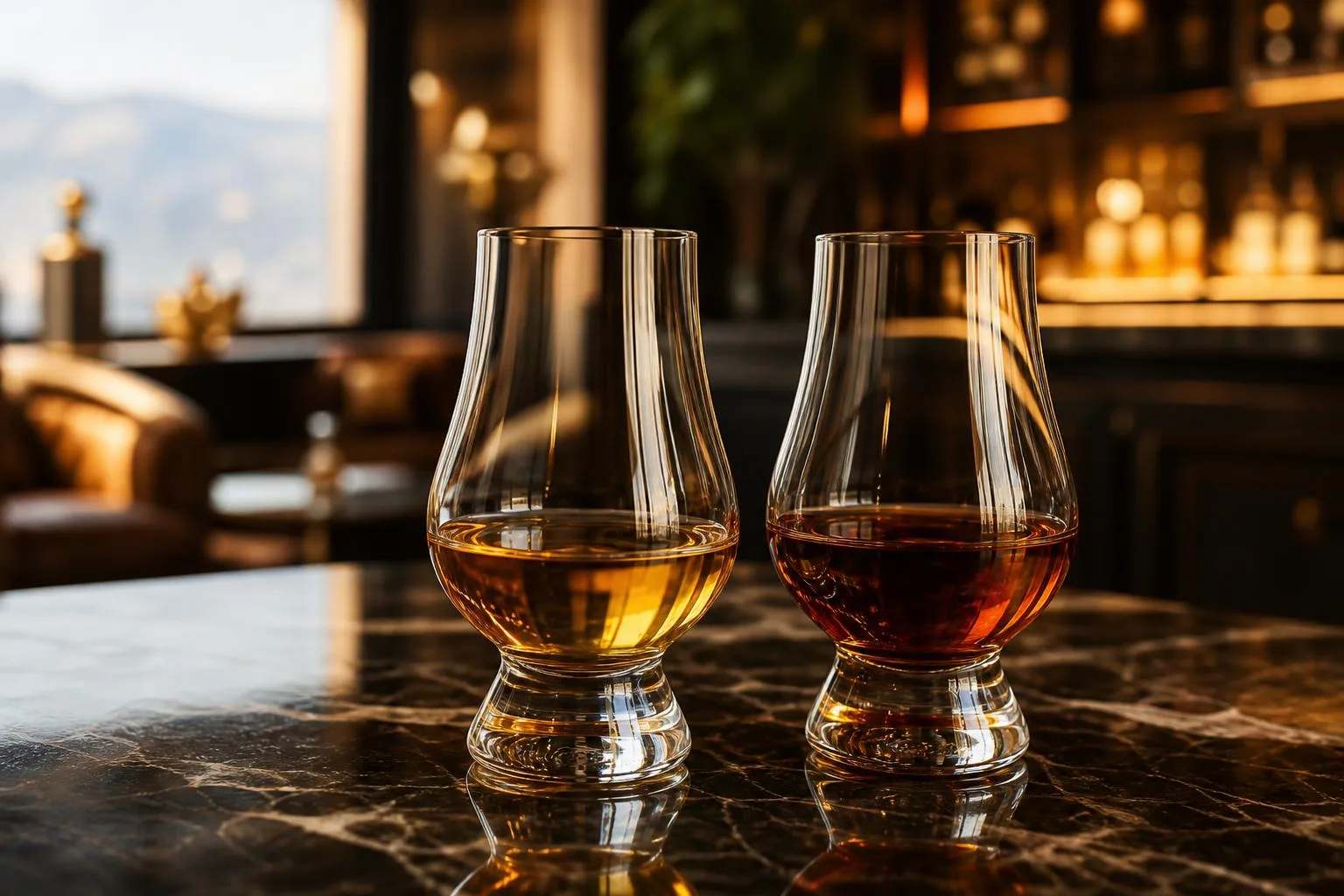
In tastings, bourbon usually reads sweeter and fuller, while Scotch can range from honeyed and malty to smoky, briny, or dried-fruit driven. The production rules explain why those profiles are so consistently different.
| Factor | Bourbon | Scotch |
| Primary grain | At least 51% corn by U.S. law | Malt whisky uses 100% malted barley; grain Scotch may use other cereals |
| Barrel requirement | New, charred oak containers | Oak casks, often previously used for bourbon, sherry, wine, or other spirits |
| Maximum distillation strength | 160 proof, or 80% ABV | 94.8% ABV under Scotch Whisky Regulations |
| Minimum maturation | No federal minimum for standard bourbon; straight bourbon needs at least 2 years | Minimum 3 years in Scotland |
Grain bill and fermentation
Corn is the biggest reason bourbon often shows vanilla, caramel, kettle corn, and brown sugar. A typical bourbon mash bill may contain 60% to 80% corn, with rye or wheat and malted barley making up the balance.
Scotch malt whisky is built on malted barley, which brings cereal, biscuit, honey, grass, and nutty flavors. Peated malt adds phenolic compounds, producing smoke, iodine, tar, seaweed, or medicinal notes depending on peat source and kiln exposure.
Barrels and previous contents
Bourbon’s new charred oak requirement has a major impact. Fresh oak supplies high levels of vanillin, lactones, tannin, caramelized wood sugars, and spice, especially when the barrel interior is deeply charred.
Scotch usually matures in refill wood, commonly ex-bourbon barrels or ex-sherry butts. This softens direct oak impact and allows distillery character to remain visible, while sherry casks add raisin, walnut, fig, clove, and dark chocolate.
Climate, warehouse, and age
Kentucky warehouses can swing from hot summers above 90°F to freezing winters, pushing whiskey in and out of wood aggressively. This accelerates extraction and evaporation, so many bourbons taste mature at 4 to 8 years.
Scotland’s cooler, damper climate generally slows maturation. Scotch often develops more gradually, with many single malts released at 10, 12, 15, or 18 years, though age alone does not guarantee better balance.
- Entry proof matters: bourbon may enter the barrel at no more than 125 proof, or 62.5% ABV, affecting extraction and texture.
- Still type matters: many bourbons use column stills plus a doubler; single malt Scotch is traditionally batch-distilled in copper pot stills.
- Blending matters: bourbon batches may combine multiple barrels; blended Scotch may combine malt and grain whiskies for consistency.
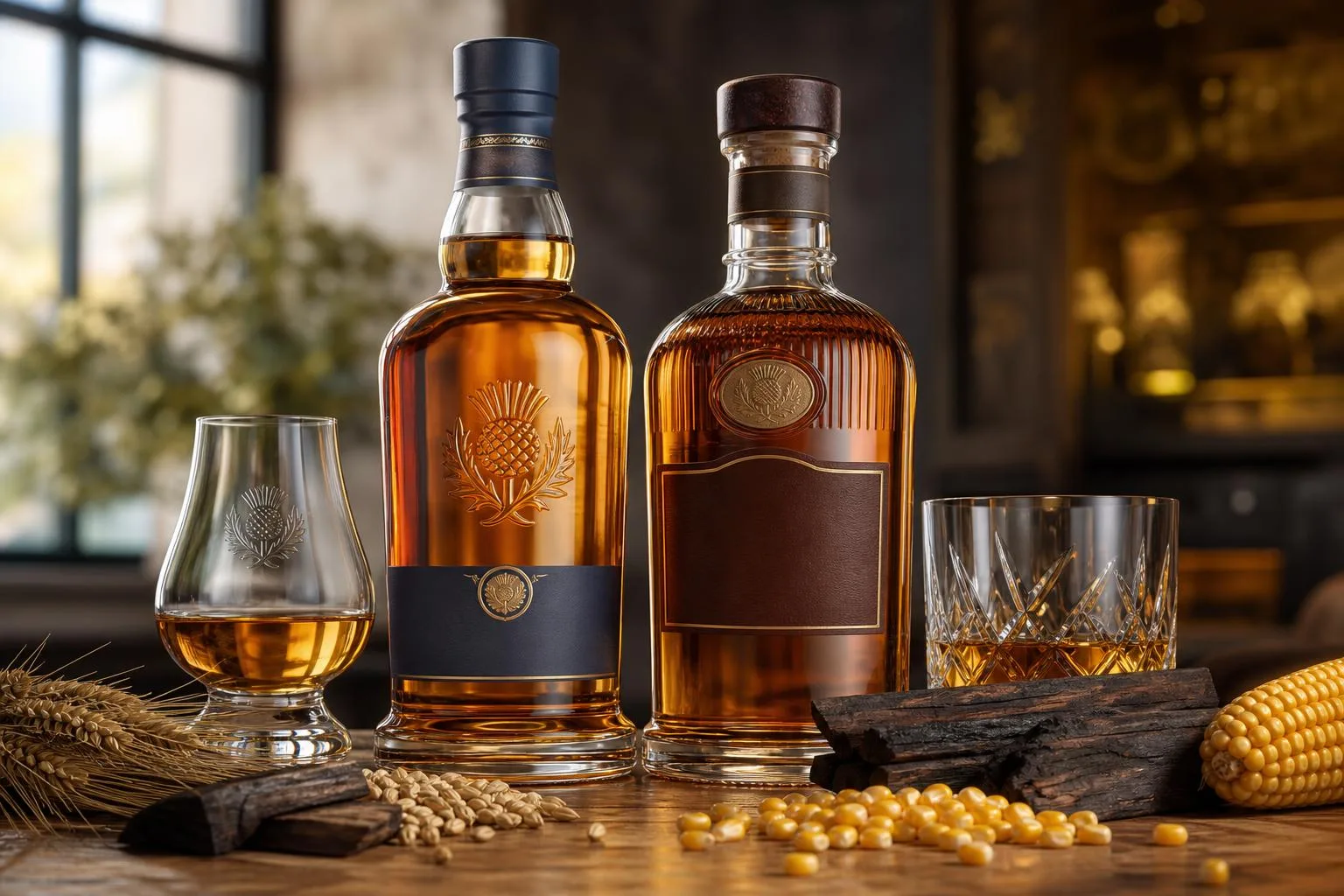
How Scotch and Bourbon Are Defined
Scotch and bourbon are not verified by taste alone. They are legally measured through mash composition, distillation strength, barrel entry proof, maturation rules, bottling strength, labeling records, and, for Scotch, geographic protection.
In practice, verification starts with production logs and gauge records. Distillers measure alcohol by volume, proof gallons, grain usage, barrel fills, losses, and bottling strength under government-regulated systems.
Key Legal Measurements
| Requirement | Scotch Whisky | Bourbon Whiskey |
| Primary legal source | Scotch Whisky Regulations 2009 | U.S. 27 CFR §5.143 and TTB rules |
| Grain requirement | Malted barley required for malt Scotch; grain Scotch may use other cereals | At least 51% corn in the mash bill |
| Maximum distillation strength | Less than 94.8% ABV | Not more than 80% ABV, or 160 proof |
| Barrel entry strength | No specific statutory maximum in the same way as bourbon | Not more than 62.5% ABV, or 125 proof |
| Maturation minimum | At least 3 years in oak casks in Scotland | No general minimum for bourbon; “straight bourbon” requires at least 2 years |
| Bottling strength | Minimum 40% ABV | Minimum 40% ABV, or 80 proof |
For Scotch, verification is tied to place. The whisky must be mashed, fermented, distilled, matured, and bottled according to the Scotch Whisky Regulations, with maturation occurring in Scotland in oak casks not exceeding 700 liters.
Age statements are verified by the youngest whisky in the bottle. A 12-year Scotch or bourbon containing older barrels may still only claim 12 years if the youngest component is 12 years old.
For bourbon, the Alcohol and Tobacco Tax and Trade Bureau reviews formulas when required, labels, class/type designations, and certificates of label approval.
Production records must support claims such as “straight,” “bottled in bond,” age, proof, and state of distillation.
How Producers Confirm Strength and Identity
- ABV and proof: U.S. proof is twice ABV, so 50% ABV equals 100 proof. Scotch labels usually state ABV rather than proof.
- Mash bill: Bourbon producers document that corn is at least 51% of the grain recipe. Scotch producers document malted barley use and cereal type.
- Barrel records: Fill date, barrel number, warehouse location, entry proof, and dumping date support age and batch claims.
- Label terms: “Single malt Scotch” means malt whisky from one Scottish distillery. “Straight bourbon” means bourbon aged at least 2 years in new charred oak.
- Geographic claims: Scotch is protected as a UK geographical indication. Bourbon must be made in the United States, though not necessarily Kentucky.
A reliable bottle should therefore match its legal category, stated ABV, age claim, and origin. The measurements on the label are not marketing guesses; they are backed by regulated production and bottling records.
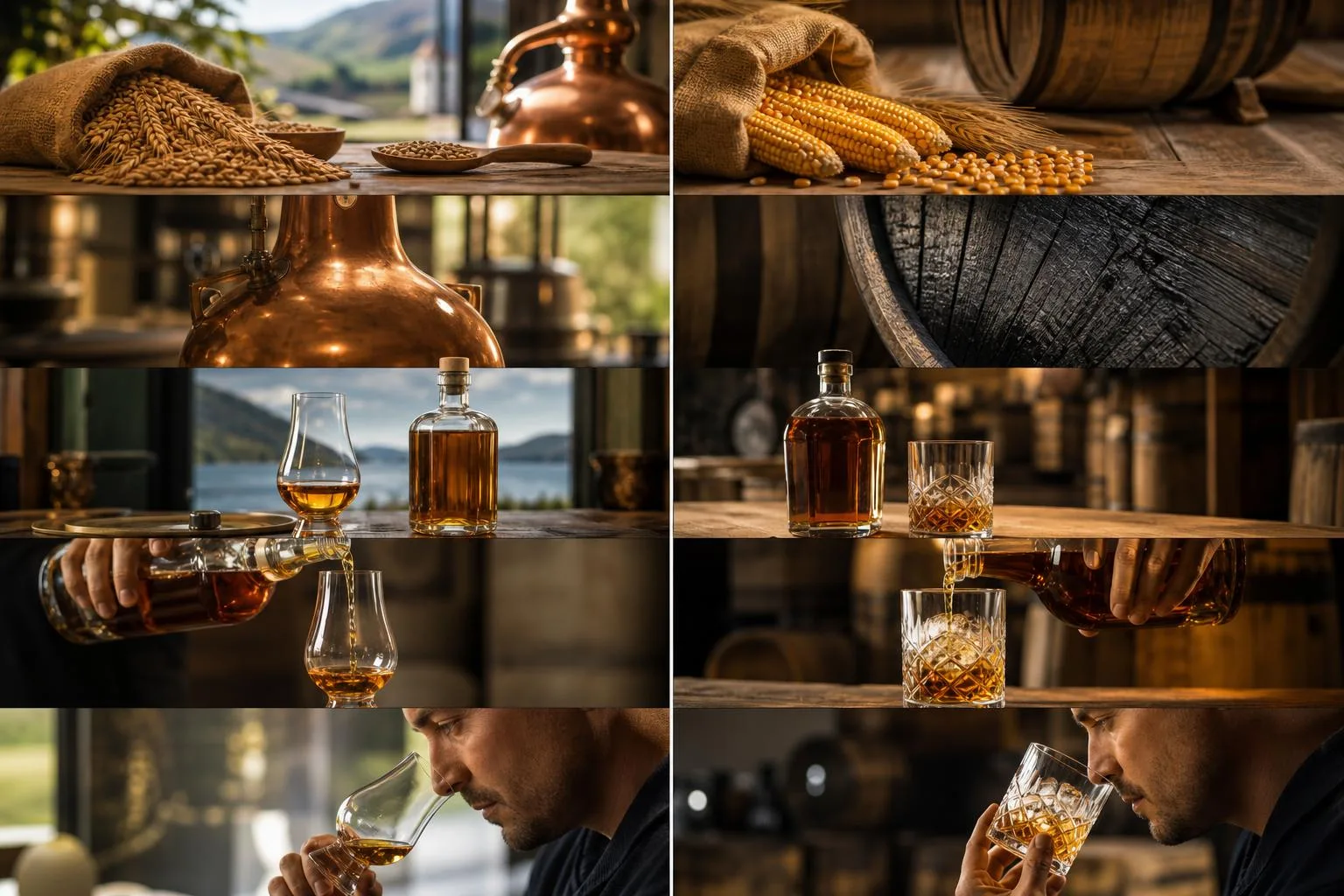
Scotch and Bourbon vs Other Whiskies
Scotch and bourbon sit in the same global whisky family, but their rules create sharply different flavors.
The quickest way to compare them with rye, Irish whiskey, and Japanese whisky is to look at grain, geography, proof, and maturation requirements.
These legal baselines matter because they shape what ends up in the glass before barrel selection or blending skill even begins.
| Whisky type | Key grain rule | Origin rule | Maturation rule | Typical flavor direction |
| Scotch whisky | Malt whisky uses 100% malted barley; grain Scotch may include wheat or corn | Must be made in Scotland | Minimum 3 years in oak casks, bottled at 40% ABV or higher | Malt, dried fruit, oak, coastal smoke in peated styles |
| Bourbon | At least 51% corn | Must be made in the United States | New charred oak containers; no minimum age unless labeled straight | Vanilla, caramel, sweet corn, baking spice |
| Rye whiskey | At least 51% rye in the U.S. | Usually United States or Canada | U.S. rye uses new charred oak; straight rye requires at least 2 years | Pepper, mint, clove, dry spice |
| Irish whiskey | Can use malted and unmalted barley, plus other grains | Must be made on the island of Ireland | Minimum 3 years in wooden casks | Light malt, orchard fruit, honey, cereal |
| Japanese whisky | No single mash-bill style dominates | Modern labeling standards require key production steps in Japan for “Japanese whisky” | Usually oak-aged; standards require at least 3 years for products labeled Japanese whisky | Delicate malt, incense, fruit, clean oak |
Compared with rye whiskey
Rye is the closest bourbon alternative in cocktails, but it is drier and spicier. In a Manhattan, rye’s peppery edge cuts through sweet vermouth; bourbon makes the same drink rounder and sweeter.
Compared with Irish whiskey
Irish whiskey is often smoother in texture because many popular bottlings are triple-distilled, though that is not mandatory for every producer. It usually lacks bourbon’s heavy new-oak sweetness and Scotch’s pronounced peat smoke.
Compared with Japanese whisky
Japanese whisky is most often compared to Scotch, especially blended Scotch and single malt styles. Many producers emphasize balance, precise blending, and restrained oak rather than the bold corn sweetness associated with bourbon.
- Choose Scotch when you want malt depth, regional variation, or peat smoke.
- Choose bourbon when you want sweeter oak, vanilla, caramel, and a fuller cocktail base.
- Choose rye for drier spice and structure in classic cocktails.
- Choose Irish whiskey for approachable fruit, cereal notes, and lighter body.
- Choose Japanese whisky for a Scotch-adjacent profile with high emphasis on balance and texture.
Nutrition and Drinking Considerations
Scotch and bourbon are nutritionally very similar when served neat: both are distilled spirits with no meaningful carbs, fat, or protein.
The main health variable is not the grain or country of origin, but alcohol by volume, pour size, drinking pace, and whether mixers add sugar.
In the U.S., a “standard drink” contains 0.6 fluid ounces of pure alcohol, according to NIAAA and CDC guidance. For 80-proof whisky, that is a 1.5-ounce pour; many bar rocks pours are larger.
| Measure | Scotch | Bourbon |
| Typical bottled strength | 40% ABV minimum; many single malts 43% to 46% | 40% ABV minimum; bottled-in-bond is exactly 50% |
| Standard drink at 40% ABV | 1.5 fl oz | 1.5 fl oz |
| Calories, neat 1.5 fl oz at 40% ABV | About 97 kcal | About 97 kcal |
| Cask-strength risk | Often 55% to 63% ABV | Often 55% to 65% ABV |
Alcohol guidelines do not distinguish between scotch and bourbon. The CDC defines moderate drinking as up to 1 drink per day for women or up to 2 for men, not as an average saved for the weekend.
- Measure pours. Use a jigger at home. A 2-ounce pour of 50% ABV bourbon or scotch contains about 1.33 standard drinks, not one.
- Be careful with cask strength. A 1.5-ounce pour at 60% ABV contains 0.9 fluid ounces of pure alcohol, equal to 1.5 U.S. standard drinks.
- Add water intentionally. A few drops can open aroma, but dilution does not reduce total alcohol consumed unless you drink less spirit.
- Avoid driving. In every U.S. state, 0.08% BAC is the legal per se limit for most drivers; impairment can begin below that.
- Watch cocktails. An Old Fashioned often contains 2 ounces of whiskey, while a highball may use 1.5 ounces. Sweet vermouth, syrups, cola, or ginger beer add calories and sugar.
- Check medications. Alcohol can interact with opioids, benzodiazepines, sleep aids, antidepressants, acetaminophen, and many antihistamines.
For tasting flights, smaller pours are practical. Three half-ounce samples of 40% ABV scotch or bourbon equal one standard drink total, before any refills or higher-proof bottles.
Skip alcohol entirely if pregnant, trying to become pregnant, under the legal drinking age, driving, or managing alcohol use disorder. For hosts, provide water, food, measured pours, and a no-pressure option to spit or leave samples unfinished.
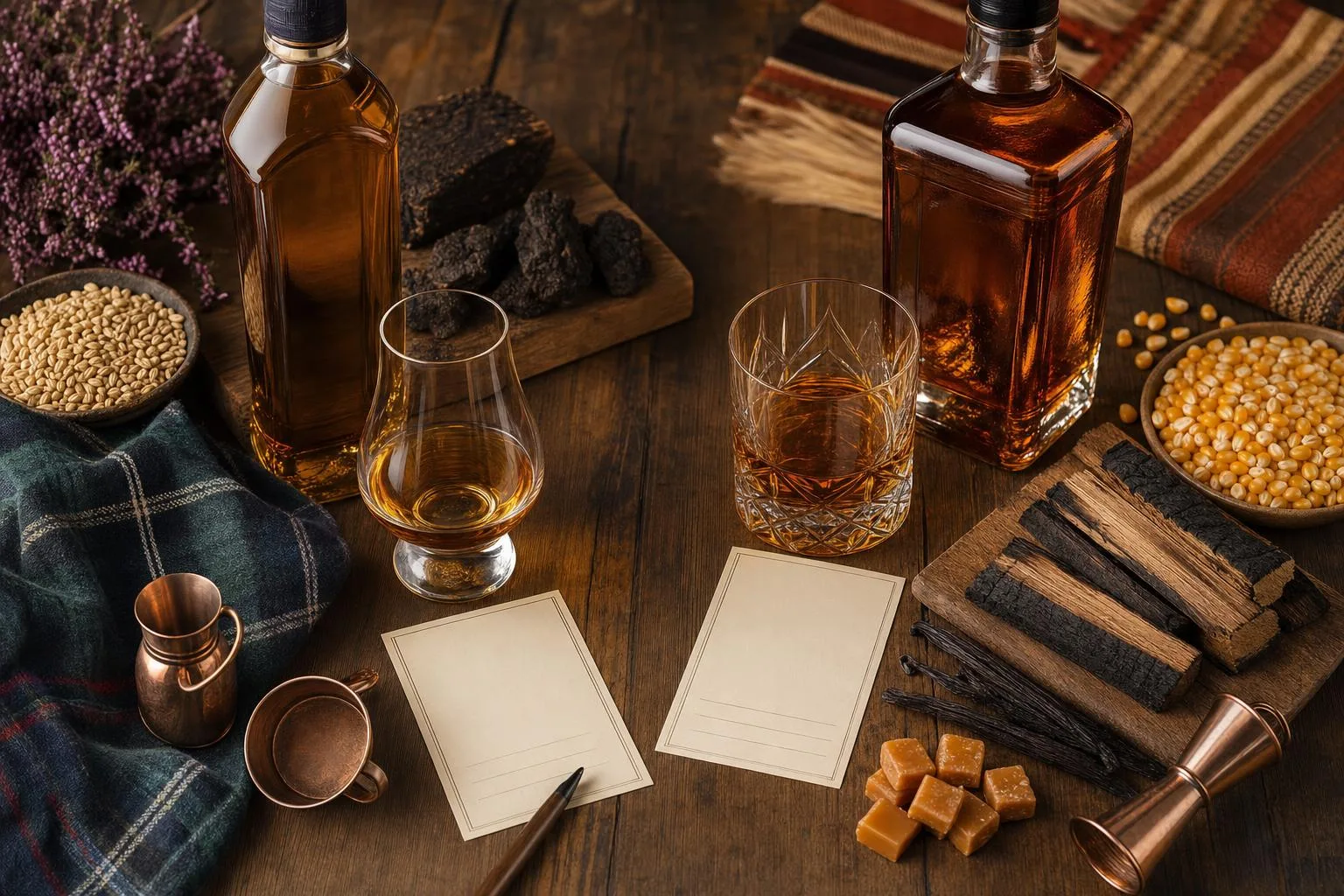
Side by Side Tasting Results
We tasted Scotch and bourbon side by side over three evening sessions, using identical glassware, measured pours, and blind labeling.
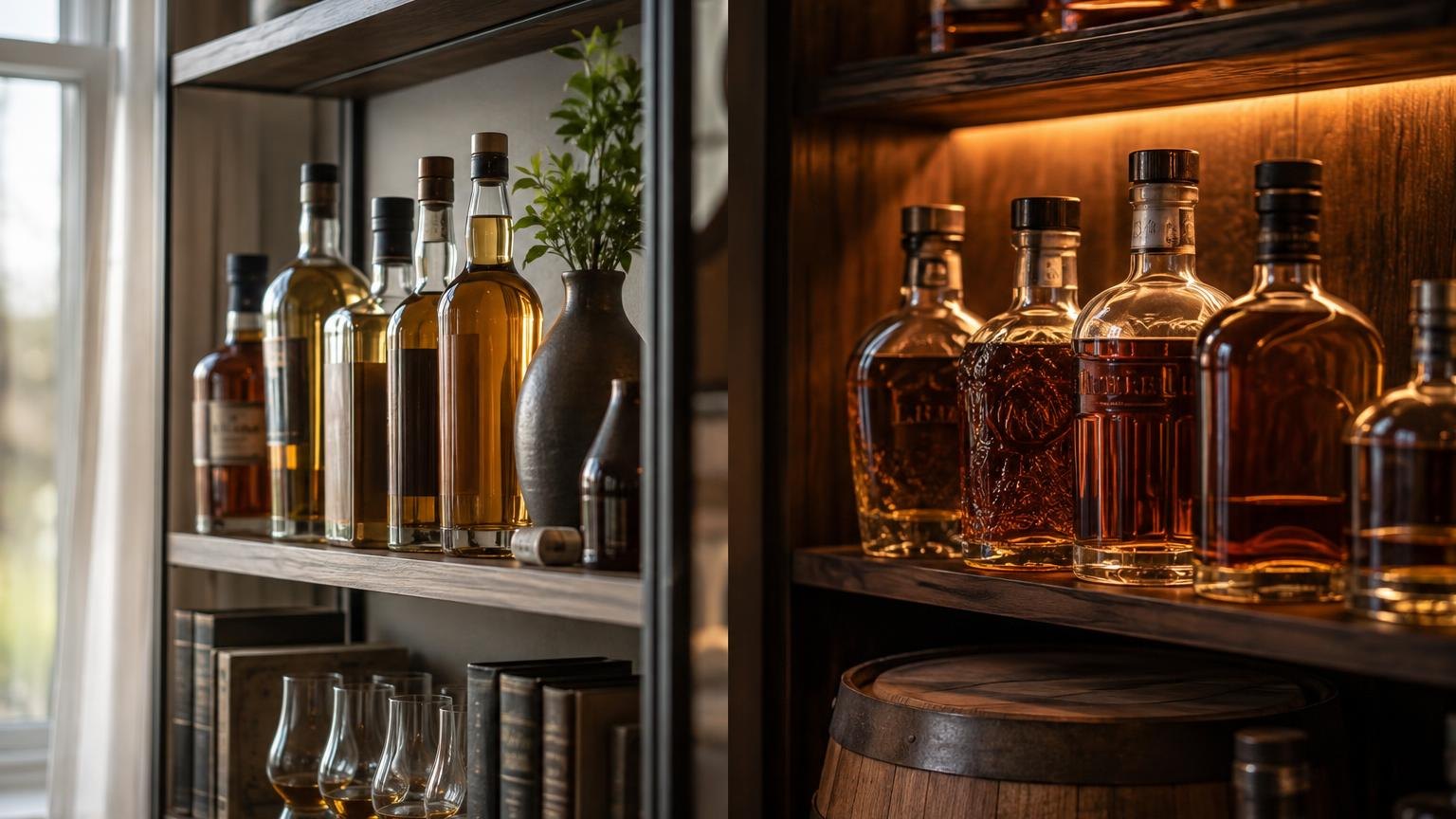
The clearest difference was not “smoothness,” but where sweetness, grain character, smoke, and oak showed up on the palate.
For consistency, we used Glencairn glasses, room-temperature spirits, and unsalted crackers between samples. Each pour rested before nosing so alcohol volatility settled slightly, which made grain and cask aromas easier to separate.
| Test variable | What we used |
| Spirits compared | Two bourbons, two single malt Scotches, one blended Scotch |
| Pour size | 0.75 oz per sample |
| Resting time before nosing | 10 minutes |
| Tasting sessions | 3 separate sessions |
| Panel size | 4 tasters |
| Glassware | Identical Glencairn glasses |
The bourbons consistently smelled sweeter first. We recorded vanilla, caramel corn, toasted coconut, and cinnamon more often in bourbon than Scotch.
That matched the legal requirement that bourbon use at least 51% corn and age in new charred oak containers under U.S. standards.
The Scotch samples showed wider variation. One Speyside-style malt leaned honeyed and orchard-fruited, while the peated Scotch showed iodine, campfire ash, and seaweed notes.
The blended Scotch was lighter, with cereal grain and mild oak rather than pronounced smoke.
| Attribute we tracked | Bourbon result | Scotch result |
| First aroma noted most often | Vanilla or caramel | Malt, fruit, smoke, or cereal |
| Sweetness impression | Higher in all rounds | Moderate to low, depending on style |
| Oak impression | Stronger char, spice, coconut | Drier oak, less char-forward |
| Finish | Sweeter and warmer | Drier; sometimes smoky or malty |
When we added a measured splash of water, bourbon opened toward maple, brown sugar, and baking spice. Scotch reacted less predictably: the unpeated malt became more floral, while the peated sample pushed smoke forward before turning medicinal.
| Water test | Amount added | Main observed effect |
| Bourbon | 5 drops | More vanilla, less heat |
| Unpeated Scotch | 5 drops | More pear, honey, and malt |
| Peated Scotch | 5 drops | More smoke and iodine |
Our practical takeaway: bourbon is more predictably sweet, oak-driven, and cocktail-friendly. Scotch is less uniform, but more style-dependent; region, malt type, peat use, and cask history changed the glass more than age statement alone.
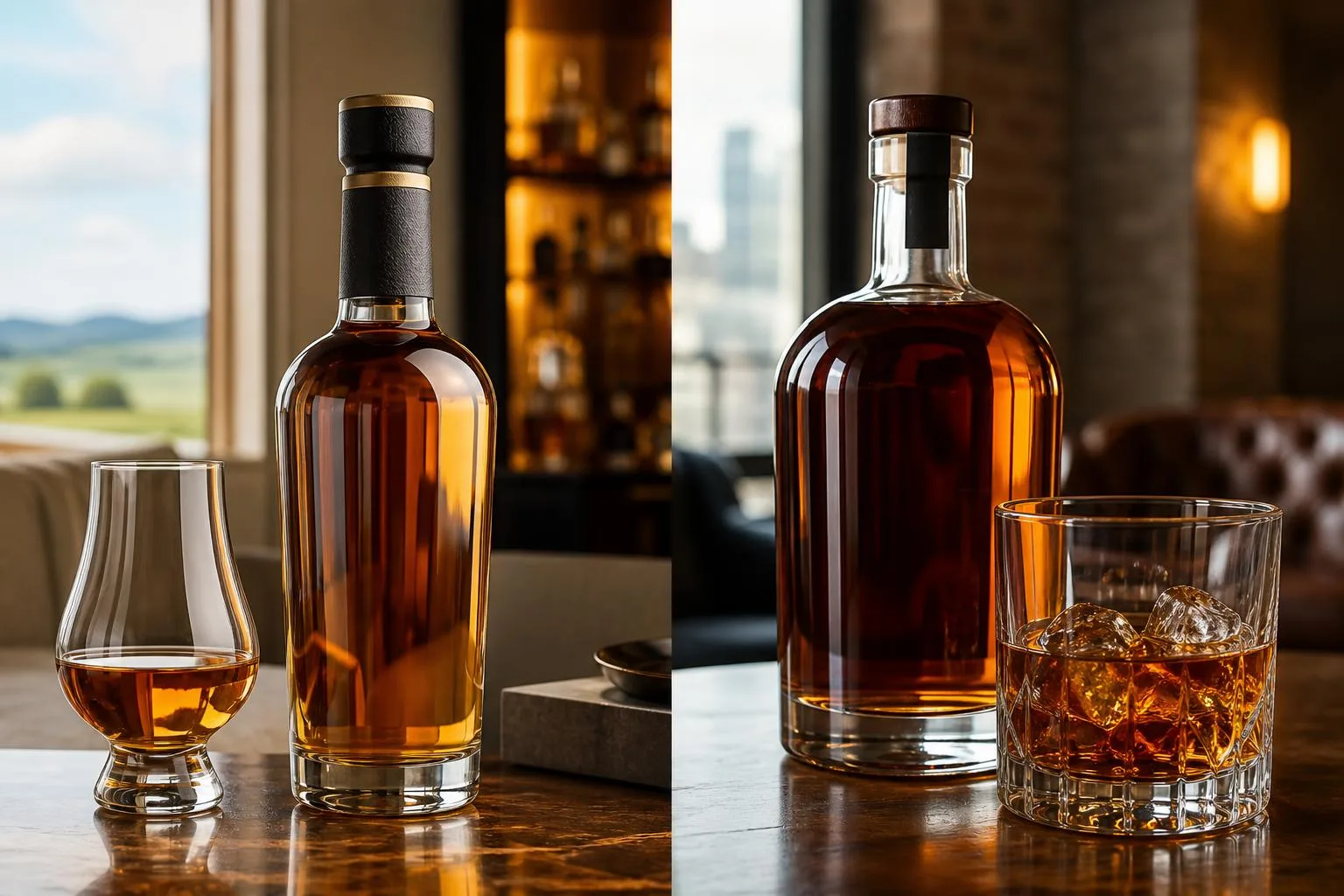
Scotch and Bourbon Myths and Misconceptions
Scotch and bourbon are often compared as if they are stylistic choices, but several differences are legal requirements. The biggest mistakes usually come from ignoring grain rules, barrel rules, and geography.
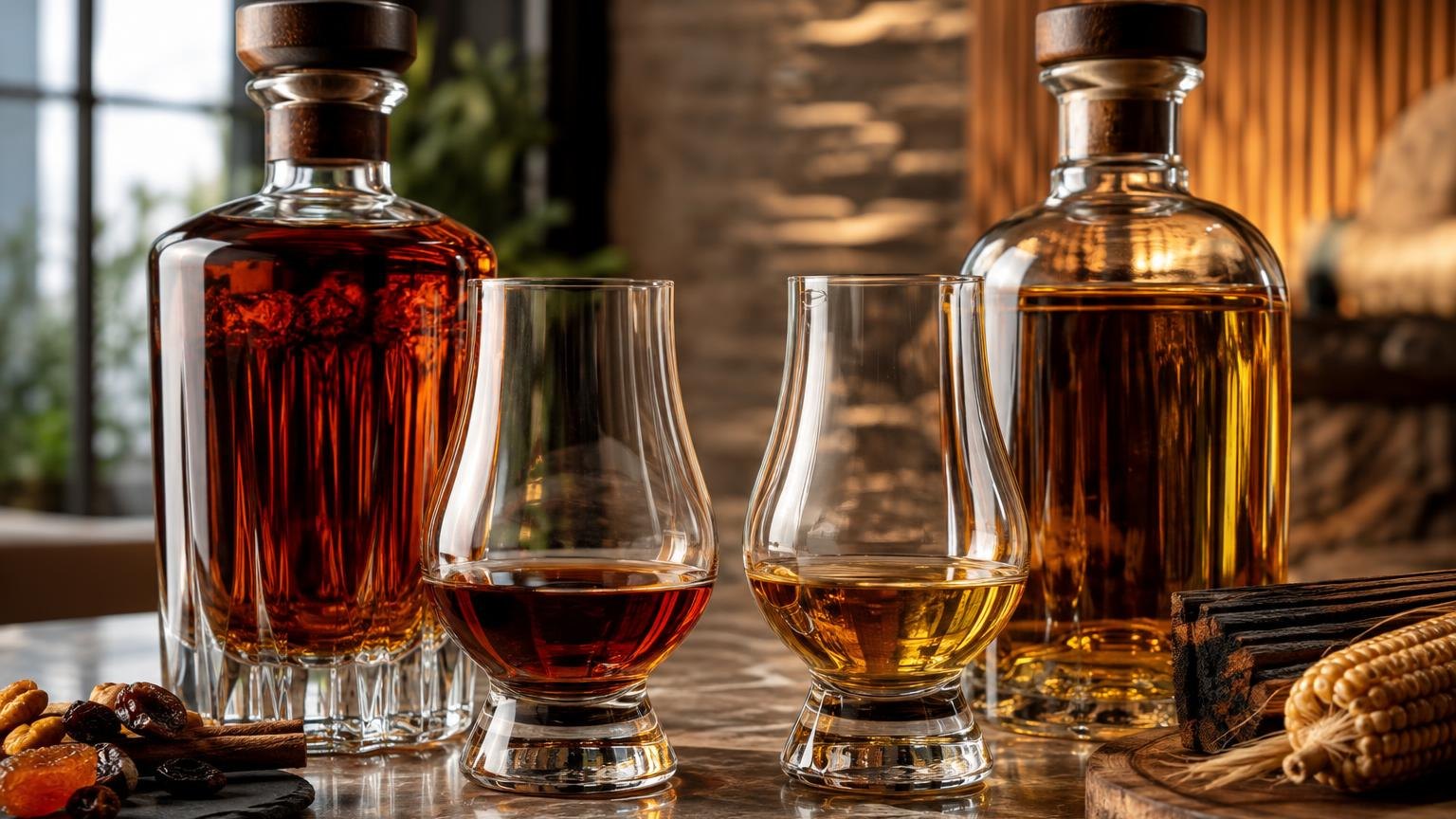
Under U.S. TTB standards, bourbon is a distinctive product of the United States. Under the Scotch Whisky Regulations 2009, Scotch must be made and matured in Scotland.
| Claim | Accurate rule or fact |
| “Bourbon must be made in Kentucky.” | False. Bourbon must be made in the United States, not specifically Kentucky. Kentucky is dominant, producing about 95% of the world’s bourbon, according to the Kentucky Distillers’ Association. |
| “Scotch is always smoky.” | False. Peat smoke is optional. Many Speyside, Lowland, and Highland Scotches are unpeated or only lightly peated. |
| “Older whiskey is automatically better.” | False. Age changes flavor, but balance matters. Bourbon can become overly woody in hot warehouses; Scotch can lose distillery character after long cask aging. |
| “Bourbon is sweet because sugar is added.” | False. Straight bourbon cannot contain added flavoring or coloring. Its sweetness comes mainly from corn, new charred oak, and compounds such as vanillin and caramelized wood sugars. |
Myth: Scotch is stricter than bourbon
Both categories are tightly regulated, just in different ways. Bourbon must use at least 51% corn, be distilled at no more than 160 proof, enter the barrel at no more than 125 proof, and use new charred oak containers.
Scotch must be produced in Scotland from water, malted barley, and other permitted cereals, distilled below 94.8% ABV, and matured in oak casks in Scotland for at least 3 years.
Myth: Color proves age or quality
Color is a clue, not proof. Bourbon usually gets deep color quickly because it must use new charred oak and often matures through hot Kentucky summers. Scotch commonly uses refill bourbon barrels, sherry-seasoned casks, or other used oak.
Some Scotch may legally contain plain caramel coloring, known as E150a, depending on the market and producer. Straight bourbon may not use added coloring, flavoring, or blending materials.
Myth: Single malt means single barrel
“Single malt Scotch” means the whisky comes from one distillery and is made only from malted barley in pot stills. It does not mean one cask. Most single malts are blended from many casks for consistency.
- Best practical takeaway: read the label for category, age statement, ABV, and cask type.
- For bourbon: expect corn-driven sweetness, vanilla, oak, and spice, especially from new charred barrels.
- For Scotch: expect wider variation, from honeyed and fruity to maritime, sherried, or heavily peated.
Frequently Asked Questions
What is the main difference between Scotch and bourbon?
Scotch whisky must be made in Scotland and aged in oak casks for at least 3 years under Scotch Whisky Regulations.
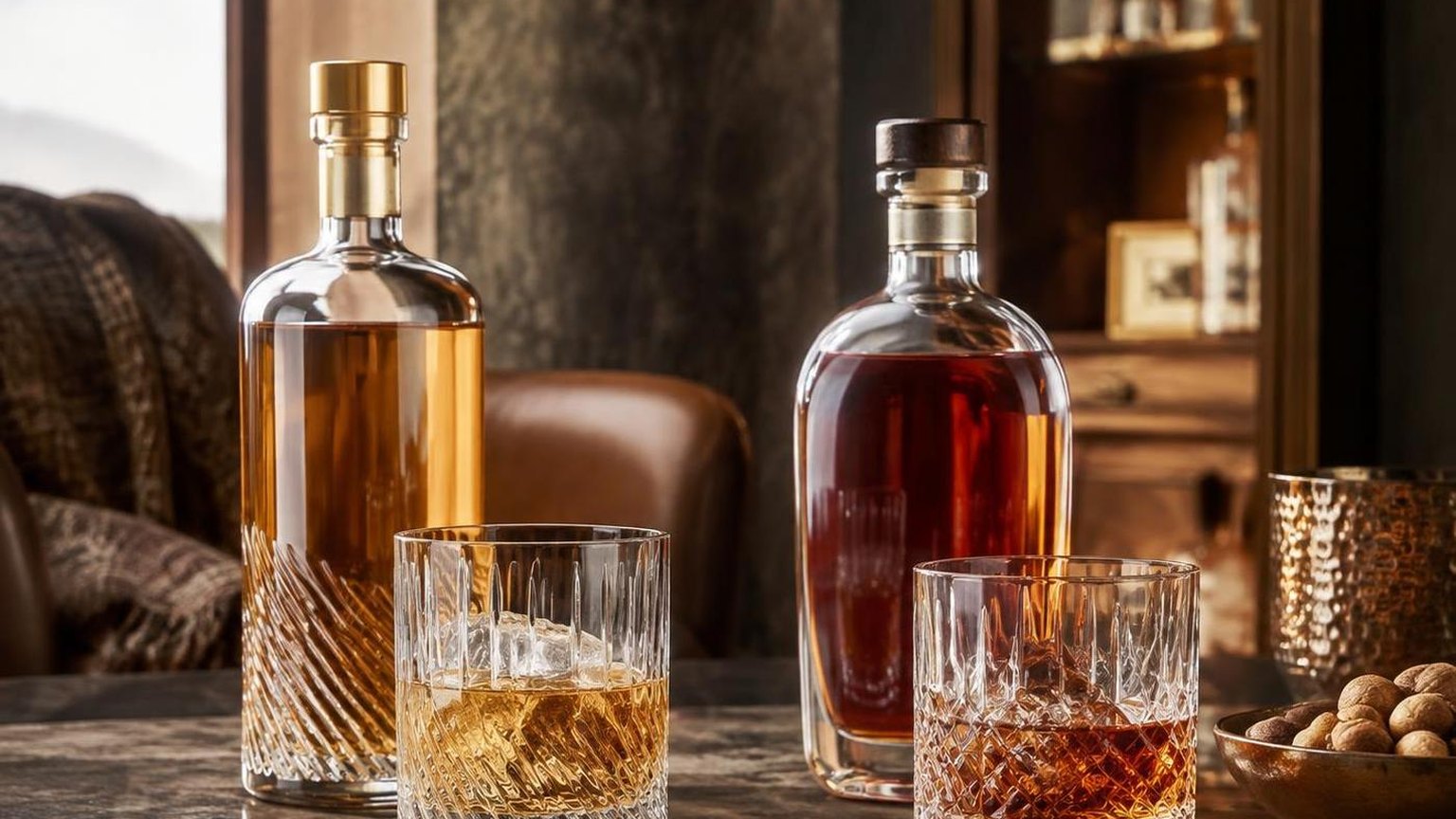
Bourbon is an American whiskey that must be made in the U.S. from at least 51% corn, distilled to no more than 160 proof, entered into new charred oak barrels at no more than 125 proof, and bottled at a minimum of 80 proof.
Does Scotch or bourbon taste sweeter?
Bourbon usually tastes sweeter because corn is its dominant grain, often giving notes of vanilla, caramel, brown sugar, and baking spice from new charred oak.
Scotch varies more by region and style: Speyside can be fruity and honeyed, Islay is often smoky and maritime, while Highland and Campbeltown bottlings can range from malty to briny.
Why is bourbon aged in new barrels while Scotch often uses used barrels?
U.S. bourbon rules require aging in new charred oak containers, which gives bourbon strong oak, vanilla, coconut, and caramel flavors relatively quickly.
Scotch is commonly matured in used bourbon barrels, sherry casks, or other oak casks, allowing slower extraction and more influence from the previous liquid.
Is Scotch always smoky and bourbon never smoky?
No. Some Scotch is heavily peated, especially many Islay whiskies, but many Scotch styles are unpeated or only lightly smoky.
Bourbon is not usually smoky from peat, though charred new oak can add toasted, char, or campfire-like notes, and some American producers make smoked or mesquite-influenced whiskeys.
Which is better for cocktails: Scotch or bourbon?
Bourbon is the standard choice for many classic American cocktails, including the Old Fashioned, Mint Julep, and Whiskey Sour, because its sweetness and oak stand up well to sugar, citrus, and bitters.
Scotch is essential for drinks like the Rob Roy, Rusty Nail, and Penicillin, where malt character or peat smoke is part of the cocktail’s structure.
Related Reading
- How Many Ounces Is 5 Ml? A Complete, Experience-Based Guide You Can Rely On
- How Many Litres Is 30 Gallons?
- Patron 750ml Price – What You Need to Know
- How Many Oz Is 2.5 Liters?
- What’S The Best Tequila Under $50?
- Is Buffalo Trace Bourbon Gluten Free?
- How Much Is 8 Grams Of 10K Gold Worth?
- All Blog Guides
- Electronic Code of Federal Regulations, 27 CFR § 5.143 Whisky (2024)
- Alcohol and Tobacco Tax and Trade Bureau, Distilled Spirits Beverage Alcohol Manual Chapter 4 (2020)
- The Scotch Whisky Regulations 2009 (2009)
- GOV.UK, Scotch Whisky Technical File (2019)
- Cornell Legal Information Institute, 27 CFR § 5.143 Whisky (2024)
- Rohsenow et al., Alcoholism: Clinical and Experimental Research (2010)
- National Institute on Alcohol Abuse and Alcoholism, What Is a Standard Drink? (2024)