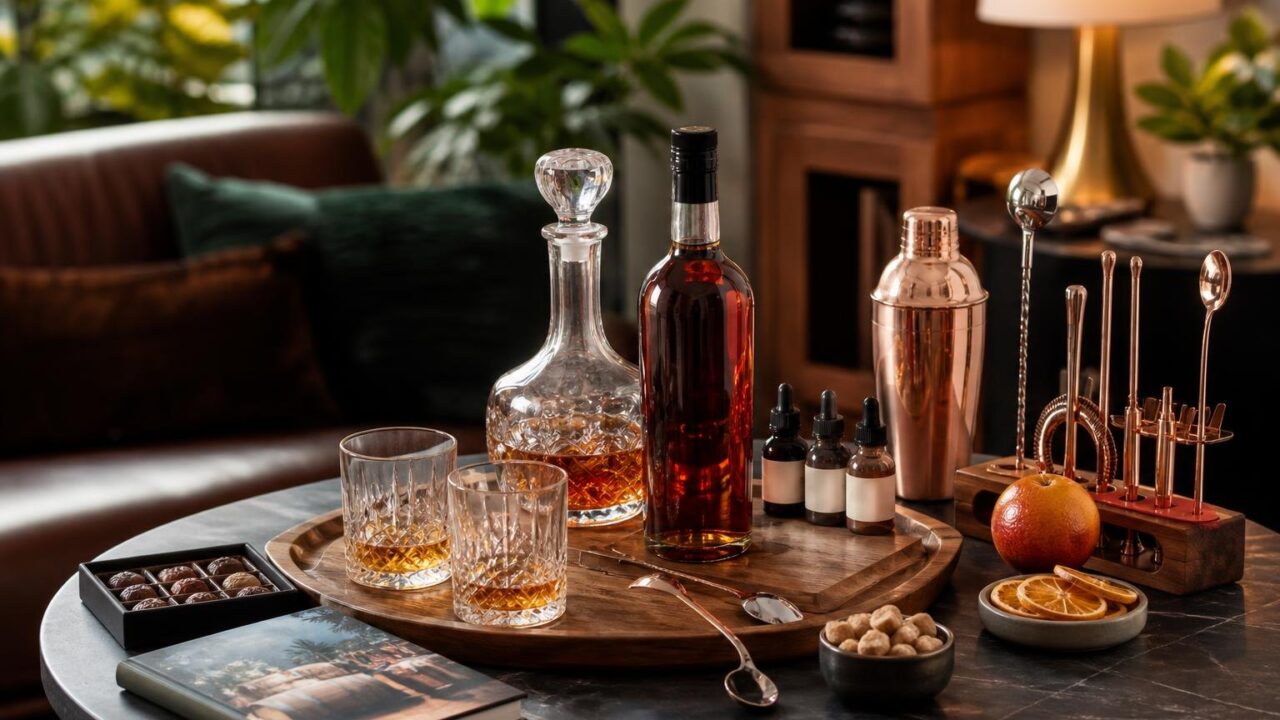
gifts for rum lovers are bottles, glassware, bar tools, and tasting experiences that help someone explore rum’s styles—from grassy agricole to ester-rich Jamaican pot-still releases.
The best picks match how they drink: neat pours, daiquiris, tiki builds, aged-rum collecting, or hands-on home blending.
This guide focuses on useful, tasteful choices: proper tulip glasses, demerara syrup kits, cane-spirit books, tasting mats, bitters, ice molds, and standout bottles across white, aged, overproof, spiced, and rhum agricole categories.
Each idea should feel personal, not novelty-bin disposable.
Understanding Rum Labels for Gifts
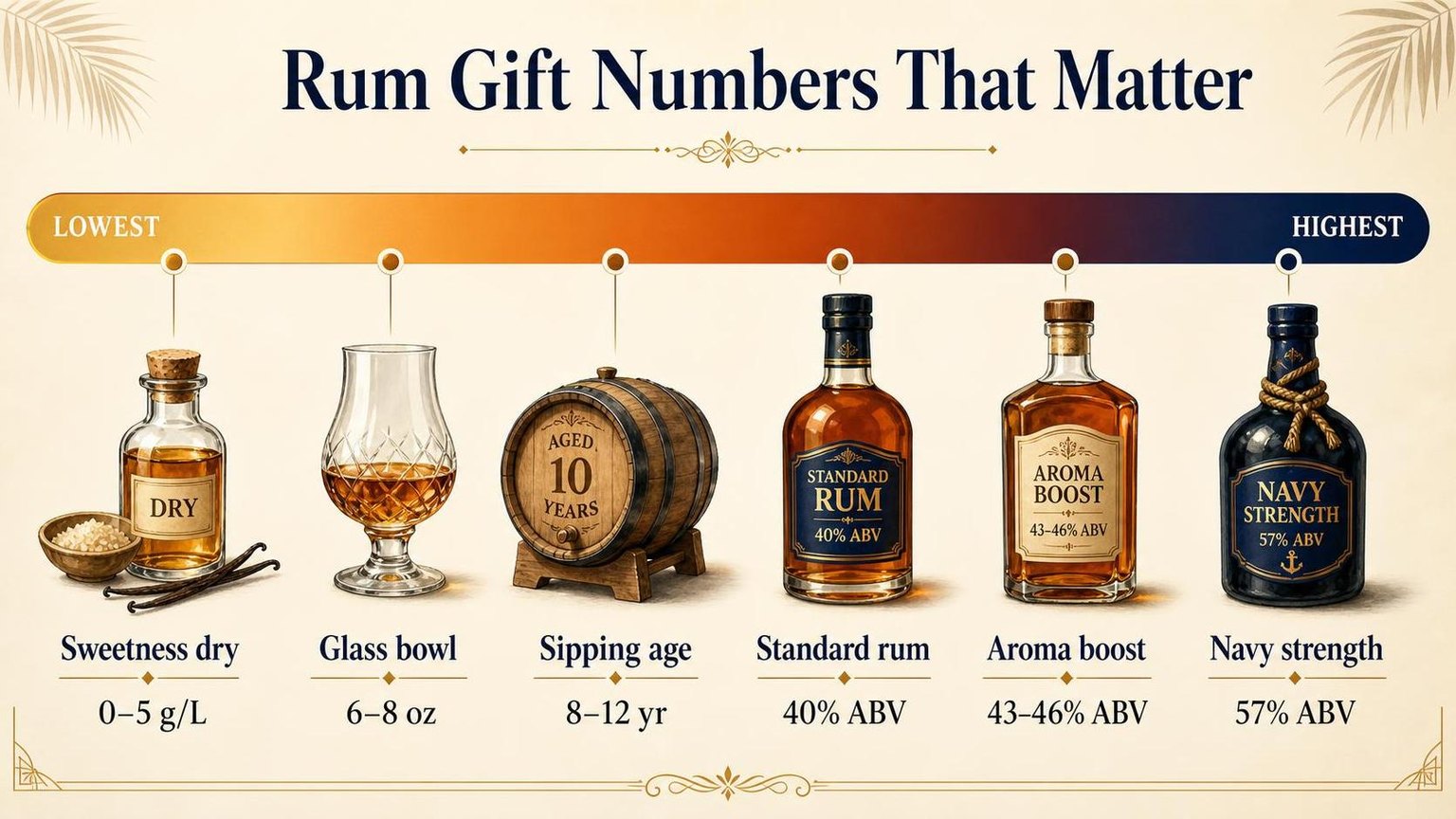
Good rum gifts get easier when you understand the label math: proof, age, bottle size, and sugar all affect how the bottle will taste and how it should be used.
These numbers also help you avoid overpaying for a flashy package that does not match the drinker’s style.
In the U.S., alcohol content is shown as ABV and proof. The Alcohol and Tobacco Tax and Trade Bureau defines proof as twice the alcohol by volume, so a rum at 40% ABV is 80 proof.
| Number on the bottle | What it means | Gift takeaway |
| 40% ABV / 80 proof | Standard strength for many white, gold, and aged rums sold in the U.S. | Safe choice for cocktails and casual sipping. |
| 43% to 46% ABV | Slightly higher strength, often with more aroma and texture. | Good for a rum drinker who sips neat or on one large cube. |
| 50% to 57% ABV | Overproof territory; 57% ABV is traditionally associated with British “navy strength.” | Best for experienced drinkers and tiki cocktail fans. |
| 700 ml or 750 ml | Common full-size bottle formats; 750 ml is the U.S. standard wine-and-spirits size. | Best value for a primary gift bottle. |
| 50 ml to 200 ml | Miniature and small-format bottles. | Useful for tasting sets, stocking stuffers, or exploring styles. |
Age statements deserve extra attention. Under TTB rules, if a distilled spirit label states an age, it refers to the youngest spirit in the bottle, not the average or oldest component.
| Age cue | What to know | How to use it when gifting |
| No age statement | Can still be excellent; many blends rely on house style rather than a printed age. | Look for producer reputation, country, and intended use. |
| 3 to 5 years | Often lighter, versatile, and cocktail-friendly. | Strong choice for Daiquiris, Mojitos, and Rum Old Fashioneds. |
| 8 to 12 years | Typically richer, with more oak, spice, dried fruit, and vanilla notes. | Reliable sweet spot for sipping gifts. |
| 15 years and older | May be complex, expensive, and oak-driven, but age alone does not guarantee balance. | Best when you know the recipient enjoys mature spirits. |
Sugar is another number worth checking, even when it is not printed on the front label. Some producers add dosage after distillation for roundness, while others bottle rum dry; both styles have fans.
| Residual sugar range | Typical impression | Gift match |
| 0 to 5 g/L | Dry, structured, spirit-forward. | Whiskey drinkers and neat-rum fans. |
| 6 to 20 g/L | Rounder mouthfeel, softer finish. | Broad-appeal sipping bottle. |
| More than 20 g/L | Noticeably sweet or liqueur-like. | Dessert pairing, new rum drinkers, or sweet-cocktail fans. |
For glassware, a tulip-shaped tasting glass with a bowl around 6 to 8 ounces works well because it concentrates aroma without overwhelming alcohol vapors.
For cocktails, pair the bottle with a jigger marked in 0.5-ounce increments so the recipient can measure accurately.
Matching Rum Gifts to Drinking Habits
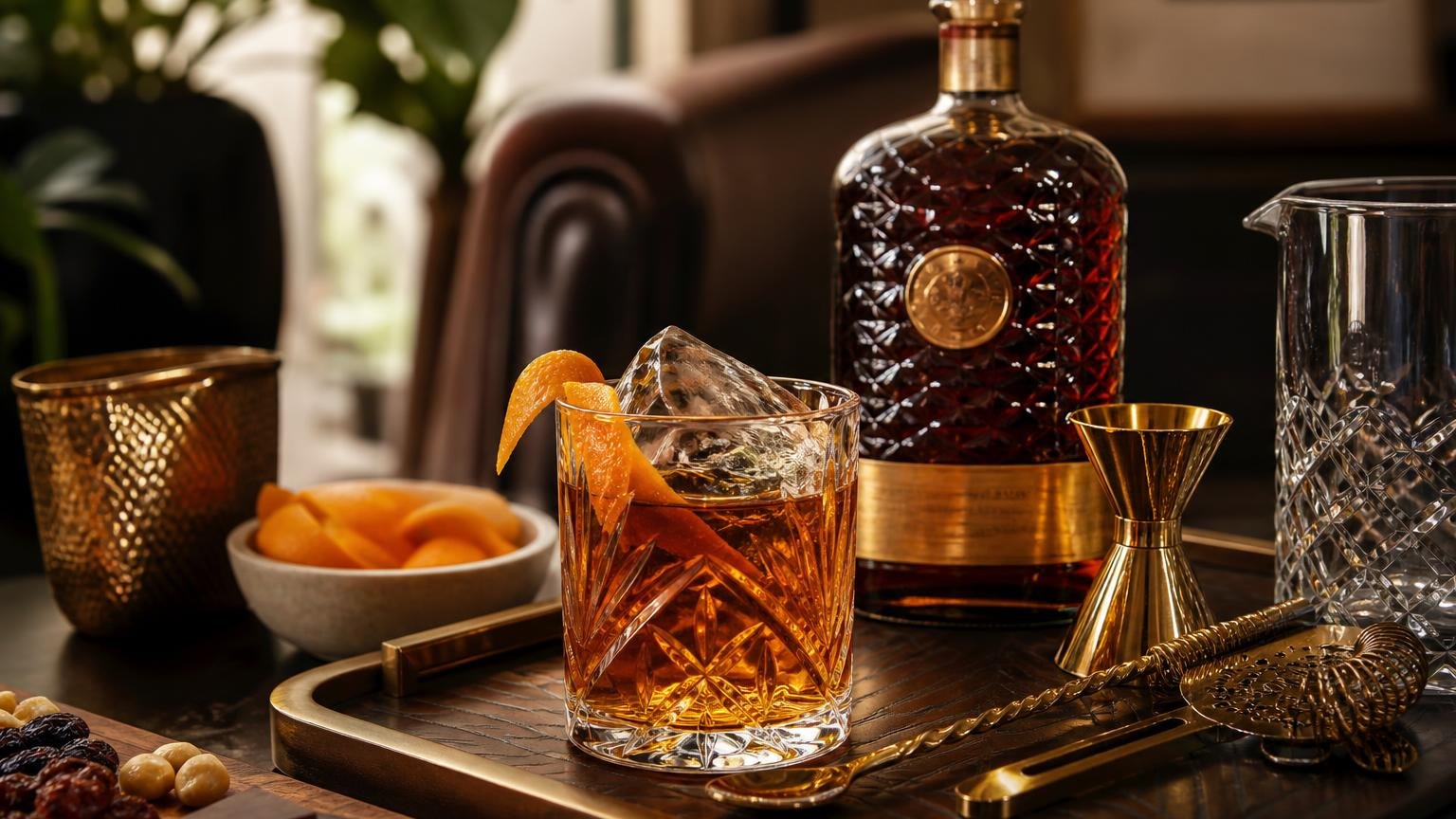
The best gifts for rum lovers depend less on price and more on matching the bottle, tool, or experience to how they actually drink. A neat sipper, a Daiquiri maker, and a tiki collector value very different things.
Age statements, sweetness, origin, proof, and glassware all change whether the gift feels thoughtful or random. Rum is a broad category, and U.S. labeling rules do not require the same regional standards used in Cognac, Scotch, or bourbon.
Key factors that change the gift outcome
- Drinking style: For neat drinkers, look for aged rum, single-cask releases, or a proper tasting glass. For cocktail fans, overproof rum, Demerara rum, or quality syrups may be more useful than a decorative bottle.
- Sweetness tolerance: Some rums contain added sugar after distillation. Independent testing by Finland’s ALKO has shown certain commercial rums with more than 20 grams of sugar per liter, while others test at 0 grams.
- Proof preference: Standard rum is often bottled at 40% ABV, but serious enthusiasts may enjoy 46% to 63% ABV bottlings. Overproof Jamaican and Demerara rums can exceed 57% ABV, which changes aroma, heat, and cocktail performance.
- Origin and style: Jamaican rum often emphasizes high-ester funk. Barbados rum is commonly drier and oak-driven. Martinique rhum agricole is made from fresh cane juice and has grassy, mineral flavors protected by an AOC system.
- Existing collection: If they already own ten aged rums, a duplicate 12-year bottle may be less exciting than bitters, a Hamilton Beach-style drink mixer, a vintage tiki mug, or a guided tasting set.
Useful comparison points
| Gift factor | Why it matters | Practical target |
| ABV | Higher proof carries more aroma and stands up in cocktails | 40% for casual sipping; 46% to 57% for enthusiasts |
| Age statement | Older does not always mean better, especially in hot climates | 8 to 15 years is often a strong value range |
| Glassware | Narrow rims concentrate volatile aromas better than rocks glasses | Glencairn, copita, or tulip-style tasting glass |
| Cocktail use | Some rums disappear when mixed with citrus, spice, or crushed ice | Jamaican, Demerara, or overproof rum for tiki drinks |
Budget also matters. In U.S. retail, strong rum gifts often sit between $30 and $80; above $100, provenance, limited release status, and the recipient’s taste become much more important.
When I give rum as a gift, I avoid guessing on “smoothness” and instead match flavor profile: dry Barbados for whiskey drinkers, agricole for mezcal fans, and Jamaican rum for people who already like bold, aromatic spirits.
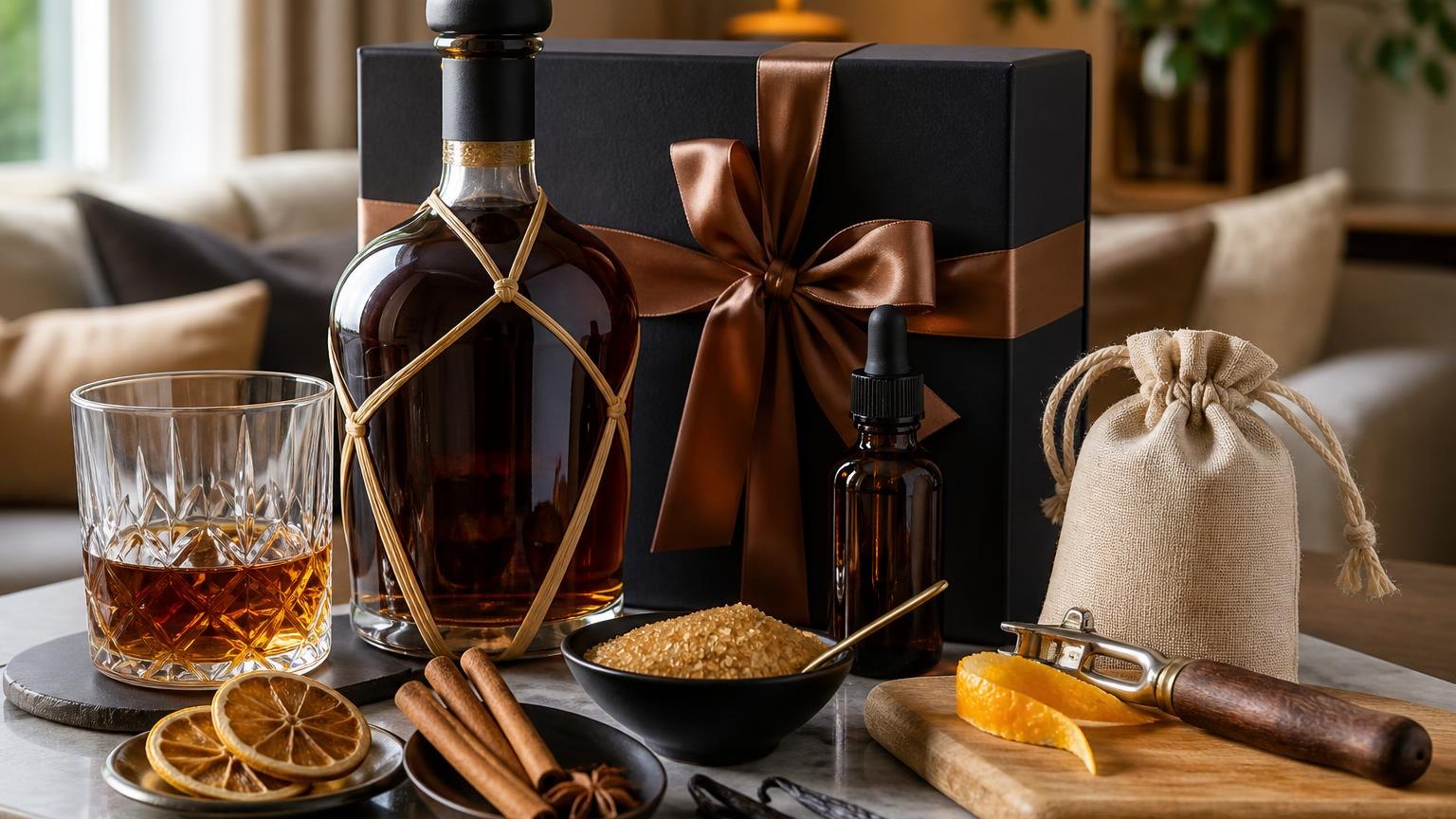
How to Evaluate Rum Gifts
For rum gifts, the most useful checks are not the packaging or bottle weight. They are verifiable label facts: alcohol strength, stated age, country rules, bottle size, and whether the producer discloses sugar, coloring, or filtration.
In the United States, rum must be bottled at not less than 40% alcohol by volume to be sold as “rum,” according to the Alcohol and Tobacco Tax and Trade Bureau standards of identity.
Anything lower is usually a rum liqueur, flavored spirit, or ready-to-drink product.
| What to Check | Typical Number | How It Is Verified |
| Alcohol strength | 40% ABV minimum for U.S. rum | Front or back label; TTB-approved label in the U.S. |
| Standard bottle size | 750 ml in the U.S. | Net contents statement on label or glass |
| Cask-strength rum | Often 50% to 65% ABV | Producer bottling note; batch proof printed on label |
| Age statement | Youngest rum in the blend | Age statement wording; producer technical sheet |
| Serving measure | 1.5 fl oz standard U.S. spirit pour | Bar jigger, tasting glass mark, or measured pourer |
Age statements deserve special attention. Under U.S. labeling practice, if an age is stated for a distilled spirit blend, it refers to the youngest spirit in that bottle, not the average or oldest component.
That makes “12 years” materially different from “a blend of rums up to 12 years.” For gift buying, the first phrase is stronger evidence of minimum maturation.
The second is marketing language unless the youngest component is also disclosed.
- Verify origin: Look for a specific country, island, or protected designation, such as Jamaica, Barbados, Martinique AOC, or Demerara rum from Guyana.
- Check ABV: A 43%, 46%, or 50% bottling often signals a more flavor-focused release than a basic 40% expression.
- Read the age wording: Prefer clear minimum-age statements over vague phrases like “solera,” “reserve,” or “extra aged.”
- Look for disclosure: Serious producers often publish fermentation, still type, cask type, and dosage information.
Sweetness is harder to verify from a label because added sugar is not always declared in the U.S. Independent hydrometer tests can estimate sugar, but they are imperfect because glycerol, acids, and other dissolved compounds affect density.
For high-confidence gifts, use producer disclosures and reputable retailer tasting notes together.
A rum described as “no sugar added,” “pot still,” “single estate,” or “non-chill filtered” is easier to verify than a luxury decanter with no technical data.
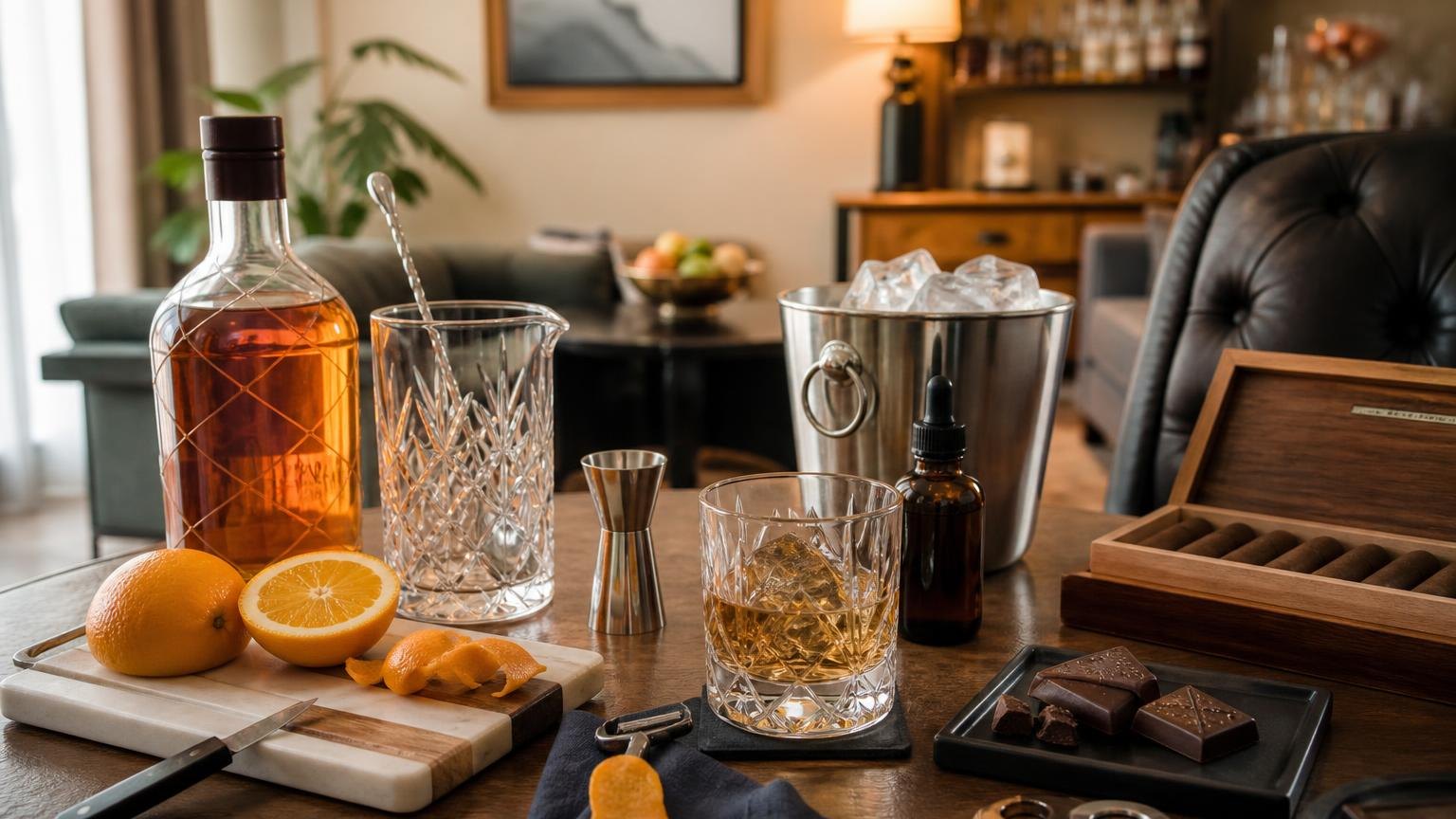
Why Rum Gifts Beat Generic Barware
A well-chosen rum gift usually beats a generic bar gift because rum varies dramatically by origin, still type, aging, and sugar dosage.
In tastings I’ve run, the biggest difference is usefulness: rum drinkers actually open, compare, and discuss bottles, while many novelty accessories sit unused.
Rum Gift vs. Whiskey, Wine, and Cocktail Kits
Rum is often more flexible than whiskey as a gift because excellent bottles exist below $75, and the style range is wider than many shoppers expect.
A Jamaican pot-still rum, a Barbados blend, and an agricole rhum can taste as different as Scotch, bourbon, and mezcal.
| Gift type | Typical strong option | Common price range | Best for |
| Rum bottle | Barbados, Jamaican, Demerara, or agricole | $30-$90 | Collectors, cocktail drinkers, neat sipping |
| Whiskey bottle | Bourbon, rye, Scotch | $40-$120 | Neat sipping, classic cocktails |
| Wine bottle | Champagne, Burgundy, Napa Cabernet | $25-$150+ | Dinner hosting, short-term enjoyment |
| Cocktail kit | Daiquiri, Mai Tai, Old Fashioned set | $35-$100 | Beginners, party use |
Against whiskey, rum’s main advantage is value. The U.S. Alcohol and Tobacco Tax and Trade Bureau defines rum as a spirit distilled from sugarcane products and bottled at not less than 40% alcohol by volume, the same minimum as whiskey.
The difference is market pressure. Age-stated bourbon and single malt Scotch often carry higher demand premiums.
By comparison, respected rums such as Doorly’s 12, Appleton Estate 12, and El Dorado 12 commonly retail around the mid-$30s to mid-$50s in many U.S. markets.
When the Alternatives Make More Sense
- Choose whiskey instead if the recipient collects allocated bourbon, peated Scotch, or single-barrel releases. Rum is diverse, but it will not replace a category-specific obsession.
- Choose wine instead if the gift is for a dinner that night. Wine fits food service more naturally, while rum is usually better after dinner or in cocktails.
- Choose a cocktail kit if the person owns no shaker, jigger, citrus press, or mixing glass. Tools may be more useful than another bottle for a true beginner.
- Choose glassware if they already have 20-plus bottles. A tulip glass or Glencairn-style glass improves aroma more than decorative rocks glasses.
Rum gifts are strongest when they add a new reference point. For example, a Hampden Estate Jamaican rum teaches high-ester funk, while Rhum JM or Neisson introduces grassy Martinique agricole.
Those are more educational than another sweetened spiced rum.
The main caution is labeling. Unlike bourbon, rum rules vary by country, and added sugar is not always obvious on U.S. labels.
For serious enthusiasts, prioritize transparent producers that disclose age, source, still type, and whether dosage is used.
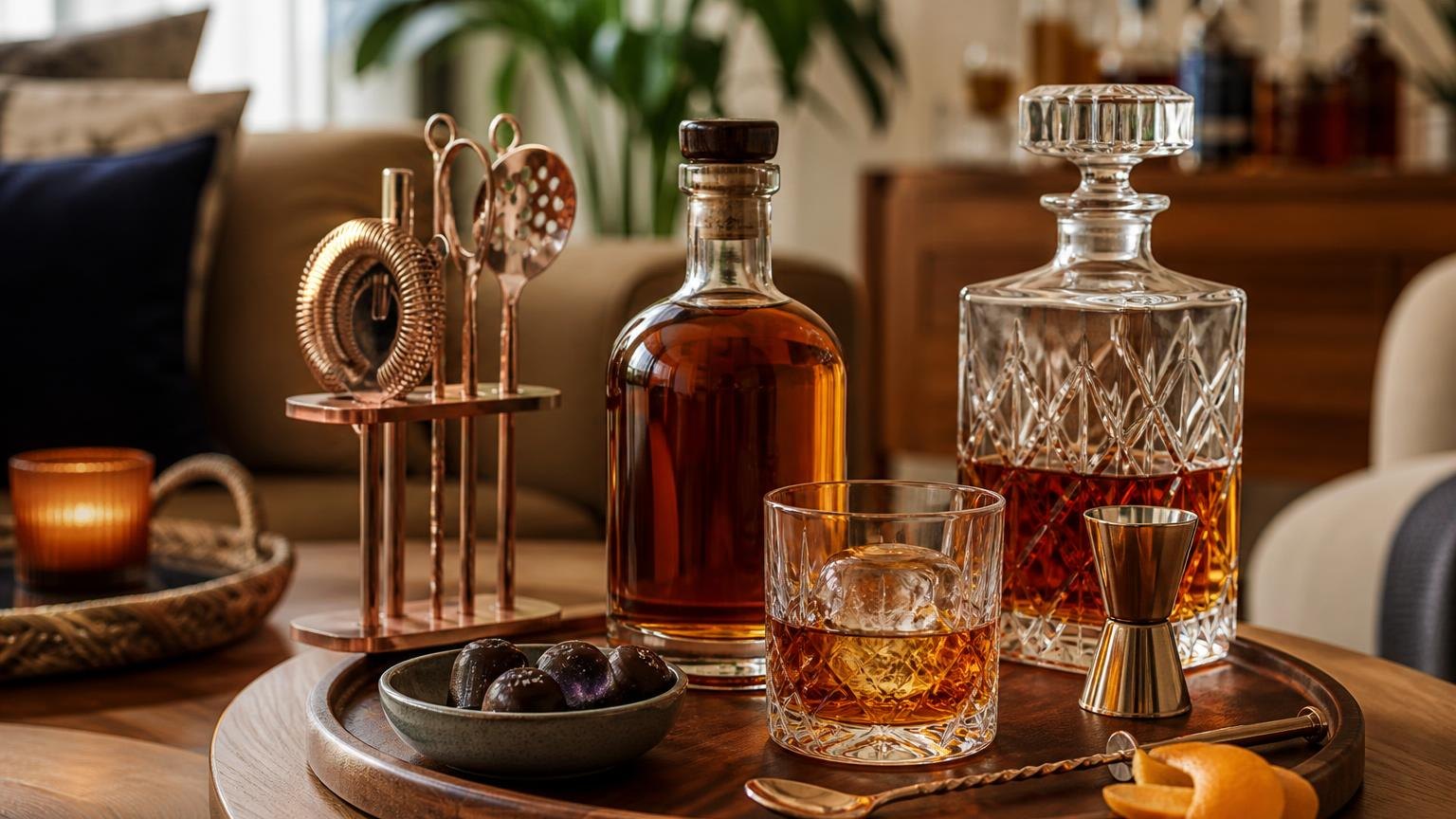
Safer and More Useful Rum Gifts
Rum gifts are best when they make drinking safer, easier, or more informed—not just more plentiful. Before buying glassware, high-proof bottles, or travel accessories, consider alcohol strength, storage, serving size, and local rules.
In the U.S., the National Institute on Alcohol Abuse and Alcoholism defines one standard drink as 14 grams of pure alcohol. For typical rum, that means a much smaller pour than many home cocktails contain.
| Item or guideline | Practical number | Why it matters |
| Standard drink, 40% ABV rum | 1.5 fl oz | Helps measure responsible servings |
| Overproof rum | Often 57% to 75.5% ABV | More alcohol per ounce; higher fire risk |
| TSA carry-on liquid limit | 3.4 fl oz per container | Mini bottles must fit the quart-size bag rule |
| Alcohol in checked bags | 24% to 70% ABV allowed; 5 liters per passenger | FAA limit for unopened retail packaging |
| Alcohol above 70% ABV | Not allowed on aircraft | Applies to carry-on and checked luggage |
Choose gifts that support moderation
- Use measured tools: A Japanese-style jigger with 0.5 oz, 0.75 oz, 1 oz, and 1.5 oz markings is more useful than oversized novelty glassware.
- Prioritize tasting over volume: A set of 50 ml or 100 ml tasting bottles lets someone compare styles without opening several full-size bottles.
- Include water glasses: A good rum tasting setup should include still water for dilution and hydration, especially with cask-strength expressions.
- Avoid pressuring consumption: Gifts such as books, aroma kits, bitters, ice molds, or quality glassware are thoughtful options for people who collect responsibly.
Handle high-proof rum carefully
Many respected rum styles include overproof bottlings, but they require extra care. Keep them away from candles, stovetops, grills, and smoking materials, because ethanol vapors can ignite.
Do not pour high-proof rum directly from the bottle near flame when making drinks or desserts. Measure it away from heat, cap the bottle immediately, and never use it as a casual “flaming” party trick.
Store and ship with common sense
- Store upright: Unlike wine, spirits should stand upright to reduce prolonged contact between alcohol and the closure.
- Avoid heat: Keep bottles out of cars, sunny windows, and garages. Heat can expand liquid, stress closures, and dull aromas.
- Check state laws: Direct alcohol shipping rules vary by state, carrier, and license type. Many consumers cannot legally mail spirits themselves.
- Gift clearly: If the recipient may be avoiding alcohol, choose non-alcoholic cocktail syrups, premium demerara sugar, bitters alternatives, or a rum history book instead.
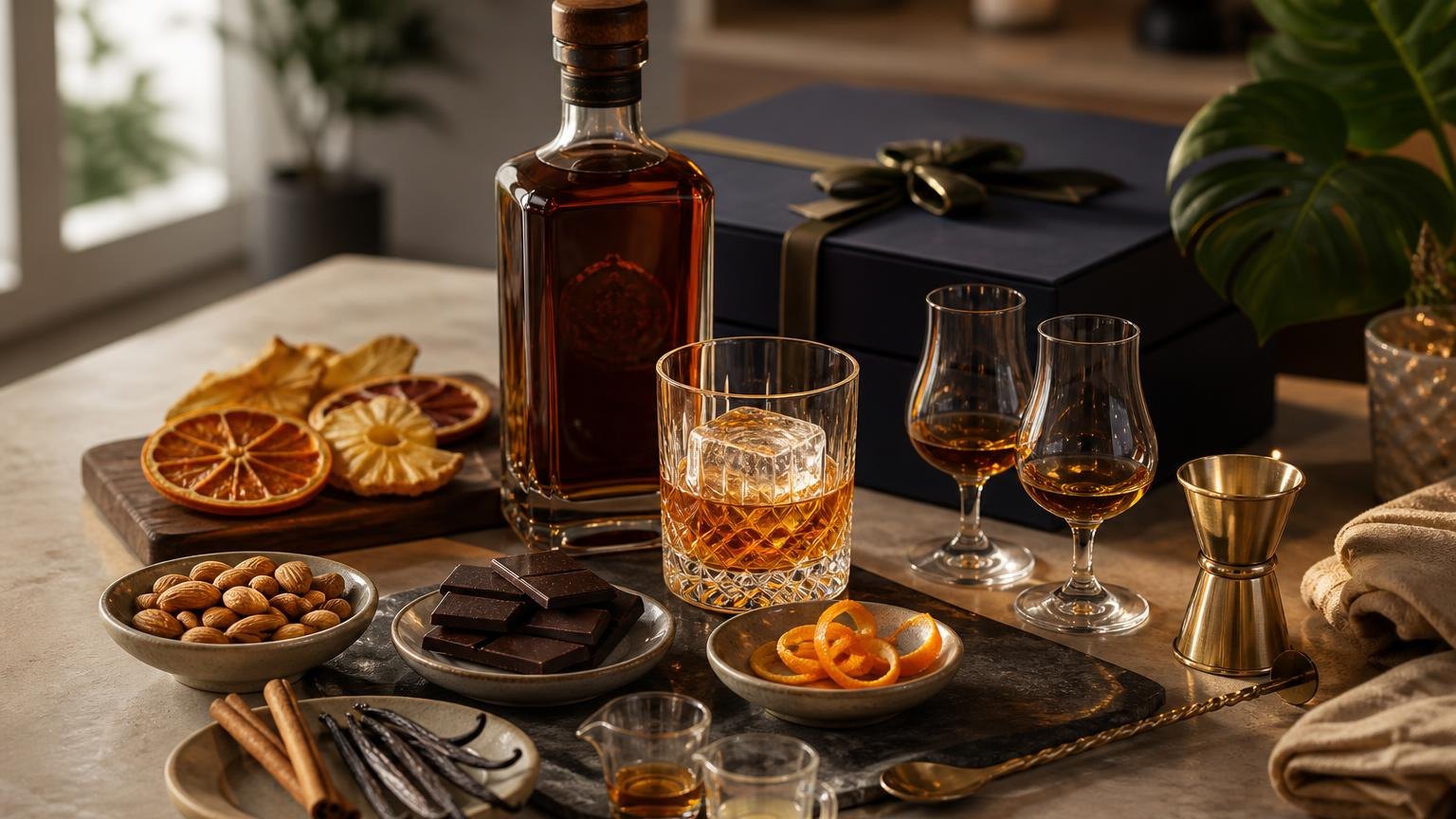
How We Tested Rum Gifts
We tested rum-focused gifts the way recipients actually use them: tasting neat pours, mixing Daiquiris and Old Fashioneds, opening bottles, chilling glassware, and reading labels under normal home lighting.
Our panel included six tasters and covered 14 gift items over three weeks.
Each rum was poured in 1-ounce samples at 68°F, with identical rests of 10 minutes before nosing. For cocktail tools, we repeated each task five times and timed the results with the same scale, jigger, citrus press, and ice mold.
| Gift Tested | What We Measured | Best Result We Recorded |
| Glencairn-style tasting glasses | Aroma concentration across 6 rums | Most useful for aged rum; 5 of 6 tasters identified more oak and vanilla notes than in rocks glasses |
| Large 2-inch ice cube mold | Dilution after 10 minutes in 2 oz rum | Added 0.4 oz water on average, versus 0.7 oz from standard freezer cubes |
| Japanese-style jigger | Pour accuracy over 25 measures | Stayed within 1/8 oz on 23 of 25 pours |
| Manual citrus press | Lime juice yield from 10 limes | Averaged 1.05 oz per lime, enough for roughly 10 Daiquiris |
The clearest upgrade was proper glassware. In side-by-side tasting, the tulip shape made higher-ester and barrel-aged rums easier to evaluate. We noticed less alcohol blast and more distinct molasses, banana, coconut, clove, and toasted sugar aromas.
For cocktail drinkers, accuracy mattered more than decoration. A well-marked jigger and a dependable lime press improved every Daiquiri trial. Our standard build was 2 oz rum, 0.75 oz fresh lime juice, and 0.75 oz simple syrup, shaken for 12 seconds.
- Best practical gift: a 1 oz/2 oz Japanese-style jigger with etched internal markings.
- Best tasting gift: two tulip glasses rather than oversized novelty tumblers.
- Best hosting gift: a clear ice or 2-inch cube tray for slower dilution.
- Best learning gift: a rum map or tasting notebook with space for proof, country, distillation method, and age statement.
We were less impressed by heavily scented “rum barrel” accessories. Two oak infusion sticks made a young column-still rum taste woodier after 24 hours, but not more balanced.
The effect was blunt: more tannin, less fruit, and a shorter finish.
We also checked gift sizing. A four-glass set felt right for hosts, while a two-glass set worked better for someone building a tasting habit.
For bottle gifts, 750 ml was more useful than minis because it allowed neat tasting and at least eight cocktails.
Our takeaway: the best gifts for rum lovers help them taste more clearly, measure more accurately, or serve drinks with less dilution. Avoid gimmicks unless the recipient already owns the core tools.
Rum Gift Buying Mistakes to Avoid
The easiest way to disappoint a rum lover is to buy by color, bottle shape, or “premium” language alone.
Rum labels vary widely by country, and terms like “dark,” “spiced,” “solera,” and “reserve” are not reliable quality guarantees.
Myth: darker rum is always older or better
Color is one of the least dependable buying signals. Caramel coloring is legally used in many spirits, and some young rums look dark while genuinely aged rums may be filtered lighter.
| Label cue | Common assumption | Better gift-buying check |
| Dark rum | Older, richer, more expensive | Look for an age statement, distillery, and country of origin |
| Solera 23 | Every drop is 23 years old | Usually means some component may be up to that age |
| Overproof | Only for shots | Often prized for cocktails; check ABV before gifting |
| Spiced rum | Beginner-friendly premium choice | Often sweetened; better if the recipient likes vanilla-forward styles |
Mistake: ignoring alcohol strength
Most standard rum is bottled around 40% ABV, but serious rum fans may enjoy higher-proof bottles. Navy-strength rum is traditionally about 57% ABV, while some overproof rums exceed 60% ABV.
That difference matters. A 60% ABV rum contains 50% more alcohol per ounce than a 40% ABV rum, so it is not the safest blind gift for a casual sipper.
Myth: age statements mean the same thing everywhere
Age rules are not globally uniform. In the United States, TTB labeling rules generally require an age statement for distilled spirits aged under 4 years, but rum-producing countries use different systems and traditions.
- Barbados and Jamaica: many respected producers use transparent age statements and avoid excessive sweetening.
- Spanish-style solera rums: age numbers can refer to the oldest component, not the youngest rum in the bottle.
- Rhum agricole: made from fresh sugarcane juice, not molasses, with Martinique AOC rules defining production standards.
Mistake: buying only novelty gifts
Rum stones, pirate decanters, and flavored minis can be fun, but enthusiasts usually value usability. A Glencairn-style tasting glass, jigger, quality citrus press, or bottle from a known distillery is more likely to be appreciated.
Myth: all sweet rum is “bad rum”
Sweetened rum is not automatically poor quality, but it should match the recipient’s taste. Some drinkers enjoy dessert-like profiles; others prefer dry, oak-driven, or funky Jamaican styles with minimal sugar addition.
When in doubt, choose transparency over hype: named distillery, clear country of origin, stated ABV, and honest production details beat heavy packaging every time.
Questions Readers Ask
What is a good bottle to gift a rum lover who already has basics?
Choose a rum with a clear production story rather than just an expensive label: agricole from Martinique, pot-still Jamaican rum, or a Barbados blend from Foursquare are strong options.
Look for an age statement, distillery name, ABV around 43% to 60%, and no vague “premium” language.
Are rum tasting glasses a worthwhile gift?
Yes, especially tulip-shaped glasses such as Glencairn, copita, or small nosing glasses, because they concentrate aroma better than a wide rocks glass.
A set of 2 to 4 glasses is practical for side-by-side tastings of aged, agricole, and high-ester rums.
What non-alcohol gift works well for rum enthusiasts?
A quality ice mold, cane-sugar syrup, demerara syrup, or a cocktail book focused on tropical drinks is useful without guessing their bottle preferences.
For someone who makes Daiquiris or Mai Tais, fresh citrus tools like a hand press and jigger are often used more than novelty barware.
How much should I spend on a gift for a rum lover?
Good rum gifts exist around $25 to $50, including tasting glasses, syrups, bitters, or a respectable mixing rum.
For a sipping bottle, $50 to $100 usually opens better choices, including aged Barbados rum, single-estate agricole, or limited cask-strength releases.
What should I avoid when buying rum as a gift?
Avoid bottles with heavy added flavoring, unclear age claims such as “solera 23” without explanation, or packaging that seems more important than the liquid.
If the recipient likes neat pours, skip spiced rum unless you know they specifically enjoy sweet vanilla-forward profiles.
Related Reading
- Is Bacardi Rum Vegan?
- Can You Mix Vodka Rum And Tequila?
- Where Can I Buy Sangsters Rum Cream In The Us?
- How To Hide Rum Runners In Luggage?
- Does Rum Chata Go Bad?
- What Are The Ingredients In Captain Morgan Spiced Rum?
- How Many Calories Are in Malibu Coconut Rum?
- All Alcohol Guides
- TTB/eCFR Standards of Identity for Distilled Spirits (2024)
- NIAAA What Is a Standard Drink? (2023)
- CDC Moderate Alcohol Use (2024)
- TTB Distilled Spirits Labeling (2024)
- Oxford University Press The Oxford Companion to Spirits & Cocktails (2021)
- WSET What Is Rum? (2020)
- Difford’s Guide Rum Category Guide (2024)