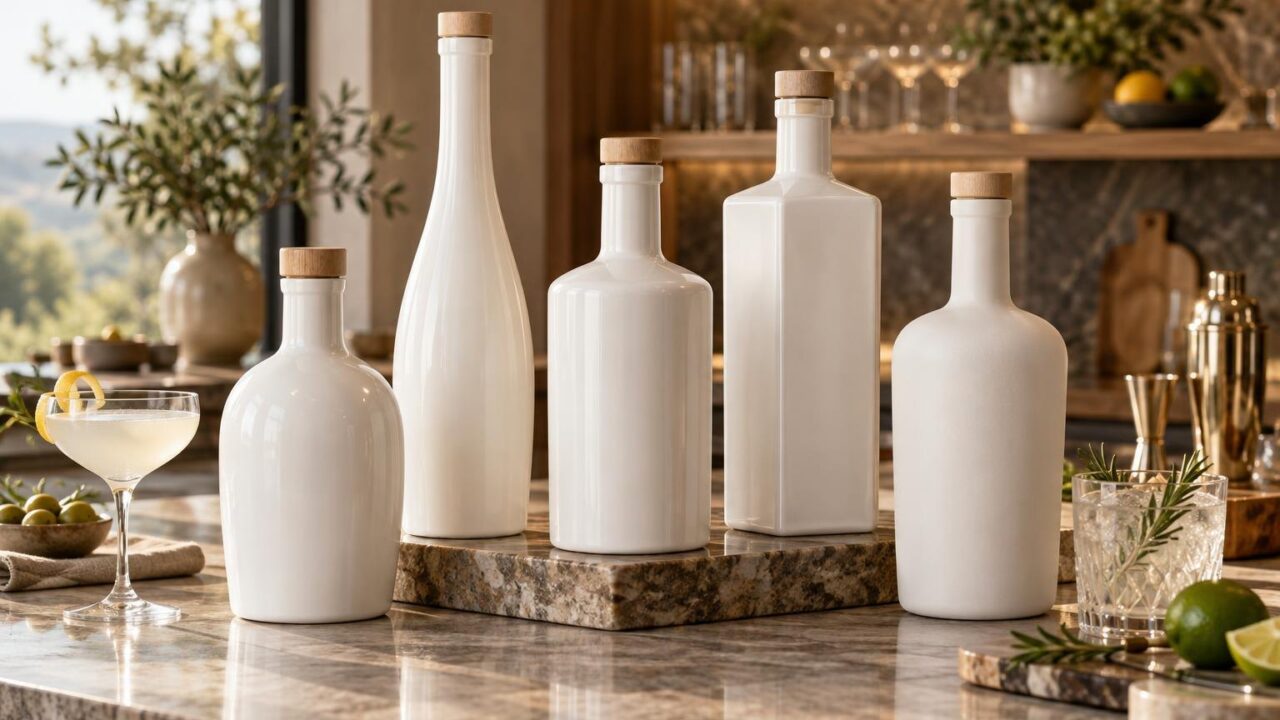
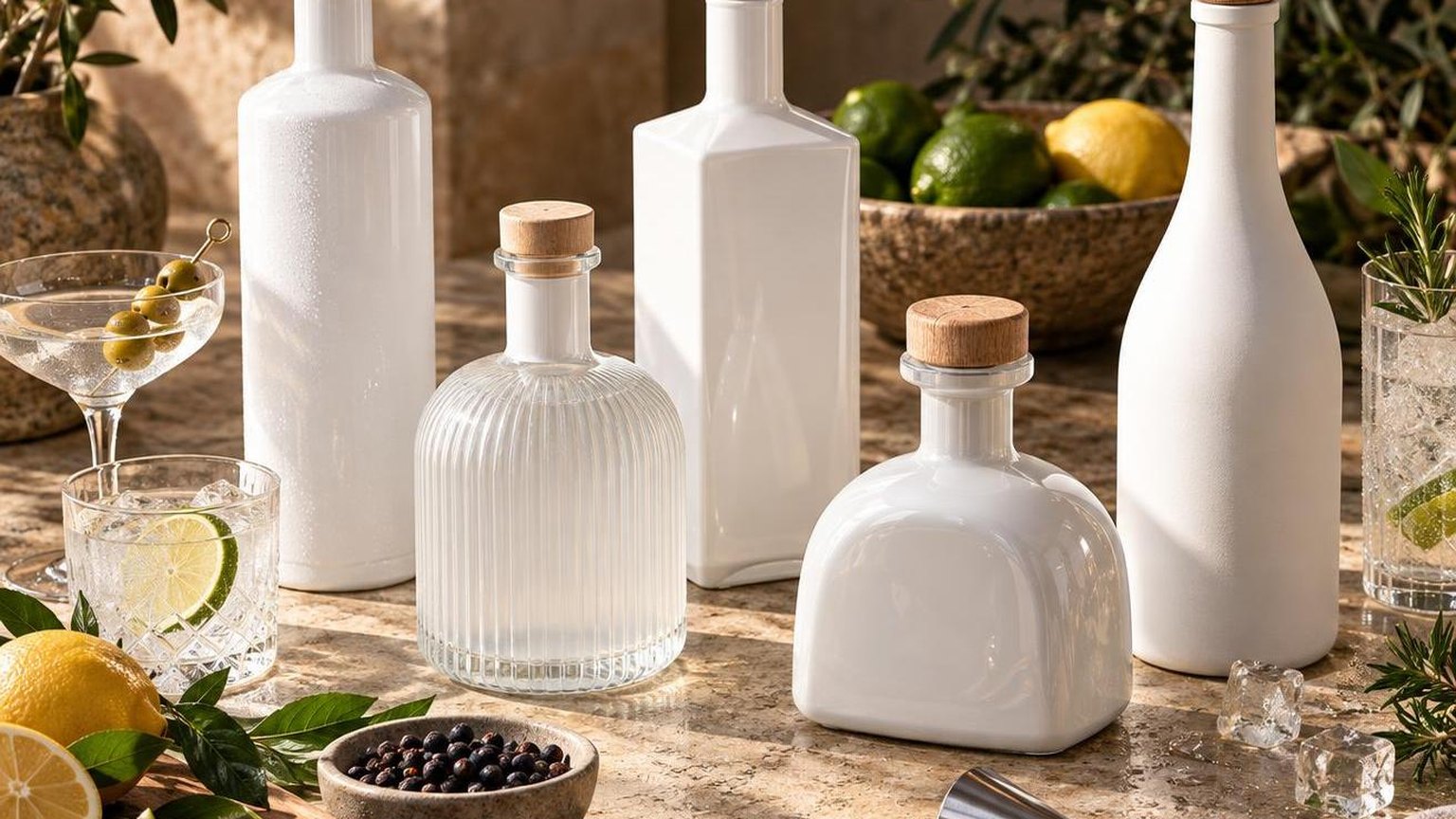
alcohol in a white bottle is usually chosen to protect clear, delicate spirits or create a clean shelf look rather than signal one specific liquor.
Common examples include vodka, blanco tequila, coconut rum, cream liqueur, and limited-release wines packaged in opaque or frosted glass.
The bottle color can affect light exposure, brand recognition, and serving expectations, but the label gives the facts that matter: alcohol by volume, origin, ingredients, and producer.
This guide explains how to identify what is inside, why brands use white bottles, and what buyers should check before pouring.
Why Some Alcohol Uses White Bottles
White bottles serve functional and marketing purposes that directly affect product quality and consumer perception.
The choice is never arbitrary—producers select white or opaque packaging based on light sensitivity, brand positioning, and chemical stability requirements specific to each spirit or wine category.
Light Protection and Chemical Stability
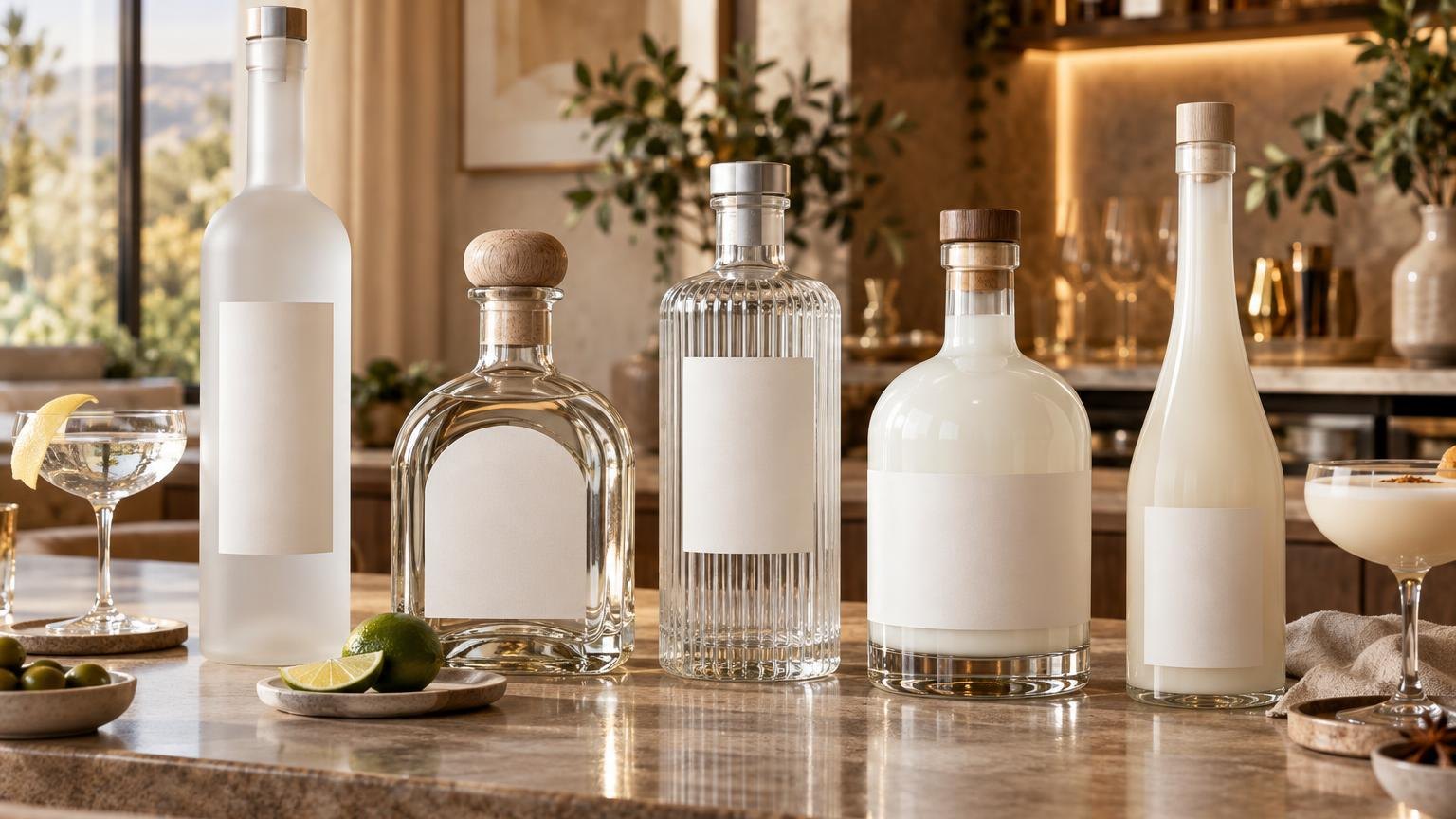
Ultraviolet light between 300–500 nanometers triggers photochemical reactions that degrade flavor compounds.
Riboflavin and isohumulones in beer break down within hours of UV exposure, producing 3-methyl-2-butene-1-thiol—the compound responsible for “skunked” or “lightstruck” off-flavors.
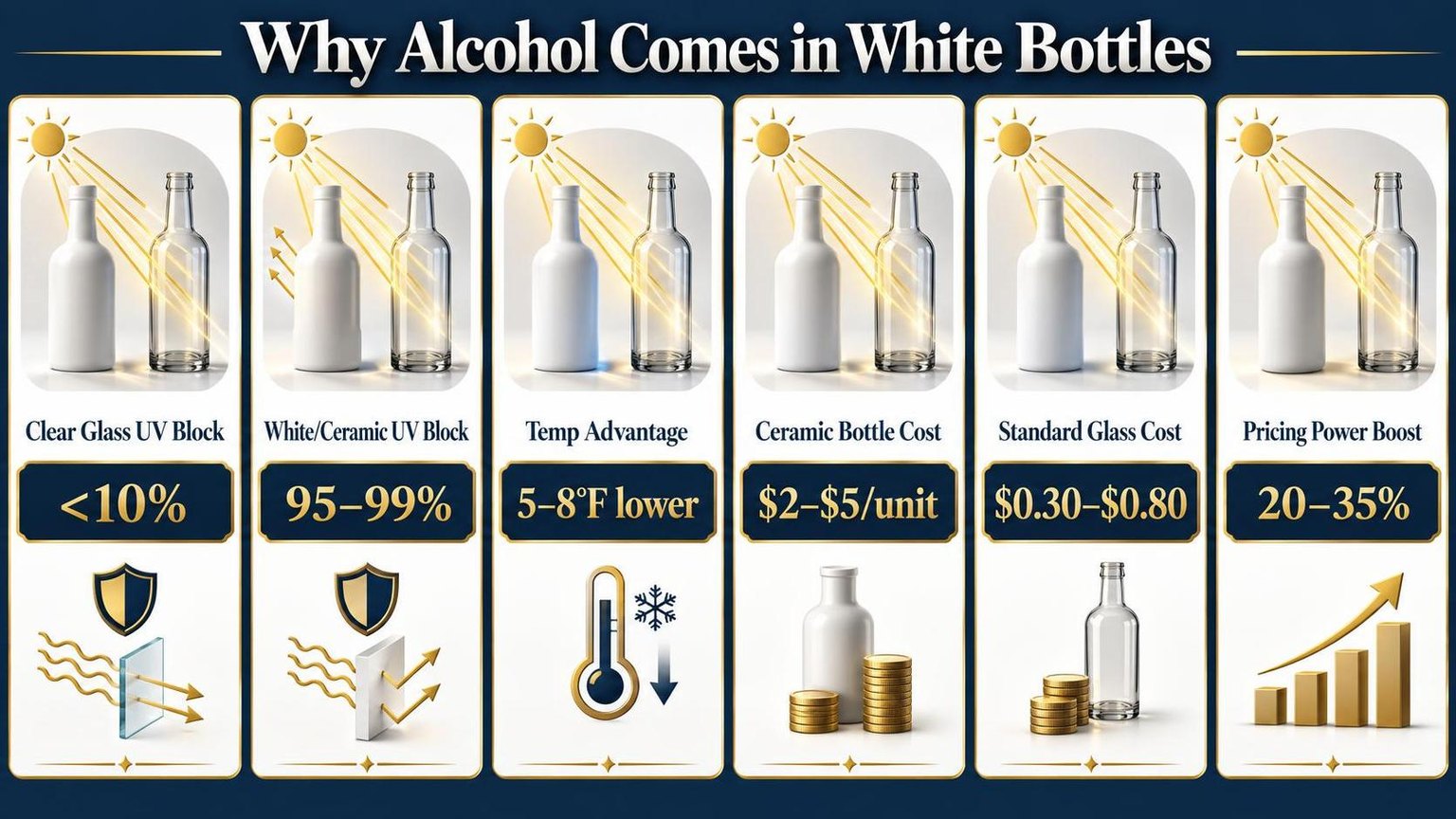
White ceramic and opaque glass bottles block 95–99% of UV transmission. Clear glass blocks less than 10%. Brown glass blocks approximately 90%, making white opaque containers the superior choice for maximum light filtration.
| Bottle Color | UV Light Blocked | Common Use |
| Clear/Flint Glass | <10% | Vodka, white rum, gin |
| Green Glass | 50–70% | Wine, some beer |
| Brown/Amber Glass | ~90% | Beer, whiskey |
| White Opaque/Ceramic | 95–99% | Sake, genever, some liqueurs |
Temperature Regulation
White surfaces reflect up to 80% of solar radiation compared to dark bottles that absorb 70–90%.
For spirits stored or displayed near windows, white bottles maintain internal temperatures 5–8°F lower than dark equivalents under identical conditions.
This thermal advantage matters for cream liqueurs containing dairy proteins. Products like Baileys-style liqueurs degrade faster above 77°F (25°C), making reflective packaging a practical shelf-life extension tool.
Brand Differentiation and Premiumization
White bottles occupy less than 5% of shelf space in most liquor stores, creating instant visual distinction. Brands exploit this rarity deliberately.
- Malibu Coconut Rum — white bottle reinforces tropical, clean positioning since its 1982 redesign
- Gekkeikan sake — traditional white ceramic tokuri connects to Japanese ceremonial heritage
- Clase Azul Reposado — hand-painted white ceramic decanter justifies its $150+ price point
- Belvedere Vodka — frosted white glass communicates Polish winter purity
Nielsen data consistently shows premium spirits ($30+) are 3× more likely to use non-standard bottle colors, including white, compared to value-tier brands.
Material Considerations
White bottles use two primary materials: ceramic stoneware fired at 2,200°F (1,200°C) and white-coated borosilicate glass. Ceramic adds 40–60% more weight per unit, increasing shipping costs by $0.15–$0.30 per bottle on average.
Despite higher production costs—ceramic bottles cost $2–$5 per unit versus $0.30–$0.80 for standard glass—producers accept the margin compression.
The perceived value increase typically generates 20–35% higher retail pricing power, more than offsetting packaging expenses.
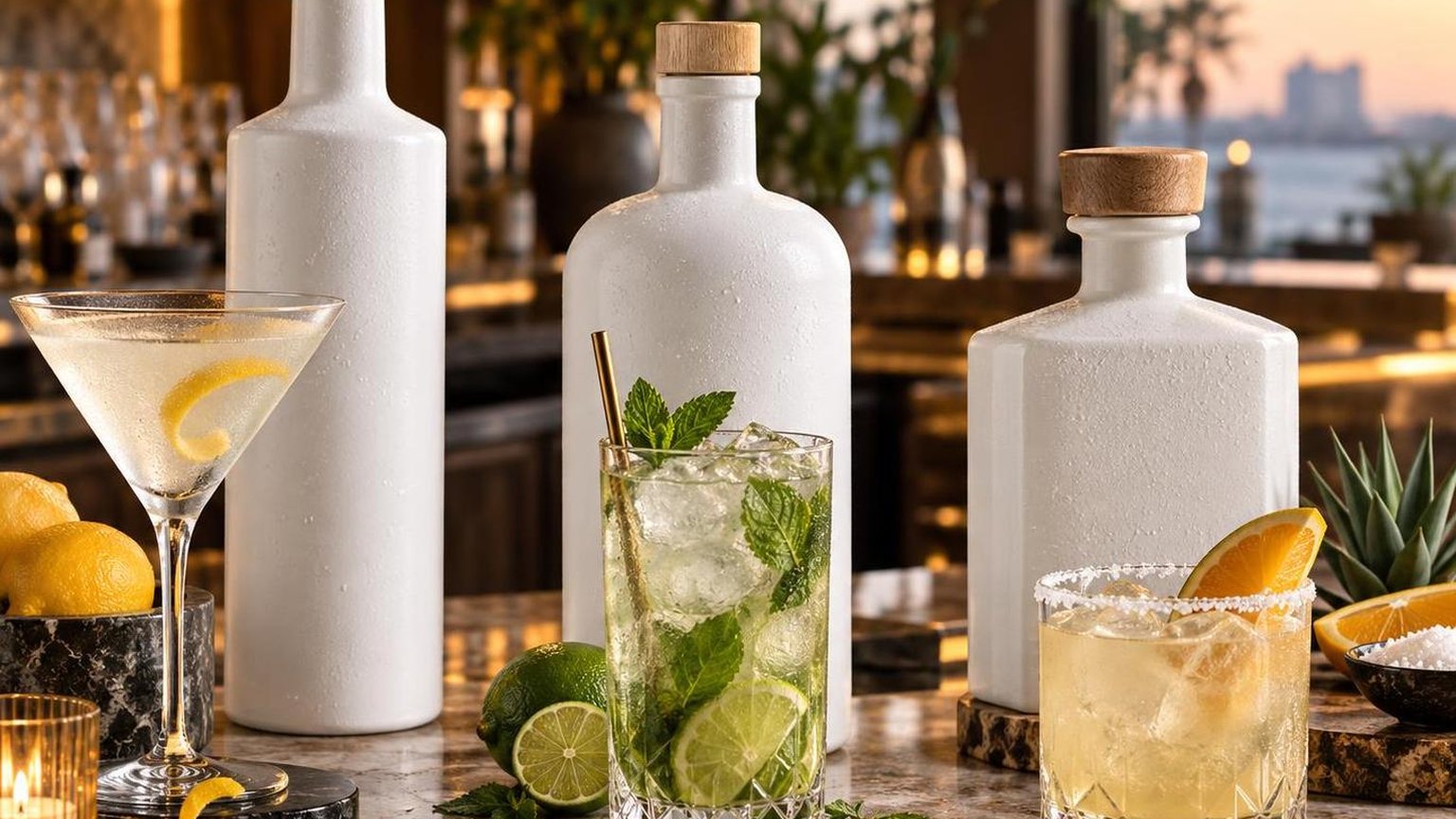
White Bottles Versus Clear Glass
White bottles and clear glass bottles serve fundamentally different purposes in alcohol packaging. The distinction matters because UV light penetration directly affects flavor stability, shelf life, and chemical composition of the liquid inside.
Defining the Difference
“White bottle” in the spirits and wine industry refers to opaque or translucent white glass, ceramic, or painted containers.
Clear glass — also called flint glass — is fully transparent with approximately 90% light transmission.
White-coated or ceramic bottles block between 70% and 99% of UV radiation depending on material thickness and composition. Clear flint glass blocks less than 10% of UV light below 450 nm wavelength.
Light Protection Comparison
| Bottle Type | UV Transmission (300–400 nm) | Visible Light Transmission | Common Uses |
| Clear (flint) glass | 85–90% | ~90% | Vodka, white rum, gin, grappa |
| White ceramic | 0–2% | 0% | Sake, soju, some tequilas |
| White-painted glass | 5–15% | 2–8% | Limited-edition spirits, liqueurs |
| Frosted white glass | 30–50% | 40–60% | Premium vodka, gin |
| Amber glass (reference) | 1–8% | ~25% | Beer, whiskey, some wines |
Chemical Consequences of Light Exposure
Clear glass accelerates photo-oxidation. In wine, riboflavin and pantothenic acid absorb UV light, producing sulfur compounds like dimethyl disulfide within 3–4 hours of direct sun exposure.
This causes “lightstruck” or “skunky” off-flavors.
Studies published in the Journal of Agricultural and Food Chemistry found that wine stored in clear bottles degraded measurably within 18 days under fluorescent retail lighting at 1,600 lux.
Spirits above 40% ABV resist photo-degradation better than wine or beer. High ethanol concentration acts as a partial antioxidant buffer, which explains why vodka and gin tolerate clear bottles commercially.
Why Producers Choose Each Format
- Clear glass — showcases color purity in white spirits; signals transparency and premium quality; costs 5–15% less than ceramic alternatives
- White ceramic — total light blockage; premium shelf presence; heavier at 600–900 g versus 350–500 g for standard 750 ml glass bottles
- White-painted glass — balances UV protection with lower weight; allows brand design flexibility; paint adds $0.10–$0.30 per unit
- Frosted glass — partial UV filtering; tactile differentiation on shelf; achieved via acid etching or sandblasting at $0.05–$0.15 per bottle
Practical Takeaway
White bottles outperform clear glass in preserving light-sensitive alcohols. For spirits above 37.5% ABV stored away from direct light, clear glass performs adequately.
Wine, sake, and lower-ABV beverages benefit significantly from opaque white packaging.
Store any alcohol in clear glass away from fluorescent or natural light. Exposure exceeding 500 lux for more than 48 continuous hours measurably degrades even high-proof spirits.
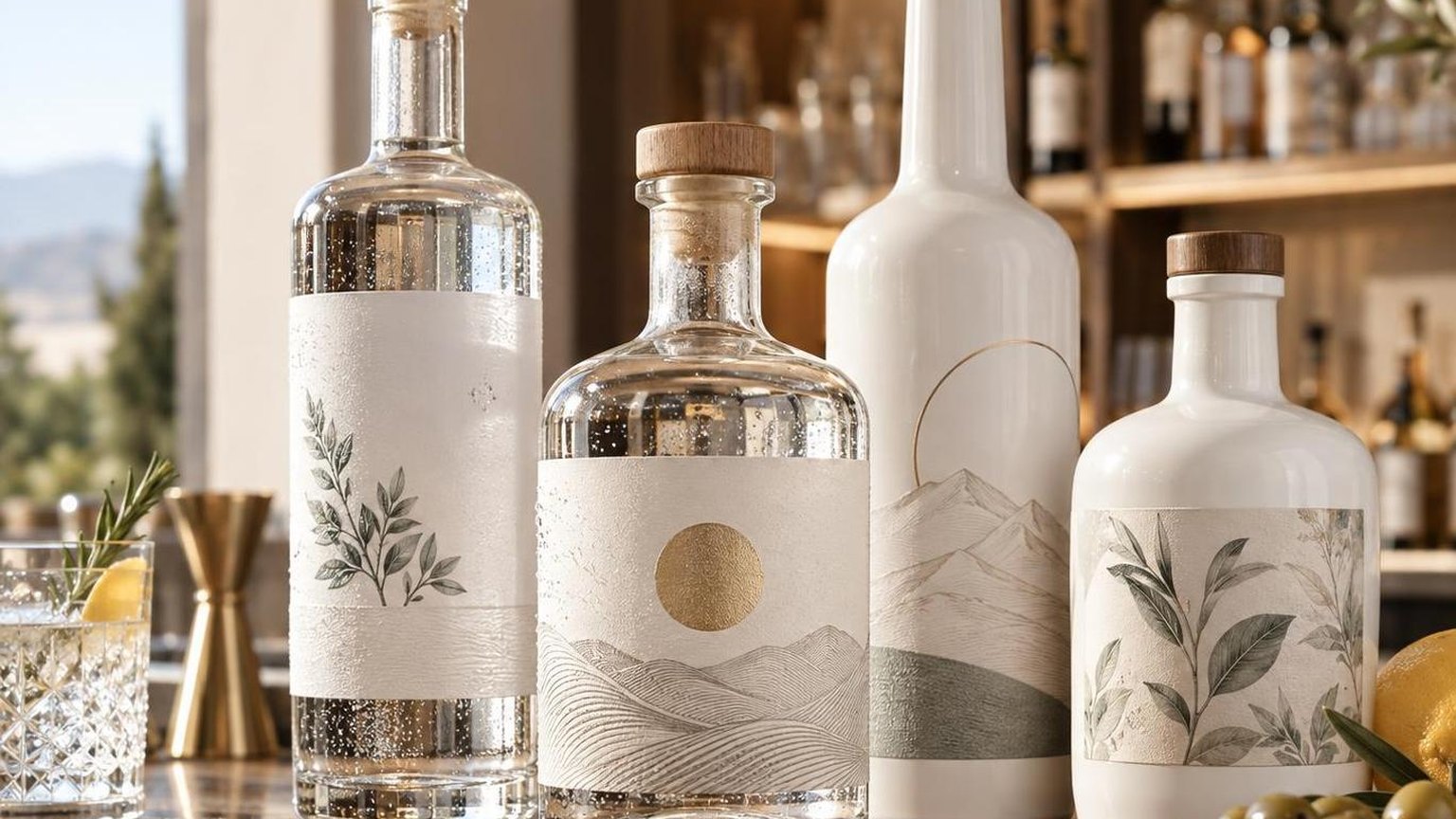
Popular Spirits in White Bottles
White and frosted bottles have become signature packaging for dozens of major spirit brands.
The color choice signals purity, clean flavor profiles, and premium positioning—particularly in vodka, rum, and tequila categories where clarity matters to consumers.
Iconic Vodka Brands
Vodka dominates the white bottle category. Belvedere, produced in Żyrardów, Poland since 1993, uses a frosted white bottle that became its trademark. The brand sold approximately 3.2 million 9-liter cases globally in 2022.
White Walker by Johnnie Walker, released in 2018 as a Game of Thrones collaboration, featured a thermochromic white bottle that revealed hidden graphics when frozen. The limited edition sold out within weeks across 55 markets.
| Brand | Spirit Type | ABV | Bottle Style | Country |
| Belvedere | Vodka | 40% | Frosted white | Poland |
| Malibu | Coconut Rum Liqueur | 21% | Opaque white | Barbados |
| Clase Azul Plata | Tequila | 40% | Hand-painted white ceramic | Mexico |
| Bacardi Superior | White Rum | 40% | Clear/white label | Puerto Rico |
| Skinnygirl | Vodka | 30% | White/silver | USA |
| Nikka Coffey Vodka | Vodka | 40% | White ceramic-style | Japan |
Premium Tequila and Mezcal
Clase Azul Reposado uses a handcrafted white ceramic decanter produced by artisans in Jalisco, Mexico. Each bottle requires 14 days to complete. Retail prices range from $150 to $170, making the packaging itself a collector’s item.
Don Julio’s 1942 Última Reserva also employs a white-labeled presentation for its blanco expression. The brand shipped over 1.5 million cases in the U.S. market alone during 2023, reflecting tequila’s explosive growth.
Rum and Liqueurs
Malibu’s iconic opaque white bottle, introduced in 1982, is recognized in over 150 countries. The coconut-flavored rum liqueur sells roughly 4 million cases annually worldwide, with its white packaging reinforcing tropical branding.
Bacardi Superior, while technically in a clear bottle, pairs a white label with translucent glass to achieve a white shelf appearance. Founded in Santiago de Cuba in 1862, Bacardi remains the world’s largest privately held spirits company.
Why Brands Choose White
- Perceived purity: Consumer studies show white packaging increases perceived quality scores by 12–18% for clear spirits
- Shelf visibility: White bottles reflect ambient light, standing out against darker competitors on back bars
- Temperature signaling: Frosted white implies chilled readiness, especially important for vodka brands
- Premium cues: Ceramic and matte white finishes justify higher price points—brands using opaque white bottles average 30% higher retail than clear-bottle equivalents in the same category
White bottle packaging continues expanding beyond vodka into whiskey, gin, and even sake categories as brands seek differentiation in an increasingly crowded spirits market.
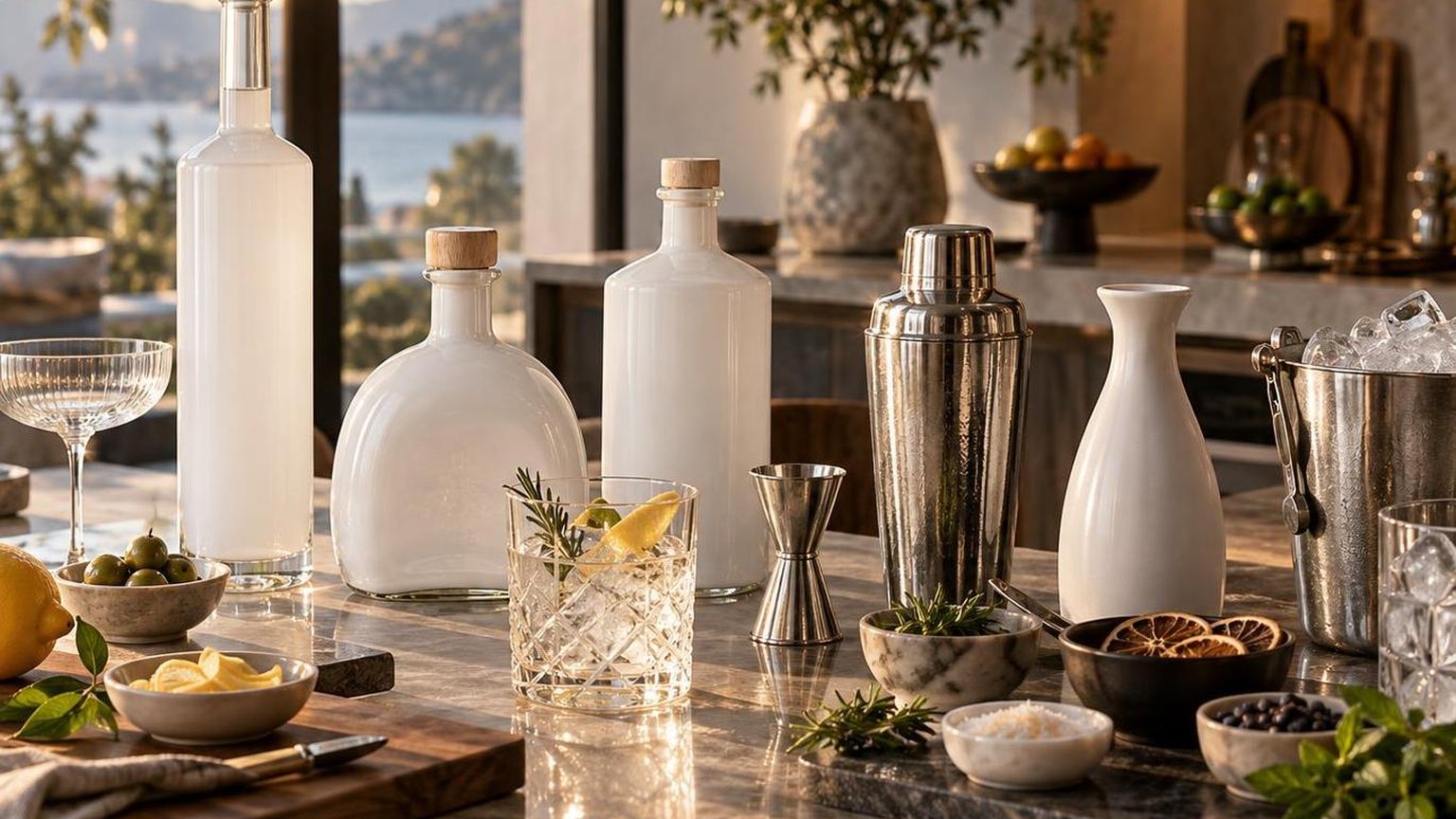
How White Bottles Affect Storage
White (clear/flint) glass transmits 85–90% of visible light, making it the least protective bottle color for light-sensitive alcoholic beverages.
This transparency directly accelerates photochemical degradation, altering flavor compounds within weeks of exposure.
Light-struck character in wine and beer results from riboflavin (vitamin B2) reacting with iso-alpha acids or sulfur-containing amino acids under wavelengths between 350–520 nm.
White bottles offer virtually zero filtration in this critical range.
Light Transmission by Bottle Color
| Bottle Color | UV Transmission (300–380 nm) | Visible Light Transmission (380–700 nm) | Protection Rating |
| White / Flint | 85–90% | 85–90% | Minimal |
| Green | 50–70% | 50–70% | Moderate |
| Amber / Brown | 8–12% | 20–30% | High |
| Dead-leaf (antique green) | 30–50% | 40–55% | Moderate-High |
Amber glass blocks approximately 90% of damaging UV radiation below 450 nm. White glass blocks less than 10% in the same range, a ninefold difference in protective capacity.
Measured Degradation Timelines
Research published in the Journal of Agricultural and Food Chemistry found that beer in clear bottles developed detectable lightstruck off-flavors (3-methyl-2-butene-1-thiol) after just 30 seconds of direct sunlight exposure.
Under fluorescent retail lighting, skunking became perceptible within 1–2 hours.
White wines in clear glass stored under 500 lux fluorescent light showed measurable increases in yellow-brown coloration (Δ absorbance at 420 nm) after 3–5 days.
After 45 days, volatile sulfur compounds decreased by up to 15%, diminishing aromatic intensity.
Compensating for White Bottle Vulnerability
- Temperature control: Store at 10–15°C (50–59°F); photochemical reactions accelerate roughly 2× for every 10°C increase
- Complete darkness: UV-filtered lighting or solid case storage eliminates the primary degradation vector
- Rapid turnover: Spirits brands using white bottles (e.g., Bacardí Superior, Belvedere, Grey Goose) rely on high retail velocity — typically 30–90 days shelf exposure
- UV-protective coatings: Some producers apply thin-film UV inhibitors to flint glass, blocking up to 99% of UV-A and UV-B while retaining clarity
- Outer packaging: Frosted coatings, tissue wraps, and cartons reduce light penetration by 40–75%
High-proof distilled spirits (40% ABV and above) tolerate white bottles better than wine or beer. Ethanol is relatively photostable, and spirits contain fewer light-reactive compounds like riboflavin or hop-derived iso-alpha acids.
Vodka and white rum producers choose clear glass primarily for marketing — consumers associate transparency with purity.
The tradeoff is acceptable because these spirits lack the photosensitive precursors present in beer, wine, and aged spirits containing tannins or congeners.
For aged spirits like tequila reposado or añejo, extended clear-bottle storage remains inadvisable.
Lignin-derived vanillin and phenolic compounds from barrel aging are susceptible to photolysis, losing 8–12% concentration after 6 months under retail lighting conditions.
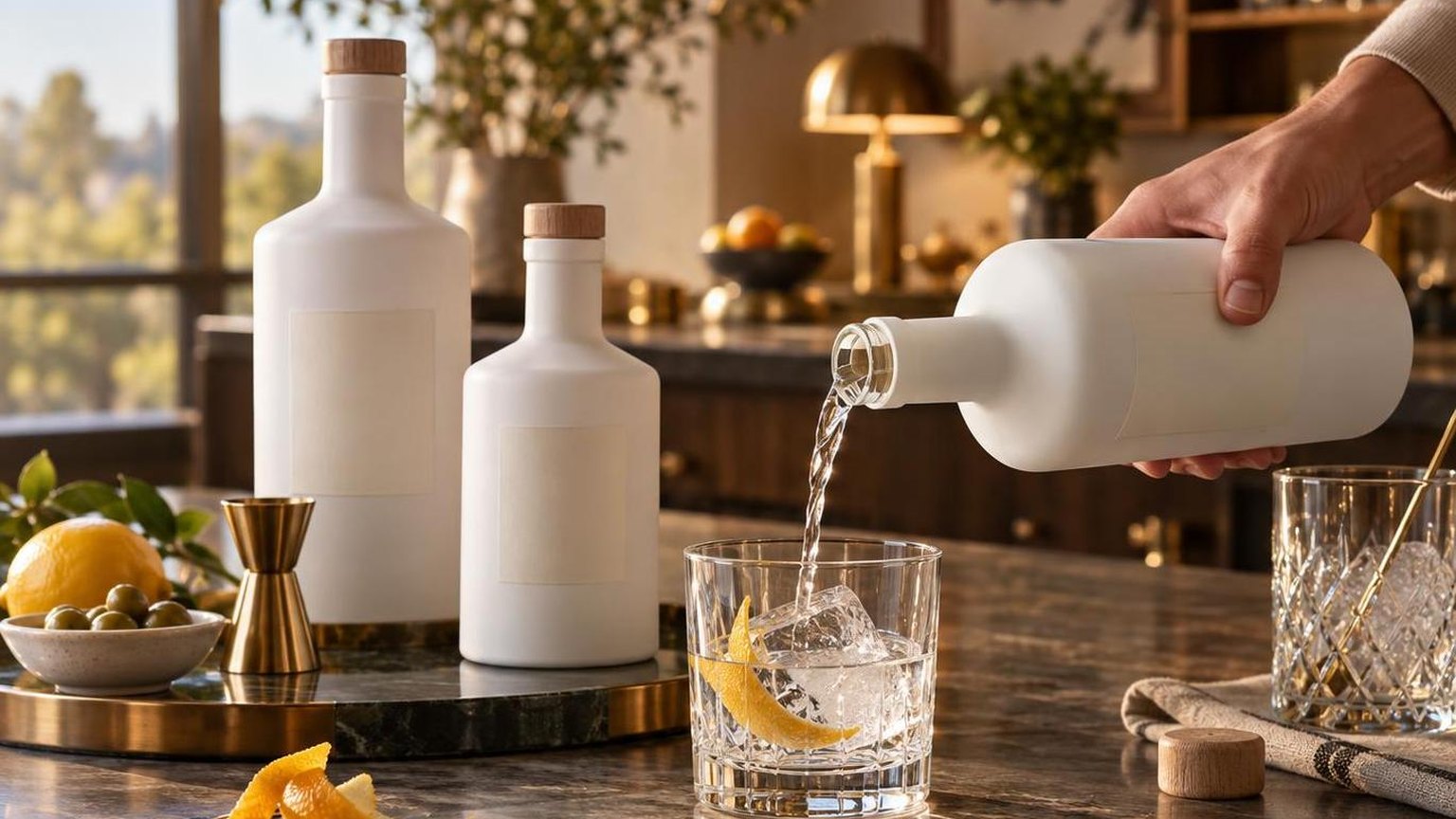
Buying Alcohol in White Bottles
White bottles command premium shelf prices due to higher manufacturing costs and UV-protection coatings. Consumers pay 8–15% more on average for spirits in opaque white glass or ceramic compared to identical products in clear or green bottles.
Price Comparisons by Category
White-bottled spirits span a wide price range depending on category, brand positioning, and materials used in packaging.
| Product | Bottle Type | Avg. US Retail Price |
| Malibu Coconut Rum (750 ml) | White opaque plastic/glass | $15–$19 |
| Clase Azul Reposado Tequila (750 ml) | Hand-painted white ceramic | $150–$170 |
| Belvedere Vodka (750 ml) | Frosted white glass | $28–$35 |
| Hennessy Pure White Cognac (700 ml) | White-labeled frosted glass | $80–$130 (US gray market) |
| Jägermeister Cool Pack (750 ml) | White matte finish | $22–$27 |
| Diplomatico Planas Rum (750 ml) | White-painted glass | $30–$36 |
Where to Buy
Availability varies sharply. Mass-market white bottles like Malibu sit in every major retailer. Limited releases require specialty sourcing.
- Total Wine & More — carries Belvedere, Malibu, Clase Azul, and Diplomatico Planas across 250+ US locations
- Drizly / ReserveBar — online platforms offering same-day delivery in 100+ metro areas; useful for locating Clase Azul and seasonal white-bottle releases
- Duty-free shops — Hennessy Pure White is primarily sold in Caribbean duty-free stores (Barbados, Jamaica, Bahamas) and is not officially distributed in the continental US
- Secondary market — platforms like CaskCartel and specialized Facebook groups resell Hennessy Pure White at markups of 60–120% above Caribbean retail of roughly $45–$55
What Drives the Premium
White ceramic bottles like Clase Azul’s are hand-crafted in Dolores Hidalgo, Mexico. Each takes 14 days to produce, justifying a packaging cost exceeding $30 per unit.
Frosted white glass requires acid-etching or powder-coating processes that add $0.80–$2.50 per bottle to production costs compared to standard flint glass.
UV filtration is a functional benefit. Opaque white glass blocks over 90% of ultraviolet light, protecting volatile flavor compounds in aged spirits from photodegradation.
Buying Tips
- Check the base of ceramic bottles for manufacturer stamps — counterfeits of Clase Azul lack the Catrina or cross-hatch base markings
- Hennessy Pure White has no barcode registered in US retail systems; any domestic listing above $100 reflects import and resale markup, not MSRP
- Store white-bottled spirits upright; ceramic and coated glass surfaces chip more easily than standard bottles during horizontal storage
- Compare per-ounce pricing — white packaging often accompanies smaller 700 ml European pours rather than the US-standard 750 ml
White bottles serve both aesthetic and protective functions. Factor in the packaging premium, verify authenticity on high-value ceramics, and buy from licensed retailers to ensure product integrity.
Questions People Ask Most
Why do some spirits and wines come in white or opaque bottles?
White and opaque bottles block ultraviolet light.
Which triggers a photochemical reaction that degrades flavor compounds—a defect winemakers call “lightstrike.” Riboflavin and pantothenic acid in wine absorb UV wavelengths between 370–440 nm.
Producing sulfur-containing compounds that cause cabbage-like off-aromas in as little as 3 hours of sunlight exposure.
Distillers of clear spirits like gin, vodka, and unaged rum also use frosted or milk-glass bottles to signal purity and premium positioning.
Which well-known spirits are traditionally sold in white bottles?
Malibu coconut rum uses an iconic white bottle introduced in 1982 that has become inseparable from the brand’s tropical identity.
Other examples include certain expressions of Belvedere vodka, Classe Azul Plata tequila (hand-painted white ceramic), and Hennessy Pure White cognac—a Cognac-region exclusive rarely found on US retail shelves.
White ceramic or porcelain bottles are also traditional in Japanese shōchū and Chinese baijiu packaging.
Does a white bottle affect the taste or aging of the alcohol inside?
The bottle color itself does not interact chemically with the liquid, but it influences light transmission, which directly impacts stability.
A fully opaque white bottle transmits 0% visible and UV light, offering protection equivalent to or better than standard dark-green glass, which still transmits roughly 30–50% of light at 450 nm.
For spirits stored in clear glass, switching to an opaque white vessel can extend shelf flavor stability by months under retail lighting conditions.
What is Hennessy Pure White, and why is it so hard to find in the United States?
Hennessy Pure White is a VS-grade cognac blended for a lighter, fruity profile with prominent notes of white flower, honey, and fresh grape.
It is officially distributed only in the Caribbean, primarily in duty-free shops in the Bahamas, Barbados, and select Caribbean islands, and is not part of Hennessy’s US distribution portfolio.
Bottles typically retail for $40–$50 in the Caribbean but resell for $100–$200+ in the US through secondary markets due to scarcity.
Are white ceramic or porcelain bottles safe for storing drinkable alcohol?
Food-grade ceramic and porcelain bottles glazed with lead-free coatings are safe and have been used for centuries—Korean soju, Japanese sake, and Mexican tequila brands all use them.
The critical factor is the glaze: pre-1970s ceramics and artisan imports may contain lead oxide exceeding the FDA’s 0.5 ppm leachable-lead limit for small hollowware.
Consumers should verify that any decorative ceramic bottle carries a food-safety certification before using it for long-term storage.
How should you store alcohol that comes in a white or clear bottle?
Store the bottle upright in a cool, dark space between 15–20 °C (59–68 °F), away from direct sunlight and fluorescent lighting, which emits UV wavelengths that accelerate lightstrike.
Spirits above 40% ABV do not benefit from side storage and can actually degrade natural corks through prolonged alcohol contact.
If display is unavoidable, position the bottle away from south-facing windows and limit continuous light exposure to under 50 lux—roughly equivalent to a dimly lit bar shelf.
Related Guides
- How Many Shots Does It Take To Get Drunk?
- How To Use A Wine Bottle Opener?
- How Is Tequila Different From Other Alcohol? Get Answer Now
- What Does Triple Distilled Mean? Get Answer Now
- How Many Quarts Is 128 Oz?
- How Many Grams In An Ounce Of Gold 22K? – A Powerful, Trusted Guide for Smart Buyers (2026)
- Are Sugar Free Red Bulls Bad for You?
- What Is Muscatel Wine?
- How Many Litres Is 30 Gallons?
- All Blog Guides
- TTB – Alcohol Beverage Labeling and Formulation Division (2024)
- FDA – Packaging & Food Contact Substances (2024)
- NIH/NIAAA – Alcohol Facts and Statistics (2024)
- USDA – Alcohol Content of Selected Beverages (2023)
- UC Davis Department of Viticulture & Enology – Wine Packaging Research (2024)
- PubMed – Light-Induced Oxidation in Wine and the Role of Bottle Color (2007)
- The Brewers Association – Packaging Best Practices (2024)
- Wine Spectator – Why Wine Bottle Color Matters (2023)
- Decanter – Guide to Wine Bottle Shapes and Colors (2024)