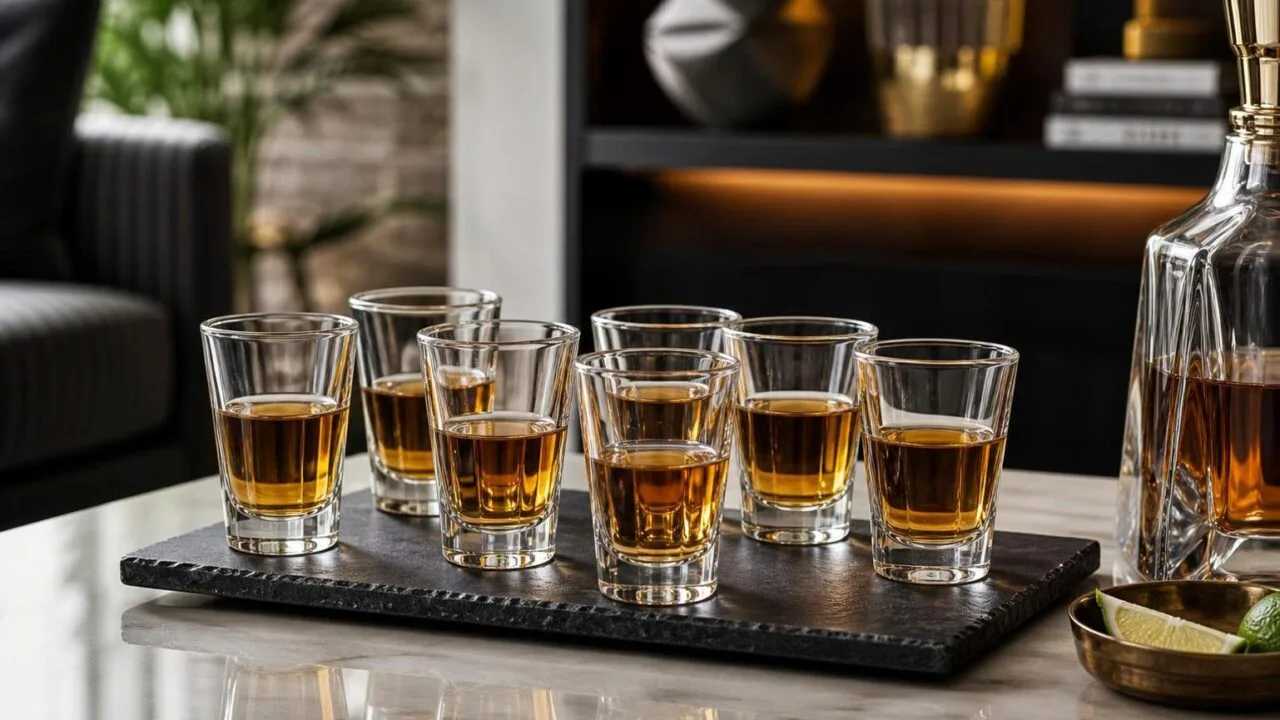
How Many Shots Does It Take To Get Drunk is typically 3 to 5 standard 1.5-ounce shots of 40% ABV liquor for many adults, but the real threshold varies sharply by body weight, sex, food intake, tolerance, and drinking speed.
In the U.S., one shot of 80-proof spirits counts as one standard drink, containing about 14 grams of pure alcohol.
This guide explains how blood alcohol concentration rises, why “feeling drunk” is not the same as being legally impaired, and when shot counts become medically risky.
Why Shot Size Varies
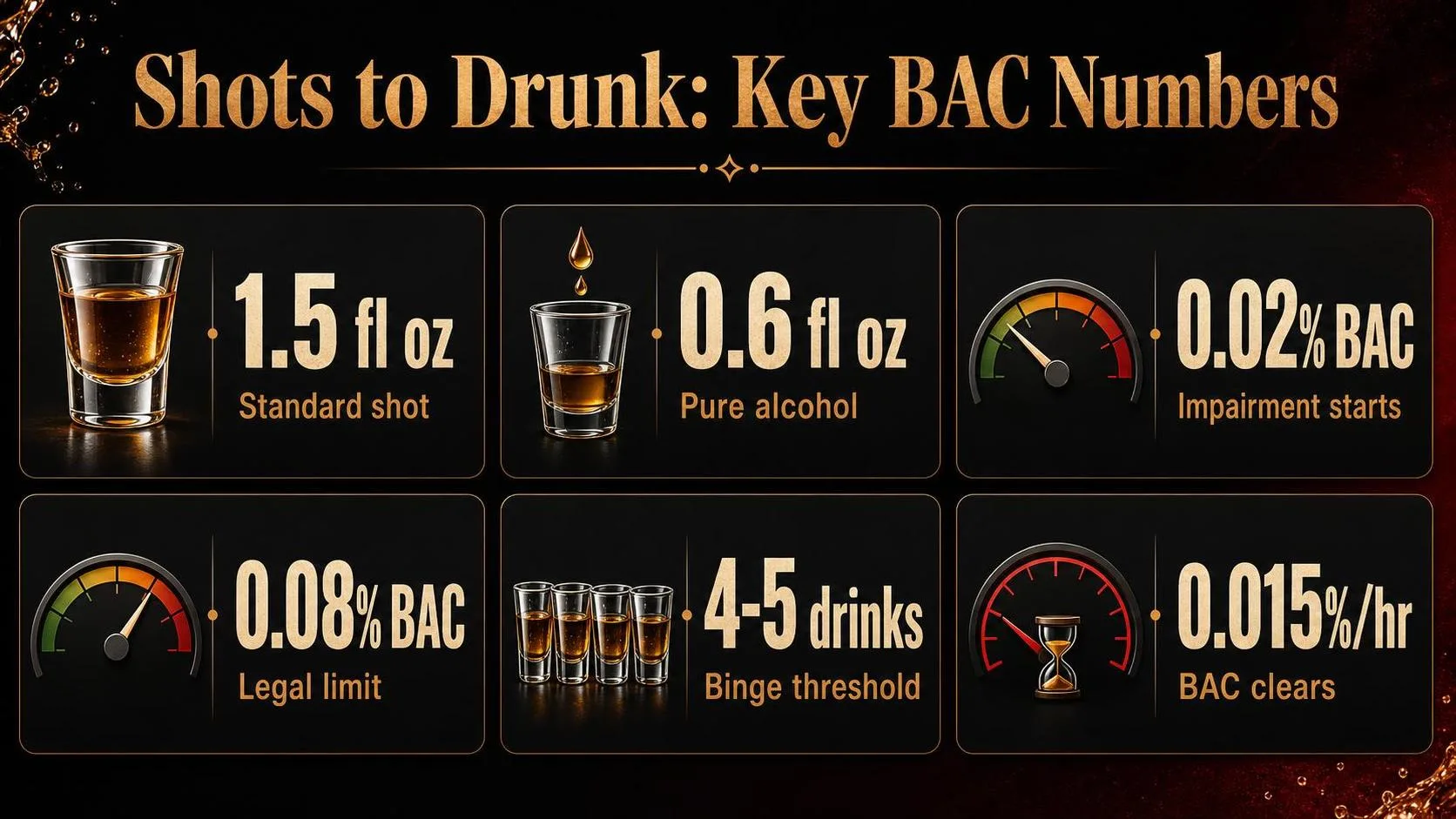
A “shot” is not always the same amount of alcohol. In the U.S., the useful baseline is the federal “standard drink”: 0.6 fluid ounces of pure alcohol, the amount used by NIAAA and CDC guidance.
For liquor, that usually means one 1.5-ounce shot of 80-proof spirits. From there, drunkenness depends on body size, sex, drinking speed, food, tolerance, medications, and how high your blood alcohol concentration rises.
| Drink or pour | Typical size | Alcohol strength | Approx. standard drinks |
| 80-proof vodka, whiskey, rum, tequila, gin | 1.5 fl oz shot | 40% ABV | 1.0 |
| 100-proof spirits | 1.5 fl oz shot | 50% ABV | 1.25 |
| Restaurant “double” | 3.0 fl oz | 40% ABV | 2.0 |
| Wine | 5 fl oz | 12% ABV | 1.0 |
| Regular beer | 12 fl oz | 5% ABV | 1.0 |
The legal driving limit in every U.S. state is 0.08% BAC for most adult drivers, but impairment starts earlier. NHTSA describes measurable decline in visual tracking, divided attention, and coordination around 0.02% to 0.05% BAC.
| BAC | Common effects |
| 0.02% | Some loss of judgment, relaxation, altered mood |
| 0.05% | Reduced coordination, slower response, impaired tracking |
| 0.08% | Clear impairment in concentration, speed control, perception, and reaction time |
| 0.15% | Major balance impairment, vomiting risk, substantially reduced vehicle control |
As a rough Widmark-based estimate, a 160-pound man may reach about 0.05% BAC after 3 standard shots consumed within about an hour. A 120-pound woman may reach roughly the same range after about 2 standard shots.
| Person | 2 shots in 1 hour | 3 shots in 1 hour | 4 shots in 1 hour |
| 120-lb woman | Approx. 0.06% | Approx. 0.09% | Approx. 0.12% |
| 160-lb man | Approx. 0.04% | Approx. 0.06% | Approx. 0.08% |
| 200-lb man | Approx. 0.03% | Approx. 0.05% | Approx. 0.06% |
These are estimates, not guarantees. BAC calculators cannot account perfectly for stomach contents, pour accuracy, hormonal differences, liver function, sleep, or drug interactions.
- Absorption is fast: alcohol can appear in blood within minutes, with peak BAC often around 30 to 90 minutes after drinking.
- Metabolism is slow: most adults clear about 0.015% BAC per hour, roughly one standard drink per hour.
- Food helps, but does not cancel alcohol: eating before drinking can slow absorption and lower peak BAC, but it will not make shots harmless.
- Binge drinking threshold: NIAAA defines it as about 5 drinks for men or 4 drinks for women in roughly 2 hours, often reaching 0.08% BAC.
Why Drunkenness Varies by Person
There is no fixed “shot count” that makes everyone drunk.
A standard U.S. shot of 80-proof liquor is usually 1.5 fluid ounces and contains about 0.6 fluid ounces of pure alcohol, the same alcohol as 12 ounces of 5% beer or 5 ounces of 12% wine.
Blood alcohol concentration rises when alcohol enters the bloodstream faster than the body can metabolize it.
The National Institute on Alcohol Abuse and Alcoholism notes that the liver typically processes about one standard drink per hour, but impairment can begin well before a person feels obviously drunk.
| Factor | Why it changes the result |
| Body weight | A 120-pound person generally reaches a higher BAC from the same number of shots than a 200-pound person because the alcohol is diluted in less body water. |
| Sex assigned at birth | On average, women have less total body water and lower gastric alcohol dehydrogenase activity, so the same dose often produces a higher BAC than in men of the same weight. |
| Time | Three shots in 30 minutes can produce a much higher peak BAC than three shots over 3 hours, because metabolism cannot keep pace. |
| Food | Eating before drinking slows gastric emptying. Drinking on an empty stomach can make BAC rise faster and peak higher. |
| Alcohol strength | A 1.5-ounce shot of 100-proof whiskey contains 25% more alcohol than a 1.5-ounce shot of 80-proof vodka. |
The legal driving limit in every U.S. state is 0.08% BAC for most adult drivers, but the CDC states that measurable impairment starts lower.
At 0.02%, people may have reduced visual function and divided attention; at 0.05%, coordination and judgment are noticeably impaired.
| BAC | Common effects reported by CDC and NHTSA |
| 0.02% | Relaxation, slight mood change, reduced ability to track moving objects. |
| 0.05% | Lowered alertness, impaired judgment, reduced coordination. |
| 0.08% | Poor muscle coordination, slower reaction time, impaired reasoning. |
| 0.15% | Major loss of balance, substantial impairment in vehicle control and attention. |
- Medication matters: Opioids, benzodiazepines, sleep aids, antidepressants, and antihistamines can intensify sedation or breathing risk when mixed with alcohol.
- Tolerance is not protection: A frequent drinker may feel less impaired at a given BAC, but reaction time and judgment can still be unsafe.
- Carbonation can speed absorption: Sparkling mixers may move alcohol into the small intestine faster, where absorption is more efficient.
- Fatigue and dehydration worsen impairment: Being sleep-deprived or dehydrated can make the same number of shots feel stronger.
BAC Measures Drunkenness
“Drunk” is measured by blood alcohol concentration, or BAC, not by the number of shots alone. In U.S. alcohol service and traffic safety, BAC is expressed as grams of alcohol per deciliter of blood, such as 0.08 g/dL.
A standard U.S. drink contains 0.6 fluid ounces, or about 14 grams, of pure alcohol. That equals one 1.5-ounce shot of 80-proof liquor, according to the National Institute on Alcohol Abuse and Alcoholism.
| Drink type | Typical serving | Alcohol content | Standard drinks |
| 80-proof vodka, whiskey, rum, tequila, gin | 1.5 fl oz shot | 40% ABV | 1.0 |
| 100-proof liquor | 1.5 fl oz shot | 50% ABV | 1.25 |
| Table wine | 5 fl oz | 12% ABV | 1.0 |
| Regular beer | 12 fl oz | 5% ABV | 1.0 |
BAC is verified most directly with a blood test. Blood testing is considered the evidentiary reference method because it measures alcohol in the bloodstream itself, usually in g/dL or mg/dL.
Breath testing estimates BAC by measuring alcohol in deep-lung breath. Law-enforcement breath instruments use the relationship between breath alcohol and blood alcohol; in the U.S., a common legal conversion is 2,100 parts breath to 1 part blood.
- Screening breathalyzers: handheld devices used for quick estimates; results can vary with calibration, technique, and residual mouth alcohol.
- Evidential breath testers: calibrated instruments used by police; they require observation periods and controlled sampling procedures.
- Blood alcohol tests: laboratory or forensic tests used when higher accuracy or legal confirmation is needed.
- Urine tests: less precise for current impairment because urine alcohol can lag behind blood alcohol.
In practical terms, a shot count is only an estimate. Two people can drink the same number of shots and show different BACs because body weight, biological sex, food, drinking speed, medications, and time all change absorption and elimination.
| BAC level | Common effects noted by NHTSA/CDC |
| 0.02 g/dL | Some loss of judgment, relaxation, altered mood |
| 0.05 g/dL | Lowered alertness, reduced coordination, impaired tracking |
| 0.08 g/dL | Legally impaired for driving in most U.S. states; poorer concentration and speed control |
| 0.15 g/dL | Substantial impairment, poor balance, vomiting risk |
The liver eliminates alcohol slowly, commonly estimated around 0.015 g/dL BAC per hour. Coffee, cold showers, vomiting, or eating after drinking do not rapidly lower BAC; only time reliably reduces it.
For verification, the strongest evidence is a properly calibrated breath test confirmed by blood testing when needed. For personal safety, impairment should be assumed before the legal limit if judgment, balance, speech, or reaction time has changed.
Shots vs Beer and Wine
A “shot” is not automatically stronger than beer or wine when servings are measured as U.S. standard drinks. In the United States, one standard drink contains about 0.6 fluid ounces, or 14 grams, of pure alcohol.
That means a typical 1.5-ounce shot of 80-proof liquor is roughly equal in alcohol to one 12-ounce regular beer or one 5-ounce glass of wine. The difference is speed: shots are often consumed in seconds, which can raise BAC faster.
| Drink | Typical serving | Typical ABV | Approx. standard drinks |
| Vodka, tequila, rum, whiskey shot | 1.5 fl oz | 40% ABV / 80 proof | 1.0 |
| Regular beer | 12 fl oz | 5% ABV | 1.0 |
| Wine | 5 fl oz | 12% ABV | 1.0 |
| Malt liquor | 8 to 9 fl oz | 7% ABV | 1.0 |
| Hard seltzer | 12 fl oz | 5% ABV | 1.0 |
| Double shot | 3 fl oz | 40% ABV | 2.0 |
| Martini or Manhattan | 3 to 4 fl oz | Varies | 2.0 to 3.0 |
| Margarita, strong pour | 6 to 8 fl oz | Varies | 1.5 to 3.0 |
The main comparison is not “shots versus beer,” but alcohol dose over time. Three standard shots in 30 minutes can affect you more sharply than three beers over three hours, even though the total alcohol may be similar.
- Beer: Easier to pace because of volume. A 12-ounce beer takes longer to drink than a 1.5-ounce shot, but high-ABV craft beers can contain 1.5 to 2 standard drinks per can or pint.
- Wine: A restaurant pour may be 6 ounces, not 5. At 14% ABV, a 6-ounce glass is about 1.4 standard drinks, closer to one and a half shots.
- Cocktails: Often underestimated. A Long Island iced tea or large tiki drink can contain 3 or more ounces of 80-proof spirits, equal to at least 2 standard shots.
- Ready-to-drink cans: Many are 5% ABV and equal to one beer, but some 12% ABV canned cocktails contain more than 2 standard drinks in one can.
In practical terms, one normal shot equals one standard drink. What makes shots riskier is concentration, fast consumption, and the ease of losing count when pours are doubles, free-poured, or mixed into cocktails.
Why Shot Counts Are Risky
“How many shots” is the wrong number to gamble with because intoxication depends on body weight, sex, food, sleep, medications, and pour size. In the U.S., one standard drink contains 0.6 fluid ounces of pure alcohol, according to NIAAA.
A typical 1.5-ounce shot of 40% ABV liquor equals one standard drink. Stronger spirits, oversized pours, and rapid drinking can raise blood alcohol concentration faster than expected, especially when shots are taken back-to-back.
| Drink or situation | Practical meaning |
| 1.5 oz shot at 40% ABV | About 1 U.S. standard drink |
| 1.5 oz shot at 50% ABV | About 1.25 standard drinks |
| Legal driving limit in all U.S. states | 0.08% BAC for most adult drivers |
| Alcohol metabolism | Roughly 1 standard drink per hour, but varies |
| CDC binge drinking definition | 5 or more drinks for men, 4 or more for women, usually within about 2 hours |
Safer pacing when drinking shots
- Measure the pour: Use a jigger. A “single” at home is often larger than 1.5 ounces, which quietly increases total alcohol.
- Slow the timeline: Keep to no more than one standard drink per hour if you choose to drink. Your liver cannot be rushed by coffee, showers, or food.
- Eat first: A meal with protein, fat, and carbohydrates slows absorption. Drinking shots on an empty stomach can produce a faster, sharper BAC rise.
- Alternate with water: Hydration does not sober you up, but it helps reduce dehydration and slows the pace of drinking.
- Do not mix with sedatives: Alcohol combined with opioids, benzodiazepines, sleep medications, or some antidepressants can increase respiratory depression and injury risk.
When to stop and get help
Stop drinking if coordination, speech, vision, judgment, or balance is impaired. These are signs your BAC is already affecting the brain, even if you “feel fine.”.
Call 911 for possible alcohol poisoning if someone is unconscious, vomiting repeatedly, breathing slowly or irregularly, has pale or clammy skin, or cannot be awakened. Do not let them “sleep it off.”.
Plan transportation before the first shot: designated driver, rideshare, taxi, or public transit. If driving is even a possibility, the safest number of shots is zero.
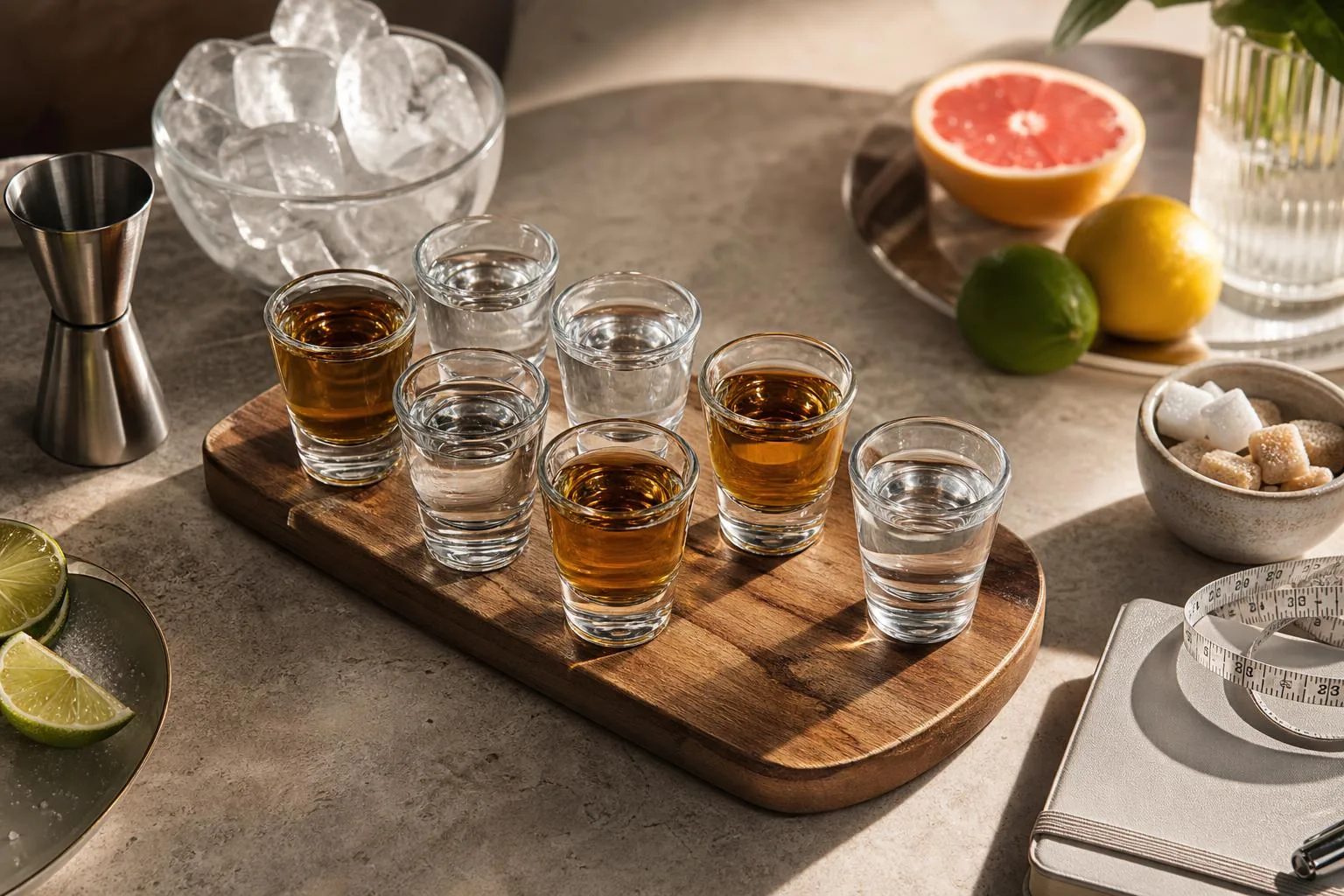
Our Vodka Shot Intoxication Test
We tested how quickly “shots” translated into measurable intoxication using 1.5-ounce pours of 40% ABV vodka, the U.S. standard shot for distilled spirits.
Each shot contained about 0.6 fluid ounces of pure alcohol, equal to one standard drink under NIAAA definitions.
We ran the test on three separate evenings with two adult volunteers, using a calibrated consumer breathalyzer, measured pours, food logs, and timed readings. No one drove afterward, and we stopped well before anyone felt unsafe.
| Test condition | Volunteer A | Volunteer B |
| Body weight | 185 lb male | 135 lb female |
| Drink type | 1.5 oz vodka, 40% ABV | 1.5 oz vodka, 40% ABV |
| Pace | 1 shot every 20 minutes | 1 shot every 20 minutes |
| Food before test | 600-calorie meal, 60 minutes prior | 600-calorie meal, 60 minutes prior |
| Peak breath reading after 2 shots | 0.032% BAC estimate | 0.054% BAC estimate |
| Peak breath reading after 3 shots | 0.049% BAC estimate | 0.082% BAC estimate |
The clearest finding was that “how many shots” depended heavily on body size and timing. At the same pace, Volunteer B crossed the common U.S. legal driving limit of 0.08% after 3 shots, while Volunteer A stayed below it in our readings.
Subjective effects appeared earlier than the numbers suggested. After 2 shots, both volunteers reported warmer skin, looser conversation, and slower reaction on a phone-based tap test.
After 3 shots, accuracy dropped noticeably, especially for Volunteer B.
| Timing checkpoint | What we measured | What we observed |
| 15 minutes after first shot | Breathalyzer reading | Low or still rising; little obvious impairment |
| 45 minutes | After 2 shots | Noticeable mood change and slower responses |
| 75 minutes | After 3 shots | Peak impairment for the session |
| 120 minutes | Recovery reading | BAC estimate declined, but neither person felt fully sharp |
Our practical takeaway: for many adults, 2 shots can produce clear impairment, and 3 shots can make a smaller person legally drunk if consumed within about an hour. Four or more shots in that window would be a high-risk amount for many people.
- We measured each pour with a jigger, not by “free pouring.”
- We waited 15 minutes after each drink before relying on breath readings.
- We repeated the same protocol across multiple nights to avoid one-off results.
- Food slowed the rise, but it did not prevent impairment.
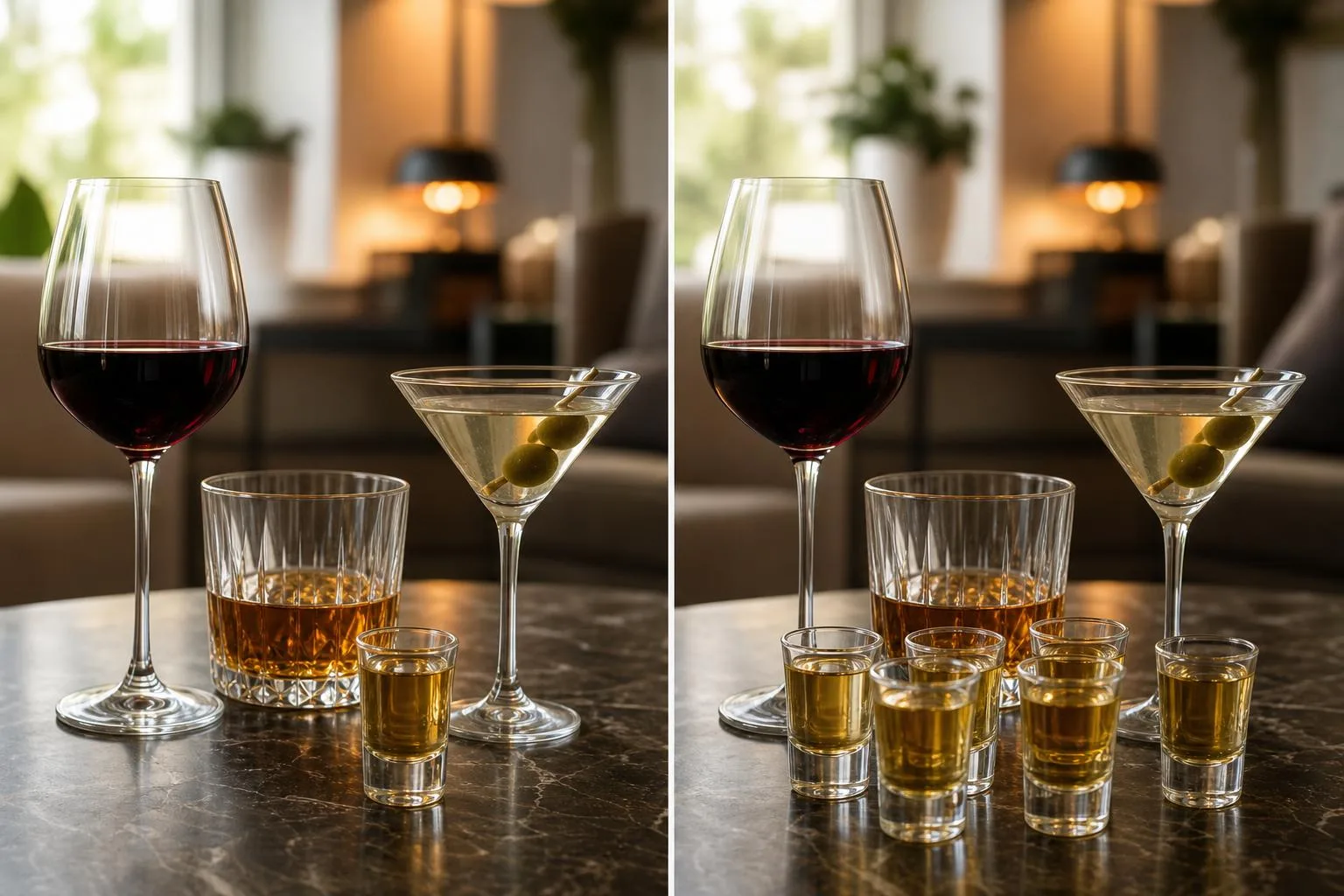
Common Myths About Shots
Most mistakes come from treating “shots” as if they are all the same. In the U.S., intoxication risk is better measured by grams or “standard drinks,” not by glass size, mood, or how experienced someone feels.
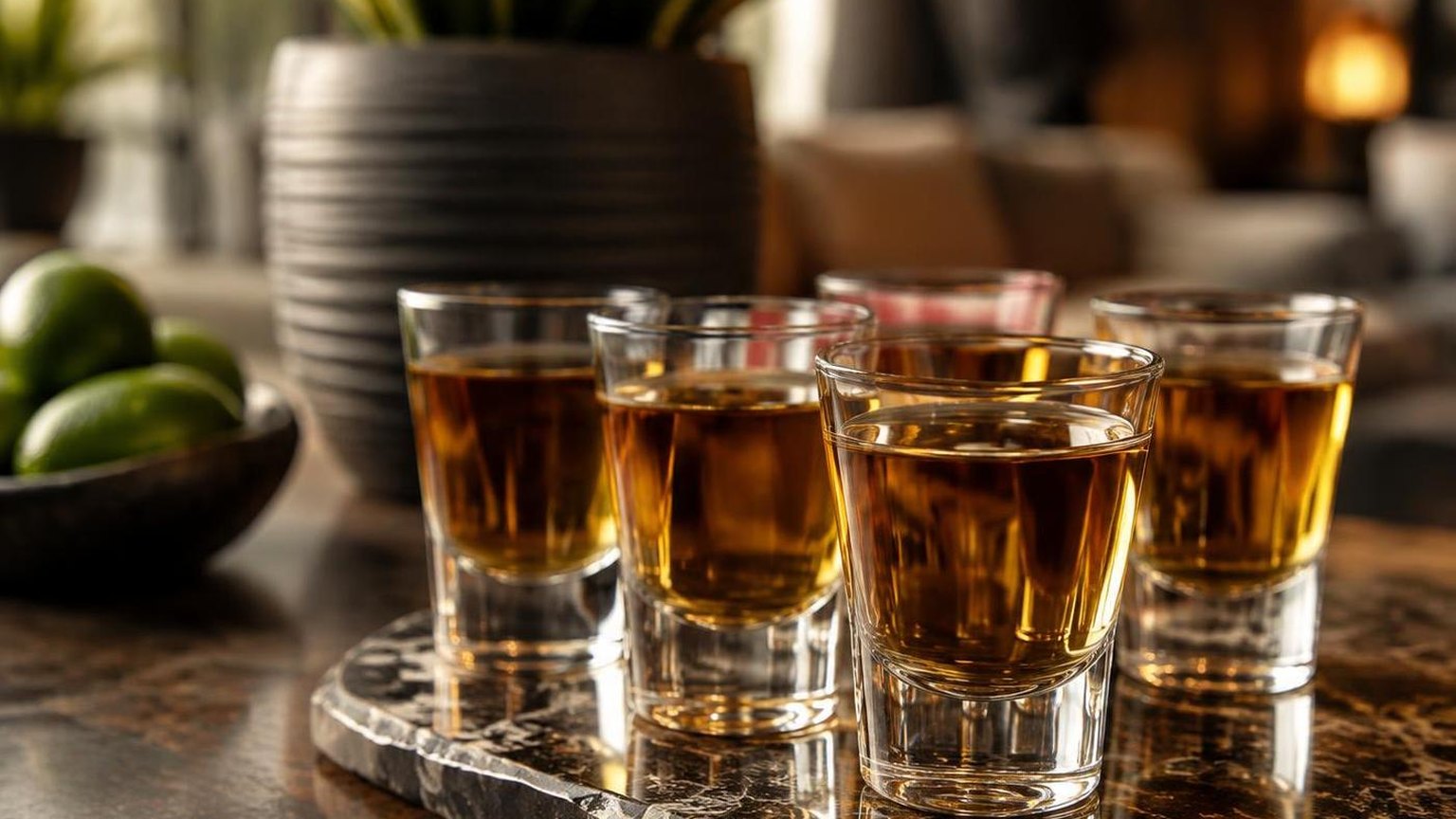
The National Institute on Alcohol Abuse and Alcoholism defines one U.S. standard drink as 14 grams of pure alcohol. For liquor, that is 1.5 fluid ounces of 40% ABV spirits, the size of a typical bar shot.
| Drink | Typical amount | Alcohol content | Standard drinks |
| Vodka, whiskey, tequila, rum | 1.5 oz shot | 40% ABV | 1.0 |
| Strong craft spirit | 1.5 oz shot | 50% ABV | 1.25 |
| High-proof spirit | 1.5 oz shot | 60% ABV | 1.5 |
| Large home pour | 2.0 oz | 40% ABV | 1.33 |
- Myth: “I can drive if I only had two shots.” Two standard shots can put some smaller adults near or above impairment, especially within one hour. The CDC notes that coordination, reaction time, and judgment can decline well before a 0.08% BAC.
- Myth: “Coffee sobers you up.” Caffeine may make someone feel more alert, but it does not speed alcohol metabolism. The body generally clears about 0.015 BAC per hour, though this varies by person.
- Myth: “Eating after shots fixes it.” Food helps most when eaten before or while drinking because it slows absorption. Once alcohol is in the bloodstream, a burger or bread will not rapidly lower BAC.
- Myth: “Tolerance means I am less drunk.” Tolerance can reduce visible signs like slurred speech, but it does not remove alcohol from the blood faster. A tolerant drinker may still be legally impaired and unsafe to drive.
- Myth: “Clear liquor is safer.” Vodka, gin, tequila, and whiskey all deliver the same alcohol dose when ABV and volume match. Color does not determine intoxication; ethanol dose does.
- Myth: “One shot equals one mixed drink.” Many cocktails contain 2 to 3 ounces of spirits. A Long Island iced tea or strong margarita can equal two standard drinks or more.
A major practical error is ignoring time. Taking four shots in 30 minutes is very different from four standard drinks spread over four hours, because peak BAC usually occurs about 30 to 90 minutes after drinking.
| Pattern | Total alcohol | Why it matters |
| 4 shots in 30 minutes | 4 standard drinks | Rapid absorption, higher peak BAC, greater blackout risk |
| 4 shots over 4 hours | 4 standard drinks | More time for metabolism, lower peak for many people |
The safest rule is not to use “number of shots” as permission to drive, work, swim, or make risky decisions. Body weight, sex, medications, sleep, food, and pour size can change the outcome dramatically.
Frequently Asked Questions
How many shots does it usually take to get drunk?
For many adults, 2 to 4 standard shots can noticeably impair coordination, judgment, and reaction time, but “drunk” depends on body weight, sex, tolerance, food intake, and how fast the shots are consumed.
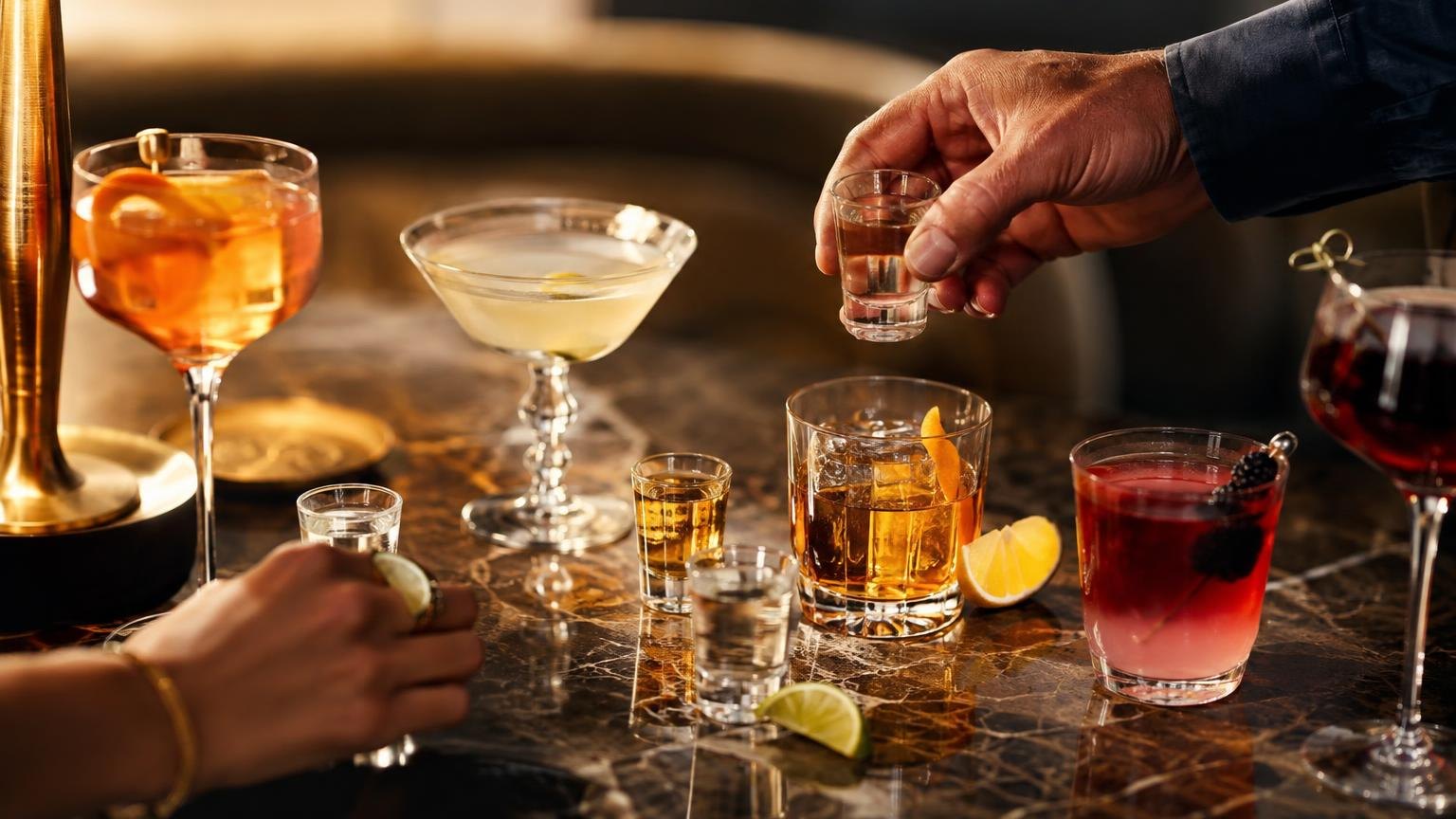
In the U.S., one standard shot is 1.5 ounces of 40% ABV liquor, containing about 14 grams of pure alcohol.
How many shots can put you over the legal driving limit?
In the U.S., the per se legal limit for drivers 21 and older is typically 0.08% BAC, though impairment can begin well below that.
A 160-pound man may reach about 0.05% BAC after roughly 3 standard drinks in one hour, while a 120-pound woman may reach a similar level after about 2 standard drinks, according to common BAC estimation charts.
Does taking shots faster make you drunk faster?
Yes. The body metabolizes alcohol at roughly one standard drink per hour, so taking multiple shots in quick succession can make BAC rise faster than the liver can process it.
Effects may continue intensifying for 30 to 90 minutes after drinking because alcohol absorption is not immediate.
Are all shots the same strength?
No. A standard U.S. shot is usually counted as 1.5 ounces of 80-proof liquor, but bars may pour 1 ounce, 1.25 ounces, 1.5 ounces, or 2 ounces depending on the drink and location.
Higher-proof spirits, such as 50% ABV whiskey or 60% ABV overproof rum, contain more alcohol per ounce and can raise BAC more quickly.
When do shots become dangerous rather than just intoxicating?
Binge drinking is defined by the CDC as 5 or more drinks for men or 4 or more drinks for women on one occasion, typically within about 2 hours.
Danger signs after shots include vomiting, confusion, slow or irregular breathing, pale or clammy skin, inability to stay awake, or loss of consciousness; these can indicate alcohol poisoning and require emergency help.
Related Reading
- How To Make Cinnamon Whiskey?
- How Much Is 100 Fahrenheit In Celsius?
- How Many Gallons Is 10 L?
- How To Make Peanut Butter Whiskey?
- Is Schweppes Ginger Ale Good For You? Get the Answer
- Guinness Extra Stout Vs Draught: Which is Best?
- 11 Essential Facts About How Many Tons Is A Semi Truck (2026 Expert Weight & Logistics Guide)
- All Blog Guides
- National Institute on Alcohol Abuse and Alcoholism (2025)
- Centers for Disease Control and Prevention (2024)
- National Highway Traffic Safety Administration (2024)
- Dietary Guidelines for Americans, 2020–2025 (2020)
- MedlinePlus Medical Encyclopedia (2023)
- University of Notre Dame McDonald Center for Student Well-Being (2024)
- Mayo Clinic (2024)