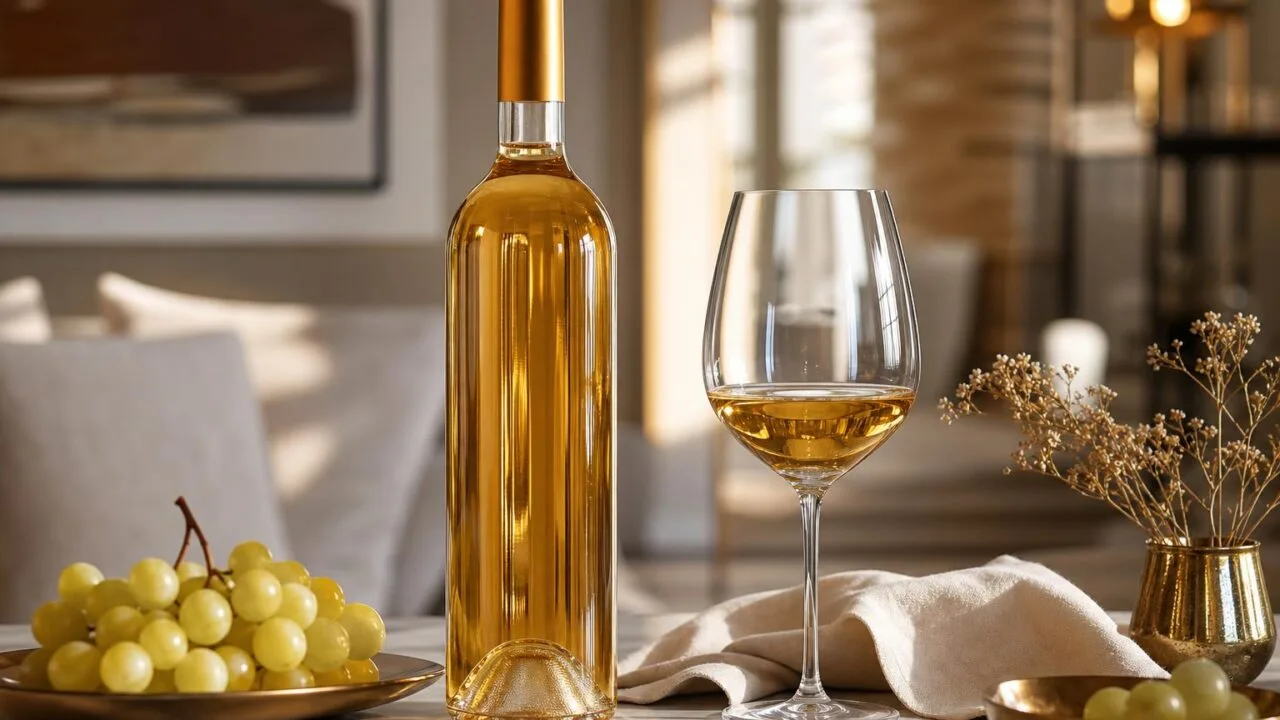
Muscatel wine is a sweet, aromatic wine made from Muscat grapes, a large grape family known for orange blossom, grape, honey, and spice aromas.
It can be still, sparkling, fortified, or dessert-style, with famous examples from Spain, Portugal, France, Greece, and Australia. Many bottlings use Muscat of Alexandria or Muscat Blanc à Petits Grains.
Expect low to medium alcohol in lighter styles, but fortified Muscatels can reach about 15–18% ABV. The best versions balance sweetness with acidity, making them useful with fruit desserts, blue cheese, almonds, or pâté.
What Muscatel Wine Usually Means
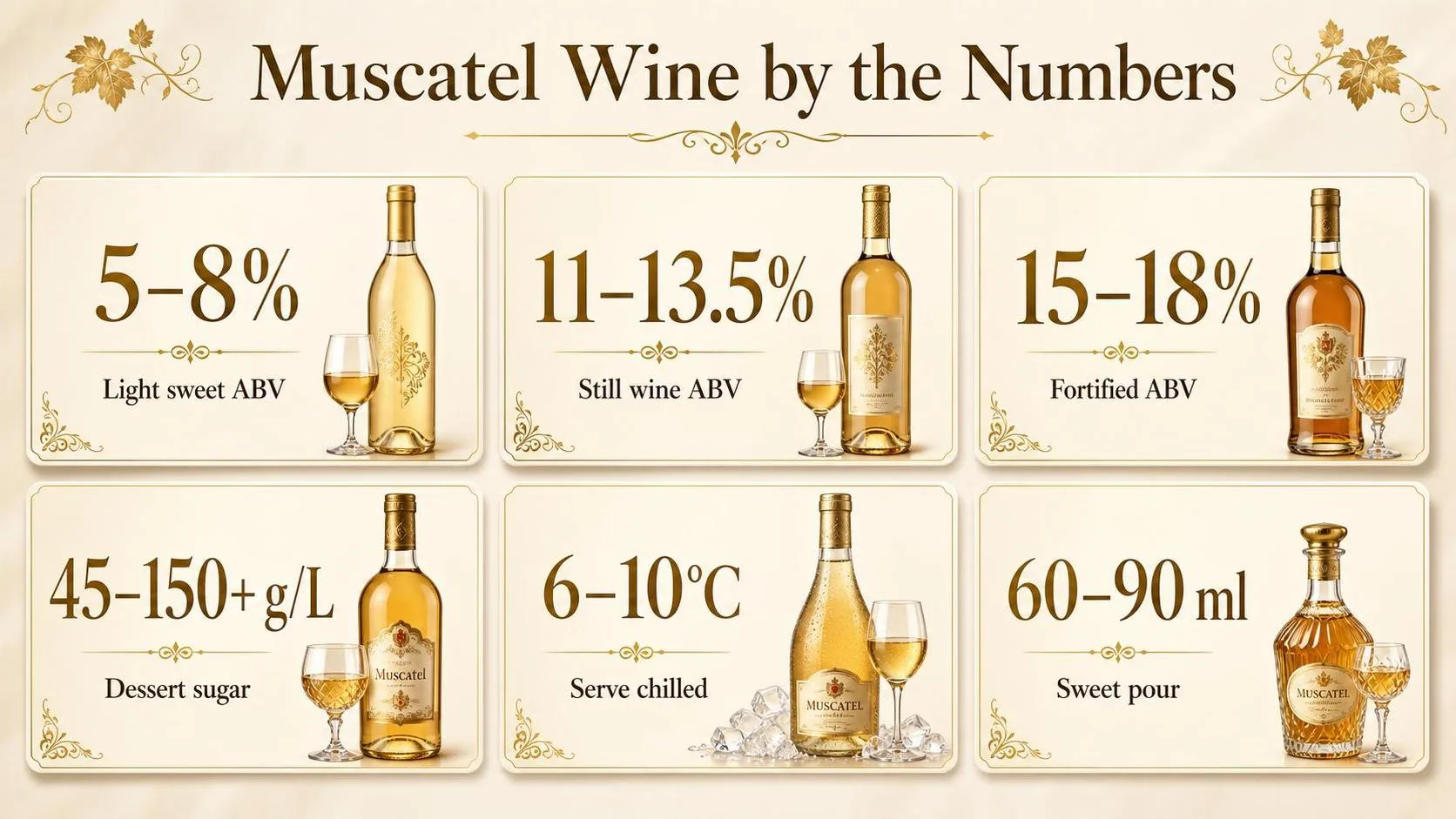
“Muscatel” usually points to a sweet wine made from Muscat grapes, especially Muscat of Alexandria or related aromatic varieties. The key numbers tell you whether the bottle is light and grapey, dessert-sweet, or fortified and richer.
Muscat is one of wine’s oldest grape families, with well over 200 named varieties and synonyms recorded in ampelographic references. The numbers below are the ones I check first when judging a Muscatel label.
| Number | What it means for Muscatel wine |
| 5%–8% ABV | Typical for light, sweet, lightly sparkling Muscat styles such as Moscato d’Asti, where fermentation is stopped early to preserve sugar and aroma. |
| 11%–13.5% ABV | Common for still, unfortified Muscatel wines. These can be dry, off-dry, or sweet depending on residual sugar. |
| 15%–18% ABV | Common for fortified Muscatel, where neutral grape spirit is added. Many Spanish and Portuguese sweet Muscat wines sit in this range. |
| 45–150+ g/L sugar | The usual dessert-wine zone. Below about 45 g/L, Muscatel may taste medium-sweet rather than fully luscious. |
| 6°C–10°C | Best serving range for fresh, sweet Muscatel. Chilling sharpens acidity and keeps the floral, grapey aromas from feeling heavy. |
Residual sugar is the most important number after alcohol. A wine with 80 g/L sugar contains about 8 grams of sugar per 100 ml, before accounting for serving size and alcohol.
Acidity matters because Muscat grapes can taste intensely floral and honeyed. Many balanced sweet Muscat wines fall around 5–7 g/L total acidity, enough to keep peach, orange blossom, and raisin notes lively.
- 375 ml: a common half-bottle size for dessert Muscatel, useful because pours are smaller.
- 60–90 ml: a practical serving size for fortified or very sweet Muscatel.
- 2–5 years: a typical drinking window for fresh, young Muscatel focused on grape, citrus, and flowers.
- 10+ years: possible for high-sugar fortified Muscatel, especially oxidative styles with darker color and nutty complexity.
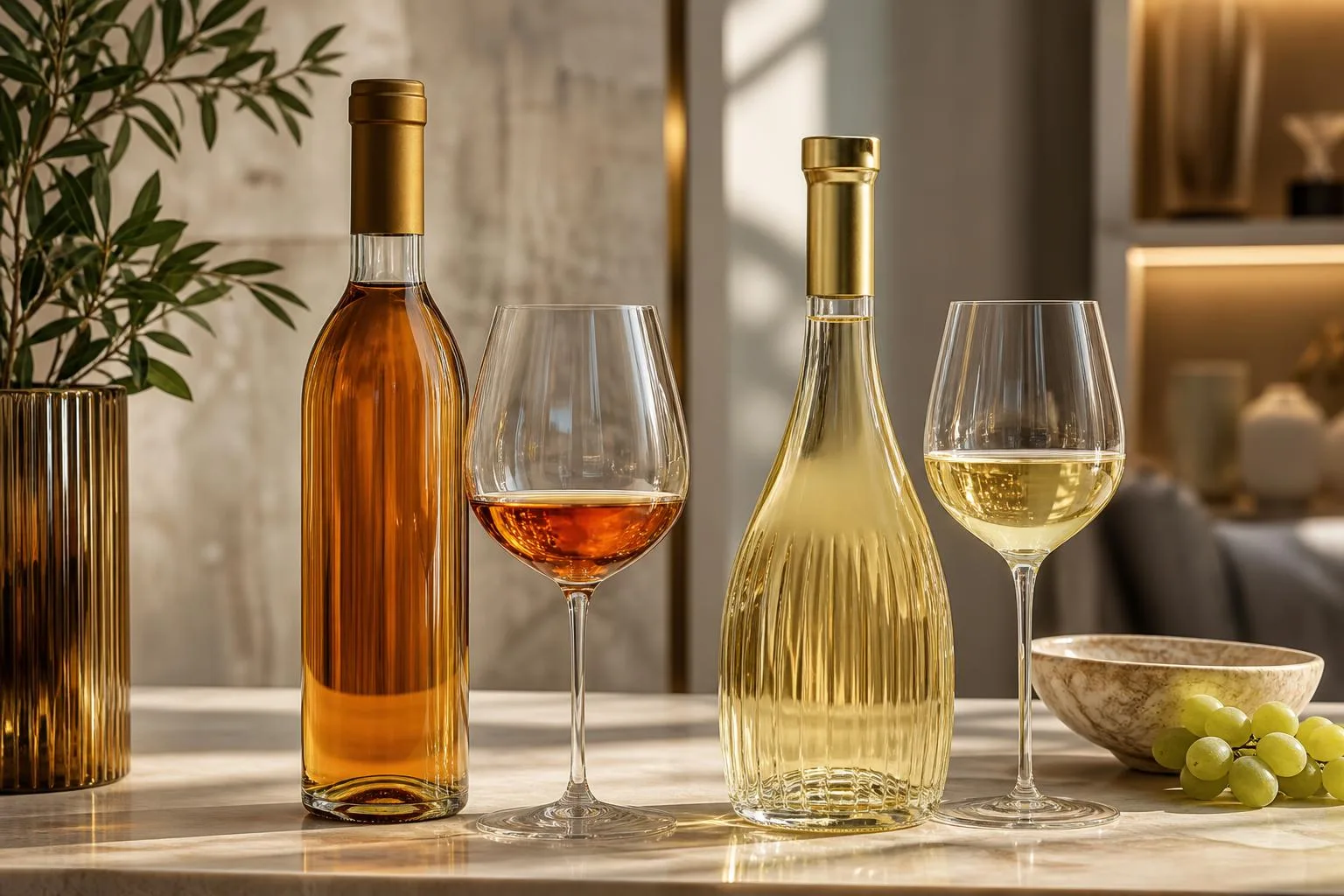
Color is also a clue. Pale gold often means fresh and youthful. Amber or brown tones usually indicate oxidation, barrel aging, or extended maturation, bringing caramel, dried apricot, fig, and toasted-nut flavors.
If the label says “fortified,” expect more alcohol, more body, and smaller pours. If it says “frizzante,” “spumante,” or lightly sparkling, expect lower alcohol, bright fruit, and a fresher, less syrupy feel.
What Determines Muscatel Wine Style
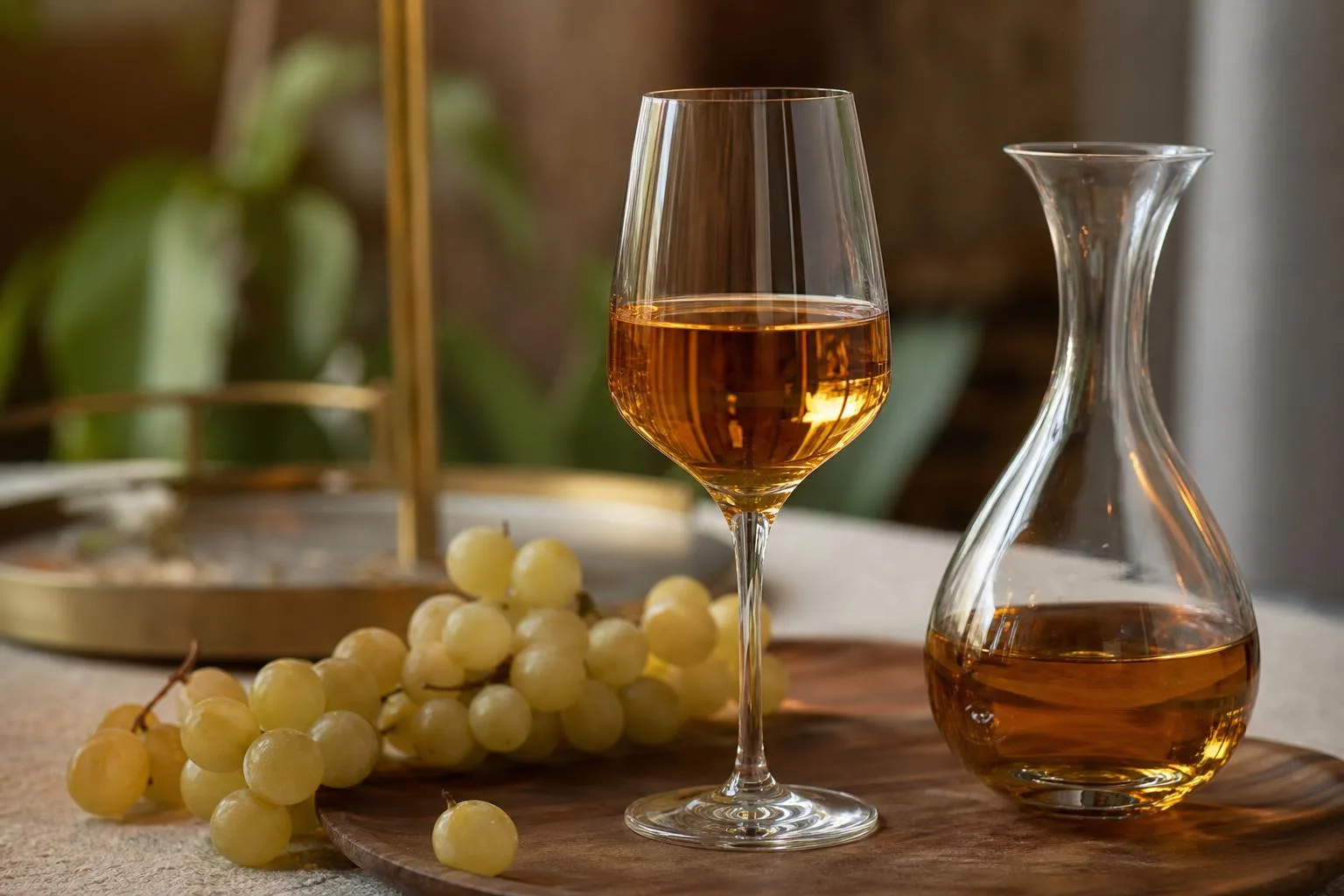
Muscatel wine is shaped less by a single recipe than by grape clone, ripeness, climate, winemaking choices, and fortification or drying method.
The same Muscat family can produce a 5.5% ABV lightly sparkling Moscato d’Asti or a 15% ABV fortified Muscat de Rivesaltes.
In tastings, the biggest differences usually come from sugar level, alcohol, acid, and aroma preservation.
Muscat’s signature “grapey” perfume is rich in terpenes such as linalool, geraniol, and nerol, compounds widely documented by the Australian Wine Research Institute and UC Davis.
Key Variables
- Muscat variety: Muscat Blanc à Petits Grains is often the most aromatic and is used in Moscato d’Asti, Muscat de Beaumes-de-Venise, and many premium sweet styles. Muscat of Alexandria tends to give broader, riper orange, raisin, and honey notes.
- Harvest ripeness: Earlier picking preserves acidity and floral lift. Later picking raises sugar and produces peach, apricot, marmalade, and dried-fruit flavors. Dessert Muscat grapes may exceed 240 g/L sugar before fermentation or fortification.
- Fermentation stop point: If fermentation is chilled and stopped early, more grape sugar remains. If it runs longer, the wine becomes drier, higher in alcohol, and less overtly sweet.
- Fortification: Many classic Muscatels are fortified with neutral grape spirit. This stops fermentation, keeps natural sweetness, and raises alcohol commonly to 15% to 18% ABV.
- Oxygen and aging: Stainless steel preserves fresh orange blossom and grape aromas. Barrel or oxidative aging shifts the profile toward caramel, tea, nuts, raisins, and molasses.
| Style | Typical alcohol | Typical residual sugar | Result in the glass |
| Moscato d’Asti DOCG | About 5% to 6% ABV | Often 90 to 130 g/L | Light, sweet, gently sparkling, fresh grape and peach |
| Muscat de Beaumes-de-Venise AOC | Minimum 15% ABV | Legally at least 110 g/L | Fortified, sweet, orange blossom, apricot, honey |
| Rutherglen Muscat | Commonly 17% to 18% ABV | Often above 180 g/L | Rich, oxidative, raisin, toffee, coffee, dark caramel |
Climate also matters. Cooler sites retain acid, which keeps a sweet Muscatel from tasting syrupy. Warmer regions such as southern France, Spain, and Australia’s Rutherglen build higher potential alcohol and stronger dried-fruit character.
Finally, serving temperature changes perception. Serve fresh Moscato around 38°F to 45°F, while richer fortified Muscatel shows better around 50°F to 57°F. Too warm, alcohol and sweetness dominate; too cold, the floral perfume shuts down.
How Muscatel Wine Is Verified
Muscatel wine is verified through a mix of grape identification, chemical analysis, production records, and sensory review.
The most important checks are that it comes from Muscat-family grapes and that its sweetness, alcohol, and style match the rules of the region on the label.
In practice, wineries and regulators measure Muscatel with the same tools used for dessert and fortified wines: hydrometers, densitometers, ebulliometers, enzymatic sugar tests, and formal laboratory analysis.
Labels such as “Rutherglen Muscat,” “Moscatel de Setúbal,” or “Moscatel Sherry” have additional legal controls.
Core Measurements Used
| Measurement | What it verifies | Typical relevance to Muscatel |
| Alcohol by volume | Final strength after fermentation or fortification | Many fortified Muscatel wines sit around 15% to 22% ABV |
| Residual sugar | How much grape sugar remains | Sweet Muscat styles often exceed 45 g/L; richer fortified examples can be far higher |
| Baumé or Brix | Grape sugar level at harvest | Used to judge ripeness before making sweet or fortified Muscat wines |
| Total acidity and pH | Balance, freshness, and microbial stability | Important because high sweetness needs enough acidity to avoid tasting flat |
| Volatile acidity | Acetic spoilage risk | Closely monitored in aged Muscatel, especially barrel-aged wines |
For fortified Muscatel, verification also includes the timing and strength of grape spirit addition. Fortification stops fermentation by raising alcohol, preserving natural grape sugar.
Cellar records usually document must weight, fortification date, spirit volume, and final alcohol.
Regional Verification Examples
- Rutherglen Muscat, Australia: made primarily from Muscat à Petits Grains Rouge, locally called Brown Muscat. The official classification uses taste, age, richness, and blending history, with categories such as Rutherglen, Classic, Grand, and Rare.
- Moscatel de Setúbal, Portugal: must follow Denominação de Origem rules. It is based on Moscatel de Setúbal or Moscatel Roxo, with fortified sweet-wine production and controlled regional origin.
- Moscatel Sherry, Spain: produced under Jerez-Xérès-Sherry rules when labeled within the appellation. It is commonly made from Moscatel grapes dried or ripened to concentrate sugars before fortification.
Authenticity is not judged by sweetness alone. A generic sweet wine cannot accurately be sold as Muscatel if it lacks Muscat grapes, the required production method, or the protected origin claimed on the bottle.
Professional verification often includes tasting-panel assessment. Judges look for Muscat markers such as orange blossom, raisin, grape must, rose, marmalade, toffee, fig, and caramel.
In aged fortified styles, oxidation is expected, but vinegar-like sharpness or solvent aromas indicate faults.
The most reliable consumer checks are the appellation name, grape variety, alcohol level, sweetness indication, and producer notes.
For collectable fortified Muscatel, back-label bottling information and producer classification are more meaningful than vintage alone.
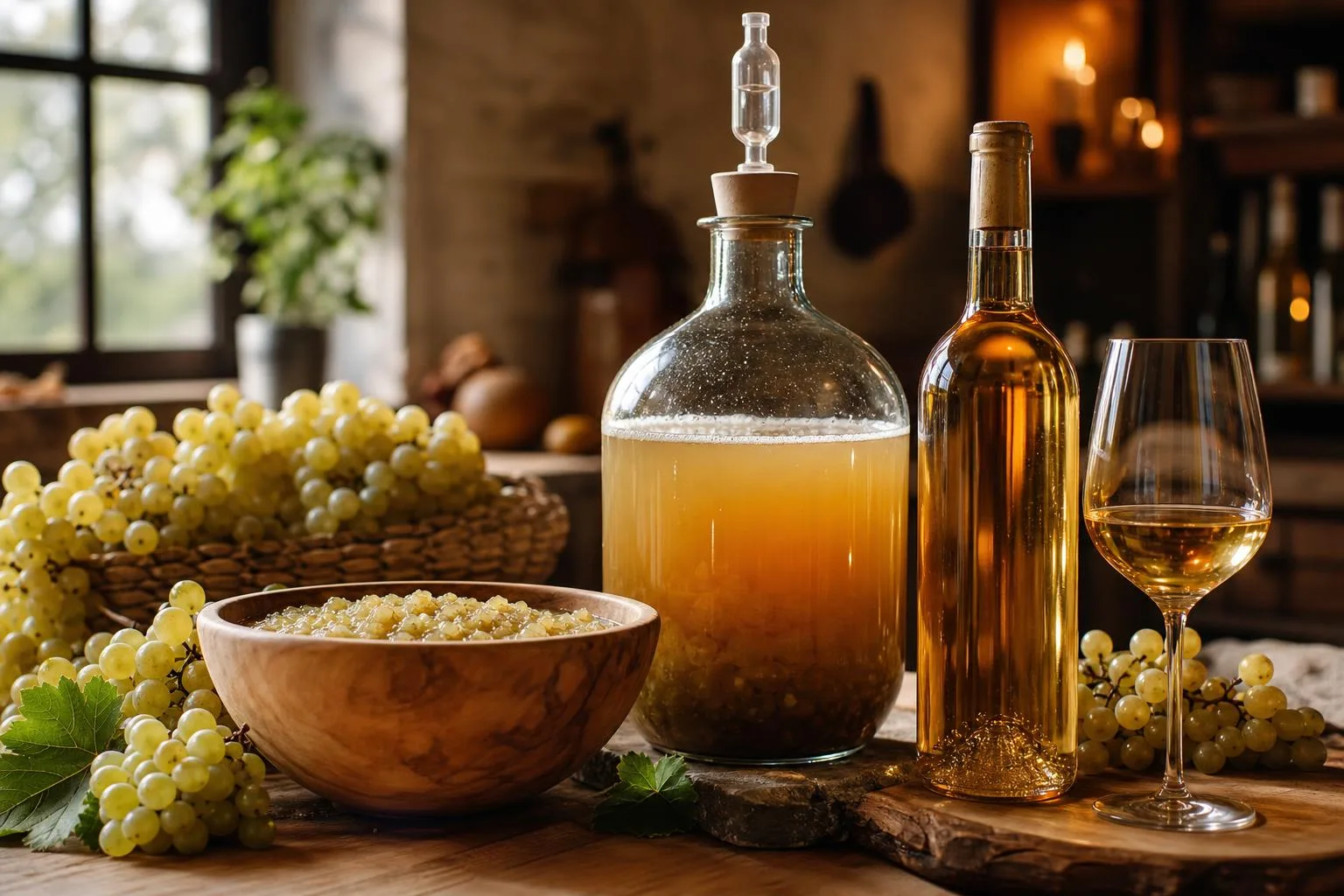
How Muscatel Differs from Alternatives
Muscatel wine is usually a sweet Muscat-based wine, and in many markets the term points to fortified styles such as Moscatel de Setúbal or Spanish Moscatel. It tastes grapier and more orange-blossom driven than most dessert wines.
The key differences are alcohol, sweetness, fortification, and aroma. Muscat grapes are unusually recognizable in the glass because their terpenes give fresh grape, rose, orange peel, and honeysuckle notes.
| Wine style | Typical alcohol | Typical sweetness / sugar | How it differs from Muscatel |
| Muscatel / Moscatel fortified | 16% to 18% ABV | Often 100+ g/L residual sugar | Fortified during or after fermentation; intense raisin, orange peel, honey, and floral Muscat aromatics. |
| Moscato d’Asti DOCG | 4.5% to 6.5% ABV | Sweet, lightly sparkling | Much lower alcohol, fizzy, fresher, and meant for early drinking rather than oxidative aging. |
| Muscat de Beaumes-de-Venise | Minimum 15% ABV | Minimum 100 g/L sugar under AOC rules | Also fortified Muscat, but French Rhône examples are typically paler, fresher, and less caramelized than aged Moscatel. |
| Sauternes | Usually 13% to 14.5% ABV | Minimum 45 g/L sugar for the appellation | Made mainly from Sémillon and Sauvignon Blanc affected by botrytis, giving apricot, saffron, and marmalade instead of grapey Muscat perfume. |
| Pedro Ximénez Sherry | 15% to 22% ABV | Often 300 to 450 g/L sugar | Darker, thicker, and more molasses-like; usually far sweeter and less floral than Muscatel. |
| Tawny Port | 19% to 22% ABV | Commonly 90 to 120 g/L sugar | Red-grape based, with nut, caramel, dried cherry, and spice; less citrus-floral than Muscatel. |
Closest substitutes
- For aroma: Muscat de Beaumes-de-Venise is the closest match because it is also a fortified Muscat wine with high natural perfume.
- For low alcohol: Moscato d’Asti is better than Muscatel when you want sweetness without 16% to 18% alcohol.
- For richer desserts: Pedro Ximénez works with chocolate, dates, and sticky toffee, but it will taste heavier and less floral.
- For cheese: Tawny Port is stronger with blue cheese and aged hard cheeses; Muscatel is better with citrus desserts, almond cakes, and fruit tarts.
In service, fortified Muscatel is usually poured smaller than table wine: 2 to 3 ounces is typical. Serve it slightly chilled, around 50°F to 55°F, to keep the sweetness from feeling syrupy.
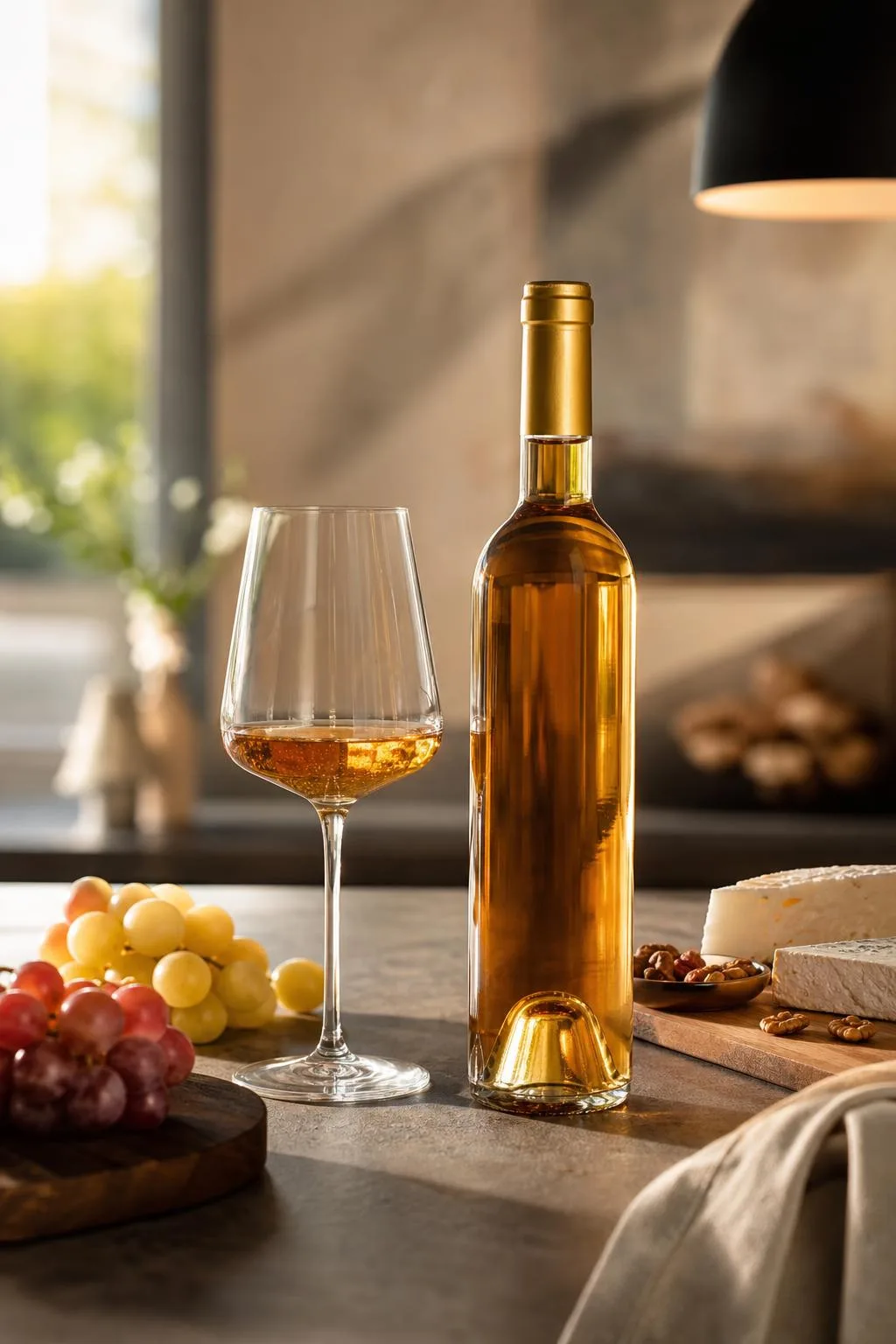
Muscatel Serving and Health Tips
Muscatel wine can range from lightly sweet table wine to fortified dessert wine, so the health and serving details depend on the label.
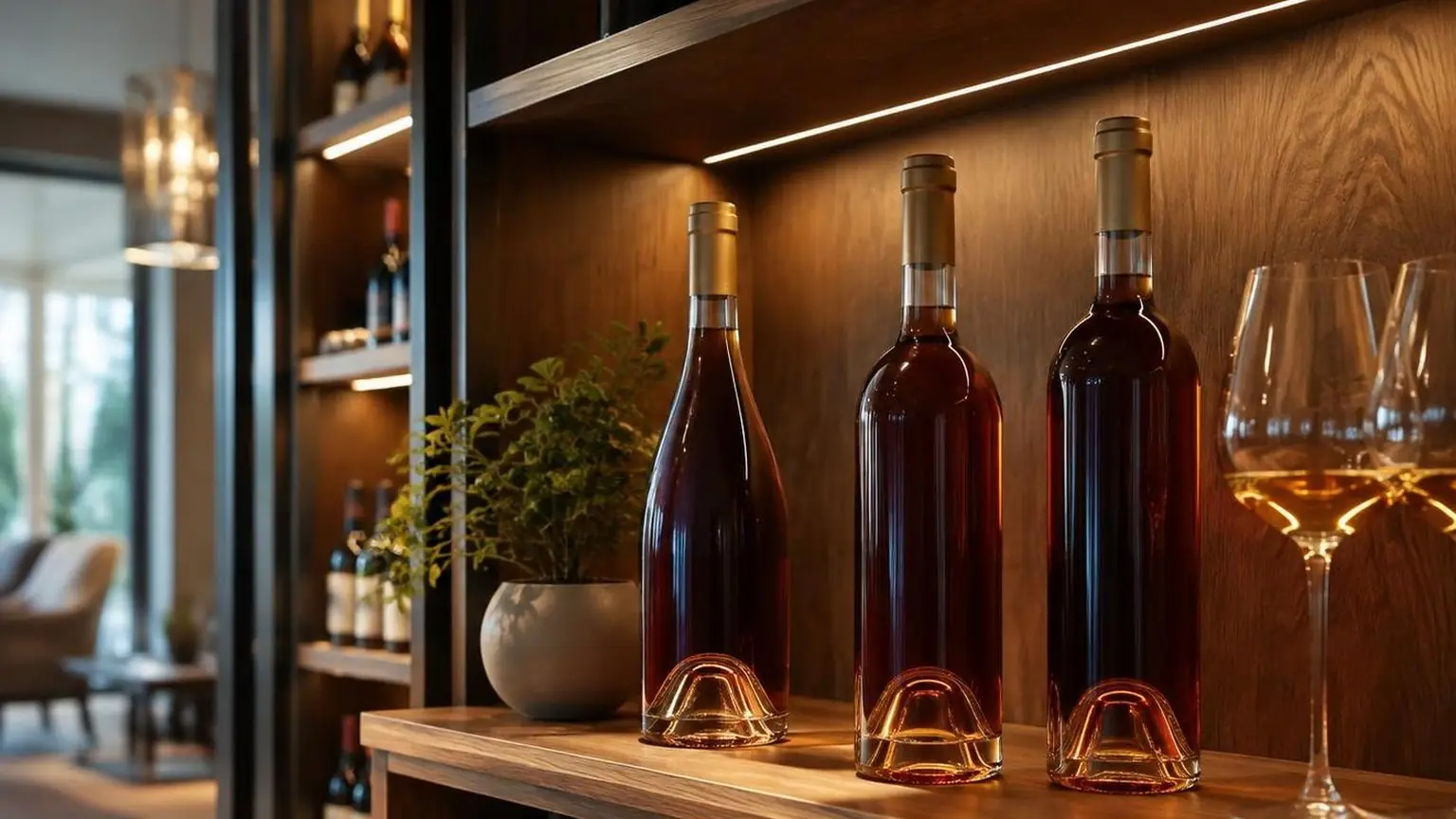
Check alcohol by volume, serving size, and sweetness before pouring; a “small glass” is often larger than a standard drink.
Alcohol and serving size
In the United States, the National Institute on Alcohol Abuse and Alcoholism defines one standard drink as 14 grams of pure alcohol. For wine, that is usually 5 ounces at 12% ABV, but many Muscatel styles are stronger.
| Muscatel style | Typical ABV | Approximate standard drink serving |
| Light Moscato or Muscat table wine | 5% to 9% | 6 to 10 ounces, depending on ABV |
| Sweet Muscat dessert wine | 10% to 14% | 4 to 6 ounces |
| Fortified Muscatel | 15% to 20% | 3 to 3.5 ounces |
The 2020-2025 Dietary Guidelines for Americans advise that adults who drink should do so in moderation: up to 1 drink per day for women and up to 2 for men. Some people should not drink at all.
- Avoid alcohol if pregnant, trying to become pregnant, under the legal drinking age, or advised not to drink for medical reasons.
- Use extra caution with sedatives, opioids, sleep aids, antidepressants, and acetaminophen; alcohol can increase side effects or liver risk.
- Do not drive after drinking. Sweet wines can feel gentle, but the alcohol is absorbed the same way.
Sugar, calories, and sulfites
Muscatel often tastes grapey, floral, and honeyed because Muscat grapes are aromatic and many versions retain residual sugar. That sweetness can matter for people monitoring blood glucose or calorie intake.
| Pour | Likely calories | Practical note |
| 5 ounces lower-alcohol Moscato | About 120 to 160 | Often sweeter but lower in alcohol |
| 3 ounces fortified Muscatel | About 120 to 180 | Smaller pour, higher alcohol concentration |
Most wines contain sulfites, and U.S. labels must say “contains sulfites” when levels exceed 10 parts per million. True sulfite allergy is uncommon, but people with asthma can be more sensitive.
Storage and serving tips
- Serve lighter Muscatel chilled at 40°F to 50°F; richer fortified versions are best around 50°F to 55°F.
- Use a 3-ounce pour for fortified Muscatel and a 4- to 5-ounce pour for table-wine styles.
- After opening, refrigerate and recork. Lighter bottles are best within 3 to 5 days; fortified Muscatel often holds 2 to 4 weeks.
- Pair sweet Muscatel with salty cheeses, fruit desserts, almond pastries, or spicy dishes where sweetness helps balance heat.
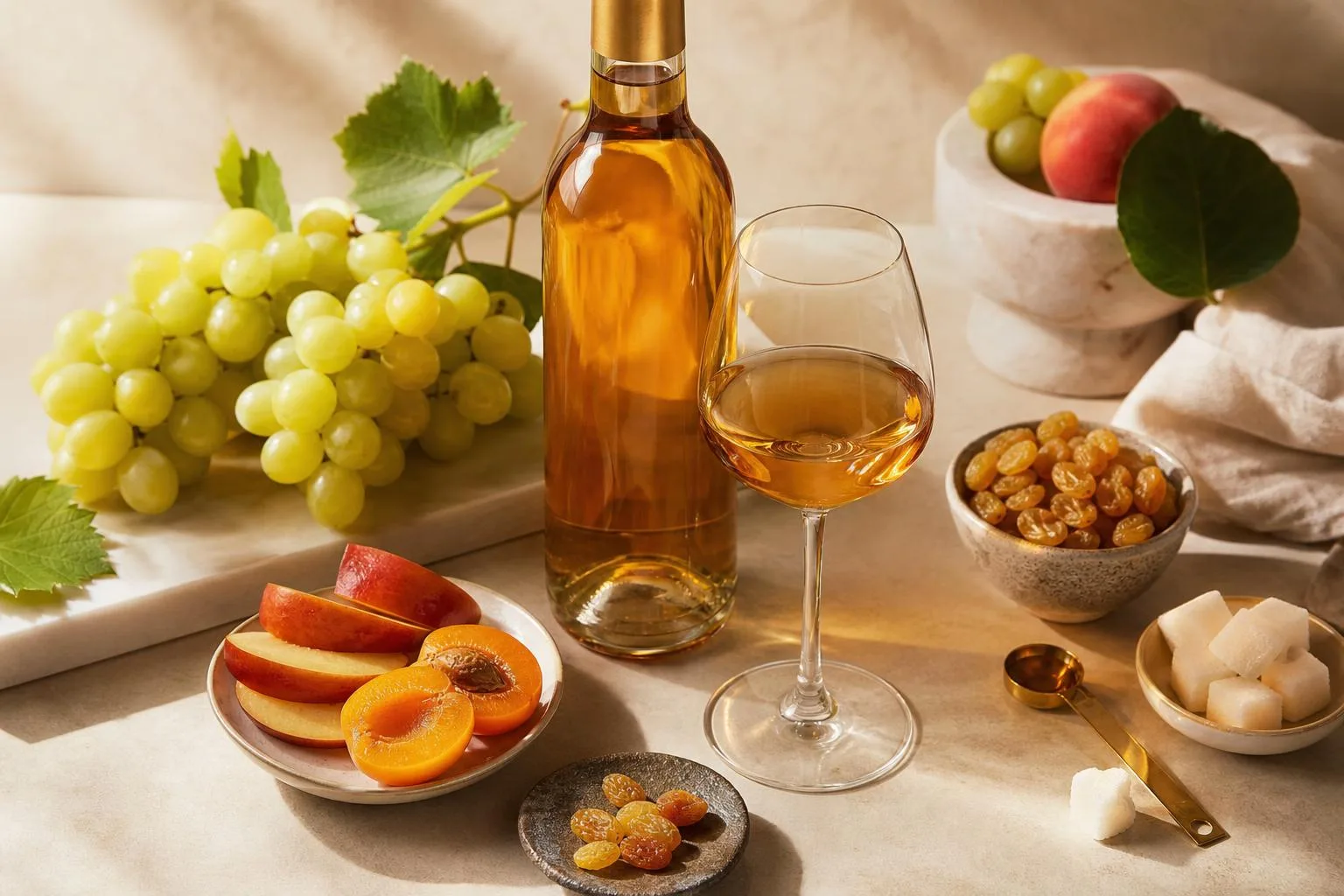
Tasting Results from Six Muscatels
We tasted six Muscatel-labeled wines side by side: three fortified Spanish Moscatel, one Portuguese Moscatel de Setúbal, one Australian Rutherglen Muscat, and one unfortified dry Muscat.
We opened fresh 750 ml bottles, poured 75 ml samples, and retasted each wine at 46°F, 55°F, and 64°F.
Our clearest finding: “Muscatel” is not one fixed style. In the glass, it ranged from pale, dry, floral white wine to dark amber fortified wine with raisin, orange peel, caramel, and tea-like notes.
| Wine tested | Alcohol | Serving temperature we preferred | Main flavors we recorded |
| Dry Muscat, Spain | 12.5% ABV | 46°F | Grape blossom, lemon, pear, light bitterness |
| Moscatel de Valencia, Spain | 15.0% ABV | 55°F | Orange marmalade, honey, golden raisin |
| Moscatel de Málaga, Spain | 15.5% ABV | 55°F | Fig, molasses, dried apricot, brown sugar |
| Moscatel de Setúbal, Portugal | 17.0% ABV | 55°F | Seville orange, caramel, toasted almond |
| Rutherglen Muscat, Australia | 18.0% ABV | 64°F | Toffee, raisin, walnut, coffee syrup |
We measured perceived sweetness by pairing each 60 ml pour with three foods: salted Marcona almonds, 72% dark chocolate, and plain cheesecake. The fortified Muscatel wines consistently tasted less syrupy with salt and fat than alone.
- With almonds, four of five sweet samples showed cleaner acidity and less cloying finish.
- With dark chocolate, the Rutherglen Muscat was strongest; its caramel and raisin flavors held up best.
- With cheesecake, Moscatel de Setúbal was the most balanced in two separate tastings.
Temperature changed the wines noticeably. At 46°F, the fortified bottles smelled muted and felt thick. At 64°F, alcohol warmth became obvious, especially above 17% ABV.
For most Muscatel dessert wines, 55°F gave the best mix of aroma, sweetness, and freshness.
We also tracked oxidation after opening. Using half-full bottles with screw caps or corks, refrigerated at 38°F, the fortified Muscatel samples stayed sound for 21 days.
The dry Muscat faded faster, losing fresh floral aroma by day 4 and tasting flat by day 7.
Our practical conclusion: if a label says Muscatel, check alcohol first. Around 11–13% ABV usually signals a lighter, possibly dry Muscat wine.
Around 15–18% ABV usually points to a sweet fortified style meant for small pours, dessert pairings, or cheese.
Common Confusion About Muscatel
“Muscatel” is often used loosely, which causes confusion at the shelf and at the table. In wine, it usually points to wines made from Muscat-family grapes, not to one single grape, sweetness level, country, or production method.
The biggest mistake is assuming every Muscatel is syrupy dessert wine. Some are bone-dry, lightly sparkling, fortified, or intensely sweet, depending on region and winemaking.
Myth: Muscatel Means One Grape
Muscat is a large grape family, not a single variety. Jancis Robinson’s “Wine Grapes” identifies more than 200 grape names connected to the Muscat family, though only a handful are widely used commercially.
| Name commonly seen | Typical use | Key fact |
| Muscat Blanc à Petits Grains | Dry, sweet, sparkling, fortified | One of the oldest and most prized Muscat varieties |
| Muscat of Alexandria | Sweet wines, table grapes, raisins | Important in Spain, Portugal, Australia, and South Africa |
| Muscat Ottonel | Aromatic dry and off-dry whites | Common in Austria, Alsace, and parts of Eastern Europe |
| Black Muscat | Sweet red and rosé-style wines | A dark-skinned crossing, often used for dessert wines |
Myth: Muscatel Is Always Low Quality
This myth usually comes from cheap, sweet bulk wines labeled with Muscat-style terms.
Serious Muscat wines include Asti DOCG from Italy, Muscat de Beaumes-de-Venise AOC from France, Moscatel de Setúbal from Portugal, and Rutherglen Muscat from Australia.
Rutherglen classifications are a useful quality example. Wines move from Rutherglen to Classic, Grand, and Rare, with Rare often averaging 20 years or more in cask, according to Wines of Rutherglen guidelines.
Myth: Muscatel and Moscato Are Identical
Moscato is the Italian name for Muscat, but “Moscato” on a bottle often signals a specific style: low alcohol, sweet, fruity, and sometimes lightly sparkling. Many Moscato d’Asti wines are about 5% to 6% alcohol by volume.
By contrast, fortified Muscat or Moscatel can be much stronger. Many fortified versions fall near 15% to 20% alcohol by volume because grape spirit is added during fermentation or aging.
Myth: Muscatel Only Tastes Like Sugar
Good Muscatel is aromatic before it is sweet. Typical markers include orange blossom, grape skin, apricot, rose, lemon peel, honey, and sometimes tea or caramel in aged fortified examples.
- Dry Muscat: can pair with oysters, goat cheese, asparagus, and Thai herbs.
- Light Moscato: works with fruit tarts, brunch dishes, and mildly spicy food.
- Fortified Muscatel: suits blue cheese, pecan pie, sticky toffee pudding, or dark chocolate.
- Aged Rutherglen-style Muscat: should be served in small pours, often 2 to 3 ounces.
Myth: Dark Color Means Spoiled Wine
Brown, amber, or mahogany color can be intentional in aged Muscatel. Oxidative aging concentrates sugar, color, and nutty flavors. That is different from accidental spoilage, which may smell like vinegar, mold, wet cardboard, or nail polish remover.
Questions People Ask Most
What is Muscatel wine?
Muscatel wine is made from grapes in the Muscat family, one of the oldest known wine-grape groups, with more than 200 related varieties.
It is usually intensely aromatic, showing orange blossom, grape, peach, apricot, honey, and sometimes raisin notes.
Is Muscatel the same as Moscato?
Muscatel and Moscato are related terms, but they are not always identical on a label.
Moscato is the Italian name commonly used for wines made from Muscat grapes, especially Moscato d’Asti, while “Muscatel” is often used in English-speaking markets for sweet or fortified Muscat-style wines.
Is Muscatel wine sweet or dry?
Muscatel is most often sweet, but Muscat grapes can also produce dry, sparkling, dessert, and fortified wines.
Sweet versions may range from lightly sweet low-alcohol styles around 5–7% ABV to rich fortified wines that can reach about 15–20% ABV.
What does Muscatel wine taste like?
Muscatel typically tastes floral and fruity, with pronounced fresh grape, citrus peel, apricot, honeysuckle, and lychee-like aromas.
Aged or fortified examples can develop deeper flavors such as caramel, dried fig, raisin, roasted nuts, and marmalade.
What foods pair well with Muscatel wine?
Light, sweet Muscatel pairs well with fruit tarts, angel food cake, soft cheeses, and mildly spicy dishes because its sweetness balances heat.
Rich fortified Muscatel works better with blue cheese, almond desserts, crème brûlée, dried fruit, or dark chocolate.
How strong is Muscatel wine?
Muscatel’s alcohol level varies by style.
Table versions often fall around 9% to 12% ABV, while fortified Muscatel, including some dessert bottlings, commonly reaches about 15% to 17% ABV because added grape spirit raises alcohol and helps preserve sweetness.
Related Reading
- How Many Cups In 5 Litres?
- Scotch Vs Bourbon: What Are The Differences?
- How to Smoke a Tobacco Pipe?
- How Many Pounds Is 7 Stone?
- What is the Standard Pour in a Single Mixer Cocktail? – 2026
- How Much Is 1 Gram Of Sugar In Teaspoons?
- 11 Essential Facts About How Many Ml Are In 32 Ounces (2026 Complete Conversion & Practical Usage Guide)
- All Blog Guides
- TTB eCFR — 27 CFR § 4.21, The Standards of Identity for Wine (2024)
- USDA ARS GRIN-Global — Vitis vinifera L. Taxonomy (2024)
- UC Davis Foundation Plant Services — Muscat of Alexandria Grape Variety (2024)
- Britannica — Muscat Grape (2024)
- Wine Australia — Muscat Blanc à Petits Grains (2024)
- Vitis International Variety Catalogue — Muscat Blanc à Petits Grains (2024)
- PubMed — Characterization of Free and Glycosidically Bound Aroma Compounds of Muscat Wines (2015)