
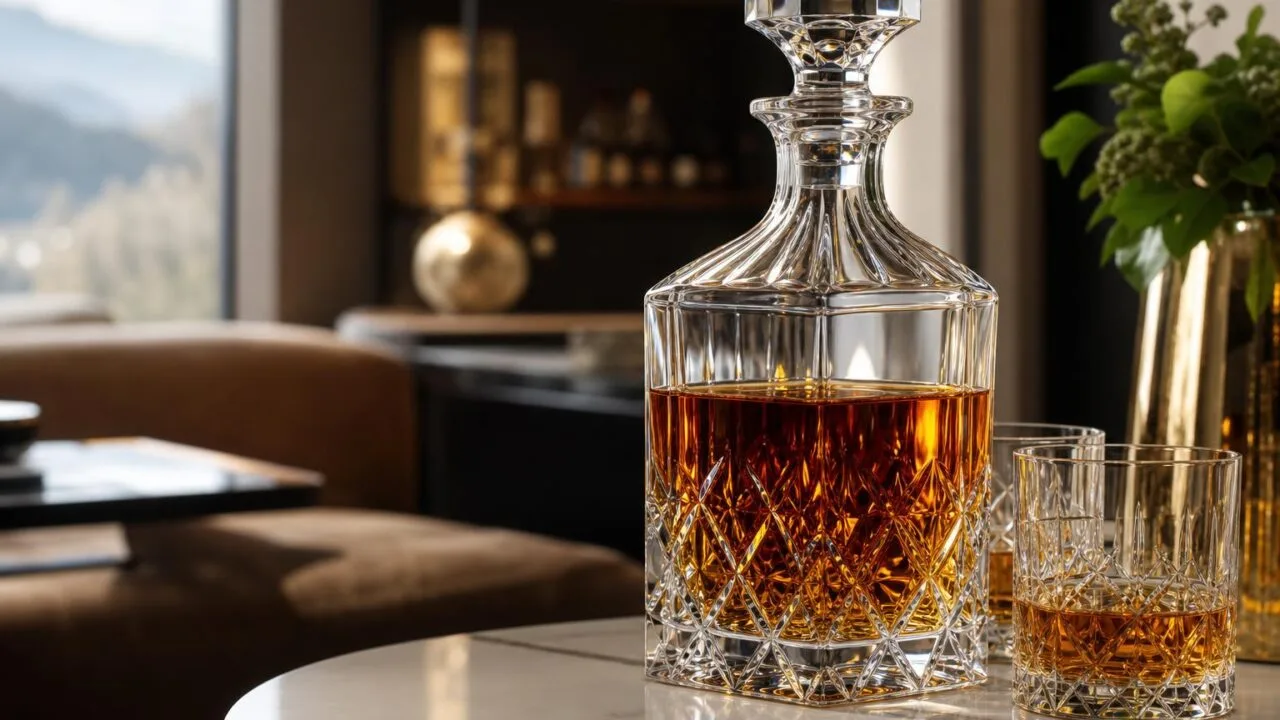
How Long Can Whiskey Stay In A Decanter is 1 to 2 years for best quality if the stopper seals well, the decanter is lead-free, and it sits away from sunlight and heat.
Whiskey will not spoil like perishable foods, but aroma can fade as oxygen slowly changes volatile compounds.
At Flight Wine Bar, we treat a decanter as a serving vessel, not long-term storage. If the fill level drops below half, flavor loss can become noticeable within a few months because more air is trapped inside.
For lead crystal, limit contact to days, not months, because alcohol can leach lead.
How Long Whiskey Lasts in a Decanter
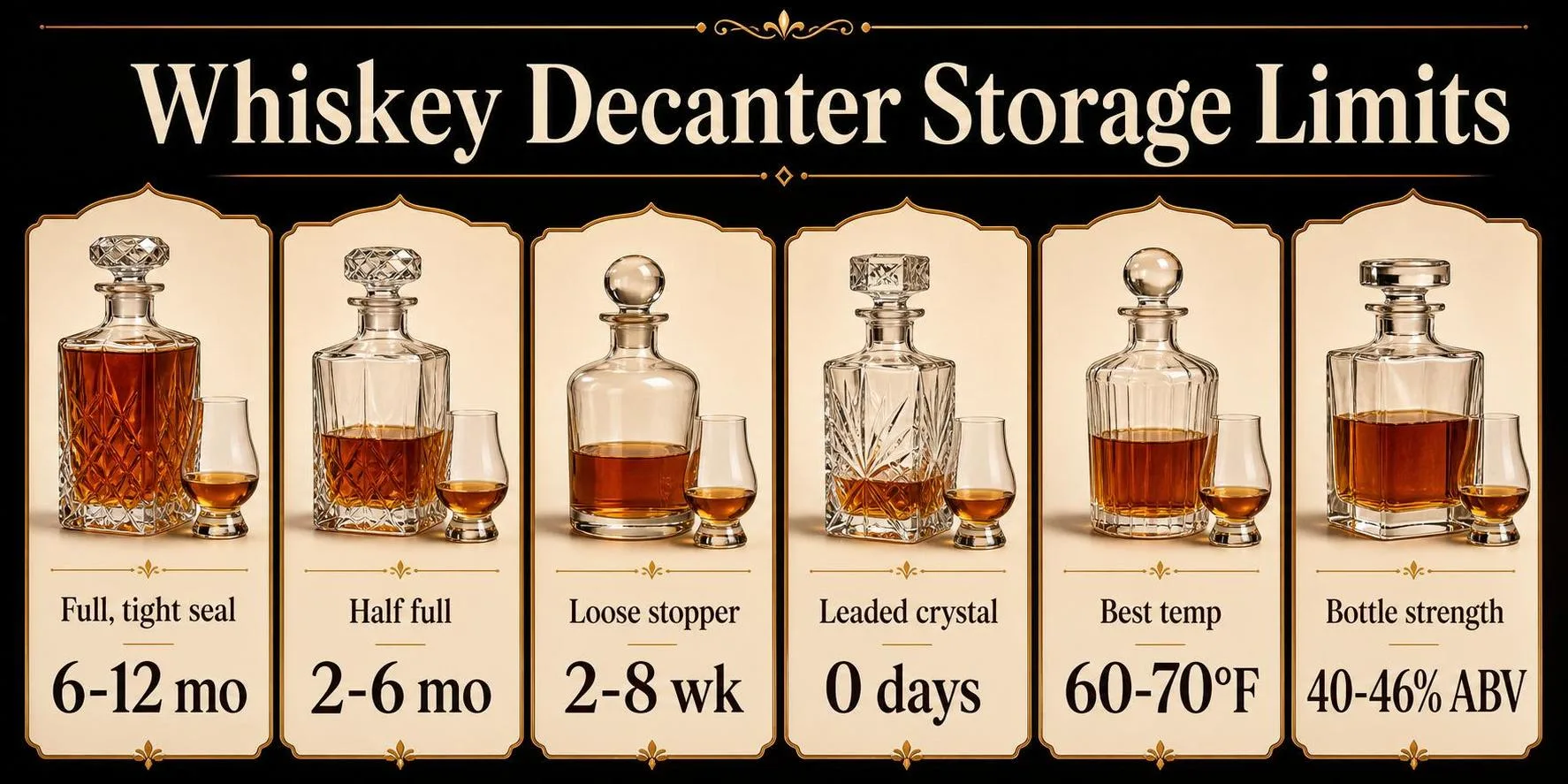
Whiskey can sit in a clean glass decanter for months without becoming unsafe, because 40% ABV spirits are microbiologically stable. The real issue is quality: oxygen, evaporation, poor seals, sunlight, and leaded crystal can change aroma and flavor.
| Situation | Practical time frame | Why it matters |
| Modern lead-free glass decanter, tight stopper, mostly full | 6 to 12 months | Low headspace means slower oxidation and less aroma loss. |
| Modern lead-free glass decanter, half full | 2 to 6 months | More oxygen sits above the whiskey, so delicate aromas fade faster. |
| Decanter with loose glass stopper | Weeks to 2 months | Alcohol and volatile aroma compounds evaporate more readily. |
| Leaded crystal decanter | Do not store; use only for same-day service | Lead can leach into alcohol, especially during extended contact. |
| Direct sunlight or warm bar cart | Avoid long-term storage | Heat and UV exposure accelerate flavor degradation and color changes. |
The safest quality rule is simple: if the decanter is lead-free, well sealed, and kept cool and dark, 6 months is a conservative storage target. At 12 months, many whiskeys remain drinkable, but the nose may be flatter.
Fill level matters more than most people expect. A nearly full 750 ml decanter has far less oxygen exposure than one holding 250 ml. Less oxygen means slower loss of fruit, grain, oak, smoke, and ester-driven aromas.
Alcohol strength also helps. Most bourbon, rye, Scotch, and Irish whiskey is bottled at 40% to 46% ABV, while cask-strength releases often run 50% to 65% ABV. These levels prevent spoilage, but they do not prevent oxidation.
Leaded crystal is the main exception. The U.S. Food and Drug Administration has warned that lead can migrate from crystal into acidic or alcoholic liquids. Whiskey should not be stored in lead crystal for days, weeks, or months.
- Best storage temperature: typical room temperature, about 60°F to 70°F, with minimal swings.
- Best location: inside a cabinet, away from windows, radiators, ovens, and bright display lighting.
- Best stopper: a snug glass or synthetic seal; decorative loose stoppers are better for serving than storage.
- Best habit: rinse and fully dry the decanter before refilling, especially after a flavored or smoky whiskey.
For prized bottles, decant only what you expect to pour within a few weeks. Keep the original bottle and closure for long-term storage, because the producer’s packaging is usually the most reliable seal.
What Changes Whiskey in a Decanter
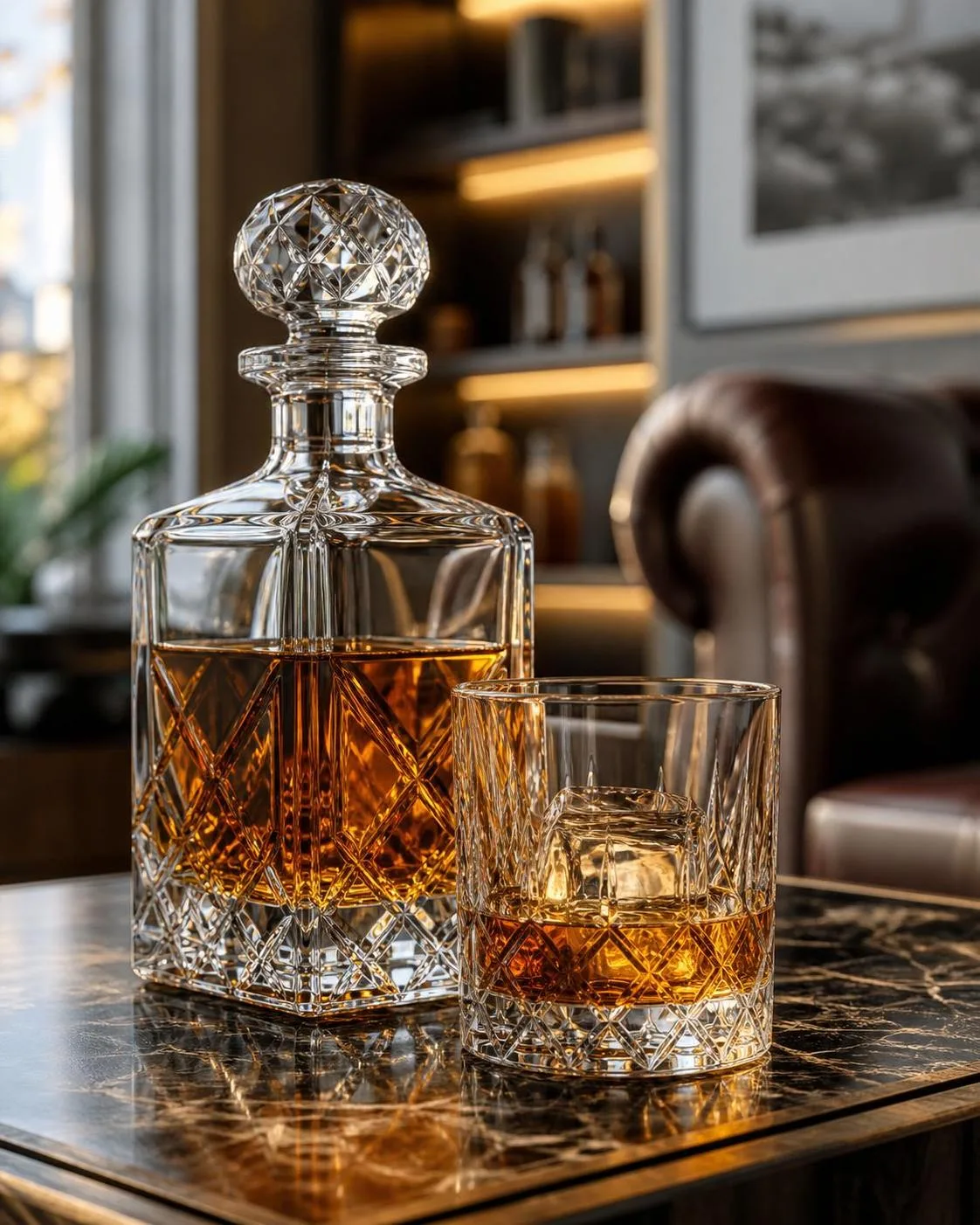
Whiskey does not “mature” in a decanter; once it leaves the barrel, its chemistry is mostly stable.
The result depends on oxygen exposure, alcohol strength, light, temperature, seal quality, and whether the decanter is genuinely lead-free.
In practice, a full, well-sealed, lead-free glass decanter can hold whiskey for many months with little change. A nearly empty decanter, a loose stopper, or direct sun can make the whiskey taste flatter within weeks.
Fill Level and Oxygen Exposure
The biggest variable is headspace: the air sitting above the whiskey. More air means more oxygen contact, which can dull aroma and shift delicate flavors toward stale, woody, or cardboard-like notes.
| Decanter fill level | Typical risk level | Practical expectation |
| 75% to 100% full | Low | Best for storage beyond 3 months if sealed well |
| 50% full | Moderate | Noticeable aroma loss may appear after a few months |
| 25% full or less | High | Use within several weeks for best flavor |
Seal Quality
A decanter stopper is usually less airtight than the original screw cap or cork. Glass-on-glass stoppers often look elegant but can leak vapor slowly if the fit is imperfect.
For longer storage, test the seal by filling the decanter with water, closing it, and turning it briefly over a sink. Any dripping means it is displayware, not storageware.
Alcohol Strength
Whiskey bottled at 40% ABV, the legal minimum for U.S. whiskey under TTB standards, is more vulnerable to aroma loss than high-proof whiskey. Barrel-proof bottles above 55% ABV generally carry more concentrated volatile compounds.
That does not mean high-proof whiskey is immune. It still evaporates through poor seals and can become unbalanced if left in a warm, half-empty decanter.
Light, Heat, and Placement
Clear decanters expose whiskey to more light than the original bottle. Sunlight and heat accelerate oxidation and evaporation, especially near windows, ovens, bar lights, or radiators.
| Condition | Better target | Why it matters |
| Temperature | 60°F to 70°F | Reduces evaporation and aroma breakdown |
| Light | Dark cabinet or shaded bar | Limits UV and visible-light exposure |
| Position | Upright | Prevents prolonged alcohol contact with stopper materials |
Decanter Material
Use only lead-free glass or modern lead-free crystal. Older lead crystal decanters can leach lead into spirits, and whiskey’s alcohol content increases extraction risk over time.
For daily service, lead-free decanters are fine. For long-term storage, the original bottle remains the safest container because it was designed, filled, and sealed for that specific whiskey.
How Decanter Whiskey Shelf Life Is Checked
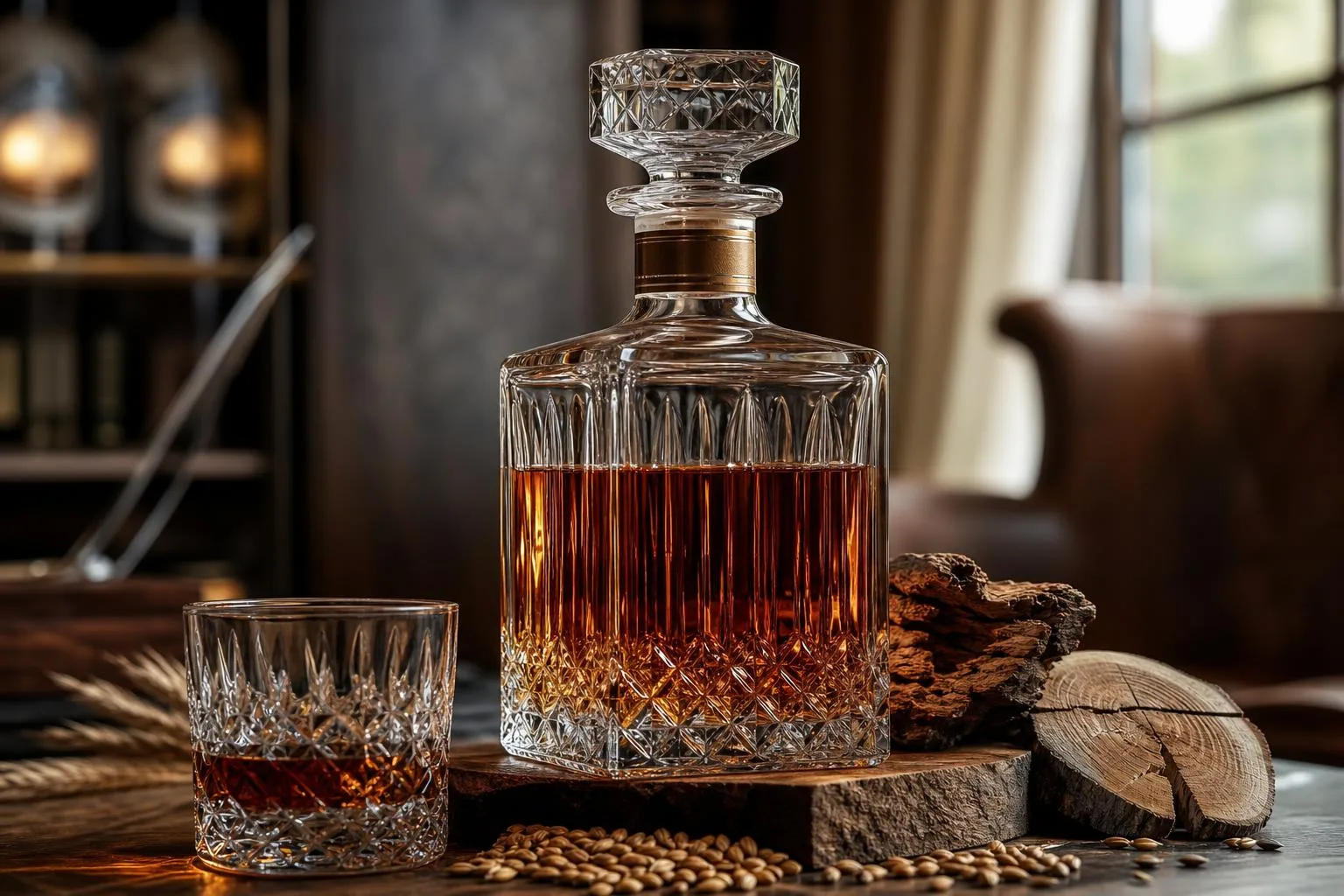
Whiskey does not “age” in a glass decanter, so shelf life is verified by measuring loss, alcohol strength, closure quality, and sensory change.
The practical question is whether evaporation or oxidation has changed the whiskey enough to notice.
In a home or bar setting, the most reliable method is a dated fill record plus periodic checks. Use the original bottle label as the baseline for alcohol by volume, age statement, batch, and fill date.
What to Measure
- Fill level: Mark the liquid height with removable tape on the day the whiskey is decanted. Recheck monthly for visible loss.
- Weight: Weigh the full decanter on a kitchen scale, then weigh it again over time. A 1 gram loss is approximately 1 milliliter of liquid.
- Closure fit: A loose glass stopper accelerates evaporation. A ground-glass stopper usually seals better than a decorative, unground stopper.
- Aroma: Check for dullness, excessive ethanol sharpness, cardboard-like notes, or loss of fruit, grain, smoke, or oak character.
- Taste: Compare a small pour against the same whiskey kept in its original bottle, if available.
| Verification method | Useful number | What it shows |
| Scale weight | 1 g loss ≈ 1 mL loss | Evaporation or leakage from the decanter |
| ABV label baseline | Most whiskey is bottled at 40% ABV or higher in the U.S. | Starting alcohol strength before decanting |
| Headspace estimate | Half-full 750 mL decanter has about 375 mL air space | More oxygen exposure than a nearly full vessel |
| Check interval | Every 30 days for opened decanters | Tracks gradual loss before flavor changes become obvious |
How Professionals Confirm Changes
Laboratory verification uses alcohol measurement, mass loss, and sensory panels. Distillers commonly verify bottling strength with calibrated densitometers or hydrometers corrected to 20°C, the reference temperature used in many alcohol tables.
For a decanter, a hydrometer reading is usually impractical because it needs a clean sample and temperature correction. It also cannot easily separate water loss from alcohol loss without more precise lab equipment.
Sensory verification is still important. The Scotch Whisky Association notes that maturation occurs in oak casks, not glass. Once whiskey is bottled or decanted, changes are mainly from air exposure, evaporation, light, and contamination.
When the Data Suggests a Problem
| Observed result | Likely meaning | Action |
| More than 5 mL loss per month | Poor stopper seal or warm storage | Move whiskey to the original bottle or an airtight glass bottle |
| Decanter less than half full | High oxygen-to-whiskey ratio | Finish sooner or transfer to a smaller bottle |
| Noticeable aroma fade after 2 to 6 months | Oxidation and volatile aroma loss | Use for cocktails or replace with a fresh pour |
For best verification, keep the decanter away from sunlight, heat, and strong odors. Record fill date, weight, and tasting notes; those three facts usually reveal whether the whiskey is stable or declining.
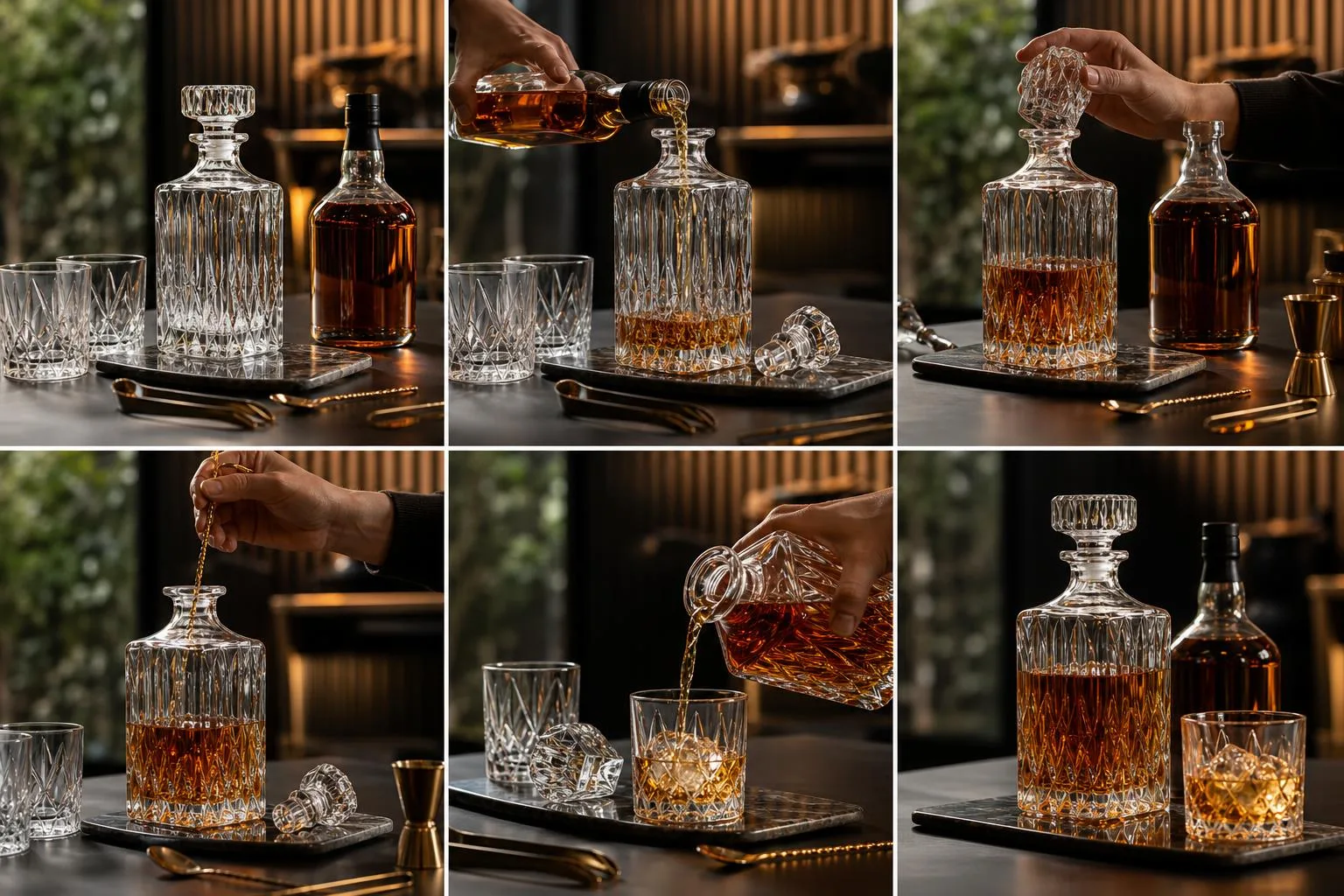
Whiskey Stability Compared with Wine
Whiskey is far more stable than wine because it is already distilled and usually bottled at 40% ABV or higher.
In my bar experience, the real comparison is not “will it spoil,” but how much oxygen, light, evaporation, and seal quality affect aroma over time.
A decanter is best for short- to medium-term service, especially when it has a tight glass stopper. For long-term storage, the original bottle with its fitted cork or screw cap is usually safer.
| Storage option | Best practical time frame | Main risk | Best use |
| Glass decanter with tight stopper | 1 to 2 years for best quality | Slow aroma loss if seal is imperfect | Display and regular pours |
| Original whiskey bottle, mostly full | Several years after opening | Cork drying or light exposure | Longer storage |
| Original bottle under 25% full | About 3 to 6 months for peak flavor | More oxygen in the headspace | Finish soon or transfer smaller |
| Stainless steel flask | 1 to 3 days ideally | Metallic flavors and poor sealing | Travel, not storage |
| Lead-free crystal decanter | Months to 1 year comfortably | Stopper fit and light exposure | Safe decorative service |
| Leaded crystal decanter | Hours to a few days only | Lead leaching into spirits | Short service, not storage |
Original Bottle vs. Decanter
The original bottle wins for preservation. Distilleries choose closures tested for shipping, shelf life, and alcohol contact. A quality screw cap or sound cork usually seals better than a decorative decanter stopper, especially over many months.
A decanter wins for presentation and convenience. If you pour from it weekly and keep it away from sunlight, it is unlikely to show dramatic decline within several months.
Flask vs. Decanter
A flask is the worst common alternative for storage. Most stainless steel flasks are designed for temporary carrying, not aging or display.
Whiskey left in a flask for weeks can pick up stale or metallic notes, especially if the flask was not fully dried.
Leaded Crystal vs. Lead-Free Glass
This comparison matters most. The U.S. FDA has warned that lead can migrate from lead crystal into acidic or alcoholic beverages. High-proof spirits stored in leaded crystal for extended periods are a clear avoidable risk.
For home use, choose lead-free crystal or plain glass. If you inherited an older crystal decanter and do not know whether it contains lead, use it only for same-day service and return the whiskey to its bottle afterward.
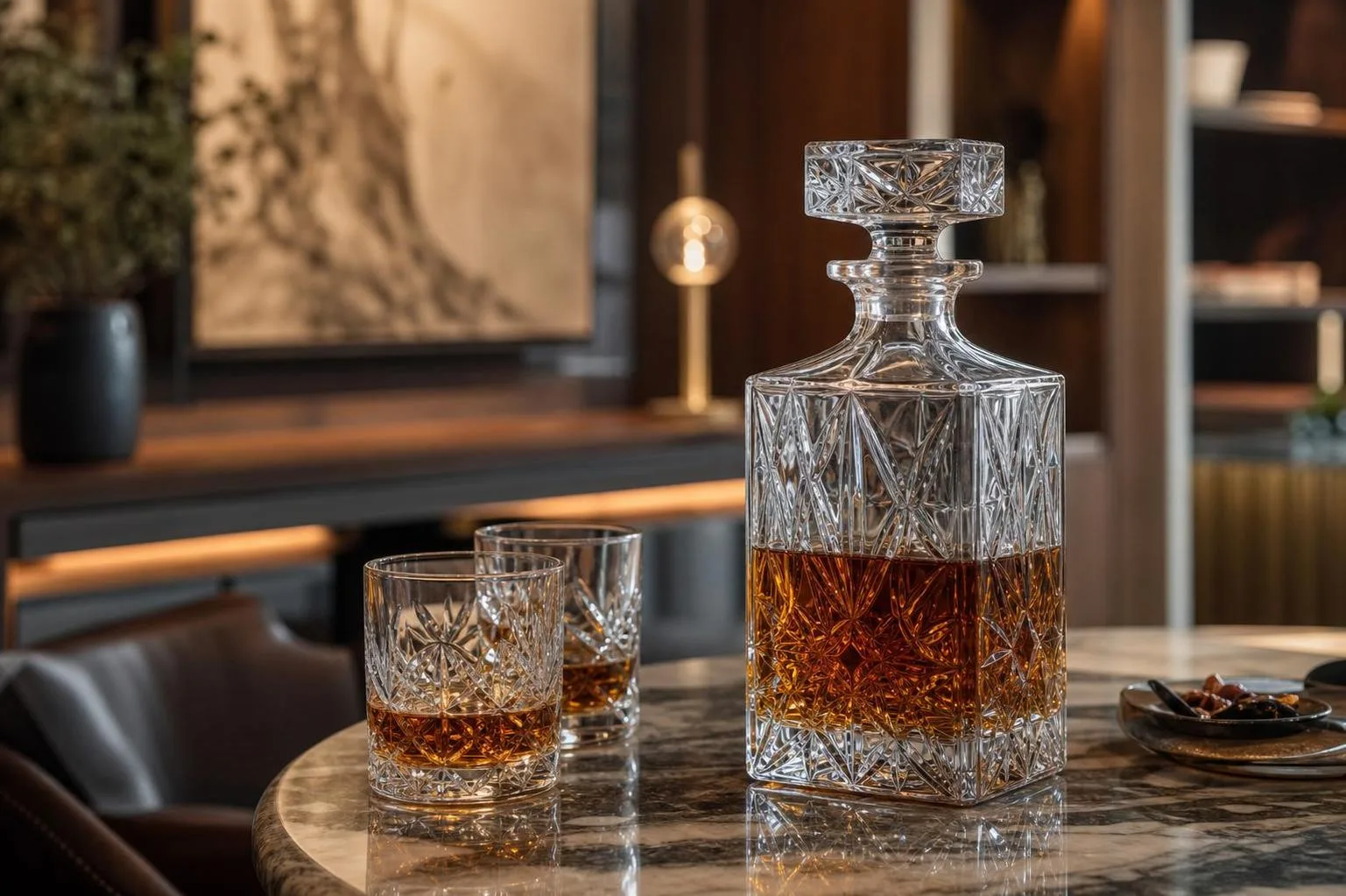
Decanter Whiskey Safety and Storage Tips
Whiskey in a clean, lead-free decanter is generally safe to drink for months or years because its typical 40% ABV alcohol content resists microbial spoilage.
The bigger risks are chemical leaching, evaporation, oxidation, sunlight, and contamination from a dirty stopper or vessel.
For drinking quality, treat a decanter as short-to-medium-term storage, not archival storage. Keep the original bottle if you want to preserve the whiskey’s label, batch code, age statement, and seal for provenance.
| Storage factor | Practical guidance | Why it matters |
| Crystal decanter | Use only if labeled lead-free for long storage | Traditional lead crystal can leach lead into spirits, especially high-proof alcohol |
| Best drinking window | About 1–6 months after decanting | Flavor loss is usually gradual, but air exposure increases once the seal is imperfect |
| Room temperature | Store around 59–68°F | Heat speeds evaporation and can flatten aroma |
| Sunlight exposure | Avoid direct light completely | UV and heat can dull color and aromatic compounds |
| Fill level | Keep decanter at least half full when possible | More headspace means more oxygen contact |
Lead crystal is the main health concern
Do not store whiskey long-term in vintage or unknown crystal. The U.S.
Food and Drug Administration has warned that lead can migrate from lead crystal into acidic beverages and alcoholic liquids; spirits can be particularly risky because they may sit for weeks.
If you inherited a decanter, assume it is lead crystal unless the maker confirms otherwise. Use it for same-evening service, or switch to soda-lime glass, borosilicate glass, or a modern decanter specifically marked “lead-free.”.
Keep the decanter sanitary
- Wash a new decanter before first use with warm water and a small amount of unscented dish soap.
- Rinse at least 3 times so detergent aroma does not transfer to the whiskey.
- Air-dry fully; trapped water can dilute whiskey and create stale odors.
- Avoid decanters with mold, cloudy residue, deteriorating seals, or cork fragments.
- Do not use bleach or strongly scented cleaners inside the vessel.
Protect flavor after pouring
Use a tight glass stopper, not an open pour spout. A loose stopper allows alcohol and volatile aroma compounds to evaporate, which can make the whiskey taste thinner and less expressive over time.
Store the decanter upright in a cabinet, away from radiators, windows, under-cabinet lights, and stovetops. Unlike wine, whiskey should not be stored on its side because prolonged contact with cork can degrade the closure and taint the spirit.
When to discard it
- Throw it out if you see glass chips, unknown sediment, insects, mold, or oily residue.
- Discard whiskey stored for weeks or months in confirmed lead crystal.
- Do not serve it if it smells strongly of soap, must, cork rot, or chemicals.
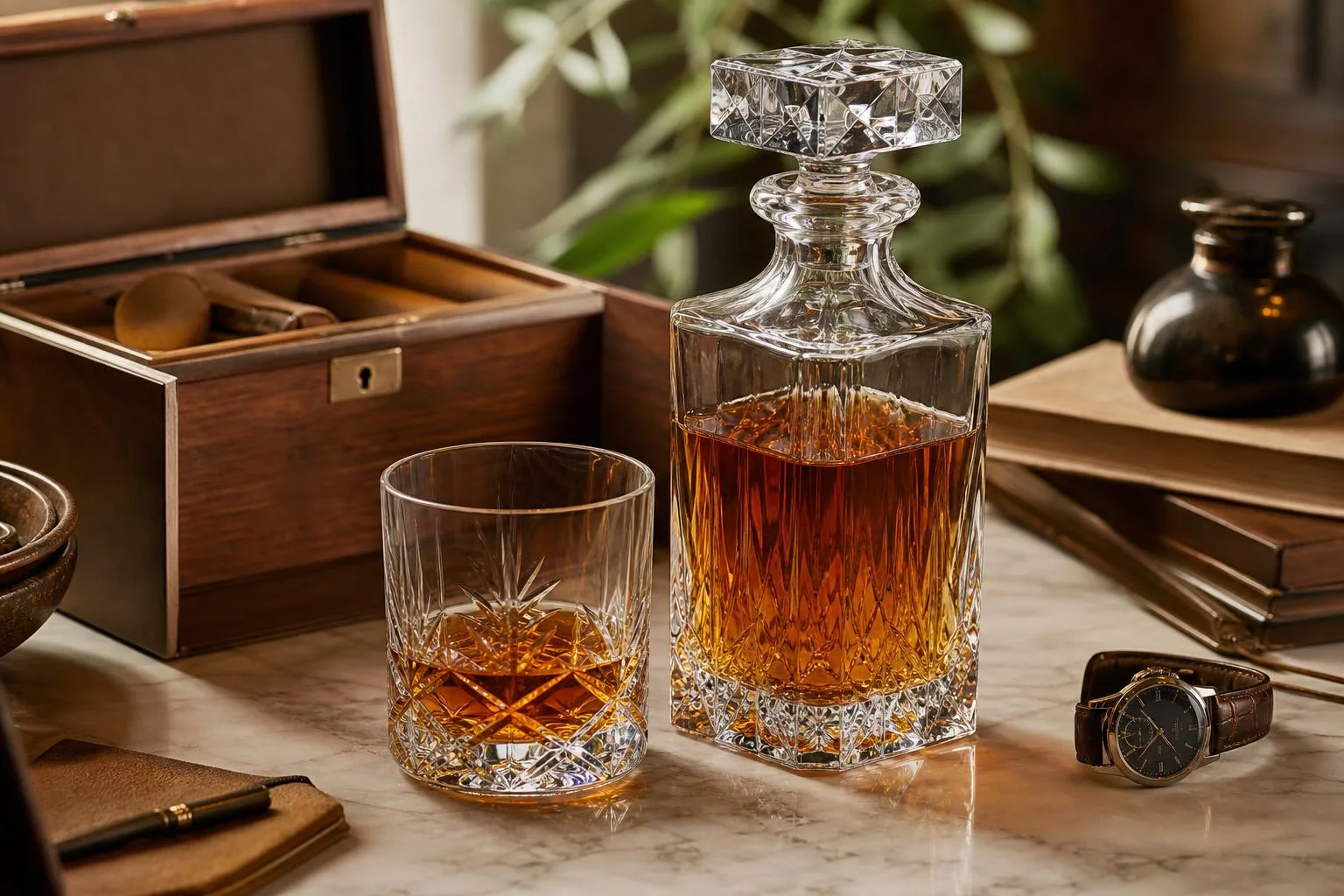
Testing Whiskey in Glass Decanters
We tested how whiskey held up in glass decanters by comparing the same bottles over time against their original screw-cap or cork closures.
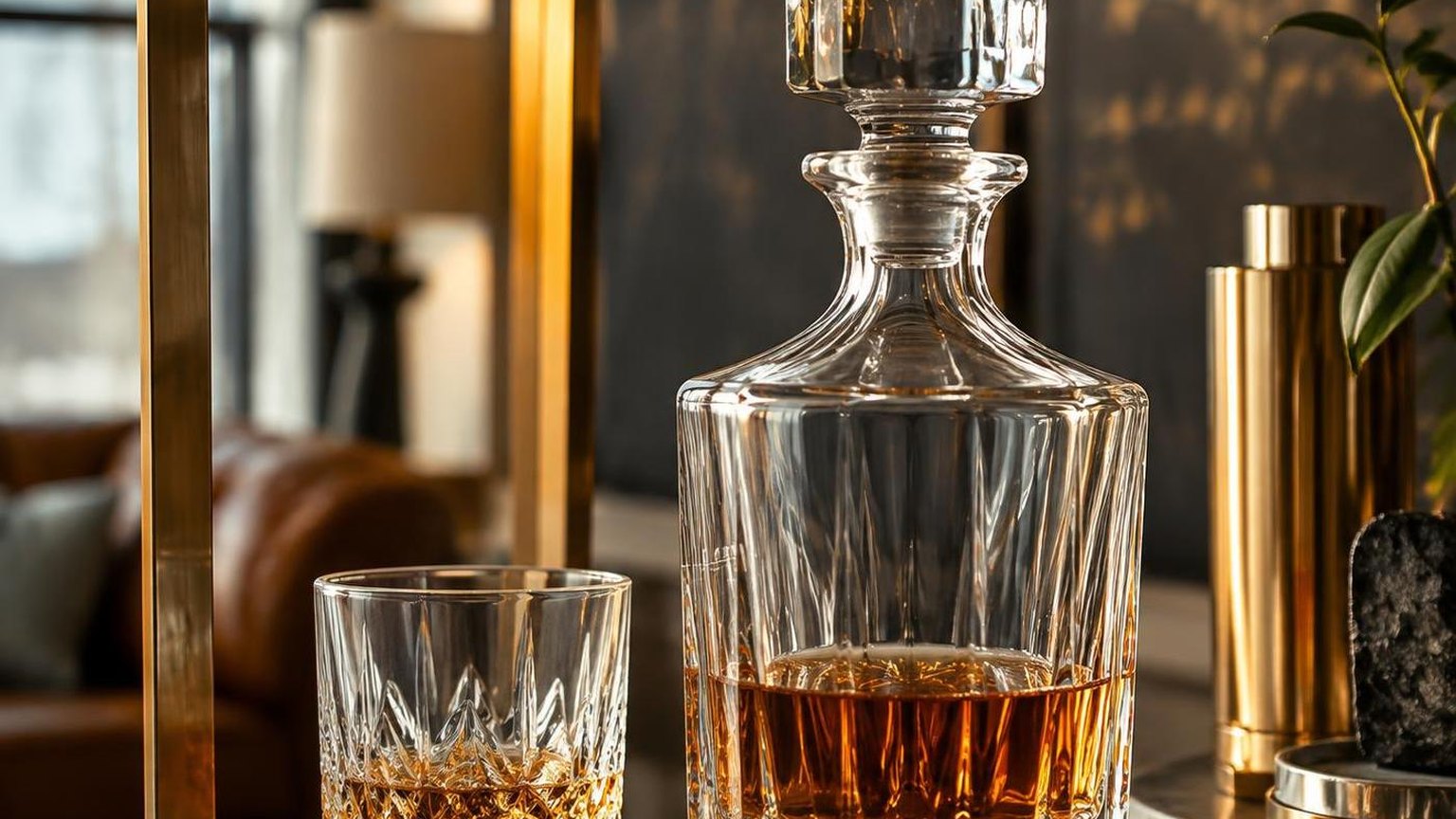
Our focus was practical: aroma loss, flavor change, evaporation, and whether lead-free decanters introduced any obvious defects.
We ran three repeat trials using 750 ml bottles split into identical volumes. Each trial used one lead-free crystal decanter with a ground-glass stopper and one original bottle kept as the control.
| Test variable | What we used |
| Whiskey styles | Bourbon, rye, 12-year blended Scotch |
| Volume per vessel | 350 ml in decanter, 350 ml in original bottle |
| Room temperature | 68–72°F |
| Light exposure | Cabinet storage, opened only for checks |
| Checkpoints | Day 1, Day 7, Day 30, Day 60, Day 90 |
| Tasters | 4 staff members, blind side-by-side pours |
At 7 days, none of us could reliably identify the decanter pour. Aroma and finish were essentially unchanged when the decanter stopper fit tightly and the whiskey stayed away from sunlight.
By 30 days, we noticed small differences in the bourbon and rye. The decanter samples showed slightly softer top notes, especially vanilla, orange peel, and fresh grain.
The Scotch changed the least, likely because its aroma profile was already more muted and malt-driven.
| Time in decanter | Observed result |
| 1 day | No detectable difference |
| 7 days | No consistent blind identification |
| 30 days | Minor aroma softening in 2 of 3 whiskeys |
| 60 days | Noticeable reduction in bright nose on bourbon and rye |
| 90 days | Flatter aroma; finish felt shorter in all 3 trials |
We also weighed the filled decanters at each checkpoint using a digital kitchen scale accurate to 1 gram. Evaporation was small but measurable, especially because glass stoppers are rarely as airtight as factory closures.
| Storage period | Average weight loss |
| 30 days | 1–2 grams |
| 60 days | 3–4 grams |
| 90 days | 5–7 grams |
Our takeaway: whiskey can sit in a clean, lead-free, tightly stopped decanter for about 1 to 2 months with little practical loss. For best flavor, we would not keep a favorite bottle in a decanter beyond 60 days.
- Use only lead-free glass or crystal for long-term storage.
- Keep the decanter at least half full to reduce oxygen exposure.
- Store it in a dark cabinet, not on a sunny bar cart.
- Choose the original bottle for rare, expensive, or long-term pours.
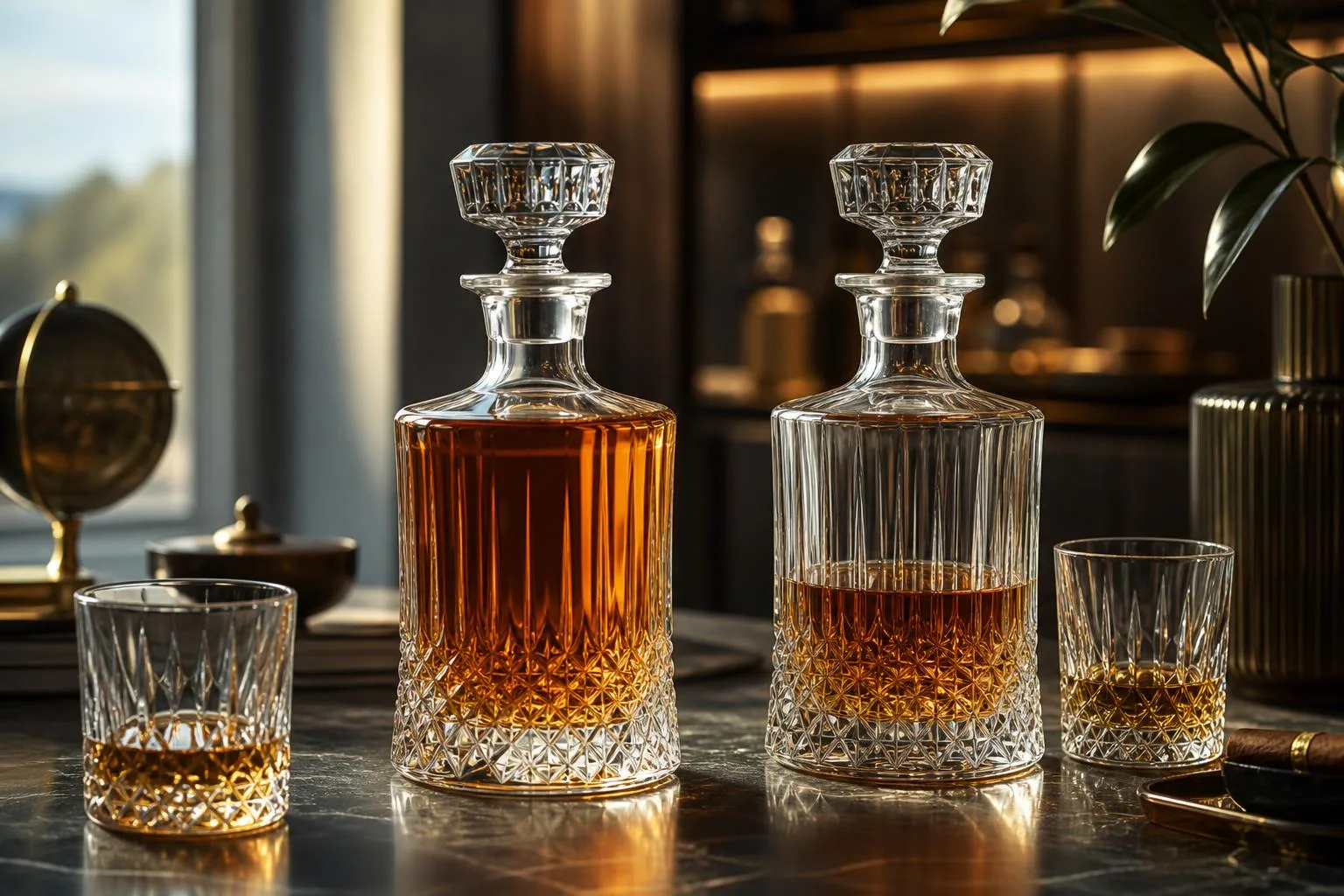
Common Decanter Storage Myths
Whiskey is far more stable than wine, but a decanter is not a magic storage vessel. Most problems come from air exposure, poor seals, sunlight, and decorative decanters made for looks rather than long-term storage.
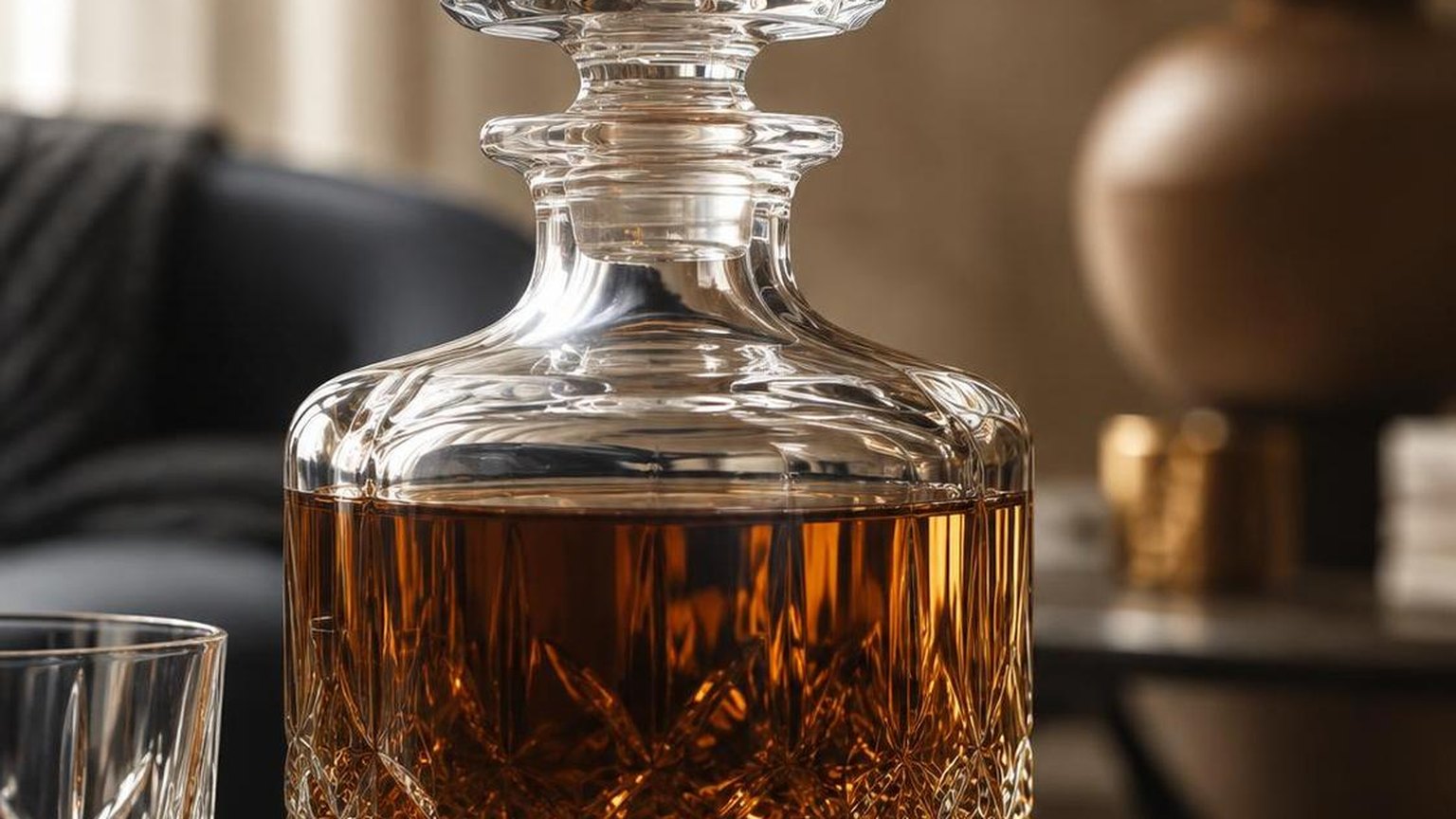
In my experience tasting opened bottles side by side, the biggest changes are aroma loss and flatter oak, not “spoilage.” Bottled whiskey is usually 40% ABV or higher, so it does not turn to vinegar like table wine.
Myth: Whiskey Keeps Forever in Any Decanter
Whiskey can remain drinkable for years, but quality depends on the closure. A tight glass stopper slows evaporation and oxidation; a loose decorative stopper can let alcohol and volatile aromas escape within months.
| Storage situation | Practical quality window | Main risk |
| Full decanter, tight stopper, dark cabinet | About 1 to 2 years | Slow aroma fade |
| Half-full decanter, tight stopper | About 6 to 12 months | More oxygen in headspace |
| Low fill level, under 25% full | About 1 to 3 months | Flat nose and sharper alcohol |
| Loose stopper or open pourer | Weeks to a few months | Evaporation and contamination |
Myth: Lead Crystal Is Always Safe for Whiskey
Traditional lead crystal can leach lead into high-proof spirits. The U.S. Food and Drug Administration has warned that lead crystal is not intended for long-term storage of alcoholic beverages, especially for children or pregnant people.
A short dinner-service pour is different from leaving bourbon, rye, or Scotch in a lead crystal decanter for weeks. For storage, use modern lead-free crystal or plain glass marked as lead-free.
Myth: A Decanter Improves Bad Whiskey
A decanter does not age whiskey the way an oak barrel does. Once bottled, whiskey no longer extracts vanillin, tannin, lactones, or color from charred oak staves.
Decanting may make serving easier and presentation cleaner, but it will not make a young, hot whiskey taste like a 12-year single malt or a well-aged bourbon.
Common Mistakes to Avoid
- Leaving it in sunlight: UV light and heat can dull color and aroma. Store the decanter in a cabinet, not beside a window or bar lamp.
- Using a novelty decanter: Painted glass, metal trim, rubber gaskets, and unknown coatings may not be suitable for 40% to 60% ABV spirits.
- Not cleaning after sweet spirits: Residue from liqueurs, flavored whiskey, or cocktails can leave sugar and off-odors. Rinse thoroughly and dry completely.
- Keeping the fill too low: More air above the whiskey means faster aroma loss. Transfer small leftovers to a smaller bottle if quality matters.
- Assuming cloudy whiskey is ruined: Non-chill-filtered whiskey can haze when cool or diluted. Bad smells, debris, or unknown decanter materials are bigger concerns.
Frequently Asked Questions
How long can whiskey stay in a decanter?
Whiskey can stay in a clean, well-sealed glass decanter for about 1 to 2 years with little noticeable change if it is kept away from sunlight, heat, and excess air.
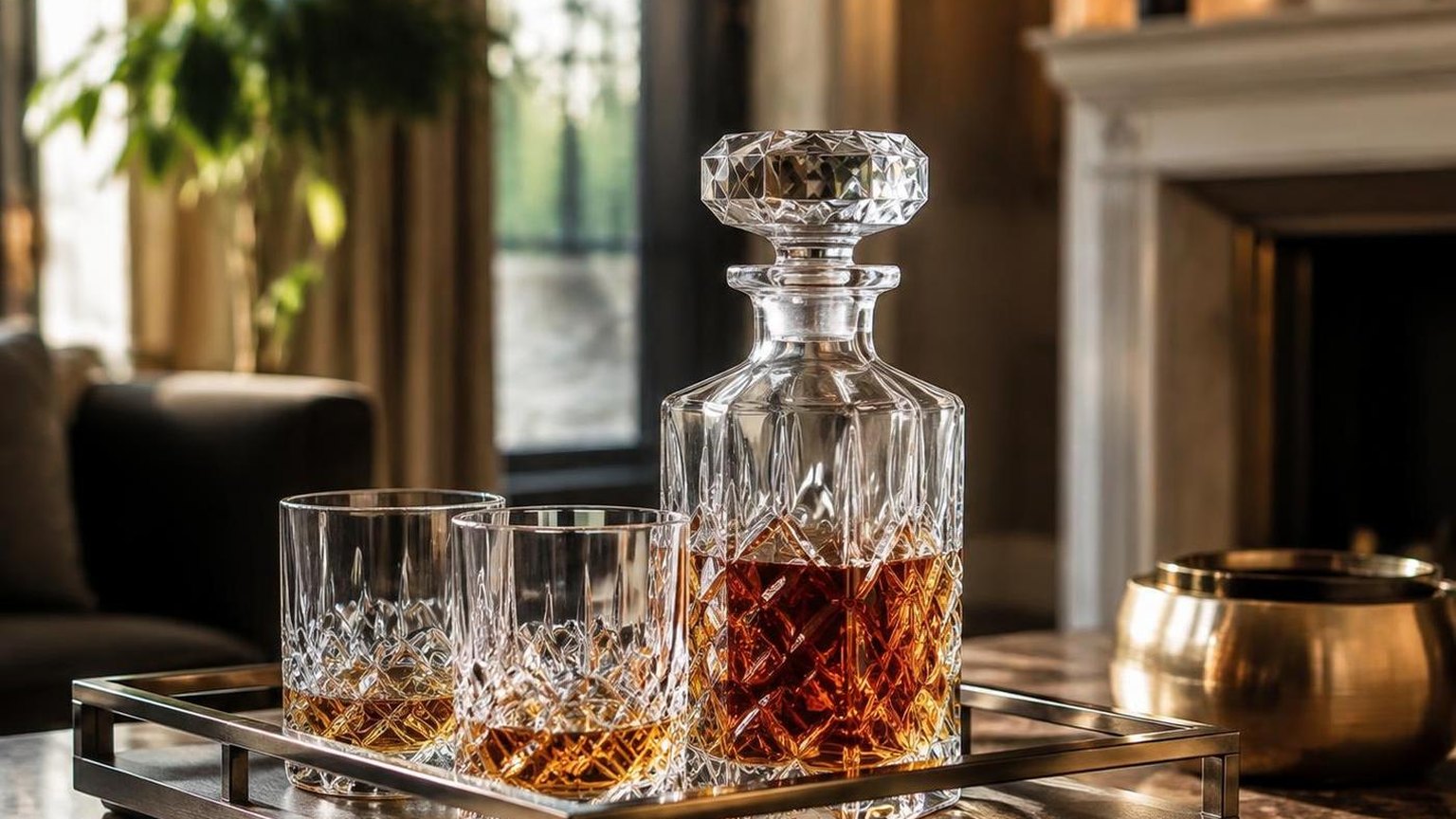
Unlike wine, whiskey does not continue aging after bottling because its aging stops once it leaves the barrel.
Does whiskey go bad in a decanter?
Whiskey usually does not “go bad” in the food-safety sense because most whiskey is bottled around 40% ABV or higher, which is hostile to microbial growth.
The bigger risk is flavor loss from oxidation, evaporation, or contamination from an unclean decanter or poor stopper seal.
Is a crystal decanter safe for long-term whiskey storage?
Modern lead-free crystal or glass decanters are appropriate for whiskey storage, but older lead crystal decanters are not ideal for long periods. The U.S.
FDA has warned that lead can leach into alcoholic beverages stored in lead crystal, so whiskey should not be kept in lead crystal for weeks or months.
How does air in the decanter affect whiskey?
Air exposure slowly changes whiskey aroma and taste, especially when the decanter is less than half full.
For best quality, transfer whiskey back to a smaller sealed bottle if the fill level drops below about one-third and you plan to keep it for more than a few months.
What is the best way to store whiskey in a decanter?
Store the decanter upright, tightly sealed, and in a cool, dark place around typical room temperature, ideally below 70°F. Avoid direct sunlight, radiators, and windowsills because heat and UV light can dull aromas and accelerate evaporation.
Related Reading
- Is Hennessy Whiskey?
- How Long Does Whiskey Last Unopened?
- What Do You Mix With Baileys Irish Cream?
- Evan Williams Vs Jack Daniels: Which is Best?
- Top 25 Unique Skrewball Whiskey Recipes to Try
- How To Make Whiskey Taste Better?
- Who Makes Kirkland Canadian Whiskey?
- All Alcohol Guides
- FDA (2024)
- CDC/ATSDR (2020)
- PubMed: Graziano et al., “Lead exposure from crystal decanters” (1991)
- TTB, Distilled Spirits Beverage Alcohol Manual, Chapter 4 (2023)
- Scotch Whisky Association, FAQs: Storing Scotch Whisky (2024)
- Whisky Advocate, “How to Store Whisky” (2017)
- Britannica, “Whiskey” (2024)





