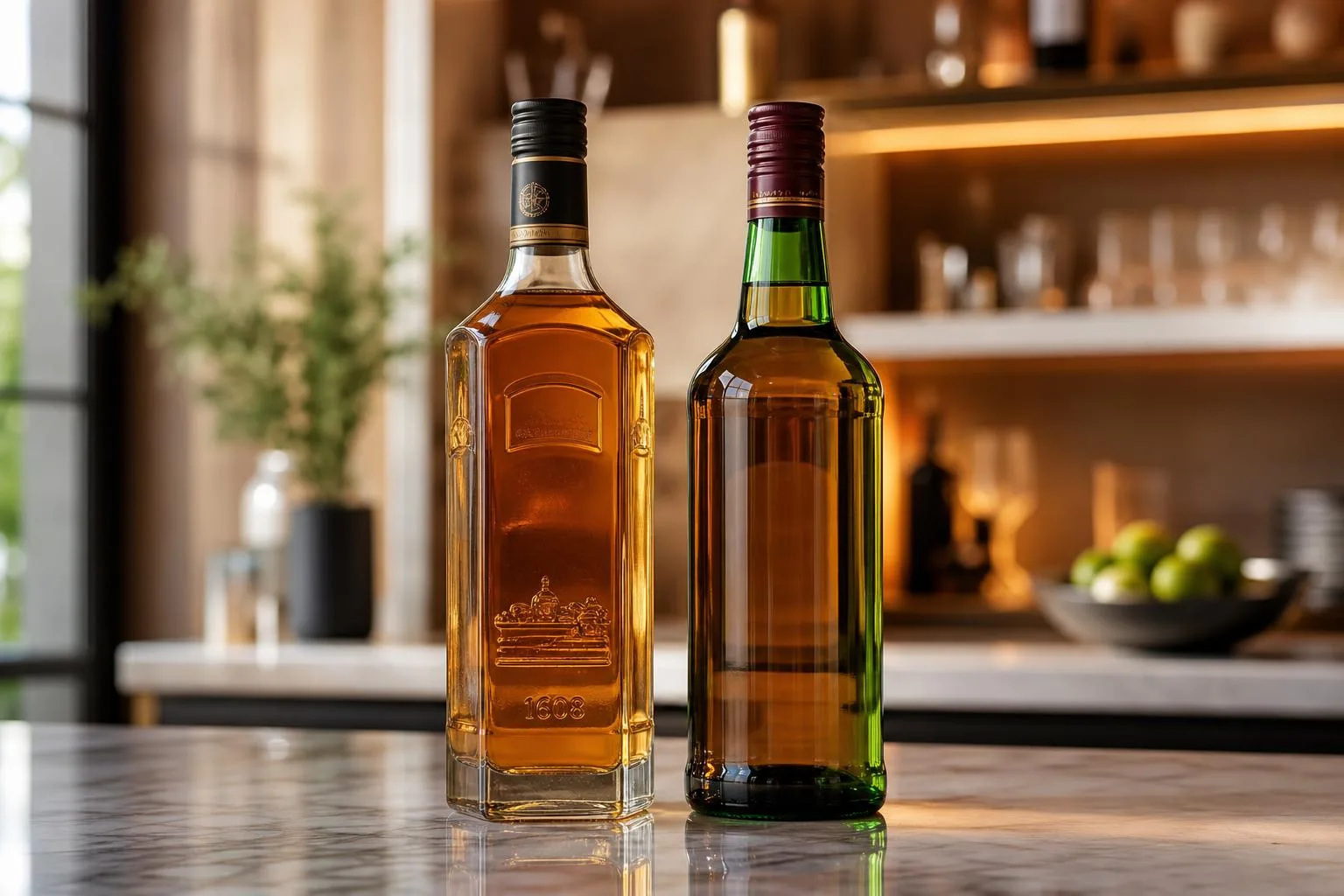
Bushmills Vs Jameson is a comparison of two Irish whiskey styles: Bushmills is usually lighter, maltier, and fruit-led, while Jameson is typically smoother, grain-supported, and subtly spicy.
Both are triple-distilled Irish whiskeys with long histories: Bushmills traces its licensed distilling heritage to 1608 in County Antrim, while Jameson was founded in Dublin in 1780.
This guide breaks down flavor, production, price, age statements, cocktail use, and sipping value so you can choose the better bottle for your taste, budget, and occasion.
Bushmills and Jameson on Paper
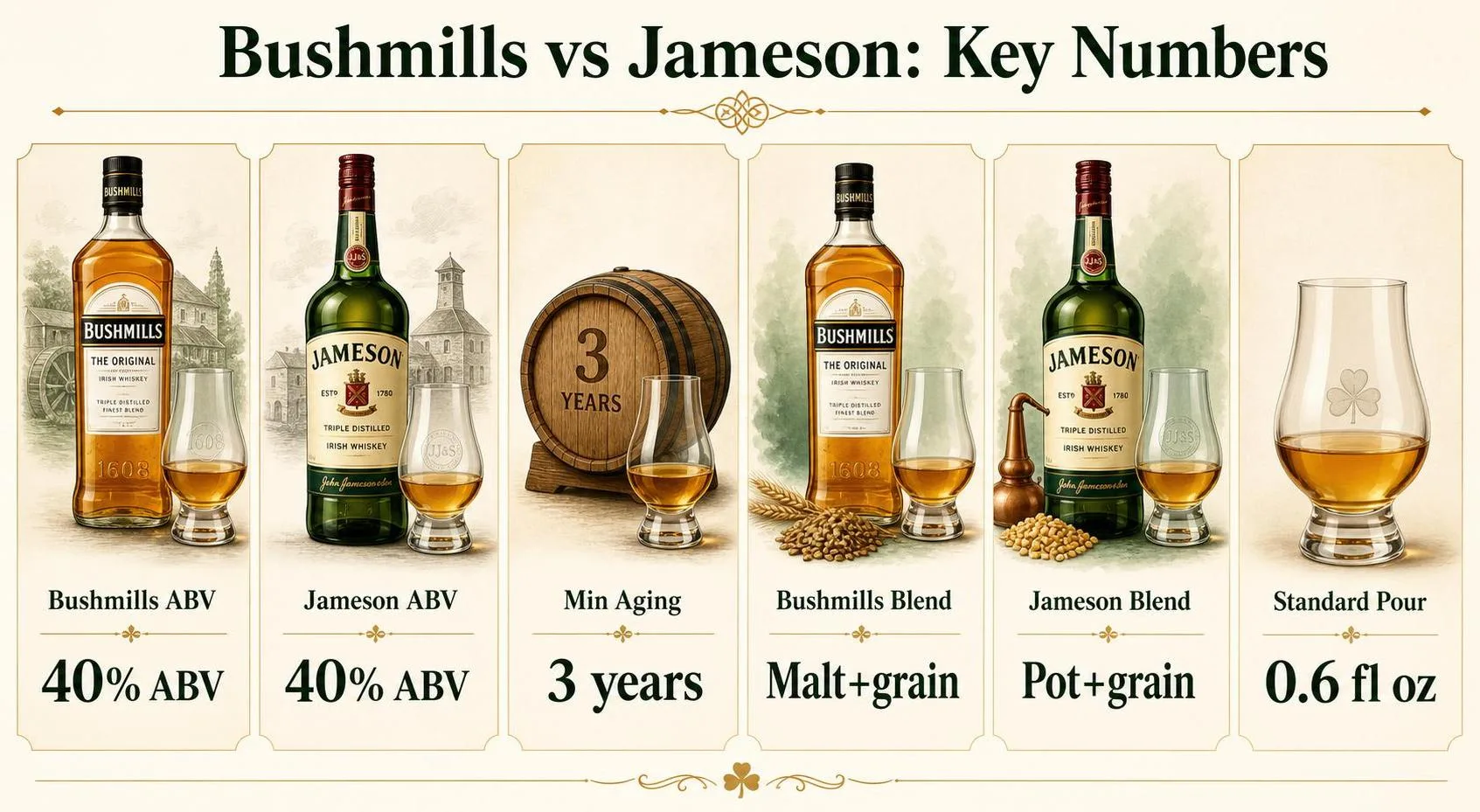
Bushmills Original and Jameson Irish Whiskey look similar on paper: both are 40% ABV, triple distilled, no-age-statement Irish blends.
The numbers matter because they explain why Jameson usually tastes rounder and grain-sweeter, while Bushmills often reads lighter, maltier, and slightly fruitier.
| Number | Bushmills Original | Jameson Original |
| ABV / proof | 40% ABV / 80 proof | 40% ABV / 80 proof |
| Legal minimum aging | At least 3 years, as required for Irish whiskey | At least 3 years, as required for Irish whiskey |
| Age statement | No age statement | No age statement |
| Distillation | Triple distilled | Triple distilled |
| Core components | Malt whiskey plus lighter grain whiskey | Pot still whiskey plus grain whiskey |
| Brand origin date commonly cited | 1608 royal license associated with the Bushmills area; Old Bushmills Distillery dates to 1784 | 1780, when John Jameson established his Dublin whiskey business |
| Typical U.S. 750 ml shelf range | About $22–$30 | About $24–$35 |
The shared 40% ABV is the first equalizer. In a 1.5-ounce pour, either whiskey contains about 0.6 fluid ounces of pure alcohol, which is one U.S. standard drink under the National Institute on Alcohol Abuse and Alcoholism definition.
At 80 proof, neither bottle is designed for cask-strength intensity. The lower bottling strength keeps texture soft and makes both easy in highballs, Irish coffee, and whiskey ginger, but it also mutes heavier oak and spice notes.
The 3-year figure is legal, not a flavor promise. Irish whiskey regulations require maturation in wooden casks on the island of Ireland for at least three years.
Because both are no-age-statement blends, the bottle does not disclose the youngest whiskey beyond that minimum.
The production split is the bigger distinction. Jameson’s signature style comes from blending triple-distilled pot still whiskey, made from malted and unmalted barley, with grain whiskey.
That pot still component helps explain its creamy cereal, vanilla, and mild spice profile.
Bushmills leans on malt whiskey blended with grain whiskey. In side-by-side tasting, that usually shows as a cleaner, slightly lighter body, with more orchard fruit, honeyed malt, and less of Jameson’s rounded pot-still oiliness.
- For neat sipping: the numbers are tied, so the choice comes down to texture: Jameson is generally fuller; Bushmills is generally lighter.
- For cocktails: both work, but Jameson’s slightly broader body stands up well to ginger ale, while Bushmills keeps citrus-forward drinks crisp.
- For value: local pricing matters more than specs; if one is $5 cheaper, the technical difference rarely justifies overpaying.
How Bushmills and Jameson Differ
Bushmills versus Jameson is not decided by “smoothness” alone. The result changes with the whiskey style, cask influence, proof, glassware, dilution, and whether you taste neat, on ice, or in a cocktail.
The biggest difference is the whiskey makeup. Bushmills Original leans on triple-distilled malt whiskey blended with lighter grain whiskey, while Jameson Original blends triple-distilled pot still whiskey with grain whiskey.
| Factor | Bushmills Original | Jameson Original |
| Country category | Irish whiskey | Irish whiskey |
| Bottling strength in the U.S. | 40% ABV / 80 proof | 40% ABV / 80 proof |
| Distillation style | Triple distilled | Triple distilled |
| Core blend components | Malt whiskey and grain whiskey | Pot still whiskey and grain whiskey |
| Minimum Irish whiskey maturation rule | 3 years in wooden casks | 3 years in wooden casks |
| Brand origin | Old Bushmills Distillery, County Antrim; distillery registered in 1784 | John Jameson founded the brand in Dublin in 1780; now produced at Midleton, County Cork |
That malt-versus-pot-still distinction matters. Bushmills often reads cleaner, honeyed, cereal-sweet, and slightly fruity. Jameson usually shows more pot-still texture: orchard fruit, vanilla, light spice, and a rounder mid-palate.
Casks also change the outcome. Both brands use whiskey matured in oak, with ex-bourbon and sherry-seasoned casks commonly associated with their house profiles.
Bourbon barrels push vanilla, coconut, and caramel; sherry influence adds dried fruit, nuttiness, and deeper sweetness.
- Neat tasting: Use a tulip-shaped glass if possible. It concentrates aroma better than a wide rocks glass, making Bushmills’ lighter malt notes and Jameson’s spice easier to separate.
- Ice: Ice lowers perceived alcohol and sweetness. It can make Jameson feel softer, but it may also flatten Bushmills’ lighter fruit and honey notes more quickly.
- Water: A few drops can open aroma at 40% ABV. Too much dilution makes both blends taste thin because neither is bottled at cask strength.
- Cocktails: In an Irish Coffee, Jameson’s pot-still weight tends to stand up well to coffee and sugar. In a highball, Bushmills’ lighter profile can feel crisper.
- Palate expectations: Bourbon drinkers may notice less oak and less char in both. Scotch drinkers may find Bushmills closer to a light malt profile, though without peat smoke in the standard expression.
Freshness of the bottle matters less than storage. Keep either whiskey upright, sealed, and away from sunlight. Once opened, oxidation is usually modest, but a nearly empty bottle can lose aroma faster over several months.
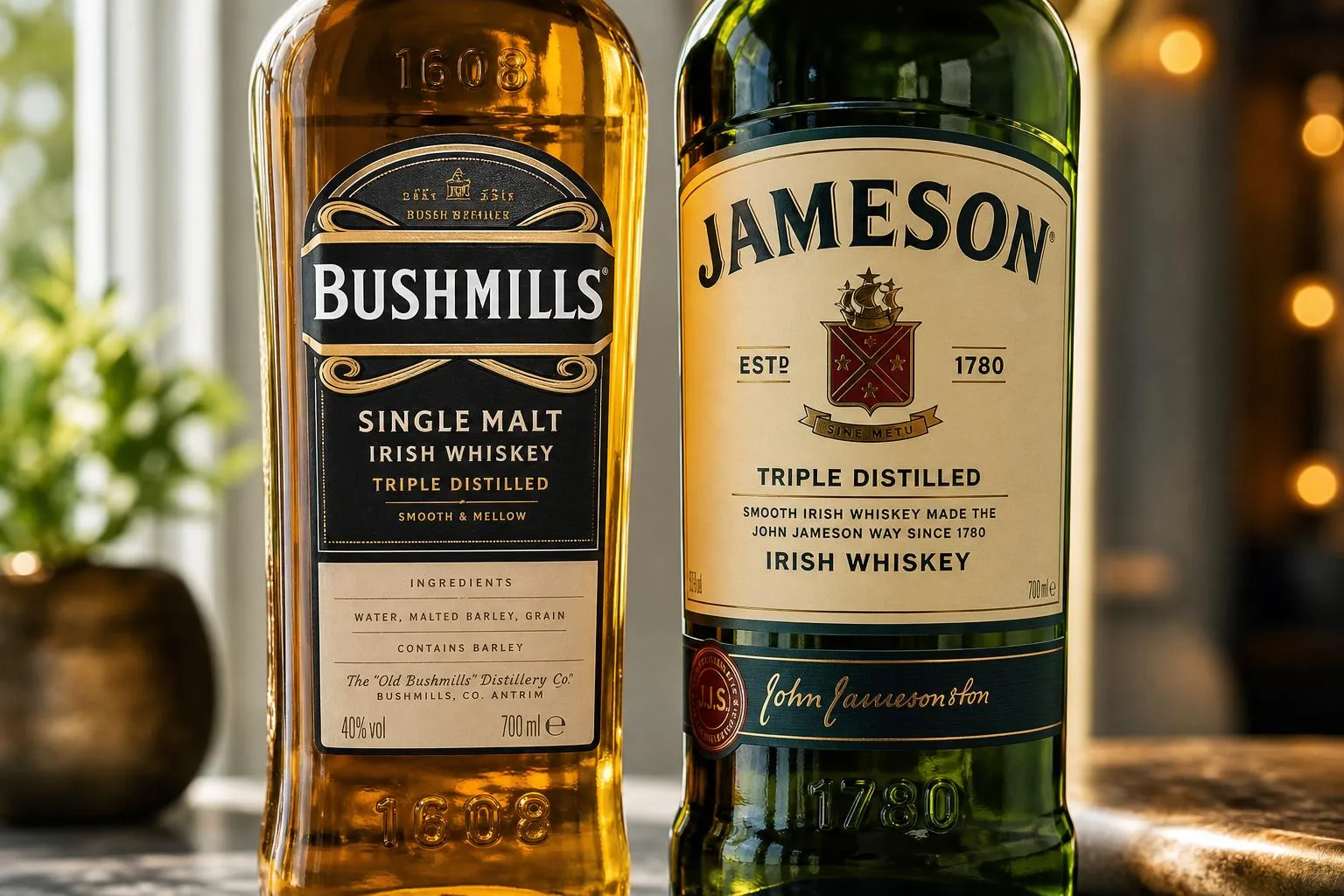
How Bushmills and Jameson Are Compared
Bushmills and Jameson are compared with a mix of legal checks, label verification, production disclosures, and controlled tasting.
The most reliable measurements are ABV, age category, distillation method, grain source, maturation rules, and sensory results under the same glassware and serving temperature.
For U.S. bottles, the first verification point is the label.
The Alcohol and Tobacco Tax and Trade Bureau requires alcohol content disclosure, country of origin, class or type, and responsible bottler or importer details, which makes side-by-side bottle checks useful before tasting.
| Verification point | Bushmills Original | Jameson Irish Whiskey |
| Typical U.S. bottle strength | 40% ABV / 80 proof | 40% ABV / 80 proof |
| Legal Irish whiskey minimum maturation | At least 3 years in wooden casks in Ireland | At least 3 years in wooden casks in Ireland |
| Core distillation claim | Triple distilled | Triple distilled |
| Primary style | Blended Irish whiskey with malt whiskey component | Blended Irish whiskey using pot still and grain whiskey |
The legal baseline comes from Irish whiskey regulations and the Irish Whiskey Technical File.
To be verified as Irish whiskey, the spirit must be distilled and matured on the island of Ireland, aged for a minimum of 3 years, and bottled at no less than 40% ABV.
ABV is not judged by taste. It is confirmed analytically by distillers using alcohol measurement systems such as density meters or distillation-and-hydrometry methods, then declared on the approved label.
A 40% ABV whiskey contains 40 milliliters of pure alcohol per 100 milliliters of liquid.
Production differences are verified through producer specifications and site disclosures. Bushmills is made at Old Bushmills Distillery in County Antrim, Northern Ireland, a licensed distilling site with roots commonly dated to 1608.
Jameson is produced by Irish Distillers, with distillation centered at Midleton Distillery in County Cork.
- Glass control: use identical tulip glasses, rinsed and air-dried, with 30 milliliters of each whiskey.
- Temperature control: taste near 18-20°C, because colder whiskey suppresses aroma and warmer whiskey exaggerates alcohol lift.
- Dilution check: add the same measured water amount, such as 3 drops, to each sample if opening aromas are being compared.
- Blind order: cover bottle identities to reduce brand bias, especially because Jameson is more familiar to many U.S. drinkers.
In tasting, Bushmills Original is usually verified as lighter, honeyed, and grain-soft, with orchard-fruit notes.
Jameson commonly shows more rounded cereal, vanilla, spice, and toasted wood character, reflecting its pot still and grain whiskey blend structure.
The final comparison should separate verified facts from preference. ABV, proof, origin, maturation minimum, and label statements are objective.
Smoothness, sweetness, burn, and finish length are sensory observations, best confirmed through repeated blind pours rather than a single branded sip.
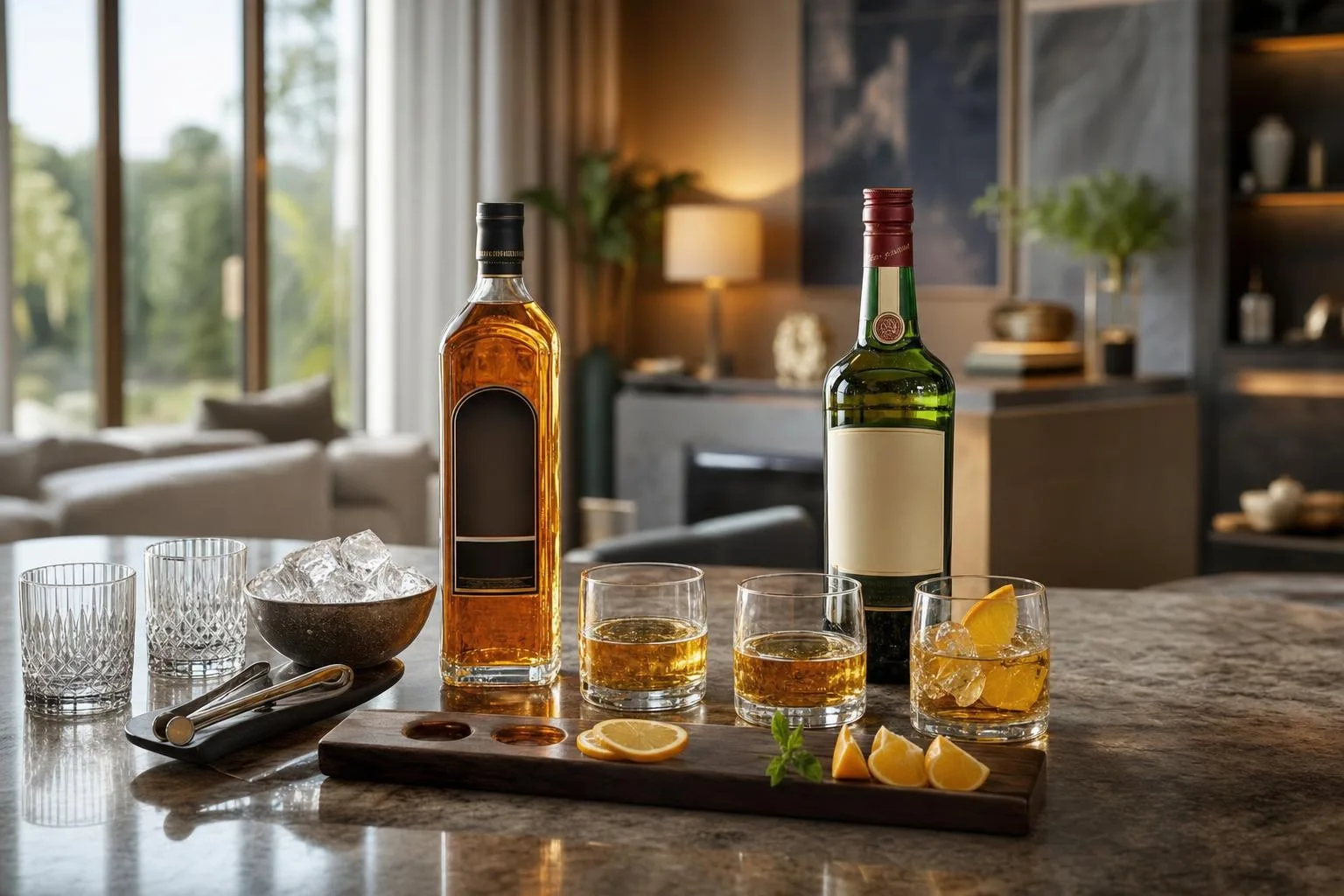
Bushmills vs Jameson Flavor Profiles
Bushmills and Jameson are both approachable Irish whiskeys, but they sit in different flavor lanes. Bushmills Original is malt-forward and lighter; Jameson Original is grain-supported, rounder, and slightly sweeter in mixed drinks.
For most buyers, the better comparison is not “which is best,” but which bottle fits the pour: neat, highball, Irish coffee, or cocktails.
| Whiskey | Country / style | ABV | Core production fact | Typical profile |
| Bushmills Original | Northern Ireland, blended Irish whiskey | 40% | Triple distilled; blend includes malt whiskey from Bushmills | Light malt, honey, vanilla, fresh apple |
| Jameson Original | Ireland, blended Irish whiskey | 40% | Triple distilled; blend of pot still and grain whiskey | Cereal sweetness, toasted wood, pear, spice |
| Tullamore D.E.W. Original | Ireland, blended Irish whiskey | 40% | Triple distilled; blend of grain, malt, and pot still whiskey | Soft citrus, caramel, gentle spice |
| Powers Gold Label | Ireland, blended Irish whiskey | 43.2% | Pot-still-heavy blend; bottled stronger than many entry Irish whiskeys | Oily texture, pepper, honey, orchard fruit |
| Redbreast 12 | Ireland, single pot still whiskey | 40% | Made from malted and unmalted barley; aged at least 12 years | Rich sherry fruit, baking spice, nuts |
Bushmills vs Jameson in practical use
Bushmills Original is usually the cleaner choice when you want a lighter neat pour or a simple whiskey-and-soda. Its malt component gives it a soft biscuit note without much heat, especially over one large cube.
Jameson Original tends to hold up better in Irish coffee, ginger ale, and casual cocktails. The pot still component adds body, while the grain whiskey keeps it smooth and easy to mix.
Against Tullamore D.E.W. and Powers
Tullamore D.E.W. Original is the closest “middle road” alternative. It is also 40% ABV and triple distilled, but its three-part blend often tastes softer and fruitier than Jameson, with less malt emphasis than Bushmills.
Powers Gold Label is the bolder upgrade if Jameson feels too gentle. At 43.2% ABV, it brings more pepper, weight, and finish, making it better for whiskey drinkers who want Irish character without jumping to a premium bottle.
When to spend more
Redbreast 12 is not a direct price competitor, but it is the benchmark step up. As a single pot still whiskey aged 12 years, it delivers far more depth than either Bushmills Original or Jameson Original.
Choose Bushmills for light malt and easy sipping, Jameson for versatile mixing, Tullamore D.E.W. for soft balance, Powers for extra punch, and Redbreast 12 when richness and complexity matter more than price.
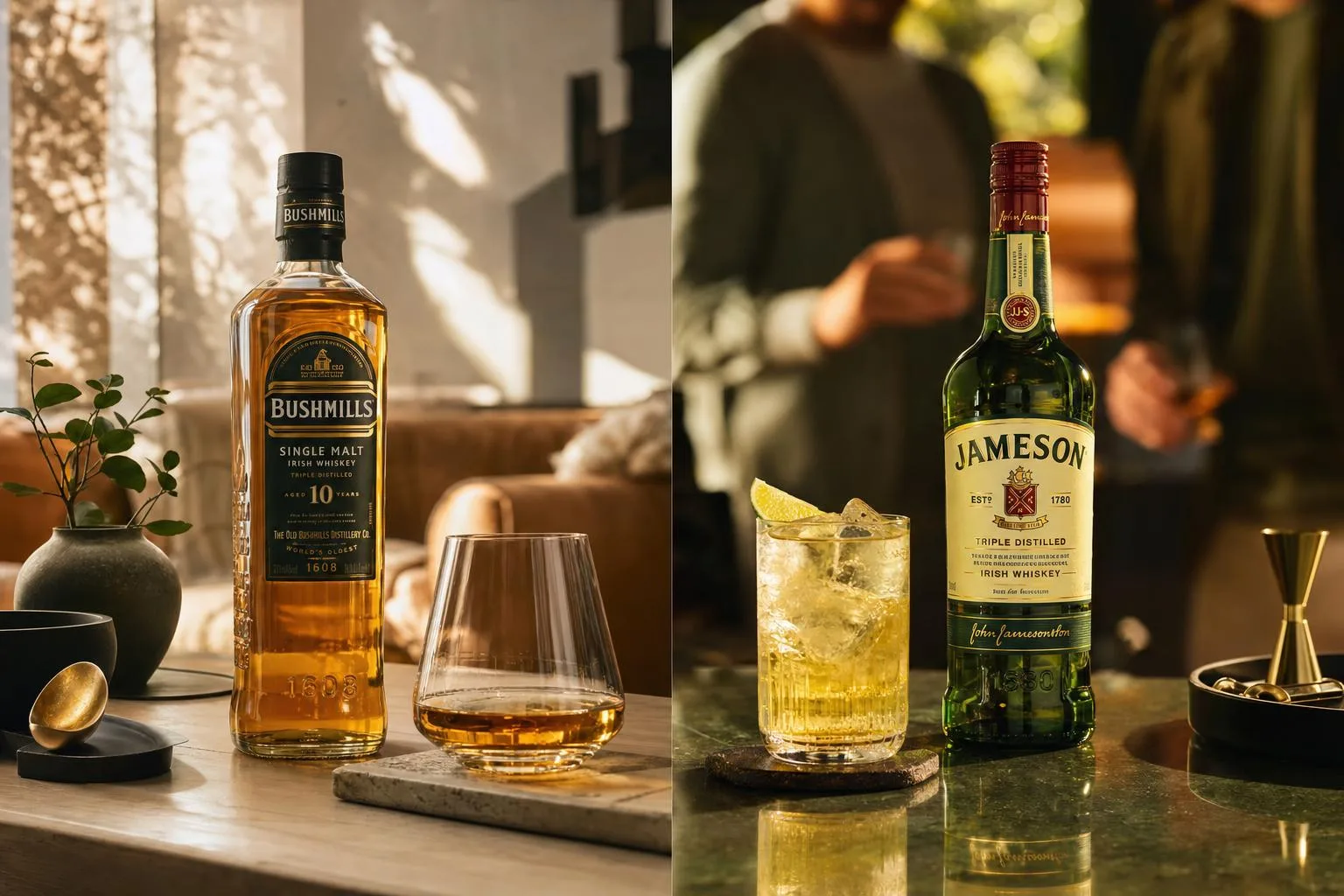
Alcohol Impact and Drinking Tips
Bushmills and Jameson are both typically bottled at 40% ABV in the U.S., so their alcohol impact is effectively the same pour-for-pour.
The main health difference comes from serving size, drinking speed, mixers, and whether you are sipping neat, on ice, or in cocktails.
| Practical measure | Bushmills Original | Jameson Original |
| Typical U.S. ABV | 40% | 40% |
| Standard drink size | 1.5 fl oz | 1.5 fl oz |
| Pure alcohol per 1.5 fl oz | 0.6 fl oz | 0.6 fl oz |
| Approximate calories per 1.5 fl oz | 97 calories | 97 calories |
In U.S. guidance, one standard drink equals 0.6 fluid ounces of pure alcohol. That is exactly a 1.5-ounce shot of 80-proof whiskey, according to the National Institute on Alcohol Abuse and Alcoholism.
- Use a jigger. A home “two-finger” pour can easily reach 2 to 3 ounces, turning one whiskey into 1.3 to 2 standard drinks.
- Drink with food. Protein, fat, and carbohydrates slow gastric emptying, which can reduce how quickly alcohol reaches peak blood concentration.
- Alternate with water. A practical bar rule is one glass of water between whiskey servings, especially when tasting both brands side by side.
- Avoid driving. The U.S. legal limit is 0.08% BAC for most drivers, but impairment can begin below that level. Rideshare or a designated driver is the safer plan.
The CDC defines moderate drinking as up to 1 drink per day for women and up to 2 drinks per day for men. It is not a recommendation to start drinking, and “saving up” drinks for a single night increases risk.
Neither Bushmills nor Jameson contains meaningful carbohydrates, sugar, fat, or protein when served neat. Calories change quickly with mixers: 4 ounces of regular ginger ale adds about 50 calories, while sweetened Irish coffee can add far more.
- For tastings: pour 0.5 ounces of each whiskey, not full shots. That lets you compare Bushmills’ lighter, fruitier profile with Jameson’s rounder pot-still character without over-serving.
- For allergies: distilled whiskey is generally considered gluten-free under U.S. labeling rules, but people with severe sensitivities should check the exact bottle and producer guidance.
- For storage: keep bottles upright, tightly closed, and away from sunlight. Once opened, whiskey is stable, but flavor can dull faster when a bottle is less than one-quarter full.
Do not drink alcohol if pregnant, under the legal drinking age, taking interacting medications, or advised to avoid alcohol for liver disease, pancreatitis, alcohol use disorder, or other medical reasons.
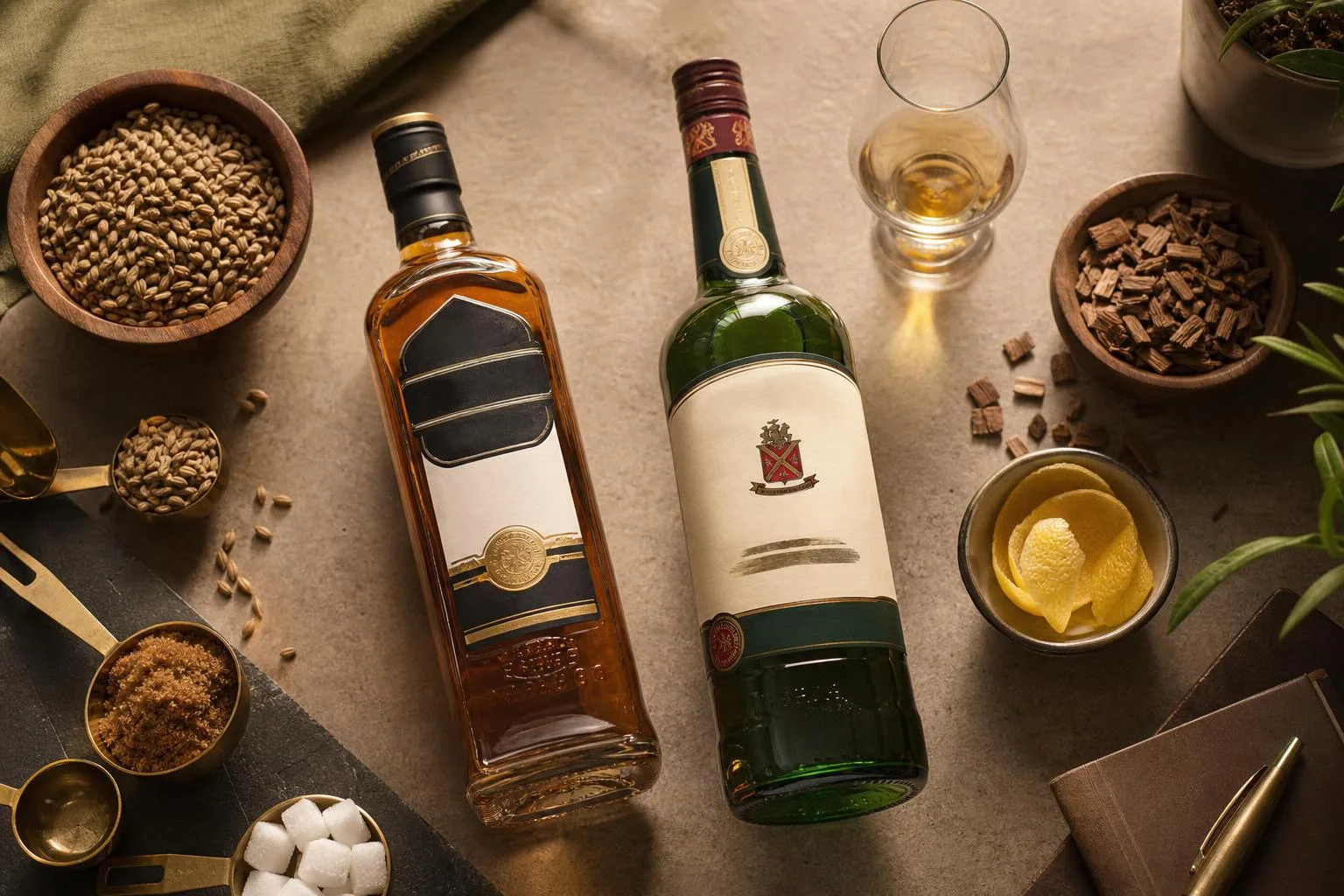
Side-by-Side Tasting Results
We tested Bushmills Original and Jameson Irish Whiskey side by side over three sessions, using fresh 750 ml bottles purchased in the U.S. Both were tasted neat, with measured dilution, and in the same simple highball format.
Our panel used identical Glencairn glasses, 1.5 oz pours, and a 10-minute rest before scoring. We repeated the neat tasting twice on different days to check whether first impressions held.
| Test item | Bushmills Original | Jameson Irish Whiskey |
| ABV tested | 40% | 40% |
| Pour size | 1.5 oz | 1.5 oz |
| Rest before nosing | 10 minutes | 10 minutes |
| Neat tasting rounds | 2 | 2 |
| Dilution test | 5 ml water added | 5 ml water added |
Neat, Bushmills came across lighter and more cereal-driven. We consistently picked up honey, green apple, vanilla wafer, and a faint toasted-grain note. The finish was short-to-medium, averaging about 18 seconds before the main flavor faded.
Jameson showed more weight in the middle of the palate. Our notes repeated pear, vanilla, light spice, and a slightly oily texture. The finish lasted longer in our timed checks, averaging about 24 seconds, with more pepper and wood showing late.
| Measured tasting result | Bushmills Original | Jameson Irish Whiskey |
| Average perceived sweetness | 6.5 / 10 | 6 / 10 |
| Average body | 4.5 / 10 | 6 / 10 |
| Average finish length | 18 seconds | 24 seconds |
| Alcohol heat, neat | Low | Low-to-moderate |
Adding 5 ml of room-temperature water to each 1.5 oz pour changed them differently. Bushmills became softer but also lost definition quickly. Jameson opened up more spice and grain sweetness while still holding its structure.
- Best neat: Jameson, because it had more mid-palate texture and a longer finish in both rounds.
- Best for a lighter pour: Bushmills, especially for drinkers who prefer honeyed, easygoing whiskey with minimal spice.
- Best with water: Jameson, which handled dilution better in our 5 ml test.
- Best in a highball: Bushmills gave the cleaner, brighter drink with club soda and lemon peel.
In our whiskey-and-ginger test, we used 2 oz whiskey, 4 oz chilled ginger ale, and one lime wedge over 5 oz of ice. Jameson stood out more against the mixer, while Bushmills made the smoother but less distinctive drink.
Our conclusion: Bushmills Original is the gentler, cleaner choice; Jameson is the fuller and more versatile bottle. If we were stocking one for neat pours and mixed drinks, we would choose Jameson.
For an easy, low-spice Irish whiskey, we would choose Bushmills.
Common Bushmills vs Jameson Myths
Most Bushmills-versus-Jameson arguments go wrong because people compare brand reputations, not the specific bottles in the glass.
The standard expressions are both approachable Irish whiskeys, but they differ in mash, distillery setup, and house style.
Myth: “All Irish whiskey is triple distilled”
Triple distillation is common, but it is not a legal requirement for Irish whiskey. The Irish Whiskey Technical File requires production in Ireland, maturation in wooden casks for at least three years, and bottling at 40% ABV or higher.
| Whiskey | Common standard bottle | Typical ABV | Core production note |
| Bushmills | Original | 40% | Blend built around triple-distilled malt whiskey from Bushmills |
| Jameson | Original | 40% | Blend of pot still and grain whiskey from Midleton |
Myth: “Bushmills is Scotch because it is from Northern Ireland”
Bushmills is Irish whiskey. The Old Bushmills Distillery is in County Antrim, Northern Ireland, which is part of the United Kingdom, but the whiskey still qualifies under the Irish whiskey category and geographic rules.
Myth: “Jameson is smoother because it is older”
Jameson Original does not carry an age statement. Neither does Bushmills Original. By law, if an Irish whiskey shows an age, it must refer to the youngest whiskey in the bottle, but these flagship blends are non-age-stated.
Myth: “Bushmills is always more malty, Jameson is always sweeter”
This is a useful tasting shortcut, not a rule. Bushmills Original often reads lighter, fruitier, and malt-led. Jameson Original often shows cereal sweetness, vanilla, and a slightly fuller pot-still character.
- Do not judge by one sip neat: both change noticeably with dilution, ice, or ginger ale.
- Do not assume price equals quality: in many U.S. stores, both standard bottles sit in the same everyday range.
- Do not compare Bushmills Black Bush to Jameson Original: Black Bush uses a higher malt component and more sherry-cask influence.
- Do not treat “Protestant whiskey” and “Catholic whiskey” claims as buying advice: those pub myths oversimplify history and tell you nothing about flavor.
Mistake: Comparing the wrong bottle tiers
A fair comparison pairs similar roles: Bushmills Original with Jameson Original, Black Bush with Jameson Black Barrel, or Bushmills 10 Year Single Malt with a similarly positioned Jameson premium release.
| Fairer comparison | Why it works |
| Bushmills Original vs Jameson Original | Entry-level, 40% ABV, widely available blends |
| Black Bush vs Jameson Black Barrel | Richer blends with stronger cask influence |
| Bushmills 10 Year vs premium Jameson expressions | Moves beyond the basic mixing-whiskey category |
Questions People Ask Most
Is Bushmills or Jameson older?
Bushmills traces its heritage to a license granted in 1608 in County Antrim, and the Old Bushmills Distillery is commonly cited as the world’s oldest licensed whiskey distillery.
Jameson was founded later, in 1780, when John Jameson established his Bow Street distillery in Dublin.
What is the main flavor difference between Bushmills and Jameson?
Bushmills Original is typically lighter and fruitier, with notes of honey, vanilla, pear, and a gentle malt character from its single malt component.
Jameson Original is rounder and slightly spicier, with orchard fruit, toasted wood, and a creamy grain-whiskey softness.
Are Bushmills and Jameson both triple distilled?
Yes, both brands are known for triple distillation, a traditional Irish whiskey method that helps create a smoother, lighter spirit.
The key difference is in composition: Jameson Original is a blend of pot still and grain whiskey, while Bushmills Original is a blend that includes triple-distilled malt whiskey and lighter grain whiskey.
Which is better for cocktails, Bushmills or Jameson?
Jameson is often the default choice for Irish whiskey cocktails such as Irish coffee, whiskey ginger, and picklebacks because its creamy texture and spice hold up well with mixers.
Bushmills works especially well in simpler highballs or citrus-forward drinks where its lighter fruit and honeyed malt notes are easier to notice.
Which is better to sip neat, Bushmills or Jameson?
For neat sipping at the entry level, Bushmills may appeal more to drinkers who prefer a lighter, maltier, fruit-driven whiskey.
Jameson may be better for those who like a slightly fuller blended profile with cereal sweetness, soft spice, and a very approachable finish.
Related Reading
- What Are Whiskey Stones?
- How Long Can Whiskey Stay In A Decanter?
- What Does Barrel Proof Mean? What You Need to Know
- Which Country Consumes The Most Whiskey Overall?
- What Is Whiskey & Sprite Called?
- What Are Top-Shelf Whiskey Brands?
- Basil Hayden Dark Rye Review – Information From Experts
- All Alcohol Guides
- Bushmills — Bushmills Original Irish Whiskey (2024)
- Jameson — Jameson Irish Whiskey (2024)
- U.S. Alcohol and Tobacco Tax and Trade Bureau — Distilled Spirits Standards of Identity, 27 CFR § 5.143 Whisky (2024)
- National Institute on Alcohol Abuse and Alcoholism — What Is A Standard Drink? (2024)
- USDA FoodData Central — Alcoholic Beverage, Distilled, Whiskey, 86 Proof (2024)
- PubMed — Alcohol Hangover and Beverage Congeners: Methanol Content and Hangover Severity (2010)
- Food Safety Authority of Ireland — The Labelling of Alcoholic Beverages in Ireland (2023)