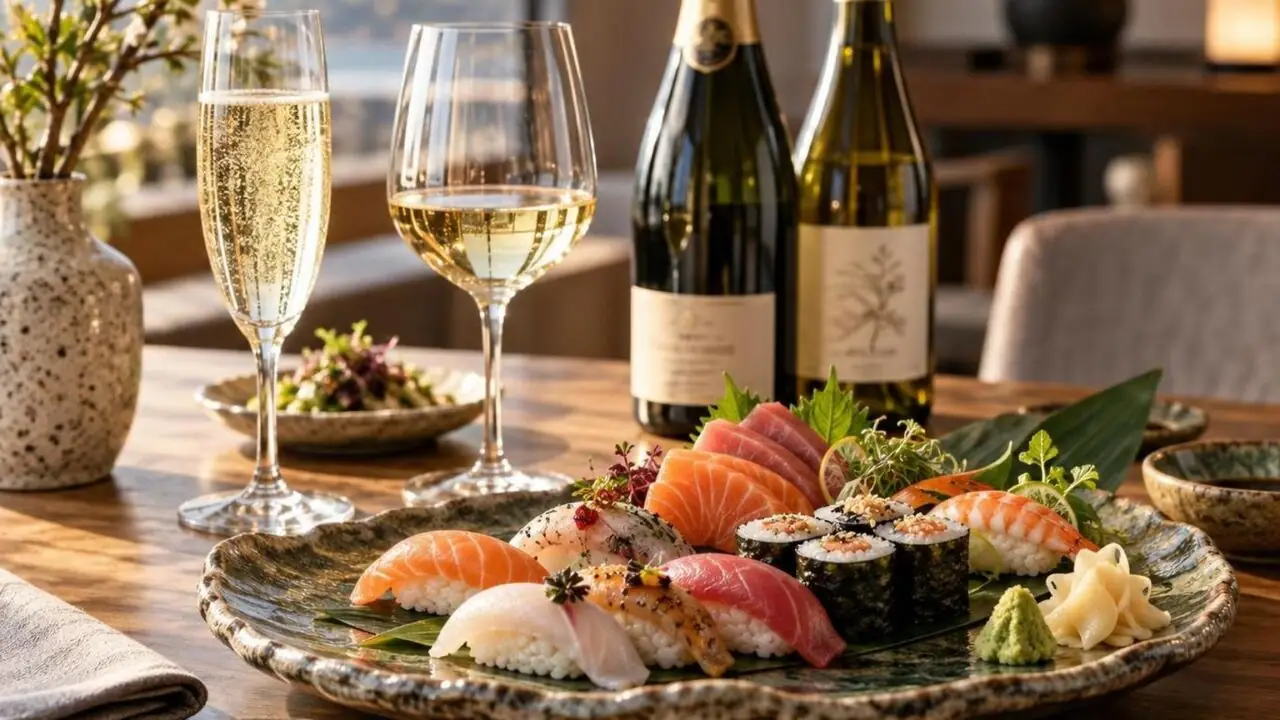
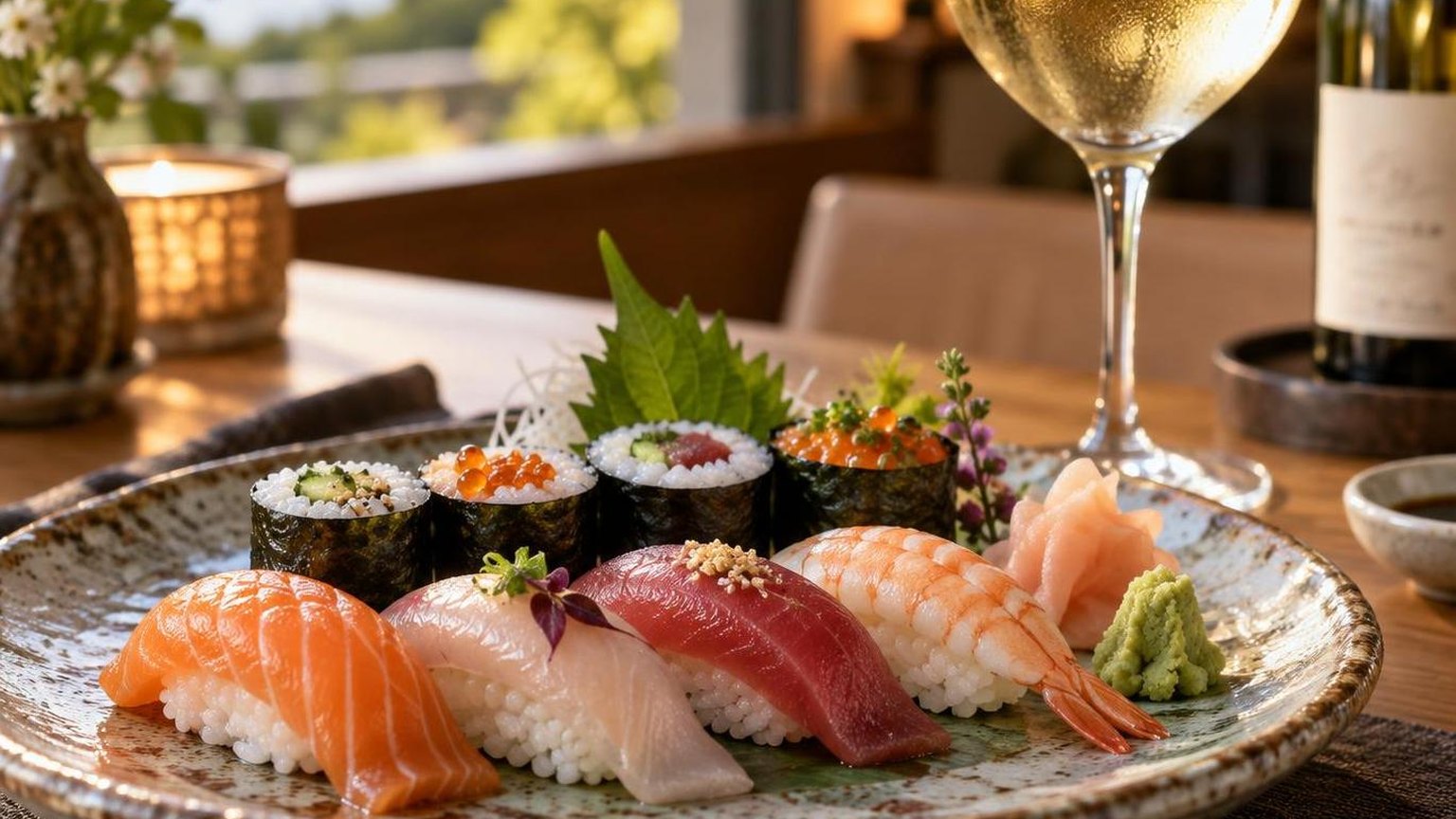
What wine pairs with sushi? Crisp, high-acid white wines and dry sparkling wines are the best matches because they cut soy, lift rice vinegar, and stay clean beside raw fish.
Look for Champagne, Brut Cava, Albariño, Grüner Veltliner, dry Riesling, or Chablis. Match delicate nigiri with lean, mineral wines; richer salmon, tuna, eel, and spicy rolls need more texture, bubbles, or slight sweetness.
Sushi Wine Pairing Principles
Sushi’s delicate flavors — raw fish, vinegared rice, nori, wasabi — demand wines with restraint. High-tannin reds and heavily oaked whites overwhelm these subtle components.
Three core principles govern every successful sushi-wine match.
1. Match Intensity to Intensity
Sushi registers low on the flavor-intensity scale, typically scoring 2–4 out of 10 compared to grilled steak at 8–9. The wine must sit in the same range to avoid overpowering the fish.
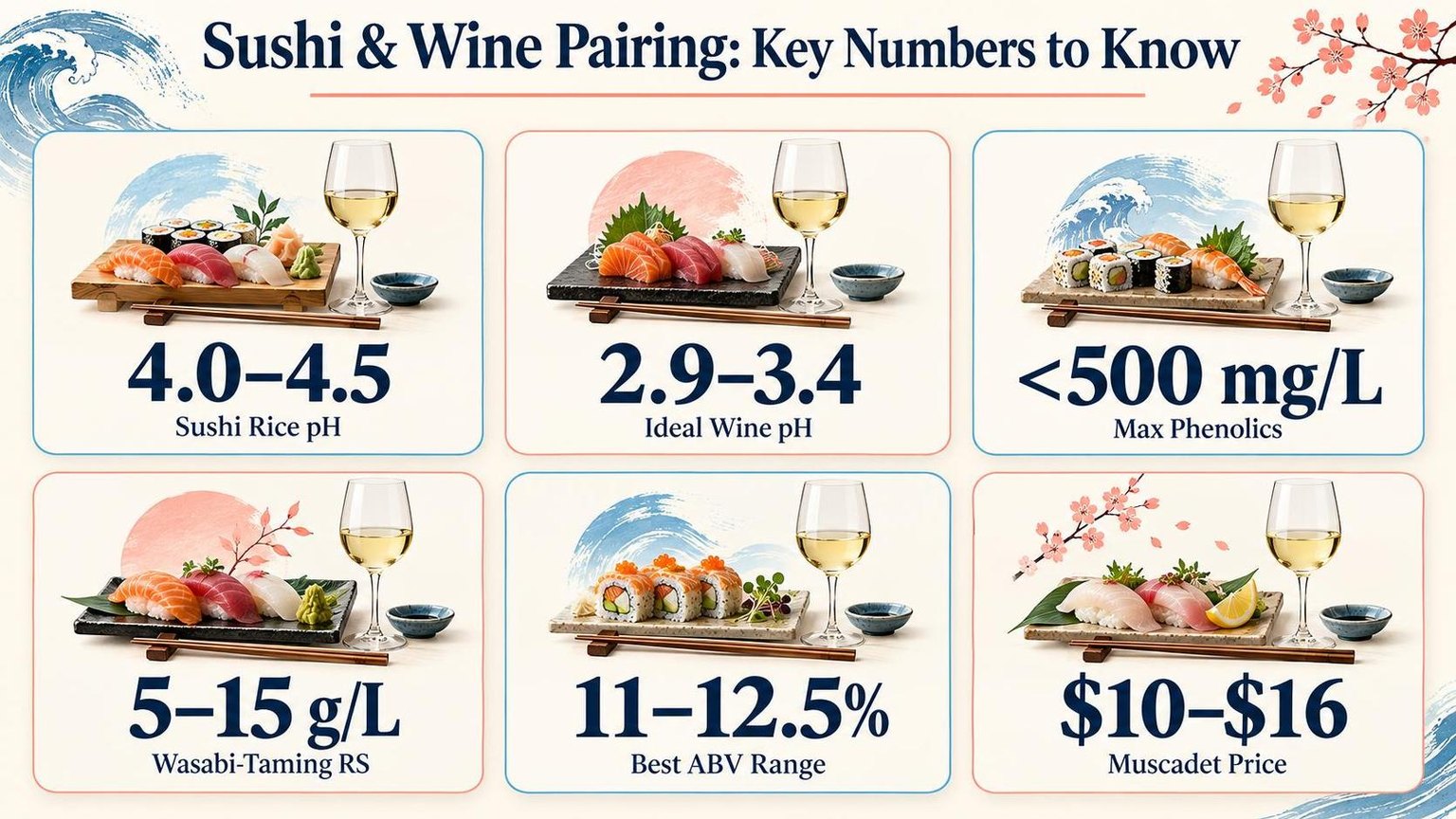
- Light-bodied whites (11–12.5% ABV) align with lean nigiri like hirame and tai
- Medium-bodied whites or rosés (12–13% ABV) complement richer cuts like salmon belly and hamachi
- Light reds served slightly chilled work only with seared or torch-finished preparations
2. Acidity Must Meet or Exceed the Rice
Sushi rice contains roughly 4–6% rice vinegar by weight, giving it a pH around 4.0–4.5. Wines with comparable or higher acidity (pH 2.9–3.4) refresh the palate between bites instead of tasting flat.
| Wine | Typical pH | Sushi Compatibility |
| Muscadet | 2.9–3.2 | Excellent |
| Grüner Veltliner | 3.0–3.3 | Excellent |
| Chablis | 3.1–3.4 | Very Good |
| Napa Chardonnay (oaked) | 3.4–3.6 | Poor |
| Cabernet Sauvignon | 3.5–3.8 | Poor |
3. Avoid Tannin and Excess Oak
Tannins bind with the iron-rich proteins in raw fish, producing a metallic, bitter aftertaste.
Research published in the Journal of Agricultural and Food Chemistry confirmed that wines above 500 mg/L total phenolics amplify fishy off-flavors significantly.
Oak-derived vanillin and toast compounds clash with nori’s iodine and umami notes. Unoaked or stainless-steel-fermented whites preserve the clean finish sushi demands.
Residual Sugar as a Tool
Wines with 5–15 g/L residual sugar — German Kabinett Riesling, for example — temper wasabi’s heat without masking the fish. Bone-dry wines leave wasabi’s capsaicin-like burn fully exposed on the palate.
Best White Wines for Sushi
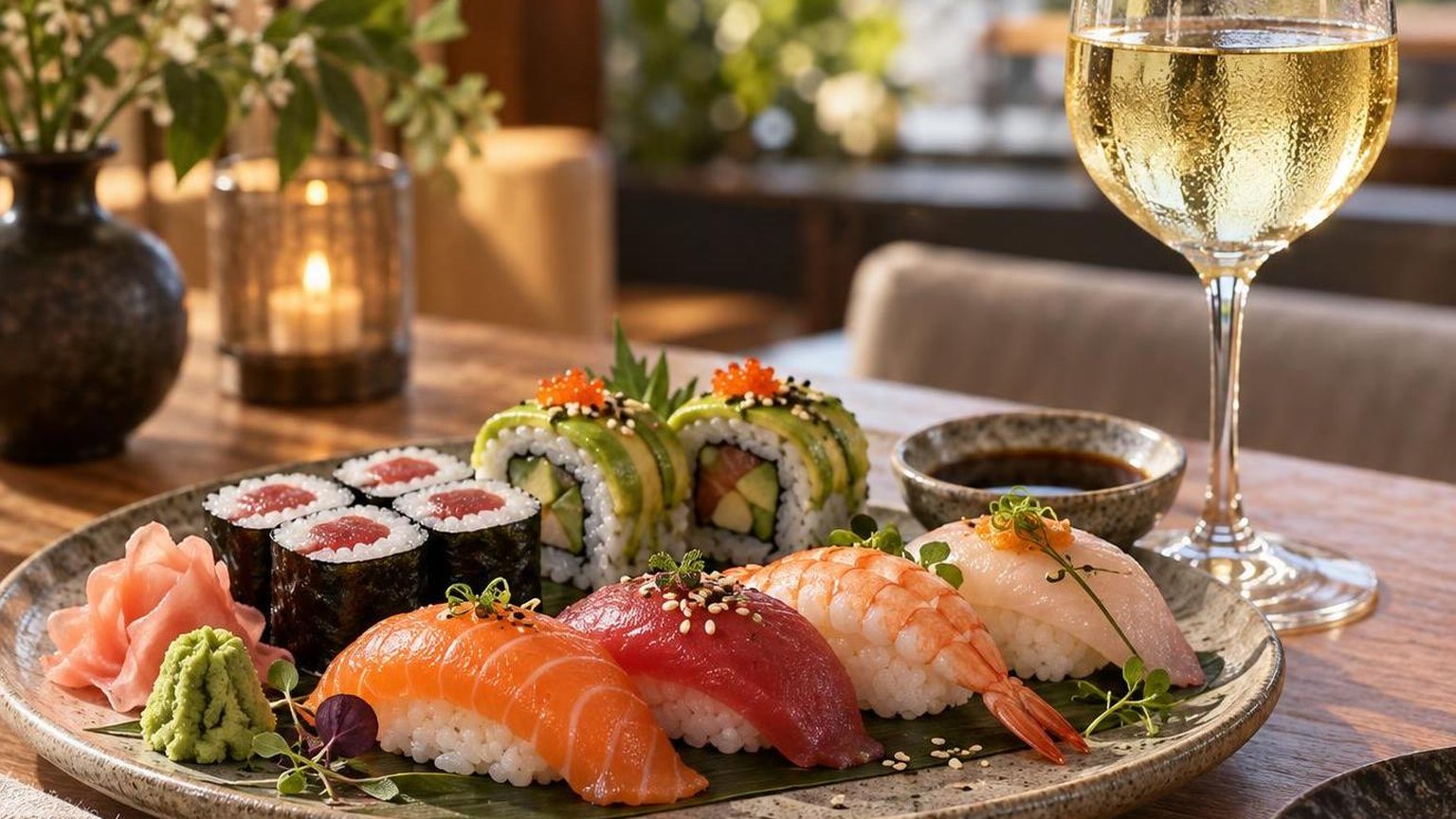
White wines dominate sushi pairing because their bright acidity and mineral backbone mirror the clean, delicate flavors of raw fish.
Three regions consistently produce the most sushi-compatible whites: Chablis, the Loire Valley, and Austria’s Wachau.
Top White Wine Styles Ranked by Pairing Versatility
| Wine | Region | Typical ABV | Residual Sugar (g/L) | Best Sushi Match |
| Chablis (Petit Chablis–Premier Cru) | Burgundy, France | 12–12.5% | 0–2 | Hirame, sea bream, scallop nigiri |
| Muscadet Sèvre et Maine Sur Lie | Loire Valley, France | 11.5–12% | 0–3 | Ebi, shrimp tempura roll |
| Grüner Veltliner Federspiel | Wachau, Austria | 11.5–13% | 1–4 | Salmon, yellowtail, vegetable rolls |
| Albariño | Rías Baixas, Spain | 12–13% | 1–5 | Tuna tataki, spicy rolls |
| Dry Riesling (Trocken) | Mosel/Pfalz, Germany | 11–12.5% | ≤9 | Unagi, eel rolls, miso-glazed fish |
Why Chablis Leads
Unoaked Chablis fermented in stainless steel preserves the Chardonnay grape’s natural salinity. Its pH of 3.1–3.3 creates acidity that cuts through the fatty richness of fish like hamachi without overwhelming subtle whitefish.
Grüner Veltliner’s White Pepper Advantage
Grüner Veltliner’s signature white pepper and snap-pea notes complement wasabi’s heat rather than clashing with it.
Federspiel-level bottlings from producers like Domäne Wachau typically hold 11.5–12.5% ABV — light enough to avoid overpowering nigiri.
Muscadet: The Budget Pick
Muscadet Sèvre et Maine Sur Lie spends a minimum of five months on lees by appellation law. This contact builds a creamy mid-palate texture while keeping retail prices between $10–$16 per bottle — the lowest on this list.
Serving Guidelines
- Serve all whites at 45–50°F (7–10°C) to maintain crisp acidity alongside chilled sashimi.
- Avoid oaked Chardonnay — barrel tannins and butter notes clash with nori and soy sauce.
- Pour 3–4 oz per pairing course to prevent palate fatigue across multiple sushi types.
Prioritize wines with total acidity above 6 g/L. High-acid whites reset the palate between bites, functioning similarly to pickled ginger (gari) on the sushi plate.
Sparkling Wines with Nigiri
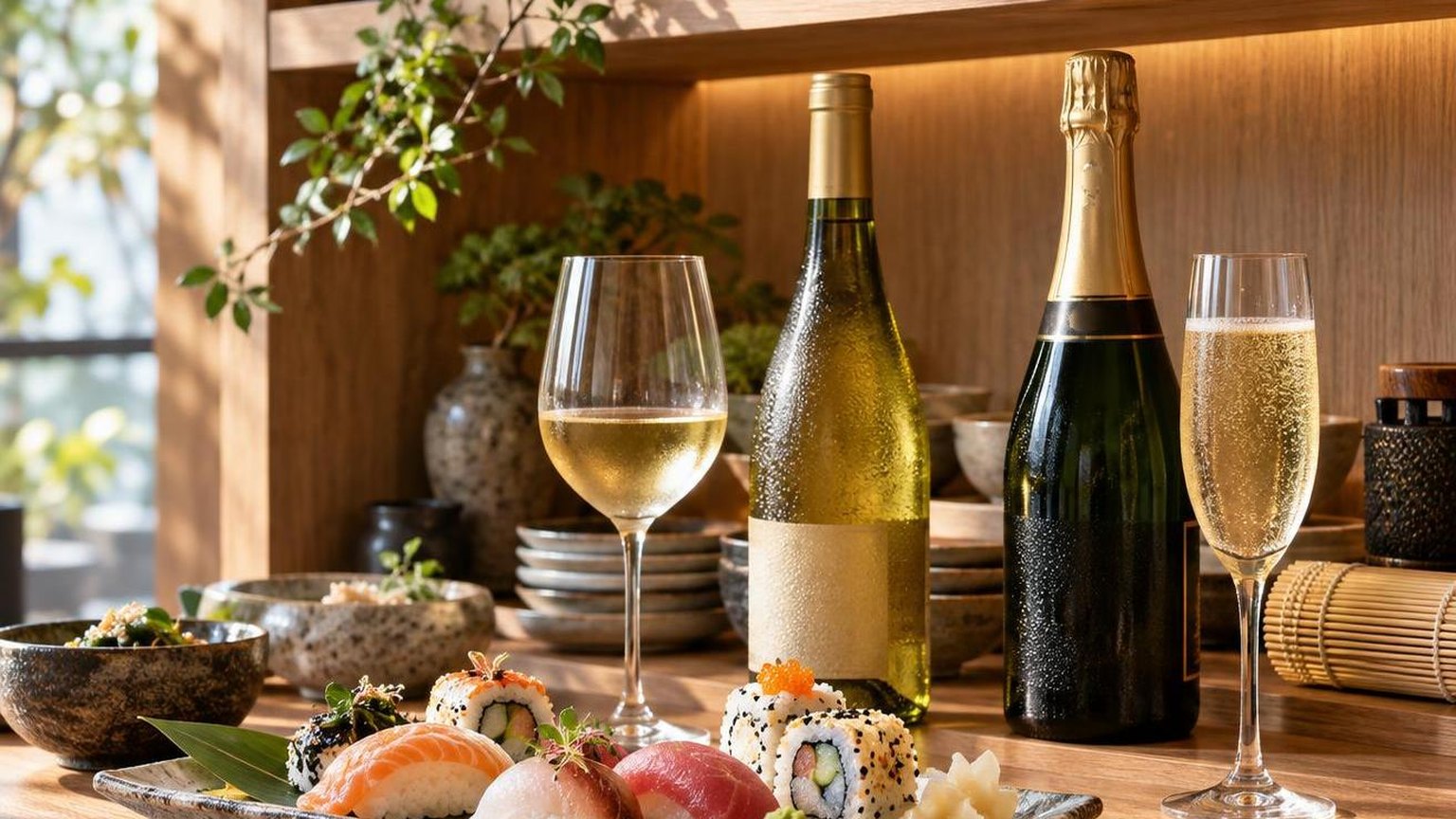
Sparkling wine’s natural acidity and effervescence cut through the fatty richness of nigiri fish while lifting delicate rice flavors. The fine bubbles act as a palate cleanser between bites, mimicking the role of pickled ginger.
Brut styles with under 12 g/L residual sugar work best.
Why Bubbles Work with Raw Fish
Carbon dioxide in sparkling wine stimulates trigeminal nerve receptors on the tongue, enhancing perceived freshness. This counterbalances the umami-rich soy sauce and the oleic acid present in fatty cuts like toro and salmon belly.
High acidity — typically 5.5–7.5 g/L total acidity in Champagne — mirrors the bright squeeze of lemon, a classic companion to raw seafood across cuisines.
Best Sparkling Styles by Nigiri Type
| Nigiri Type | Recommended Sparkling Style | Why It Works |
| Salmon (sake) | Blanc de Blancs Champagne | 100% Chardonnay’s citrus profile complements salmon’s moderate fat (6–8% lipid content) |
| Tuna belly (toro) | Vintage Brut Champagne | Extended lees aging (36+ months) adds toasty depth to match toro’s buttery richness |
| Shrimp (ebi) | Crémant de Loire | Chenin Blanc base offers honeyed minerality at 8–12°C serving temperature |
| Yellowtail (hamachi) | Franciacorta Satèn | Lower pressure (4.5 atm vs. standard 6 atm) delivers softer mousse suited to hamachi’s clean flavor |
| Sea bream (tai) | Brut Nature Cava | Zero-dosage dryness (0–3 g/L RS) preserves tai’s subtle sweetness |
Serving Considerations
- Serve sparkling wines between 6–10°C; warmer temperatures amplify alcohol perception and overwhelm delicate fish.
- Choose non-vintage Brut over rosé Champagne for white-fleshed nigiri — red-fruit notes can clash with lighter proteins.
- Pour 90–120 mL per serving to maintain chill; small pours stay cold longer during a multi-course omakase.
- Avoid prestige cuvées with heavy oak influence; excessive vanillin competes with wasabi’s allyl isothiocyanate heat.
Grower Champagnes from the Côte des Blancs — producers like Pierre Gimonnet or Larmandier-Bernier — offer mineral-driven profiles at $40–$65 retail that outperform many mass-market alternatives with nigiri.
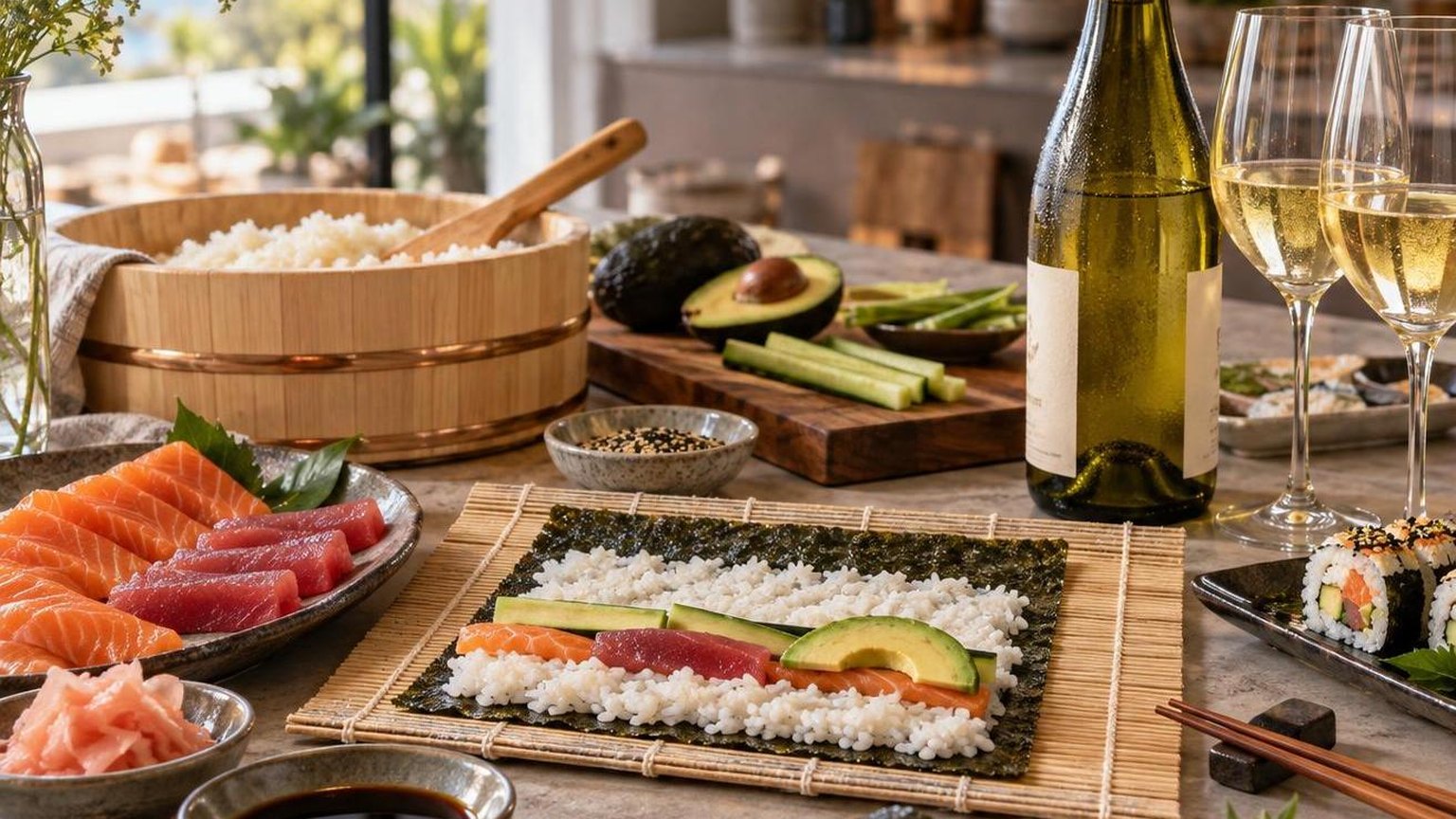
Rosé Pairings for Spicy Rolls
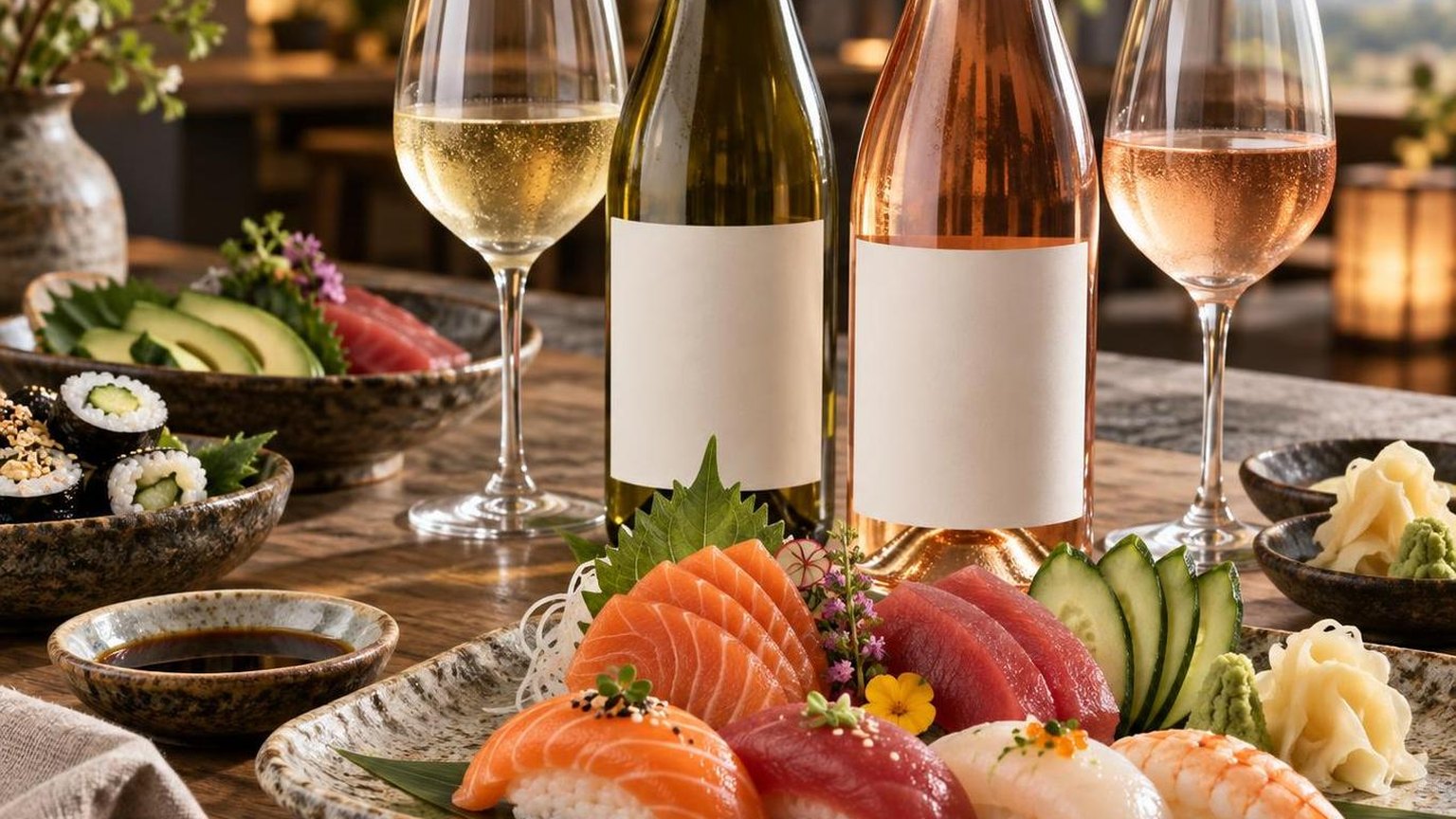
Spicy tuna, spicy salmon, and chili-mayo rolls pair best with chilled rosé that combines bright acidity, moderate alcohol, and some fruit sweetness. Acidity refreshes after fatty fish and mayonnaise, while residual sugar softens chili heat.
Choose the Rosé by Heat Level
| Roll style | Recommended rosé | Alcohol | Residual sugar | Serving temperature |
| Lightly spicy salmon roll | Dry Provence rosé | 12%–13.5% ABV | Under 4 g/L | 46–50°F |
| Spicy tuna with chili mayonnaise | Off-dry rosé | 10%–12.5% ABV | 5–15 g/L | 44–48°F |
| Hot sauce or jalapeño roll | White Zinfandel or semi-sweet rosé | 8%–11% ABV | 15–35 g/L | 42–46°F |
| Rich tempura-spicy roll | Dry sparkling rosé | 11.5%–12.5% ABV | 6–12 g/L | 40–45°F |
Provence rosé, commonly based on Grenache, Cinsault, and Syrah, suits restrained spice. Its strawberry, citrus, and herbal flavors support salmon and tuna without covering their texture.
Choose a cuvée described as fresh or fruit-forward rather than strongly oaked.
For chili mayonnaise, an off-dry rosé is more dependable. Sugar reduces the perception of capsaicin, whereas high alcohol can make the same heat feel sharper.
Wines near or below moderate table-wine strength therefore perform better than powerful, warm-finishing rosés.
When Sparkling Rosé Works
Sparkling rosé is particularly effective with tempura shrimp, crunchy onions, avocado, and mayonnaise. Carbonation and acidity clear frying oil and creamy sauce from the palate.
Brut styles retain enough dosage to cushion moderate spice without tasting overtly sweet.
Look for Crémant rosé, Cava rosado, or non-vintage rosé Champagne. Strawberry-driven examples complement tuna and salmon; Pinot Noir-based bottlings add enough body for shrimp tempura.
Avoid heavily tannic sparkling reds, which can turn bitter beside wasabi and nori.
Practical Serving Choices
- Chill thoroughly: Cool rosé suppresses alcohol warmth and provides relief between bites.
- Use sweetness strategically: Increase residual sugar as chili intensity rises, but avoid dessert-level sweetness with delicate sashimi.
- Limit oak: Vanilla, toast, and woody bitterness compete with rice vinegar, ginger, and raw fish.
- Pour modestly: Smaller servings remain cold while the roll is eaten.
Tavel and other full-bodied, higher-alcohol rosés fit seared tuna or barbecue-eel rolls better than aggressively spicy rolls. Their structure handles savory sauces, but alcohol can amplify sustained chili heat.
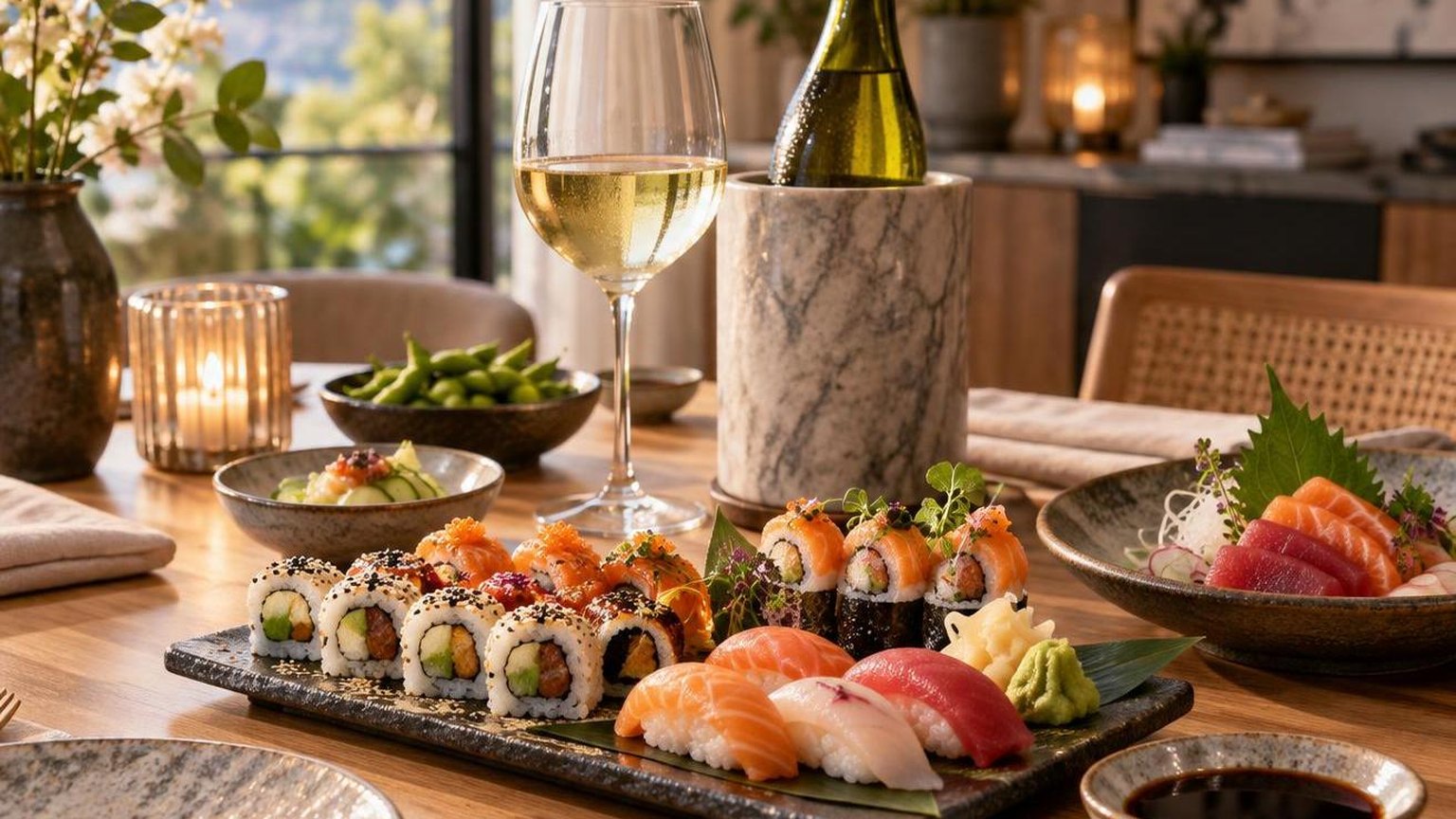
Red Wines That Work with Sushi
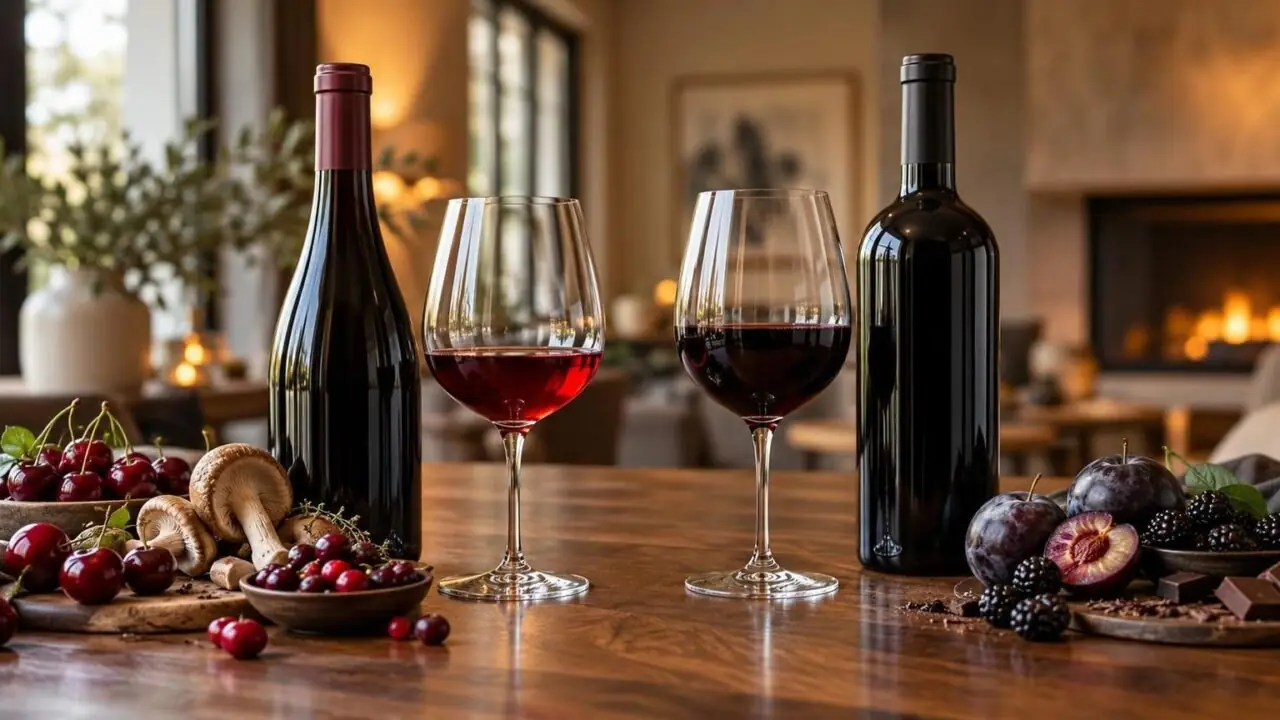
Red wine and sushi sounds counterintuitive, but specific reds with low tannin, high acidity, and light body complement raw fish without overwhelming it.
The key is avoiding heavy, oak-aged wines that amplify fishy flavors through iron-rich tannin interactions.
Why Most Reds Fail with Sushi
Research published in the Journal of Agricultural and Food Chemistry identified that wines high in ferrous iron ions produce metallic, fishy aftertaste when paired with seafood.
Heavily tannic reds like Cabernet Sauvignon contain more of these compounds.
Best Red Varieties for Sushi
| Wine | Serving Temp | Tannin Level | Best Sushi Match |
| Beaujolais (Gamay) | 13–14°C | Low | Salmon nigiri, tuna roll |
| Pinot Noir (Burgundy) | 14–16°C | Low–Medium | Fatty tuna (toro), eel |
| Zweigelt | 12–14°C | Low | Shrimp tempura roll |
| Lambrusco (dry) | 8–10°C | Low | Spicy tuna, salmon skin |
| Frappato | 13–15°C | Very Low | Yellowtail, scallop nigiri |
Beaujolais: The Top Pick
Cru Beaujolais from appellations like Fleurie or Morgon delivers bright cherry fruit with almost no tannin. Gamay grapes produce wines around 12–13% ABV — light enough to mirror the delicacy of raw fish.
Serving it slightly chilled at 13°C suppresses any residual tannin further. This technique is standard practice at Tokyo wine bars pairing reds with omakase courses.
Pinot Noir with Fatty Cuts
Oregon or Burgundy Pinot Noir (12.5–13.5% ABV) pairs effectively with otoro and unagi. The wine’s natural acidity — typically 5.5–6.0 g/L total acidity — cuts through the fat content of these richer pieces.
Reds to Avoid
- Cabernet Sauvignon — high tannin creates metallic clash with raw fish
- Malbec — dense fruit and oak overwhelm subtle sushi flavors
- Shiraz/Syrah (full-bodied) — alcohol above 14.5% ABV overpowers delicate nigiri
- Nebbiolo — aggressive tannin structure conflicts with soy sauce and wasabi
Stick to reds under 13.5% ABV with minimal oak aging. When in doubt, chill the bottle 15–20 minutes before serving — cold tames tannin and keeps the pairing clean.
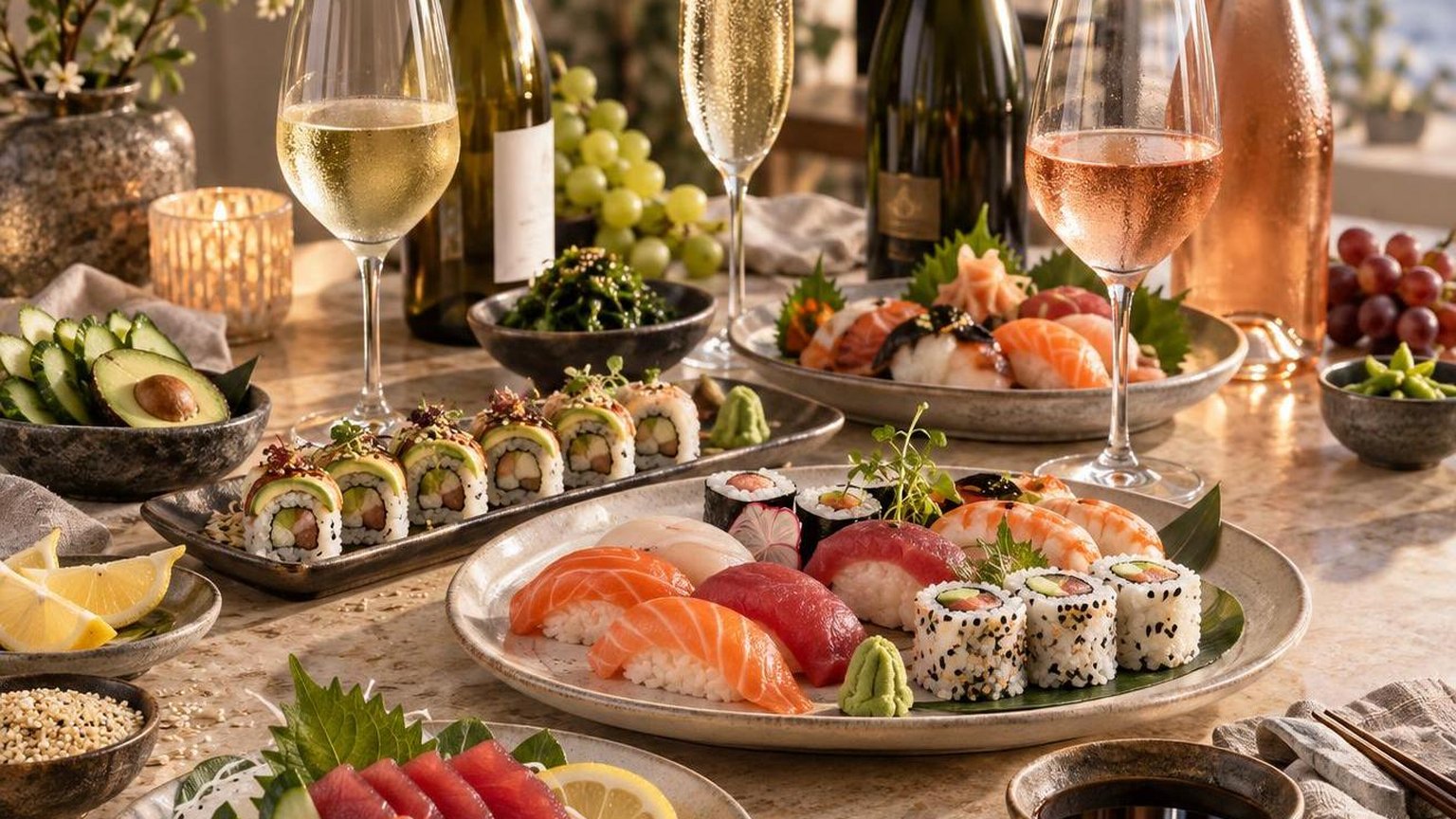
Wine Matches by Sushi Style
Different sushi styles demand different wine profiles. Fat content, sauce intensity, and protein type each shift the ideal pairing — a rich toro nigiri overwhelms wines that sing alongside lean hirame.
| Sushi Style | Recommended Wine | Why It Works |
| Nigiri (lean fish — tai, hirame) | Muscadet Sèvre et Maine sur lie | Saline minerality at 11.5–12% ABV mirrors the clean ocean flavor without overpowering delicate flesh |
| Nigiri (fatty fish — toro, salmon belly) | Grüner Veltliner Federspiel | White pepper spice and 12–13% ABV cut through fat; natural acidity refreshes the palate |
| Maki with avocado/cream cheese | Dry Alsatian Pinot Gris | Slight viscosity at 13–13.5% ABV matches creamy textures without clashing |
| Sashimi (tuna, yellowtail) | Chablis Premier Cru | Unoaked Chardonnay’s chalky acidity and 12.5% ABV complement raw fish cleanly |
| Spicy rolls (sriracha mayo, chili oil) | Off-dry Riesling Kabinett | 8–10 g/L residual sugar at 8–9% ABV tames capsaicin heat |
| Unagi (eel with tare sauce) | Pinot Noir (Bourgogne or Willamette Valley) | Light tannins and red-fruit acidity at 12.5–13.5% ABV balance sweet soy glaze |
| Tempura rolls | Brut Champagne or Crémant | Effervescence scrubs fried batter; 12% ABV and high acidity keep the palate fresh |
Key Principles Across Styles
- Keep ABV under 14%. Higher alcohol amplifies wasabi burn and distorts soy sauce’s umami.
- Favor high-acid whites. Wines with 6–8 g/L total acidity act like a squeeze of lemon on raw fish.
- Avoid heavy oak. Vanilla and toast flavors clash with nori’s iodine character — unoaked or stainless-steel-fermented wines perform best.
- Match weight to weight. Lean sashimi pairs with light-bodied wines (under 12.5% ABV); rich unagi can handle medium-bodied reds.
Sommeliers at sushi-focused restaurants in New York and Los Angeles increasingly pour Txakolina from Spain’s Basque Country. Its sharp 10.5–11.5% ABV, spritz, and coastal salinity echo the oceanic quality of fresh nigiri.
Rosé from Provence — pale, dry, with 12–13% ABV — also bridges multiple sushi styles in a single omakase meal, handling both lean white fish and lightly sauced rolls without dominating.
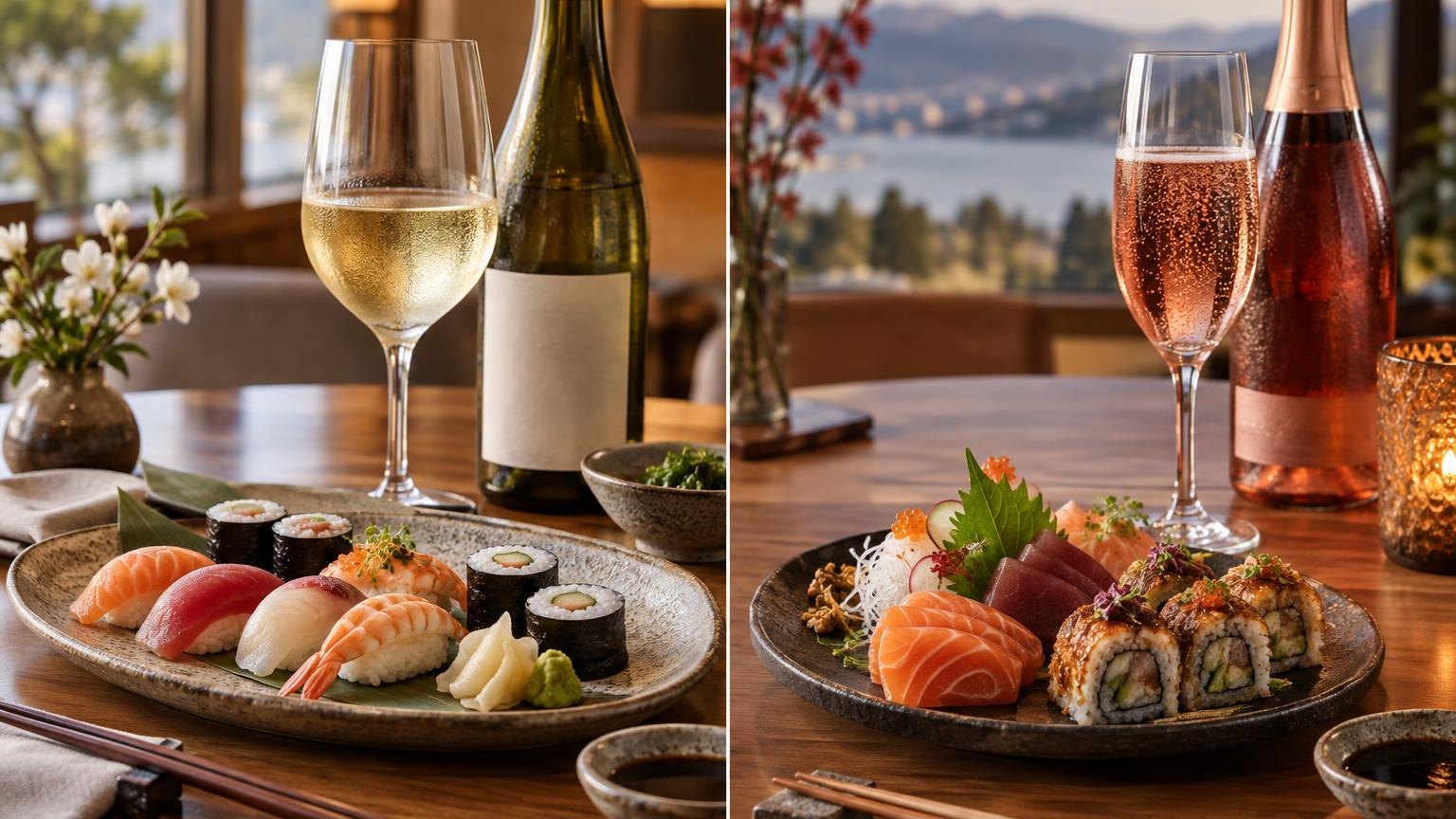
Sake Versus Wine with Sushi
Sake and wine both complement sushi, but they work through fundamentally different flavor mechanisms. Understanding their structural differences helps you choose the right pairing for each piece on your plate.
Structural Comparison
| Attribute | Sake (Junmai Daiginjo) | White Wine (Muscadet) |
| Alcohol by volume | 15–16% | 11.5–12.5% |
| Acidity (pH) | 4.2–4.6 | 3.0–3.4 |
| Residual sugar | 2–5 g/L | 0–3 g/L |
| Amino acid content (umami) | 1.0–1.8 g/L | 0.1–0.3 g/L |
| Serving temperature | 8–12 °C (chilled) | 8–10 °C |
Sake’s higher amino acid content—up to 6× that of white wine—creates an umami bridge with raw fish. This synergy amplifies the sweetness of fatty tuna and salmon belly.
When Sake Wins
- Nigiri with minimal sauce: Sake’s neutral acidity avoids overpowering delicate whitefish like hirame (flounder) or tai (sea bream).
- Uni (sea urchin): The shared umami compounds in sake harmonize rather than clash with uni’s briny custard texture.
- Omakase progression: A single Junmai Ginjo at 10 °C bridges 12–15 courses without competing with the chef’s seasoning choices.
When Wine Wins
- Rolls with citrus or spice: A Grüner Veltliner (12–13% ABV) with its white pepper notes matches spicy tuna rolls better than sake’s softer profile.
- Sashimi with ponzu: The higher acidity of a Chablis (pH 3.1–3.3) mirrors ponzu’s citrus tang, creating a cohesive pairing.
- Cream cheese or avocado rolls: Brut Champagne at 12 atmospheres of pressure delivers effervescence that cuts through fat, a textural effect sake cannot replicate.
Traditional sushi bars in Tokyo’s Ginza district typically pour sake exclusively. Western omakase restaurants increasingly offer hybrid beverage programs pairing sake for early courses and wine for richer, composed plates.
Neither option is categorically superior. Match sake to purity-focused preparations and wine to sushi with added textures, sauces, or Western-influenced ingredients.
Common Questions
What is the best all-around wine to pair with sushi?
Dry Riesling from Germany’s Mosel or Alsace stands out as the single most versatile sushi wine.
Its high acidity (typically 7–9 g/L total acidity) mirrors the rice vinegar seasoning, while residual sugar around 6–15 g/L tempers wasabi heat without overwhelming delicate fish.
Look for Kabinett-level bottles at 7.5–9% ABV to keep alcohol from clashing with raw seafood.
Does white wine or red wine pair better with sushi?
White wine pairs better in nearly every case because red wines above 10 mg/L of iron can produce a metallic.
fishy off-taste when combined with raw seafood—a reaction documented in a 2009 study published in the Journal of Agricultural and Food Chemistry by Takushi Tamura and colleagues.
If you insist on red, choose a very low-tannin, chilled option like Beaujolais Gamay served at 13 °C, which keeps iron perception minimal.
What wine works with spicy tuna rolls?
Off-dry Gewürztraminer from Alsace, with its lychee and ginger aromatics and 20–30 g/L residual sugar, absorbs sriracha and chili-mayo heat without competing with the tuna.
The wine’s naturally low acidity (around 5–6 g/L) prevents it from amplifying the burn. Domaines Zind-Humbrecht and Trimbach produce widely available examples in the $18–$30 range.
What wine pairs with salmon sashimi or salmon nigiri?
Rosé from Provence—particularly those made predominantly from Grenache and Cinsault—matches salmon’s higher fat content (roughly 11 g of fat per 100 g serving) with enough acidity to cut through the richness.
A pale, dry style like Domaines Ott or Château d’Esclans at 12.5–13% ABV complements the buttery texture without overpowering the fish’s subtle sweetness.
Can Champagne or sparkling wine pair with sushi?
Brut Champagne is one of the top three sushi pairings recommended by sommeliers worldwide.
The persistent fine bubbles—typically 49 million per glass according to research by Gérard Liger-Belair at the University of Reims—physically cleanse the palate between bites, while the yeasty.
Brioche character from 15+ months of lees aging adds umami depth that echoes soy sauce.
Non-vintage Brut from houses like Pol Roger or Billecart-Salmon performs exceptionally well.
What wine should you drink with uni (sea urchin) sushi?
Muscadet Sèvre et Maine Sur Lie, aged on its lees for at least 6 months, brings a saline, mineral quality that mirrors uni’s briny, custard-like richness.
The wine’s lean profile—typically 12% ABV with negligible residual sugar—avoids overwhelming uni’s delicate iodine flavor. Domaine de la Pépière and Luneau-Papin are benchmark producers, usually priced under $20.
Does sake-seasoned sushi rice affect wine pairing?
Yes—sushi rice is seasoned with a mixture of rice vinegar, sugar, and salt (a standard ratio is roughly 90 mL vinegar, 60 g sugar, and 20 g salt per 6 cups of rice), which raises the dish’s overall acidity and sweetness.
Wines with acidity below 6 g/L will taste flat and flabby against that vinegar backbone, so prioritize bottles with crisp, bright acid—Grüner Veltliner from Austria’s Wachau (typically 6.5–8 g/L acidity) is an excellent benchmark choice.
- Where Is Expiration Date on Wine Bottle?
- How Many Wine Coolers To Get Drunk?
- How Many Servings Of Wine In A Bottle?
- What Does Zinfandel Taste Like? Find Out Now
- How Many Grapes Are in a Bottle of Wine?
- All Alcohol Guides
- USDA FoodData Central – Nutrient Profile of Raw Fish (2024)
- FDA Seafood Safety & Fresh and Frozen Seafood: Selecting and Serving It Safely (2024)
- National Institutes of Health – Omega-3 Fatty Acids Fact Sheet for Health Professionals (2023)
- University of California Davis – Department of Viticulture and Enology Research on Wine Sensory Science (2023)
- PubMed – "Umami Taste Perception and Its Role in Food Pairing" (2015)
- The Guildsomm – Wine and Sushi Pairing Fundamentals (2023)
- Wine Folly – The Complete Guide to Pairing Wine with Sushi (2022)
- Journal of Agricultural and Food Chemistry – Interaction Between Tannins and Fish Oils Producing Metallic Off-Flavors (2009)