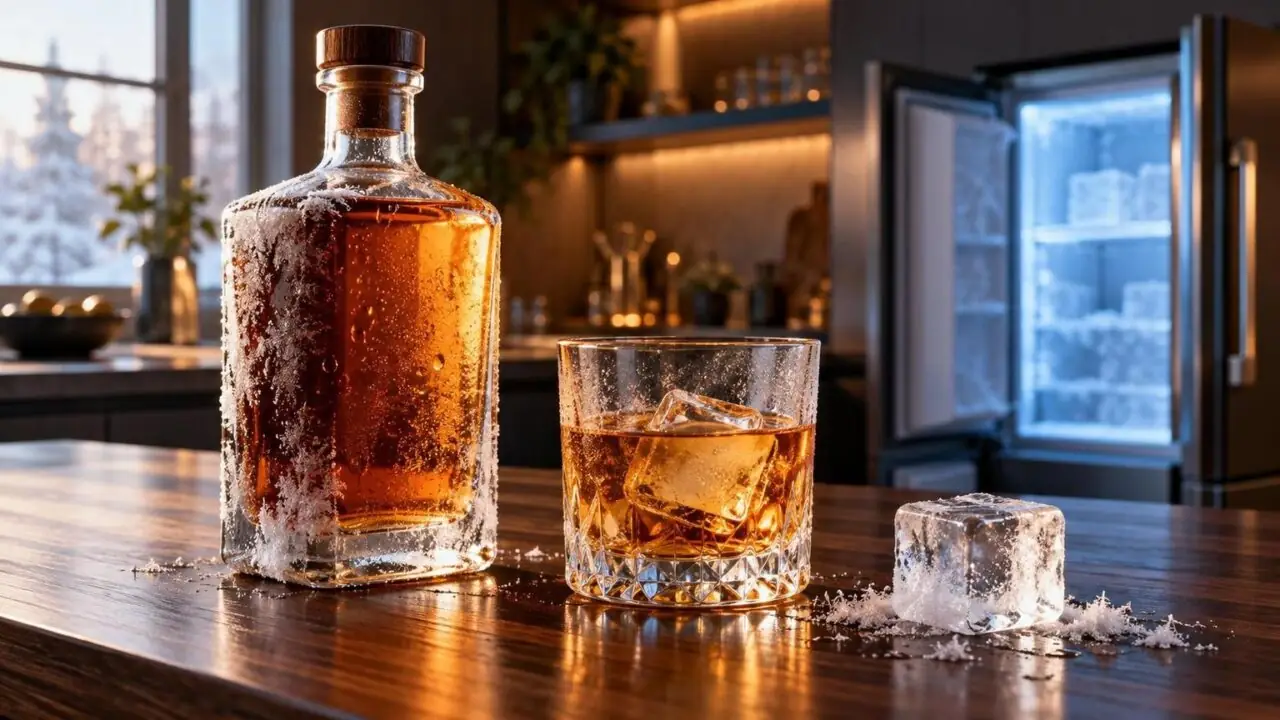
The answer to “What Temp Does Whiskey Freeze?” is approximately −17°F (−27°C) for 80-proof whiskey containing 40% alcohol by volume.
That is colder than a typical home freezer’s 0°F (−18°C) setting, so a standard bottle usually stays liquid rather than freezing solid.
Proof matters: lower-alcohol whiskey freezes more readily, while stronger bottles require colder conditions. Freezing also happens gradually, with ice forming before the entire mixture solidifies.
This guide explains how alcohol content affects freezing, what freezer storage does to flavor and texture, and when slush signals dilution.
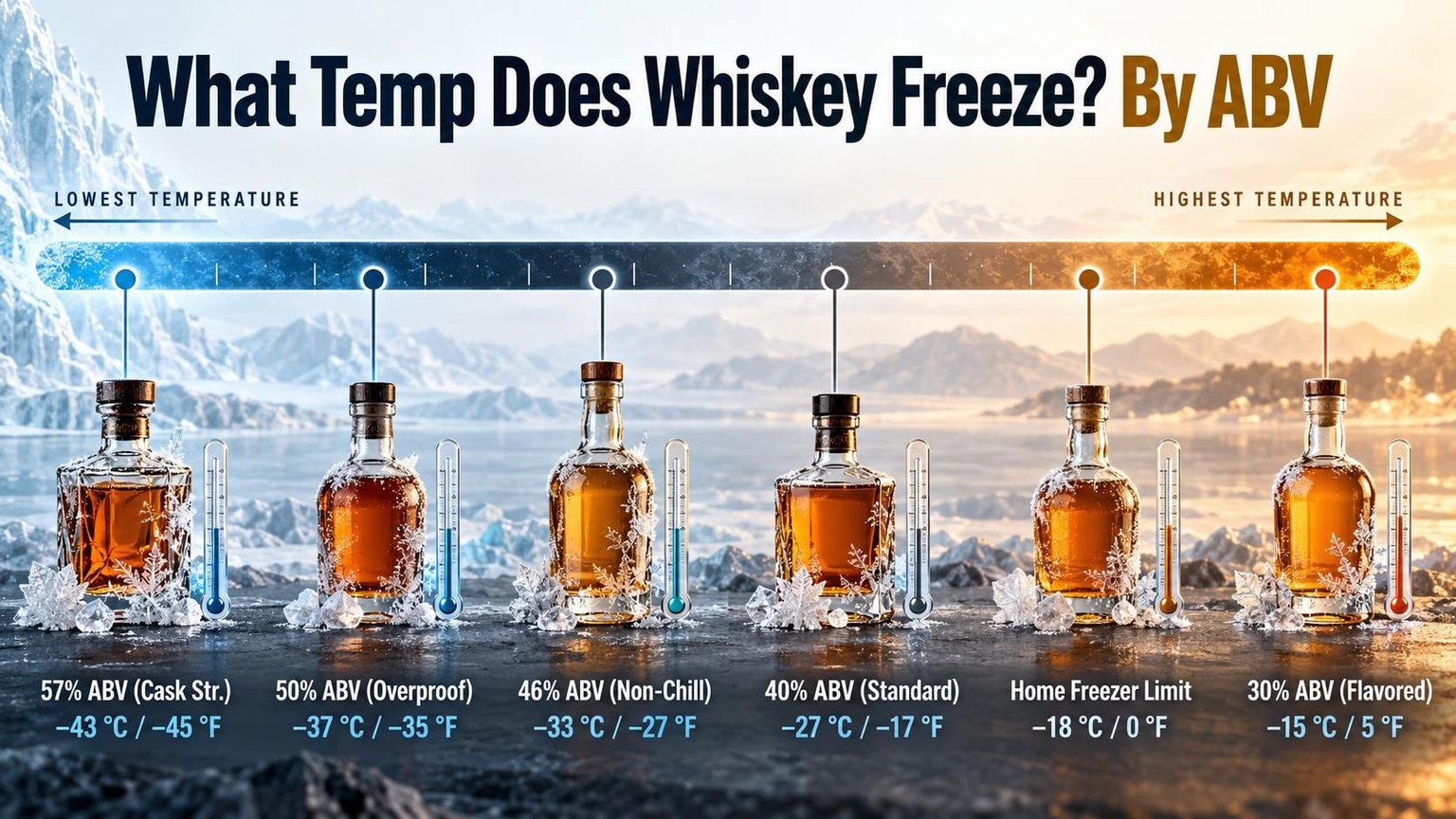
Whiskey Freezing Temperatures by Alcohol Content
Alcohol content directly determines a whiskey’s freezing point. Pure ethanol freezes at −114.1 °C (−173.4 °F), while water freezes at 0 °C (32 °F).
Every whiskey falls somewhere between these extremes, with higher-proof expressions requiring far colder temperatures to solidify.
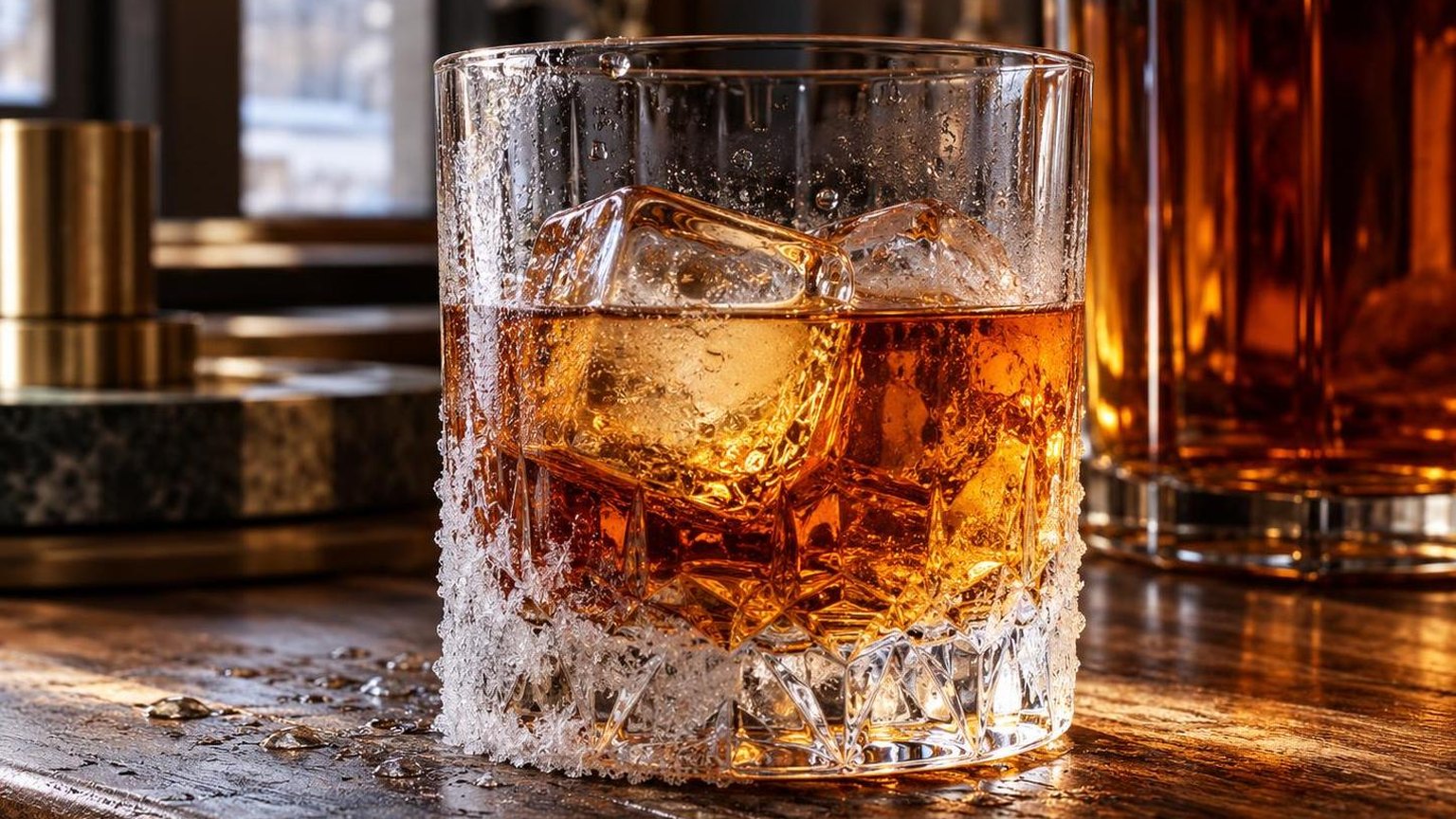
The relationship between ABV and freezing point is non-linear. A small increase in alcohol percentage produces a disproportionately large drop in freezing temperature, especially above 40% ABV.
Freezing Points by ABV
| ABV (%) | Proof (US) | Approximate Freezing Point | Example Whiskeys |
| 30% | 60 | −15 °C (5 °F) | Some flavored whiskeys, liqueurs |
| 35% | 70 | −20 °C (−4 °F) | Fireball Cinnamon Whisky |
| 40% | 80 | −27 °C (−17 °F) | Jameson, Jack Daniel’s, Glenfiddich 12 |
| 43% | 86 | −30 °C (−22 °F) | Maker’s Mark, Monkey Shoulder |
| 46% | 92 | −33 °C (−27 °F) | Talisker 10, many non-chill-filtered malts |
| 50% | 100 | −37 °C (−35 °F) | Wild Turkey 101, Knob Creek |
| 57% | 114 | −43 °C (−45 °F) | Navy-strength or cask-strength Scotch |
| 65% | 130 | −50 °C (−58 °F) | Barrel-proof bourbons like Stagg Jr. |
Why This Matters for Storage
A standard home freezer operates between −18 °C and −23 °C (0 °F to −9.4 °F). That range sits right near the danger zone for lower-proof whiskeys.
- Below 35% ABV: Will partially or fully freeze in a home freezer. Flavored whiskeys and whiskey liqueurs are most vulnerable.
- 40% ABV: Typically safe from full solidification but may turn viscous and slightly slushy at the coldest freezer settings.
- 46% ABV and above: No risk of freezing in any consumer freezer. Industrial or laboratory freezers reaching −40 °C would be required.
Cask-strength whiskeys bottled between 55–65% ABV are essentially freeze-proof outside of laboratory conditions. Even Antarctic winter temperatures rarely threaten them.
The Role of Sugar and Congeners
Dissolved sugars and flavor compounds further depress freezing points by a few degrees.
Whiskey liqueurs with high sugar content may resist freezing slightly more than their ABV alone would predict, though the effect is modest—typically 1–3 °C.
When checking your bottle’s freeze risk, proof is the single most reliable indicator. Consult the label, divide the US proof number by two to get ABV, and reference the table above.
Will Whiskey Freeze in a Home Freezer
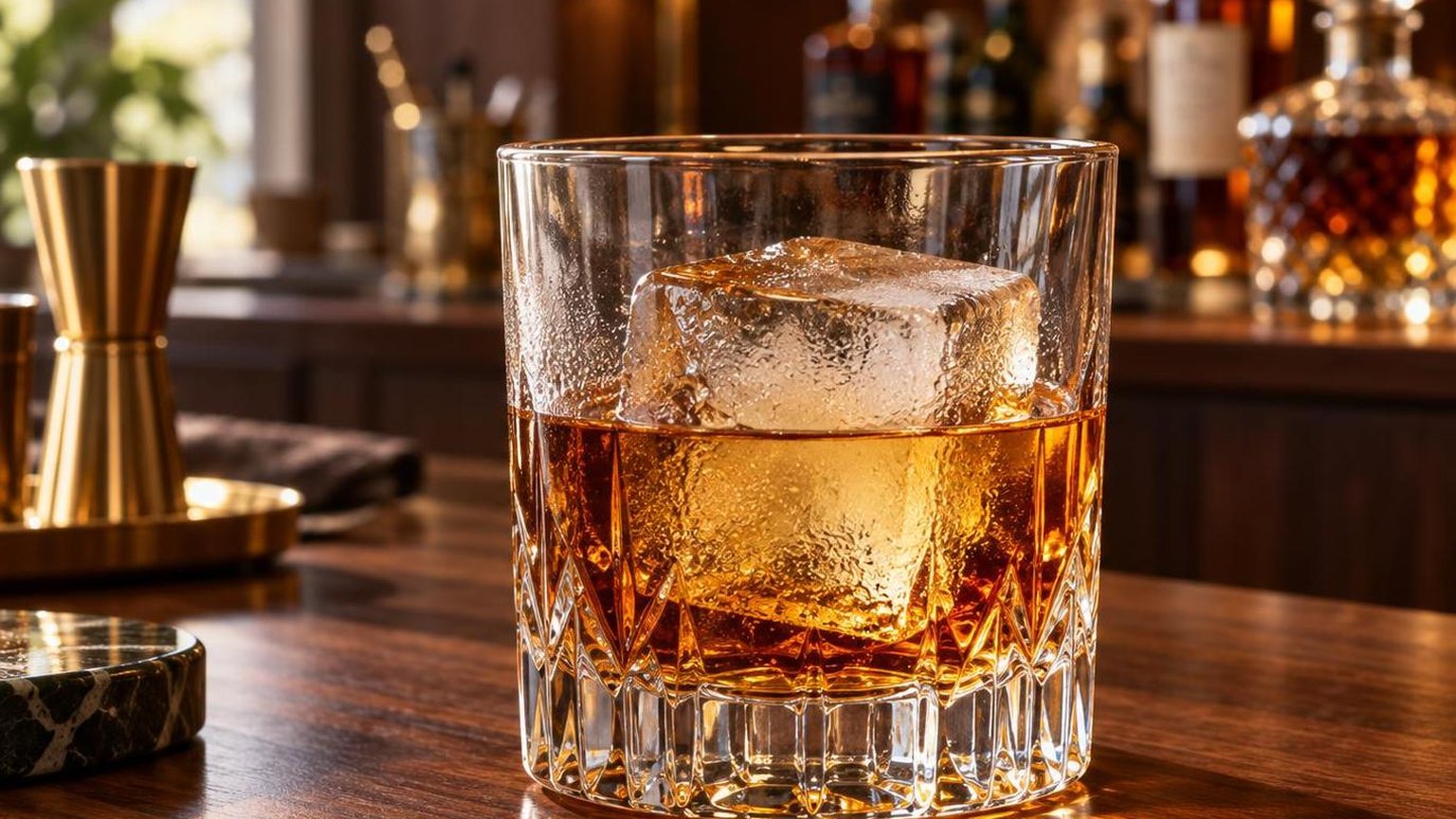
A standard home freezer operates at approximately −18 °C (0 °F). Most whiskeys freeze between −27 °C and −34 °C (−17 °F to −29 °F), well below what any domestic freezer can reach.
This temperature gap means a bottle of 40% ABV bourbon or Scotch will never solidify in your kitchen freezer. The ethanol content depresses the freezing point far below residential appliance capabilities.
Freezer Types vs. Whiskey Freezing Points
Different freezer configurations produce different minimum temperatures. None reach the threshold needed to freeze standard-proof whiskey.
| Freezer Type | Typical Temp Range | Can It Freeze 40% ABV Whiskey? |
| Standard home freezer | −18 °C (0 °F) | No |
| Deep chest freezer | −23 °C (−10 °F) | No |
| Commercial blast freezer | −34 °C to −40 °C (−29 °F to −40 °F) | Possible at lowest settings |
| Laboratory ultra-low freezer | −80 °C (−112 °F) | Yes |
What Actually Happens in a Home Freezer
Whiskey stored at −18 °C becomes noticeably thicker. The liquid’s viscosity increases as water molecules slow down, though no ice crystals form at this temperature.
Flavor compounds become muted in cold whiskey. Volatile aromatic esters require warmth to vaporize, so chilled whiskey delivers less nose and a duller palate profile.
- Viscosity increase: The liquid pours more slowly and feels syrupy on the tongue.
- Aroma suppression: Esters and phenols volatilize less at −18 °C, reducing detectable scent by a significant margin.
- Flavor muting: Sweetness, spice, and oak characteristics become harder to perceive at low temperatures.
- No structural damage: The bottle and cork remain unaffected since the liquid never expands into ice.
Lower-Proof Exceptions
Whiskey-based liqueurs and flavored whiskeys with 20–25% ABV freeze at roughly −10 °C to −15 °C (14 °F to 5 °F). These products can partially solidify or turn slushy in a home freezer set to −18 °C.
Fireball Cinnamon Whisky at 33% ABV freezes around −24 °C (−11 °F). A standard freezer still cannot reach that point, but a deep chest freezer approaches the danger zone.
Always check the ABV on the label before long-term freezer storage. Anything below 30% ABV risks slushing or partial freezing in colder domestic units.
Why Diluted Whiskey Freezes More Easily
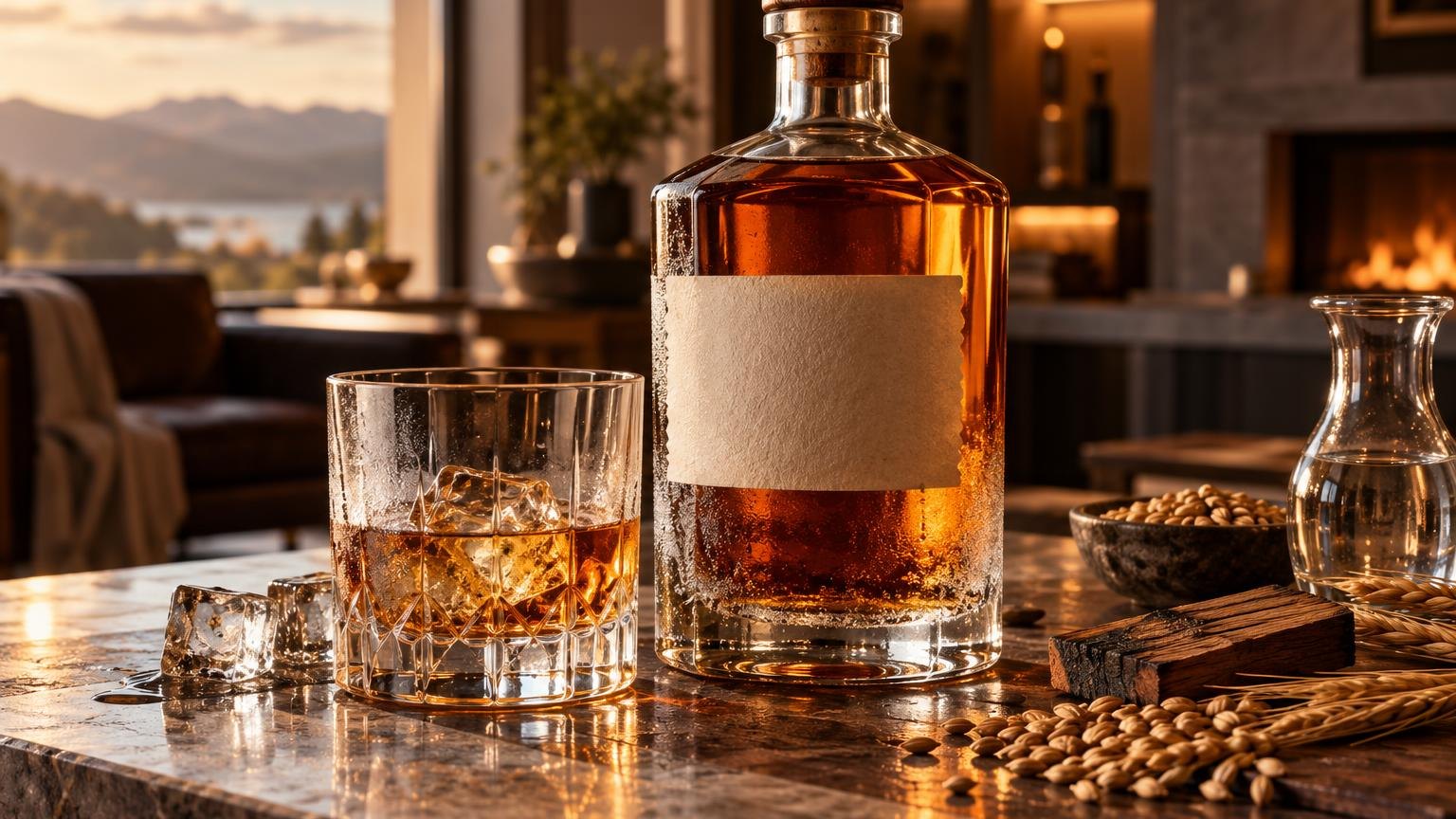
Adding water to whiskey raises its freezing point by reducing the overall alcohol concentration.
A 40% ABV bourbon freezes around −27°C (−17°F), but diluting it to 20% ABV shifts the freezing point up to roughly −9°C (15°F)—well within reach of a standard home freezer set to −18°C (0°F).
How Dilution Shifts the Freezing Point
Ethanol is a freezing-point depressant. It disrupts ice-crystal formation in water. Fewer ethanol molecules in solution means less disruption, so ice forms at higher temperatures.
The relationship between ABV and freezing point is nonlinear. Small dilutions at lower ABV levels cause disproportionately large shifts upward in freezing temperature.
| ABV (%) | Approximate Freezing Point | Freezes in Home Freezer (−18°C)? |
| 40 | −27°C (−17°F) | No |
| 30 | −18°C (0°F) | Borderline |
| 20 | −9°C (15°F) | Yes |
| 15 | −6°C (21°F) | Yes |
| 10 | −4°C (25°F) | Yes |
Common Scenarios That Dilute Your Whiskey
- Melting ice cubes: A single standard ice cube (roughly 30 mL of water) in 60 mL of 40% ABV whiskey can drop the ABV to approximately 27% within 10–15 minutes as it melts.
- Adding water at the table: A generous splash of 15–20 mL of water reduces a standard 45 mL pour of cask-strength whiskey (55% ABV) to around 38% ABV.
- Pre-mixed whiskey cocktails: A whiskey sour or highball typically lands between 12–18% ABV after mixing with citrus, syrup, and ice melt—freezing easily at −5°C to −8°C.
Practical Implications for Storage
Never store diluted whiskey cocktails or whiskey mixed with water in the freezer long-term. The liquid will partially or fully freeze, and expanding ice can crack glass bottles or containers.
Neat whiskey at 40% ABV or higher remains safe in a home freezer. Cask-strength expressions at 50–65% ABV freeze at −35°C to −50°C, far below any domestic freezer’s capability.
If you prefer chilled whiskey without dilution risk, use whiskey stones or stainless-steel chilling cubes. These lower the temperature by 3–5°C without altering the ABV or shifting the freezing threshold.
How Freezing Changes Whiskey Texture and Flavor
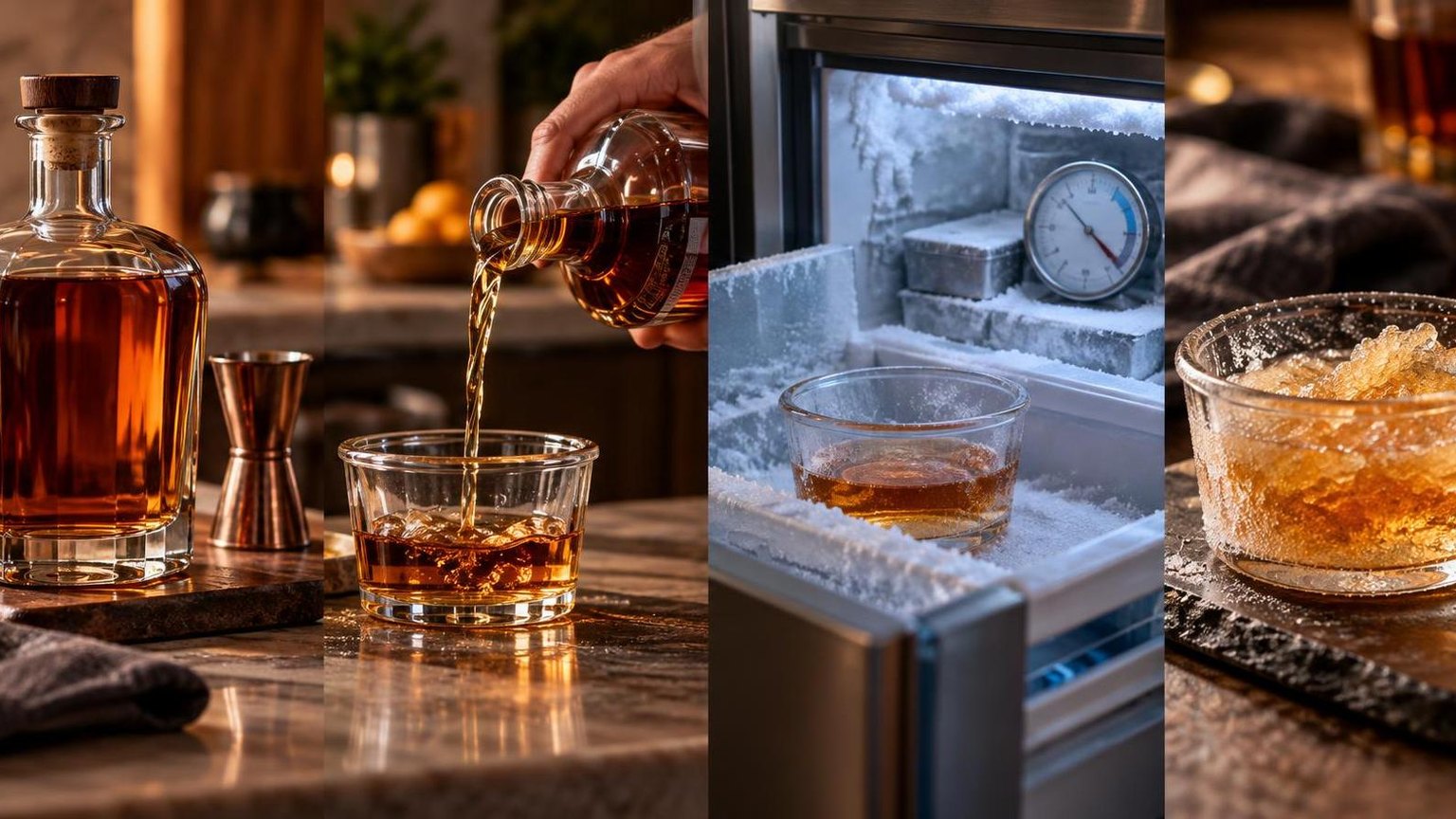
Dropping whiskey below −17°C (1.4°F) dulls volatile aroma compounds and thickens the liquid noticeably. These physical changes directly reduce the sensory complexity that distillers spend years developing in barrel-aged spirits.
Viscosity Increase
Ethanol-water solutions grow measurably thicker as temperature drops. At 25°C, 40% ABV whiskey has a viscosity near 2.4 mPa·s. Near its freezing point around −27°C, viscosity can exceed 8 mPa·s—more than triple.
This thicker mouthfeel may seem “smooth,” but it suppresses flavor release across the palate. Volatile esters and phenols stay trapped in the denser liquid instead of vaporizing on the tongue.
Aroma Suppression
Aromatic compounds require heat energy to volatilize. Whiskey served at 15–20°C releases peak concentrations of ethyl acetate, vanillin, and guaiacol—key contributors to fruit, vanilla, and smoke notes.
At temperatures below −10°C, vapor pressure of these compounds drops by 60–80% compared to room temperature. The nose becomes nearly flat, eliminating the first and most important phase of tasting.
Flavor Compound Behavior at Different Temperatures
| Temperature Range | Volatile Release | Perceived Flavor Complexity |
| 18–22°C (64–72°F) | Full volatilization | Maximum complexity |
| 4–10°C (39–50°F) | Moderately reduced | Simplified, less nuanced |
| −5 to −15°C (23 to 5°F) | Significantly suppressed | Muted, primarily sweet/bitter |
| Below −20°C (−4°F) | Minimal | Near-flat profile |
Chill Haze and Fatty Acid Precipitation
Whiskeys bottled below 46% ABV without chill filtration develop visible haze when cooled below 4°C. Long-chain fatty acid esters and proteins aggregate into microscopic clusters that scatter light.
This haze is cosmetic, not harmful. However, at freezing temperatures these precipitates can form semi-solid flakes that alter texture permanently if the whiskey undergoes repeated freeze-thaw cycles.
What Freezing Cannot Reverse
- Ester breakdown: Repeated thermal stress can hydrolyze delicate fruit esters into simpler acids and alcohols.
- Oxidation acceleration: Ice crystal formation in partially frozen whiskey concentrates dissolved oxygen, promoting stale, cardboard-like off-flavors.
- Cork seal compromise: Bottle expansion during partial freezing can push liquid past the cork, breaking the seal and exposing the spirit to air.
For these reasons, storing whiskey in a freezer consistently degrades quality over weeks to months, even if the liquid never fully solidifies.
Can Freezing Whiskey Break the Bottle
Standard whiskey at 40% ABV freezes around −27°C (−17°F), a temperature most home freezers never reach.
However, if conditions push cold enough, the liquid expands and can absolutely shatter glass—understanding the physics prevents a costly, dangerous mess.
Why Liquids Break Glass When They Freeze
Water expands approximately 9% by volume when transitioning from liquid to solid ice. Whiskey contains 55–60% water, so it still expands significantly during freezing—roughly 4–5% in total volume depending on proof.
Glass bottles have limited tensile strength. Standard soda-lime glass used for most spirit bottles withstands internal pressure of about 150–200 psi before fracturing. The slow, outward force of expanding ice crystals can exceed that threshold.
Risk Factors by ABV and Temperature
| Whiskey Type | Typical ABV | Freeze Point | Bottle Breakage Risk |
| Standard bourbon/scotch | 40% | −27°C (−17°F) | Low in home freezers (−18°C) |
| Flavored whiskey | 30–35% | −18°C to −23°C (0°F to −9°F) | Moderate—home freezer can reach this |
| Whiskey liqueur | 17–21% | −7°C to −12°C (19°F to 10°F) | High—freezes easily, expansion cracks glass |
| Cask strength | 50–65% | −35°C to −45°C (−31°F to −49°F) | Very low—requires industrial cold |
When Breakage Actually Happens
The most common real-world scenario involves flavored whiskeys and whiskey liqueurs left in a freezer overnight. Products like Fireball (33% ABV) or Drambuie (40% ABV with high sugar) freeze at temperatures a standard home freezer maintains.
Full bottles break more readily than partially filled ones. A bottle filled to the neck leaves almost no headspace for expansion—pressure has nowhere to go except outward against the glass walls.
Preventing Bottle Breakage
- Never freeze whiskey below 35% ABV in a home freezer set to −18°C (0°F) or colder.
- Leave at least 10–15% headspace in any bottle placed in the freezer.
- Chill standard 40% ABV whiskey for 2–3 hours maximum rather than storing it permanently.
- Transfer whiskey to a plastic-safe container if you need it frozen for transport in extreme winter conditions.
- Check your freezer’s actual temperature with a thermometer—some units run as cold as −23°C (−9°F).
Broken bottles create both a safety hazard from glass shards and a cleanup nightmare from sticky, alcohol-saturated freezer surfaces. Prevention costs nothing; replacement costs $30–$200 per bottle.
Best Storage Temperatures for Preserving Whiskey
Whiskey demands stable, moderate temperatures to maintain its character over months or years.
Distillers and collectors consistently recommend storing opened and unopened bottles between 15°C and 20°C (59°F–68°F), away from direct sunlight and heat sources.
Recommended Storage Ranges
Different contexts call for slightly different temperature targets. The table below outlines optimal ranges based on storage purpose.
| Storage Context | Ideal Range | Key Reason |
| Long-term collection (sealed) | 15–18°C (59–64°F) | Minimizes cork degradation and evaporation |
| Home bar (opened bottles) | 18–20°C (64–68°F) | Balances flavor stability with serving readiness |
| Short-term serving prep | 20–22°C (68–72°F) | Allows aromatic compounds to express fully |
| Barrel aging (warehouse) | Variable, 5–35°C (41–95°F) | Seasonal swings drive extraction from oak |
What Temperature Extremes Do to Whiskey
Heat above 25°C (77°F) accelerates oxidation once a bottle is opened. Volatile esters and aldehydes—responsible for fruity and floral notes—break down faster at elevated temperatures.
Sustained cold below 10°C (50°F) won’t damage sealed whiskey but can cause fatty acid esters to precipitate, creating a temporary haze called “floc.” This reverses when the bottle returns to room temperature.
Rapid temperature swings are worse than consistent cold or warmth. Expansion and contraction of liquid forces air past the cork seal, increasing the oxygen exposure that dulls flavor.
Practical Storage Tips
- Store bottles upright—high-proof alcohol (40–68% ABV) degrades natural cork on prolonged contact.
- Keep bottles in a cabinet or closet where temperature stays within a 3–5°C daily fluctuation at most.
- Avoid kitchens; ambient cooking heat routinely pushes air temperature above 30°C (86°F) near stoves.
- If using a wine fridge, set it to 15°C (59°F)—standard wine-fridge settings of 12°C (54°F) are slightly low but acceptable.
- Once a bottle drops below half-full, consider transferring whiskey to a smaller glass bottle to reduce headspace oxygen.
Consistency matters more than hitting an exact number. A steady 19°C closet outperforms a garage that swings between 5°C and 30°C seasonally, even if the garage averages the same temperature over a year.
Common Questions
What temperature does whiskey freeze?
Most whiskeys freeze between −17°F and −27°F (−27°C to −33°C), depending on their alcohol by volume (ABV).
A standard 40% ABV whiskey begins to solidify around −17°F (−27°C), while cask-strength bottles at 55–65% ABV require temperatures closer to −40°F (−40°C) to freeze.
Home freezers typically reach only 0°F (−18°C), which is why whiskey stays liquid in a domestic freezer.
Why does whiskey have a lower freezing point than water?
Ethanol freezes at −173.4°F (−114.1°C), far below water’s 32°F (0°C).
When ethanol and water mix—as they do in whiskey—the ethanol molecules disrupt ice-crystal formation, producing a freezing-point depression proportional to alcohol concentration.
This colligative property is why higher-proof spirits require colder temperatures to solidify.
Does the ABV of whiskey change its exact freezing point?
Yes, ABV is the primary variable. A 30% ABV liqueur freezes near −10°F (−23°C), a 40% ABV bourbon near −17°F (−27°C), and a 50% ABV rye near −25°F (−32°C).
Every roughly 5-percentage-point increase in ABV lowers the freezing point by approximately 4–5°F (2–3°C).
Will putting whiskey in a home freezer damage it?
A standard household freezer set to 0°F (−18°C) will not freeze 40% ABV whiskey, but prolonged storage at that temperature mutes volatile aroma compounds such as esters and aldehydes.
Master blenders, including those at Maker’s Mark, advise storing whiskey at 59–68°F (15–20°C) to preserve the full sensory profile.
Can whiskey turn slushy without fully freezing?
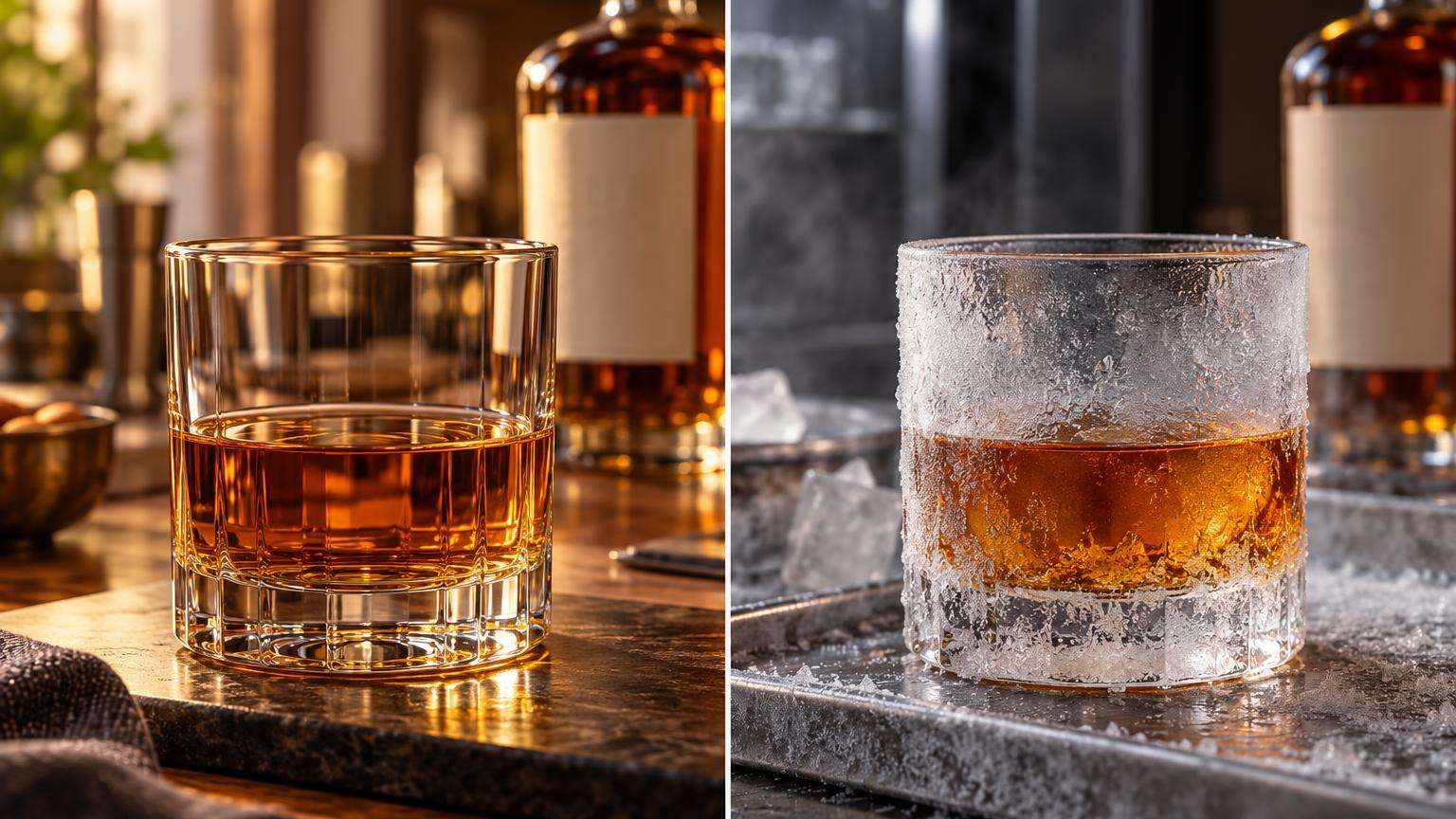
Yes. Because whiskey is a water-ethanol mixture rather than a pure substance, it does not have a sharp freezing point.
Water molecules begin crystallizing first while the remaining liquid becomes more alcohol-concentrated, creating a slushy, partially frozen state before the entire volume solidifies.
Does freezing and thawing whiskey alter its flavor permanently?
Repeated freeze-thaw cycles can cause fatty-acid esters and long-chain congeners to precipitate out of solution, resulting in visible flocculation (haze or flakes).
Once these compounds drop out, they may not fully redissolve, permanently reducing the whiskey’s body, mouthfeel, and flavor complexity.
Is chill-filtered whiskey more resistant to freezing issues?
Chill filtration removes lipids and proteins by cooling whiskey to around 32°F (0°C) and passing it through a fine filter before bottling.
This process prevents cosmetic hazing at low temperatures but does not change the ethanol-based freezing point. Non-chill-filtered whiskeys retain more flavor compounds but are more prone to visible cloudiness when chilled.
What is the ideal serving temperature for whiskey instead of freezing it?
The Scotch Whisky Research Institute recommends tasting neat whiskey at 59–64°F (15–18°C), a range that keeps volatile aromatics perceptible without excessive ethanol burn.
Adding a single ice cube drops the liquid to roughly 50°F (10°C) within two minutes, which is still well above any freezing risk and opens up certain flavor notes while taming heat.
Keep Exploring
- What Is Sour Mash Whiskey?
- What Makes Irish Whiskey Different?
- What Is Whiskey & Sprite Called?
- What To Mix With Baileys Irish Cream?
- Good Chasers for Whiskey
- How To Drink Japanese Whisky Like A Pro? Find Out Now
- Jack Daniels Alcohol Percentage – Deepest Knowledge
- Black Owned Whiskey Brands to Try Today
- All Alcohol Guides
- National Institute of Standards and Technology (2023)
- PubChem – National Library of Medicine (2024)
- University of Wisconsin-Madison Department of Chemistry (2023)
- USDA FoodData Central – Whiskey (2024)
- National Center for Biotechnology Information – Freezing Point Depression (2023)
- MasterClass – How to Store Whiskey (2022)
- Whisky Advocate – Does Freezing Ruin Whiskey? (2021)
- The Spruce Eats – Can You Freeze Liquor? (2023)
- Engineering Toolbox – Ethanol Freezing Points (2023)