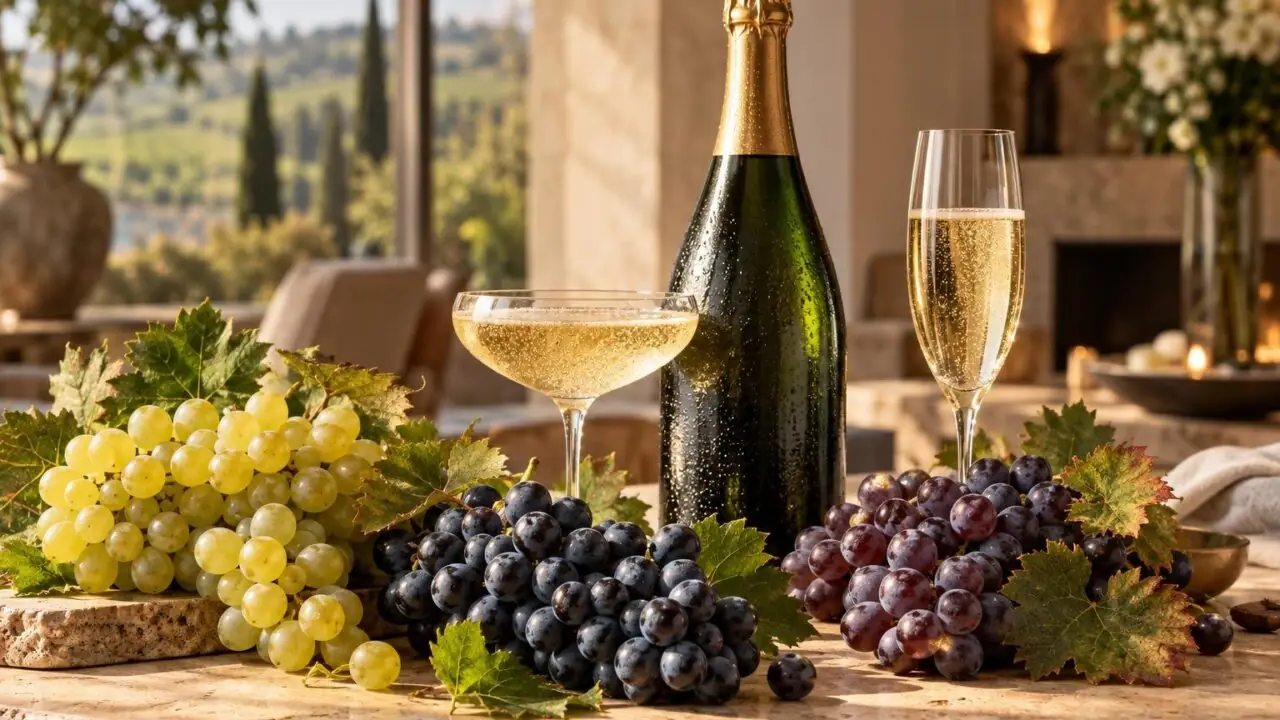
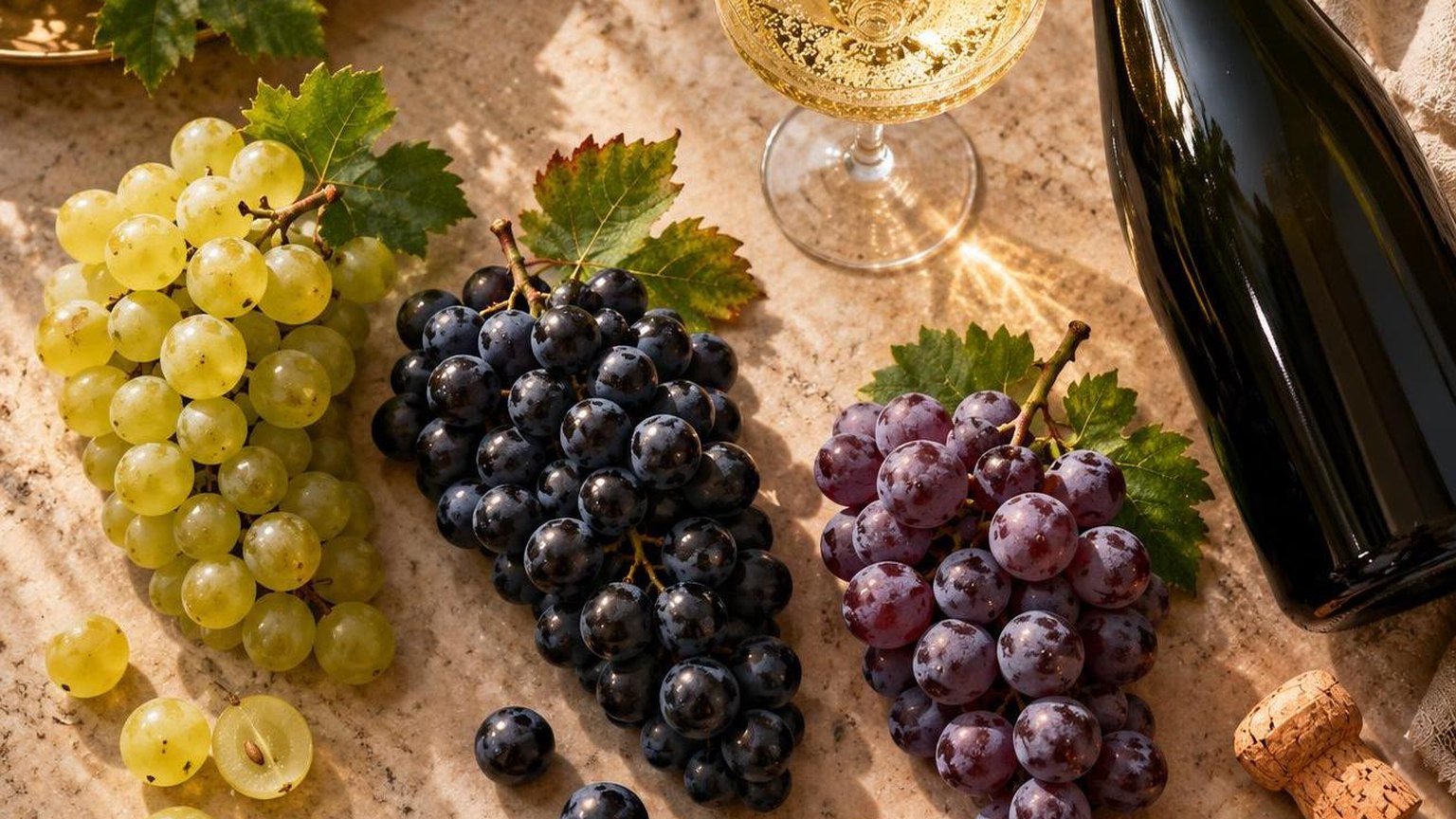
Chardonnay, Pinot Noir, and Meunier are Champagne’s principal grape varieties—the core answer to “What Grapes Are in Champagne?” Chardonnay brings freshness and finesse, Pinot Noir contributes structure, and Meunier adds fruitiness.
Producers blend these grapes in different proportions, or use a single variety, to shape each wine’s style.
Those familiar names do not tell the whole story. Champagne also permits less common varieties, including Arbane and Petit Meslier.
Understanding the grapes helps explain why a blanc de blancs tastes different from a blanc de noirs—and gives you a practical starting point for choosing your next bottle.
Chardonnay Brings Freshness and Finesse
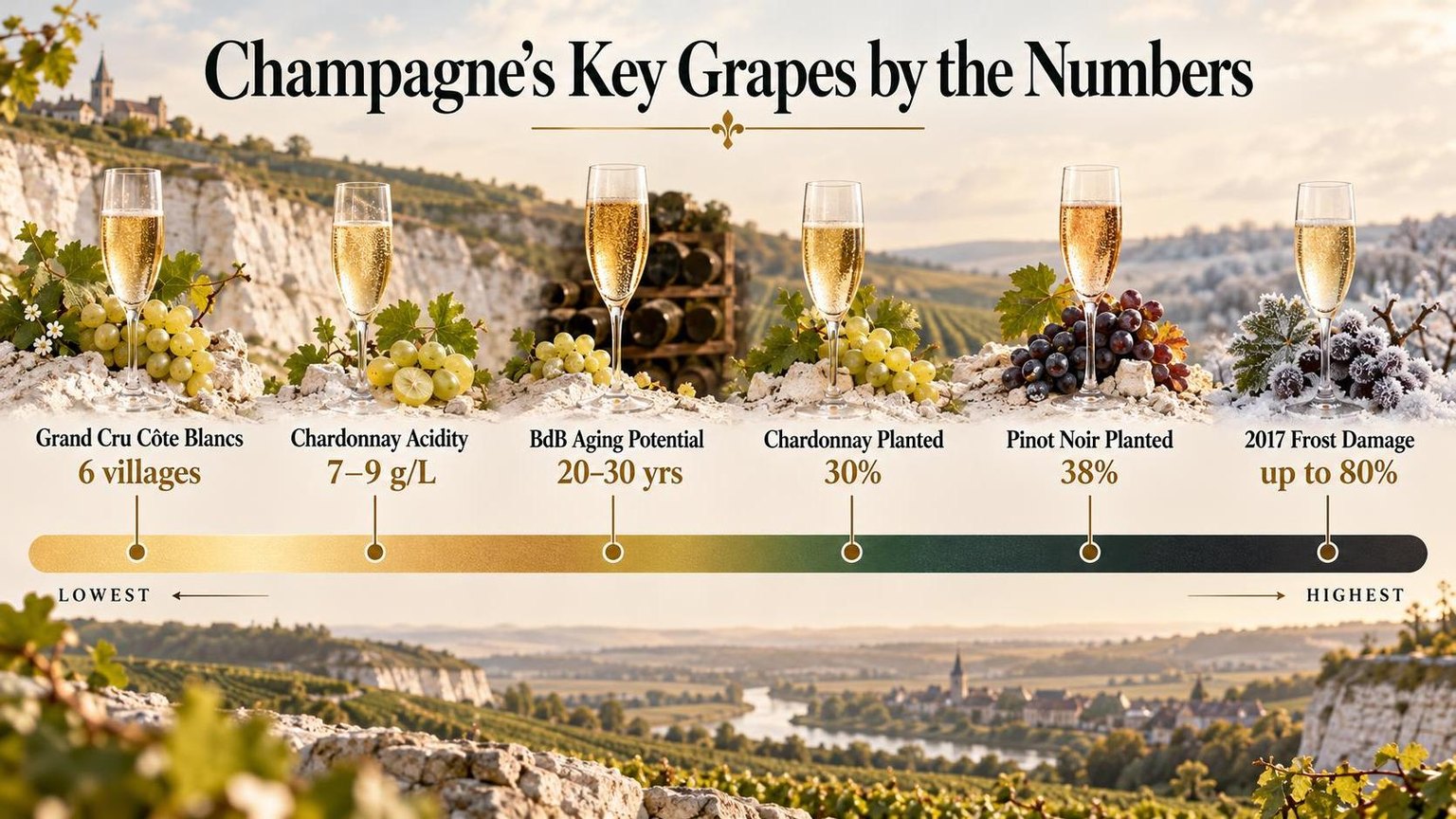
Chardonnay is the only white grape among Champagne’s three principal varieties. It accounts for roughly 30% of the region’s 34,000 hectares under vine, yet its influence on Champagne style far exceeds that proportion.
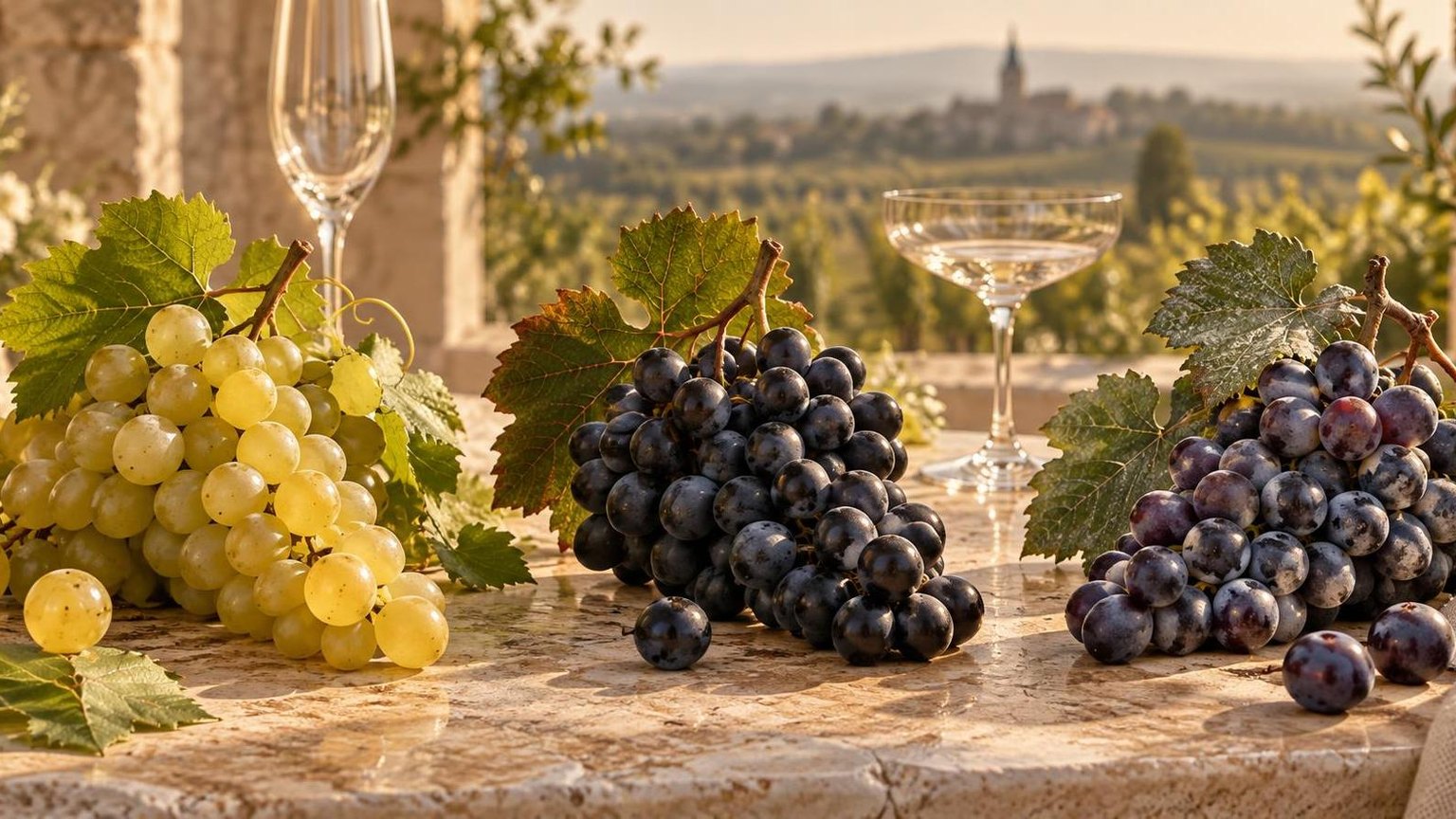
This early-budding variety thrives on Champagne’s chalky limestone soils, particularly the Cretaceous Belemnite chalk of the Côte des Blancs.
The chalk provides exceptional drainage while retaining enough moisture to sustain vines during dry summers.
Where Chardonnay Dominates
The Côte des Blancs south of Épernay is Chardonnay’s heartland. Six of its villages hold Grand Cru status, producing some of the most sought-after base wines in the entire region.
| Grand Cru Village | Notable Characteristic |
| Cramant | Floral elegance, creamy texture |
| Avize | Mineral precision, citrus intensity |
| Le Mesnil-sur-Oger | Steely acidity, exceptional aging potential |
| Oger | Rounded richness, ripe fruit |
| Chouilly | Delicate aromatics, lighter body |
| Oiry | Fresh, bright acidity |
Beyond the Côte des Blancs, Chardonnay also grows in the Côte de Sézanne and parts of the Montagne de Reims, including the Grand Cru village of Sillery.
What Chardonnay Contributes to the Blend
Winemakers prize Chardonnay for its high natural acidity, which typically ranges from 7–9 g/L total acidity at harvest. This acidity provides the structural backbone for long aging on lees.
- Citrus and green apple notes in young wines that evolve toward brioche and toasted almond after 5+ years on lees
- Linear minerality derived from chalk-rich terroir, often described as a saline or flinty finish
- Lighter body and finesse compared to Pinot Noir’s weight, making it ideal for aperitif-style Champagnes
- Longevity — Blanc de Blancs from top producers can age 20–30 years, gaining complexity with time
Blanc de Blancs: Pure Chardonnay Expression
Champagnes labeled “Blanc de Blancs” are made exclusively from Chardonnay. This style showcases the grape’s unblended character — taut, precise, and often more vertically structured than blended cuvées.
Iconic examples include Salon, sourced entirely from Le Mesnil-sur-Oger, produced in only about 37 of the last 100 vintages. Taittinger’s Comtes de Champagne and Ruinart’s Dom Ruinart are other benchmark Blanc de Blancs.
In non-vintage blends, Chardonnay typically constitutes 20–40% of the assemblage. Houses like Pol Roger use around 33% Chardonnay in their Brut Réserve, balancing Pinot Noir’s fruit with Chardonnay’s cut and precision.
Chardonnay’s relatively thin skin makes it vulnerable to spring frost — a persistent risk in Champagne’s northerly latitude of 48–49°N.
The devastating April 2017 frost destroyed up to 80% of buds in some Côte des Blancs vineyards, underscoring the grape’s fragility in this marginal climate.
Pinot Noir Adds Body and Structure
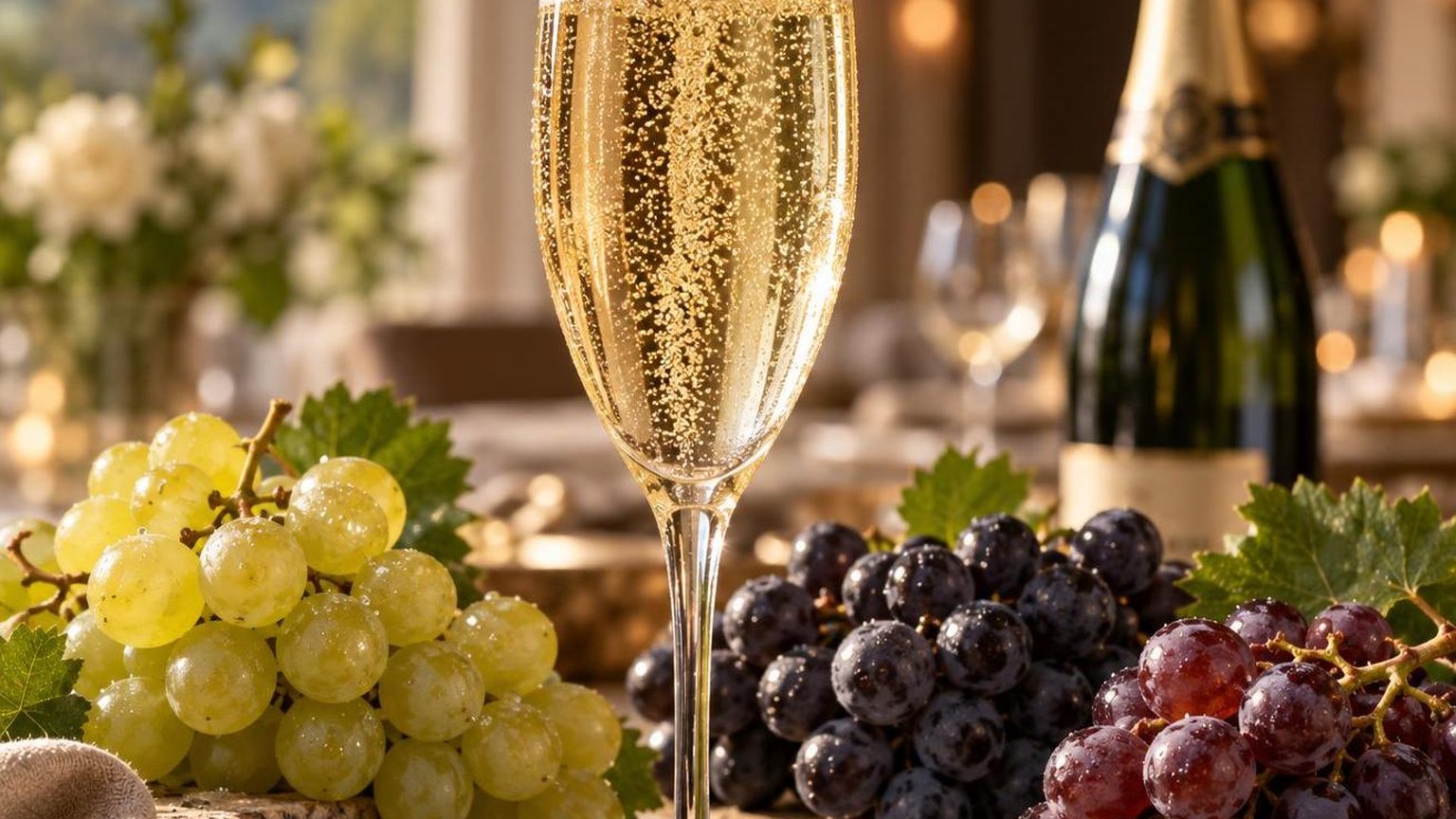
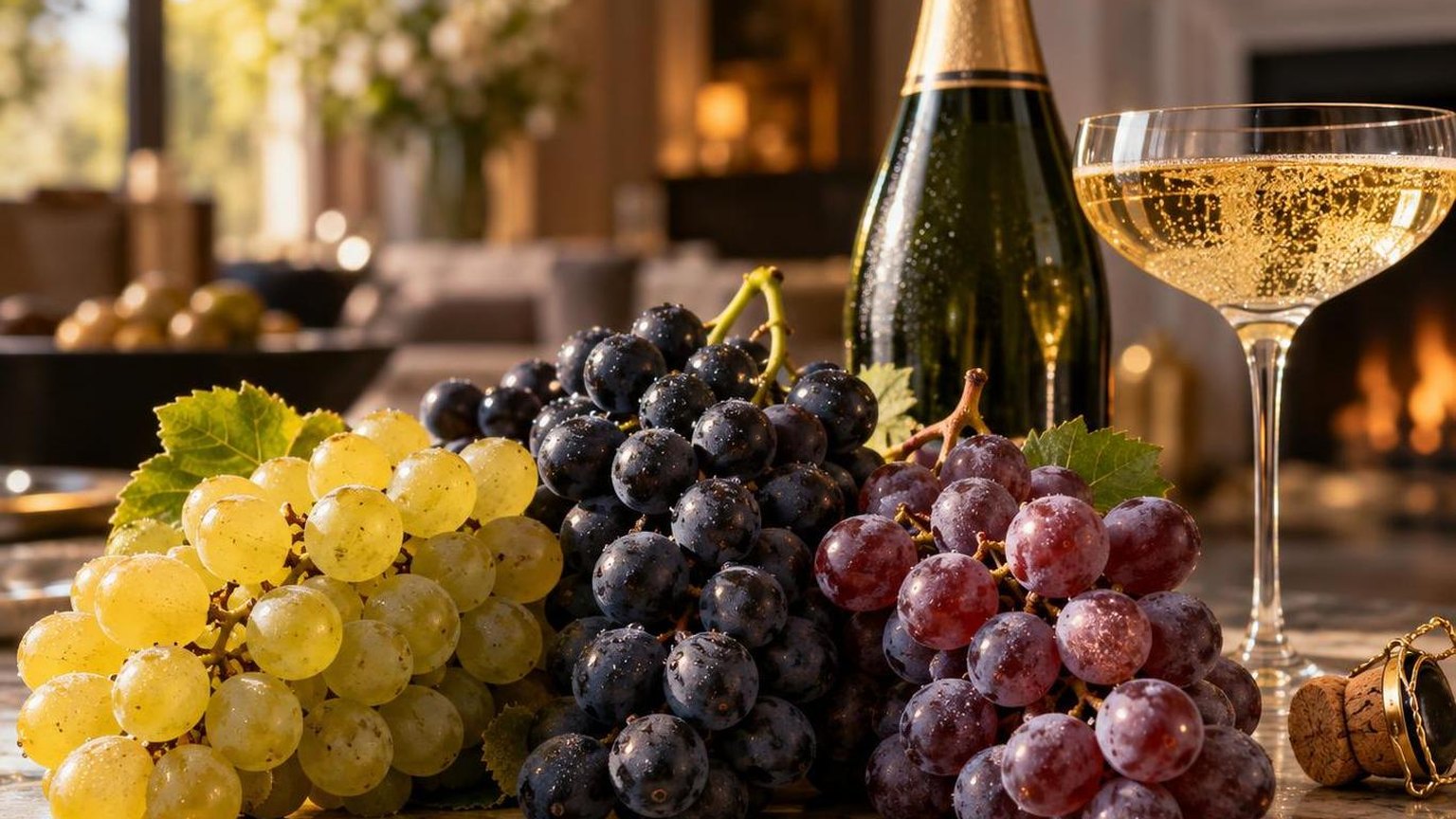
Pinot Noir is the most widely planted grape in Champagne, covering approximately 38% of the region’s 34,300 hectares under vine.
This red-skinned variety produces white juice when pressed carefully, contributing power, body, and red-fruit depth to the final blend.
Where Pinot Noir Thrives in Champagne
The Montagne de Reims is Pinot Noir’s spiritual home in Champagne. Villages like Ambonnay, Bouzy, and Verzenay hold Grand Cru status specifically for this grape.
The Aube (Côte des Bar), located 150 kilometers southeast of Épernay, is the second major Pinot Noir stronghold. Its Kimmeridgian limestone soils produce a riper, more fruit-forward style.
| Sub-Region | Key Villages | Soil Type | Pinot Noir Character |
| Montagne de Reims | Ambonnay, Bouzy, Verzenay | Chalk over limestone | Structured, firm, mineral |
| Aube (Côte des Bar) | Les Riceys, Celles-sur-Ource | Kimmeridgian limestone | Ripe, round, fruit-driven |
| Vallée de la Marne (south-facing) | Aÿ, Mareuil-sur-Aÿ | Chalk with clay | Full-bodied, vinous |
What Pinot Noir Brings to the Blend
Pinot Noir provides the backbone of most non-vintage Champagnes. It delivers weight on the mid-palate, red-fruit aromas of strawberry and cherry, and a longer, more textured finish than Chardonnay alone.
- Body and weight: Higher phenolic content adds mid-palate richness even in blanc de noirs cuvées.
- Red-fruit aromatics: Ripe strawberry, raspberry, and dried cherry emerge especially with extended lees aging.
- Aging potential: Its tannic structure contributes to longevity; top Pinot Noir-dominant Champagnes age 15–20 years comfortably.
- Vinosity: Wines gain a savory, almost still-wine-like depth that anchors multi-grape assemblages.
Famous Pinot Noir-Dominant Champagnes
Bollinger Grande Année typically contains around 65–70% Pinot Noir, sourced primarily from Aÿ and Verzenay. Krug Grande Cuvée also leans heavily on Pinot Noir, often comprising 45–50% of the blend.
Egly-Ouriet, based in Ambonnay, crafts 100% Pinot Noir blanc de noirs bottlings that showcase the grape’s pure expression. These wines spend a minimum of 48 months on lees before disgorgement.
Pressing Pinot Noir for White Juice
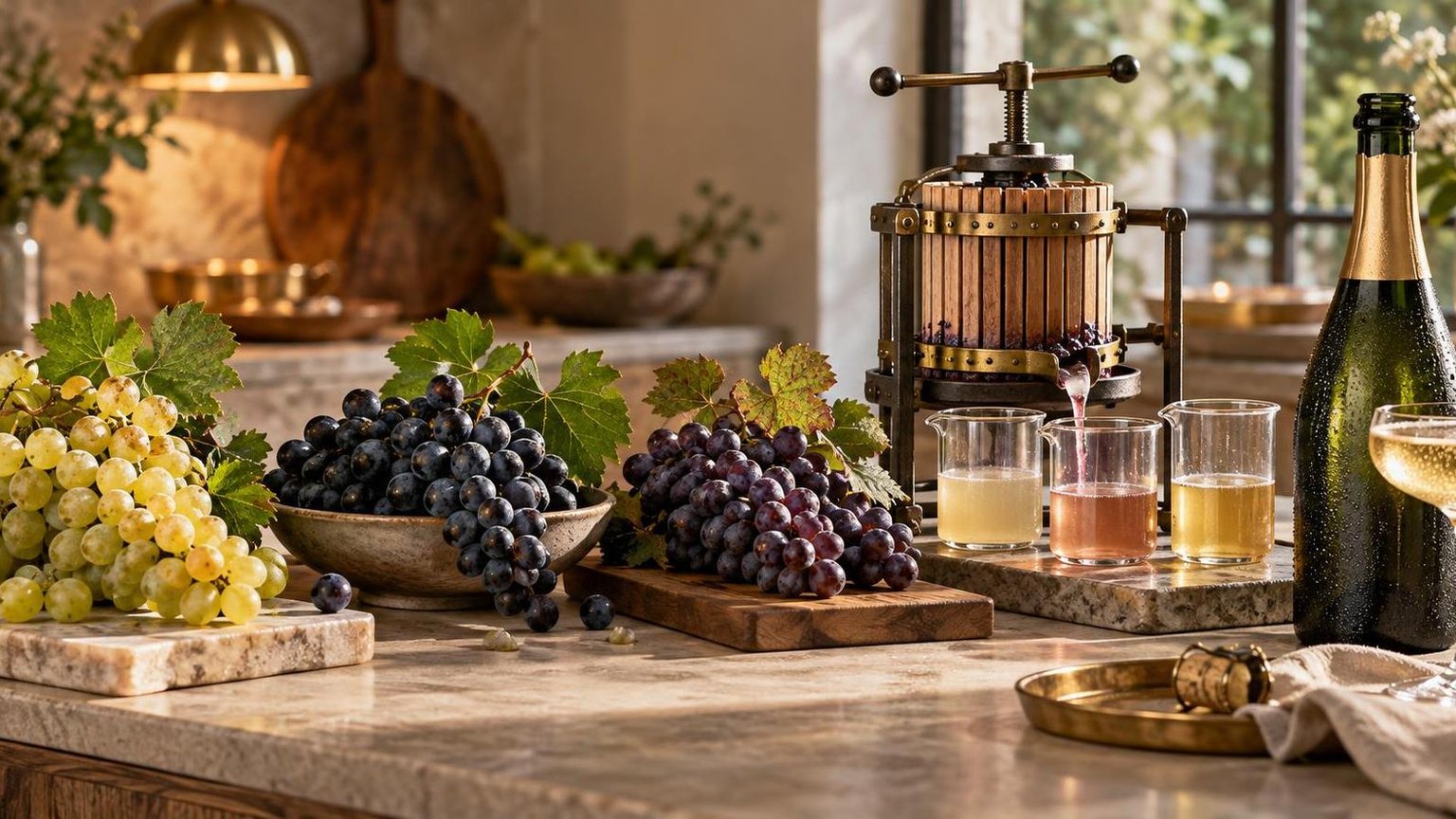
Champagne’s traditional Coquard press extracts 2,550 liters of juice from 4,000 kilograms of grapes. Only the first 2,050 liters — called the cuvée — are considered top quality. The remaining 500 liters form the taille.
Speed matters critically with Pinot Noir. Skin contact beyond a few hours risks extracting anthocyanins, the pigments that would tint the juice pink. Producers typically complete pressing within 4 hours of harvest to maintain a pale, clean must.
This disciplined extraction process is what makes Champagne’s use of red grapes for white wine possible — and why Pinot Noir remains the region’s most planted and most prized structural component.
Meunier Contributes Fruit and Roundness
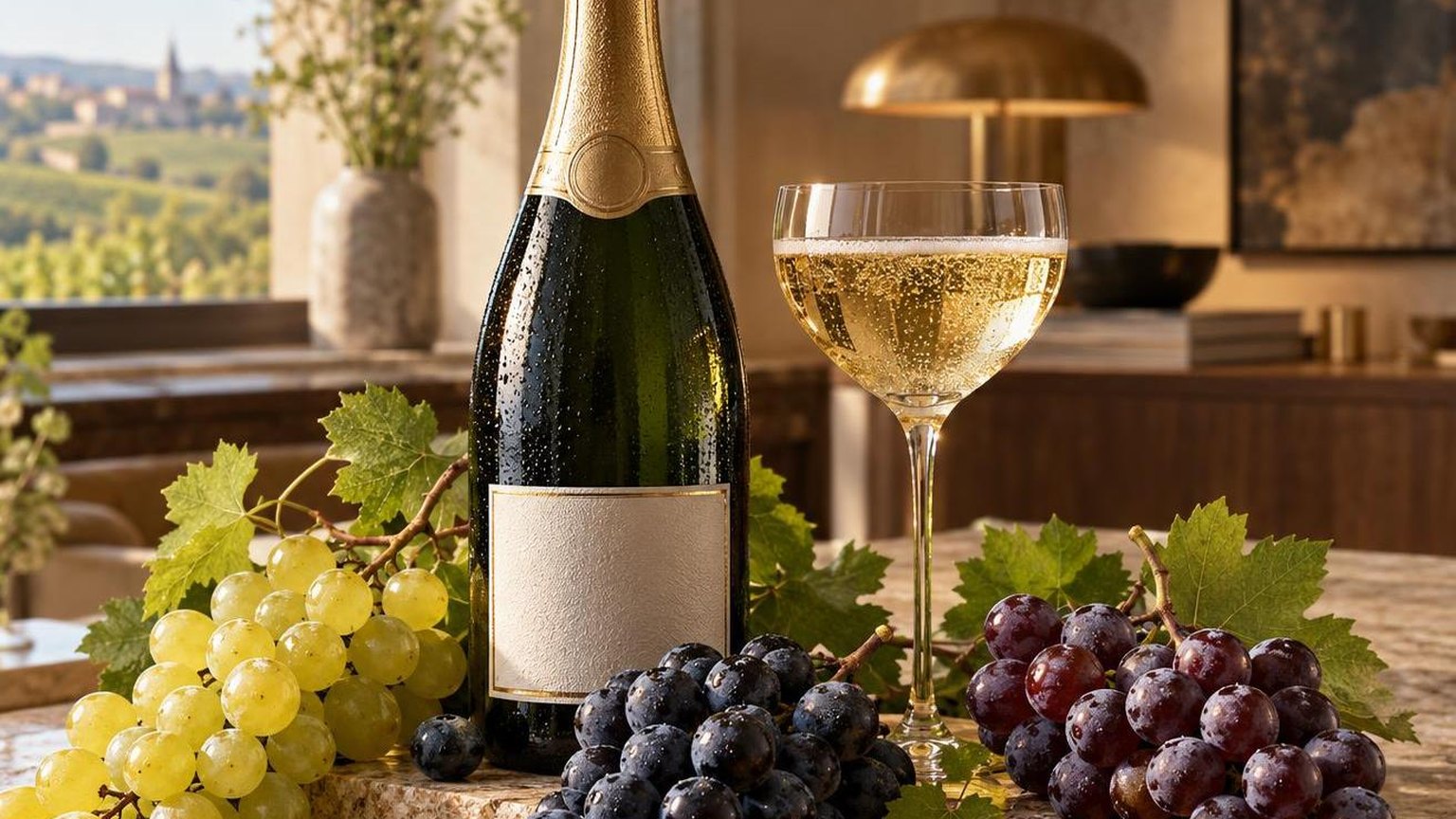
Meunier accounts for roughly 32% of Champagne’s planted vineyard area, covering approximately 11,000 hectares.
Long dismissed as a workhorse grape, it has gained serious critical recognition since growers like Jérôme Prévost and Moussé Fils began producing single-variety Meunier Champagnes of extraordinary depth.
Formally known as Pinot Meunier, the grape dropped “Pinot” from its official EU designation in 2017.
The name “meunier” means “miller” in French, referencing the flour-like white dust on the undersides of its leaves.
Viticultural Characteristics
Meunier buds later and ripens earlier than Pinot Noir, making it resistant to spring frosts. This trait explains its dominance in the frost-prone Vallée de la Marne.
| Trait | Meunier | Pinot Noir | Chardonnay |
| Budbreak timing | Late | Early | Early |
| Ripening | Early–mid | Mid | Mid–late |
| Frost resistance | High | Low | Low |
| Share of plantings | ~32% | ~38% | ~30% |
| Primary region | Vallée de la Marne | Montagne de Reims | Côte des Blancs |
Meunier thrives on the clay-rich, cooler soils of the Marne’s north-facing slopes where Pinot Noir and Chardonnay struggle to ripen consistently.
Flavor Profile in Champagne
Meunier delivers pronounced red-fruit aromatics—ripe apple, plum, and brioche—with softer acidity than Chardonnay. It contributes a rounder, fleshier mid-palate that peaks earlier in bottle.
- Young wines: Red apple, white peach, and fresh bread crust
- Aged wines (5–8 years): Baked pear, quince paste, and gentle spice
- Extended aging (10+ years): Honey, dried fruit, and mushroom notes, though Meunier typically ages less gracefully than Pinot Noir or Chardonnay
Role in Blending and Single-Variety Bottlings
Most major houses use Meunier in non-vintage cuvées for approachability and fruit-forward generosity. Krug is a notable exception among prestige producers, incorporating significant Meunier into its Grande Cuvée.
Moët & Chandon’s non-vintage Brut Impérial typically contains 30–40% Meunier. It provides the immediate charm that makes these wines drinkable upon release rather than requiring years of cellaring.
Single-variety Meunier Champagnes remain rare but increasingly celebrated. Jérôme Prévost’s “Les Béguines,” sourced from a single 2.2-hectare plot in Gueux, regularly scores above 93 points from major critics.
Laherte Frères, Chartogne-Taillet, and Bénard-Pitois also produce highly regarded Meunier-dominant cuvées. These wines have shifted the narrative from “blending filler” to a grape capable of terroir expression.
Meunier’s rehabilitation reflects a broader trend in Champagne toward grower-led winemaking. As vignerons bottle their own fruit rather than selling to large houses, lesser-known varieties and terroirs receive overdue attention and respect.
Lesser Known Grapes Permitted in Champagne
Beyond Chardonnay, Pinot Noir, and Pinot Meunier, Champagne’s AOC regulations authorize four additional grape varieties.
These lesser-known cultivars account for roughly 0.3% of the region’s total planted vineyard area of approximately 34,000 hectares.
The Four Forgotten Varieties
These grapes were once widely planted across Champagne before phylloxera devastated European vineyards in the late 19th century. Post-replanting, growers overwhelmingly favored the three dominant varieties for their reliability and commercial appeal.
- Arbane – A white grape with fewer than 1 hectare remaining in Champagne. It produces wines with green apple and herbal notes and ripens late, making it risky in the region’s cool climate.
- Petit Meslier – Another white variety covering roughly 0.5 hectares. It delivers high acidity and citrus character but yields are unpredictable, discouraging widespread cultivation.
- Pinot Blanc – The most planted of the four rare grapes, occupying an estimated 30–40 hectares. It offers a rounder, softer profile than Chardonnay with stone fruit and floral qualities.
- Pinot Gris (Fromenteau) – Historically called Fromenteau in Champagne, this variety covers fewer than 1 hectare. It contributes body and subtle spice, producing wines with lower acidity than Chardonnay.
Plantings Comparison
| Grape | Color | Estimated Hectares | Share of Total Vineyard |
| Pinot Noir | Red | ~13,000 | ~38% |
| Pinot Meunier | Red | ~11,000 | ~32% |
| Chardonnay | White | ~10,000 | ~30% |
| Pinot Blanc | White | ~30–40 | ~0.1% |
| Arbane | White | <1 | <0.01% |
| Petit Meslier | White | ~0.5 | <0.01% |
| Pinot Gris | White | <1 | <0.01% |
Where to Find Them
The Aube sub-region, particularly the Côte des Bar, harbors most surviving plantings of Arbane. Grower-producers in this southern area have led preservation efforts since the 1950s.
Houses such as Moutard, Aubry, and Laherte Frères bottle cuvées featuring these rare grapes. Moutard produces a single-variety Arbane, while Aubry’s “Le Nombre d’Or” series spotlights each of the four varieties individually.
Drappier also champions these forgotten grapes, offering limited-release bottlings that blend all seven permitted varieties into a single cuvée. Production quantities rarely exceed a few thousand bottles per vintage.
Growing Interest
Climate change has renewed attention on these varieties. Rising average temperatures in Champagne—up 1.1°C since 1990 according to the Comité Champagne—make previously marginal grapes more viable.
Some producers view Pinot Blanc and Petit Meslier as potential hedges against future warming. Their natural acidity profiles could help maintain freshness as Chardonnay and Pinot Noir ripen earlier each decade.
Despite this interest, AOC rules impose no minimum planting requirements for the four varieties. Their survival depends entirely on individual growers committed to preserving Champagne’s full genetic heritage.
How Grape Blends Shape Champagne Styles
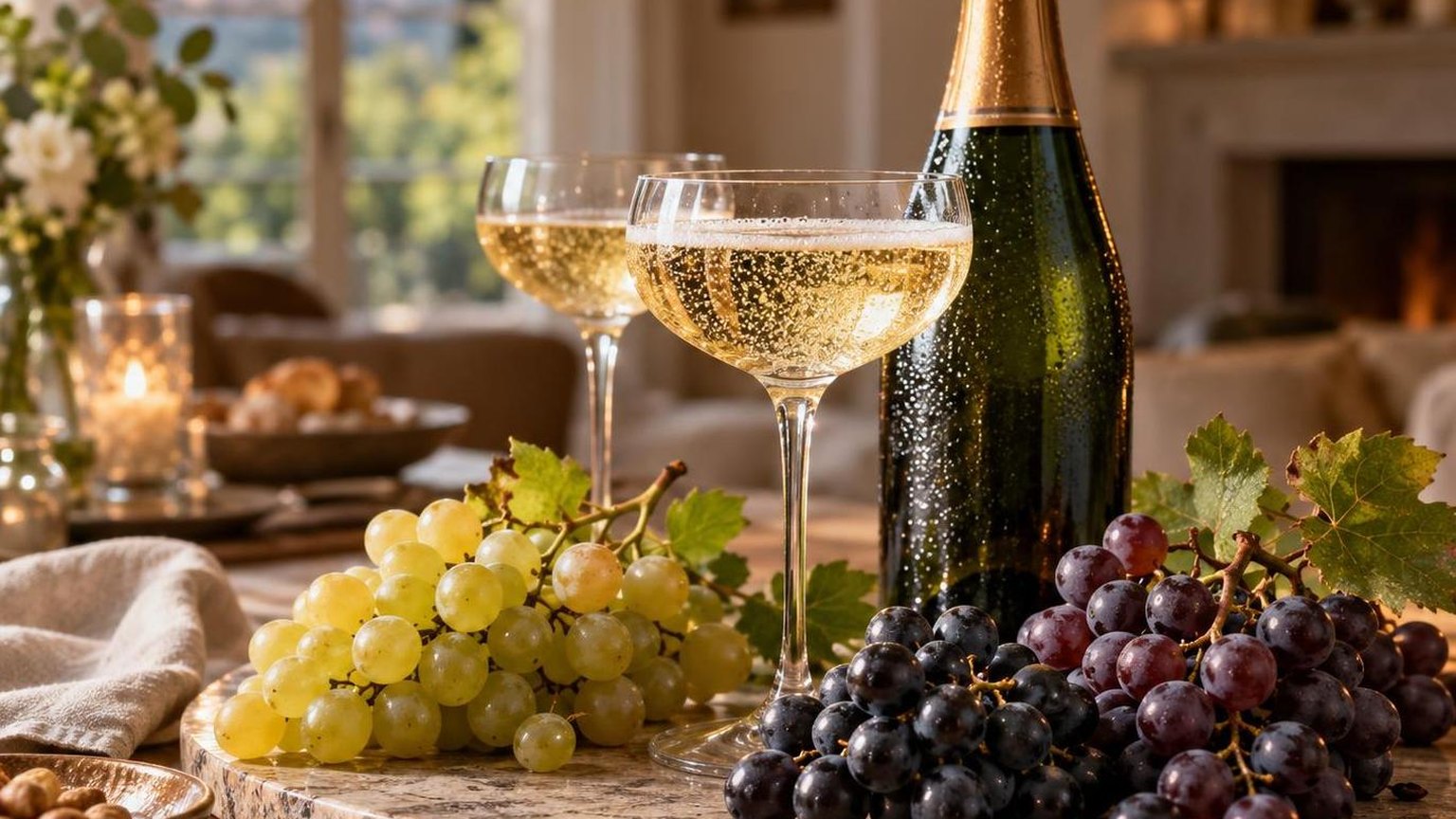
The proportion of each grape variety in a Champagne blend directly determines its weight, aroma profile, and aging potential.
Winemakers adjust these ratios deliberately, creating styles that range from razor-sharp and mineral to rich and toast-laden.
Classic Blend Ratios by Style
| Style | Typical Pinot Noir % | Typical Chardonnay % | Typical Pinot Meunier % | Character |
| Blanc de Blancs | 0% | 100% | 0% | Citrus, mineral, high acidity |
| Blanc de Noirs | 50–100% | 0% | 0–50% | Red fruit, body, vinosity |
| Classic Non-Vintage Brut | 30–40% | 25–35% | 25–40% | Balanced, versatile |
| Prestige Cuvée | 40–60% | 40–60% | 0–5% | Complex, age-worthy |
| Rosé (Assemblage) | 50–70% | 20–30% | 5–15% | Red berry, structured |
How Each Grape Shapes the Final Wine
Pinot Noir contributes body, structure, and red-fruit intensity. It forms the backbone of most prestige cuvées, including Dom Pérignon, which typically uses around 50–55% Pinot Noir sourced primarily from Aÿ and Hautvillers.
Chardonnay delivers acidity, elegance, and citrus-floral aromatics. It dominates Côte des Blancs producers like Salon, whose single-vintage L’Œuvre uses 100% Chardonnay from Le Mesnil-sur-Oger grand cru.
Pinot Meunier adds fruitiness, roundness, and approachability. It ripens earlier than the other two varieties and accounts for roughly 32% of all Champagne vineyard plantings according to the CIVC.
Real-World Blend Examples
- Krug Grande Cuvée: Typically 45–50% Pinot Noir, 25–30% Chardonnay, 20–25% Pinot Meunier, blending 120+ wines from 10+ vintages.
- Moët & Chandon Impérial: Roughly equal thirds of all three grapes, prioritizing consistency across 28+ million bottles annually.
- Ruinart Blanc de Blancs: 100% Chardonnay from Côte des Blancs and Montagne de Reims, aged a minimum of 3 years on lees.
- Bollinger Special Cuvée: Approximately 60% Pinot Noir, 25% Chardonnay, and 15% Pinot Meunier, fermented partly in oak barrels.
Why Meunier Often Gets Overlooked
Many prestige cuvées exclude Pinot Meunier entirely. Roederer Cristal, Taittinger Comtes de Champagne, and Pol Roger Cuvée Sir Winston Churchill all contain zero Meunier. The grape was historically considered less noble.
That perception is shifting. Producers like Jérôme Prévost (La Closerie) and Égly-Ouriet craft acclaimed single-varietal Meunier Champagnes that demonstrate the grape’s complexity when yields are restricted below 50 hectoliters per hectare.
The Blender’s Margin
Shifting a blend by even 5–10% measurably alters the wine.
A non-vintage brut moving from 30% to 40% Chardonnay gains noticeable acidity and loses perceptible weight, a calibration cellar masters refine across dozens of trial assemblages each spring.
Questions Readers Ask
What are the three main grapes used in Champagne?
Champagne is built on three dominant varieties: Chardonnay, Pinot Noir, and Pinot Meunier (also called Meunier).
Together these three account for approximately 99.7% of all vineyard plantings in the Champagne AOC, with Pinot Noir leading at roughly 38%, Meunier at 31%, and Chardonnay at 31% of the region’s 34,300 hectares.
What do Blanc de Blancs and Blanc de Noirs mean on a Champagne label?
Blanc de Blancs indicates the wine is made entirely from white grapes — in Champagne, this means 100% Chardonnay.
Blanc de Noirs is produced exclusively from black-skinned grapes, either Pinot Noir, Meunier, or a blend of both, with the juice pressed quickly to avoid color extraction.
Are there grapes besides the “big three” permitted in Champagne?
Yes. The Champagne AOC authorizes four additional heritage varieties: Arbane, Petit Meslier, Pinot Blanc, and Pinot Gris (called Fromenteau locally).
These account for fewer than 100 hectares combined and appear mostly in limited-production cuvées from small growers like Aubry and Laherte Frères.
What role does Pinot Noir play in a Champagne blend?
Pinot Noir provides the structural backbone — body, power, and red-fruit depth. It dominates plantings in the Montagne de Reims and the Aube (Côte des Bar), where chalky Kimmeridgian soils produce intensely concentrated fruit.
Houses like Bollinger and Krug rely heavily on Pinot Noir to define their house style.
Why is Meunier important if it is often considered a secondary grape?
Meunier buds late and ripens early, making it the most frost-resistant of the three main varieties — critical in the Vallée de la Marne, where spring frost risk is high.
It contributes roundness, fruitiness, and approachability to non-vintage blends, and producers like Égly-Ouriet and Jérôme Prévost have elevated it to single-variety prestige status.
Does the grape blend differ between vintage and non-vintage Champagne?
Non-vintage (NV) Champagne typically blends all three main grapes across multiple harvest years to maintain a consistent house style; Moët & Chandon’s Impérial NV, for example, uses roughly equal thirds.
Vintage Champagne comes from a single declared year and often skews toward Chardonnay or Pinot Noir to showcase that harvest’s character, as seen in Dom Pérignon’s Pinot Noir–Chardonnay focus.
How does Chardonnay influence the aging potential of Champagne?
Chardonnay brings high acidity, minerality, and a taut citrus-and-chalk profile that develops complexity over extended lees aging.
Blanc de Blancs bottlings from Grand Cru villages like Le Mesnil-sur-Oger and Cramant — such as Salon’s single-vineyard cuvée — can age 20 to 40 years, far exceeding the longevity of most Meunier-dominant blends.
Can Champagne be made from a single grape variety?
Absolutely. Single-varietal Champagnes are well established: Ruinart Blanc de Blancs (100% Chardonnay), Billecart-Salmon Brut Nature (100% Meunier), and Philipponnat Clos des Goisses in certain vintages (Pinot Noir–dominant at up to 70%).
These bottlings highlight terroir expression and the distinct personality of each grape without the blending cushion of multiple varieties.
Keep Exploring
- How To Break A Champagne Bottle? – A Complete Safety-First Guide Based on Real Experience
- Does Champagne Have Sulfites?
- How Champagne Is Made? The Most Understandable Information
- Different Types of Champagne Explained
- 11 Essential Facts About How Much Alcohol Is In Champagne (2026 ABV Guide, Serving Strength, Effects & Real Tasting Experience)
- Alcohol Content in Champagne Explained
- How To Box Chocolate Covered Strawberries And Champagne? The Ultimate Elegant Gift Guide (Step-by-Step Tutorial)
- What Champagne Is Sweet? – Find Out Now
- How To Bring Champagne On A Cruise?
- All Alcohol Guides
- Comité Champagne / CIVC (2024)
- University of California, Davis – Viticulture & Enology (2023)
- USDA GRIN Germplasm Database – Vitis vinifera (2024)
- National Center for Biotechnology Information / PubMed – "Genetic Structure of Champagne Grape Varieties" (2006)
- Cornell University – College of Agriculture and Life Sciences, Grape Varieties (2024)
- Institut National de l'Origine et de la Qualité / INAO (2024)
- Wine & Spirit Education Trust / WSET (2024)