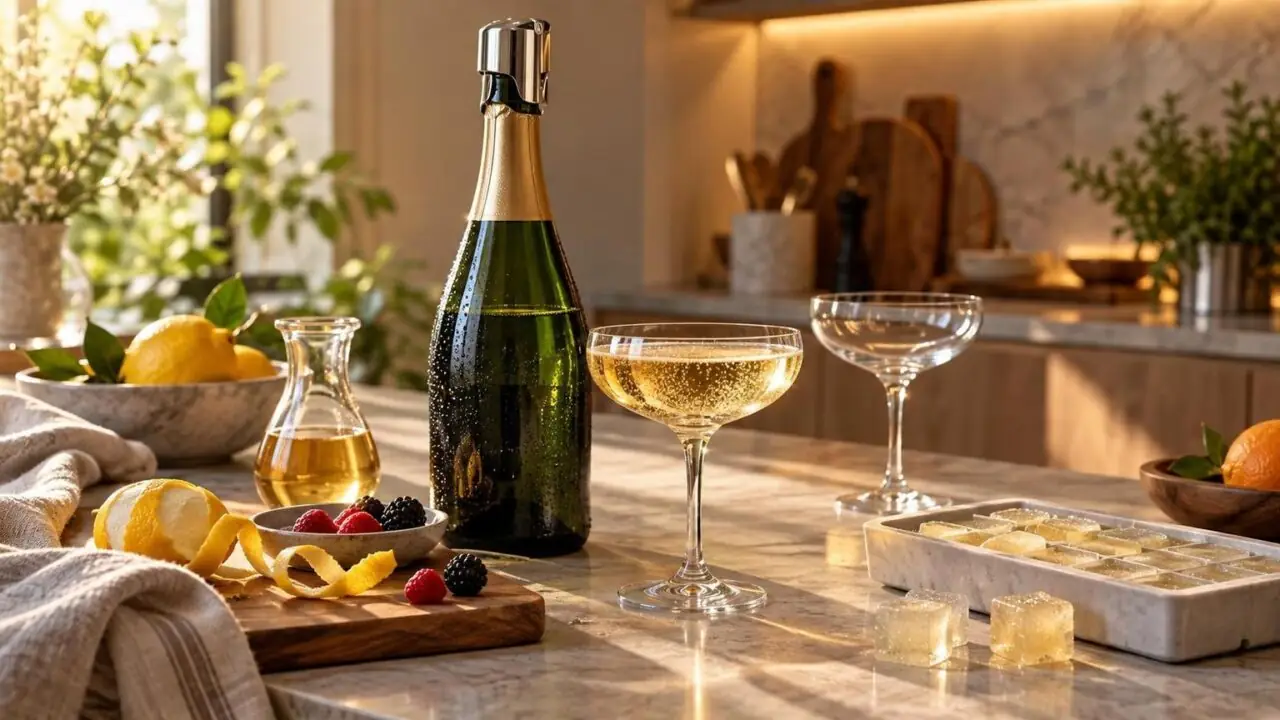
What to Do with Leftover Champagne is simple: refrigerate it with a pressure-rated Champagne stopper, or use it in sauces, risotto, and poached fruit.
You do not need lasting bubbles for cooking; the wine’s acidity still adds brightness after the fizz fades.
Choose the next step by taste and sweetness. Dry Champagne suits savory dishes, while sweeter styles work better with desserts. Freeze small portions for future cooking, leaving room for expansion.
This guide explains how to store an opened bottle, assess its condition, and put the remainder to use.
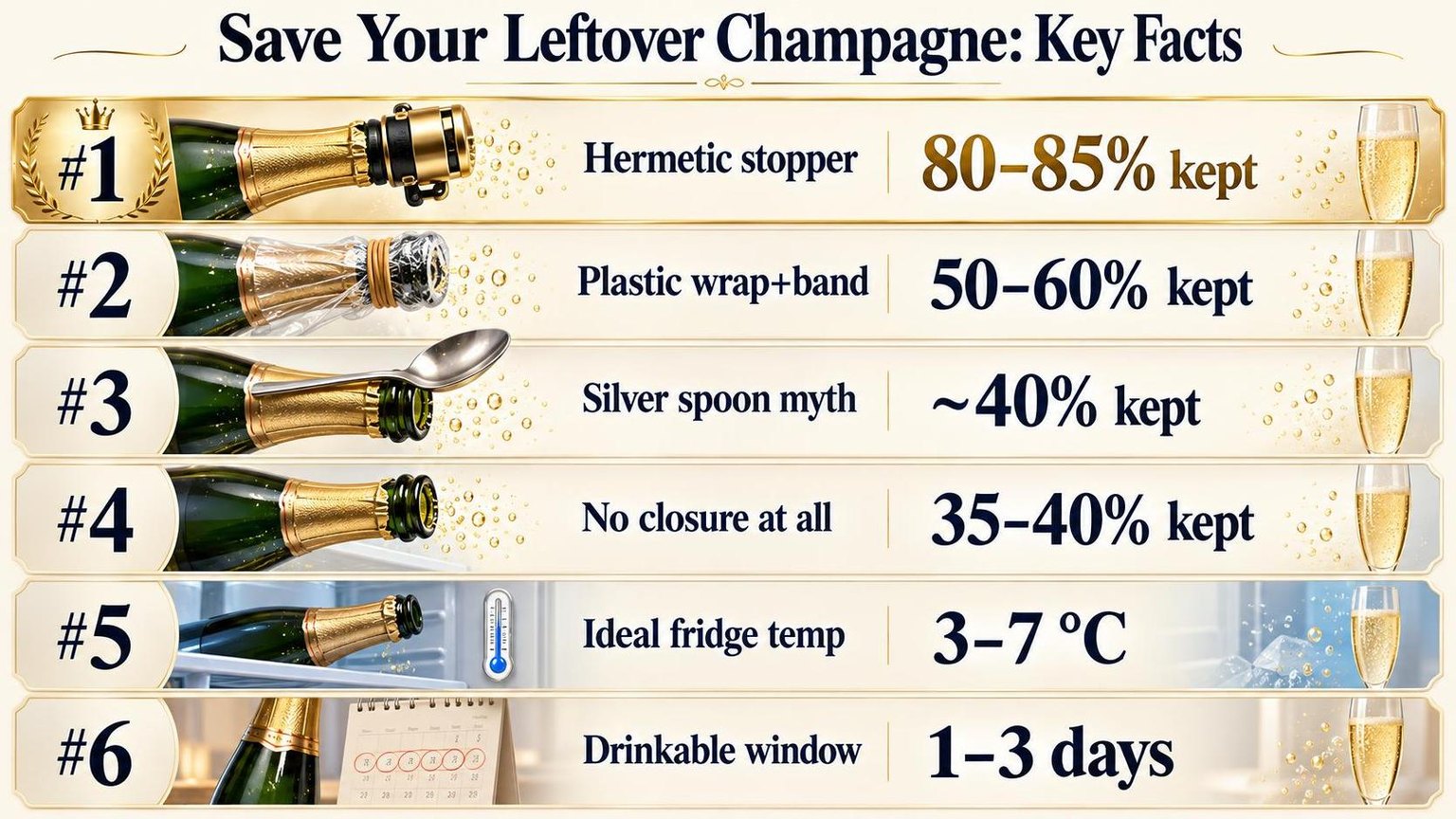
Keep Leftover Champagne Bubbly Longer
An opened bottle of Champagne loses roughly 1 atmosphere of pressure per hour at room temperature. Proper storage technique can preserve carbonation for 1–3 days instead of mere hours.
The key variables are temperature, seal type, and how much wine remains in the bottle.
Temperature Is the Single Biggest Factor
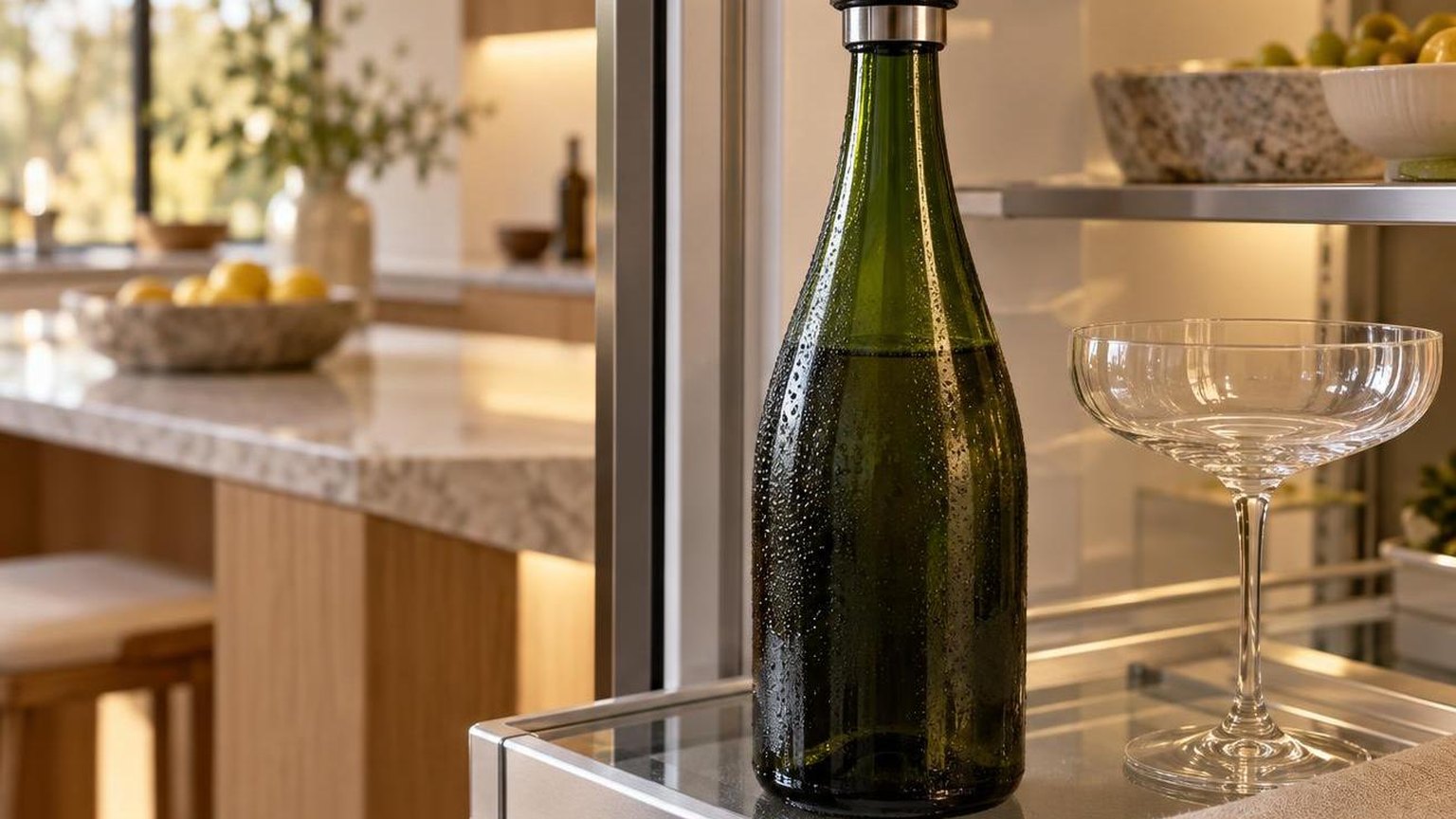
CO₂ stays dissolved in liquid more readily at lower temperatures. Refrigerate an opened bottle immediately at 3–7 °C (37–45 °F). Leaving it on the counter at 20 °C accelerates gas loss dramatically.
Hermetic Champagne Stopper vs. Spoon Myth
A hinged Champagne stopper with a silicone seal maintains internal pressure far longer than any improvised method.
The “silver spoon in the neck” trick has been debunked by controlled studies, including a well-known 1994 test by Champagne researcher Richard Juhlin.
| Closure Method | Carbonation After 24 Hours (Refrigerated) |
| Champagne stopper (hermetic seal) | ~80–85 % retained |
| Plastic wrap + rubber band | ~50–60 % retained |
| Silver spoon in neck | ~40 % retained |
| No closure at all | ~35–40 % retained |
The data confirms that a proper stopper is the only method that meaningfully outperforms doing nothing. Spoons and loose covers offer negligible benefit.
Volume Matters
A half-full bottle loses bubbles faster than a three-quarters-full one. Less liquid means more headspace, allowing CO₂ to escape the wine and fill the gap above it. Drink from smaller-format bottles when possible to reduce leftover volume.
Practical Storage Checklist
- Seal with a lever-lock Champagne stopper rated for up to 6 atm of pressure.
- Refrigerate upright—storing on the side increases the surface area exposed to the closure and can cause leaks.
- Consume within 1–3 days; after 48 hours even well-sealed bottles lose noticeable effervescence.
- Avoid repeated opening and reclosing, which releases pressure each time.
If carbonation does fade beyond the point of enjoyable sipping, the wine is still perfectly usable. Flat Champagne works well in cooking, cocktails, and vinaigrettes—topics covered in the sections below.
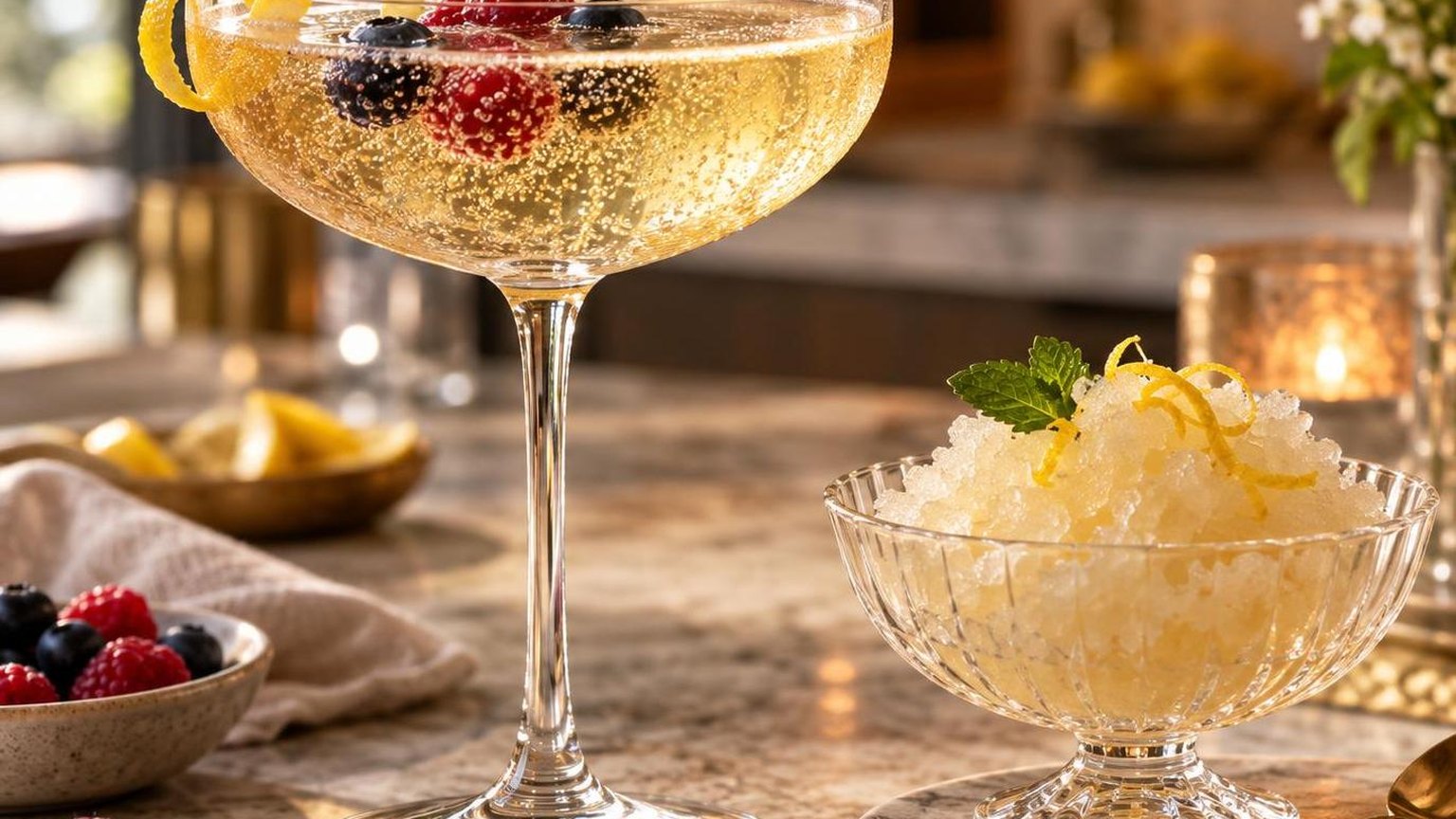
Mix Leftover Champagne Into Cocktails
Day-old Champagne retains enough carbonation and acidity to anchor several classic cocktails. Even partially flat bottles work because mixers, syrups, and spirits compensate for lost effervescence.
These recipes stretch a half-empty bottle into 4–6 servings.
Classic Champagne Cocktails Worth Trying
- Champagne Cocktail: Place 1 sugar cube in a flute, dash 2–3 drops Angostura bitters onto it, top with 4 oz leftover Champagne, and garnish with a lemon twist. Dating to the 1860s, this is one of the oldest recorded cocktails.
- French 75: Combine 1 oz London dry gin, 0.5 oz fresh lemon juice, and 0.5 oz simple syrup in a shaker with ice. Strain into a flute and top with 3 oz Champagne.
- Kir Royale: Pour 0.5 oz crème de cassis into a flute and top with 4 oz Champagne. The blackcurrant liqueur masks any slight oxidation in day-old wine.
- Mimosa: Mix equal parts fresh-squeezed orange juice and Champagne (typically 3 oz each). The juice’s sweetness and body disguise reduced bubbles effectively.
Ratio Guidelines by Cocktail Type
| Cocktail | Champagne (oz) | Spirit/Mixer (oz) | Champagne % |
| Champagne Cocktail | 4 | 0 (bitters only) | ~98% |
| French 75 | 3 | 2 (gin + citrus + syrup) | 60% |
| Kir Royale | 4 | 0.5 (cassis) | 89% |
| Mimosa | 3 | 3 (orange juice) | 50% |
| Bellini | 3 | 2 (peach purée) | 60% |
Higher Champagne ratios like the Champagne Cocktail demand bottles with more remaining fizz. Lower ratios like the Mimosa forgive significant flatness.
Practical Tips
Chill leftover Champagne to 45°F (7°C) before mixing. Cold liquid holds dissolved CO₂ better than warm, preserving whatever carbonation remains.
Use the leftover bottle within 24–36 hours of opening. Beyond that window, oxidation shifts the flavor profile toward bruised apple and wet cardboard—too degraded for most cocktail applications.
Pour Champagne gently down the glass side rather than splashing it in. This technique retains up to 25% more carbonation compared to a direct center pour, according to research published in the Journal of Agricultural and Food Chemistry.
Deglaze Pans With Flat Champagne
Flat Champagne retains its acidity (pH 3.0–3.3) and residual sugars even after carbonation dissipates.
Those properties make it an effective deglazing liquid that lifts fond—the caramelized proteins stuck to a pan—while adding nuanced flavor no stock alone can deliver.
Why Flat Champagne Works for Deglazing
Tartaric and malic acids in Champagne dissolve fond through the same chemical mechanism as white wine or vinegar. The difference is subtlety: Champagne’s lower tannin content produces a cleaner, more refined pan sauce.
Residual sugar levels vary by Champagne style, which directly affects the sauce’s flavor profile.
| Champagne Style | Residual Sugar (g/L) | Sauce Character |
| Brut Nature | 0–3 | Sharp, mineral-driven |
| Extra Brut | 0–6 | Crisp, lean |
| Brut | 6–12 | Balanced, versatile |
| Extra Dry (Extra Sec) | 12–17 | Slightly sweet glaze |
| Demi-Sec | 32–50 | Distinctly sweet reduction |
Brut is the most versatile option for savory deglazing. Reserve Demi-Sec for dessert-oriented applications like caramelized fruit sauces.
Technique Step by Step
- Remove the seared protein from the pan and keep heat at medium-high (around 200°C / 400°F).
- Pour 120–180 ml (roughly ½ to ¾ cup) of flat Champagne into the hot pan.
- Scrape the fond with a wooden spoon or flat-edged spatula for 60–90 seconds as the liquid reduces.
- Reduce by approximately half—the sauce should coat the back of a spoon.
- Finish with 15–30 g of cold butter, swirled off heat, to emulsify the sauce (a classic French technique called monter au beurre).
Best Pairings
Flat Champagne deglazing works particularly well with seared chicken breast, pan-roasted scallops, and pork medallions. Its high acidity cuts through fat effectively, producing a bright counterpoint to rich proteins.
Alcohol evaporates at 78.3°C, so the sauce will lose most ethanol during reduction. Roughly 85% of the alcohol cooks off within 2 minutes of active simmering at a full boil, according to USDA nutrient retention data.
Cook Champagne Risotto and Cream Sauces
Leftover Champagne functions as a superior deglazing liquid and cooking wine because its residual acidity (pH 3.0–3.2) tenderizes proteins and cuts through fat.
Even flat Champagne retains the tartaric and malic acids that make it valuable in the kitchen.
Champagne Risotto Technique
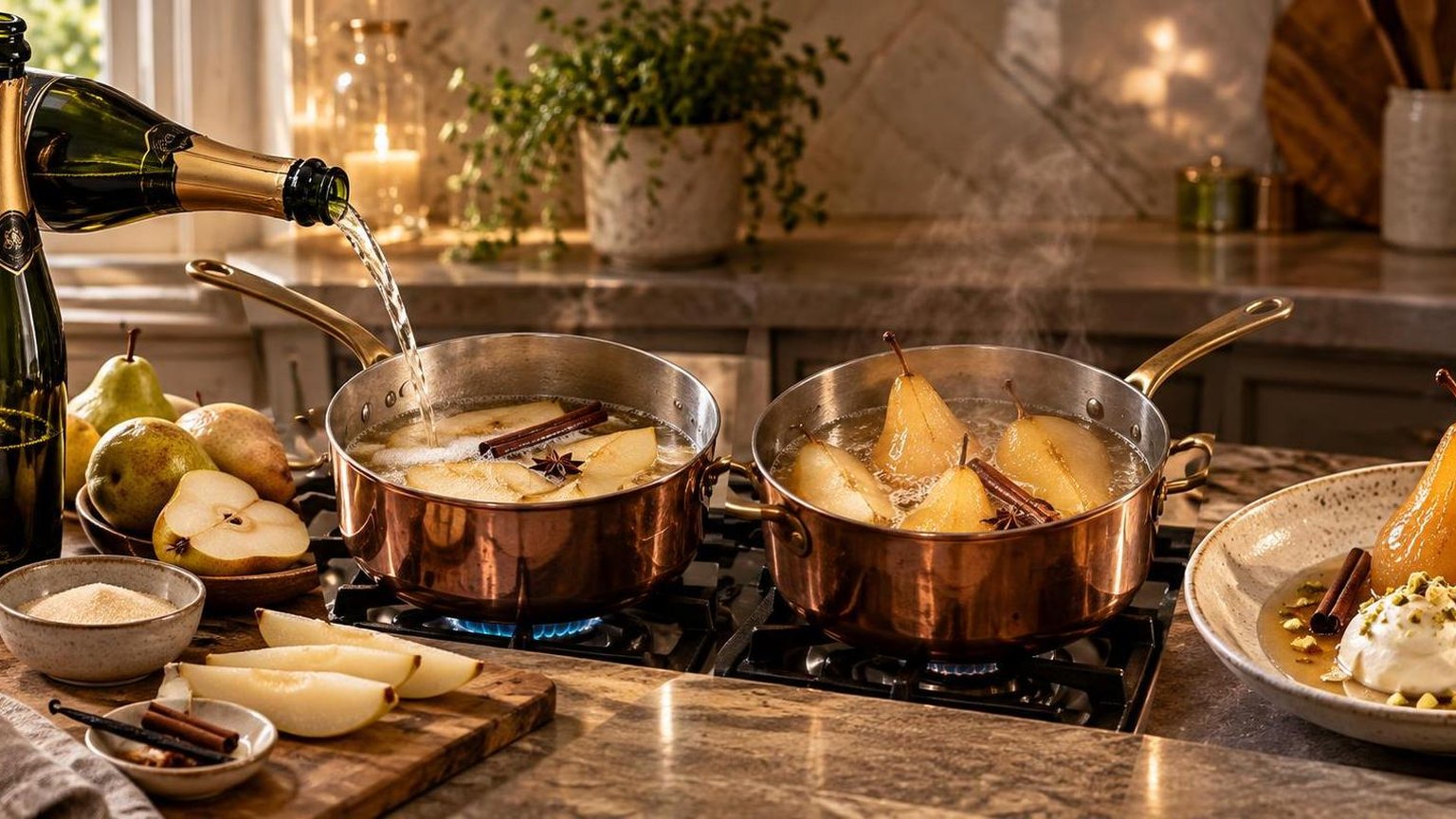
Replace the initial white wine addition in risotto with 120–180 ml of leftover Champagne. Add it after toasting the Arborio rice in butter for 2–3 minutes, letting the liquid fully absorb before ladling in warm stock.
Brut Champagne works best because its residual sugar sits below 12 g/L, preventing the risotto from turning sweet. Demi-sec (32–50 g/L residual sugar) will produce a noticeably sweeter dish unsuitable for savory preparations.
| Champagne Style | Residual Sugar (g/L) | Best Use |
| Brut Nature | 0–3 | Risotto, pan sauces |
| Extra Brut | 0–6 | Risotto, cream sauces |
| Brut | 0–12 | Risotto, beurre blanc |
| Extra Dry | 12–17 | Shellfish glazes |
| Demi-Sec | 32–50 | Dessert sauces only |
Champagne Cream Sauce
Reduce 240 ml of Champagne by half over medium-high heat (approximately 4–5 minutes). Add 180 ml of heavy cream, then simmer until the sauce coats the back of a spoon—roughly 6–8 minutes more.
The reduction concentrates flavor compounds while boiling off alcohol. A standard 12.5% ABV Champagne loses virtually all ethanol after 5 minutes of sustained boiling at 78.4°C, alcohol’s evaporation point.
- Finish with 1 tablespoon of cold butter, whisked in off-heat, for glossy body
- Season with fine sea salt and white pepper to avoid dark specks
- Add 1 teaspoon of fresh lemon juice to brighten acidity after cream dulls it
- Pair the sauce with seared scallops, chicken breast, or fresh pasta
Leftover Champagne stays usable for cooking up to 3–5 days when refrigerated with a sealed stopper. The flavor degrades after that window as acetic acid bacteria convert ethanol to vinegar.
Poach Fruit in Leftover Champagne
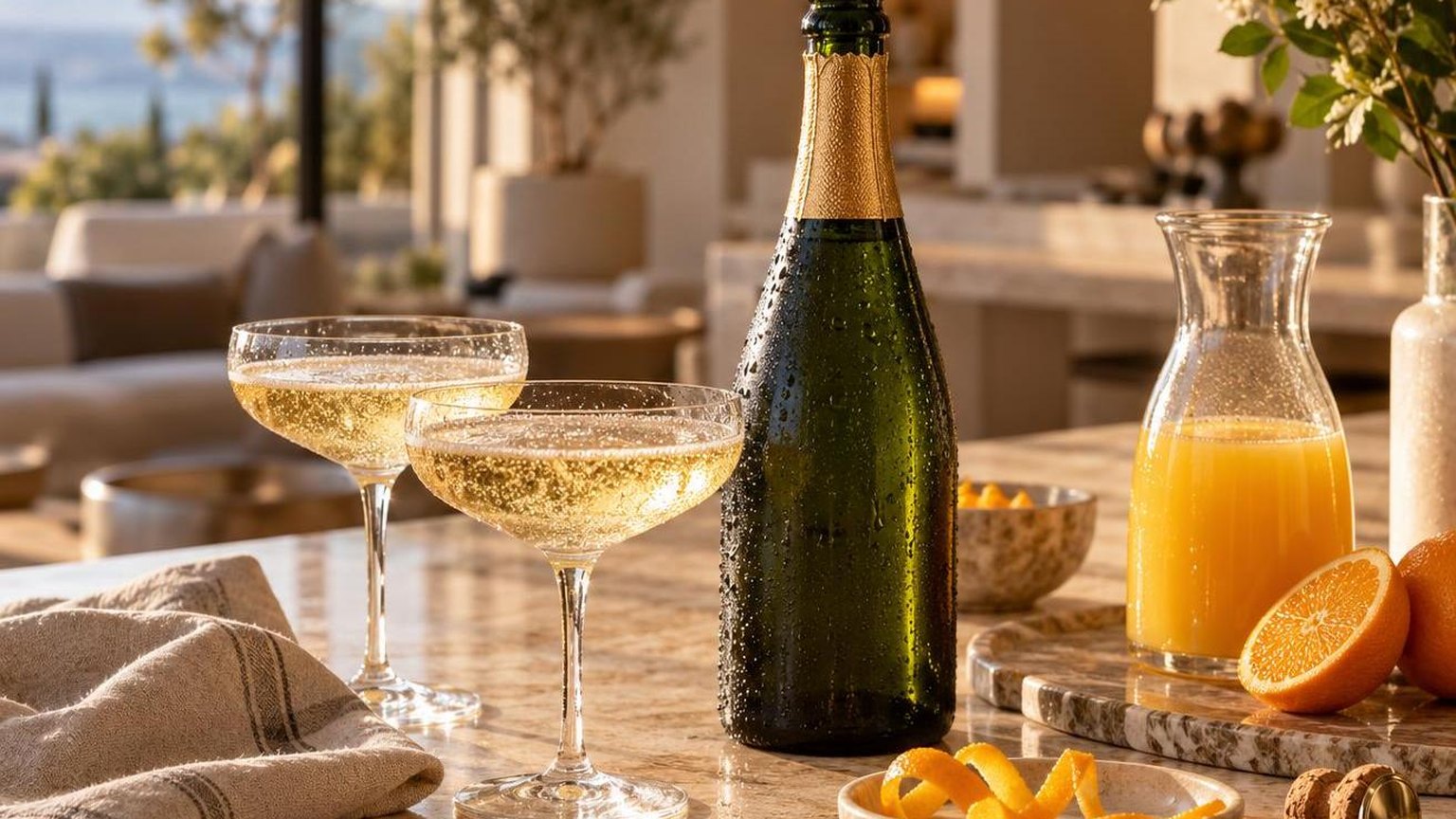
Poaching fruit in leftover Champagne transforms flat bubbles into an elegant dessert in under 20 minutes. The wine’s residual acidity and sugar create a syrup that caramelizes around stone fruits, pears, and citrus segments without added fat.
The technique requires a simple ratio: 1 cup leftover Champagne, ½ cup granulated sugar, and 1 cup water. Heat the mixture to 160–180°F (71–82°C) and maintain that range for 8–15 minutes depending on the fruit.
Poaching Times by Fruit
| Fruit | Prep | Poaching Time | Ideal Doneness |
| Pear halves (Bosc) | Peeled, cored | 12–15 minutes | Knife pierces center easily |
| Peach halves | Blanched, skinned | 8–10 minutes | Slightly firm at core |
| Plums (halved) | Pitted | 5–7 minutes | Skin loosens but holds shape |
| Figs (whole) | Stems trimmed | 4–6 minutes | Soft but intact |
Brut Champagne (under 12 g/L residual sugar) produces a drier, more nuanced poaching liquid. Demi-sec bottles (32–50 g/L residual sugar) reduce the need for added granulated sugar by roughly half.
Flavor Additions That Work
- One vanilla bean, split and scraped, added to the liquid before heating
- 3–4 whole star anise pods for warm spice depth
- 2 strips of lemon zest (about 3 inches each) for brightness
- 1 tablespoon honey stirred in after removing from heat
- A pinch of saffron (roughly 8–10 threads) for color and floral aroma
After poaching, remove the fruit and reduce the remaining liquid over medium-high heat by about two-thirds. This takes 5–8 minutes and yields approximately ¼ cup of concentrated Champagne syrup.
Serve poached fruit warm over vanilla ice cream, alongside panna cotta, or chilled on a cheese board. The reduced syrup keeps refrigerated in a sealed jar for up to 5 days.
Flat Champagne that has sat open for 24–48 hours works perfectly here. The carbonation is irrelevant; the wine’s tartaric and malic acids do the real work of balancing sweetness against the fruit’s natural sugars.
Turn Leftover Champagne Into Granita
Champagne granita transforms flat, day-old bubbly into an elegant frozen dessert in under 4 hours. The residual sugar and acidity in Champagne create a granita with more complexity than one made from simple syrup and water.
The base ratio matters. Most fruit granitas use a 4:1 liquid-to-sugar ratio, but Champagne already contains 12–20 g/L of residual sugar in Brut styles, so you need less added sweetener.
| Champagne Style | Residual Sugar (g/L) | Added Sugar Needed |
| Brut Nature | 0–3 | 80–100 g per 750 mL |
| Extra Brut | 0–6 | 70–90 g per 750 mL |
| Brut | 0–12 | 50–70 g per 750 mL |
| Extra Dry / Extra Sec | 12–17 | 30–50 g per 750 mL |
| Demi-Sec | 32–50 | 0–20 g per 750 mL |
Sugar lowers the freezing point. Too much and the granita won’t set; too little and it freezes into an impenetrable block. Target a final sugar concentration around 15–20% by weight for proper icy-flaky texture.
Method
- Warm 120 mL of the leftover Champagne in a saucepan just enough to dissolve your measured sugar. Do not boil—heat above 78°C drives off alcohol and aromatic esters.
- Combine the sweetened portion with the remaining Champagne and add 2 tablespoons (30 mL) of fresh lemon juice to sharpen acidity.
- Pour the mixture into a shallow metal baking pan. Metal conducts cold faster than glass, cutting freeze time by roughly 30%.
- Freeze for 1 hour, then rake the surface with a fork every 30–45 minutes for the next 2–3 hours until fully crystallized.
- Serve immediately or store covered for up to 5 days at −18°C.
One 750 mL bottle yields approximately 4 servings of 180–200 mL each.
Alcohol content drops during freezing since ethanol doesn’t crystallize, but enough remains—typically 3–5% ABV—to keep the texture loose rather than rock-solid.
Pair the finished granita with fresh raspberries or a drizzle of elderflower liqueur. It works equally well as a palate cleanser between courses or a standalone dessert after a rich meal.
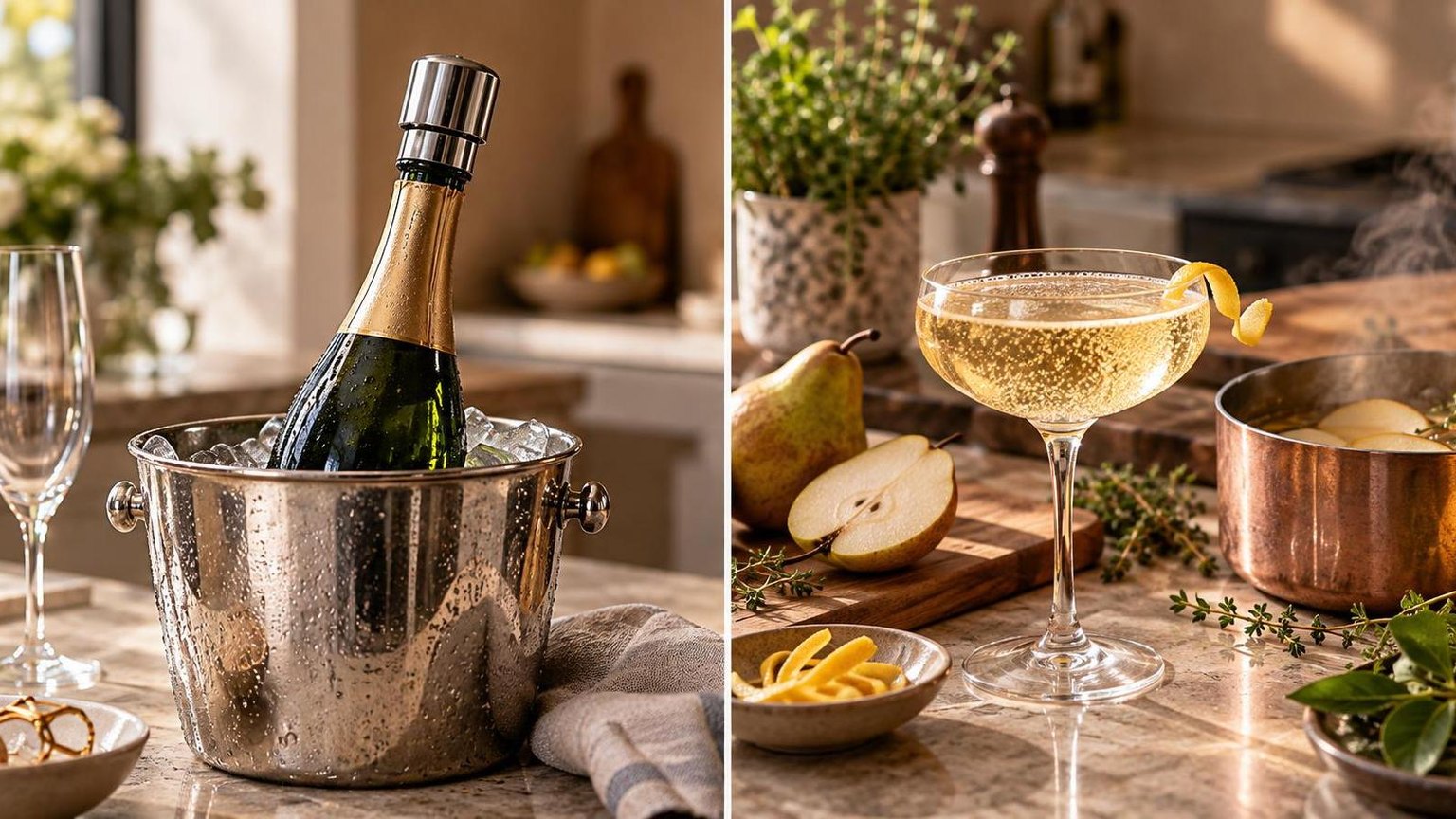
Freeze Leftover Champagne for Cooking
Flat Champagne freezes well and performs beautifully in pan sauces, risottos, and poaching liquids. Standard ice cube trays yield roughly 30 ml (1 oz) per cube, giving you pre-portioned blocks ready for deglazing a skillet in seconds.
How to Freeze Champagne Properly
Champagne’s alcohol content (typically 12–12.5% ABV) lowers its freezing point to approximately −5°C (23°F). Most home freezers run at −18°C (0°F), cold enough to freeze it solid within 3–4 hours.
- Let the Champagne go fully flat before freezing—residual CO₂ can crack trays or expand unpredictably.
- Pour into silicone ice cube trays, filling each well about three-quarters full to allow for expansion.
- Freeze uncovered for 4 hours, then transfer cubes to a labeled freezer bag, pressing out excess air.
- Store for up to 3 months; after that, oxidation degrades flavor even at freezer temperatures.
Cooking Applications by Cube Count
Each 30 ml cube replaces a measured splash of white wine in virtually any savory recipe. The residual sugar in Champagne (typically 6–12 g/L for Brut) adds subtle complexity that dry still wines lack.
| Dish | Cubes Needed | Approximate Volume |
| Pan sauce for 2 chicken breasts | 3–4 cubes | 90–120 ml |
| Risotto (4 servings) | 4–5 cubes | 120–150 ml |
| Steamed mussels (1 kg) | 5–6 cubes | 150–180 ml |
| Beurre blanc sauce | 6–8 cubes | 180–240 ml |
Tips for Best Results
Drop cubes directly into a hot pan—no thawing needed. The rapid temperature change creates immediate steam, loosening fond from the cooking surface for richer sauces.
Avoid using frozen Champagne in raw preparations like vinaigrettes. Freezing mutes delicate aromatics, leaving a flat, slightly acidic flavor that works only when heat re-integrates it into a dish.
Label bags with the Champagne style (Brut, Extra Dry, Rosé) so you can match sweetness levels to specific recipes. A drier Brut cube suits savory reductions; sweeter Extra Dry works better in fruit-based glazes.
Questions Readers Ask
How long does opened Champagne stay drinkable in the refrigerator?
Opened Champagne retains acceptable fizz for 3–5 days when sealed with a hermetic Champagne stopper and stored at 4–7 °C.
A 2019 study published in the Journal of Agricultural and Food Chemistry found that roughly 40% of dissolved CO₂ remains after 24 hours under a proper stopper, dropping to around 10% by day five.
Without a stopper, most effervescence dissipates within 2–4 hours.
Can leftover Champagne be used for cooking?
Flat or near-flat Champagne works as a 1:1 substitute for dry white wine in pan sauces, risotto, and beurre blanc.
Its higher acidity (typically pH 3.0–3.1 versus 3.2–3.4 for still white wine) makes it especially effective for deglazing and for cream-based sauces where a sharper cut is desirable.
Reduce it by half over medium heat to concentrate flavor and burn off alcohol.
Does the spoon-in-the-bottle trick actually preserve bubbles?
No.
A controlled experiment conducted by Interprofessional Committee of Champagne Wine (CIVC) scientist Gérard Liger-Belair demonstrated that a dangling spoon has no measurable effect on CO₂ retention compared to leaving the bottle completely open.
The myth persists, but only a hermetic Champagne stopper or crown cap meaningfully slows gas loss.
Can you freeze leftover Champagne for later use?
Pour Champagne into ice-cube trays and freeze for up to 3 months; the cubes are ideal for adding acidity to pan sauces, cocktails, or fruit sorbets.
Expect the wine to lose virtually all effervescence upon thawing because CO₂ escapes as the liquid expands during freezing. Each standard ice-cube slot holds roughly 30 mL, so a half-bottle yields about 12 cubes.
What cocktails work best with day-old Champagne that has lost its fizz?
Flat Champagne substitutes well in a French 75 (60 mL Champagne, 30 mL gin, 15 mL lemon juice, 10 mL simple syrup) because the shaker aerates it slightly and the citrus masks any staleness.
It also works in a Champagne vinaigrette—whisk 3 parts flat Champagne with 1 part Dijon mustard and 4 parts olive oil for a salad dressing with brighter acidity than standard white-wine versions.
Is leftover Champagne effective as a household cleaning agent?
The tartaric acid in Champagne (5–7 g/L) gives it mild descaling ability comparable to dilute white vinegar. It can remove light water spots from stainless steel and glass when applied with a microfiber cloth.
However, its residual sugar (even Brut contains up to 12 g/L under EU regulations) means surfaces should be wiped with water afterward to prevent stickiness.
- How Champagne Is Made? The Most Understandable Information
- Cava Vs Champagne: The Easiest Way to Distinguish
- How To Bottle Champagne Cork? – A Practical, Step-by-Step Guide From Real Experience
- 11 Essential Facts About How Much Alcohol Is In Champagne (2026 ABV Guide, Serving Strength, Effects & Real Tasting Experience)
- How Long Does Open Champagne Last?
- How Many Mimosas in a Bottle of Champagne?
- Does Champagne Get Better with Age?
- All Alcohol Guides
- USDA Food Safety and Inspection Service – Safe Food Handling (2023)
- National Institutes of Health / PubMed – "Carbon Dioxide in Sparkling Wine: Kinetics of CO₂ Losses" (2019)
- University of California Davis – Department of Viticulture and Enology (2024)
- FDA – Food Code: Refrigeration and Storage Requirements (2022)
- USDA FoodData Central – Alcoholic Beverage, Wine, Table, White (2024)
- Cornell University College of Agriculture – Wine Chemistry and Oxidation (2023)
- National Center for Home Food Preservation, University of Georgia (2023)