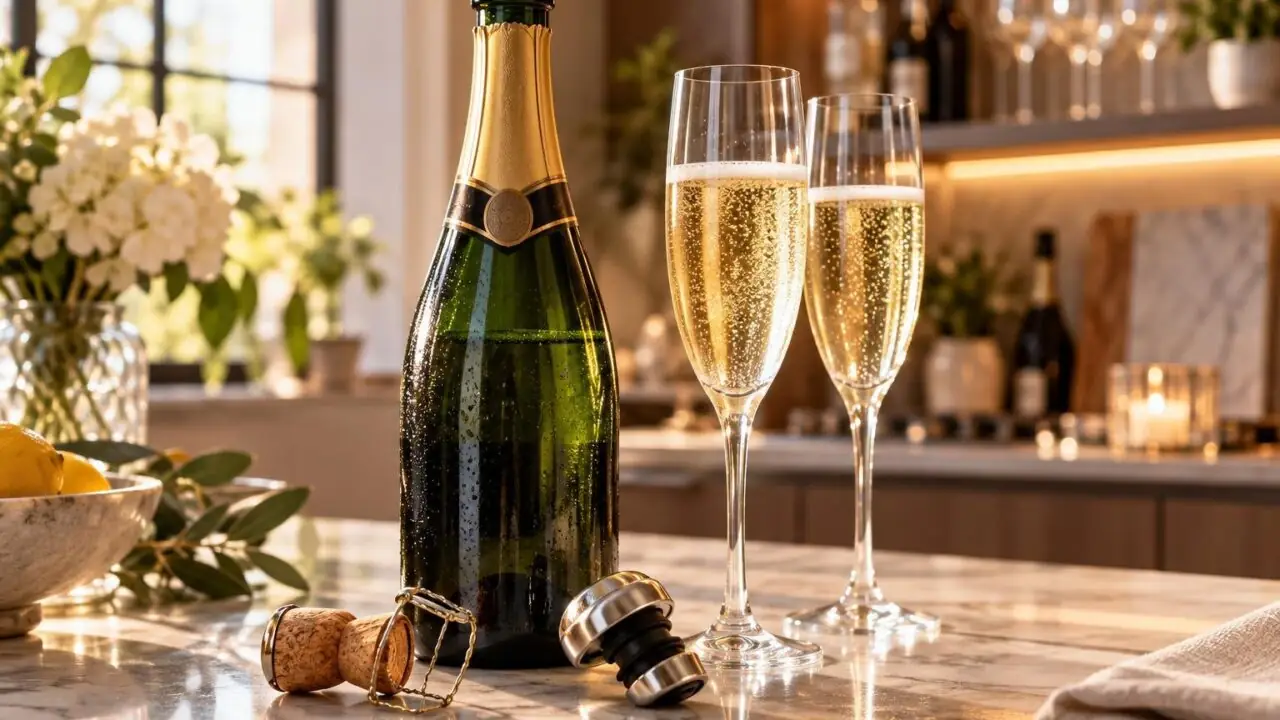
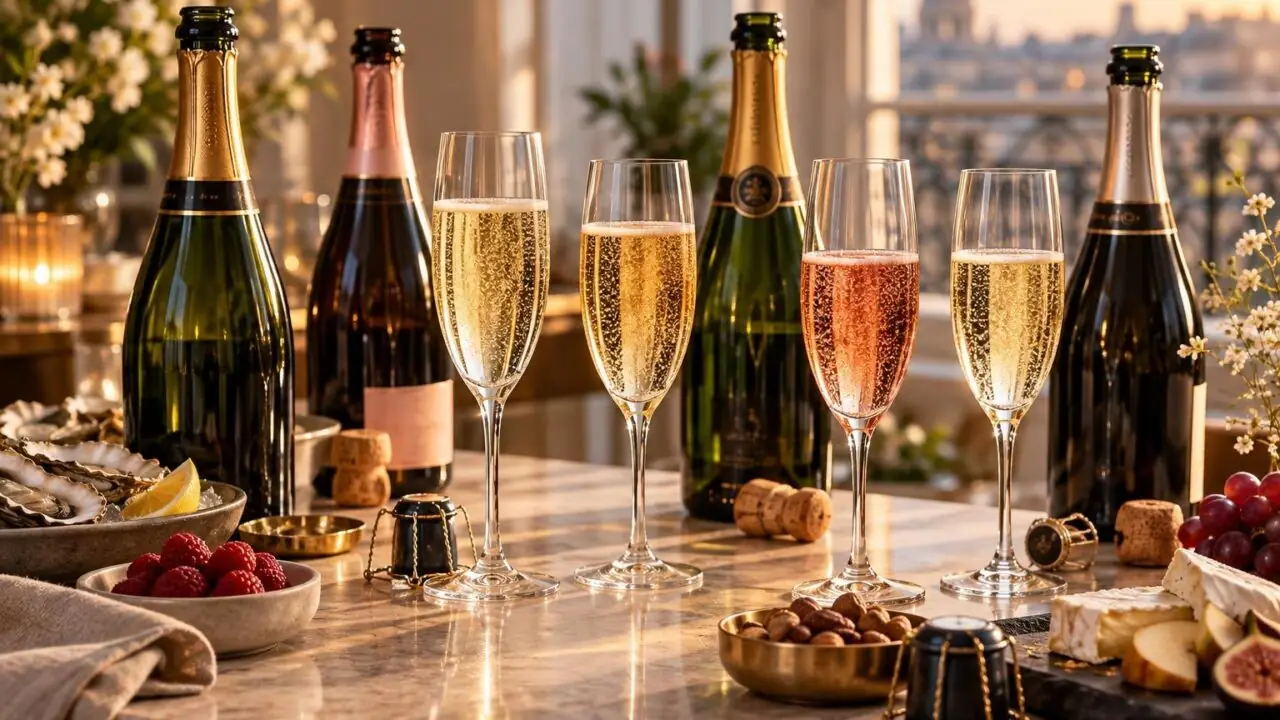
different types of champagne are distinguished by grape blend, sweetness, aging, and production style. Non-vintage Champagne combines wines from multiple harvests, while vintage Champagne comes from one declared year.
Blanc de blancs uses only white Chardonnay grapes; blanc de noirs uses dark-skinned Pinot Noir, Pinot Meunier, or both.
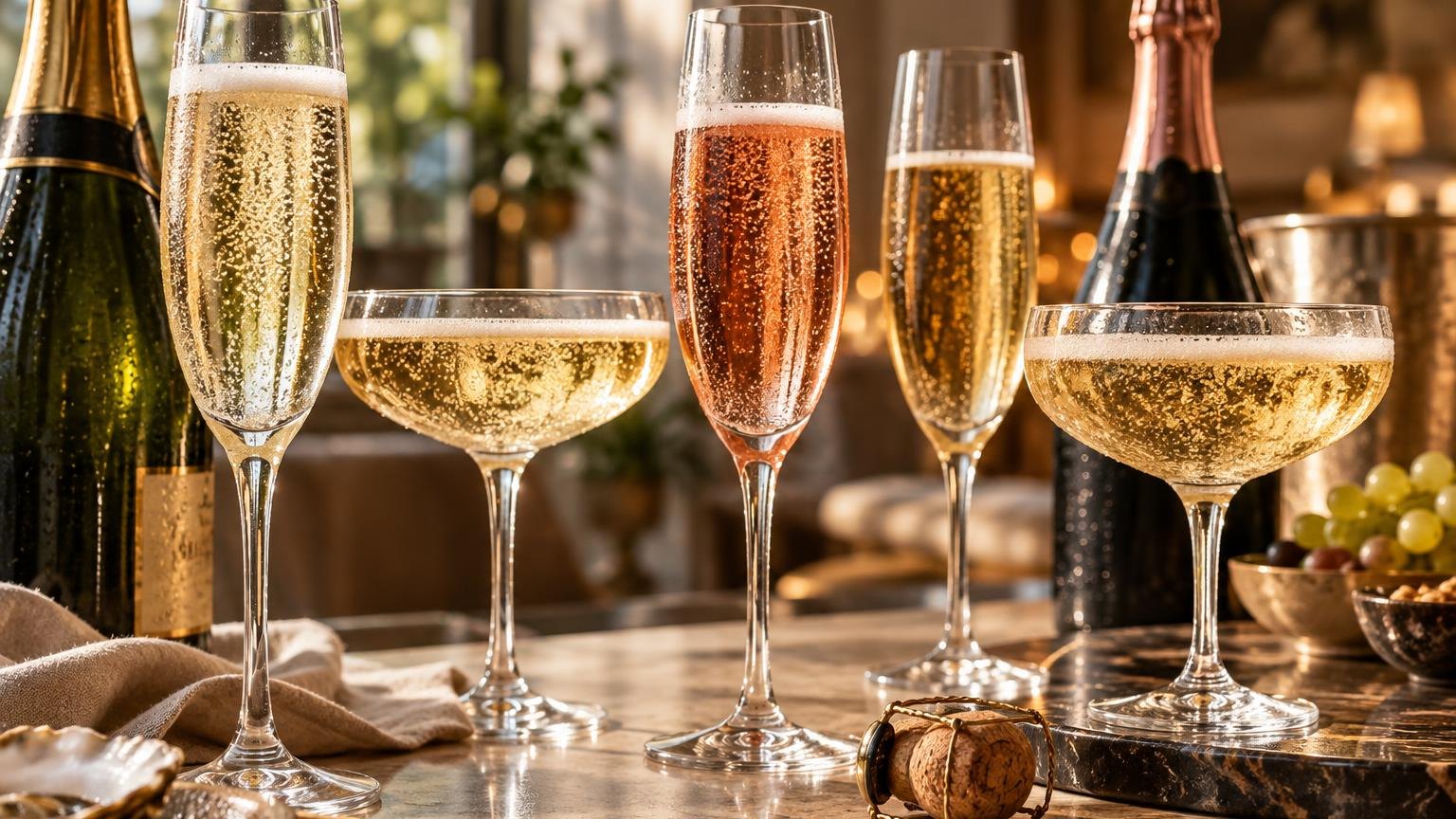
- Rosé Champagne gains color through brief skin contact or blending red wine into the cuvée. Sweetness levels range from brut nature, with minimal dosage, to doux, the sweetest category. Prestige cuvées receive longer cellar aging and usually emphasize texture, complexity, and vineyard character. Understanding these categories helps match a bottle to food, occasion, and personal taste. Labels also reveal producer type, blend, vintage status, dosage, and regional designation, giving
- Champagne Styles by Sweetness Level
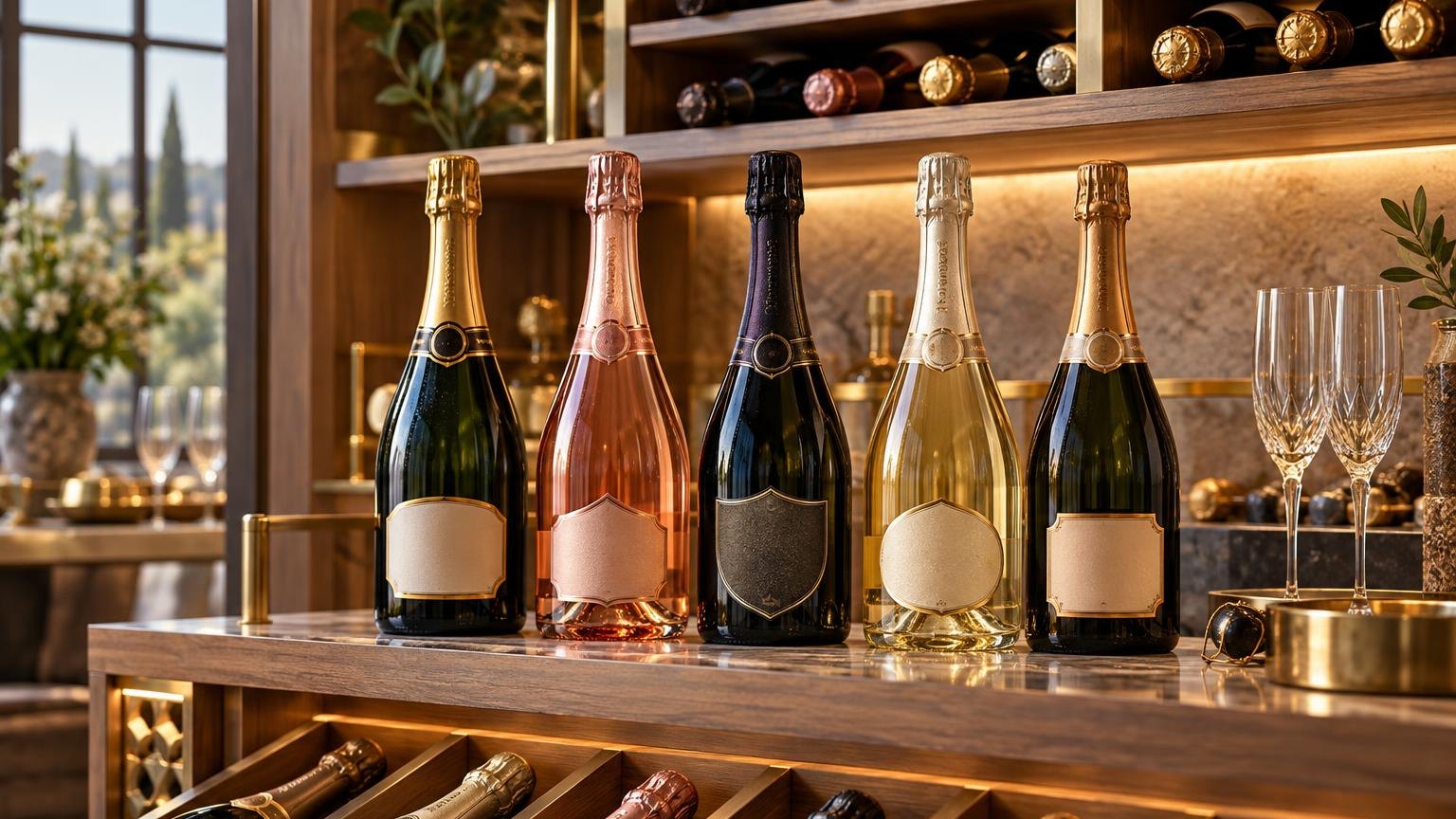
- Champagne sweetness is determined by the dosage—a mixture of wine and sugar added after disgorgement. The EU legally defines seven sweetness categories based on residual sugar measured in grams per liter (g/L).
| Style | Residual Sugar (g/L) | Character |
| Brut Nature (Zero Dosage) | 0–3 | Bone-dry, no added sugar |
| Extra Brut | 0–6 | Very dry, razor-sharp acidity |
| Brut | 0–12 | Dry with subtle roundness |
| Extra Dry (Extra Sec) | 12–17 | Off-dry, hint of sweetness |
| Sec (Dry) | 17–32 | Noticeably sweet despite the name |
| Demi-Sec | 32–50 | Sweet, dessert-friendly |
| Doux | 50+ | Richly sweet, extremely rare today |
Brut: The Dominant Category
Brut accounts for roughly 90–95% of all Champagne production. Most major houses—Moët & Chandon, Veuve Clicquot, Laurent-Perrier—release their flagship non-vintage cuvées at 8–10 g/L residual sugar.
The Rise of Zero-Dosage Champagne
Brut Nature surged in popularity after the mid-2000s. Producers like Drappier, Pascal Doquet, and Laherte Frères championed the style to showcase terroir without sugar masking acidity or minerality.
This category demands pristine base wine. Grapes must reach full phenolic ripeness because no dosage compensates for green or underripe fruit character.
Extra Dry: A Confusing Name
Extra Dry sits sweeter than Brut despite its name. The term originates from the 19th century, when Russian and English markets preferred heavily dosed Champagnes containing 150+ g/L sugar.
“Extra Dry” was genuinely drier than the norm at that time.
Demi-Sec and Doux: Niche but Valued
Demi-Sec pairs exceptionally with foie gras, fruit tarts, and blue cheese. Veuve Clicquot Rich and Moët & Chandon Nectar Impérial are well-known examples in this bracket.
- Doux Champagne has nearly vanished from production—fewer than a handful of houses still release it commercially.
- Serving temperature matters more at higher sweetness: chill Demi-Sec to 6–8°C to keep sugar in balance.
- Dosage decisions are made by the cellar master, often months before release, and define a house’s signature style.
Brut Nature and Extra Brut Champagne
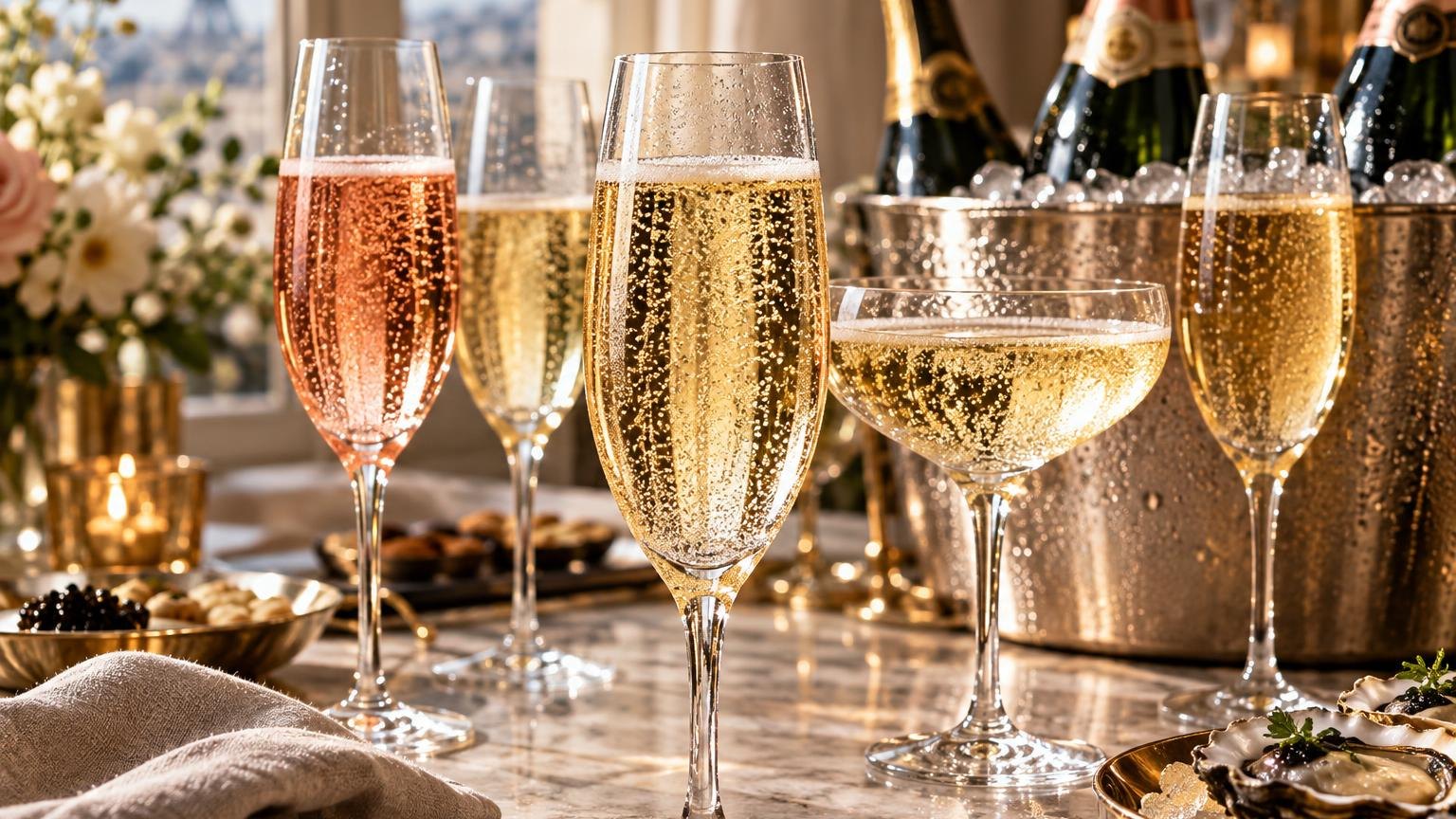
Brut Nature and Extra Brut represent the driest end of the Champagne sweetness spectrum.
These styles contain minimal or zero added sugar after disgorgement, letting the raw character of the base wine and terroir speak without the softening effect of dosage.
Dosage Levels Defined
The EU regulation (EC No 607/2009) sets precise residual sugar limits for each designation. The differences are small but perceptible on the palate.
| Style | Residual Sugar | Dosage Added |
| Brut Nature (Zero Dosage) | 0–3 g/L | None |
| Extra Brut | 0–6 g/L | 0–6 g/L |
| Brut (for comparison) | 0–12 g/L | Up to 12 g/L |
Why These Styles Demand Superior Base Wine
Dosage masks flaws. Without it, any imbalance in acidity, fruit concentration, or winemaking precision becomes immediately apparent. Producers reserve Brut Nature bottlings for their strongest vintages and most expressive parcels.
Grapes must reach optimal phenolic ripeness—typically 10–11% potential alcohol before secondary fermentation—while retaining enough natural acidity (6–8 g/L tartaric acid equivalent) to maintain structure.
Notable Brut Nature and Extra Brut Producers
- Drappier Brut Nature – Pinot Noir-dominant from Urville in the Côte des Bar, zero dosage, aged 36 months on lees
- Louis Roederer Brut Nature – collaboration with Philippe Starck, produced from certified organic and biodynamic fruit since 2012
- Laurent-Perrier Ultra Brut – pioneered the modern zero-dosage movement when first released in 1981
- Pascal Doquet Arpège Extra Brut – grower Champagne from Le Mesnil-sur-Oger Grand Cru, 100% Chardonnay
Food Pairing Considerations
The high acidity and bone-dry profile make Brut Nature ideal alongside oysters, sashimi, ceviche, and lightly salted charcuterie. Avoid pairing with sweet or heavily spiced dishes, which amplify the wine’s austerity.
These styles have grown significantly in market share since the early 2000s, driven by consumer demand for lower-sugar beverages and the grower Champagne movement’s emphasis on terroir transparency over house-style blending.
Brut Champagne Explained
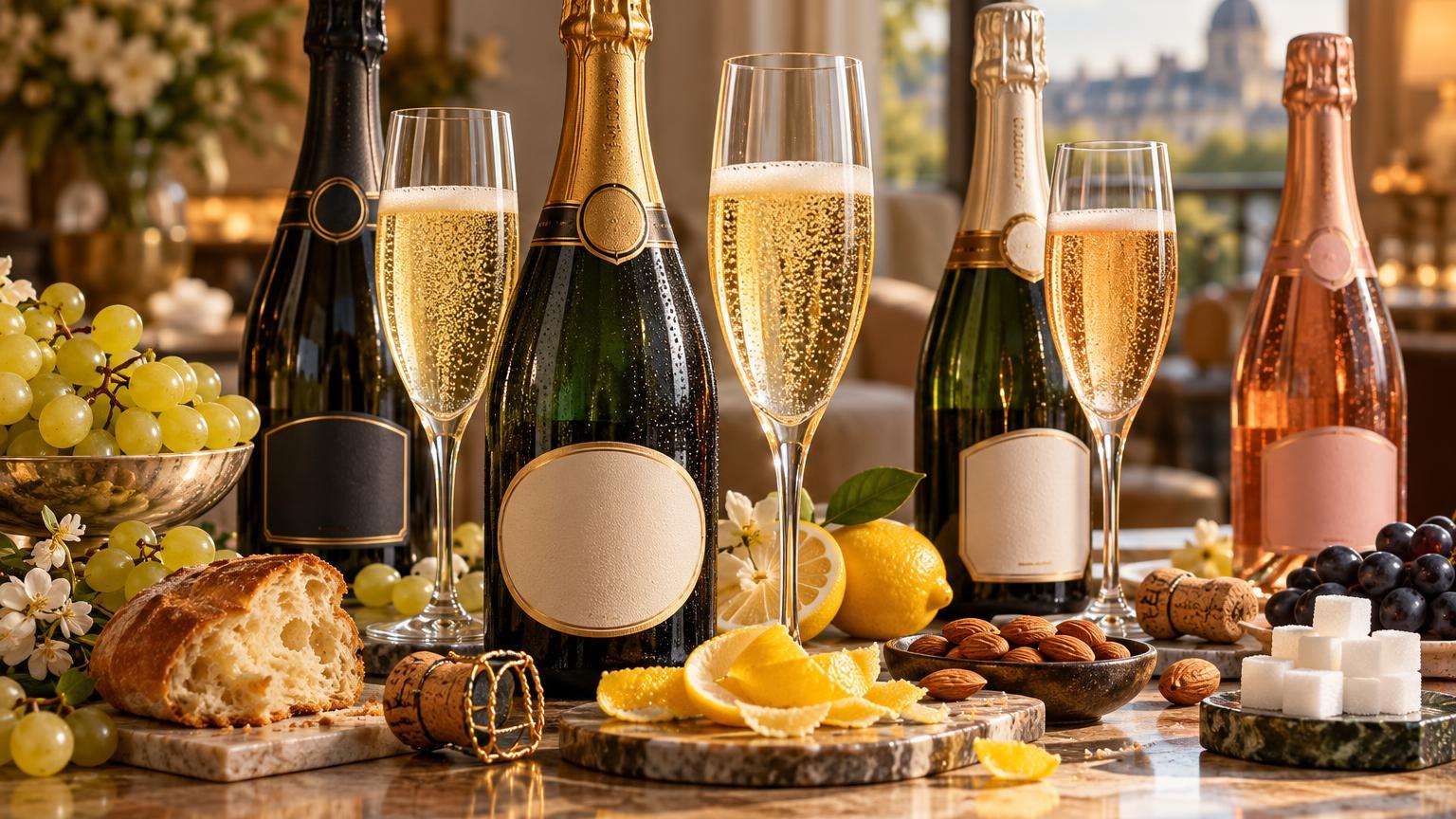
Brut Champagne contains fewer than 12 grams of residual sugar per liter, making it the most widely consumed sweetness category worldwide.
It accounts for roughly 90% of all Champagne produced, dominating both retail shelves and restaurant wine lists across every major market.
The term “brut” translates from French as “raw” or “unrefined,” referencing the minimal sugar added during dosage—the final step before corking.
Brut Within the Sweetness Spectrum
Champagne’s official sweetness levels, regulated by the European Union under Regulation (EC) No 607/2009, span seven categories. Brut sits near the drier end.
| Category | Residual Sugar (g/L) |
| Brut Nature / Zero Dosage | 0–3 |
| Extra Brut | 0–6 |
| Brut | 0–12 |
| Extra Dry / Extra Sec | 12–17 |
| Sec (Dry) | 17–32 |
| Demi-Sec | 32–50 |
| Doux | 50+ |
Most non-vintage Brut Champagnes carry between 6 and 10 g/L of dosage in practice, balancing acidity without tipping into perceptible sweetness.
What Defines a Quality Brut
Brut Champagne blends three permitted grape varieties: Chardonnay, Pinot Noir, and Pinot Meunier. The proportion of each shapes the wine’s character significantly.
- Chardonnay-dominant — citrus, minerality, and lean structure (e.g., Ruinart Blanc de Blancs)
- Pinot Noir-dominant — red fruit, body, and depth (e.g., Bollinger Special Cuvée, roughly 60% Pinot Noir)
- Pinot Meunier-dominant — roundness and fruit-forward approachability (e.g., Krug Grande Cuvée includes substantial Meunier)
Non-vintage Brut must age a minimum of 15 months on lees, with at least 12 months on lees specifically. Vintage-dated Brut requires 36 months minimum.
Price and Accessibility
Entry-level non-vintage Brut from major houses—Moët & Chandon Impérial, Veuve Clicquot Yellow Label, Nicolas Feuillatte—typically retails between $40 and $55 in the US.
Prestige cuvées like Dom Pérignon or Cristal, both classified as Brut, range from $200 to $350.
Brut’s restrained sugar makes it the most versatile Champagne for food pairing, complementing oysters, sushi, fried chicken, and aged cheeses without competing sweetness.
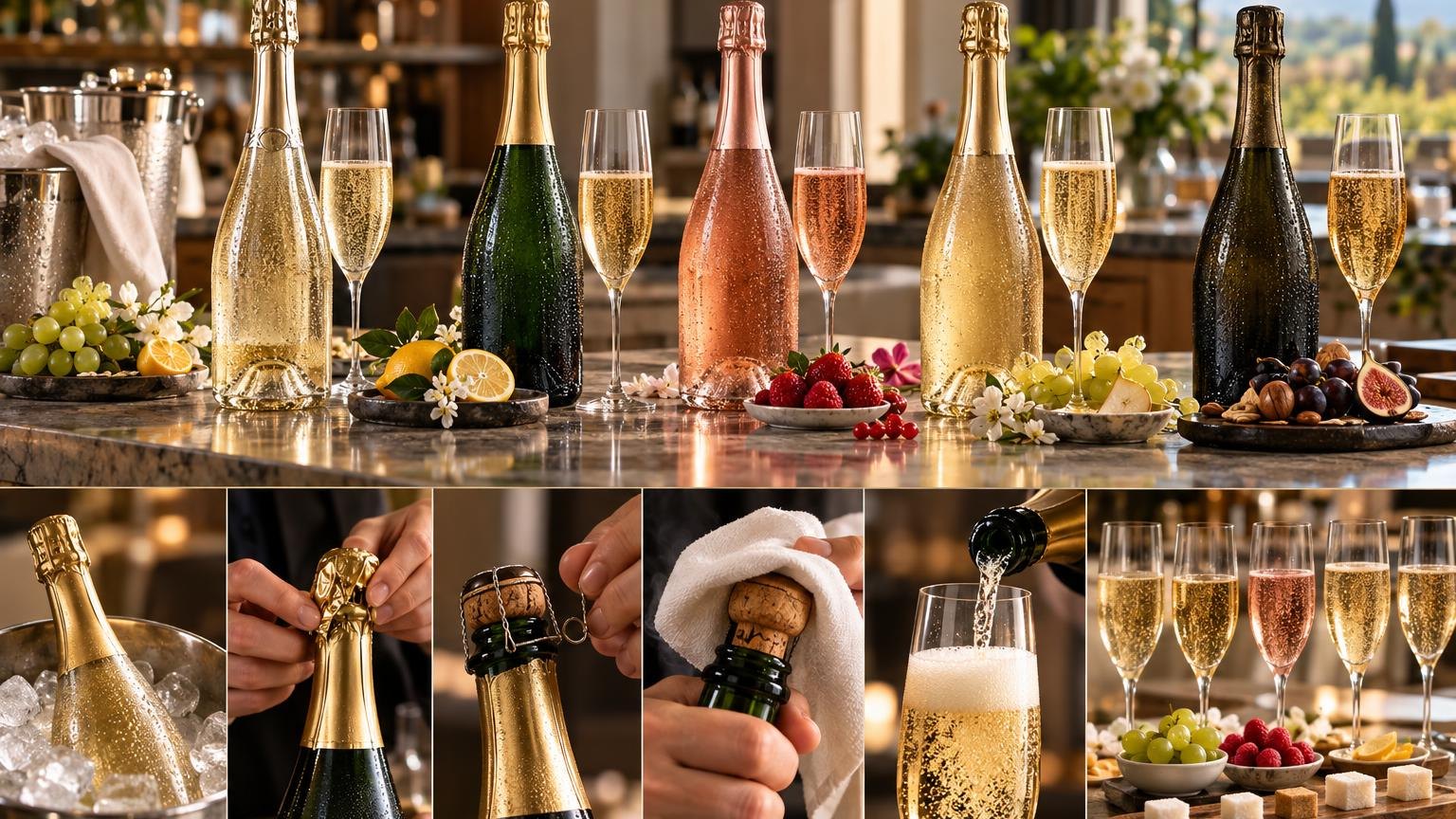
Drier Champagne Styles Compared
Champagne dryness depends entirely on dosage—the sugar-wine mixture added after disgorgement.
The Comité Champagne legally defines each category by residual sugar content in grams per liter, creating a precise spectrum from bone-dry to perceptibly sweet.
Dosage Levels for Dry Champagne Categories
| Style | Residual Sugar (g/L) | Taste Profile |
| Brut Nature (Zero Dosage) | 0–3 | Razor-sharp acidity, no perceptible sweetness |
| Extra Brut | 0–6 | Very dry, mineral-driven, lean |
| Brut | 0–12 | Dry with subtle roundness, most common style |
| Extra Dry (Extra Sec) | 12–17 | Off-dry, faint sweetness on the finish |
Brut accounts for roughly 90% of all Champagne production. Most major houses set their Brut dosage between 6–9 g/L, balancing acidity with approachability.
The Rise of Zero-Dosage Champagne
Brut Nature surged in popularity after 2000 as growers prioritized terroir transparency. Producers like Drappier, Pascal Doquet, and Laherte Frères championed the category.
Without dosage to mask flaws, Brut Nature demands exceptional base wine quality. Grapes typically need higher ripeness at harvest—often 10.5–11% potential alcohol versus the regional minimum of 9%.
Key Differences in Practice
- Aging impact: Lower-dosage Champagnes often benefit from longer lees aging. Many Brut Nature cuvées spend 36–60 months on lees, well beyond the 15-month NV minimum.
- Food pairing: Brut Nature pairs with oysters, sashimi, and ceviche where sugar would clash. Brut suits a wider range including poultry, soft cheeses, and fried appetizers.
- Cellar development: Extra Brut and Brut Nature evolve differently over time—without sugar’s preservative buffer, oxidative notes can emerge faster after 8–10 years.
The “Extra Dry” Paradox
Despite its name, Extra Dry is sweeter than Brut. This confusing terminology dates to the 19th century, when Champagne averaged 60–120 g/L of sugar. At that time, 12–17 g/L genuinely was “extra dry.”.
Today Extra Dry represents under 5% of production. It appears most often in entry-level cuvées marketed for cocktail use or consumers transitioning from sweeter sparkling wines.
Rosé Champagne Production Styles
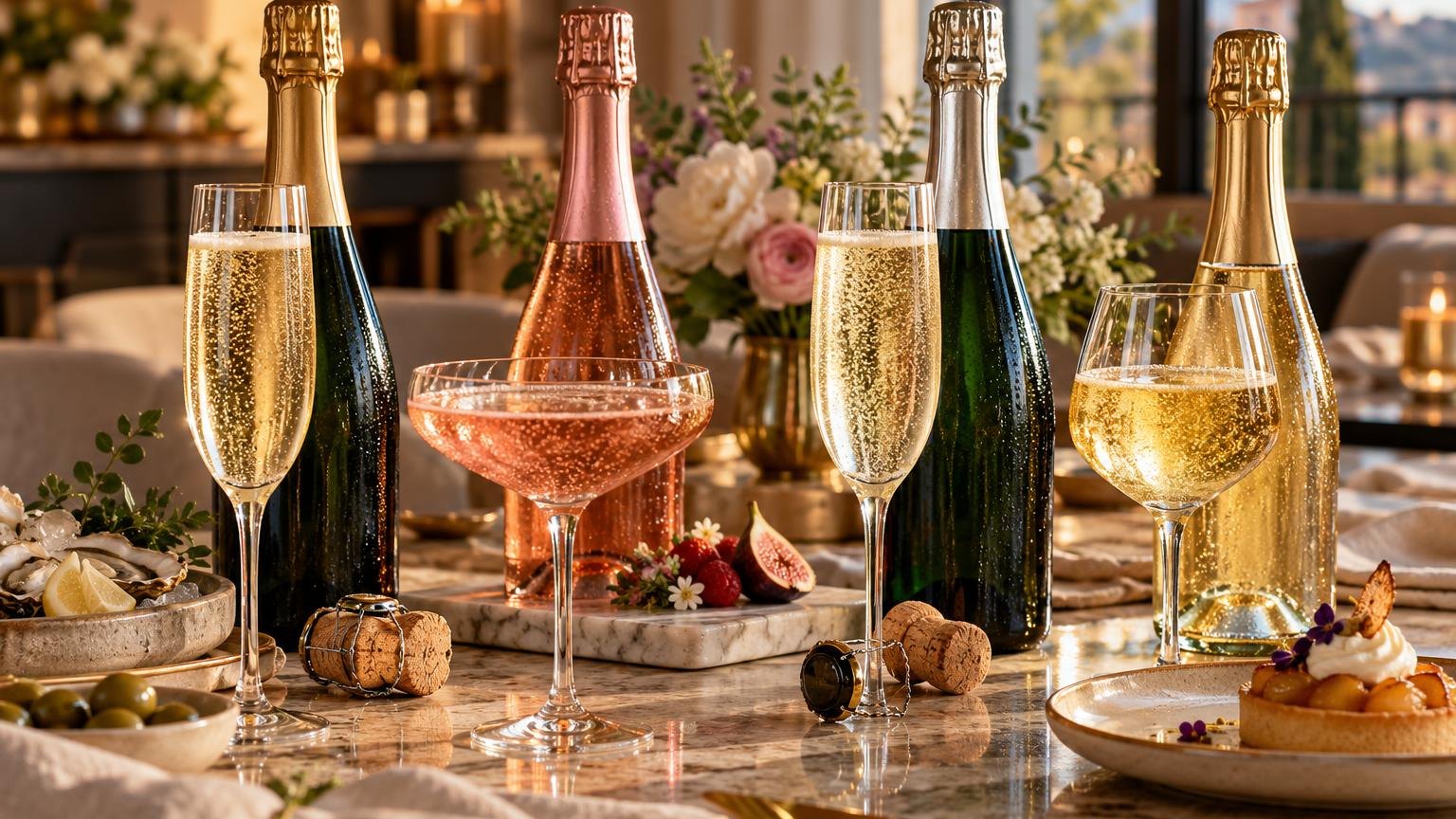
Rosé Champagne accounts for roughly 10–12% of all Champagne shipments, yet it commands premium prices averaging 20–30% above equivalent non-rosé cuvées. Two distinct production methods create fundamentally different flavor profiles.
Saignée vs. Blending: The Two Methods
Champagne is the only French AOC that permits blending red and white base wines to produce rosé. Every other French rosé appellation prohibits this technique.
The assemblage (blending) method adds 5–20% still red Pinot Noir wine—typically from Bouzy or Ambonnay—into white base wine before secondary fermentation. Approximately 90% of rosé Champagne uses this approach.
The saignée (bleeding) method involves brief skin contact with black grapes, usually 12–72 hours. The juice is then “bled off” and vinified separately before undergoing traditional méthode champenoise.
| Characteristic | Assemblage (Blending) | Saignée (Maceration) |
| Share of production | ~90% | ~10% |
| Skin contact time | None (red wine pre-made) | 12–72 hours |
| Typical color | Pale salmon to copper | Deeper pink to cherry |
| Body & structure | Lighter, more delicate | Fuller, more vinous |
| Red fruit intensity | Subtle, refined | Pronounced, bold |
| Notable producers | Moët & Chandon, Veuve Clicquot, Billecart-Salmon | Laurent-Perrier Cuvée Rosé, René Geoffroy |
Key Grape Varieties in Rosé Champagne
- Pinot Noir — dominant variety, contributing structure and red-berry character; planted across 38% of Champagne’s 34,300 hectares
- Pinot Meunier — adds roundness and fruitiness; sometimes used in saignée blends for approachability
- Chardonnay — provides acidity and elegance in the white base wine component
Aging and Pricing
Non-vintage rosé requires a minimum 15 months on lees, though premium houses age 24–36 months. Vintage-dated rosé Champagne must age at least 36 months.
Retail prices for entry-level rosé Champagne start around $45–55, while prestige cuvées like Dom Pérignon Rosé or Cristal Rosé regularly exceed $400 per bottle.
Blanc de Blancs Champagne
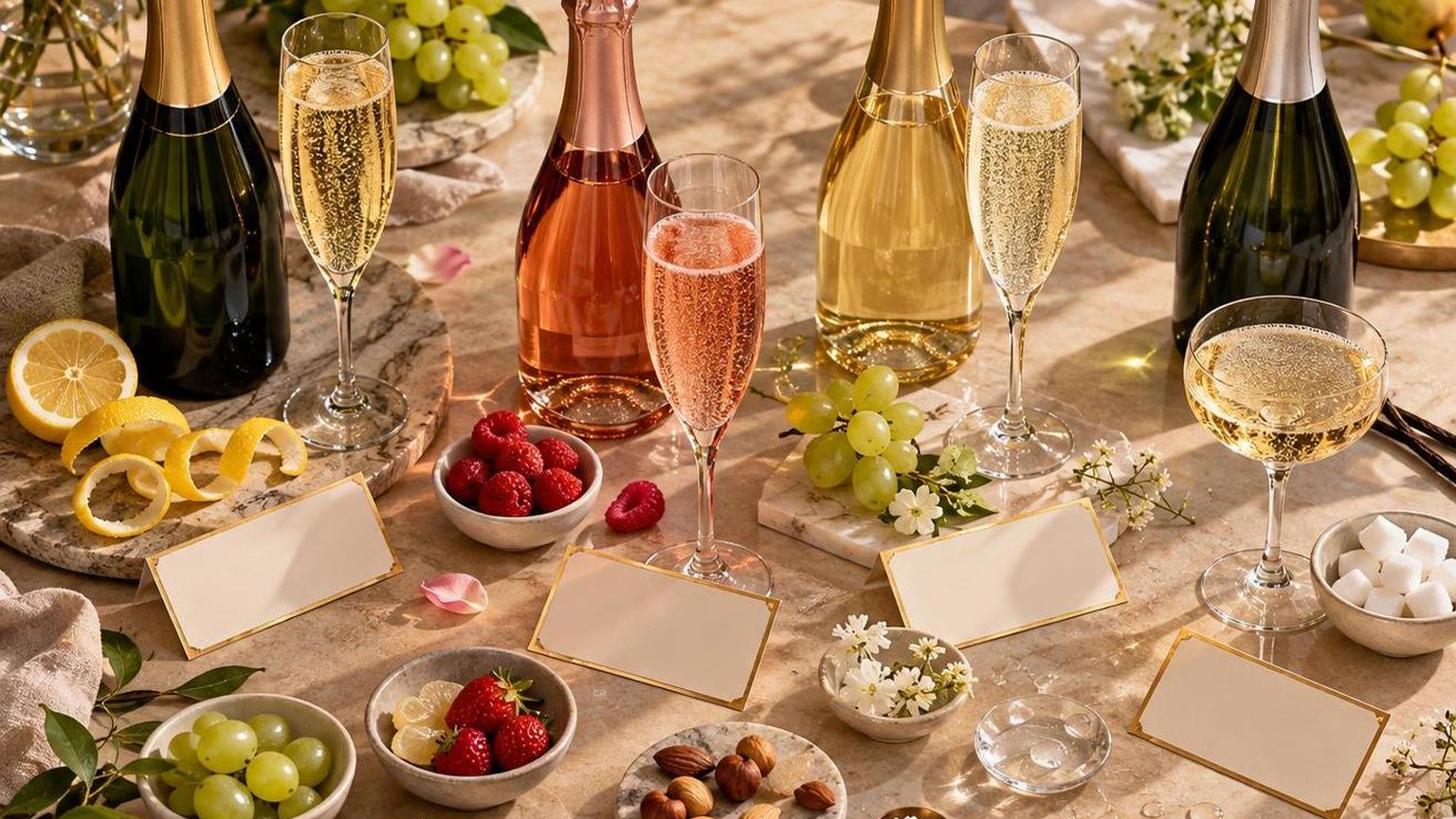
Blanc de Blancs translates to “white from whites,” meaning the Champagne is made exclusively from white Chardonnay grapes.
This style accounts for roughly 5–10% of all Champagne production and is prized for its elegance, precision, and exceptional aging potential.
Key Characteristics
Chardonnay thrives in the Côte des Blancs, a 15-kilometer stretch south of Épernay containing six Grand Cru villages. The chalky Campanian and Turonian limestone soils here contribute pronounced minerality and acidity to the wines.
- Aroma profile: Citrus blossom, green apple, white peach, chalk, and toasted brioche with age
- Acidity: Typically higher than blended Champagnes, with pH levels around 3.0–3.1
- Aging potential: Vintage examples can develop for 15–30 years in optimal cellaring conditions
- Dosage: Often finished as Brut (under 12 g/L residual sugar) or Extra Brut (under 6 g/L)
Grand Cru Villages of the Côte des Blancs
Six villages hold 100% Grand Cru status for Chardonnay in this subregion. Each delivers distinct expressions despite geographic proximity.
| Village | Notable Quality |
| Avize | Power and structure with citrus intensity |
| Cramant | Floral finesse and creamy texture |
| Chouilly | Roundness with ripe fruit character |
| Oger | Mineral-driven purity and length |
| Le Mesnil-sur-Oger | Steely acidity and extraordinary aging capacity |
| Oiry | Lighter body, fresh aromatics |
Benchmark Producers
Salon remains the most iconic Blanc de Blancs house, producing only single-vintage wines from Le Mesnil-sur-Oger — just 37 vintages declared between 1905 and 2013.
Taittinger Comtes de Champagne, first released in 1957, uses fruit exclusively from Grand Cru Chardonnay sites.
Ruinart, founded in 1729, positions Blanc de Blancs as its flagship style. Pierre Gimonnet & Fils and Jacques Selosse represent the grower-producer movement, crafting single-vineyard Blanc de Blancs with minimal dosage.
Food Pairing
The high acidity and lean structure pair naturally with raw oysters, sashimi, Dover sole meunière, and aged Comté cheese. Younger bottles complement lighter dishes; aged examples (10+ years) match lobster or poultry in cream sauces.
Blanc de Noirs Champagne
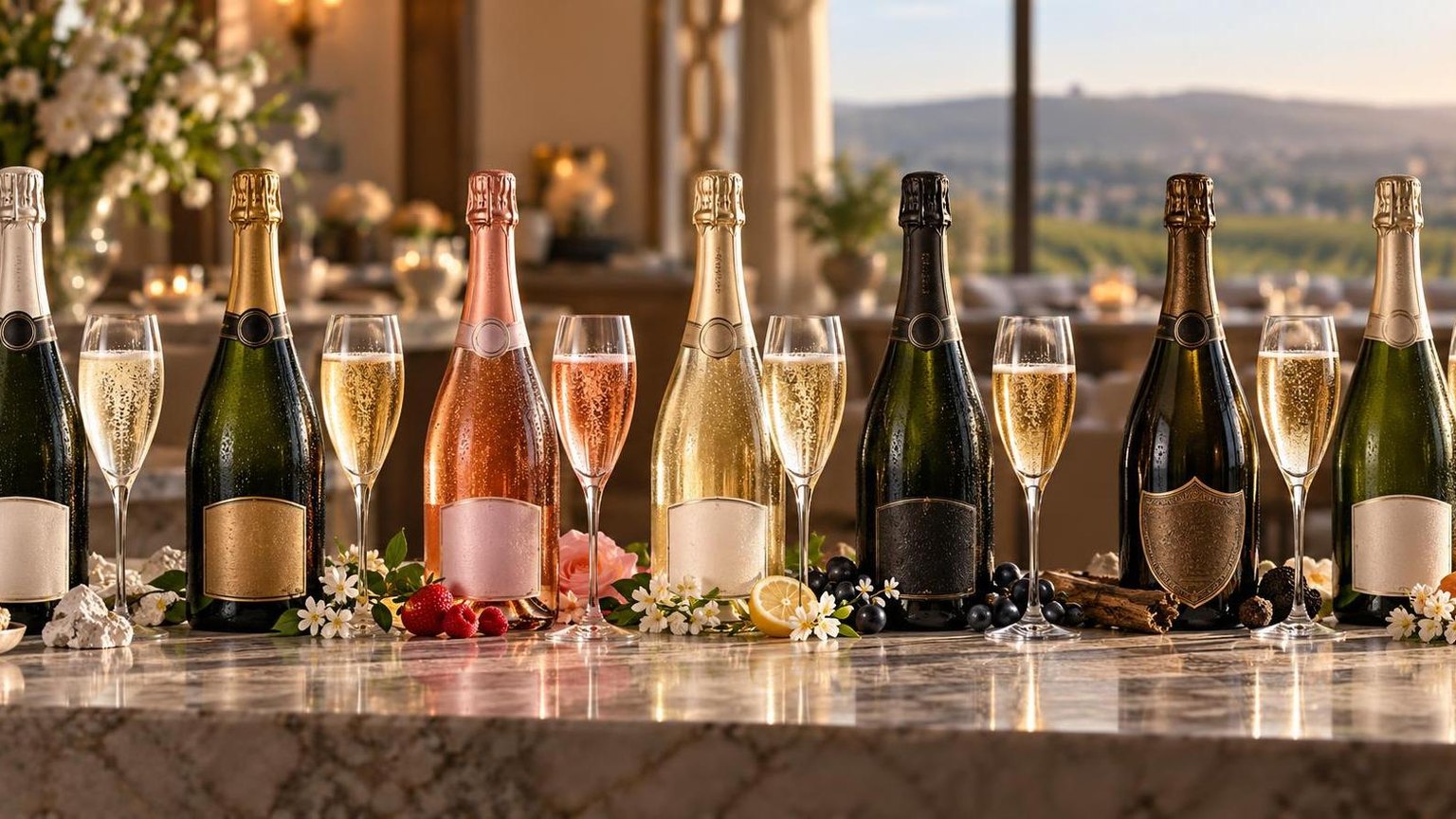
Blanc de Noirs translates to “white from blacks.” These Champagnes are pressed exclusively from red-skinned grapes—Pinot Noir, Pinot Meunier, or a blend of both—yet yield a white or very pale gold wine through careful.
Immediate pressing.
Grape Composition
Pinot Noir dominates most Blanc de Noirs cuvées, contributing structure, body, and red-fruit depth. Pinot Meunier adds roundness and early-drinking appeal. The legal requirement is simple: zero Chardonnay.
| Grape | Share of Champagne Vineyard Area | Role in Blanc de Noirs |
| Pinot Noir | 38% | Backbone, structure, aging potential |
| Pinot Meunier | 32% | Fruitiness, softness, approachability |
Production Method
Whole-cluster pressing is critical. Winemakers use a traditional Coquard press or modern pneumatic press, extracting only the first 2,050 liters of juice per 4,000 kg of grapes (the cuvée) to avoid skin-tint extraction.
Extended skin contact would pull anthocyanin pigments into the juice, turning it pink. Speed during pressing keeps Blanc de Noirs visually distinct from rosé Champagne.
Flavor Profile
Expect fuller body and richer texture compared to Blanc de Blancs. The palate typically delivers:
- Red apple, white peach, and strawberry notes
- Brioche and toasted hazelnut from lees aging
- A broader, more vinous mouthfeel with lower perceived acidity
- Finish often showing minerality and subtle spice
Notable Producers
Several houses specialize in or are renowned for their Blanc de Noirs bottlings:
- Bollinger Vieilles Vignes Françaises — sourced from ungrafted pre-phylloxera vines planted in the 1850s–1960s, one of Champagne’s rarest cuvées
- Philipponnat Clos des Goisses — a 5.5-hectare single-vineyard monopole at a steep 45° slope in Mareuil-sur-Aÿ
- Egly-Ouriet Blanc de Noirs Grand Cru — 100% Pinot Noir from Ambonnay, aged 48+ months on lees
Food Pairing
The weight of Blanc de Noirs stands up to roasted poultry, grilled lobster, aged Comté, and charcuterie. Serve between 8–10 °C to balance richness with freshness.
Common Questions
What is the difference between Blanc de Blancs and Blanc de Noirs Champagne?
Blanc de Blancs is made exclusively from Chardonnay grapes, producing a lighter, more citrus-driven style with higher acidity and notes of lemon zest, chalk, and green apple.
Blanc de Noirs uses only red grapes—Pinot Noir, Pinot Meunier, or both—yielding a fuller-bodied white Champagne with more weight, red-fruit undertones, and a richer mouthfeel despite its pale-gold color.
How does vintage Champagne differ from non-vintage (NV)?
Non-vintage Champagne blends wines from multiple harvest years to maintain a consistent house style and must age on lees for a minimum of 15 months.
Vintage Champagne is produced from a single exceptional harvest year—typically declared only 3–4 times per decade by most houses—and requires a minimum of 36 months of lees aging.
Though top cuvées like Dom Pérignon and Krug often age 7–10 years before release.
What makes rosé Champagne distinct, and how is it produced?
Rosé Champagne gets its pink hue through one of two methods: the saignée method, where juice briefly macerates with red grape skins for 12–72 hours, or the blending method.
Where a small percentage (typically 8–15%) of still Pinot Noir red wine is added to the base white wine.
Saignée rosés tend to deliver deeper color and more pronounced red-fruit intensity, while blended rosés offer greater precision and consistency, which is why the blending method accounts for roughly 90% of rosé Champagne production.
What do the sweetness levels Brut, Extra Brut, and Demi-Sec mean on a Champagne label?
These terms indicate the dosage—the amount of sugar added after disgorgement—measured in grams per liter.
Brut Nature contains 0–3 g/L with no added sugar, Extra Brut sits at 0–6 g/L, Brut at 0–12 g/L, Extra Dry at 12–17 g/L, Sec at 17–32 g/L, and Demi-Sec at 32–50 g/L.
Brut dominates the market at over 90% of sales, while Demi-Sec pairs best with desserts and foie gras.
What is the difference between Grande Marque, grower, and cooperative Champagne?
Grande Marque houses (identifiable by the “NM” code on the label) like Moët & Chandon, Veuve Clicquot, and Louis Roederer purchase grapes from hundreds of growers across the region to produce large-volume, blended cuvées.
Grower Champagnes (“RM” on the label) are estate-bottled by the same vignerons who farm the vineyards, representing roughly 5,000 producers who control about two-thirds of Champagne’s 34,000 hectares.
Cooperatives (“CM”) pool grapes from member growers and vinify collectively, often offering strong value at the $25–$40 price point.
- How To Box Chocolate Covered Strawberries And Champagne? The Ultimate Elegant Gift Guide (Step-by-Step Tutorial)
- Dom Perignon Vs Cristal: The Easiest Way to Distinguish
- Does Sparkling Wine Have Alcohol?
- 9 Must-Know Facts About How Many Glasses Of Champagne To A Bottle (2026 Expert Serving Guide)
- Painted Champagne Bottles – Basic Information You Must Know
- How Many Mimosas in a Bottle of Champagne?
- Best Champagne in Costco: The Ultimate 2026 Guide to Affordable Luxury
- All Alcohol Guides
- Comité Champagne / CIVC (2024)
- University of California, Davis – Viticulture & Enology (2023)
- USDA FoodData Central – Champagne Nutrient Profile (2024)
- National Center for Biotechnology Information / PubMed – Champagne Volatile Compounds (2019)
- Cornell University – College of Agriculture and Life Sciences, Sparkling Wine Production (2023)
- Wine & Spirit Education Trust / WSET (2024)
- Institut National de l'Origine et de la Qualité / INAO (2024)
- Jancis Robinson / JancisRobinson.com (2024)
- The Oxford Companion to Wine – Champagne Entry via Oxford University Press (2023)