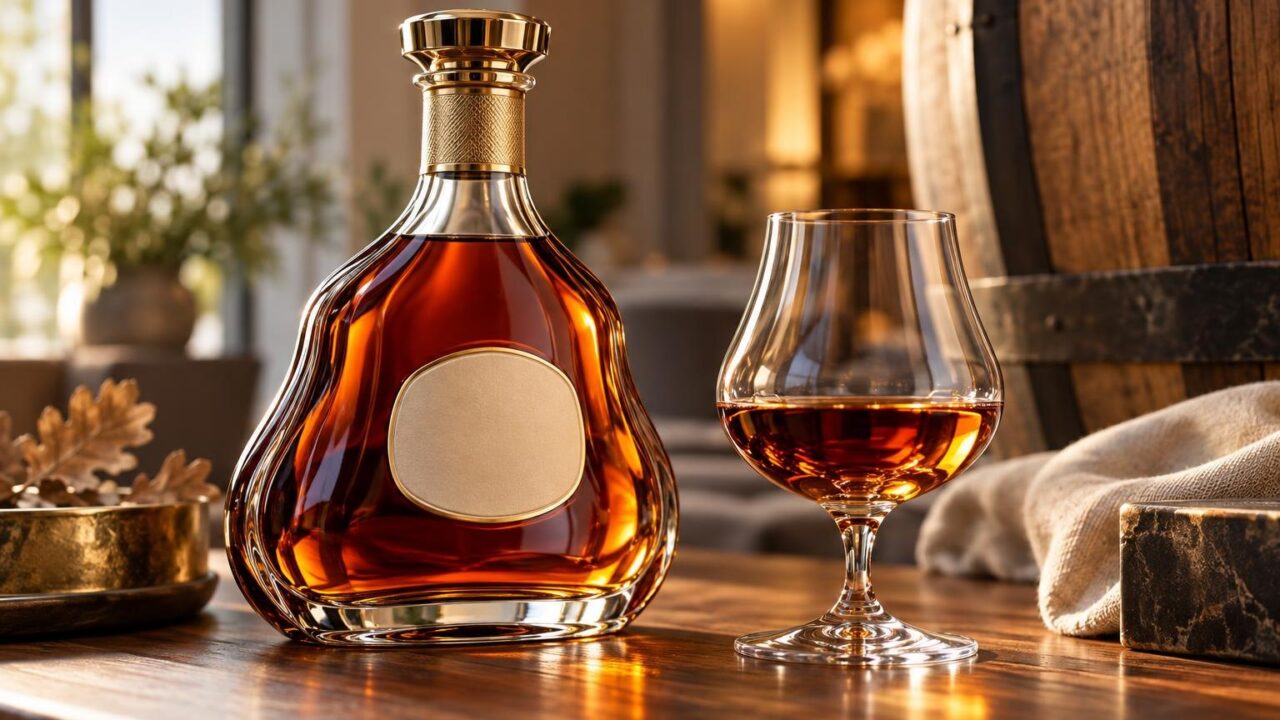
Xo is the Cognac age designation meaning “Extra Old,” requiring the youngest eau-de-vie in the blend to have matured for at least 10 years in oak under current French regulations.
The label describes the youngest spirit, not the average age or oldest component.
What Does Xo Mean in Cognac? It signals a category built for extended maturation, typically bringing deeper color, softer texture, and flavors such as dried fruit, toasted spice, cocoa, leather, and rancio.
Producers may blend eaux-de-vie far older than the legal minimum, but XO alone does not disclose the precise age range. Compare the producer’s tasting notes, release details, and blend information when evaluating bottles.
XO Cognac Means Extra Old
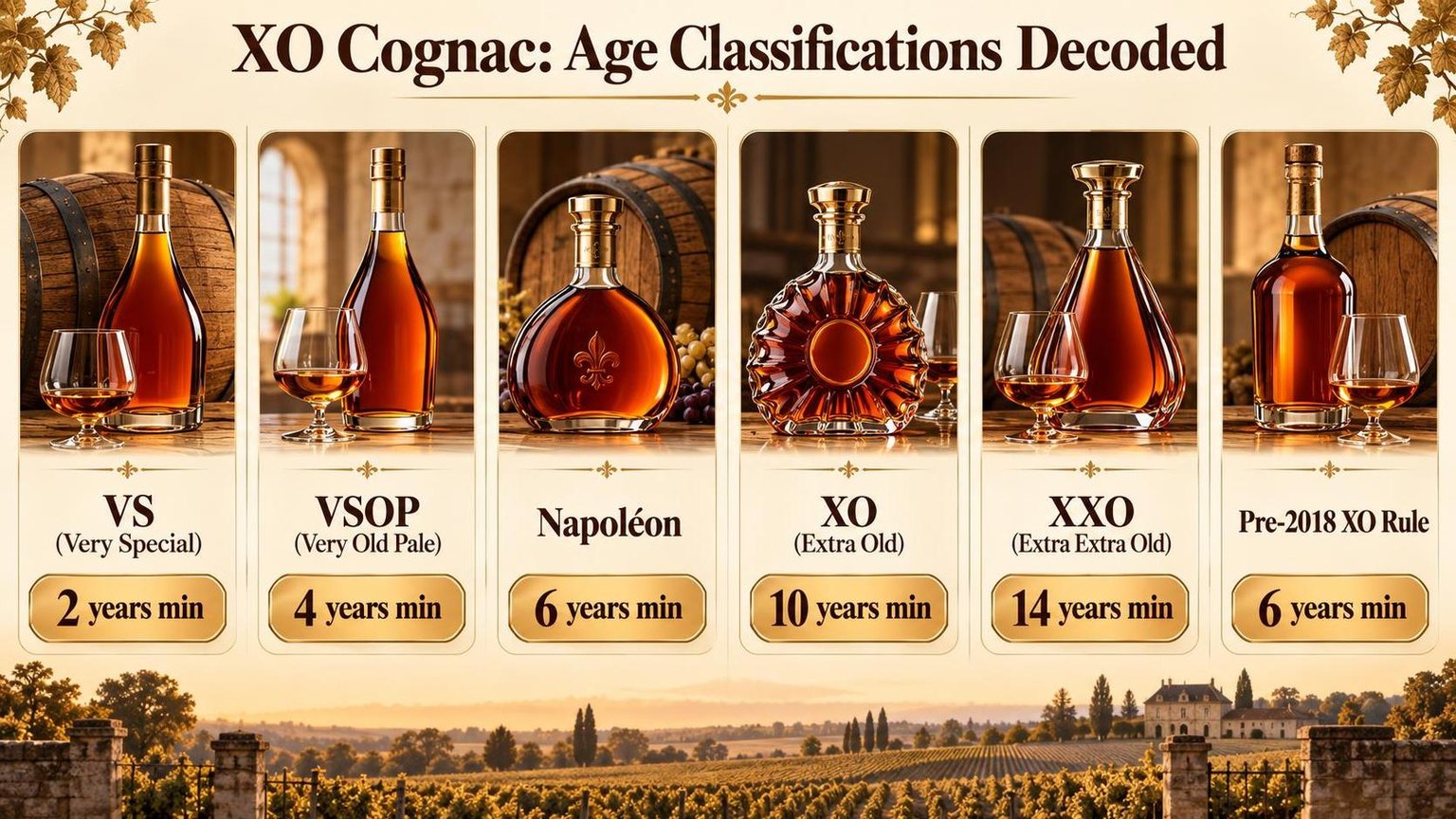
XO stands for “Extra Old,” designating cognacs aged a minimum of 10 years in French oak barrels.
This classification represents the highest standard age designation regulated by the Bureau National Interprofessionnel du Cognac (BNIC), the governing body overseeing all cognac production in the Charente region of France.
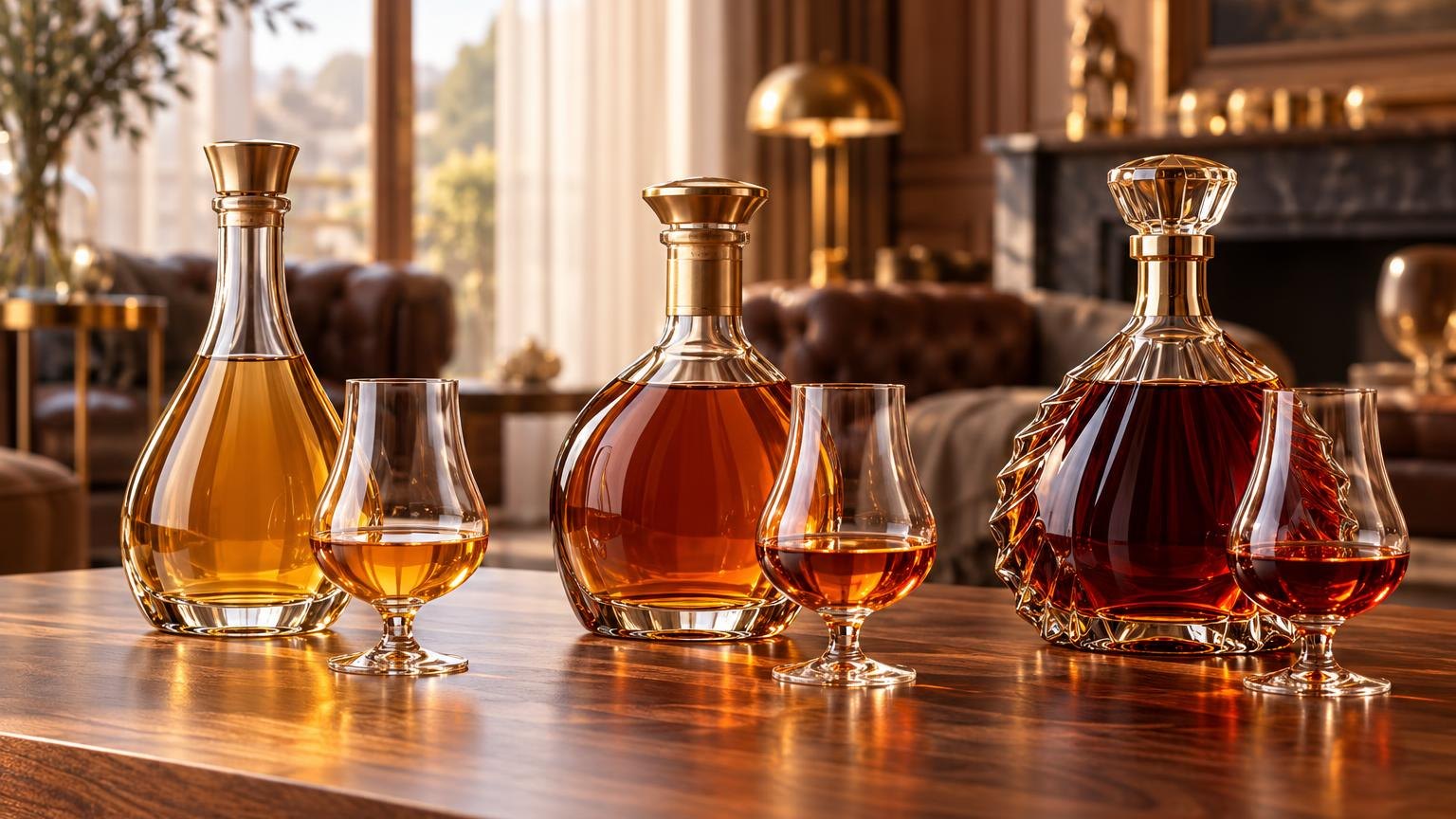
The XO designation was formally established in 1870 by Maurice Hennessy, who created the term to distinguish his house’s most mature blends from younger expressions.
Minimum Aging Requirements by Classification
The BNIC enforces strict minimum aging periods measured from April 1 following distillation. Each cognac grade must meet precise barrel-aging thresholds.
| Classification | Full Name | Minimum Age (Years) |
| VS | Very Special | 2 |
| VSOP | Very Superior Old Pale | 4 |
| Napoléon | Napoléon | 6 |
| XO | Extra Old | 10 |
| XXO | Extra Extra Old | 14 |
A critical regulatory change took effect on April 1, 2018. Before that date, XO cognac required only 6 years of minimum aging. The BNIC increased the threshold to 10 years to better reflect actual industry practice.
What the Minimum Actually Means
The minimum age refers to the youngest eau-de-vie in the blend, not the average. Most XO cognacs contain eaux-de-vie far older than the 10-year floor.
- Rémy Martin XO blends eaux-de-vie aged up to 37 years, all sourced from Grande Champagne and Petite Champagne crus.
- Hennessy XO uses approximately 100 different eaux-de-vie, with some aged over 30 years.
- Martell XO draws from eaux-de-vie aged between 10 and 35 years, emphasizing Borderies grapes.
- Courvoisier XO includes eaux-de-vie from all four premier cru regions, aged 11 to 25 years.
The cellar master (maître de chai) selects and blends these individual spirits to maintain a consistent house profile year after year.
Why 10 Years Matters for Flavor
Extended oak contact transforms cognac at a molecular level. Lignin in French Limousin and Tronçais oak breaks down into vanillin and aromatic aldehydes over the decade-long maturation period.
Tannins soften progressively. After 10 years, harsh astringency converts to rounded, velvety texture. Oxidation through the barrel’s pores introduces rancio — a prized nutty, mushroom-like complexity.
Color deepens naturally from pale gold to deep amber. XO cognacs typically reach 40% ABV at bottling, though barrel aging concentrates flavors through the “angel’s share” — roughly 2% volume lost to evaporation annually.
At a retail range of $100–$300+ per bottle for major houses, XO cognac reflects the significant warehousing costs, evaporation losses, and decades of cellar management required to produce each release.
Minimum Aging Rules for XO
XO cognac must contain only eaux-de-vie aged a minimum of 10 years in French oak barrels.
This standard, enforced by the Bureau National Interprofessionnel du Cognac (BNIC), was raised from 6 years in April 2018 after a decade-long transition period announced in 2008.
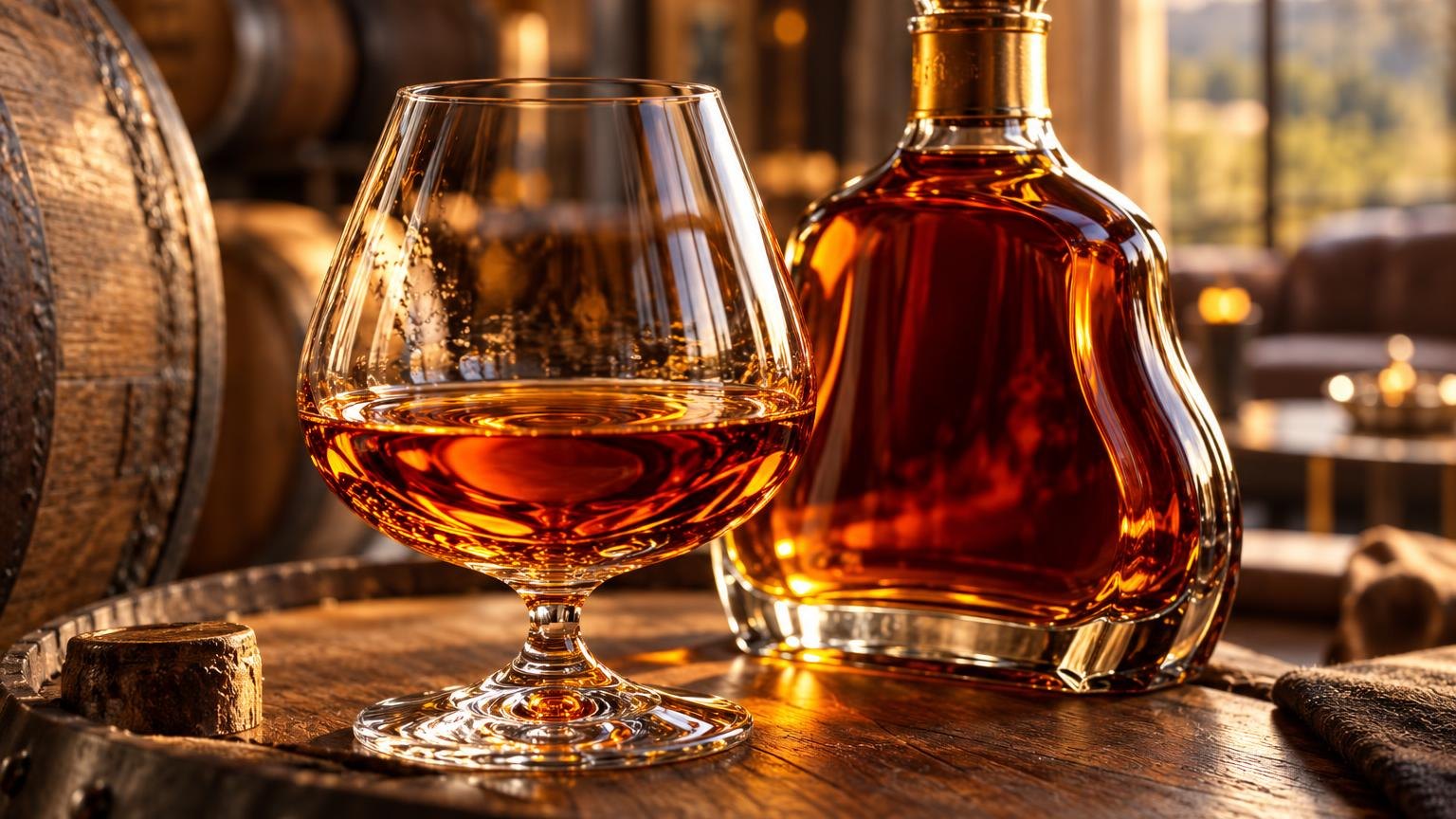
The aging clock starts on April 1 following the harvest. Grapes distilled after the autumn 2014 vintage, for example, began their official count on April 1, 2015.
Cognac Age Designation Comparison
| Designation | Minimum Age (Years) | Compte (Age Count) |
| VS (Very Special) | 2 | Compte 2 |
| VSOP (Very Superior Old Pale) | 4 | Compte 4 |
| Napoléon | 6 | Compte 6 |
| XO (Extra Old) | 10 | Compte 10 |
| XXO (Extra Extra Old) | 14 | Compte 14 |
The XXO category was introduced in 2018 alongside the XO rule change, requiring a minimum of 14 years of barrel aging — the newest official tier in cognac classification.
Why BNIC Raised the Minimum from 6 to 10 Years
Before 2018, XO legally required only 6 years of aging. Major houses like Hennessy, Rémy Martin, and Martell already aged their XO blends far beyond that minimum — often 15 to 30 years on average.
The gap between the legal floor and actual practice created consumer confusion. A 6-year minimum allowed lesser-known producers to market younger, less complex spirits under the prestigious XO label.
- The 10-year rule better reflects the true character expected from XO cognac: concentrated dried fruit, rancio, and deep oak integration.
- The transition gave producers a full decade (2008–2018) to adjust inventory and blending strategies.
- Napoléon absorbed the old 6-year XO minimum, filling the gap between VSOP and the new XO standard.
What “Minimum” Actually Means in Practice
The stated minimum refers to the youngest eau-de-vie in the blend. A cellar master may combine 40, 60, or even 100+ individual eaux-de-vie in a single XO expression.
Hennessy XO, for instance, blends roughly 100 eaux-de-vie with the oldest reportedly exceeding 30 years. Rémy Martin XO uses eaux-de-vie exclusively from Grande Champagne, aged up to 37 years.
The average age of an XO blend typically far surpasses the 10-year legal floor.
Producers are prohibited from stating specific age claims on labels unless every component meets that stated age — a regulation stricter than many whisky categories.
Consumers should understand that two XO cognacs at similar price points can differ dramatically in actual age profile, terroir, and cask selection — the 10-year minimum is a floor, never a ceiling.
How XO Differs From VSOP
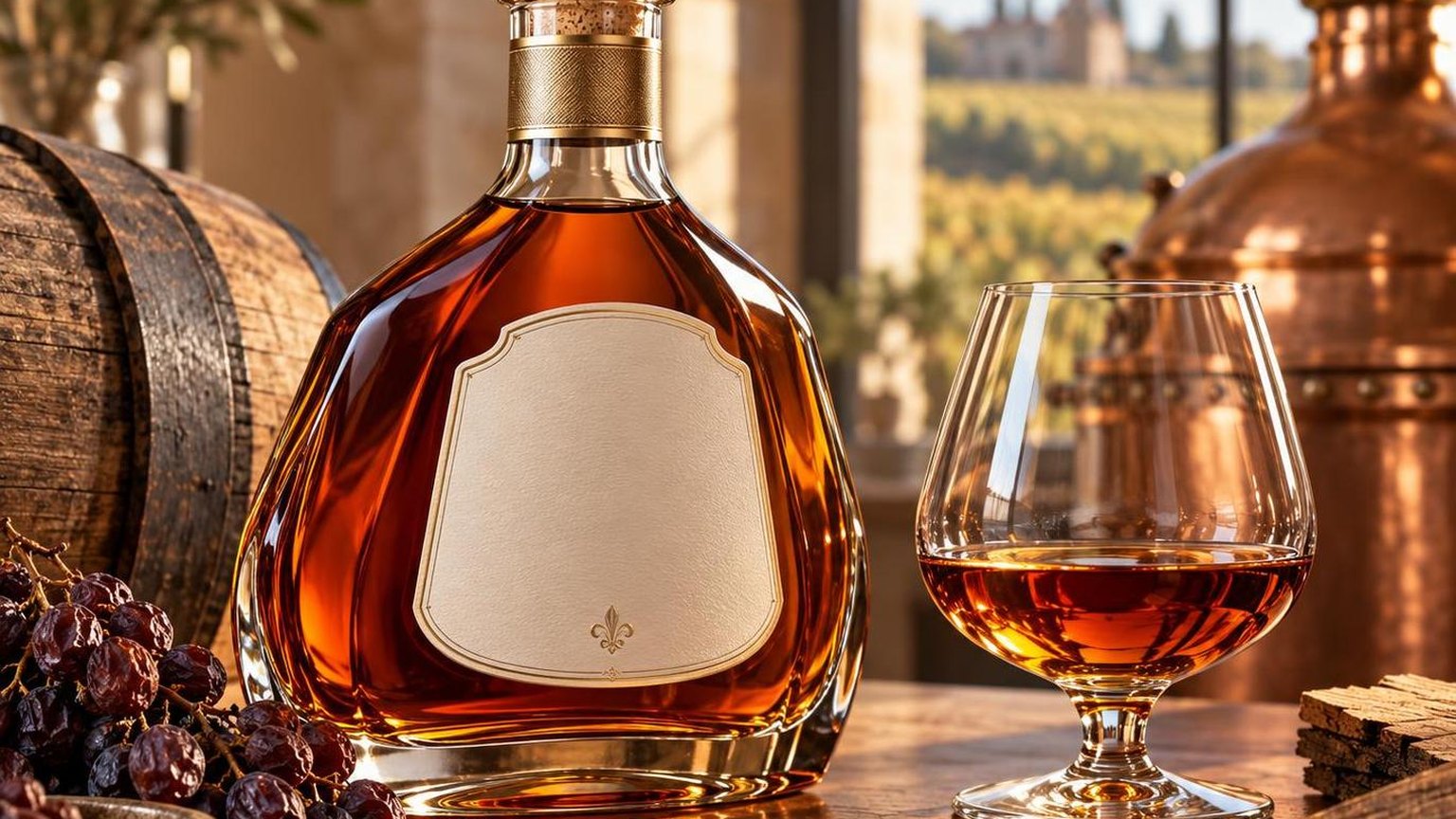
XO and VSOP represent two distinct age tiers in the Cognac classification system regulated by the Bureau National Interprofessionnel du Cognac (BNIC).
The primary difference is minimum aging: XO requires at least 10 years in oak, while VSOP requires only 4 years.
These designations refer to the youngest eau-de-vie in the blend, not the average age. Most producers use significantly older components than the legal minimum.
Age Requirements Side by Side
| Category | Full Name | Minimum Age (Years) | Regulation Change |
| VSOP | Very Superior Old Pale | 4 | Unchanged since 1938 |
| XO | Extra Old | 10 | Raised from 6 to 10 in April 2018 |
Before 2018, XO Cognac required a minimum of only 6 years of aging. The BNIC extended this to 10 years to better reflect actual producer practices and protect the category’s prestige.
Flavor Profile Differences
The additional years in Limousin or Tronçais oak barrels produce measurable changes in the spirit’s chemical composition and sensory character.
- VSOP: Lighter body, dominant fruit notes (apricot, peach), mild vanilla, floral undertones, moderate tannin integration
- XO: Fuller body, evolved notes of dried fruit, leather, chocolate, cigar box, rancio (a prized nutty oxidative character), and deep spice complexity
Rancio—a waxy, mushroom-like quality—typically develops only after 10+ years of barrel maturation. This is one reason XO Cognacs taste fundamentally different from younger expressions.
Price Comparison
| Brand | VSOP (Approx. USD) | XO (Approx. USD) | Price Multiple |
| Hennessy | $45–55 | $200–250 | ~4.5× |
| Rémy Martin | $40–50 | $170–220 | ~4.2× |
| Courvoisier | $30–40 | $150–190 | ~4.8× |
| Martell | $35–45 | $180–230 | ~5.0× |
XO Cognac typically costs 4 to 5 times more than VSOP from the same house. Extended aging ties up inventory, increases evaporation losses (the “angel’s share” averages 2–3% per year), and demands more warehouse space.
Serving Recommendations
VSOP performs well in cocktails like the Sidecar or Cognac Sour, where its brighter fruit character cuts through citrus and sweetener without wasting complexity.
XO is best appreciated neat or with a few drops of water in a tulip glass at 18–22°C. Mixing XO into cocktails obscures the nuanced flavors that a decade of maturation develops.
Between VSOP and XO sits the Napoléon designation, requiring a minimum of 6 years—the former XO minimum. Napoléon offers a middle ground for drinkers seeking more depth than VSOP without the investment an XO demands.
Why XO Cognac Tastes Different
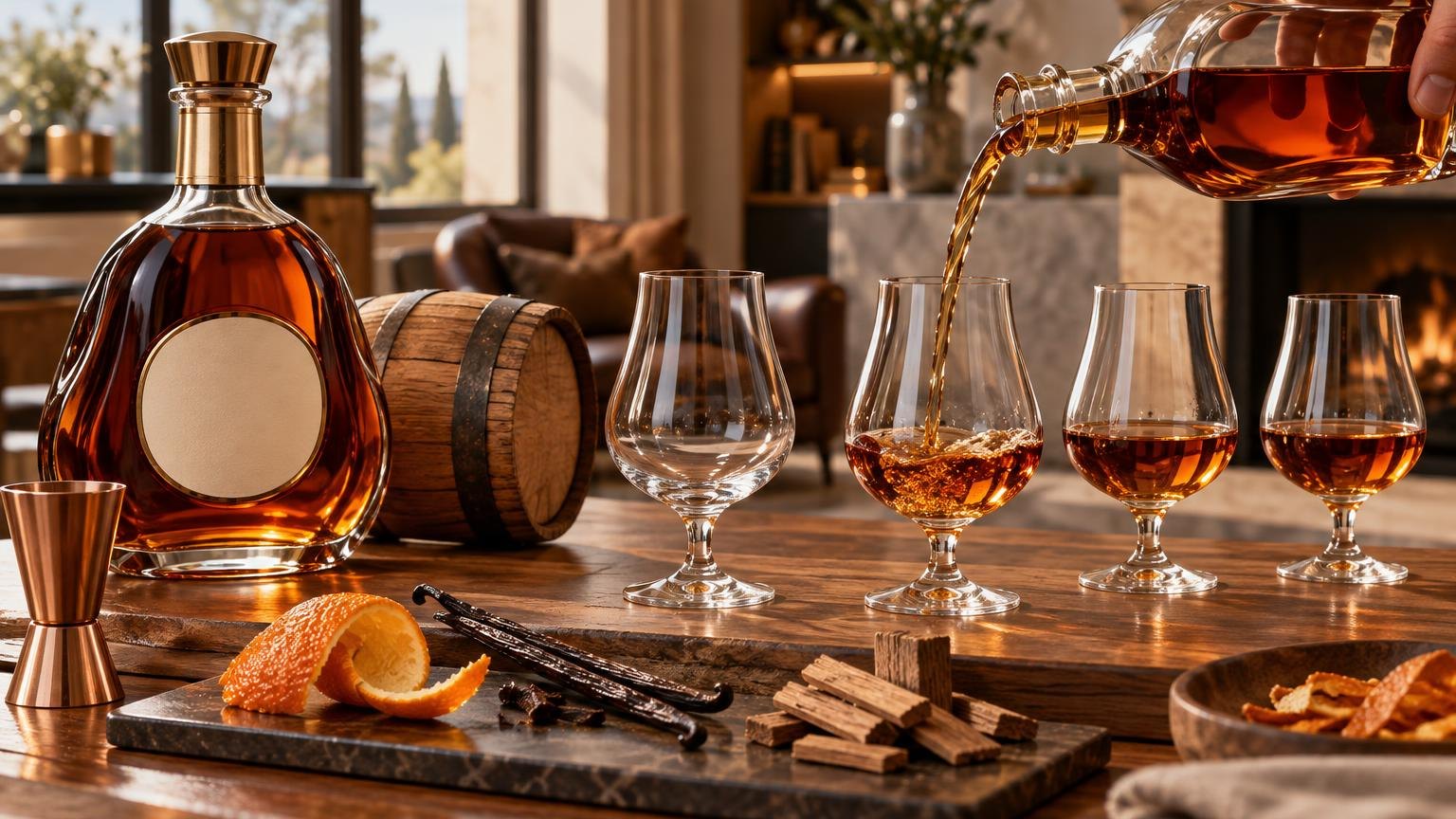
XO cognac tastes fundamentally different from VS and VSOP because extended barrel aging triggers chemical reactions impossible to replicate with shortcuts.
The minimum 10-year maturation period transforms raw, fruit-forward eaux-de-vie into layered spirits dominated by oxidation compounds, tannin evolution, and wood-extracted molecules.
The Chemistry of Extended Aging
Oak barrels contribute vanillin, eugenol, and furfural compounds at rates that increase nonlinearly over time. After 10 years, lignin degradation releases aromatic aldehydes at concentrations 3–5 times higher than in a 2-year-old VS cognac.
Oxidation through the barrel’s porous wood converts harsh primary alcohols into softer esters and acetals. These reactions require years, not months, which is why XO develops its signature velvety mouthfeel.
Flavor Profile Comparison by Age Category
| Category | Minimum Age | Dominant Flavors | Tannin Level |
| VS | 2 years | Fresh fruit, floral, grape | High, astringent |
| VSOP | 4 years | Vanilla, soft fruit, light spice | Moderate |
| XO | 10 years | Dark chocolate, leather, rancio, dried fruit | Low, integrated |
| XXO | 14 years | Tobacco, truffle, candied walnut, deep rancio | Very low, silky |
Rancio: The Hallmark of Age
Rancio is the prized flavor unique to spirits aged beyond roughly 10 years. It emerges from the slow oxidation of fatty acids and presents as a complex blend of mushroom, aged cheese, and walnut oil notes.
This characteristic cannot be faked or accelerated. Its presence in XO cognac is considered a marker of authentic long-term barrel maturation by master blenders across the Cognac region.
Tannin Polymerization
Young cognac contains small, aggressive tannin molecules extracted from new oak. Over a decade, these molecules bond together into larger polymeric chains. Larger tannin polymers feel softer on the palate and eventually precipitate out entirely.
This explains why VS cognac can taste sharp and woody while XO cognac delivers smooth, rounded warmth without bitterness.
The Role of Evaporation
During aging, roughly 2–3% of volume evaporates annually through the barrel walls—the famous “angel’s share.” Over 10 years, a barrel loses approximately 20–26% of its original volume.
This concentration effect intensifies remaining flavors. Surviving liquid carries higher proportions of aromatic compounds per milliliter, contributing directly to XO’s greater depth and complexity.
- Higher extract content: XO typically contains 4–8 grams per liter of dissolved solids versus 1–3 g/L in VS
- Color deepening: Extended wood contact produces deep amber to mahogany hues naturally
- Reduced volatility: Harsh methanol and light alcohols evaporate preferentially, leaving smoother compounds behind
Every year in barrel adds measurable complexity. The 10-year minimum for XO, raised from 6 years by the BNIC in 2018, ensures consumers receive cognac where these aging reactions have meaningfully completed.
Reading XO Labels and Age Statements
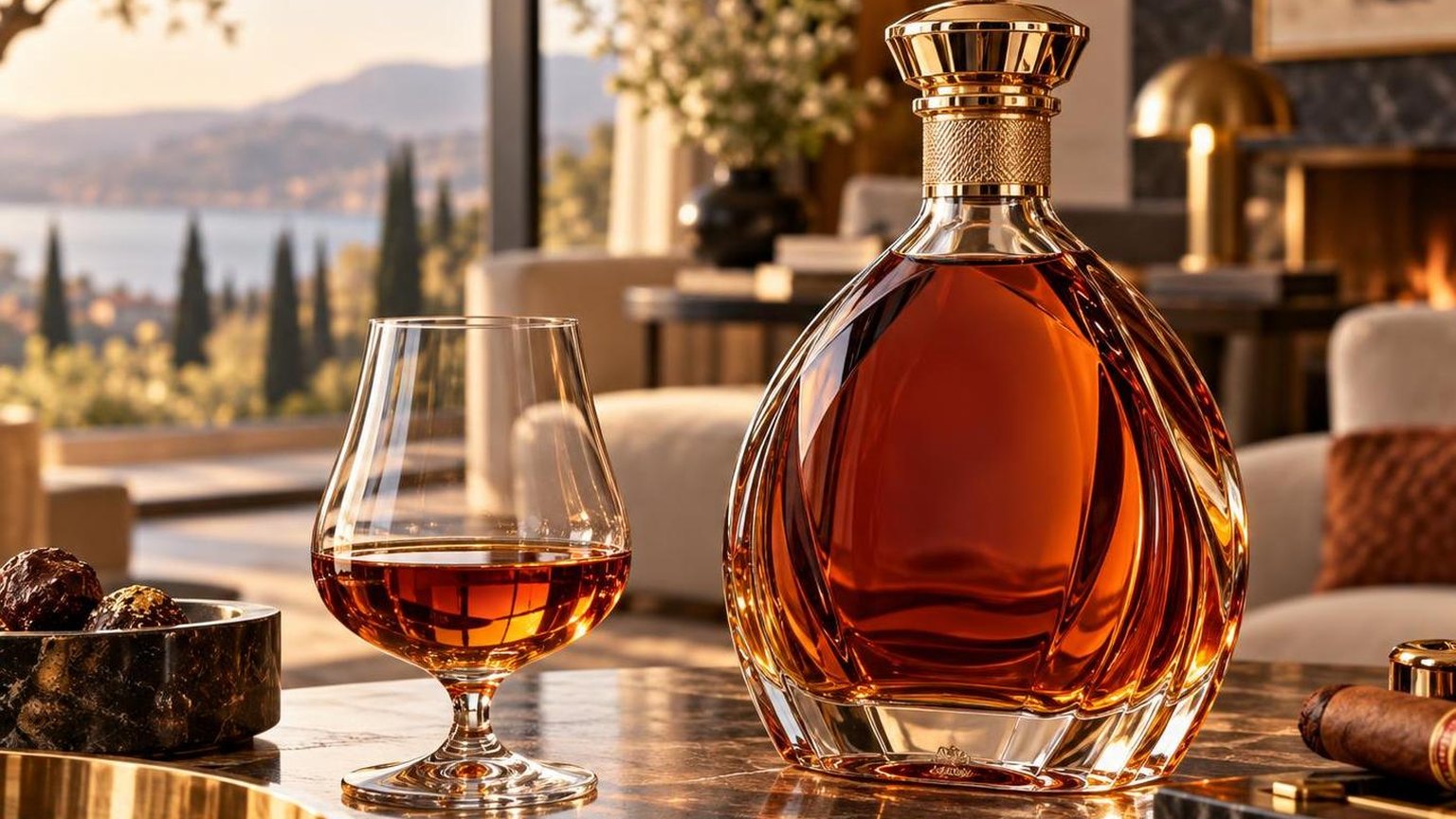
An XO label guarantees a minimum age, but the liquid inside often far exceeds that floor. Understanding what cognac labels actually communicate—and what they legally omit—helps buyers distinguish genuine quality from marketing theater.
Official Age Designations at a Glance
| Designation | Minimum Age (Youngest Eau-de-Vie) | Regulation Source |
| VS (Very Special) | 2 years in oak | BNIC / EU Regulation 2019/787 |
| VSOP (Very Superior Old Pale) | 4 years in oak | BNIC / EU Regulation 2019/787 |
| Napoléon | 6 years in oak | BNIC / EU Regulation 2019/787 |
| XO (Extra Old) | 10 years in oak | BNIC decree effective April 1, 2018 |
| XXO (Extra Extra Old) | 14 years in oak | BNIC, introduced 2018 |
Before April 2018, the XO minimum stood at just 6 years. The BNIC raised it to 10 years to better reflect actual cellar-master practice and protect consumer expectations.
What the Label Does Not Tell You
Cognac law regulates the youngest component in a blend. A bottle labeled XO may contain eaux-de-vie aged 20, 30, or even 50+ years alongside the 10-year minimum component.
Houses are not required to disclose the average age, the oldest component, or the exact number of eaux-de-vie blended. Rémy Martin’s XO, for example, blends up to 400 eaux-de-vie, some exceeding 37 years.
Vintage and Single-Age Statements
Some producers now bottle single-vintage cognacs with a specific harvest year on the label. These require BNIC-supervised controls, including sealed warehouses and third-party audits of barrel inventories.
A label reading “Vintage 1988” means every drop was distilled from grapes harvested that year. This differs sharply from an age-category label like XO, which describes a multi-vintage blend.
Key Terms Found Alongside XO
- Hors d’Âge — officially equivalent to XO (10-year minimum) but traditionally signals blends with significantly older average ages.
- Extra — also carries the same 10-year legal minimum as XO; used by houses like Martell and Camus for ultra-premium bottlings.
- Fins Bois, Grande Champagne, Petite Champagne — cru (growing-region) designations indicating grape origin, not age.
- Fine Champagne — a blend of Grande and Petite Champagne eaux-de-vie, with at least 50% from Grande Champagne.
Practical Tips for Reading Labels
Check for the cru designation first—it reveals terroir. Then note the age category. Finally, look for back-label details: batch numbers, cellar-master notes, or stated average ages that some smaller houses voluntarily provide.
If a bottle states both “XO” and a specific age like “25 ans,” the numeric claim must be verifiable through BNIC records.
Producers risk decertification for false age statements under French consumer-protection law (Code de la consommation, Article L412-1).
Questions Readers Ask
What does XO stand for on a Cognac label?
XO stands for “Extra Old,” a designation regulated by the Bureau National Interprofessionnel du Cognac (BNIC).
It indicates that every eau-de-vie in the blend has been aged in French oak barrels for a minimum of 10 years, a requirement raised from 6 years in April 2018.
How does XO Cognac differ from VS and VSOP in aging requirements?
VS (Very Special) requires a minimum of 2 years of barrel aging, VSOP (Very Superior Old Pale) requires at least 4 years, and XO demands a minimum of 10 years.
In practice, many XO blends contain eaux-de-vie aged 20–30 years or longer, far exceeding the legal minimum.
Who created the XO Cognac designation and when?
Maurice Hennessy introduced the XO classification in 1870 when he created a blend originally reserved for his close circle of family and friends.
The designation was later adopted across the Cognac industry and eventually codified into French law as an official age category.
What flavor characteristics distinguish XO Cognac from younger expressions?
Extended oak aging gives XO Cognac concentrated notes of dried fruit, dark chocolate, leather, cigar box, and rancio—a prized nutty, mushroom-like quality that develops only after prolonged barrel maturation.
The tannins are more integrated and the texture noticeably rounder compared to VS or VSOP, with alcohol heat largely softened by a decade or more in wood.
Is XO always the highest quality grade of Cognac available?
No.
Several designations sit above XO in prestige and aging, including Hors d’Âge (officially equivalent to XO but implying even older blends), XXO (Extra Extra Old, formalized by the BNIC in 2018 with a 14-year minimum).
And proprietary ultra-premium bottlings like Rémy Martin Louis XIII, which blends eaux-de-vie aged 40–100 years.
The XO grade is a floor, not a ceiling.
- What Is White Remy? The Most Accurate Answer
- Does Cognac Go Bad?
- How Long Does Cognac Last Opened Or Unopened? 12 Storage Facts You Must Know (2026)
- What Does Cognac Taste Like?
- 10 Powerful Reasons Courvoisier Vs Cognac Matters in 2026
- All Alcohol Guides
- Bureau National Interprofessionnel du Cognac (BNIC) (2024)
- Code Rural et de la Pêche Maritime – Légifrance (2023)
- U.S. Alcohol and Tobacco Tax and Trade Bureau (TTB) – Brandy Standards (2024)
- European Commission – eAmbrosia GI Register: Cognac PDO (2024)
- Cornell Law Institute – 27 CFR § 5.22 Standards of Identity for Distilled Spirits (2023)
- National Center for Biotechnology Information (NCBI/PubMed) – Chemical Composition and Aging of Cognac (2019)
- U.S. Food and Drug Administration (FDA) – Labeling of Distilled Spirits (2024)