
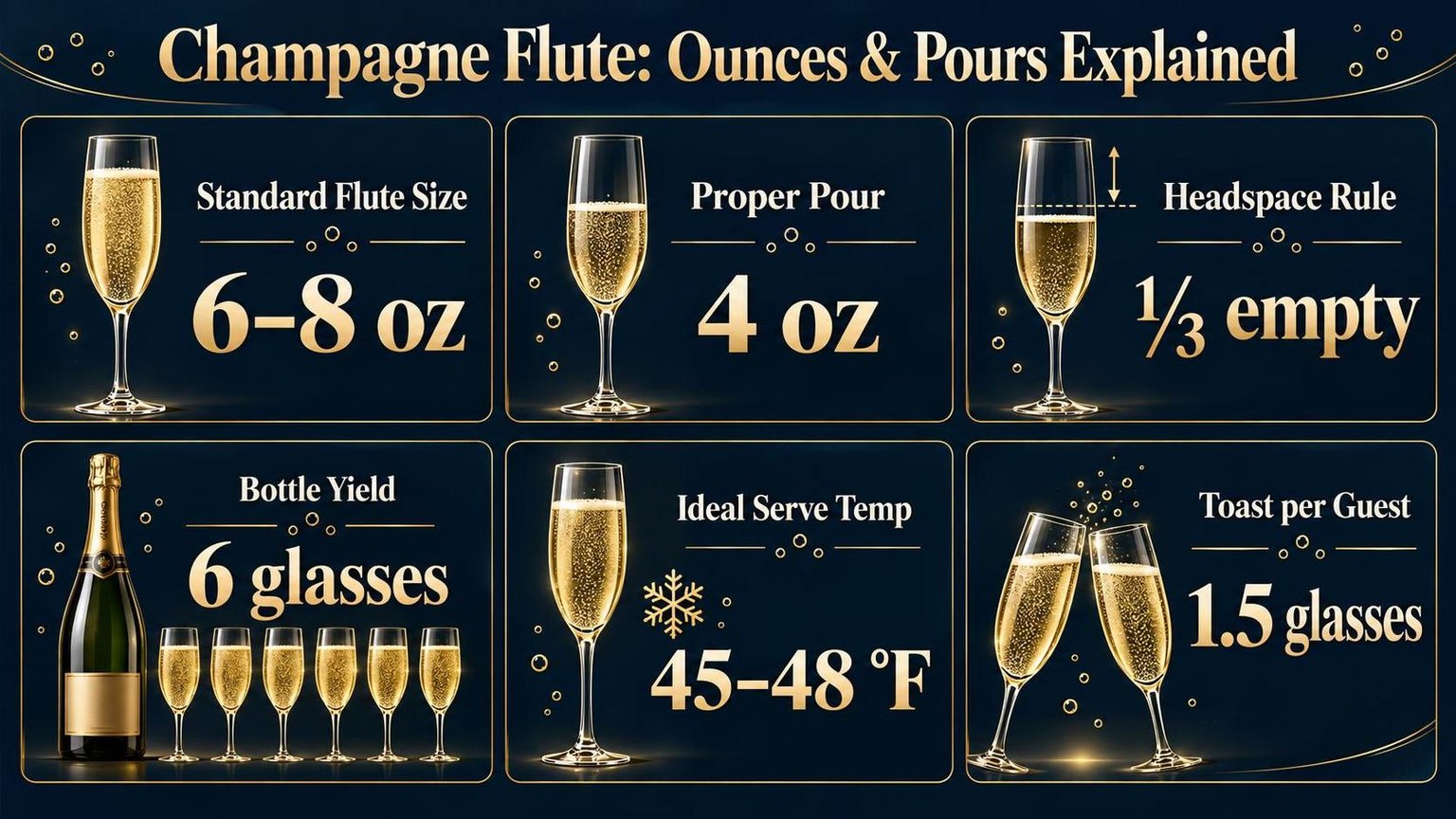
How Many Ounces Champagne Flute? A standard champagne flute holds 6 ounces (177 milliliters), although its practical serving size is usually 4 to 5 ounces.
The glass’s tall, narrow bowl preserves carbonation and concentrates Champagne’s aroma while leaving enough headspace for foam.
Flute capacity varies by design, with common retail glasses ranging from 5 to 10 ounces. Capacity describes the full vessel, not the recommended pour.
A measured 4-ounce serving leaves room for bubbles and reduces spills, making it the typical choice for restaurants, tastings, weddings, and home celebrations.
Understanding the difference helps you estimate servings from a bottle, select appropriate glassware, and pour consistently without overfilling.
Standard Champagne Flute Ounce Capacity
A standard champagne flute holds 6 to 8 fluid ounces (177–237 mL) of total volume. However, a proper champagne pour fills only 4 to 5 ounces, leaving headspace for the bead of bubbles and aromatic concentration.
Flute Capacity by Size Category
Champagne flutes vary across manufacturers and intended use. The table below breaks down the most common sizes found in retail and hospitality settings.
| Category | Total Capacity (oz) | Total Capacity (mL) | Typical Pour (oz) |
| Small / Tasting | 4–5 | 118–148 | 3 |
| Standard | 6 | 177 | 4 |
| Large / Oversized | 7–8 | 207–237 | 5 |
| Grand Cuvée / Specialty | 9–12 | 266–355 | 5–6 |
Why the Pour Differs from Total Volume
Filling a flute to the rim eliminates the headspace carbon dioxide needs to form a visible mousse. Sommeliers target a two-thirds fill—roughly 4 ounces in a 6-ounce flute—to preserve effervescence and aroma.
A standard 750 mL bottle of Champagne yields approximately five 5-ounce pours or six 4-ounce pours. That math matters when planning service for events or restaurant costing.
Common Flute Brands and Their Stated Capacities
| Brand / Model | Stated Capacity |
| Riedel Vinum Champagne | 5.64 oz (160 mL) |
| Schott Zwiesel Ivento Flute | 7.7 oz (228 mL) |
| Libbey Vina Flute | 8 oz (237 mL) |
| Zalto Denk’Art Champagne | 7.8 oz (220 mL) |
| Luigi Bormioli Atelier | 7 oz (200 mL) |
Riedel’s narrower 5.64-ounce design channels CO₂ into a tighter bead column. Wider 8-ounce models like the Libbey Vina trade some bubble concentration for easier handling in high-volume bar service.
Key Takeaway
- Total capacity: 6–8 oz for most standard flutes.
- Standard pour: 4–5 oz, leaving one-third headspace.
- Bottle yield: 5–6 glasses per 750 mL bottle at proper pour volume.

Typical Champagne Pour In Ounces
A standard champagne pour is 4 ounces (120 ml), notably smaller than a typical 5-ounce wine pour. This deliberate under-pour preserves carbonation, maintains serving temperature, and yields approximately six glasses per 750 ml bottle.
Standard Pour Sizes by Setting
Pour size varies depending on context. Restaurants, tasting rooms, and catered events each follow different conventions based on purpose and cost control.
| Setting | Pour Size (oz) | Glasses per 750 ml Bottle |
| Restaurant standard | 4 oz | 6 |
| Fine dining / sommelier pour | 3.5–4 oz | 6–7 |
| Tasting or flight pour | 2 oz | 12 |
| Wedding or reception toast | 3–3.5 oz | 7–8 |
| Casual home pour | 5–6 oz | 4–5 |
Why 4 Ounces, Not 5?
Champagne loses carbonation faster than still wine loses aromatic complexity.
A smaller pour means the glass is finished while effervescence remains lively—typically within 10–15 minutes at proper serving temperature of 45–48 °F (7–9 °C).
Temperature matters too. Four ounces warm more slowly than five, keeping the champagne in its ideal range longer in the narrow bowl of a flute.
Calculating Bottles for Events
A 750 ml bottle holds 25.4 fluid ounces. At a 4-ounce pour, that yields 6 full glasses. Event planners typically estimate 1.5 glasses per guest for a single toast.
- 50-guest toast: 75 glasses ÷ 6 per bottle = 13 bottles
- 100-guest toast: 150 glasses ÷ 6 per bottle = 25 bottles
- Multi-round reception (3 glasses/guest, 100 guests): 50 bottles
Always round up and add 10% for spillage and overpours. Opened champagne cannot be recorked with any meaningful carbonation retention.
Flute Capacity vs. Pour Volume
Most champagne flutes hold 6–8 ounces to the rim.
A 4-ounce pour fills roughly half to two-thirds of the glass, leaving headspace that concentrates aromas and allows bubbles to form visible streams—the bead—rising from the nucleation points etched into the glass base.
Five Ounce Versus Eight Ounce Flutes
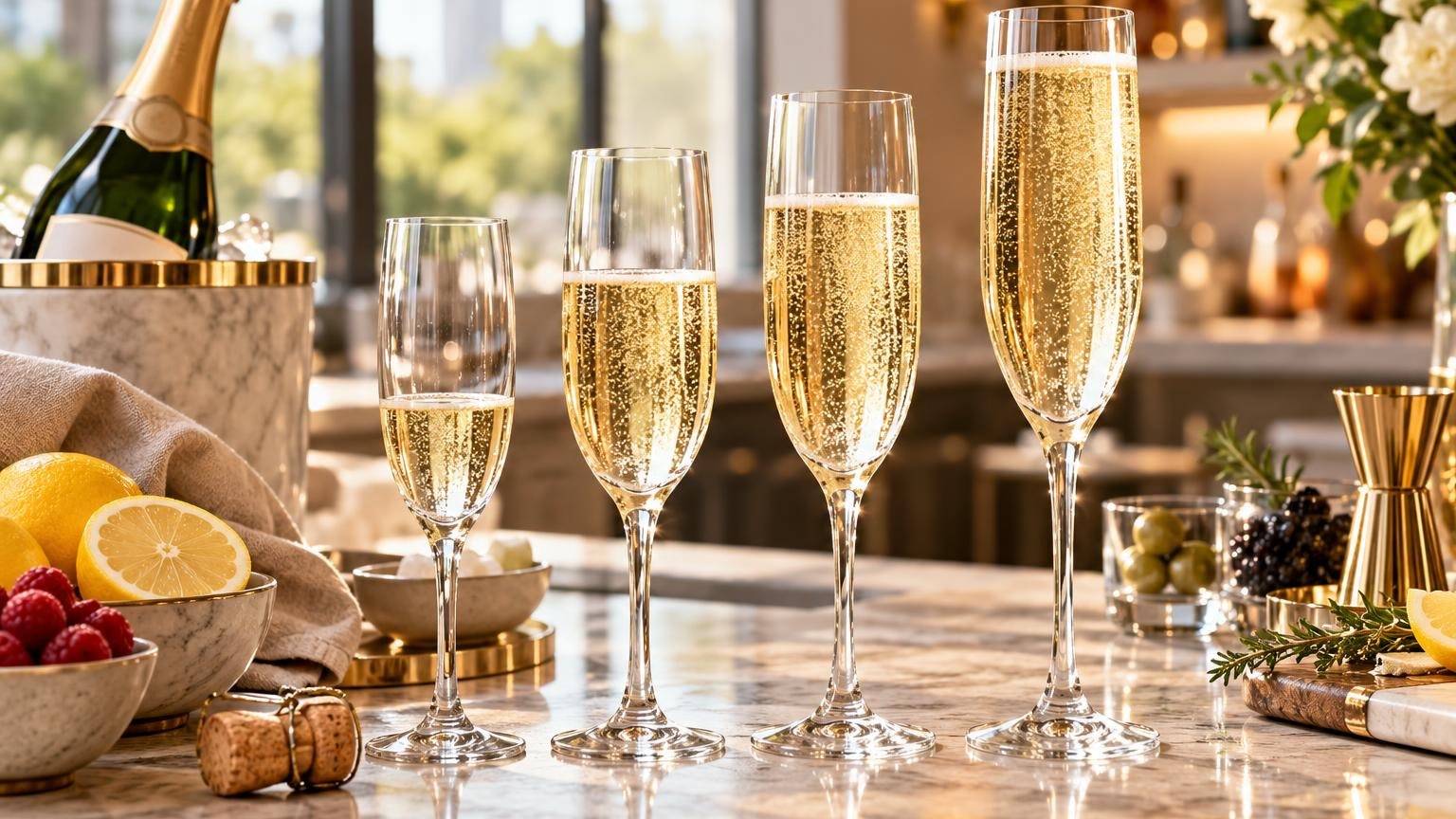
Champagne flutes sold in the United States fall into two dominant size categories: 5–6 oz and 7–8 oz total capacity.
The distinction matters because it directly affects pour size, bubble retention, and how many glasses you get per 750 mL bottle.
| Attribute | 5–6 oz Flute | 7–8 oz Flute |
| Total capacity | 148–177 mL | 207–237 mL |
| Standard pour | 4 oz (118 mL) | 5–6 oz (148–177 mL) |
| Glasses per 750 mL bottle | 6–6.3 | 4.2–5 |
| Headspace after pour | ~25–30% | ~25–35% |
| Typical use | Formal events, toasts | Casual dining, wine bars |
Why the Five-Ounce Flute Persists
A 5 oz flute with a 4 oz pour matches the standard serving size recognized by the USDA Dietary Guidelines—approximately 12 grams of alcohol per glass. Caterers and event planners favor this size because one 750 mL bottle yields six full pours.
The narrower bowl concentrates CO₂ release into a tighter column.
Research from the University of Reims found that a smaller liquid surface area reduces bubble nucleation sites exposed to air, keeping effervescence active 15–20% longer than wider vessels.
The Case for Eight-Ounce Flutes
Larger flutes give the wine more room to breathe. Aromatic compounds—esters, terpenes, thiols—accumulate in the extra headspace, making complex vintage Champagnes and aged Crémants more expressive on the nose.
Restaurants and wine bars increasingly stock 7–8 oz flutes. A 5 oz pour into an 8 oz glass leaves roughly 37% headspace, closely mirroring the pour-to-glass ratio sommeliers use for still white wines.
Choosing Between Them
- Large-format events (weddings, galas): 5 oz flutes control portion size and maximize bottle yield.
- Tasting menus or wine-focused dinners: 8 oz flutes allow aromatic development for prestige cuvées.
- Home entertaining: 6 oz flutes split the difference—offering adequate headspace while still yielding five glasses per bottle.
Whichever size you choose, fill no higher than two-thirds of the bowl. That ratio preserves the mousse, channels aromas toward the nose, and prevents warming from hand contact with the liquid.
How Full Should A Flute Be
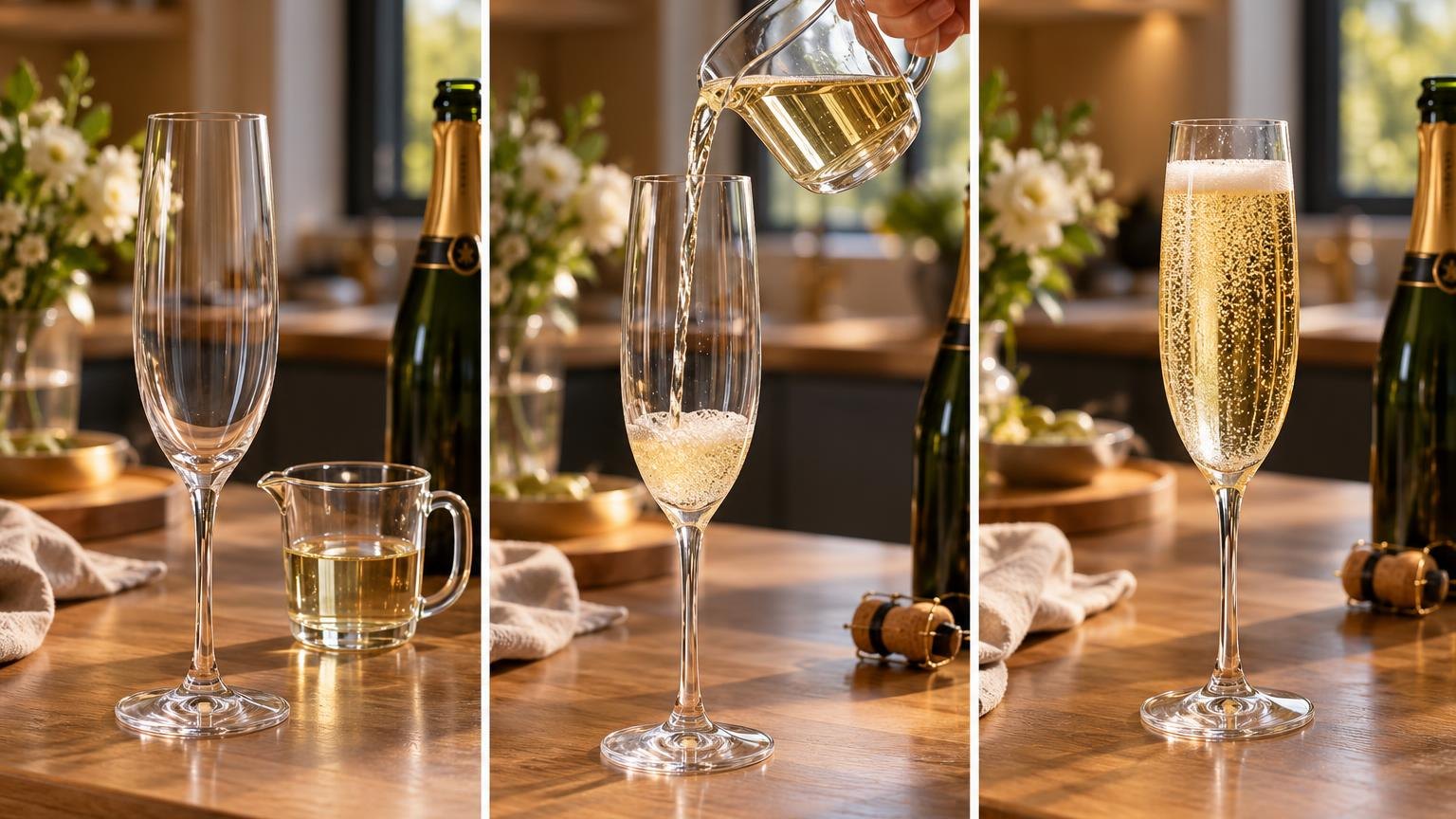
A standard champagne flute holds 6 to 8 ounces at full capacity, but proper serving fills it only two-thirds full — roughly 4 to 5 ounces.
This deliberate headspace preserves carbonation, concentrates aromas, and prevents warm hands from affecting the entire pour.
Standard Pour vs. Capacity
The universal restaurant and bar standard pour for sparkling wine is 5 ounces, matching the USDA’s definition of one serving of wine.
| Measure | Volume (oz) | Fill Level |
| Full flute capacity | 6–8 oz | 100% |
| Standard restaurant pour | 5 oz | ~65–70% |
| Tasting pour | 2–3 oz | ~35–40% |
| Toast pour (large group) | 3–4 oz | ~50% |
Why Two-Thirds Is the Target
Filling beyond two-thirds causes three measurable problems that degrade the drinking experience.
- Carbonation loss: A fuller glass exposes more surface area to air. CO₂ escapes faster, leaving flat champagne within 15 to 20 minutes instead of the typical 40-minute window in a properly poured flute.
- Aroma dissipation: The empty upper third of the glass acts as an aroma chamber. Without that headspace, volatile compounds like linalool and ethyl acetate escape before reaching the nose.
- Temperature control: Champagne is best served between 46°F and 50°F. A two-thirds pour means the wine is consumed before it warms past ideal temperature, typically within 8 to 10 minutes per glass.
Pouring Technique Matters
Tilt the flute at a 45-degree angle and pour slowly down the inside wall.
Research published in the Journal of Agricultural and Food Chemistry (2010) found this method retains up to twice the dissolved CO₂ compared to pouring straight down into an upright glass.
For a 750 ml bottle (25.4 oz), a 5-ounce standard pour yields exactly 5 glasses — a useful calculation for event planning and bottle service.

Champagne Flute Sizes Compared
Champagne flutes vary more in capacity than most people realize. Standard flutes hold 6 to 8 ounces, but specialty and oversized options range from 4 ounces to over 12 ounces, directly affecting pour size and carbonation retention.
| Flute Type | Total Capacity (oz) | Typical Pour (oz) | Best Use |
| Tasting/Dessert Flute | 4–5 oz | 3–4 oz | Sparkling wine tastings, dessert pairings |
| Standard Flute | 6–7 oz | 4–5 oz | Everyday service, restaurants, bars |
| Classic Flute | 8 oz | 5–6 oz | Home entertaining, wedding toasts |
| Large/Banquet Flute | 9–10 oz | 6–7 oz | Catered events, banquets |
| Oversized Flute | 11–12 oz | 6–8 oz | Champagne cocktails, mimosas |
Why Total Capacity Differs From Pour Size
A flute is never filled to the rim. The standard champagne pour is 4 to 6 ounces—roughly two-thirds of the glass. The remaining headspace preserves effervescence and concentrates aromas toward the nose.
A 750 mL bottle of Champagne contains approximately 25.4 ounces. With a standard 5-ounce pour, that yields five glasses per bottle. Larger flutes reduce the number of servings.
Material and Shape Variations
- Crystal flutes — Thinner walls (often under 1 mm) maximize interior volume. Brands like Riedel Vinum hold about 5.64 oz, while Schott Zwiesel’s Pure line holds 7.1 oz.
- Glass flutes — Thicker walls reduce usable capacity by roughly 0.5 to 1 oz compared to crystal at the same external dimensions.
- Plastic/acrylic flutes — Typically 5 to 6 oz total capacity, designed for outdoor events and poolside service.
Choosing the Right Size
For formal Champagne service, a 6- to 8-ounce flute provides the ideal ratio of liquid to headspace. Cocktail-forward settings benefit from 10- to 12-ounce flutes that accommodate garnishes, juice, and ice.
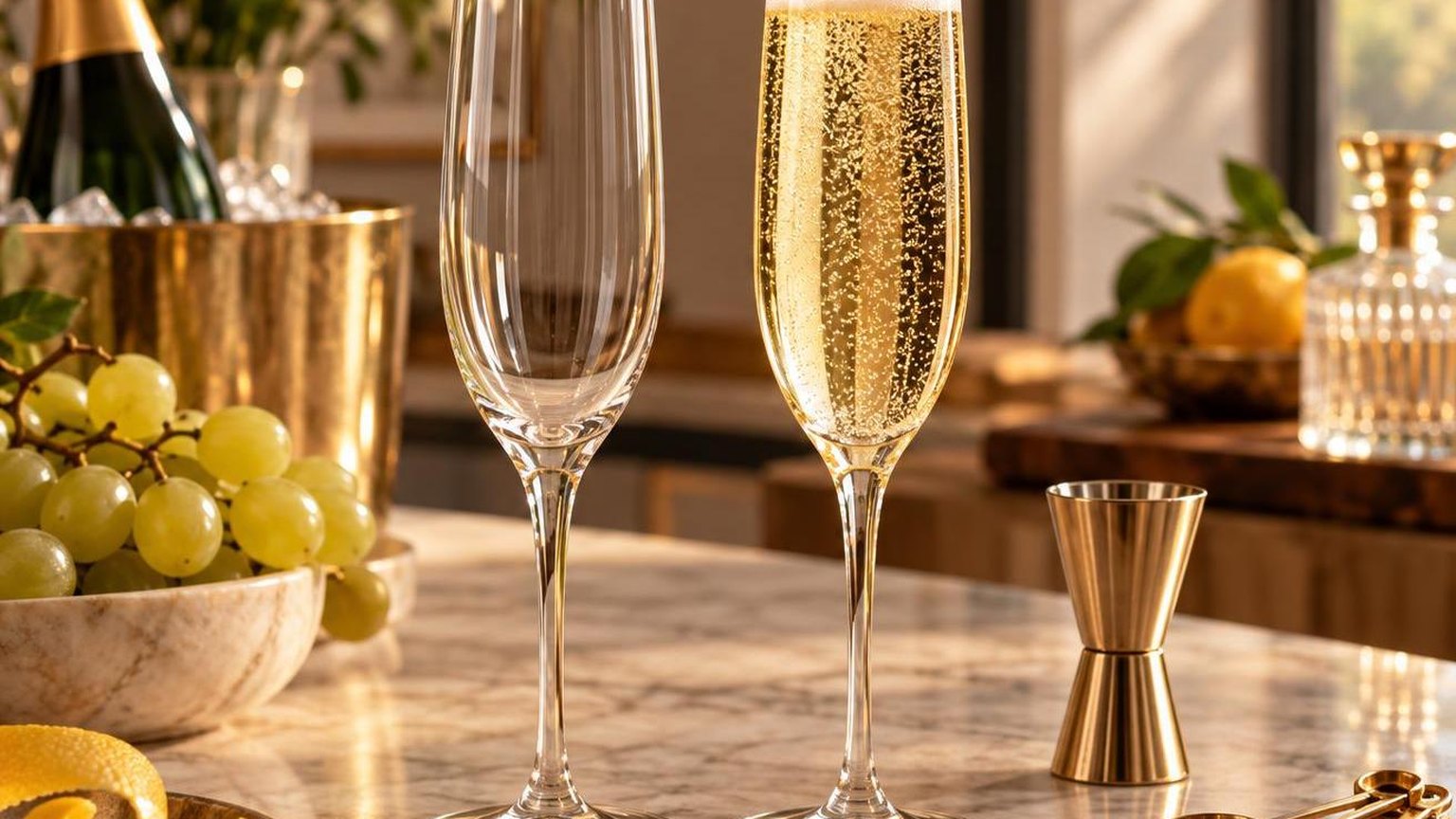
Measure capacity by filling a flute with water and pouring it into a measuring cup. Manufacturer-listed volumes occasionally differ from real-world capacity by up to half an ounce due to rim thickness and bowl taper.
Restaurant Champagne Serving Measurements
Restaurants follow standardized champagne pours that balance profitability with guest satisfaction.
The industry-standard pour for champagne and sparkling wine is 5 ounces per serving, though actual practices vary by establishment type and price point.
Standard Restaurant Pour Sizes
The National Restaurant Association recognizes 5 ounces as the standard wine pour. This applies equally to still and sparkling wines, including champagne, Prosecco, and Cava.
| Establishment Type | Typical Pour | Servings per Bottle |
| Fine dining | 4–5 oz | 5–6 |
| Casual dining | 5–6 oz | 4–5 |
| Champagne bar / wine bar | 4–5 oz | 5–6 |
| Tasting pour | 2–3 oz | 8–12 |
| Brunch bottomless | 4 oz per refill | 6+ |
Why Fine Dining Pours Smaller
Upscale restaurants often pour closer to 4 ounces. A smaller volume preserves carbonation, keeps the champagne cold longer, and encourages reordering — increasing per-table revenue.
A standard 750 mL champagne bottle holds 25.4 fluid ounces. At 5 ounces per glass, one bottle yields exactly 5 servings. At 4-ounce pours, it yields approximately 6 glasses.
Flute Size vs. Pour Size
Restaurant champagne flutes typically hold 6 to 8 ounces at full capacity. Servers fill them only 60–75% full, leaving headspace for the mousse — the crown of bubbles that defines a proper pour.
- 6-oz flute: receives a 4–5 oz pour, filled to roughly 75% capacity
- 8-oz flute: receives a 5-oz pour, filled to about 63% capacity
- Coupe (broad bowl): holds 6–8 oz but dissipates carbonation faster, rarely used in modern service
Measuring Accuracy in Practice
Most trained bartenders free-pour champagne using a slow, angled technique along the flute’s inner wall. Some establishments use measured pourers or jiggers to maintain cost control, especially on premium cuvées priced above $150 per bottle.
For banquet service, catering managers plan on 5 glasses per bottle. A 100-guest champagne toast requires a minimum of 20 bottles — experienced planners order 22–25 to account for spillage and uneven pours.
Choosing The Right Flute Capacity
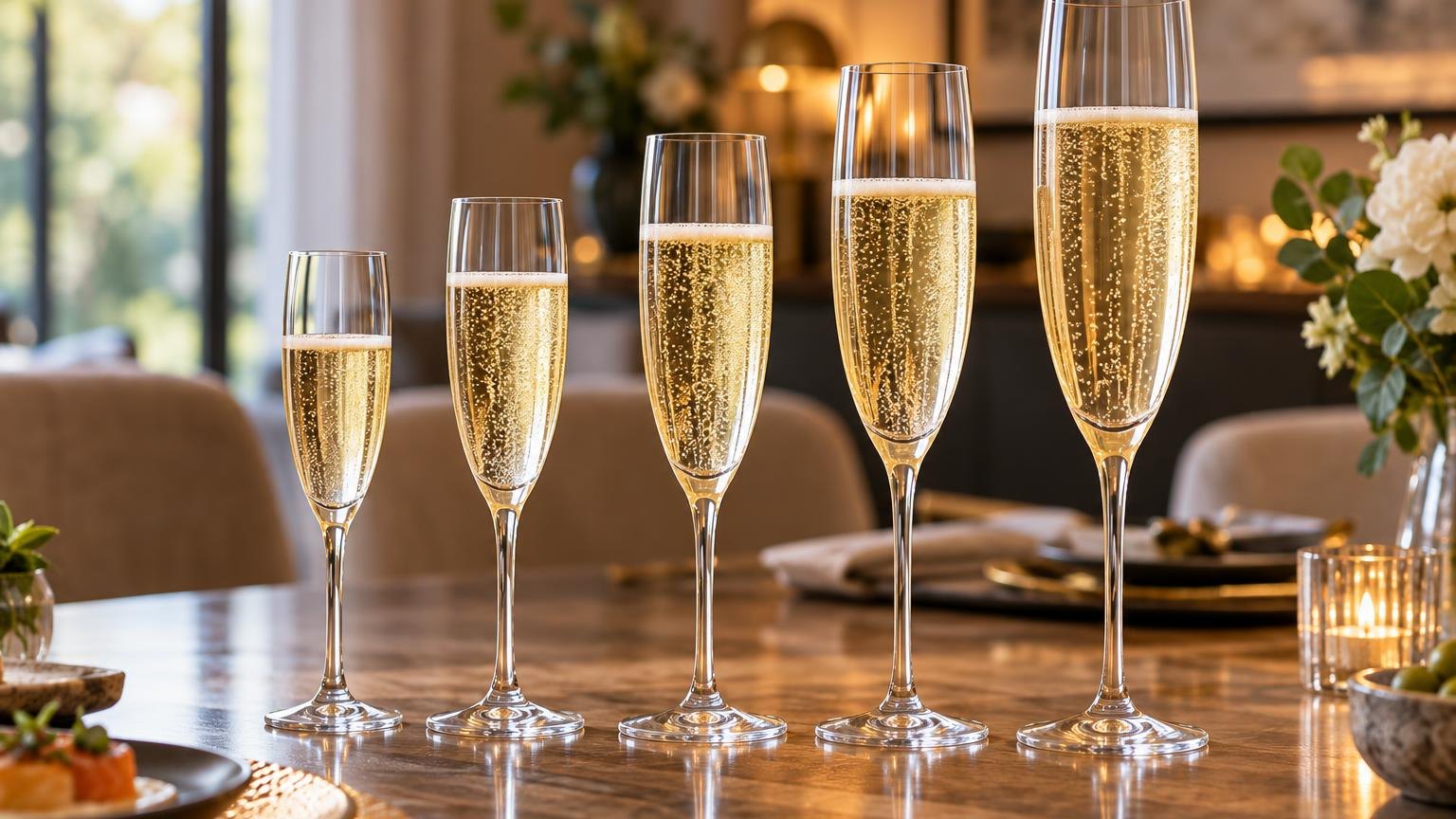
Champagne flutes typically hold between 6 and 10 ounces, but the ideal capacity depends on the occasion, pour size, and wine style. Selecting the wrong size means either overfilling or losing aromatics in excess headspace.
Standard Flute Sizes and Best Uses
| Flute Capacity | Typical Pour (oz) | Best Use |
| 6 oz (177 ml) | 4–5 oz | Toasting, cocktail receptions, sparkling wine bars |
| 7–8 oz (207–237 ml) | 5–6 oz | Everyday entertaining, brunch service, Prosecco and Cava |
| 9–10 oz (266–296 ml) | 5–6 oz | Vintage Champagne, grower Champagne, sommelier tastings |
| 11–12 oz (325–355 ml) | 5–6 oz | Prestige cuvées (Dom Pérignon, Krug), professional wine evaluation |
Key Factors in Choosing Capacity
- Pour ratio: A standard Champagne pour is 5 ounces. The flute should be filled no more than two-thirds full, leaving room for bead development and aroma concentration. A 7–8 oz flute meets this ratio precisely.
- Wine complexity: Aged or prestige Champagnes benefit from 9–12 oz flutes. The extra headspace lets complex aromas—brioche, toasted almond, citrus peel—collect above the wine’s surface.
- Event logistics: For large-format events serving 100+ guests, 6 oz flutes reduce breakage risk and cost per stem. Caterers frequently use Libbey’s 6 oz #8795 or Arcoroc’s 5.75 oz flute for high-volume pours.
- Effervescence retention: Narrower flutes with smaller surface openings (roughly 46–50 mm rim diameter) preserve carbonation longer than wider bowls. A 7 oz flute with a narrow bowl loses CO₂ approximately 30% slower than a 12 oz coupe.
The Practical Sweet Spot
For most home and wine bar settings, an 8 oz flute delivers the best balance. It accommodates a full 5 oz pour at the ideal two-thirds fill line while concentrating bubbles and aromas effectively.
Investing in two sizes—an 8 oz flute for daily use and a 10–12 oz flute for vintage bottles—covers virtually every sparkling wine scenario without cluttering storage.
Questions Readers Ask
How many ounces does a standard champagne flute hold?
A standard champagne flute holds between 6 and 8 ounces (180–240 ml) of liquid when filled to the rim. In practice, a proper pour fills only about two-thirds of the glass, delivering 4 to 6 ounces of Champagne per serving.
How many ounces is a standard pour of Champagne in a flute?
The standard Champagne pour is 5 ounces (150 ml), which matches the single-serving size recognized by the USDA Dietary Guidelines. This pour leaves adequate headspace in the flute to concentrate aromas and allow a steady stream of bubbles to develop.
How many glasses of Champagne do you get from a 750 ml bottle using flutes?
A 750 ml bottle contains approximately 25.4 ounces of Champagne, yielding five glasses at the standard 5-ounce pour. For toasting pours of 4 ounces each, a single bottle stretches to six servings — a useful benchmark for event planning.
Why are champagne flutes smaller than regular wine glasses?
Champagne flutes typically hold 6–8 ounces compared to 12–22 ounces for standard red wine glasses.
The narrow, upright bowl is engineered to preserve carbonation by reducing the surface area exposed to air, while the smaller volume keeps the wine chilled through faster consumption before it warms.
Does the shape of a champagne flute affect how many ounces you should pour?
Yes. A tulip-shaped flute with a wider mid-section may hold up to 8–10 ounces total, but the recommended pour remains 5 ounces regardless of shape.
Overfilling any flute suppresses the mousse (foam) and causes CO₂ to escape faster, diminishing both aroma and effervescence.
How many ounces do coupe glasses hold compared to champagne flutes?
Coupe glasses generally hold 6 to 8 ounces, similar in total capacity to flutes, but their wide, shallow bowl exposes far more surface area.
This causes Champagne to lose carbonation roughly twice as fast, which is why coupes fell out of favor among sommeliers despite their identical pour size of 5 ounces.
Further Reading
- Difference Between Brut and Extra Dry Champagne
- How Many Calories Are in a Glass of Sparkling Wine?
- How Long Does Open Champagne Last?
- Best Champagne in Costco: The Ultimate 2026 Guide to Affordable Luxury
- How To Bottle Elderflower Champagne? — A Complete Professional Guide to Safe Bottling, Fermentation Control, and Long-Term Storage
- How Long Does Champagne Last After Opening?
- How Long Is Champagne Good For Unopened? 7 Powerful Facts You Must Know Before Storing That Bottle
- All Alcohol Guides
- National Institute on Alcohol Abuse and Alcoholism (2023)
- U.S. Dietary Guidelines for Americans – USDA & HHS (2020)
- Centers for Disease Control and Prevention – Alcohol FAQs (2024)
- Cornell University – Department of Food Science, Wine Serving Standards (2023)
- National Institutes of Health – Rethinking Drinking (2024)
- U.S. Food & Drug Administration – Labeling of Alcoholic Beverages (2022)
- Wine Folly – Champagne Glass Guide (2023)
- The Society of Wine Educators (2023)
- MasterClass – Guide to Champagne Flutes and Glassware (2022)