The difference between irish whiskey and bourbon is that Irish whiskey is typically barley-based and made in Ireland, while bourbon is U.S.-made whiskey from at least 51% corn and aged in new charred oak barrels.
That legal grain and barrel split drives most flavor differences.
Irish whiskey often tastes lighter, smoother, and fruitier, especially when triple-distilled. Bourbon usually tastes sweeter, fuller, and richer, with vanilla, caramel, oak, and spice from corn and new charred barrels.
This guide compares ingredients, production rules, aging, flavor, labeling, and best uses.
Ingredients and Mash Bills Compared
Irish whiskey and bourbon diverge first at the grain bill. Bourbon is legally corn-led, while Irish whiskey has no single mandatory grain recipe and historically includes mixes of malted and unmalted barley, plus other cereals in some styles.
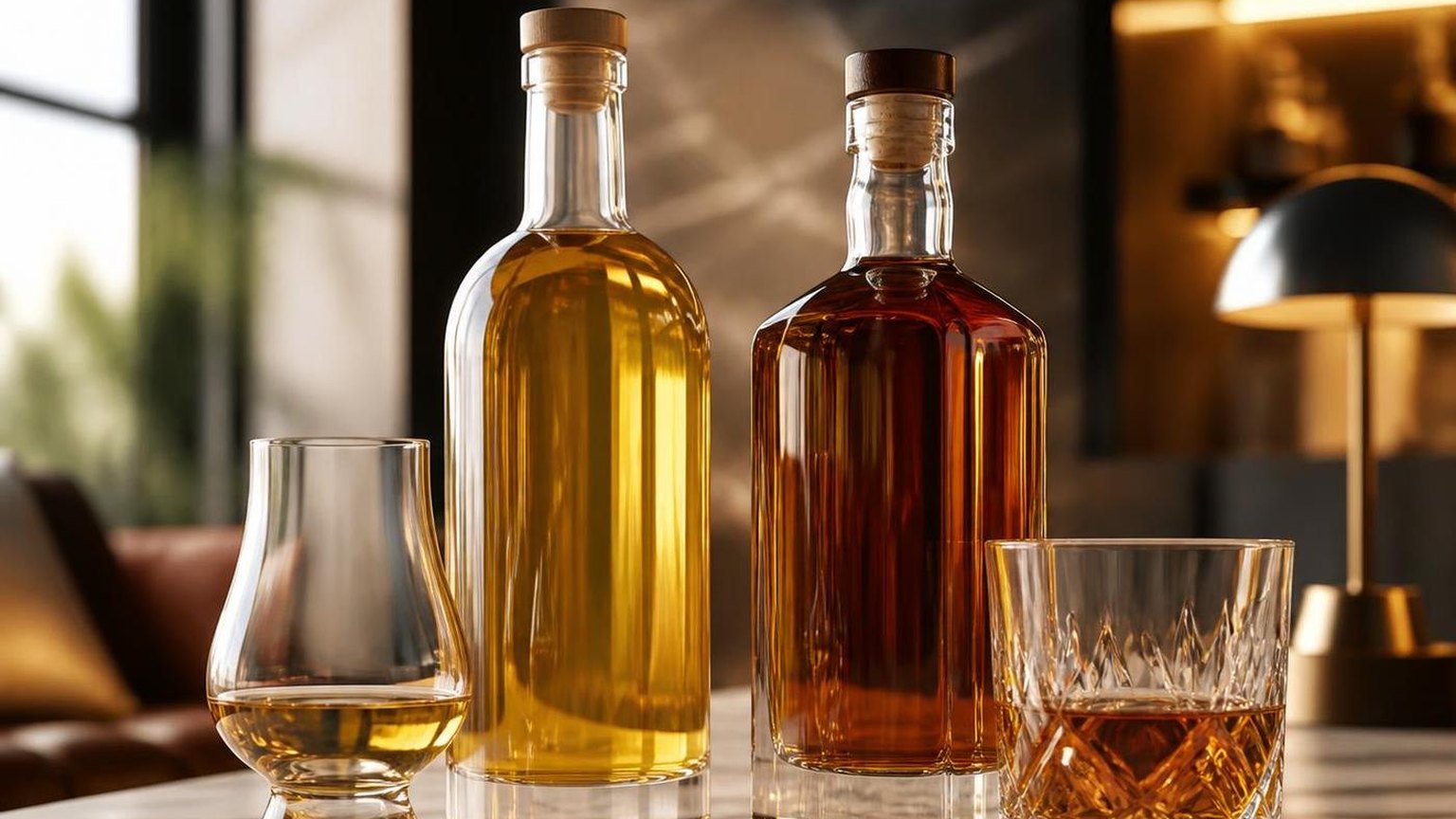
That difference changes texture, sweetness, and spice before aging begins. Mash composition also shapes fermentation behavior, distillation choices, and the final whiskey’s body in the glass.
| Category | Irish whiskey | Bourbon |
| Minimum corn required by law | No minimum | 51% |
| Typical core grains | Malted barley, unmalted barley, corn, wheat, oats, rye | Corn, rye, wheat, malted barley |
| Mash bill flexibility | Broad; depends on style and producer | Narrower; must remain majority corn |
| Signature traditional style | Single pot still: malted and unmalted barley | High-corn mash with rye or wheat as flavoring grain |
Bourbon’s legal standard comes from U.S. federal identity rules.
It must be made from a fermented mash of at least 51% corn, distilled to no more than 160 proof, entered into new charred oak at no more than 125 proof, and bottled at at least 80 proof.
Within that framework, distillers tune the remaining 49% with rye, wheat, and malted barley. Rye usually increases pepper, clove, and drier structure. Wheat usually softens the palate and emphasizes bread, honey, and rounded sweetness.
| Common bourbon mash-bill pattern | Approximate range |
| Corn | 51% to 80% |
| Rye | 10% to 35% |
| Wheat | 10% to 20% |
| Malted barley | 5% to 15% |
Malted barley in bourbon often plays a technical role as much as a flavor role. Its enzymes help convert starches into fermentable sugars, especially in high-corn mashes where corn contributes bulk starch but little natural enzymatic power.
Irish whiskey works differently because the category includes several styles. Single malt Irish whiskey uses 100% malted barley at one distillery in pot stills.
Single pot still Irish whiskey uses a mash of malted and unmalted barley at one distillery in pot stills.
The unmalted barley requirement in single pot still whiskey is central to Irish identity.
Historically, producers used it partly after 18th- and 19th-century malt taxes, but the grain stuck because it adds an oilier mouthfeel and a distinct cereal snap.
| Irish whiskey style | Mash-bill rule |
| Single malt | 100% malted barley |
| Single pot still | Minimum 30% malted barley, minimum 30% unmalted barley, up to 5% other grains |
| Grain whiskey | Primarily corn or wheat, plus malted barley for conversion |
| Blended whiskey | Blend of two or more whiskey types |
Modern Irish grain whiskey often relies heavily on corn because it is efficient and neutral in column distillation.
That makes it structurally closer to some American grain recipes, but the legal category still does not force Irish whiskey to be corn-dominant.
In practical tasting terms, bourbon’s corn-heavy mash usually delivers more caramel, vanilla, and sweet grain.
Irish whiskey’s barley-heavy styles lean more toward biscuit, cereal, orchard fruit, and a firmer, drier grain signature, especially in single pot still expressions.
Distillation Rules and Still Styles
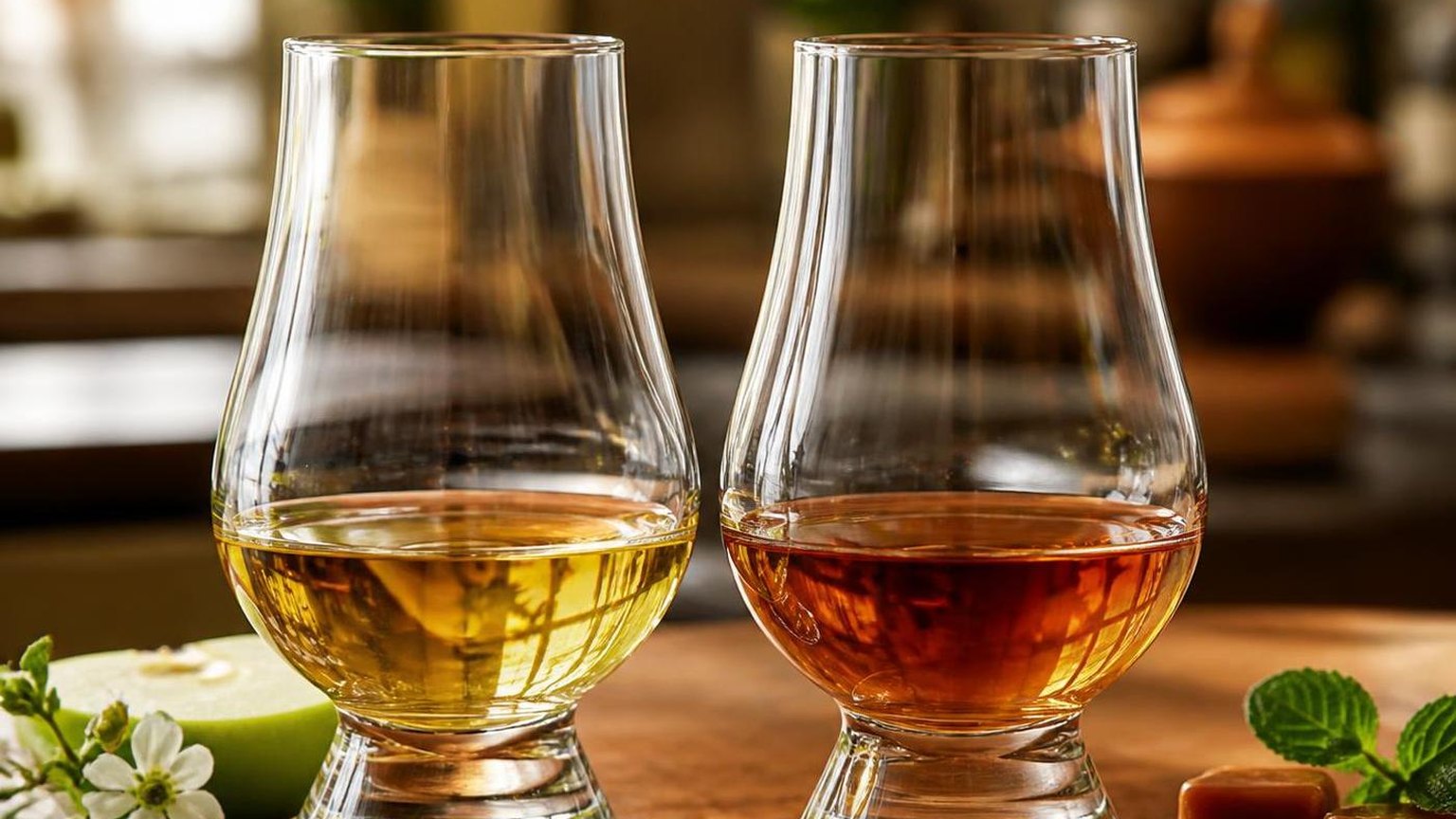
Irish whiskey and bourbon diverge early, at distillation. Their legal proof limits, still choices, and mash handling shape texture before barrel aging adds color and sweetness.
Both are regulated spirits, but the rules are not the same. Bourbon follows U.S. federal standards in 27 CFR 5. Irish whiskey follows Irish Whiskey Technical File rules recognized in the European Union and protected as a geographical indication.
For bourbon, the mash must contain at least 51% corn. It must be distilled to no more than 160 proof, or 80% alcohol by volume, then entered into new charred oak containers at no more than 125 proof, or 62.5% ABV.
Those limits matter because lower distillation proof carries more grain-derived congeners.
Corn-heavy mash and a relatively low distillation ceiling help bourbon keep weight, sweetness, and cereal richness before the barrel contributes vanilla, caramel, and smoke.
Irish whiskey has a different framework. It must be produced and matured on the island of Ireland, distilled to less than 94.8% ABV, and matured at least three years in wooden casks not exceeding 700 liters.
That 94.8% ABV ceiling is much higher than bourbon’s 80% ABV limit. In practice, many Irish distillers do not run every spirit near the legal maximum, but the rule allows lighter, cleaner distillates when that style is the goal.
| Rule or parameter | Irish whiskey | Bourbon |
| Minimum grain requirement | No single grain minimum for the category | At least 51% corn |
| Maximum distillation strength | Less than 94.8% ABV | 160 proof, 80% ABV |
| Barrel entry limit | No single category-wide proof limit in the same way | 125 proof, 62.5% ABV maximum |
| Wood maturation minimum | 3 years | No minimum for bourbon; 2 years only for straight bourbon |
| Container rule | Wooden casks up to 700 liters | New charred oak containers |
Still type is the next major split. Bourbon is commonly made on continuous column stills, often called beer stills, followed by doubler or thumper systems. This setup is efficient, scalable, and consistent across very large production volumes.
Column distillation suits bourbon because producers ferment thick grain mash with solids present. The process handles high throughput and preserves enough grain character when proof is kept at or below 160.
Many Kentucky distilleries use this format for nearly all core releases.
Irish whiskey uses both column stills and traditional copper pot stills.
Single pot still Irish whiskey, one of Ireland’s signature styles, must be distilled in pot stills from a mash of malted and unmalted barley, with up to 5% other cereals allowed.
Pot still distillation is batch-based and usually slower. Copper contact helps remove sulfur compounds, while the shape of the still and cut points influence oily, spicy, orchard-fruit notes often associated with Irish single pot still whiskey.
Irish whiskey is also widely associated with triple distillation, though it is not mandatory across the whole category.
Many Irish distilleries distill three times, often producing a softer mouthfeel and lighter body than the double-distilled norm in bourbon production.
- Bourbon’s lower distillation ceiling preserves heavier grain character.
- Irish whiskey’s higher ceiling allows cleaner, lighter spirit if the distiller chooses.
- Column stills dominate bourbon for volume and consistency.
- Pot stills remain central to Ireland’s traditional single pot still style.
- Triple distillation is common in Ireland, but it is a practice, not a universal legal requirement.
In the glass, these production choices show up as texture. Bourbon tends to read denser and sweeter from corn and lower proof distillation.
Irish whiskey often reads cleaner and silkier, especially when triple distilled or made in a lighter column-still style.
Barrel Aging Requirements and Flavor
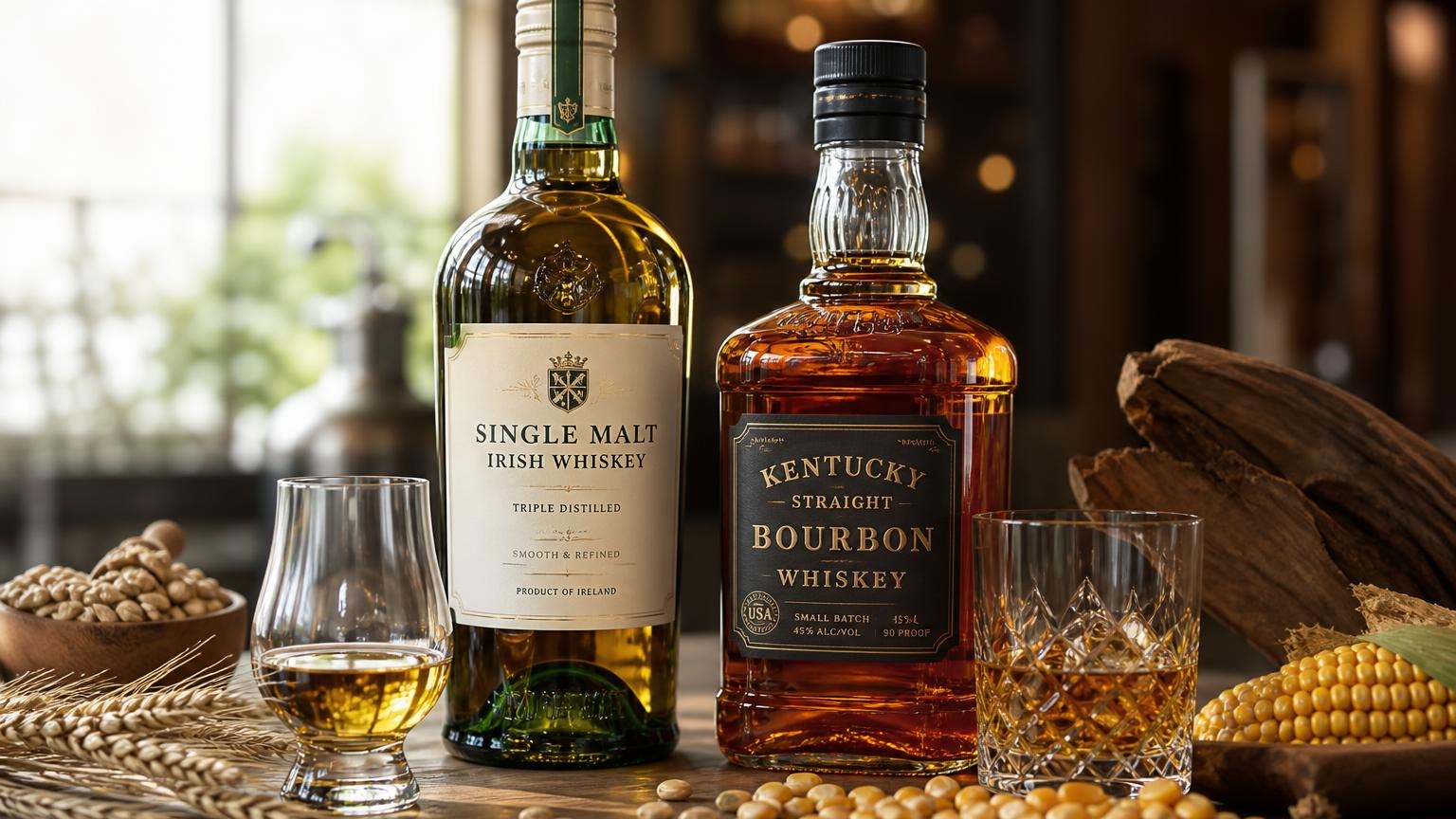
Barrel law separates Irish whiskey from bourbon before flavor even enters the glass.
Bourbon must go into new charred oak, while Irish whiskey must spend at least three years in wood but can use many cask types, including refill barrels that previously held other spirits or wine.
Those legal rules shape extraction, oxidation, and texture. New charred oak pushes bourbon toward stronger vanilla, caramel, and toasted wood notes, while Irish whiskey often shows lighter oak, more orchard fruit, and clearer grain character.
| Category | Irish whiskey | Bourbon |
| Minimum aging requirement | At least 3 years | No minimum for bourbon; 2 years minimum for straight bourbon |
| Barrel type required | Wooden casks | New charred oak containers |
| Maximum cask size | 700 liters | No federal size cap stated in bourbon standard |
| Typical fill | Often refill casks, especially ex-bourbon barrels | Always first-fill new oak |
| Usual flavor impact | Gentler oak, fruit, honey, malt, spice | More vanilla, caramel, coconut, char, smoke, baking spice |
Irish whiskey’s legal standard requires maturation on the island of Ireland in wooden casks for not less than three years. The casks cannot exceed 700 liters.
That size limit matters because smaller vessels generally increase wood contact and speed flavor pickup.
Bourbon follows a different rule set under U.S. law. It must be aged in new charred oak containers. There is no minimum aging period to be called bourbon, but “straight bourbon” must age at least two years.
New oak is aggressive. When bourbon enters a freshly charred barrel, alcohol dissolves compounds such as vanillin, oak lactones, tannins, and caramelized wood sugars.
Char creates a carbon layer that filters some sulfur notes, while heat-treated wood contributes toffee, clove, and smoky sweetness.
That is why young bourbon can still taste obviously oaky. Even at four to six years, many bourbons show pronounced vanilla, brown sugar, coconut, cinnamon, and char.
In hotter U.S. warehouse climates, expansion and contraction also drive spirit deeper into the wood.
Irish whiskey usually takes a softer route because producers often mature spirit in used barrels. Ex-bourbon casks are common, and sherry butts, port pipes, rum barrels, and virgin oak casks also appear.
Refill wood gives less raw oak and lets distillate character stay visible.
The result is often more layered than forceful. Many Irish whiskeys show apple, pear, cereal, honey, biscuit, dried fruit, or gentle baking spice rather than dominant char.
Pot still Irish whiskey can add oily texture and peppery notes, but the oak usually supports instead of leads.
- New charred oak makes bourbon extract wood flavor faster and more intensely.
- Used casks let Irish whiskey build complexity with less tannin and less overt char.
- Irish whiskey’s 3-year minimum guarantees baseline maturity; bourbon can be legally younger unless labeled straight.
- Cask history matters more in Irish whiskey because previous fills can add nutty, wine-like, or dried-fruit notes.
In practical tasting terms, bourbon is usually barrel-first, spirit-second. Irish whiskey is more often spirit-first, barrel-shaped. That difference starts with law, then shows up as sweetness, spice, oak weight, and finish length in the final pour.
Irish Smoothness Versus Bourbon Sweetness
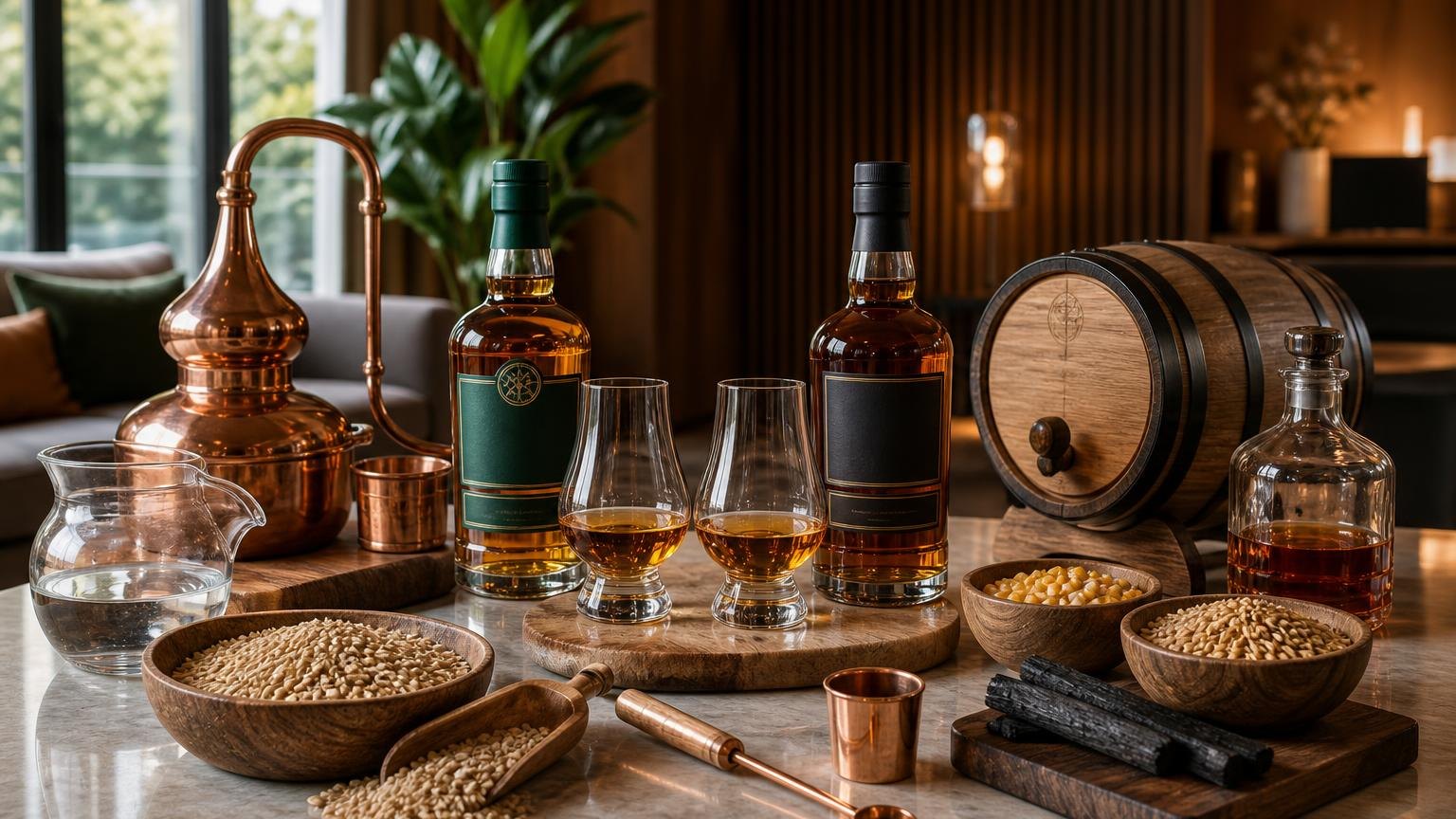
Irish whiskey usually drinks softer and lighter, while bourbon shows a sweeter, fuller profile.
That contrast starts with law and production: Ireland leans on used oak and, often, triple distillation; bourbon must use new charred oak and a mash bill with at least 51% corn.
Smoothness in Irish whiskey often comes from distillation choices and cask policy. Many major Irish brands are triple distilled, which can reduce heavier congeners and produce a cleaner texture.
Used barrels also contribute gentler oak than fresh charred wood.
Sweetness in bourbon is built into the grain bill and barrel. Corn naturally pushes flavors toward caramel, vanilla, and toffee.
New charred American oak adds lactones, wood sugars, and char-derived notes that make bourbon taste richer and sweeter, even when no sugar is added.
| Production factor | Irish whiskey | Bourbon |
| Main legal grain rule | No 51% corn requirement; styles include malt, grain, pot still, and blends | At least 51% corn in the mash bill |
| Barrel rule | Often matured in used barrels, including ex-bourbon casks | Must be aged in new charred oak containers |
| Minimum bottling proof | Typically bottled at 40% ABV minimum in the EU market | At least 80 proof, or 40% ABV |
| Distillation limit | No universal triple-distillation rule; style dependent | Distilled to no more than 160 proof |
| Barrel entry proof | No single whiskey-wide Irish cap comparable to bourbon law | Entered into barrel at no more than 125 proof |
Irish whiskey can still be flavorful, but its sweetness is usually subtler. Expect honey, orchard fruit, cereal, shortbread, and light spice.
In single pot still examples, unmalted and malted barley together can add a creamy texture and peppery finish without the dense caramel weight common in bourbon.
Bourbon’s sweetness is not syrupy by default. Good bourbon balances corn richness with rye spice, tannin, and barrel char.
A high-rye bourbon often tastes drier and more peppery, while a wheated bourbon can seem rounder, softer, and more pastry-like.
Age affects the contrast. Ireland’s cooler, wetter climate often slows extraction, helping whiskey stay elegant over time.
In Kentucky’s hotter summers and colder winters, whiskey moves aggressively in and out of oak, building color and sweetness faster.
That is why a 4- to 8-year bourbon can taste oakier and sweeter than an Irish whiskey of similar age. The barrel matters as much as the calendar.
New charred oak acts faster than refill wood, especially in a continental climate with bigger temperature swings.
- Choose Irish whiskey if you want lighter body, cleaner grain, and restrained oak sweetness.
- Choose bourbon if you want caramel, vanilla, toasted oak, and a fuller mouthfeel.
- If you like both, compare an Irish blend aged in ex-bourbon casks with a wheated bourbon at 45% to 50% ABV.
In the glass, “smooth” and “sweet” describe different experiences. Irish whiskey usually feels smoother because oak, grain, and distillation are less forceful.
Bourbon tastes sweeter because corn and new charred oak create a denser, more immediately expressive profile.
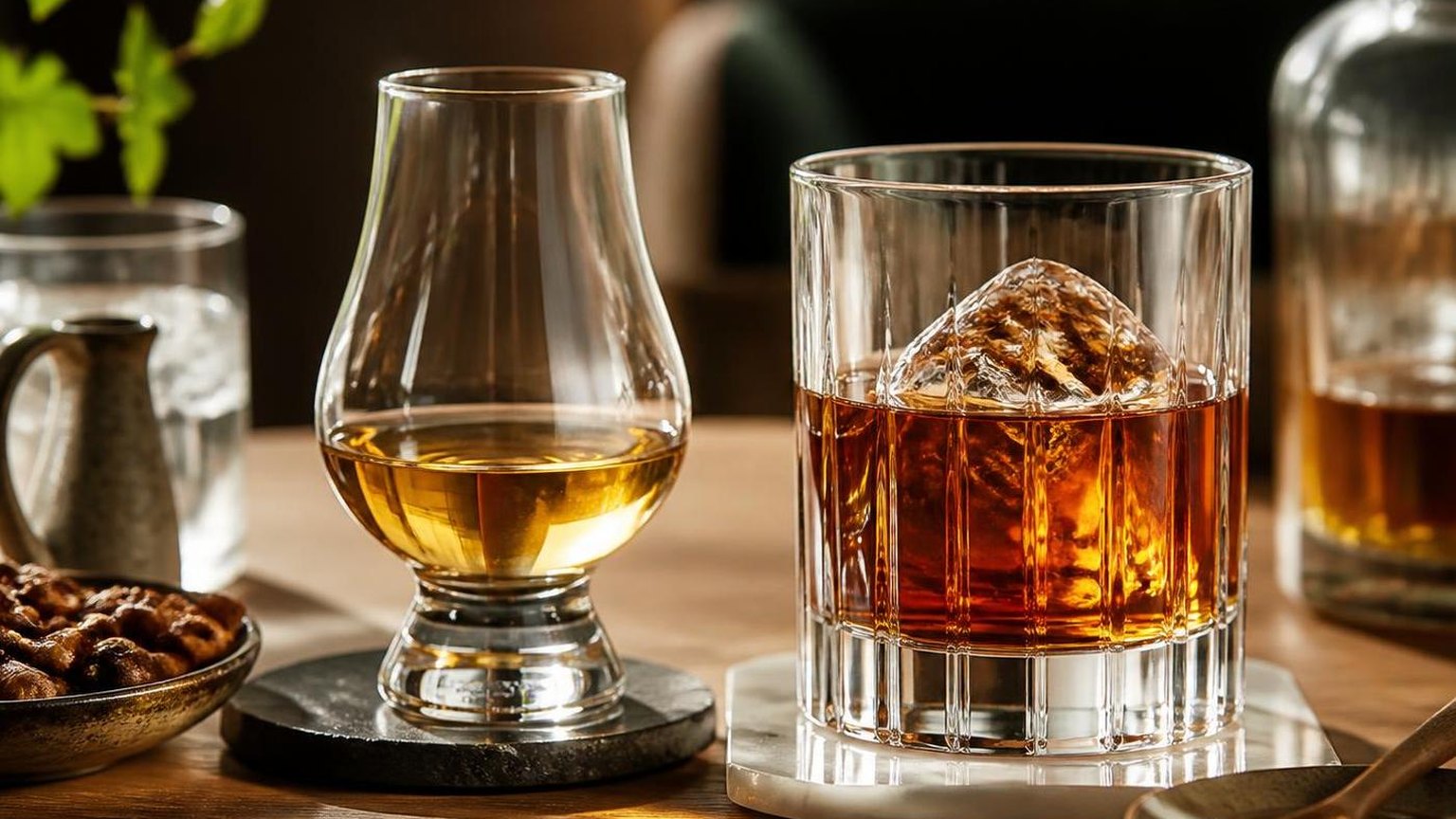
Best Uses in Cocktails and Flights
Irish whiskey and bourbon perform differently in the glass because their flavor structures are different.
Irish whiskey usually brings lighter grain, orchard fruit, honey, and softer oak, while bourbon leans sweeter and fuller with vanilla, caramel, and char from new oak.
That difference matters in both cocktails and tasting flights. Use Irish whiskey where lift and balance matter; use bourbon where body, oak, and sweetness need to stand up to sugar, bitters, citrus, or dilution.
Where Irish whiskey works best
Irish whiskey fits cocktails that need whiskey character without heavy wood or syrupy weight. Triple-distilled Irish styles, especially blends, stay clear and bright in shaken or stirred drinks.
- Irish Coffee: Hot coffee, sugar, and cream can bury delicate whiskey, but Irish whiskey’s lighter texture keeps the drink from tasting muddy. A standard build often uses 1.5 ounces of whiskey.
- Whiskey Sour: Irish whiskey makes a sharper, more citrus-driven sour than bourbon. Lemon stays in front, and the finish is cleaner.
- Highball: With soda or ginger ale, Irish whiskey shows apple, pear, cereal, and spice notes. This is useful when you want refreshment over richness.
- Tipperary or Irish Manhattan variations: Pot still Irish whiskey adds pepper and oily texture without the heavier char profile common in bourbon.
Where bourbon works best
Bourbon excels in cocktails built around sugar, bitters, and dilution. By law, bourbon must be made from at least 51% corn and aged in new charred oak containers, which helps explain its stronger vanilla-caramel profile.
- Old Fashioned: Bourbon’s oak, sweetness, and proof hold up after stirring. The drink still tastes complete at the end of the glass.
- Mint Julep: Crushed ice and mint need a whiskey with concentration. Bourbon keeps flavor even as dilution rises.
- Boulevardier: Campari and sweet vermouth can overwhelm lighter whiskey. Bourbon gives enough sweetness and barrel weight to keep structure.
- Paper Plane: Modern equal-parts drinks often rely on bourbon’s richer body to avoid tasting thin.
Best side-by-side flight formats
Flights should isolate one variable at a time. Pour 0.5 to 0.75 ounces per sample, serve at room temperature, and compare similar proof ranges first, then move to barrel-forward or cask-strength pours.
| Flight Type | Pour Size | What It Shows |
| Irish blend vs. classic bourbon | 0.75 oz each | Light grain and orchard fruit against corn sweetness and char |
| Single pot still Irish vs. high-rye bourbon | 0.5 oz each | Peppery spice from pot still distillate against rye-driven spice and oak |
| Sherry-finished Irish vs. wheated bourbon | 0.5 oz each | Dried fruit and nuttiness against softer bread-like sweetness |
| Cask-strength Irish vs. barrel-proof bourbon | 0.5 oz each | How proof amplifies texture, heat, and finish in different traditions |
Practical pairing logic for bars and home tastings
Build a flight in ascending intensity. Start with Irish blend, then pot still Irish, then standard bourbon, then barrel-proof bourbon. That sequence protects the lighter whiskey from palate fatigue caused by oak and ethanol.
For cocktail programs, Irish whiskey works best when a menu needs one approachable, versatile pour for coffee drinks, sours, and highballs.
Bourbon is the stronger anchor for spirit-forward classics because its sweetness and barrel extract stay visible after mixing.
If the goal is education, pour both neat first, then in mini cocktails made with the same template. A 1.5-ounce whiskey sour split between Irish whiskey and bourbon shows the category difference faster than a long verbal explanation.
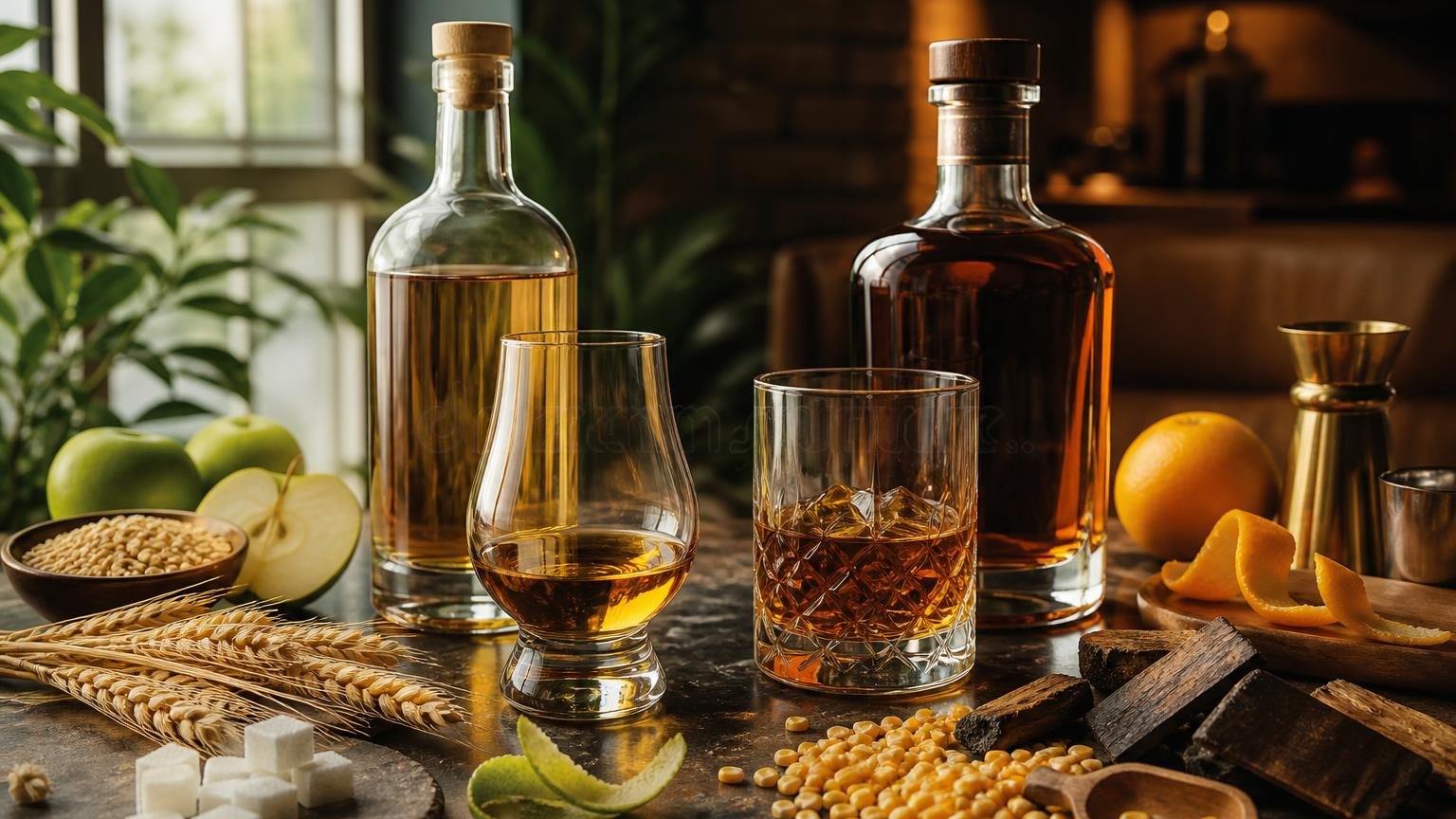
Questions Readers Ask
What legally defines Irish whiskey versus bourbon?
Irish whiskey must be made on the island of Ireland from a mash of cereals, distilled to no more than 94.8% ABV, matured at least three years in wooden casks, and bottled at 40% ABV or higher.
Bourbon must be made in the United States from a mash bill with at least 51% corn, distilled to no more than 80% ABV, entered into new charred oak at no more than 62.5% ABV, and bottled at 40% ABV or higher.
Why does bourbon usually taste sweeter than Irish whiskey?
Bourbon’s required minimum of 51% corn gives it a naturally sweeter profile, often showing caramel, vanilla, toffee, and baked corn notes.
Irish whiskey often uses barley-heavy mash bills, including malted and sometimes unmalted barley, which tends to produce lighter grain, biscuit, orchard fruit, and spice flavors instead of overt sweetness.
How do the barrel rules differ?
Bourbon must be aged in new, charred oak containers, so the spirit extracts strong vanilla, caramel, smoke, and color relatively quickly.
Irish whiskey can mature in used barrels such as ex-bourbon casks, sherry butts, or wine casks, which usually creates a softer wood impact and more variation from cask type.
Is Irish whiskey always triple distilled and bourbon double distilled?
No. Triple distillation is common in Irish whiskey, especially for many major brands, but Irish law does not require exactly three distillations.
Bourbon is often distilled in a continuous column still and then a doubler or thumper, but U.S. law does not mandate “double distillation” as a formal requirement.
What is the difference in grain recipes?
Bourbon mash bills center on corn and usually include rye or wheat plus malted barley; a typical recipe might be 60% to 75% corn.
Irish whiskey categories vary more: single malt uses 100% malted barley, single pot still uses both malted and unmalted barley, and blends combine pot still, malt, and grain whiskeys.
Does age work differently for Irish whiskey and bourbon?
Irish whiskey must age at least three years, which is a hard legal minimum across the category.
Bourbon has no minimum aging requirement unless it is labeled “straight bourbon,” which must age at least two years; if straight bourbon is under four years old, the age must appear on the label.
Are Irish whiskey and bourbon both smoky?
Most bourbon is not peated, so any smoky note usually comes from the charred new oak rather than peat smoke in the malt.
Most Irish whiskey is also unpeated, though some Irish single malts use peated barley, so smoke is more brand-specific than category-wide.
Which one is usually easier for beginners to drink neat?
Many beginners find Irish whiskey easier neat because it often has a lighter body, softer grain character, and less aggressive oak tannin.
Many beginners also enjoy bourbon because its corn sweetness is familiar, but higher oak extraction and common bottling strengths of 45% to 50% ABV can make it feel richer and hotter.
Related Reading
- What Bourbon Does Buffalo Trace Make? Get Answer Now
- What Is In A Gummy Bear Shot? Most Correct Answer
- Is Tennessee Whiskey Bourbon? The Most Accurate Answer
- Where To Buy Buffalo Trace Bourbon?
- Does Bourbon Appreciate In Value?
- How Is The Costco Bourbon Selection?
- How To Do A Bourbon Tasting?
- What Is A Wheated Bourbon?
- All Alcohol Guides
- Alcohol and Tobacco Tax and Trade Bureau (2024)
- Irish Whiskey Association (2014)
- European Commission eAmbrosia (2024)
- University of Kentucky, James B. Beam Institute for Kentucky Spirits (2024)
- Encyclopaedia Britannica (2024)
- Encyclopaedia Britannica (2024)
- The Bourbon Review (2024)
- Kentucky Distillers' Association (2024)
- Foods Connected (2019)
- National Center for Biotechnology Information (2021)