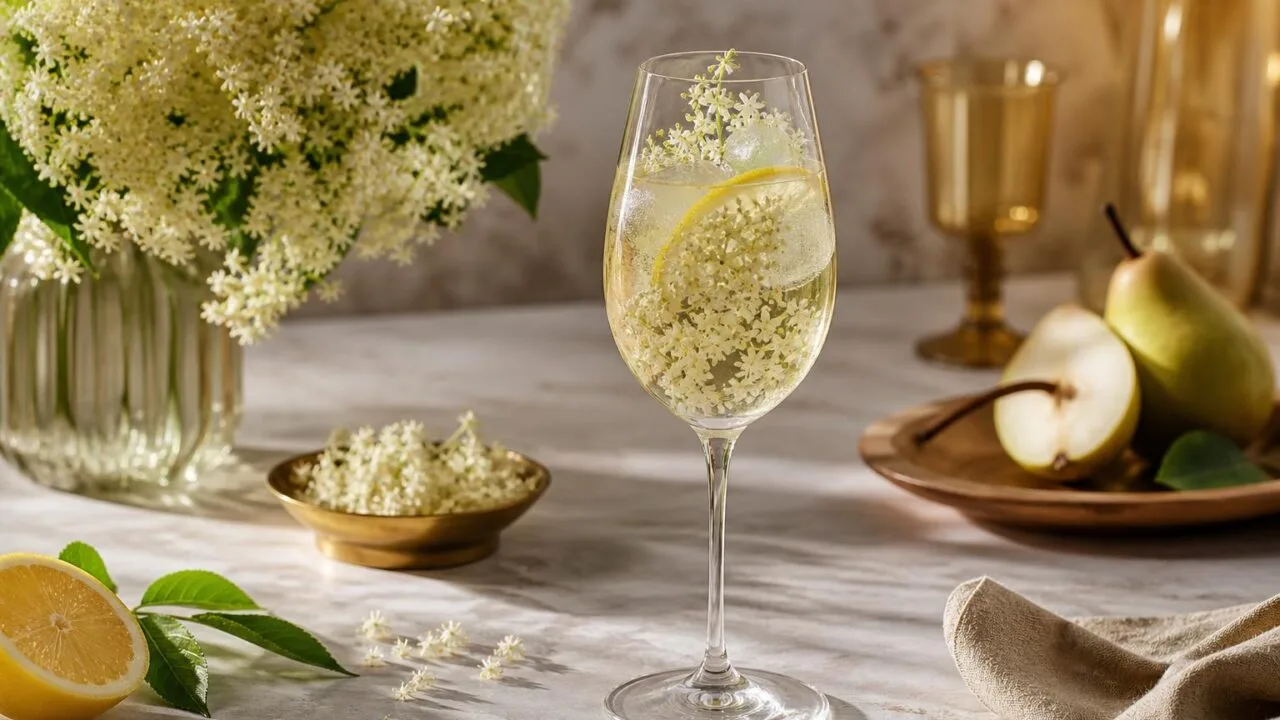
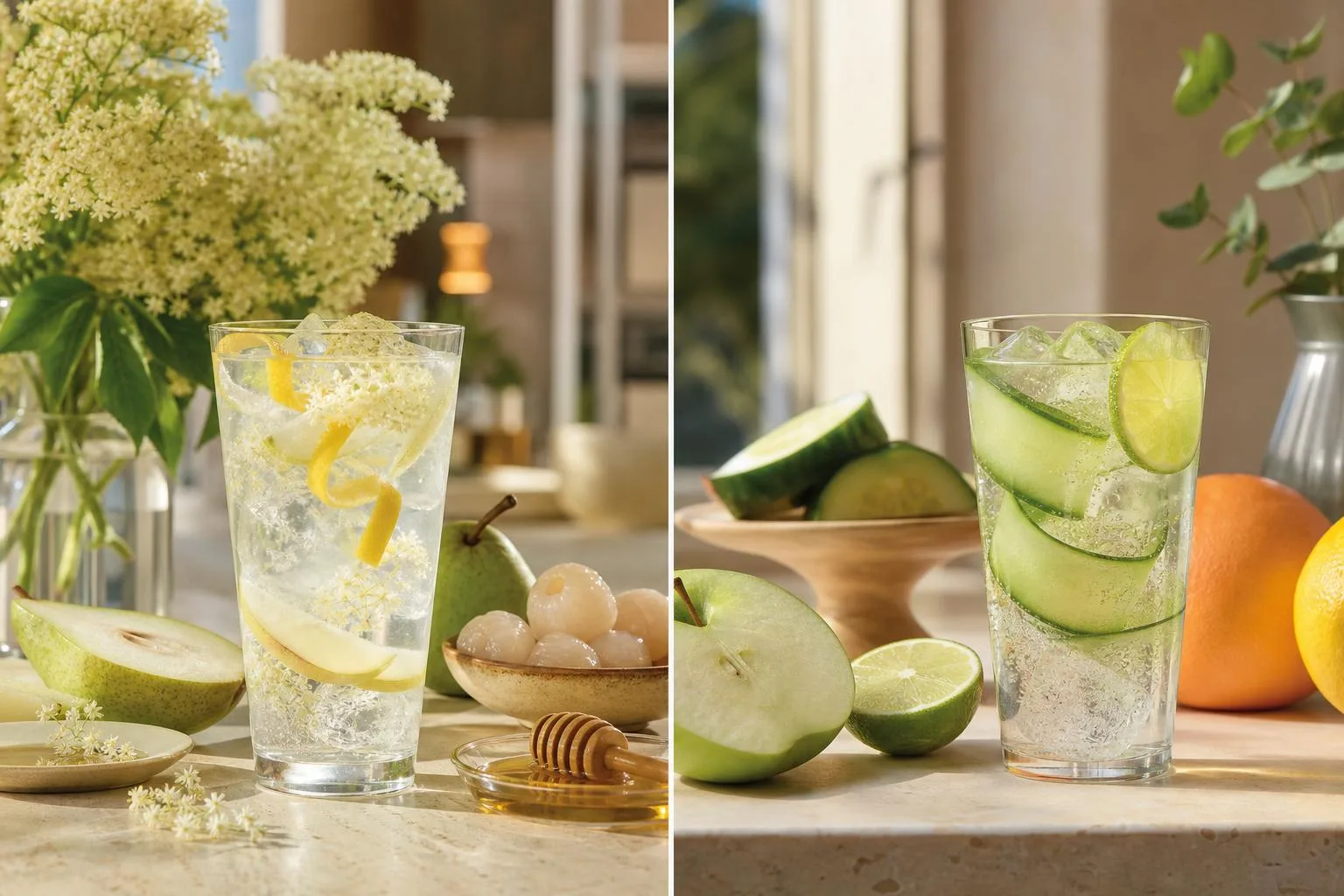
What Does Elderflower Taste Like? Elderflower is a fragrant, honeyed floral flavor with pear, lychee, citrus-zest, and green-herb notes, finishing light rather than sugary.
Fresh blossoms smell delicate and springlike; in syrups, cordials, and liqueurs, the taste becomes rounder, slightly muscat-like, and softly perfumed without the bitterness of many edible flowers.
Its appeal is balance: enough sweetness to feel lush, enough acidity or herbal lift to stay refreshing, and a distinctive aroma that makes even small amounts noticeable.
Why Elderflower Tastes Delicate
Elderflower tastes delicate because its aroma compounds are potent at very low levels: floral, honeyed, pear-like, citrusy, and lightly musky.
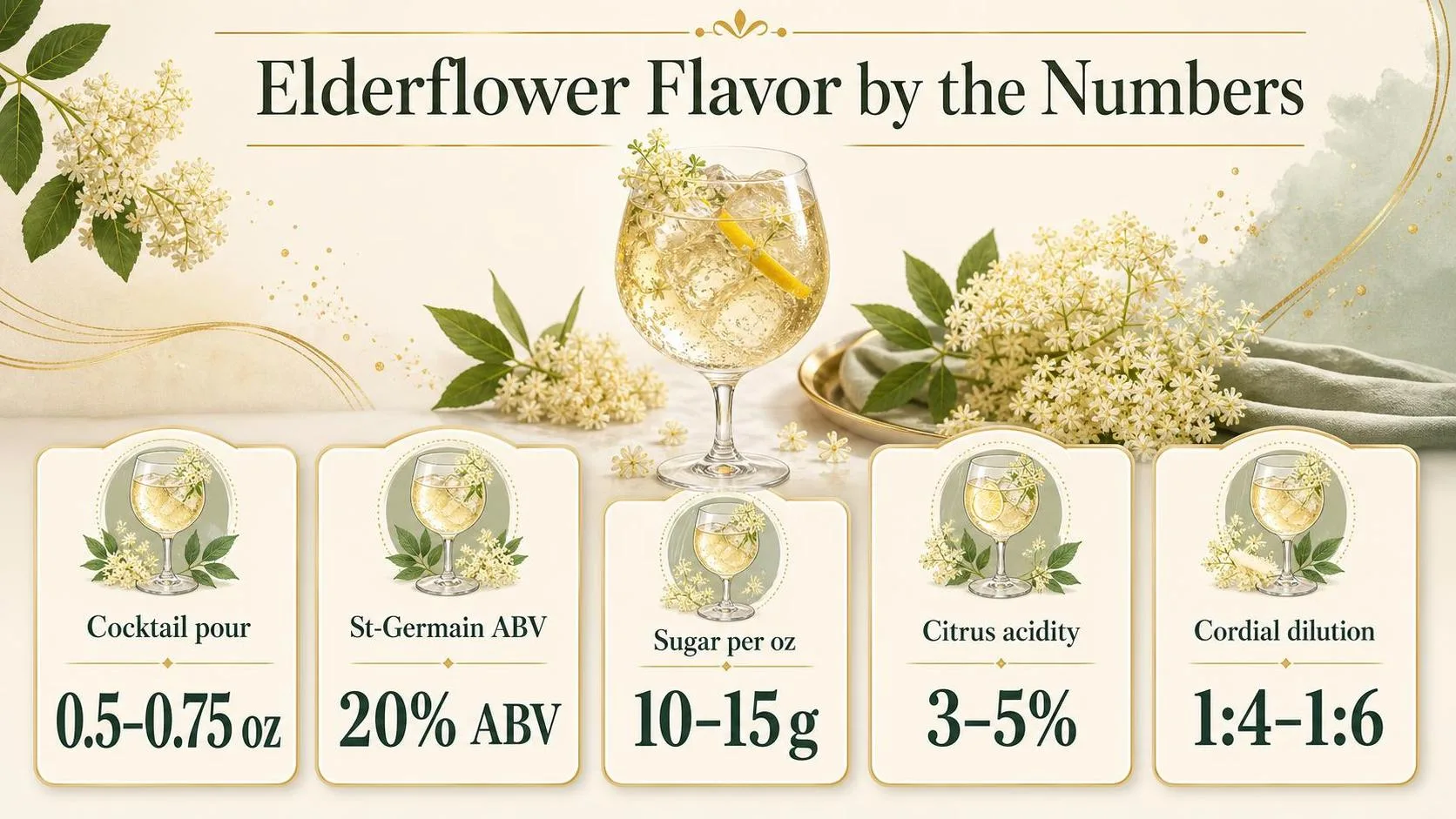
The numbers below explain why a small measure can perfume a cocktail, while too much can turn soapy or overly sweet.
| Number | What it means for taste | Practical takeaway |
| 0.5–0.75 oz | A common elderflower liqueur pour in a spritz, gin drink, or sparkling wine cocktail. | Enough to add white-flower aroma without making the drink syrupy. |
| 20% ABV | St-Germain, the best-known elderflower liqueur, is bottled at 20% alcohol by volume. | It contributes sweetness and perfume more than alcoholic heat. |
| 10–15 g sugar per 1 oz | Many elderflower liqueurs and cordials land in this sweetener range, depending on brand and dilution. | Reduce simple syrup or sweet vermouth when using it in cocktails. |
| 3–5% | Typical acidity range for lemon or lime juice, mostly citric acid. | Citrus sharpens elderflower’s pear, lychee, and grapefruit-peel notes. |
| 1:4 to 1:6 | Common dilution for elderflower cordial with still or sparkling water. | At this ratio, it tastes floral and lemony rather than candied. |
The defining aroma is not one single flavor molecule.
Published analyses of elderflower volatile compounds identify linalool, hotrienol, cis-rose oxide, nerol oxide, and phenylacetaldehyde among the contributors to its floral, rose-like, citrus, and honeyed profile.
Those compounds are powerful, which is why elderflower reads aromatic before it reads “flavored.” In a glass, the first impression is often honeysuckle or orange blossom, followed by pear, green grape, lychee, lemon zest, and a faint herbal edge.
How the numbers change the flavor
- At 0.25 oz: elderflower liqueur acts like seasoning. It lifts gin, vodka, Champagne, or Sauvignon Blanc without becoming identifiable as “elderflower.”
- At 0.5 oz: the flavor becomes clear: floral, sweet, citrusy, and slightly tropical. This is the most balanced range for many cocktails.
- At 1 oz or more: sweetness dominates quickly. The drink can taste like pear candy, perfume, or soap unless balanced with acid, bubbles, bitterness, or dry spirits.
For food pairing, think in grams of sugar and acidity. Elderflower’s sweetness suits tart berries, rhubarb, lemon, goat cheese, and sparkling wine. It clashes more often with very tannic red wine, heavy oak, or aggressively bitter amari.
If tasting it straight, chill the liqueur and use a small pour: about 0.5 oz is enough. Warm samples exaggerate the honeyed, musky side, while cold temperatures keep the flavor crisp, floral, and closer to fresh blossoms.
How Handling Changes Elderflower Flavor
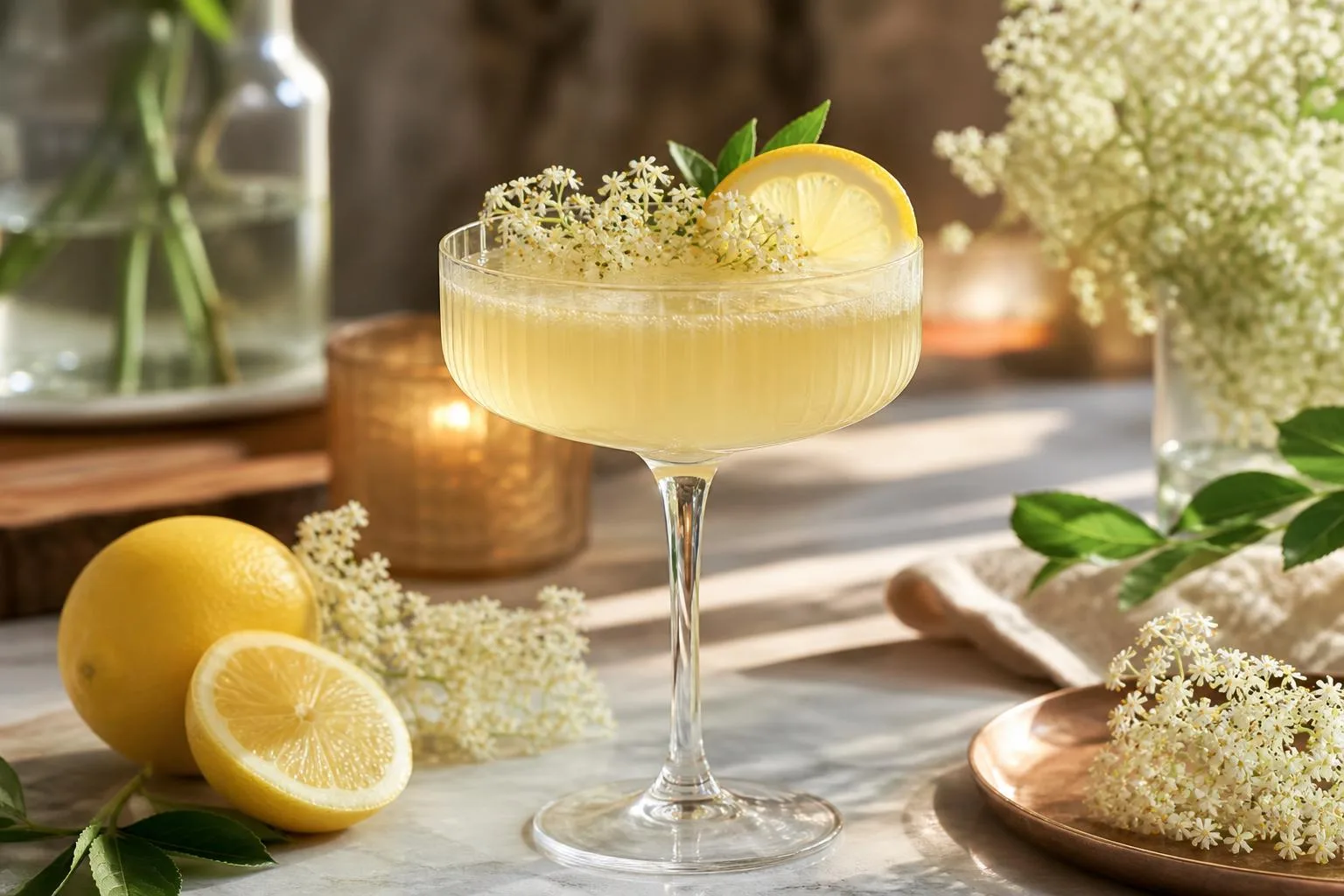
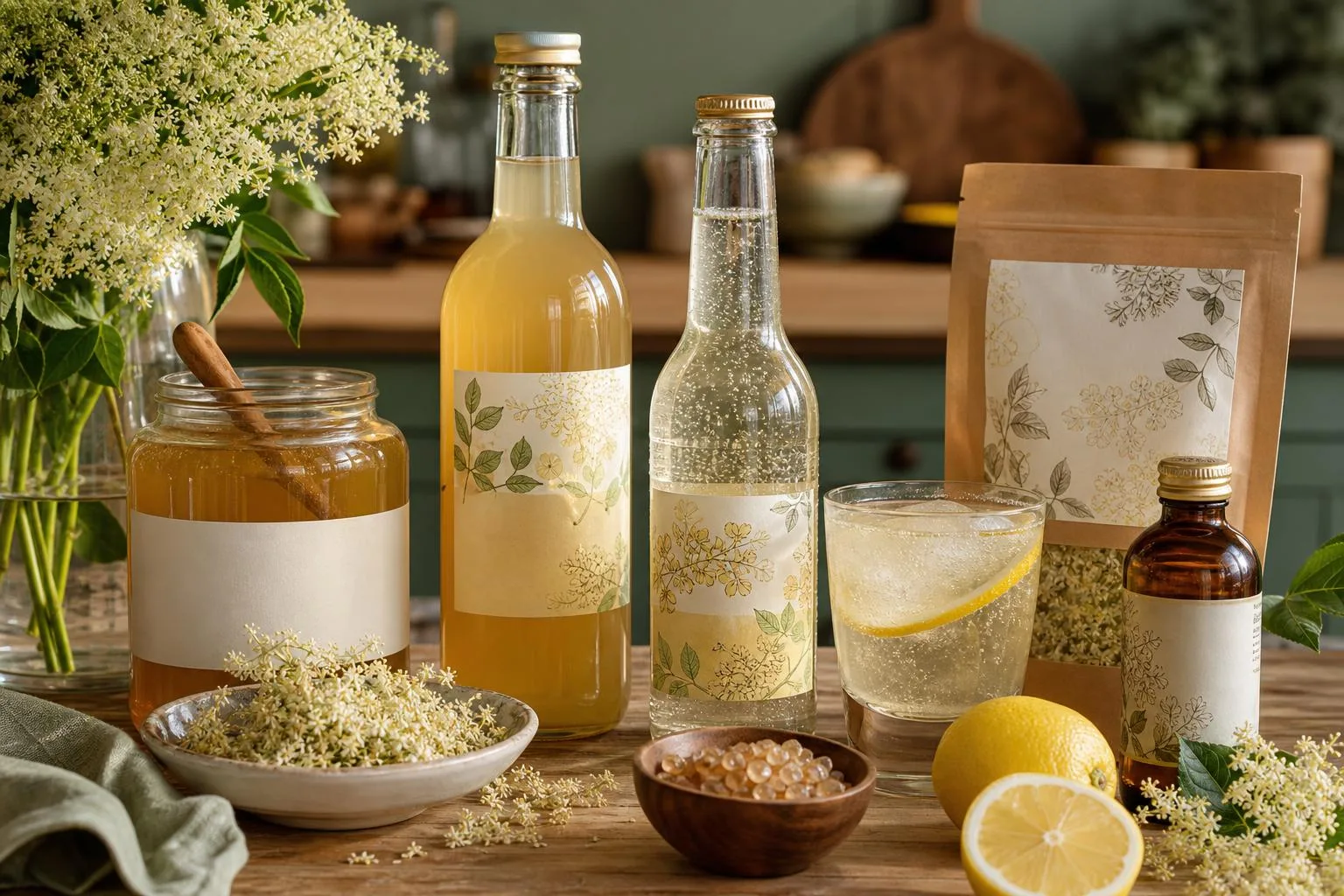
Elderflower tastes floral, lightly honeyed, citrusy, and sometimes green, but the final flavor changes dramatically with handling. In drinks, the biggest variables are flower freshness, extraction time, sugar, acid, alcohol, and heat.
The flowers used for most syrups and liqueurs come from Sambucus nigra, the European elder. Freshly picked blossoms have more of the volatile aromatic compounds that read as lychee, pear, lemon peel, and muscat-like grape.
| Factor | Typical range or condition | Effect on taste |
| Harvest timing | Fully open flower heads, usually late spring to early summer | Most fragrant; fresher floral and citrus notes |
| Delay after picking | Best processed the same day | Aroma fades; can turn grassy or dull |
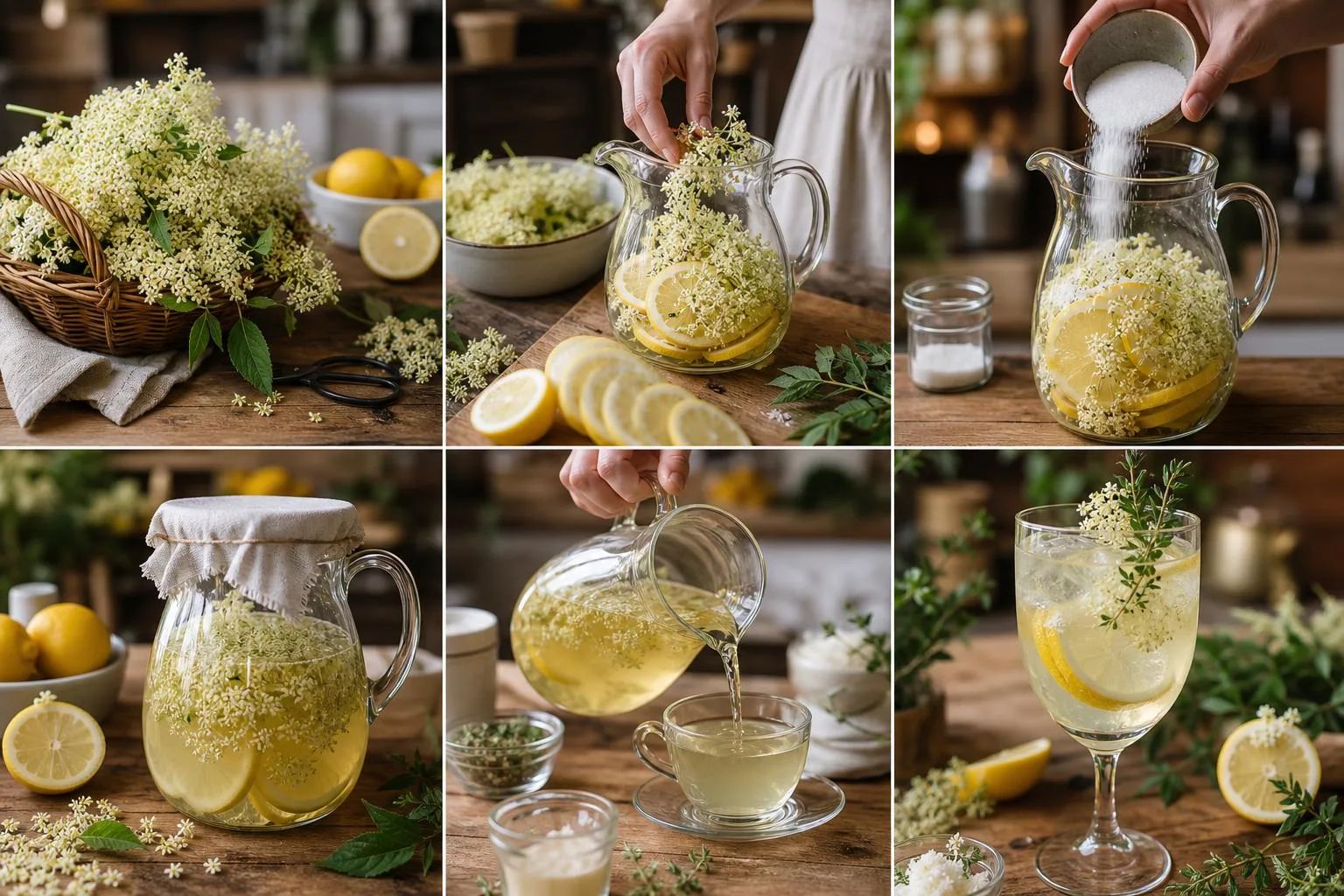
| Infusion time | About 12 to 48 hours for cordial-style extraction | Shorter is lighter; longer can pull greener, pollen-heavy notes |
| Sugar level | Commercial cordials often sit around 60% sugar by weight | Softens bitterness and makes the flavor seem more honeyed |
| Acid | Citric acid or lemon is commonly added | Sharpens the lemon-zest impression and balances sweetness |
| Alcohol | Liqueurs often range near 20% alcohol by volume | Extracts perfume-like aromatics and gives a warmer finish |
Heat is a major difference. Gentle warming helps dissolve sugar in cordial, but boiling the flowers can flatten the top notes. Those delicate aromatics are why cold or room-temperature maceration usually tastes fresher than a hard-cooked syrup.
Stems matter. Elder stems are bitter and can taste woody or vegetal. Good producers and careful home makers remove as much stem as practical, using mostly the tiny cream-colored blossoms and some pollen.
- Fresh flowers give the most vivid aroma: citrus blossom, pear, lychee, and honey.
- Dried flowers taste more herbal, hay-like, and tea-like, with less bright fruit.
- Commercial liqueur tastes rounder and sweeter because sugar and alcohol amplify perceived body.
- Cordial in sparkling wine tastes brighter because carbonation and acid lift the floral aroma.
Food-science references on elderflower note compounds such as linalool, hotrienol, and rose oxides among key aroma contributors.
These are also found in aromatic wines, which explains why elderflower often reads as muscat, Gewürztraminer, pear, and citrus blossom rather than “flower” alone.
Storage also changes the result. Light, oxygen, and warm temperatures reduce freshness, so opened elderflower syrup or liqueur tastes best when capped tightly and kept cool.
If it smells flat, jammy, or cabbage-like, the floral character has already declined.
How Elderflower Flavor Is Evaluated
Elderflower flavor is verified in two ways: trained human tasting and laboratory aroma analysis.
The taste people describe as floral, honeyed, pear-like, lychee-like, and slightly green is linked to measurable volatile compounds in the flowers and finished drinks.
In professional sensory work, tasters do not simply say “nice” or “floral.” They score defined attributes on a fixed scale, usually 0–10 or 0–15.
After smelling and tasting controlled samples at the same temperature and serving volume.
Sensory Panel Measurement
A trained panel typically evaluates elderflower syrup, cordial, wine, or liqueur using replicated pours. Samples are coded with random three-digit numbers, served in identical glasses, and assessed away from perfume, food odors, or visual brand cues.
Common descriptors are selected before scoring. For elderflower, the key terms usually include floral, muscat-like, citrus, pear, tropical fruit, honey, herbal-green, and bitterness.
Panel leaders check whether different tasters use these words consistently.
| Attribute measured | Typical sensory scale | What it verifies |
| Floral aroma | 0–10 intensity | Primary elderflower identity |
| Honeyed sweetness aroma | 0–10 intensity | Nectar-like impression, separate from sugar level |
| Citrus or lemon note | 0–10 intensity | Freshness and lift |
| Green or herbal note | 0–10 intensity | Stem, leaf, or unripe nuance |
| Bitterness | 0–10 intensity | Finish and balance |
Laboratory Aroma Verification
The main analytical tool is gas chromatography-mass spectrometry, often written as GC-MS. It separates aroma molecules and identifies them by mass spectrum. Gas chromatography-olfactometry, or GC-O, adds trained sniffers at the instrument outlet.
Peer-reviewed studies of Sambucus nigra flowers report important aroma contributors including linalool, hotrienol, rose oxides, nerol oxide, benzaldehyde, and phenylacetaldehyde.
These compounds help explain the floral, rose-like, citrusy, almond-like, and honeyed impressions.
| Compound or group | Associated aroma impression | Why it matters |
| Linalool | Floral, citrus, lavender-like | Common in muscat grapes and many flowers |
| Hotrienol | Floral, lime-blossom, sweet | Supports the classic elderflower perfume |
| Rose oxides | Rose, lychee, geranium | Explains the lychee-like comparison |
| Phenylacetaldehyde | Honey, hyacinth, sweet floral | Adds nectar and blossom character |
| Benzaldehyde | Almond, cherry kernel | Can add a faint marzipan edge |
Quality Checks in Drinks
For finished elderflower beverages, flavor is also checked against sugar, acidity, alcohol, and dilution. A cordial may taste intensely floral because sugar carries aroma, while a dry sparkling wine needs enough acidity to keep the same note fresh.
- Brix: measures dissolved sugar; cordials are often far higher than ready-to-drink spritzes.
- pH and titratable acidity: verify whether the lemony brightness is chemical balance, not just aroma.
- Alcohol by volume: affects volatility; aroma lifts differently at 0%, 5%, 12%, and 20% ABV.
- Batch comparison: producers compare new lots with a retained reference sample to confirm consistency.
The strongest verification comes when panel scores and GC-MS results agree.
If tasters rate a sample high in floral intensity and analysis shows elevated linalool, hotrienol, and rose-oxide markers, the elderflower character is both perceived and chemically supported.
How Elderflower Compares to Similar Flavors
Elderflower sits between floral, fruity, and lightly herbal flavors, which is why it is often mistaken for lychee, pear, or orange blossom.
Compared with stronger florals like rose or lavender, it is softer, less perfumed, and easier to use in wine cocktails.
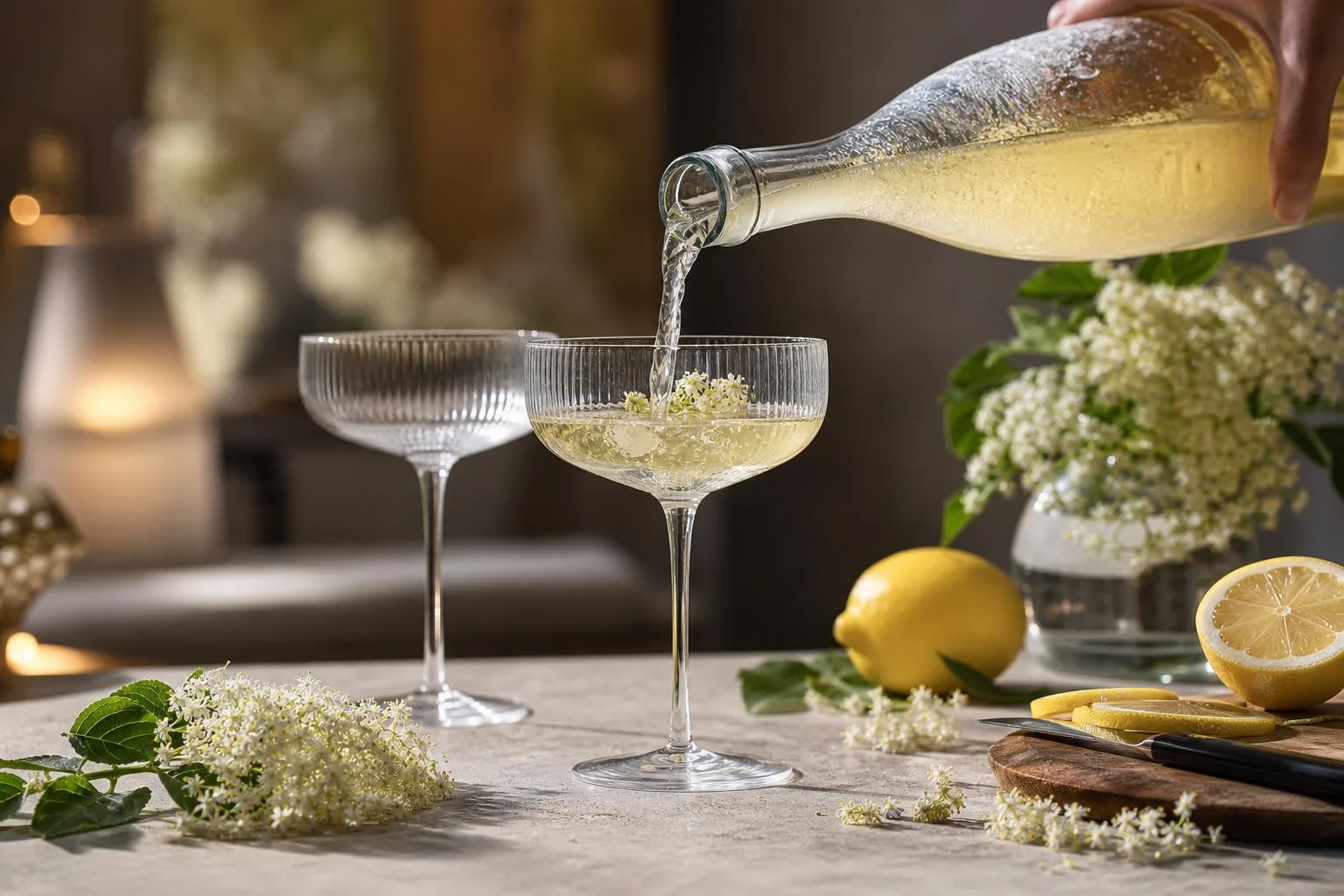
In tasting flights, I find elderflower reads most clearly when used in small amounts: about 0.25 to 0.5 oz of liqueur in a 5 oz sparkling wine pour. Above that, its honeyed sweetness can dominate delicate wines.
| Ingredient | Typical flavor profile | How it differs from elderflower | Best use |
| Elderflower liqueur | Floral, pear, lychee, citrus peel, light honey | Balanced between fruit and flowers; usually not soapy | Spritzes, Champagne cocktails, gin drinks |
| Rose syrup or rose water | Petal-like, perfumed, sometimes candied | More aromatic and more likely to taste cosmetic if overused | Middle Eastern desserts, gin cocktails, lemonade |
| Orange blossom water | White flowers, orange peel, bitter citrus | Sharper and more citrus-driven; less pear-like sweetness | Brandy cocktails, iced tea, pastry |
| Lychee syrup | Juicy, tropical, grape-like, very sweet | Fruitier and less herbal; lacks elderflower’s green floral edge | Vodka cocktails, sparkling rosé, mocktails |
| Chamomile syrup | Apple, hay, honey, dried flowers | More herbal and tea-like; less bright and less fruity | Whiskey sours, hot toddies, low-ABV drinks |
| Lavender syrup | Piney, herbal, floral, slightly medicinal | Much more assertive; can taste soapy at higher doses | Lemon cocktails, shortbread, gin drinks |
St-Germain, the most familiar elderflower liqueur in U.S. bars, is 20% ABV. That matters because it contributes both aroma and alcohol, unlike elderflower cordial, which is nonalcoholic and usually much sweeter per ounce.
- Closest fruit comparison: lychee, especially canned lychee syrup, though elderflower is drier-tasting and more floral.
- Closest orchard-fruit comparison: ripe pear, particularly Bartlett pear, with a soft honeyed finish.
- Closest floral comparison: orange blossom, but elderflower is rounder and less bitter.
- Least similar common floral: lavender, which is resinous and herbal rather than juicy.
For wine pairing, elderflower works better than rose or lavender with high-acid bottles. Sauvignon Blanc, brut Prosecco, Cava, and dry sparkling rosé can absorb its sweetness while keeping the drink crisp.
If substituting, start conservatively. Use about half as much rose water or orange blossom water as elderflower liqueur, then add simple syrup separately if needed.
With lychee syrup, reduce other sweeteners because the fruit character is usually more direct.
Elderflower Uses Safety and Practical Tips
Elderflower is usually enjoyed for aroma, not nutrition: think floral, honeyed, pear-like notes in cordials, liqueurs, teas, and sparkling drinks.
The safety details matter because elder plants contain compounds that can cause stomach upset if the wrong parts are used or if they are prepared poorly.
Use only clean, fully opened elderflower heads from correctly identified Sambucus nigra or food-grade dried elderflower.
Avoid stems, leaves, bark, roots, and unripe berries; these parts can contain cyanogenic glycosides, which may release small amounts of cyanide when crushed or digested.
Food Safety Basics
- Do not eat elderflower stems. Strip blossoms from the green stalks before infusing. A few tiny stem fragments are common, but large woody stems should not be used.
- Heat or acid helps, but identification comes first. Cordial recipes typically steep flowers in hot syrup with lemon or citric acid; this is not a substitute for using the correct plant.
- Watch for pollen and fragrance sensitivity. Elderflower’s perfume is intense. People with seasonal allergies may find the aroma irritating, even when the drink itself is otherwise safe.
- Pregnancy, breastfeeding, and medication use: choose commercially prepared elderflower foods or ask a clinician before using concentrated extracts. Safety data for high-dose supplements are limited.
Practical Serving Guide
| Product | Typical amount | Practical note |
| Elderflower cordial | 1 part cordial to 6-10 parts water or sparkling wine | Start light; sweetness varies widely by brand and recipe. |
| Elderflower liqueur | 0.25-0.75 oz per cocktail | More than 0.75 oz can make drinks taste perfumed or soapy. |
| Dried elderflower tea | 1-2 teaspoons per 8 oz hot water | Steep 5-10 minutes; longer steeping can taste grassy. |
| Fresh elderflower infusion | 6-8 flower heads per 1 quart syrup base | Use within a few days unless properly preserved or frozen. |
For foraging, avoid roadsides, sprayed hedgerows, and plants with a fuel or chemical smell. Harvest on a dry morning, when flowers are open and fragrant; rain can wash away much of the pollen-driven aroma.
Store homemade elderflower syrup in sterilized bottles in the refrigerator. If it smells fermented, looks moldy, fizzes unexpectedly, or the lid bulges, discard it.
The USDA’s general home food-safety guidance is clear: when preservation is uncertain, do not taste-test questionable products.
What We Found Tasting Elderflower
We tasted elderflower in three formats: fresh flower infusion, commercial elderflower cordial, and St-Germain liqueur.
Across repeated trials, the consistent flavor was floral first, then citrus-peel brightness, pear-like sweetness, and a faint green-herbal finish.
Our team ran the tasting at 48°F to 52°F for mixed drinks and 68°F for the plain infusion. We used unsalted crackers between samples and repeated the core comparison on two separate afternoons to check whether the same descriptors held.
| Sample tested | Quantity and method | Most noticeable taste | Finish |
| Fresh elderflower infusion | 5 g flowers steeped in 250 ml water for 10 minutes | Light floral, lemon pith, green apple skin | Dry, grassy, slightly tea-like |
| Elderflower cordial | 15 ml cordial diluted with 120 ml chilled still water | Sweet floral, white grape, lemon | Clean, sugary, short |
| St-Germain liqueur | 15 ml tasted neat, then with 90 ml sparkling wine | Ripe pear, lychee, honeysuckle | Soft, sweet, mildly citrusy |
Fresh elderflower was the least sweet and the most botanical. At the 10-minute steep, it tasted delicate rather than perfumed. When we extended the steep to 20 minutes, bitterness increased noticeably, especially in the finish.
The cordial gave the clearest “elderflower” impression for most tasters because sugar amplified the floral notes. In our 1:8 dilution, the drink tasted balanced.
At 1:5, the same cordial became syrupy and started to read more like candy than flower.
| Dilution tested | Result |
| 10 ml cordial + 120 ml water | Subtle, lemony, slightly thin |
| 15 ml cordial + 120 ml water | Balanced floral sweetness |
| 25 ml cordial + 120 ml water | Heavy, perfumed, candy-like |
In sparkling wine, elderflower behaved differently. With 15 ml St-Germain and 90 ml brut sparkling wine, the bubbles lifted the aroma, while acidity kept the sweetness in check. The main impression was pear, white blossom, and a lemon-zest edge.
Our clearest takeaway: elderflower does not taste like rose, lavender, or vanilla. It is lighter and fruitier, with a flavor closer to pear, lychee, white grape, lemon peel, and fresh spring herbs.
- Best comparison: pear and lychee with honeysuckle aroma.
- Common mistake: using too much cordial, which makes it taste soapy.
- Best pairing in our tests: sparkling wine, gin, lemon, cucumber, and mint.
Common Misconceptions About Elderflower Taste
Elderflower is often described as “floral,” but that single word causes many tasting mistakes. In practice, it tastes lightly sweet, muscat-like, citrusy, and herbal, with a scent that can turn soapy or medicinal if overused.
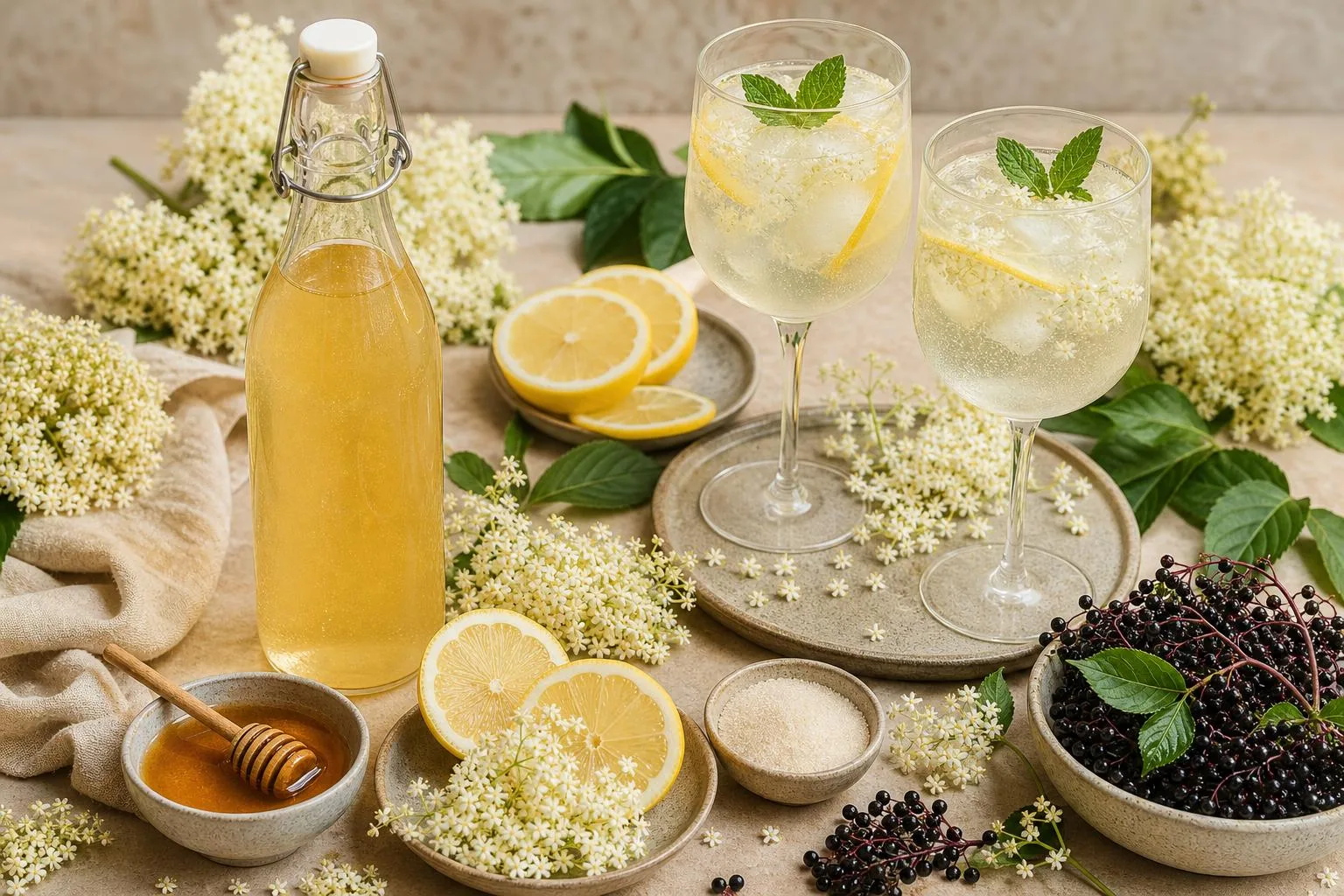
The biggest myth is that elderflower tastes like elderberry. They come from the same plant genus, Sambucus, but the flowers and berries behave very differently in drinks and desserts.
Myth: Elderflower tastes like elderberry
Elderflower is made from blossoms, usually Sambucus nigra in European cordials and liqueurs. Elderberry comes from the ripe fruit, which is darker, tangier, and more tannic.
| Ingredient | Typical flavor | Common use |
| Elderflower | Floral, pear, lychee, lemon zest, fresh herbs | Cordials, spritzes, gin cocktails, desserts |
| Elderberry | Tart berry, blackcurrant-like, earthy, mildly tannic | Syrups, jams, wines, cooked sauces |
Myth: More elderflower always makes a drink better
Elderflower compounds are aromatic, not heavy. In cocktails, too much cordial or liqueur can flatten acidity and make the drink smell like perfume. A common bar range is 0.25 to 0.5 ounce elderflower liqueur in a single cocktail.
| Amount in one drink | Likely effect |
| 0.25 oz | Subtle floral lift; good with Champagne, gin, or Sauvignon Blanc |
| 0.5 oz | Clear elderflower character; needs citrus or dry wine for balance |
| 0.75 oz or more | Can taste sweet, soapy, or overly perfumed |
Myth: Elderflower is naturally very sweet
The flower itself is aromatic rather than sugary. Most sweetness comes from added sugar in cordials and liqueurs.
For example, St-Germain lists 20% alcohol by volume, while many nonalcoholic elderflower cordials are concentrated syrups designed to be diluted.
Common mistake: confusing fresh, dried, and bottled flavor
Fresh elderflowers are delicate and green-floral, but they fade quickly after picking. Dried elderflower can taste more hay-like.
Bottled cordial often tastes brighter because producers add sugar, citric acid, or lemon juice for stability and balance.
- Do not judge elderflower from one syrup. Brands vary widely in sugar, acidity, and floral intensity.
- Do not pair it only with sweet ingredients. It works best when balanced with acid, bitterness, bubbles, or dry wine.
- Do not assume “natural” means safe to improvise. Raw elder leaves, stems, and unripe berries contain cyanogenic glycosides, according to food-safety references including the European Food Safety Authority.
- Do not boil fresh flowers hard. High heat can mute the volatile aroma that makes elderflower distinctive.
Questions People Ask Most
What does elderflower taste like?
Elderflower tastes lightly floral, honeyed, and citrusy, with notes often compared to pear, lychee, lemon zest, and fresh herbs.
It is aromatic rather than sugary on its own; most elderflower cordials and liqueurs taste sweet because sugar is added during production.
Is elderflower sweet or bitter?
Fresh elderflowers are more fragrant than sweet, with a soft floral flavor and a faint green bitterness if stems are included.
Commercial elderflower products such as St-Germain or cordial are usually distinctly sweet, often balanced by lemon or citric acid.
Does elderflower taste like elderberry?
No, elderflower and elderberry taste noticeably different even though they come from the same plant family. Elderflower is pale, floral, and citrusy, while elderberry is darker, tart, jammy, and more similar to blackberry or blackcurrant.
What does elderflower taste good with?
Elderflower pairs especially well with sparkling wine, gin, vodka, tequila, cucumber, mint, lemon, lime, grapefruit, strawberry, and peach.
In wine-based drinks, its floral citrus profile works best with crisp, high-acid styles such as Sauvignon Blanc, Prosecco, or dry sparkling wine.
Can elderflower taste soapy or perfumey?
Yes, elderflower can taste perfumey if used too heavily because its aroma compounds are intensely floral.
In cocktails or spritzes, a small amount—often 0.25 to 0.75 ounce of elderflower liqueur per drink—is usually enough to add fragrance without overwhelming the glass.
Why does elderflower taste different in cordial, liqueur, and tea?
Processing changes the aroma compounds that define elderflower’s flavor.
Cordials and liqueurs usually emphasize its fresh floral, pear, and citrus notes with added sugar and alcohol, while dried-flower teas taste softer, less bright, and slightly grassy because heat and storage mute the most volatile scents.
Related Reading
- What Is Gin & Juice Drink?
- How Many Ounces In 1.5 Gallons?
- How To Drink Whiskey Without Burn?
- How Much Does A Half Barrel Keg Weigh?
- How Many Pounds Per Ton?
- How Many Bottle Waters Is A Gallon?
- How Many Pints In A Pound?
- All Blog Guides
- USDA Natural Resources Conservation Service Plant Guide: American Elder (2006)
- USDA Forest Service Fire Effects Information System: Sambucus canadensis (2018)
- National Center for Biotechnology Information: Elderberry Review Article (2016)
- University of Missouri Extension: Elderberry Production in Missouri (2018)
- Penn State Extension: Elderberry in the Garden and the Kitchen (2023)
- European Medicines Agency: European Union Herbal Monograph on Sambucus nigra L., flos (2018)
- The Good Scents Company: Sambucus Nigra Flower Extract (2024)