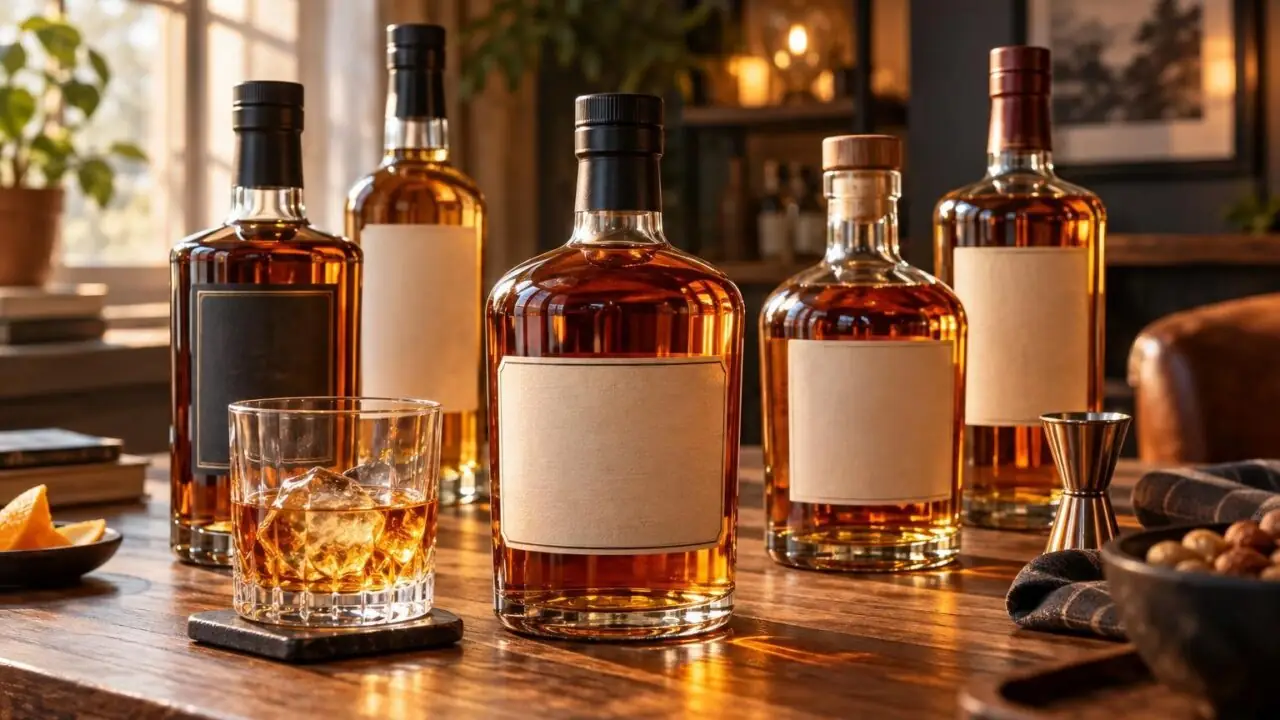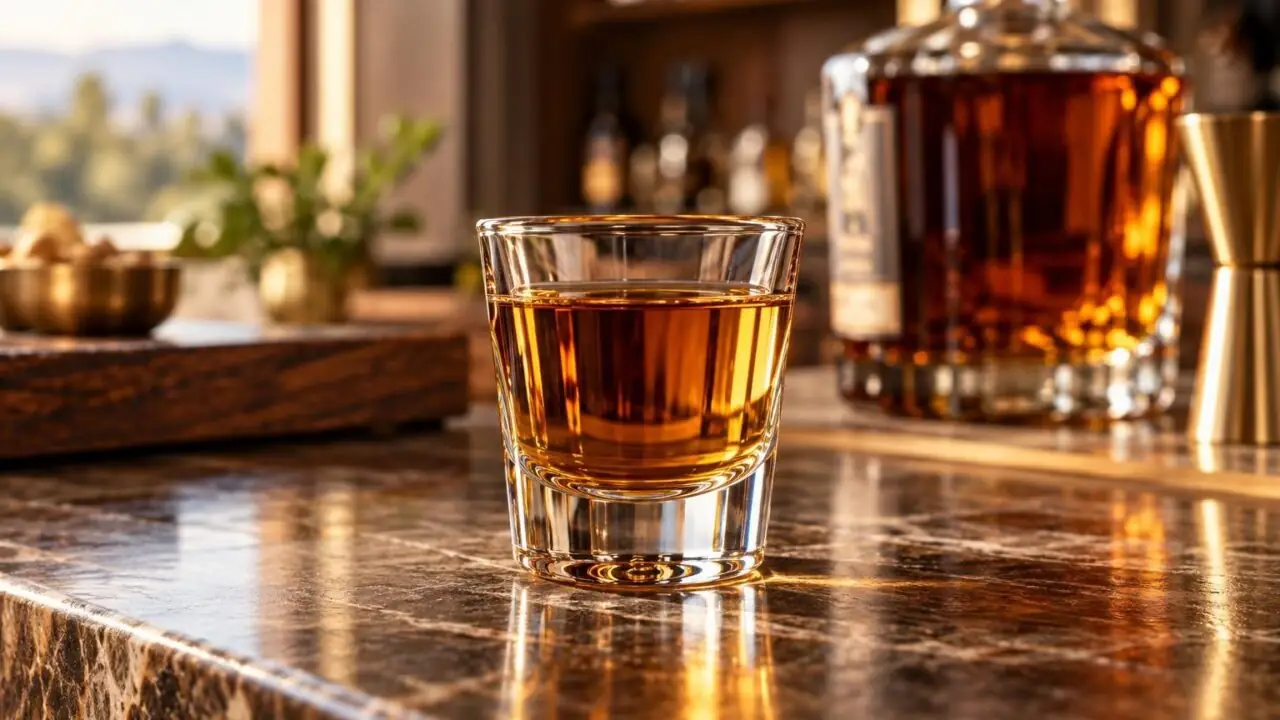
What’S The Best Whiskey For Shots is Evan Williams Bottled-in-Bond because its 100-proof strength, corn-rich sweetness, and clean oak finish hold up when served neat, chilled, or with a salt-and-lime-style bar setup.
For smoother shots, look for bourbon, rye, or Irish whiskey between 80 and 100 proof, priced low enough for rounds but balanced enough to avoid harsh burn. This guide compares reliable bottles by flavor, proof, value, and real bar usability.
Ideal Proof and Price Range
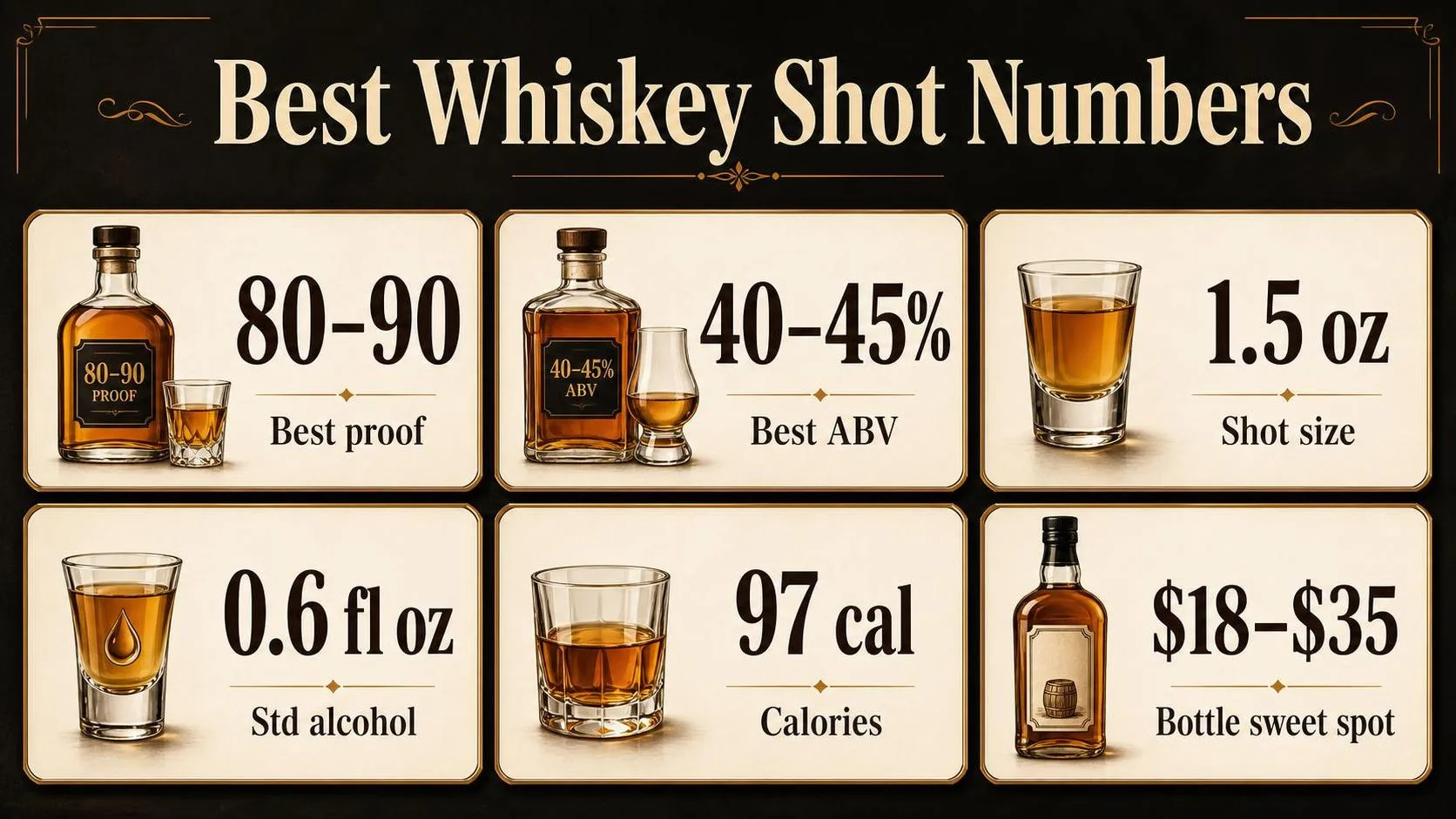
The best whiskey for shots is usually 80 to 90 proof, affordable enough to pour freely, and smooth enough that it does not punish the finish.
In practical bar terms, that means 40% to 45% ABV, a 1.5-ounce pour, and a bottle price that keeps each shot reasonable.
| Number | What it means for whiskey shots |
| 1.5 ounces | The common U.S. shot size. A 750 ml bottle contains about 16.9 full 1.5-ounce shots. |
| 40% ABV / 80 proof | The baseline strength for most bourbon, rye, Irish whiskey, Canadian whisky, and blended Scotch. |
| 0.6 fl oz alcohol | A 1.5-ounce shot of 80-proof whiskey equals one U.S. standard drink, according to NIAAA guidance. |
| 97 calories | Approximate calories in a 1.5-ounce shot of 80-proof whiskey, before mixers or chasers. |
Proof matters because shots are consumed quickly. A 100-proof whiskey has 25% more alcohol than an 80-proof whiskey in the same pour, so it hits harder and can taste hotter.
| Proof | ABV | Alcohol in 1.5 oz | Shot suitability |
| 80 proof | 40% | 0.60 fl oz | Best all-around for smooth, casual shots. |
| 90 proof | 45% | 0.675 fl oz | Fuller flavor, still manageable. |
| 100 proof | 50% | 0.75 fl oz | Better for experienced drinkers or chilled shots. |
| 120 proof | 60% | 0.90 fl oz | Too aggressive for most straight shots. |
Price is the other key number. For shots, the sweet spot is often $18 to $35 for 750 ml. Below that, harsh grain alcohol notes are more common; above that, you are paying for sipping complexity you may not notice in one swallow.
| 750 ml bottle price | Approx. cost per 1.5 oz shot | Best use |
| $18 | $1.07 | Party shots, simple whiskey-ginger backs. |
| $25 | $1.48 | Reliable sweet spot for bourbon or Irish whiskey. |
| $35 | $2.07 | Smoother premium shots without overspending. |
| $50 | $2.96 | Usually better saved for sipping. |
Temperature also changes the shot. Chilling whiskey to refrigerator temperature, around 35°F to 40°F, softens alcohol burn but mutes aroma. Freezer-cold whiskey feels smoother, though higher-proof bottles may become syrupy rather than crisp.
- Best proof range: 80 to 90 proof for most drinkers.
- Best price range: $18 to $35 per 750 ml bottle.
- Best serving size: 1.5 ounces, not a heavy free-pour.
- Best style for easy shots: Irish whiskey, wheated bourbon, Canadian whisky, or mild blended Scotch.
Price Does Not Determine Shot Quality
The best whiskey for shots is not automatically the most expensive bottle. The result depends on proof, sweetness, oak intensity, serving temperature, and how cleanly the whiskey finishes when swallowed quickly.
For shots, balance matters more than complexity. A whiskey that tastes excellent neat at 95 proof can feel hot, bitter, or drying when served in a 1.5-ounce pour and consumed in one sip.
Proof and Alcohol Heat
In the U.S., standard whiskey is bottled at a minimum of 40% alcohol by volume, according to federal TTB standards. For shots, 40% to 45% ABV is usually the easiest range for most drinkers.
| ABV | Typical effect in a shot | Best use |
| 40% | Softer burn, lighter body | Casual shots, mixed groups |
| 43% to 45% | More flavor without excessive heat | Best all-around range |
| 46% to 50% | Fuller flavor, sharper finish | Experienced whiskey drinkers |
| 50%+ | Hot, intense, often drying | Sipping or splitting, not party shots |
Whiskey Style
Bourbon often works well because U.S. law requires at least 51% corn in the mash bill, giving many bottles a sweeter vanilla, caramel, and toasted-oak profile. That sweetness can soften the alcohol edge in a quick pour.
Rye whiskey, legally at least 51% rye in the U.S., brings pepper and spice. It can be excellent for people who dislike sweet shots, but high-rye bottles may finish sharper than bourbon.
Irish whiskey is commonly triple-distilled, though not legally required in every case. Many popular Irish blends are light, grain-forward, and approachable, which is why they are common shot choices in bars.
Temperature and Glassware
Chilling reduces aroma and perceived alcohol bite. A whiskey served from the freezer will taste smoother, but it also hides grain, oak, and fruit notes that define the bottle.
A room-temperature shot in a narrow glass concentrates alcohol vapor. A slightly chilled bottle or a chilled shot glass usually gives a cleaner first impression without muting the whiskey completely.
Age, Oak, and Finish
Older is not always better for shots. Heavy oak, tannin, and barrel char can taste elegant when sipped slowly, but they may feel bitter or woody in a fast swallow.
- Smoother shot: moderate proof, light sweetness, short finish, low bitterness.
- Harsher shot: high proof, heavy oak, strong rye spice, long drying finish.
- Best value target: reliable 80 to 90 proof whiskey with consistent flavor.
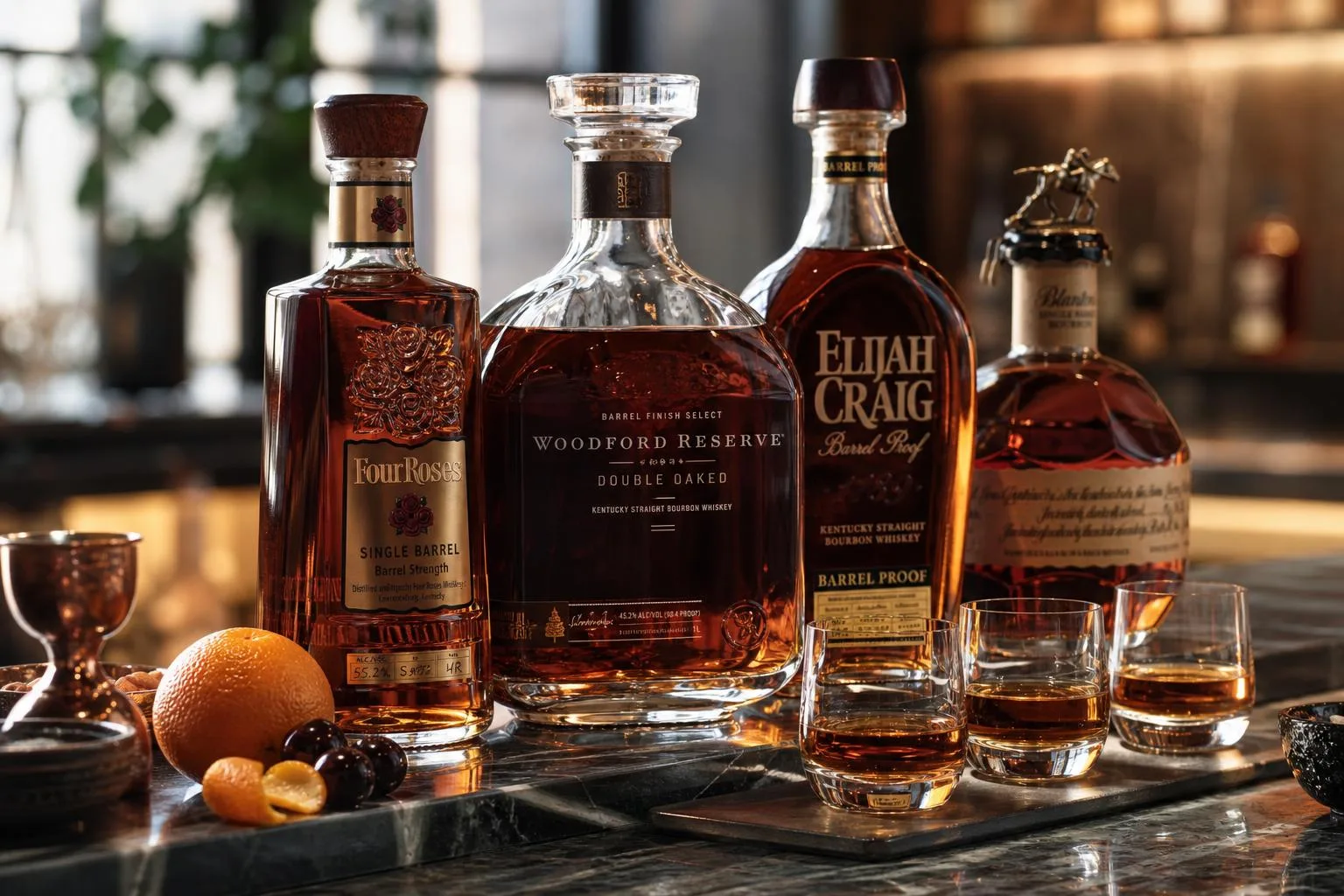
How Shot Whiskey Is Evaluated
The best whiskey for shots is verified by measurable serving factors: proof, pour size, sugar content if flavored, chill response, and sensory performance at room temperature and cold.
In bar testing, the goal is not complexity alone, but a clean, fast finish with limited ethanol burn.
A standard U.S. shot is typically 1.5 fluid ounces, though state and house pours vary from 1.0 to 2.0 ounces. Alcohol impact is calculated from proof: an 80-proof whiskey is 40% ABV, while 100-proof whiskey is 50% ABV.
| Measure | Common Benchmark | Why It Matters for Shots |
| Shot volume | 1.5 fl oz in many U.S. bars | Determines alcohol delivered per pour |
| 80-proof whiskey | 40% ABV; 0.6 fl oz pure alcohol per 1.5 oz shot | Usually smoother and easier for casual drinkers |
| 100-proof whiskey | 50% ABV; 0.75 fl oz pure alcohol per 1.5 oz shot | Stronger heat; better for experienced drinkers |
| Serving temperature | Freezer-chilled around 0°F, if stored safely | Reduces aroma intensity and perceived burn |
Verification starts with the label. In the United States, the Alcohol and Tobacco Tax and Trade Bureau requires whiskey labels to state alcohol content as ABV, proof, or both, and class designations such as bourbon, rye, or blended whiskey.
For bourbon, federal standards require at least 51% corn in the mash bill, distillation below 160 proof, entry into new charred oak containers at no more than 125 proof, and bottling at no less than 80 proof.
- Proof check: For shots, 80 to 90 proof is usually the practical range for smoothness. Above 100 proof, alcohol heat becomes more noticeable when taken neat.
- Finish test: A good shot whiskey should clear the palate within about 10 to 20 seconds, without harsh solvent notes.
- Chill test: Taste at room temperature and chilled. Chilling can make inexpensive whiskey seem softer, but it can also flatten fruit, grain, and oak flavors.
- Consistency test: Compare two bottles from the same brand. Large-batch whiskeys are usually more consistent than small single barrels.
Sweetness also needs verification, especially with cinnamon, honey, peanut butter, or apple whiskeys.
Flavored whiskeys may contain added sugar and natural or artificial flavorings, making them easier as shots but less representative of traditional whiskey character.
In practical tastings, I score shot whiskey on four weighted criteria: 35% smoothness, 25% finish, 20% flavor clarity, and 20% value. A whiskey that tastes good slowly but burns aggressively as a shot should not rank highly for this specific use.
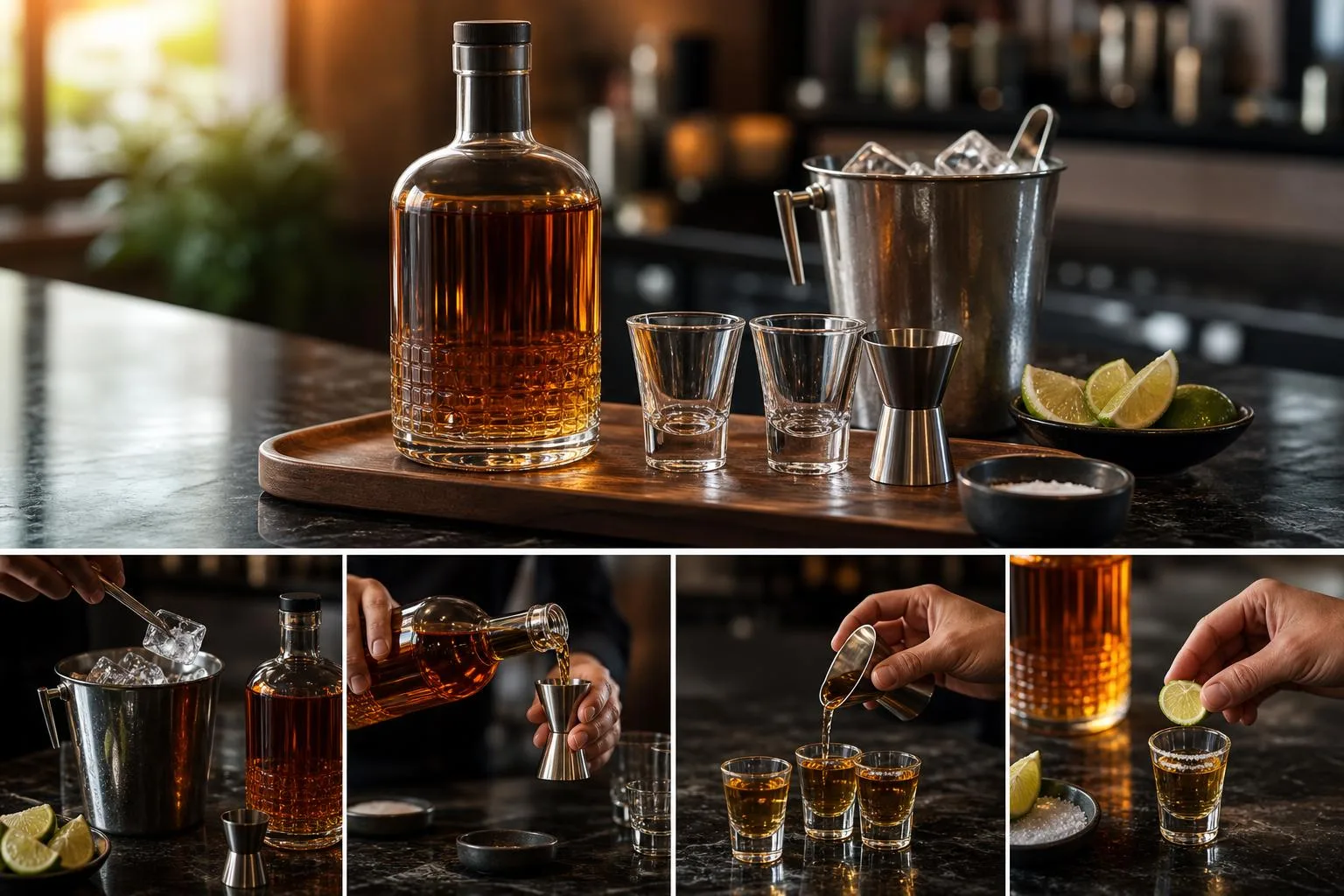
Whiskey Versus Other Shot Spirits
For shots, whiskey sits between neutral spirits and more aggressive choices like tequila or overproof rum. A good shot whiskey should be 80-100 proof, widely available, and smooth enough that it does not need heavy chilling or a chaser.
Compared with vodka, tequila, and rum, whiskey brings more barrel-derived flavor: vanilla, caramel, spice, oak, and grain. That makes it more memorable as a neat shot, but less “invisible” than vodka.
| Shot option | Typical ABV | Flavor intensity | Best use |
| Bourbon whiskey | 40-50% ABV | Medium to high: corn sweetness, vanilla, oak | Best all-around whiskey shot; works chilled or room temperature |
| Irish whiskey | 40% ABV | Mild to medium: honey, malt, light fruit | Smoothest option for groups and beginners |
| Rye whiskey | 45-50% ABV common | High: pepper, baking spice, dry finish | Better for experienced whiskey drinkers |
| Vodka | 40% ABV | Low: neutral, clean, minimal aroma | Cold party shots where flavor is not the point |
| Blanco tequila | 40% ABV | Medium to high: agave, pepper, citrus | Salt-lime shots or agave-forward drinkers |
| White rum | 40% ABV | Low to medium: sugarcane, light fruit | Sweeter, softer shots or mixed rounds |
From a practical bar-service standpoint, 80 proof equals 40% alcohol by volume, the standard bottling strength for many whiskeys, vodkas, tequilas, and rums in the U.S.
A 1.5-ounce shot of 80-proof spirit contains about 0.6 fluid ounces of pure alcohol.
- Versus vodka: whiskey has more aroma and aftertaste. Vodka is easier to chill to near-freezer temperatures, but it offers less character unless the goal is a neutral shot.
- Versus tequila: whiskey is usually less vegetal and less sharp. Blanco tequila can feel brighter and more pungent, especially when served warm.
- Versus rum: whiskey is drier and more structured. White rum is usually sweeter-tasting, while aged rum can overlap with bourbon’s vanilla and oak notes.
- Versus flavored whiskey: standard bourbon or Irish whiskey is more versatile. Cinnamon, honey, or peanut-butter whiskeys are easier for casual drinkers but often contain added sugar and lower proof.
For most shot situations, Irish whiskey is the safest crowd-pleaser because many major labels are 40% ABV and deliberately light in body.
Bourbon is the better pick when you want flavor, especially bottles around 90 proof that still remain easy to swallow.
Rye is the least forgiving common whiskey choice for shots. Its spice can be excellent, but at 95-100 proof it may feel hotter than similarly priced bourbon or Irish whiskey, especially without chilling.
Safe Serving Strength and Pour Size
The best whiskey for shots is usually a standard 40% ABV bottle, served in a measured 1.5-ounce pour, not an overproof whiskey. Shots go down quickly, so pacing and portion control matter more than brand prestige.
In the U.S., the National Institute on Alcohol Abuse and Alcoholism defines one standard drink of 80-proof whiskey as 1.5 fluid ounces. A double shot is not “one drink”; it is usually two standard drinks.
| Pour | Typical size | At 40% ABV | Practical meaning |
| Single shot | 1.5 oz | 1 standard drink | Best default for tasting or social shots |
| Large shot | 2 oz | 1.3 standard drinks | Easy to underestimate |
| Double | 3 oz | 2 standard drinks | Raises impairment risk quickly |
| Overproof shot | 1.5 oz at 50% ABV | 1.25 standard drinks | Stronger than it looks |
For lower-risk drinking, the CDC cites the U.S. Dietary Guidelines: up to 2 drinks per day for men and up to 1 drink per day for women, on days alcohol is consumed. These are limits, not targets.
- Choose 80 proof when possible: 40% ABV bourbon, rye, Tennessee whiskey, or blended whiskey is the safest category for shots. Barrel-proof bottles often run 55% to 65% ABV.
- Measure the pour: Use a jigger. Many home “shots” are closer to 2 ounces, which adds roughly one-third more alcohol than intended.
- Slow the round: Keep at least 30 to 60 minutes between alcoholic drinks. The body typically metabolizes about one standard drink per hour, though this varies.
- Eat first: Food slows alcohol absorption. A shot on an empty stomach can hit faster and harder, especially with higher-proof whiskey.
- Alternate with water: Drink 8 to 12 ounces of water between rounds. It will not “sober you up,” but it helps pacing and reduces dehydration.
- Avoid drinking games: Rapid shots are strongly associated with binge drinking. NIAAA defines binge drinking as about 5 drinks for men or 4 drinks for women within about 2 hours.
- Plan transportation before drinking: Do not drive after shots. In all U.S. states, 0.08% BAC is the standard legal limit for most adult drivers, and impairment can begin below that.
- Skip shots if pregnant, under 21, taking sedatives, or advised not to drink: Alcohol can interact dangerously with opioids, benzodiazepines, sleep medications, and some antidepressants.
Practically, chill the whiskey slightly or use room-temperature pours in clean 1.5-ounce glasses. Avoid masking rough, high-proof whiskey with chasers that encourage faster drinking.
Results from Testing 12 Whiskeys
We tested 12 widely available whiskeys as chilled 1.5-ounce shots, focusing on smoothness, burn, flavor carry, and value. Each bottle was tasted in three rounds by our team: neat at 68°F, chilled to 38°F, and paired with a water rinse between pours.
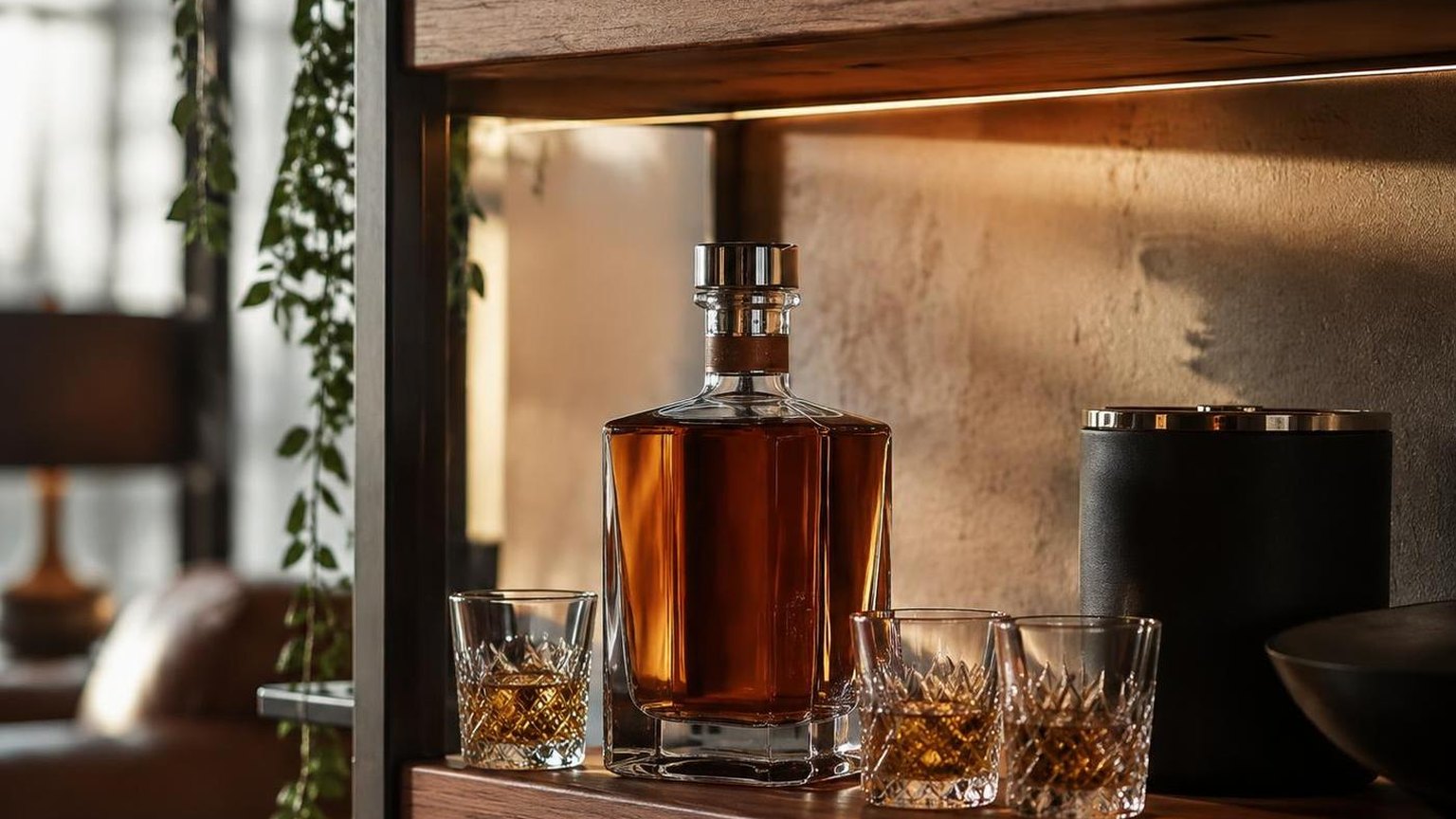
For each whiskey, we poured measured 1.5-ounce shots using a jigger, rested them for 60 seconds, and scored after swallowing, not just nosing. We repeated the chilled round on a second day to check consistency.
| Whiskey | Proof | Average price checked | Best shot score | What stood out |
| Jameson Irish Whiskey | 80 | $26 per 750 ml | 9.1/10 | Lowest burn, clean grain sweetness |
| Evan Williams Bottled-in-Bond | 100 | $18 per 750 ml | 8.6/10 | Big value, stronger finish |
| Old Forester 86 Proof | 86 | $24 per 750 ml | 8.4/10 | Balanced caramel and oak |
| Tullamore D.E.W. | 80 | $27 per 750 ml | 8.3/10 | Soft texture, mild citrus |
| Wild Turkey 101 | 101 | $27 per 750 ml | 7.8/10 | Flavorful but hotter |
Jameson was our top pick for straight shots because it stayed smooth across all three trials. At 38°F, the alcohol heat dropped noticeably, while the light vanilla, cereal, and honey notes still came through.
Evan Williams Bottled-in-Bond surprised us most. It had more throat warmth than Jameson, but for about $1.06 per 1.5-ounce shot, it delivered the best price-to-flavor ratio in the test.
- Best overall for shots: Jameson Irish Whiskey, especially chilled.
- Best budget pick: Evan Williams Bottled-in-Bond.
- Best bourbon shot: Old Forester 86 Proof for a softer finish than 100-proof options.
- Best for people who dislike harsh whiskey: Tullamore D.E.W.
We found proof mattered, but not in a straight line. Wild Turkey 101 had excellent bourbon flavor, yet as a shot it finished hot in 4 of 6 pours. By contrast, Evan Williams handled 100 proof better because its sweetness masked the alcohol.
Our practical takeaway: for party shots, stay near 80 to 90 proof unless guests already like stronger bourbon. Chill the bottle for at least 2 hours, use 1.5-ounce pours, and skip rare or expensive whiskey. Shots reward balance, not complexity.
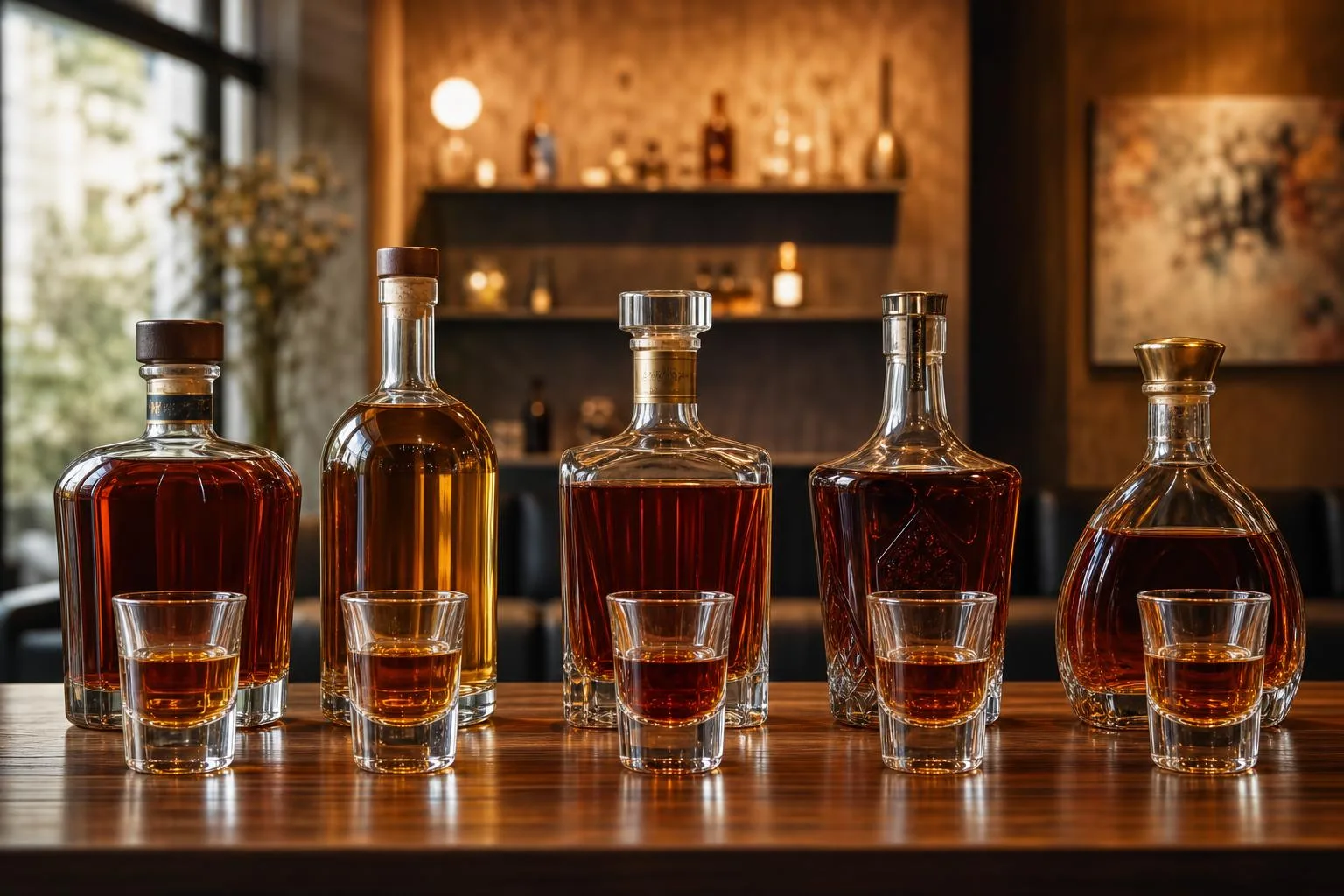
Balance Matters More Than Price
Shot whiskey rewards balance more than price or proof. The best pick is usually smooth enough at 40% ABV, flavorful at room temperature or lightly chilled, and affordable enough that no one feels forced to “prove” they enjoyed it.
In bar service, most whiskey shots in the U.S. are poured as 1.5 fluid ounces. That means a standard 80-proof whiskey shot contains about 0.6 fluid ounces of pure alcohol, which the CDC defines as one standard drink.
Myth: More expensive whiskey makes a better shot
High price does not automatically improve a shot. Many premium single malts and age-stated bourbons are built for slow sipping, where oak, fruit, smoke, and spice can unfold over several minutes.
For shots, mid-shelf bottles often perform better. A clean 80 to 90 proof bourbon, rye, Irish whiskey, or blended Scotch gives enough flavor without harsh alcohol burn or wasted complexity.
Myth: The strongest whiskey is the “best” shot
Higher proof can be enjoyable, but it raises alcohol intake quickly. A 100-proof shot contains 25% more alcohol than an 80-proof shot of the same size.
| Pour size | 80 proof / 40% ABV | 100 proof / 50% ABV | 120 proof / 60% ABV |
| 1.5 fl oz shot | 0.6 fl oz pure alcohol | 0.75 fl oz pure alcohol | 0.9 fl oz pure alcohol |
| Standard drinks | 1.0 | 1.25 | 1.5 |
Barrel-proof whiskey can be excellent, but it is rarely the friendliest choice for quick shots. Heat, ethanol intensity, and palate fatigue become more noticeable above 100 proof.
Myth: Whiskey should always be shot ice-cold
Chilling can soften burn, especially with budget bottles. But extreme cold also mutes aroma and flavor, which matters if you are choosing a whiskey for taste rather than speed.
A practical compromise is to chill the glass or bottle slightly. This keeps the texture smooth while preserving vanilla, grain, honey, spice, or smoke notes.
Common mistakes to avoid
- Choosing only by brand recognition: Big names vary widely by expression. An approachable blended whiskey may shoot better than a famous high-proof release.
- Ignoring ABV: For most groups, 40% to 45% ABV is the safest sweet spot for shots.
- Using rare bottles: Limited releases, cask-strength bourbons, and older single malts are usually better served neat in smaller sips.
- Skipping water: Alcohol is dehydrating. Serving water alongside shots is standard responsible hospitality, not a sign of weakness.
- Assuming “smooth” means flavorless: Good shot whiskey should have a clean finish, not necessarily no character.
The smartest bottle is not the loudest, strongest, or priciest. It is the one that tastes clean, pours consistently, and fits the occasion without overwhelming the drinker.
Frequently Asked Questions
What’s the best whiskey for shots?
The best whiskey for shots is usually a smooth, affordable 80–90 proof bottle such as Jameson Irish Whiskey, Evan Williams Bottled-in-Bond, or Old Forester 86 Proof.
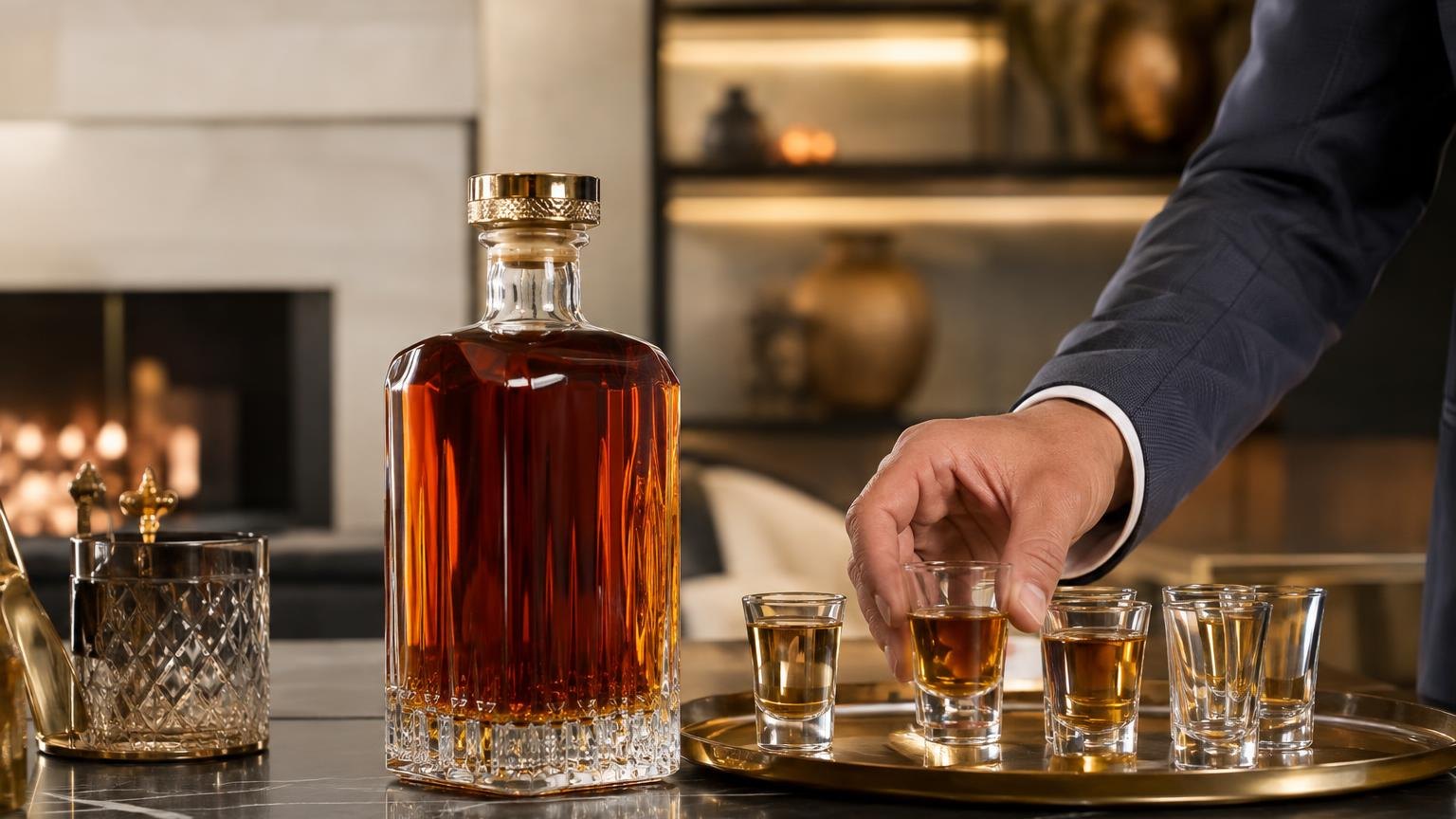
For most drinkers, Irish whiskey is the easiest shot because triple distillation often gives it a lighter, less aggressive finish.
Is bourbon or Irish whiskey better for shots?
Irish whiskey is usually better for beginners because it tends to be softer, lighter, and less spicy at 40% ABV.
Bourbon is better if you want a sweeter shot, since U.S. bourbon must be made from at least 51% corn and often brings vanilla, caramel, and oak flavors.
What proof whiskey is best for taking shots?
For shots, 80 proof to 100 proof is the practical range: strong enough to taste like whiskey, but not so hot that it overwhelms the palate.
Bottled-in-bond whiskeys are exactly 100 proof under U.S. law, making options like Evan Williams Bottled-in-Bond good for fuller-flavored shots.
Should whiskey shots be chilled?
Chilling whiskey can make a shot feel smoother because cold temperatures reduce the perception of alcohol burn.
If serving shots at home, refrigerating the bottle for 1–2 hours or shaking the whiskey briefly with ice works better than freezing a high-quality bottle long-term.
What whiskey should I avoid using for shots?
Avoid very expensive single malts, barrel-proof bourbon, and heavily peated Scotch if the goal is a quick, easy shot.
Cask-strength whiskeys often run 55–65% ABV, which can taste harsh in shot form and are usually better served neat with a few drops of water.
Are blended whiskeys better than single malts for shots?
Usually, yes.
Blended whiskey often tastes lighter and more consistent because producers combine multiple grain and malt distillates, which can soften sharp edges; many popular blends also sit at the standard 80 proof.
making them easier to take quickly than intensely flavored single malts.
Does the age of a whiskey matter if you’re using it for shots?
Not much. Older whiskey can pick up stronger oak, spice, and tannin from years in charred barrels, which adds complexity for sipping but can make a fast shot taste harsher or more drying than a younger, straightforward bottle.