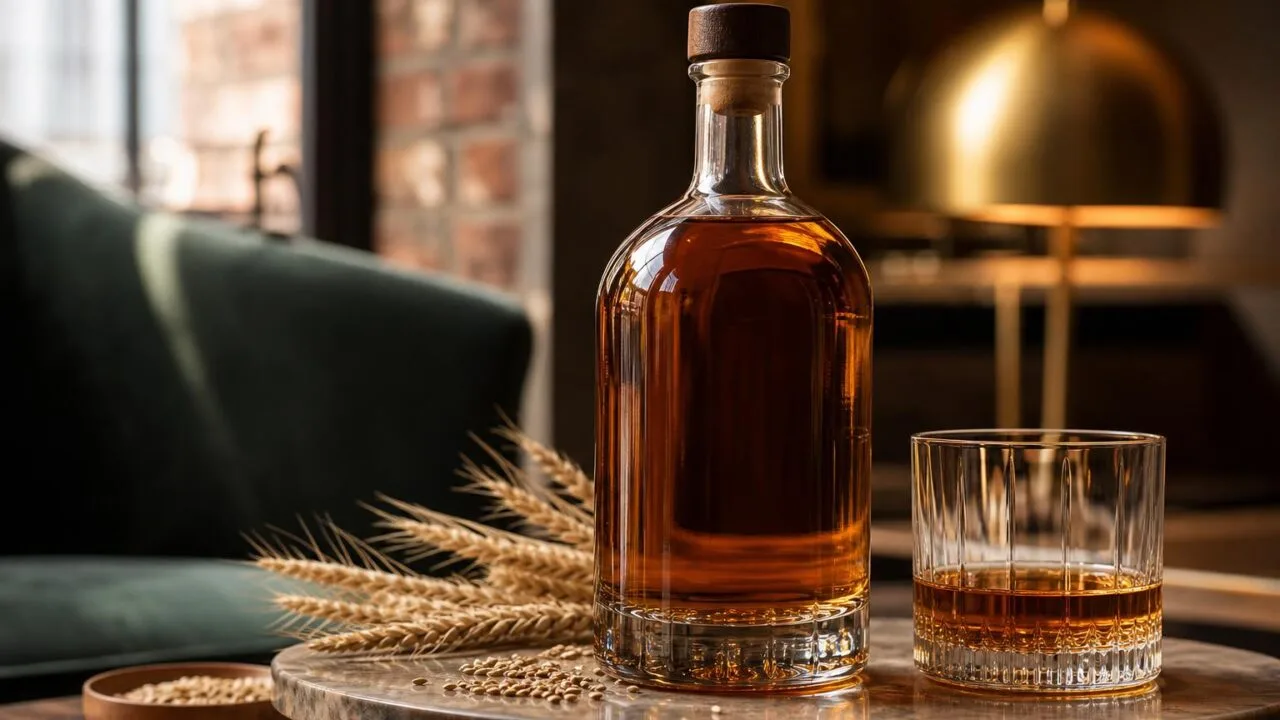
What Does Rye Whiskey Taste Like is a spicier, drier whiskey profile marked by black pepper, baking spice, toasted grain, and a firm herbal edge.
Compared with bourbon, rye usually tastes less sweet and more angular, with flavors that can include cinnamon, clove, dill, mint, citrus peel, and oak.
Legally, American rye whiskey must be made from at least 51% rye grain, which helps explain its sharper structure and grain-driven bite.
In the glass, expect a brisk entry, moderate caramel or vanilla from barrel aging, and a finish that often feels peppery, crisp, and warming.
This guide breaks down rye’s core flavors, why mash bill and aging matter, and how different rye styles taste neat, on ice, or in cocktails.
How Rye Minimums Shape Flavor
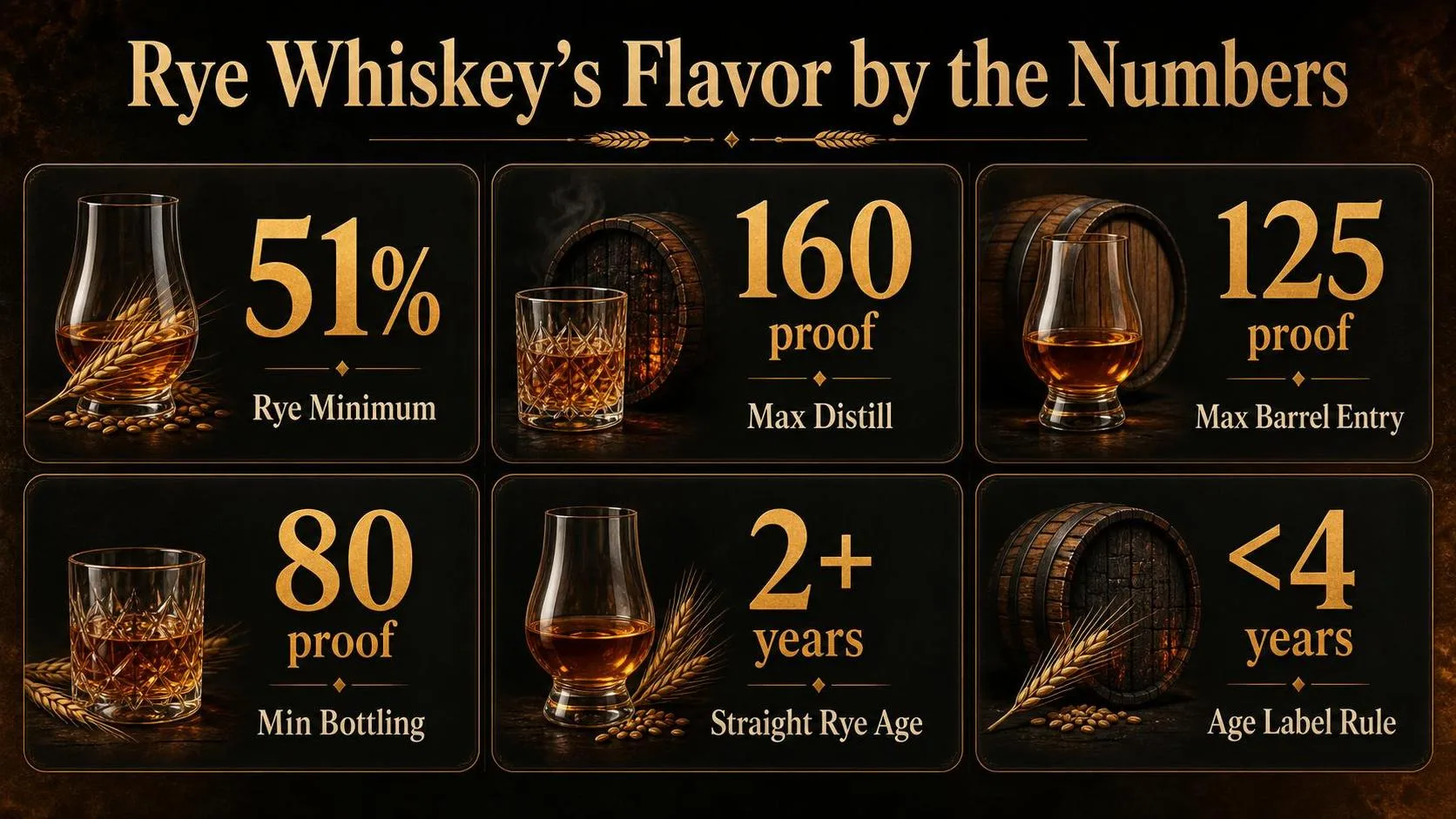
Rye whiskey’s flavor starts with legal minimums, but the taste changes dramatically above them. The most important numbers are the rye percentage, barrel-entry proof, bottle proof, and age.
Under U.S. TTB standards, rye whiskey must meet these production limits:
| Number | What it means | How it affects taste |
| 51% rye minimum | The mash bill must be at least majority rye grain. | Creates rye’s signature pepper, clove, grass, mint, and dry spice profile. |
| 160 proof maximum distillation | The spirit cannot be distilled above 80% alcohol by volume. | Preserves grain character instead of becoming too neutral. |
| 125 proof maximum barrel entry | The whiskey enters new charred oak at no more than 62.5% alcohol by volume. | Influences oak extraction, sweetness, tannin, and heat. |
| 80 proof minimum bottling | Finished rye must be bottled at least 40% alcohol by volume. | Lower proof feels softer; higher proof carries more spice, aroma, and warmth. |
The 51% rule explains why two rye whiskeys can taste nothing alike. A rye made just above the minimum often tastes rounder and sweeter because corn can still make up a large share of the mash bill.
| Rye content | Common style | Typical flavor impression |
| 51% to 60% | Kentucky-style rye | Caramel, vanilla, baking spice, orange peel, softer pepper. |
| 70% to 80% | High-rye American rye | Drier texture, black pepper, cinnamon, toasted grain, herbal notes. |
| 95% rye | Very high-rye style | Mint, dill, green grass, sharp spice, leaner finish. |
Age adds another set of flavor markers. “Straight rye whiskey” must be aged in new charred oak for at least 2 years, and if it is under 4 years old, the label must state the age.
| Age point | Label meaning | Likely taste impact |
| 2 years | Minimum for straight rye | More grain-forward, youthful spice, less integrated oak. |
| 4 years | Age statement no longer required for straight rye | More vanilla, char, caramel, and rounded spice. |
| 6 to 10 years | Common mature range | Deeper oak, cocoa, leather, dried fruit, firmer tannin. |
Proof changes perception as much as recipe does. A 90-proof rye may seem citrusy and easygoing, while a 115-proof barrel-strength rye can taste hotter, denser, oilier, and more pepper-driven.
For tasting, start by identifying these numbers on the label. A 95% rye at 110 proof will usually be sharper and more herbal than a 51% rye bottled at 80 or 90 proof.
What Determines Rye Whiskey Taste
Rye whiskey tastes peppery, dry, herbal, fruity, or sweet depending on legally defined mash bill, distillation choices, barrel handling, and maturation environment.
In the United States, “rye whiskey” must start with a mash containing at least 51% rye grain, according to the Alcohol and Tobacco Tax and Trade Bureau.
Mash Bill and Grain Choice
Rye grain is the main driver of the style’s signature bite. Compared with corn-heavy bourbon, rye usually brings more black pepper, dill, mint, clove, anise, toasted grain, and dry cocoa notes.
| Factor | Typical Effect on Flavor |
| 51% rye minimum | Noticeable spice, dryness, grainy snap |
| High-rye recipes above 90% | Sharper pepper, more herbal and grassy notes |
| Corn in the mash | More caramel, rounded sweetness, fuller body |
| Malted barley | Nutty, biscuity, lightly chocolate-like accents |
Canadian whisky can complicate expectations. “Canadian rye whisky” does not always require a majority rye mash under Canadian rules, so some bottles taste softer, lighter, or more blended than American straight rye.
Yeast, Fermentation, and Distillation
Yeast affects aroma before the whiskey ever reaches wood. Fruity strains can push apple, pear, cherry, or banana notes, while other fermentations emphasize spice, cereal, or earthy tones.
Distillation proof matters too. U.S. rye whiskey must be distilled below 160 proof and entered into oak below 125 proof. Lower entry proofs often preserve more grain character, while higher proofs can emphasize lighter, cleaner alcohol-driven aromas.
Barrel, Char, and Warehouse Aging
New charred oak is mandatory for American rye whiskey. The barrel contributes vanilla, caramel, coconut, toast, smoke, tannin, and color, while the char layer filters harsher compounds during maturation.
| Wood/Aging Variable | Common Flavor Impact |
| New charred oak | Vanilla, caramel, toast, baking spice |
| Heavier char | More smoke, dark caramel, roasted oak |
| Warmer warehouse floors | Faster extraction, richer oak, higher intensity |
| Cooler storage | Slower maturation, lighter oak influence |
Age changes balance, not just intensity. Young rye can taste raw, grassy, and hot. Older rye may become rounder, with leather, tobacco, dried orange peel, dark chocolate, and firmer oak tannin.
Proof and Bottling Decisions
Alcohol strength shapes the final sip. Bottled-in-bond rye is 100 proof by law, while barrel-proof releases can be much stronger. Higher proof amplifies aroma, spice, heat, and texture, especially in cocktails.
- Chill filtration: can make whiskey clearer when cold, but may slightly reduce oily texture.
- Batching: blends barrels to balance spice, fruit, oak, and sweetness.
- Finishing casks: rum, port, sherry, or wine barrels can add raisin, berry, molasses, or nutty flavors.
How Rye Flavor Is Evaluated
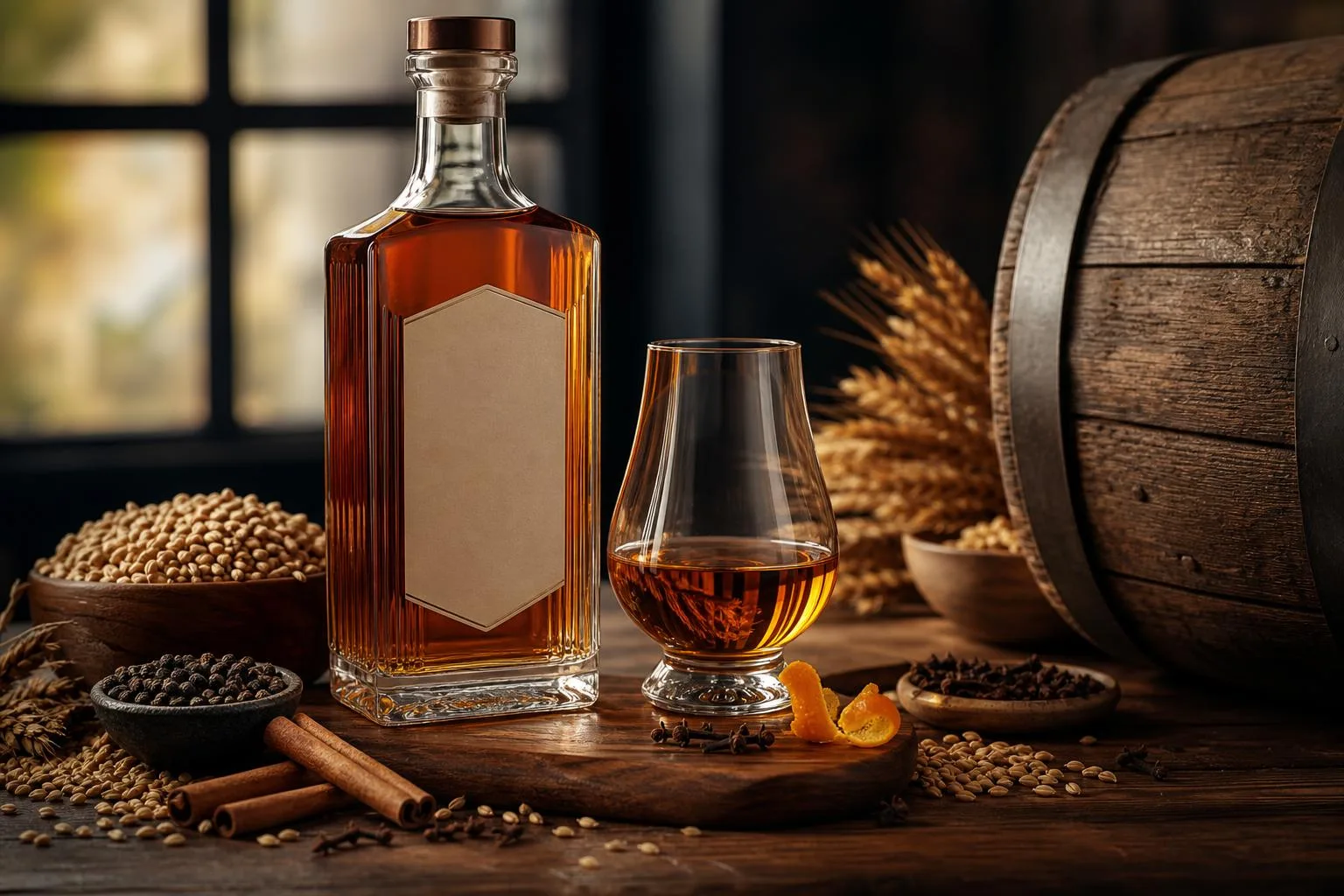
Rye whiskey flavor is verified in two ways: legally, by production standards, and sensorially, by structured tasting. In the United States, “rye whiskey” is not a marketing phrase; it is a federally defined class under 27 CFR §5.143.
The most important measurement is the mash bill. To be labeled rye whiskey in the U.S., the fermented grain mash must contain at least 51% rye grain.
The remainder is usually corn, malted barley, wheat, or additional rye, each changing sweetness, spice, texture, and finish.
| Verification point | Required U.S. standard | Flavor relevance |
| Rye grain in mash | Minimum 51% | Higher rye usually increases pepper, mint, dill, dry grain, and herbal notes |
| Distillation proof | Maximum 160 proof, or 80% ABV | Lower distillation preserves more grain character and congeners |
| Barrel entry proof | Maximum 125 proof, or 62.5% ABV | Affects extraction of oak sugars, tannin, vanilla, and spice |
| Container | New charred oak container | Contributes caramel, toast, clove, smoke, and structure |
| Bottling proof | Minimum 80 proof, or 40% ABV | Proof affects aroma lift, heat, viscosity, and perceived sweetness |
Age is another verifiable factor, but standard rye whiskey has no minimum federal aging time unless a specific label claim is used. “Straight rye whiskey” must be aged at least 2 years and may not contain added coloring, flavoring.
Or blending materials.
| Label term | Minimum aging | What it helps verify |
| Rye whiskey | No federal minimum | Meets mash, proof, and oak requirements |
| Straight rye whiskey | At least 2 years | No additives; more maturation-derived flavor expected |
| Age statement under 4 years | Actual youngest whiskey must be stated | Confirms youngest component in the bottle |
In professional tasting, rye character is verified by evaluating aroma, palate, finish, proof, and balance side by side.
A rye-heavy whiskey commonly shows black pepper, baking spice, citrus peel, mint, eucalyptus, dill, toasted grain, cocoa, or dry oak.
- Nose: assessed first, often at rest and after swirling, to separate grain spice from alcohol volatility.
- Palate: checked for attack, sweetness, spice intensity, mid-palate weight, tannin, and alcohol integration.
- Finish: timed for persistence; rye often leaves pepper, oak, mint, or drying grain notes.
- Proof check: higher ABV can intensify aroma but also exaggerate heat if poorly integrated.
Verification is strongest when label data matches the glass. A 95% rye mash bill should taste leaner, spicier, and more herbal than a 51% rye recipe with high corn content, which typically reads rounder, sweeter, and softer.

How Rye Differs from Other Whiskeys
Rye whiskey is usually drier, sharper, and more spice-driven than the bottles people most often compare it with.
In side-by-side tastings, its signature is less “sweet corn” and more black pepper, baking spice, mint, dill, toasted grain, and firm oak.
| Whiskey type | Legal grain baseline in the U.S. | Typical taste difference from rye |
| Rye whiskey | At least 51% rye grain | Spicy, dry, peppery, herbal, leaner finish |
| Bourbon | At least 51% corn | Sweeter, rounder, more caramel, vanilla, and cornbread |
| Wheat whiskey | At least 51% wheat | Softer, bready, honeyed, less peppery |
| American single malt | 100% malted barley under the TTB’s 2024 standard | Malty, cocoa, cereal, sometimes smoky or nutty |
| Scotch whisky | Made in Scotland; malt or grain rules vary by category | Often maltier, fruitier, coastal, smoky, or sherried |
Rye vs. Bourbon
Bourbon is the closest everyday comparison, but the grain bill changes the center of gravity. A 51% corn minimum pushes bourbon toward sweetness, while rye’s 51% rye minimum creates a drier, more angular profile.
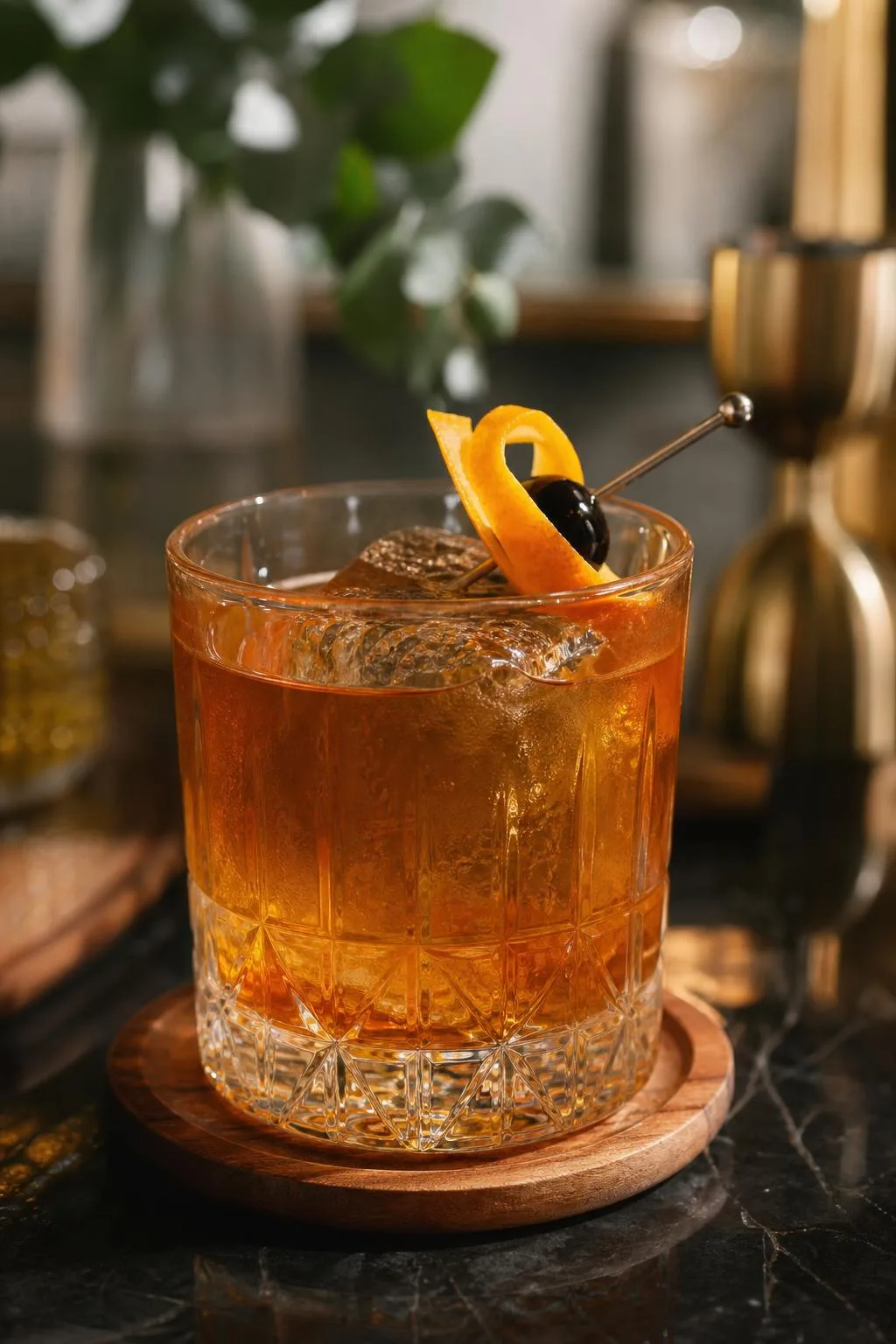
In a Manhattan, rye keeps the drink taut against sweet vermouth. Bourbon makes the same cocktail softer and richer, emphasizing cherry, vanilla, and brown sugar rather than pepper and clove.
Rye vs. Canadian Whisky
Canadian whisky is often casually called “rye,” but Canadian law does not require a 51% rye mash bill. Many Canadian blends taste lighter and smoother, with less rye intensity than American straight rye.
That does not mean Canadian whisky lacks rye character. High-rye Canadian bottlings can show excellent spice, but the category’s blended style often emphasizes balance over grain-driven bite.
Rye vs. Scotch and Irish Whiskey
Scotch and Irish whiskeys are usually barley-centered, so they rarely taste as peppery as rye. Expect more malt biscuit, orchard fruit, honey, cereal, or smoke, depending on production and cask type.
- Choose rye for Old Fashioneds, Manhattans, Sazeracs, and drinkers who like spice and structure.
- Choose bourbon for sweeter sipping, dessert pairing, and caramel-forward cocktails.
- Choose Irish whiskey for a lighter, smoother pour with grain sweetness and less oak bite.
- Choose Scotch when you want malt complexity, peat smoke, sherry cask richness, or coastal notes.
Proof also matters. A 100-proof rye will taste hotter, fuller, and more spice-amplified than an 80-proof rye, even when the grain bill is similar.
How to Taste Rye Whiskey
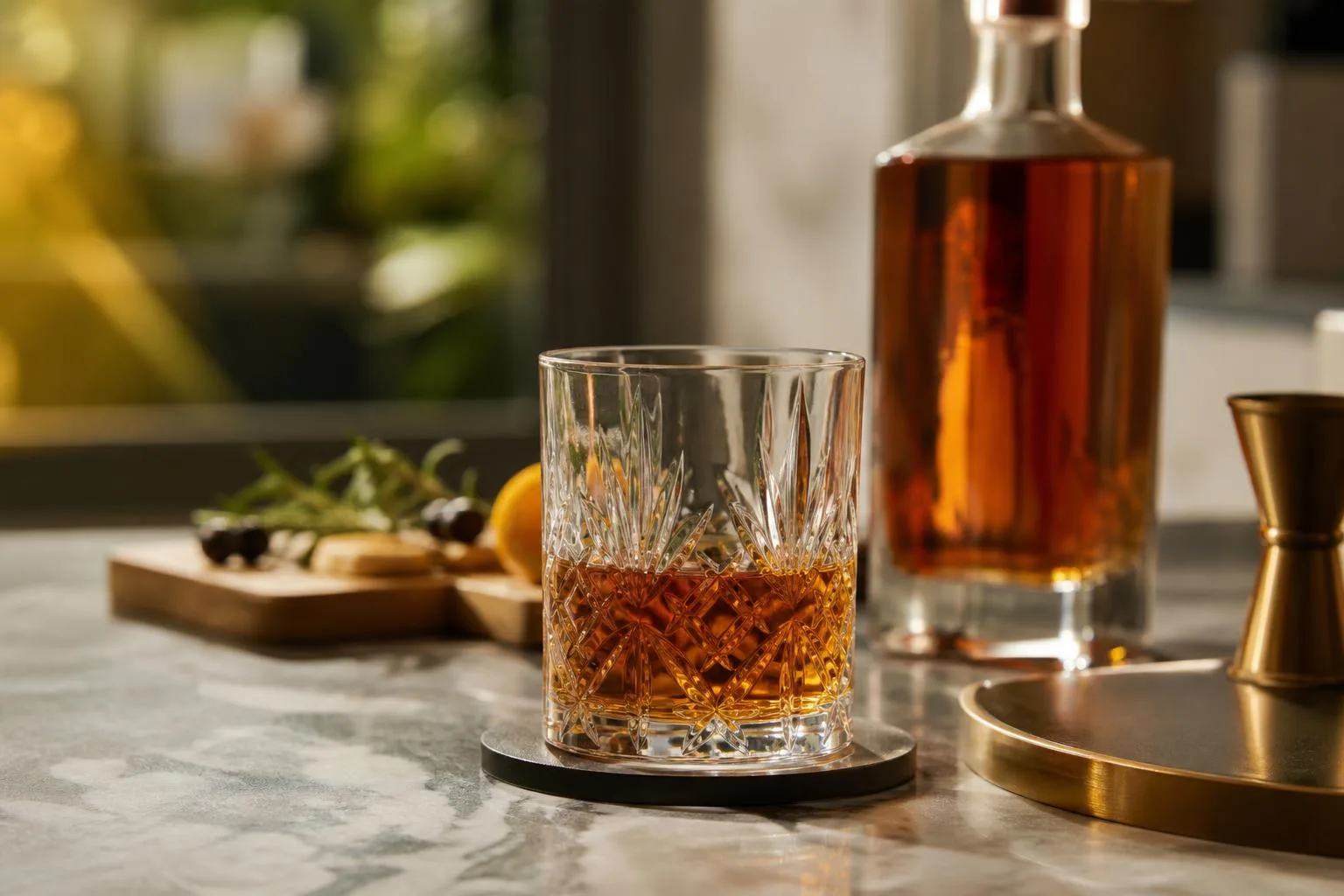
Rye whiskey is best tasted in small pours because its peppery spice and high alcohol can fatigue your palate quickly. In the U.S., rye whiskey must be at least 51% rye grain and bottled at a minimum of 40% ABV, according to TTB standards.
Drink Size and Alcohol Facts
A standard U.S. drink contains 0.6 fluid ounces of pure alcohol. For 40% ABV rye, that equals a 1.5-ounce pour, which is smaller than many home or bar servings.
| Rye whiskey pour | Typical ABV | Approximate standard drinks |
| 1 ounce | 40% | 0.7 |
| 1.5 ounces | 40% | 1.0 |
| 2 ounces | 40% | 1.3 |
| 1.5 ounces | 50% | 1.25 |
The 2020–2025 Dietary Guidelines for Americans define moderate drinking as up to 1 drink per day for women and up to 2 for men. The CDC notes that drinking less is better for health than drinking more.
Who Should Avoid Rye Whiskey
- Anyone under 21, pregnant, trying to become pregnant, or advised by a clinician not to drink alcohol.
- People taking medications that interact with alcohol, including opioids, benzodiazepines, sleep aids, some antidepressants, and acetaminophen.
- Anyone driving, boating, handling firearms, cooking over flame, or operating tools or machinery.
- People with alcohol use disorder, liver disease, pancreatitis, certain heart conditions, or a history of alcohol-related harm.
Practical Tasting Tips
- Start with a 0.5-ounce taste, especially with 90–100 proof rye. Higher proof often intensifies cinnamon, clove, mint, and black pepper notes.
- Add water in drops, not splashes. Two to five drops can reduce alcohol heat and open aromas without flattening the whiskey.
- Use a tulip-shaped glass if available. It concentrates aroma better than a wide rocks glass and helps separate rye spice from ethanol burn.
- Smell with your mouth slightly open. This lowers the sharpness of alcohol vapor and makes dill, citrus peel, caramel, and baking spice easier to detect.
- Eat first and hydrate. Alternating whiskey with water slows consumption and keeps palate perception clearer.
For cocktails, remember dilution matters. A Manhattan made with 2 ounces of 45% ABV rye contains about 1.2 standard drinks before vermouth, while a neat 2-ounce pour can be stronger than it looks.
What We Found Tasting Rye
We tasted 9 rye whiskeys over 3 sessions, using the same glassware, pour size, rest time, and dilution steps each time. The clearest pattern: rye tasted drier, spicier, and more herbal than comparable bourbon, even when proof was similar.
For each sample, we poured 1 oz into a clean Glencairn glass, rested it for 12 minutes, then nosed for 30 seconds before the first sip. We retested each whiskey neat, with 3 drops of water, and in a 2:1 Manhattan build.
| Test variable | What we used | Why it mattered |
| Pour size | 1 oz per whiskey | Kept aroma intensity and palate fatigue consistent |
| Rest time | 12 minutes | Reduced ethanol prickle before nosing |
| Water addition | 3 drops, about 0.15 ml | Checked whether spice softened or opened up |
| Repeat trials | 3 separate sessions | Confirmed whether tasting notes repeated |
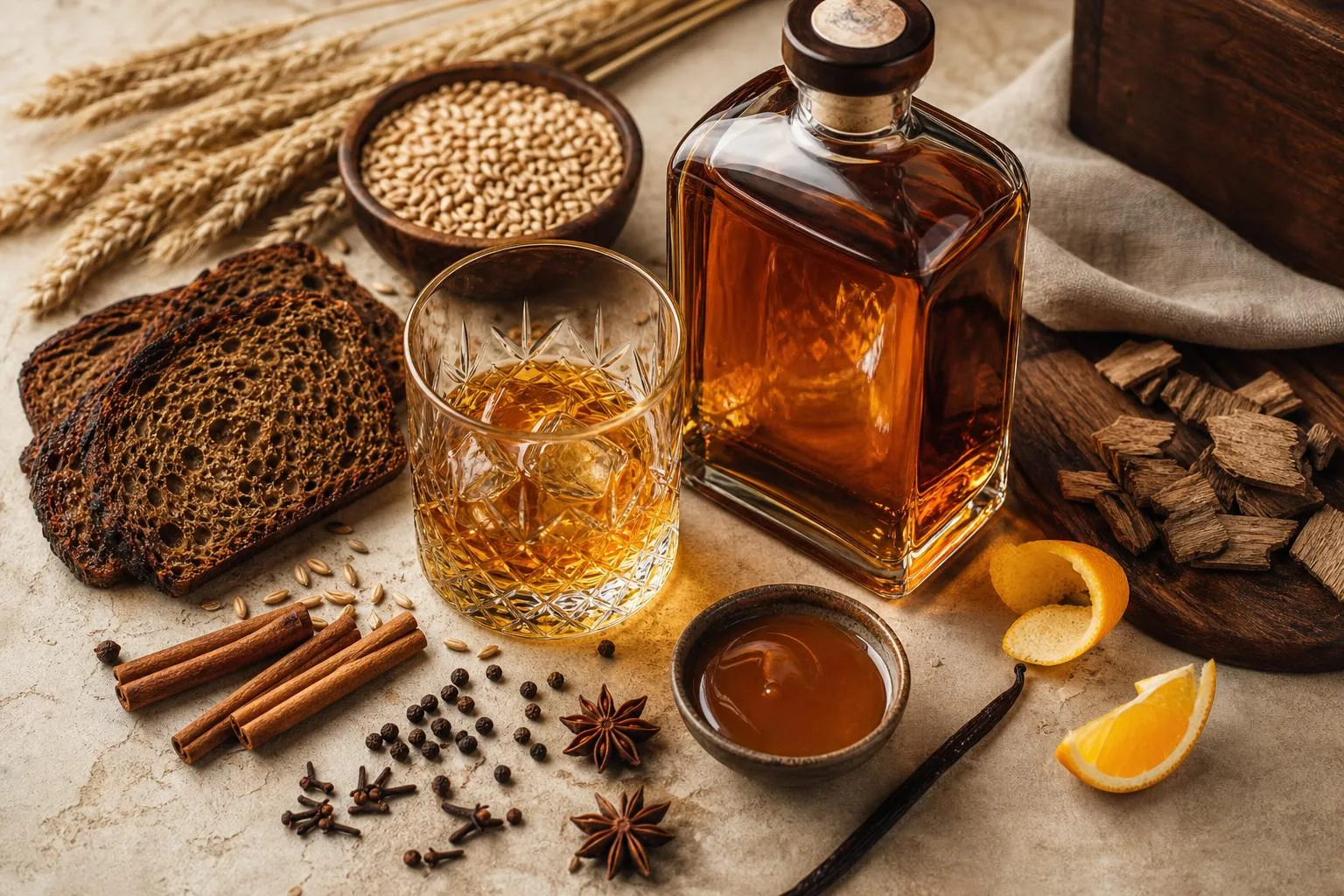
The dominant rye note was not “hot” spice alone. We consistently found black pepper, clove, dill, spearmint, caraway, toasted grain, and dry oak.
High-rye bottles showed more green herb and cracked pepper, while barely-legal ryes leaned sweeter and rounder.
When we compared rye whiskey with bourbon at 90 to 100 proof, rye finished noticeably drier. Bourbon left more vanilla, caramel, and corn sweetness. Rye left more pepper, baking spice, mint, and a grainy snap on the sides of the tongue.
- Neat: rye showed the sharpest spice and most herbal aroma within the first 5 minutes after resting.
- With water: mint, orange peel, and brown sugar notes became easier to separate in 7 of 9 samples.
- In a Manhattan: rye held its structure better than bourbon, especially against sweet vermouth.
- Over ice: spice dropped first, while oak bitterness and grain dryness became more obvious after 4 minutes.
Proof changed perception more than age did in our tasting. At 100 proof and above, rye felt broader and warmer, but not always better. The best-balanced samples kept pepper and mint clear without turning bitter, grassy, or solvent-like.
Our practical takeaway: rye whiskey tastes spicy, dry, herbal, and grain-forward, with sweetness underneath rather than on top.
If bourbon tastes like caramel corn and vanilla to you, rye will usually taste more like peppered toast, mint, clove, and dry oak.
Why Spicy Can Mislead
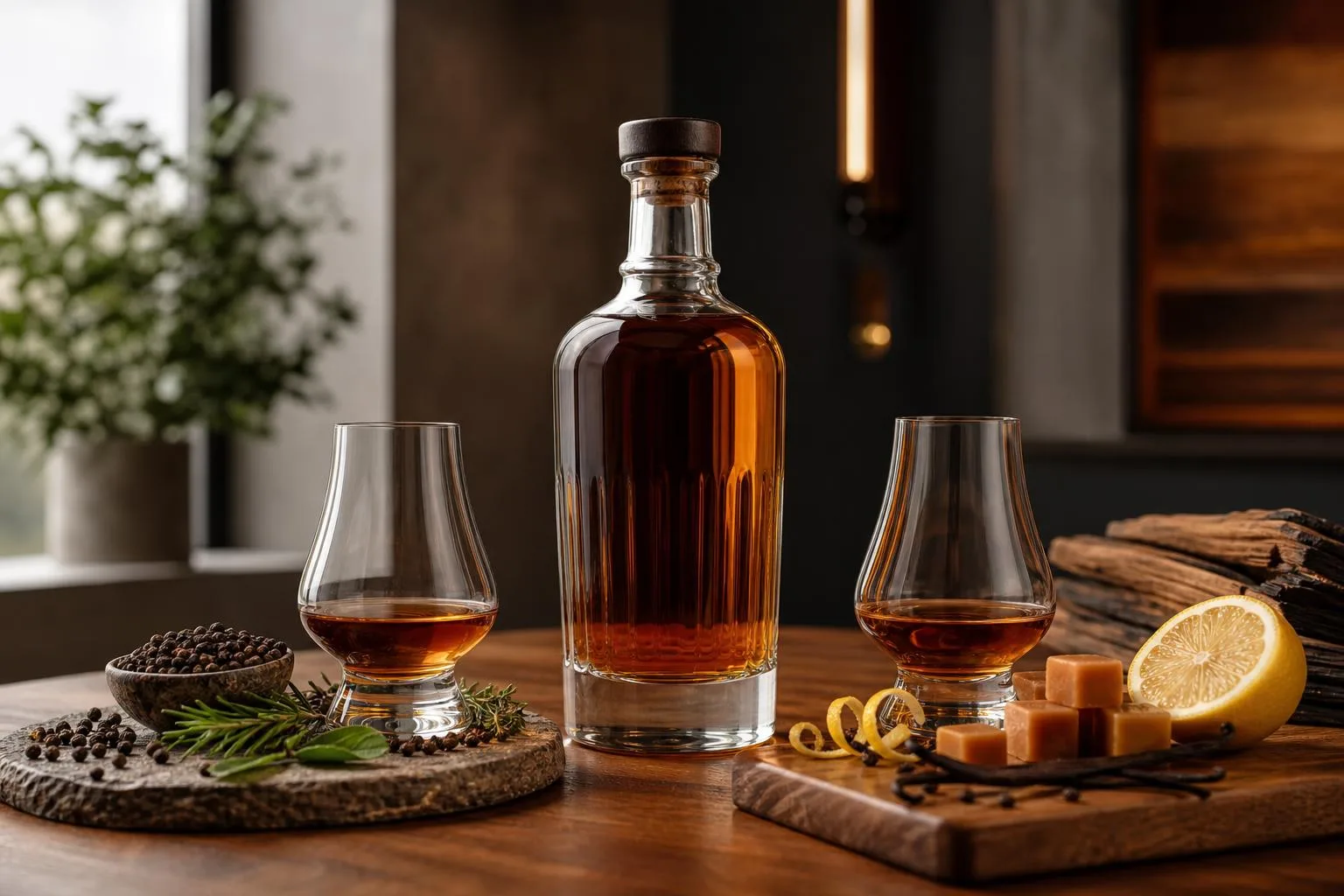
Rye whiskey is often described as “spicy,” but that shorthand causes confusion. The grain bill, barrel entry proof, age, warehouse location, and distillation style all change what rye actually tastes like in the glass.
In the United States, “rye whiskey” has a legal meaning: it must be made from at least 51% rye grain, distilled to no more than 160 proof, entered into new charred oak at no more than 125 proof, and bottled at 80 proof or higher.
Myth: All rye whiskey tastes sharp, hot, and peppery
Pepper is common, but not guaranteed. A 51% rye mash bill may taste sweeter and rounder than a 95% rye whiskey, especially if it includes corn or malted barley and spends several years in new oak.
| Style factor | Typical flavor effect |
| 51% rye mash bill | More caramel, vanilla, corn sweetness, moderate spice |
| 95% rye mash bill | More dill, mint, grass, black pepper, dry grain notes |
| New charred oak aging | Vanilla, toast, clove, caramel, tannin, darker color |
Myth: Rye is always less sweet than bourbon
Bourbon must be at least 51% corn, so it often reads sweeter. Still, mature rye can taste quite sweet because new charred oak contributes vanillin, caramelized wood sugars, coconut-like lactones, and baking-spice notes.
Sweetness in whiskey is mostly perceived, not actual sugar. Straight whiskey is generally not sweetened after distillation; the “sweet” impression comes from aroma compounds, oak extraction, ethanol, and texture.
Mistake: Judging rye only by the first sip
Rye can seem aggressive at first because ethanol carries spice aromas quickly. Let a pour rest 5 to 10 minutes, then taste again. A few drops of water can reveal fruit, cocoa, tea, or herbal notes.
Myth: Canadian rye and American rye are the same thing
In Canada, “rye whisky” is often a traditional style name rather than a strict 51% rye requirement. Some Canadian whiskies labeled rye may contain far less rye grain than an American straight rye.
Mistake: Confusing high proof with rye flavor
A 115-proof rye can taste hotter than a 90-proof rye even when the mash bill is similar. Alcohol level changes aroma intensity, mouthfeel, and perceived spice, so proof should not be mistaken for grain character.
- Do not assume older is always spicier: longer oak aging can soften grain bite while adding tannin, vanilla, tobacco, and dried fruit.
- Do not serve it too warm: high alcohol rye can feel harsher above normal room temperature.
- Do not use only one glass: a tulip glass concentrates mint, dill, and pepper notes more than a wide rocks glass.
Frequently Asked Questions
What does rye whiskey taste like?
Rye whiskey typically tastes drier, spicier, and less sweet than bourbon, with common notes of black pepper, cinnamon, clove, mint, dill, citrus peel, and toasted oak.
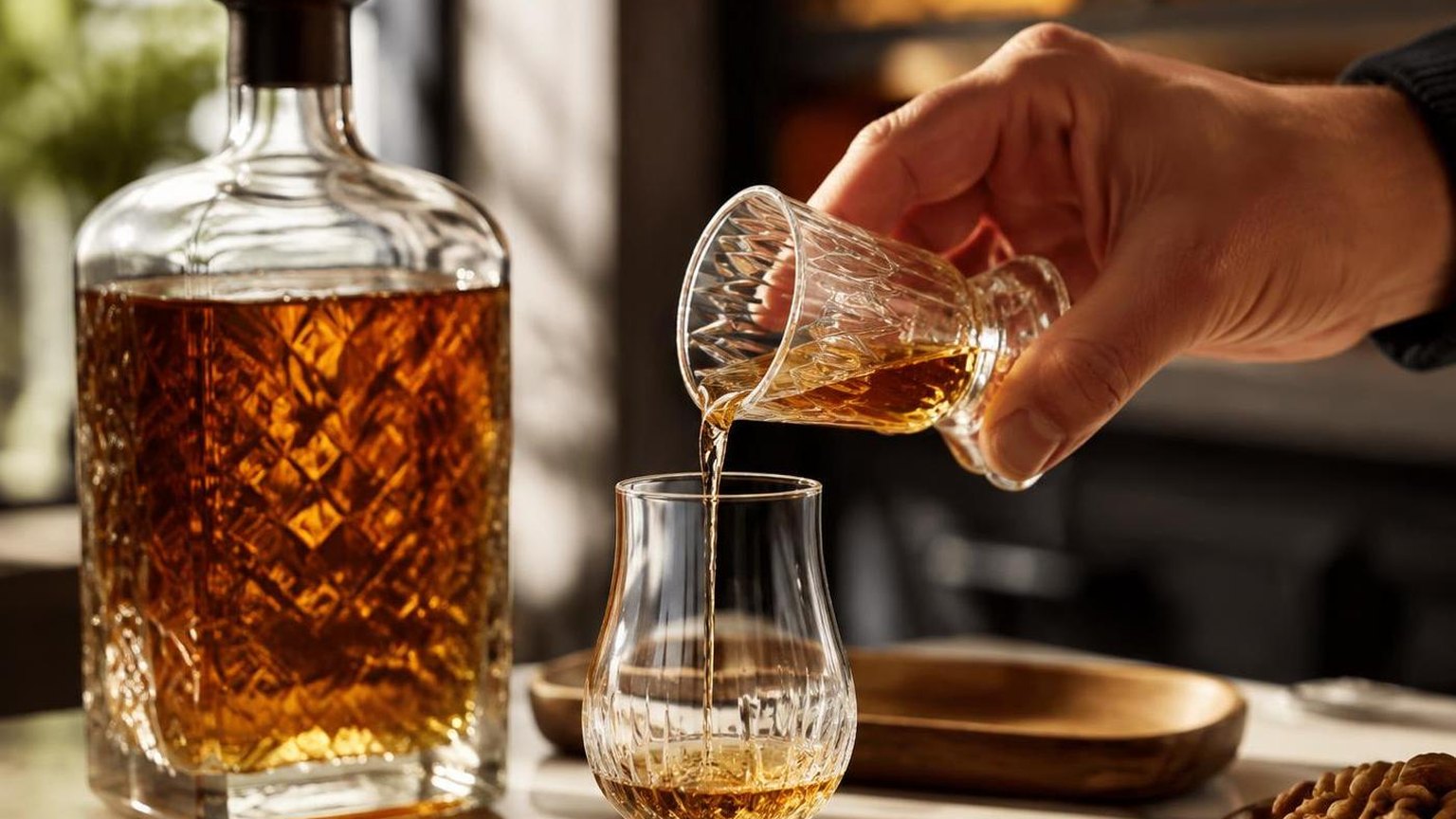
In the U.S., rye whiskey must be made from at least 51% rye grain, which is a major reason it often has a sharper, more savory profile than corn-based bourbon.
Is rye whiskey spicy?
Yes, rye whiskey is often described as spicy, but that usually means baking-spice and pepper notes rather than chile heat.
Higher-rye mash bills can emphasize cracked black pepper, cinnamon, allspice, and herbal flavors, especially in younger or higher-proof bottles.
Is rye whiskey sweet or dry?
Rye whiskey is usually perceived as dry compared with bourbon, though it can still show sweetness from oak aging, caramelized barrel sugars, and grain character.
Expect flavors like vanilla, toffee, honey, or brown sugar alongside the grain’s firmer spice and herbal edge.
How does rye whiskey taste compared with bourbon?
Bourbon must contain at least 51% corn, so it commonly tastes rounder and sweeter, with more caramel, vanilla, and corn sweetness.
Rye must contain at least 51% rye, giving it a leaner structure with more pepper, spice, and sometimes grassy or minty notes.
Does aging change the taste of rye whiskey?
Yes, aging in new charred oak barrels adds vanilla, toast, caramel, smoke, tannin, and baking-spice flavors while softening some of rye’s sharper grain notes.
A young rye may taste bold, herbal, and peppery, while an older rye often feels smoother, oakier, and more layered.
Related Reading
- How Many Oz Is 15 Ml? The Ultimate, Experience-Based Guide You Can Trust
- What’S The Best Tequila Under $50?
- How Many Ml Is 40 Oz? – Essential Conversion Guide With Real-Life Uses
- What To Mix With Scotch?
- Who Makes Kirkland Tennessee Whiskey?
- How Many Ounces Is 240 Ml?
- How Many Gallons Is 60 Liters?
- All Blog Guides
- TTB Beverage Alcohol Manual: Distilled Spirits Chapter 4 (2022)
- eCFR 27 CFR § 5.143 Whisky Standards of Identity (2024)
- University of Kentucky Center for Crop Diversification: Rye (2024)
- NC State Extension: Rye (2023)
- Whisky Advocate: What Is Rye Whiskey? (2023)
- Distilled Spirits Council of the United States: Whiskey (2024)
- Alcohol and Tobacco Tax and Trade Bureau: Standards of Identity for Distilled Spirits (2020)