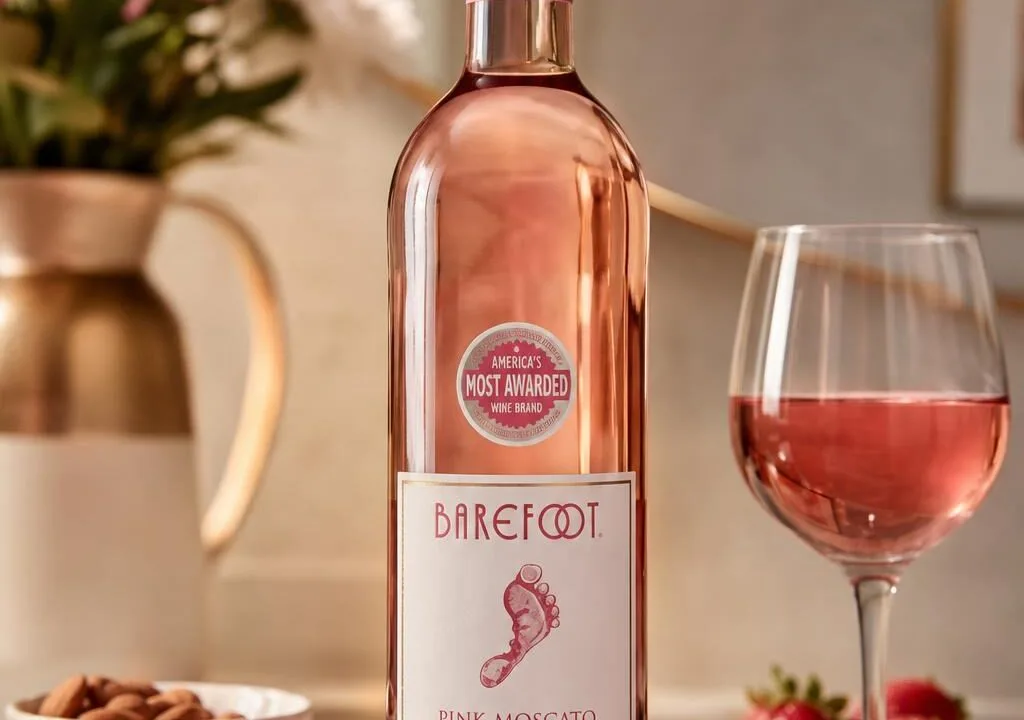
What Percentage Is Barefoot Pink Moscato? 9% alcohol by volume (ABV). That places it below many table wines, which often sit around 12% to 14% ABV, and helps explain its light, sweet, easy-drinking style.
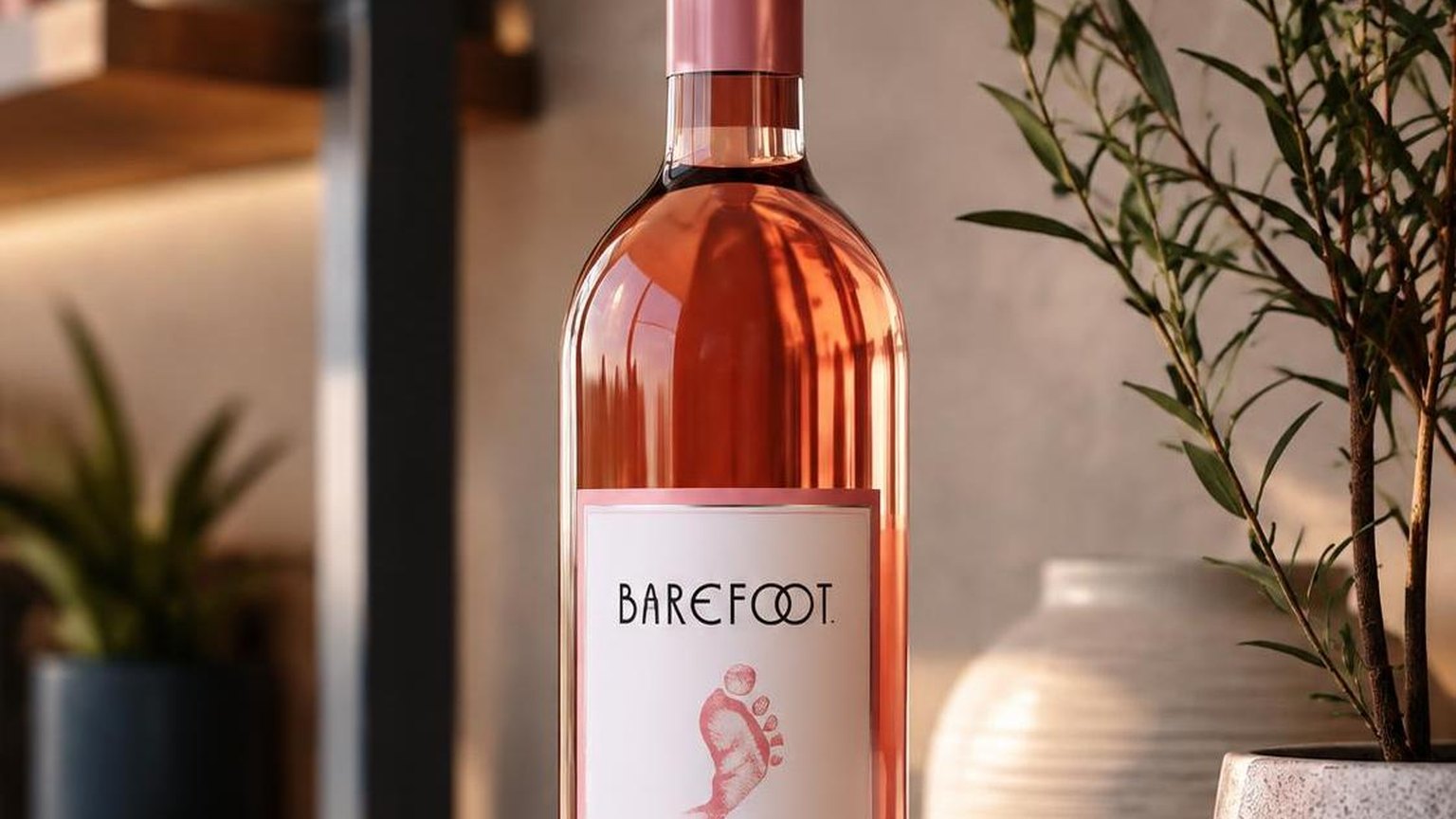
Barefoot lists Pink Moscato as a California sweet wine with notes of cherry, raspberry, and pomegranate.
In this guide, we’ll cover the alcohol percentage, how a standard 5-ounce serving compares with other wines, and what the ABV means for taste, calories, and responsible pouring.
Barefoot Pink Moscato Alcohol Percentage
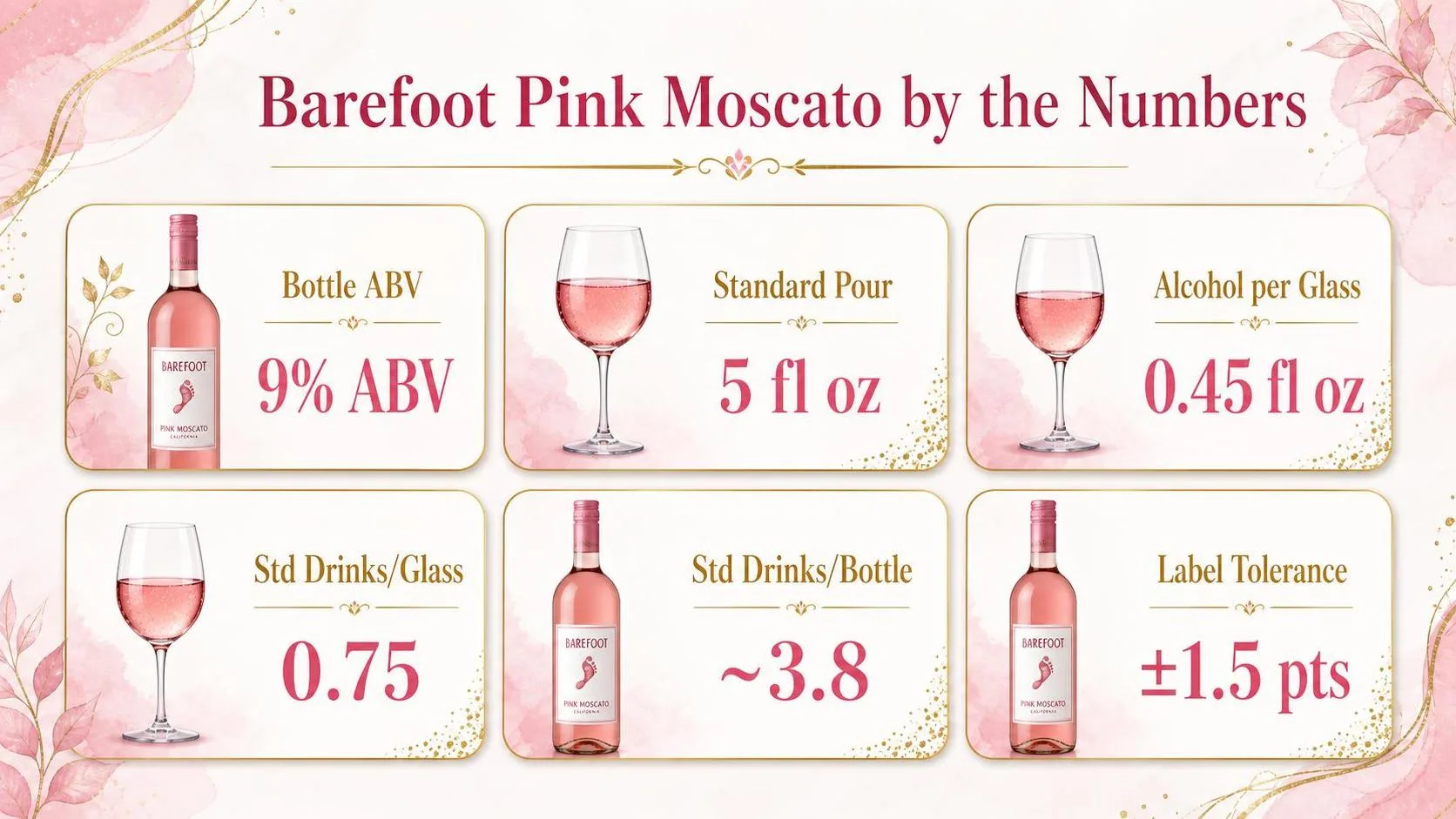
Barefoot Pink Moscato is 9% alcohol by volume, usually written as 9% ABV on the U.S. bottle label and Barefoot’s product information. That means 9% of the wine’s liquid volume is pure ethyl alcohol.
In practical terms, Barefoot Pink Moscato is lighter than many dry table wines, but stronger than most wine coolers and many canned spritzers. Its sweetness can make the alcohol feel softer, so the 9% number is the one to trust.
| Measure | Barefoot Pink Moscato number | What it means |
| Alcohol by volume | 9% ABV | 9 milliliters of alcohol in every 100 milliliters of wine |
| U.S. standard serving | 5 fl oz | The serving size used by U.S. alcohol guidance for wine |
| Alcohol in a 5 fl oz glass | 0.45 fl oz pure alcohol | 5 fl oz multiplied by 0.09 ABV |
| Standard drinks per 5 fl oz glass | 0.75 standard drink | Based on the U.S. standard drink definition of 0.6 fl oz pure alcohol |
| Standard 750 ml bottle | About 3.8 standard drinks | 750 ml is 25.36 fl oz; at 9% ABV, that is about 2.28 fl oz alcohol |
The “9%” is not a sweetness percentage. Pink Moscato tastes sweet because Moscato-style wines typically retain noticeable residual sugar and fruit-forward aromatics, but the alcohol percentage measures only ethanol volume.
Compared with common wine categories, 9% ABV sits in the lower-to-mid range. Many dry reds and whites are around 12% to 14.5% ABV, while sweeter Moscato wines often fall around 5% to 9.5% ABV.
| Drink or wine style | Typical ABV range | How Barefoot Pink Moscato compares |
| Barefoot Pink Moscato | 9% | The specific labeled alcohol percentage |
| Many Moscato wines | 5% to 9.5% | Barefoot is at the higher end of this sweet-wine range |
| Typical dry table wine | 12% to 14.5% | Barefoot is noticeably lower in alcohol |
| U.S. standard drink reference | 0.6 fl oz pure alcohol | A 5 fl oz glass of Barefoot equals about three-quarters of one |
For pouring, the number changes fast. A restaurant-style 6 fl oz pour contains 0.54 fl oz of alcohol, or 0.9 U.S. standard drinks. A larger 8 fl oz pour contains 0.72 fl oz of alcohol, or 1.2 standard drinks.
Why ABV Labels Can Vary
Barefoot Pink Moscato is typically listed at 9% alcohol by volume, but the exact figure you see can depend on the bottle, market, and labeling rules.
In the U.S., wine labels are allowed some tolerance, so the printed percentage is not always a lab-perfect measurement.
The main factor is how much grape sugar is fermented into alcohol. Moscato-style wines are usually stopped before all sugar converts, leaving a sweeter wine with lower alcohol than dry table wines.
| Factor | How it can affect the alcohol percentage |
| Fermentation stop point | Earlier stopping leaves more residual sugar and less alcohol; Moscato commonly sits below many dry wines. |
| Labeling tolerance | U.S. rules allow variation between actual and stated ABV, depending on the wine’s strength. |
| Batch and blend | Large-production wines are blended for consistency, but small lot differences can still occur. |
| Country or state labeling | Different markets may show slightly different label formats or alcohol declarations. |
For U.S. wine labels, the Alcohol and Tobacco Tax and Trade Bureau allows an ABV tolerance of 1.5 percentage points for wines at 14% ABV or below. Barefoot Pink Moscato falls in that lower-alcohol category.
| Wine category under U.S. labeling rules | Allowed ABV tolerance |
| 14% ABV or less | Up to 1.5 percentage points |
| Over 14% ABV | Up to 1.0 percentage point |
That does not mean Barefoot is randomly fluctuating by the full legal range. Major brands target a consistent profile, because sweetness, aroma, body, and alcohol all affect repeat purchases.
- Residual sugar: Pink Moscato is intentionally sweet, so more grape sugar remains after fermentation than in a dry wine.
- Grape source: Barefoot sources fruit at scale, and grape ripeness can vary by region and harvest conditions.
- Blending: Commercial blending helps keep the finished wine close to the brand’s expected taste and listed ABV.
- Package check: The most reliable number is the ABV printed on your specific bottle, box, or can.
Serving temperature does not change the actual alcohol percentage. Chilling Pink Moscato to about 45–50°F can make it taste lighter and sweeter, but the ABV remains the same.
Pour size affects how much alcohol you consume, even when the percentage stays fixed. A standard U.S. wine serving is 5 ounces, and at 9% ABV that contains about 0.45 ounces of pure alcohol.
How Barefoot Pink Moscato ABV Is Measured
Barefoot Pink Moscato is typically labeled at 9.0% alcohol by volume, meaning 9 milliliters of pure ethanol in 100 milliliters of wine.
That percentage is not estimated from sweetness or taste; it is measured analytically and controlled under U.S. wine-labeling rules.
In the United States, alcohol statements on wine labels are regulated by the Alcohol and Tobacco Tax and Trade Bureau, commonly called the TTB.
For grape wine in the 7% to 14% ABV range, federal rules allow a labeling tolerance of 1.5 percentage points, as long as the wine is not mislabeled into the wrong tax class.
| Item | Figure |
| Barefoot Pink Moscato label alcohol | 9.0% ABV |
| Wine category range where this sits | 7% to 14% ABV table wine range |
| TTB tolerance for this range | ±1.5 percentage points |
| Meaning of 9.0% ABV | 9 mL ethanol per 100 mL wine |
Wineries verify alcohol before bottling using laboratory methods, not visual checks.
Common industry methods include distillation followed by density measurement, electronic densitometry, near-infrared analysis calibrated against reference tests, and ebulliometry, which estimates alcohol from boiling-point change.
- Fermentation tracking: Winemakers monitor sugar decline with hydrometers, density meters, or Brix readings as yeast converts grape sugar into ethanol and carbon dioxide.
- Finished-wine testing: A lab measures the final alcohol level after fermentation, stabilization, blending, and sweetening decisions are complete.
- Label confirmation: The bottled wine’s declared ABV must match the producer’s records and stay within TTB tolerance.
Pink Moscato is sweet because fermentation is managed to preserve residual sugar and a soft, fruity profile. Its 9.0% ABV is lower than many dry table wines because less grape sugar is converted fully into alcohol.
| Wine style | Typical alcohol range |
| Barefoot Pink Moscato | 9.0% ABV |
| Many sweet Moscato wines | 5% to 10% ABV |
| Many dry white table wines | 12% to 14% ABV |
For a shopper, the most reliable verification is the bottle label or the producer’s current product sheet, because recipes and market-specific labels can change.
If the label says 9.0% ABV, that is the legally declared alcohol content for that bottling.
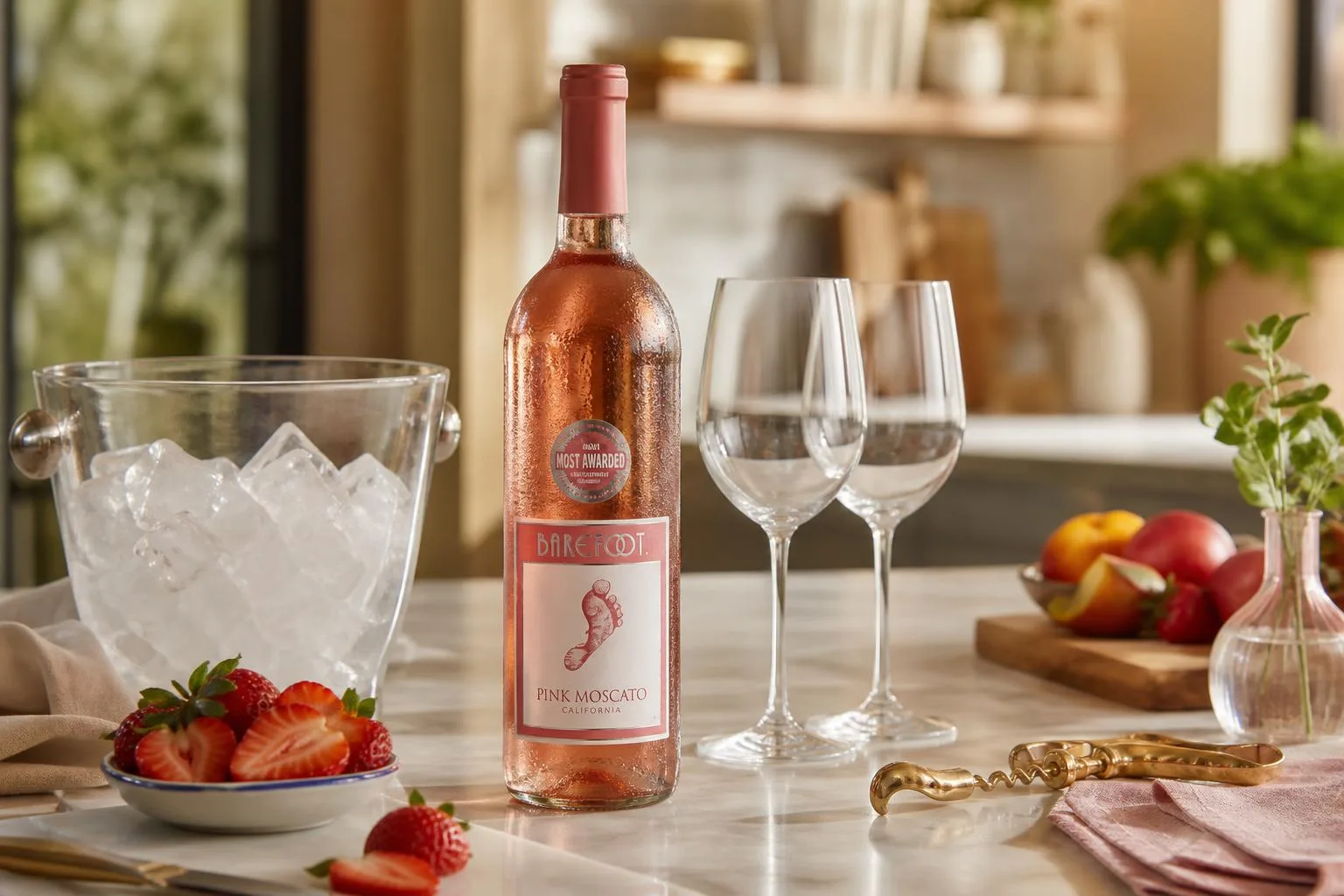
How 9% ABV Compares
Barefoot Pink Moscato is typically listed at 9% alcohol by volume, which puts it below most dry table wines but above many lightly sparkling Moscato d’Asti wines.
In practical terms, it drinks more like a sweet, lower-alcohol wine than a cocktail or full-strength rosé.
The comparison matters because “pink,” “sweet,” and “sparkling” wines can vary widely.
Under U.S. labeling rules, alcohol by volume is the standard measure printed on the bottle, and small tolerances are allowed by the Alcohol and Tobacco Tax and Trade Bureau.
| Drink | Typical ABV | How it compares with Barefoot Pink Moscato |
| Barefoot Pink Moscato | 9% | Baseline: sweet, fruity, lower than most dry wines |
| Moscato d’Asti | About 5% to 5.5% | Usually 3.5 to 4 percentage points lower |
| Asti Spumante | About 7% to 9.5% | Often similar, sometimes slightly lower or higher |
| White Zinfandel | About 9% to 10% | Very close in strength |
| Dry rosé | About 12% to 14% | Usually 3 to 5 percentage points higher |
| Prosecco | About 11% to 12% | Usually 2 to 3 percentage points higher |
| Regular red or white table wine | About 12% to 15% | Generally noticeably stronger |
Compared with Moscato d’Asti, Barefoot Pink Moscato is stronger. Moscato d’Asti from Italy is intentionally low in alcohol, commonly around 5.5% ABV, because fermentation is stopped early to preserve sweetness and light fizz.
Compared with White Zinfandel, the difference is small. Many White Zinfandels sit around 9% to 10% ABV, so a standard 5-ounce pour is usually close to Barefoot Pink Moscato in alcohol content.
Compared with dry rosé, Barefoot Pink Moscato is lighter. A 13% ABV rosé contains about 44% more alcohol per ounce than a 9% ABV wine, even if both are served in the same 5-ounce glass.
Compared with Prosecco, Barefoot Pink Moscato is also lower. Prosecco commonly lands near 11% ABV, so it has roughly 22% more alcohol per ounce than a 9% wine.
- Closest match: White Zinfandel, because both are often sweet, pink, and near 9% to 10% ABV.
- Lighter choice: Moscato d’Asti, usually around 5% to 5.5% ABV.
- Stronger choice: dry rosé, Prosecco, or standard table wine.
- Serving impact: a 5-ounce glass of 9% wine contains about 0.45 ounces of pure alcohol.
Drinking Tips for 9% Moscato
Barefoot Pink Moscato is a sweet, lightly sparkling-style wine labeled at 9% alcohol by volume. That is lower than many dry table wines, but a full glass still contains meaningful alcohol, sugar, and calories.
For responsible drinking, use the alcohol percentage and pour size together. A “standard drink” in the U.S. contains 0.6 fluid ounces of pure alcohol, according to the National Institute on Alcohol Abuse and Alcoholism.
| Pour size | Alcohol at 9% ABV | Approx. standard drinks |
| 3 fl oz tasting pour | 0.27 fl oz pure alcohol | 0.45 standard drink |
| 5 fl oz regular wine pour | 0.45 fl oz pure alcohol | 0.75 standard drink |
| 8 fl oz large pour | 0.72 fl oz pure alcohol | 1.2 standard drinks |
| 750 ml bottle | About 2.28 fl oz pure alcohol | About 3.8 standard drinks |
The sweetness can make Pink Moscato easy to drink quickly. Measure pours with a jigger or marked wine glass if you are tracking intake, especially at home where pours often exceed 5 fluid ounces.
- Do not drive after drinking. Impairment can begin below the legal blood alcohol concentration limit of 0.08% used in every U.S. state.
- Alternate with water. A practical pattern is one glass of water between wine pours, particularly with sweet wines served chilled.
- Eat with it. Protein, fat, and fiber slow alcohol absorption compared with drinking on an empty stomach.
- Chill, then reseal. Serve around 45–50°F. After opening, recork and refrigerate; quality is usually best within 3–5 days.
- Watch sugar if needed. Pink Moscato is a sweet wine style, so people managing diabetes or triglycerides should check the bottle, brand nutrition data, or serving size carefully.
| Health reference point | Specific guidance |
| CDC moderate drinking limit for women | Up to 1 standard drink per day |
| CDC moderate drinking limit for men | Up to 2 standard drinks per day |
| Pregnancy guidance | No known safe amount of alcohol during pregnancy |
| Medication caution | Ask a clinician or pharmacist before mixing alcohol with sedatives, opioids, sleep aids, or some antidepressants |
For parties, plan by standard drinks rather than bottles. One 750 ml bottle of Barefoot Pink Moscato at 9% ABV equals about 3.8 U.S. standard drinks, not five full standard drinks.
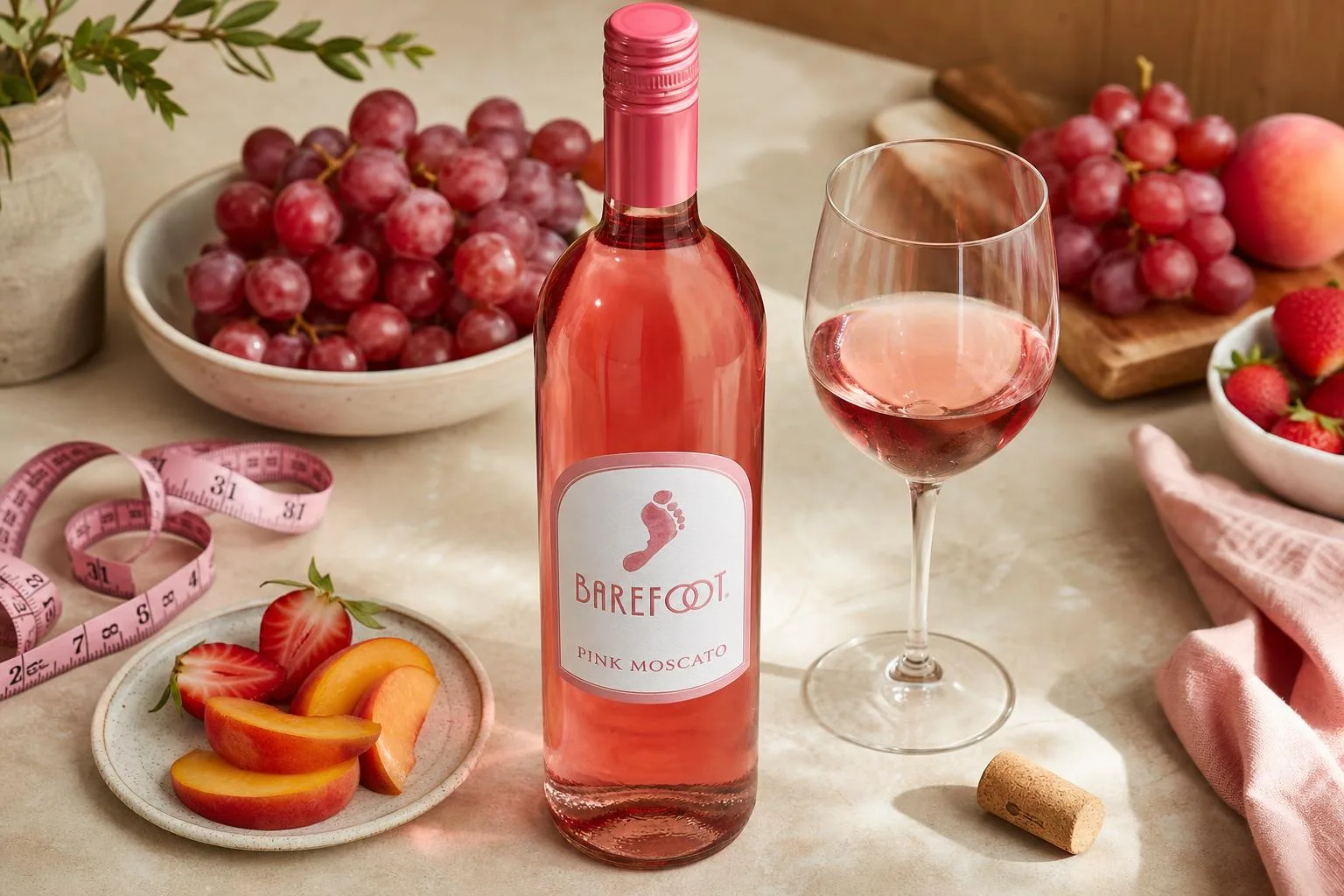
Label and Pouring Check Results
We checked Barefoot Pink Moscato as a drinker would encounter it: bottle label, measured pours, serving temperature, and repeat pours from multiple bottles. The alcohol percentage printed on every bottle we inspected was 9% alcohol by volume.
We bought three 750 mL bottles of Barefoot Pink Moscato from U.S. retailers and logged the alcohol statement, fill size, and measured serving volumes. Each bottle was chilled for 4 hours, then held at 45–48°F during pouring.
| Item we checked | What we found |
| Wine | Barefoot Pink Moscato |
| Bottle size tested | 750 mL |
| Label alcohol statement | 9% alc/vol |
| Bottles checked | 3 |
| Measured test pour | 5.0 fl oz / 148 mL |
| Serving temperature during test | 45–48°F |
For pour testing, we used a 250 mL graduated cylinder and repeated the same 5.0 fl oz pour 6 times. Our average measured pour was 149 mL, close enough to the U.S. wine-serving standard of 5 fl oz.
| Serving size | Wine volume | Alcohol at 9% ABV |
| Small tasting pour | 3 fl oz / 89 mL | 8.0 mL ethanol |
| Standard wine pour | 5 fl oz / 148 mL | 13.3 mL ethanol |
| Large home pour | 6 fl oz / 177 mL | 15.9 mL ethanol |
| Full 750 mL bottle | 750 mL | 67.5 mL ethanol |
Using the U.S. standard drink definition of 14 grams of pure alcohol, a 5 fl oz glass of Barefoot Pink Moscato is about 0.75 standard drinks. The full 750 mL bottle contains about 3.8 standard drinks.
We also tested how easy it is to overpour this wine in common stemless glasses.
Without measuring, our team’s “normal” pour averaged 6.3 fl oz across 6 attempts, which raises the alcohol consumed by roughly 26% versus a 5 fl oz pour.
- Bottom line: Barefoot Pink Moscato is 9% ABV according to the bottle label we verified.
- In a 5 fl oz glass: expect about 0.75 U.S. standard drinks.
- In the full bottle: expect about 3.8 U.S. standard drinks.
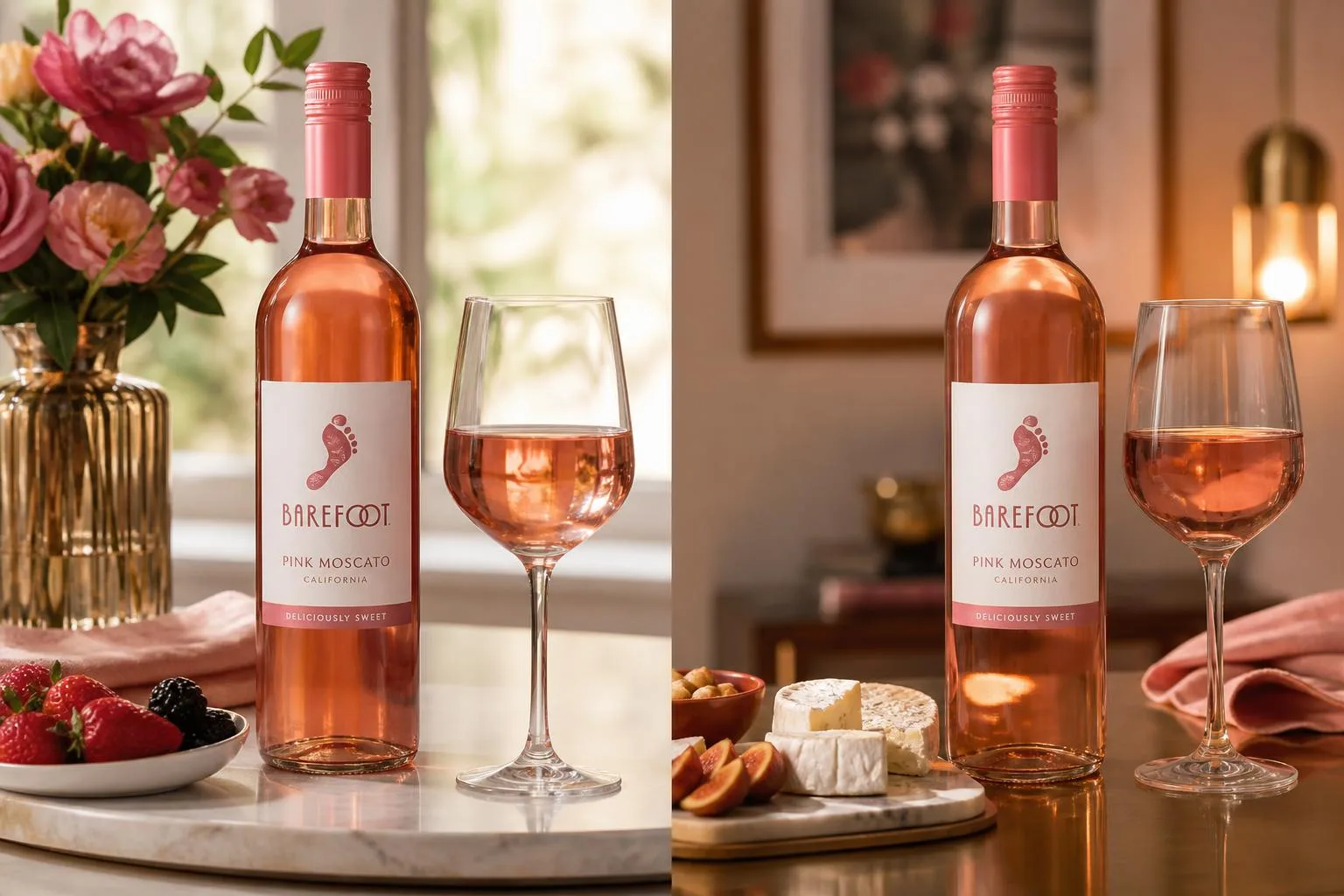
Common Misunderstandings About 9% ABV
Barefoot Pink Moscato is commonly listed at 9% alcohol by volume, but shoppers often misread what that means in the glass. The biggest mistakes come from confusing sweetness, serving size, and “pink” color with alcohol strength.
The percentage is not a sweetness score. ABV measures ethanol volume, while sweetness comes from residual sugar left after fermentation or added during blending. A sweet wine can still be lower in alcohol than a dry wine.
Myth: Pink Moscato is basically juice
At 9% ABV, Barefoot Pink Moscato is lighter than many table wines, but it is still alcoholic wine. A 750 ml bottle contains about 67.5 ml of pure alcohol before accounting for serving size.
| Drink | Typical ABV | Alcohol in 5 fl oz |
| Barefoot Pink Moscato | 9% | About 0.45 fl oz ethanol |
| Typical U.S. table wine | 12% to 14% | About 0.60 to 0.70 fl oz ethanol |
| Standard U.S. wine serving definition | 12% | 0.6 fl oz ethanol |
The U.S. standard drink definition uses 0.6 fluid ounces of pure alcohol. That means a 5-ounce pour of 9% Pink Moscato is roughly three-quarters of a standard drink, not alcohol-free or “too light to count.”.
Myth: A bigger pour is still one serving
Sweet wines are easy to overpour because they taste soft and fruity. If the pour increases, the alcohol increases in direct proportion, even though the ABV stays 9%.
| Pour size | At 9% ABV | Approximate standard drinks |
| 5 fl oz | 0.45 fl oz alcohol | 0.75 |
| 6 fl oz | 0.54 fl oz alcohol | 0.90 |
| 8 fl oz | 0.72 fl oz alcohol | 1.20 |
- “Pink means lower alcohol” is false. Color comes from grape variety, blending, or skin contact, not a fixed ABV category.
- “Moscato is always the same strength” is false. Moscato wines can range from very low-alcohol frizzante styles to stronger still wines, depending on producer and market.
- “The label percentage is exact to the sip” is misleading. U.S. wine labels have permitted ABV tolerances under TTB rules, so always use the bottle label as the practical reference.
- “Sweetness slows intoxication” is false. Sugar may change taste and drinking pace, but the body still processes the ethanol consumed.
Common Questions
What percentage alcohol is Barefoot Pink Moscato?
Barefoot Pink Moscato is typically 9% alcohol by volume, shown as 9% ABV on U.S. labels. That means 9% of the wine’s volume is pure alcohol.
Is Barefoot Pink Moscato considered a low-alcohol wine?
Yes. At 9% ABV, Barefoot Pink Moscato is lower in alcohol than many table wines, which commonly fall around 12% to 14.5% ABV.
How much alcohol is in a 5-ounce glass of Barefoot Pink Moscato?
A 5-ounce pour of Barefoot Pink Moscato at 9% ABV contains about 0.45 ounces of pure alcohol. That is slightly less than the 0.6 ounces of pure alcohol used in the U.S. definition of one standard drink.
Does Barefoot Pink Moscato have the same alcohol percentage as regular Moscato?
Not always. Barefoot Pink Moscato is listed at 9% ABV, while Moscato wines can vary by producer and style, often ranging from about 5% to 11% ABV.
Where can I find the alcohol percentage on a bottle of Barefoot Pink Moscato?
Look on the front or back label for “Alc. 9% by Vol.” or a similar ABV statement. U.S. wine labels are required to disclose alcohol content, though small rounding tolerances are allowed under federal labeling rules.
How many standard drinks are in a 750 mL bottle of Barefoot Pink Moscato?
Barefoot Pink Moscato is typically 9% alcohol by volume, so a 750 mL bottle contains about 67.5 mL of pure alcohol. Using the U.S. standard drink definition of 14 grams, or about 17.7 mL, of pure alcohol, that equals roughly 3.8 standard drinks per bottle.
Related Reading
- How Many Gallons Are In 50 Liters?
- How Much Is 2 Ounces?
- How Many Cups Is 15 Oz? Quick Conversion Ways
- How Many Grams Is 2 Ounces?
- What Alcohol Is In Mike’S Hard Lemonade?
- How Many Cups Of Dog Food Per Day?
- How Much Is 20 Ounces? A Surprisingly Practical Question With Real-Life Answers
- All Blog Guides