
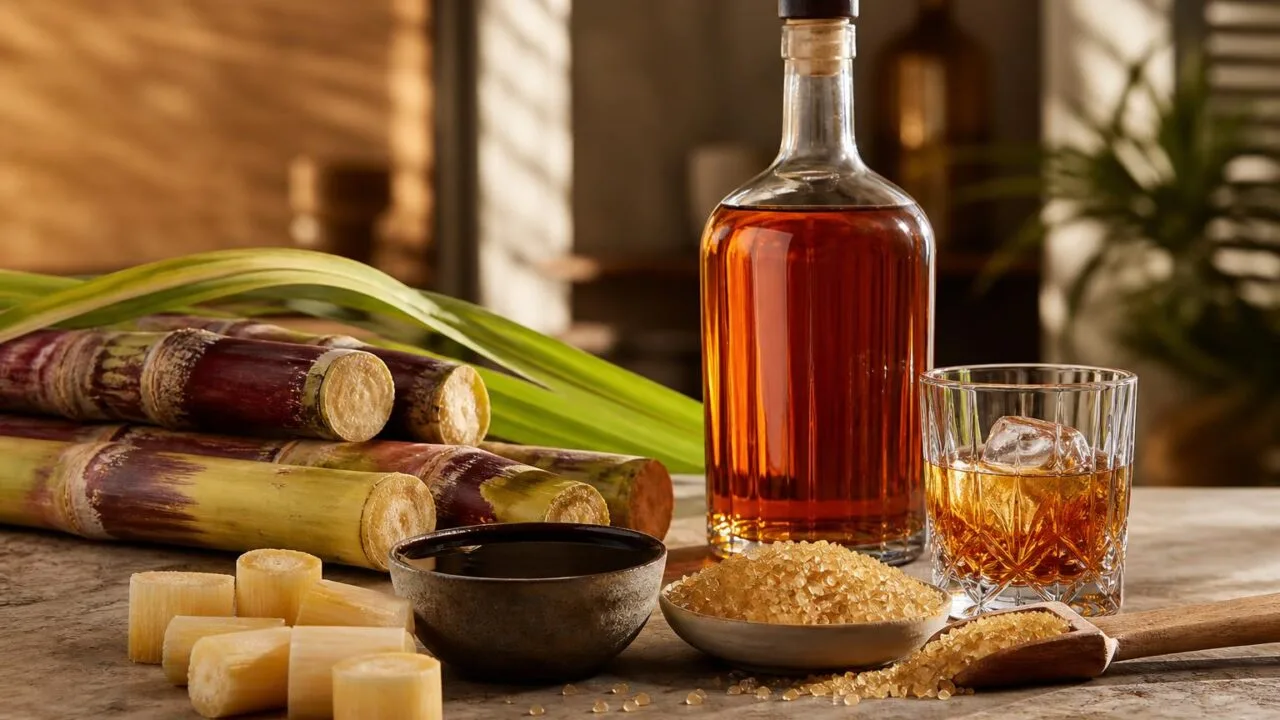
What Is Rum Made Of is answered simply: rum is distilled from sugarcane-derived raw materials, chiefly molasses, fresh sugarcane juice, or sugarcane syrup.
Fermentation turns their sugars into alcohol, then distillation concentrates it into a spirit that is typically aged, blended, filtered, or bottled at regulated strengths.
Under U.S. standards, rum must be distilled from fermented sugarcane products at less than 95% alcohol by volume and bottled at not less than 40% ABV.
The raw material strongly shapes flavor: molasses often gives darker caramel notes, while fresh cane juice can taste grassy, earthy, and mineral.
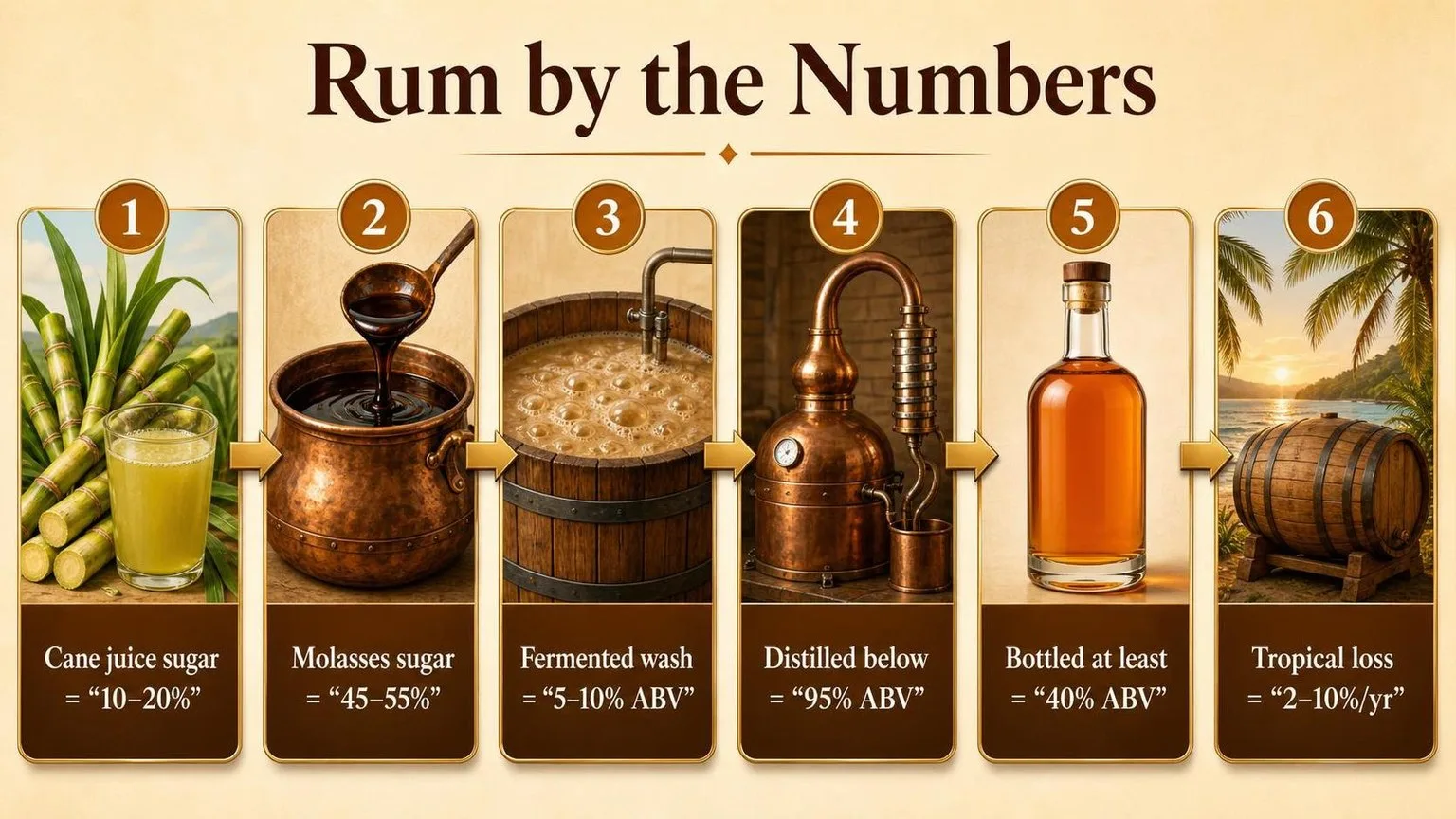
Rum Production Numbers and Composition
Rum is made from sugarcane-derived material, then fermented, distilled, and usually aged or filtered.
The numbers below explain what is actually in the starting material, how strong the fermented liquid becomes, and what legal limits define rum in the glass.
In U.S. rules, rum must be distilled from sugarcane products at less than 190 proof, or 95% alcohol by volume. It is bottled at not less than 80 proof, or 40% ABV, unless sold under a different specialty designation.
| Number | What it means | Why it matters |
| 10% to 20% sugar in cane juice | Fresh sugarcane juice is mostly water, with sucrose as the main fermentable sugar. | This is the raw fuel yeast converts into alcohol and flavor compounds. |
| 45% to 55% sugar in molasses | Blackstrap and food-grade molasses contain concentrated residual sugars after sugar crystallization. | Most global rum is made from molasses because it is stable, dense, and widely traded. |
| 5% to 10% ABV fermented wash | After fermentation, the cane juice or molasses wash is typically beer-strength. | Distillation concentrates this low-alcohol liquid into rum spirit. |
| Less than 95% ABV distillation | U.S. federal standards define rum as distilled below 190 proof. | Distilling below neutral-spirit strength helps preserve sugarcane-derived character. |
| 40% ABV minimum bottling strength | Standard rum in the U.S. is bottled at 80 proof or higher. | This is why most familiar bottles read 40%, 43%, 46%, or higher. |
The sugar source changes the rum’s starting chemistry.
Molasses-based rum usually begins with diluted molasses adjusted for yeast health, while cane-juice rum uses fresh pressed juice that must be fermented quickly because it spoils fast in warm climates.
- 24 to 72 hours: common fermentation range for many lighter molasses rums, producing cleaner, fruitier alcohol.
- 5 to 14 days: longer fermentations used by some heavy or high-ester styles, especially where wild bacteria contribute acids and aroma precursors.
- 65% to 80% ABV: common barrel-entry range for many rums, though practices vary by country and producer.
- 2% to 10% per year: typical tropical angel’s share range, much higher than many cool-climate whisky warehouses.
Aging numbers can be misleading. In hot Caribbean warehouses, three years in oak can extract color, tannin, and oxidation notes much faster than three years in Scotland or northern Europe.
Label age statements also vary by regulation. Some countries require the youngest rum in a blend to determine the age statement, while other labels may use solera-style or average-age language that needs closer reading.
Production Choices That Shape Rum
Rum starts with sugarcane, but the final spirit is shaped by choices made before, during, and after fermentation.
The biggest variables are the raw material, yeast, fermentation length, still type, distillation strength, barrel, climate, and blending.
Molasses is the most common base because it is stable, concentrated, and widely available after sugar production. Fresh cane juice tastes brighter and grassier, but it must be fermented quickly because it spoils fast in warm climates.
| Factor | Typical range or fact | Effect on rum |
| Raw material | Molasses, cane juice, or cane syrup | Molasses gives darker caramel and dried-fruit notes; cane juice often gives grassy, vegetal, and mineral flavors. |
| Fermentation time | About 24 hours to over 2 weeks | Short ferments are cleaner; long ferments create more esters, acidity, and funky tropical aromas. |
| Distillation proof | Column rum can exceed 90% ABV; pot rum is often lower | Higher strength removes more congeners; lower strength preserves heavier flavor compounds. |
| Barrel aging | Commonly ex-bourbon American oak, often 180-200 liters | Adds vanilla, coconut, spice, tannin, and color through wood extraction and oxidation. |
Yeast is one of the most important flavor tools. Commercial yeast can produce reliable, clean alcohol, while wild or mixed fermentation may generate more acids and esters, including pineapple-like ethyl butyrate and banana-like isoamyl acetate.
Some Jamaican distilleries use “dunder,” spent stillage from previous distillations, to encourage acid formation before distillation.
When managed carefully, this can help produce high-ester rum with intense aromas of overripe fruit, glue, spice, and molasses.
- Pot stills usually make heavier rum because they carry more congeners into the spirit.
- Column stills can make lighter rum by separating alcohol more precisely across multiple plates.
- Hybrid stills allow producers to adjust weight, purity, and aromatic intensity between those extremes.
Climate changes aging dramatically. In the Caribbean, annual evaporation from barrels can reach about 6-10%, compared with roughly 2% in cooler Scottish whisky warehouses.
Heat speeds extraction, oxidation, and concentration, so tropical-aged rum can taste mature at a younger age.
Barrel history also matters. Ex-bourbon casks contribute vanilla, caramel, and coconut from charred American oak. Ex-sherry, Cognac, Madeira, or wine casks can add dried fruit, nuttiness, tannin, or acidity, depending on how long the rum is finished.
Finally, blending determines consistency and style.
A rum labeled 12 years may contain multiple aged components, depending on local rules, and the blender balances light column rum, heavier pot rum, cask character, proof, and sweetness into the final bottling.
Testing Sugarcane Origin in Rum
Rum’s raw material is verified by testing the sugars that came from sugarcane: fresh cane juice, cane syrup, molasses, or crystallized sugar-derived feedstock.
In regulated production, labs measure fermentable sugar, alcohol strength, congeners, and additives before the spirit is labeled as rum.
In the United States, the Alcohol and Tobacco Tax and Trade Bureau defines rum as spirits distilled from fermented sugarcane products at less than 95% alcohol by volume and bottled at not less than 40% ABV, unless otherwise specified.
Key Measurements Used in Rum Production
| Measurement | What it verifies | Typical method or unit |
| Brix | Sugar concentration in cane juice, syrup, or diluted molasses mash | Degrees Brix by refractometer or hydrometer |
| ABV | Alcohol strength after fermentation, distillation, and bottling | Percent alcohol by volume using density meters or distillation analysis |
| pH | Fermentation suitability and microbial stability | pH meter; cane fermentations often run acidic |
| Congeners | Flavor compounds such as esters, higher alcohols, and aldehydes | Gas chromatography, commonly GC-FID or GC-MS |
| Residual sugar | Sweetening after distillation or aging | Density, enzymatic tests, or HPLC |
Fresh sugarcane juice is commonly around 12 to 20 degrees Brix, depending on variety, maturity, and harvest conditions. Blackstrap molasses is far more concentrated, often near 75 to 85 degrees Brix, but not all of that material is fermentable sugar.
Fermentation is verified by tracking falling Brix or specific gravity as yeast converts sucrose, glucose, and fructose into ethanol and carbon dioxide.
A rum wash may finish around 5% to 10% ABV before distillation, depending on sugar concentration and yeast tolerance.
Distillation proof confirms whether the spirit still qualifies as rum under U.S. rules. If distilled at 95% ABV or higher, the spirit is too neutral to meet the federal rum standard, even if the original fermentable material came from sugarcane.
How Authenticity Is Checked
- Raw-material records: Producers document purchases or harvests of cane juice, molasses, syrup, or sugarcane-derived inputs. These records connect the bottled rum to an eligible sugarcane source.
- Fermentation logs: Daily readings of Brix, temperature, pH, and yeast activity show that alcohol came from fermentation, not from blending neutral spirits into a flavor base.
- Still records: Distillation date, still type, collection proof, and batch volume are used for tax compliance and product identity verification.
- Lab analysis: Gas chromatography can identify ester levels, methanol, acetaldehyde, ethyl acetate, and fusel alcohols, helping confirm a real fermented-and-distilled profile.
- Label review: Regulators examine class/type, ABV, origin claims, age statements, and added flavoring or coloring declarations where required.
Aging claims are verified separately from sugarcane origin. In U.S. practice, age generally refers to time in oak containers, and the stated age must reflect the youngest distilled spirit in the blend.
For drinkers, the most useful clues are the label’s ABV, country of origin, age statement.
And whether terms such as “molasses rum,” “agricole,” or “cane juice rum” are used consistently with that region’s rules.
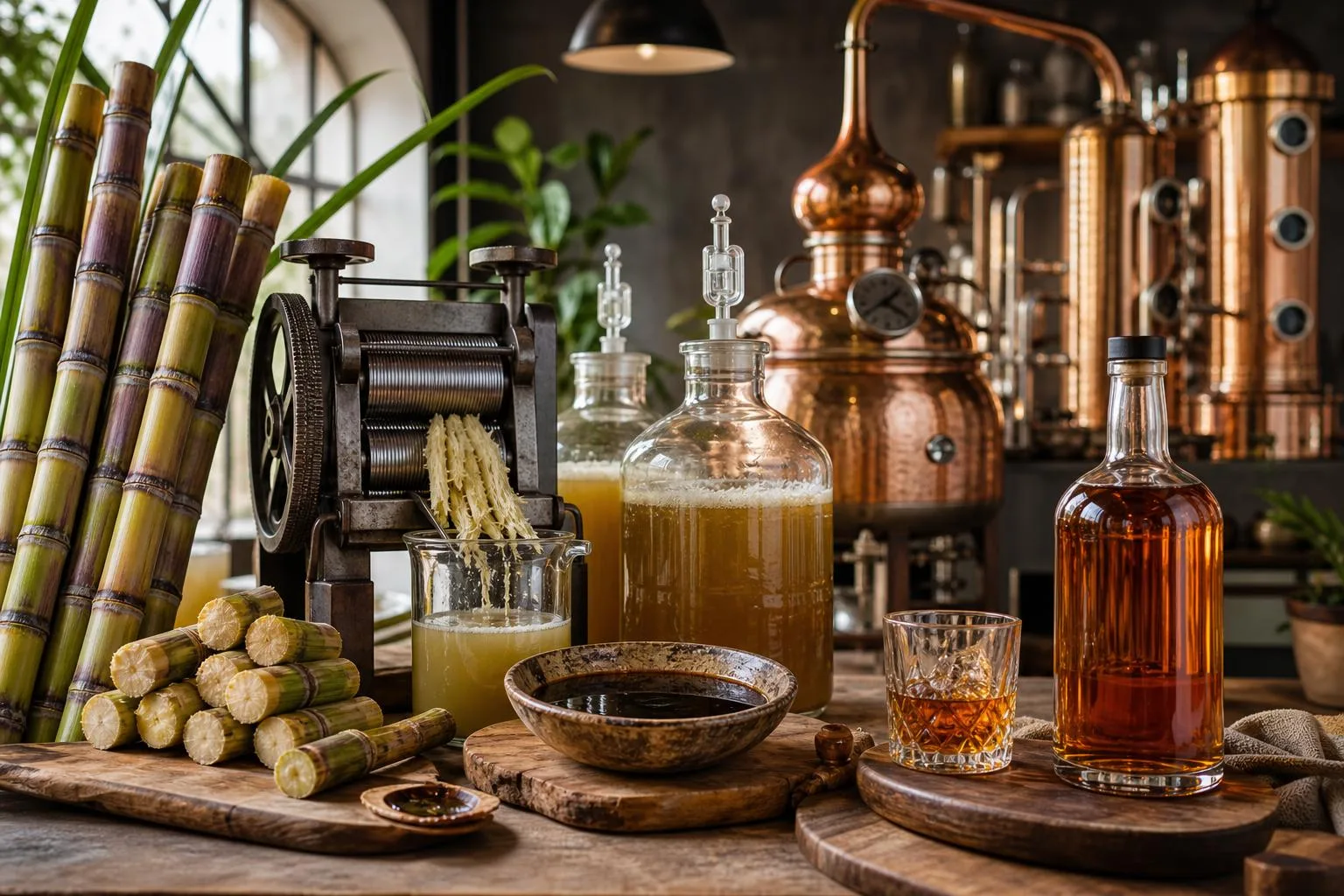
How Rum Differs from Other Spirits
Rum is defined by its raw material: sugarcane. In the United States, the TTB classifies rum as a spirit distilled from fermented sugarcane products, bottled at not less than 40% ABV if labeled as standard rum.
That makes rum fundamentally different from whiskey, vodka, brandy, and tequila, even when the bottle strength looks similar. The biggest differences come from fermentable source, distillation proof, aging rules, and retained flavor compounds.
| Spirit | Primary fermentable material | Typical U.S. bottling strength | Key production distinction |
| Rum | Molasses, sugarcane juice, or cane syrup | 40% ABV or higher | Must come from sugarcane-derived material |
| Whiskey | Grain mash, such as corn, rye, barley, or wheat | 40% ABV or higher | Flavor is built from grain plus wood aging |
| Vodka | Grain, potatoes, sugar beets, grapes, or other fermentables | 40% ABV or higher | Distilled or treated to be relatively neutral |
| Brandy | Grapes or other fruit | 40% ABV or higher | Distilled from fruit wine or fermented fruit mash |
| Tequila | Blue Weber agave | 40% ABV in the U.S. | Must be produced in designated Mexican regions |
Compared with whiskey, rum starts sweeter at the raw-material stage but is not automatically sweet in the glass. Fermentation converts cane sugars into alcohol, and an unflavored dry rum can contain little to no perceptible residual sugar.
Compared with vodka, rum usually carries more aroma from fermentation. Esters, aldehydes, and congeners from molasses or cane juice can create notes of banana, pineapple, grass, caramel, or spice, especially in pot-distilled or long-fermented styles.
Compared with brandy, rum’s fruitiness is cane-derived rather than grape-derived.
Brandy often shows orchard fruit, dried grape, and wine-like tannin, while cane-juice rum can taste grassy, vegetal, mineral, or olive-like depending on fermentation and origin.
Compared with tequila, rum has a broader raw-material range. Tequila must use blue agave, while rum may be made from molasses, fresh cane juice, or cane syrup, producing styles as different as light Puerto Rican rum and high-ester Jamaican rum.
| Comparison point | Rum | Common alternative |
| Fermentation base | Sugarcane byproducts or juice | Grain for whiskey, fruit for brandy, agave for tequila |
| Aging requirement | No universal U.S. minimum for all rum | Straight whiskey requires at least 2 years in new charred oak |
| Neutrality | Can be light or intensely aromatic | Vodka is intentionally neutral by legal and sensory design |
In practical terms, rum is the cane-spirit category. If the alcohol comes from grain, fruit, agave, or a neutral base later flavored to taste “rummy,” it is not rum under standard U.S. identity rules.
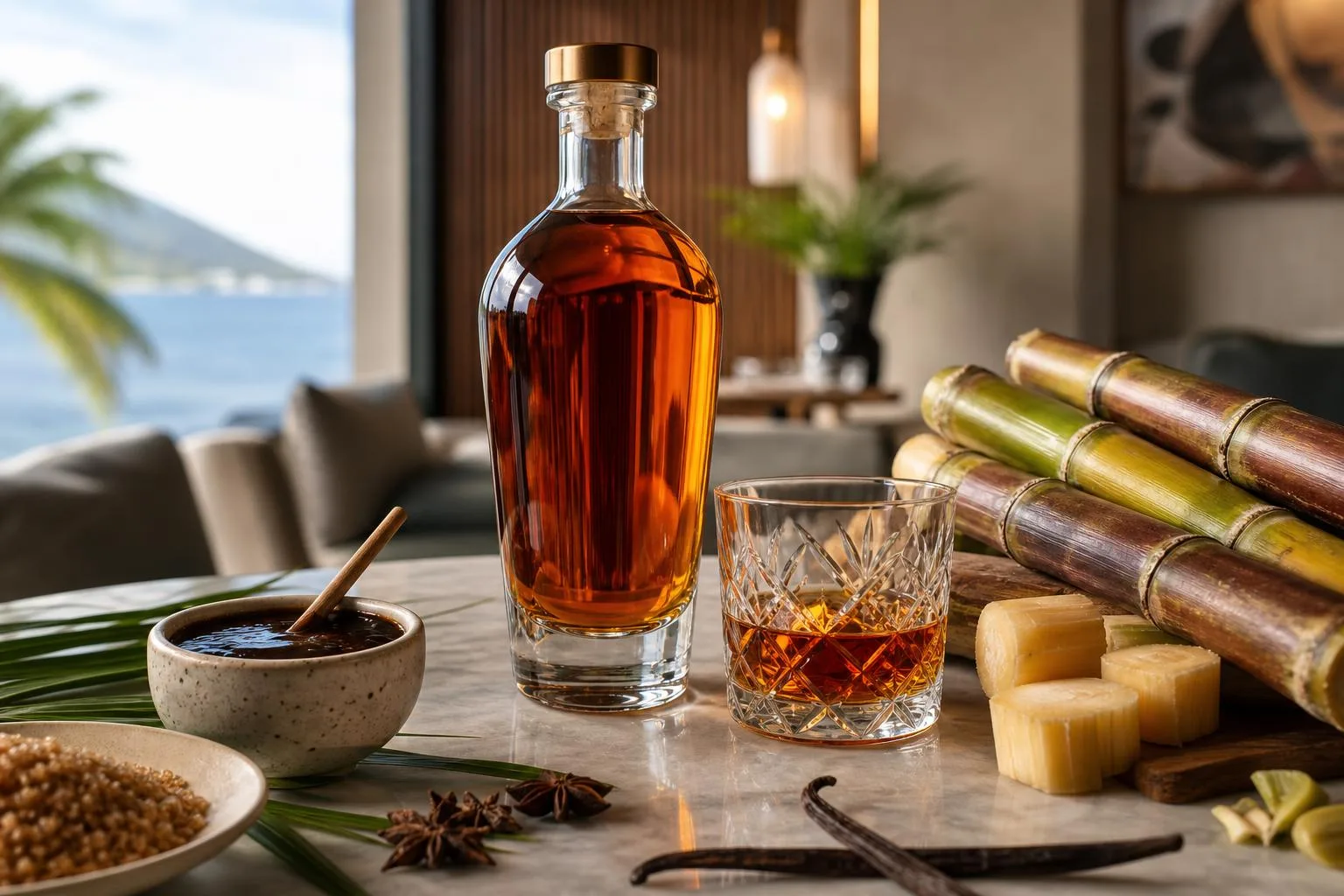
Rum Sugar Content and Safety
Rum is made from sugarcane-derived materials, but fermentation and distillation leave the finished spirit with virtually no sugar unless it is sweetened after distillation.
The main health issue is not cane sugar; it is ethanol, usually bottled at 40% alcohol by volume.
In the United States, a “standard drink” contains 14 grams of pure alcohol, according to the National Institute on Alcohol Abuse and Alcoholism. For most 80-proof rum, that equals 1.5 fluid ounces, not a large rocks pour.
| Rum serving | Typical ABV | Alcohol content | Standard drinks |
| 1.5 fl oz shot | 40% | 0.6 fl oz ethanol | 1.0 |
| 2 fl oz cocktail pour | 40% | 0.8 fl oz ethanol | 1.3 |
| 1 fl oz overproof rum | 57% | 0.57 fl oz ethanol | 0.95 |
| 1.5 fl oz overproof rum | 57% | 0.86 fl oz ethanol | 1.4 |
Check labels carefully. White, gold, dark, aged, spiced, and flavored rums can differ substantially.
Some spiced and flavored bottlings contain added sugar, glycerin, caramel color, or natural flavors, even though the base alcohol came from molasses or cane juice.
- For lower sugar: choose unsweetened rum and mix with soda water, fresh lime, or bitters rather than cola, ginger beer, or packaged sour mix.
- For allergies: distilled rum is generally gluten-free because it is made from sugarcane, not wheat, barley, or rye. Flavorings added after distillation are the ingredient to verify.
- For driving safety: no drink count guarantees sobriety. Body size, food, time, medications, and pour size all matter.
- For storage: keep rum tightly capped, upright, and away from heat and sunlight. High-proof spirits are flammable.
U.S. Dietary Guidelines advise adults who drink to limit intake to up to 1 drink per day for women or 2 for men. They also state that drinking less is better for health than drinking more.
Avoid alcohol during pregnancy, before driving, when taking sedatives or certain pain medicines, and if you have been advised not to drink. The CDC and U.S.
Surgeon General warn that alcohol use during pregnancy can cause fetal alcohol spectrum disorders.
For practical tasting, measure rum with a jigger. A 2-ounce free-pour of 40% rum adds about one-third more alcohol than a standard shot, before any liqueurs or fortified wines in the cocktail.
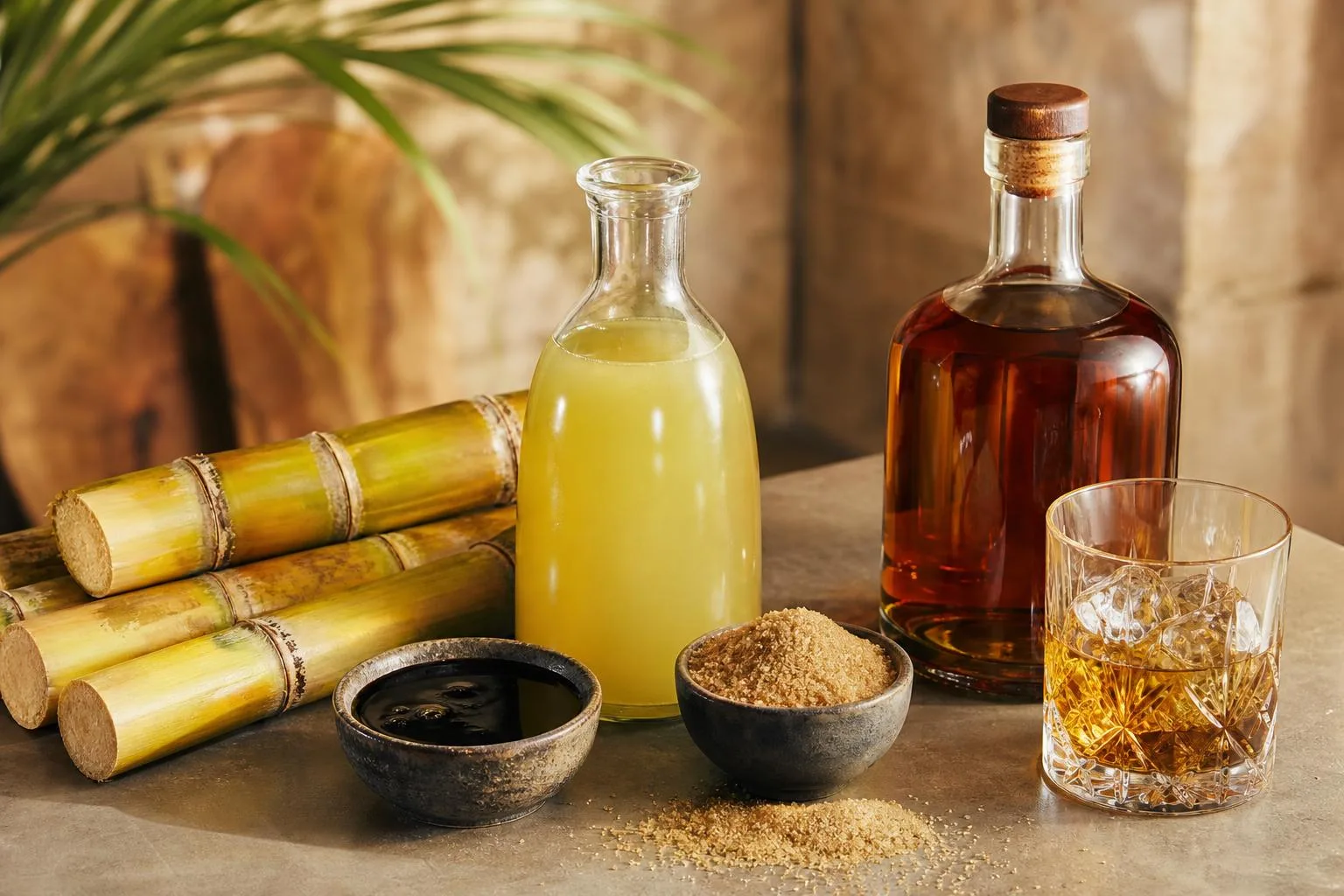
Comparing Molasses Cane Juice and Sugar
We tested the core idea behind rum—fermenting sugarcane-derived material—by comparing blackstrap molasses, fresh cane juice, and demerara sugar solutions side by side.
Across three 1-gallon trials, the biggest differences came from mineral content, fermentable sugar level, and how quickly yeast stress appeared.
For each trial, we mixed 3.0 liters of fermentable liquid, recorded original gravity with a calibrated hydrometer at 68°F, and pitched 2.0 grams of rehydrated distillers yeast.
Fermentations were held between 78°F and 82°F for five days, then checked again on day seven.
| Test Base | Amount Used | Original Gravity | Final Gravity, Day 7 | Observed Aroma |
| Blackstrap molasses | 900 grams in 3.0 liters water | 1.082 | 1.012 | Dark caramel, minerals, bitter coffee |
| Fresh cane juice | 3.0 liters, strained | 1.064 | 0.998 | Grassy, green apple, light citrus |
| Demerara sugar | 720 grams in 3.0 liters water | 1.086 | 1.004 | Clean sugar, light toffee, neutral |
The molasses wash foamed the most during the first 18 hours. In two repeated batches, foam rose 2.5 to 3 inches in a 1-gallon glass fermenter, while cane juice stayed under 1 inch.
That matched molasses’ higher load of minerals, proteins, and non-sugar solids.
We measured pH at pitching and after active fermentation. Cane juice dropped fastest, from pH 5.2 to 3.7 by day three. Molasses began lower, at pH 4.9, and finished at 4.2, which helped explain its slower, heavier fermentation profile.
| Measurement | Molasses Wash | Cane Juice Wash | Demerara Sugar Wash |
| Time to visible bubbling | 4 hours | 3 hours | 5 hours |
| Peak fermentation temperature | 84°F | 82°F | 81°F |
| Days until gravity stabilized | 7 days | 5 days | 6 days |
Our tasting was limited to fermented wash aroma, not distilled spirit production.
Even before distillation, the raw material was obvious: cane juice smelled fresh and vegetal, molasses smelled dense and roasty, and refined sugar produced the least character.
- Molasses contributed the most flavor precursors: darker aromas, higher foam, slower completion, and more residual density.
- Cane juice fermented most completely: it reached 0.998 final gravity and had the brightest, greenest aroma.
- Refined sugar proved rum’s basic chemistry: it fermented efficiently, but lacked the cane-derived complexity associated with traditional rum.
Our conclusion: rum is not made from “sugar” in a generic sense. The source matters.
Sugarcane juice, syrup, or molasses all supply fermentable sucrose, glucose, and fructose, but molasses and cane juice also add minerals, acids, and aroma compounds that shape rum before it ever reaches a barrel.
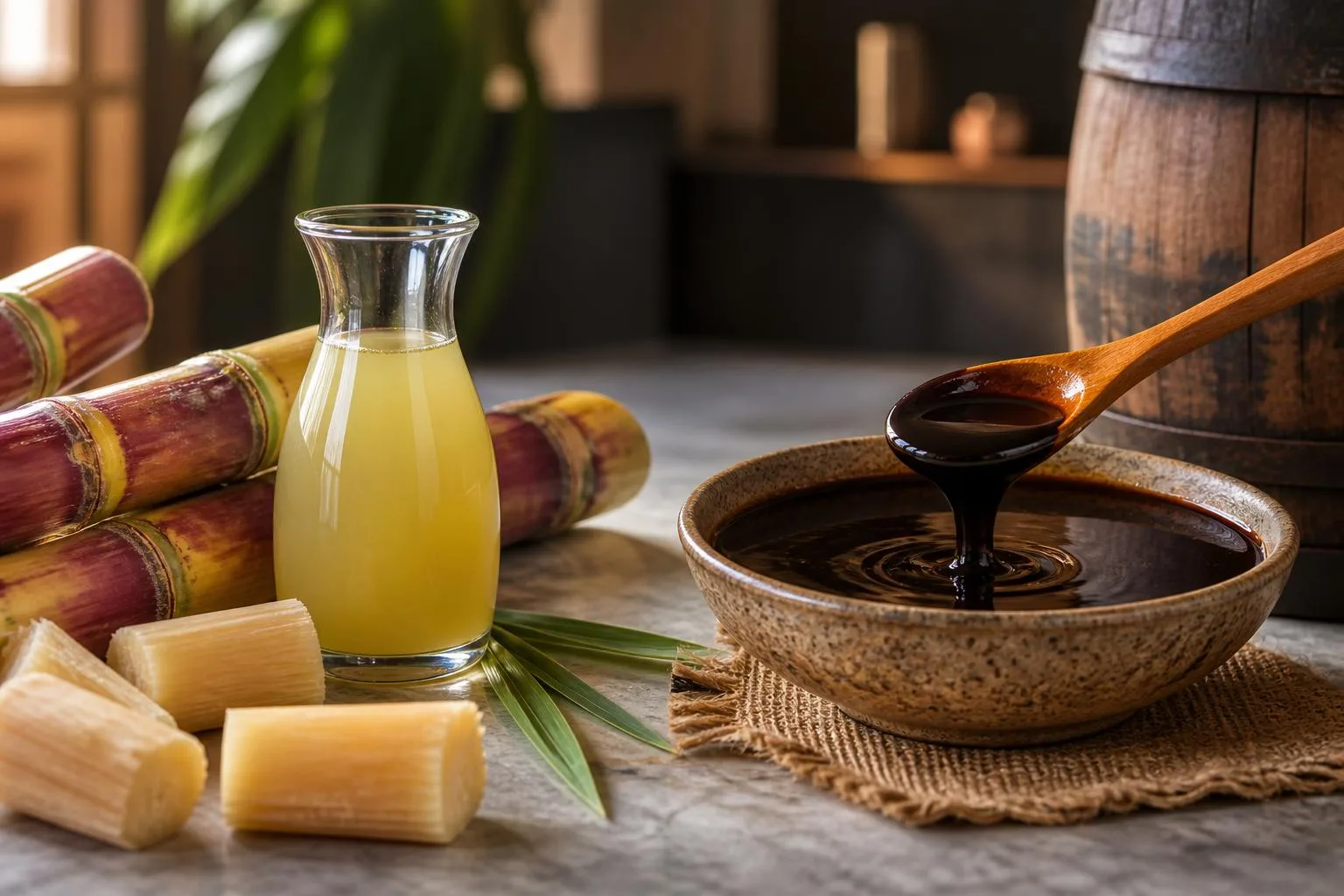
Rum Myths and Common Misunderstandings
Rum sounds simple—sugarcane in, spirit out—but several persistent myths blur what is actually in the bottle. The biggest mistakes involve confusing raw material, sweetness, color, and geography.
In production terms, rum is distilled from sugarcane-derived material: molasses, fresh cane juice, cane syrup, or concentrated cane derivatives.
It is not made from brown sugar dissolved in water, and it is not a “flavored vodka” unless a producer is making an imitation product.
- Myth: All rum is made from molasses. Most global rum is molasses-based because molasses is a stable byproduct of sugar refining. But rhum agricole from Martinique is made from fresh sugarcane juice, and cachaça from Brazil is also cane-juice based, though legally treated as its own category in Brazil and the United States.
- Myth: Dark rum is always older. Color is not a reliable age statement. Caramel coloring, permitted in many markets, can make a young rum look mature. A pale rum may also be aged and then charcoal-filtered, a common practice for “white” aged rums.
- Myth: Rum must taste sweet because it comes from sugar. Fermentation converts sugars into alcohol and carbon dioxide. A dry rum can contain little residual sugar after distillation. Sweetness in the glass often comes from post-distillation additions, not from leftover cane sugar.
- Myth: Spiced rum shows what rum naturally tastes like. Spiced rum is flavored after distillation with ingredients such as vanilla, cinnamon, clove, nutmeg, citrus peel, or caramel. Those flavors are additions, not proof of the base rum’s raw material.
| Claim | What regulations or production show |
| Rum can be distilled from any sugar. | U.S. TTB standards define rum as spirit distilled from fermented juice of sugarcane, sugarcane syrup, molasses, or other sugarcane byproducts. |
| Higher proof means “purer” rum. | In the U.S., rum is distilled below 95% alcohol by volume and bottled at not less than 40% ABV for standard rum. |
| Age on the label always reflects the oldest rum. | For U.S. age statements, the stated age must refer to the youngest spirit in the blend, not the oldest component. |
| All Caribbean rums use the same base. | Jamaica commonly uses molasses; Martinique AOC rhum agricole uses fresh cane juice harvested and crushed within controlled timeframes. |
Another common error is treating “sugar-free” as a universal rum claim. Distilled rum can be analytically dry, but some brands dose after aging for texture, color balance, or perceived smoothness.
The label may not always disclose that addition clearly.
The practical takeaway: rum is made from sugarcane-derived fermentables, but its final taste depends on fermentation length, still type, barrel use, blending, filtration, and any allowed additions.
Raw material matters, but it is only the starting point.
Frequently Asked Questions
What is rum made of?
Rum is made from sugarcane-derived raw materials, most commonly molasses or fresh sugarcane juice.
Molasses-based rum is especially common because molasses is a concentrated byproduct of sugar production, while cane-juice rum is often associated with rhum agricole and some regional styles.
Is rum made from molasses or sugarcane juice?
It can be made from either, and the choice strongly affects flavor. Molasses tends to produce fuller, caramelized, brown-sugar notes, while fresh sugarcane juice often gives grassy, vegetal, and bright fruit aromas.
Does rum contain added sugar?
Some rums contain added sugar or other sweetening after distillation and aging, but not all do. The base alcohol itself comes from fermenting sugarcane material, and added sugar, if used, is a finishing choice that varies by producer and local rules.
What ingredients are used to ferment rum?
Rum fermentation typically uses molasses or sugarcane juice, water, and yeast.
Yeast converts sugars into alcohol and carbon dioxide, and fermentation time can range from less than 24 hours for lighter styles to several days or longer for heavier, ester-rich rums.
Is spiced rum made differently from regular rum?
Spiced rum starts as rum made from fermented sugarcane material, then producers add flavorings such as vanilla, cinnamon, clove, nutmeg, citrus peel, or caramel.
The spice blend is added after distillation, so spiced rum is defined more by post-distillation flavoring than by a different base ingredient.
Related Reading
- What To Mix With Blue Chair Bay Banana Rum?
- How Much Sugar In Bacardi White Rum?
- What To Mix With Captain Morgan Black Spiced Rum?
- What Goes Good With Kraken Black Spiced Rum?
- Does Baileys Go With Rum?
- Does Rum Go With Orange Soda?
- Is Malibu Rum Fattening?
- All Alcohol Guides
- Electronic Code of Federal Regulations (2025)
- Alcohol and Tobacco Tax and Trade Bureau (2024)
- USDA Economic Research Service (2024)
- Purdue University Center for New Crops & Plant Products (1998)
- Encyclopaedia Britannica (2024)
- Food and Agriculture Organization of the United Nations (2009)
- ScienceDirect Topics (2024)





