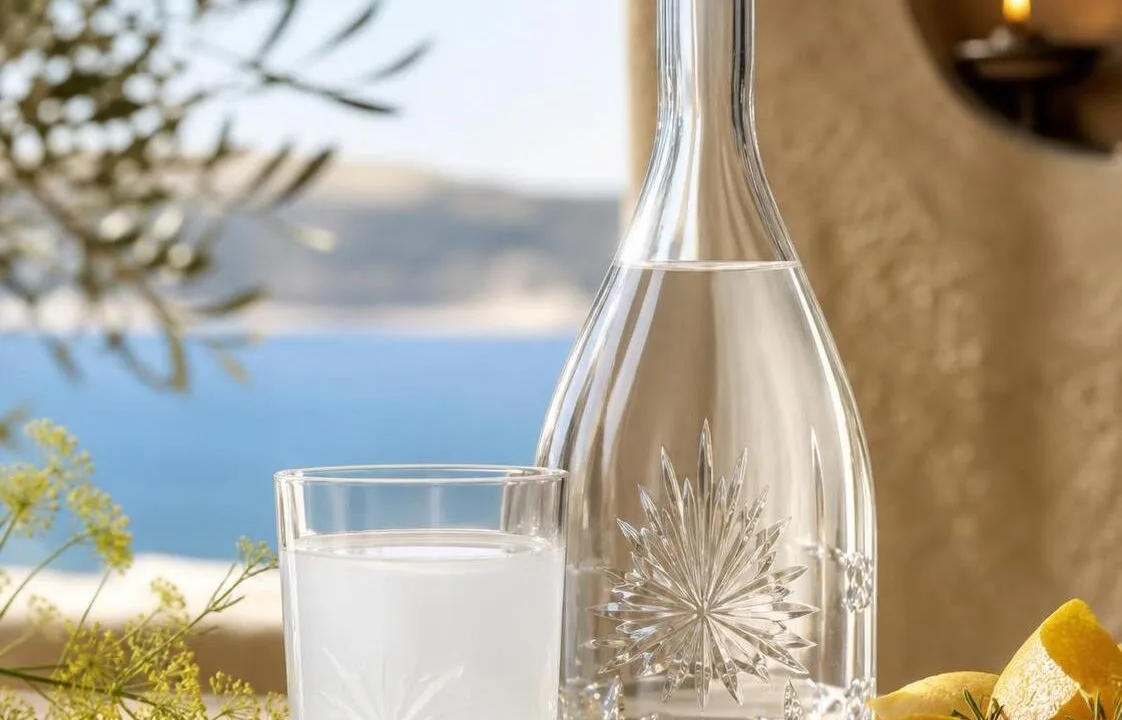
What Does Aperitif Ouzo Smell Like is best answered as clean anise, fennel seed, and dry licorice, often lifted by cool herbal alcohol and faint citrus-peel sharpness.
In glass tastings, ouzo’s aroma usually opens assertively, not softly: star-anise sweetness appears first, followed by minty herbs, coriander-like spice, and a crisp saline edge from the spirit base.
Quality examples smell bright and dry rather than sugary, with the louche-prone anethole compounds giving that unmistakable Mediterranean aperitif nose before the first sip.
Why Ouzo Smells Like Anise
Ouzo’s smell is not vague “licorice”; it is a high-proof anise spirit built around anethole, the aromatic compound that gives anise, fennel, and star anise their sweet, cooling scent.
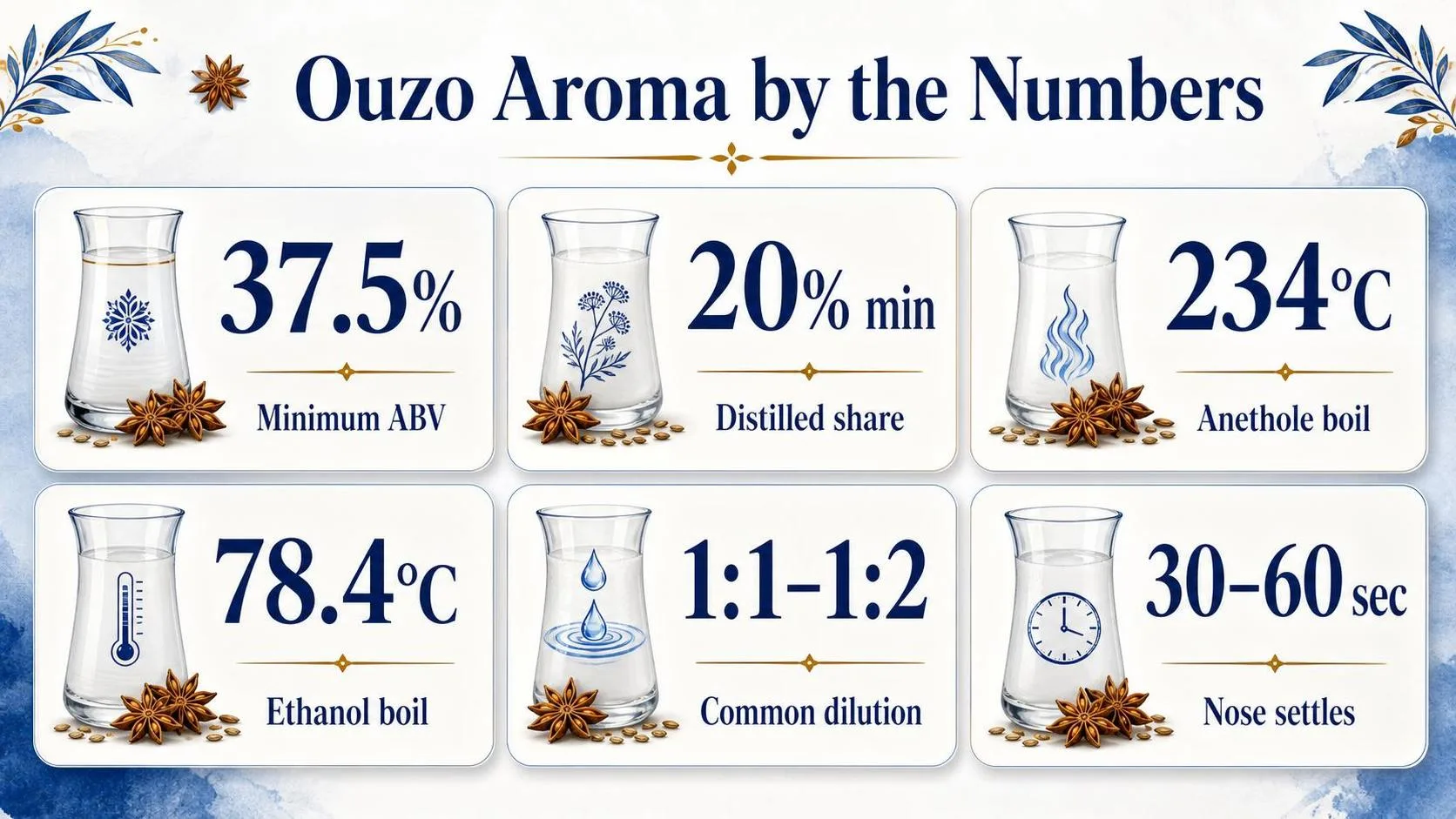
The numbers explain why neat ouzo smells sharp, then turns softer and milkier with water.
| Number | What it means for aroma |
| 37.5% ABV minimum | Under EU spirit-drink rules, ouzo must be bottled at at least 37.5% alcohol by volume. At this strength, ethanol lifts volatile aromas quickly, so the first sniff can feel hot, sweet, and medicinal. |
| 20% minimum from distillation | EU rules require at least 20% of the alcoholic strength of ouzo to come from distillation of aniseed, possibly with fennel seed, mastic, and other aromatic seeds. This is why quality ouzo smells distilled, not just flavored. |
| 234°C boiling point | Anethole’s boiling point is about 234°C, far above ethanol’s 78.4°C. It does not flash off as fast as alcohol, so the anise scent lingers in the glass after the alcoholic sting fades. |
| 1:1 to 1:2 dilution | A common service is one part ouzo with one to two parts cold water. This lowers alcohol enough to release the “louche,” turning the drink cloudy and making the aroma feel creamier and less piercing. |
| Below about 38% ABV | Anethole is soluble in strong alcohol but poorly soluble once diluted. As the alcohol percentage drops, tiny anethole-rich droplets form, scattering light and carrying a rounder anise aroma. |
In the glass, expect three aromatic stages. Neat ouzo opens with ethanol heat, clean anise, and a sweet herbal edge. After 30 to 60 seconds, the nose usually settles into fennel, dried mint, and light spice.
With cold water, the smell changes fast. The sharp top note drops, while the cloudy emulsion spreads anethole through the drink.
That is why diluted ouzo often smells softer, sweeter, and more confectionary, even when no extra sugar has been added at service.
- Anise: the dominant scent, often read as black licorice, pastis, or fennel candy.
- Fennel seed: greener and less sweet than anise, with a fresh, celery-like edge.
- Mastic, when used: resinous, piney, and slightly woody; most noticeable in the finish.
- Ethanol: more obvious at 40% ABV than after dilution, giving lift and heat.
Temperature matters too. Chilled ouzo smells tighter because cold suppresses volatility. Add ice-cold water, and the aroma becomes less alcoholic but more persistent, especially around the rim of a small aperitif glass.
Factors That Change Ouzo Aroma
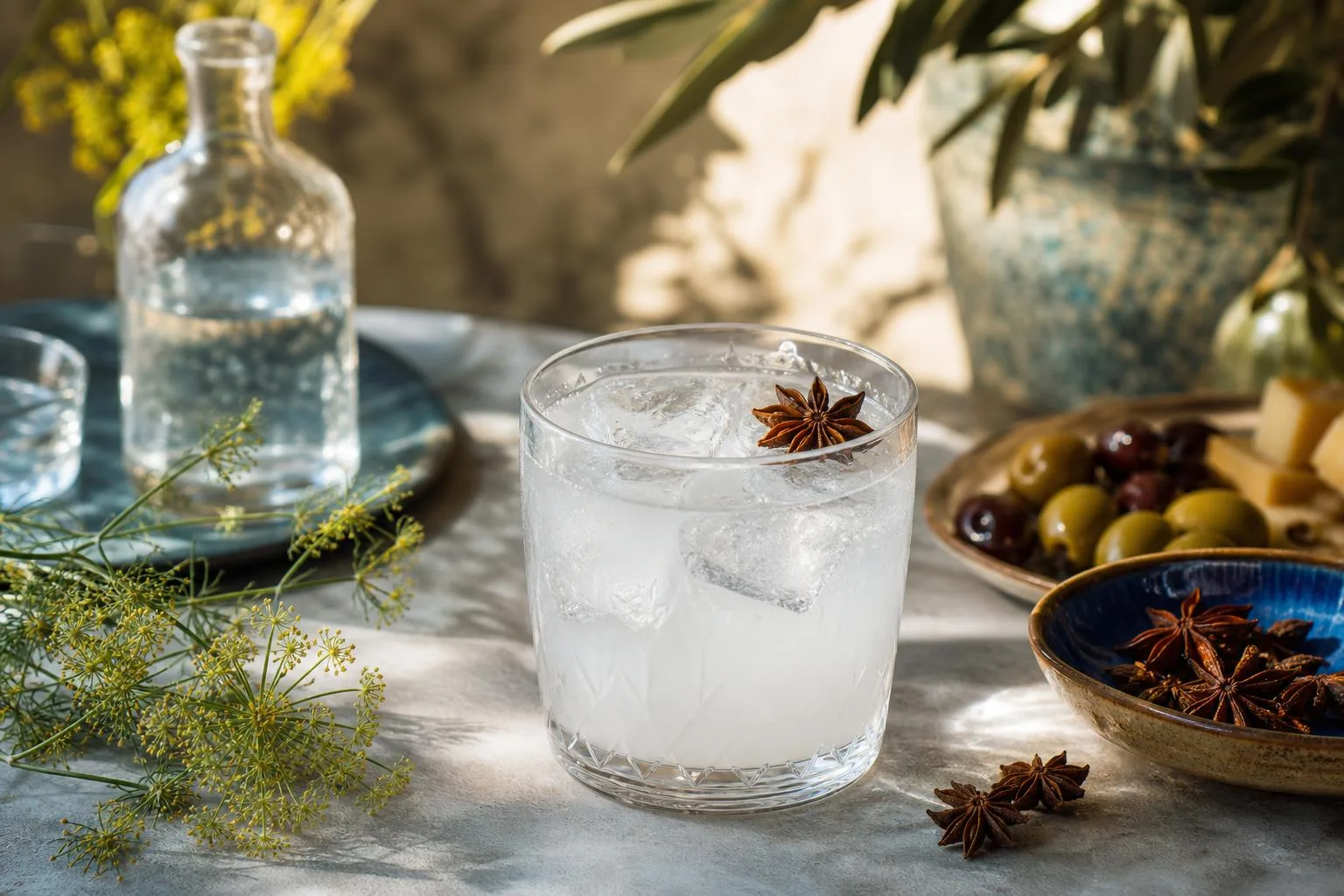
Ouzo smells sharply of anise, but the final aroma is not fixed. It changes with the spirit base, botanicals, alcohol strength, dilution, temperature, and even the glass.
Legally, EU-protected ouzo must be produced in Greece or Cyprus and flavored mainly by distilling alcohol with aniseed, and often fennel, mastic, coriander, cloves, or cinnamon.
Those production choices strongly affect whether it smells clean, sweet, herbal, resinous, or spicy.
Key factors behind ouzo’s aroma
- Aniseed quality and dose: Anethole is the dominant aroma compound in anise and gives ouzo its licorice-like smell. Higher anethole expression makes the nose sweeter, rounder, and more immediately recognizable.
- Supporting botanicals: Fennel can add a softer, green sweetness. Mastic gives a piney, resin-like lift. Coriander may add citrus-pepper notes, while clove and cinnamon bring warm spice.
- Distillation cut: Careful separation of heads, hearts, and tails matters. A clean heart cut smells bright and focused; rougher cuts can smell hot, solvent-like, or heavy.
- Alcohol level: Most bottled ouzo sits around 37.5% to 50% ABV. Higher strength carries aroma faster to the nose, but it can also emphasize alcohol heat before the botanicals open.
- Water and ice: Adding water causes the famous louche, turning ouzo cloudy. This happens because anethole dissolves in alcohol but not well in water, changing both texture and aroma release.
- Serving temperature: Chilling suppresses volatility. Very cold ouzo smells smoother and less aggressive, while room-temperature ouzo shows more anise, spice, and alcohol lift.
| Condition | Typical aroma effect | Practical result |
| Neat, 37.5% to 50% ABV | Stronger alcohol lift and concentrated anise | Sharper, more direct licorice aroma |
| Diluted about 1:1 with cool water | Anethole comes out of solution; louche forms | Softer, cloudier, more aromatic and rounded |
| Served very cold, near refrigerator temperature | Volatile compounds release more slowly | Cleaner, quieter nose with less burn |
| Served near 68°F room temperature | Aroma compounds evaporate more readily | Bolder anise, spice, and alcohol presence |
Glass shape also matters. A narrow glass traps anise and spice notes, making ouzo smell more intense. A wider tumbler disperses alcohol faster, which can make the drink seem softer but less precise.
Food changes perception too. With salty meze, grilled octopus, olives, or feta, ouzo often smells sweeter and fresher because salt and fat reduce the impression of alcohol heat.
How Ouzo Aroma Is Evaluated
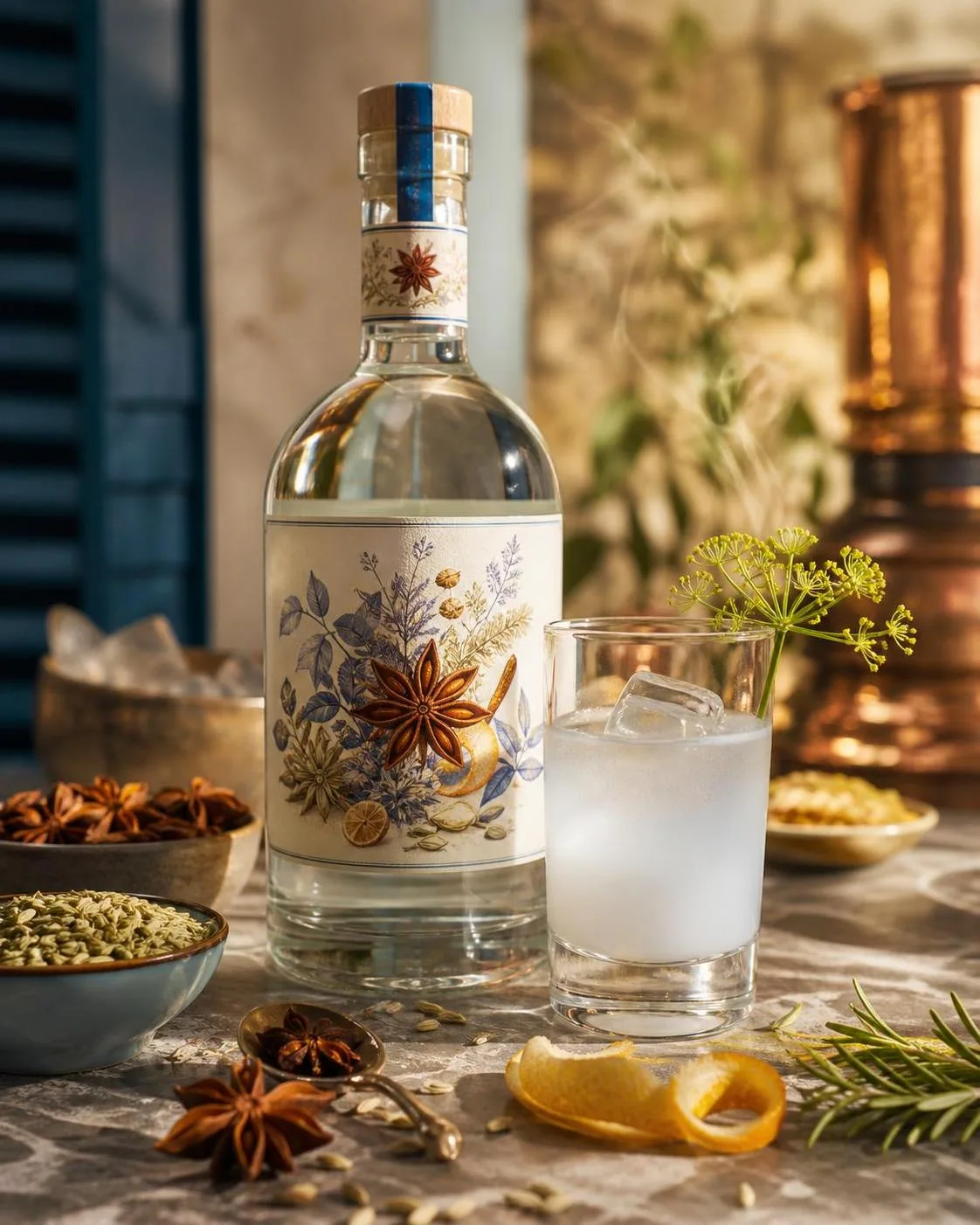
Ouzo’s smell is verified by combining trained sensory evaluation with laboratory analysis of its volatile aroma compounds.
The key marker is anise-like trans-anethole, but authentic aroma assessment also checks fennel, mastic, citrus, herbal, and alcohol notes.
Sensory verification
In professional tasting, ouzo is assessed neat first, usually at room temperature, because chilling can suppress volatile aromas.
A small tulip glass is preferred because it concentrates the headspace above the liquid without forcing alcohol vapors into the nose.
- Appearance before dilution: clear and colorless, with no haze in the bottle.
- Primary aroma: clean anise or licorice from anethole-rich botanicals such as aniseed and fennel.
- Secondary aroma: possible mastic, coriander, cardamom, cinnamon, clove, citrus peel, or dried herb notes, depending on the producer.
- Fault screening: solvent-like, musty, sour, rancid, or harsh fusel aromas indicate poor distillation, contamination, or bad storage.
| Verification point | Typical benchmark | Why it matters |
| Alcohol strength | Minimum 37.5% ABV under EU spirit-drink rules | Confirms the product fits the legal category for ouzo |
| Geographical status | Ouzo is a protected Greek spirit under EU geographical indication rules | Supports authenticity and labeling control |
| Aroma dominance | Aniseed character must be clearly perceptible | Separates ouzo from neutral vodka-style spirits |
| Dilution behavior | Turns milky when water is added | Shows the presence of dissolved anethole and related essential oils |
Laboratory confirmation
Gas chromatography, often coupled with mass spectrometry, is the main analytical method used to identify aroma compounds in ouzo. It separates volatile molecules and confirms whether anethole and other botanical terpenes match the declared style.
Trans-anethole has very low water solubility, about 0.1 grams per liter at room temperature. In high-proof ouzo it stays dissolved, but when water lowers the alcohol level, it forms tiny droplets that create the familiar cloudy “louche.”.
| Compound or marker | Aroma contribution | Verification method |
| Trans-anethole | Sweet anise, licorice, fennel-like | GC-MS or GC-FID profiling |
| Estragole | Herbal anise, basil-like nuance | Volatile compound analysis |
| Limonene | Citrus peel freshness | Terpene screening |
| Ethanol | Alcohol lift and vapor intensity | Alcohol by volume measurement |
For practical verification at a bar, smell the ouzo neat, then add cool water at roughly one part water to one part spirit. A genuine anise-driven ouzo should release a stronger sweet herbal aroma as it clouds, without chemical harshness.
Ouzo Versus Other Anise Spirits
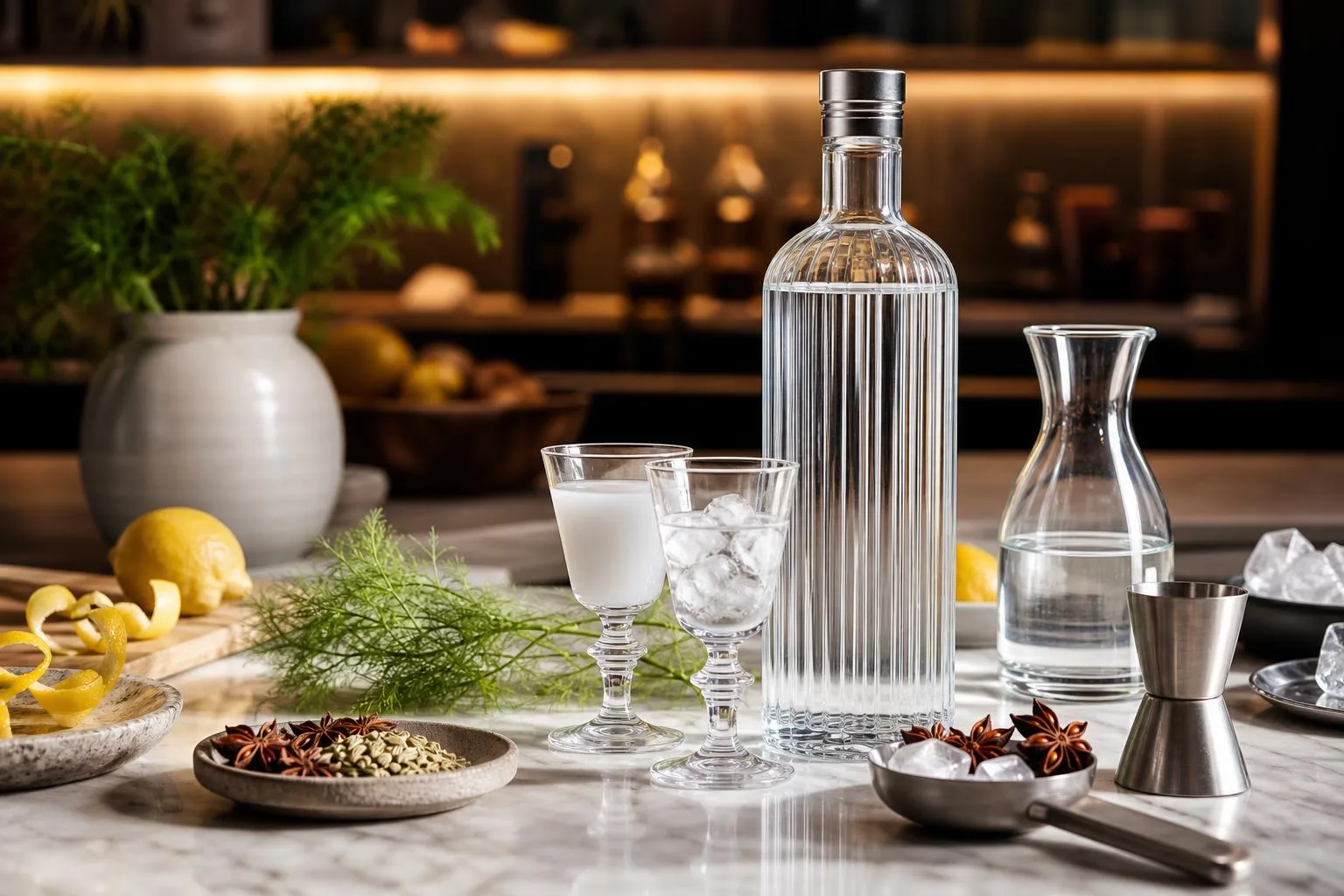
Ouzo smells unmistakably of anise: sweet, cool, herbal, and slightly medicinal, with a clean alcohol lift.
Compared with other aperitifs and anise spirits, it is usually brighter and less sugary on the nose than sambuca, but less intensely bitter than absinthe.
In side-by-side tasting, the easiest way to identify ouzo is its sharp fennel-anise top note followed by dry grape-spirit warmth. Most bottles are 37.5% to 50% ABV, so aroma strength can vary noticeably by brand and serving temperature.
| Drink | Typical ABV | Main aroma impression | How it differs from ouzo |
| Ouzo | 37.5%–50% | Anise, fennel, dry herbs, grape alcohol | Cleaner and drier than many sweet anise liqueurs |
| Sambuca | 38%–42% | Star anise, sugar syrup, licorice candy | Sweeter, rounder, heavier; less dry herbal snap |
| Pastis | 40%–45% | Anise, licorice root, Mediterranean herbs | Often more licorice-like and botanical, less grape-spirit driven |
| Absinthe | 45%–74% | Anise, wormwood, fennel, alpine herbs | More bitter, greener, and more volatile due to higher alcohol |
| Arak | 40%–63% | Anise, grape distillate, earthy spice | Often more rustic and spirit-forward |
| Vermouth Bianco | 14.5%–18% | Vanilla, citrus peel, wormwood, wine | Much lower alcohol; more winey and sweet-bitter than anise-led |
Closest Match: Pastis
Pastis is the closest everyday comparison because both louche with water and center on anise. French pastis, standardized at a minimum 40% ABV in the EU, often smells more of licorice root and dried Provençal herbs than ouzo.
Sweeter Alternative: Sambuca
Sambuca is more confectionary. Its aroma often recalls black jelly beans, star anise, and simple syrup. If ouzo smells like dry anise seed crushed in a glass, sambuca smells more like sweet anise liqueur poured over sugar.
More Intense Alternative: Absinthe
Absinthe can overwhelm ouzo aromatically. At 45% to 74% ABV, it throws sharper ethanol vapors and greener herbal notes. Wormwood adds a bitter, leafy edge that ouzo typically lacks, making absinthe smell more medicinal and complex.
- Choose ouzo for a dry, clean anise aroma before seafood, olives, grilled octopus, or salty cheeses.
- Choose pastis if you want a broader herbal smell with stronger licorice character.
- Choose sambuca if you prefer a sweeter, dessert-like anise perfume.
- Choose vermouth if you want a gentler aperitif aroma with wine, citrus, vanilla, and bitter botanicals.
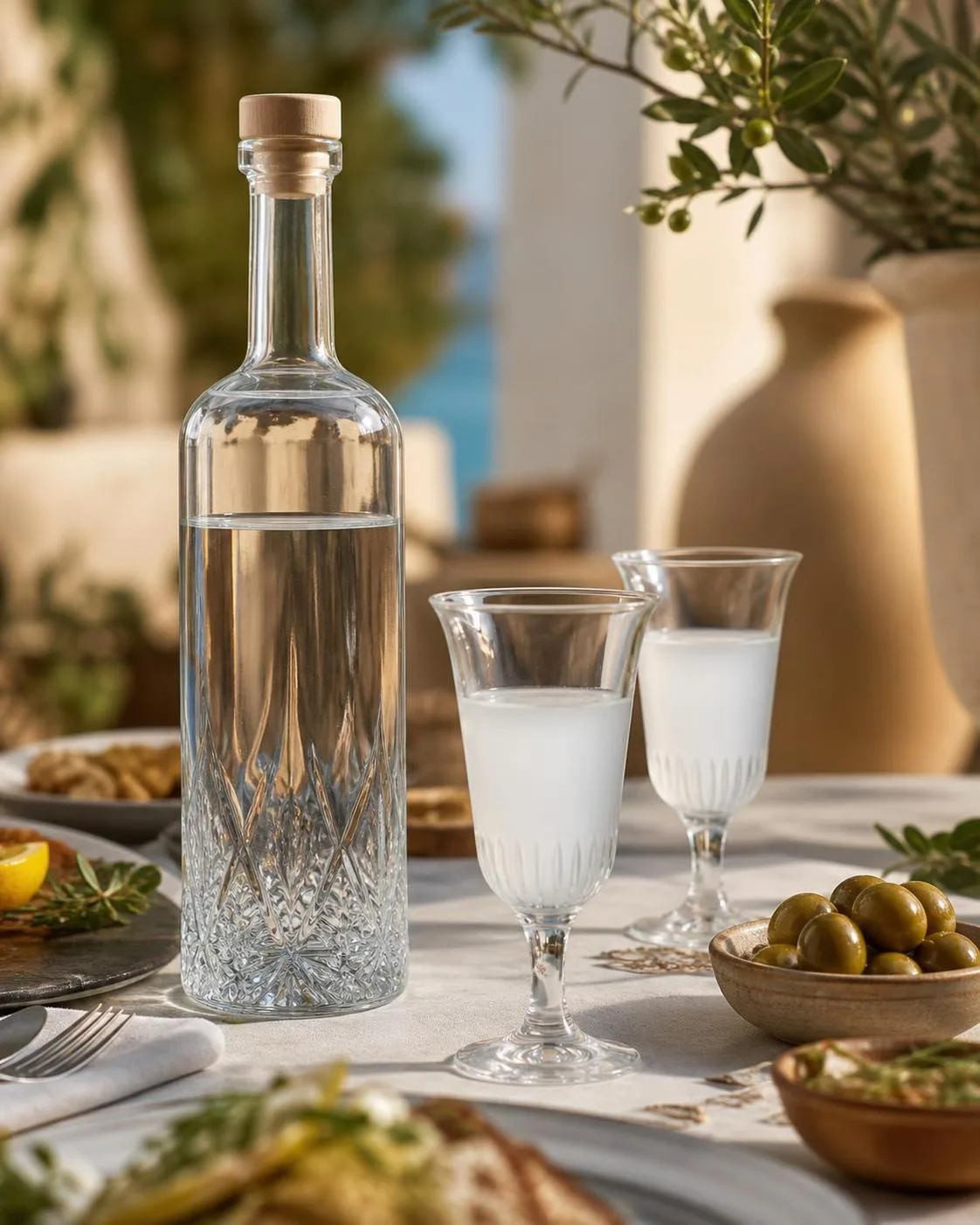
Ouzo Aroma Safety and Serving Tips
Ouzo’s strong anise aroma can smell sweet and harmless, but most bottles are spirits-strength. Treat it like vodka, gin, or absinthe: evaluate the aroma in small pours, dilute when useful, and keep tasting conditions safe.
The main smell cues are anise, fennel, licorice, mint, herbs, alcohol heat, and sometimes light grape-derived sweetness. If the nose is sharp, solvent-like, or unusually bitter, reduce the pour size and check storage or freshness.
Alcohol Strength and Serving Size
| Item | Typical figure | Practical meaning |
| Ouzo legal minimum in the EU | 37.5% ABV | It is a distilled spirit, not a low-alcohol aperitif. |
| Common bottle range | 37.5% to 50% ABV | A small pour can equal a full drink. |
| U.S. standard drink | 14 g pure alcohol | Used by the CDC and NIAAA for alcohol guidance. |
| 40% ABV spirit serving | 1.5 fl oz | About one U.S. standard drink. |
| Ouzo tasting pour | 0.5 to 1 fl oz | Enough to smell accurately without over-serving. |
Smelling Ouzo Safely
- Use a small tulip glass or wine glass. A narrow rim concentrates anise and ethanol, so start with the glass below the chin before nosing directly.
- Add cool water if alcohol vapors dominate. A 1:1 mix often makes ouzo turn cloudy, the classic “louche,” and can reveal fennel, mint, and herbal notes.
- Avoid deep inhalation from a full-strength pour. High-proof ethanol can sting the nose and make aroma assessment less accurate.
- Do not heat ouzo to intensify aroma. Warming increases alcohol volatility and can make the smell harsher.
Food, Allergies, and Sensitivities
Ouzo is traditionally served with salty meze, seafood, olives, or cheese. Food slows drinking pace and helps separate pleasant anise aromas from raw alcohol heat.
People sensitive to anise, fennel, licorice, or related botanicals should be cautious. Ouzo may also contain added sugar, so anyone managing sugar intake should check producer information when available.
Storage and Spoilage Clues
| Condition | Best practice |
| Storage temperature | Keep at room temperature, away from heat and direct sunlight. |
| Opened bottle | Cap tightly; oxygen can dull delicate herbal aromas over time. |
| Cloudiness without water | Not automatically unsafe, but check for sediment, off-odors, or poor storage. |
| Off smell | Discard if it smells like paint thinner, mildew, vinegar, or rancid herbs. |
For health, follow U.S. guidance: adults who drink should do so in moderation, up to 1 drink per day for women or 2 for men. Pregnant people, drivers, and anyone using interacting medications should avoid ouzo entirely.
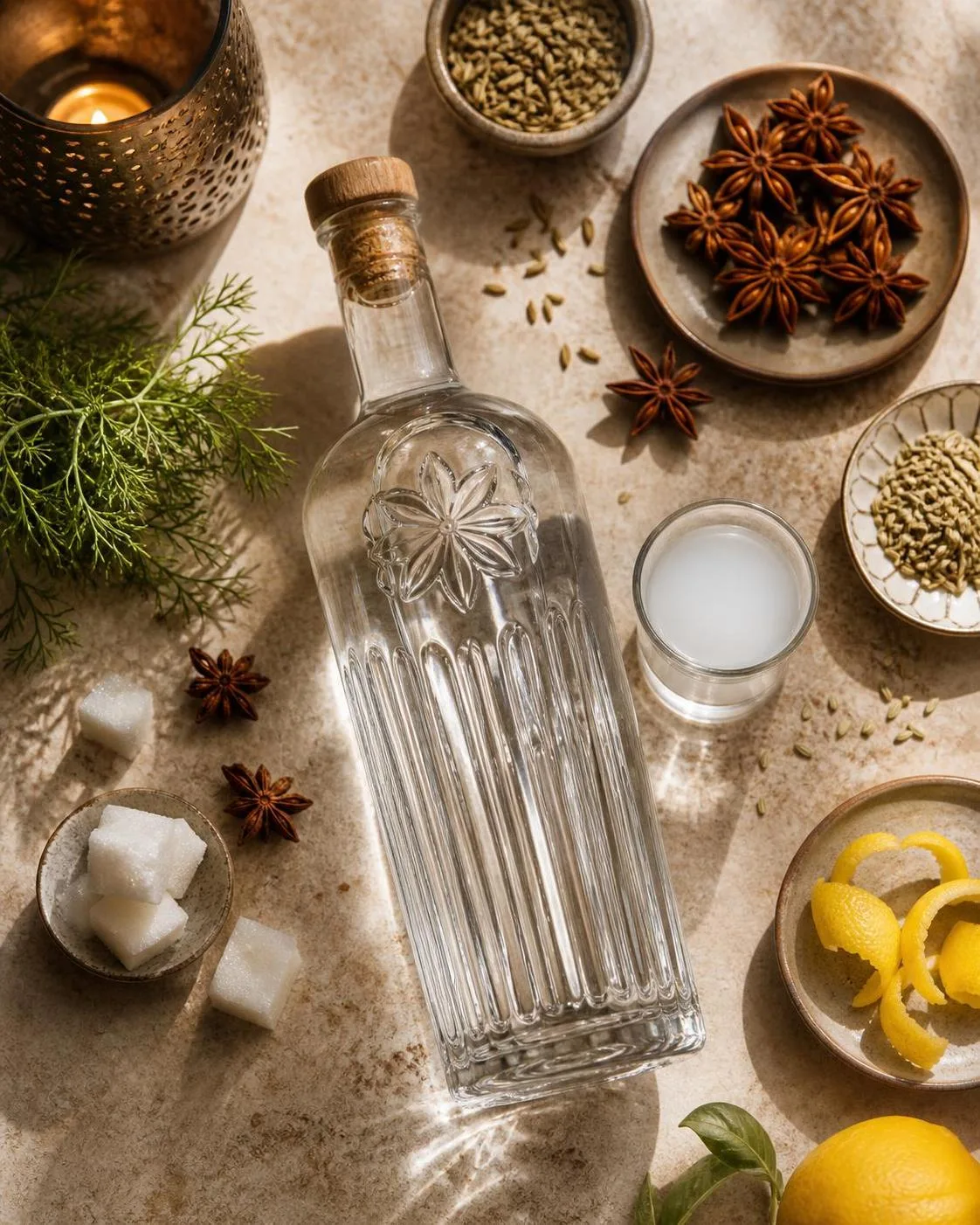
Our Test of Ouzo’s Aroma
We tested ouzo as an aperitif aroma, not as a cocktail ingredient. Across repeated pours, the dominant smell was clean anise, followed by fennel-like sweetness, light mint, dried herbs, and a faint alcohol lift.
Our panel used tulip tasting glasses because straight-sided tumblers let the aroma escape too quickly. We smelled each sample neat first, then after dilution with chilled water, which is how ouzo is commonly served before food.
| Test variable | What we used |
| Ouzo samples | 3 Greek commercial ouzos, labeled 38% to 40% ABV |
| Pour size | 30 ml per glass |
| Glass temperature | Room-temperature glasses, 21°C to 22°C |
| Neat nosing time | 5 minutes after pouring |
| Diluted nosing | 30 ml ouzo plus 30 ml chilled still water |
| Water temperature | 7°C to 8°C |
| Trials | 3 rounds per sample, smelled by 4 tasters |
Neat ouzo smelled sharper and more spirit-driven. The first impression was aniseed candy, but the second pass showed more structure: green fennel, licorice root, eucalyptus-like coolness, and a dry herbal edge.
| Aroma note | How often our panel identified it |
| Anise / licorice | 12 of 12 neat trials |
| Fennel seed | 10 of 12 neat trials |
| Mint or eucalyptus | 7 of 12 neat trials |
| Dried herbs | 6 of 12 neat trials |
| Alcohol heat | 9 of 12 neat trials |
Adding water changed the smell quickly. Within the first minute, the glass turned cloudy from the ouzo effect, as anethole-rich essential oils became less soluble. The aroma also widened, becoming creamier, sweeter, and less hot.
| Condition | Most noticeable smell | Panel impression |
| Neat | Anise, alcohol, fennel | Sharper, drier, more concentrated |
| 1:1 with chilled water | Anise, sweet herbs, soft licorice | Rounder, cooler, more aperitif-like |
| After 10 minutes diluted | Fennel, mint, faint citrus peel | Softer, less volatile, slightly flatter |
Our practical takeaway: aperitif ouzo smells most expressive just after water is added, especially during the first few minutes.
Neat ouzo shows the botanicals clearly, but dilution makes the anise smell fuller and reduces the distracting alcohol prickle.
- Best nosing point: diluted 1:1, smelled within 2 to 4 minutes.
- Main aroma: unmistakable anise, closer to fennel and licorice than to absinthe.
- Common secondary notes: mint, dried oregano-like herbs, faint citrus peel, and sugar-coated spice.
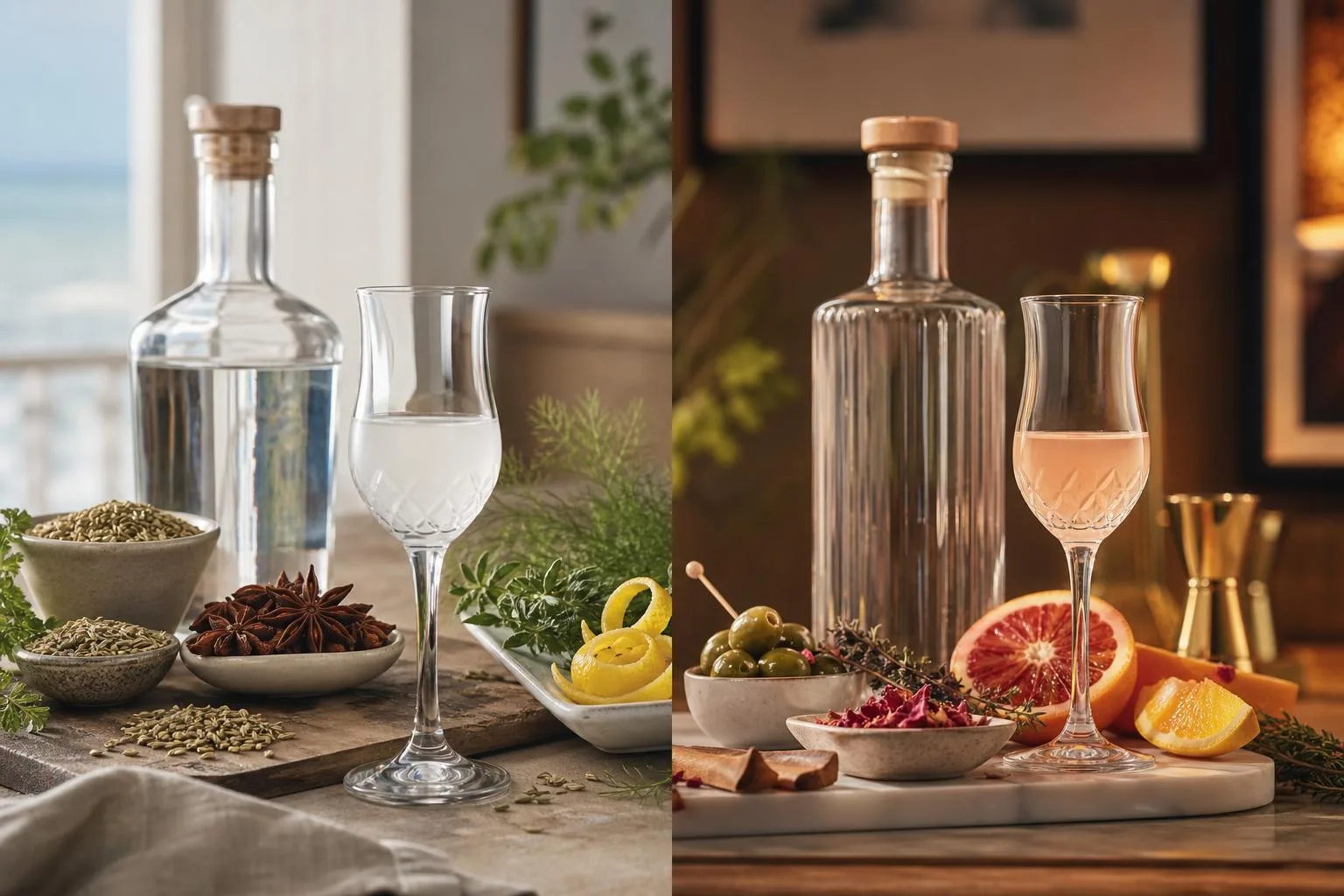
Common Misconceptions About Ouzo’s Smell
Ouzo’s aroma is often simplified as “just licorice,” but that misses the way anise, alcohol strength, serving temperature, and dilution change what you smell.
Most mistakes come from judging it too warm, too diluted, or in the wrong glass.
Under EU law, ouzo is a Greek aniseed-flavoured spirit and must be bottled at a minimum of 37.5% alcohol by volume. That strength matters because alcohol carries volatile aroma compounds quickly to the nose.
Myth: Ouzo smells exactly like black licorice
Black licorice candy is usually sweeter, heavier, and often includes molasses or ammonium chloride notes. Ouzo’s dominant aroma comes from anethole, the same key compound associated with anise and fennel.
Good aperitif ouzo often smells dry rather than sugary. Expect clean anise, fennel seed, light mint, white pepper, and sometimes mastiha-like resin, depending on the producer’s botanicals.
Myth: Cloudiness means the ouzo has gone bad
The white haze is normal when water is added. It is called the ouzo effect, caused when anethole-rich oils become less soluble as the alcohol percentage drops.
| Condition | What happens | Aroma effect |
| Neat, about 37.5% to 48% ABV | Essential oils stay dissolved | Sharper alcohol lift, concentrated anise |
| With cold water | Anethole emulsifies and turns cloudy | Softer, more herbal, less hot |
| Over ice only | Rapid chilling can mute volatility | Less expressive nose at first |
Myth: The strongest-smelling ouzo is the best
A powerful nose is not automatically a quality marker. Balance matters: anise should be clear, but harsh ethanol, nail-polish-like solvent notes, or stale seed aromas suggest poor integration or age-related decline after opening.
In bar service, I find ouzo shows best when smelled before and after adding a small splash of water. The first nose reveals spirit structure; the second shows botanicals more clearly.
Common tasting mistakes
- Using a warm glass: Warm ouzo can smell aggressively alcoholic. Slightly chilled service keeps the aroma cleaner.
- Adding too much water immediately: Heavy dilution can flatten the nose. Start with roughly 1 part water to 2 parts ouzo, then adjust.
- Smelling it like wine: Deep inhaling exaggerates ethanol. Use short, gentle sniffs from the rim.
- Expecting sweetness from aroma alone: Ouzo may smell sweet because anise reads sweet aromatically, even when the palate finishes dry.
- Ignoring food context: As an aperitif with olives, seafood, or salty meze, its herbal smell feels fresher and less medicinal.
Questions Readers Ask
What does aperitif ouzo smell like?
Ouzo smells strongly of anise: clean licorice, fennel seed, and sweet herbal spice.
Because EU-regulated ouzo must be flavored mainly with aniseed and may also include fennel, mastic, coriander, cloves, or cinnamon, better bottles often show a dry, resinous, lightly spicy aroma rather than simple candy-like licorice.
Does ouzo smell sweet or dry?
Ouzo can smell sweet because anethole, the main aroma compound in anise, reads as licorice-like and naturally sweet to the nose. On the palate, however, many aperitif ouzos finish dry, especially traditional bottlings around 37.5% to 50% ABV.
Why does ouzo smell stronger after adding water?
Adding cold water releases aroma because ouzo’s anise oils, especially anethole, become less soluble as the alcohol percentage drops.
The drink turns cloudy in the classic “ouzo effect,” and the nose often becomes more open, showing fennel, licorice, and herbal notes more clearly.
Does ouzo smell like sambuca or pastis?
Ouzo, sambuca, and pastis all share an anise or licorice aroma, but they are not identical.
Sambuca often smells sweeter and more syrupy, pastis can smell more botanical and wormwood-like, while ouzo usually lands between dry anise, fennel, mastic, and Mediterranean spice.
Can you smell the alcohol in ouzo?
Yes, neat ouzo often has a noticeable alcohol lift because it is commonly bottled near 40% ABV. In a good aperitif pour, that ethanol warmth should support the anise and herbal aromas, not burn sharply or smell like neutral spirit alone.
Which aroma compounds give ouzo its signature scent?
Ouzo’s defining aroma comes mainly from anethole, the essential oil that gives anise and fennel their licorice-like smell.
Depending on the producer, smaller amounts of fennel seed, star anise, mastic, coriander, cardamom, or clove can add herbal, resinous, citrusy, or lightly spicy notes.
How should ouzo smell if the bottle is fresh and properly stored?
A fresh bottle should smell clean, bright, and distinctly anise-forward, with supporting herbal or spice notes depending on the recipe.
If it smells dull, overly harsh, or musty, storage conditions may be at fault, especially prolonged heat, sunlight, or a contaminated cork or cap.
Related Reading
- How Many Ounces Is A Kilogram? The Ultimate, Practical Guide You Can Trust
- How Many Ounces In 2 Gallons? – 2026
- How Many Oz Is 2.7 Liters?
- What To Mix With Hennessy Other Than Juice?
- How Many Gallons Is 1.75 Liters?
- What Does an Apricot Taste Like? A Complete Guide to Flavor, Texture, and Culinary Experience
- What Is A Cigar Ring Gauge & What Does It Mean?
- All Blog Guides
- PubChem, NIH: Anethole (2025)
- NIST Chemistry WebBook: trans-Anethole (2025)
- eCFR, FDA: Synthetic Flavoring Substances and Adjuvants, 21 CFR §172.515 (2025)
- TTB: Distilled Spirits Beverage Alcohol Manual, Chapter 4 (2024)
- EUR-Lex: Regulation (EU) 2019/787 on Spirit Drinks (2019)
- Encyclopaedia Britannica: Ouzo (2024)
- PubChem, NIH: Estragole (2025)