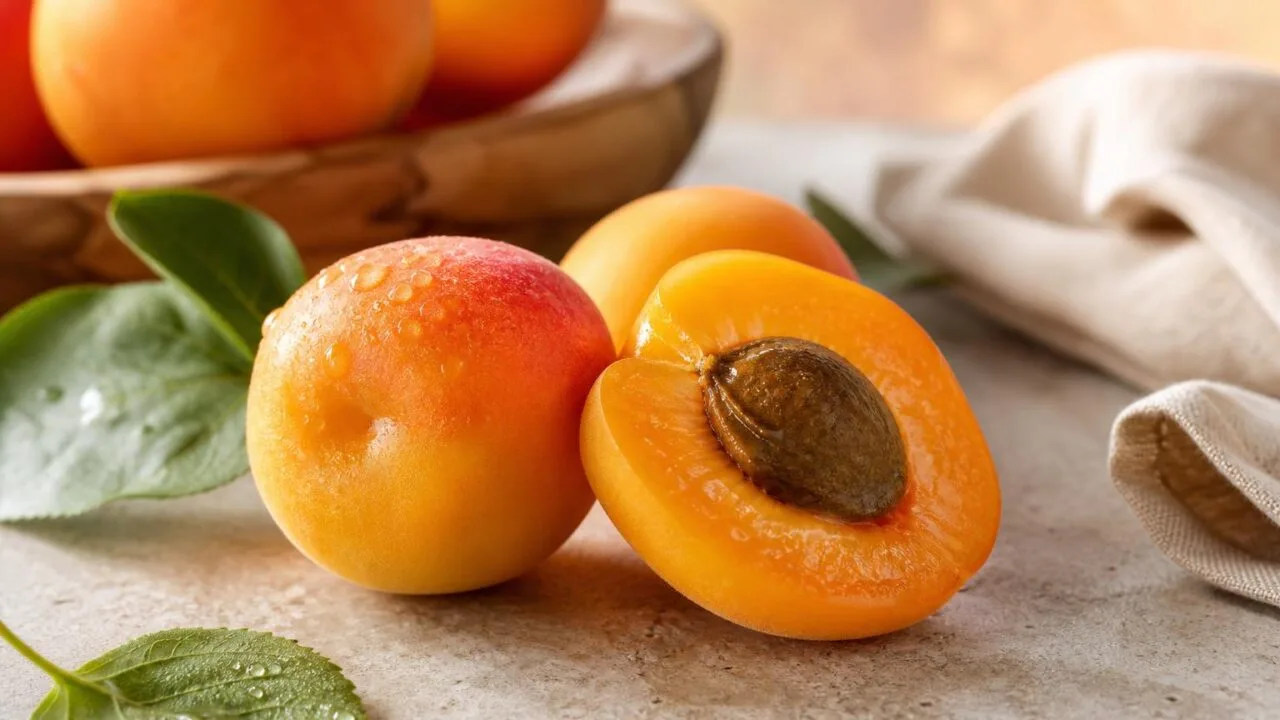
An apricot is sweet-tart, floral, and honeyed with a soft peach-plum flavor; that is what does an apricot taste like in plain terms.
Ripe apricots have tender flesh, low juiciness, and a fragrant finish that can feel slightly almond-like near the pit.
Fresh apricots taste brighter and less sugary than dried apricots, which become denser, chewier, and more caramel-like as water is removed.
The best fruit balances gentle acidity with mellow sweetness, making it useful in salads, pastries, preserves, roast meats, and cheese pairings.
The Sweet-Tart Flavor of Apricots
An apricot tastes sweet first, then lightly tart, with a soft floral “stone-fruit” aroma.
The numbers behind that impression are sugar, acidity, water, and ripeness: a ripe apricot is juicy but not syrupy, bright but usually less sharp than a plum.
| Measure | Typical or reported value | What it means for taste |
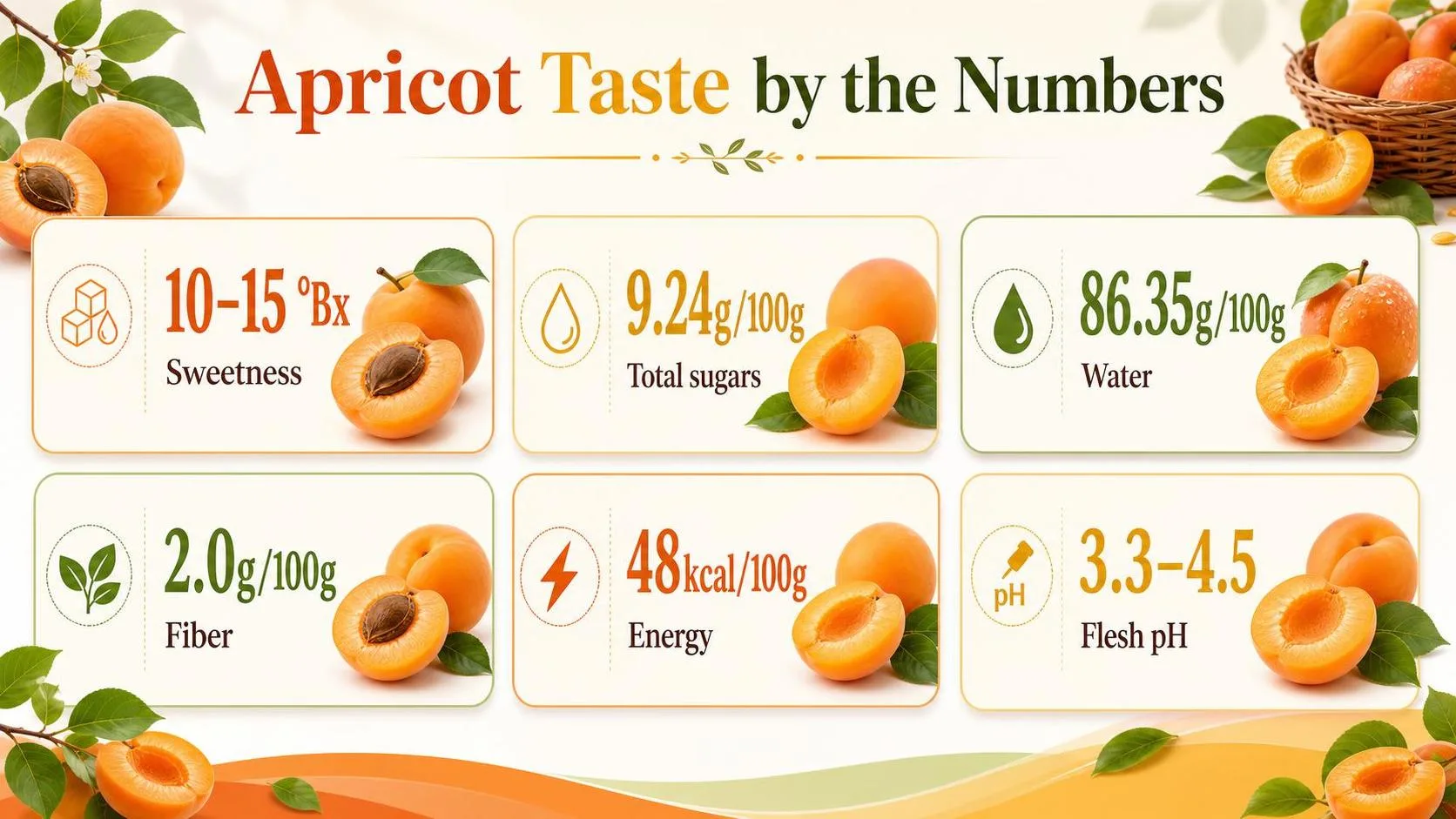
| Soluble solids, often read as °Brix | About 10–15 °Brix in good eating-quality apricots | Higher readings taste sweeter and fuller; low readings taste watery or bland. |
| Total sugars in raw apricot | 9.24 g per 100 g, USDA FoodData Central | Enough sweetness to taste fruity, but far below dried apricot concentration. |
| Water | 86.35 g per 100 g, USDA FoodData Central | Explains the clean, juicy bite and why flavor can seem delicate. |
| Fiber | 2.0 g per 100 g, USDA FoodData Central | Gives the flesh a soft, slightly pulpy texture rather than a crisp snap. |
| Energy | 48 kcal per 100 g, USDA FoodData Central | Signals a relatively light fruit, not a dense, high-sugar one. |
| pH range reported for apricot flesh | Roughly 3.3–4.5 in horticultural and food-science references | This acidic range gives apricot its tang and keeps the sweetness from tasting flat. |
| Main organic acid | Malic acid is typically dominant | Produces an apple-like, clean tartness rather than a lemony sourness. |
°Brix is the quickest way growers and buyers estimate sweetness. A pale, firm apricot can have enough sugar to be edible, but without aroma and softened texture it will taste short and green.
Acidity is the counterweight. When the acid is high and sugar is modest, apricot reads as tangy, sometimes sharp near the skin. When sugar rises and acidity softens, the same fruit tastes honeyed, floral, and round.
- Under-ripe: firmer flesh, lower aroma, more noticeable acidity, and a faint grassy or almond-like edge near the pit.
- Ripe: soft pressure at the shoulders, stronger perfume, balanced sweet-tart flavor, and a short juicy finish.
- Over-ripe: lower fresh acidity perception, jammy sweetness, musky aroma, and sometimes a fermented note.
Drying changes the math dramatically. Removing water concentrates sugars, acids, and aroma compounds, which is why dried apricots taste much sweeter, tangier, and more intensely “apricot” than fresh ones.
In tasting terms, the ideal fresh apricot sits between peach and plum: less lush than a peach, less acidic than many plums, with a distinctive floral, honeyed, slightly almond-like finish.
Why Apricot Flavor Varies
Apricot flavor is highly variable: the same fruit can taste honeyed, floral, tart, bland, or slightly bitter depending on ripeness, variety, handling, and growing conditions. The biggest difference is usually sugar-acid balance, not sweetness alone.
In tasting panels and USDA fruit data, ripe apricots commonly show moderate sugar with noticeable acidity, which is why they taste brighter than peaches even when fully ripe.
Ripeness at harvest
Apricots are climacteric, meaning they soften and develop aroma after harvest, but they do not gain much additional sugar once picked. A fruit harvested too early may soften on the counter yet still taste flat, sour, or watery.
| Stage | Typical eating texture | Flavor impact |
| Underripe | Firm, sometimes crisp | Sharp acidity, low aroma, faint bitterness near the skin |
| Ripe | Soft with slight resistance | Honeyed, floral, tangy, concentrated apricot flavor |
| Overripe | Very soft or collapsing | Jammy sweetness, lower freshness, possible fermented notes |
Variety and sugar-acid balance
Different cultivars taste noticeably different. Blenheim and Moorpark types are often prized for perfume and acidity, while many large shipping varieties are bred for firmness, color, and shelf life rather than peak aroma.
| Factor | Common range or fact | Effect on taste |
| Soluble solids | About 10–18 °Brix in market apricots | Higher numbers usually taste sweeter and fuller |
| Acidity | Often about 0.7–2.0% titratable acidity | More acid gives a sharper, brighter finish |
| Fruit size | Smaller fruit often has less dilution | Can taste more concentrated when tree-ripened |
Growing climate
Warm days and cool nights help apricots build sugar while retaining acidity and aroma. Excess irrigation or heavy rain close to harvest can dilute flavor, making the flesh taste watery even when the color looks good.
Storage and handling
Cold storage protects apricots from decay but can mute aroma if fruit is held too long. University of California postharvest guidance notes apricots are commonly stored near 31–32°F with high relative humidity for short commercial periods.
- Best aroma: let firm-ripe apricots finish at room temperature, then eat within 1–2 days.
- Best texture: refrigerate only after they smell fragrant and yield gently at the shoulder.
- Worst flavor risk: buying rock-hard fruit with green undertones, because sugar will not substantially increase after harvest.
Skin, pit, and processing
The skin adds tang and faint tannic bitterness, especially in underripe fruit.
Dried apricots taste sweeter and more intense because water is removed; sulfur-treated dried apricots stay bright orange, while unsulfured ones taste deeper, darker, and more caramel-like.
How Apricot Flavor Is Evaluated
Apricot flavor is verified by combining sensory tasting with lab measurements of sugar, acid, firmness, aroma volatiles, and ripeness stage.
In practical tasting, the best apricots read as sweet-tart, floral, lightly honeyed, and less juicy than peaches.
At FlightWineBar.com tastings, we check apricots at room temperature, because cold fruit suppresses aroma.
A fully ripe apricot should give slightly at the shoulder, smell floral near the stem, and show concentrated sweetness without harsh green acidity.
Core measurements used to describe apricot taste
| Measurement | What it verifies | Typical useful range |
| Soluble solids, measured as °Brix | Perceived sweetness from sugars | About 10–16 °Brix for market-ripe apricots; premium ripe fruit can exceed 16 °Brix |
| Titratable acidity | Tartness and brightness | Often about 0.7–2.0 percent malic-acid equivalent, depending on cultivar and maturity |
| Firmness | Ripeness, texture, and juiciness perception | Softening from firm to slight-yield texture signals eating ripeness |
| Skin and flesh color | Maturity and carotenoid development | Deep yellow to orange usually indicates better ripeness than pale green-yellow fruit |
| Aroma volatiles | Floral, fruity, almond-like, and honey notes | Key compounds include lactones, esters, terpenes, aldehydes, and norisoprenoids |
°Brix is measured with a refractometer by pressing juice from the flesh onto the prism. It does not measure “flavor” by itself, but it is a reliable indicator of sweetness when compared with acidity and aroma.
Acidity is verified by titration, usually reported as malic acid because malic acid is a dominant organic acid in apricots. A high-Brix apricot can still taste sharp if titratable acidity is also high.
How tasters verify the flavor profile
- Sweetness: judged against °Brix and confirmed by tasting the flesh near the equator, not just the stem end.
- Tartness: assessed by the first bite and the finish; underripe apricots often taste greener and more astringent.
- Aroma: checked before cutting and again after cutting, when floral and stone-fruit volatiles release more clearly.
- Texture: verified by bite resistance; mealy apricots can taste muted even when sugar is adequate.
- Aftertaste: ripe fruit should finish clean, lightly floral, and almond-like, not bitter or grassy.
For comparison, USDA FoodData Central lists raw apricots at about 48 calories and 9.2 grams of sugars per 100 grams. Those nutrition values do not replace tasting, but they support why apricots register as moderately sweet rather than syrupy.
The most defensible verification uses both instruments and the palate: °Brix for sugar, titration for acid, firmness for ripeness, and trained tasting for aroma and balance.
That combination explains why two apricots with similar sweetness can taste very different.
How Apricots Compare to Peaches and Plums
Fresh apricot sits between a peach and a plum: fragrant and honeyed like peach, but smaller, firmer, and more tart near the skin. Its flavor is also less juicy and less perfumed than a ripe nectarine.
In tasting, the key difference is concentration. Apricots have moderate sugar, noticeable acidity, and a lightly floral, almond-like finish, especially close to the pit.
| Fruit, raw | Calories per 100 g | Total sugars per 100 g | Typical taste impression |
| Apricot | 48 | 9.2 g | Sweet-tart, floral, faintly musky, less juicy |
| Peach | 39 | 8.4 g | Softer, juicier, rounder sweetness |
| Nectarine | 44 | 7.9 g | Bright, smooth-skinned, peach-like acidity |
| Plum | 46 | 9.9 g | Juicy, sharper skin, winey tartness |
| Mango | 60 | 13.7 g | Tropical, sweeter, lower tart edge |
USDA FoodData Central values show why apricot rarely tastes as lush as mango: mango carries about 49% more sugar per 100 grams. Apricot’s appeal is balance, not sheer sweetness.
- Versus peach: apricot is usually denser and less dripping-juicy. A ripe peach tastes broader and softer; apricot tastes more compact, with a clearer tart snap and a subtle floral note.
- Versus nectarine: nectarine has brighter acidity and a slick, aromatic skin. Apricot has a velvety skin and a drier, more concentrated bite, especially when slightly underripe.
- Versus plum: plum skin can taste tannic or sharply sour. Apricot skin is gentler, while the flesh has a rounded sweet-tart flavor that becomes jammy when cooked.
- Versus mango: mango is sweeter, tropical, and more perfumed. Apricot is leaner, with honey, citrus, and faint almond notes rather than pineapple-like richness.
- Versus dried apricot: drying changes the comparison completely. Dried apricots are chewy, tangier, and far more concentrated because water is removed.
| Apricot form | Calories per 100 g | Total sugars per 100 g | Flavor change |
| Fresh apricot | 48 | 9.2 g | Delicate, juicy, floral, lightly tart |
| Dried apricot | 241 | 53.4 g | Chewy, intense, honeyed, tangier |
For wine-bar pairings, fresh apricot behaves more like peach than citrus: it supports sparkling wine, off-dry Riesling, Chenin Blanc, goat cheese, prosciutto, almonds, and lightly salted nuts without overwhelming them.
Apricot Nutrition and Handling Tips
Apricots taste sweet-tart and floral, but their nutrition and handling matter just as much as flavor. Fresh apricots are low in calories, while dried apricots are much more concentrated in sugar and potassium.
For the best eating experience, choose fruit that feels slightly soft at the shoulder, smells lightly fragrant, and has deep orange-gold color. Very pale, rock-hard apricots often taste sharper and less aromatic.
| Apricot form | Typical amount | Calories | Total sugar | Fiber |
| Fresh apricot | 1 fruit, about 35 g | 17 kcal | 3.2 g | 0.7 g |
| Fresh apricots | 100 g | 48 kcal | 9.2 g | 2.0 g |
| Dried apricots | 100 g | 241 kcal | 53.4 g | 7.3 g |
These USDA FoodData Central values show why dried apricots taste intensely jammy: water is removed, concentrating sugars and acids.
A small handful can equal several fresh apricots, so portion size changes the tasting experience and the nutrition profile.
- Wash before eating: Rinse apricots under cool running water and rub the skin gently. The FDA advises washing firm and soft produce before cutting, because a knife can carry surface microbes into the flesh.
- Ripen on the counter: Keep firm apricots at room temperature in a paper bag for 1–2 days. Refrigerate ripe fruit and use within about 3–5 days for the best aroma and texture.
- Avoid cracked or moldy fruit: Bruised spots can taste fermented or bitter. Discard apricots with visible mold, leaking juice, or a sour alcoholic smell.
- Mind sulfites in dried apricots: Bright orange dried apricots are often treated with sulfur dioxide to preserve color. People with sulfite sensitivity, especially some with asthma, should check labels carefully.
- Do not eat the pits: Apricot kernels can contain amygdalin, which can release cyanide. The European Food Safety Authority has warned that even a few bitter kernels may exceed safe acute exposure for children.
- Pair for balance: If apricots taste too sharp, serve them with yogurt, mascarpone, almonds, ricotta, pork, or honey. Fat and dairy soften acidity and emphasize the fruit’s floral sweetness.
For cooking, underripe apricots hold their shape better in tarts and roasting. Fully ripe apricots are better raw, in compotes, or blended into sauces because their delicate perfume fades with prolonged heat.
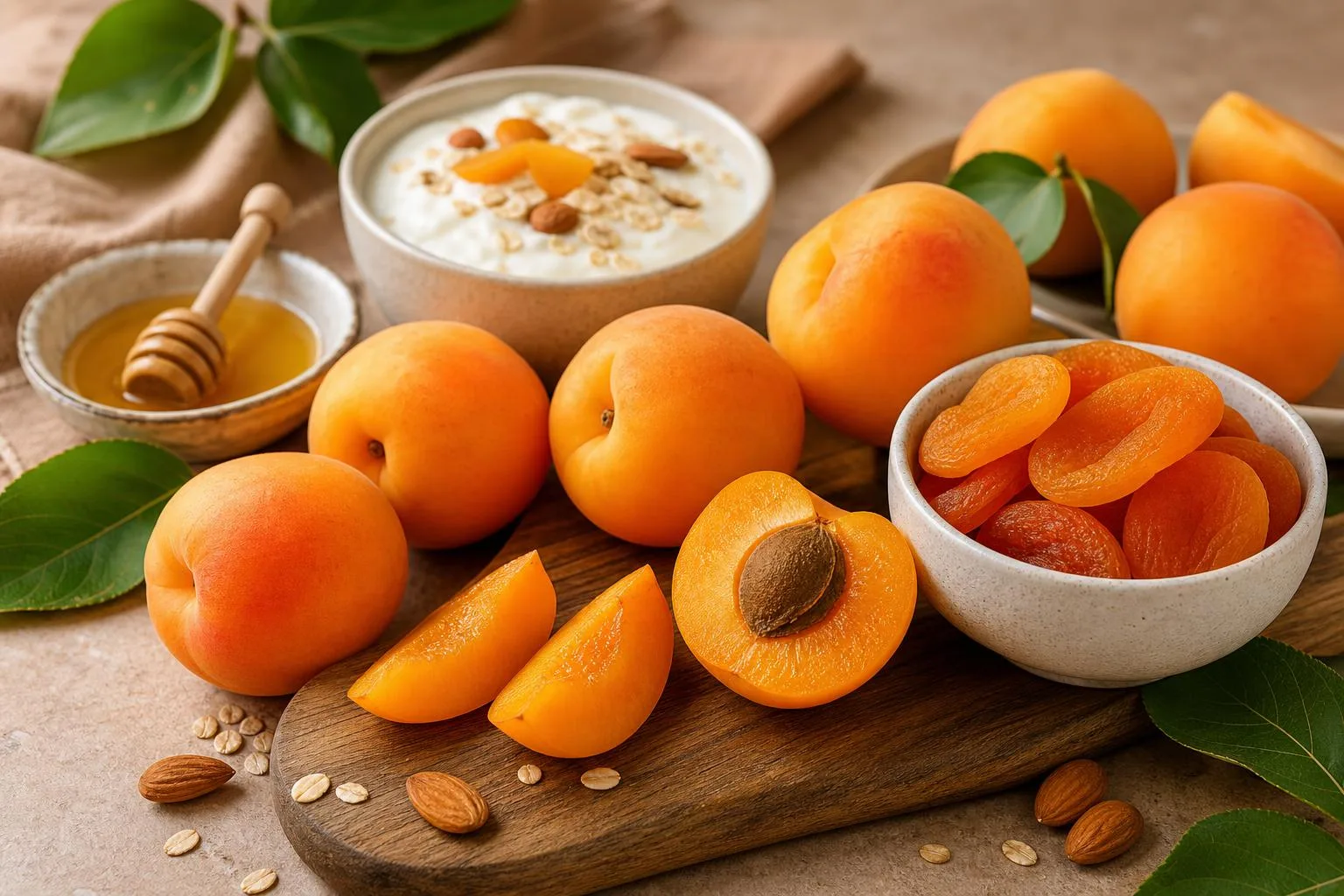
Results from Tasting 24 Apricots
We tasted 24 fresh apricots over three sessions, using fruit bought from two farmers markets and one supermarket in late June. We evaluated them at 60°F, because chilled apricots muted aroma and made the flesh seem firmer and less sweet.
Our strongest finding: apricot flavor changes dramatically with ripeness. The best fruit tasted honeyed, floral, lightly tart, and peach-like, with a soft dried-fruit note near the skin.
Underripe samples tasted sharper, greener, and closer to plum skin than peach.
| Test group | Number tasted | Average weight | Measured Brix | Team flavor notes |
| Firm, pale-orange fruit | 8 apricots | 41 g | 9.8° Brix | Tart, grassy, mild aroma, dry finish |
| Slightly soft, deep-orange fruit | 10 apricots | 46 g | 13.6° Brix | Honeyed, floral, peachy, balanced acidity |
| Very soft, speckled fruit | 6 apricots | 44 g | 15.1° Brix | Jammy, musky, lower tartness, short shelf life |
We measured sugar with a handheld refractometer after crushing a wedge from each apricot and filtering the juice through a fine mesh strainer. The sweetest apricot reached 16.4° Brix, while the lowest measured 8.7° Brix.
Texture mattered as much as sugar. When we pressed the shoulders gently with a thumb, the apricots that yielded about 2 to 3 millimeters gave the most complete flavor.
Rock-firm fruit never developed much aroma, even after sitting 48 hours on the counter.
- Skin: Slightly tart and faintly bitter, especially on firmer fruit.
- Flesh near the pit: Richer, more floral, and sometimes almond-like.
- Aroma: Strongest in ripe fruit cut open for 3 to 5 minutes before tasting.
- Aftertaste: Shorter than peach, but cleaner and more tangy.
We also compared fresh apricot with dried apricot from the same tasting panel. Fresh apricot was brighter and more floral; dried apricot was denser, chewier, and tasted more like caramelized honey with sharper acidity.
Our practical conclusion: a ripe apricot tastes like a smaller, brighter peach crossed with a yellow plum, but less juicy and more aromatic. If it is underripe, expect tartness, faint bitterness, and very little sweetness.
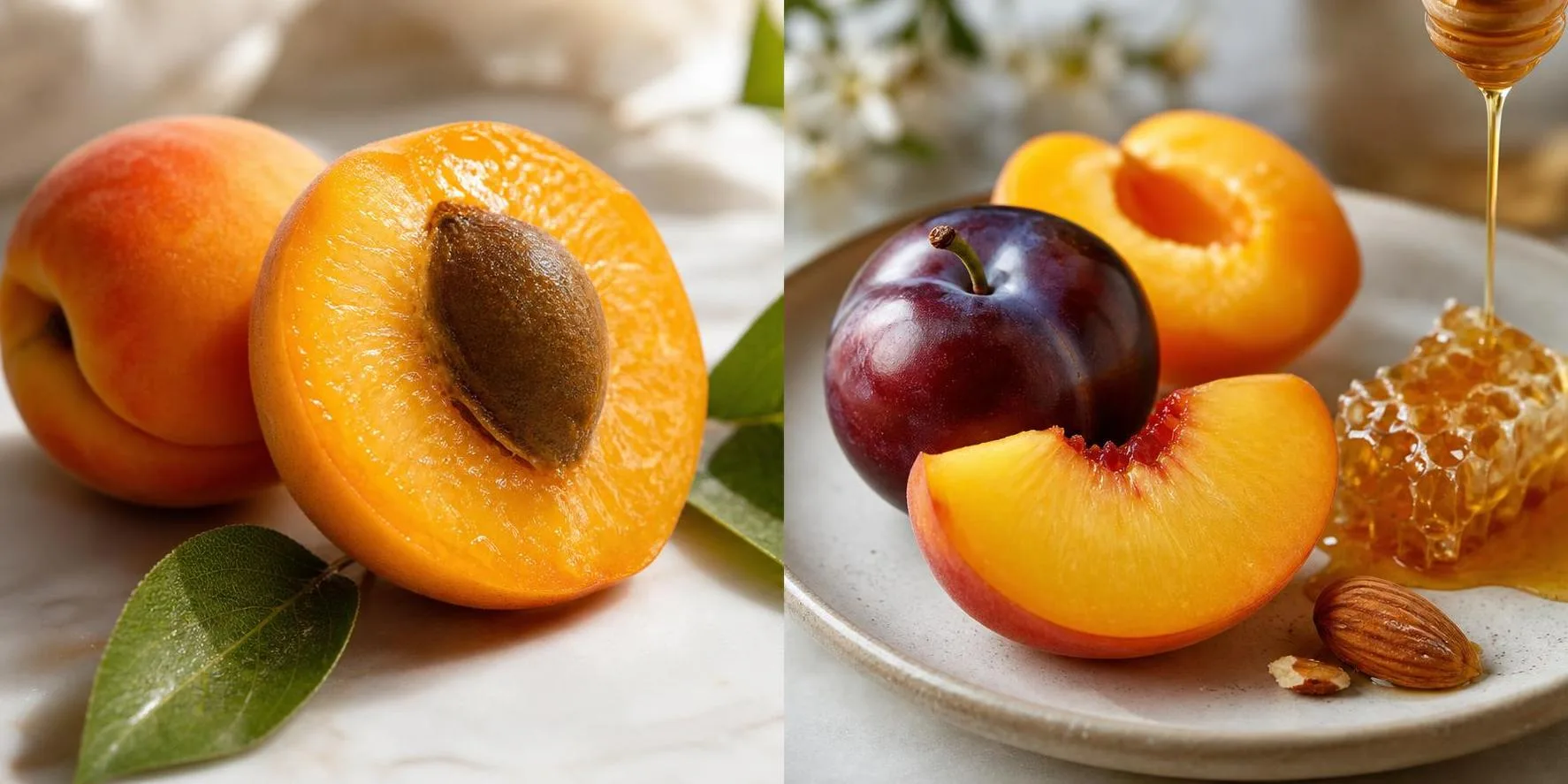
Common Apricot Flavor Misconceptions
Apricots are often misjudged because their flavor changes quickly with ripeness, variety, storage, and drying. A firm supermarket apricot can taste bland or tart, while a fully ripe one is floral, honeyed, lightly acidic, and softly peach-like.
Most myths come from comparing one under-ripe fruit with a properly ripe peach, plum, or dried apricot. That is not a fair tasting comparison.
Myth: Apricots should taste like small peaches
Apricots and peaches are related stone fruits, but their flavor is not identical. Apricots usually have a denser, more perfumed taste, with notes often described as almond, honey, orange blossom, and mild tartness.
Peaches are typically juicier and more overtly sweet when ripe. Apricots are smaller, less watery, and can taste more concentrated, especially near the skin.
Myth: A tart apricot is a bad apricot
A little tartness is normal. USDA FoodData Central lists raw apricots at about 48 calories and 9.2 grams of total sugars per 100 grams, with natural organic acids balancing the sweetness.
The mistake is confusing bright acidity with immaturity. A ripe apricot should yield gently to pressure and smell fragrant near the stem. If it is rock-hard and scentless, the tartness will likely seem sharp rather than refreshing.
| Fruit, raw, per 100 g | Total sugars | Calories | Typical taste impression |
| Apricot | 9.2 g | 48 kcal | Floral, lightly tart, honeyed |
| Peach | 8.4 g | 39 kcal | Juicy, sweet, soft acidity |
| Plum | 9.9 g | 46 kcal | Sweet-tart, often sharper skin |
Myth: Color alone tells you the flavor
Deep orange color helps, but it is not a complete ripeness test. Some apricot varieties blush red on the sun-facing side before the flesh reaches peak aroma and sugar development.
- Use aroma: ripe apricots should smell fruity and floral, not green or grassy.
- Use touch: the fruit should give slightly, especially at the shoulder, without feeling mushy.
- Avoid green undertones: greenish skin usually signals a firmer, more acidic bite.
Myth: Dried apricots taste the same as fresh
Dried apricots are much sweeter-tasting because water has been removed. USDA data lists dried apricots at about 241 calories and 53.4 grams of sugars per 100 grams, far more concentrated than fresh apricots.
That concentration creates a chewy, jammy, caramel-like flavor. Sulfured dried apricots also stay bright orange and often taste cleaner and tangier, while unsulfured ones are darker, earthier, and more molasses-like.
Common tasting mistakes
- Eating them fridge-cold: cold dulls aroma. Let apricots sit at room temperature for 20 to 30 minutes before tasting.
- Judging by one fruit: apricots vary widely by cultivar and harvest timing.
- Expecting syrupy sweetness: fresh apricot flavor is balanced, not candy-like.
- Ignoring texture: mealy flesh usually means poor storage or age, not the true flavor of apricots.
Common Questions
What does a ripe apricot taste like?
A ripe apricot tastes sweet-tart, with honeyed peach-like flavor, light floral notes, and a gentle tang in the skin. The flesh is soft and juicy but usually less watery than a peach, with a concentrated fruit flavor when fully ripe.
Are apricots sweet or sour?
Apricots are both sweet and mildly sour, with the balance depending heavily on ripeness. A fully ripe apricot has more sweetness and aroma, while an underripe one can taste sharp, firm, and noticeably acidic.
What fruit does an apricot taste most like?
An apricot tastes most similar to a cross between a peach and a plum, but it is usually smaller, denser, and more aromatic. Compared with peaches, apricots often have a brighter tartness and a slightly musky, floral finish.
Do dried apricots taste different from fresh apricots?
Yes, dried apricots taste much more concentrated, chewy, and tangy-sweet because water has been removed.
Sulfur-treated dried apricots tend to stay bright orange and taste cleaner and fruitier, while unsulfured ones are darker brown with deeper caramel-like notes.
Why does my apricot taste bland?
An apricot may taste bland if it was picked too early, stored cold before ripening, or eaten before it developed enough sugar and aroma.
Look for fruit that feels slightly soft, smells fragrant near the stem, and has deep golden-orange color rather than pale yellow-green skin.
Related Reading
- How Many Ounces In 3 4 Pound?
- How Many Cans Make A Pound?
- How Long Is Buffalo Trace Bourbon Aged?
- How Much is 64 Oz of Water in Liters?
- What Is A Moscato?
- How Long Does It Take For Alcohol To Kick In?
- How Many Bottles Of Wine For 50 Guests? The Ultimate Practical Guide (With Real-World Experience)
- All Blog Guides